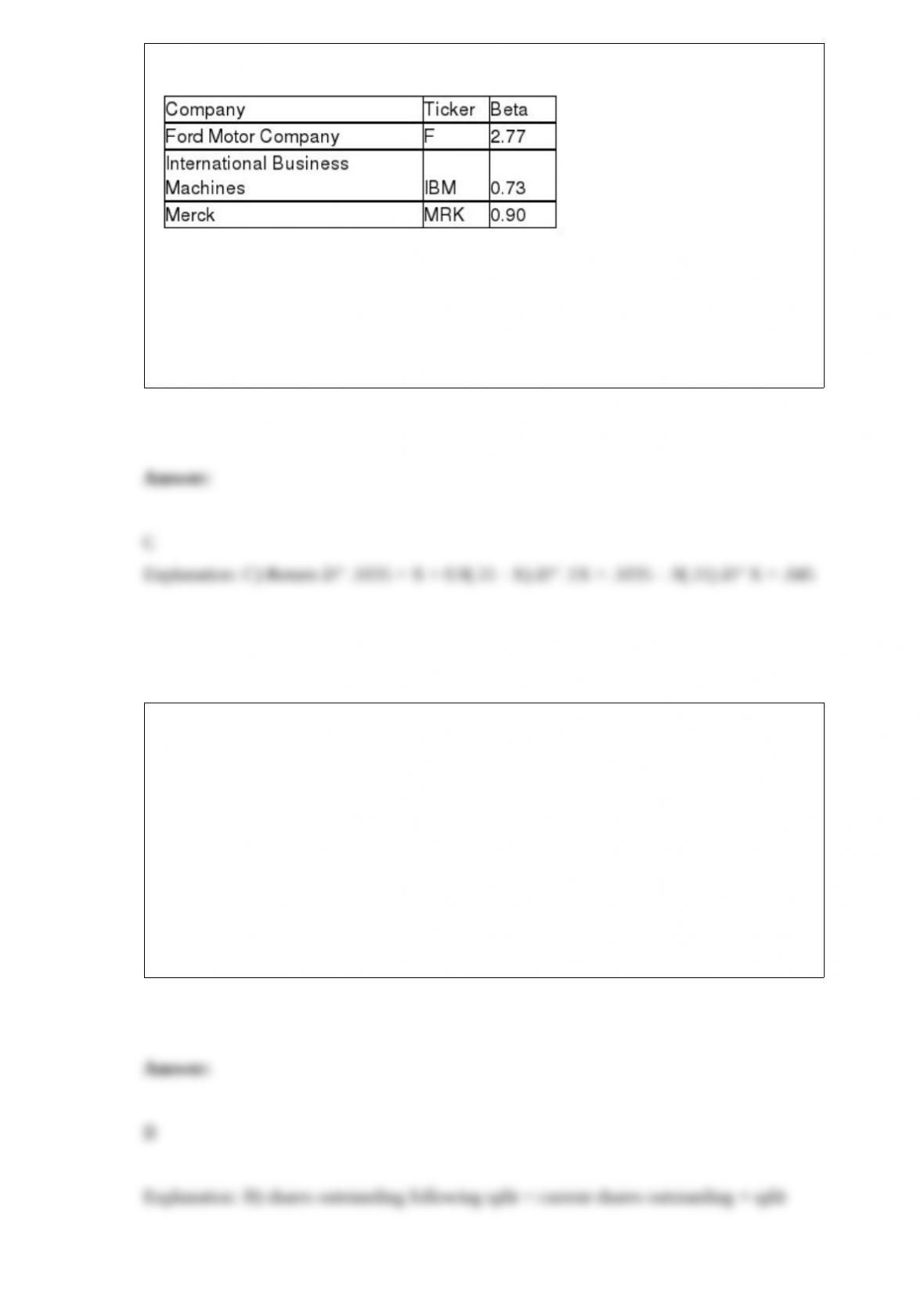
If the expected return on the market is 11% and the expected return of investing in
Merck is 10.35%, then the risk-free rate must be:
A) 3.0%
B) 4.0%
C) 4.5%
D) 5.0%
Luther Industries currently has 5 million shares outstanding and it stock is currently
trading at $40 per share.Assuming Luther issues a 5:2 stock split, then the number of
shares Luther will have outstanding following the split is closest to:
A) 25.0 million
B) 12.5 million
C) 2.0 million
D) 16.0 million
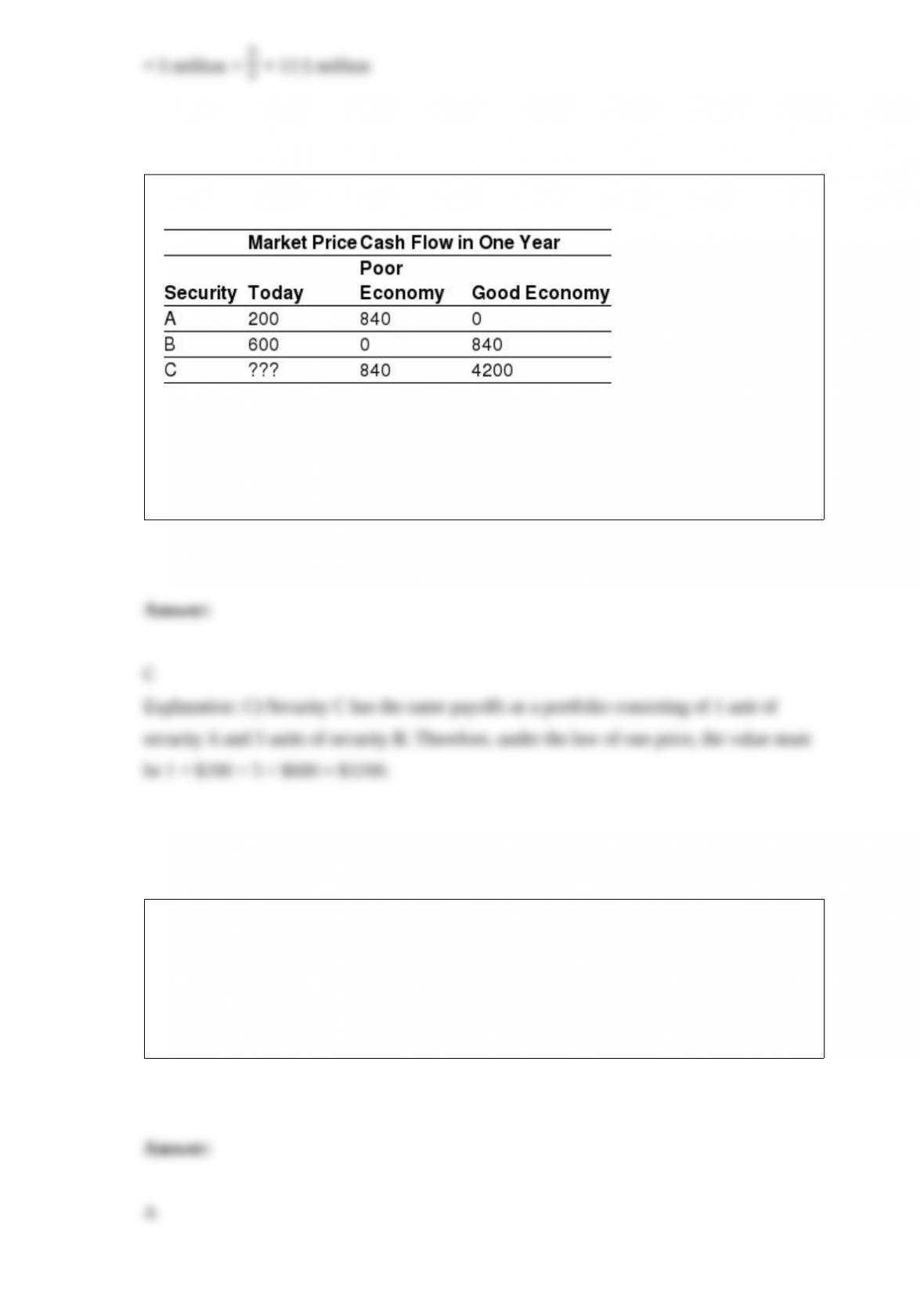
What is the no-arbitrage price for security C?
A) $800
B) $1600
C) $3200
D) $4000
According to a survey of 392 CFOs conducted by John Graham and Campbell Harvey,
the most common method used in corporate America to estimate the cost of capital is
A) the CAPM.
B) multifactor models.
C) characteristic models.
D) the dividend discount model.
Which of the following statements is FALSE?
A) If the bond trades at a discount, and investor who buys the bond will earn a return
both from receiving the coupons and from receiving a face value that exceeds the price
paid for the bond.
B) Most coupon bond issuers choose a coupon rate so that the bonds will initially trade
at, or very near to, par.
C) Coupon bonds always trade for a discount.
D) At any point in time, changes in market interest rates affect a bond’s yield to
maturity and its price.
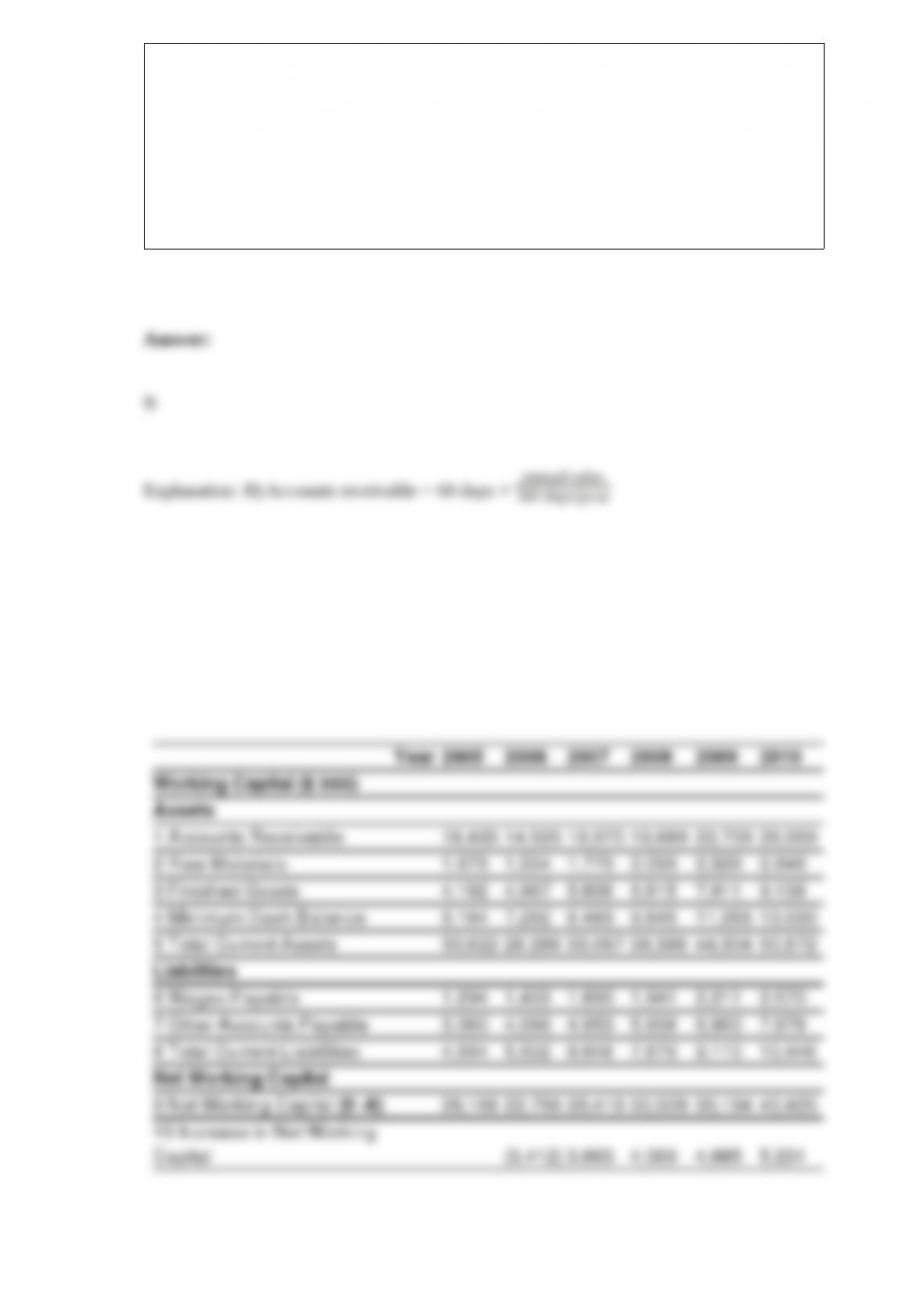
Pro Forma Income Statement for Ideko, 2005-2010
With the proper changes it is believed that Ideko’s credit policies will allow for an
account receivables days of 60. The forecasted accounts receivable for Ideko in 2007 is
closest to:
A) $14,525
B) $16,970
C) 22,710
D) $19,690
Your firm is planning to invest in a new power generation system. Galt Industries is an
all equity firm that specializes in this business. Suppose Galt’s equity beta is 0.75, the
risk-free rate is 3%, and the market risk premium is 6%. If your firm’s project is all
equity financed, then your estimate of your cost of capital is closest to:
A) 5.25%
B) 6.00%
C) 6.75%
D) 7.50%
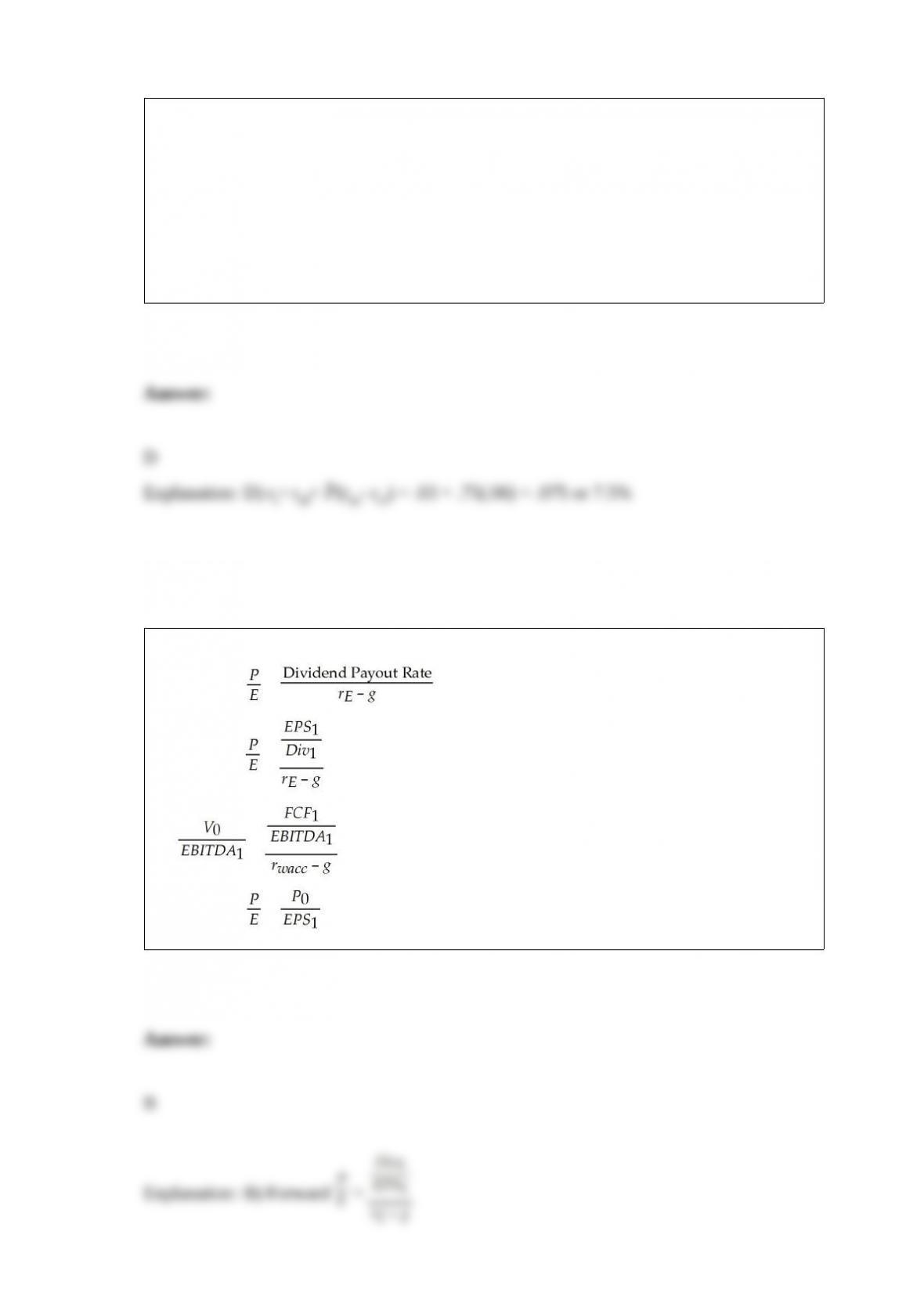
Which of the following formulas is INCORRECT?
A) Forward =
B) Forward =
C) =
D) Forward =
Wyatt Oil has a net profit margin of 4.0%, a total asset turnover of 2.2, total assets of
$525 million, and a book value of equity of $220 million. Wyatt Oil’s current
return-on-assets (ROA) is closest to:
A) 8.8%
B) 9.5%
C) 21.0%
D) 22.8%
Big Cure and Little Cure are both pharmaceutical companies. Big Cure presently has a
potential “blockbuster” drug before the Food and Drug Administration (FDA) waiting
for approval. If approved, Big Cure’s blockbuster drug will produce $1 billion in net
income for Big Cure. Little Cure has 10 separate less important drugs before the FDA
waiting for approval. If approved, each of Little Cure’s drugs would produce $100
million in net income for Little Cure. The probability of the FDA approving a drug is
50%.
What is the expected payoff for Little Cure’s ten drugs?
A) $500 million
B) $100 million
C) $1 billion
D) $0
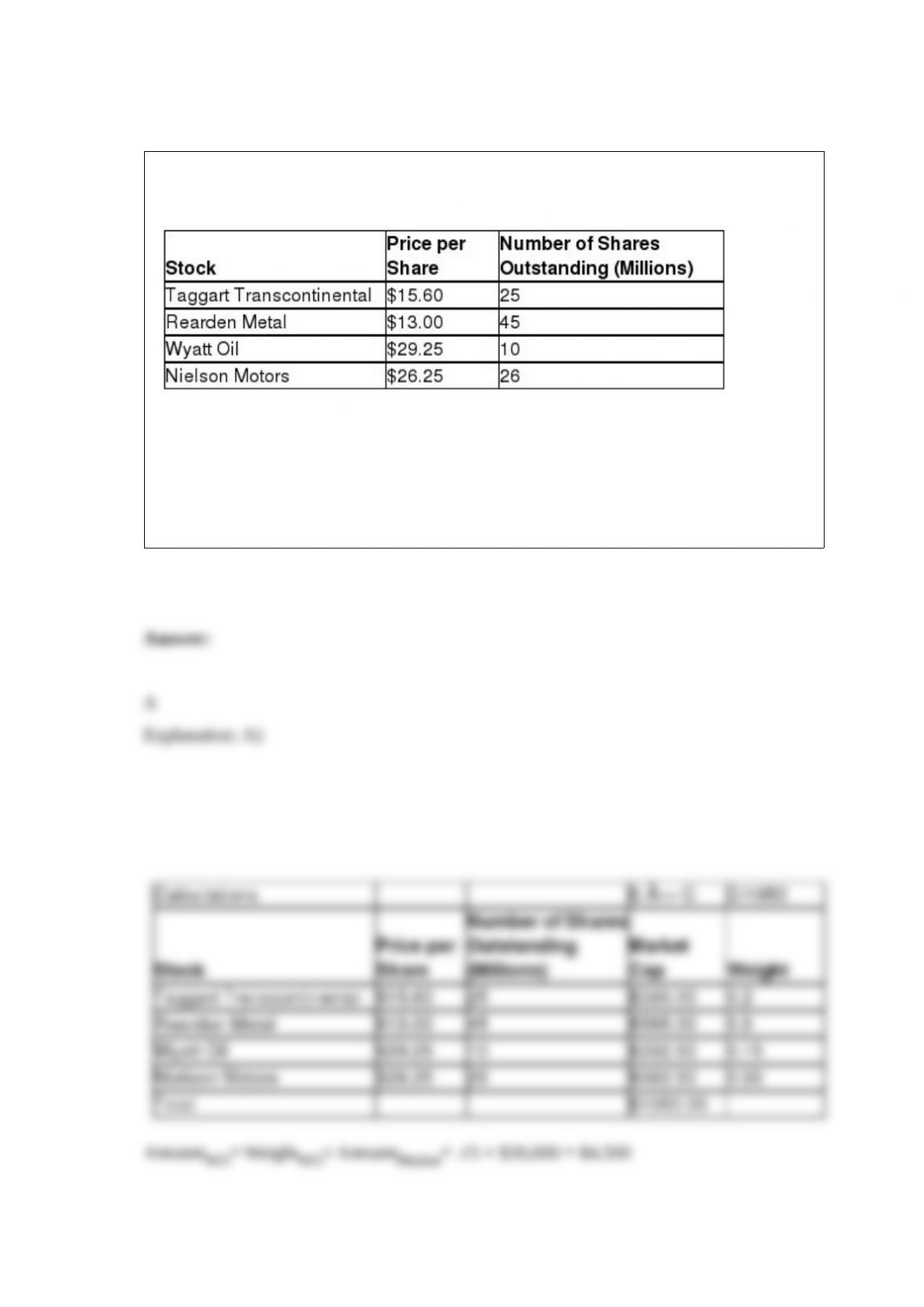
Suppose all possible investment opportunities in the world are limited to the four stocks
list in the table below:
Suppose that you have invested $30,000 invested in the market portfolio. Then the
amount that you have invested in Wyatt Oil is closest to:
A) $4,500
B) $6,000
C) $7,715
D) $9,000
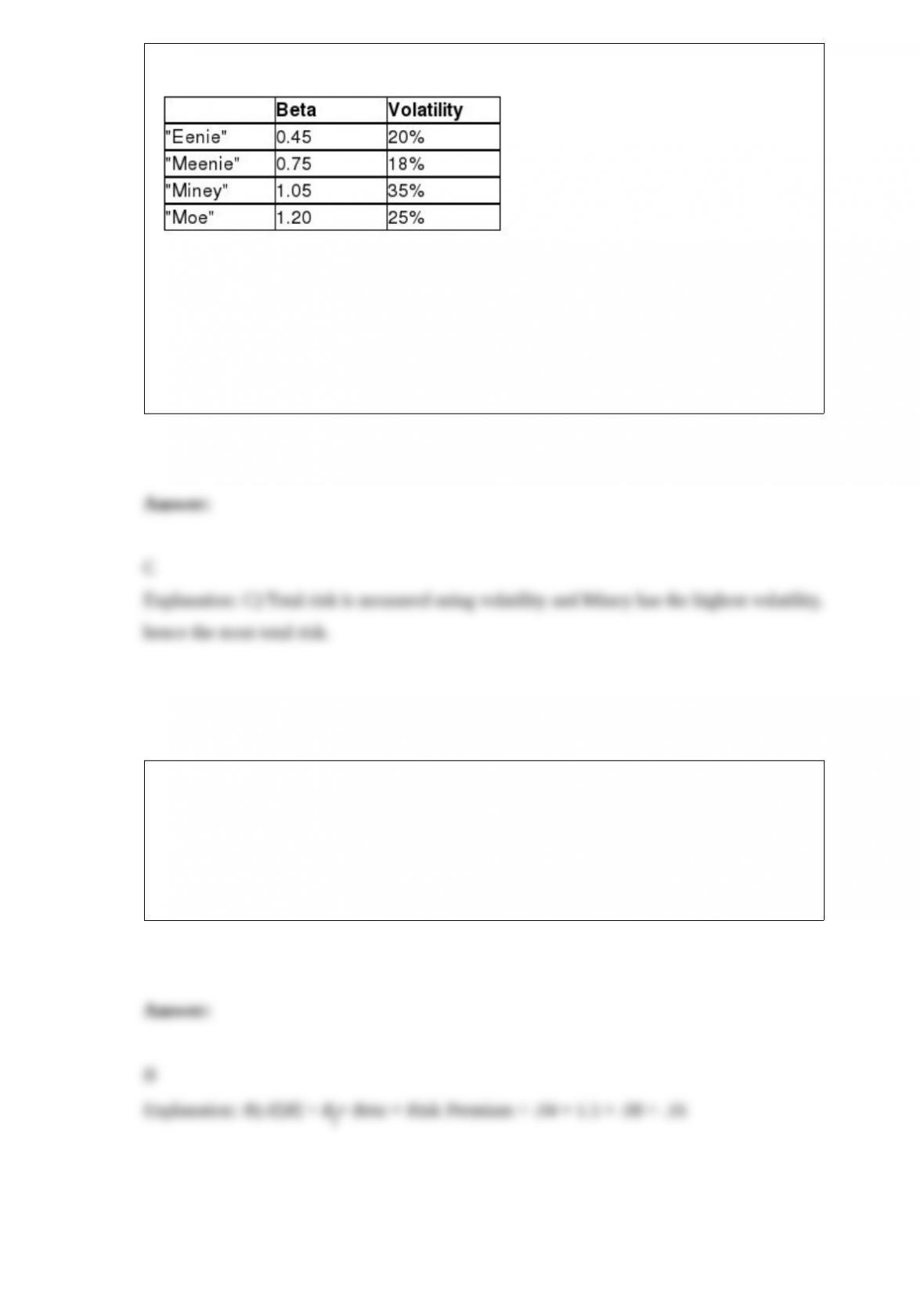
Assume that the risk-free rate of interest is 3% and you estimate the market’s expected
return to be 9%.
Which firm has the most total risk?
A) Eenie
B) Meenie
C) Miney
D) Moe
Suppose that KAN’s beta is 1.5. If the market risk premium is 8% and the risk-free
interest rate is 4%, then then expected return for KAN stock is?
A) 8.0%
B) 16.0%
C) 13.5%
D) 10.0%
Galt Motors currently produces 500,000 electric motors a year and expects output levels
to remain steady in the future. It buys armatures from an outside supplier at a price of
$2.50 each. The plant manager believes that it would be cheaper to make these
armatures rather than buy them. Direct in-house production costs are estimated to be
only $1.80 per armature. The necessary machinery would cost $700,000 and would be
obsolete in 10 years. This investment would be depreciated to zero for tax purposes
using a 10-year straight line depreciation. The plant manager estimates that the
operation would require additional working capital of $40,000 but argues that this sum
can be ignored since it is recoverable at the end of the ten years. The expected proceeds
from scrapping the machinery after 10 years are estimated to be $10,000. Galt Motors
pays tax at a rate of 35% and has an opportunity cost of capital of 14%.
The incremental cash flow that Galt Motors will incur today (Year 0) if they elect to
manufacture armatures in house is closest to:
A) -740,000
B) -700,000
C) -660,000
D) 740,000
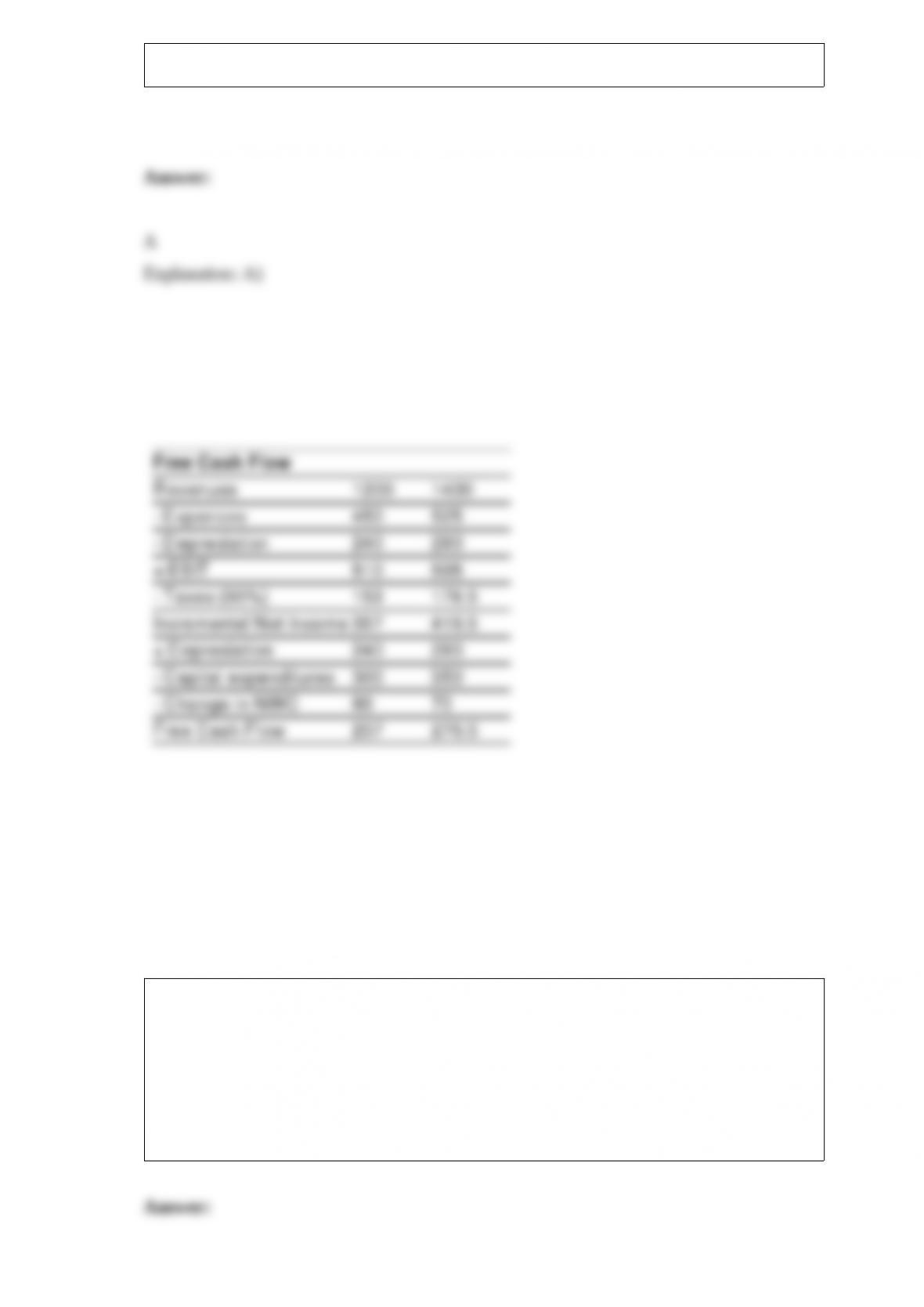
Shepard Industries is evaluating a proposal to expand its current distribution facilities.
Management has projected the project will produce the following cash flows for the
first two years (in millions).
The free cash flow from Shepard Industries project in year one is closest to:
A) $240
B) $300
C) -$5
D) $390
If Alex Corporation takes out a bank loan to purchase a machine used in production and
everything else stays the same, its equity multiplier will ________, and its ROE will
________.
A) increase; increase
B) decrease; decrease
C) increase; decrease
D) decrease; increase
Which of the following statements is FALSE?
A) A combination of portfolios on the efficient frontier of risky investments is also on
the efficient frontier of risky investments.
B) The conclusion of the CAPM that investors should hold the market portfolio
combined with the risk-free investment depends on the quality of an investor’s
information.
C) The SML holds with some rate r* between rsand rbin place of rf, where r* depends
on the proportion of savers and borrowers in the economy.
D) In reality, investors have different information and spend varying amounts of effort
on research for assorted stocks.