
Which of the following is not a weakness of risk-based capital standards?
a. They ignore interest rate risk.
b. They ignore the value of deposit insurance.
c. They ignore changes in the market value of assets.
d. They ignore credit risk.
e. They ignore the value of a bank’s charter.
Answer:
Which of the following would generally not be considered a speculator?
a. Local
b. Day trader
c. Scalper
d. Position trader
e. Commission broker
Answer:

___________ includes common stock, preferred stock and retained earnings.
a. Retail funding
b. Wholesale funding
c. Borrowed funding
d. Equity funding
e. Lockbox funding
Answer:
If rate-sensitive assets equal $500 million and rate-sensitive liabilities equals $400
million, what is the expected change in net interest income if rates increase by 1%?
a. Net interest income will increase by $1 million.
b. Net interest income will fall by $1 million.
c. Net interest income will increase by $10 million.
d. Net interest income will fall by $10 million.
e. Net interest income will be unchanged.
Answer:

Net income is defined as:
a. Net interest income burden + provision for loan loss + securities gains or losses taxes.
b. Net interest income + burden + provision for loan loss + securities gains or losses
taxes.
c. Net interest income burden provision for loan loss + securities gains or losses taxes.
d. Net interest income burden provision for loan loss + securities gains or losses +
taxes.
e. Net interest income + burden provision for loan loss + securities gains or losses taxes.
Answer:
Currently, the Fed sets the discount rate __________ the target fed funds rate.
a. 1% – 1.5% below
b. 2% – 2.5% below
c. 3% – 3.5% above
d. 2% – 2.5% above
e. 1% – 1.5% above
Answer:

Most interest rate swaps are set up for:
a. less than 6 months.
b. 6 months to 1 year.
c. 1 year to 10 years.
d. 11 to 20 years.
e. over 20 years.
Answer:
All of the following are capital market instruments except:
a. Treasury bonds.
b. Government National Mortgage Association (Ginnie Mae) bonds.
c. mortgage backed securities.
d. Treasury notes.
e. bankers acceptances.
Answer:

A loan to an individual to purchase a home would be considered a:
a. consumer loan.
b. commercial loan.
c. agricultural loan.
d. construction loan.
e. real estate loan.
Answer:
Financial futures are:
a. a commitment between two parties to trade a financial instrument at a certain rate at a
specified time in the future.
b. A call option on a standardized asset at a certain price at a specified time in the
future.
c. A put option on a standardized asset at a certain price at a specified time in the future.
d. a commitment between two parties on the price of a standardized financial asset with
the final settlement specified time in the future.
e. b. and c.
Answer:

Volatile deposits:
a. are the largest source of funds for smaller banks.
b. equal the difference between actual current deposits and the base estimate of core
deposits.
c. reduce reserve requirements.
d. are a low cost source of funds.
e. all of the above
Answer:
Which of the following is not true of forward rate agreements (FRA)?
a. The two counterparties to an FRA agree to a notional principal.
b. FRAs are traded on an organized exchange.
c. The buyer of a FRA agrees to pay a fixed-rate coupon payment.
d. FRAs are not as liquid as most futures contracts.
e. FRAs can be used to manage interest rate risk.
Answer:

A bank’s periodic GAP:
a. is defined as the dollar amount of rate-sensitive assets divided by the dollar amount
of rate-sensitive liabilities.
b. is defined as the dollar amount of earning assets divided by the dollar amount of total
liabilities.
c. compares rate-sensitive assets with rate-sensitive liabilities across all time buckets.
d. compares rate-sensitive assets with rate-sensitive liabilities across a single time
bucket.
e. compares the dollar amount of earning assets times the average liability interest rate.
Answer:
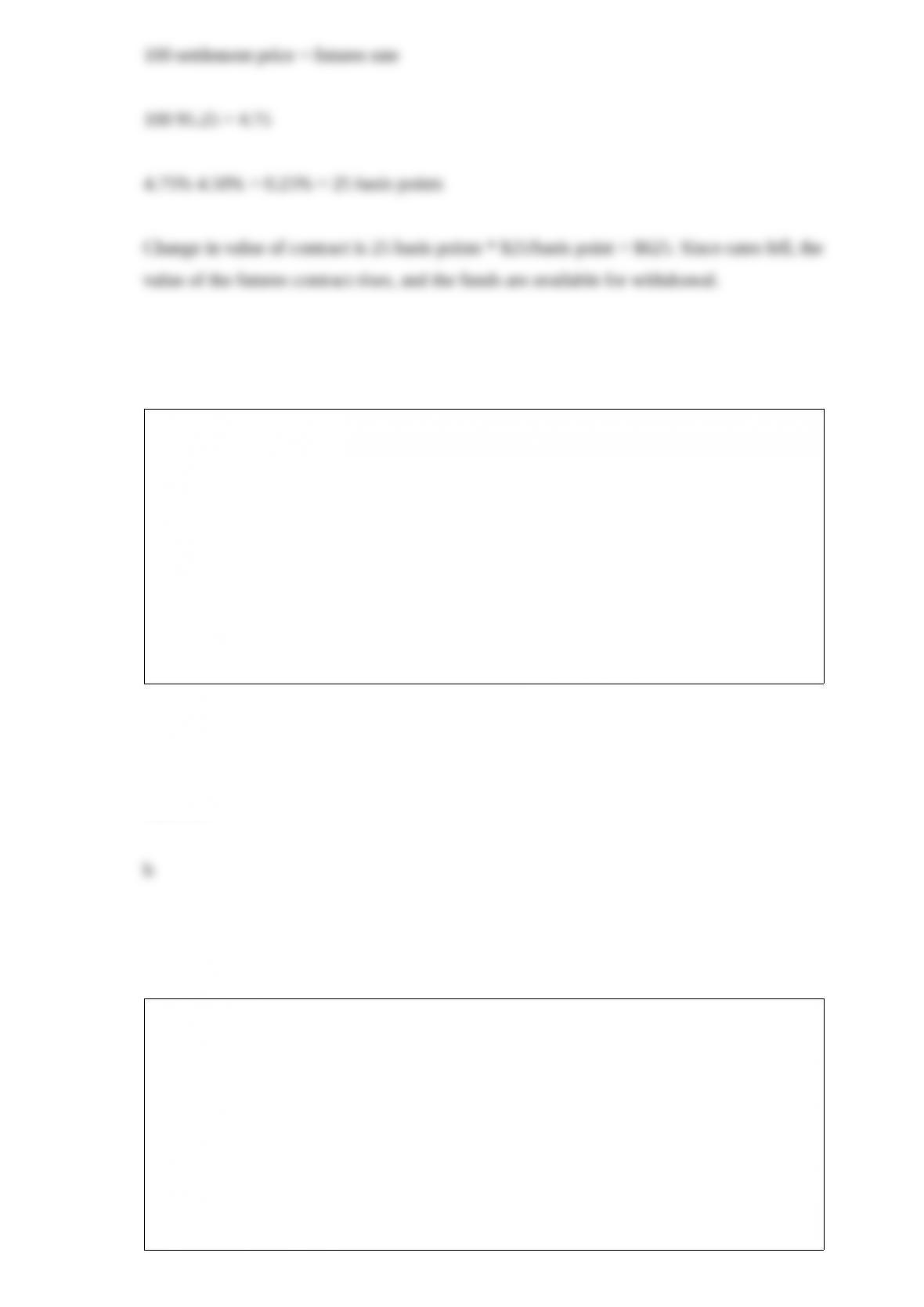
A trader buys a 90-day Eurodollar futures contract at 95.25. The next day, interest rates
fall 4.5%. Which of the following is true? Assume that the initial and maintenance
margins are $5,000.
a. The trader would have to deposit an additional $62,500 into her account.
b. The trader would have to deposit an additional $2,500 into her account.
c. The trader would have to deposit an additional $625 into her account.
d. The trader could withdraw $2,500 from her margin account.
e. The trader could withdraw $625 from her margin account.
Answer:
The most dominant type of Eurocurrency deposits are:
a. Euroyens.
b. Eurodollars.
c. Eurosterlings.
d. Eurofrancs.
e. Euromarks.
Answer:
A short-term interest-bearing time draft created by a high-quality bank is called:
a. commercial paper.
b. a bankers acceptance.
c. a Eurodollar deposit.
d. a reverse repurchase agreement.

e. a negotiable CD.
Answer:
Which of the following classes of securities are carried at market value on the balance
sheet?
a. Held-to-maturity
b. Available-for-sale
c. Trading
d. all of the above
e. b. and c. only
Answer:
Historically, a commercial bank was defined as a firm that:
a. accepted NOW accounts and made consumer loans.
b. accepted demand deposits and made business loans.
c. accepted government deposits and made public loans.
d. accepted demand deposits and made consumer loans.

e. is regulated by the Federal Reserve.
Answer:
A primary purpose of maintaining the safety and soundness of banks is to:
a. encourage loan growth.
b. protect depositors.
c. ensure liquidity for the stock market.
d. prevent discrimination.
e. minimize bank losses.
Answer:
Which of the following U.S. government agencies can borrow directly from the U.S.
Treasury?
a. Government National Mortgage Association (Ginnie Mae)
b. Student Loan Marketing Association (Sallie Mae)
c. Small Business Administration (SBA)

d. all of the above
e. a. and c. only
Answer:
In the credit process, which of the following activities falls under Credit Review?
a. Loan committee reviews
b. Perfecting the security interest
c. Market research
d. Review loan documentation
e. Market research
Answer:
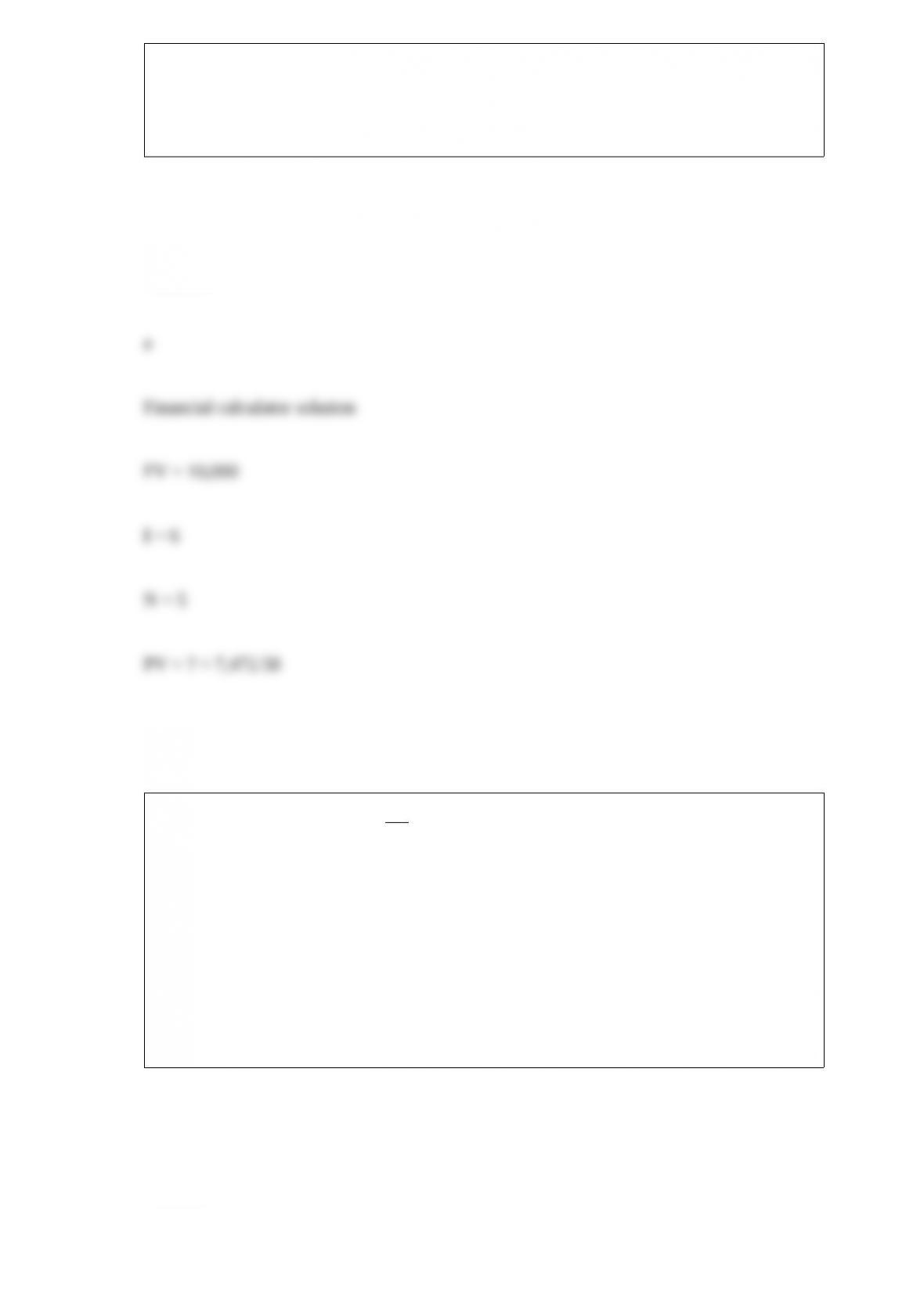
To the nearest dollar, what is the value today of an investment that pays $10,000 in five
years, assuming an annual opportunity cost of 6%?
a. $7,473
b. $11,592
c. $8,626
d. $7,130
e. None of the above
Answer:
Which of the following would not be considered a commercial loan?
a. An interim construction loan
b. A working capital loan
c. A loans to another financial institution
d. A loan to purchase a piece of industrial equipment
e. A loan to expand a factory
Answer:

Large depositors
a. receive the highest interest rates.
b. pay the lowest fees.
c. often get free checking.
d. all of the above.
e. a. and c. only
Answer:
How can a bank hedge when it makes 1-year fixed-rate loans and finances them with
3-month floating-rate deposits?
a. Buy Eurodollar futures contracts.
b. Sell put options on Eurodollar futures contracts.
c. Sell Eurodollar futures contracts.
d. Buy call options on Eurodollar futures contacts.
e. b. and c.
Answer:
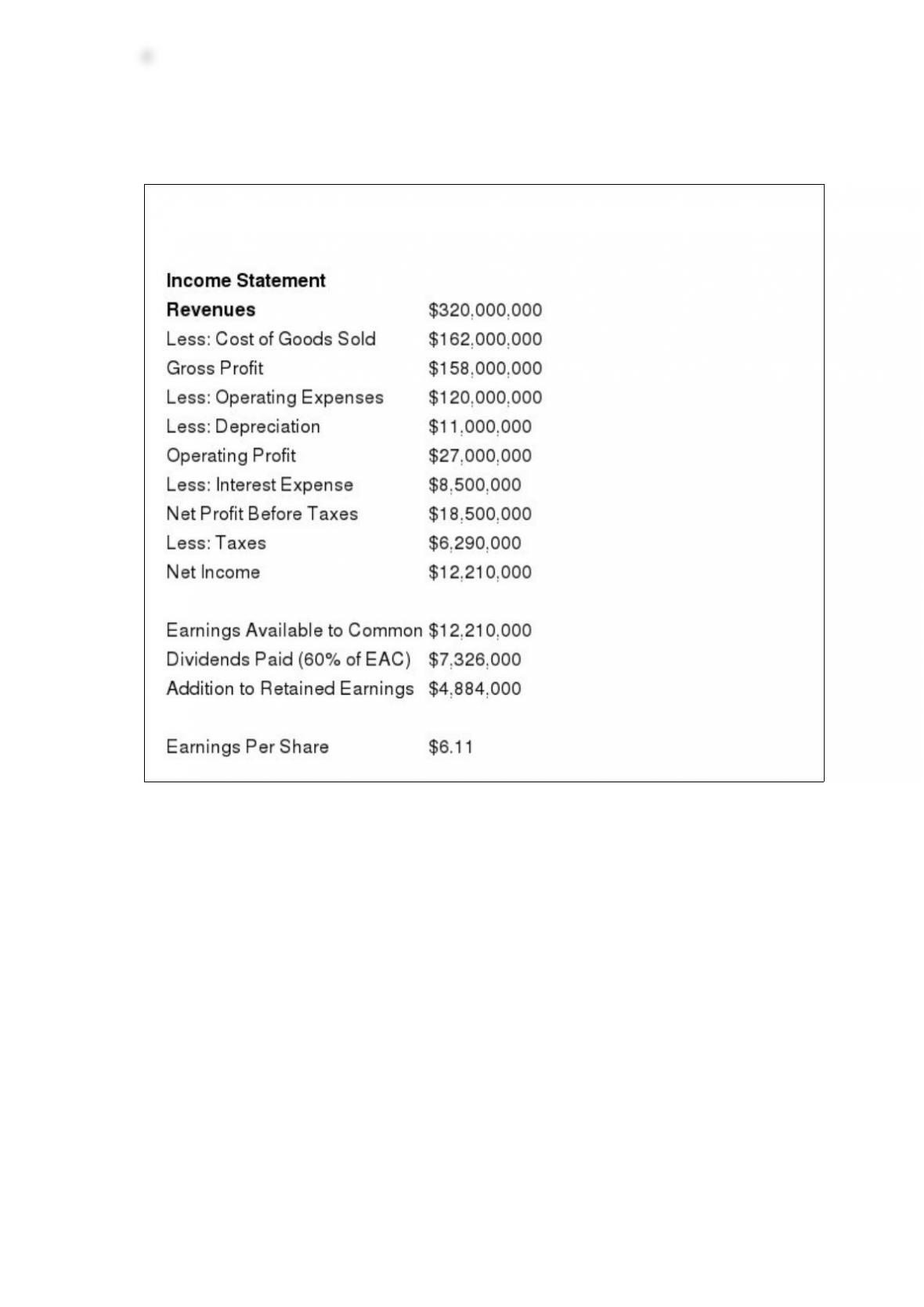
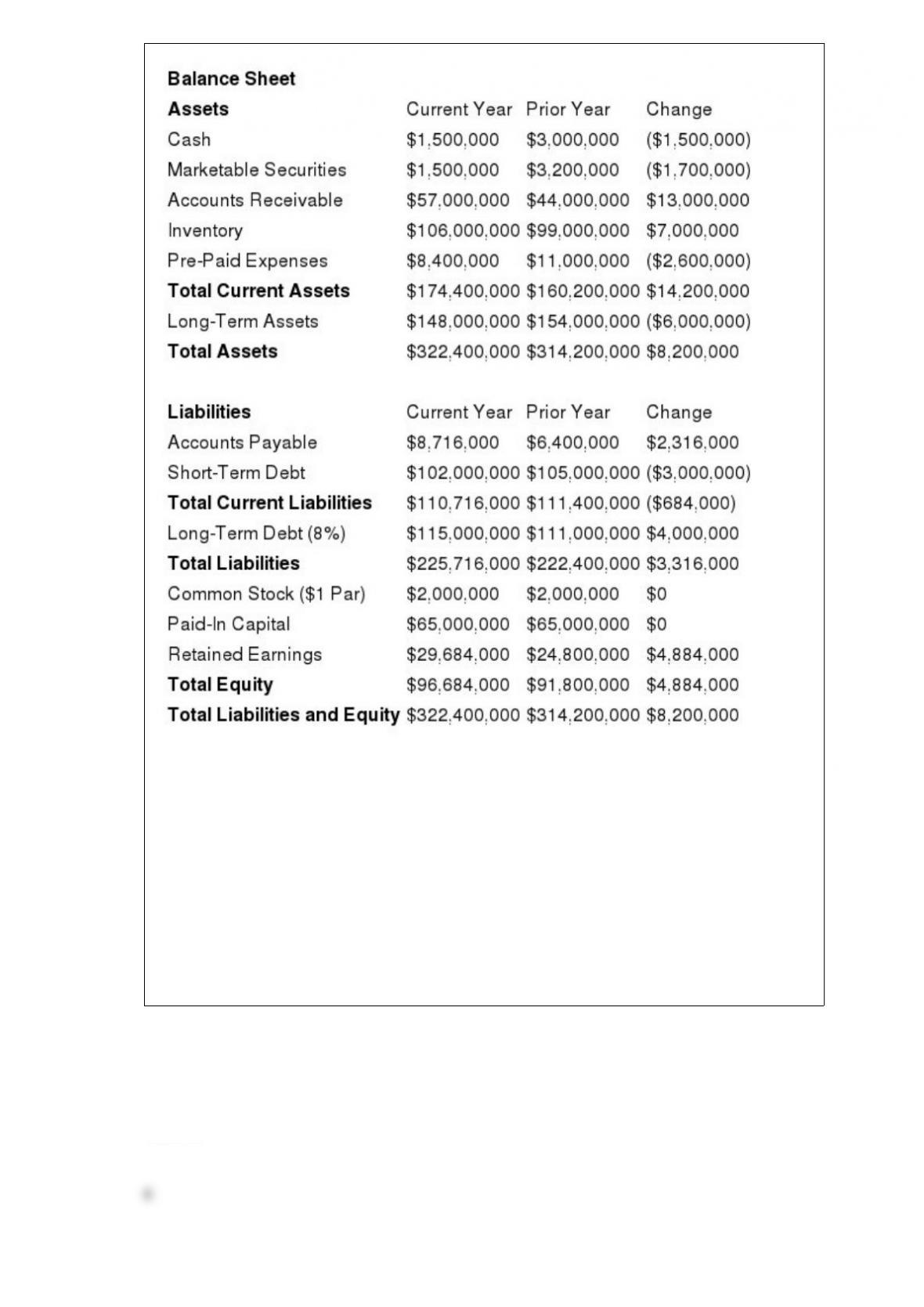
What is Dylan’s return on assets for the current year?
a. 3.8%
b. 5.1%
c. 5.4%
d. 12.6%
a. 13.3%
Answer:

When you own the underlying security, your spot position is _______.
a. flat.
b. long.
c. short.
d. is also known as your cash position.
e. b. and d.
Answer:
FASB 115 requires historical costs to be used for:
a. trading account securities.
b. available-for-sale securities.
c. retained earnings.
d. held-to-maturity securities.
e. net income.
Answer:

Salomon Brothers’ collateralized automobile receivables securities are labeled:
a. AUTOs.
b. CARDs.
c. VANs.
d. CARs.
e. RACs.
Answer:
International loans originate from:
a. offices of foreign subsidiaries.
b. Edge Act corporations.
c. international departments of domestic banks.
d. all of the above
e. a. and c. only
Answer: