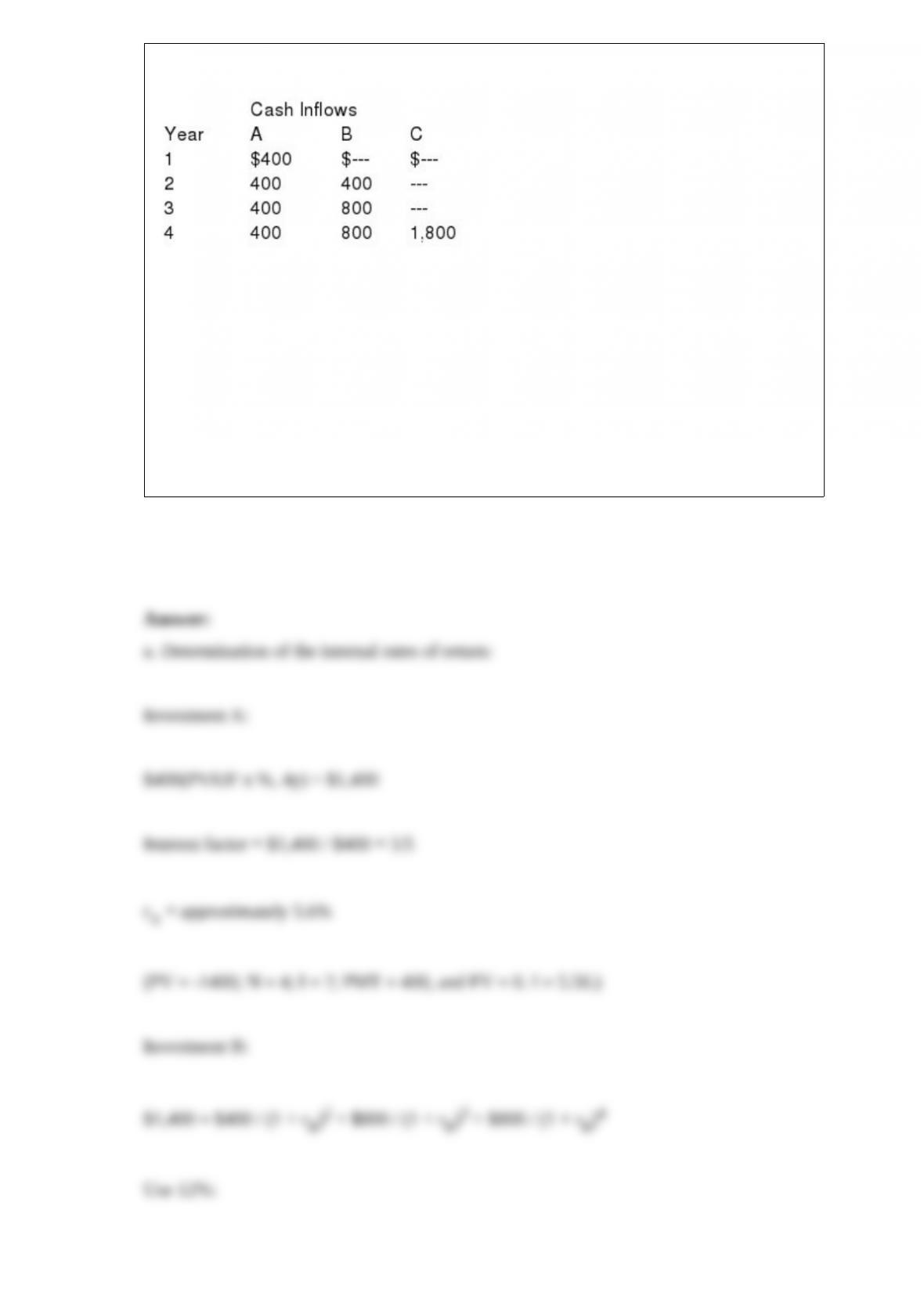
A firm has the following investment alternatives:
Each investment costs $1,400 and the firm’s cost of capital is 10 percent.
a. What is each investment’s internal rate of return?
b. Should the firm make any of these investments?
c. What is each investment’s net present value?
d. Should the firm make any of these investments?
One method to identify slow paying accounts is to
a. age the accounts receivable
b. determine the desired safety stock
c. calculate the inventory turnover
d. age the accounts payable
An annuity due is a set of
a. equal, annual payments made at the end of the year
b. equal, annual payments
c. equal, annual payments made at the beginning of the year
d. rising annual payments
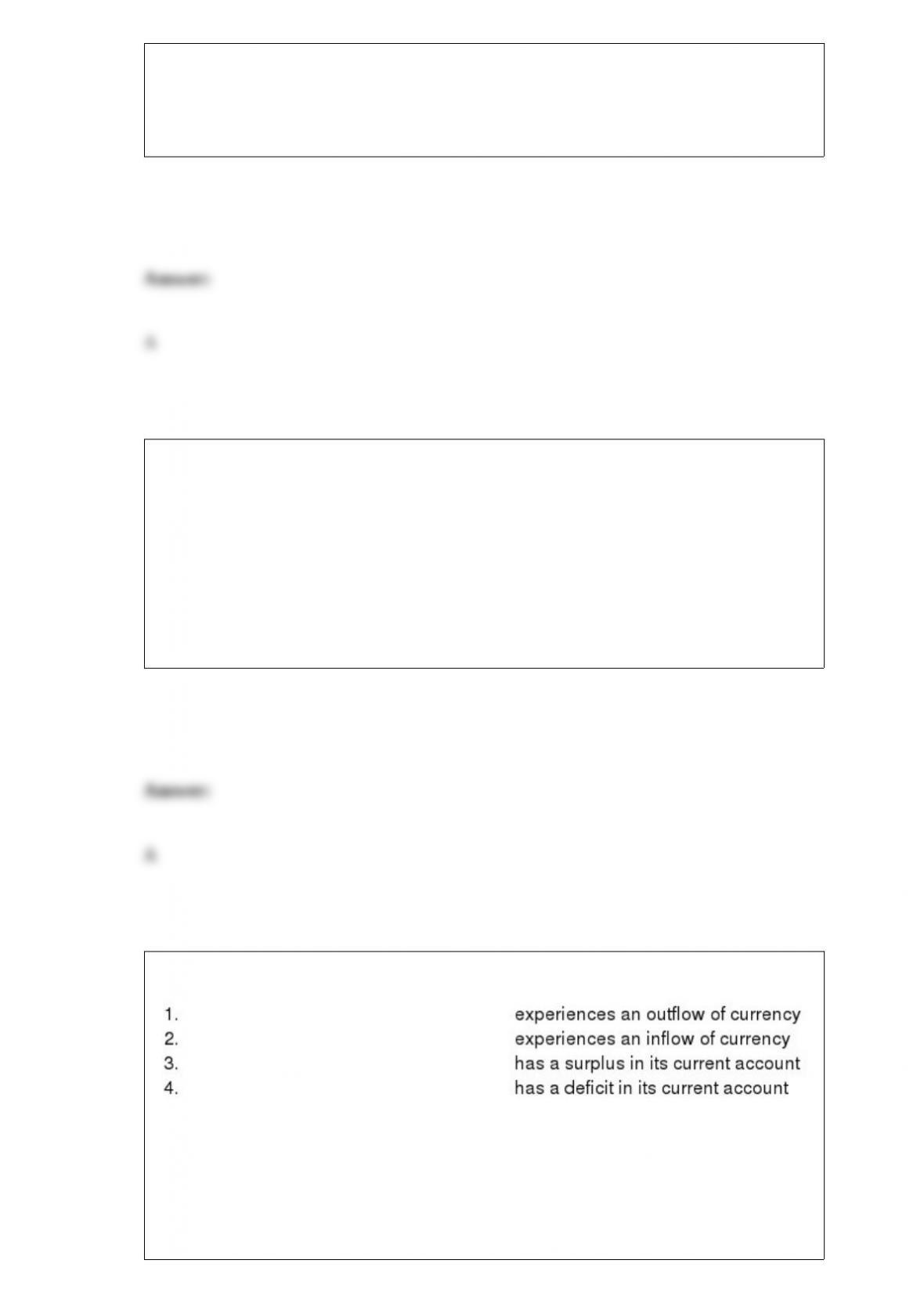
The Ibbotson Associates studies of rates of return suggest that
a. 1 and 2

b. 1 and 3
c. 2 and 3
d. all three
For investors, an annuity due
a. is to be preferred to an ordinary annuity
b. is worth less than an equal lump sum received at the end of the time period
c. receives payments at the end of the time period
d. produces unequal payments
In an efficient market, security prices
a. adjust rapidly to new information
b. adjust slowly to new information
c. poorly value a firm’s future prospects
d. indicate that the firm is overvalued

Efficient securities markets imply that
a. investors cannot outperform the market
b. investors cannot expect to outperform the market
c. security prices are randomly determined
d. there is little risk of loss over an extended investment horizon
Which of the following is not true if interest rates rise?
a. Existing bonds may be called.
b. Prices of existing bonds fall.
c. The yield to maturity rises more than the current yield.
d. The market price of a zero coupon bond falls.

Which of the following causes a currency inflow?
a. purchase of short-term foreign securities
b. dividends paid to foreign investors
c. a debit balance
d. dividends received from foreign investments
Variable costs
a. are greater than fixed costs
b. are greater than total costs
c. are paid after fixed costs
d. change with the level of output
Aging accounts receivable
a. shows which accounts are slow payers
b. requires a more lenient credit policy
c. increases the firm’s cash
d. decreases the firm’s inventory
Default is
a. failure to meet any of the terms of the indenture
b. failure to make dividend payments
c. only failure to make interest payments
d. failure to maintain more assets than liabilities
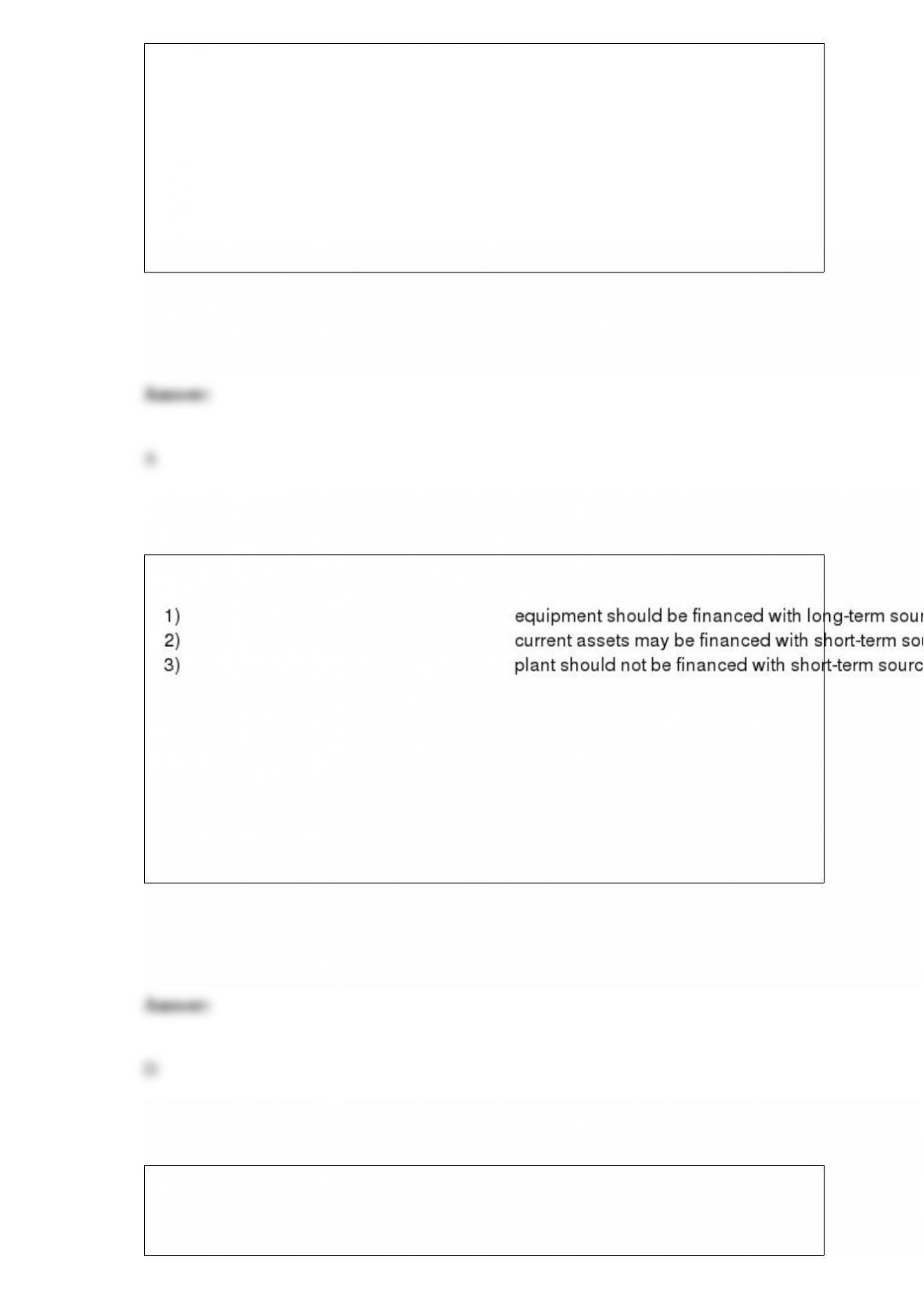
If a nation exports fewer goods than it imports, it
a. 1 and 3
b. 1 and 4
c. 2 and 3

d. 2 and 4
The internal rate of return and net present value methods of capital budgeting assume
the cash flows are reinvested at
a. the cost of capital
b. the internal rate of return
c. the cost of capital for IRR and the internal rate of return for NPV
d. the cost of capital for NPV and the internal rate of return for IRR
Assets equal
a. liabilities
b. equity
c. liabilities plus equity
d. liabilities minus equity

A high current ratio suggests that the firm
a. has a small amount of long-term debt
b. is carrying little inventory
c. is able to meet its current obligations
d. is profitable
Realized returns by mutual funds
a. tend to outperform the market
b. are usually retained to finance growth
c. exceed realized losses
d. are generally distributed
Break-even analysis is not concerned with
a. the relationship between financial leverage and risk
b. the relationship between sales and profits
c. the relationship between total costs and revenues
d. the relationship between fixed costs and output
The matching principle suggests that
a. 1 and 2
b. 1 and 3
c. 2 and 3
d. 1, 2, and 3
The firm’s cost of debt is 8 percent, and the cost of retained earnings is 14 percent.
However, if the firm exhausts its retained earnings of $23,678, the cost of equity rises to
14.9 percent. Currently management believes that the firm’s current combination of 35
percent debt and 65 percent equity is the optimal capital structure.
a. What is the firm’s cost of capital if it uses only retained earnings?
b. What is the firm’s cost of capital if it uses new equity?
c. How much total financing may the firm have before the marginal cost of capital
rises?
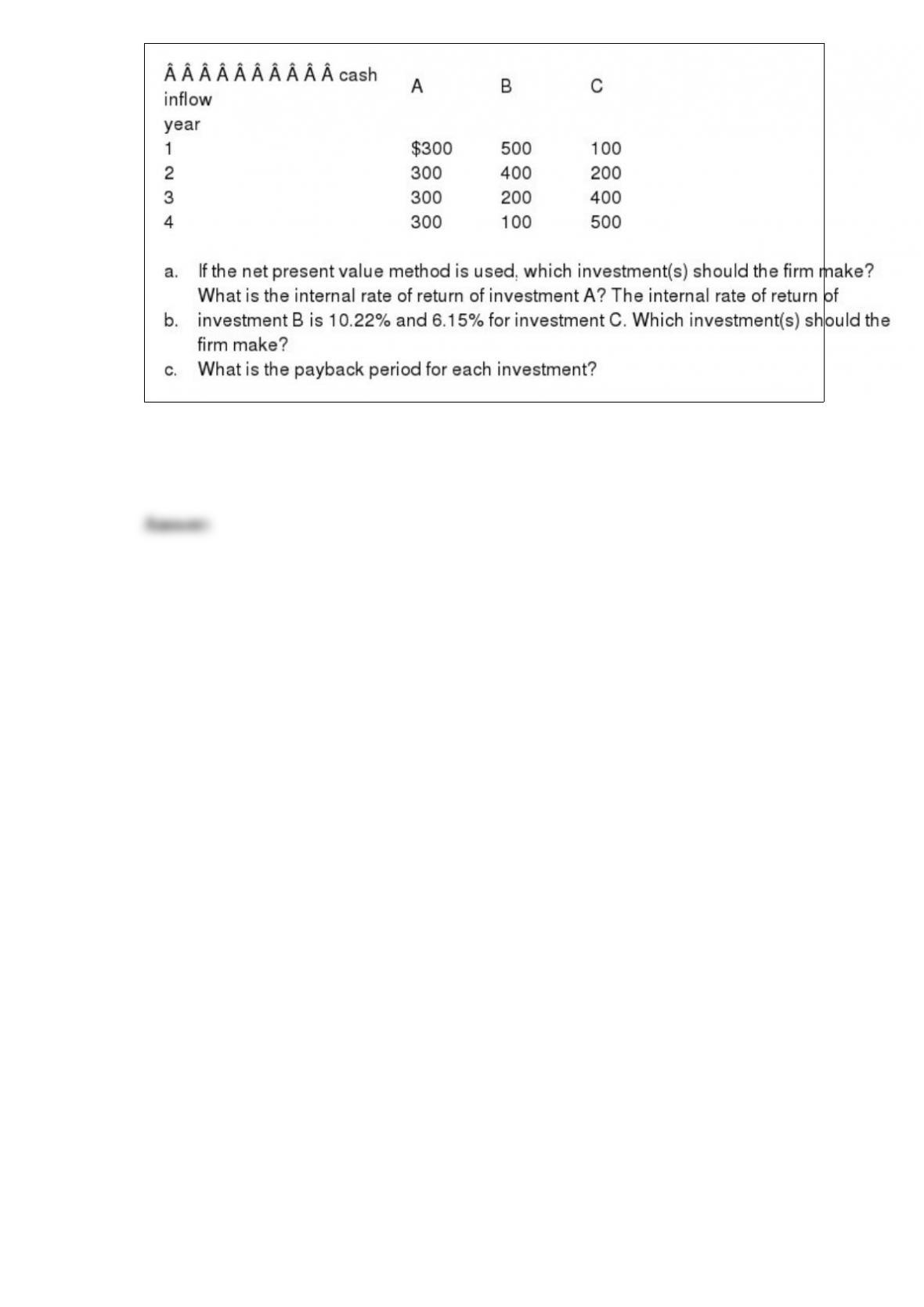
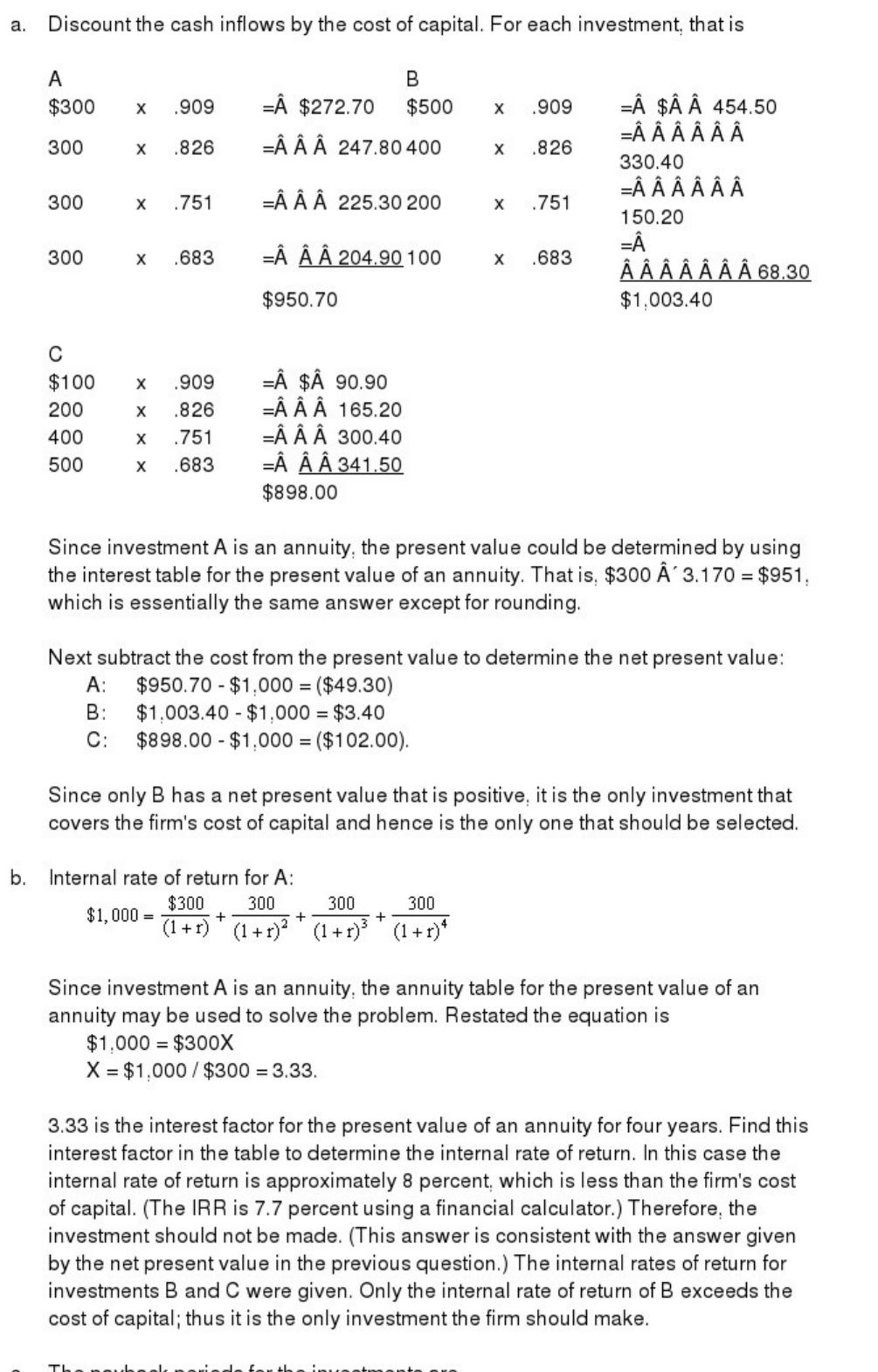
A firm has three investment opportunities. Each costs $1,000, and the firm’s cost of
capital is 10 percent. The cash inflow of each investment is as follows:
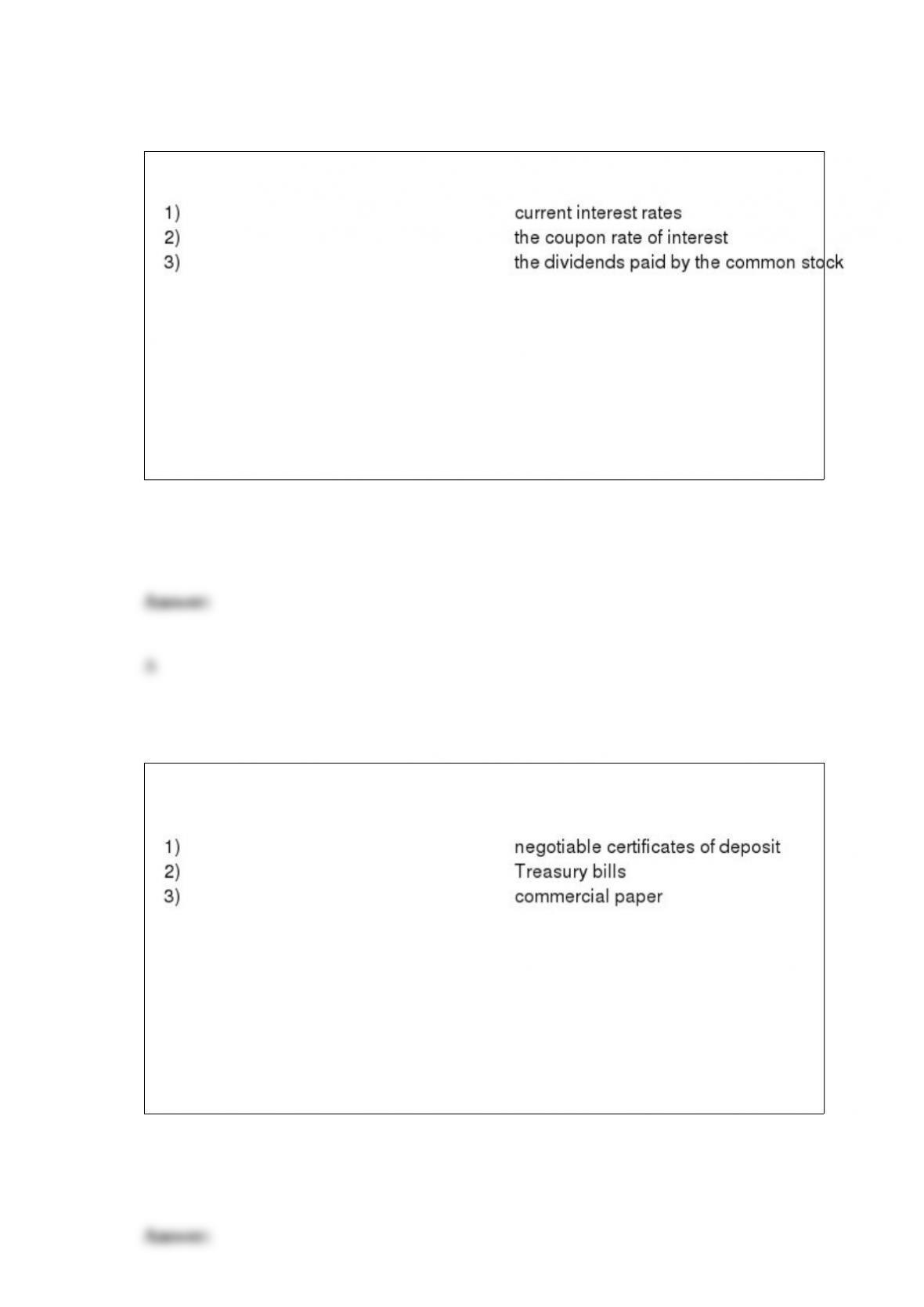
The value of a convertible bond as debt depends on
a. 1 and 2
b. 1 and 3
c. 2 and 3
d. 1, 2, and 3
If a firm has excess cash that it will need after a period of four months, the financial
manager may acquire
a. 1 and 2
b. 1 and 3
c. 2 and 3
d. 1, 2, and 3
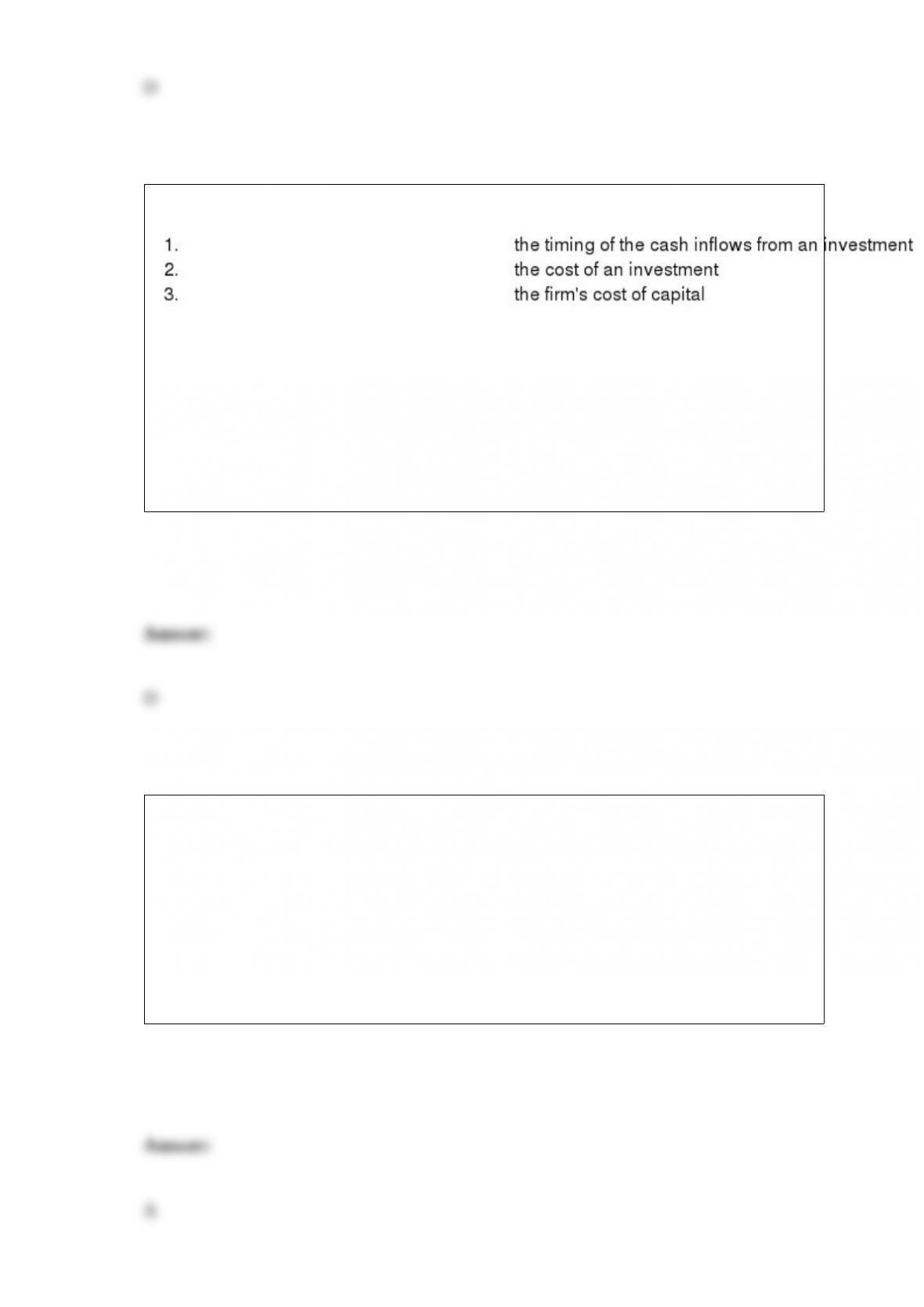
The net present value method considers
a. 1 and 2
b. 1 and 3
c. 2 and 3
d. 1, 2, and 3
A financial lease is similar to an operating lease, since
a. in both cases the lessee has the use of the asset
b. in both cases the lease has a maintenance contract
c. the lessee owns the asset
d. the lease payment is not tax deductible

A stock dividend
a. reduces the firm’s cash
b. increases the firm’s total equity
c. decreases the firm’s retained earnings
d. increases the firm’s assets
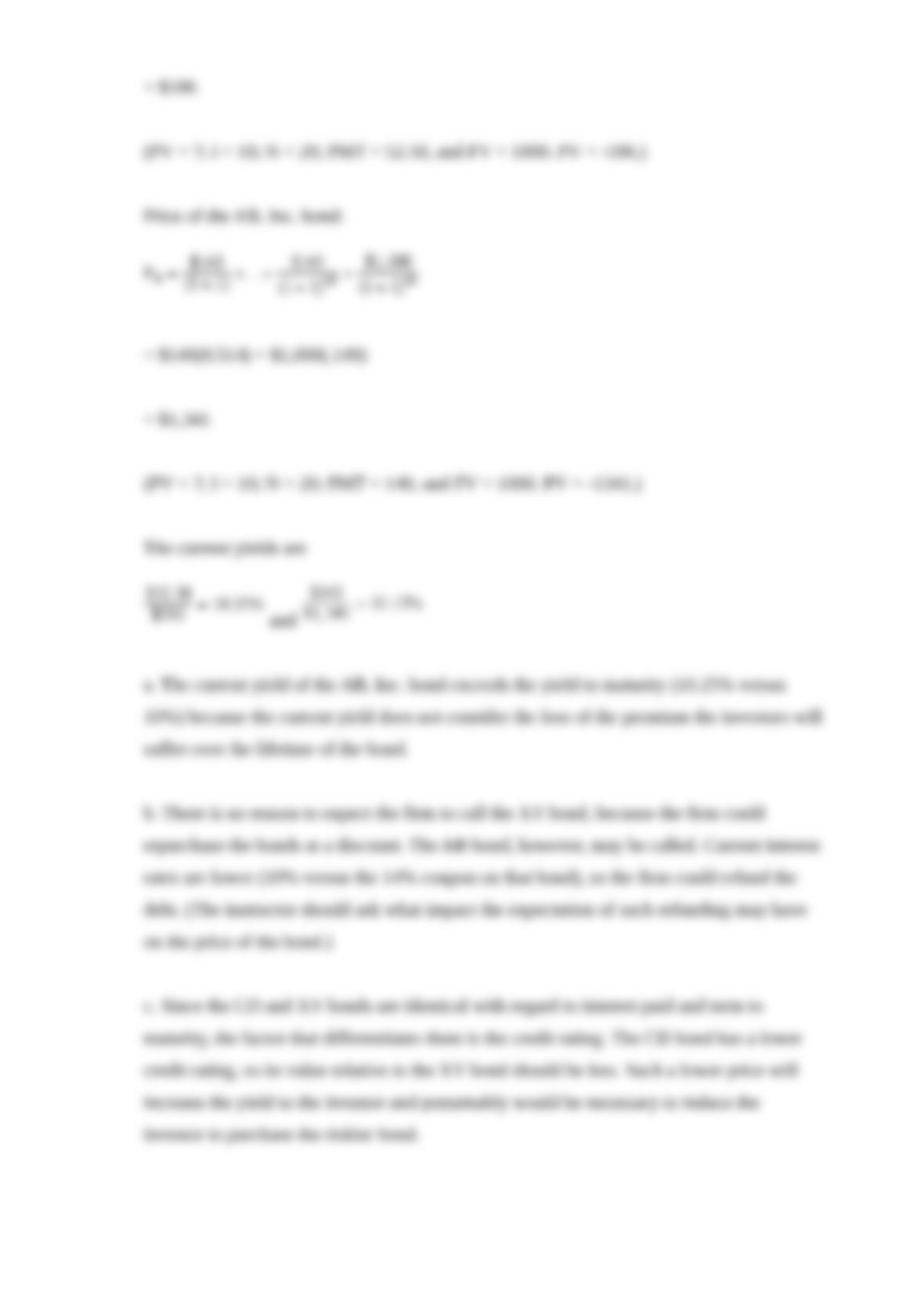
Determine the current market prices of the following $1,000 bonds if the comparable
rate is 10 percent and answer the following questions.
XY 5 1/4 percent (interest paid annually) for 20 years
AB 14 percent (interest paid annually) for 20 years
a. Which bond has a current yield that exceeds the yield to maturity?
b. Which bond may you expect to be called? Why?
c. If CD, Inc. has a bond with a 5 1/4 percent coupon and a maturity of 20 years but
which was lower rated, what would be its price relative to the XY, Inc bond? Explain.
If a stock rose from $10 to $30 over ten years, the annual rate of return
a. was 20 percent
b. was greater than 20 percent
c. was less than 20 percent
d. cannot be determined
A stand-alone perspective for capital budgeting suggests
a. an investment has no risk
b. cash flows are independent of the firm’s other investments
c. portfolio effects are ignored
d. the investment has a low beta
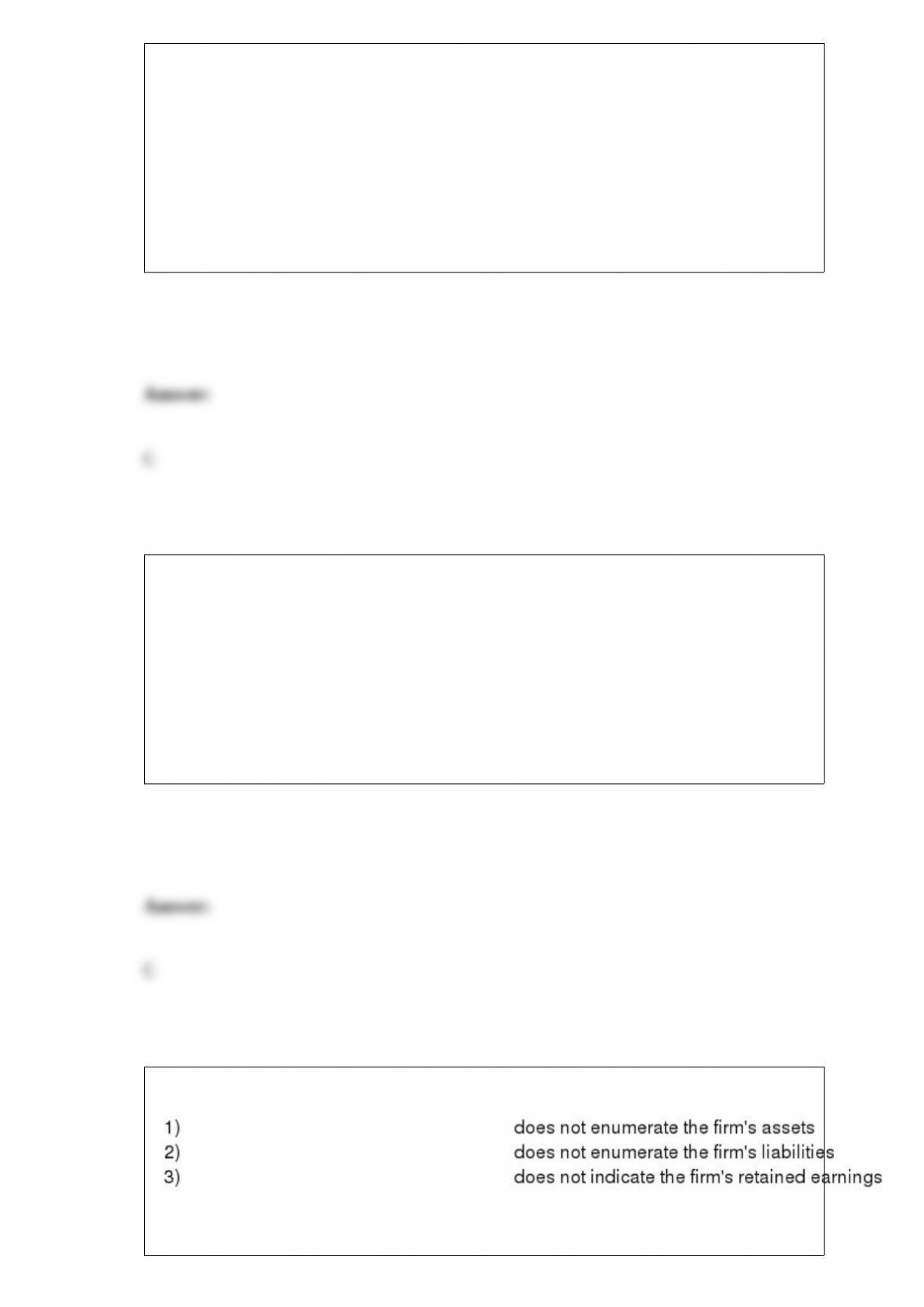
A cash budget differs from a balance sheet because the cash budget
a. 1 and 2
b. 1 and 3
c. 2 and 3
d. 1, 2, and 3
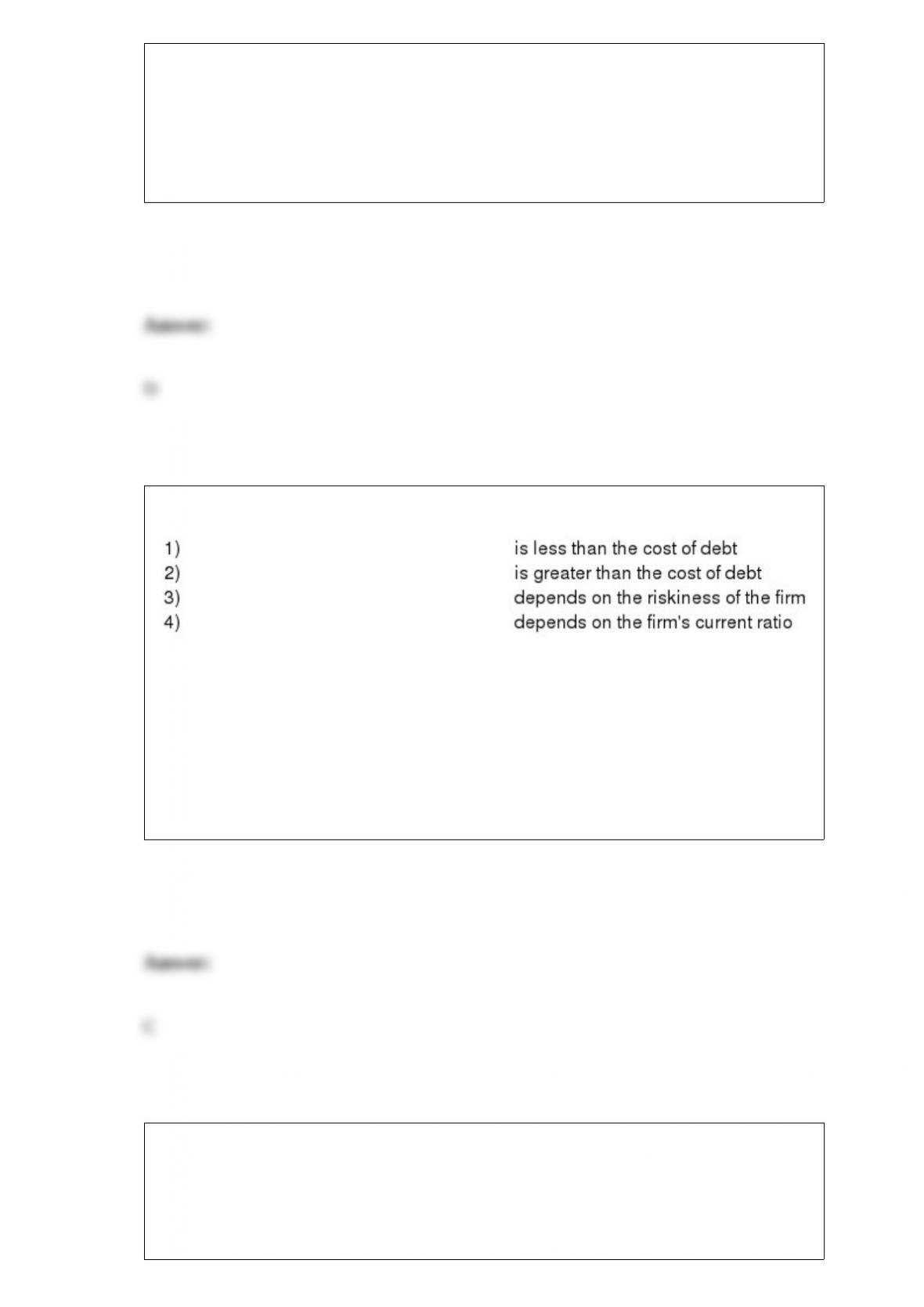
The cost of equity
a. 1 and 3
b. 1 and 4
c. 2 and 3
d. 2 and 4
If a company fails to meet the terms of the indenture, it is
a. bankrupt
b. in default

c. profitable
d. in registration
The lower the debt ratio,
a. the higher is the use of financial leverage
b. the lower is the use of financial leverage
c. the lower are the firm’s total assets
d. the higher are the firm’s total assets
An investor who writes a call option closes the position by
a. purchasing the stock
b. selling the option
c. letting the option expire
d. repurchasing the option
The SEC establishes a price for a new issue of securities.
Regression analysis may be used to estimate the slope of the line relating sales and
accounts receivable.
When individuals withdraw cash from checking accounts, the money supply is
unaffected.
The target federal funds rate is set by the supply and demand for commercial bank
reserves.
A put option is the right to sell stock at a specified price within a specified time period.
Since a corporation is responsible for its debts, creditors may sue it for payment.
The numerical value of the quick ratio can never exceed the numerical value of the
current ratio.
An employee and employer contribute $3,000 annually for 20 years to a retirement
account that earns 9 percent a year, how much will the employee be able to withdraw
from the account for 25 years?
If a new college graduate wants a car costing $15,000, how much must be saved
annually if the funds earn 5 percent?
Retained earnings are part of the stockholders’ equity in a corporation.
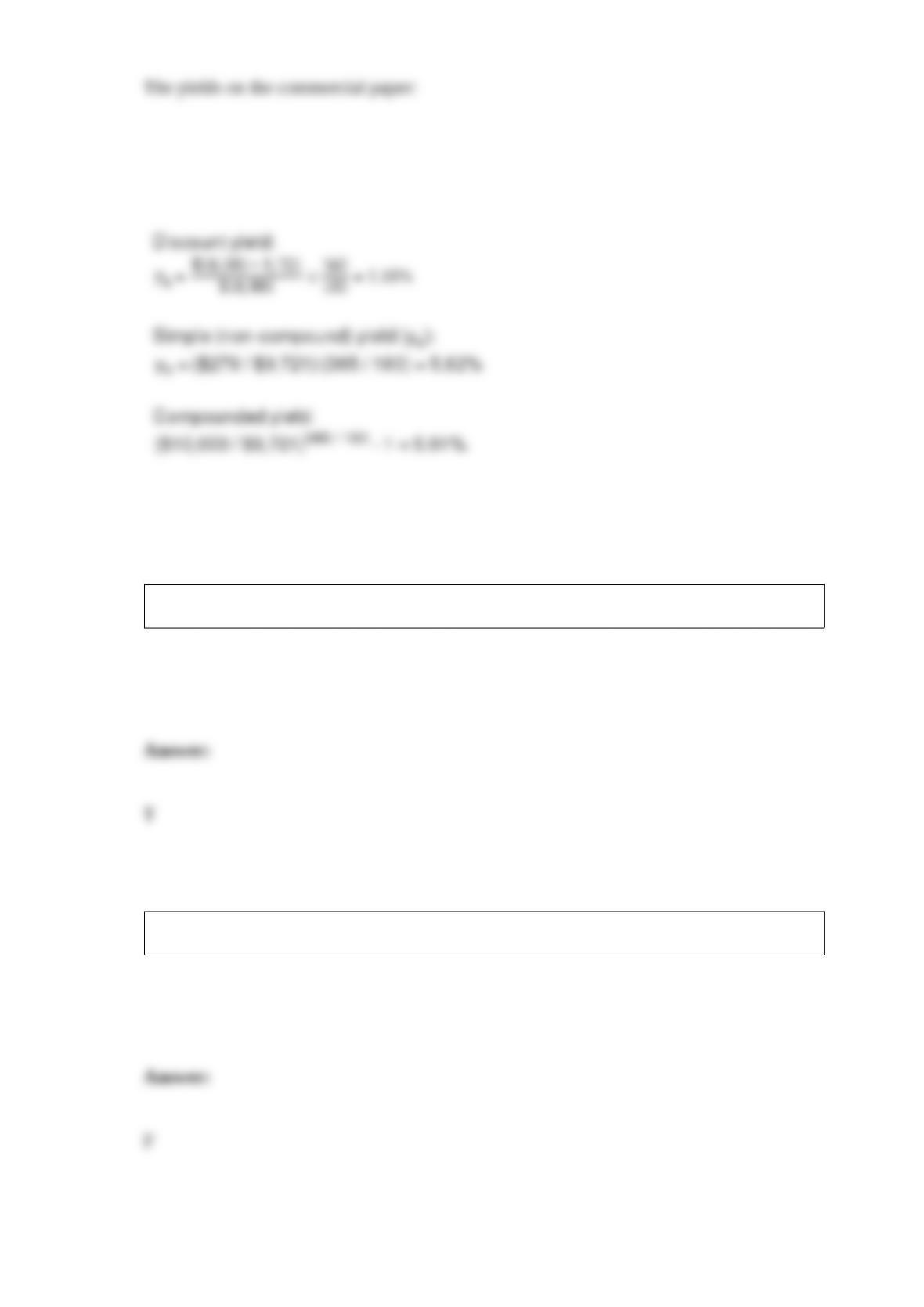
What is the discount yield, the simple yield, and the compound yield on a $10,000 nine
month (270 day) treasury bill that cost $9,676? What are the same yields on a $10,000
six-month (180-day) piece of commercial paper that cost $9,721?
Preferred stock dividends are paid after interest but before dividends to common stock.
Linear break-even analysis assumes that variable costs rise with reductions in output.

Certainty equivalents adjust an investment’s cash outflows in terms of a risk-free return.
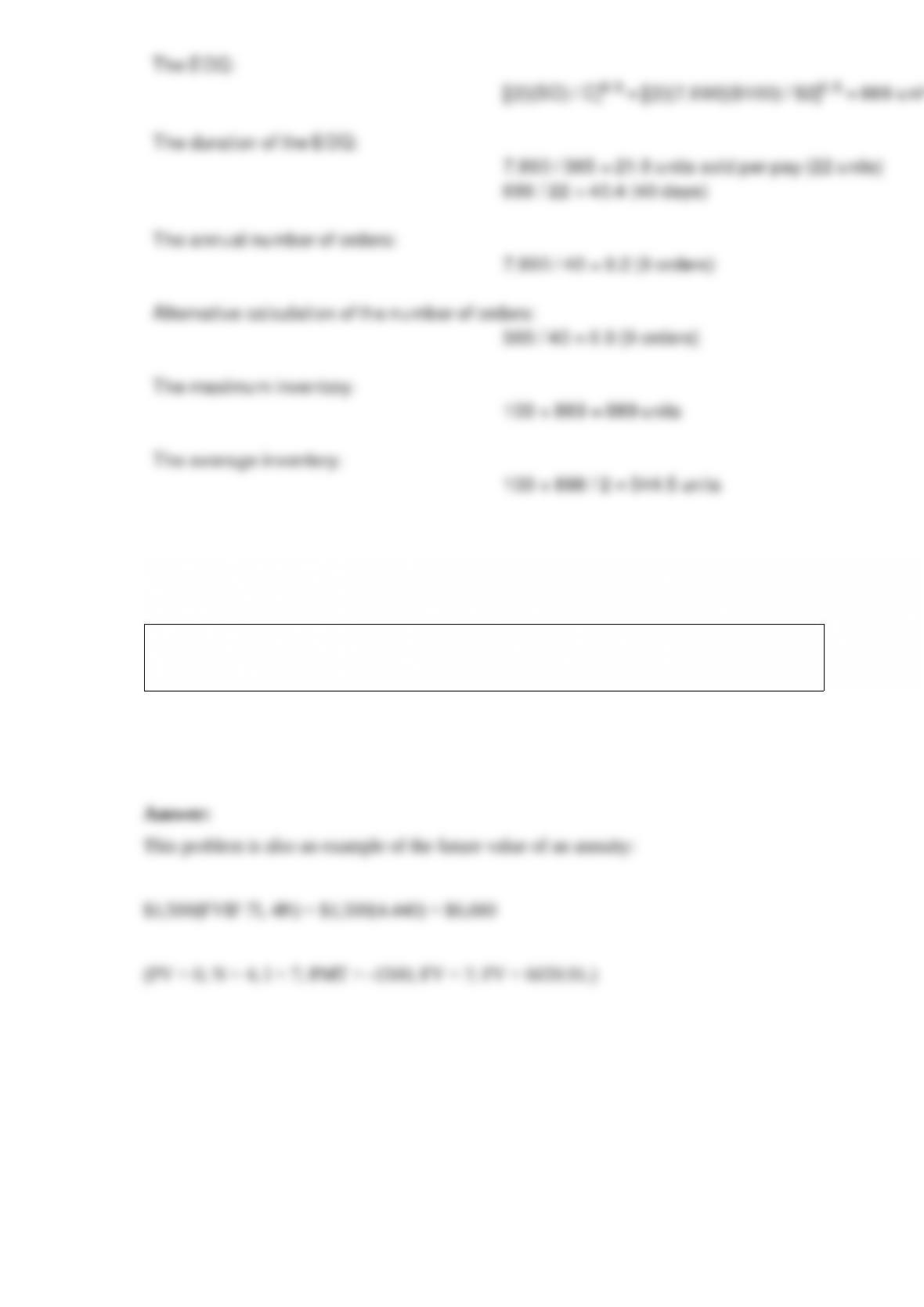
A firm annually sells 7,890 units. The cost of placing an order is $100 and the carrying
costs are $2 a unit. What are the EOQ, the duration of the EOQ, and how many orders
are placed annually? If the safety stock is 100 units, what are the maximum and average
levels of inventory?
If an individual can save $1,500 annually, how much will have been accumulated after
4 years if the funds earn 7 percent?