
Consider the following two projects:
The NPV for project beta is closest to:
A) $24.01
B) $16.92
C) $20.96
D) $14.41
Which of the following is NOT one of Modigliani and Miller’s set of conditions referred
to as perfect capital markets?
A) All investors hold the efficient portfolio of assets.
B) There are no taxes, transaction costs, or issuance costs associated with security
trading.
C) A firm’s financing decisions do not change the cash flows generated by its
investments, nor do they reveal new information about them.
D) Investors and firms can trade the same set of securities at competitive market prices
equal to the present value of their future cash flows.
Consider the following realized annual returns:
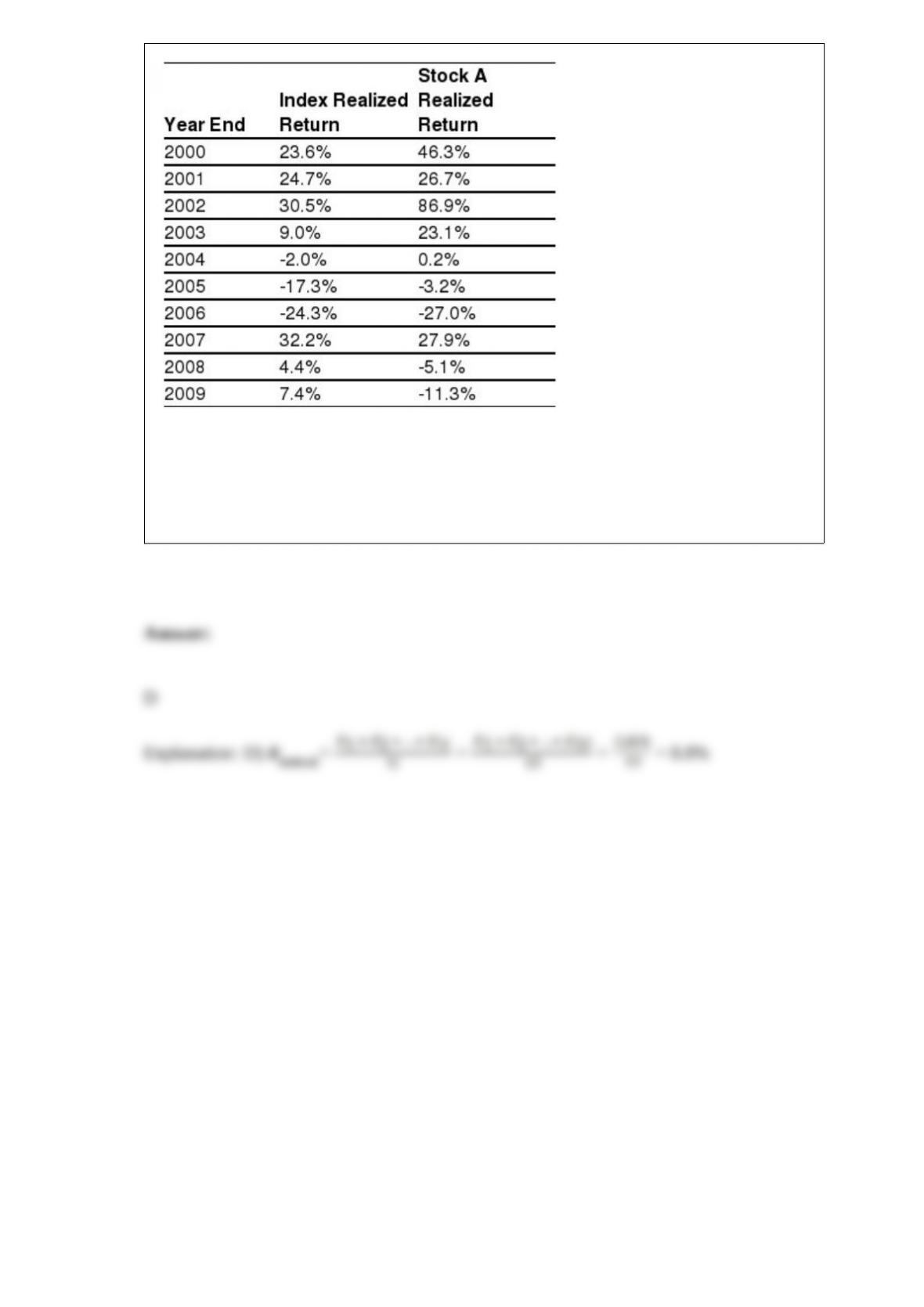
The variance of the returns on the Index from 2000 to 2009 is closest to:
A) .0450
B) .3400
C) .1935
D) .0375

Which of the following statements is FALSE?
A) We must discount the cash flows from stock based on the equity cost of capital for
the stock.
B) The divided yield is the percentage return the investor expects to earn from the
dividend paid by the stock.
C) The firm might pay out cash to its shareholders in the form of a dividend.
D) The dividend yield is the expected annual dividend of a stock, divided by its
expected future sale price.
Which of the following statements is FALSE?
A) A biotech firm might be developing drugs with tremendous potential, but it has yet
to receive any revenue from these drugs. Such a firm will not have taxable earnings. In
that case, a tax-optimal capital structure does not include debt.

B) No corporate tax benefit arises from incurring interest payments that regularly
exceed EBIT.
C) The optimal level of leverage from a tax saving perspective is the level such that
interest equals EBIT.
D) In general, as a firm’s interest expense approaches its expected taxable earnings, the
marginal tax advantage of debt increases, limiting the amount of equity the firm should
use.
Consider the following two projects:
The payback period for project beta is closest to:
A) 2.9 years
B) 3.1 years
C) 2.6 years
D) 3.2 years
If an investment providing a nominal return of 12.25% only offers a real rate of return
of 5.70%, then the inflation rate is closest to:
A) 5.70%
B) 6.20%
C) 6.55%
D) 12.25%
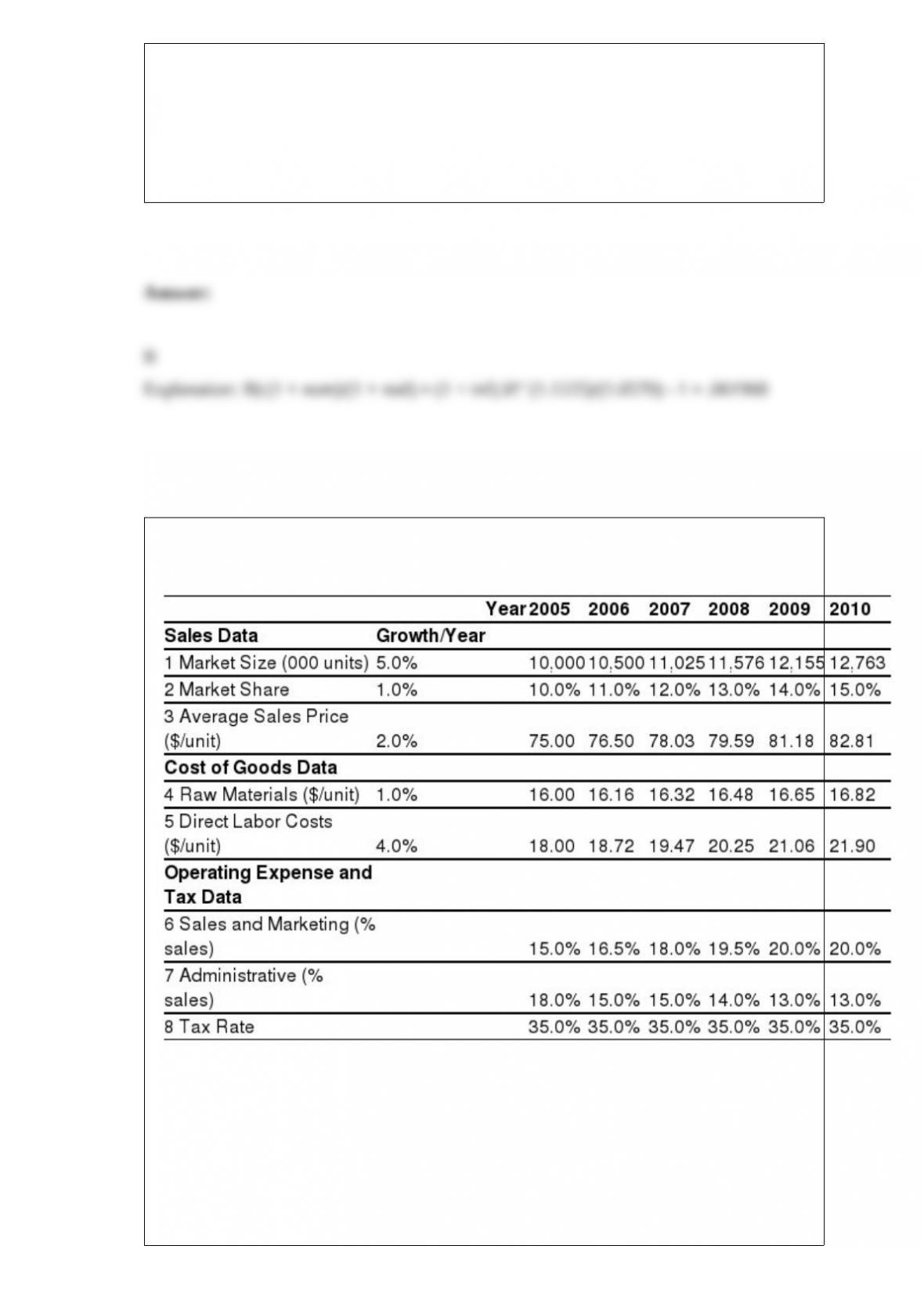
Ideko Sales and Operating Cost Assumptions
Based upon Ideko’s Sales and Operating Cost Assumptions, what production capacity
will Ideko require in 2007?
A) 1,505 units
B) 1,323 units

C) 1,914 units
D) 1,115 units
Which of the following statements is FALSE?
A) When a bond is trading at a discount, the price drop when a coupon is paid will be
larger than the price increase between coupons, so the bond’s discount will tend to
decline as time passes.
B) When a bond trades at a price equal to its face value, it is said to trade at par.
C) As interest rates and bond yield rise, bond prices will fall.
D) Ultimately, the prices of all bonds approach the bond’s face value when the bonds
mature and their last coupon are paid.
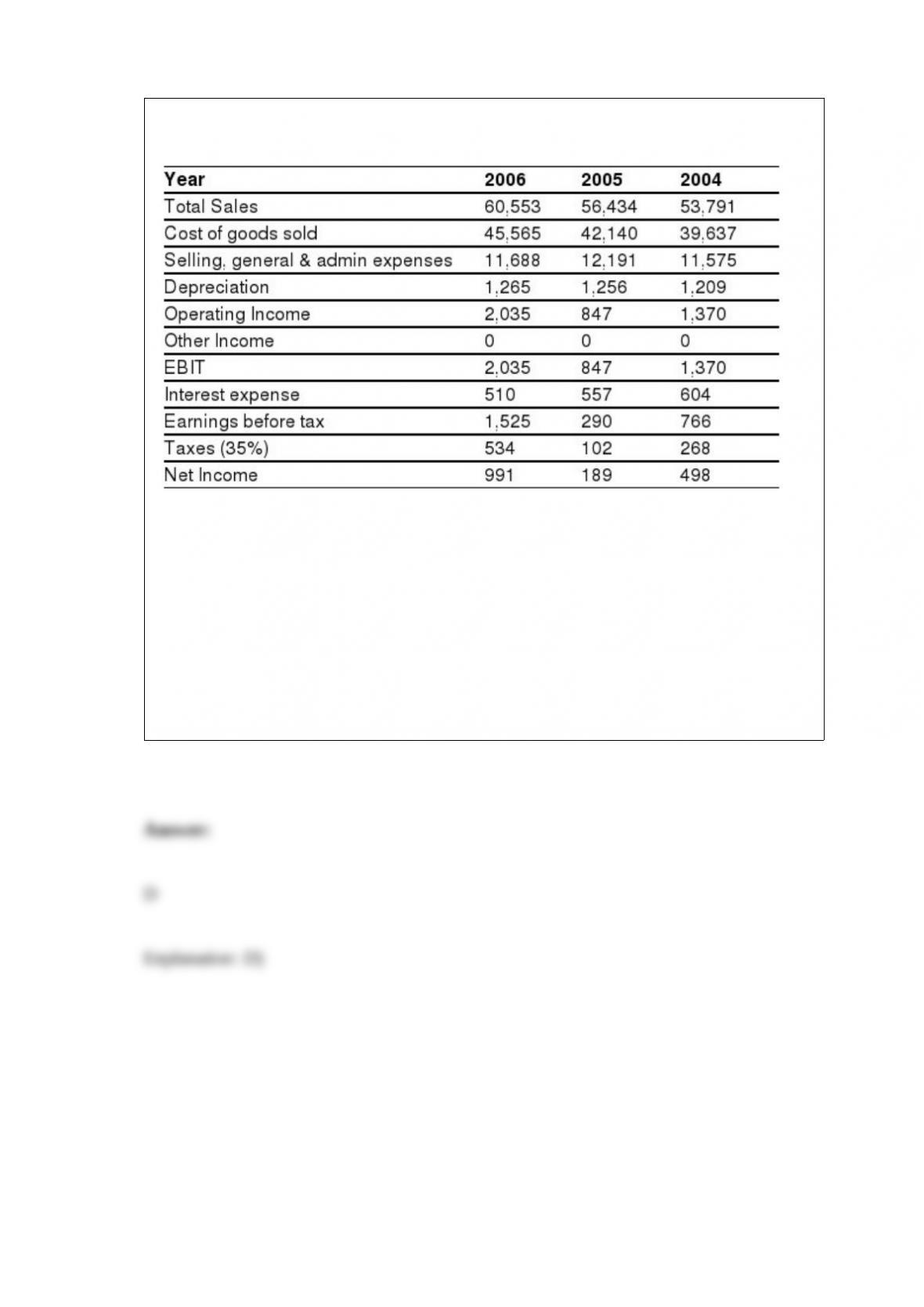
Consider the following income statement for Kroger Inc. (all figures in $ Millions):
The interest rate tax shield for Kroger in 2005 is closest to:
A) $362 million
B) $36 million
C) $102 million
D) $195 million

Which of the following influences a firm’s choice of capital structure?
A) Taxes
B) Agency costs and benefits of leverage
C) Signaling and adverse selection
D) All of the above influence capital structure decisions.
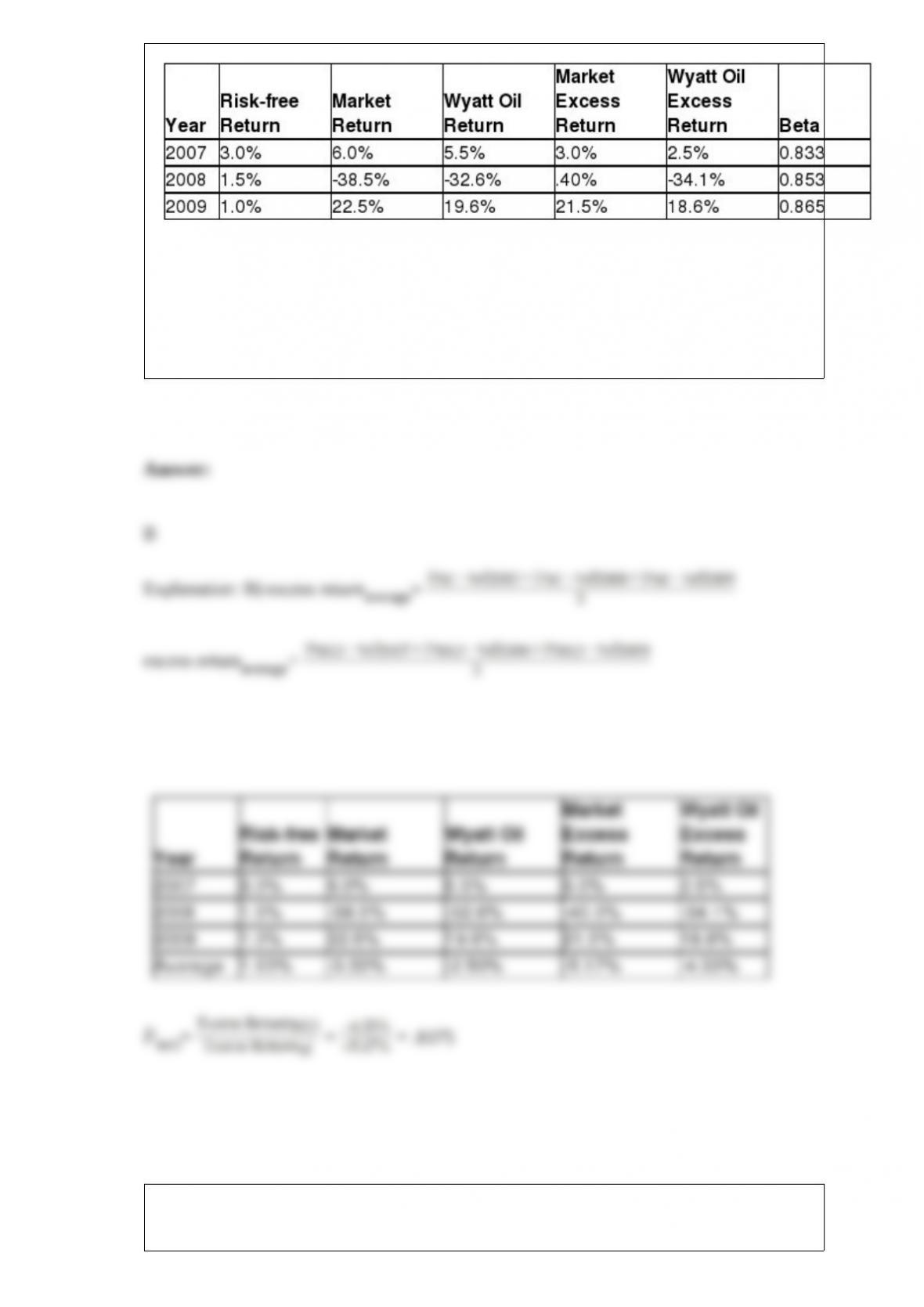
Using the average historical excess returns for both Wyatt Oil and the Market portfolio,
your estimate of Wyatt Oil’s Beta is closest to:
A) 0.75
B) 0.84
C) 1.00
D) 1.19
Which of the following statements is FALSE?
A) In bankruptcy, management is given the opportunity to reorganize the firm and
renegotiate with debt holders.
B) Because a corporation is a separate legal entity, when it fails to repay its debts, the
people who lent to the firm, the debt holders are entitled to seize the assets of the
corporation in compensation for the default.
C) As long as the corporation can satisfy the claims of the debt holders, ownership
remains in the hands of the equity holders.
D) If the corporation fails to satisfy debt holders’ claims, debt holders may lose control
of the firm.
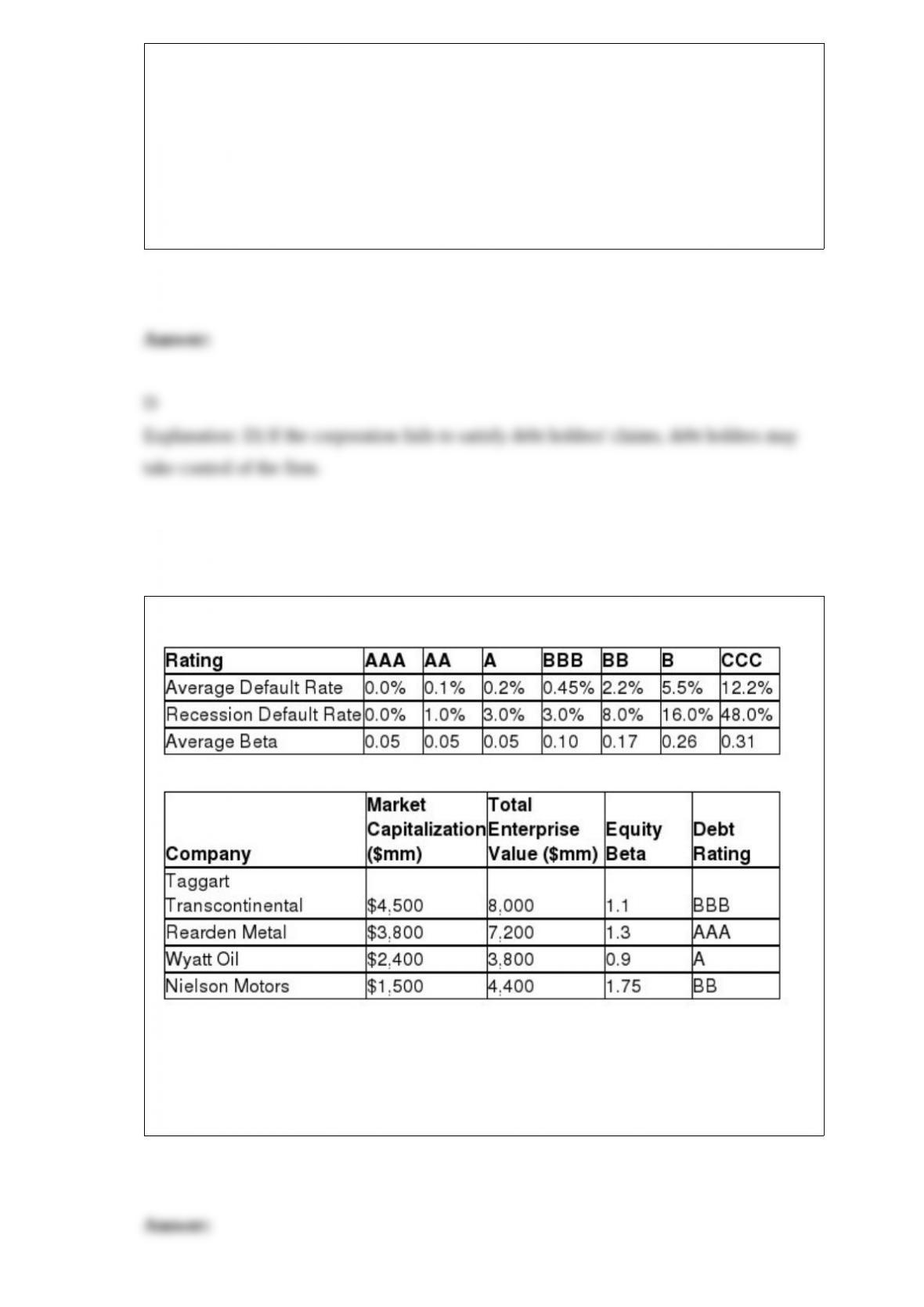
Consider the following information regarding corporate bonds:
Your estimate of the asset beta for Rearden Metal is closest to:
A) 0.42
B) 0.59
C) 0.66
D) 0.71

Which of the following statements is FALSE?
A) The firm’s weighted average cost of capital (WACC) denoted rwaccis the cost of
capital that reflects the risk of the overall business, which is the combined risk of the
firm’s equity and debt.
B) Intuitively, the difference between the discounted free cash flow model and the
dividend-discount model is that in the divided-discount model the firm’s cash and debt
are included indirectly through the effect of interest income and expenses on earnings in
the dividend-discount model.
C) We interpret rwaccas the expected return the firm must pay to investors to
compensate them for the risk of holding the firm’s debt and equity together.
D) When using the discounted free cash flow model we should use the firm’s equity
cost of capital.
Assets $200 million
Shareholder Equity $100 million
Sales $300 million
Net Income $15 million
Interest Expense $2 million
If ECE’s return on assets (ROA) is 12%, then ECE’s net income is:
A) $6 million
B) $12 million
C) $22 million
D) $36 million

Suppose the interest rate is 9% APR with monthly compounding. Then the present
value of an annuity that pays $250 every three months for the next five years is closest
to:
A) $2,280
B) $3,985
C) $3,990
D) $3,995
Which of the following statements is FALSE?
A) Investors pay less for bonds with credit risk than they would for an otherwise
identical default-free bond.
B) Credit spreads fluctuate as perceptions regarding the probability of default change.
C) Credit spreads are high for bonds with high ratings.
D) We refer to the difference between the yields of the corporate bonds and the
Treasury yields as the default spread or credit spread.

Von Bora Corporation is expected pay a dividend of $1.40 per share at the end of this
year and a $1.50 per share at the end of the second year. You expect Von Bora’s stock
price to be $25.00 at the end of two years. Von Bora’s equity cost of capital is 10%.
Suppose you plan to hold Von Bora stock for only one year. Your capital gain rate from
holding Von Bora stock for the first year is closest to:
A) 3.5%
B) 4.0%
C) 6.0%
D) 4.5%
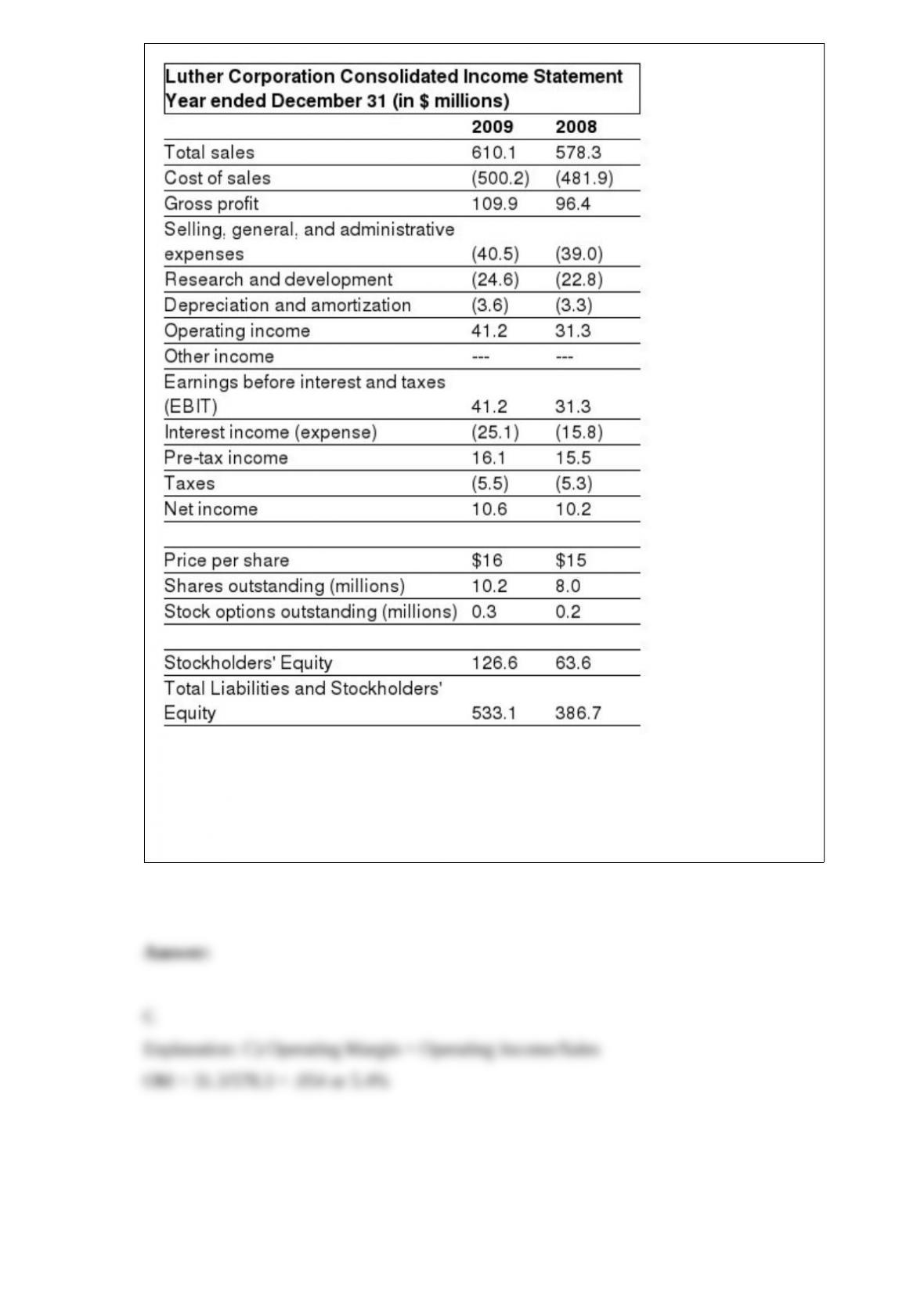
Luther’s Operating Margin for the year ending December 31, 2008 is closest to:
A) 0.5%
B) 0.7%
C) 5.4%
D) 6.8%