1) the term “countertrade” refers to
a.many different types of transactions in which the seller provides a buyer with goods
or services and promises in return to purchase goods or services from the buyer
b.barter, clearing arrangement, and switch trading
c.buy-back, counter purchase, and offset
d.all of the above
2) the worldwide method of declaring a national tax jurisdiction
a.is also known as the residential method
b.is to tax national residents of the country on their worldwide income no matter in
which country it is earned
c.is different from the territorial method of declaring a national tax jurisdiction
d.all of the above
3) according to a recent un survey, the world fdi stock grew at what rate relative to
worldwide exports of goods and services?
a.the world fdi stock grew twice as fast as worldwide exports of goods and services
b.the world fdi stock grew at the same rate as worldwide exports of goods and services
c.the world fdi stock grew half as fast as worldwide exports of goods and services
d.none of the above
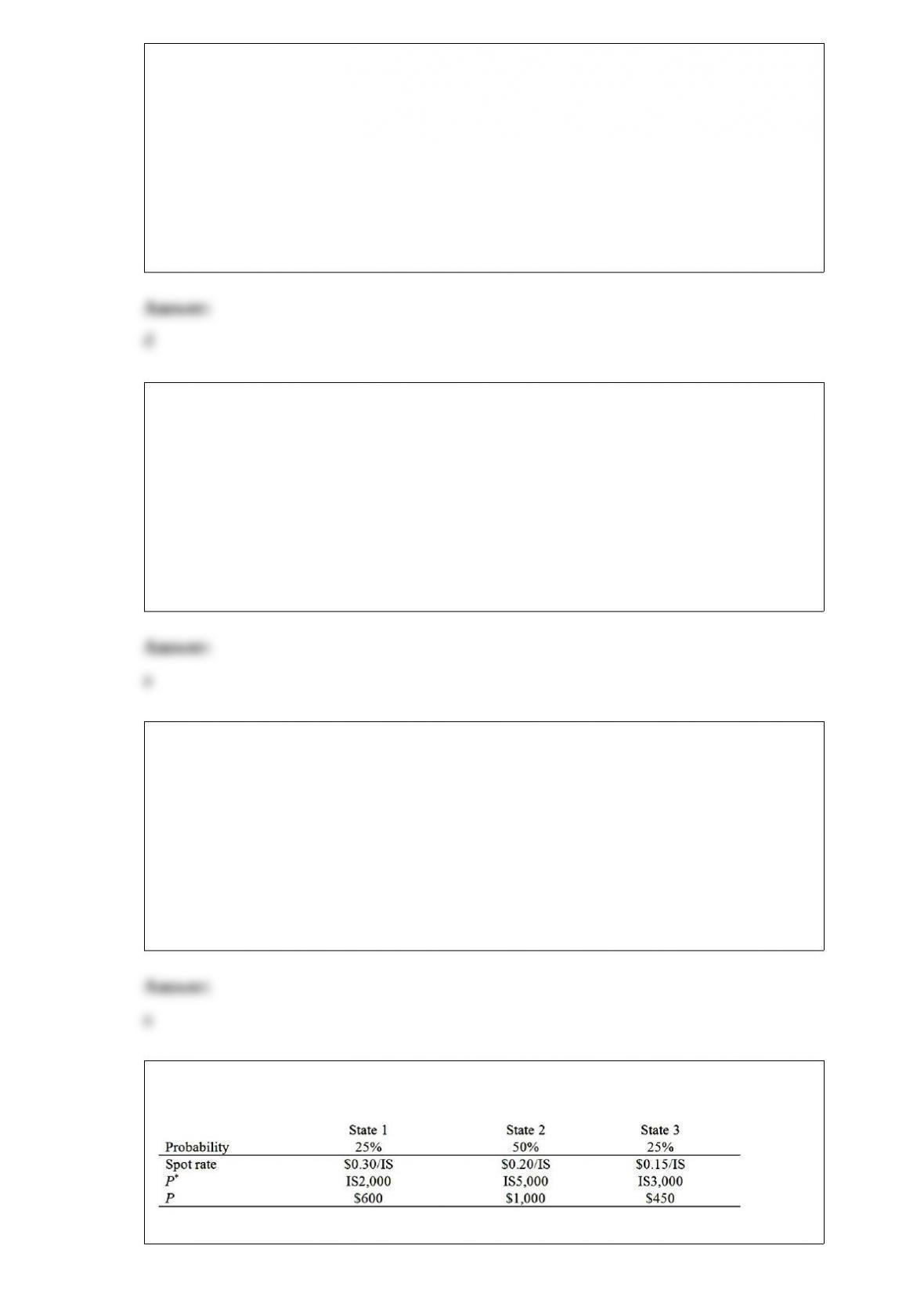
4) a u.s. firm holds an asset in israel and faces the following scenario:

where,
p* = israeli shekel (is) price of the asset held by the u.s. firm
p = dollar price of the same asset
which of the following would be an effective hedge?
a.sell 53 israeli shekels forward at the 1-year forward rate, f1($/is), that prevails at time
zero
b.buy 53 israeli shekels forward at the 1-year forward rate, f1($/is), that prevails at time
zero
c.sell 12,898 israeli shekels forward at the 1-year forward rate, f1($/is), that prevails at
time zero
d.none of the above
5) invisible trade refers to
a.services that avoid tax payments
b.the underground economy
c.legal, consulting, and engineering services
d.tourist expenditures, only
6) the key requirements of the sarbanes-oxley act state that
a.boards of directors should include at least three outside directors
b.the positions of ceo and chairman of the board should not reside in the same
individual
c.compliance is mandatory for public corporations, optional for listed non-public
corporations
d.none of the above

7) country risk
a.is a broader measure of risk than political risk
b.encompasses political risk, credit risk, and other economic performances
c.all of the above
d.none of the above
8) financial accounting standards board (fasb) statements 8 and 52 relate to the
translation methods. the following outlines the objectives and descriptions of the two
statements.
(i) – measure in dollars an enterprise’s assets, liabilities, revenues, or expenses that are
denominated in a foreign currency according to generally accepted accounting
principles
(ii) – is essentially the temporal method of translation (with some subtle differences)
(iii) – provide information that is generally compatible with the expected economic
effects of a rate change on an enterprise’s cash flows and equity
(iv) – reflect in consolidated statements the financial results and relationships of the
individual consolidated entities as measured in their functional currencies in conformity
with u.s. generally accepted accounting principles
fasb 52 requires
a.the current rate method of translation in some circumstances and the temporal method
in others
b.the current rate method of translation in some circumstances and the noncurrent
method in others
c.the monetary rate method of translation in some circumstances and the temporal
method in others
d.the current rate method of translation in some circumstances and the monetary
method in others
9) explanations for home bias include
a.domestic securities may provide investors with certain extra services, such as hedging
against domestic inflation, that foreign securities do not
b.there may be barriers, for or informal, to investing in foreign securities
c.investors may face country-specific inflation in violation of ppp
d.all of the above
10) nestl, a well-known swiss corporation,
a.has been a paragon of virtue in its opposition to all forms of political risk
b.at one time placed restrictions on foreign ownership of its stock. when it relaxed these
restrictions, the total market value of the firm fell
c.at one time placed restrictions on foreign ownership of its stock. when it relaxed these
restrictions, there was a major transfer of wealth from foreign shareholders to swiss
shareholders
d.none of the above
11) international markets for goods and services are often imperfect. which is the most
common and most important?
a.acts of governments
b.natural barriers like distance
c.cultural barriers
d.lack of knowledge
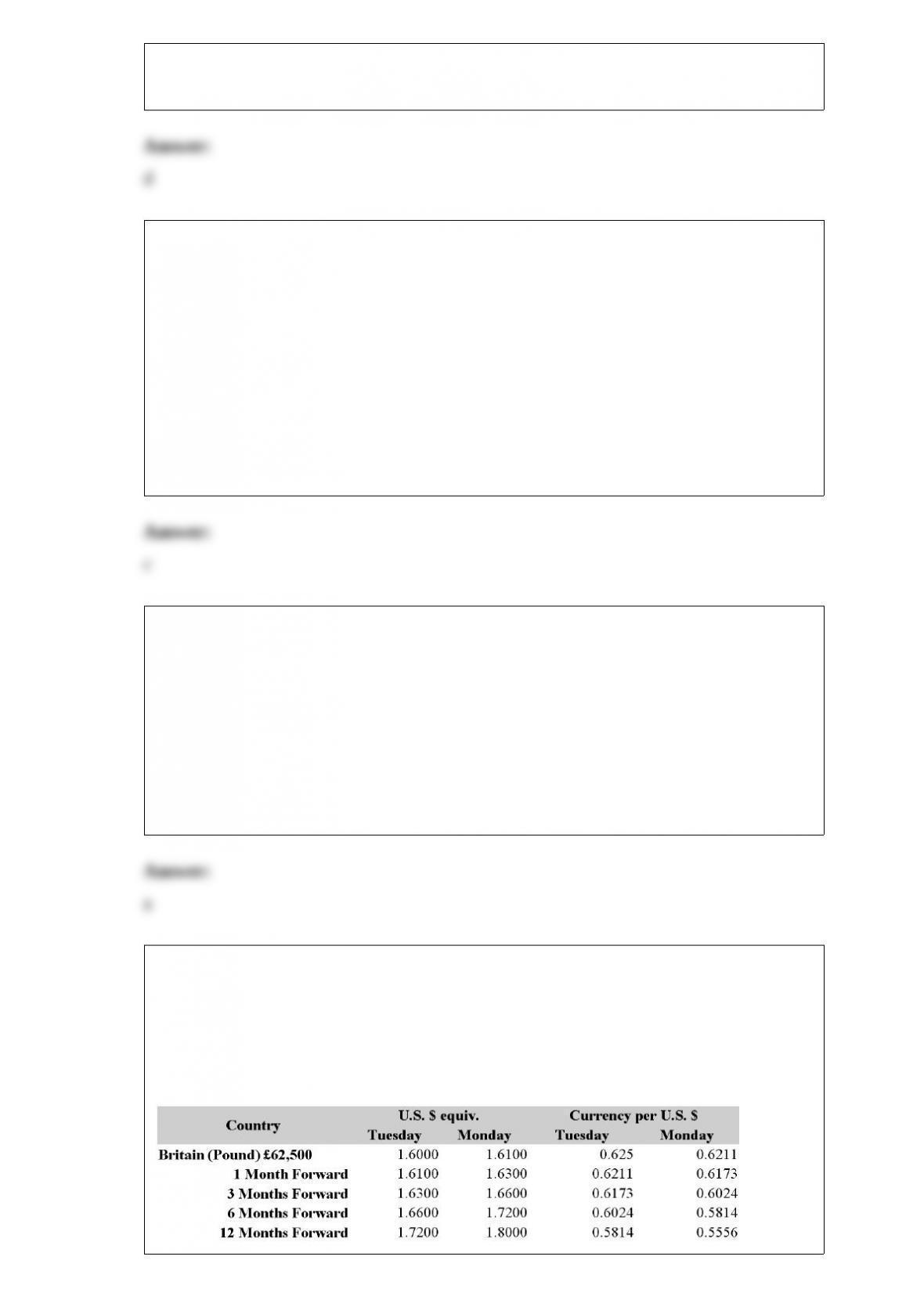
12) your firm is a u.s.-based exporter of bicycles. you have sold an order to a french
firm for 1,000,000 worth of bicycles. payment from the french firm (in euro) is due in
three months. detail a strategy using futures contracts that will hedge your exchange
rate risk. have an estimate of how many contracts of what type and how much (in $)
your firm will have.
a.go short 12 six-month forward contracts; pay $1,290,000
b.go short 16 six-month forward contracts. pay $1,230,000
c.go long 16 six-month forward contracts; raise $1,230,000
d.go long 12 six-month forward contracts. receive $1,230,000
13) if a country is grappling with a major balance-of-payment difficulty, it may not be
able to expand imports from the outside world. instead, the country may be tempted to
a.impose measures to restrict imports
b.impose measures to discourage capital outflows
c.both a and b
d.none of the above
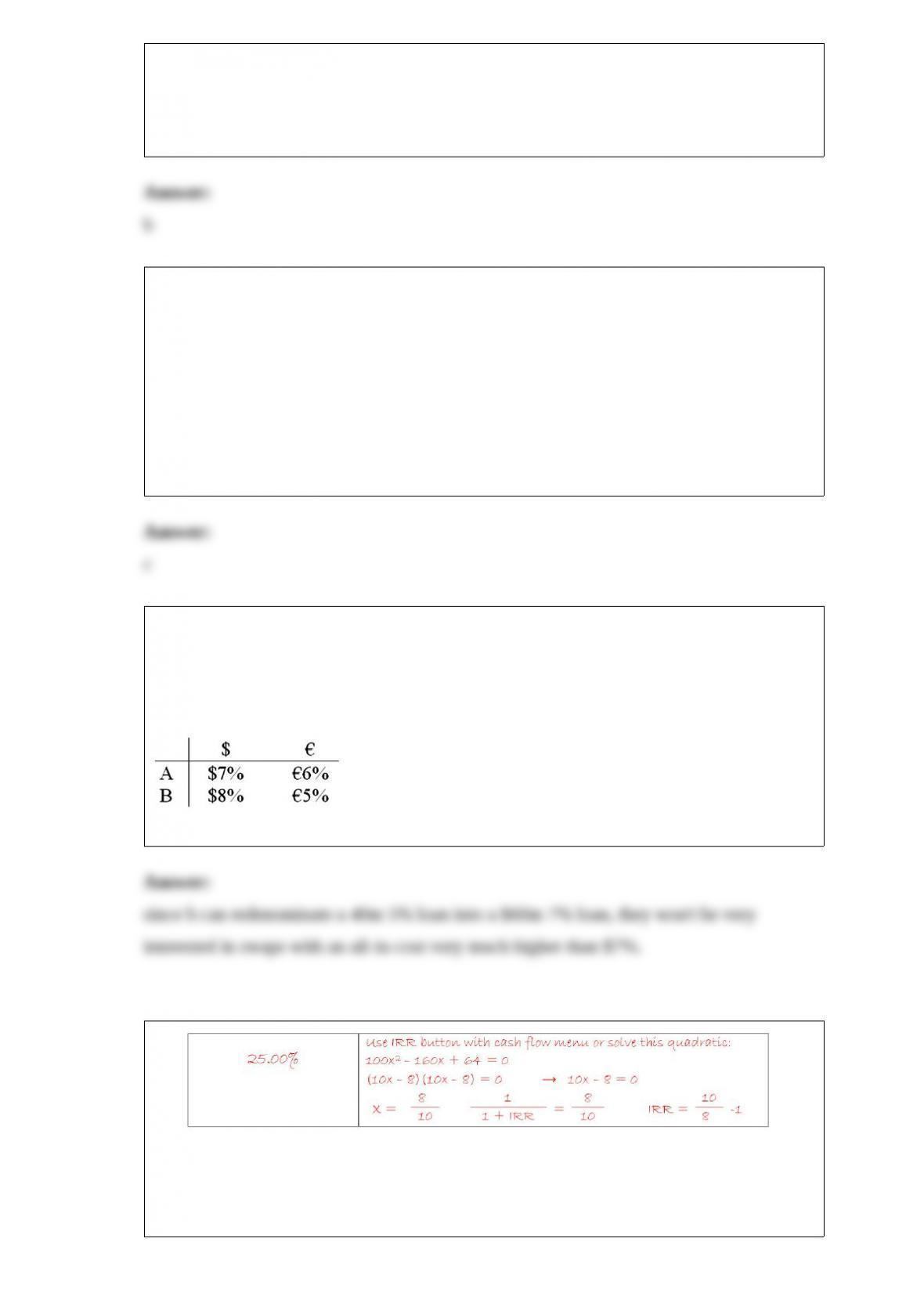
14) consider the situation of firm a and firm b. the current exchange rate is $1.50/. firm
a is a u.s. mnc and wants to borrow 40 million for 2 years. firm b is a french mnc and
wants to borrow $60 million for 2 years. their borrowing opportunities are as shown;
both firms have aaa credit ratings.
explain how this opportunity affects which swap firm b will be willing to participate in.
15)
consider the following international investment opportunity. it involves a gold mine that
can be opened at a cost, then produces a positive cash flow, but then requires
environmental clean-up:
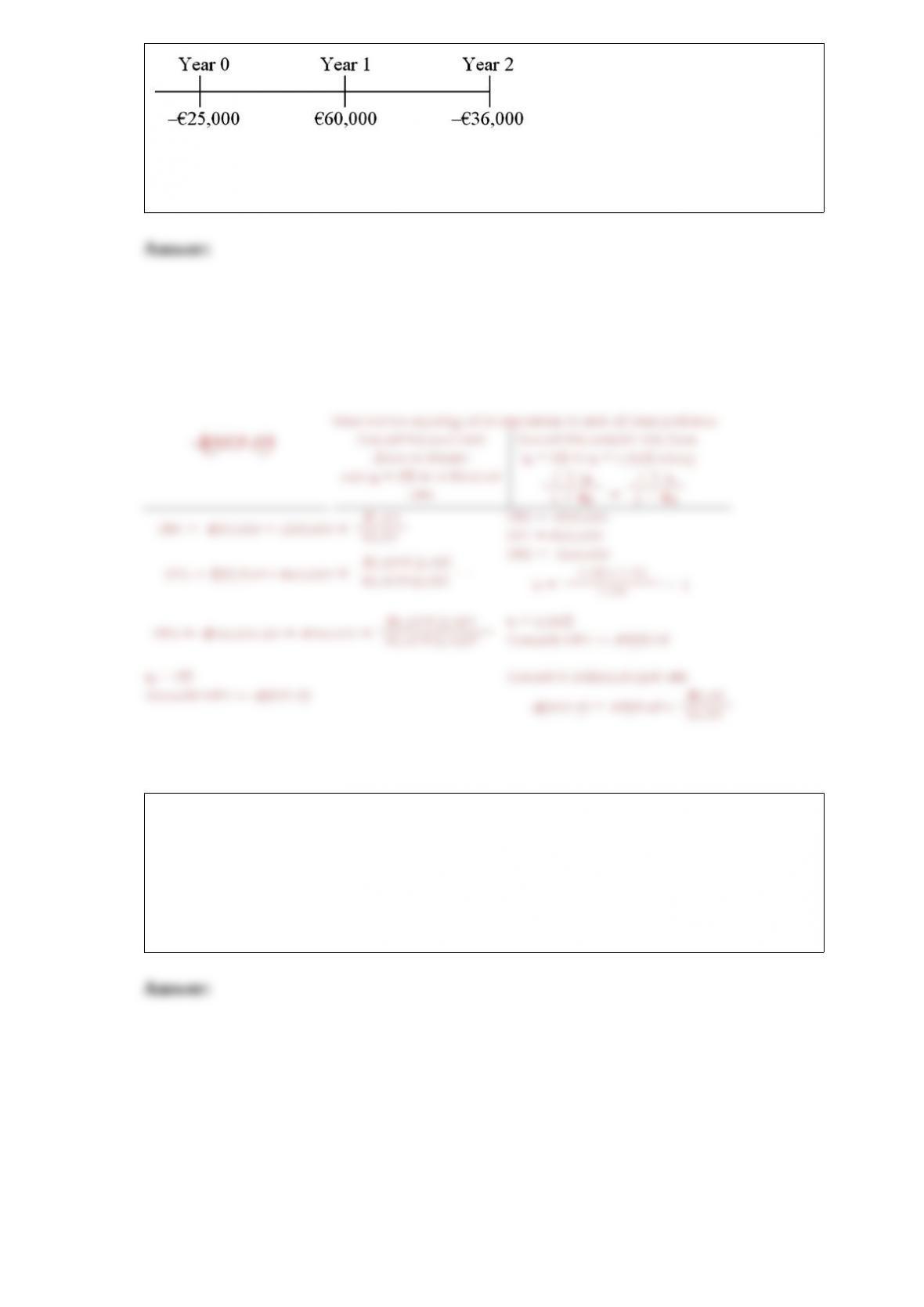
find the dollar cash flows to compute the dollar-denominated npv of this project.
your answer is worth zero points if it does not contain currency symbols such as $, £, ,
¥!
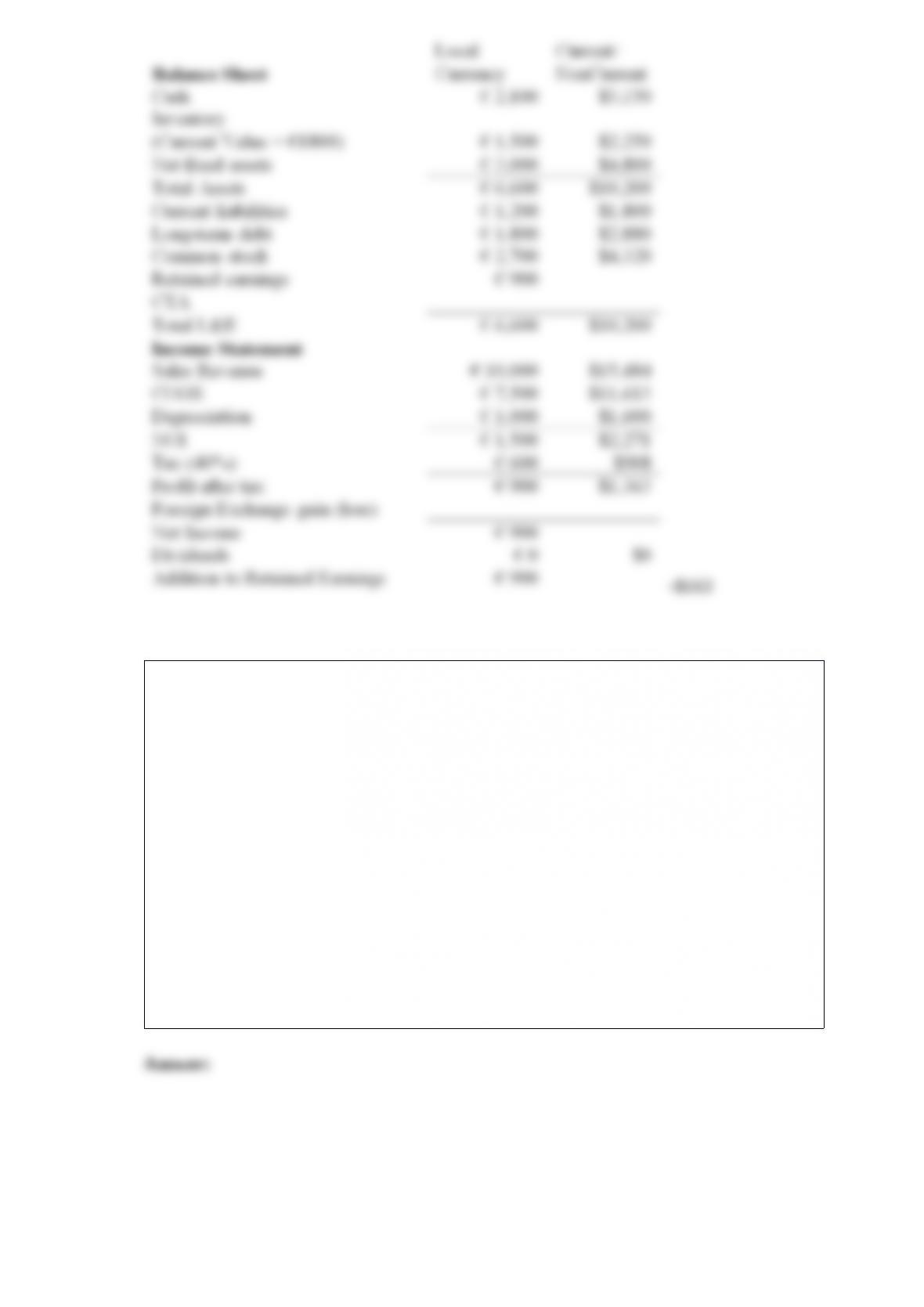
16) find the foreign currency gain or loss for this u.s. mnc translating the balance sheet
and income statement of a french subsidiary, which keeps its books in euro, but that is
translated into u.s. dollars using the current/noncurrent method, the reporting currency
of the u.s. mnc.
the subsidiary is at the end of its first year of operation.
the historical exchange rate is $1.60/1.00 and the most recent exchange rate is $1.50/
17) your firm is based in southern ireland (and thereby operates in euro, not pounds)
and is considering an investment in the united states.
the project involves selling widgets: you project a sales volume of 50,000 widgets per
year, sales price of $20 per widget with a contribution margin of $15 per widget.
the project will last for 5 years, require an investment of $1,000,000 at time zero (which
will be depreciated straight-line to $10,000 over the 5 years). salvage value for the
equipment is projected to be $10,000. the project will operate in rented quarters:
$300,000 rent is due at the start of each year.
the corporate tax rate is 12% in ireland and 40% in the u.s.
for simplicity, assume that taxes are paid like sales taxes: immediately.
the spot exchange rate is $1.50 = 1.00. the cost of capital to the irish firm for a domestic
project of this risk is 8%. the u.s. risk-free rate is 3%; the irish risk-free rate is 2%.
find the break-even price (in dollars) and break-even quantity for the u.s. project.
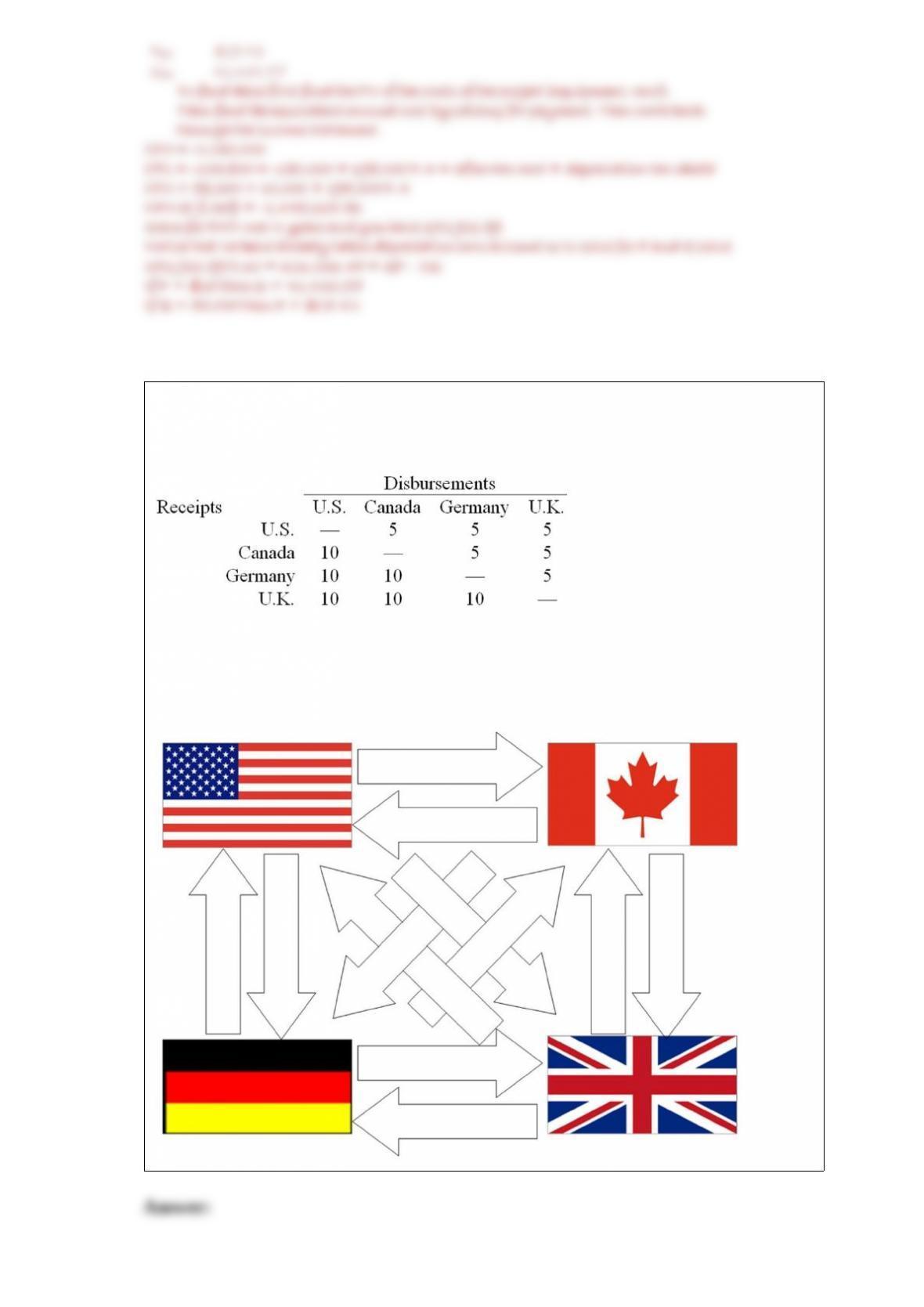
18) your firm’s interaffiliate cash receipts and disbursements matrix is shown below
($000):
using your results to the last question, use bilateral netting to simplify.
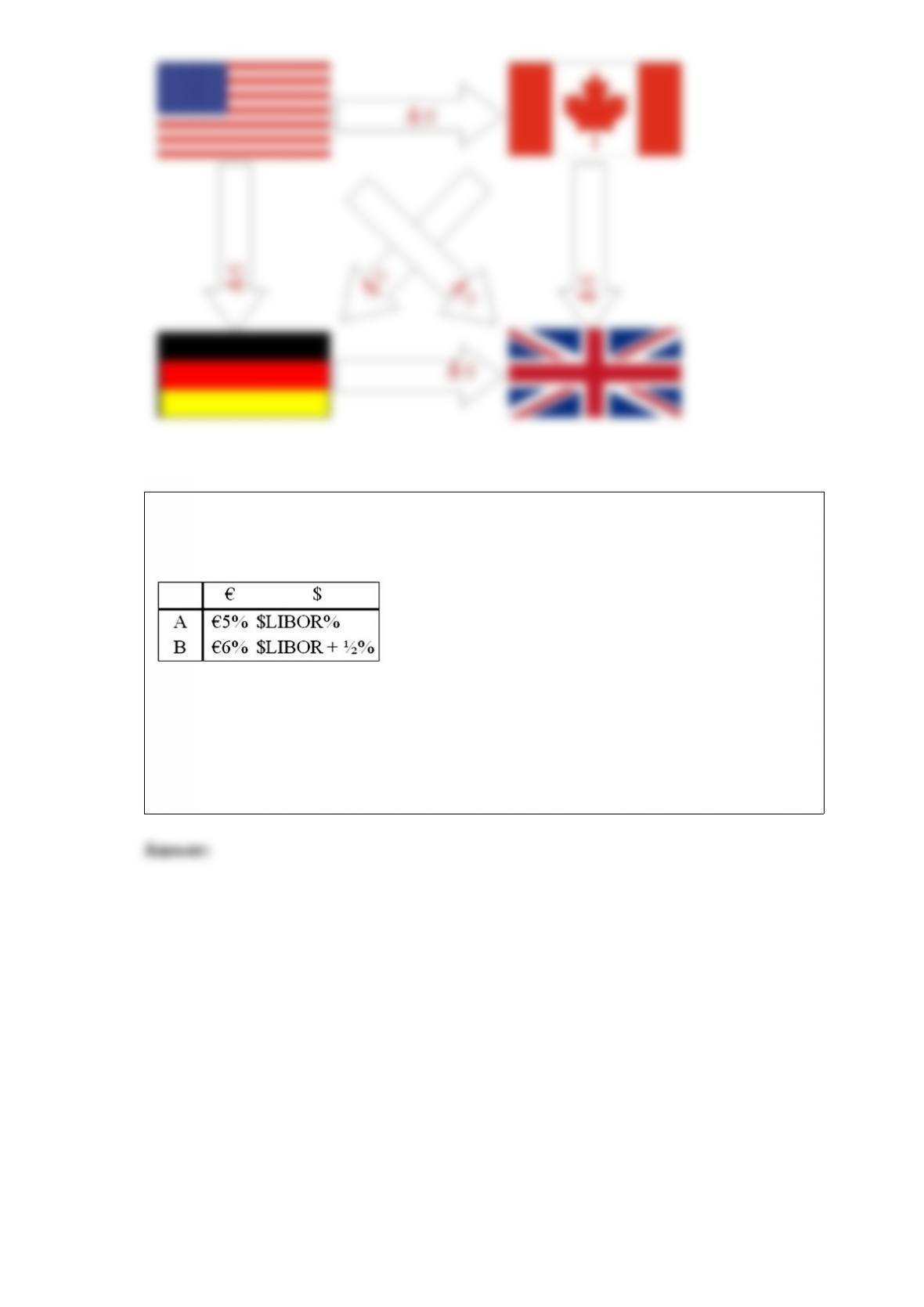
19) come up with a swap (exchange of interest and principal) for parties a and b who
have the following borrowing opportunities.
the current exchange rate is $1.60 = 1.00. company “a” is in milan, italy and wishes to
borrow $1,000,000 at a floating rate for 5 years and company “b” is a u.s. firm that
wants to borrow 625,000 for 5 years at a fixed rate of interest. you are a swap dealer.
quote a and b a swap that makes money for all parties and eliminates exchange rate risk
for both a and b.
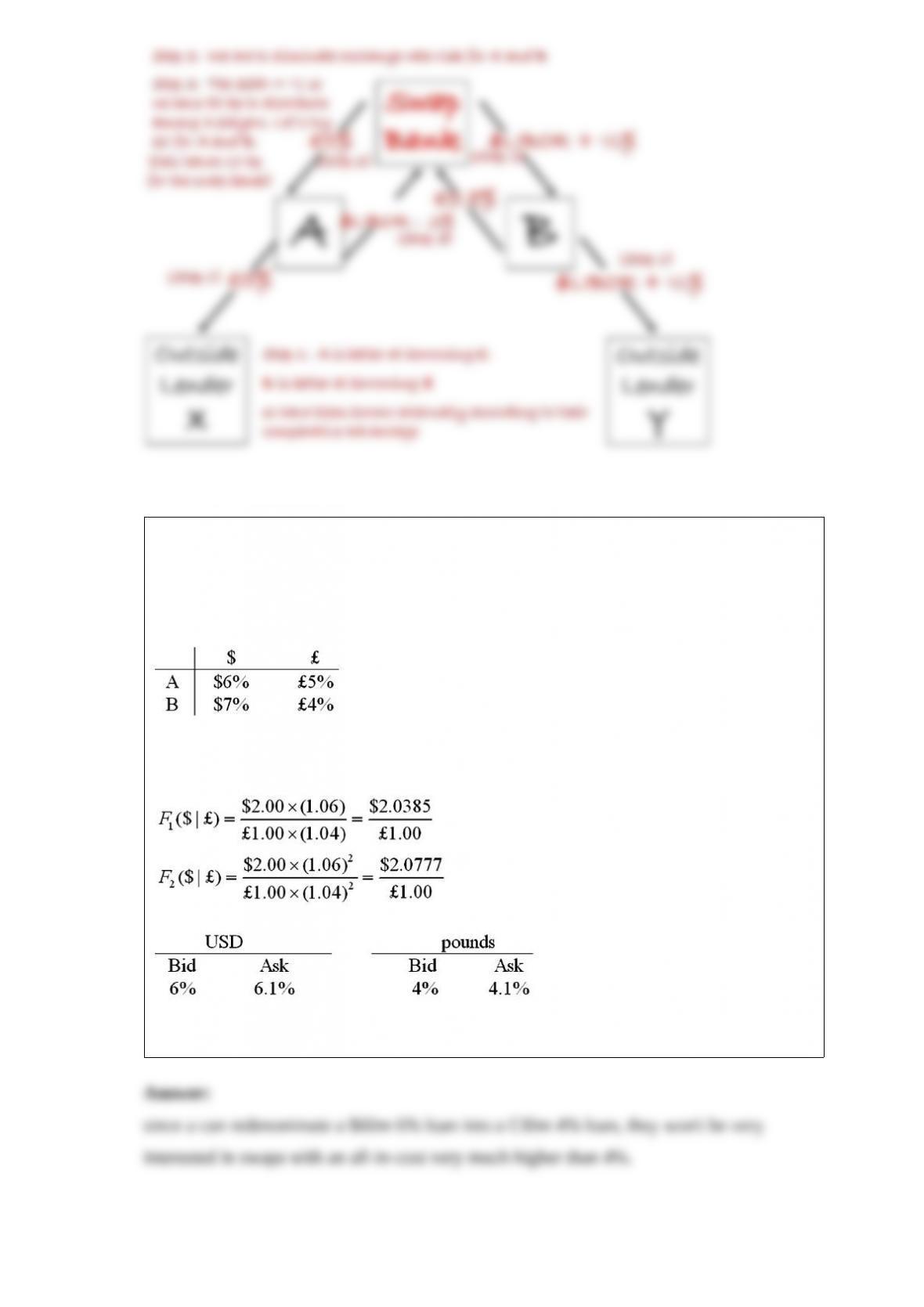
20) consider the situation of firm a and firm b. the current exchange rate is $2.00/£ firm
a is a u.s. mnc and wants to borrow £30 million for 2 years. firm b is a british mnc and
wants to borrow $60 million for 2 years. their borrowing opportunities are as shown,
both firms have aaa credit ratings.
the irp 1-year and 2-year forward exchange rates are
explain how this opportunity affects which swap firm a will be willing to participate in.