Fundamentals of Advanced Accounting by Fischer, Taylor & Cheng
(HW: FAA)
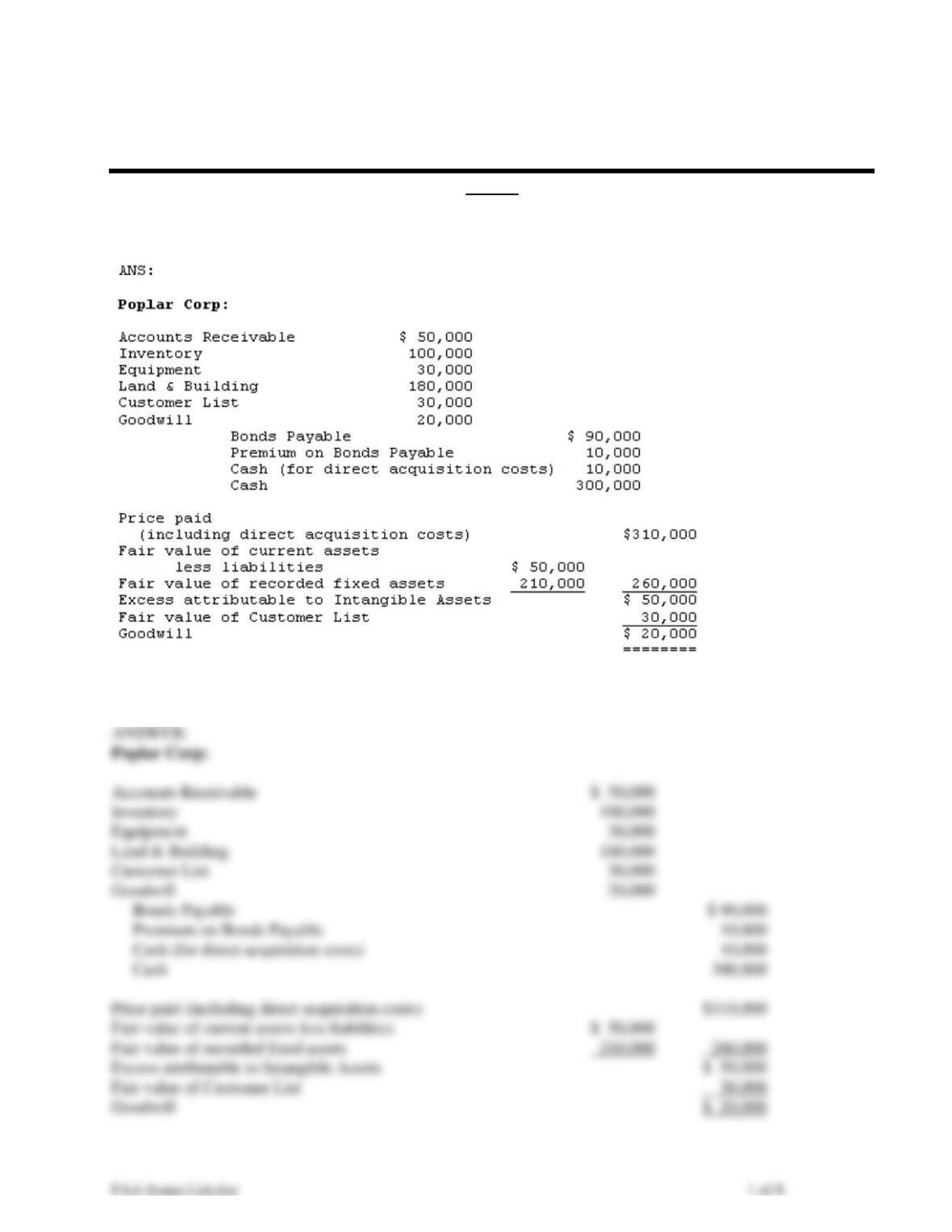
Chapter 1, Problem #6’s answer. Should the answer be aligned like in the PROPOSED section
below? YES, this proposed alignment is fine.
ORIGINAL
PROPOSED
FAA Issues List.doc 2 of 8
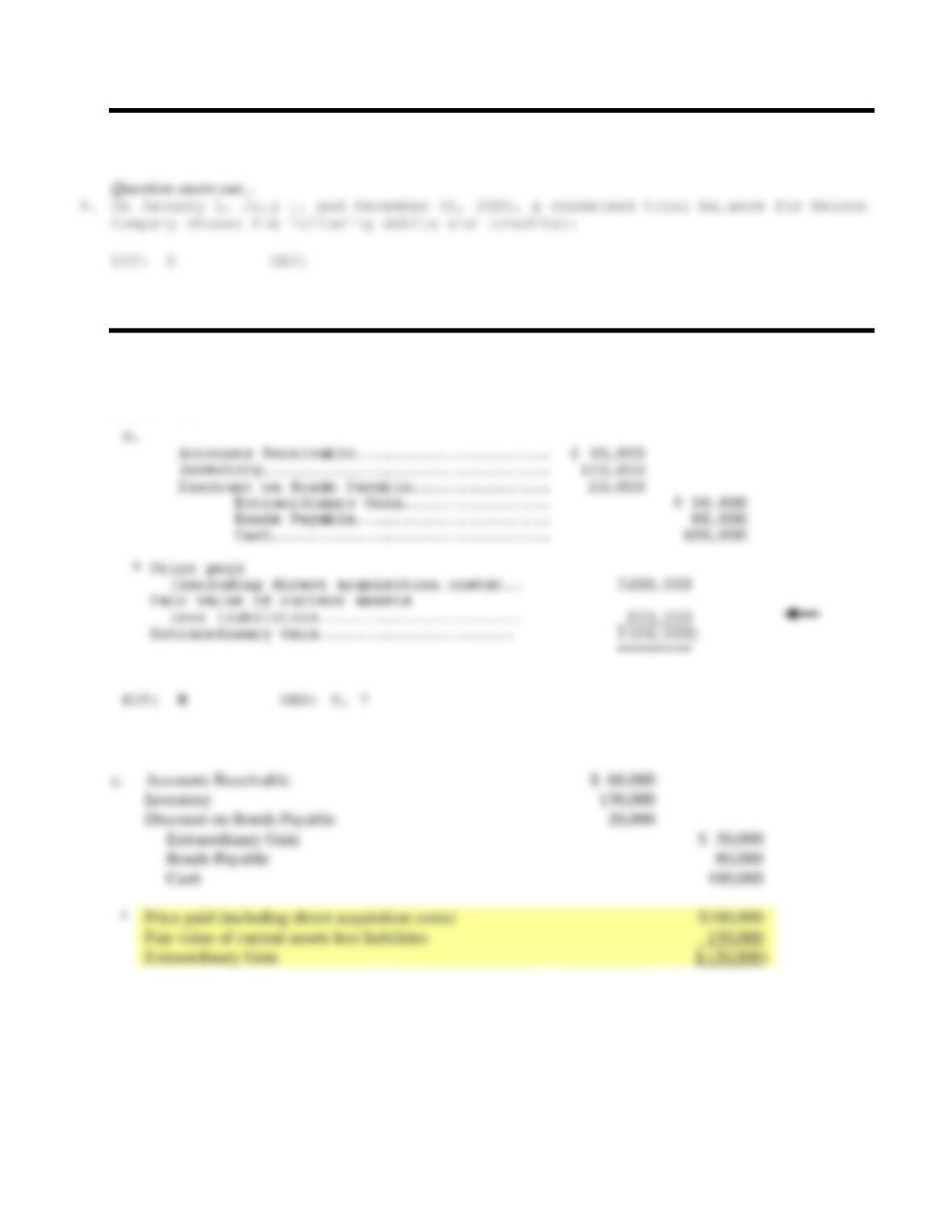
Chapter 1, Problem #9. The OBJ: is missing. Would you like to provide one or leave the question
without one? Objective is: 1-5.
Chapter 1, Problem #10’s answer. The alignment in the original was unclear for the section shown
by the arrow. Is the alignment correct in the PROPOSED section below?
Yes, the alignment is correct in the PROPOSED section
ORIGINAL
PROPOSED
FAA Issues List.doc 3 of 8
Chapter 1, Essay #2’s answer. The highlighted word is has been changed to in. Please confirm.
Confirmed – please change is to in.
Original question and part of the answer…
2. While acquisitions are often friendly, there are numerous occasions when a party
does not want to be acquired. Discuss possible defensive strategies that firms
can implement to fend off a hostile takeover attempt.
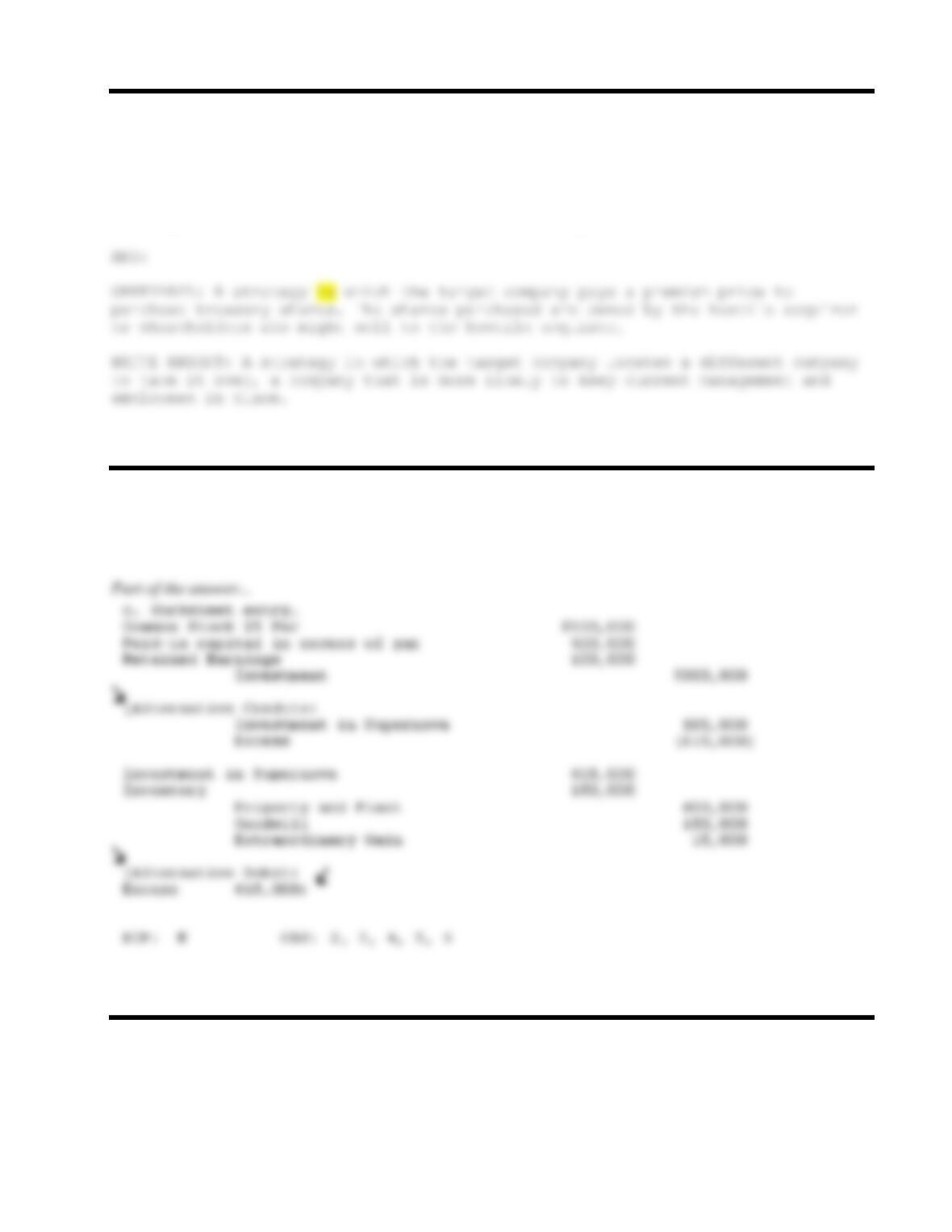
Chapter 2, Problem #2’s answer. The parenthese are not in pairs. Was this intentional? There are
three occurrences. See arrows and make edits in the PROPOSED section below. REMOVE the
parentheses before Alternative Credits and before Alternative Debit. Enclose the Alternative Debit
Excess of 615,000 in parentheses and align under the column that begins on top with $300,000.
Chapter 4, Problem #3. The DIF is missing. Would you like to provide or leave the question
without a DIF? DIF is Medium
Question starts out…
FAA Issues List.doc 4 of 8
3. On January 1, 20X1, Prange Company acquired 80% of the common stock of Seaman
Company for $500,000. On this date Seaman had total owners’ equity of $400,000.
Any excess of cost over book value is attributable to patent, which is to be
amortized over 20 years.
OBJ: 2
Chapter 5 Title. The chapter title does not the TOC title. Which one is correct? The TOC is correct:
Intercompany Bonds, Cash Flow, EPS, and Unconsolidated Investments.
Chapter 5 Problem #10. Is the phrase VERTICAL WORKSHEET PROBLEM something that you
want the students to see or is this meant for the teacher only? This phrase is present in periodic
questions throughout the test bank. This is meant for the teacher only.
Chapter 5, Problem #14‘s answer. The answer probably mislabeled the 5th part of the answer. The
first (6) has been changed to (5). Please verify the change. The change is fine. Thank you for
noticing
Parts of the question and answer… (For demonstration purposes, the parts not include in this issues list is
marked with ^ ^ ^.)
14. The separate condensed balance sheets and income statements of Par Corp. and its
wholly owned subsidiary, Sub Corp., are as follows:
^ ^ ^
Required:
^ ^ ^
(4)
In the consolidated income statement of Par and its
subsidiary, how much expense should be reported for
amortization?
a. $0 b. $3,000 c. $4,000 d. $10,000
(5)
In computing the consolidated earnings per share for Par and
Sub, the number of shares used should be:
a. 25,000 b. 24,000 c. 22,000 d. 21,000
(6)
In the December 31, 20X8, consolidated balance sheet of Par
and its subsidiary, how much should be reported as total
current assets?
a. $150,000 b. $280,000 c. $429,000 d. $579,000
FAA Issues List.doc 5 of 8
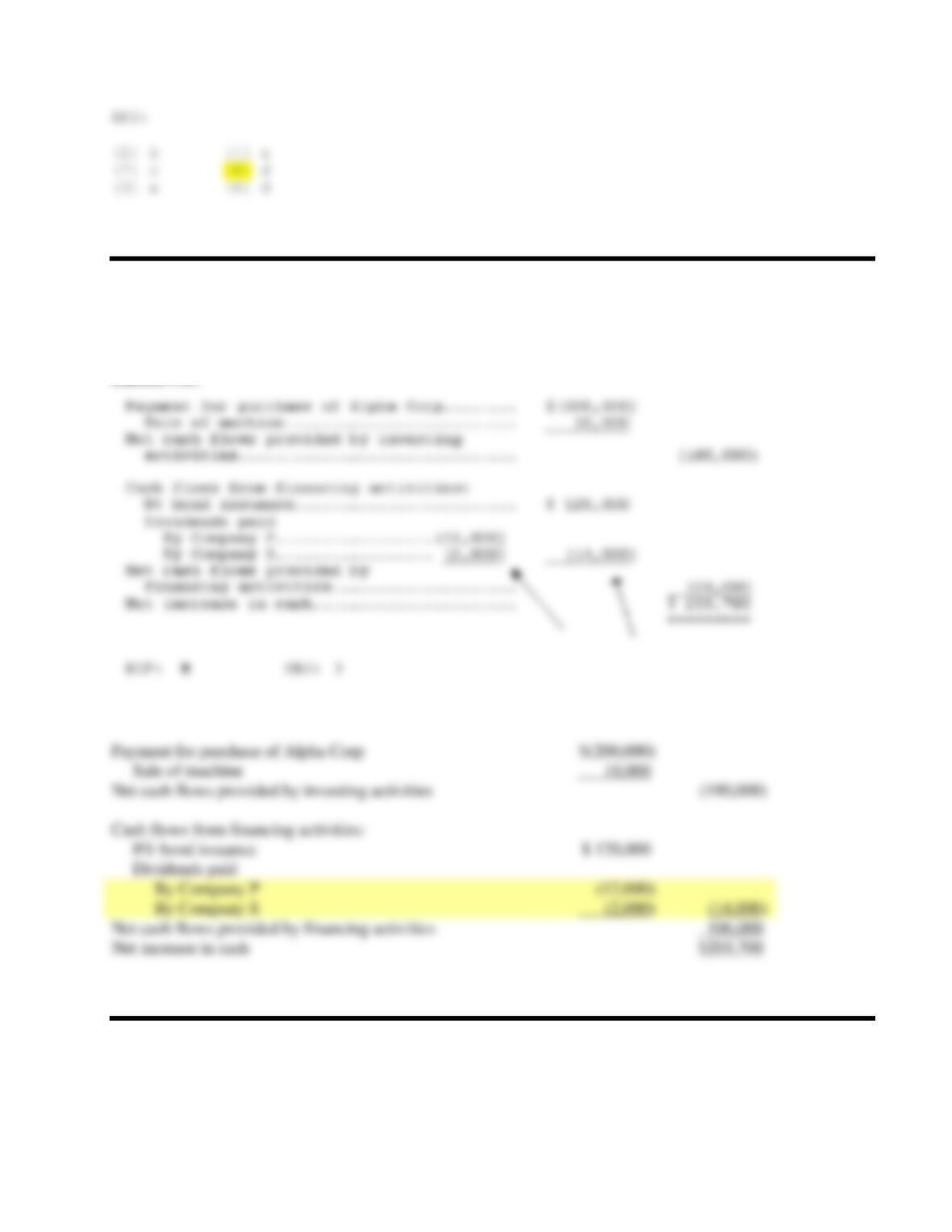
Chapter 5, Problem #15’s answer. The alignment in the section with the arrow was unclear. Please
verify the alignment in the PROPOSED section. The proposed alignment is incorrect. (14,000)
needs to go under/align with 120,000. 12,000 and 2,000 for companies P and S need to come over to
the left in their own column.
ORIGINAL
PROPOSED
Chapter 6, Multiple Choice #18 & #19. Some of the information in #18 has been moved to a
Narrative since there is a phrase that states both #18 & #19 utilize this information. Since professors
can pick/choose questions for tests, the shared information should be in a “narrative” or each question
should be able to stand alone. Please verify, in the PROPOSED section, that the change is accurate.
The change is accurate. The proposed section is fine.

FAA Issues List.doc 6 of 8
ORIGINAL
18. Questions 18 and 19 utilize the following information.
On 6/1/X2, an American firm purchased a inventory costing 100,000 Canadian
Dollars from a Canadian firm to be paid for on 8/1/X2. Also on 6/1/X2, the
American firm entered into a forward contract to purchase 100,000 Canadian
dollars for delivery on 8/1/X2. The exchange rates were as follows:
Spot Forward
6/1/X2 ……………………….1 CD = $0.73 1 CD = $0.74
6/30/X2 ……………………….1 CD = $0.70 1 CD = $0.75
8/1/X2 ……………………….1 CD = $0.68 1 CD = $0.68
The American firms fiscal year end is 6/30/X2. The changes in the value of the
forward contract should be discounted at 8%.
What is the value of the Forward Contract Receivable-FC on 6/1/X2?
a.
$73,000
b.
$74,000
c.
$68,000
d.
$70,000
19. What is the value of the Forward Contract Receivable-FC on 6/30/X2?
a.
$75,000
b.
$75,693
c.
$74,693
d.
$74,993
PROPOSED
________________________________________________________________
Scenario 6-1
On 6/1/X2, an American firm purchased a inventory costing 100,000 Canadian Dollars from a Canadian firm
to be paid for on 8/1/X2. Also on 6/1/X2, the American firm entered into a forward contract to purchase
100,000 Canadian dollars for delivery on 8/1/X2. The exchange rates were as follows:
Spot
Forward
6/1/X2
1 CD = $0.73
1 CD = $0.74
6/30/X2
1 CD = $0.70
1 CD = $0.75
8/1/X2
1 CD = $0.68
1 CD = $0.68
The American firms fiscal year end is 6/30/X2. The changes in the value of the forward contract should be
discounted at 8%.
________________________________________________________________
18. Refer to Scenario 6-1. What is the value of the Forward Contract Receivable-FC on 6/1/X2?
a. $73,000
b. $74,000
c. $68,000
d. $70,000
19. Refer to Scenario 6-1. What is the value of the Forward Contract Receivable-FC on 6/30/X2?
a. $75,000

FAA Issues List.doc 7 of 8
b. $75,693
c. $74,693
d. $74,993
Chapter 8, Multiple Choice #14 & #15. #15 refers to information in #14. Same issue as the above
questions. Please verify that the change is accurate. The change is accurate.
(Note the options are quite different from the original. This is because the Multiple Choice options
required the text be aligned. Because the electronic version may be used in various environments,
aligning with just spaces could not guarantee alignment. Pleases call or ask if you have
questions/concerns.)
PROPOSED
________________________________________________________________
Tuba-Drum Scenario
Partners Tuba and Drum share profits and losses of their partnership equally after 1) annual salary allowances
of $25,000 for Tuba and $20,000 for Drum and 2) 10% interest is provided on average capital balances.
During 20X1, the partnership had earnings of $50,000; Tuba’s average capital balance was $60,000 and
Drum’s average capital balance was $90,000.
Tuba
Drum
I.
$26,000
$24,000
II.
$27,000
$23,000
III.
$25,000
$25,000
IV.
$27,500
$22,500
________________________________________________________________
14. Refer to Tuba-Drum Scenario. How should the $50,000 of earnings be divided?
a. I
b. II
c. III
d. IV
15. Refer to Tuba-Drum Scenario. What would be the correct answer if an order of priority was in the
partnership agreement whereby salary allowances have a higher priority than interest on capital allocations?
a. I
b. II
c. III
d. IV
Chapter 10, Multiple Choice #51-ish. Right after #51, there is a question numbered 60. Note that
#60 is now #52, and #52 is now #53, and #53 is now #54. OK
51. Which of the following terms best describes the accounting methods used to
account for a city’s Pension Trust Fund?
a.
Cash basis
b.
Modified cash basis
c.
Accrual basis
FAA Issues List.doc 8 of 8
d.
Modified accrual basis
60. Which of the following funds or account groups would be affected by a
transfer of property tax receipts to pay bond principal and interest payments?
The bonds were issued several years ago to fund the construction of a new
library.
a.
Capital Project Fund
b.
Library Fund
c.
Debt Service Fund
d.
General Fixed Asset Account Group
Chapter 12 Title. The chapter title does not the TOC title. Which one is correct? The TOC title is
correct: Accounting for Private Not-for-Profit Organizations (including Colleges and Universities and
Health Care Organizations)
TOC: Accounting for Private Not-for-Profit Organizations (including Colleges and Universities and
Health Care Organizations)
Chapter: Accounting for Private Not-For-Profit Organizations (including Accounting for Not-for-Profit
Colleges and Universities and Health Care Organizations)
Chapter 12, Problem #16’s answer. The alignment of part of the answer was unclear. Please verify
that the PROPOSED section is presented accurately. See arrows. The proposed section is correct.