Ch.8 AnalyticTrigonometry
8.1 TheInverseSine,Cosine,andTangentFunctions
1 FindtheExactValueofanInverseSine,Cosine,orTangentFunction
MULTIPLECHOICE.Choosetheonealternativethatbestcompletesthestatementoranswersthequestion.
Findtheexactvalueoftheexpression.
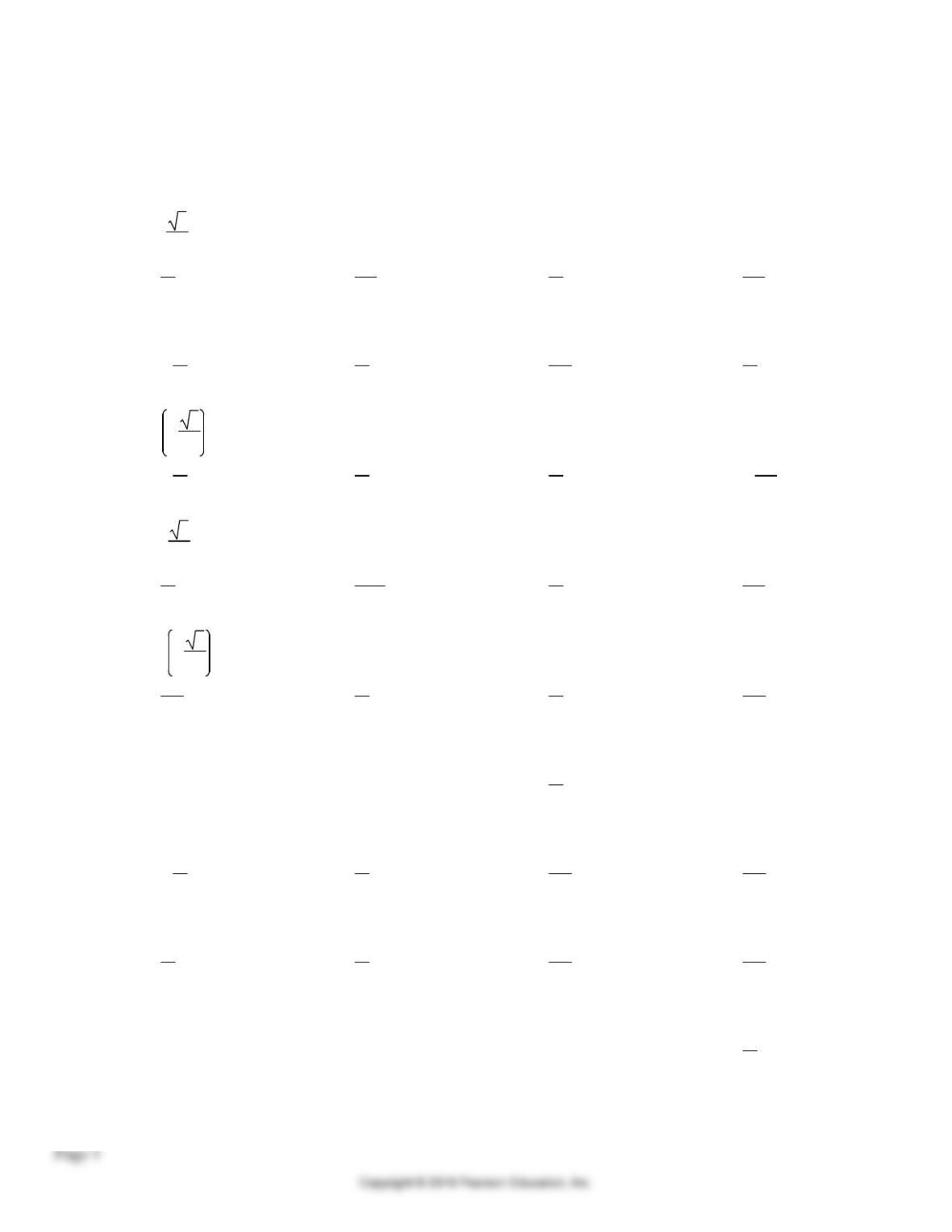
1) sin–12
2
A) π
4B) 3π
4C) π
3D) 2π
3
2) sin–1(–0.5)
A) –π
6B) π
6C) 7π
3D) π
3
3) sin–1–2
2
A) –π
4B) π
4C) π
3D) –7π
4
4) cos–13
2
A) π
6B) 11π
6C) π
4D) 7π
4
5) cos–1–3
2
A) 5π
6B) π
6C) π
3D) 2π
3
6) cos–1(–1)
A) πB) 0 C) π
2D) 2π
7) tan–1(–1)
A) –π
4B) π
4C) 5π
4D) 7π
4
8) tan–11
A) π
4B) π
3C) 5π
4D) 2π
3
9) tan–10
A) 0 B) 2πC) πD) π
2
2 FindanApproximateValueofanInverseSine,Cosine,orTangentFunction
MULTIPLECHOICE.Choosetheonealternativethatbestcompletesthestatementoranswersthequestion.
Useacalculatortofindthevalueoftheexpressionroundedtotwodecimalplaces.
1) sin–1(0.8)
A) 0.93 B) 53.13 C) 0.64 D) 36.87
2) cos–1(–0.1)
A) 1.67 B) 95.74 C) –0.10 D) –5.74
3) tan–1(0.7)
A) 0.61 B) 34.99 C) 0.96 D) 55.01
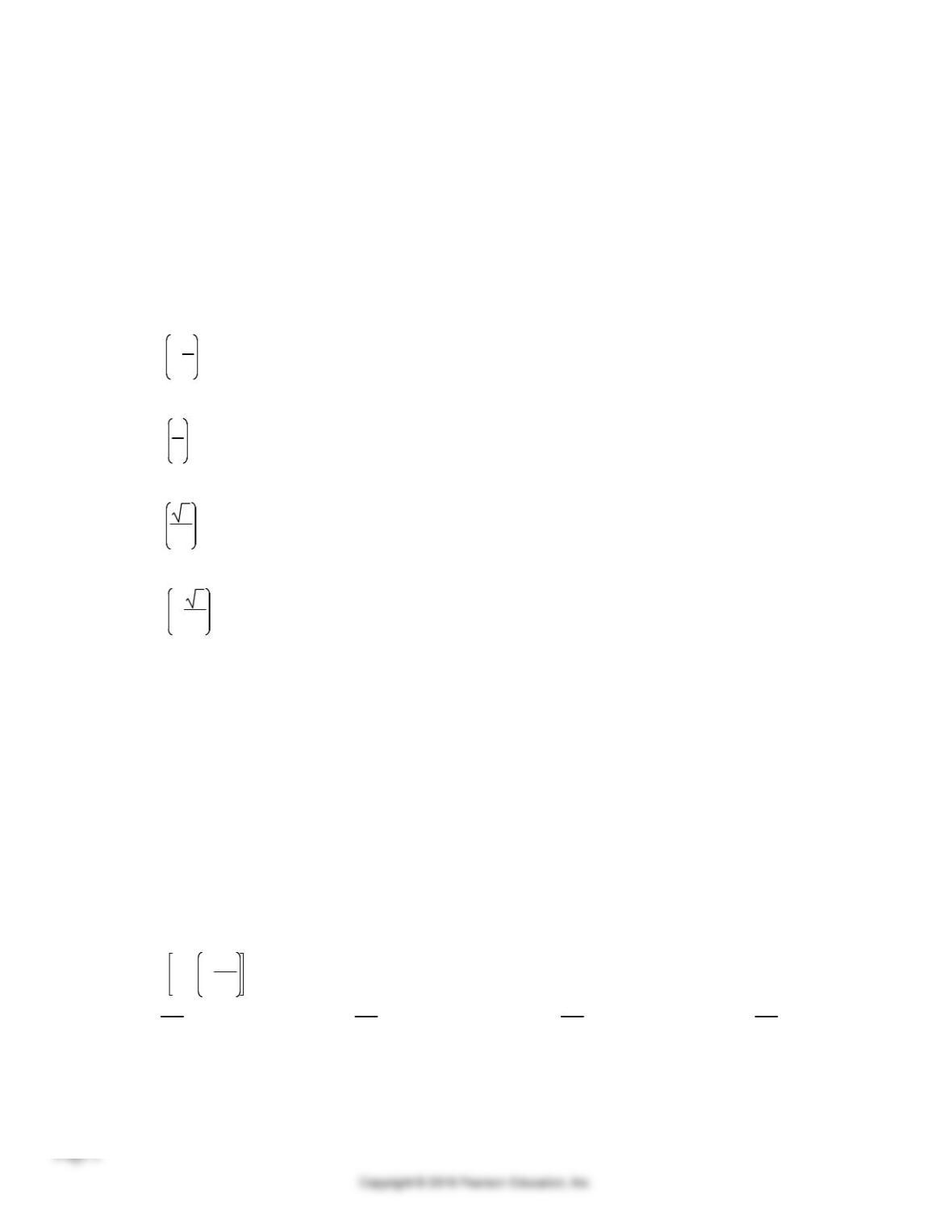
4) sin–1–3
5
A) –0.64 B) –36.87 C) 2.21 D) 126.87
5) cos–11
8
A) 1.45 B) 82.82 C) 0.13 D) 7.18
6) sin–16
3
A) 0.96 B) 54.74 C) 0.62 D) 35.26
7) cos–1–6
5
A) 2.08 B) 119.33 C) –0.51 D) –29.33
3 UsePropertiesofInverseFunctionstoFindExactValuesofCertainCompositeFunctions
MULTIPLECHOICE.Choosetheonealternativethatbestcompletesthestatementoranswersthequestion.
Findtheexactvalueoftheexpression.Donotuseacalculator.
1) cos[cos–1(–0.9372)]
A) –0.9372 B) 0.9372 C) –0.4686 D) 0.4686
2) sin[sin–1(0.1)]
A) 0.1 B) 10.0167 C) 10 D) 0.9
3) tan[tan–1(0.2)]
A) 0.2 B) 4.9332 C) 5 D) 0.8
4) cos–1cos–3π
5
A) 3π
5B) 2π
5C) –3π
5D) –2π
5
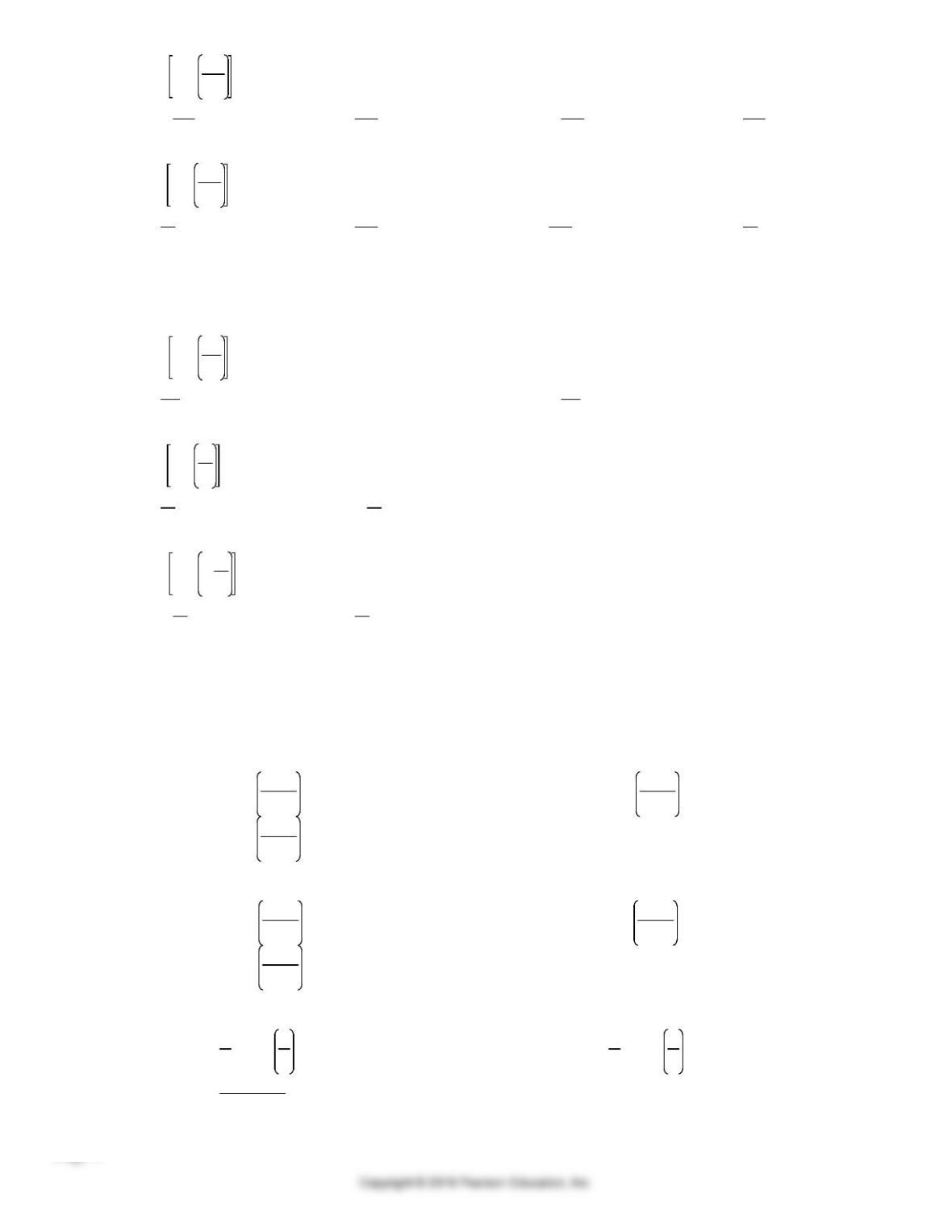
5) tan–1tan3π
5
A) –2π
5B) 3π
5C) –3π
5D) 2π
5
6) sin–1sin4π
5
A) π
5B) 4π
5C) 5
4πD) 5
π
7) sin[sin–1(–0.3)]
A) –0.3 B) 0.3 C) 2.7 D) –2.7
8) cos–1cosπ
10
A) π
10 B) 10πC) –π
10 D) –10π
9) sin–1sinπ
5
A) π
5B) –π
5C) 5πD) –5π
10) tan–1tan–π
8
A) –π
8B) π
8C) 8πD) –8π
4 FindtheInverseFunctionofaTrigonometricFunction
MULTIPLECHOICE.Choosetheonealternativethatbestcompletesthestatementoranswersthequestion.
Findtheinversefunctionf–1ofthefunctionf.
1) f(x)=3sinx–6
A) f–1(x)=sin–1x+6
3B) f–1(x)=cosx+6
3
C) f–1(x)=sin–1x+3
6D) f–1(x)=3sin–1x–6
2) f(x)=5cosx+9
A) f–1(x)=cos–1x–9
5B) f–1(x)=sinx–9
5
C) f–1(x)=cos–1x+9
5D) f–1(x)=5cos–1x+9
3) f(x)=5tan(8x)
A) f–1(x)=1
8tan–1x
5B) f–1(x)=1
5tan–1x
8
C) f–1(x)=1
5tan(8x) D) f–1(x)=5tan–1(8x)
Page3
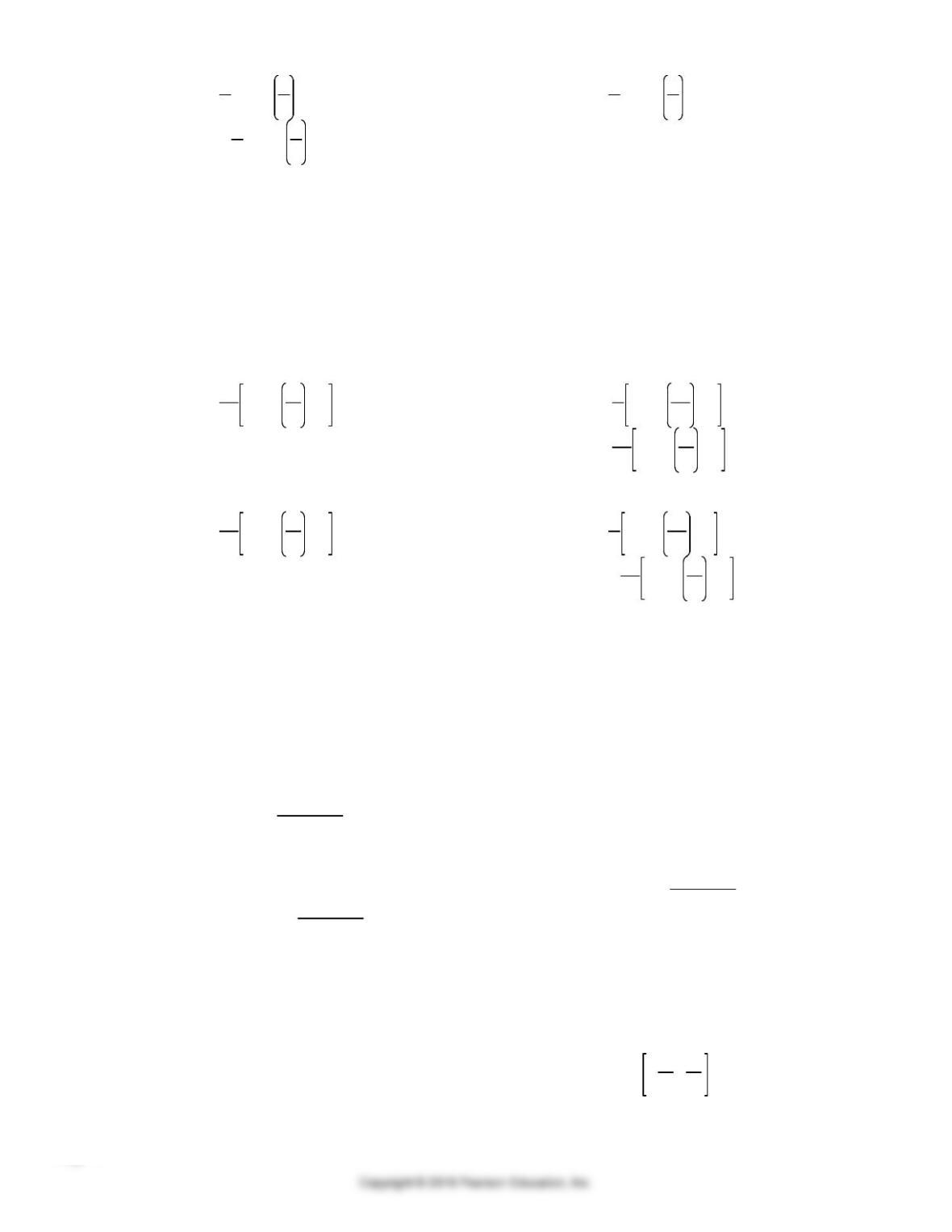
4) f(x)=–6cos(2x)
A) f–1(x)=1
2cos–1x
6B) f–1(x)=1
6cos–1x
2
C) f–1(x)=–1
2cos–1x
6D) f–1(x)=–6cos–1(2x)
5) f(x)=–sin(x+6)–4
A) f–1(x)=–sin–1(x+4)–6B)f
–1(x)=sin–1(x+4)–6
C) f–1(x)=–sin–1(x+6)–4D)f
–1(x)=–sin–1(x–4)+6
6) f(x)=cos(x–3)–2
A) f–1(x)=cos–1(x+2)+3B)f
–1(x)=cos–1(x–2)–3
C) f–1(x)=cos–1(x–3)–2D)f
–1(x)=cos–1(x+3)+2
7) f(x)=9tan(10x–8)
A) f–1(x)=1
10 tan–1x
9+8 B) f–1(x)=1
9tan–1x
10 +8
C) f–1(x)=9tan–1(10x–8) D) f–1(x)= 1
10 tan–1x
9–8
8) f(x)=–7cos(10x+6)
A) f–1(x)=1
10 cos–1x
7–6 B) f–1(x)=1
7cos–1x
10 –6
C) f–1(x)=–7cos–1(10x+6) D) f–1(x)=–1
10 cos–1x
7+6
Findthedomainofthefunctionfandofitsinversefunctionf–1.
9) f(x)=5sinx–9
A) Domainoff:(–∞
,
∞)
Domainoff–1:[–14,–4]
B) Domainoff:(–∞
,
∞)
Domainoff–1:[4,14]
C) Domainoff:(–∞
,
∞)
Domainoff–1:(–∞,∞)
D) Domainoff:[4
,
14]
Domainoff–1:[–14,–4]
10) f(x)=6tanx+8
A) Domainoff:x≠(2k+1)π
2;kaninteger
Domainoff–1:(–∞,∞)
B) Domainoff:(–∞
,
∞)
Domainoff–1:[2,14]
C) Domainoff:(–∞
,
∞)
Domainoff–1:x≠(2k+1)π
2;kaninteger
D) Domainoff:x≠(2k+1)π
2;kaninteger
Domainoff–1:[2,14]
11) f(x)=7sin(9x)
A) Domainoff:(–∞
,
∞)
Domainoff–1:[–7,7]
B) Domainoff:(–∞
,
∞)
Domainoff–1:[2,16]
C) Domainoff:(–∞
,
∞)
Domainoff–1:[–9,9]
D) Domainoff:–1
9,1
9
Domainoff–1:(–∞,∞)
Page4
12) f(x)=–6cos(8x)
A) Domainoff:(–∞
,
∞)
Domainoff–1:[–6,6]
B) Domainoff:(–∞
,
∞)
Domainoff–1:[2,14]
C) Domainoff:(–∞
,
∞)
Domainoff–1:[–8,8]
D) Domainoff:–1
8,1
8
Domainoff–1:(–∞,∞)
13) f(x)=cos(x–5)+4
A) Domainoff:(–∞
,
∞)
Domainoff–1:[3,5]
B) Domainoff:(–∞
,
∞)
Domainoff–1:(–∞,∞)
C) Domainoff:(–∞
,
∞)
Domainoff–1:[–5,–3]
D) Domainoff:[–5
,
5]
Domainoff–1:(–∞,∞)
14) f(x)=tan(x–4)+7
A) Domainoff:x≠(2k+1)π
2+7;kaninteger
Domainoff–1:(–∞,∞)
B) Domainoff:x≠(2k+1)π
2;kaninteger
Domainoff–1:(–∞,∞)
C) Domainoff:(–∞
,
∞)
Domainoff–1:[–8,–6]
D) Domainoff:[–4
,
4]
Domainoff–1:(–∞,∞)
15) f(x)=–2cos(10x+8)
A) Domainoff:(–∞
,
∞)
Domainoff–1:[–2,2]
B) Domainoff:(–∞
,
∞)
Domainoff–1:[–10,10]
C) Domainoff:[–2
,
2]
Domainoff–1:(–∞,∞)
D) Domainoff:(–∞
,
∞)
Domainoff–1:(–∞,∞)
16) f(x)=2sin(9x–1)
A) Domainoff:(–∞
,
∞)
Domainoff–1:[–2,2]
B) Domainoff:(–∞
,
∞)
Domainoff–1:[–9,9]
C) Domainoff:[–2
,
2]
Domainoff–1:(–∞,∞)
D) Domainoff:–1
9,1
9
Domainoff–1:(–∞,∞)
5 SolveEquationsInvolvingInverseTrigonometricFunctions
MULTIPLECHOICE.Choosetheonealternativethatbestcompletesthestatementoranswersthequestion.
Findtheexactsolutionoftheequation.
1) cos–1x=0
A) {1} B) {π} C) {0} D) {–1}
Page5
2) sin–1x=π
2
A) {1} B) {0} C) {π}D){
–1}
3) sin–1x=π
6
A) 1
2B) {1} C) {0} D) –1
2
4) 2cos–1x=π
A) {0} B) {1} C) π
2D) 3π
2
5) –4tan–1x=π
A) {–1} B) {1} C) π
4D) {0}
6) 3sin–1x=π
A) 3
2B) π
3C) 2
2D) 1
2
7) 6cos–1x=π
A) 3
2B) π
6C) 2
2D) 1
2
8) 4cos–1x=π
A) 2
2B) π
4C) 3
2D) 1
2
9) –sin–1(4x)=π
4
A) –2
8B) –2
2C) 2
8D) {0}
10) 3tan–1(2x)=π
A) 3
2B) 3
4C) 3
6D) 1
4
11) 4cos–1(5x)=π
A) 2
10 B) 52
2C) 1
10 D) 3
10
12) –3sin–1(2x)=π
A) –3
4B) –1
4C) 3
4D) 2
4
Page6
13) 7cos–1x–π=5cos–1x
A) {0} B) {1} C) {–1} D) –1
2
14) 4sin–1x–4π=2sin–1x–5π
A) {–1} B) {1} C) {0} D) –1
2
SHORTANSWER.Writethewordorphrasethatbestcompleteseachstatementoranswersthequestion.
Solvetheproblem.
15) TheformulaD=241–cos–1(tanitanθ)
πcanbeusedtoapproximatethenumberofhoursofdaylight
whenthedeclinationofthesunisi°atalocationθ°northlatitudeforanydatebetweenthevernalequinox
andautumnalequinox.Tousethisformula,cos–1(tanitanθ)mustbeexpressedinradians.Approximate
thenumberofhoursofdaylightinFargo,NorthDakota,(46°52ʹnorthlatitude)forvernalequinox(i=0°).
16) TheformulaD=241–cos–1(tanitanθ)
πcanbeusedtoapproximatethenumberofhoursofdaylight
whenthedeclinationofthesunisi°atalocationθ°northlatitudeforanydatebetweenthevernalequinox
andautumnalequinox.Tousethisformula,cos–1(tanitanθ)mustbeexpressedinradians.Approximate
thenumberofhoursofdaylightinFlagstaff,Arizona,(35°13ʹnorthlatitude)forsummersolstice
(i=23.5°).
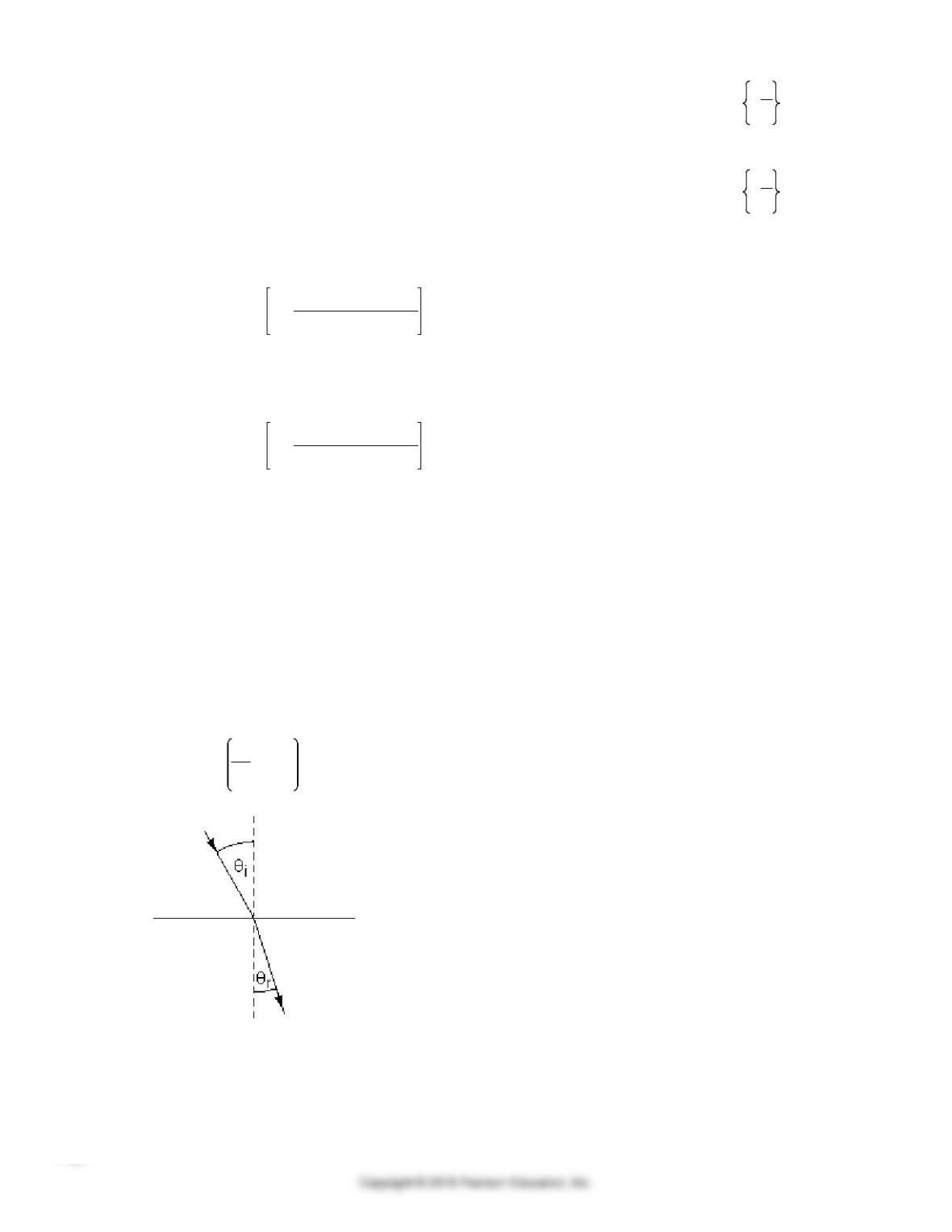
17) Whenlighttravelsfromonemediumtoanotherfromairtowater,forinstanceitchangesdirection.
(Thisiswhyapencil,partiallysubmergedinwater,looksasthoughitisbent.)Theangleofincidenceθiis
theangleinthefirstmedium;theangleofrefractionθristhesecondmedium.(Seeillustration.)Each
mediumhasanindexofrefractionniandnr,respectivelywhichcanbefoundintables.Snellʹslaw
relatesthesequantitiesintheformula
nisinθi=nrsinθr
Solvingforθr,weobtain
θr=sin–1ni
nrsinθi
Findθrforcrownglass(ni=1.52),water(nr=1.33),andθi=38°.
Page7
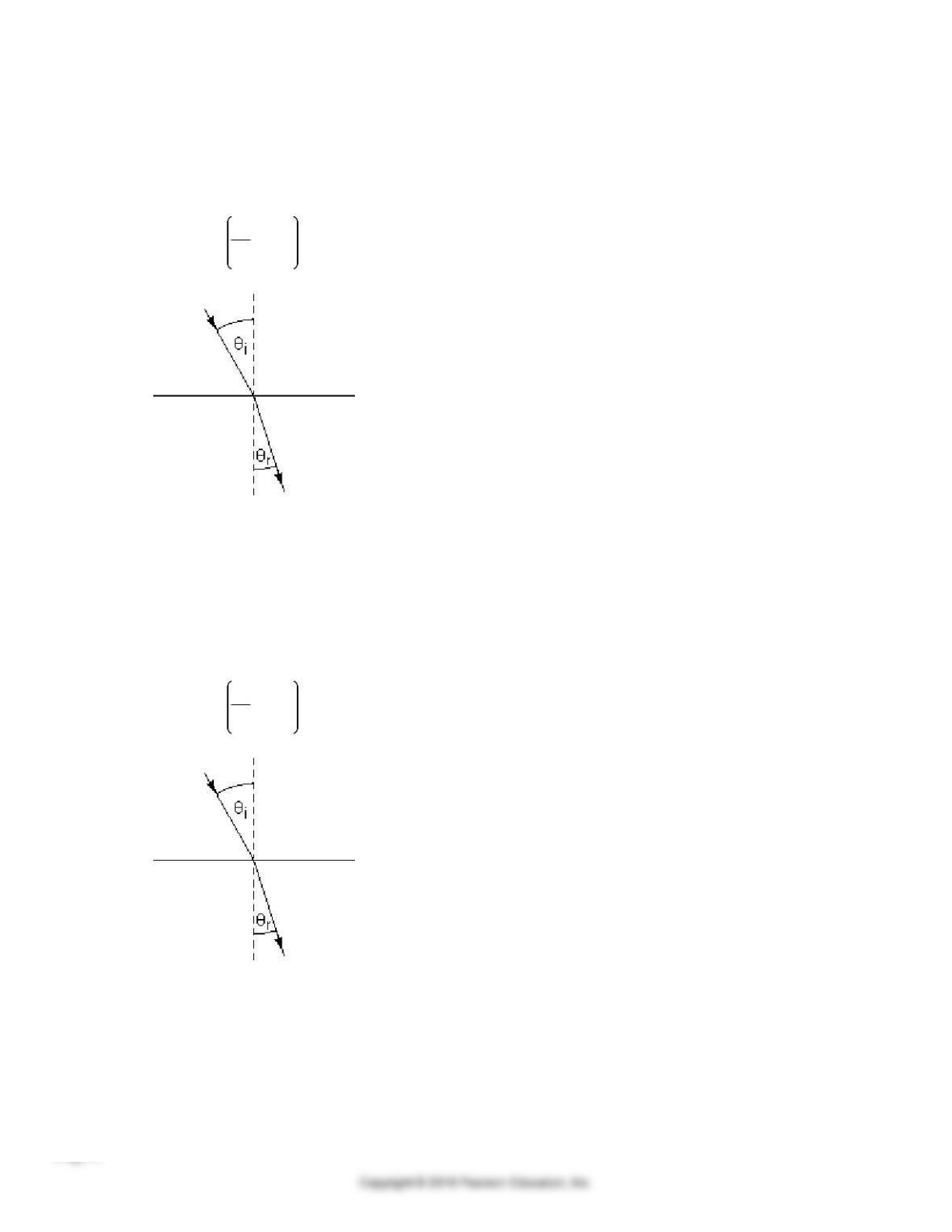
18) Whenlighttravelsfromonemediumtoanotherfromairtowater,forinstanceitchangesdirection.
(Thisiswhyapencil,partiallysubmergedinwater,looksasthoughitisbent.)Theangleofincidenceθris
theangleinthefirstmedium;theangleofrefractionθristhesecondmedium.(Seeillustration.)Each
mediumhasanindexofrefractionniandnr,respectivelywhichcanbefoundintables.Snellʹslaw
relatesthesequantitiesintheformula
nisinθi=nrsinθr
Solvingforθr,weobtain
θr=sin–1ni
nrsinθi
Findθrforair(ni=1.0003),methyleneiodide(nr=1.74),andθi=14.7°.
19) Whenlighttravelsfromonemediumtoanotherfromairtowater,forinstanceitchangesdirection.
(Thisiswhyapencil,partiallysubmergedinwater,looksasthoughitisbent.)Theangleofincidenceθiis
theangleinthefirstmedium;theangleofrefractionθristhesecondmedium.(Seeillustration.)Each
mediumhasanindexofrefractionniandnr,respectivelywhichcanbefoundintables.Snellʹslaw
relatesthesequantitiesintheformula
nisinθi=nrsinθr
Solvingforθr,weobtain
θr=sin–1ni
nrsinθi
Findθrforfusedquartz(ni=1.46),ethylalcohol(nr=1.36),andθi=8.5°.
Page8
8.2 TheInverseTrigonometricFunctions(Continued)
1 FindtheExactValueofExpressionsInvolvingtheInverseSine,Cosine,andTangentFunctions
MULTIPLECHOICE.Choosetheonealternativethatbestcompletesthestatementoranswersthequestion.
Findtheexactvalueoftheexpression.
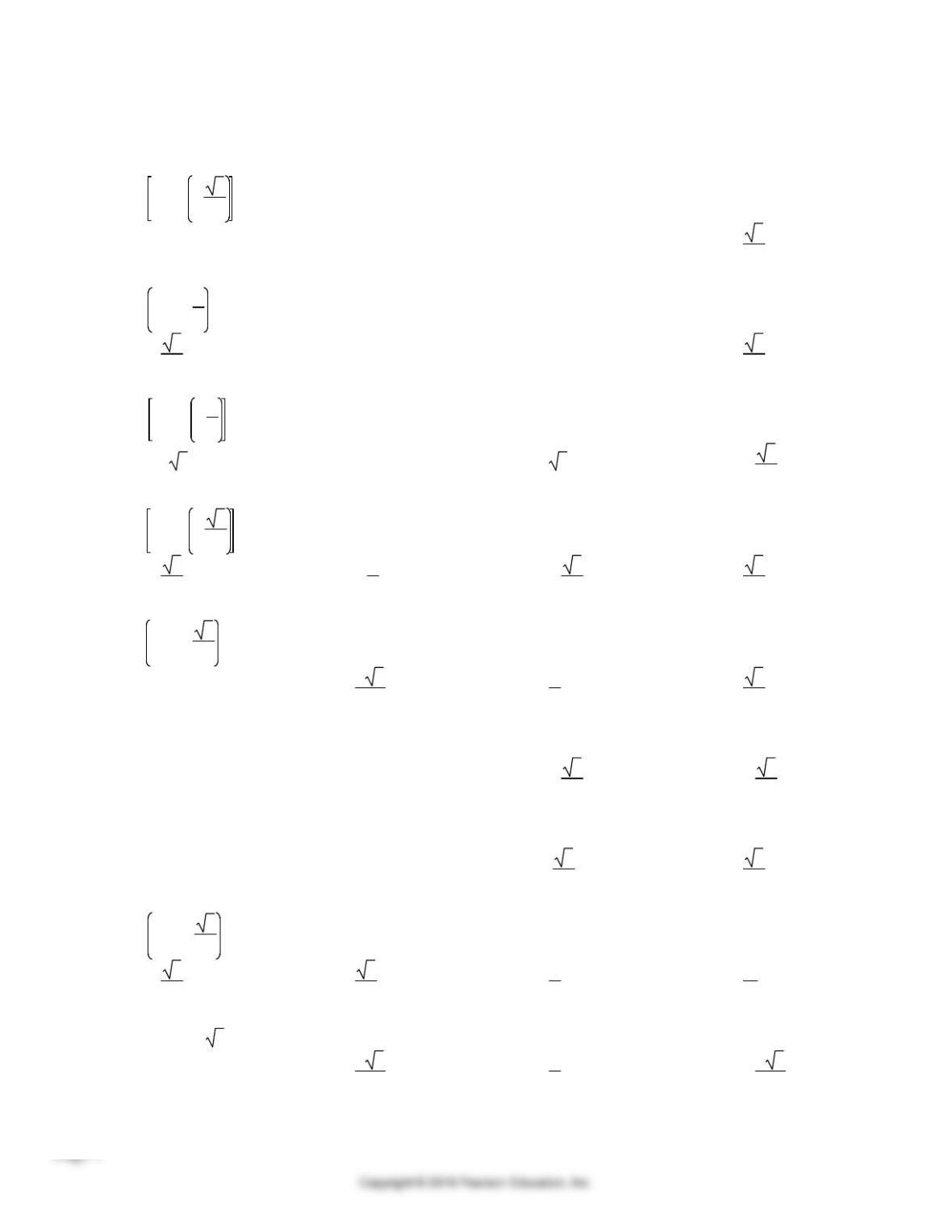
1) sec sin–1–3
2
A) 2 B) 1 C) 0 D) 2
2
2) cos sin–11
2
A) 3
2B) 1 C) 0 D) 2
2
3) tan cos–1–1
2
A) –3 B) –1C)3D) –3
3
4) sin cos–1–2
2
A) 2
2B) –1
2C) –2
2D) 3
2
5) csc cos–13
2
A) 2 B) 23
3C) 1
2D) 2
2
6) cot[sin–1(–1)]
A) 0 B) –1C)
–3
2D) –2
2
7) tan(cos–11)
A) 0 B) –1C)3
2D) 2
2
8) cos tan–13
3
A) 3
2B) 3
3C) 1
2D) π
3
9) sec[tan–1(–3)]
A) 2 B) 23
3C) 1
2D) –23
3
Page9
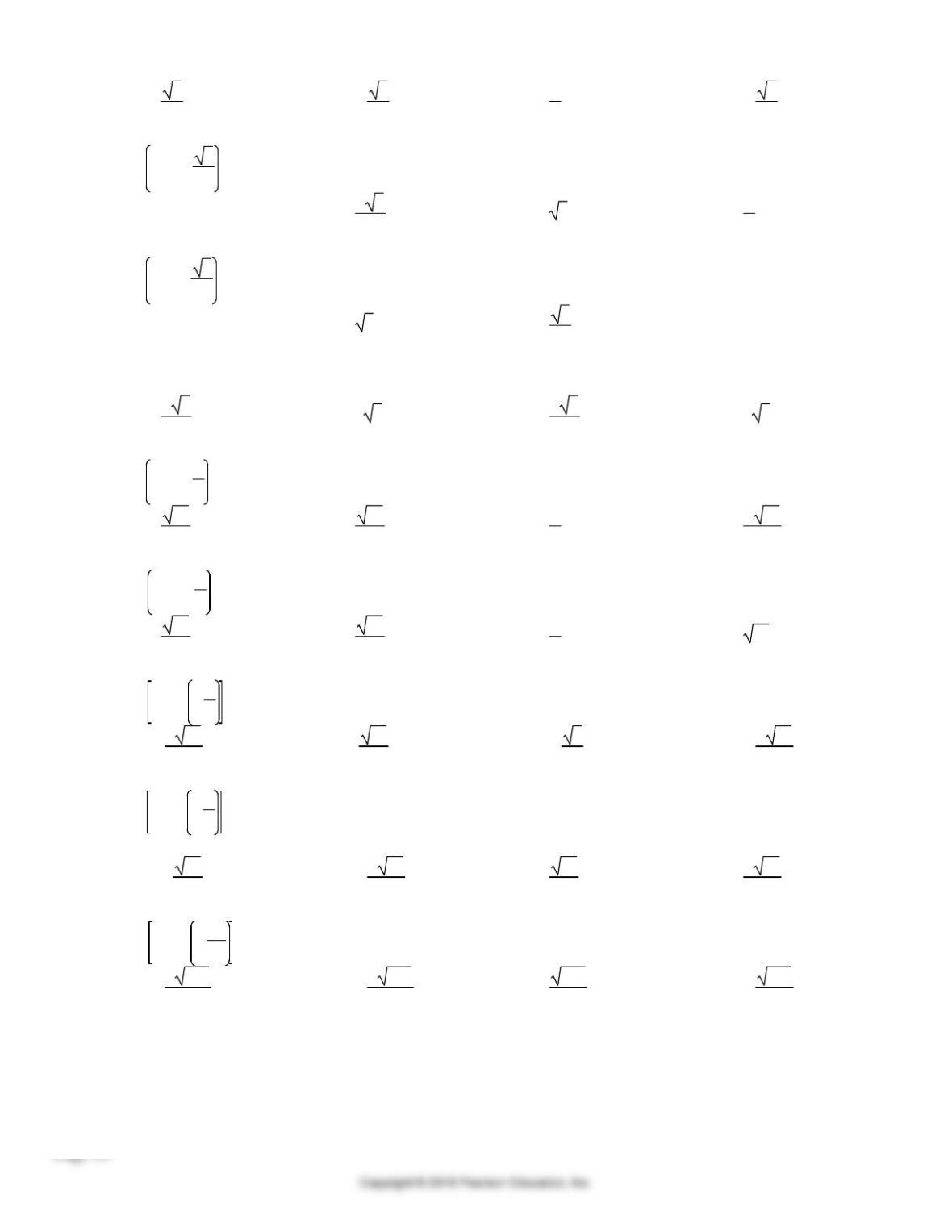
10) cos[tan–1(–1)]
A) 2
2B) –2
2C) 1
2D) –3
2
11) csc tan–13
3
A) 2 B) 23
3C) 3 D) 1
2
12) cot sin–12
2
A) 1 B) 2 C) 2
2D) 2
13) sin(tan–12)
A) 25
5B) 2 5 C) 52
2D) 5 2
14) sin cos–14
9
A) 65
9B) 65
4C) 4
9D) 465
65
15) tan cos–14
9
A) 65
4B) 65
9C) 9
4D) 65
16) sec sin–1–2
5
A) 521
21 B) 21
5C) –5
2D) –221
21
17) cot sin–1–2
5
A) –21
2B) –521
21 C) 21
5D) 221
21
18) cos tan–1–10
7
A) 7 149
149 B) –7 149
149 C) 149
10 D) –149
7
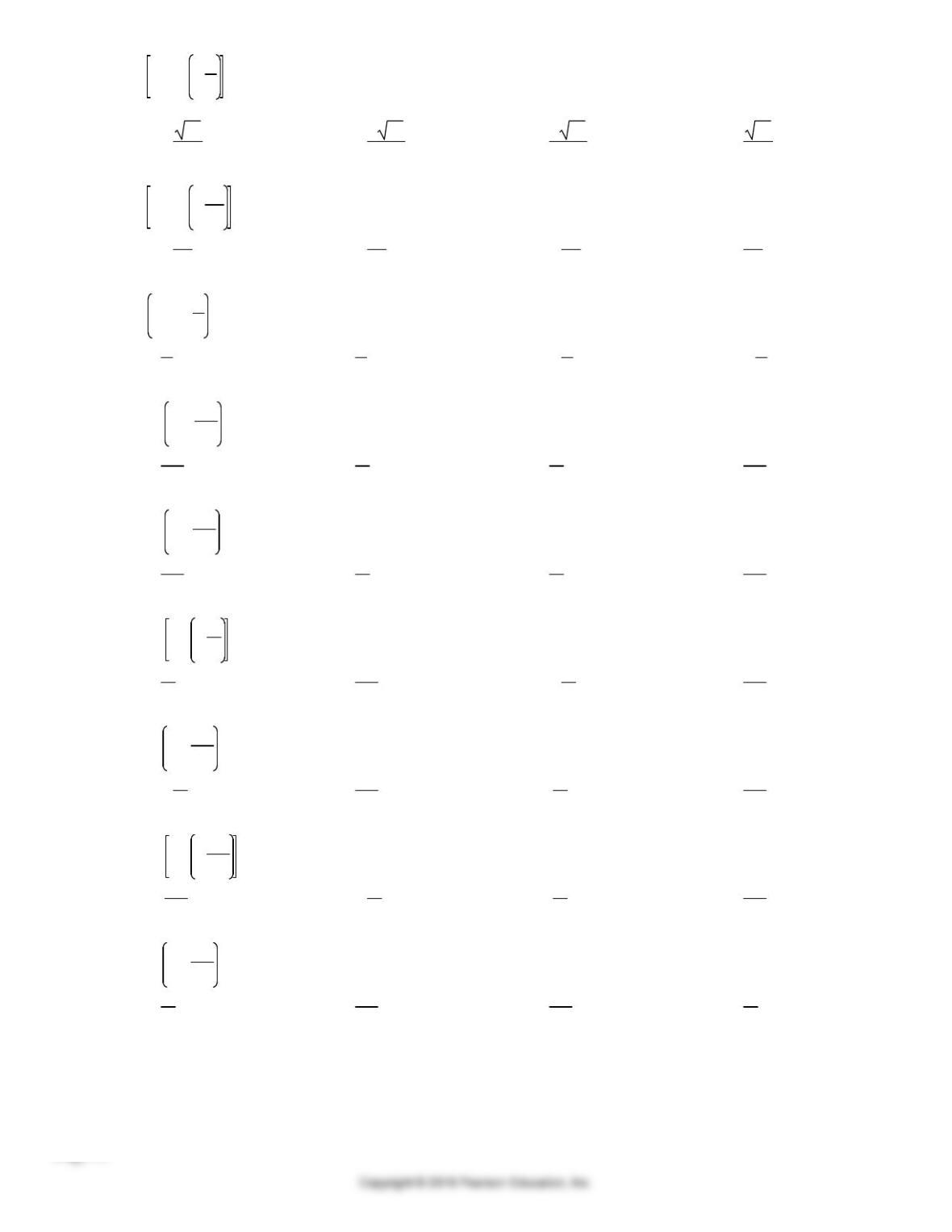
19) csc tan–1–8
3
A) –73
8B) –373
73 C) 373
73 D) 73
3
20) cot cos–1–20
29
A) –20
21 B) –20
3C) –21
20 D) 29
20
21) cos sin–13
5
A) 4
5B) 1
5C) –3
5D) –4
5
22) cos–1cos7π
6
A) 5π
6B) π
3C) π
6D) 4π
5
23) cos–1sin7π
6
A) 2π
3B) π
3C) π
6D) 4π
5
24) cos–1cos –π
6
A) π
6B) 5π
6C) –π
6D) 7π
6
25) sin–1sin4π
3
A) –π
3B) 2π
3C) π
3D) 4π
3
26) cos–1cos –5π
4
A) 3π
4B) –π
4C) π
4D) 5π
4
27) sin–1sin6π
7
A) π
7B) 6π
7C) 7
6πD) 7
π
Page11
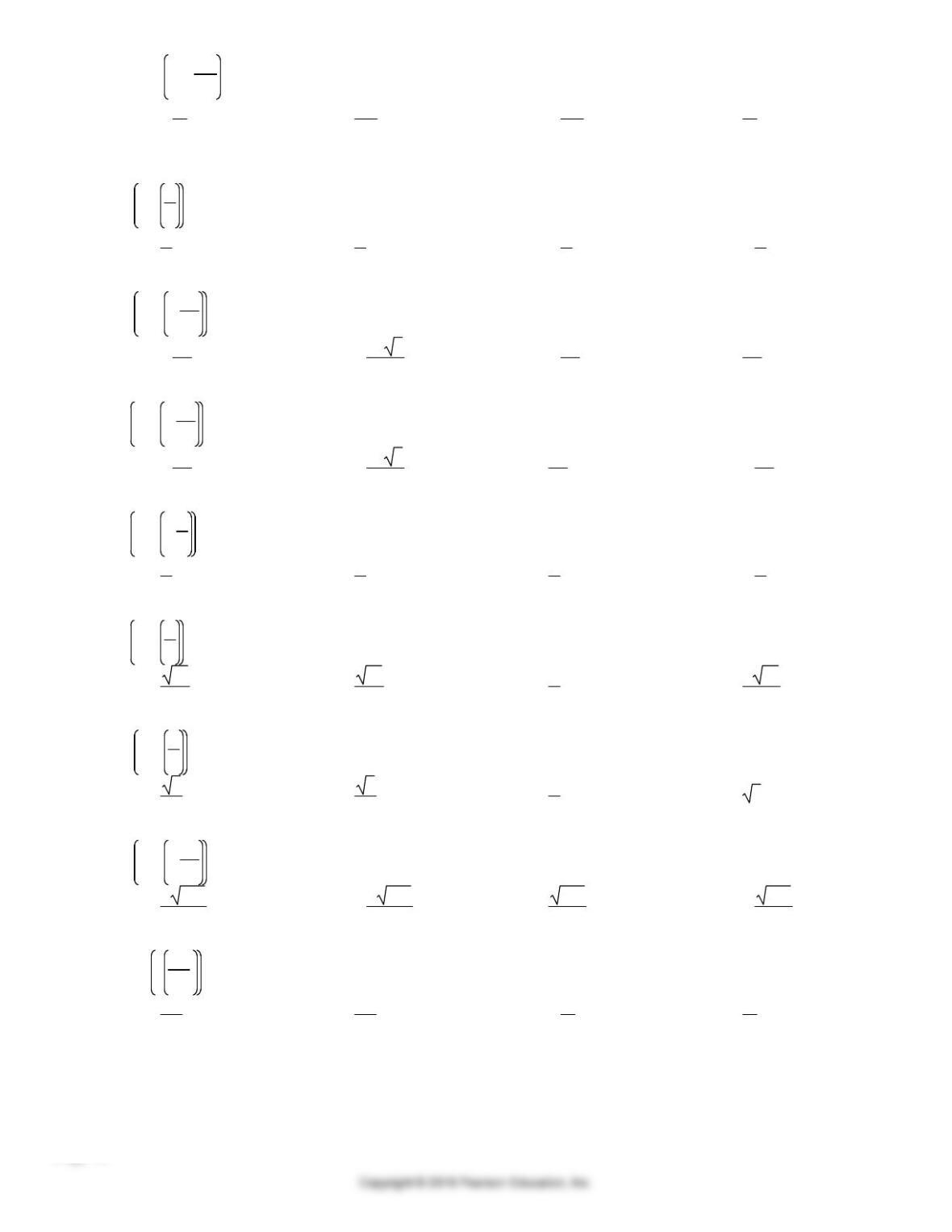
28) tan–1tan6π
7
A) –π
7B) 6π
7C) –6π
7D) π
7
Giventhatf(x)=sinx,g(x)=cosx,andh(x)=tanx,findtheexactvalueofthecompositefunction.
29) g f–14
5
A) 3
5B) 1
5C) –4
5D) –3
5
30) h g–1–15
17
A) –8
15 B) –15 2
2C) –15
8D) 17
15
31) f h–1–21
20
A) –21
29 B) –21 2
4C) 21
29 D) –20
21
32) f g–1–3
5
A) 4
5B) 1
5C) 3
5D) –4
5
33) f g–12
9
A) 77
9B) 77
2C) 2
9D) 277
77
34) h g–12
3
A) 5
2B) 5
3C) 3
2D) 5
35) g h–1–10
3
A) 3 109
109 B) –3 109
109 C) 109
10 D) –109
3
36) g–1f5π
4
A) 3π
4B) 5π
4C) –π
4D) π
4
Page12
37) g–1f–π
6
A) 2π
3B) –π
3C) 5π
6D) –π
6
38) f–1g5π
3
A) π
6B) π
3C) –π
6D) 2π
3
39) f–1g–5π
6
A) –π
3B) π
3C) –π
6D) 2π
3
2 DefinetheInverseSecant,Cosecant,andCotangentFunctions
MULTIPLECHOICE.Choosetheonealternativethatbestcompletesthestatementoranswersthequestion.
Findtheexactvalueoftheexpression.
1) cot–1–3
A) 5π
6B) π
6C) π
3D) 2π
3
2) csc–1–2
A) –π
6B) π
6C) π
3D) 2π
3
3) sec–11
A) 0 B) πC) π
6D) π
3
4) sec–1(–2)
A) 2π
3B) –π
3C) 4π
3D) –2π
3
5) cot–13
A) π
6B) π
3C) π
4D) 2π
3
6) cot–1–3
3
A) 2π
3B) –π
3C) 5π
6D) –π
6
7) csc–1–23
3
A) –π
3B) 2π
3C) 5π
6D) –π
6
Page13
8) csc–1(–1)
A) –π
2B) –π
3C) π
2D) π
3 UseaCalculatortoEvaluatesec^–1x,csc^–1x,andcot^–1x
MULTIPLECHOICE.Choosetheonealternativethatbestcompletesthestatementoranswersthequestion.
Useacalculatortofindthevalueoftheexpressioninradianmeasureroundedtotwodecimalplaces.
1) csc–1–8
3
A) –0.38 B) –22.02 C) 1.96 D) 112.02
2) sec–1–5
4
A) 2.50 B) 143.13 C) –0.93 D) –53.13
3) cot–110
29
A) 1.24 B) 70.97 C) 0.33 D) 19.03
4) sec–1–7
3
A) 2.01 B) 0.50 C) 1.13 D) –2.01
Solvetheproblem.
5) Whengranularmaterialsareallowedtofallfreely,theyformconical(cone–shaped)piles.Thenaturally
occurringangleofslope,measuredfromthehorizontal,atwhichtheloosematerialcomestorestiscalled
theangleofreposeandvariesfordifferentmaterials.Theangleofreposeθisrelatedtotheheighthand
baseradiusroftheconicalpilebytheequationθ=cot–1r
h.Findtheangleofreposeforagranular
materialwhichformsacone–shapedpilewithaheightof8feetandabasediameterof16.8feet.
A) θ=43.60° B) θ=25.46° C) θ=46.40° D) θ=64.54°
6) Whengranularmaterialsareallowedtofallfreely,theyformconical(cone–shaped)piles.Thenaturally
occurringangleofslope,measuredfromthehorizontal,atwhichtheloosematerialcomestorestiscalled
theangleofreposeandvariesfordifferentmaterials.Theangleofreposeθisrelatedtotheheighthand
baseradiusroftheconicalpilebytheequationθ=cot–1r
h.Acertaingranularmaterialformsa
cone–shapedpilewithaheightof15feetandabasediameterof39feet.Whatistheheightofapilethat
hasabasediameterof132feet?
A) 50.77ft B) 343.20 ft C) 25.38 ft D) 55.85 ft
4 WriteaTrigonometricExpressionasanAlgebraicExpression
MULTIPLECHOICE.Choosetheonealternativethatbestcompletesthestatementoranswersthequestion.
Writethetrigonometricexpressionasanalgebraicexpressioninu.
1) sin(tan–1u)
A) uu
2+1
u2+1
B) uu
2–1
u2–1
C) u u2+1 D) u2+1
u2+1
Page14
2) cos(tan–1u)
A) u2+1
u2+1
B) u2–1
u2–1
C) u u2+1 D) uu
2+1
u2+1
3) cos(sin–1u)
A) 1–u2B) u2+1 C) u2–1 D) u2+1
u
4) cos(cot–1u)
A) uu
2+1
u2+1
B) u2+1
u2+1
C) u2–1 D) u2+1
u
5) tan(csc–1u)
A) u2–1
u2–1
B) u2–1
uC) u2–1 D) u2+1
u2+1
6) sin(csc–1u)
A) 1
uB) u2–1
uC) u D) u2+1
u
7) tan(sin–1u)
A) u1–u2
1–u2B) 1–u2
uC) 1–u2D) uu
2+1
u2+1
8) csc(tan–1u)
A) u2+1
uB) u2–1
u2–1
C) u2+1
u2+1
D) uu
2+1
u2+1
9) sec(sin–1u)
A) 1–u2
1–u2B) u2–1
uC) 1–u2D) u2–1
u2–1
10) cot(cos–1u)
A) u1–u2
1–u2B) 1–u2
uC) 1–u2D) uu
2+1
u2+1
Page15
8.3 TrigonometricEquations
1 SolveEquationsInvolvingaSingleTrigonometricFunction
MULTIPLECHOICE.Choosetheonealternativethatbestcompletesthestatementoranswersthequestion.
Solvetheequationontheinterval0≤θ<2π.
1) 2cosθ+3=2
A) 2π
3,4π
3B) 2π
3,5π
3C) 5π
6,7π
6D) 5π
6,11π
6
2) 1–sinθ=1
2
A) π
6,5π
6B) π
3,2π
3C) π
3,4π
3D) π
6,11π
6
3) 4sin2θ=1
A) π
6,5π
6,7π
6,11π
6B) π
3,2π
3,4π
3,5π
3
C) π
3,2π
3D) π
6,5π
6
4) tan2θ=3
A) π
3,2π
3,4π
3,5π
3B) π
6,5π
6,7π
6,11π
6
C) π
3,4π
3D) π
6,7π
6
5) 4cos2x–3=0
A) π
6,5π
6,7π
6,11π
6B) π
6,11π
6
C) π
3,5π
3D) π
3,2π
3,4π
3,5π
3
6) 4sin2θ–3=0
A) π
3,2π
3,4π
3,5π
3B) π
6,5π
6,7π
6,11π
6
C) π
3,2π
3D) π
6,5π
6
7) 2cos2θ–1=0
A) π
4,3π
4,5π
4,7π
4B) π
3,2π
3,4π
3,5π
3C) π
4,7π
4D) π
3,5π
3
8) tanθ
2=3
3
A) π
3B) π
3,4π
3C) 2π
3D) π
3,7π
3
Page16
9) tan(2θ)=–1
A) 3π
8,7π
8,11π
8,15π
8B) 3π
8,5π
8
C) 3π
8,5π
8,11π
8,13π
8D) 3π
8,7π
8
10) sec3θ
2=–2
A) π
2,5π
6,11π
6B) 5π
6,7π
6C) π
2,5π
6,7π
6,11π
6D) π
2,5π
6
11) cot3θ
2=–3
3
A) 4π
9,10π
9,16π
9B) 8π
9,10π
9
C) 4π
9,10π
9,16π
9,22π
9D) 4π
9,10π
9
12) 3cotθ–1=0
A) π
3,4π
3B) π
3,2π
3C) π
6,7π
6D) 7π
6,11π
6
13) 2cosθ+23=3
A) 5π
6,7π
6B) 7π
6,11π
6C) 2π
3,4π
3D) 2π
3,5π
3
14) 5 2sinθ+4=–1
A) 5π
4,7π
4B) 3π
4,7π
4C) 4π
3,5π
3D) 7π
6,11π
6
15) cos(2θ)=3
2
A) π
12,11π
12 ,13π
12 ,23π
12 B) π
6,11π
6
C) π
2D) 3π
2
16) cos 2θ–π
2=2
2
A) 3π
8,9π
8,11π
8B) 3π
8,7π
8
C) π
4,5π
4,9π
4,13π
4D) 3π
8,9π
8
Page17
17) sin(4θ)=3
2
A) π
12,π
6,2π
3,7π
12 ,7π
6,13π
12 ,5π
3,19π
12 B) π
4,5π
4
C) 0,π
4,π D) {0}
18) 2 3sin(4θ)=3
A) π
12,π
6,2π
3,7π
12 ,7π
6,13π
12 ,5π
3,19π
12 B) π
4,5π
4
C) 0,π
4,π D) {0}
19) csc(3θ)=0
A) Nosolution B) 0,2π
3,π,4π
3C) π
4,3π
4,5π
4,7π
4D) π
8,9π
8
20) 2cos(2θ)=1
A) π
8,7π
8,9π
8,15π
8B) 0,2π
3,π,4π
3
C) π
4,3π
4,5π
4,7π
4D) Nosolution
21) cosθ–1=0
A) {0} B) {π}C)
π
2D) 3π
2
22) 7cscθ–2=5
A) π
2B) {π}C){2π}D)
3π
2
23) 2cos(2θ)=3
A) π
12,11π
12 ,13π
12 ,23π
12 B) π
6,11π
6
C) π
2D) 3π
2
24) 2cosθ+1=0
A) 2π
3,4π
3B) π
3,5π
3C) π
2,3π
2D) 3π
2
25) cot 2θ–π
2=1
A) 3π
8,7π
8,11π
8,and15π
8B) 3π
8,7π
8
C) π
4,5π
4,9π
4,and13π
4D) 3π
8
Page18

Solvetheequation.Giveageneralformulaforallthesolutions.
26) cosθ=1
A) {θ|θ=0+2kπ}B){θ|θ=π+2kπ}C)θ|θ=π
2+2kπD) θ|θ=3π
2+2kπ
27) sinθ=1
A) θ|θ=π
2+2kπB) {θ|θ=π+2kπ}C){θ|θ=0+2kπ}D)θ|θ=3π
2+2kπ
28) sinθ=0
A) {θ|θ=0+kπ}B){θ|θ=0+2kπ}C)θ|θ=π
2+2kπD) θ|θ=π
2+kπ
29) cosθ=0
A) θ|θ=π
2+kπB) {θ|θ=0+2kπ}C)θ|θ=π
2+2kπD) {θ|θ=0+kπ}
30) sinθ=3
2
A) θ|θ=π
3+2kπ,θ=2π
3+2kπB) θ|θ=π
3+kπ,θ=2π
3+kπ
C) θ|θ=π
6+2kπ,θ=5π
6+2kπD) θ|θ=π
6+kπ,θ=5π
6+kπ
31) tanθ=–1
A) θ|θ=3π
4+kπB) θ|θ=π
4+2kπC) θ|θ=3π
4+2kπD) θ|θ=π
4+kπ
32) cosθ–1=0
A) {θ|θ=2kπ}B){θ|θ=π+2kπ}C)θ|θ=π
2+2kπD) θ|θ=3π
2+2kπ
33) 2cosθ+1=0
A) θ|θ=2π
3+2kπ,θ=4π
3+2kπB) θ|θ=2π
3+kπ,θ=4π
3+kπ
C) θ|θ=π
2+2kπ,θ=3π
2+2kπD) θ|θ=3π
2+kπ
34) cos(2θ)=2
2
A) θ|θ=π
8+kπ,θ=7π
8+kπB) θ|θ=π
8+2kπ,θ=7π
8+2kπ
C) θ|θ= π
4+kπ,θ=3π
4+kπD) θ|θ= 2π
3+kπ,θ=4π
3+kπ
35) cscθ
3=23
3
A) {θ|θ=π+6kπ}B)θ|θ=π
2+6kπC) θ|θ=π
9+2kπD) θ|θ=π
18+2kπ
Page19
36) cosθ=–2
2
A) θ θ=3π
4+2kπ,θ=5π
4+2kπB) θ θ=5π
4+2kπ,θ=7π
4+2kπ
C) θ θ=3π
4+kπD) θ θ=2π
3+2kπ,θ=4π
3+2kπ
37) tanθ=3
A) θ θ=π
3+kπB) θ θ=π
3+2kπ
C) θ θ=π
3+2kπ,θ=2π
3+2kπD) θ θ=π
6+kπ
Solvetheequationontheinterval[0,2π).
38) Supposef(x)=cosθ–1.Solvef(x)=0.
A) {0} B) {π}C)
π
2D) 3π
2
39) Supposef(x)=4cscθ–1.Solvef(x)=3.
A) π
2B) {π}C){2π}D)
3π
2
40) Supposef(x)=2cosθ+1.Solvef(x)=0.
A) 2π
3,4π
3B) π
3,5π
3C) π
2,3π
2D) 3π
2
SolvetheproblemusingSnellʹsLaw:sinθ1
sinθ2=v1
v2.
41) Alightbeaminairtravelsat2.99×108meterspersecond.Ifitsangleofincidencetoasecondmediumis
36°anditsangleofrefractioninthesecondmediumis27°,whatisitsspeedinthesecondmedium(totwo
decimalplaces)?
A) 2.31×10⁸mps B) 3.87×10⁸mps C) 1.76×10⁸mps D) 1.36×10⁸mps
42) Arayoflightnearthehorizonwithanangleofincidenceof86° entersapoolofwaterandstrikesafishʹs
eye.Iftheindexofrefractionis1.33,whatistheangleofrefraction(totwodecimalplaces)?
A) 48.59° B) 41.41° C) 46.85° D) 43.15°
43) Theindexofrefractionoflightpassingfromairintoasecondmediumis1.56.Iftheangleofincidenceis
85°,whatistheangleofrefraction(totwodecimalplaces)?
A) 39.69° B) 50.31° C) 38.26° D) 51.74°
44) Alightbeamtravelingthroughairmakesanangleofincidenceof41° uponasecondmedium.The
refractedbeammakesanangleofrefractionof27°.Whatistheindexofrefractionofthematerialofthe
secondmedium?Givetheanswertotwodecimalplaces.
A) 1.45 B) 0.69 C) 0.66 D) 0.45
45) Alightbeaminairtravelsat2.99×108meterspersecond.Ifitsangleofincidencetoasecondmediumis
76°anditsangleofrefractioninthesecondmediumis65°,whatisitsspeedinthesecondmedium(totwo
decimalplaces)?
A) 2.79×10⁸mps B) 3.20×10⁸mps C) 2.90×10⁸mps D) 2.71×10⁸mps
Solvetheproblem.
46) Whatarethex–interceptsofthegraphoff(x)=4cos2x–3ontheinterval[0,2π]?
A) π
6,5π
6,7π
6,11π
6B) π
3,2π
3,4π
3,5π
3C) π
6,11π
6D) π
3,5π
3
47) Whatarethex–interceptsofthegraphoff(x)=2sin(3x)+3ontheinterval[0,2π]?
A) 4π
9,5π
9,10π
9,11π
9,16π
9,17π
9B) 2π
9,5π
9,8π
9,11π
9,14π
9,17π
9
C) 4π
9,5π
9D) 7π
18 ,11π
18 ,19π
18 ,23π
18
48) Givenf(x)=4tanx,forwhatvaluesofxisf(x)>–4ontheinterval–π
2,π
2?
A) –π
4,π
2B) 0,π
2C) –π
4,π
4D) –π
2,π
4
SHORTANSWER.Writethewordorphrasethatbestcompleteseachstatementoranswersthequestion.
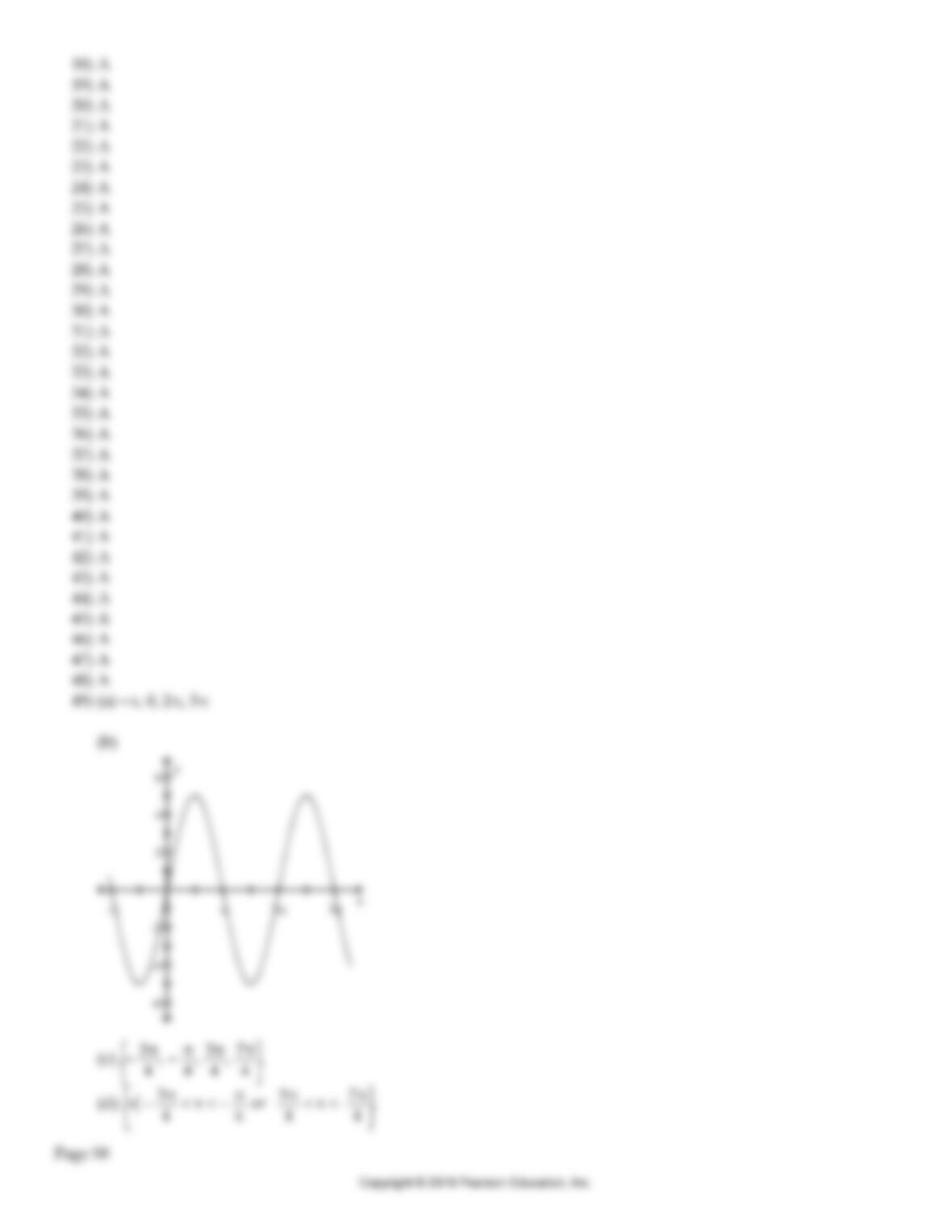
49) Givenf(x)=5sinx
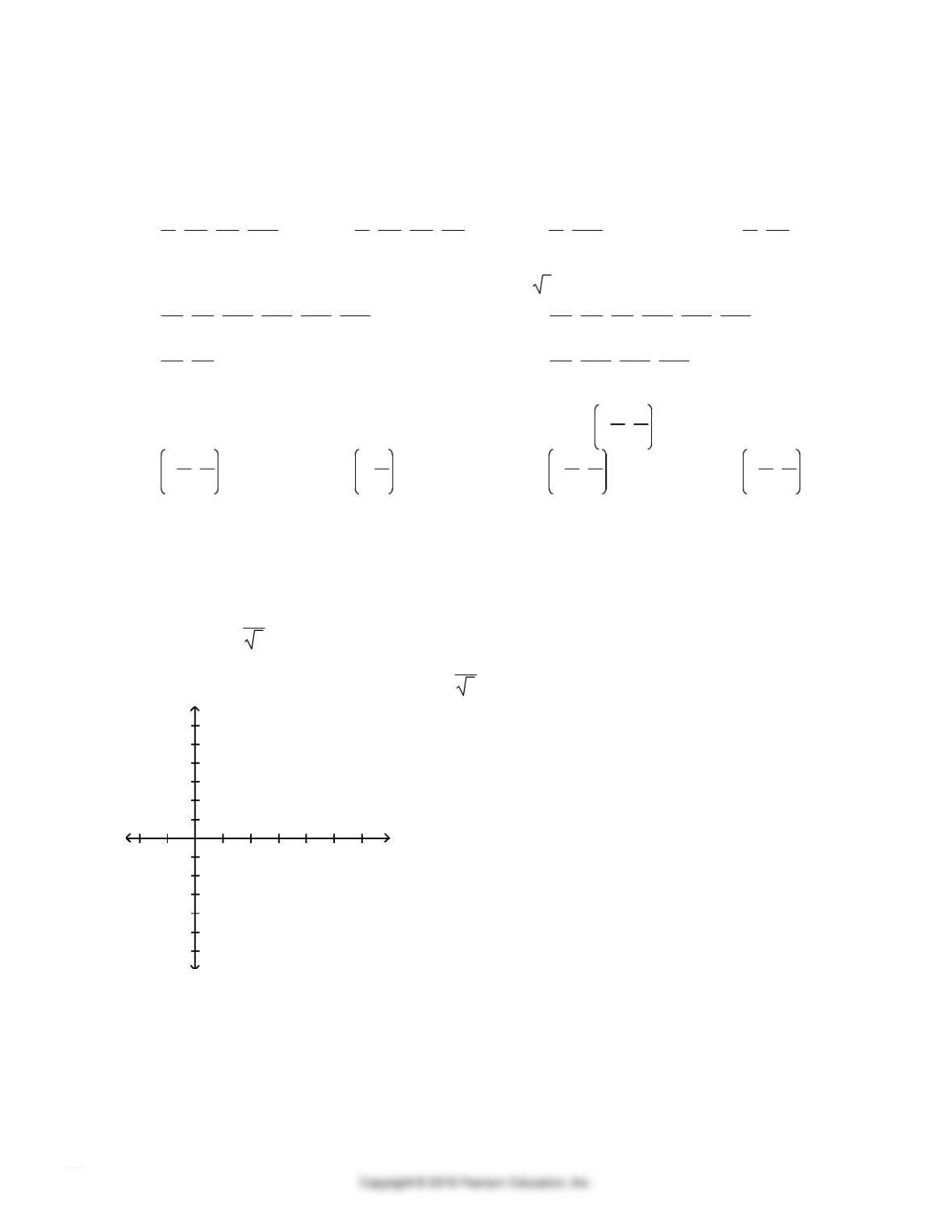
(a)Findtheinterceptsofthegraphoffontheinterval[–π,3π].
(b)Graphf(x)=5sinxontheinterval[–π,3π].
(c)Solvef(x)=–5
2ontheinterval[–π,3π].
(d)Determinethevaluesofxsuchthatf(x)<–5
2ontheinterval[–π,3π].
x
–
23
y
6
4
2
-2
-4
-6
x
–
23
y
6
4
2
-2
-4
-6
Page21

MULTIPLECHOICE.Choosetheonealternativethatbestcompletesthestatementoranswersthequestion.
50) ThefunctionI(t)=40sin60πt–π
2representstheamperesofcurrentproducedbyanelectricgeneratoras
afunctionoftimet,wheretismeasuredinseconds.Findthesmallestvalueoftforwhichthecurrentis20
amperes.Roundyouranswertothreedecimalplaces,ifnecessary.
A) 0.011 B) 0.033 C) 0.017 D) 0.008
51) Aweightsuspendedfromaspringisvibratingverticallywithupbeingthepositivedirection. The
functionf(t)=10sin3πt
4–π
4representsthedistanceincentimetersoftheweightfromitsrestpositionas
afunctionoftimet,wheretismeasuredinseconds.Findthesmallestpositivevalueoftforwhichthe
displacementoftheweightaboveitsrestpositionis5cm.Roundanswertothreedecimalplaces,if
necessary.
A) 0.556 B) 0.222 C) 2.293 D) 1.586
SHORTANSWER.Writethewordorphrasethatbestcompleteseachstatementoranswersthequestion.
52) Youareflyingakiteandwanttoknowitsangleofelevation.Thestringonthekiteis43meterslongand
thekiteislevelwiththetopofabuildingthatyouknowis28metershigh.Useaninversetrigonometric
functiontofindtheangleofelevationofthekite.Roundtotwodecimalplaces.
53) Beforeexercising,anathletemeasuresherairflowandobtainsa=0.65sin2π
5twhereaismeasuredin
literspersecondandtisthetimeinseconds.Ifa>0,theathleteisinhaling;ifa<0,theathleteisexhaling.
Thetimetocompleteonecompleteinhalation/exhalationsequenceisarespiratorycycle.Findthevaluesof
tforwhichtheathleteʹsairflowiszero.Findallvaluesoftfort<20seconds.
54) Amasshangsfromaspringwhichoscillatesupanddown.ThepositionP(infeet)ofthemassattimet(in
seconds)isgivenbyP=4cos(4t).Forwhatvaluesoft,0≤t<π,willthepositionbe22
feet?Findthe
exactvalues.Donotuseacalculator.
55) Thepathofaprojectilefiredataninclinationθ (indegrees)tothehorizontalwithaninitialvelocityv0isa
parabola.TherangeRoftheprojectile,thatis,thehorizontaldistancethattheprojectiletravels,isfound
byusingtheformula
R=
v2
0
gsin(2θ)
wheregistheaccelerationduetogravity.Supposetheprojectileisfiredwithaninitialvelocityof400feet
persecondsandg=32feetpersecond2.Whatangleθ,0°≤θ<90°,wouldyouselectfortherangetobe
2500feet?(Thereshouldbetwovaluesofθ.)
56) Wildlifemanagementpersonnelusepredator–preyequationstomodelthepopulationsofcertain
predatorsandtheirpreyinthewild.SupposethepopulationMofapredatoraftertmonthsisgivenby
M=750+125sinπ
6t
whilethepopulationNofitsprimarypreyisgivenby
N=12,250+3050cosπ
6t
Findthevaluesoft,0≤t<12,forwhichthepredatorpopulationis875.Findthevaluesoft,0≤t<12,for
whichthepreypopulationis10,725.
Page22

57) Aconsumernotesthesinusoidalnatureofhermonthlypowerbills.Inwinterwhensheuseselectricityto
heatherhomeandinsummerwhenshecoolsherhome,thebillsarehigh.Inspringandfall,significantly
lesselectricityisusedandthebillsaremuchsmaller.Thefollowingfunctionmodelsthisbehavior.
C=60+40cosπ
3t–π
3
HereCisthecostofpowerindollarsforthemontht,1≤t≤12,witht=1correspondingtoJanuary.For
whatvaluesoft,1≤t≤12,isthecostexactly$80?
58) TheaveragedailytemperatureTofacityintheUnitedStatesisapproximatedby
T=55–23cos2π
365 (t–30)
wheretisindays,1≤t≤365,andt=1correspondstoJanuary1.Forwhatrangeofvaluesoftisthe
averagedailytemperatureabove70°F?Useacalculatorandroundanswerstothenearestwholenumber.
2 SolveTrigonometricEquationsUsingaCalculator
MULTIPLECHOICE.Choosetheonealternativethatbestcompletesthestatementoranswersthequestion.
Useacalculatortosolvetheequationontheinterval0≤θ<2π.Roundtheanswertotwodecimalplaces.
1) sinθ=0.25
A) {0.25
,
2.89} B) {0.25
,
6.03} C) {0.25
,
3.39} D) {0.25
,
1.82}
2) cosθ=0.74
A) {0.74
,
5.54} B) 0.74
,
2.40 C) {0.74
,
3.88} D) {0.74
,
2.31}
3) tanθ=4.8
A) {1.37
,
4.51} B) {1.37
,
4.91} C) {1.37
,
1.77} D) {1.37
,
2.94}
4) sinθ=–0.47
A) {3.63
,
5.79} B) {0.49
,
5.79} C) {0.49
,
3.63} D) {0.49
,
2.06}
5) cosθ=–0.71
A) {2.36
,
3.92} B) {2.36
,
5.50} C) {0.78
,
3.92} D) {0.78
,
2.36}
6) 2cscθ=5
A) {0.41,2.73} B) {0.20} C) {0.41} D) {0.20,2.94}
7) cscθ=–7
A) 6.14
,
3.28 B) 0.14
,
3.28 C) –1.71
,
8.00 D) –1.71
,
1.43
8) 2cotθ=–7
A) 2.86
,
6.01 B) 2.86
,
3.42 C) 1.85
,
4.99 D) 1.85
,
7.58
9) 4tanθ–3=0
A) 0.64
,
3.79 B) 0.64
,
2.50 C) 0.64
,
5.64 D) 0.93
,
4.07
10) 6sinθ+5=0
A) 4.13
,
5.30 B) 2.16
,
5.30 C) 2.56
,
3.73 D) 2.56
,
5.70
Page23
3 SolveTrigonometricEquationsQuadraticinForm
MULTIPLECHOICE.Choosetheonealternativethatbestcompletesthestatementoranswersthequestion.
Solvetheequationontheinterval0≤θ<2π.
1) cos2θ–1=0
A) {0,π}B)
π
2,3π
2C) {0} D) π
2
2) cos2θ+2cosθ+1=0
A) {π}B){2π}C)
π
2,3π
2D) π
4,7π
4
3) 2sin2θ=sinθ
A) 0,π,π
6,5π
6B) π
2,3π
2,π
3,2π
3C) π
6,5π
6D) π
3,2π
3
4) csc5θ–4cscθ=0
A) π
4,3π
4,5π
4,7π
4B) π
4,3π
4,π
6,5π
6C) π
4,5π
4,π
3,5π
3D) π
4,3π
4,π
3,5π
6
5) sin2θ+sinθ=0
A) 0,π,3π
2B) 0,π,4π
3,5π
3C) 0,π,π
3,5π
3D) 0,π,π
3,2π
3
6) 2cos2θ–3cosθ+1=0
A) 0,π
3,5π
3B) π
3,π
2,5π
3C) 0,π
6,11π
6D) 0,π
3,2π
3
7) 2sin2θ–3sinθ–2=0
A) 7π
6,11π
6B) π
2,7π
6,11π
6C) π
2,5π
6,7π
6D) 4π
3,5π
3
SHORTANSWER.Writethewordorphrasethatbestcompleteseachstatementoranswersthequestion.
Solvetheproblem.
8) Awaterwheelrotatesthroughtheangleθ
,
thewaterlevelLbehindthewheelchangesaccordingtothe
equation
L=1–sinθ–2cos2θ
whereLismeasuredininches.Determinethevaluesofθforwhichthewaterleveliszero.Findtheexact
values.Donotuseacalculator.
4 SolveTrigonometricEquationsUsingFundamentalIdentities
MULTIPLECHOICE.Choosetheonealternativethatbestcompletesthestatementoranswersthequestion.
Solvetheequationontheinterval0≤θ<2π.
1) tanθ+secθ=1
A) {0} B) π
4C) 5π
4D) Nosolution
2) sec2θ–2=tan2θ
A) Nosolution B) π
3C) π
6D) π
4
3) sin2θ–cos2θ=0
A) π
4,3π
4,5π
4,7π
4B) π
4,π
6C) π
4,π
3D) π
4
4) 3cot2θ–4cscθ=1
A) π
6,5π
6B) 7π
6,11π
6C) π
6D) 7π
6
5) sin2θ=5(cosθ+1)
A) {π}B)
3π
2C) {0} D) Nosolution
6) cos2θ=3(1–sinθ)
A) π
2B) 3π
2C) {0} D) {π}
7) 2sin2θ=3(cosθ+1)
A) 2π
3,π,4π
3B) 5π
6,π,7π
6C) 0,2π
3,5π
3D) 0,5π
6,11π
6
8) cos2θ–sin2θ=1+sinθ
A) 0,π,7π
6,11π
6B) 0,π
6,5π
6,π C) 0,π,4π
3,5π
3D) π
2,7π
6,3π
2,11π
6
9) sin2θ–cos2θ+cosθ=0
A) 0,2π
3,4π
3B) 0,π
3,5π
3C) 0,2π
3,π,4π
3D) 0,5π
6,7π
6
10) 1+cosθ=2sin2θ
A) π
3,π,5π
3B) π
3,3π
2,5π
3C) 2π
3,π,4π
3D) π
6,3π
2,11π
6
11) (cscθ–2)(cotθ+1)=0
A) π
6,3π
4,5π
6,7π
4B) π
6,3π
4,5π
6,5π
4
C) π
6,3π
4,7π
4,11π
6D) 3π
4,7π
6,5π
4,11π
6
12) secθ=cosθ
A) {0,π}B)
π
2,3π
2C) {0} D) π
4,7π
4
Page25
13) cotθ=2cosθ
A) π
6,π
2,5π
6,3π
2B) 0,π
6,5π
6,π C) π
3,π
2,2π
3,3π
2D) 0,π
3,2π
3,π
14) tan2θ=–3
2secθ
A) 2π
3,4π
3B) π
3,5π
3C) 5π
6,7π
6D) π
3,2π
3,4π
3,5π
3
15) tanθ+secθ=1
A) {0} B) π
4C) 5π
4D) Nosolution
16) sec2θ–2=tan2θ
A) Nosolution B) π
3C) π
6D) π
4
17) 3cot2θ–4cscθ=1
A) π
6,5π
6B) 7π
6,11π
6C) π
6D) 7π
6
Solvetheproblem.
18) Thealtitudeofaprojectileinfeet(neglectingairresistance)isgivenb
y
y=(tanθ)x–16
v2cos2θ
x2,
wherexisthehorizontaldistancecoveredinfeetandvistheinitialvelocityoftheprojectileatanangleθ
fromthehorizontal.Findthefiringangle(indegrees)ofaprojectilefiredataninitialvelocityof100feet
persecondsothatitstrikestheground312.5feetfromthefiringpoint.
A) 45° B) 30° C) 22.5° D) 50°
5 SolveTrigonometricEquationsUsingaGraphingUtility
SHORTANSWER.Writethewordorphrasethatbestcompleteseachstatementoranswersthequestion.
Useacalculatortosolvetheequationontheinterval0≤x<2π.Roundtheanswertoonedecimalplaceif
necessary.
1) x+3sinx=1
2) 2x–3cosx=0
3) ex=cosx
4) 2x2–3xsinx=2
5) 6x–5sinx=2
6) cosx+sinx=2x
7) x2–4cosx=0
8) x2–3sin(2x)=2x
Page26

9) 7cosx–ex=1,x>0
MULTIPLECHOICE.Choosetheonealternativethatbestcompletesthestatementoranswersthequestion.
Useagraphingutilitytosolvetheequationontheinterval0° ≤x<360°.Expressthesolution(s)roundedtoone
decimalplace.
10) 2+13sinx=14cos2x
A) 34.9°
,
145.2° B) 34.9°
,
214.9° C) 55.2°
,
124.9° D) 214.9°
,
325.2°
SHORTANSWER.Writethewordorphrasethatbestcompleteseachstatementoranswersthequestion.
11) –11+24sinx=16cos2x
MULTIPLECHOICE.Choosetheonealternativethatbestcompletesthestatementoranswersthequestion.
12) sin2x–8sinx+16=0
A) Nosolution B) 28.2°
,
151.8°
,
208.2°
,
331.8°
C) 208.2°
,
331.8° D) 28.2°
,
151.8°
13) sin2x+8sinx+16=0
A) Nosolution B) 28.2°
,
151.8°
,
208.2°
,
331.8°
C) 208.2°
,
331.8° D) 28.2°
,
151.8°
14) sin2x–8sinx–4=0
A) 208.2°
,
331.8° B) 28.2°
,
151.8°
,
208.2°
,
331.8°
C) 28.2°
,
151.8° D) Nosolution
15) sin2x+8sinx–4=0
A) 28.2°
,
151.8° B) 28.2°
,
151.8°
,
208.2°
,
331.8°
C) 208.2°
,
331.8° D) Nosolution
16) tan2x+5tanx+3=0
A) 103.1°
,
145.1°
,
283.1°
,
325.1° B) 70.5°
,
109.5°
,
180.0°
C) 49.8°
,
130.2°
,
229.8°
,
310.2° D) 51.8°
,
128.2°
17) 3cos2x+2cosx=1
A) 70.5°
,
180.0°
,
289.5° B) 103.2°
,
145.2°
,
283.2°
,
325.2°
C) 49.8°
,
130.2°
,
229.8°
,
310.2° D) 51.8°
,
128.2°
18) 7cot2x–5=0
A) 49.8°
,
130.2°
,
229.8°
,
310.2° B) 103.2°
,
145.2°
,
283.2°
,
325.2°
C) 70.5°
,
109.5°
,
180.0° D) 51.8°
,
128.2°
19) cos2x+cosx–1=0
A) 51.8°
,
308.2° B) 103.2°
,
145.2°
,
283.2°
,
325.2°
C) 70.5°
,
109.5°
,
180.0° D) 49.8°
,
130.2°
,
229.8°
,
310.2°
Page27

SHORTANSWER.Writethewordorphrasethatbestcompleteseachstatementoranswersthequestion.
Solvetheproblem.
20) Aweightissuspendedonasystemofspringandoscillatesupanddownaccordingto
P=0.1[3cos(8t)–sin(8t)]
wherePisthepositioninmetersaboveorbelowthepointofequilibrium(P=0)andtistimeinseconds.
Findthetimewhentheweightisatequilibrium.Findallvaluesoft,0≤t≤1,roundedtothenearest0.01
second.
21) Thegroundmovementofanearthquakenearafaultlineismodeledbytheequation
d=Dtanπ
21–2M
S
whereMisthehorizontalmovement(inmeters)atadistanced(inkilometers)fromtheearthquake,Dis
thedepth(alsoinkilometers)belowthesurfaceofthecenteroftheearthquake,andSisthetotal
horizontaldisplacement(alsoinmeters)atthefaultline.Whatisthehorizontalmovement5kilometers
fromanearthquakecentered3kilometersbelowthesurfacewithatotalhorizontaldisplacementof4
meters?Roundtheanswertothenearest0.01meter.
22) Theseasonalvariationinthelengthofdaylightcanberepresentedbyasinefunction.Forexample,the
dailynumberofhoursofdaylightinacertaincityintheU.S.canbegivenbyh=41
4+5
3sin2πx
365 ,wherex
isthenumberofdaysafterMarch21(disregardingleapyear).Onwhatday(s)willtherebeabout10
hoursofdaylight?
8.4 TrigonometricIdentities
1 UseAlgebratoSimplifyTrigonometricExpressions
SHORTANSWER.Writethewordorphrasethatbestcompleteseachstatementoranswersthequestion.
Simplifythetrigonometricexpressionbyfollowingtheindicateddirection.
1) Rewriteintermsofsineandcosine:tan x ·cot x
2) Multiplysinθ
1–cosθ by1+cosθ
1+cosθ
3) Rewriteoveracommondenominator:1
1–sinθ +1
1+sinθ
4) Multiplyandsimplify:(tanθ+1)(tanθ+1)–sec2θ
tanθ
5) Factorandsimplify:8cos2θ+9cosθ+1
cos2θ–1
MULTIPLECHOICE.Choosetheonealternativethatbestcompletesthestatementoranswersthequestion.
Simplifytheexpression.
6) cosθ
1+sinθ+tanθ
A) secθ B) cosθ +sinθ C) 1 D) sin2θ
Page28

7) (1+cotθ)(1–cotθ)–csc2θ
A) –2cot2θ B) 0 C) 2 D) 2cot2θ
2 EstablishIdentities
SHORTANSWER.Writethewordorphrasethatbestcompleteseachstatementoranswersthequestion.
Establishtheidentity.
1) cotθ·secθ=cscθ
2) tanθ·cscθ=secθ
3) sin2(–θ)+cos2(–θ)=1
4) tanu(cscu–sinu)=cosu
5) csc2u–cosusecu=cot2u
6) (sinx)(tanxcosx–cotxcosx)=1–2cos 2x
7) cot2x=(cscx–1)(cscx+1)
8) (1–cosx)(1+cosx)=sin2x
9) (secu–tanu)(secu+tanu)=1
10) (1+tan2u)(1–sin2u)=1
11) (tanv+1)2+(tanv–1)2=2sec2v
12) secu+tanu=cosu
1–sinu
13) tanu–1
tanu+1=1–cotu
1+cotu
14) 7csc2θ–3cot2θ=4csc2θ+3
15) 1–cos2u
1–sinu=–sinu
16) 1–cosθ
1+cosθ=secθ–1
secθ+1
17) secθ–1
tanθ =tanθ
secθ+1
18) 1–secθ
tanθ +tanθ
1–secθ=–2cscθ

19) cosu
cosu–sinu=1
1–tanu
20) (secv+tanv)2=1+sinv
1–sinv
21) cosu
1+tanu–sinu
1+cotu=cosu–sinu
22) cotu+cscu–1
cotu–cscu+1=cscu+cotu
23) tanu+cotu
tanu–cotu=1
sin2u–cos2u
24) cscθ+cotθ
tanθ+sinθ =cscθcotθ
25) 1–cot2v
1+cot2v
+1=2sin2v
26) cscu–sinu=cosucotu
27) 1+cosu
1–cosu–1–cosu
1+cosu=4cotucscu
28) tanv+secv
secv–tanv+secv
tanv=–cosvcotv
29) sin3θ–cos3θ
sinθ–cosθ =1+sinθcosθ
30) (atanu+b)2+(btanu–a)2=(a2+b2)sec2u
31) sinα+sinβ
cscα+cscβ =sinαsinβ
32) (cosα+sinβ)2+(cosα–sinβ)2=2(cos2α+sin2β)
33) lncotu=lncosu–lnsinu
34) ln1+sinu+ln1–sinu=2lncosu
35) cosxcscxtanx=1
36) 1+sec2xsin2x=sec2x
37) 1+cscx
secx=cosx+cotx

38) tan2x=sec2x–sin2x–cos2x
39) sinx
1–cosx+sinx
1+cosx=2cscx
40) cot2x
cscx–1=1+sinx
sinx
41) cot 2x+csc 2x=2csc 2x–1
42) cotx
1+cscx=cscx–1
cotx
43) cot 2x
cscx+1=1–sinx
sinx
44) sec 4x–tan 4x=sec 2x+tan 2x
45) 1–sint
cost=cost
1+sint
46) cost
1+sint+1+sint
cost=2sect
47) sinx+cosx
sinx–cosx=1+2sinxcosx
2sin 2x–1
48) cscx–1
cscx+1=cot 2x
csc 2x+2cscx+1
49) csc 4x–cot 4x=csc 2x+cot 2x
50) sin3xcos2x=sinx(cos2x–cos4x)
51) csc3xtan2x=cscx(1+tan2x)
52) cotxsec4x=cotx+2tanx+tan3x
53) sinx
cscx–1+sinx
cscx+1=2tan 2x
54) cosx
secx–1–cosx
secx+1=2cosx
tan2x
55) 1–2secx–3sec2x
–tan 2x
=1–3secx
1–secx
56) 5csc2x+4cscx–1
cot 2x
=5cscx–1
cscx–1
57) cot3x=cotx(csc2x–1)
Showthatthefunctionsfandgareidenticallyequal.
58) f(x)=cscx·secx,g(x)=cotx+tanx
59) f(θ)=secθ–1
tanθ –tanθ
secθ+1,g(θ)=0
60) f(θ)=cscθ+cotθ,g(θ)=sinθ
1–cosθ
8.5 SumandDifferenceFormulas
1 UseSumandDifferenceFormulastoFindExactValues
MULTIPLECHOICE.Choosetheonealternativethatbestcompletesthestatementoranswersthequestion.
Findtheexactvalueoftheexpression.
1) sin –11π
12
A) 2–6
4B) 6–2
4C) 2+6
4D) –6+2
4
2) sin11π
12
A) 2(3–1)
4B) –2(3–1)
4C) 2(3–1) D) –2(3–1)
3) tanπ
12
A) 2–3 B) 2+3 C) 3–2D)
–2–3
4) sin15°
A) 2(3–1)
4B) 2(3+1)
4C) –2(3+1)
4D) –2(3–1)
4
5) sin75°
A) 2(3+1)
4B) 2(3–1)
4C) –2(3+1)
4D) –2(3–1)
4
6) sin165°
A) 2(3–1)
4B) –2(3–1)
4C) –2(3+1) D) –2(3–1)
7) tan255°
A) 3+2B)
–3+2C)
–3–2D)3–2
Page32
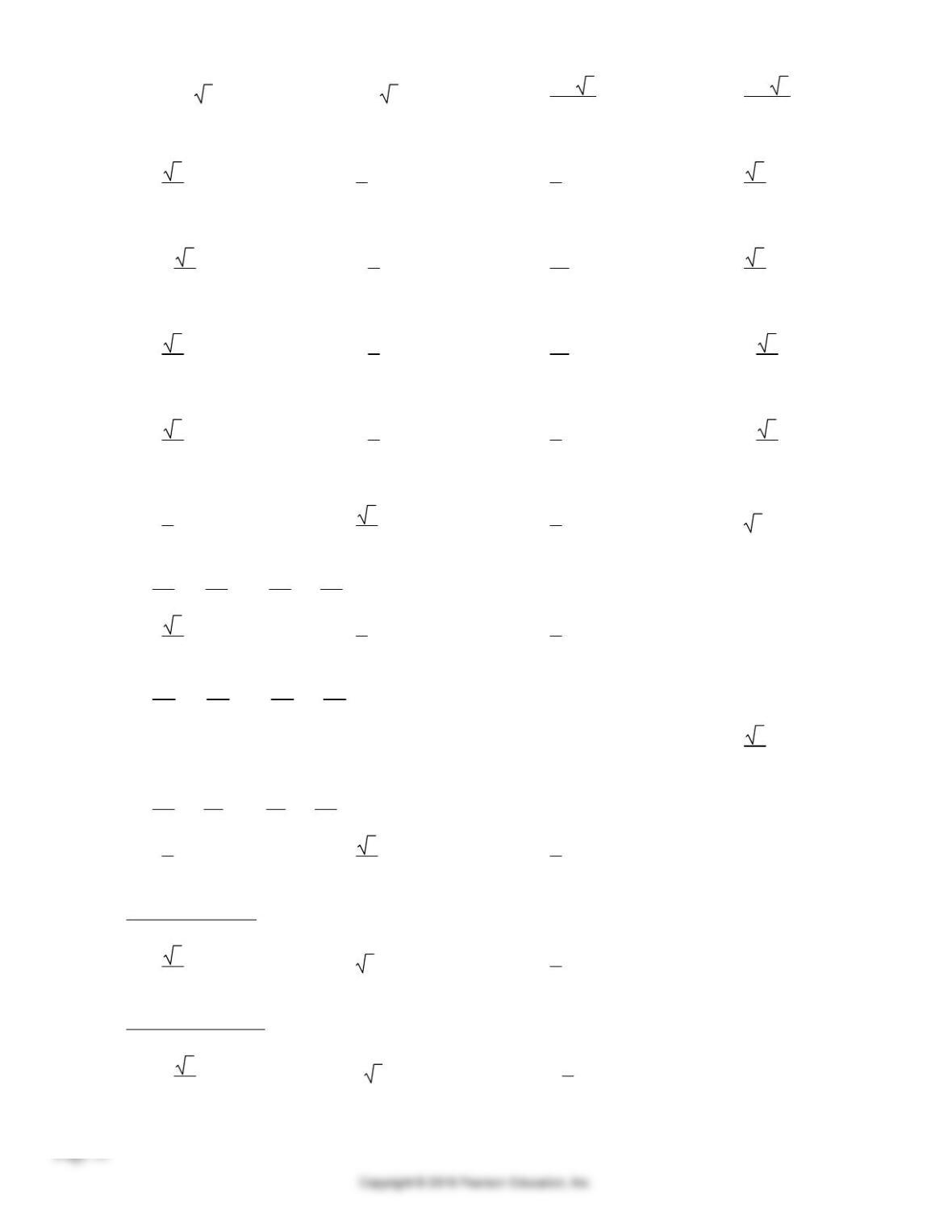
8) tan345°
A) –2–3B) 2+3 C) 2–3
4D) 2+3
4
9) sin20°cos40°+cos20°sin40°
A) 3
2B) 1
2C) 1
3D) 3
3
10) sin250°cos10°–cos250°sin10°
A) –3
2B) –1
2C) 25
6D) 3
2
11) sin190°cos70°–cos190°sin70°
A) 3
2B) –1
2C) 19
6D) –3
2
12) sin15°cos105°+cos15°sin105°
A) 3
2B) –1
2C) 1
4D) –3
2
13) cos10°cos50°–sin10°sin50°
A) 1
2B) 3
2C) 1
4D) 3
14) cos7π
12 cos5π
12 +sin7π
12 sin5π
12
A) 3
2B) 1
2C) 1
4D) 1
15) cos5π
18 cos2π
9–sin5π
18 sin2π
9
A) 0 B) –1C)1 D)
2
2
16) cos2π
9sinπ
18–cosπ
18sin2π
9
A) 1
2B) 3
2C) 1
4D) 1
17) tan10°+tan20°
1–tan10°tan20°
A) 3
3B) 3 C) 1
2D) 2
18) tan40°+tan110°
1–tan40°tan110°
A) –3
3B) –3 C) –1
2D) –2
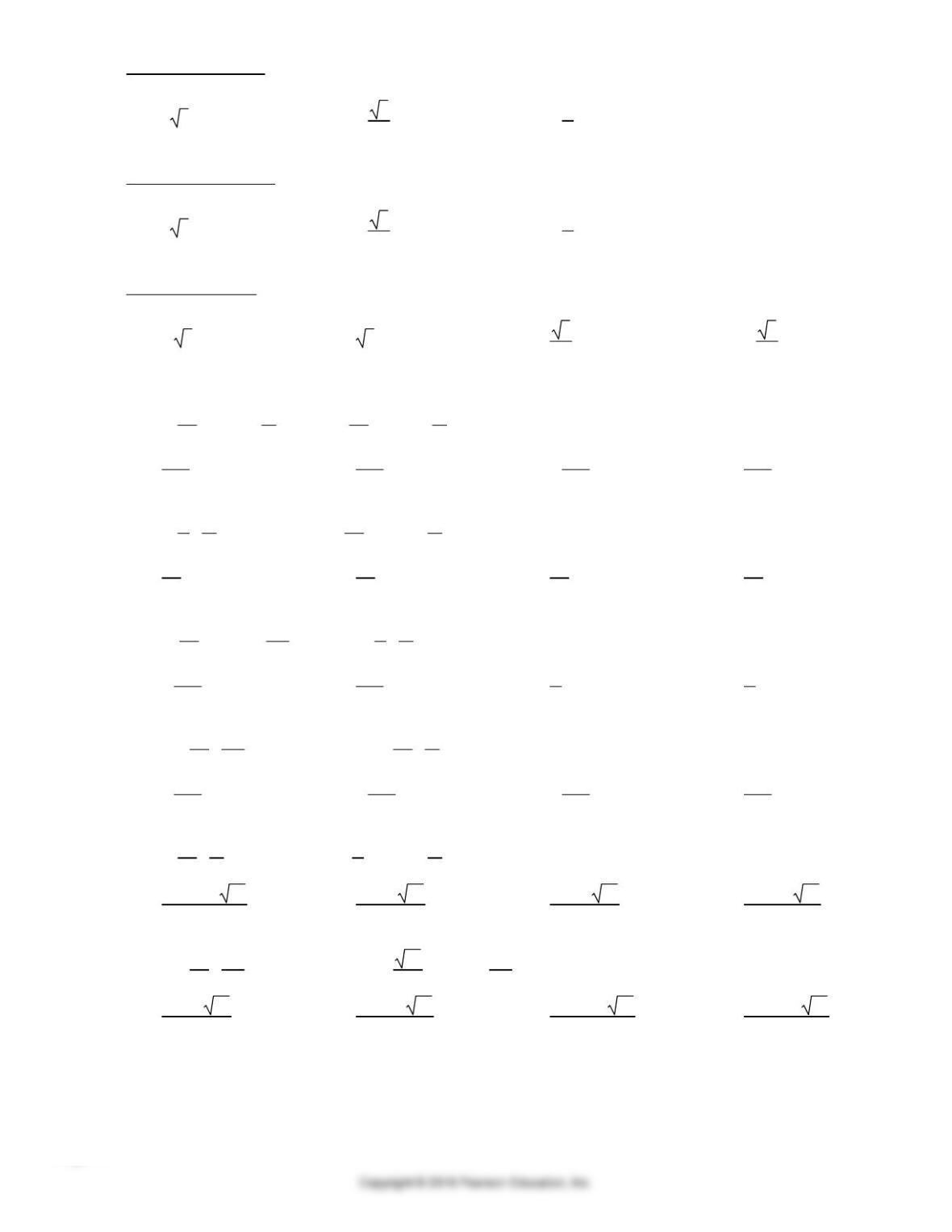
19) tan155°–tan35°
1+tan155°tan35°
A) –3 B) –3
3C) –1
2D) –2
20) tan75°–tan(–45°)
1+tan75°tan(–45°)
A) –3 B) –3
3C) –1
2D) –2
21) 1–tan80°tan70°
tan80°+tan70°
A) –3 B) 3 C) 3
3D) –3
3
Findtheexactvalueunderthegivenconditions.
22) sinα=7
25,0<α<π
2;cosβ=5
13,0<β<π
2Findcos(α+β).
A) 36
325 B) 204
325 C) –253
325 D) 323
325
23) sinα=4
5, π
2<α<π;cosβ=15
17,0<β<π
2Findsin(α–β).
A) 84
85 B) 77
85 C) 13
85 D) 36
85
24) tanα=7
24,π<α<3π
2;cosβ=–4
5, π
2<β<π Findsin(α+β).
A) –44
125 B) 117
125 C) 3
5D) 4
5
25) sinα=–8
17, 3π
2<α<2π;tanβ=–21
20, π
2<β<π Findcos(α+β).
A) –132
493 B) –468
493 C) –155
493 D) 475
493
26) sinα=24
25, π
2<α<π;cosβ=2
5,0<β<π
2Findcos(α–β).
A) –14+24 21
125 B) 48+721
125 C) 48–721
125 D) 14–24 21
125
27) sinα=–7
25, 3π
2<α<2π;cosβ=–21
5,π<β<3π
2Findsin(α–β).
A) 48+721
125 B) –48+721
125 C) –14+24 21
125 D) –14–24 21
125
Page34
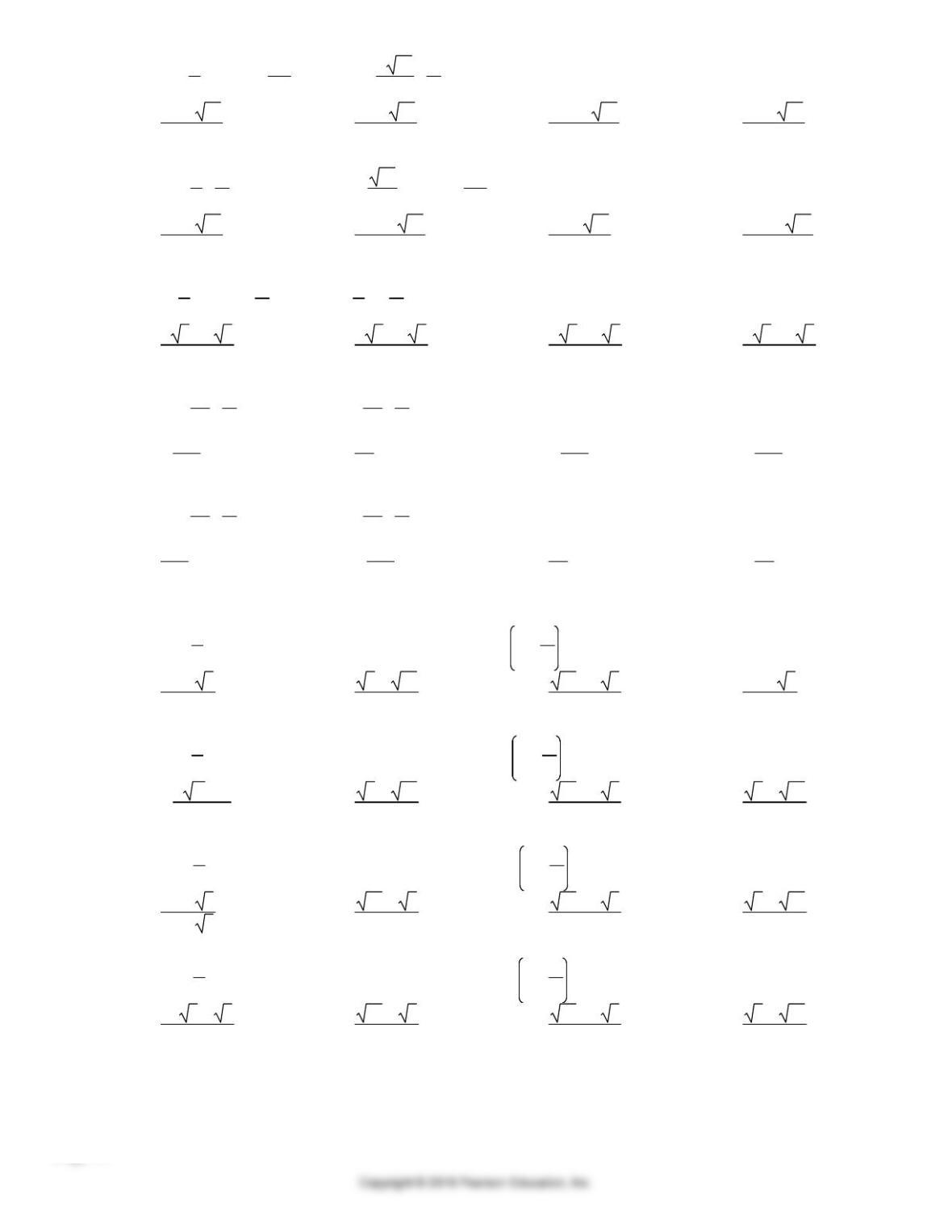
28) sinα=–3
5,π<α<3π
2;tanβ=–221
21 , π
2<β<π Findcos(α+β).
A) 6+421
25 B) 6–421
25 C) –8–321
25 D) 8–321
25
29) cosα=–4
5, π
2<α<π;sinβ=–21
5,π<β<3π
2Findcos(α+β).
A) 8+321
25 B) –8–321
25 C) 6–421
25 D) –6+421
25
30) cosα=1
3,0<α<π
2;sinβ=–1
2,–π
2<β<0 Findtan(α+β).
A) 93
–82
5B) 93
+82
5C) 93
–82
3D) 93
+82
3
31) cosα=–12
13, π
2<α<π;sinβ=15
17, π
2<α<π Findtan(α+β).
A) –220
21 B) 20
3C) –220
221 D) –220
171
32) cosα=–12
13, π
2<α<π;sinβ=15
17, π
2<α<π Findtan(α–β).
A) 140
171 B) –220
171 C) 20
3D) –20
3
Solvetheproblem.
33) Ifsinθ=1
4,θinquadrantII,findtheexactvalueofsin θ–π
3
A) 1+35
8B) 3–15
8C) 15–43
16 D) 1–35
8
34) Ifsinθ=1
4,θinquadrantII,findtheexactvalueofcos θ+π
6
A) –35
+1
8B) 3–15
8C) 15–43
16 D) 3+15
8
35) Ifcosθ=1
3,θinquadrantIV,findtheexactvalueoftan θ+π
4
A) 1–22
1+22 B) 15–3
8C) 15–43
16 D) 3+15
8
36) Ifcosθ=1
3,θinquadrantIV,findtheexactvalueofsin θ+π
3
A) –22
+3
6B) 15–3
8C) 15–43
16 D) 3+15
8
Page35
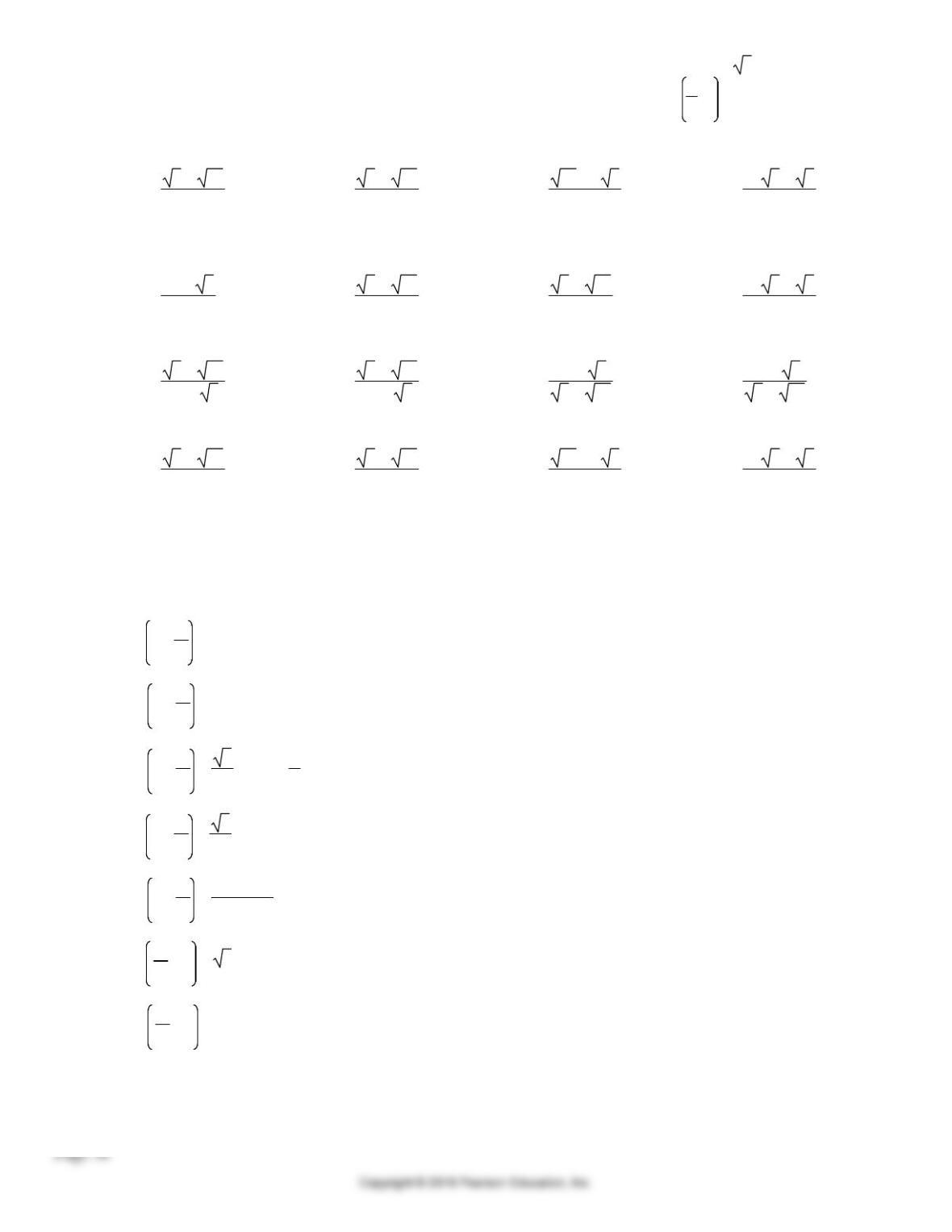
Giventhatf(x)=sinx,g(x)=cosx,andh(x)=tanx,evaluatethegivenfunction.Thepoint(x,3),onthecircle
x2+y2=4,alsoliesontheterminalsideofanangleαinstandardposition.Thepoint1
4,y ,onthecircle
x2+y2=1,alsoliesontheterminalsideofanangleβinquadrantIV.
37) f(α+β)
A) 3–15
8B) 3+15
8C) 15–43
16 D) –22
+3
6
38) g(α+β)
A) 1+35
8B) 3+15
8C) 3–15
8D) –22
+3
6
39) h(α–β)
A) 3+15
1–35 B) 3–15
1+35 C) 1–35
3+15 D) 1+35
3–15
40) f(α–β)
A) 3+15
8B) 3–15
8C) 15–43
16 D) –22
+3
6
2 UseSumandDifferenceFormulastoEstablishIdentities
SHORTANSWER.Writethewordorphrasethatbestcompleteseachstatementoranswersthequestion.
Establishtheidentity.
1) sin x+π
2=cosx
2) cos x+π
2=–sinx
3) cos x+π
6=3
2cosx–1
2sinx
4) sin x–π
4=2
2(sinx–cosx)
5) tan x–π
4=tanx–1
1+tanx
6) sin π
4+x=2(cosx+sinx)
7) tan π
2+x=–cotx
8) tan(θ–π)=tanθ
9) sin 3π
2–θ =–cosθ
10) cos 3π
2–θ =–sinθ
11) sec π
2+u=–cscu
12) csc π
2+u=secu
13) sin(α–β)
sinαsinβ =cotβ–cotα
14) cos(α+β)
cosαsinβ =cotβ–tanα
15) sin(x+y)–sin(x–y)=2cosxsiny
16) cos(x–y)–cos(x+y)=2sinxsiny
17) cot(x+y)cot(x–y)=1–tan2xtan2y
tan2x–tan2y
18) cos(x–y)
cos(x+y) =1+tanxtany
1–tanxtany
19) sin(α–β)cos(α+β)=sinαcosα–sinβcosβ
20) csc(u+v)=cscucscv
cotv+cotu
21) cot(π–θ)=–cotθ
Solvetheproblem.
22) Iftanα=x+1andtanβ=x–1,showthatcot(α+β)=2–x2
2x
3 UseSumandDifferenceFormulasInvolvingInverseTrigonometricFunctions
MULTIPLECHOICE.Choosetheonealternativethatbestcompletesthestatementoranswersthequestion.
Findtheexactvalueoftheexpression.
1) sin cos–11
2–sin–13
2
A) 0 B) 1 C) 23
2D) 3
3
2) cos tan–14
3–sin–13
5
A) 24
25 B) 26
5C) 23
5D) 1
3) sin sin–12
3+cos–11
3
A) 2+210
9B) 26
5C) 23
5D) 23
+210
9
4) tan tan–13
4+sin–11
2
A) 9+43
12–33 B) 26
5C) 23
5D) 23
+210
9
5) cos sin–11
3–tan–11
2
A) 410
+5
15 B) 26
5C) 23
+1
5D) 23
+4
35
6) cos tan–15
12–cos–14
5
A) 63
65 B) 13
24 C) 7
13 D) 52
65
Writethetrigonometricexpressionasanalgebraicexpressioncontaininguandv.
7) cos(sin–1u–cos–1v)
A) v 1–u2+u1–v2B) v 1–u2–u1–v2
C) uv–(1–u2)( 1–v2)D)uv+(1–u2)( 1–v2)
8) cos(tan–1u+tan–1v)
A) 1–uv
u2+1·v2+1
B) 1+uv
u2+1·v2+1
C) u2+1·v2+1
1–uv D) u+v
u2+1·v2+1
9) sin(tan–1u+tan–1v)
A) u+v
u2+1·v2+1
B) 1+uv
u2+1·v2+1
C) u2+1·v2+1
1–uv D) 1–uv
u2+1·v2+1
10) sin(tan–1u–tan–1v)
A) u–v
u2+1·v2+1
B) 1–uv
u2+1·v2+1
C) u2+1·v2+1
1–uv D) 1+uv
u2+1·v2+1
11) cos(sin–1u+cos–1v)
A) v 1–u2–u1–v2B) v 1–u2+u1–v2
C) uv–(1–u2)( 1–v2)D)uv+(1–u2)( 1–v2)
Page38
SHORTANSWER.Writethewordorphrasethatbestcompleteseachstatementoranswersthequestion.
Solvetheproblem.
12) Showthatsin(sin–1v–cos–1v)=2v2–1
13) Showthatcos(sin–1v–cos–1v)=2v1–v2
4 SolveTrigonometricEquationsLinearinSineandCosine
MULTIPLECHOICE.Choosetheonealternativethatbestcompletesthestatementoranswersthequestion.
Solvetheequationontheinterval0≤θ<2π.
1) cosθ–sinθ=0
A) π
4,5π
4B) π
4C) π
2D) π
6,π
3
2) cosθ=sinθ
A) π
4,5π
4B) π
4,7π
4C) 3π
4,5π
4D) 3π
4,7π
2
3) sinθ+3 cosθ=–1
A) 3π
2,5π
6B) π
2,7π
6C) 0,2π
3D) 3π
2,π
6
4) sinθ=–2–cosθ
A) 5π
4B) π
4C) 3π
2D) π
2
5) sinθ+3 cosθ=–1
A) 3π
2,5π
6B) π
2,7π
6C) 0,2π
3D) 3π
2,π
6
8.6 Double–angleandHal
f
–angleFormulas
1 UseDouble–angleFormulastoFindExactValues
MULTIPLECHOICE.Choosetheonealternativethatbestcompletesthestatementoranswersthequestion.
Usetheinformationgivenabouttheangleθ,0≤θ≤2π
,
tofindtheexactvalueoftheindicatedtrigonometric
function.
1) sinθ=8
17,0<θ<π
2Findcos(2θ).
A) 161
289 B) –161
289 C) 240
289 D) 160
289
2) cosθ=20
29,3π
2<θ<2πFindsin(2θ).
A) –840
841 B) 41
841 C) –41
841 D) 840
841
Page39
3) tanθ=21
20,π<θ<3π
2Findsin(2θ).
A) 840
841 B) 41
841 C) –41
841 D) –840
841
4) cscθ=5
3,π
2<θ<π Findcos(2θ).
A) 7
25 B) 24
25 C) –7
25 D) –24
25
5) cscθ=–6
5,tanθ>0 Findcos(2θ).
A) –7
18 B) 7
18 C) 511
18 D) –511
18
6) secθ=–521
21 ,cscθ>0 Findsin(2θ).
A) –421
25 B) –17
25 C) 17
25 D) 421
25
7) sinθ=26
7,tanθ<0 Findsin(2θ).
A) –20 6
49 B) 1
49 C) –1
49 D) 20 6
49
8) cosθ=–1
7,cscθ<0 Findcos(2θ).
A) –47
49 B) –83
49 C) 47
49 D) 83
49
9) sinθ=–4
5,3π
2<θ<2πFindcos(2θ).
A) 7
25 B) –7
25 C) 24
25 D) –24
25
10) cosθ=5
5,0<θ<π
2Findsin(2θ).
A) 4
5B) 2
5C) 1
5D) 3
5
11) sinθ=–4
5, 3π
2<θ<2πFindsin(2θ).
A) –24
25 B) –7
25 C) 24
25 D) 7
25
Page40
12) tanθ=7
24,π<θ<3π
2Findcos(2θ).
A) 527
625 B) 336
625 C) –336
625 D) –527
625
13) cosθ=–5
13,π
2<θ<π Findcos(2θ).
A) –119
169 B) –120
169 C) 120
169 D) 119
169
14) sinθ=–4
5,3π
2<θ<2πFindtan(2θ).
A) 24
7B) 7
24 C) –24
7D) –7
24
15) tanθ=7
24,π<θ<3π
2Findtan(2θ).
A) 336
527 B) –336
527 C) 527
336 D) –527
336
16) cosθ=–5
13,π
2<θ<π Findtan(2θ).
A) 120
119 B) 119
120 C) 169
119 D) 169
120
17) cos2θ=–24
25,π
2<2θ<π Findsinθ.
A) 72
10 B) –72
10 C) 7
5D) –7
5
Giventhatf(x)=sinx,g(x)=cosx,andh(x)=tanx,evaluatethegivenfunction.Thepoint(x,3),onthecircle
x2+y2=7,alsoliesontheterminalsideofanangleαinquadrantII.Thepoint–1
3,y ,onthecirclex2+y2=1,
alsoliesontheterminalsideofanangleβinquadrantIII.
18) f(2α)
A) –43
7B) 43
7C) –1
7D) 1
7
19) g(2α)
A) 1
7B) 43
7C) –1
7D) –43
7
20) h(2β)
A) –42
7B) 42
7C) –42
9D) 42
9
Page41
21) f(2β)
A) 42
9B) 42
7C) –42
9D) –42
7
Findtheexactvalueoftheexpression.
22) sin 2cos–1–3
5
A) –24
25 B) –12
25 C) 24
25 D) 12
25
23) sin 2cos–13
2
A) 3
2B) 1
2C) 3 D) –3
2
24) sin 2sin–12
2
A) 1 B) 1
2C) 3 D) 0
25) cos 2sin–1–5
13
A) 119
169 B) –12
13 C) 10
13 D) 25
+10
13
26) cos 2tan–112
5
A) –119
169 B) –144
169 C) 10
13 D) –3
13
27) tan 2cos–1–4
5
A) –24
7B) –12
7C) –96
35 D) 75
32
28) sec 2tan–14
3
A) –25
7B) –12
7C) 24
7D) –7
25
29) cos sin–12
3+2sin–1–1
3
A) 75
+82
27 B) 26
5C) 23
5D) 23
+210
9
Page42
SHORTANSWER.Writethewordorphrasethatbestcompleteseachstatementoranswersthequestion.
Solvetheproblem.
30) Thepathofaprojectilefiredataninclinationθ (indegrees)tothehorizontalwithaninitialspeedv0isa
parabola.TherangeRoftheprojectile,thatis,thehorizontaldistancethattheprojectiletravels,isfound
byusingtheformula
R=
v2
0
gsin(2θ)
wheregistheaccelerationduetogravity.ThemaximumheightHoftheprojectileis
H=
v2
0
4g (1–cos(2θ))
FindtherangeRandthemaximumheightHintermsofgiftheprojectileisfiredwithaninitialspeedof
200meterspersecondatanangleof15°andthenatanangleof22.5°.Donotuseacalculator,butsimplify
theanswers.
31) Drawatrianglesothattanθ
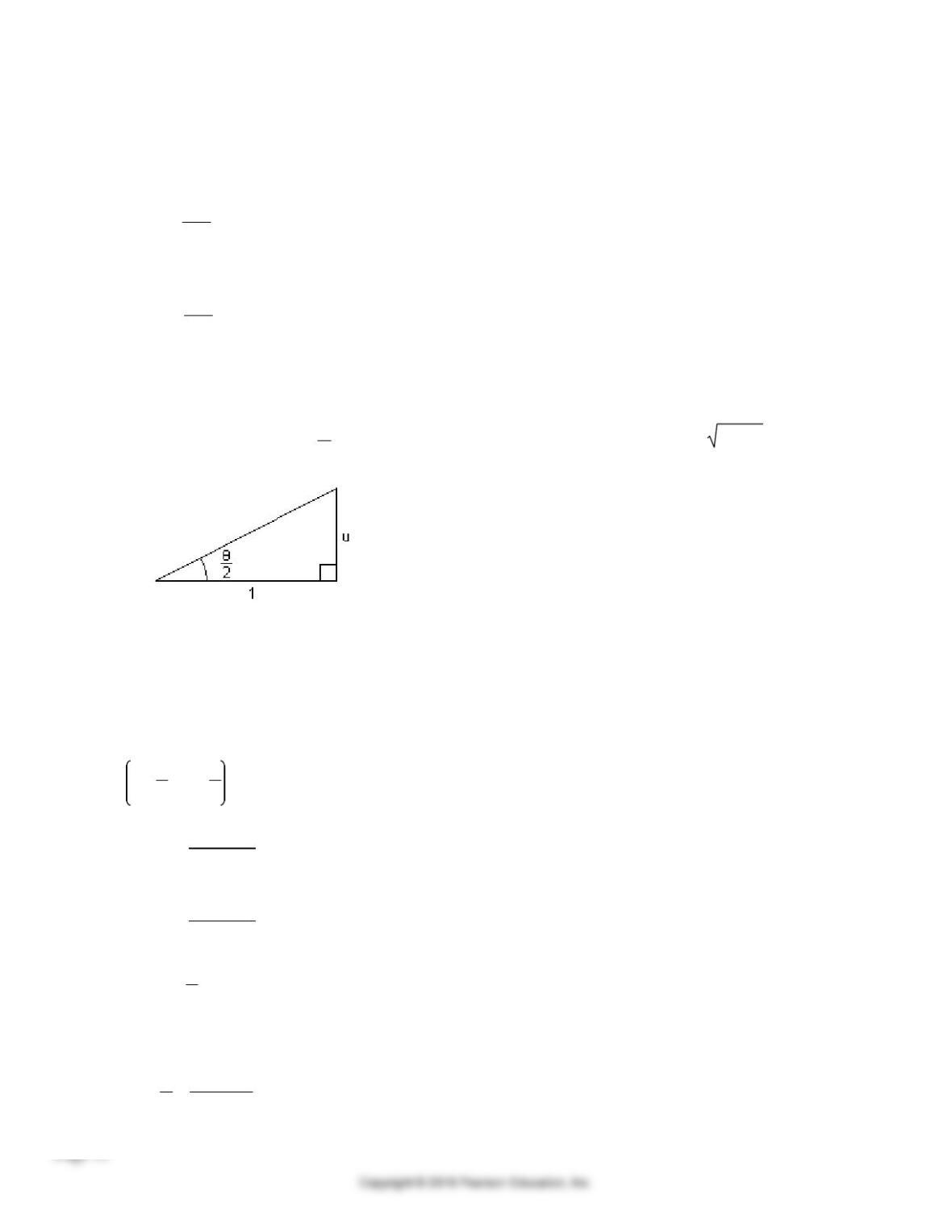
2=u.Thehypotenuseofthetrianglewithhavelength1+u2.Usethe
illustrationandthedoubleangleformulastowritesinθandcosθintermsofu.
2 UseDouble–angleFormulastoEstablishIdentities
SHORTANSWER.Writethewordorphrasethatbestcompleteseachstatementoranswersthequestion.
Establishtheidentity.
1) tan 2u(1+cos(2u))=1–cos(2u)
2) cosx
2–sinx
2
2=1–sinx
3) sec(2θ)=csc2θ
csc2θ–2
4) cot(2θ)=csc2θ–2
2cotθ
5) cos4x=1
8(3+4cos(2x)+cos(4x))
6) cos(3x)=cos3x–3sin2xcosx
7) sec2u
2=2secu
secu+1
8) cot2u
2=cscu+cotu
cscu–cotu
9) sin(4u)=2sin(2u)cos(2u)
10) cos(4u)=2cos2(2u)–1
11) sin(4x)=(4sinxcosx)(2cos2x–1)
12) sin3(3x)=1
2(sin(3x))(1–cos(6x))
13) 1+1
2sin(2θ)=sin3θ–cos3θ
sinθ–cosθ
14) 1
2ln sin2u+cos(2u) =ln cosu
15) cos(4θ)=cos4θ–6sin2θcos2θ+sin4θ
MULTIPLECHOICE.Choosetheonealternativethatbestcompletesthestatementoranswersthequestion.
Solvetheequationontheinterval0≤θ<2π.
16) tan(2θ)–tanθ=0
A) {0,π}B)
π
4,5π
4
C) π
12,π
6,2π
3,7π
12 ,7π
6,13π
12 ,5π
3D) {0}
17) cos(2θ)=2–cos(2θ)
A) π
8,7π
8,9π
8,15π
8B) 0,2π
3,π,4π
3
C) π
4,3π
4,5π
4,7π
4D) Nosolution
18) sin(2θ)+sinθ=0
A) 0,2π
3,π,4π
3B) π
8,9π
8C) π
4,3π
4,5π
4,7π
4D) Nosolution
Page44
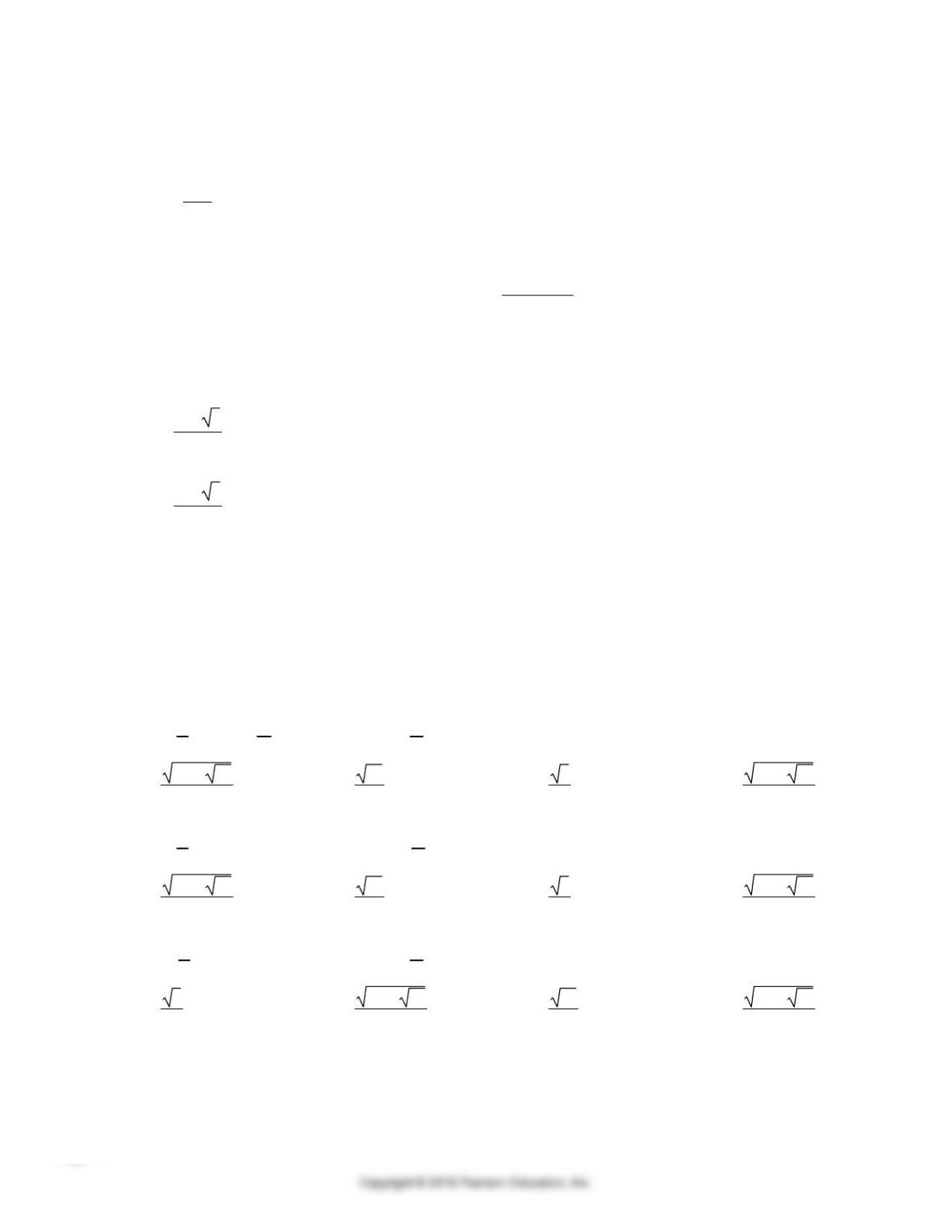
SHORTANSWER.Writethewordorphrasethatbestcompleteseachstatementoranswersthequestion.
Solvetheproblem.
19) Thepathofaprojectilefiredataninclinationθ (indegrees)tothehorizontalwithaninitialspeedv0isa
parabola.ThemaximumheightHoftheprojectileisgivenby
H=
v2
0
4g (1–cos(2θ))
wheregistheaccelerationduetogravity.
ShowthatthemaximumheightHcanbewrittenH=
v2
0sin2θ
2g
20) Anobjectispropelledupwardatanangleθ,45°
<
θ
<
90°,tothehorizontalwithaninitialvelocityofv0
feetpersecondfromthebaseofaplanethatmakesanangleof45°withthehorizontal.Ifairresistanceis
ignored,thedistanceRthatittravelsuptheinclinedplaneisgivenbythefunction
R(θ)=v022
32 [sin(2θ)–cos(2θ)–1].
Showthat
R(θ)=v022
16 [sinθ(cosθ+sinθ)–1].
21) Ifx=3tanθ,expresssin(2θ)asafunctionofx.
3 UseHalf–angleFormulastoFindExactValues
MULTIPLECHOICE.Choosetheonealternativethatbestcompletesthestatementoranswersthequestion.
Usetheinformationgivenabouttheangleθ,0≤θ≤2π
,
tofindtheexactvalueoftheindicatedtrigonometric
function.
1) sinθ=1
4,0<θ<π
2Findsinθ
2.
A) 8–215
4B) 10
4C) 6
4D) 8+215
4
2) sinθ=1
4,tanθ>0 Findcosθ
2.
A) 8+215
4B) 10
4C) 6
4D) 8–215
4
3) cosθ=1
4,cscθ>0 Findsinθ
2.
A) 6
4B) 8+215
4C) 10
4D) 8–215
4
Page45
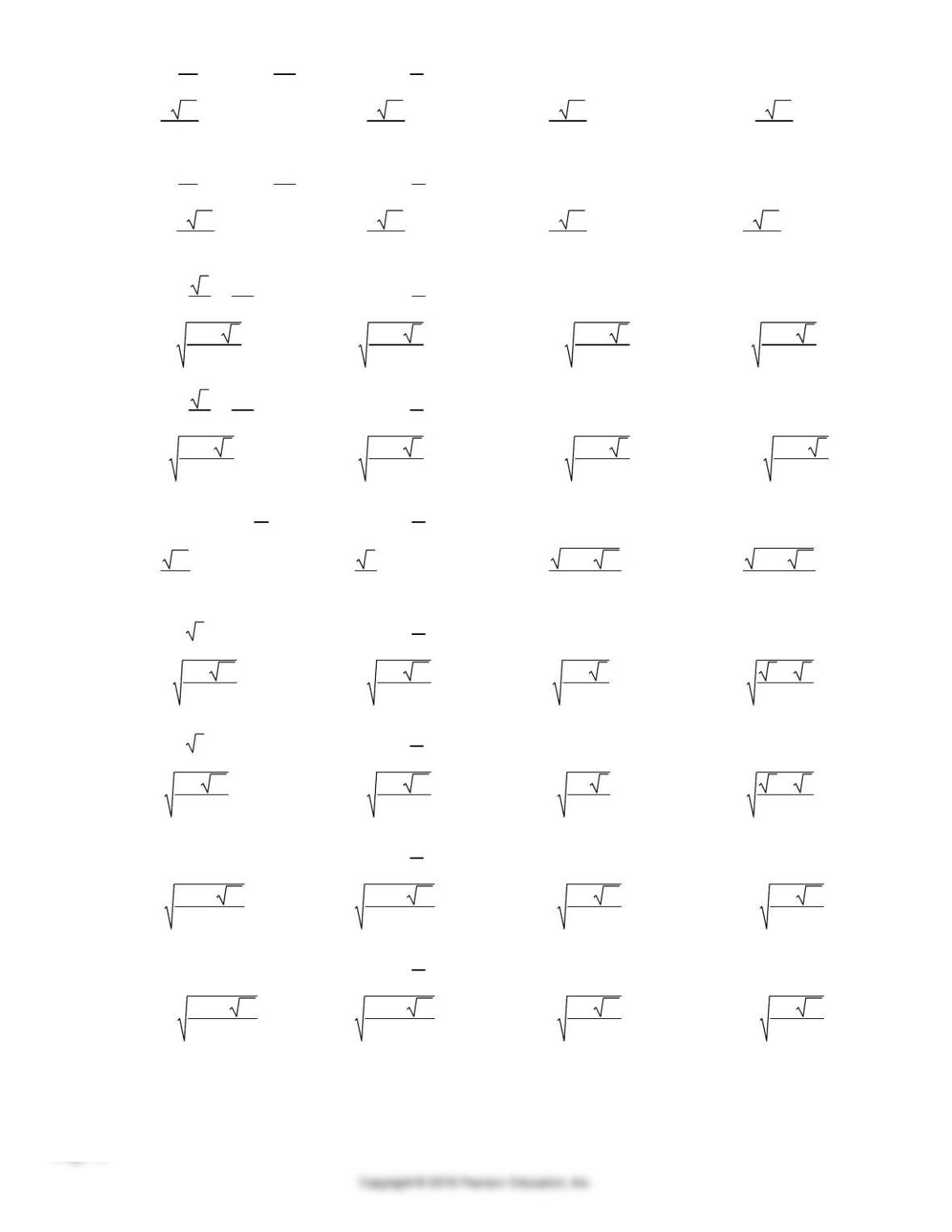
4) tanθ=12
5,π<θ<3π
2Findsinθ
2.
A) 313
13 B) –313
13 C) 213
13 D) –213
13
5) tanθ=12
5,π<θ<3π
2Findcosθ
2.
A) –213
13 B) –313
13 C) 213
13 D) 313
13
6) sinθ=–5
5, 3π
2<θ<2πFindcosθ
2.
A) –5+25
10 B) 5+25
10 C) –5–25
10 D) 5–25
10
7) sinθ=–5
5, 3π
2<θ<2πFindsinθ
2.
A) 5–25
10 B) 5+25
10 C) –5–25
10 D) –5+25
10
8) secθ=4,0<θ<π
2Findcosθ
2.
A) 10
4B) 6
4C) 8–215
4D) 8+215
4
9) cscθ=–6,cosθ>0 Findcosθ
2.
A) –6+30
12 B) –6–30
12 C) 6+5
12 D) 6+5
12
10) cscθ=–6,cosθ>0 Findsinθ
2.
A) 6–30
12 B) –6–30
12 C) 6+5
12 D) 6–5
12
11) cotθ=–3,secθ>0 Findsinθ
2.
A) 10–310
20 B) 10+310
20 C) 3–10
20 D) – 3+10
20
12) cotθ=–3,secθ>0 Findcosθ
2.
A) – 10+310
20 B) 10+310
20 C) 3–10
20 D) – 3+10
20
Page46
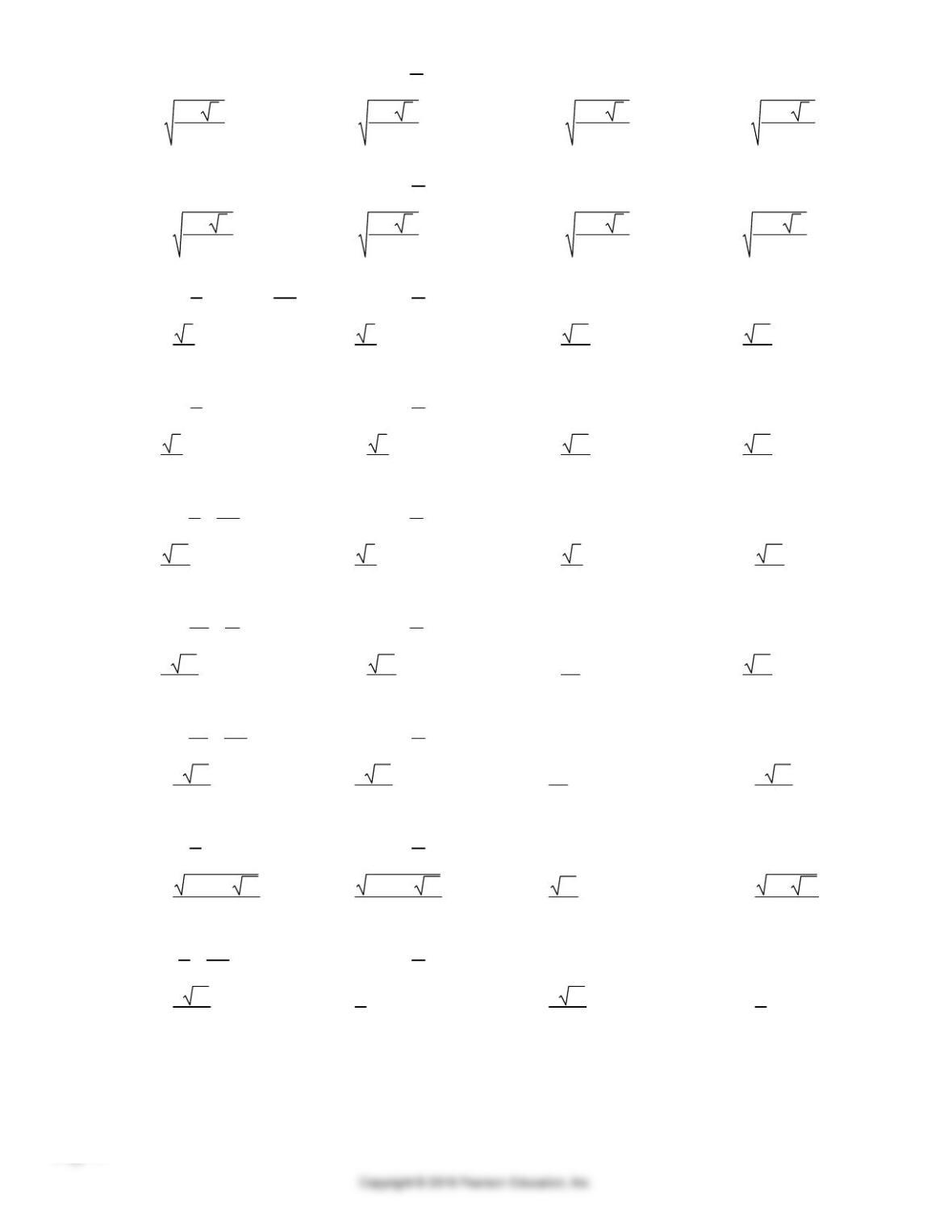
13) tanθ=2,cosθ<0 Findsinθ
2.
A) 5+5
10 B) 5–5
10 C) –1+5
10 D) –1–5
10
14) tanθ=2,cosθ<0 Findcosθ
2.
A) –5–5
10 B) 5–5
10 C) –1+5
10 D) 1–5
10
15) cosθ=–3
5,π<θ<3π
2Findcosθ
2.
A) –5
5B) 5
5C) –30
10 D) 30
10
16) cosθ=–3
5,sinθ>0 Findcosθ
2.
A) 5
5B) –5
5C) –30
10 D) 30
10
17) sinθ=–3
5,3π
2<θ<2πFindsinθ
2.
A) 10
10 B) 5
5C) –5
5D) –30
10
18) secθ=–13
12,π
2<θ<π Findsinθ
2.
A) 526
26 B) –26
26 C) –5
26 D) 26
26
19) sinθ=–15
17,3π
2<θ<2πFindcosθ
2.
A) –534
34 B) 534
34 C) 4
17 D) –334
34
20) cscθ=–5
2,tanθ>0 Findcosθ
2.
A) –50–10 21
10 B) 50+10 21
10 C) 21
10 D) –5+21
10
21) cosθ=4
5,3π
2≤θ≤2πFindcosθ
2.
A) –310
10 B) 2
5C) 310
10 D) –2
5
Page47
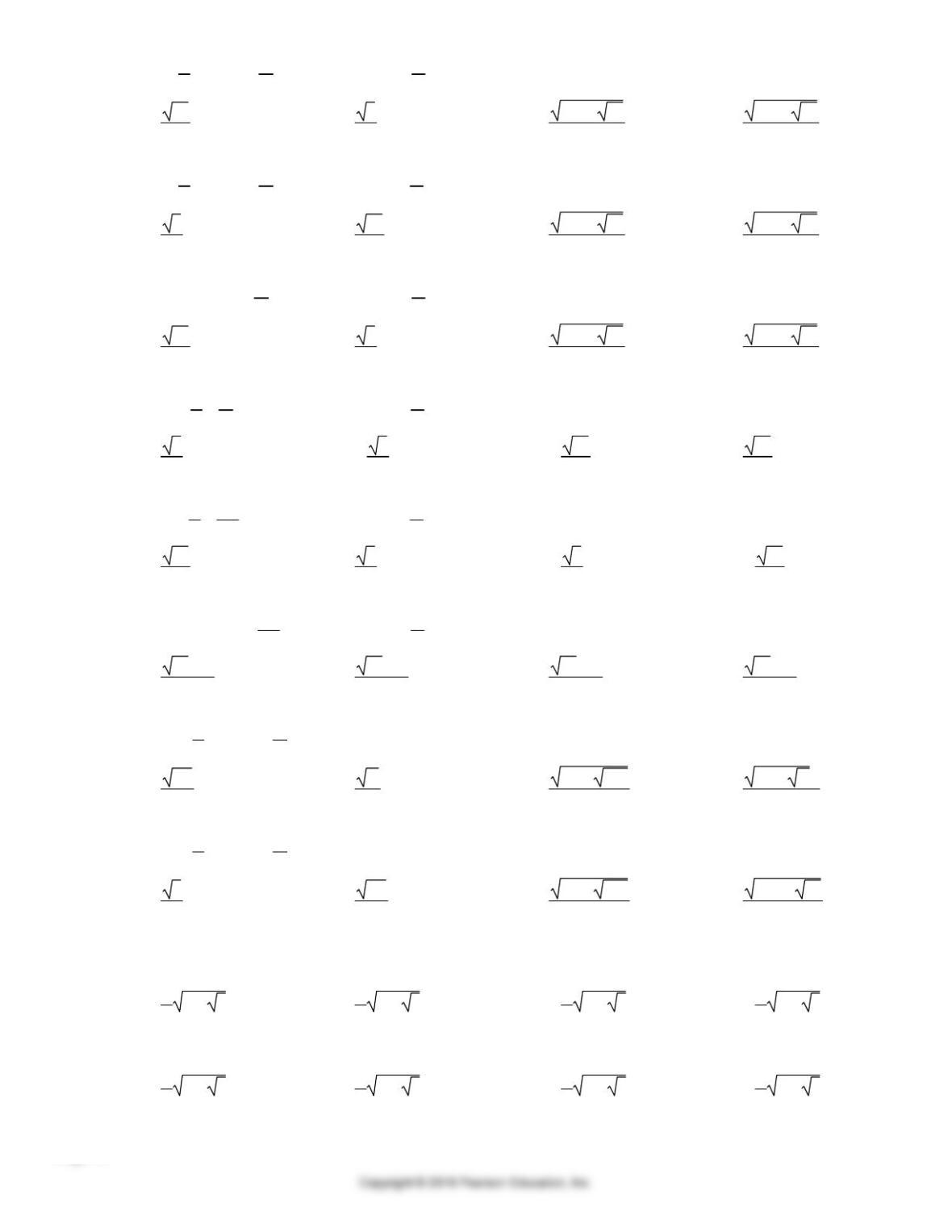
22) cosθ=1
4,0<θ<π
2Findcosθ
2.
A) 10
4B) 6
4C) 8–215
4D) 8+215
4
23) cosθ=1
4,0<θ<π
2Findsinθ
2.
A) 6
4B) 10
4C) 8–215
4D) 8+215
4
24) secθ=4,0<θ<π
2Findcosθ
2.
A) 10
4B) 6
4C) 8–215
4D) 8+215
4
25) cosθ=–3
5,π
2<θ<π Findcosθ
2.
A) 5
5B) –5
5C) –30
10 D) 30
10
26) sinθ=–3
5,3π
2<θ<2πFindsinθ
2.
A) 10
10 B) 5
5C) –5
5D) –30
10
27) tanθ=3,π<θ<3π
2Findtanθ
2.
A) 10+1
–3B) 10+1
3C) 10–1
–3D) 10–1
3
28) cos(2θ)=1
4,0<θ<π
2Findcosθ.
A) 10
4B) 6
4C) 8–210
4D) 8–25
2
29) cos(2θ)=1
4,0<θ<π
2Findsinθ.
A) 6
4B) 10
4C) 8–210
4D) 10–26
4
UsetheHalf–angleFormulastofindtheexactvalueofthetrigonometricfunction.
30) sin22.5°
A) 1
22–2 B) 1
22+2 C) –1
22–2 D) –1
22+2
31) cos22.5°
A) 1
22+2 B) 1
22–2 C) –1
22–2 D) –1
22+2
Page48
32) sin165°
A) 1
22–3 B) –1
22+3 C) 1
22+3 D) –1
22–3
33) cos165°
A) –1
22+3 B) 1
22–3 C) 1
22+3 D) –1
22–3
34) tan165°
A) –2+3B) 2+3 C) 2–3 D) –2–3
35) sin75°
A) 1
22+3 B) 1
22–3 C) –1
22+3 D) –1
22–3
36) cos75°
A) 1
22–3 B) 1
22+3 C) –1
22+3 D) –1
22–3
37) tan75°
A) 2+3B) 2–3 C) –2–3 D) –2+3
38) sin5π
12
A) 1
22+3 B) 1
22–3 C) –1
22+3 D) –1
22–3
39) cos5π
12
A) 1
22–3 B) 1
22+3 C) –1
22+3 D) –1
22–3
40) cos –π
8
A) 1
22+2 B) 1
22–2 C) 1
21+2 D) 1
21–2
41) sinπ
12
A) 1
22–3 B) 1
22+3 C) 1
21–3 D) 1
21–3
42) sin7π
8
A) 1
22–2 B) –1
22–2 C) 1
21–2 D) –1
22–3
43) tan7π
8
A) 1–2 B) 1+2 C) –1+2 D) –1–2
Page49
Findtheexactvalueoftheexpression.
44) sin21
2cos–14
5
A) 1
10 B) 9
10 C) 1
5D) 1
25
45) cos21
2sin–14
5
A) 4
5B) 9
10 C) 1
5D) 16
25
Giventhatf(x)=sinx,g(x)=cosx,andh(x)=tanx,evaluatethegivenfunction.Thepoint(x,3),onthecircle
x2+y2=7,alsoliesontheterminalsideofanangleαinquadrantII.Thepoint–1
3,y ,onthecirclex2+y2=1,
alsoliesontheterminalsideofanangleβinquadrantIII.
46) f α
2
A) 7+27
14 B) 7–27
14 C) 2+7
14 D) 2–7
14
47) g α
2
A) 7–27
14 B) 7+27
14 C) –2+7
14 D) 2–7
14
48) f β
2
A) 6
3B) 3
3C) –6
3D) –3
3
49) h β
2
A) –2 B) 2 C) –2
2D) 2
2
SHORTANSWER.Writethewordorphrasethatbestcompleteseachstatementoranswersthequestion.
Solvetheproblem.
50) Thetwoequalsidesofanisoscelestrianglemeasurethreefeet.Lettheanglebetweenthesidesmeasureθ.
FindtheareaAofthetriangleasafunctionofθ
2.Theanswermayincludemorethanonetrigonometric
function.

8.7 Product–to–SumandSum–to–ProductFormulas
1 ExpressProductsasSums
MULTIPLECHOICE.Choosetheonealternativethatbestcompletesthestatementoranswersthequestion.
Expresstheproductasasumcontainingonlysinesorcosines.
1) sin(6θ)cos(3θ)
A) 1
2[sin(9θ)+sin(3θ)] B) sincos(18θ2)
C) 1
2[cos(9θ)–cos(3θ)] D) 1
2[sin(9θ)+cos(3θ)]
2) sin(8θ)sin(4θ)
A) 1
2[cos(4θ)–cos(12θ)] B) sin2(32θ2)
C) 1
2[cos(12θ)–cos(4θ)] D) 1
2[sin(12θ)+cos(4θ)]
3) cos(3θ)cos(2θ)
A) 1
2[cosθ+cos(5θ)] B) 1
2[cos(5θ)–sinθ]
C) 1
2[cos(5θ)–cosθ] D) cos2(6θ2)
4) sin(4θ)sin(6θ)
A) 1
2[cos(2θ)–cos(10θ)] B) 1
2[cos(10θ)–sin(2θ)]
C) 1
2[–cos(2θ)–cos(10θ)] D) sin2(24θ2)
5) sin(3θ)cos(4θ)
A) 1
2[sin(7θ)–sinθ]B)
1
2[cos(7θ)+sinθ]C)
1
2[cos(7θ)–cosθ] D) sincos(12θ2)
6) cos(5θ)cos(7θ)
A) 1
2[cos(2θ)+cos(12θ)] B) 1
2[cos(12θ)–sin(2θ)]
C) 1
2[cos(12θ)–cos(2θ)] D) cos2(27θ2)
7) cos9θ
2cosθ
2
A) 1
2[cos(4θ)+cos(5θ)] B) 1
4[cos(10θ)–sin(8θ)]
C) 1
4cos2(9θ)D)
1
2[cos(5θ)–sin(4θ)]
Page51

8) sinθ
2cos5θ
2
A) 1
2[sin(3θ)–sin(2θ)] B) 1
4[cos(6θ)–sin(4θ)]
C) 1
4sincos(5θ)D)
1
2[cos(3θ)+sin(2θ)]
9) –2sin(5θ)sinθ
A) cos(6θ)–cos(4θ) B) cos(6θ)+cos(4θ) C) cos(7θ)+cos(3θ) D) cos(7θ)–cos(3θ)
10) 2cos(7θ)cosθ
A) cos(8θ)+cos(6θ) B) cos(8θ)+sin(6θ) C) cos(14θ)+cos(2θ) D) cos(10θ)+sin(4θ)
Completetheidentity.
11) sin(2θ)sin(4θ)cos(2θ)cos(4θ)=?
A) cos2(2θ)–cos2(6θ)
4B) sin2(16θ)
4
C) cos2(6θ)+cos2(2θ)
4D) cos2(16θ)
12) sinθ[sin(2θ)+sin4θ)]=?
A) cosθ[cos(2θ)–cos(4θ)] B) cosθ [cos(2θ)+cos(4θ)]
C) 1
2cosθ[cos(2θ)–cos(4θ)] D) 1
2cosθ[cos(2θ)+cos(4θ)]
SHORTANSWER.Writethewordorphrasethatbestcompleteseachstatementoranswersthequestion.
Solvetheproblem.
13) Aproductoftwooscillationswithdifferentfrequenciessuchas
f(t)=sin(10t)sin(t)
isimportantinacoustics.Theresultisanoscillationwithʺoscillatingamplitude.ʺ
(i) Writetheproductf(t)ofthetwooscillationsasasumoftwocosinesandcallitg(t).
(ii) Usingagraphingutility,graphthefunctiong(t)ontheinterval0≤t≤2π.
(iii) Onthesamesystemasyourgraph,graphy=sintandy=–sint.
(iv) Thelasttwofunctionsconstituteanʺenvelopeʺforthefunctiong(t).Forcertainvaluesoft,thetwo
cosinefunctionsing(t)canceleachotheroutandnear–silenceoccurs;betweenthesevalues,thetwo
functionscombineinvaryingdegrees.Thephenomenonisknown(andheard)asʺbeats.ʺForwhatvalues
oftdothefunctionscanceleachother?
2ExpressSumsasProducts
MULTIPLECHOICE.Choosetheonealternativethatbestcompletesthestatementoranswersthequestion.
Expressthesumordifferenceasaproductofsinesand/orcosines.
1) sin(10θ)+sin(4θ)
A) 2sin(7θ)cos(3θ)B)2cos(7θ)sin(3θ)C)2sin(7θ)sin(3θ)D
)2sin(14θ)
2) cos(10θ)–cos(4θ)
A) –2sin(7θ)sin(3θ)B)2cos(7θ)cos(3θ)C)
–2cos(7θ)sin(3θ)D)2cos(3θ)
Page52

3) cos(6θ)+cos(4θ)
A) 2cos(5θ)cosθ B) 2sin(5θ)sinθ C) 2cos(5θ)sinθ D) 2cos(5θ)
4) cos(4θ)–cos(6θ)
A) 2sin(5θ)sinθ B) –2sin(5θ)sinθ C) –2cos(5θ)sinθ D) cos(–2θ)
5) sin(8θ)–sin(2θ)
A) 2sin(3θ)cos(5θ)B)2cos(2θ)cos(5θ)C)
2sin(5θ)cos(3θ)D)2sin(3θ)
6) sin(4θ)–sin(6θ)
A) –2sinθcos(5θ)B)2cos(4θ)cos(5θ)C)2sin(5θ)cosθ D) –2sinθ
7) cos7θ
2+cos5θ
2
A) 2cos(3θ)cosθ
2B) 2sin(3θ)sinθ C) 2sin(3θ)sinθ
2D) 2cos(3θ)
8) sin7θ
2+sin3θ
2
A) 2sin5θ
2cosθ B) 2sin5θ
2sinθ C) 2cos(5θ)sinθ D) 2sin(5θ)
9) sin(6θ)–sin(4θ)
A) 2sinθcos(5θ)B)2sin(5θ)cos θC) –2sinθ cos(5θ)D)
–2sin(5θ)cos θ
10) sin(4θ)–sin(2θ)
A) 2sinθcos(3θ) B) sinθ cos(3θ)C)2sin(3θ)cosθ D) sin(3θ)cosθ
SHORTANSWER.Writethewordorphrasethatbestcompleteseachstatementoranswersthequestion.
Establishtheidentity.
11) sin(8θ)+sin(4θ)
2sin(6θ)=cos(2θ)
12) cos(9θ)–cos(3θ)
2sin(6θ)=–sin(3θ)
13) sin(8θ)+sin(4θ)
cos(8θ)+cos(4θ)=tan(6θ)
14) cos(4θ)–cos(10θ)
sin(4θ)+sin(10θ)=tan(3θ)
15) sin(7θ)+sin(3θ)
sin(7θ)–sin(3θ)=–tan(5θ)
tan(2θ)
Page53
16) cos(8θ)–cos(2θ)
cos(8θ)+cos(2θ)=–tan(5θ)tan(3θ)
17) sinθ[sinθ+sin(5θ)]=cos(2θ)[cos(2θ)–cos(4θ)]
18) cosα+cosβ
sinα–sinβ =cotα–β
2
19) sinα–sinβ
sinα+sinβ =cotα–β
2
MULTIPLECHOICE.Choosetheonealternativethatbestcompletesthestatementoranswersthequestion.
Completetheidentity.
20) 1–cos(2θ)+cos(4θ)–cos(6θ)=?
A) 4sinθcos(2θ)sin(3θ)B)4sinθ sin(2θ)sin(3θ)
C) 4cosθcos(2θ)sin(3θ)D)4cosθ cos(2θ)cos(3θ)
Solvetheproblem.
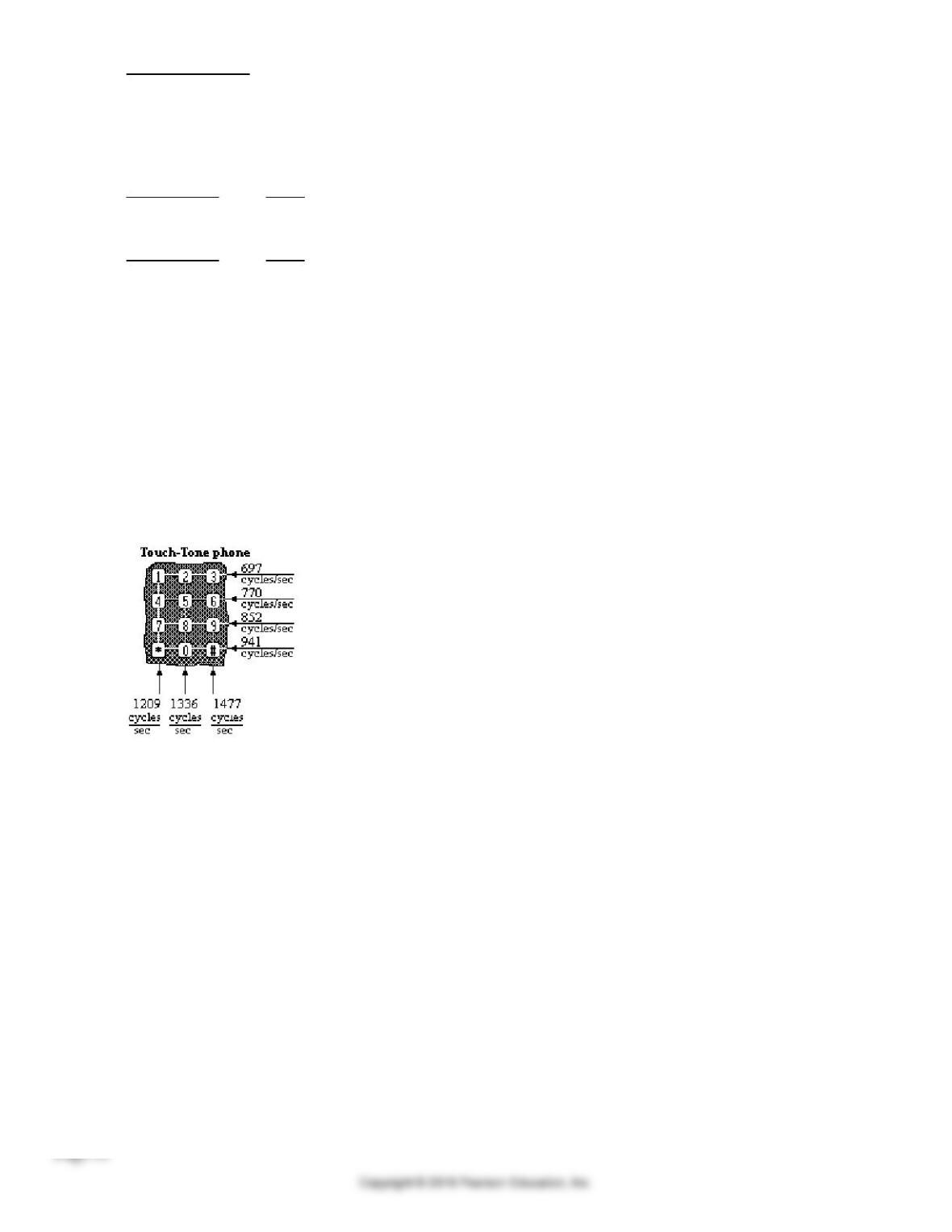
21) OnaTouch–Tonephone,eachbuttonproducesauniquesound.Thesoundproducedisthesumoftwo
tones,givenby
y=sin(2πlt)andy=sin(2πht)
wherelandharethelowandhighfrequencies(cyclespersecond)shownontheillustration.
Thesoundproducedisthusgivenby
y=sin(2πlt)+sin(2πht)
Writethesoundemittedbytouchingthe2keyasaproductofsinesandcosines.
A) y=2sin(2033πt)cos(639πt) B) y=2sin(2174πt)cos(780πt)
C) y=2sin(639πt)cos(2033πt) D) y=2sin(780πt)cos(2174πt)
SHORTANSWER.Writethewordorphrasethatbestcompleteseachstatementoranswersthequestion.
22) Iftwosoundsourcesatthesamevolumeareequidistantfromamicrophone,thepressureonthe
microphoneisgivenby
p=acosω1t+acosω2t
wherea,ω1,ω2areconstantsandtistime.Writepasaproductofcosinefunctions.
Ch.8 AnalyticTrigonometry
AnswerKey
8.1 TheInverseSine,Cosine,andTangentFunctions
1 FindtheExactValueofanInverseSine,Cosine,orTangentFunction
2 FindanApproximateValueofanInverseSine,Cosine,orTangentFunction
3 UsePropertiesofInverseFunctionstoFindExactValuesofCertainCompositeFunctions
4 FindtheInverseFunctionofaTrigonometricFunction
5 SolveEquationsInvolvingInverseTrigonometricFunctions
8.2 TheInverseTrigonometricFunctions(Continued)
1 FindtheExactValueofExpressionsInvolvingtheInverseSine,Cosine,andTangentFunctions
2 DefinetheInverseSecant,Cosecant,andCotangentFunctions
3 UseaCalculatortoEvaluatesec^–1x,csc^–1x,andcot^–1x
4 WriteaTrigonometricExpressionasanAlgebraicExpression
8.3 TrigonometricEquations
1 SolveEquationsInvolvingaSingleTrigonometricFunction
2 SolveTrigonometricEquationsUsingaCalculator
3 SolveTrigonometricEquationsQuadraticinForm
4 SolveTrigonometricEquationsUsingFundamentalIdentities
5 SolveTrigonometricEquationsUsingaGraphingUtility
8.4 TrigonometricIdentities
1 UseAlgebratoSimplifyTrigonometricExpressions
2 EstablishIdentities
8.5 SumandDifferenceFormulas
1 UseSumandDifferenceFormulastoFindExactValues
3 UseSumandDifferenceFormulasInvolvingInverseTrigonometricFunctions
4 SolveTrigonometricEquationsLinearinSineandCosine
8.6 Double–angleandHal
f
–angleFormulas
1 UseDouble–angleFormulastoFindExactValues
2 UseDouble–angleFormulastoEstablishIdentities
3 UseHalf–angleFormulastoFindExactValues
8.7 Product–to–SumandSum–to–ProductFormulas
1 ExpressProductsasSums
2 ExpressSumsasProducts
Page70