Ch. 3 Functions and Their Graphs
3.1 Functions
1 Determine Whether a Relation Represents a Function
MULTIPLE CHOICE. Choose the one alternative that best completes the statement or answers the question.
Determine whether the relation represents a function. If it is a function, state the domain and range.
1)
5 →25
6→30
7→35
8→40
A) function
domain: {5, 6, 7, 8}
range: {25, 30, 35, 40}
B) function
domain:{25, 30, 35, 40}
range: {5, 6, 7, 8}
C) not a function
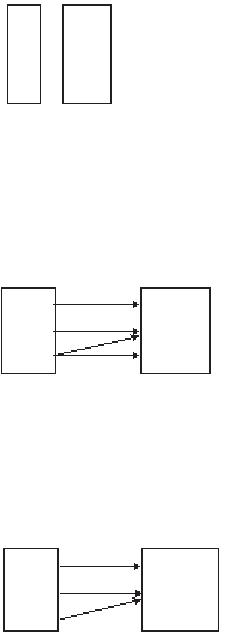
2)
Alice
Brad
Carl
snake
cat
dog
A) function
domain: {Alice, Brad, Carl}
range: {snake, cat, dog}
B) function
domain: {snake, cat, dog}
range: {Alice, Brad, Carl}
C) not a function
3)
Alice
Brad
Carl
cat
dog
A) function
domain: {Alice, Brad, Carl}
range: {cat, dog}
B) function
domain: {cat, dog}
range: {Alice, Brad, Carl}
C) not a function
4) {(–1
,
8), (2
,
5), (5
,
–5), (6
,
–1)}
A) function
domain: {–1, 2, 5, 6}
range: {8, 5, –5, –1}
B) function
domain: {8, 5, –5, –1}
range: {–1, 2, 5, 6}
C) not a function
5) {(5
,
–2), (1
,
–1), (1
,
0), (2
,
1), (10
,
3)}
A) function
domain: {5, 2, 1, 10}
range: {–2, –1, 0, 1, 3}
B) function
domain: {–2, –1, 0, 1, 3}
range: {5, 2, 1, 10}
C) not a function
6) {(–3
,
11), (–2
,
6), (0, 2), (2
,
6), (4
,
18)}
A) function
domain: {–3, –2, 0, 2, 4}
range: {11, 6, 2, 18}
B) function
domain: {11, 6, 2, 18}
range: {–3, –2, 0, 2, 4}
C) not a function
Page 1

7) {(9.22, 10.92), (9.222, –10.9), (3
7, 0), (0.43, –9)}
A) function
domain: {9.22, 9.222, 3
7, 0.43}
range: {10.92, –10.9, 0, –9}
B) function
domain: {10.92, –10.9, 0, –9}
range: {9.22, 9.222, 3
7, 0.43}
C) not a function
Determine whether the equation defines y as a function of x.
8) y = x2
A) function B) not a function
9) y = 1
x
A) function B) not a function
10) y = |x|
A) function B) not a function
11) y2 = 3 – x2
A) function B) not a function
12) y = ± 1
– 8x
A) function B) not a function
13) x = y2
A) function B) not a function
14) y2 + x = 6
A) function B) not a function
15) y = 7x2 – 8x + 8
A) function B) not a function
16) y = 2x + 3
x – 2
A) function B) not a function
17) x2 – 5y2 = 1
A) function B) not a function
18) x + 4y = 5
A) function B) not a function
19) –7x + x2 + 29 = y
A) function B) not a function
Page 2
2 Find the Value of a Function
MULTIPLE CHOICE. Choose the one alternative that best completes the statement or answers the question.
Find the value for the function.
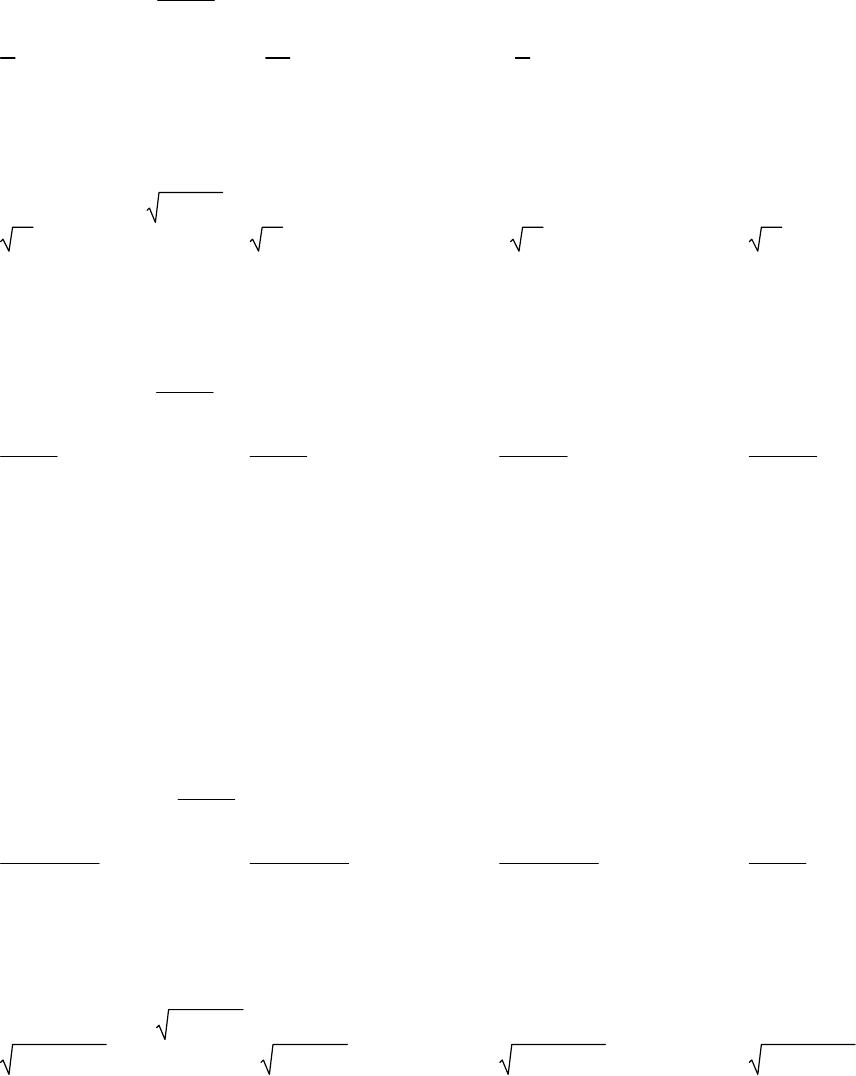
1) Find f(–2) when f(x) = x2 + 2x + 3.
A) 3 B) –3 C) 5 D) 11
2) Find f(–2) when f(x) = x2 – 8
x – 3 .
A) 4
5B) – 12
5C) – 4
5D) – 10
3) Find f(–9) when f(x) = |x|– 6.
A) 3 B) –15 C) 15 D) –3
4) Find f(6) when f(x) = x
2 + 7x.
A) 78 B) 85 C) 2 14 D) 43
5) Find f(–x) when f(x) = 2x2 + 5x – 3.
A) 2x2 – 5x – 3B)
–2x2 – 5x + 3C)2x
2 – 5x + 3D)
–2x2 – 5x – 3
6) Find f(–x) when f(x) = x
x2 + 8
.
A) –x
x2 + 8
B) –x
x2 – 8
C) x
–x2 + 8
D) –x
–x2 + 8
7) Find –f(x) when f(x) = –2x2 + 2x – 1.
A) 2x2 – 2x + 1B)
–2x2 – 2x – 1C)
–2x2 – 2x + 1D)2x
2 – 2x – 1
8) Find –f(x) when f(x) = |x| + 5.
A) –|x| – 5B)|
–x| +5C)
–|x| +5D)|
–x| –5
9) Find f(x – 1) when f(x) = 5x2 – 3x – 7.
A) 5x2 – 13x + 1B)
–13x2 + 5x + 1C)5x
2 – 13x – 5D)5x
2 – 38x – 5
10) Find f(x + 1) when f(x) = x2 – 2
x + 3 .
A) x2 + 2x – 1
x + 4 B) x2 + 2x + 3
x + 4 C) x2 + 2x – 1
x – 2 D) x2 – 1
x + 4
11) Find f(–x) when f(x) = –3x2 + 3x + 3.
A) –3x2 – 3x + 3B)3x
2 – 3x + 3C)3x
2 – 3x – 3D)
–3x2 – 3x – 3
12) Find f(2x) when f(x) = 8x2 + 5x.
A) 32x2 + 10x B) 2 8x2 + 5x C) 16x2 + 10x D) 16x2 + 20x
Page 3

13) Find f(x + h) when f(x) = –3x2 + 2x – 3.
A) –3x2 – 6xh – 3h2 + 2x + 2h – 3B)
–3x2 – 3h2 + 2x + 2h – 3
C) –3x2 – 3h2 – 4x – 4h – 3D)
–3x2 – 3xh – 3h2 + 2x + 2h – 3
14) Find f(x + h) when f(x) = –5x + 8
9x – 7 .
A) –5x – 5h + 8
9x + 9h – 7 B) –5x –5h +8
9x – 7 C) –5x +3h
9x + 2h D) –5x +8h
9x – 7h
Solve the problem.
15) If f(x) = 6x3 + 8x2 – x + C and f(–3) = 1, what is the value of C?
A) C = 88 B) C = 22 C) C = –236 D) C = –92
16) If f(x) = x – B
x – A , f(–2) = 0, and f(–1) is undefined, what are the values of A and B?
A) A = –1
,
B = –2B)A
= –2
,
B = –1C)A
=1
,
B =2D)A
=2
,
B =1
17) If f(x) = x – 4A
12x + 5 and f(12) = –8, what is the value of A?
A) A = 301 B) A = –301 C) A = –146 D) A =146
18) If a rock falls from a height of 100 meters on Earth, the height H (in meters) after x seconds is
approximately
H(x) = 100 – 4.9x2.
What is the height of the rock when x = 1.1 seconds? Round to the nearest hundredth, if necessary.
A) 94.07 m B) 105.93 m C) 94.61 m D) 94.19 m
19) If a rock falls from a height of 20 meters on Earth, the height H (in meters) after x seconds is
approximately
H(x)
= 20 – 4.9x2.
When does the rock strike the ground? Round to the nearest hundredth, if necessary.
A) 2.02 sec B) 4.08 sec C) 0.91 sec D) 0.83 sec
20) It has been determined that the number of fish f(t) that can be caught in t minutes in a certain pond using a
certain bait is f(t) = 0.24t + 1, for t > 10. Find the approximate number of fish that can be caught if you fish
for 33 minutes.
A) About 8 fish B) About 19 fish C) About 35 fish D) About 37 fish
21) The function P(d) = 1 + d
33 gives the pressure, in atmospheres (atm), at a depth d feet in the sea. Find the
pressure at 46 feet.
A) 79
33 atm B) 46
33 atm C) 13
33 atm D) 47
33 atm
22) The function F described by F(C) = 9
5C + 32 gives the Fahrenheit temperature corresponding to the Celsius
temperature C. Find the Fahrenheit temperature equivalent to –5°C.
A) 23°F B) 14°F C) 5°F D) –4°F
Page 4

3 Find the Difference Quotient of a Function
MULTIPLE CHOICE. Choose the one alternative that best completes the statement or answers the question.
Find and simplify the difference quotient of f, f(x +h) –f(x)
h, h≠ 0, for the function.
1) f(x) = 3x + 5
A) 3 B) 3 + 10
hC) 3 + 6(x +5)
hD) 0
2) f(x) = 4x2
A) 4(2x + h) B) 8
h + x + 4h C) 4(2x2 + 2xh + h2)
hD) 4
3) f(x) = 2
A) 0 B) 1 C) 1 + 4
hD) 2
4) f(x) = 1
2x
A) –1
2x(x + h) B) –1
x(x + h) C) 1
2x D) 0
5) f(x) = x2 + 3x – 1
A) 2x + h + 3B)
2x2 + 2x + 2xh + h2 + h – 2
h
C) 2x + h – 1D)1
4 Find the Domain of a Function Defined by an Equation
MULTIPLE CHOICE. Choose the one alternative that best completes the statement or answers the question.
Find the domain of the function.
1) f(x) = 5x + 2
A) all real numbers B) {x|x ≥–2} C) {x|x ≠0} D) {x|x >0}
2) f(x) = x2 + 1
A) all real numbers B) {x|x ≥–1} C) {x|x > –1} D) {x|x ≠–1}
3) f(x) = x2
x2 + 8
A) all real numbers B) {x|x ≠–8} C) {x|x > –8} D) {x|x ≠0}
4) g(x) = 3x
x2 – 64
A) {x|x ≠ –8
,
8} B) {x|x ≠0} C) {x|x >64} D) all real numbers
Page 5
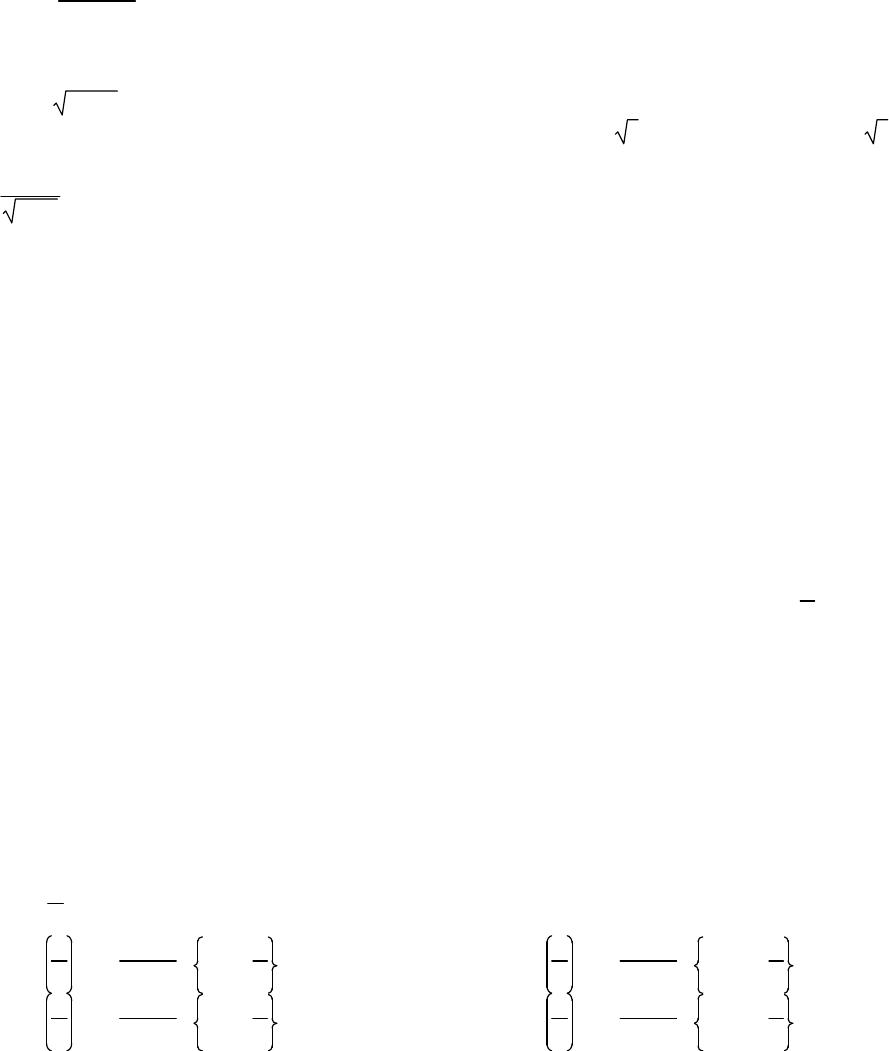
5) h(x) = x – 4
x3 – 64x
A) {x|x ≠ –8
,
0, 8} B) {x|x ≠0} C) {x|x ≠4} D) all real numbers
6) f(x) = 18
– x
A) {x|x ≤ 18} B) {x|x ≠18} C) {x|x ≤ 32} D) {x|x ≠ 32}
7) x
x – 6
A) {x|x > 6} B) {x|x ≥6} C) {x|x ≠6} D) all real numbers
5 Form the Sum, Difference, Product, and Quotient of Two Functions
MULTIPLE CHOICE. Choose the one alternative that best completes the statement or answers the question.
For the given functions f and g, find the requested function and state its domain.
1) f(x) = 9 – 7x; g(x) = –3x + 7
Find f + g.
A) (f + g)(x) = –10x + 16; all real numbers B) (f +g)(x) = –3x +9; {x| x ≠ 3}
C) (f + g)(x) = 6x; all real numbers D) (f +g)(x) = –4x +16; {x|x ≠ – 4}
2) f(x) = 4x – 2; g(x) = 8x – 4
Find f – g.
A) (f – g)(x) = –4x + 2; all real numbers B) (f – g)(x) = –4x – 6; {x|x ≠ – 3
2}
C) (f – g)(x) = 12x – 6; {x|x ≠ 1} D) (f –g)(x) =4x –2; all real numbers
3) f(x) = 9x + 1; g(x) = 6x + 3
Find f · g.
A) (f · g)(x) = 54x2 + 33x + 3; all real numbers B) (f · g)(x) = 54x2 + 9x + 3; {x|x ≠ 3}
C) (f · g)(x) = 15x2 + 33x + 4; all real numbers D) (f · g)(x) = 54x2 + 3; {x|x ≠ 3}
4) f(x) = 2x + 5; g(x) = 4x – 5
Find f
g.
A) f
g(x) = 2x + 5
4x – 5 ; x|x ≠ 5
4B) f
g(x) = 2x +5
4x – 5 ; x|x ≠ – 5
2
C) f
g(x) = 4x – 5
2x + 5 ; x|x ≠ 5
4D) f
g(x) = 4x –5
2x + 5 ; x|x ≠ – 5
2
5) f(x) = 16 – x2; g(x) = 4 – x
Find f + g.
A) (f + g)(x) = –x2 – x + 20; all real numbers
B) (f + g)(x) = 4 + x; {x|x ≠ –4}
C) (f + g)(x) = –x2 + x + 12; all real numbers
D) (f + g)(x) = x3 – 4x2 – 16x + 64; all real numbers
Page 6
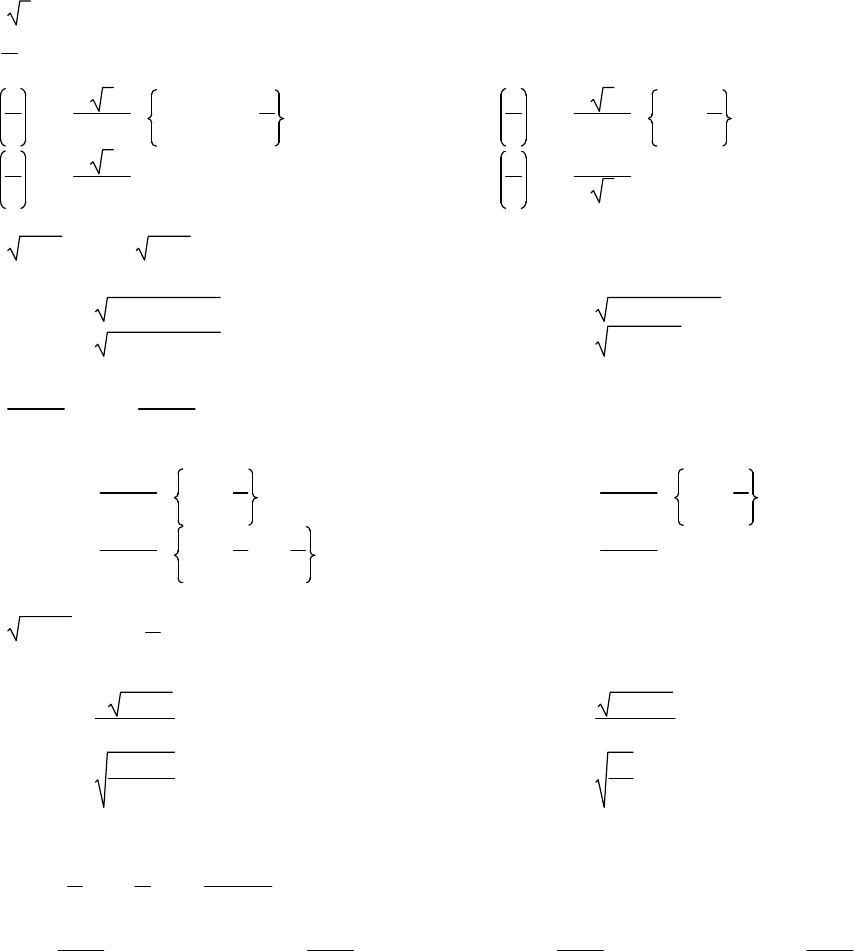
6) f(x) = x + 3; g(x) = 5x2
Find f + g.
A) (f + g)(x) = 5x2 + x + 3; all real numbers B) (f + g)(x) = 5x2 – x – 3; all real numbers
C) (f + g)(x) = 5x2 + x + 3; {x|x ≠ –3} D) (f + g)(x) = –5x2 + x + 3; all real numbers
7) f(x) = 3x3 + 1; g(x) = 4x2 + 1
Find f · g.
A) (f · g)(x) = 12x5 + 3x3 + 4x2 + 1; all real numbers
B) (f · g)(x) = 12x6 + 3x3 + 4x2 + 1; all real numbers
C) (f · g)(x) = 12x5 + 3x3 + 4x2 + 1; {x|x ≠ 0}
D) (f · g)(x) = 3x3 + 4x2 + 1; all real numbers
8) f(x) = x
; g(x) = 2x – 9
Find f
g.
A) f
g(x) = x
2x – 9 ; x|x ≥ 0, x ≠ 9
2B) f
g(x) = x
2x – 9 ; x|x ≠ 9
2
C) f
g(x) = x
2x – 9 ; {x|x ≠ 0} D) f
g(x) = 2x –9
x; {x|x ≥ 0}
9) f(x) = 9
– x; g(x) = x
– 7
Find f · g.
A) (f · g)(x) = (9
– x)(x – 7); {x|7 ≤ x ≤ 9} B) (f · g)(x) = (9
– x)(x – 7); {x|x ≥ 0}
C) (f · g)(x) = (9
– x)(x – 7); {x|x ≠ 7, x ≠ 9} D) (f · g)(x) = –x2 – 63; {x|x ≠ 63}
10) f(x) = 6x – 5
8x – 9 ; g(x) = 2x
8x – 9
Find f – g.
A) (f – g)(x) = 4x – 5
8x – 9 ; x|x ≠ 9
8B) (f – g)(x) = 8x +5
8x – 9 ; x|x ≠ 9
8
C) (f – g)(x) = 4x – 5
8x – 9 ; x|x ≠ 9
8, x ≠ 5
4D) (f – g)(x) = 4x –5
8x – 9 ; {x|x ≠ 0}
11) f(x) = x
+ 11; g(x) = 5
x
Find f · g.
A) (f · g)(x) = 5x
+ 11
x; {x|x ≥ –11, x ≠ 0} B) (f · g)(x) = 5x + 55
x; {x|x ≥ –11, x ≠ 0}
C) (f · g)(x) = 5x + 55
x; {x|x ≥ –11, x ≠ 0} D) (f · g)(x) = 16
x; {x|x ≠ 0}
Solve the problem.
12) Given f(x) = 1
x and ( f
g)(x) = x + 1
x2 + 5x
, find the function g.
A) g(x) = x + 5
x + 1 B) g(x) = x +1
x + 5 C) g(x) = x –5
x – 1 D) g(x) = x –1
x – 5
Page 7
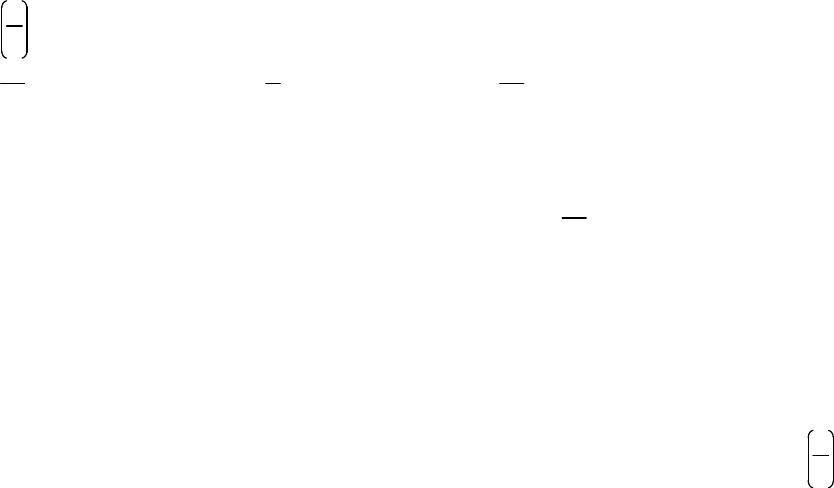
13) Find (f + g)(1) when f(x) = x – 5 and g(x) =x +4.
A) 1 B) 11 C) –7D)3
14) Find (f – g)(–4) when f(x) = 5x2 + 5 and g(x) = x + 4.
A) 85 B) –81 C) 93 D) 77
15) Find (fg)(–5) when f(x) = x + 4 and g(x) = 2x2 + 10x – 6.
A) 6 B) –396 C) 54 D) 31
16) Find f
g(–5) when f(x) = 4x – 7 and g(x) = 2x2 + 14x + 4.
A) 27
16 B) – 1
8C) 2
13 D) 0
17) Express the gross salary G of a person who earns $40 per hour as a function of the number x of hours
worked.
A) G(x) = 40x B) G(x) =40 +x C) G(x) = 40
xD) G(x) = 40x2
18)
J
acey, a commissioned salesperson, earns $140 base pay plus $48 per item sold. Express Jacey’s gross
salary G as a function of the number x of items sold.
A) G(x) = 48x + 140 B) G(x) = 140x +48 C) G(x) =48(x +140) D) G(x) =140(x +48)
19) Suppose that P(x) represents the percentage of income spent on food in year x and I(x) represents income
in year x. Determine a function F that represents total food expenditures in year x.
A) F(x) = (P · I)(x) B) F(x) =(P +I)(x) C) F(x) =(I –P)(x) D) F(x) = I
P(x)
20) A furniture store buys 165 footstools from a distributor at a cost of $205 each plus an overhead charge of
$50 per order. The retail markup is 35% on the total price paid. Find the profit on the sale of one footstool.
A) $71.86 B) $7186.00 C) $71.75 D) $71.64
Page 8
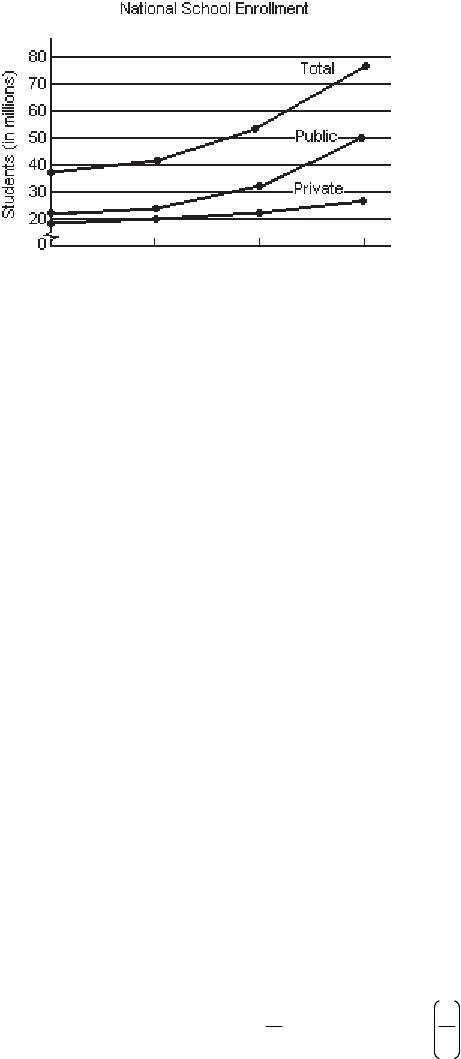
21) The following graph shows the private, public and total national school enrollment for students for selec
t
years from 1980 through 2010.
1980 1990 2000 2010
Year
i) How is the graph for total school enrollment, T, determined from the graph of the private enrollment,
r, and the public enrollment, u?
ii) During which 10–year period did the total number of students enrolled increase the least?
iii) During which 10–year period did the total number of students enrolled increase the most?
A) i) T is the sum of r and u.
ii) 1980 – 1990
iii) 2000–2010
B) i) T is the sum of r and u.
ii) 2000–2010
iii) 1980–1990
C) i) T is the sum of r and u.
ii) 1980 – 1990
iii) 1990–2000
D) i) T is the difference of r and u.
ii) 1990 – 1990
iii) 2000–2010
22) A firm is considering a new product. The accounting department estimates that the total cost, C(x), of
producing x units will be
C(x) = 55x + 4320.
The sales department estimates that the revenue, R(x), from selling x units will be
R(x) = 65x,
but that no more than 778 units can be sold at that price. Find and interpret (R – C)(778).
A) $3460 profit, income exceeds cos
t
It is worth it to develop product.
B) –$3460 loss, cost exceeds income
It is not worth it to develop product.
C) $97,680 profit, income exceeds cos
t
It is worth it to develop product.
D) $1210 profit, income exceeds cos
t
It is worth it to develop product.
23) The function f(t) = –0.13t2 + 0.49t + 30.6 models a certain country’s population in millions, ages 65 and
older, where t represents years after 2010. The function g(t) = 0.55t2 + 11.57t + 107.8 models the total yearly
cost of the government’s health insurance program in billions of dollars, where t represents years after
2010. What does the function g
f represent? Find g
f(10).
A) Cost per person in thousands of dollars. $12.38 thousand
B) Cost per person in thousands of dollars. $0.17 thousand
C) Cost per person in thousands of dollars. $0.08 thousand
D) Cost per person in thousands of dollars. $9.54 thousand
Page 9
3.2 The Graph of a Function
1 Identify the Graph of a Function
MULTIPLE CHOICE. Choose the one alternative that best completes the statement or answers the question.
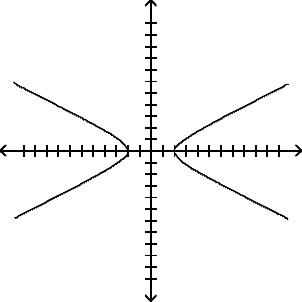
Determine whether the graph is that of a function. If it is, use the graph to find its domain and range, the intercepts,
if any, and any symmetry with respect to the x–axis, the y–axis, or the origin.
1)
x
-10 -5 5 10
y
10
5
-5
-10
x
-10 -5 5 10
y
10
5
-5
-10
A) function
domain: {x|x ≤ –2 or x ≥ 2}
range: all real numbers
intercepts: (–2, 0), (2, 0)
symmetry: x–axis, y–axis, origin
B) function
domain: all real numbers
range: {y|y ≤ –2 or y ≥ 2}
intercepts: (–2, 0), (2, 0)
symmetry: y–axis
C) function
domain: {x|–2 ≤ x ≤ 2}
range: all real numbers
intercepts: (–2, 0), (2, 0)
symmetry: x–axis, y–axis
D) not a function
Page 10
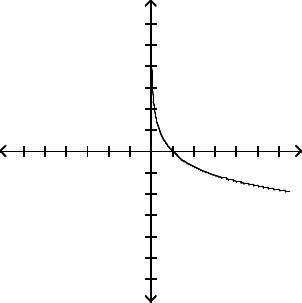
2)
x
-5 5
y
5
-5
x
-5 5
y
5
-5
A) function
domain: {x|x > 0}
range: all real numbers
intercept: (1, 0)
symmetry: none
B) function
domain: {x|x > 0}
range: all real numbers
intercept: (0, 1)
symmetry: origin
C) function
domain: all real numbers
range: {y|y > 0}
intercept: (1, 0)
symmetry: none
D) not a function
Page 11
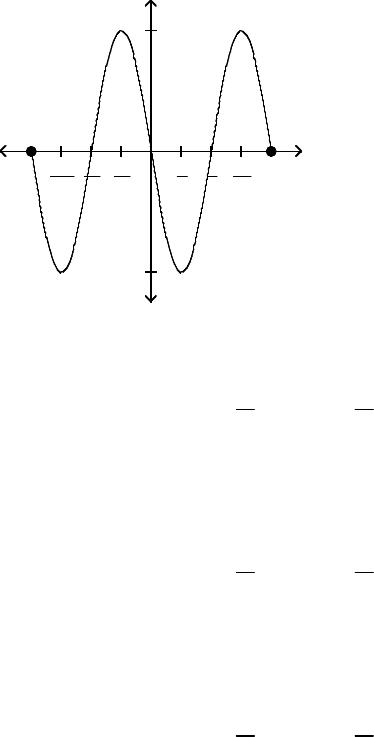
3)
x
–-3
4
–
2
–
4
4
2
3
4
y
1
-1
x
–-3
4
–
2
–
4
4
2
3
4
y
1
-1
A) function
domain: {x|–π ≤ x ≤ π}
range: {y|–1 ≤ y ≤ 1}
intercepts: (–π, 0), (– π
2, 0), (0, 0), ( π
2, 0), (π, 0)
symmetry: origin
B) function
domain: {x|–1 ≤ x ≤ 1}
range: {y|–π ≤ y ≤ π}
intercepts: (–π, 0), (– π
2, 0), (0, 0), ( π
2, 0), (π, 0)
symmetry: none
C) function
domain: all real numbers
range: {y|–1 ≤ y ≤ 1}
intercepts: (–π, 0), (– π
2, 0), (0, 0), ( π
2, 0), (π, 0)
symmetry: origin
D) not a function
Page 12
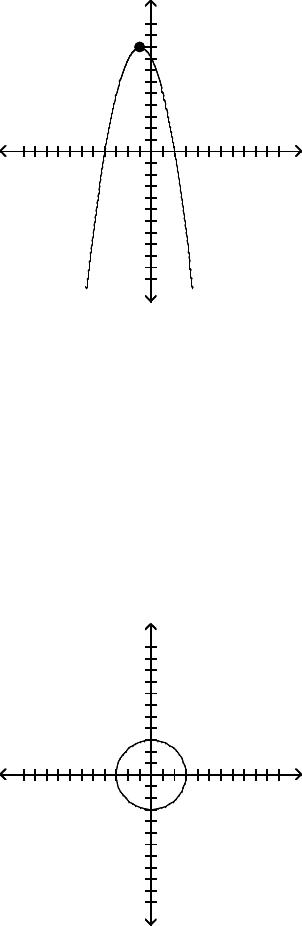
4)
x
-10 -5 5 10
y
10
5
-5
-10
x
-10 -5 5 10
y
10
5
-5
-10
A) function
domain: all real numbers
range: {y|y ≤ 9}
intercepts: (–4, 0), (0, 8), (2, 0)
symmetry: none
B) function
domain: {x|x ≤ 9}
range: all real numbers
intercepts: (–4, 0), (0, 8), (2, 0)
symmetry: y–axis
C) function
domain: all real numbers
range: {y|y ≤ 9}
intercepts: (0, –4), (8, 0), (0, 2)
symmetry: none
D) not a function
5)
x
-10 -5 5 10
y
10
5
-5
-10
x
-10 -5 5 10
y
10
5
-5
-10
A) function
domain: {x|–3 ≤ x ≤ 3}
range: {y|–3 ≤ y ≤ 3}
intercepts: (–3, 0), (0, –3), (0, 3), (3, 0)
symmetry: x–axis, y–axis, origin
B) function
domain: {x|–3 ≤ x ≤ 3}
range: {y|–3 ≤ y ≤ 3}
intercepts: (–3, 0), (0, –3), (0, 3), (3, 0)
symmetry: x–axis, y–axis
C) function
domain: {x|–3 ≤ x ≤ 3}
range: {y|–3 ≤ y ≤ 3}
intercepts: (–3, 0), (0, –3), (0, 0), (0, 3), (3, 0)
symmetry: origin
D) not a function
Page 13
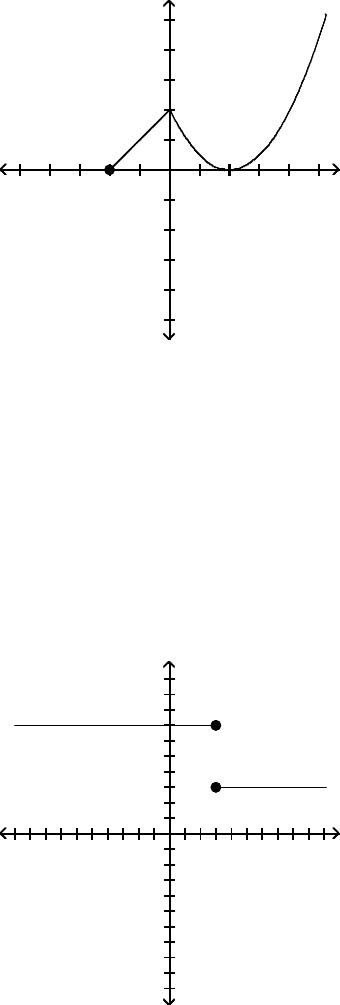
6)
x
-5 5
y
5
-5
x
-5 5
y
5
-5
A) function
domain: {x|x ≥ –2}
range: {y|y ≥ 0}
intercepts: (–2, 0), (0, 2), (2, 0)
symmetry: none
B) function
domain: {x|x ≥ 0}
range: {y|y ≥ –2}
intercepts: (–2, 0), (0, 2), (2, 0)
symmetry: y–axis
C) function
domain: all real numbers
range: all real numbers
intercepts: (–2, 0), (0, 2), (2, 0)
symmetry: none
D) not a function
7)
x
-10 -5 5
y
10
5
-5
-10
x
-10 -5 5
y
10
5
-5
-10
A) function
domain: all real numbers
range: {y|y = 3 or y = 7}
intercept: (0, 7)
symmetry: none
B) function
domain: {x|x = 3 or x = 7}
range: all real numbers
intercept: (7, 0)
symmetry: x–axis
C) function
domain: all real numbers
range: all real numbers
intercept: (0, 7)
symmetry: none
D) not a function
Page 14
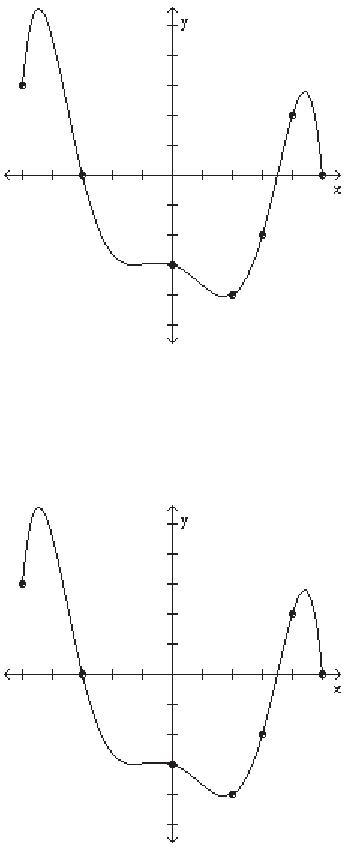
2 Obtain Information from or about the Graph of a Function
MULTIPLE CHOICE. Choose the one alternative that best completes the statement or answers the question.
The graph of a function f is given. Use the graph to answer the question.
1) Use the graph of f given below to find f(10).
25
–25 25
–25
A) –20 B) 10 C) 0 D) 15
2) Is f(16) positive or negative?
20
–20 20
–20
A) positive B) negative
Page 15
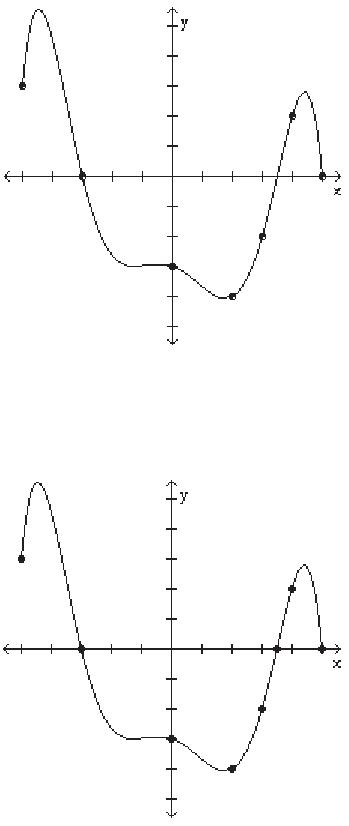
3) Is f(30) positive or negative?
50
–50 50
–50
A) positive B) negative
4) For what numbers x is f(x) = 0?
10
–10 10
–10
A) –6
,
7
,
10 B) (–10
,
–6), (7
,
10) C) (–6
,
7) D) –6
Page 16
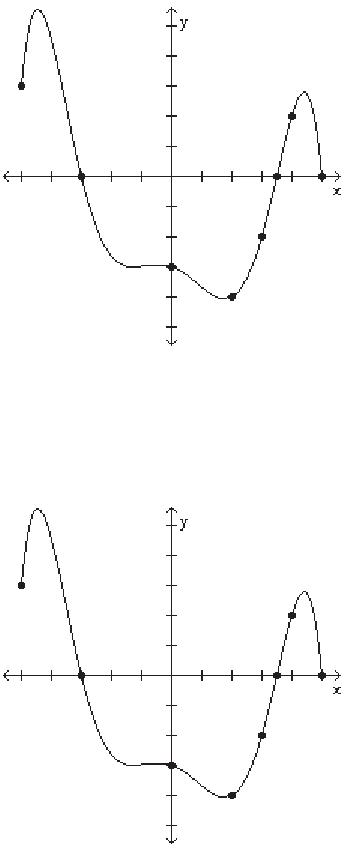
5) For what numbers x is f(x) > 0?
100
–100 100
–100
A) [–100
,
–60), (70
,
100) B) (–60
,
70)
C) (–60
,
∞)D)(
–∞–60)
6) For what numbers x is f(x)
<
0?
10
–10 10
–10
A) (–6
,
7) B) [–10
,
–6), (7
,
10) C) (–6
,
∞)D)(
–∞
,
–6)
Page 17
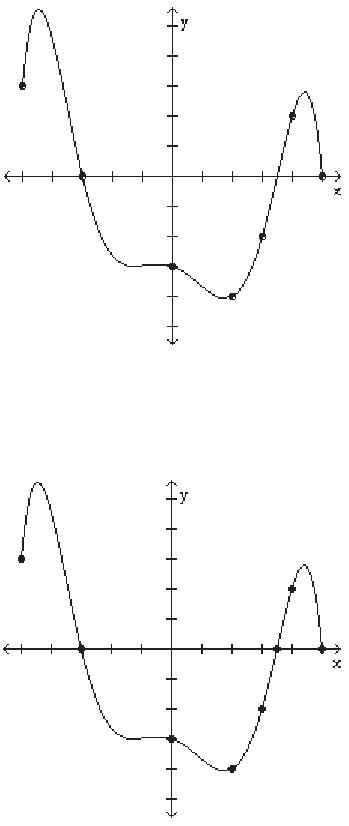
7) What is the domain of f?
5
–55
–5
A) {x|–5 ≤ x ≤ 5} B) {x|–4≤x ≤5.5} C) all real numbers D) {x|x ≥0}
8) What are the x–intercepts?
100
–100 100
–100
A) –60
,
70
,
100 B) –100
,
–60
,
70
,
100 C) –60
,
70 D) –60
Page 18
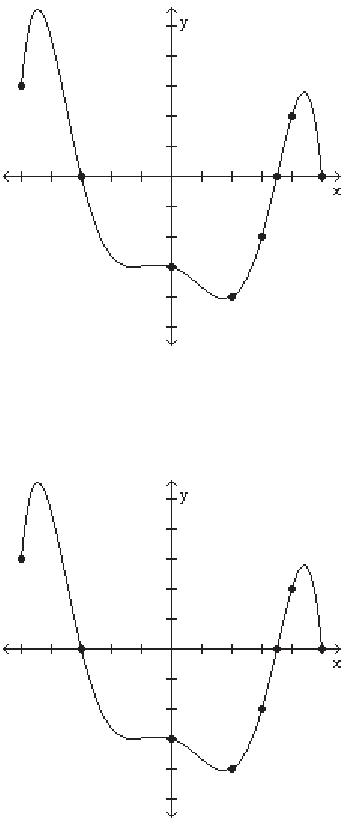
9) What is the y–intercept?
25
–25 25
–25
A) –15 B) 17.5 C) 25 D) –20
10) How often does the line y = –20 intersect the graph?
20
–20 20
–20
A) once B) twice C) three times D) does not intersec
t
Page 19
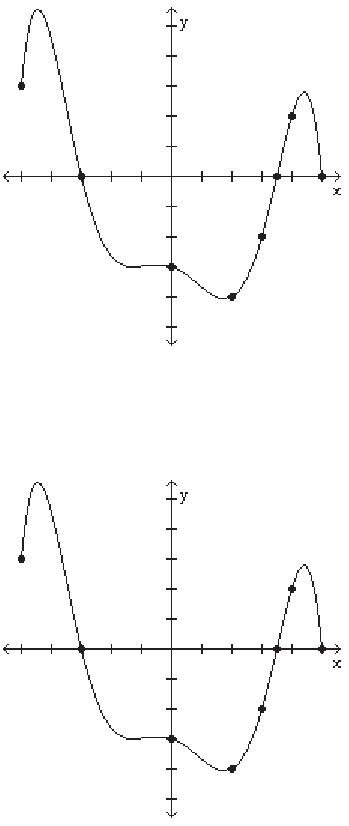
11) How often does the line y = 4 intersect the graph?
20
–20 20
–20
A) once B) twice C) three times D) does not intersec
t
12) For which of the following values of x does f(x) =20?
50
–50 50
–50
A) 40 B) 70 C) 50 D) 20
Answer the question about the given function.
13) Given the function f(x) = 7x2 – 14x – 1, is the point (1, –8) on the graph of f?
A) Yes B) No
14) Given the function f(x) = 6x2 + 12x – 8, is the point (–2, 4) on the graph of f?
A) Yes B) No
15) Given the function f(x) = 4x2 + 8x + 9, if x = –1, what is f(x)? What point is on the graph of f?
A) 5; (–1
,
5) B) 5; (5
,
–1) C) 21; (–1
,
21) D) 21; (21
,
–1)
16) Given the function f(x) = 6x2 + 12x – 1, what is the domain of f?
A) all real numbers B) {x|x ≥–1} C) {x|x ≤–1} D) {x|x ≥1}
17) Given the function f(x) = x2 + 5x – 36, list the x–intercepts, if any, of the graph of f.
A) (–9
,
0), (4
,
0) B) (9
,
0), (4
,
0) C) (–9
,
0), (1, 0) D) (9
,
0), (–4
,
0)
Page 20
18) Given the function f(x) = –5x2 + 10x + 6, list the y–intercept, if there is one, of the graph of f.
A) 6 B) –4C)11D)
–9
19) Given the function f(x) = x2 – 2
x + 3 , is the point (1, – 1
4) on the graph of f?
A) Yes B) No
20) Given the function f(x) = x2 – 6
x – 1 , is the point (–2, – 10
3) on the graph of f?
A) Yes B) No
21) Given the function f(x) = x2 – 4
x + 2 , if x = –1, what is f(x)? What point is on the graph of f?
A) – 3; (–1
,
– 3) B) – 3; (–3
,
–1) C) 5; (–1
,
5) D) 5; (5
,
–1)
22) Given the function f(x) = x2 + 9
x + 7 , what is the domain of f?
A) {x|x ≠ –7} B) {x|x ≠7} C) {x|x ≠9} D) {x|x ≠ – 9
7}
23) Given the function f(x) = x2 + 8
x – 3 , list the x–intercepts, if any, of the graph of f.
A) (8
,
0), (–8
,
0) B) (3
,
0) C) (–22, 0) D) none
24) Given the function f(x) = x2 + 2
x + 6 , list the y–intercept, if there is one, of the graph of f.
A) (0, 1
3)B)(
1
3, 0) C) (0, –6) D) (0, –2)
Solve the problem.
25) If an object weighs m pounds at sea level, then its weight W (in pounds) at a height of h miles above sea
level is given approximately by W(h) = m 4000
4000 + h
2. How much will a man who weighs 165 pounds at
sea level weigh on the top of a mountain which is 14,494 feet above sea level? Round to the nearest
hundredth of a pound, if necessary.
A) 164.77 pounds B) 7.72 pounds C) 165.23 pounds D) 165 pounds
Page 21
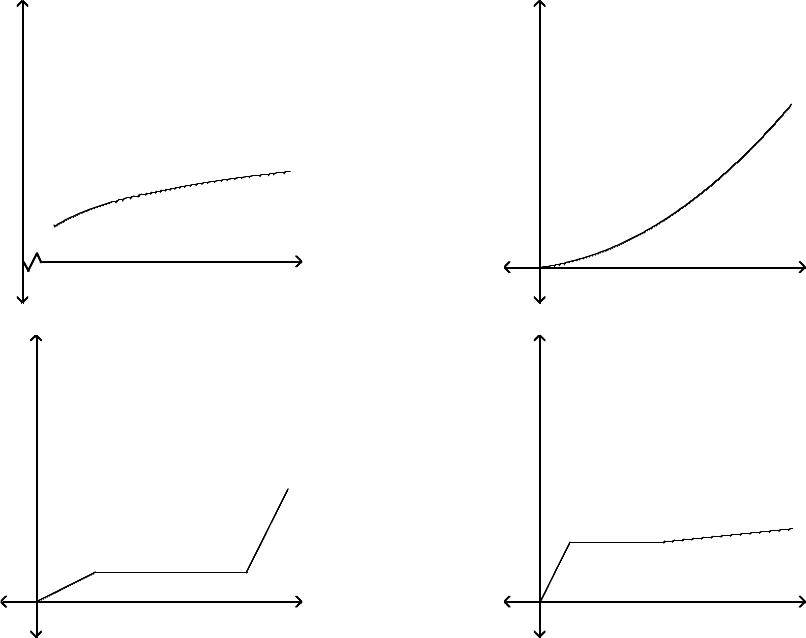
Match the function with the graph that best describes the situation.
26) The amount of rainfall as a function of time, if the rain fell more and more softly.
A)
x
y
x
y
B)
x
y
x
y
C)
x
y
x
y
D)
x
y
x
y
Page 22
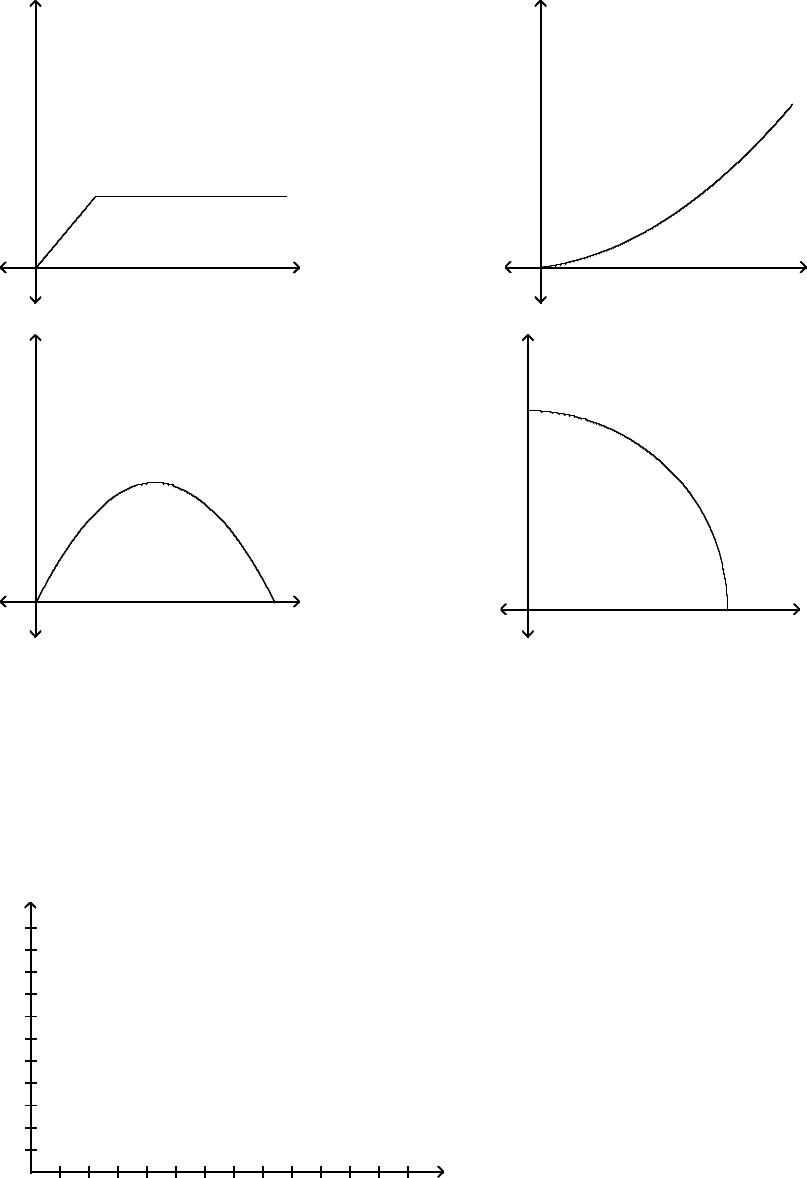
27) The height of an animal as a function of time.
A)
x
y
x
y
B)
x
y
x
y
C)
x
y
x
y
D)
x
y
x
y
SHORT ANSWER. Write the word or phrase that best completes each statement or answers the question.
Solve the problem.
28) Michael decides to walk to the mall to do some errands. He leaves home, walks 4 blocks in 13 minutes at a
constant speed, and realizes that he forgot his wallet at home. So Michael runs back in 8 minutes. At home,
it takes him 3 minutes to find his wallet and close the door. Michael walks 3 blocks in 11 minutes and then
decides to jog to the mall. It takes him 6 minutes to get to the mall which is 3 blocks away. Draw a graph
of Michael’s distance from home (in blocks) as a function of time.
x
y
x
y
Page 23
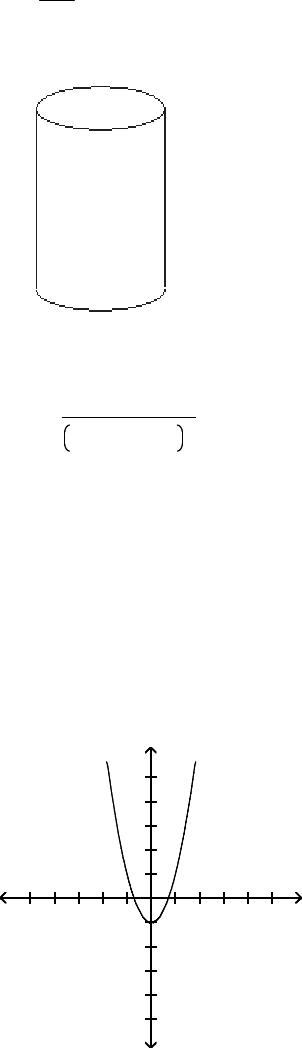
MULTIPLE CHOICE. Choose the one alternative that best completes the statement or answers the question.
29) A steel can in the shape of a right circular cylinder must be designed to hold 400 cubic centimeters of juice
(see figure). It can be shown that the total surface area of the can (including the ends) is given by S(r) = 2π
r2 + 800
r, where r is the radius of the can in centimeters. Using the TABLE feature of a graphing utility,
find the radius that minimizes the surface area (and thus the cost) of the can. Round to the nearest tenth of
a centimeter.
A) 4 cm B) 5.2 cm C) 3.2 cm D) 0 cm
30) The concentration C (arbitrary units) of a certain drug in a patient’s bloodstream can be modeled using
C(t) = t
0.52t + 1.924 2, where t is the number of hours since a 500 milligram oral dose was administered.
Using the TABLE feature of a graphing utility, find the time at which the concentration of the drug is
greatest. Round to the nearest tenth of an hour.
A) 3.7 hours B) 5.2 hours C) 4.5 hours D) 6 hours
3.3 Properties of Functions
1 Determine Even and Odd Functions from a Graph
MULTIPLE CHOICE. Choose the one alternative that best completes the statement or answers the question.
The graph of a function is given. Decide whether it is even, odd, or neither.
1)
x
–10–8-6-4-2 2 4 6 8 10
y
10
8
6
4
2
-2
-4
-6
-8
-10
x
–10–8-6-4-2 2 4 6 8 10
y
10
8
6
4
2
-2
-4
-6
-8
-10
A) even B) odd C) neither
Page 24
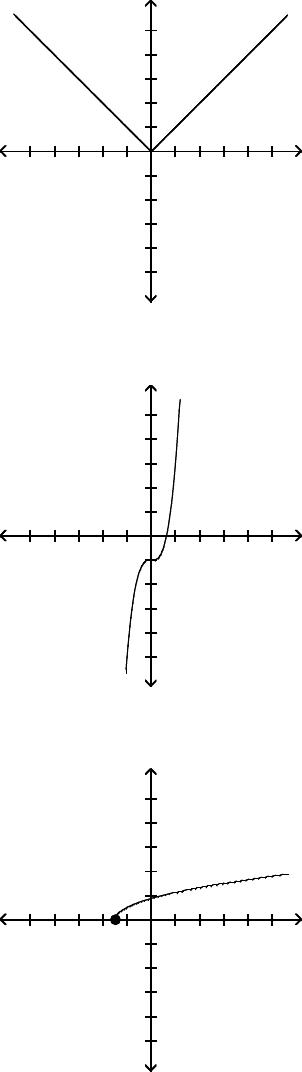
2)
x
–10–8-6-4-2 2 4 6 8 10
y
10
8
6
4
2
-2
-4
-6
-8
-10
x
–10–8-6-4-2 2 4 6 8 10
y
10
8
6
4
2
-2
-4
-6
-8
-10
A) even B) odd C) neither
3)
x
–10–8-6-4-2 2 4 6 8 10
y
10
8
6
4
2
-2
-4
-6
-8
-10
x
–10–8-6-4-2 2 4 6 8 10
y
10
8
6
4
2
-2
-4
-6
-8
-10
A) even B) odd C) neither
4)
x
–10–8-6-4-2 2 4 6 8 10
y
10
8
6
4
2
-2
-4
-6
-8
-10
x
–10–8-6-4-2 2 4 6 8 10
y
10
8
6
4
2
-2
-4
-6
-8
-10
A) even B) odd C) neither
Page 25
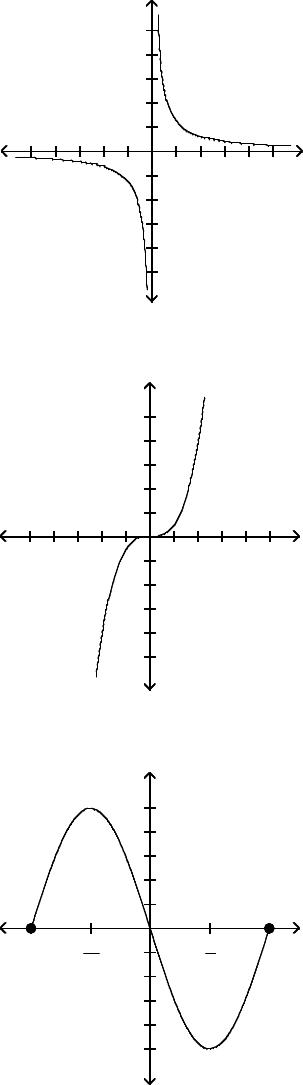
5)
x
–10–8-6-4-2 2 4 6 8 10
y
10
8
6
4
2
-2
-4
-6
-8
-10
x
–10–8-6-4-2 2 4 6 8 10
y
10
8
6
4
2
-2
-4
-6
-8
-10
A) even B) odd C) neither
6)
x
–10–8–6–4–2 246810
y
10
8
6
4
2
-2
-4
-6
-8
-10
x
–10–8–6–4–2 246810
y
10
8
6
4
2
-2
-4
-6
-8
-10
A) even B) odd C) neither
7)
x
––
2
2
y
5
4
3
2
1
-1
-2
-3
-4
-5
x
––
2
2
y
5
4
3
2
1
-1
-2
-3
-4
-5
A) even B) odd C) neither
Page 26
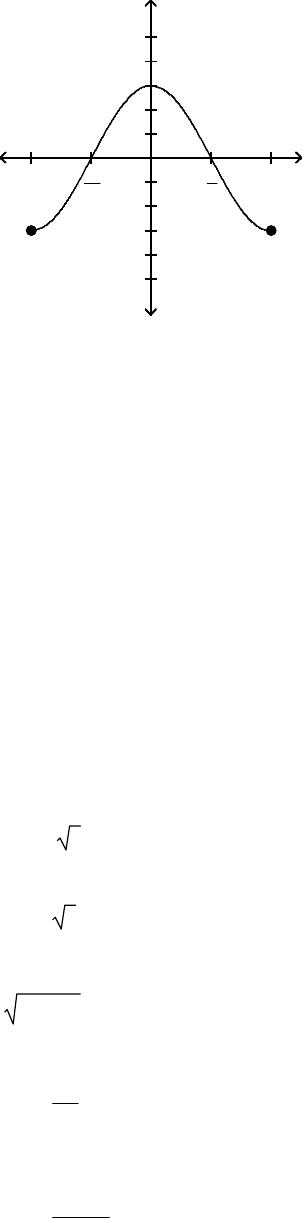
8)
x
––
2
2
y
5
4
3
2
1
-1
-2
-3
-4
-5
x
––
2
2
y
5
4
3
2
1
-1
-2
-3
-4
-5
A) even B) odd C) neither
2 Identify Even and Odd Functions from the Equation
MULTIPLE CHOICE. Choose the one alternative that best completes the statement or answers the question.
Determine algebraically whether the function is even, odd, or neither.
1) f(x) = –5x3
A) even B) odd C) neither
2) f(x) = –4x4 – x2
A) even B) odd C) neither
3) f(x) = –6x2 – 3
A) even B) odd C) neither
4) f(x) = 4x3 + 8
A) even B) odd C) neither
5) f(x) = 3x
A) even B) odd C) neither
6) f(x) = x
A) even B) odd C) neither
7) 39x2 + 2
A) even B) odd C) neither
8) f(x) = 1
x2
A) even B) odd C) neither
9) f(x) = x
x2 – 4
A) even B) odd C) neither
Page 27
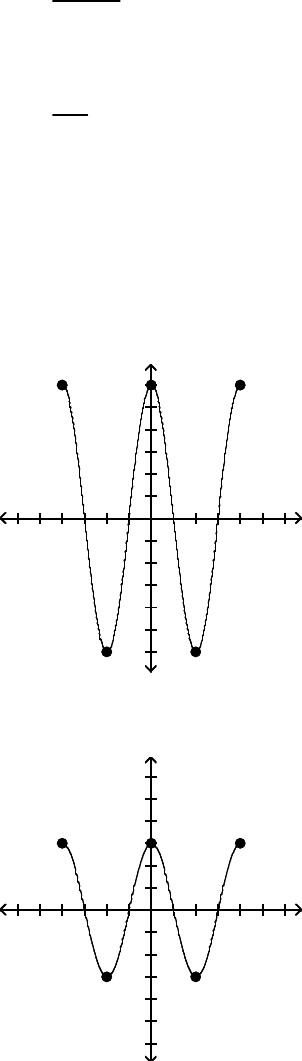
10) f(x) = –x3
2x2 + 3
A) even B) odd C) neither
11) f(x) = 2x
|x|
A) even B) odd C) neither
3 Use a Graph to Determine Where a Function is Increasing, Decreasing, or Constant
MULTIPLE CHOICE. Choose the one alternative that best completes the statement or answers the question.
The graph of a function is given. Determine whether the function is increasing, decreasing, or constant on the given
interval.
1) [– 4
,
– 2]
x
-5 5
y
5
-5
x
-5 5
y
5
-5
A) decreasing B) increasing C) constant
2) [– 2
,
0]
x
-5 5
y
5
-5
x
-5 5
y
5
-5
A) increasing B) decreasing C) constant
Page 28
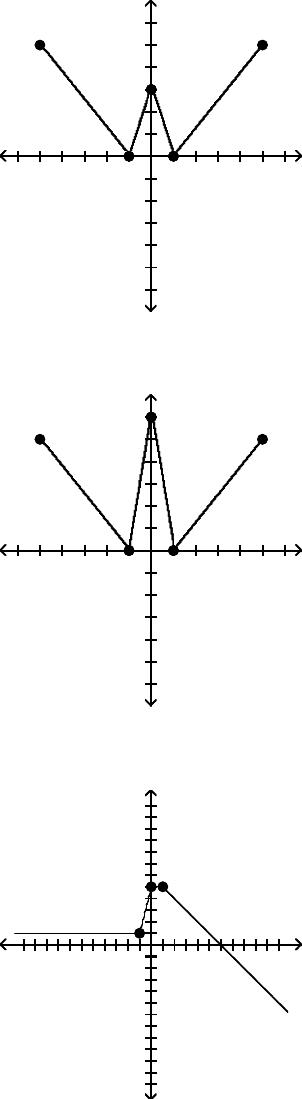
3) [0, 1]
x
-5 5
y
5
-5
x
-5 5
y
5
-5
A) decreasing B) increasing C) constant
4) [1, 5]
x
-5 5
y
5
-5
x
-5 5
y
5
-5
A) increasing B) decreasing C) constant
5) [0, 1]
x
-10 -5 5 10
y
10
5
-5
-10
x
-10 -5 5 10
y
10
5
-5
-10
A) constant B) increasing C) decreasing
Page 29
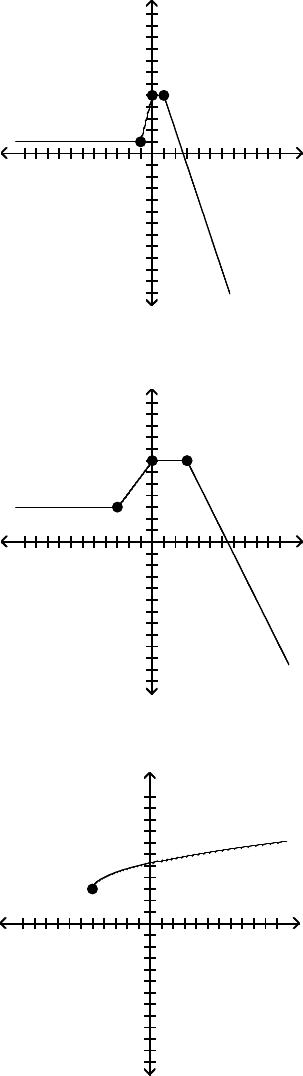
6) [–1
,
0]
x
-10 -5 5 10
y
10
5
-5
-10
x
-10 -5 5 10
y
10
5
-5
-10
A) increasing B) decreasing C) constant
7) [3
,
∞)
x
-10 -5 5 10
y
10
5
-5
-10
x
-10 -5 5 10
y
10
5
-5
-10
A) decreasing B) increasing C) constant
8) [–5
,
∞)
x
-10 -5 5 10
y
10
5
-5
-10
x
-10 -5 5 10
y
10
5
-5
-10
A) increasing B) decreasing C) constant
Page 30
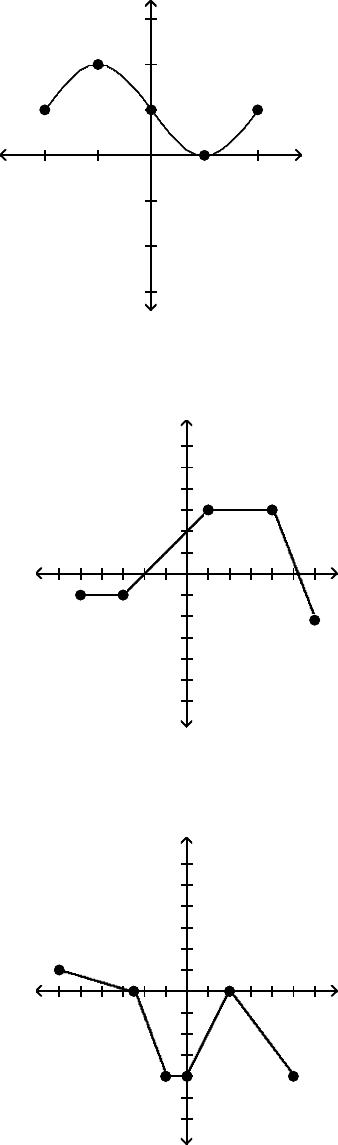
9) [–2
,
–1]
x
-2 -1 1 2
y
3
2
1
-1
-2
-3
x
-2 -1 1 2
y
3
2
1
-1
-2
-3
A) increasing B) decreasing C) constant
10) [4
,
3]
x
-5 5
y
5
-5
(-5, –1) (-3, –1)
(1, 3) (4, 3)
(6, -2.2)
x
-5 5
y
5
-5
(-5, –1) (-3, –1)
(1, 3) (4, 3)
(6, -2.2)
A) decreasing B) constant C) increasing
11) [–6
,
–2.5]
x
-5 5
y
5
-5
(-6, 1)
(-2.5, 0)
(-1, –4) (0, –4)
(2, 0)
(5, –4)
x
-5 5
y
5
-5
(-6, 1)
(-2.5, 0)
(-1, –4) (0, –4)
(2, 0)
(5, –4)
A) decreasing B) increasing C) constant
Page 31
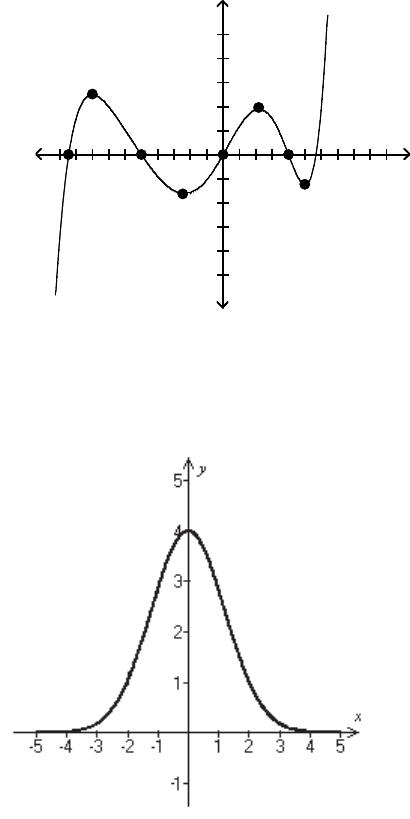
12) [2.2
,
5]
x
-10 10
y
10
-10
(-8, 5)
(-5, 0)
(0, 0)
(4, 0)
(5, -2.5)
(-9.5, 0)
(-2.5, –3.3)
(2.2, 3.9)
x
-10 10
y
10
-10
(-8, 5)
(-5, 0)
(0, 0)
(4, 0)
(5, -2.5)
(-9.5, 0)
(-2.5, –3.3)
(2.2, 3.9)
A) decreasing B) increasing C) constant
Use the graph to find the intervals on which it is increasing, decreasing, or constant.
13)
A) Increasing on (–∞
,
0]; decreasing on [0, ∞) B) Decreasing on (–∞
,
0]; increasing on [0, ∞)
C) Decreasing on (–∞
,
∞) D) Increasing on (–∞
,
∞)
Page 32
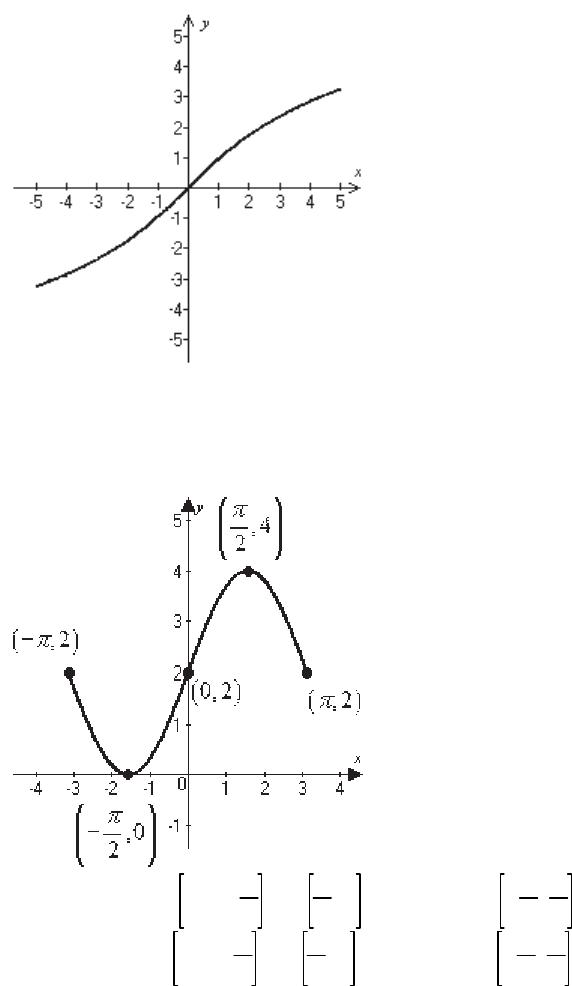
14)
A) Increasing on (–∞
,
∞) B) Decreasing on (–∞
,
0]; increasing on [0, ∞)
C) Decreasing on (–∞
,
∞) D) Increasing on (–∞
,
0]; decreasing on [0, ∞)
15)
A) Decreasing on – π, – π
2 and π
2, π; increasing on – π
2, π
2
B) Increasing on – π, – π
2 and π
2, π; decreasing on – π
2, π
2
C) Decreasing on [– π
,
0]; increasing on [0, π]
D) Increasing on (–∞
,
∞)
Page 33
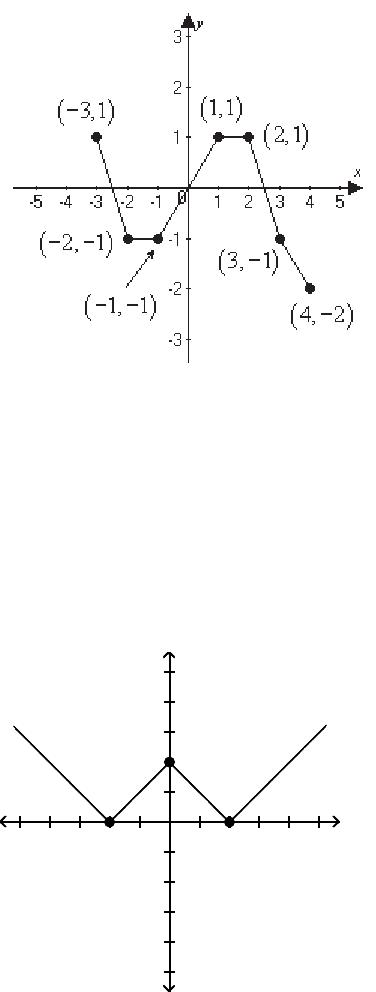
16)
A) Decreasing on [–3, –2] and [2, 4]; increasing on [–1, 1]; constant on [–2, –1] and [1, 2]
B) Decreasing on [–3, –2] and [2, 4]; increasing on [–1, 1]
C) Decreasing on [–3, –1] and [1, 4]; increasing on [–2, 1]
D) Increasing on [–3, –2] and [2, 4]; decreasing on [–1, 1]; constant on [–2, –1] and [1, 2]
4 Use a Graph to Locate Local Maxima and Local Minima
MULTIPLE CHOICE. Choose the one alternative that best completes the statement or answers the question.
The graph of a function f is given. Use the graph to answer the question.
1) Find the numbers, if any, at which f has a local maximum. What are the local maxima?
x
–5–4–3–2–1 12345
y
5
4
3
2
1
-1
-2
-3
-4
-5
x
–5–4–3–2–1 12345
y
5
4
3
2
1
-1
-2
-3
-4
-5
A) f has a local maximum at x = 0; the local maximum is 2
B) f has a local maximum at x = –2 and 2; the local maximum is 0
C) f has a local maximum at x = 2; the local maximum is 2
D) f has no local maximum
Page 34
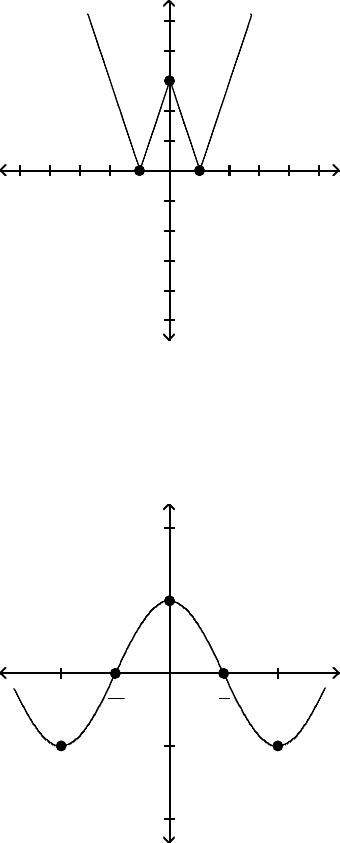
2) Find the numbers, if any, at which f has a local minimum. What are the local minima?
x
–5–4–3–2–1 12345
y
5
4
3
2
1
-1
-2
-3
-4
-5
x
–5–4–3–2–1 12345
y
5
4
3
2
1
-1
-2
-3
-4
-5
A) f has a local minimum at x = –1 and 1; the local minimum is 0
B) f has a local minimum at x = 0; the local minimum is 3
C) f has a local minimum at x = –1; the local minimum is 0
D) f has no local minimum
3) Find the numbers, if any, at which f has a local maximum. What are the local maxima?
x
–
–
2
2
y
2
1
-1
-2
x
–
–
2
2
y
2
1
-1
-2
A) f has a local maximum at x = 0; the local maximum is 1
B) f has a local maximum at x = –π and π; the local maximum is –1
C) f has a local maximum at –π; the local maximum is 1
D) f has no local maximum
Page 35
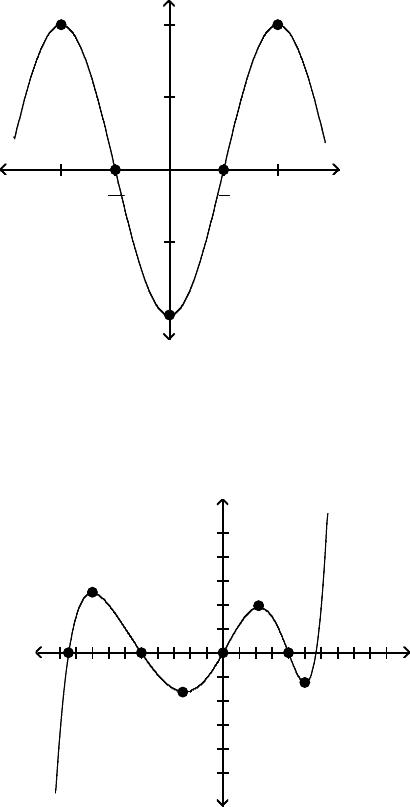
4) Find the numbers, if any, at which f has a local minimum. What are the local minima?
x
–
–
2
2
y
2
1
-1
-2
x
–
–
2
2
y
2
1
-1
-2
A) f has a local minimum at x = 0; the local minimum is –2
B) f has a local minimum at x = –π and π; the local minimum is 2
C) f has a local minimum at x = –π; the local minimum is –2
D) f has no local minimum
5)
x
-10 10
y
10
-10
(-8, 5)
(-5, 0)
(0, 0)
(4, 0)
(5, -2.5)
(-9.5, 0)
(-2.5, –3.3)
(2.2, 3.9)
x
-10 10
y
10
-10
(-8, 5)
(-5, 0)
(0, 0)
(4, 0)
(5, -2.5)
(-9.5, 0)
(-2.5, –3.3)
(2.2, 3.9)
Find the numbers, if any, at which f has a local maximum. What are the local maxima?
A) f has a local maximum at x = –8 and 2.2; the local maximum at –8 is 5; the local maximum at 2.2 is 3.9
B) f has a local maximum at x = 5 and 3.9; the local maximum at 5 is –8; the local maximum at 3.9 is 2.2
C) f has a local minimum at x = –8 and 2.2; the local minimum at –8 is 5; the local minimum at 2.2 is 3.9
D) f has a local minimum at x = 5 and 3.9; the local minimum at 5 is –8; the local minimum at 3.9 is 2.2
Page 36
Solve the problem.
6) The height s of a ball (in feet) thrown with an initial velocity of 70 feet per second from an initial height o
f
8 feet is given as a function of time t (in seconds) by s(t) = –16t2 + 70t + 8. What is the maximum height?
Round to the nearest hundredth, if necessary.
x
y
x
y
A) 84.56 ft B) 95.5 ft C) 77.06 ft D) –54.19 ft
5 Use a Graph to Locate the Absolute Maximum and the Absolute Minimum
MULTIPLE CHOICE. Choose the one alternative that best completes the statement or answers the question.
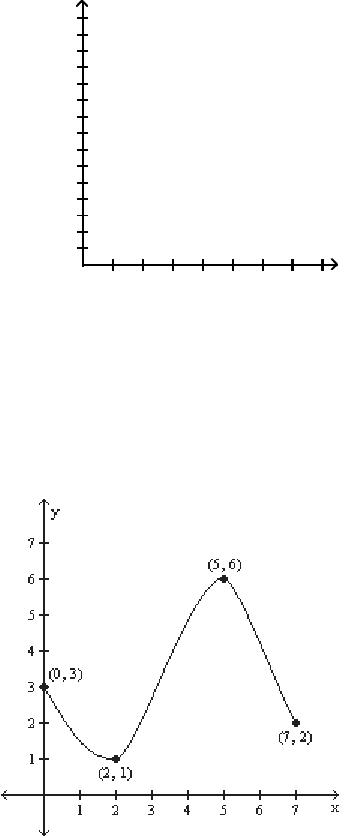
For the graph of the function y = f(x), find the absolute maximum and the absolute minimum, if it exists.
1)
A) Absolute maximum: f(5) = 6; Absolute minimum: f(2) =1
B) Absolute maximum: f(7) = 2; Absolute minimum: f(0) =3
C) Absolute maximum: f(6) = 5; Absolute minimum: f(1) =2
D) Absolute maximum: f(2) = 7; Absolute minimum: f(3) =0
Page 37
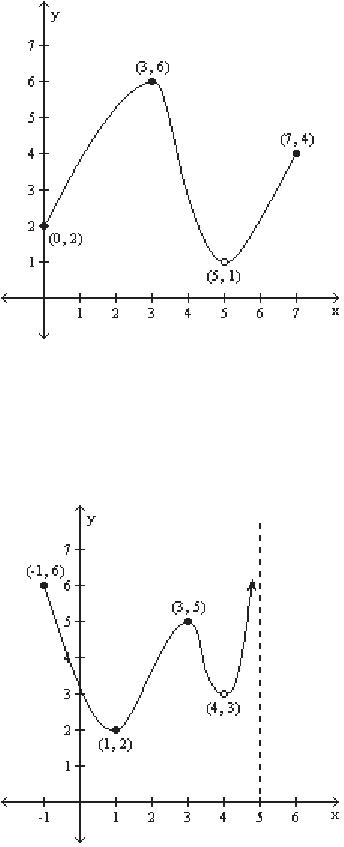
2)
A) Absolute maximum: f(3) = 6; Absolute minimum: none
B) Absolute maximum: f(3) = 6; Absolute minimum: f(5) =1
C) Absolute maximum: f(7) = 4; Absolute minimum: f(0) =2
D) Absolute maximum: f(3) = 6; Absolute minimum: f(0) =2
3)
A) Absolute maximum: none; Absolute minimum: f(1) =2
B) Absolute maximum: f(–1) = 6; Absolute minimum: f(1) =2
C) Absolute maximum: f(3) = 5; Absolute minimum: f(1) =2
D) Absolute maximum: none; Absolute minimum: none
Page 38
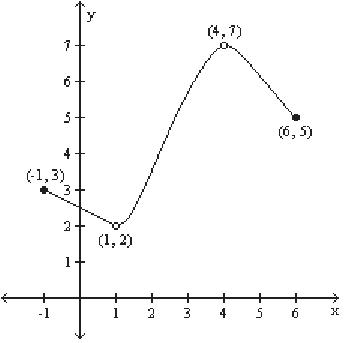
4)
A) Absolute maximum: none; Absolute minimum: none
B) Absolute maximum: f(4) = 7; Absolute minimum: f(1) =2
C) Absolute maximum: none; Absolute minimum: f(1) =2
D) Absolute maximum: f(4) = 7; Absolute minimum: none
6 Use Graphing Utility to Approximate Local Maxima/Minima & Determine Where Func is Increasing/Decreasing
MULTIPLE CHOICE. Choose the one alternative that best completes the statement or answers the question.
Use a graphing utility to graph the function over the indicated interval and approximate any local maxima and local
minima. Determine where the function is increasing and where it is decreasing. If necessary, round answers to two
decimal places.
1) f(x) = x3 – 3x2+ 1, (–1, 3)
A) local maximum at (0
,
1)
local minimum at (2, –3)
increasing on [–1, 0] and [2, 3]
decreasing on [0, 2]
B) local maximum at (2
,
–3)
local minimum at (0, 1)
increasing on [–1, 0] and [2, 3]
decreasing on [0, 2]
C) local maximum at (0
,
1)
local minimum at (2, –3)
increasing on [0, 2]
decreasing on [–1, 0] and [2, 3]
D) local maximum at (2
,
–3)
local minimum at (0, 1)
increasing on [–1, 0]
decreasing on [0, 2]
2) f(x) = x3 – 4x2 + 6; (–1, 4)
A) local maximum at (0, 6)
local minimum at (2.67, –3.48)
increasing on [–1, 0] and [2.67, 4]
decreasing on [0, 2.67]
B) local maximum at (2.67, –3.48)
local minimum at (0, 6)
increasing on [–1, 0] and [2.67, 4]
decreasing on [0, 2.67]
C) local maximum at (0, 6)
local minimum at (2.67, –3.48)
increasing on [0, 2.67]
decreasing on [–1, 0] and [2.67, 4]
D) local maximum at (2.67, –3.48)
local minimum at (0, 6)
increasing on [0, 2.67]
decreasing on [–1, 0] and [2.67, 4]
Page 39
3) f(x) = x5 – x2; (–2, 2)
A) local maximum at (0, 0)
local minimum at (0.74, –0.33)
increasing on [–2, 0] and [0.74, 2]
decreasing on [0, 0.74]
B) local maximum at (0.74, –0.33)
local minimum at (0, 0)
increasing on [–2, 0] and [0.74, 2]
decreasing on [0, 0.74]
C) local maximum at (0, 0)
local minimum at (0.74, –0.33)
increasing on [0, 0.74]
decreasing on [–2, 0] and [0.74, 2]
D) local maximum at (0.74, –0.33)
local minimum at (0, 0)
increasing on [0, 0.74]
decreasing on [–2, 0] and [0.74, 2]
4) f(x) = –0.3x3 + 0.2x2 + 4x – 5; (–4, 5)
A) local maximum at (2.34, 1.61)
local minimum at (–1.9, –9.82)
increasing on [–1.9, 2.34]
decreasing on [–4, –1.9] and [2.34, 5]
B) local maximum at (–1.9, –9.82)
local minimum at (2.34, 1.61)
increasing on [–1.9, 2.34]
decreasing on [–4, –1.9] and [2.34, 5]
C) local maximum at (2.34, 1.61)
local minimum at (–1.9, –9.82)
increasing on [–4, –1.9] and [2.34, 5]
decreasing on [–1.9, 2.34]
D) local maximum at (–1.9, –9.82)
local minimum at (2.34, 1.61)
increasing on [–4, –1.9] and [2.34, 5]
decreasing on [–1.9, 2.34]
5) f(x) = 0.15x4 + 0.3x3 – 0.8x2 + 5; (–4, 2)
A) local maximum at (0, 5)
local minima at (–2.55, 1.17) and (1.05, 4.65)
increasing on [–2.55, 0] and [1.05, 2]
decreasing on [–4, –2.55] and [0, 1.05]
B) local maximum at (–2.55, 1.17) and (1.05, 4.65)
local minima at (0, 5)
increasing on [–2.55, 0] and [1.05, 2]
decreasing on [–4, –2.55] and [0, 1.05]
C) local maximum at (0, 5)
local minima at (–2.55, 1.17) and (1.05, 4.65)
increasing on [–4, –2.55] and [0, 1.05]
decreasing on [–2.55, 0] and [1.05, 2]
D) local maximum at (–2.55, 1.17) and (1.05, 4.65)
local minima at (0, 5)
increasing on [–4, –2.55] and [0, 1.05]
decreasing on [–2.55, 0] and [1.05, 2]
Use a graphing utility to graph the function over the indicated interval and approximate any local maxima and local
minima. If necessary, round answers to two decimal places.
6) f(x) = x2 + 2x – 3; (–5, 5)
A) local minimum at (–1, –4) B) local maximum at (–1, 4)
C) local minimum at (1, 4) D) local maximum at (1, –4)
7) f(x) = 2 + 8x – x2; (–5, 5)
A) local maximum at (4, 18) B) local minimum at (4, 50)
C) local minimum at (–4, 18) D) local maximum at (–4, 50)
Page 40
8) f(x) = x3 – 3x2 + 1; (–5, 5)
A) local maximum at (0, 1)
local minimum at (2, –3)
B) local minimum at (0, 1)
local maximum at (2, –3)
C) local minimum at (2, –3) D) none
9) f(x) = x3 – 12x + 2; (–5, 5)
A) local maximum at (–2, 18)
local minimum at (2, –14)
B) local maximum at (–2, 18)
local minimum at (0, 0)
local minimum at (2, –14)
C) local minimum at (0, 0) D) none
10) f(x) = x4 – 5x3 + 3x2 + 9x – 3; (–5, 5)
A) local minimum at (–0.57, –6.12)
local maximum at (1.32, 5.64)
local minimum at (3, –3)
B) local minimum at (–1, –6)
local maximum at (1, 6)
local minimum at (3, –3)
C) local minimum at (–3, –3)
local maximum at (–1.32, 5.64)
local minimum at (0.57, –6.12)
D) local minimum at (–0.61, –5.64)
local maximum at (1.41, 6.12)
local minimum at (3, –3)
Solve.
11)
J
ohn owns a hotdog stand. He has found that his profit is represented by the equation
P(x) = –x2 + 76x + 80, with P being profits and x the number of hotdogs sold. How many hotdogs must he
sell to earn the most profit?
A) 38 hotdogs B) 42 hotdogs C) 39 hotdogs D) 21 hotdogs
12) Bob owns a watch repair shop. He has found that the cost of operating his shop is given by
c(x) = 3x2 – 234x + 84, where c is cost and x is the number of watches repaired. How many watches must
he repair to have the lowest cost?
A) 39 watches B) 30 watches C) 84 watches D) 42 watches
13) John owns a hotdog stand. His profit is represented by the equation P(x) = –x2 + 10x + 31, with P being
profits and x the number of hotdogs sold. What is the most he can earn?
A) $56 B) $51 C) $66 D) $25
14) A rock falls from a tower that is 127.4 m high. As it is falling, its height is given by the formula
h(t) = 127.4 – 4.9t2. How many seconds will it take for the rock to hit the ground (h=0)? Round to the
nearest tenth.
A) 5.1 sec B) 11.3 sec C) 3300 sec D) 26 sec
15) A projectile is thrown upward so that its distance above the ground after t seconds is h(t) = –16t2 + 352t.
After how many seconds does it reach its maximum height? Round to the nearest second.
A) 11 sec B) 8 sec C) 24 sec D) 32 sec
16) A rock falls from a tower that is 448 ft high. As it is falling, its height is given by the formula
h(t) = 448 – 16t2. How many seconds will it take for the rock to hit the ground (h=0)? Round to the nearest
tenth.
A) 5.3 sec B) 21.2 sec C) 12,544 sec D) 28.1 sec
Page 41
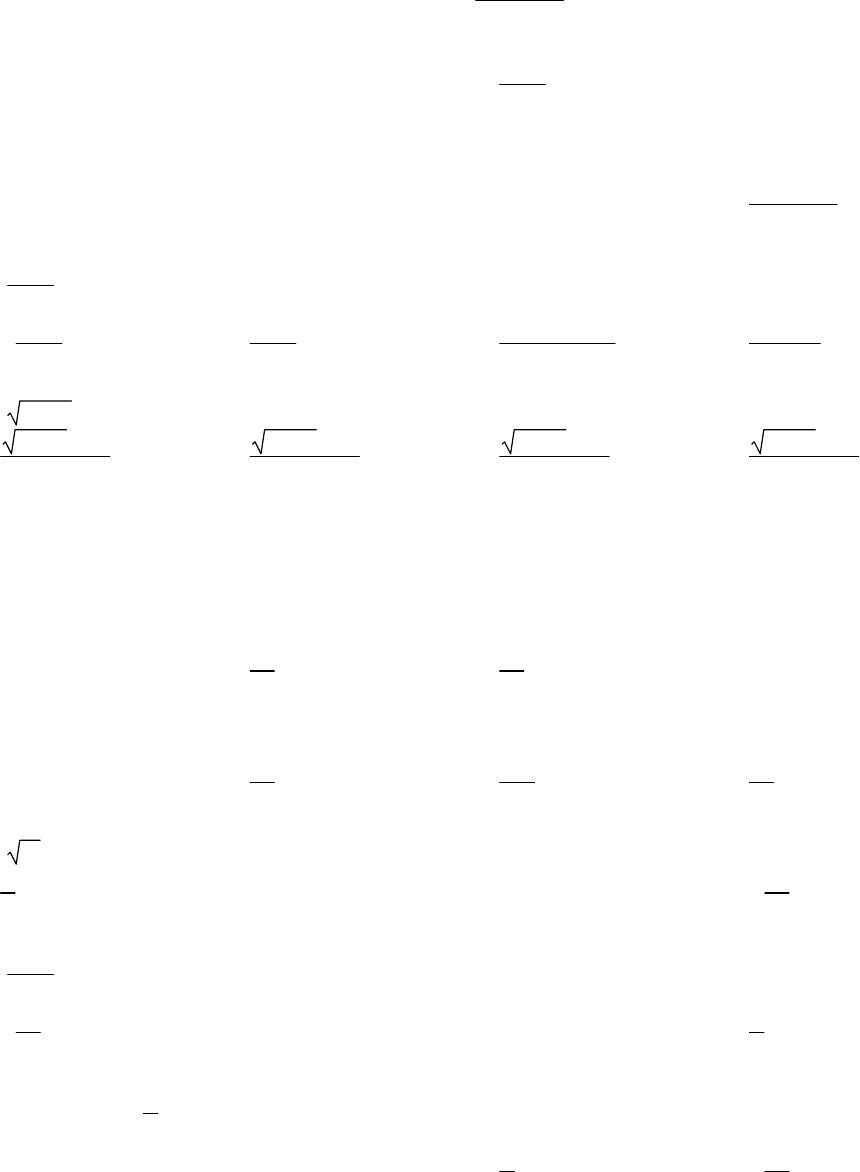
7 Find the Average Rate of Change of a Function
MULTIPLE CHOICE. Choose the one alternative that best completes the statement or answers the question.
For the function, find the average rate of change of f from 1 to x: f(x) –f(1)
x – 1 , x ≠ 1
1) f(x) = –9x
A) –9B)
–10 C) –9
x – 1 D) 0
2) f(x) = x3 –x
A) x2 + xB)x
2 – x C) 1 D) x3 –x – 1
x – 1
3) f(x) = 7
x + 6
A) – 1
x + 6 B) 1
x + 6 C) 7
(x – 1)(x + 6) D) 7
x(x + 6)
4) f(x) = x
+ 99
A) x + 99 – 10
x – 1 B) x + 99 + 10
x + 1 C) x + 99 – 10
x + 1 D) x + 99 + 10
x – 1
Find the average rate of change for the function between the given values.
5) f(x) = 3x – 6; from 1 to 2
A) 3 B) 6 C) –3D)
–6
6) f(x) = x2 + 4x; from 3 to 5
A) 12 B) 45
2C) 24
5D) 9
7) f(x) = 9x3 + 4x2 + 3; from –3 to 2
A) 59 B) 91
5C) 295
2D) 91
2
8) f(x) = 2x; from 2 to 8
A) 1
3B) 2 C) 7 D) – 3
10
9) f(x) = 3
x – 2 ; from 4 to 7
A) – 3
10 B) 2 C) 7 D) 1
3
10) f(x) = 4x2; from 0 to 7
4
A) 7 B) 2 C) 1
3D) – 3
10
Page 42
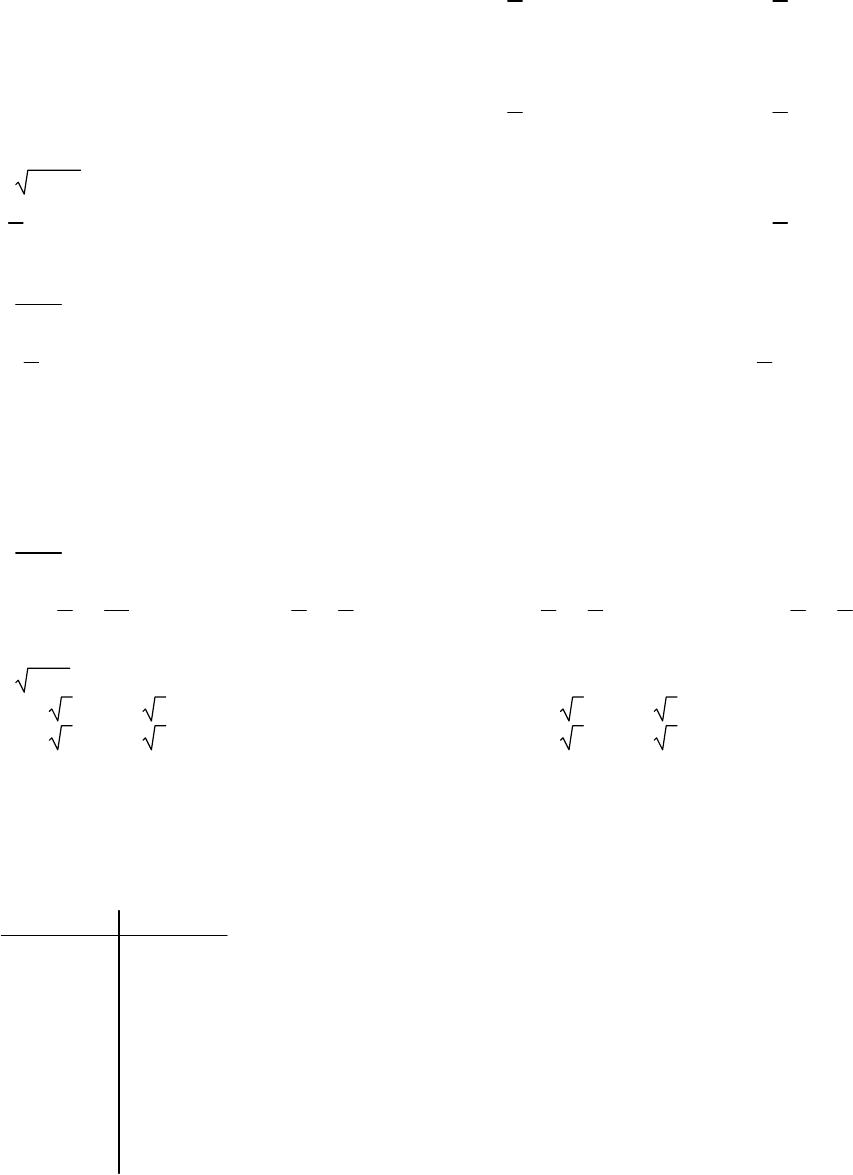
11) f(x) = –3x2 – x; from 5 to 6
A) –34 B) –2C)
1
2D) – 1
6
12) f(x) = x3 + x2 – 8x – 7; from 0 to 2
A) –2B)
–28 C) 1
2D) – 1
6
13) f(x) = 2x
– 1; from 1 to 5
A) 1
2B) –2C)
–28 D) – 1
6
14) f(x) = 3
x + 2 ; from 1 to 4
A) – 1
6B) –2C)
–28 D) 1
2
Find an equation of the secant line containing (1, f(1)) and (2, f(2)).
15) f(x) = x3 +x
A) y = 8x – 6B)y = 8x +6C)y
= –8x –6D)y
= –8x +6
16) f(x) = 8
x + 7
A) y = – 1
9x + 10
9B) y = 1
9x + 8
9C) y = 8
9x + 1
9D) y = 1
9x + 5
4
17) f(x) = x
+ 3
A) y = (5 – 2)x – 5 + 4B)y = (–5 + 2)x + 5 – 4
C) y = (5
– 2)x + 5 – 4D)y = (–5 – 2)x – 5 + 4
Solve the problem.
18) From April through December, the stock price of QRS Company had a roller coaster ride. The chart below
indicates the price of the stock at the beginning of each month during that period. Find the monthly
average rate of change in price between June and September.
Month Price (in $)
April (x = 1) 116
May 109
June 88
July 101
August 96
September 113
October 93
November 85
December 65
A) $8.33 per month B) –$8.33 per month
C) $12.50 per month D) –$12.50 per month
Page 43
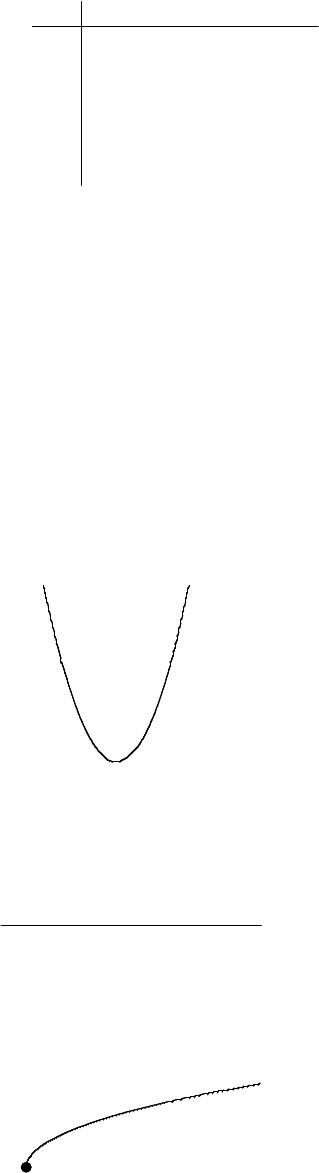
19) Along with incomes, people’s charitable contributions have steadily increased over the past few years. Th
e
table below shows the average deduction for charitable contributions reported on individual income tax
returns over a six year period. Find the average rate of change between year 3 and year 5.
Year Charitable Contributions
1 $1590
2 $2360
3 $2450
4 $2830
5 $3090
6 $3150
A) $320 per year B) $640 per year C) $350 per year D) $365 per year
20) A deep sea diving bell is being lowered at a constant rate. After 12 minutes, the bell is at a depth of 400
feet. After 30 minutes the bell is at a depth of 1600 feet. What is the average rate of lowering per minute?
Round to the nearest hundredth if necessary.
A) 66.67 ft per min B) 0.02 ft per min C) 40 ft per min D) 53.33 ft per min
3.4 Library of Functions; Piecewise–defined Functions
1 Graph the Functions Listed in the Library of Functions
MULTIPLE CHOICE. Choose the one alternative that best completes the statement or answers the question.
Match the graph to the function listed whose graph most resembles the one given.
1)
A) square function B) cube function
C) absolute value function D) reciprocal functio
n
2)
A) constant function B) linear function
C) absolute value function D) reciprocal functio
n
3)
A) square root function B) square function
C) cube root function D) cube function
Page 44
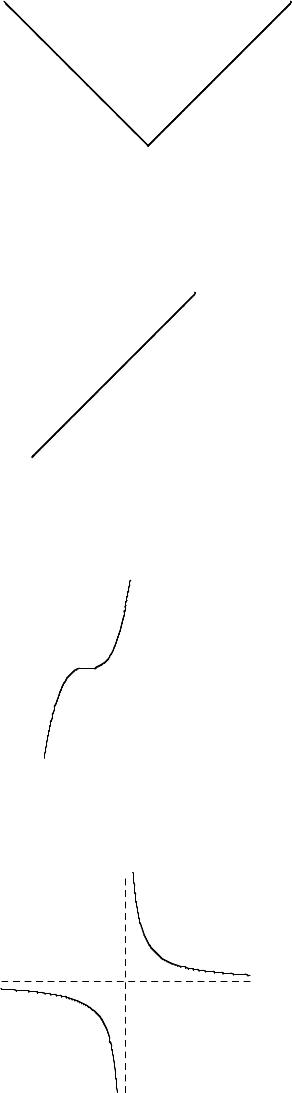
4)
A) absolute value function B) square function
C) linear function D) reciprocal functio
n
5)
A) linear function B) constant function
C) absolute value function D) reciprocal functio
n
6)
A) cube function B) cube root function
C) square function D) square root function
7)
A) reciprocal functio
n
B) square root function
C) absolute value function D) square function
Page 45
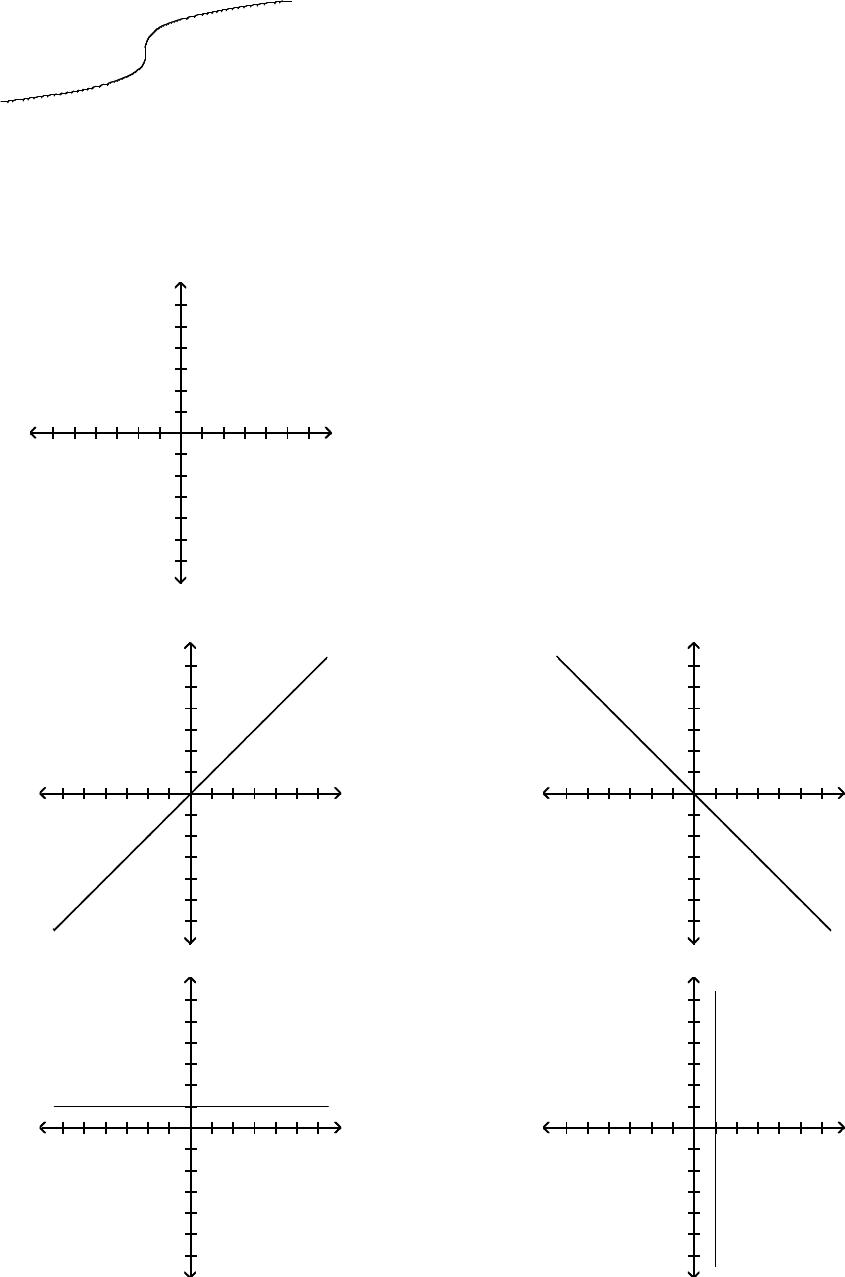
8)
A) cube root function B) cube function
C) square root function D) square function
Graph the function.
9) f(x) = x
x
-5 5
y
5
-5
x
-5 5
y
5
-5
A)
x
-5 5
y
5
-5
x
-5 5
y
5
-5
B)
x
-5 5
y
5
-5
x
-5 5
y
5
-5
C)
x
-5 5
y
5
-5
x
-5 5
y
5
-5
D)
x
-5 5
y
5
-5
x
-5 5
y
5
-5
Page 46
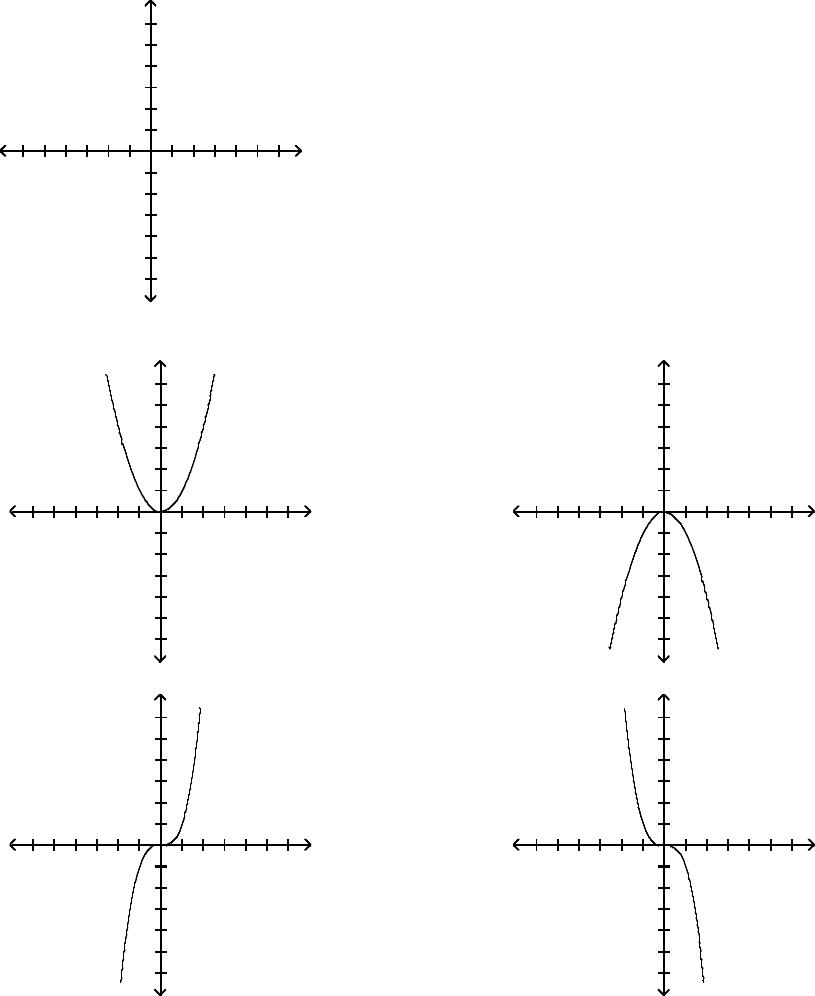
10) f(x) = x2
x
-5 5
y
5
-5
x
-5 5
y
5
-5
A)
x
-5 5
y
5
-5
x
-5 5
y
5
-5
B)
x
-5 5
y
5
-5
x
-5 5
y
5
-5
C)
x
-5 5
y
5
-5
x
-5 5
y
5
-5
D)
x
-5 5
y
5
-5
x
-5 5
y
5
-5
Page 47
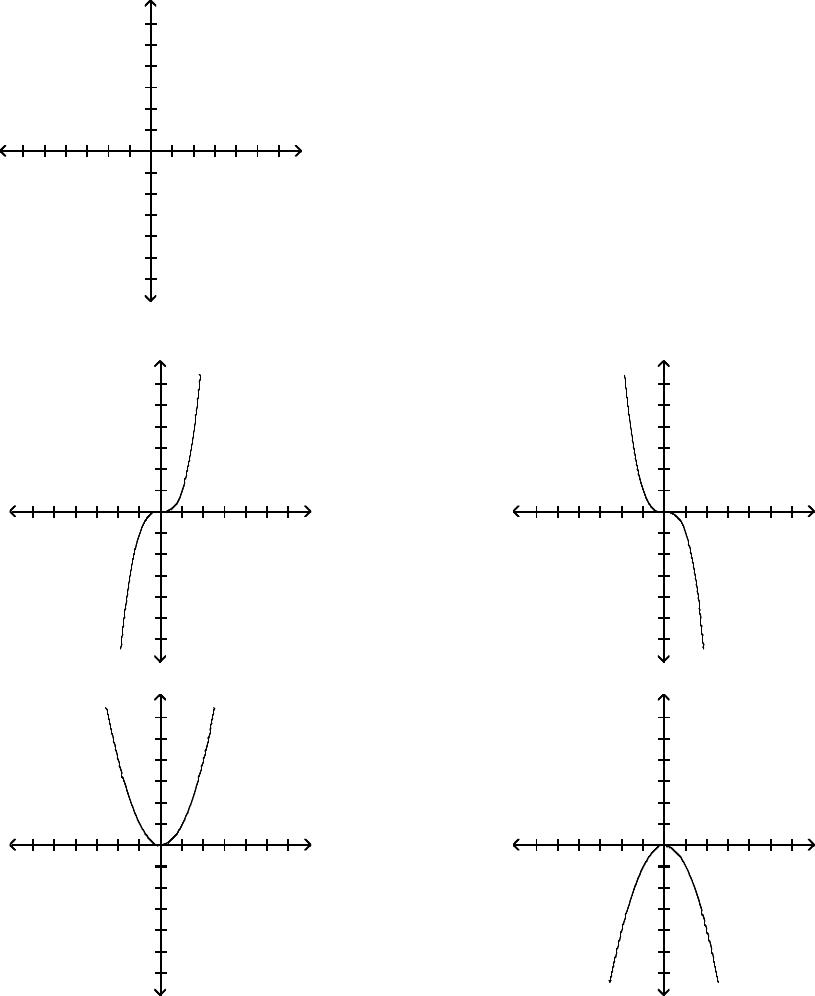
11) f(x) = x3
x
-5 5
y
5
-5
x
-5 5
y
5
-5
A)
x
-5 5
y
5
-5
x
-5 5
y
5
-5
B)
x
-5 5
y
5
-5
x
-5 5
y
5
-5
C)
x
-5 5
y
5
-5
x
-5 5
y
5
-5
D)
x
-5 5
y
5
-5
x
-5 5
y
5
-5
Page 48
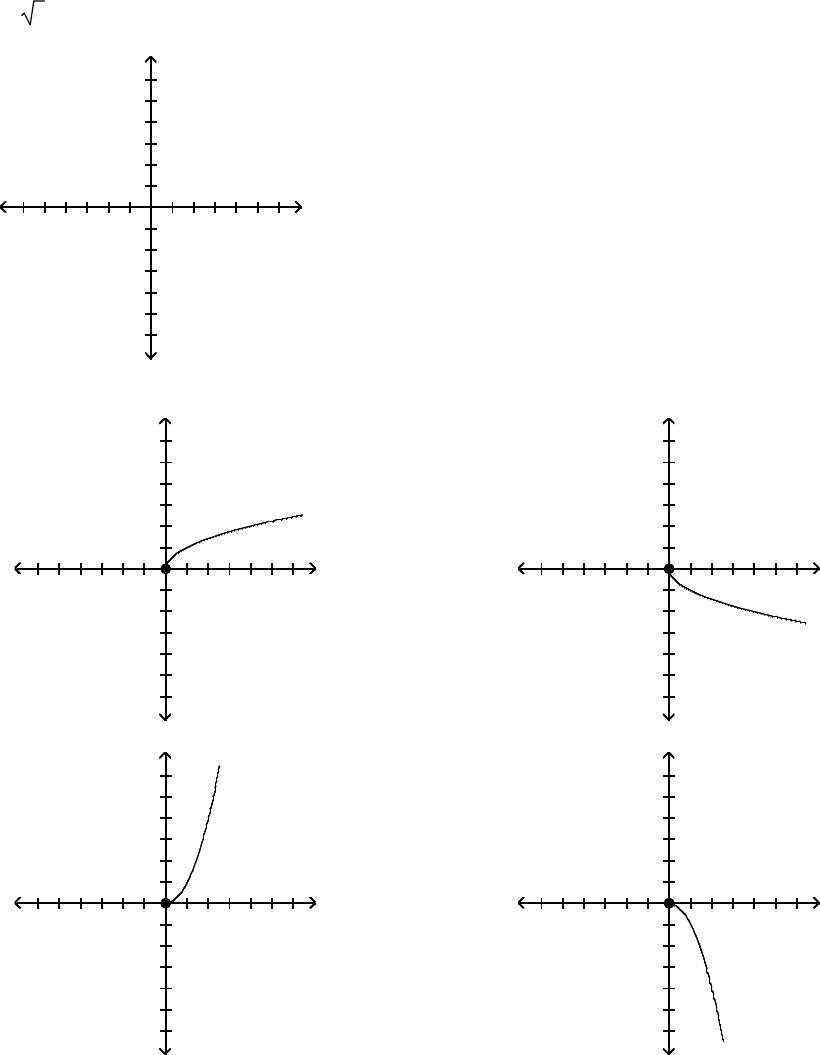
12) f(x) = x
x
-5 5
y
5
-5
x
-5 5
y
5
-5
A)
x
-5 5
y
5
-5
x
-5 5
y
5
-5
B)
x
-5 5
y
5
-5
x
-5 5
y
5
-5
C)
x
-5 5
y
5
-5
x
-5 5
y
5
-5
D)
x
-5 5
y
5
-5
x
-5 5
y
5
-5
Page 49
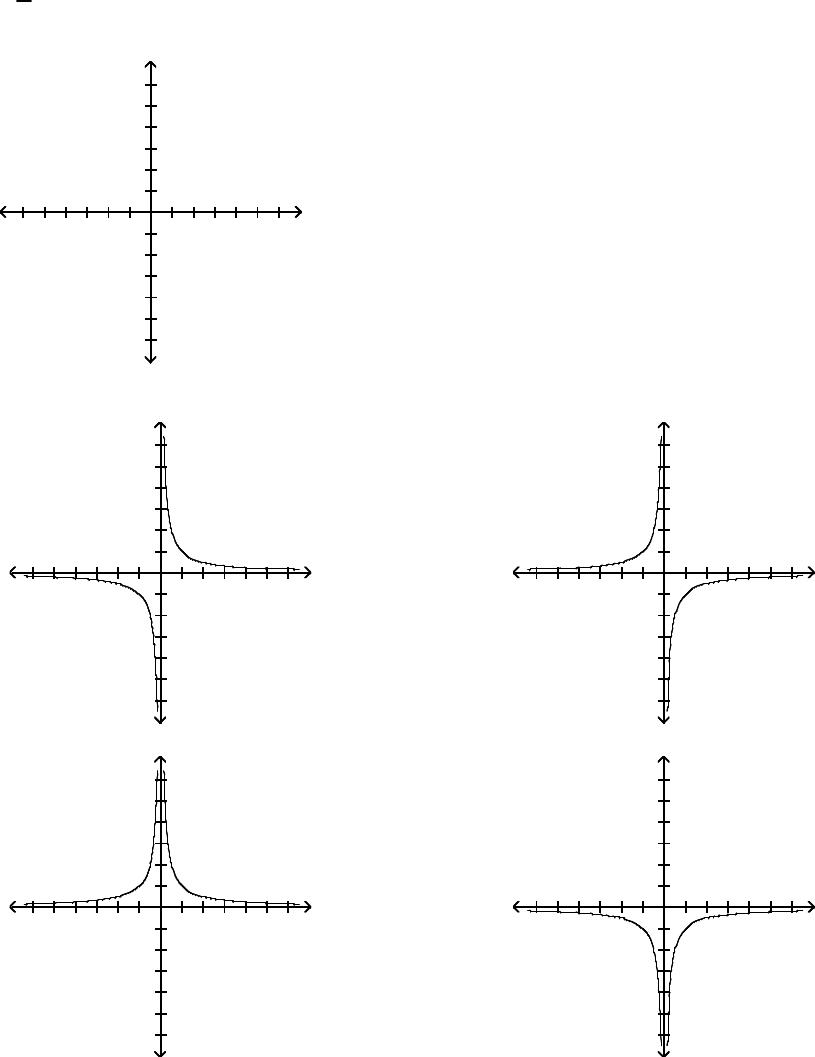
13) f(x) = 1
x
x
-5 5
y
5
-5
x
-5 5
y
5
-5
A)
x
-5 5
y
5
-5
x
-5 5
y
5
-5
B)
x
-5 5
y
5
-5
x
-5 5
y
5
-5
C)
x
-5 5
y
5
-5
x
-5 5
y
5
-5
D)
x
-5 5
y
5
-5
x
-5 5
y
5
-5
Page 50
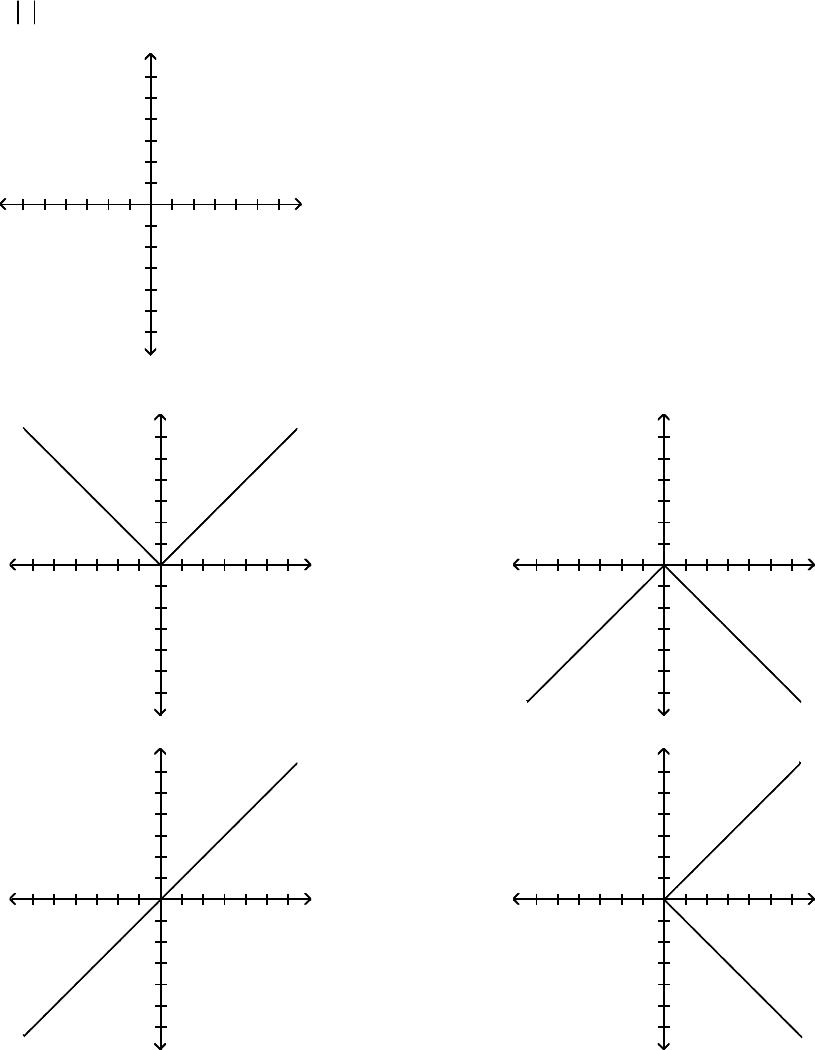
14) f(x) = x
x
-5 5
y
5
-5
x
-5 5
y
5
-5
A)
x
-5 5
y
5
-5
x
-5 5
y
5
-5
B)
x
-5 5
y
5
-5
x
-5 5
y
5
-5
C)
x
-5 5
y
5
-5
x
-5 5
y
5
-5
D)
x
-5 5
y
5
-5
x
-5 5
y
5
-5
Page 51
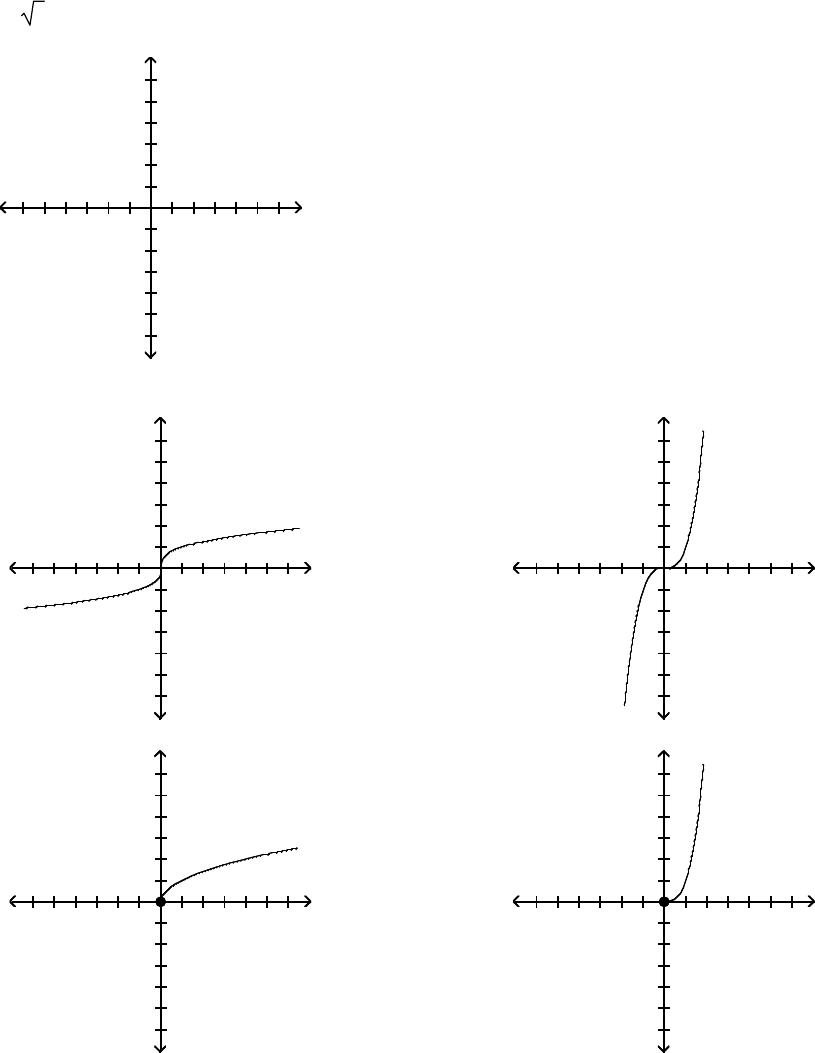
15) f(x) = 3x
x
-5 5
y
5
-5
x
-5 5
y
5
-5
A)
x
-5 5
y
5
-5
x
-5 5
y
5
-5
B)
x
-5 5
y
5
-5
x
-5 5
y
5
-5
C)
x
-5 5
y
5
-5
x
-5 5
y
5
-5
D)
x
-5 5
y
5
-5
x
-5 5
y
5
-5
Page 52
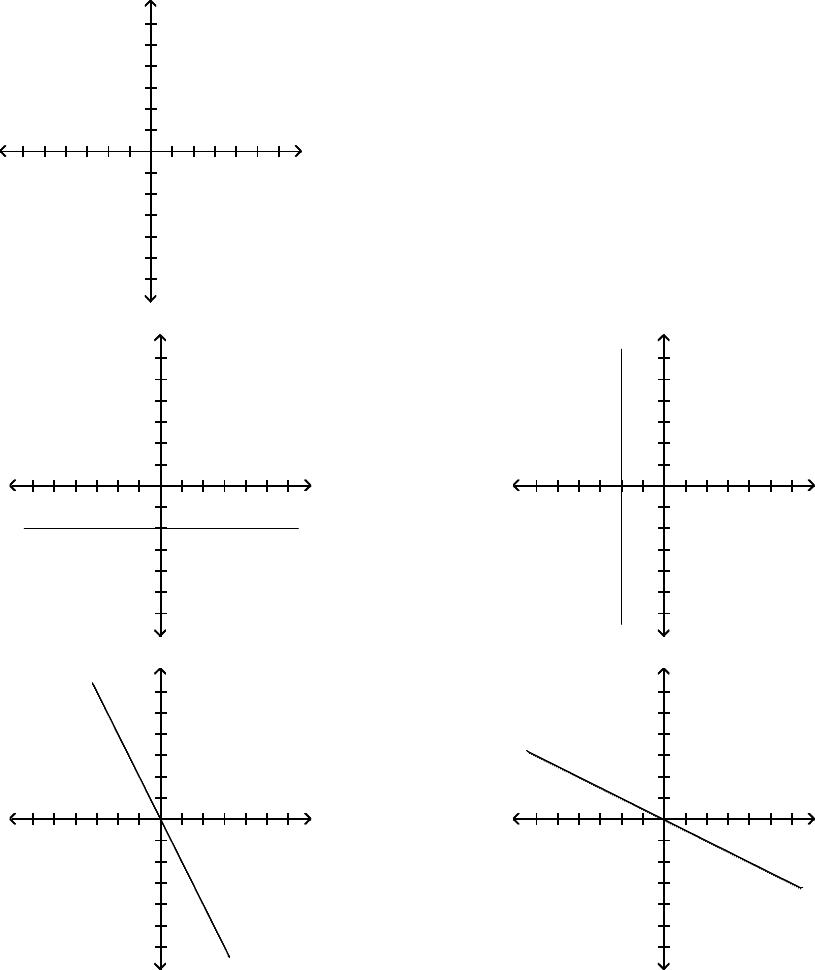
16) f(x) = –2
x
-5 5
y
5
-5
x
-5 5
y
5
-5
A)
x
-5 5
y
5
-5
x
-5 5
y
5
-5
B)
x
-5 5
y
5
-5
x
-5 5
y
5
-5
C)
x
-5 5
y
5
-5
x
-5 5
y
5
-5
D)
x
-5 5
y
5
-5
x
-5 5
y
5
-5
Page 53
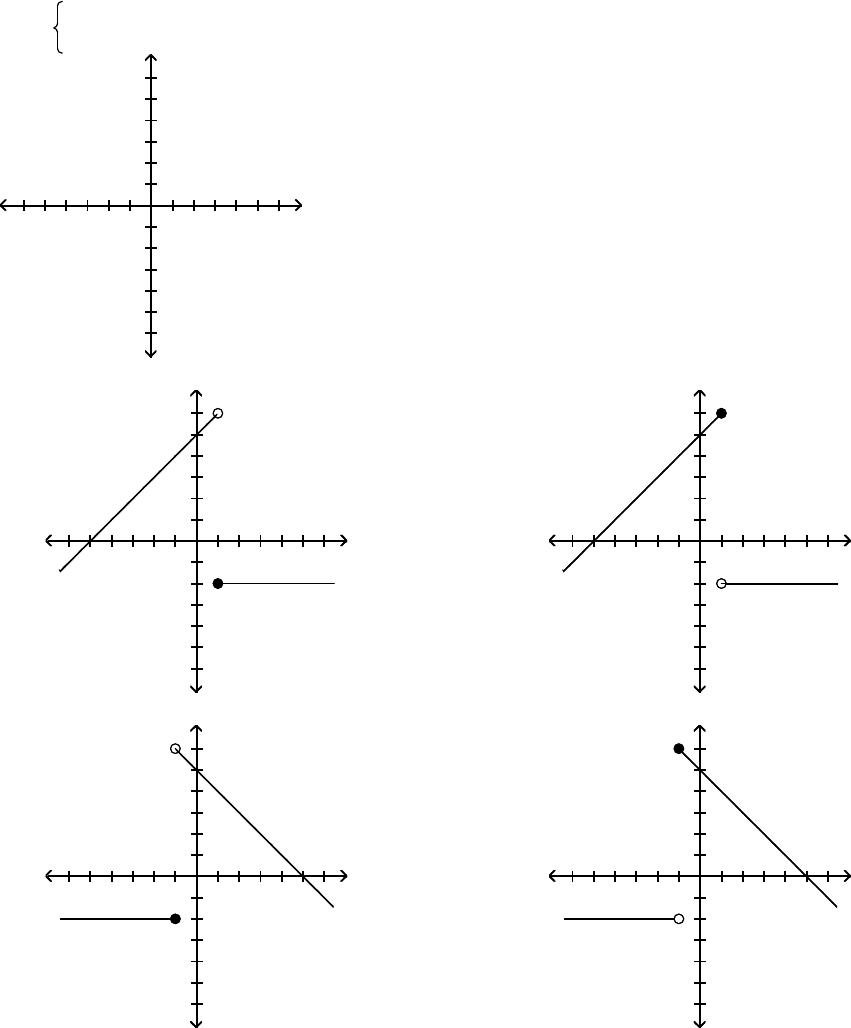
2 Graph Piecewise–defined Functions
MULTIPLE CHOICE. Choose the one alternative that best completes the statement or answers the question.
Graph the function.
1) f(x) = x + 5 if x
<
1
–2 if x ≥ 1
x
-5 5
y
5
-5
x
-5 5
y
5
-5
A)
x
-5 5
y
5
-5
(1, 6)
(1, –2)
x
-5 5
y
5
-5
(1, 6)
(1, –2)
B)
x
-5 5
y
5
-5
(1, –2)
(1, 6)
x
-5 5
y
5
-5
(1, –2)
(1, 6)
C)
x
-5 5
y
5
-5
(-1, –2)
(-1, 6)
x
-5 5
y
5
-5
(-1, –2)
(-1, 6)
D)
x
-5 5
y
5
-5
(-1, –2)
(-1, 6)
x
-5 5
y
5
-5
(-1, –2)
(-1, 6)
Page 54
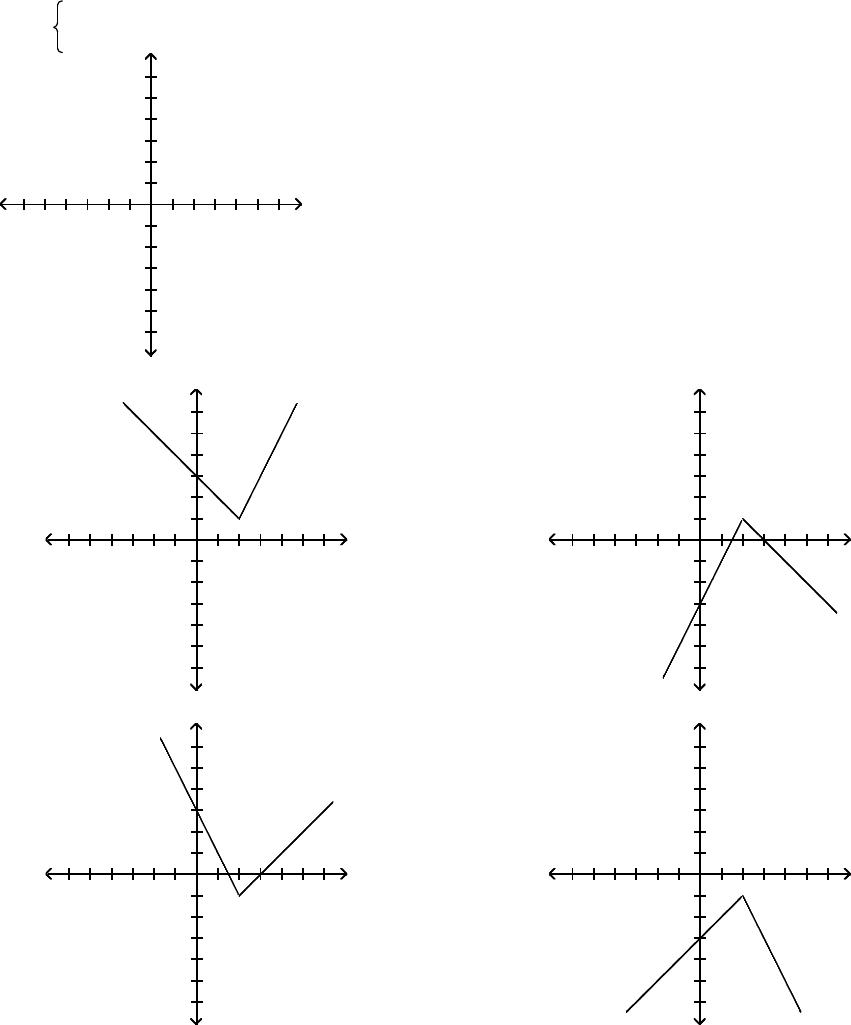
2) f(x) = –x + 3 if x
<
2
2x – 3 if x ≥ 2
x
-5 5
y
5
-5
x
-5 5
y
5
-5
A)
x
-5 5
y
5
-5
x
-5 5
y
5
-5
B)
x
-5 5
y
5
-5
x
-5 5
y
5
-5
C)
x
-5 5
y
5
-5
x
-5 5
y
5
-5
D)
x
-5 5
y
5
-5
x
-5 5
y
5
-5
Page 55
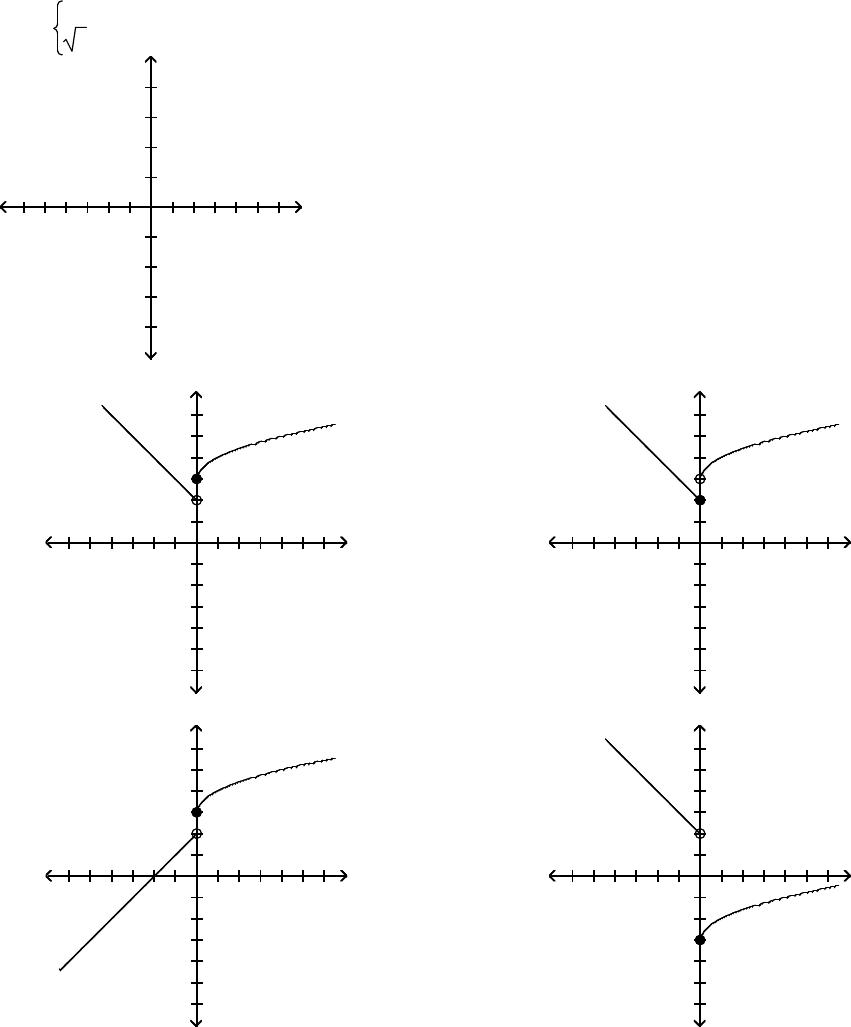
3) f(x) = –x + 2 if x
<
0
x + 3 if x ≥ 0
x
-5 5
y
x
-5 5
y
A)
x
-5 5
y
5
-5
(0, 2)
(0, 3)
x
-5 5
y
5
-5
(0, 2)
(0, 3)
B)
x
-5 5
y
5
-5
(0, 2)
(0, 3)
x
-5 5
y
5
-5
(0, 2)
(0, 3)
C)
x
-5 5
y
5
-5
(0, 2)
(0, 3)
x
-5 5
y
5
-5
(0, 2)
(0, 3)
D)
x
-5 5
y
5
-5
(0, 2)
(0, –3)
x
-5 5
y
5
-5
(0, 2)
(0, –3)
Page 56
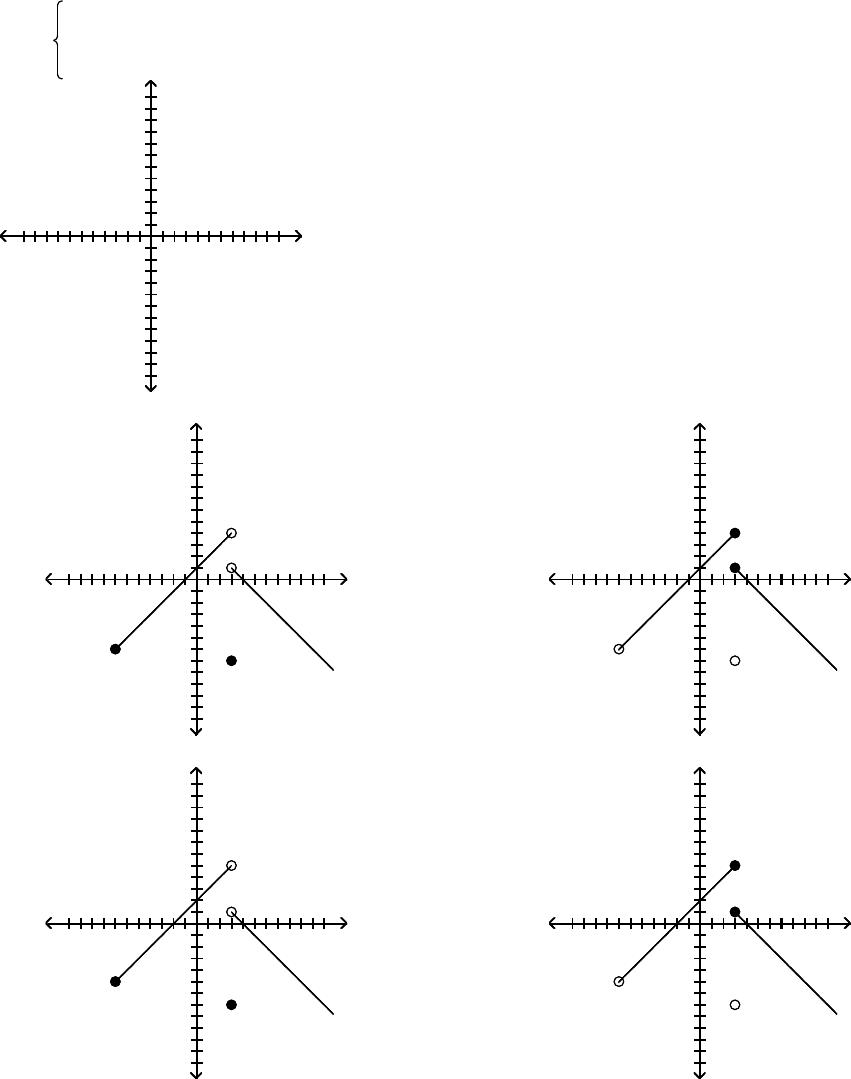
4) f(x) =
x + 1 if –7 ≤ x
<
3
–7 if x = 3
–x + 4 if x > 3
x
-10 -5 5 10
y
10
5
-5
-10
x
-10 -5 5 10
y
10
5
-5
-10
A)
x
-10 -5 5 10
y
10
5
-5
-10
(-7, –6)
(3, 4)
(3, –7)
(3, 1)
x
-10 -5 5 10
y
10
5
-5
-10
(-7, –6)
(3, 4)
(3, –7)
(3, 1)
B)
x
-10 -5 5 10
y
10
5
-5
-10
(-7, –6)
(3, 4)
(3, –7)
(3, 1)
x
-10 -5 5 10
y
10
5
-5
-10
(-7, –6)
(3, 4)
(3, –7)
(3, 1)
C)
x
-10 -5 5 10
y
10
5
-5
-10
(-7, –5)
(3, 5)
(3, –7)
(3, 1)
x
-10 -5 5 10
y
10
5
-5
-10
(-7, –5)
(3, 5)
(3, –7)
(3, 1)
D)
x
-10 -5 5 10
y
10
5
-5
-10
(-7, –5)
(3, 5)
(3, –7)
(3, 1)
x
-10 -5 5 10
y
10
5
-5
-10
(-7, –5)
(3, 5)
(3, –7)
(3, 1)
Page 57
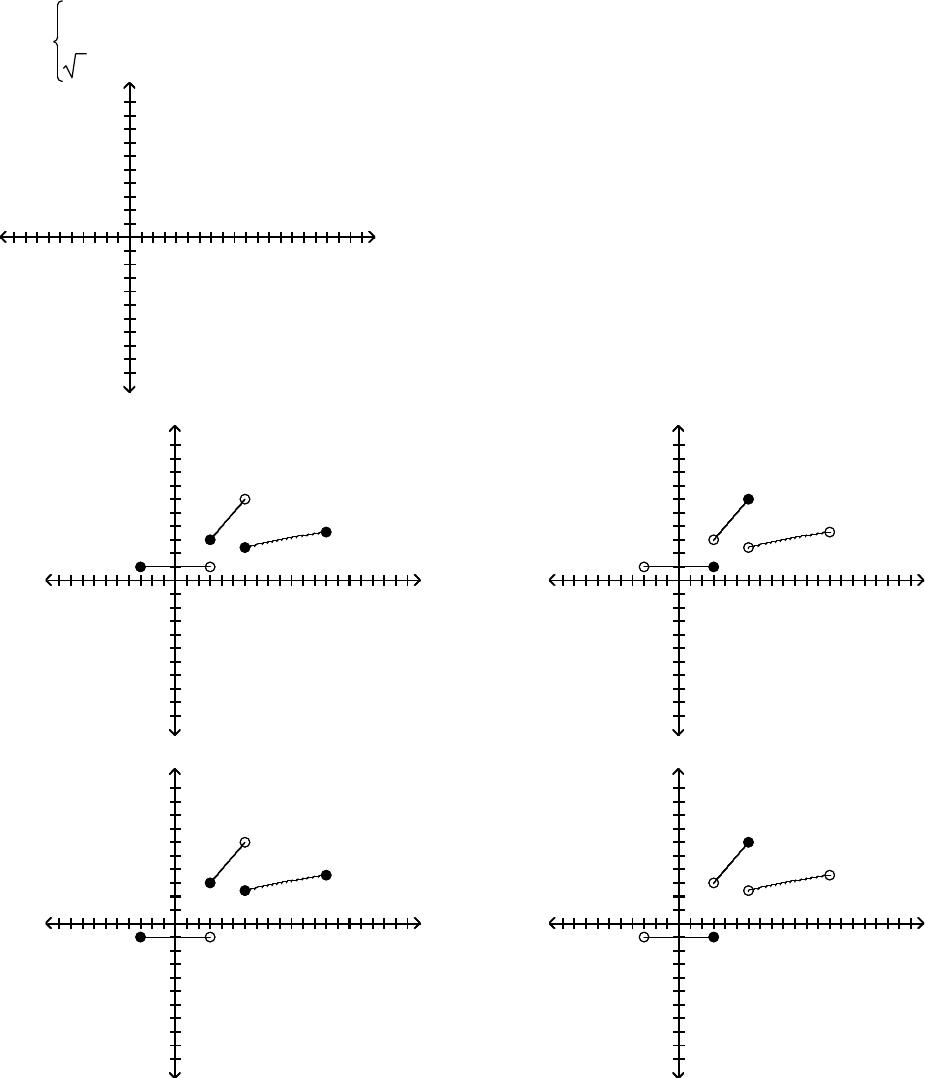
5) f(x) =
1 if –3 ≤ x
<
3
|x| if 3 ≤ x < 6
xif 6 ≤ x ≤ 13
x
-10 -5 5 10 15
y
10
5
-5
-10
x
-10 -5 5 10 15
y
10
5
-5
-10
A)
x
–10 -5 5 10 15
y
10
5
-5
-10
(-3, 1) (3, 1)
(3, 3)
(6, 6)
(6, 2.4) (13, 3.6)
x
–10 -5 5 10 15
y
10
5
-5
-10
(-3, 1) (3, 1)
(3, 3)
(6, 6)
(6, 2.4) (13, 3.6)
B)
x
-10 -5 5 10 15
y
10
5
-5
-10
(-3, 1) (3, 1)
(3, 3)
(6, 6)
(6, 2.4) (13, 3.6)
x
-10 -5 5 10 15
y
10
5
-5
-10
(-3, 1) (3, 1)
(3, 3)
(6, 6)
(6, 2.4) (13, 3.6)
C)
x
–10 -5 5 10 15
y
10
5
-5
-10
(-3, –1) (3, –1)
(3, 3)
(6, 6)
(6, 2.4) (13, 3.6)
x
–10 -5 5 10 15
y
10
5
-5
-10
(-3, –1) (3, –1)
(3, 3)
(6, 6)
(6, 2.4) (13, 3.6)
D)
x
-10 -5 5 10 15
y
10
5
-5
-10
(-3, –1) (3, –1)
(3, 3)
(6, 6)
(6, 2.4) (13, 3.6)
x
-10 -5 5 10 15
y
10
5
-5
-10
(-3, –1) (3, –1)
(3, 3)
(6, 6)
(6, 2.4) (13, 3.6)
Page 58
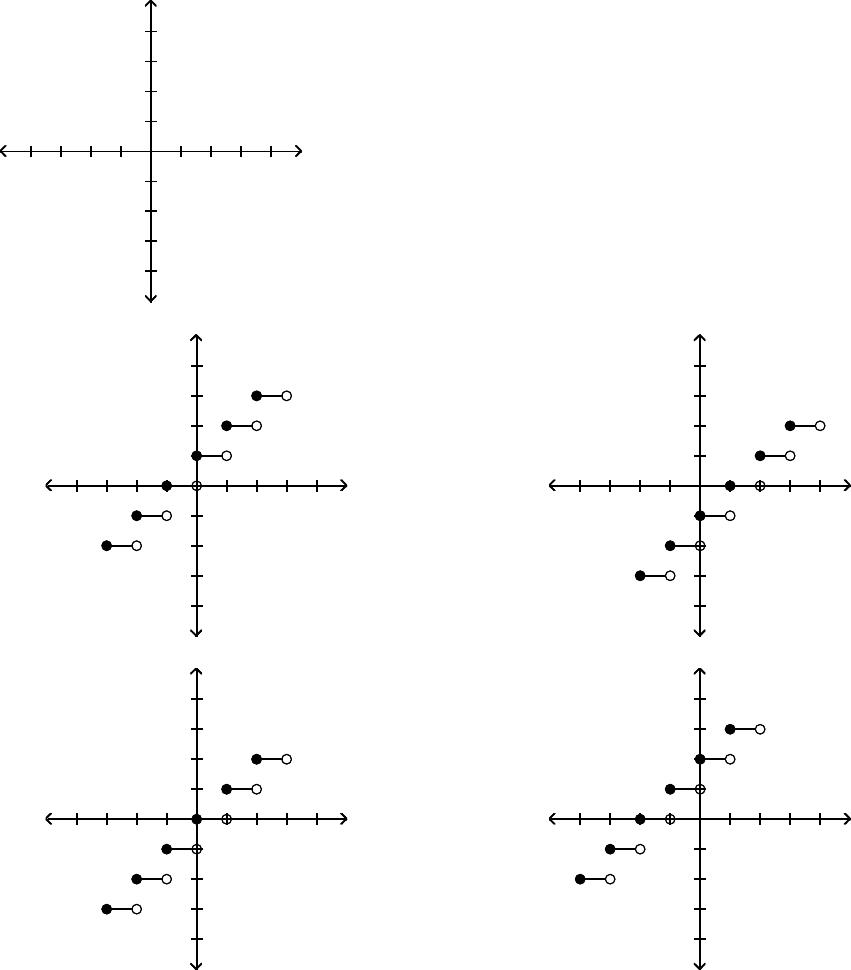
6) f(x) = int (x) + 1
x
y
x
y
A)
x
y
x
y
B)
x
y
x
y
C)
x
y
x
y
D)
x
y
x
y
Page 59
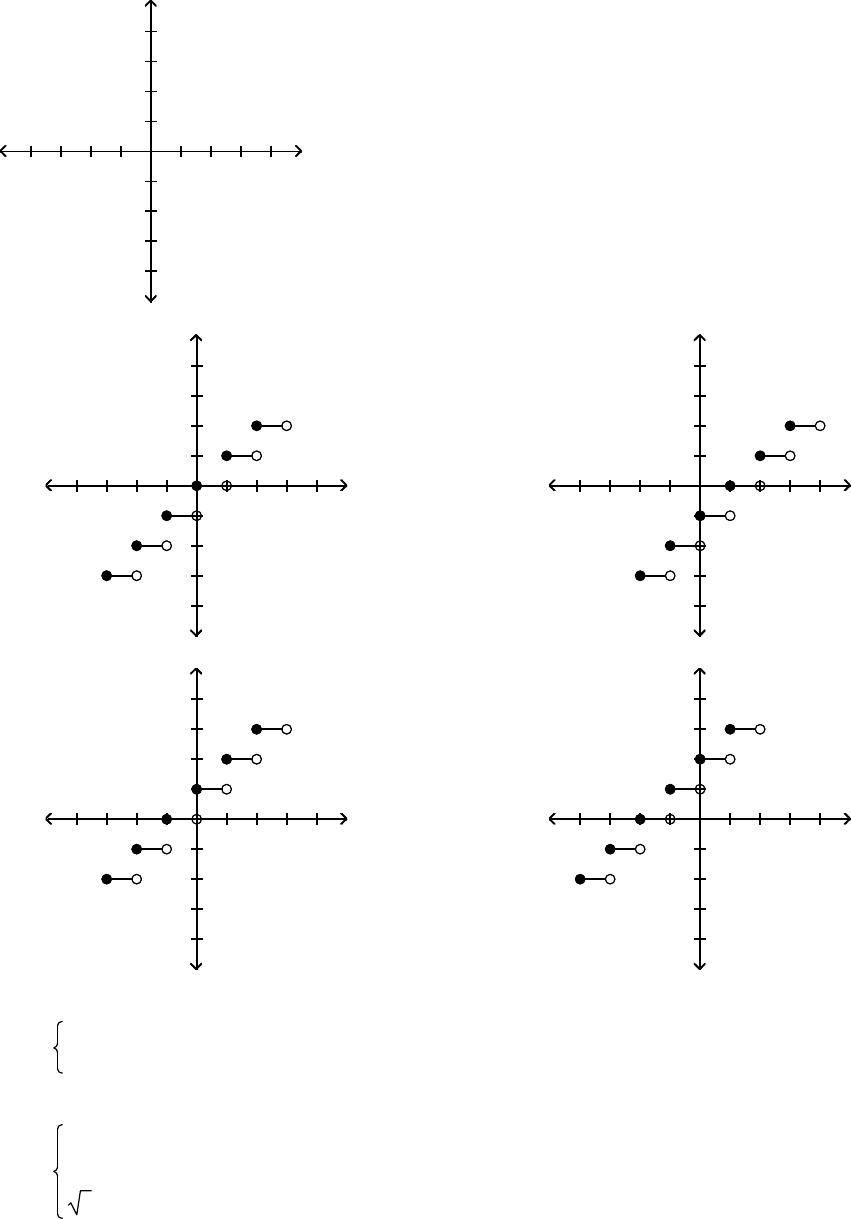
7) f(x) = int (x)
x
y
x
y
A)
x
y
x
y
B)
x
y
x
y
C)
x
y
x
y
D)
x
y
x
y
Find the domain of the function.
8) f(x) = 2x if x ≠ 0
4 if x = 0
A) all real numbers B) {x|x ≠0} C) {0} D) {x|x ≤0}
9) f(x) =
1 if –7 ≤ x
<
–6
|x| if –6 ≤ x < 7
3xif 7 ≤ x ≤ 23
A) {x|–7 ≤ x ≤ 23} B) {x|x ≥–7}
C) {x|–7 ≤ x
<
7 or 7
<
x ≤ 23} D) {x|7 ≤x ≤23}
Page 60
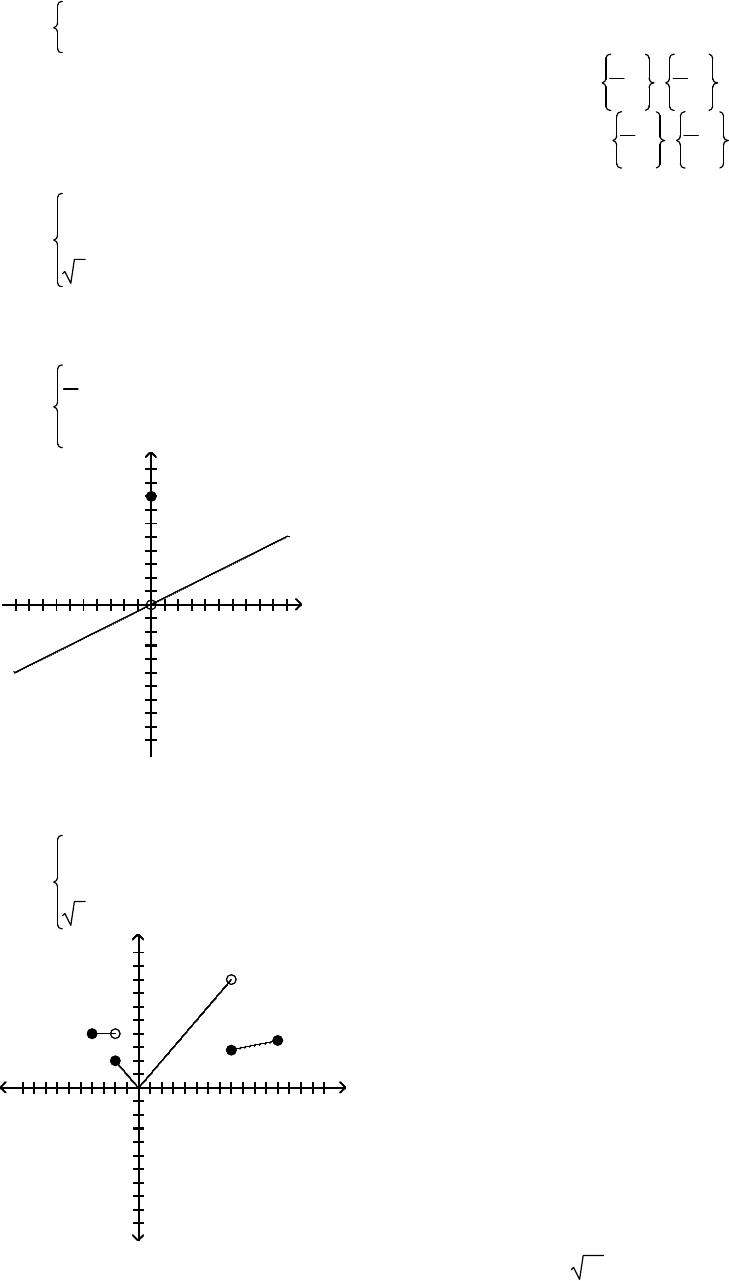
Locate any intercepts of the function.
10) f(x) = –3x + 7 if x
<
1
7x – 3 if x ≥ 1
A) (0, 7) B) (0, 7), 7
3, 0 , 3
7, 0
C) (0, –3) D) (0, –3), 7
3, 0 , 3
7, 0
11) f(x) =
1 if –8 ≤ x
<
–7
|x| if –7 ≤ x < 8
xif 8 ≤ x ≤ 35
A) (0, 0) B) (0, 0), (1, 0) C) (0, 0), (0, 1) D) none
Based on the graph, find the range of y = f(x).
12) f(x) =
1
2x if x ≠ 0
8 if x = 0
x
-10 -5 5
y
10
5
-5
-10
(0, 8)
x
-10 -5 5
y
10
5
-5
-10
(0, 8)
A) (–∞
,
0) or (0, ∞)B)(
–∞
,
∞)
C) (–10, 10) D) (–∞
,
0) or {0} or (0, ∞)
13) f(x) =
4 if –4 ≤ x
<
–2
|x| if –2 ≤ x < 8
xif 8 ≤ x ≤ 12
x
–10 -5 5 10 15
y
10
5
-5
-10
(-4, 4)
(-2, 4)
(-2, 2)
(8, 8)
(8, 2.8)
(12, 3.5)
x
–10 -5 5 10 15
y
10
5
-5
-10
(-4, 4)
(-2, 4)
(-2, 2)
(8, 8)
(8, 2.8)
(12, 3.5)
A) [0, 8) B) [0, ∞) C) [0, 12] D) [0, 8]
Page 61
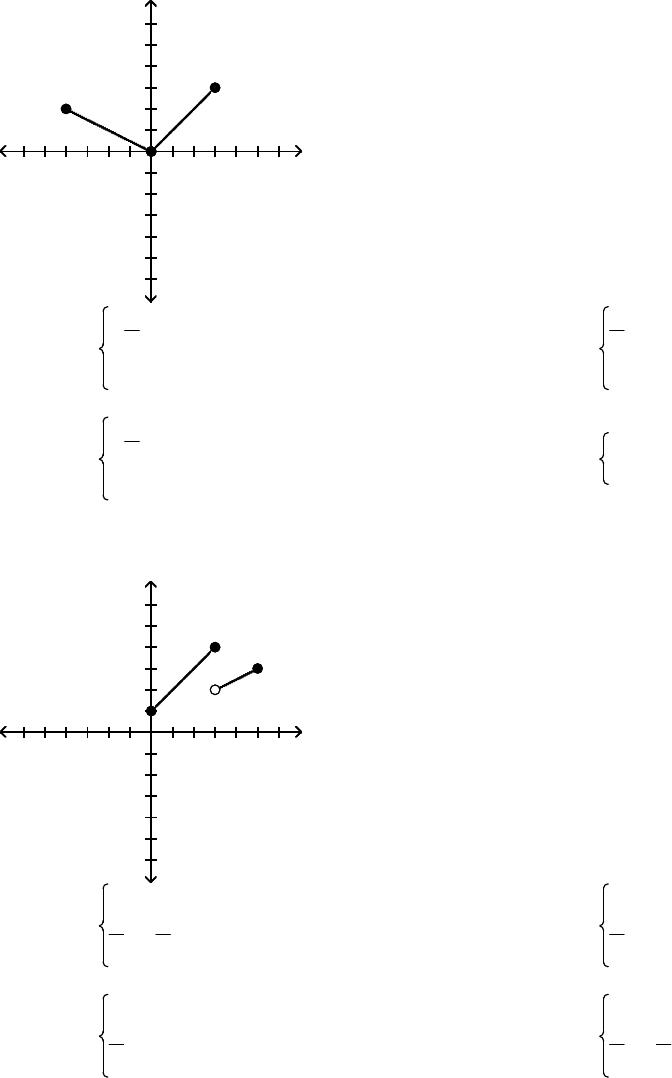
The graph of a piecewise–defined function is given. Write a definition for the function.
14)
x
-5 5
y
5
-5
(-4, 2)
(3, 3)
x
-5 5
y
5
-5
(-4, 2)
(3, 3)
A) f(x) = – 1
2x if –4 ≤ x ≤ 0
x if 0 < x ≤ 3
B) f(x) =
1
2x if –4 < x < 0
x if 0 < x < 3
C) f(x) = – 1
2x if –4 < x < 0
x if 0 < x < 3
D) f(x) = –2x if –4 ≤ x ≤ 0
x if 0 < x ≤ 3
15)
x
-5 5
y
5
-5
(0, 1)
(3, 4)
(3, 2)
(5, 3)
x
-5 5
y
5
-5
(0, 1)
(3, 4)
(3, 2)
(5, 3)
A) f(x) =
x + 1 if 0 ≤ x ≤ 3
1
2x + 1
2if 3 < x ≤ 5 B) f(x) =
x +1 if 0 ≤ x ≤ 3
1
2x if 3 < x ≤ 5
C) f(x) =
x + 1 if 0 ≤ x ≤ 3
1
2x + 2 if 3 < x ≤ 5 D) f(x) =
x +1 if 0 ≤ x ≤ 3
1
2x – 1
2if 3 < x ≤ 5
Page 62
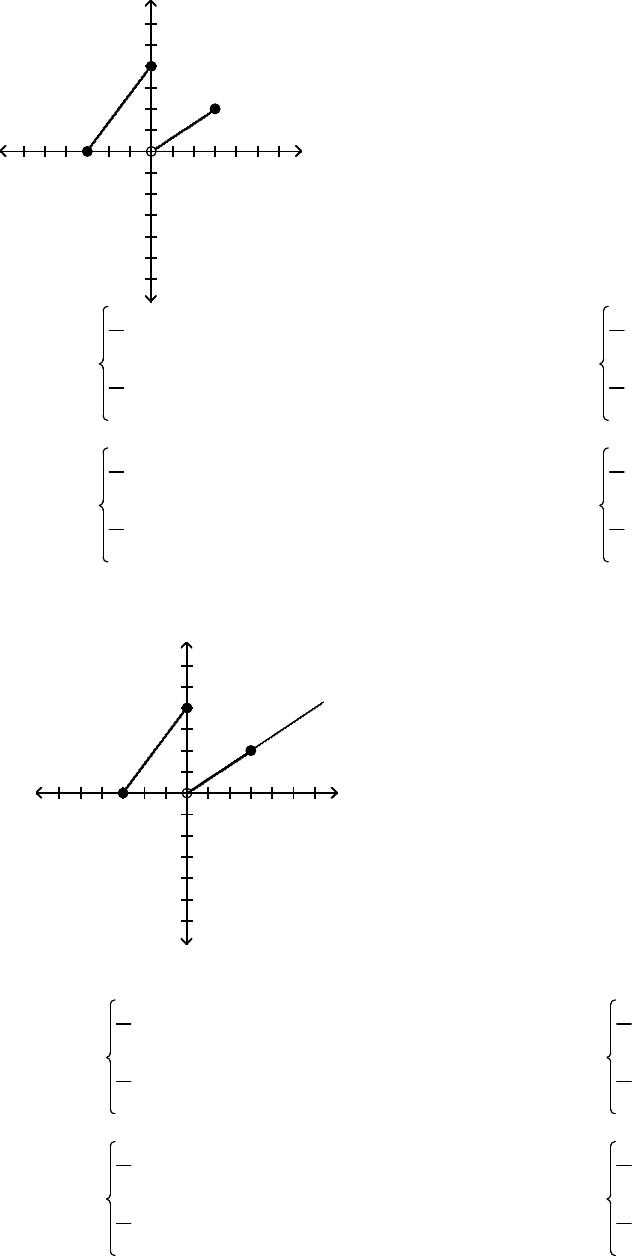
16)
x
-5 5
y
5
-5
(-3, 0)
(0, 4)
(3, 2)
x
-5 5
y
5
-5
(-3, 0)
(0, 4)
(3, 2)
A) f(x) =
4
3x + 4 if –3 ≤ x ≤ 0
2
3x if 0 < x ≤ 3 B) f(x) =
3
4x + 4 if –3 ≤ x ≤ 0
3
2x if 0 < x ≤ 3
C) f(x) =
4
3x – 4 if –3 ≤ x ≤ 0
2
3x if 0 ≤ x ≤ 3 D) f(x) =
4
3x + 4 if –3 ≤ x ≤ 0
2
3x + 2 if 0 < x ≤ 3
17)
x
-5 5
y
5
-5
(-3, 0)
(0, 4)
(3, 2)
x
-5 5
y
5
-5
(-3, 0)
(0, 4)
(3, 2)
A)
f(x) =
4
3x + 4 if –3 ≤ x ≤ 0
2
3x if x > 0
B)
f(x) =
3
4x + 4 if –3 ≤ x ≤ 0
3
2x if x > 0
C)
f(x) =
3
4x + 4 if –3 ≤ x ≤ 0
3
2x if x ≥ 0
D)
f(x) =
4
3x + 4 if –3 ≤ x ≤ 0
2
3x if 0 < x ≤ 3
Page 63
Solve the problem.
18) If f(x) = int(3x), find f(1.2).
A) 3 B) 4 C) 2 D) 1
SHORT ANSWER. Write the word or phrase that best completes each statement or answers the question.
19) A gas company has the following rate schedule for natural gas usage in single–family residences:
Monthly service charge $8.80
Per therm service charge
1st 25 therms $0.6686/therm
Over 25 therms $0.85870/therm
What is the charge for using 25 therms in one month?
What is the charge for using 45 therms in one month?
Construct a function that gives the monthly charge C for x therms of gas.
20) An electric company has the following rate schedule for electricity usage in single–family residences:
Monthly service charge $4.93
Per kilowatt service charge
1st 300 kilowatts $0.11589/kW
Over 300 kilowatts $0.13321/kW
What is the charge for using 300 kilowatts in one month?
What is the charge for using 375 kilowatts in one month?
Construct a function that gives the monthly charge C for x kilowatts of electricity.
21) One Internet service provider has the following rate schedule for hig
h
–speed Internet service:
Monthly service charge $18.00
1st 50 hours of use free
Next 50 hours of use $0.25/hour
Over 100 hours of use $1.00/hour
What is the charge for 50 hours of high–speed Internet use in one month?
What is the charge for 75 hours of high–speed Internet use in one month?
What is the charge for 135 hours of high–speed Internet use in one month?
Page 64
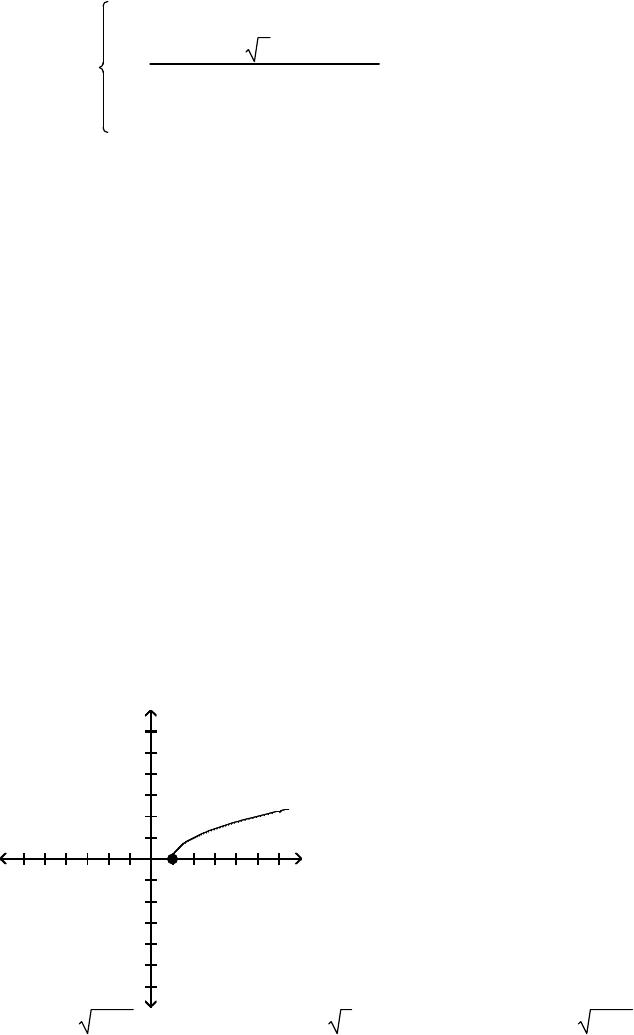
22) The wind chill factor represents the equivalent air temperature at a standard wind speed that would
produce the same heat loss as the given temperature and wind speed. One formula for computing the
equivalent temperature is
W(t) =
t
33 – (10.45 + 10 v – v)(33 – t )
22.04
33 – 1.5958(33 – t)
if 0 ≤ v < 1.79
if 1.79 ≤ v < 20
if v ≥ 20
where v represents the wind speed (in meters per second) and t represents the air temperature (°C).
Compute the wind chill for an air temperature of 15°C and a wind speed of 12 meters per second. (Round
the answer to one decimal place.)
23) A cellular phone plan had the following schedule of charges:
Basic service, including 100 minutes of calls $20.00 per month
2nd 100 minutes of calls $0.075 per minute
Additional minutes of calls $0.10 per minute
What is the charge for 200 minutes of calls in one month?
What is the charge for 250 minutes of calls in one month?
Construct a function that relates the monthly charge C for x minutes of calls.
3.5 Graphing Techniques: Transformations
1 Graph Functions Using Vertical and Horizontal Shifts
MULTIPLE CHOICE. Choose the one alternative that best completes the statement or answers the question.
Match the correct function to the graph.
1)
x
-5 5
y
5
-5
x
-5 5
y
5
-5
A) y = x
– 1 B) y = x C) y = x
+ 1 D) y =x –1
Page 65
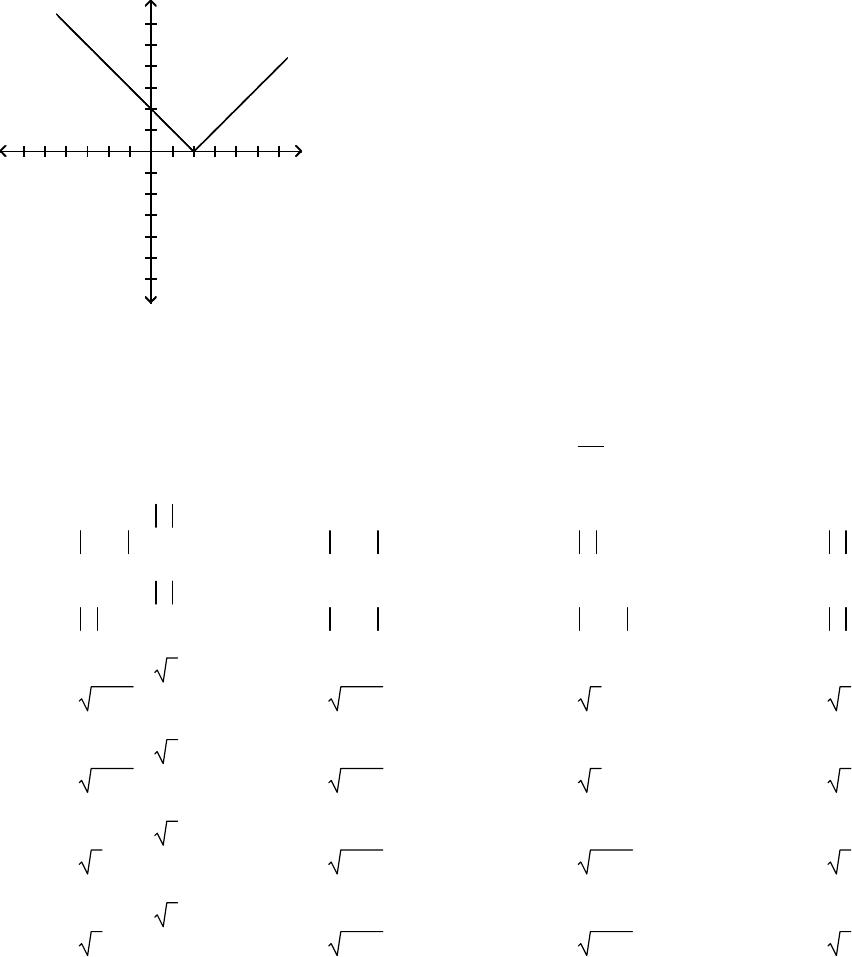
2)
x
-5 5
y
5
-5
x
-5 5
y
5
-5
A) y = |2 – x| B) y = |x +2| C) y =|1 –x| D) y =x –2
Write the equation of a function that has the given characteristics.
3) The graph of y = x2, shifted 6 units upward
A) y = x2 + 6B)y = x2 – 6C)y = x2
6D) y = 6x2
4) The graph of y = x
,
shifted 7 units to the right
A) y = x
– 7 B) y = x
+7 C) y =x–7D)y
=x+7
5) The graph of y = x
,
shifted 8 units upward
A) y = x + 8B)y = x
+8 C) y =x –8 D) y =x–8
6) The graph of y = x, shifted 3 units to the right
A) y = x
– 3 B) y = x
+ 3 C) y = x + 3D)y = x – 3
7) The graph of y = x
, shifted 8 units to the left
A) y = x
+ 8 B) y = x
– 8 C) y = x + 8D)y = x – 8
8) The graph of y = x
, shifted 3 units upward
A) y = x
+ 3B)y = x
– 3 C) y = x
+ 3 D) y = x – 3
9) The graph of y = x
, shifted 6 units downward
A) y = x
– 6B)y = x
– 6 C) y = x
+ 6 D) y = x + 6
Suppose the point (2, 4) is on the graph of y =f(x). Find a point on the graph of the given function.
10) y = f(x + 4)
A) (–2
,
4) B) (6
,
4) C) (2, 0) D) (2, 8)
11) y = f(x) + 4
A) (2, 8) B) (2, –4) C) (6
,
4) D) (–2
,
4)
Solve the problem.
12) Suppose that the x–intercepts of the graph of y =f(x) are 8 and 6. What are the x–intercepts o
f
y = f(x + 9)?
A) –1 and –3 B) 17 and 15 C) 72 and 54 D) 8 and 15
13) Suppose that the x–intercepts of the graph of y =f(x) are 9 and 2. What are the x–intercepts of y =f(x –3)?
A) 12 and 5 B) 6 and –1 C) 27 and 6 D) 9 and –1
Page 66
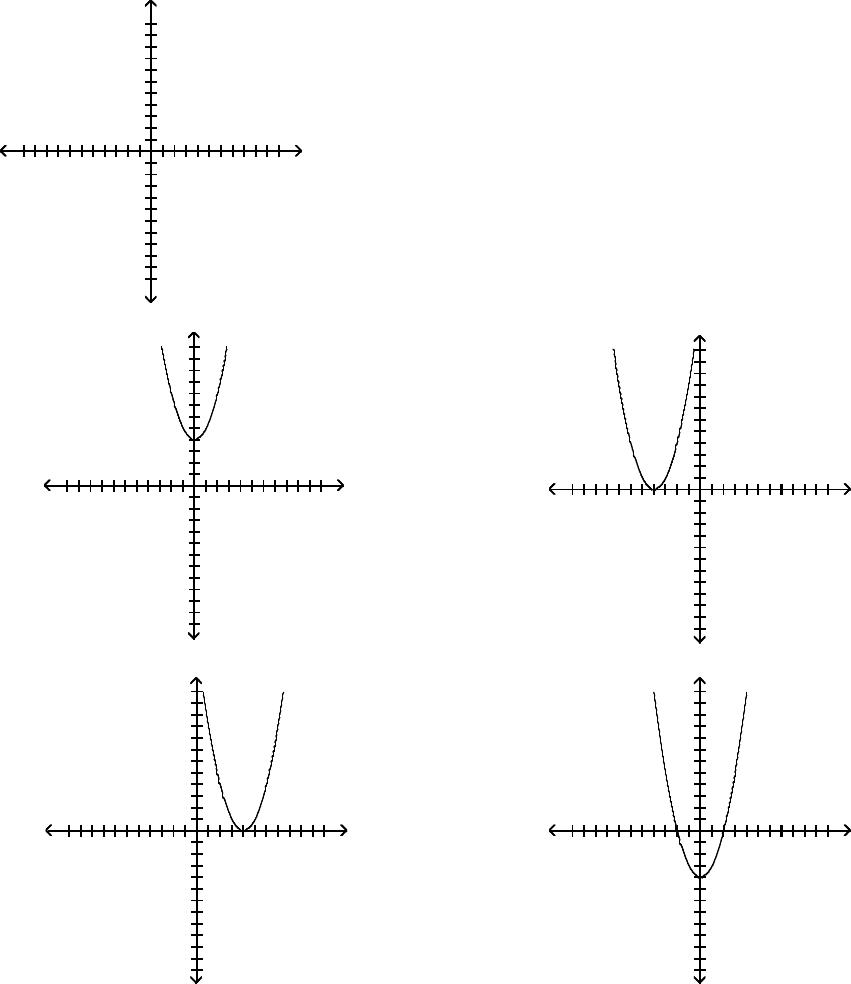
14) Suppose that the function y = f(x) is increasing on the interval (3
,
5). Over what interval is the graph of
y = f(x + 9) increasing?
A) (–6
,
–4) B) (12
,
14) C) (27
,
45) D) (3
,
5)
15) Suppose that the function y = f(x) is increasing on the interval (4
,
7). Over what interval is the graph of
y = f(x – 5) increasing?
A) (9
,
12) B) (–1
,
2) C) (20 , 35) D) (4
,
7)
Graph the function by starting with the graph of the basic function and then using the techniques of shifting,
compressing, stretching, and/or reflecting.
16) f(x) = x2 + 4
x
-10 -5 5 10
y
10
5
-5
-10
x
-10 -5 5 10
y
10
5
-5
-10
A)
x
-10 -5 5 10
y
10
5
-5
-10
x
-10 -5 5 10
y
10
5
-5
-10
B)
x
-10 -5 5 10
y
10
5
-5
-10
x
-10 -5 5 10
y
10
5
-5
-10
C)
x
-10 -5 5 10
y
10
5
-5
-10
x
-10 -5 5 10
y
10
5
-5
-10
D)
x
-10 -5 5 10
y
10
5
-5
-10
x
-10 -5 5 10
y
10
5
-5
-10
Page 67
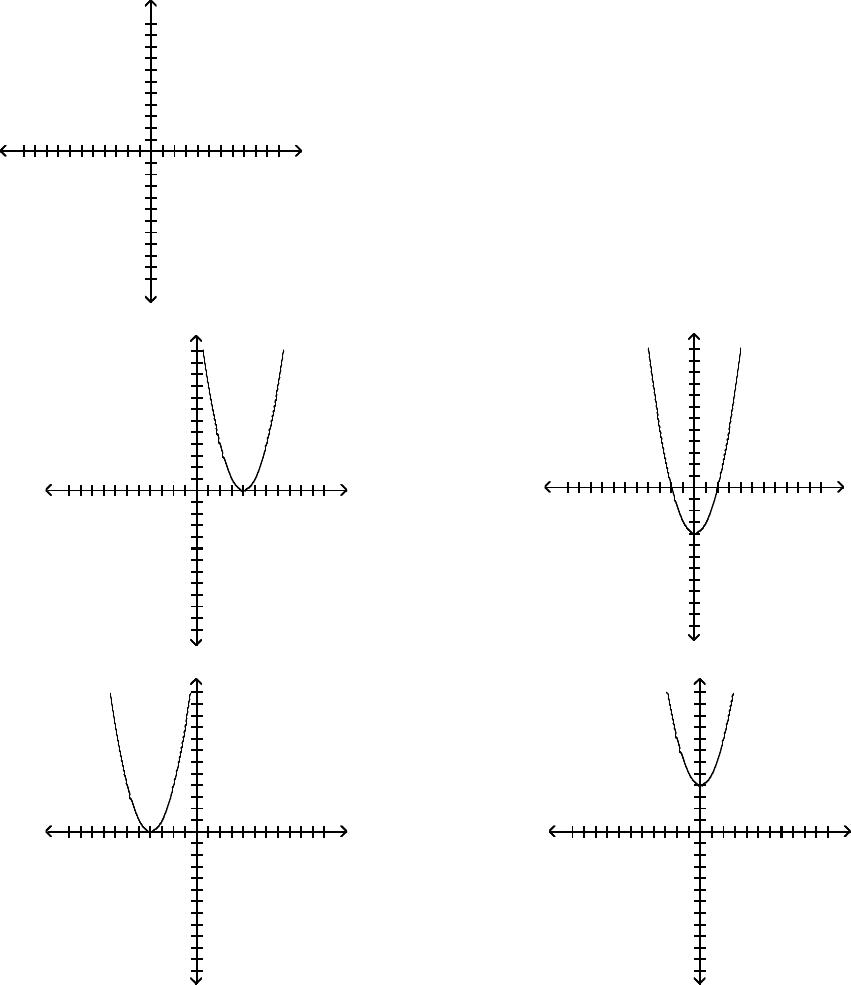
17) f(x) = (x – 4)2
x
-10 -5 5 10
y
10
5
-5
-10
x
-10 -5 5 10
y
10
5
-5
-10
A)
x
-10 -5 5 10
y
10
5
-5
-10
x
-10 -5 5 10
y
10
5
-5
-10
B)
x
-10 -5 5 10
y
10
5
-5
-10
x
-10 -5 5 10
y
10
5
-5
-10
C)
x
-10 -5 5 10
y
10
5
-5
-10
x
-10 -5 5 10
y
10
5
-5
-10
D)
x
-10 -5 5 10
y
10
5
-5
-10
x
-10 -5 5 10
y
10
5
-5
-10
Page 68
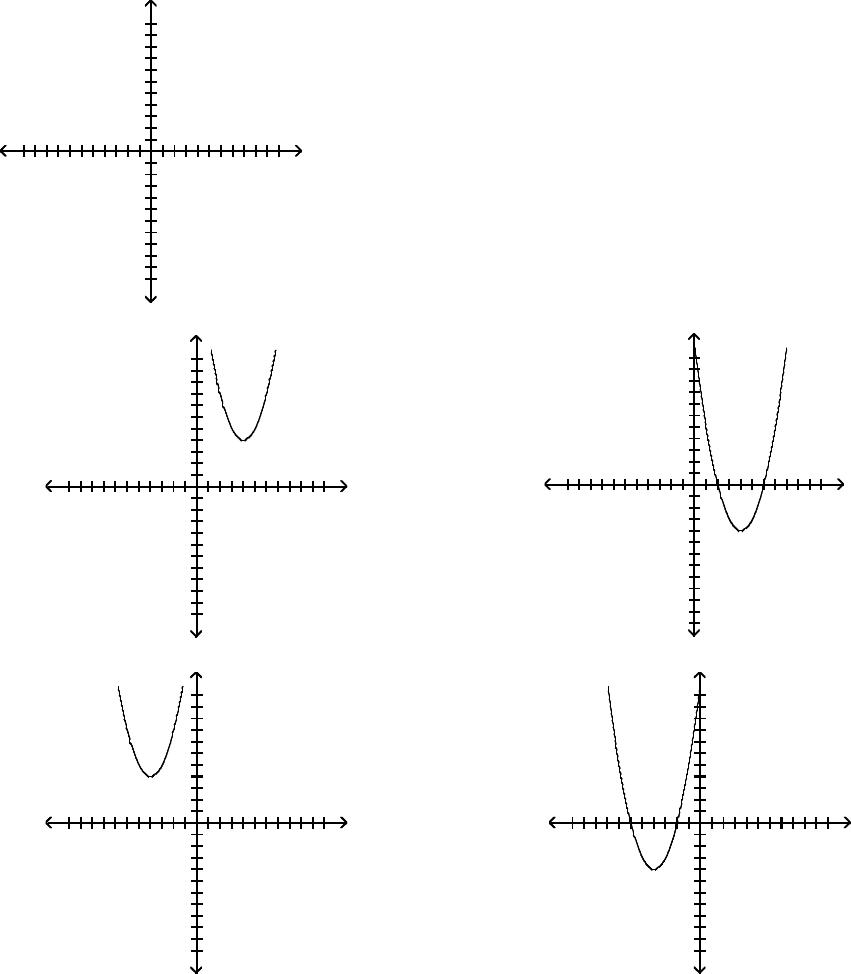
18) f(x) = (x – 4)2 + 4
x
-10 -5 5 10
y
10
5
-5
-10
x
-10 -5 5 10
y
10
5
-5
-10
A)
x
-10 -5 5 10
y
10
5
-5
-10
x
-10 -5 5 10
y
10
5
-5
-10
B)
x
-10 -5 5 10
y
10
5
-5
-10
x
-10 -5 5 10
y
10
5
-5
-10
C)
x
-10 -5 5 10
y
10
5
-5
-10
x
-10 -5 5 10
y
10
5
-5
-10
D)
x
-10 -5 5 10
y
10
5
-5
-10
x
-10 -5 5 10
y
10
5
-5
-10
Page 69
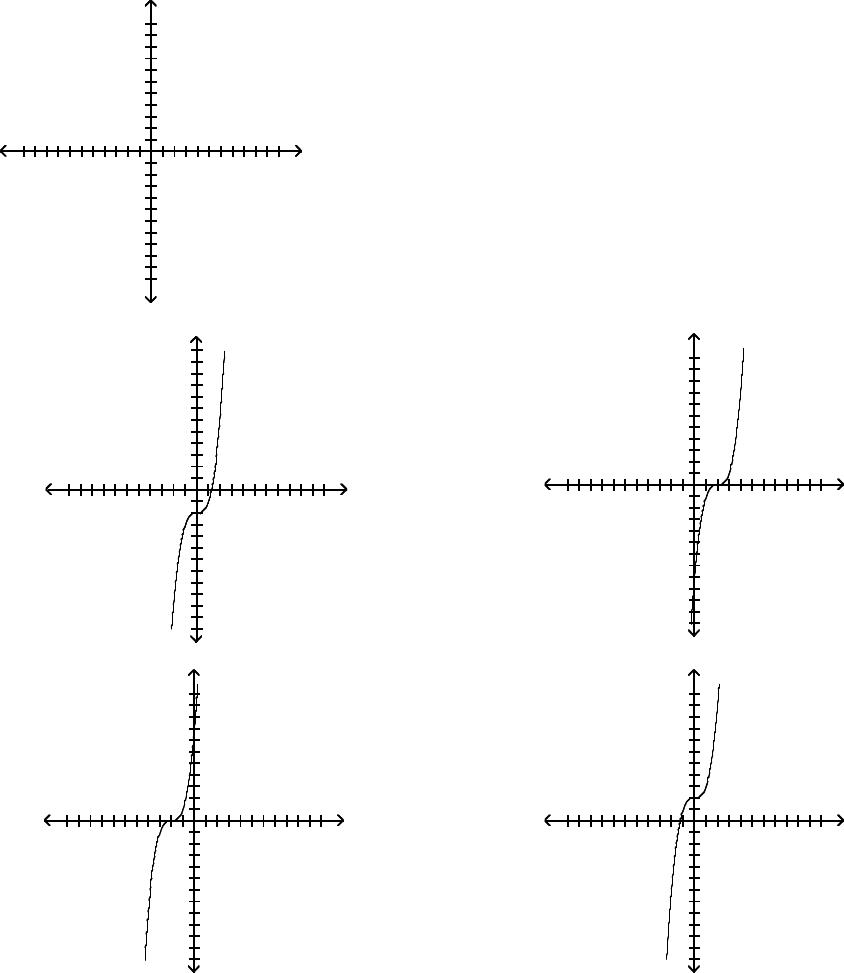
19) f(x) = x3 – 2
x
-10 -5 5 10
y
10
5
-5
-10
x
-10 -5 5 10
y
10
5
-5
-10
A)
x
-10 -5 5 10
y
10
5
-5
-10
x
-10 -5 5 10
y
10
5
-5
-10
B)
x
-10 -5 5 10
y
10
5
-5
-10
x
-10 -5 5 10
y
10
5
-5
-10
C)
x
-10 -5 5 10
y
10
5
-5
-10
x
-10 -5 5 10
y
10
5
-5
-10
D)
x
-10 -5 5 10
y
10
5
-5
-10
x
-10 -5 5 10
y
10
5
-5
-10
Page 70
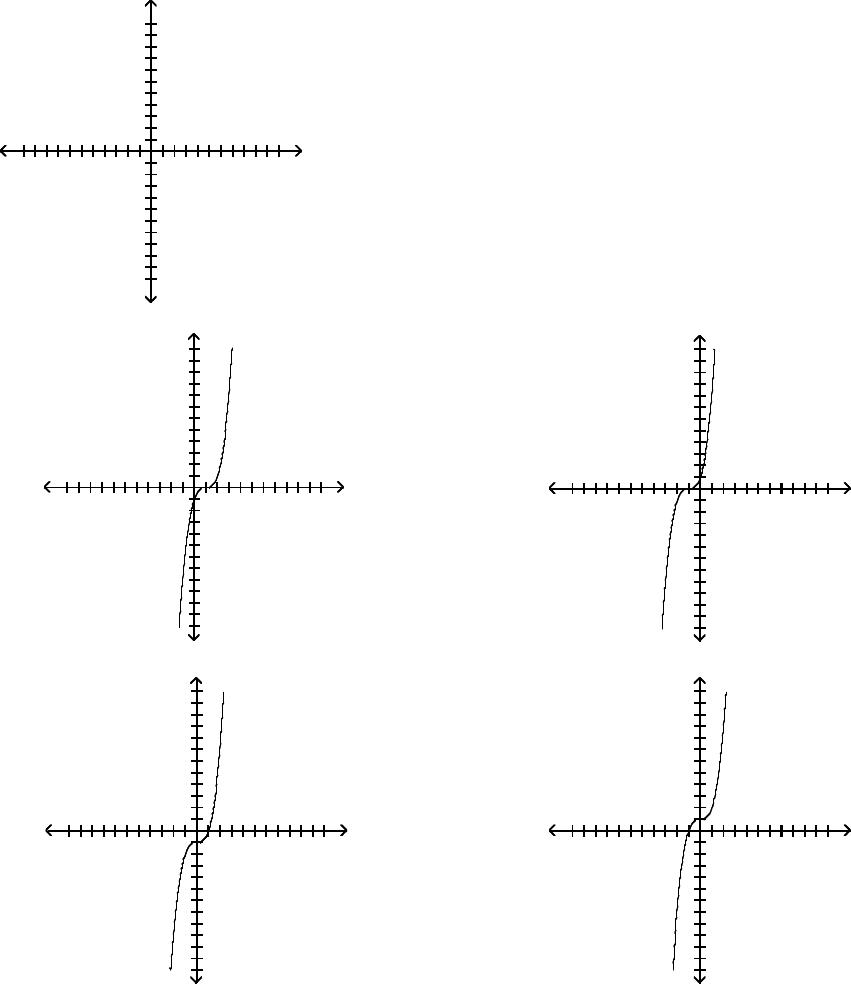
20) f(x) = (x – 1)3
x
-10 -5 5 10
y
10
5
-5
-10
x
-10 -5 5 10
y
10
5
-5
-10
A)
x
-10 -5 5 10
y
10
5
-5
-10
x
-10 -5 5 10
y
10
5
-5
-10
B)
x
-10 -5 5 10
y
10
5
-5
-10
x
-10 -5 5 10
y
10
5
-5
-10
C)
x
-10 -5 5 10
y
10
5
-5
-10
x
-10 -5 5 10
y
10
5
-5
-10
D)
x
-10 -5 5 10
y
10
5
-5
-10
x
-10 -5 5 10
y
10
5
-5
-10
Page 71
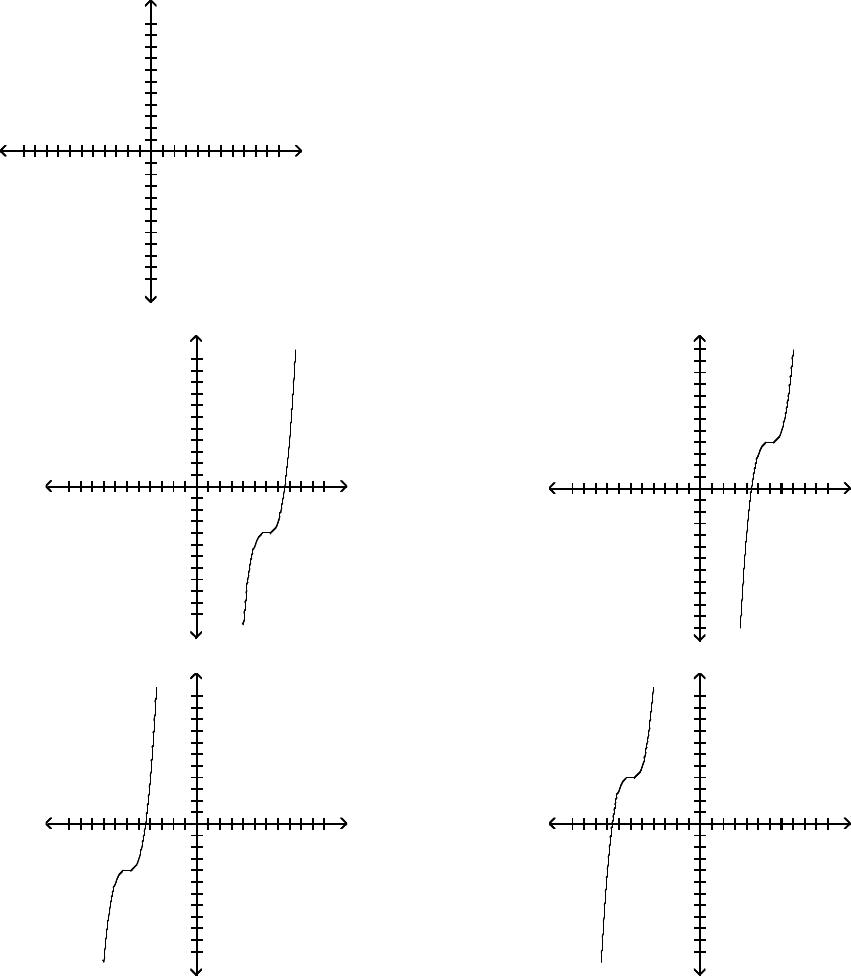
21) f(x) = (x – 6)3 – 4
x
-10 -5 5 10
y
10
5
-5
-10
x
-10 -5 5 10
y
10
5
-5
-10
A)
x
-10 -5 5 10
y
10
5
-5
-10
x
-10 -5 5 10
y
10
5
-5
-10
B)
x
-10 -5 5 10
y
10
5
-5
-10
x
-10 -5 5 10
y
10
5
-5
-10
C)
x
-10 -5 5 10
y
10
5
-5
-10
x
-10 -5 5 10
y
10
5
-5
-10
D)
x
-10 -5 5 10
y
10
5
-5
-10
x
-10 -5 5 10
y
10
5
-5
-10
Page 72
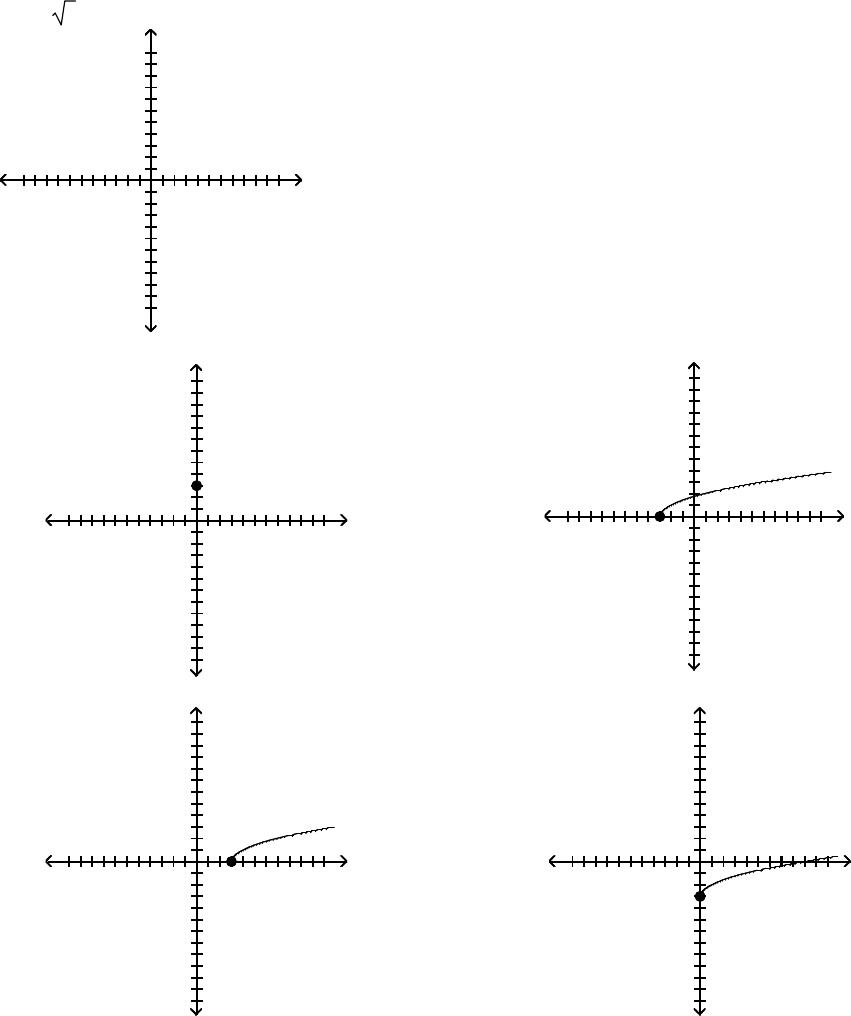
22) f(x) = x + 3
x
-10 -5 5 10
y
10
5
-5
-10
x
-10 -5 5 10
y
10
5
-5
-10
A)
x
-10 -5 5 10
y
10
5
-5
-10
x
-10 -5 5 10
y
10
5
-5
-10
B)
x
-10 -5 5 10
y
10
5
-5
-10
x
-10 -5 5 10
y
10
5
-5
-10
C)
x
-10 -5 5 10
y
10
5
-5
-10
x
-10 -5 5 10
y
10
5
-5
-10
D)
x
-10 -5 5 10
y
10
5
-5
-10
x
-10 -5 5 10
y
10
5
-5
-10
Page 73
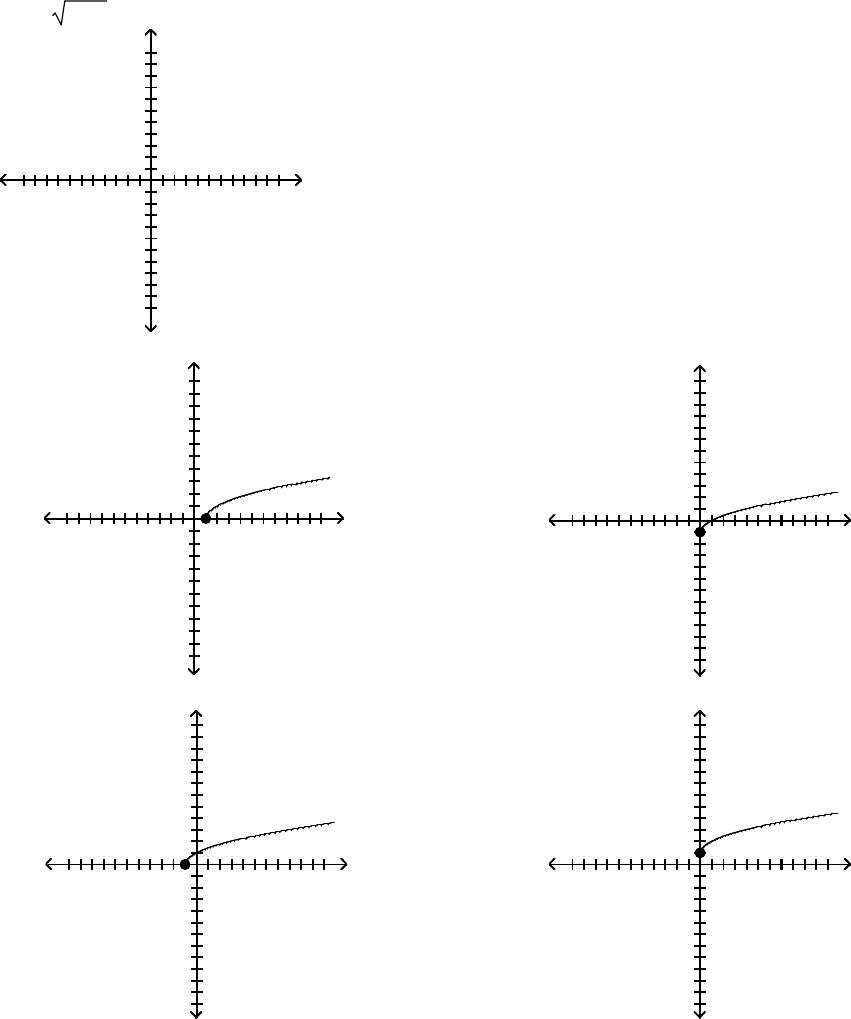
23) f(x) = x
– 1
x
-10 -5 5 10
y
10
5
-5
-10
x
-10 -5 5 10
y
10
5
-5
-10
A)
x
-10 -5 5 10
y
10
5
-5
-10
x
-10 -5 5 10
y
10
5
-5
-10
B)
x
-10 -5 5 10
y
10
5
-5
-10
x
-10 -5 5 10
y
10
5
-5
-10
C)
x
-10 -5 5 10
y
10
5
-5
-10
x
-10 -5 5 10
y
10
5
-5
-10
D)
x
-10 -5 5 10
y
10
5
-5
-10
x
-10 -5 5 10
y
10
5
-5
-10
Page 74
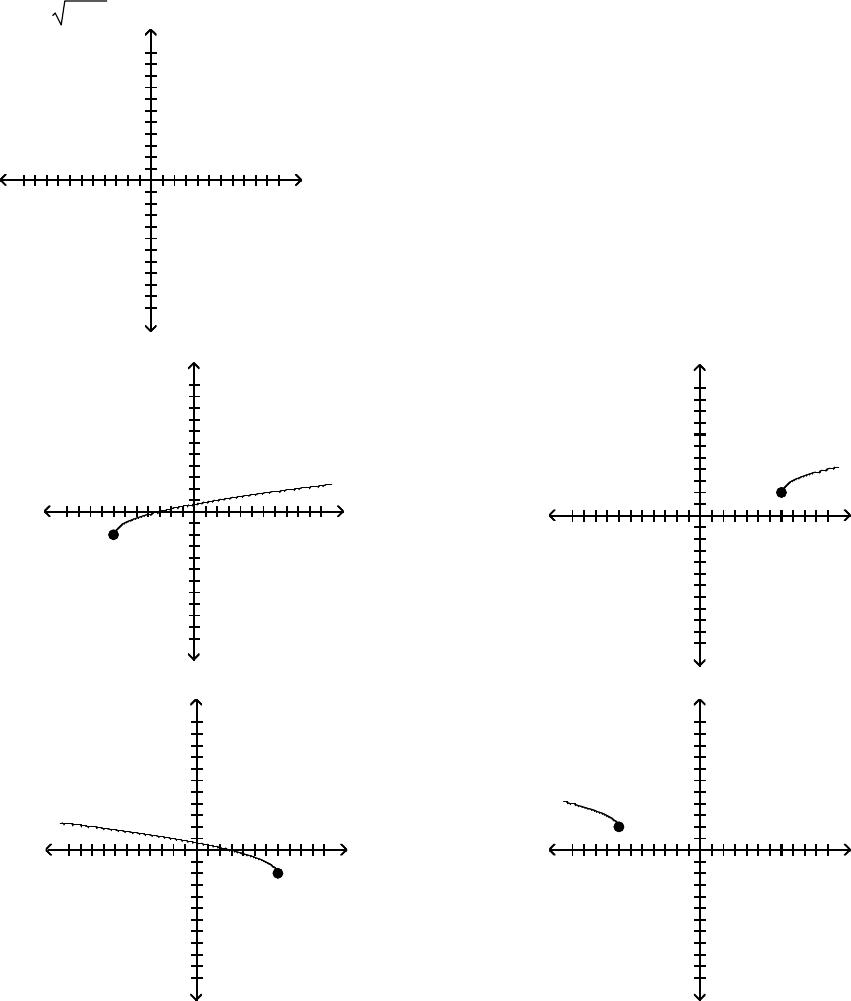
24) f(x) = x
+ 7 – 2
x
-10 -5 5 10
y
10
5
-5
-10
x
-10 -5 5 10
y
10
5
-5
-10
A)
x
-10 -5 5 10
y
10
5
-5
-10
x
-10 -5 5 10
y
10
5
-5
-10
B)
x
-10 -5 5 10
y
10
5
-5
-10
x
-10 -5 5 10
y
10
5
-5
-10
C)
x
-10 -5 5 10
y
10
5
-5
-10
x
-10 -5 5 10
y
10
5
-5
-10
D)
x
-10 -5 5 10
y
10
5
-5
-10
x
-10 -5 5 10
y
10
5
-5
-10
Page 75
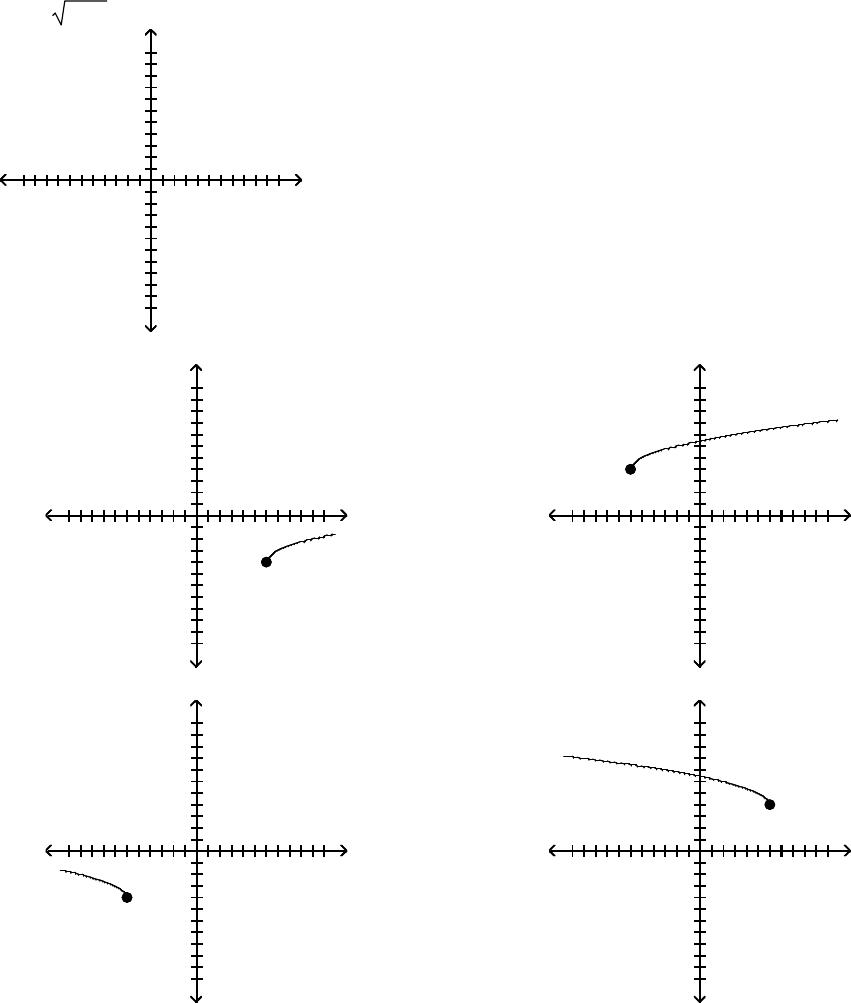
25) f(x) = x
– 6 – 4
x
-10 -5 5 10
y
10
5
-5
-10
x
-10 -5 5 10
y
10
5
-5
-10
A)
x
-10 -5 5 10
y
10
5
-5
-10
x
-10 -5 5 10
y
10
5
-5
-10
B)
x
-10 -5 5 10
y
10
5
-5
-10
x
-10 -5 5 10
y
10
5
-5
-10
C)
x
-10 -5 5 10
y
10
5
-5
-10
x
-10 -5 5 10
y
10
5
-5
-10
D)
x
-10 -5 5 10
y
10
5
-5
-10
x
-10 -5 5 10
y
10
5
-5
-10
Page 76
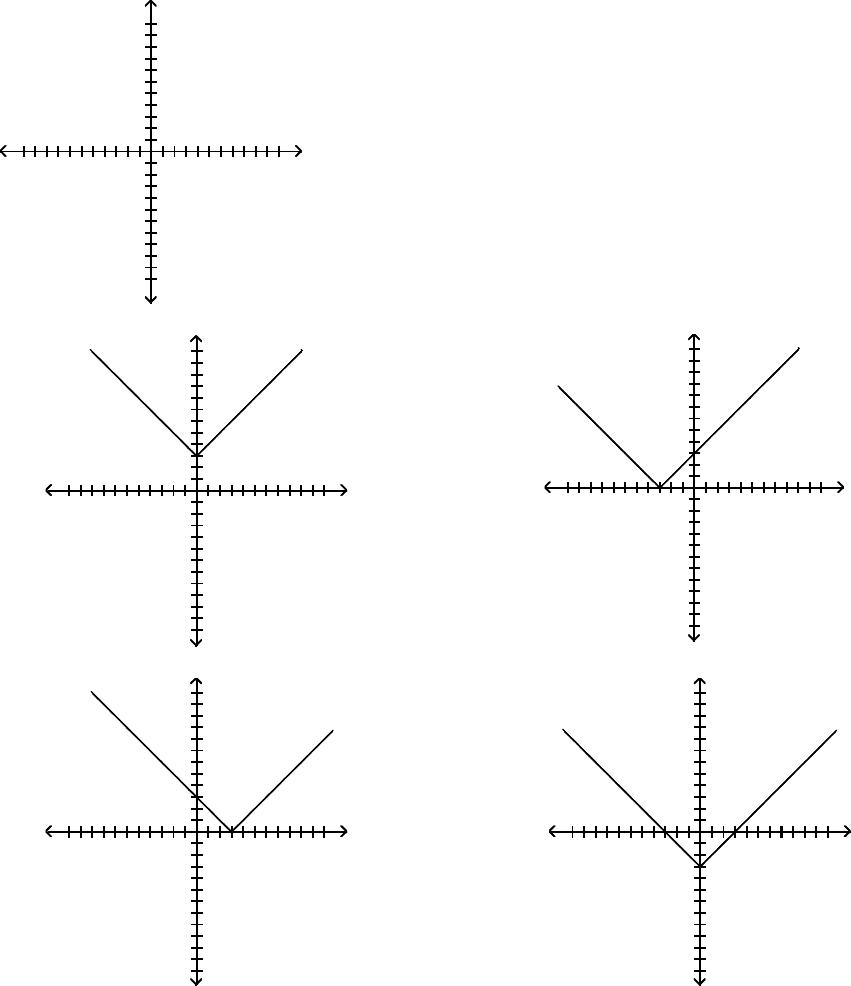
26) f(x) = |x| + 3
x
-10 -5 5 10
y
10
5
-5
-10
x
-10 -5 5 10
y
10
5
-5
-10
A)
x
-10 -5 5 10
y
10
5
-5
-10
x
-10 -5 5 10
y
10
5
-5
-10
B)
x
-10 -5 5 10
y
10
5
-5
-10
x
-10 -5 5 10
y
10
5
-5
-10
C)
x
-10 -5 5 10
y
10
5
-5
-10
x
-10 -5 5 10
y
10
5
-5
-10
D)
x
-10 -5 5 10
y
10
5
-5
-10
x
-10 -5 5 10
y
10
5
-5
-10
Page 77
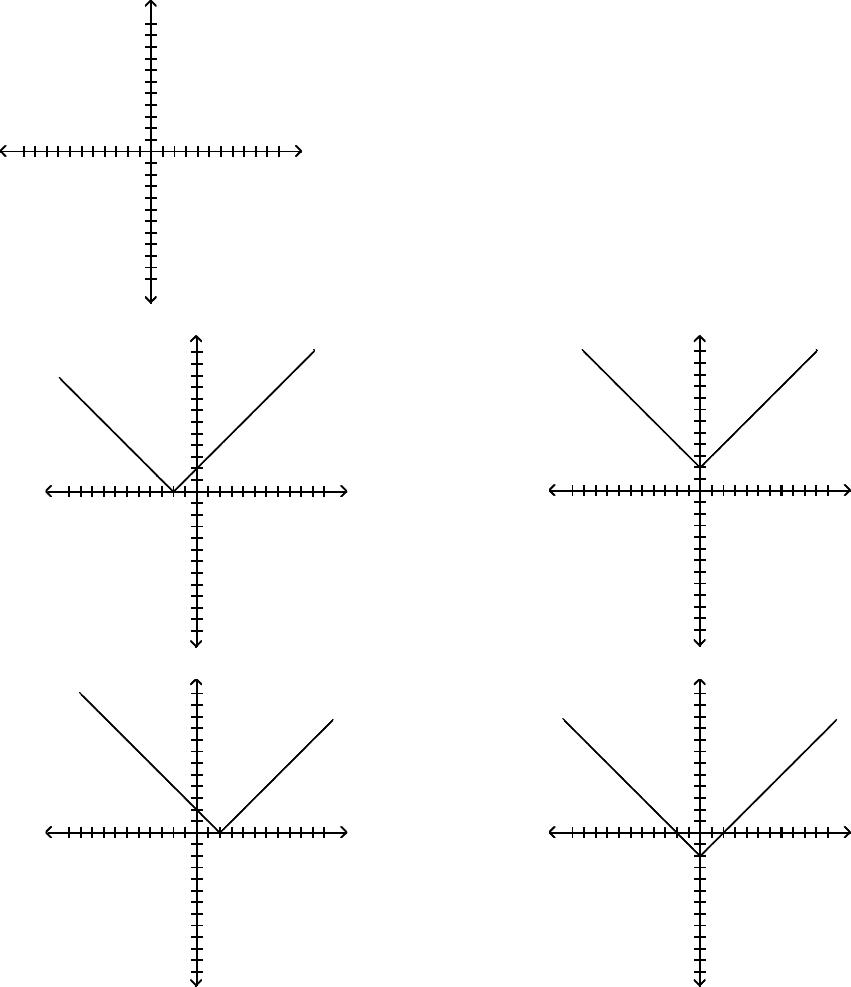
27) f(x) = |x + 2|
x
-10 -5 5 10
y
10
5
-5
-10
x
-10 -5 5 10
y
10
5
-5
-10
A)
x
-10 -5 5 10
y
10
5
-5
-10
x
-10 -5 5 10
y
10
5
-5
-10
B)
x
-10 -5 5 10
y
10
5
-5
-10
x
-10 -5 5 10
y
10
5
-5
-10
C)
x
-10 -5 5 10
y
10
5
-5
-10
x
-10 -5 5 10
y
10
5
-5
-10
D)
x
-10 -5 5 10
y
10
5
-5
-10
x
-10 -5 5 10
y
10
5
-5
-10
Page 78
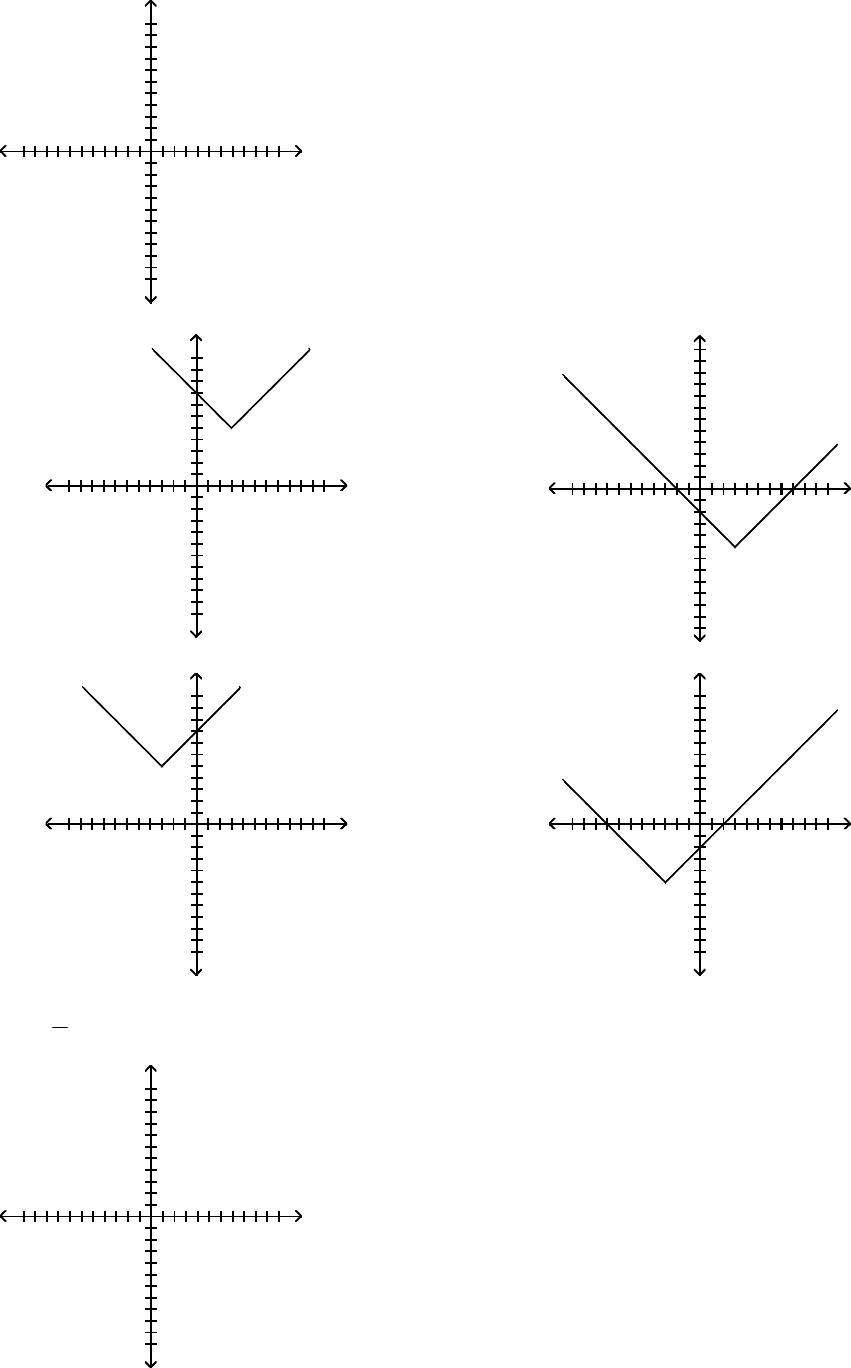
28) f(x) = |x – 3| + 5
x
-10 -5 5 10
y
10
5
-5
-10
x
-10 -5 5 10
y
10
5
-5
-10
A)
x
-10 -5 5 10
y
10
5
-5
-10
x
-10 -5 5 10
y
10
5
-5
-10
B)
x
-10 -5 5 10
y
10
5
-5
-10
x
-10 -5 5 10
y
10
5
-5
-10
C)
x
-10 -5 5 10
y
10
5
-5
-10
x
-10 -5 5 10
y
10
5
-5
-10
D)
x
-10 -5 5 10
y
10
5
-5
-10
x
-10 -5 5 10
y
10
5
-5
-10
29) f(x) = 1
x – 3
x
-10 -5 5 10
y
10
5
-5
-10
x
-10 -5 5 10
y
10
5
-5
-10
Page 79
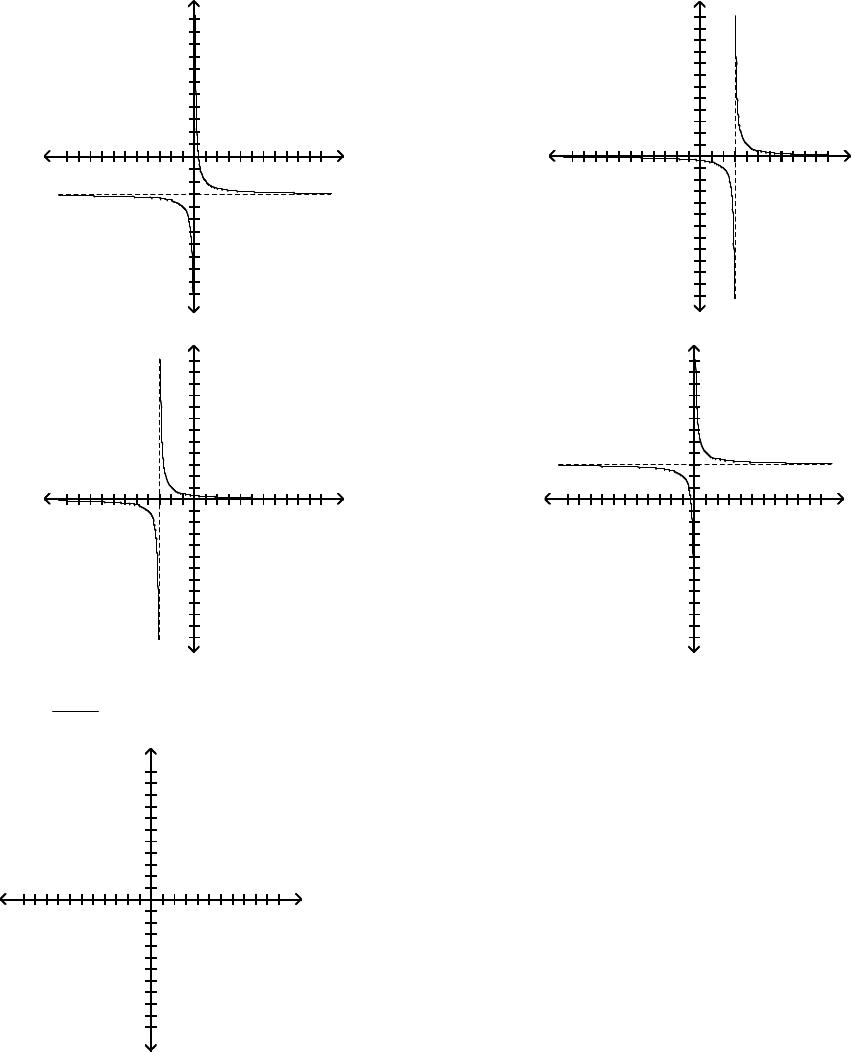
A)
x
-10 -5 5 10
y
10
5
-5
-10
x
-10 -5 5 10
y
10
5
-5
-10
B)
x
-10 -5 5 10
y
10
5
-5
-10
x
-10 -5 5 10
y
10
5
-5
-10
C)
x
-10 -5 5 10
y
10
5
-5
-10
x
-10 -5 5 10
y
10
5
-5
-10
D)
x
-10 -5 5 10
y
10
5
-5
-10
x
-10 -5 5 10
y
10
5
-5
-10
30) f(x) = 1
x + 4
x
-10 -5 5 10
y
10
5
-5
-10
x
-10 -5 5 10
y
10
5
-5
-10
Page 80
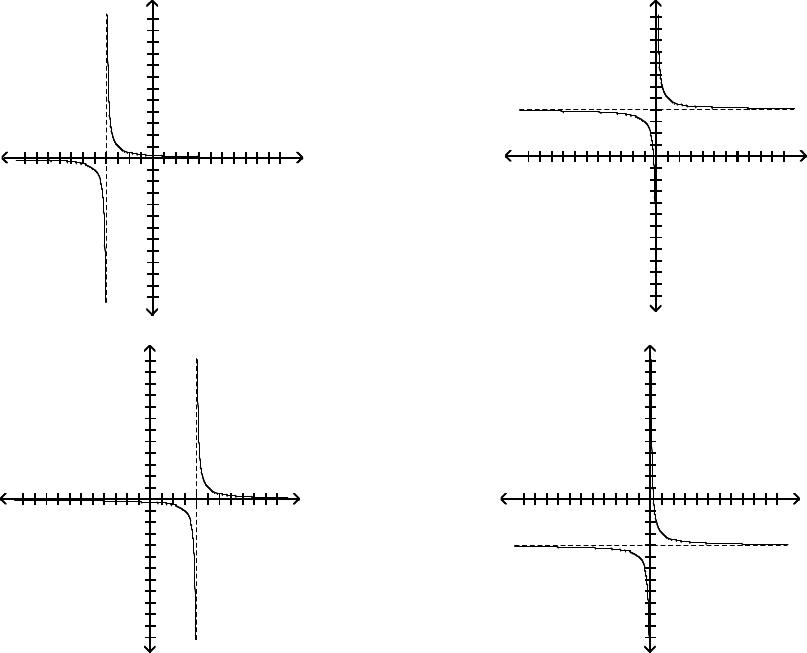
A)
x
-10 -5 5 10
y
10
5
-5
-10
x
-10 -5 5 10
y
10
5
-5
-10
B)
x
-10 -5 5 10
y
10
5
-5
-10
x
-10 -5 5 10
y
10
5
-5
-10
C)
x
-10 -5 5 10
y
10
5
-5
-10
x
-10 -5 5 10
y
10
5
-5
-10
D)
x
-10 -5 5 10
y
10
5
-5
-10
x
-10 -5 5 10
y
10
5
-5
-10
Page 81
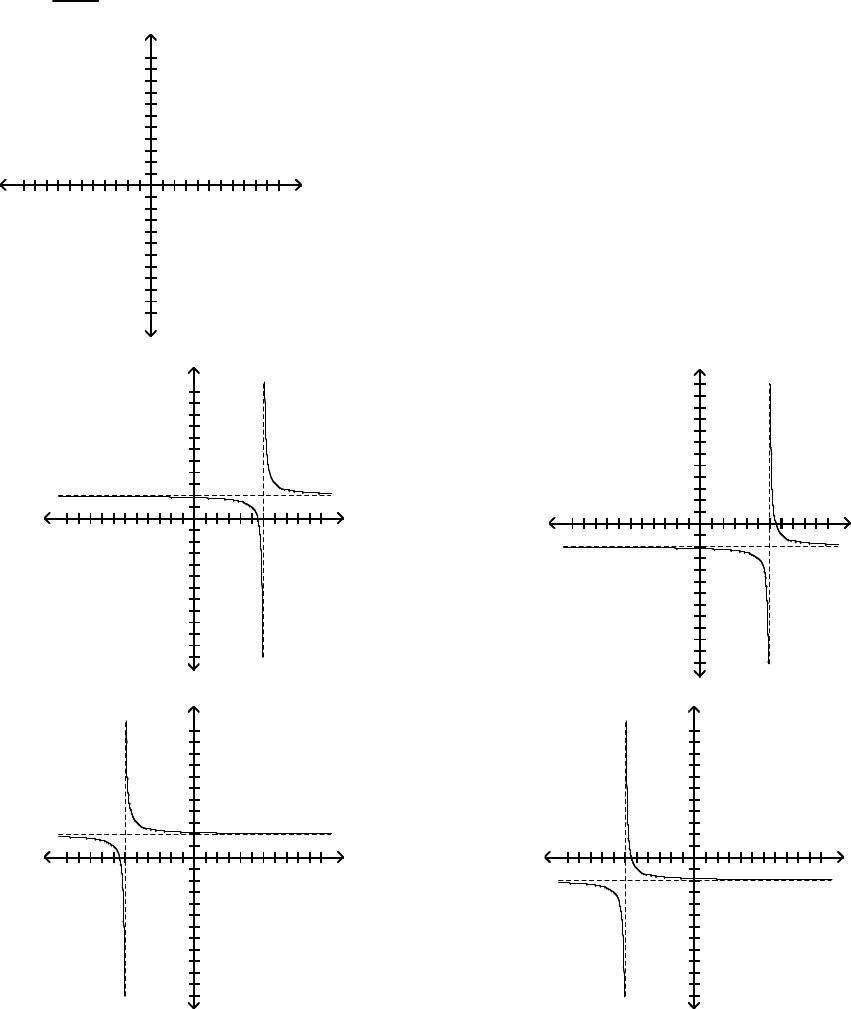
31) f(x) = 1
x – 6 + 2
x
-10 -5 5 10
y
10
5
-5
-10
x
-10 -5 5 10
y
10
5
-5
-10
A)
x
-10 -5 5 10
y
10
5
-5
-10
x
-10 -5 5 10
y
10
5
-5
-10
B)
x
-10 -5 5 10
y
10
5
-5
-10
x
-10 -5 5 10
y
10
5
-5
-10
C)
x
-10 -5 5 10
y
10
5
-5
-10
x
-10 -5 5 10
y
10
5
-5
-10
D)
x
-10 -5 5 10
y
10
5
-5
-10
x
-10 -5 5 10
y
10
5
-5
-10
Page 82
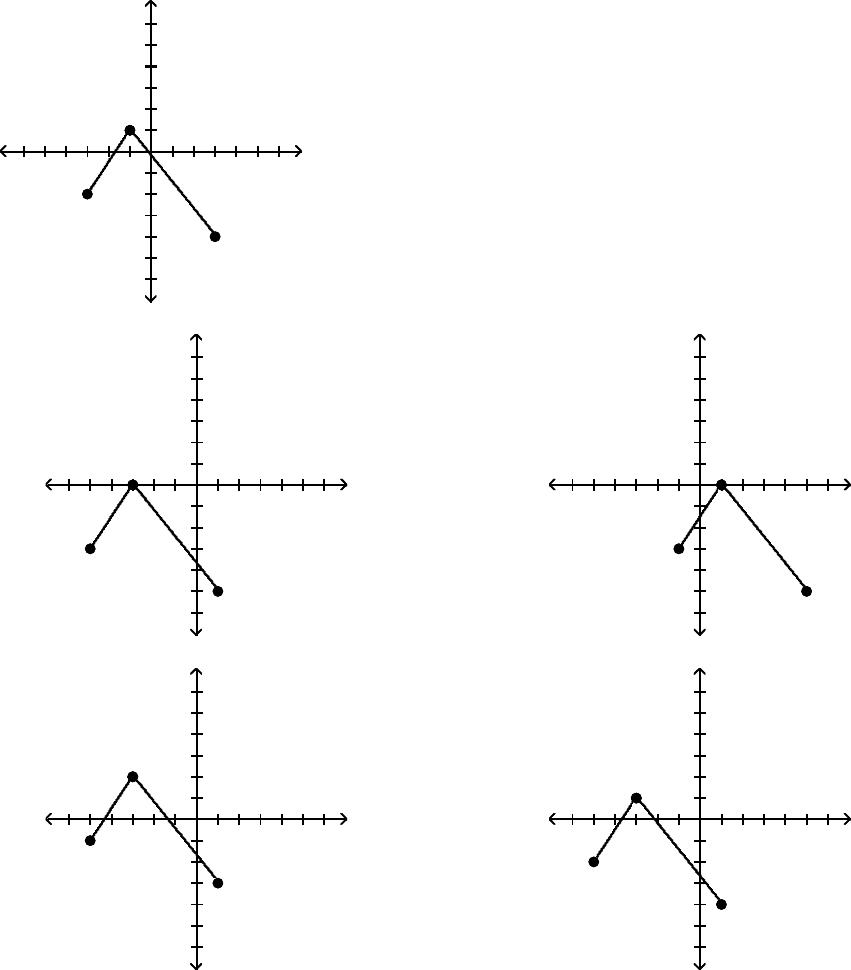
Using transformations, sketch the graph of the requested function.
32) The graph of a function f is illustrated. Use the graph of f as the first step toward graphing the function
F(x), where F(x) = f(x + 2) – 1.
x
-5 5
y
5
-5
(-3, –2)
(-1, 1)
(3, –4)
x
-5 5
y
5
-5
(-3, –2)
(-1, 1)
(3, –4)
A)
x
-5 5
y
5
-5
(-5, –3)
(-3, 0)
(1, –5)
x
-5 5
y
5
-5
(-5, –3)
(-3, 0)
(1, –5)
B)
x
-5 5
y
5
-5
(-1, –3)
(1, 0)
(5, –5
)
x
-5 5
y
5
-5
(-1, –3)
(1, 0)
(5, –5
)
C)
x
-5 5
y
5
-5
(-5, –1)
(-3, 2)
(1, –3)
x
-5 5
y
5
-5
(-5, –1)
(-3, 2)
(1, –3)
D)
x
-5 5
y
5
-5
(-5, –2)
(-3, 1)(-3, 1)
(1, –4)
x
-5 5
y
5
-5
(-5, –2)
(-3, 1)(-3, 1)
(1, –4)
Page 83
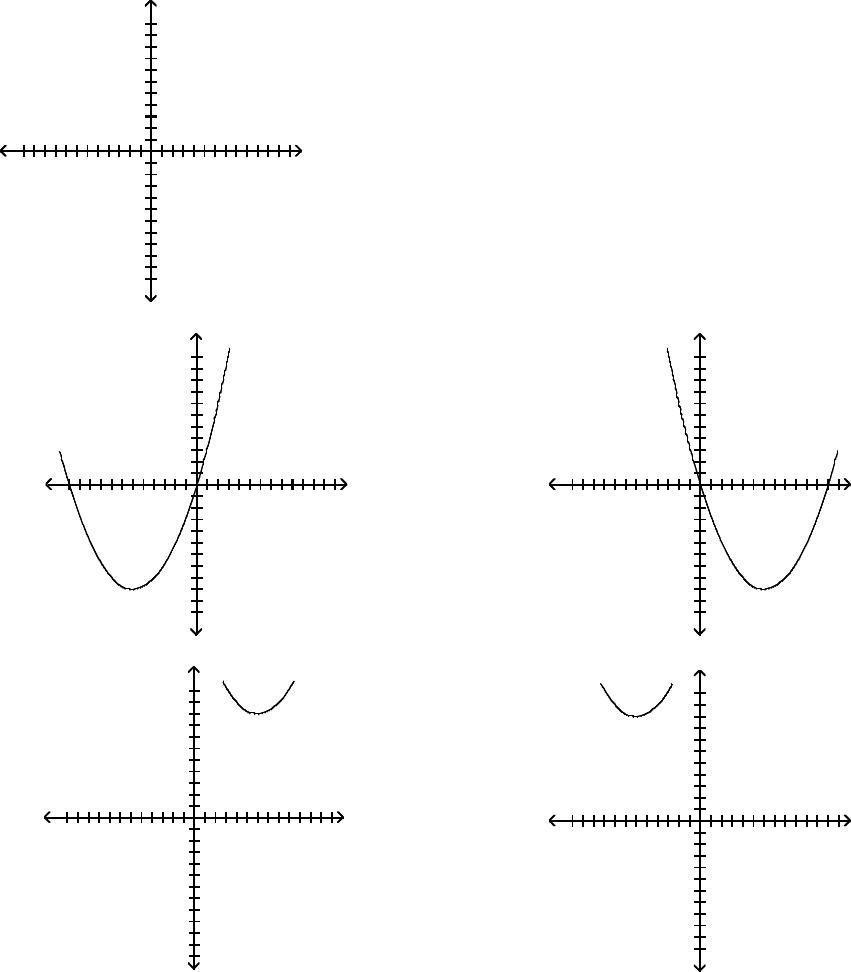
Complete the square and then use the shifting technique to graph the function.
33) f(x) = x2 + 12x
x
-10 -5 5 10
y
40
20
-20
-40
x
-10 -5 5 10
y
40
20
-20
-40
A)
x
-10 -5 5 10
y
40
20
-20
-40
x
-10 -5 5 10
y
40
20
-20
-40
B)
x
-10 -5 5 10
y
40
20
-20
-40
x
-10 -5 5 10
y
40
20
-20
-40
C)
x
-10 -5 5 10
y
40
20
-20
-40
x
-10 -5 5 10
y
40
20
-20
-40
D)
x
-10 -5 5 10
y
40
20
-20
-40
x
-10 -5 5 10
y
40
20
-20
-40
Page 84
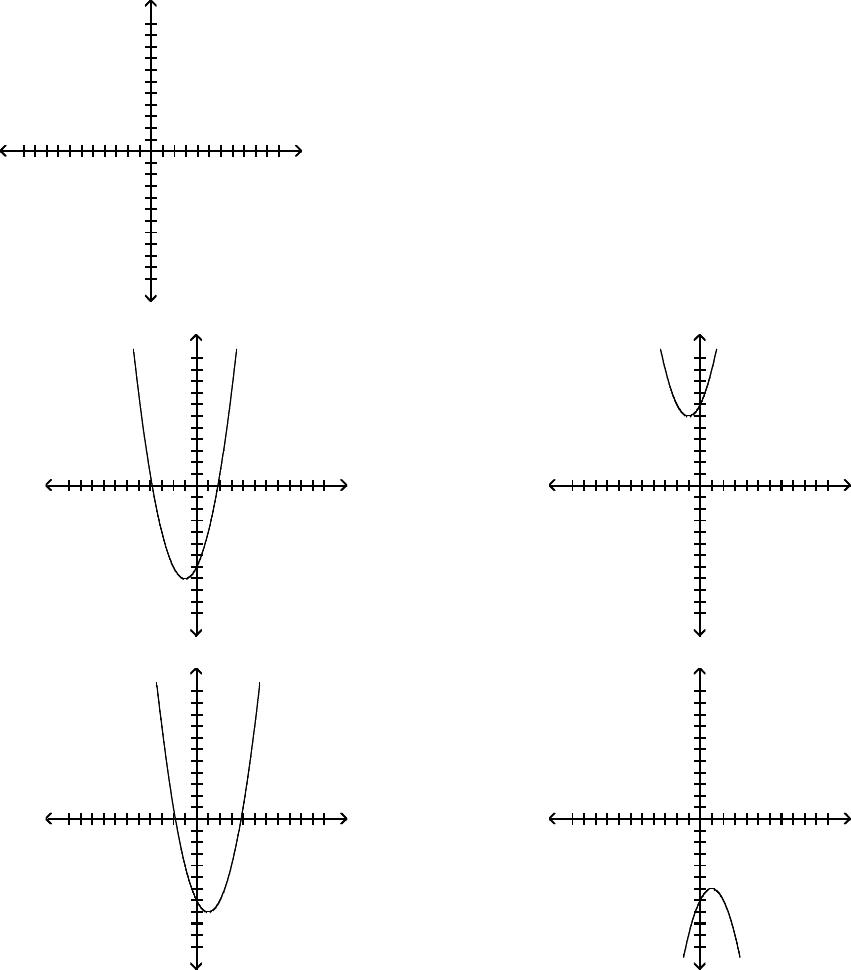
34) f(x) = x2 + 2x – 7
x
-10 -5 5 10
y
10
5
-5
-10
x
-10 -5 5 10
y
10
5
-5
-10
A)
x
-10 -5 5 10
y
10
5
-5
-10
x
-10 -5 5 10
y
10
5
-5
-10
B)
x
-10 -5 5 10
y
10
5
-5
-10
x
-10 -5 5 10
y
10
5
-5
-10
C)
x
-10 -5 5 10
y
10
5
-5
-10
x
-10 -5 5 10
y
10
5
-5
-10
D)
x
-10 -5 5 10
y
10
5
-5
-10
x
-10 -5 5 10
y
10
5
-5
-10
Page 85
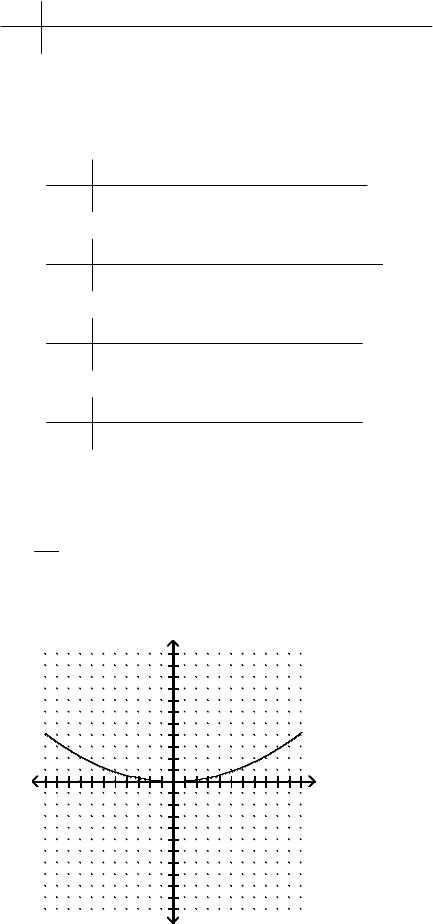
Solve the problem.
35) The following numerical representation for f computes the average number of hours of television watched
per day based on year of birth x.
x 1975 1980 1983 1988 1990 1992 1995
f(x) 2 2.5 3 3.5 4 3.5 4
Give a numerical representation for a function g that computes the average number of hours of television
watched per day for the year x, where x = 0 corresponds to the birth year 1975. Write an equation that
shows the relationship between f(x) and g(x).
A) x 05 813151720
g(x) 2 2.5 3 3.5 4 3.5 4 ; f(x) = g(x – 1975)
B) x 75 80 83 88 90 92 95
g(x) 2 2.5 3 3.5 4 3.5 4 ; f(x) = g(x – 1900)
C) x 05 813151720
g(x) 2 2.5 3 3.5 4 3.5 4 ; f(x) = g(x + 1975)
D) x 05 813151720
g(x) 2 2.5 3 3.5 4 3.5 4 ; f(x) = g(x) – 1975
36) Suppose a cold front is passing through the United States at noon with a shape described by the function
y = 1
29x2, where each unit represents 100 miles. St. Louis, Missouri is located at (0, 0), and the positive
y–axis points north.
N
W
-10 -5 5 10
10
5
-5
-10
-10 -5 5 10
10
5
-5
-10
E
S
Suppose the front moves south 340 miles and west 120 miles and maintains its shape. Give the equation
for the new front and plot the new position of the front.
Page 86
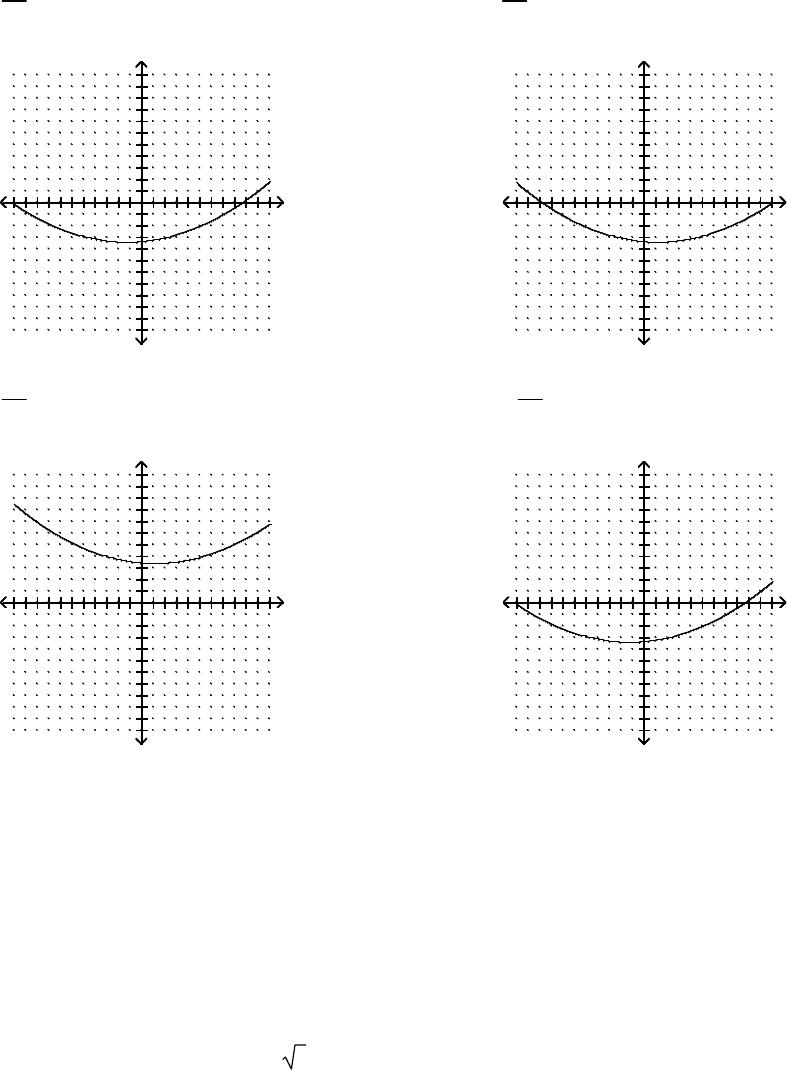
A) y = 1
29(x + 1.2)2– 3.4
N
W
-10 -5 5 10
10
5
-5
-10
-10 -5 5 10
10
5
-5
-10
E
S
B) y = 1
29(x – 1.2)2– 3.4
N
W
-10 -5 5 10
10
5
-5
-10
-10 -5 5 10
10
5
-5
-10
E
S
C) y = 1
29(x – 1.2)2+ 3.4
N
W
-10 -5 5 10
10
5
-5
-10
-10 -5 5 10
10
5
-5
-10
E
S
D) y = – 1
29(x + 1.2)2– 3.4
N
W
-10 -5 5 10
10
5
-5
-10
-10 -5 5 10
10
5
-5
-10
E
S
2 Graph Functions Using Compressions and Stretches
MULTIPLE CHOICE. Choose the one alternative that best completes the statement or answers the question.
Write the equation that results in the desired transformation.
1) The graph of y = x2, vertically stretched by a factor of 7
A) y = 7x2B) y = –7x2C) y = (x – 7)2D) y = 7(x – 7)x2
2) The graph of y = x3, vertically compressed by a factor of 0.7
A) y = 0.7x3B) y = 0.7 3x C) y = (x – 0.7)3D) y = (x + 0.7)3
Suppose the point (2, 4) is on the graph of y =f(x). Find a point on the graph of the given function.
3) y = 4f(x)
A) (2, 16) B) (8
,
4) C) (3
,
8) D) (5
,
3)
Solve the problem.
4) Suppose that the x–intercepts of the graph of y =f(x) are 7 and 2. What are the x–intercepts o
f
y = 9f(x)?
A) 7 and 2 B) –2 and –7 C) 16 and 11 D) 14 and 18
Page 87
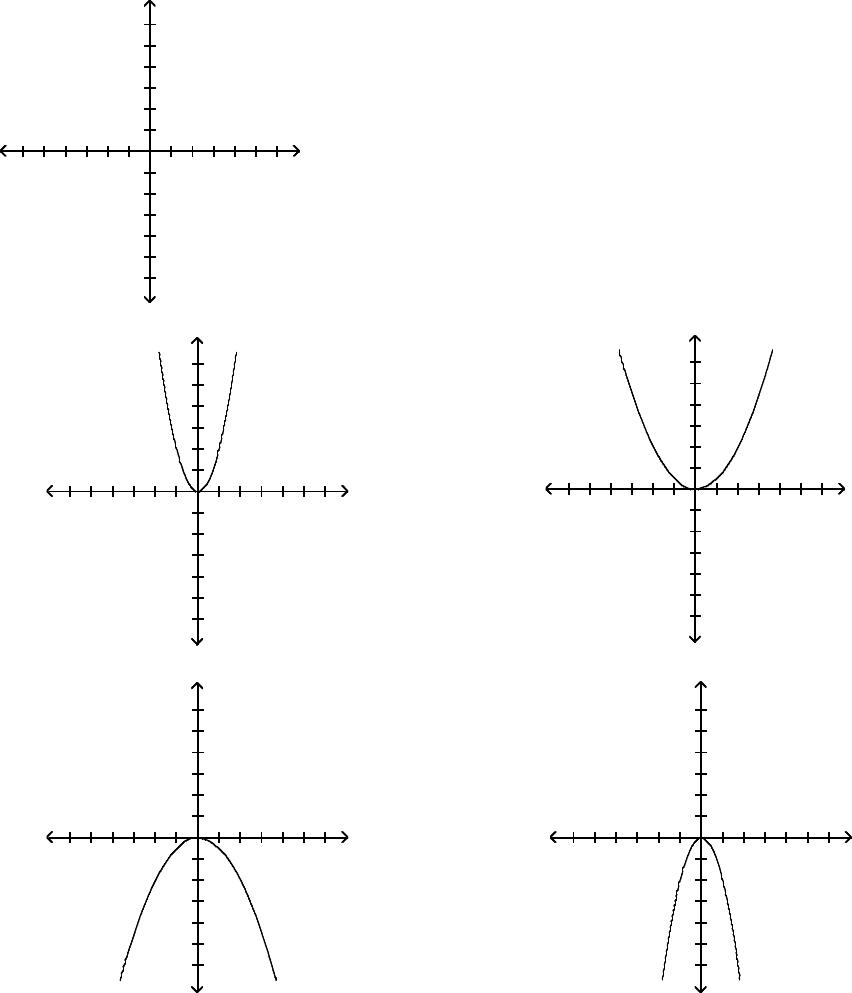
Graph the function by starting with the graph of the basic function and then using the techniques of shifting,
compressing, stretching, and/or reflecting.
5) f(x) = 2x2
x
-5 5
y
5
-5
x
-5 5
y
5
-5
A)
x
-5 5
y
5
-5
x
-5 5
y
5
-5
B)
x
-5 5
y
5
-5
x
-5 5
y
5
-5
C)
x
-5 5
y
5
-5
x
-5 5
y
5
-5
D)
x
-5 5
y
5
-5
x
-5 5
y
5
-5
Page 88
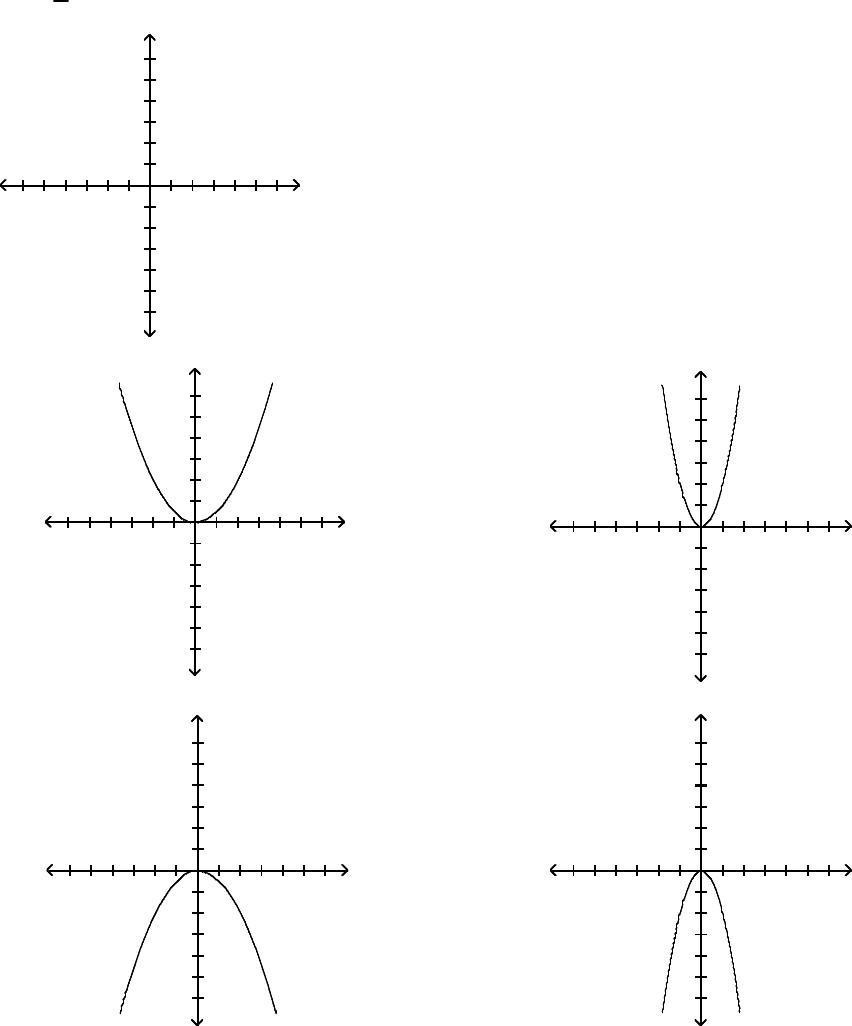
6) f(x) = 1
2x2
x
-5 5
y
5
-5
x
-5 5
y
5
-5
A)
x
-5 5
y
5
-5
x
-5 5
y
5
-5
B)
x
-5 5
y
5
-5
x
-5 5
y
5
-5
C)
x
-5 5
y
5
-5
x
-5 5
y
5
-5
D)
x
-5 5
y
5
-5
x
-5 5
y
5
-5
Page 89
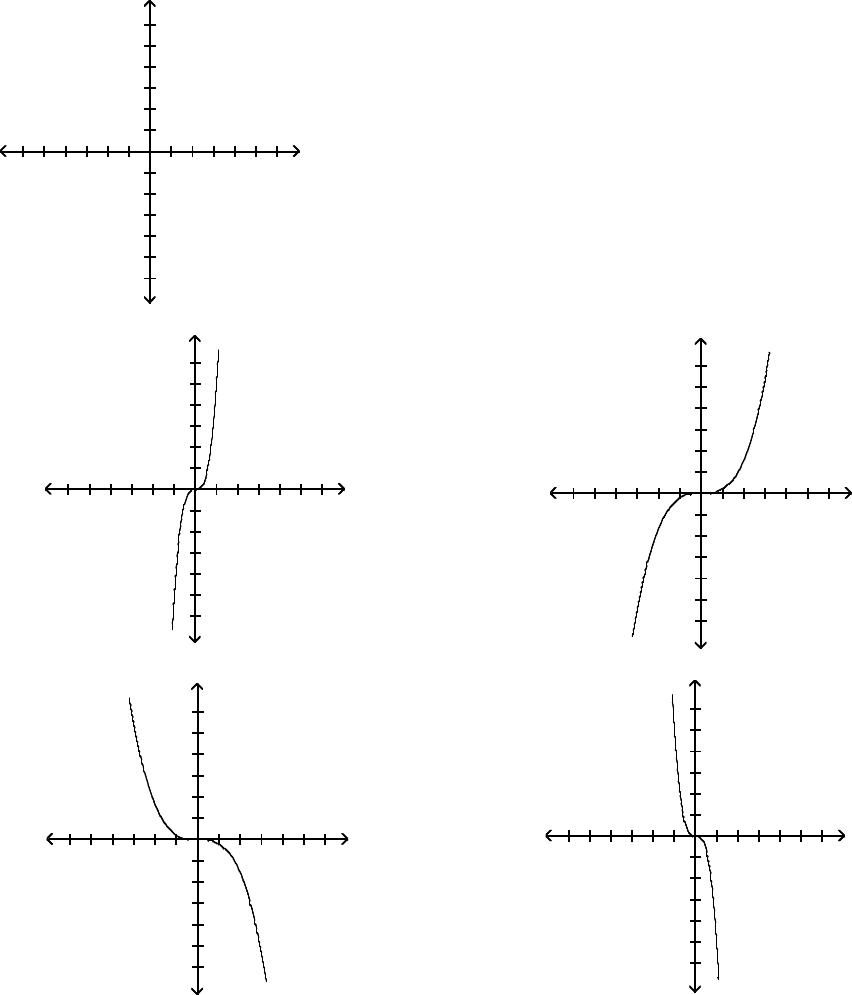
7) f(x) = 5x3
x
-5 5
y
5
-5
x
-5 5
y
5
-5
A)
x
-5 5
y
5
-5
x
-5 5
y
5
-5
B)
x
-5 5
y
5
-5
x
-5 5
y
5
-5
C)
x
-5 5
y
5
-5
x
-5 5
y
5
-5
D)
x
-5 5
y
5
-5
x
-5 5
y
5
-5
Page 90
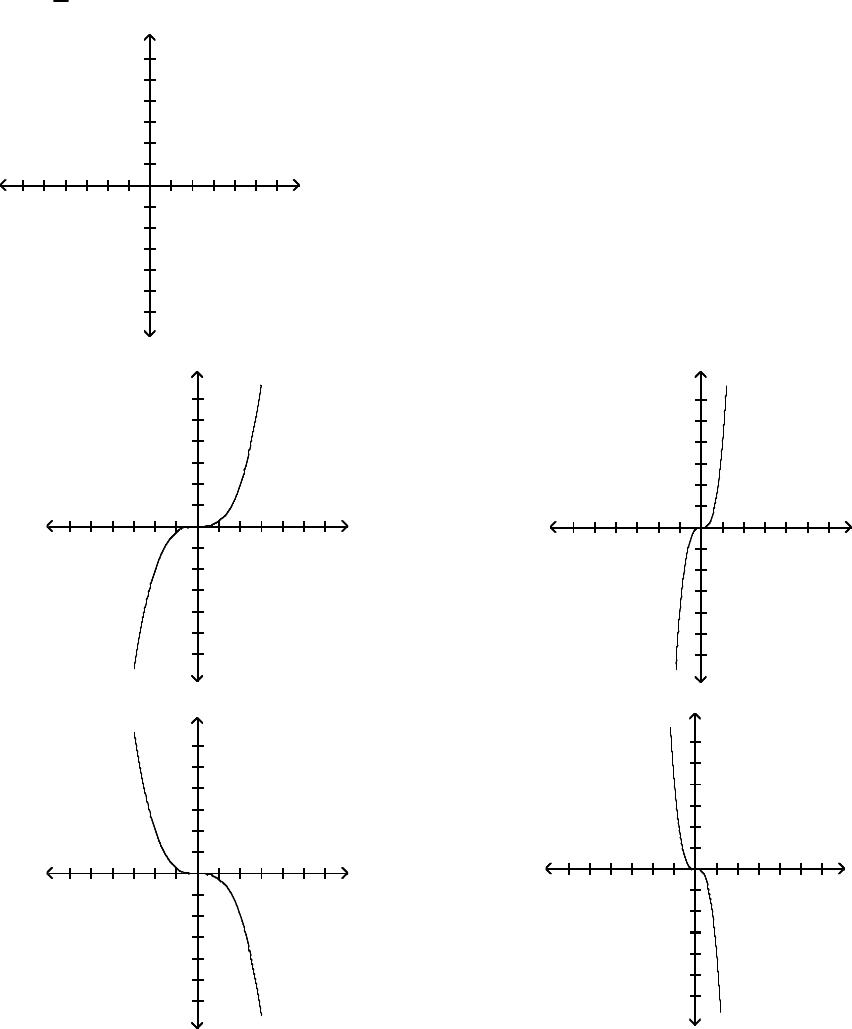
8) f(x) = 1
4x3
x
-5 5
y
5
-5
x
-5 5
y
5
-5
A)
x
-5 5
y
5
-5
x
-5 5
y
5
-5
B)
x
-5 5
y
5
-5
x
-5 5
y
5
-5
C)
x
-5 5
y
5
-5
x
-5 5
y
5
-5
D)
x
-5 5
y
5
-5
x
-5 5
y
5
-5
Page 91
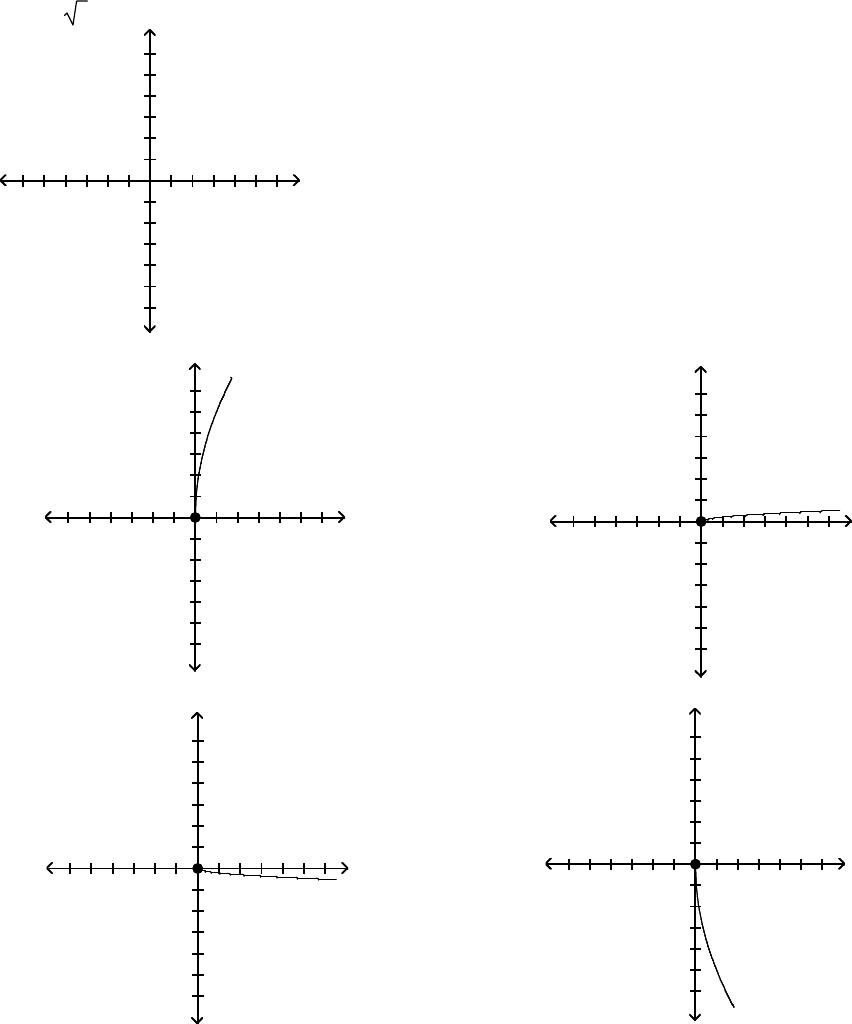
9) f(x) = 5x
x
-5 5
y
5
-5
x
-5 5
y
5
-5
A)
x
-5 5
y
5
-5
x
-5 5
y
5
-5
B)
x
-5 5
y
5
-5
x
-5 5
y
5
-5
C)
x
-5 5
y
5
-5
x
-5 5
y
5
-5
D)
x
-5 5
y
5
-5
x
-5 5
y
5
-5
Page 92
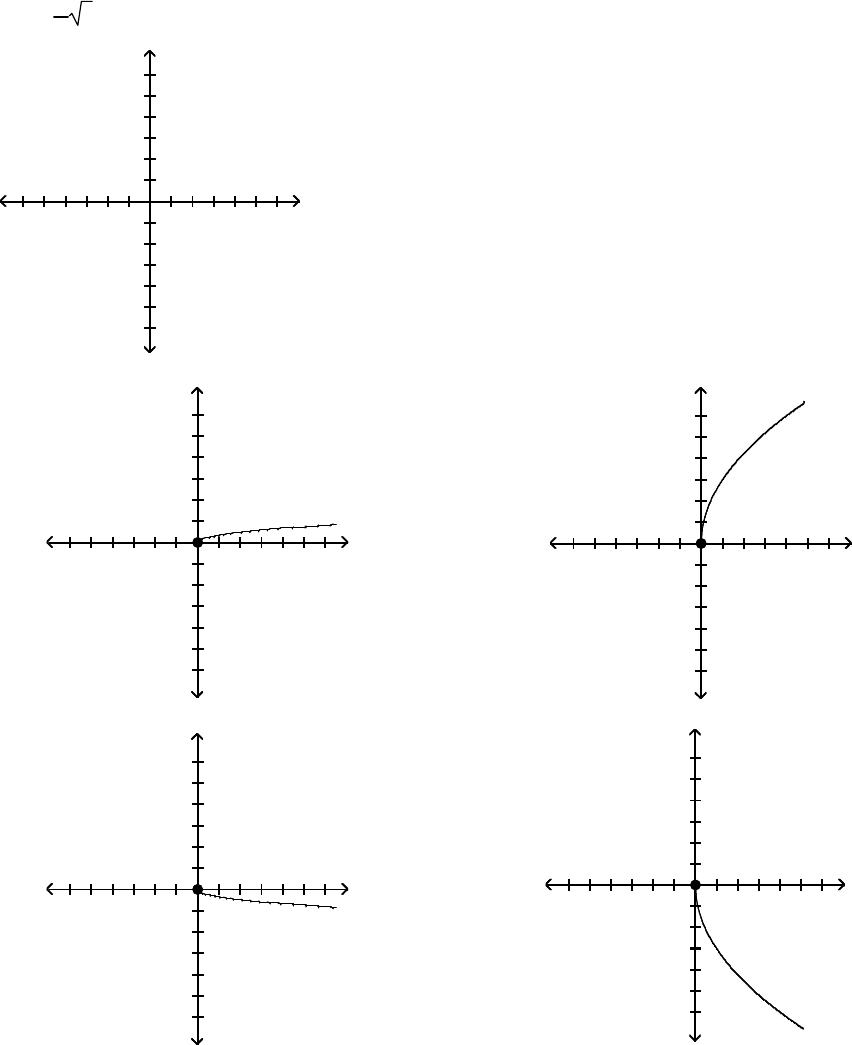
10) f(x) = 1
3x
x
-5 5
y
5
-5
x
-5 5
y
5
-5
A)
x
-5 5
y
5
-5
x
-5 5
y
5
-5
B)
x
-5 5
y
5
-5
x
-5 5
y
5
-5
C)
x
-5 5
y
5
-5
x
-5 5
y
5
-5
D)
x
-5 5
y
5
-5
x
-5 5
y
5
-5
Page 93
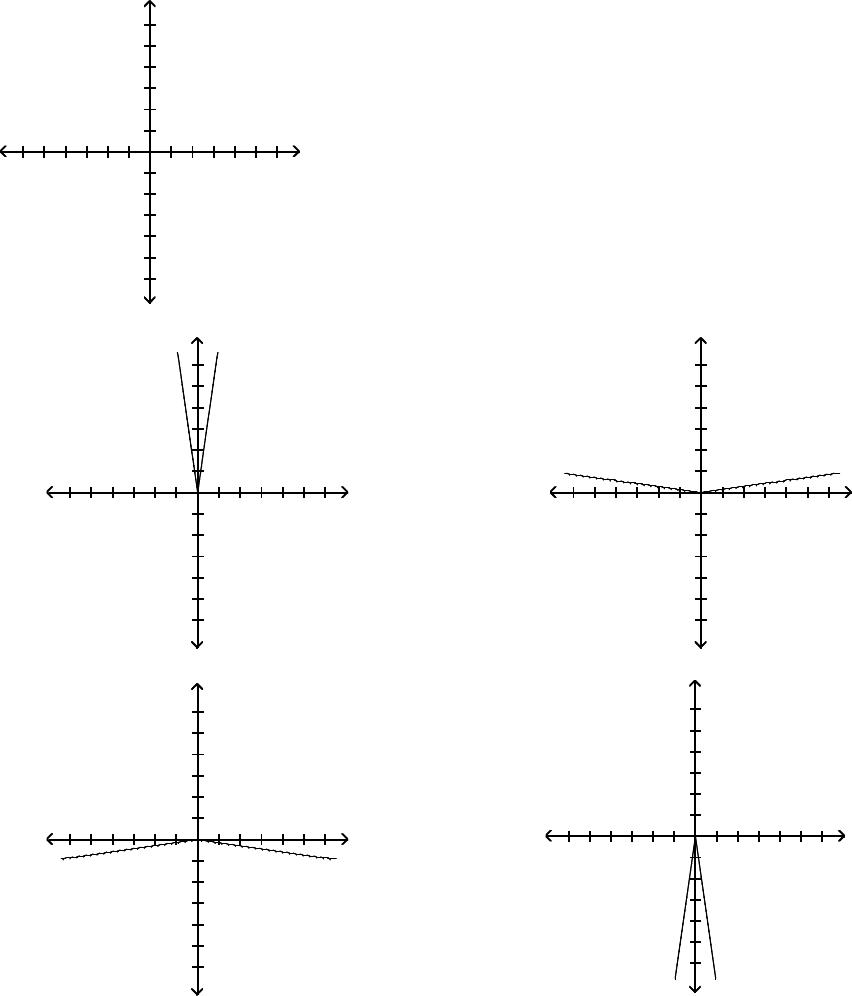
11) f(x) = 7|x|
x
-5 5
y
5
-5
x
-5 5
y
5
-5
A)
x
-5 5
y
5
-5
x
-5 5
y
5
-5
B)
x
-5 5
y
5
-5
x
-5 5
y
5
-5
C)
x
-5 5
y
5
-5
x
-5 5
y
5
-5
D)
x
-5 5
y
5
-5
x
-5 5
y
5
-5
Page 94
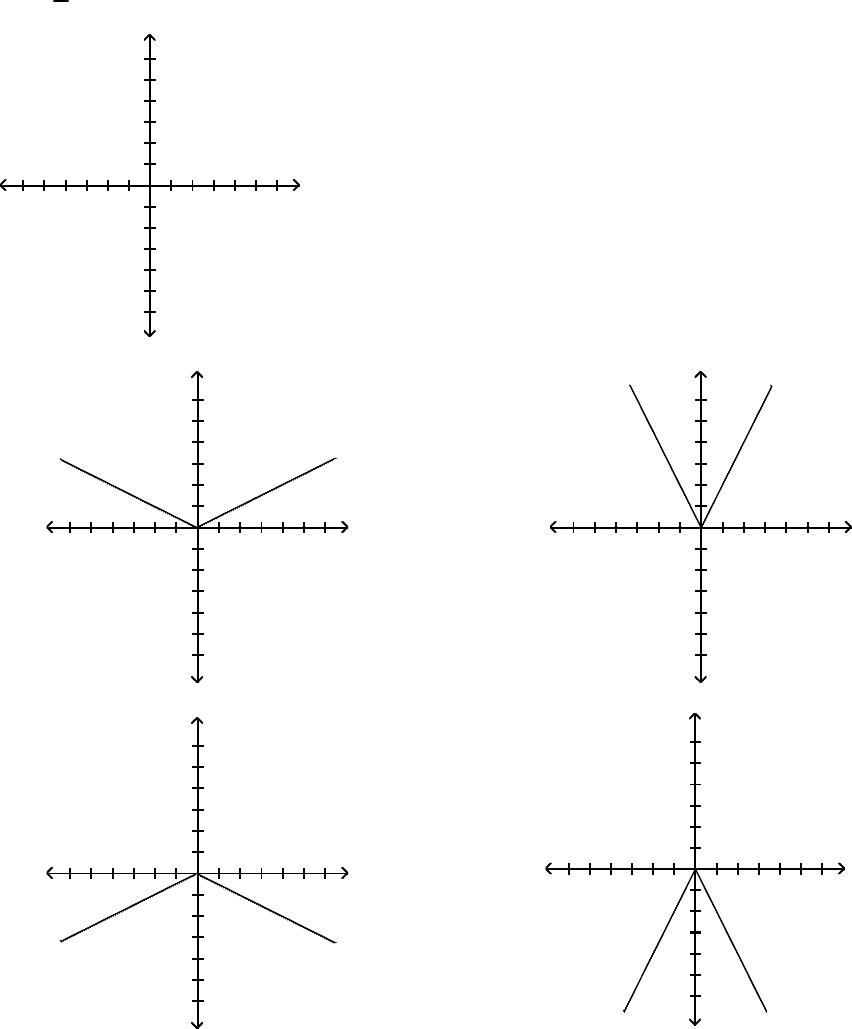
12) f(x) = 1
2|x|
x
-5 5
y
5
-5
x
-5 5
y
5
-5
A)
x
-5 5
y
5
-5
x
-5 5
y
5
-5
B)
x
-5 5
y
5
-5
x
-5 5
y
5
-5
C)
x
-5 5
y
5
-5
x
-5 5
y
5
-5
D)
x
-5 5
y
5
-5
x
-5 5
y
5
-5
Page 95
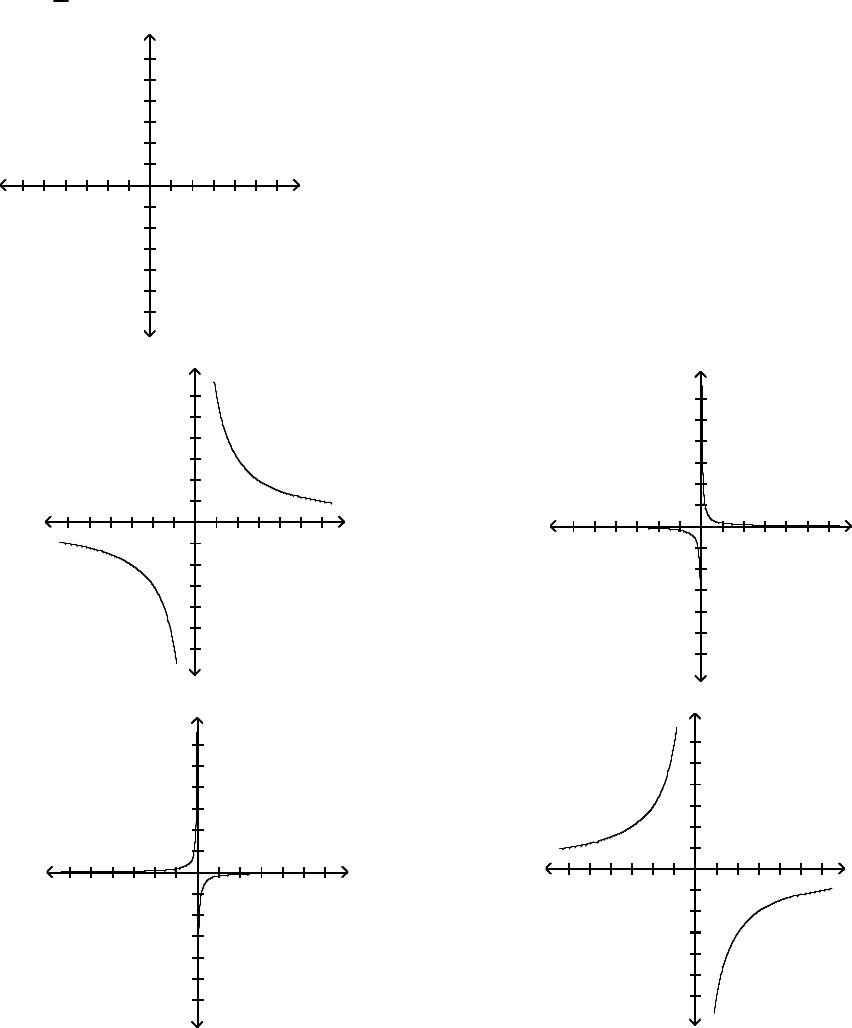
13) f(x) = 6
x
x
-5 5
y
5
-5
x
-5 5
y
5
-5
A)
x
-5 5
y
5
-5
x
-5 5
y
5
-5
B)
x
-5 5
y
5
-5
x
-5 5
y
5
-5
C)
x
-5 5
y
5
-5
x
-5 5
y
5
-5
D)
x
-5 5
y
5
-5
x
-5 5
y
5
-5
Page 96
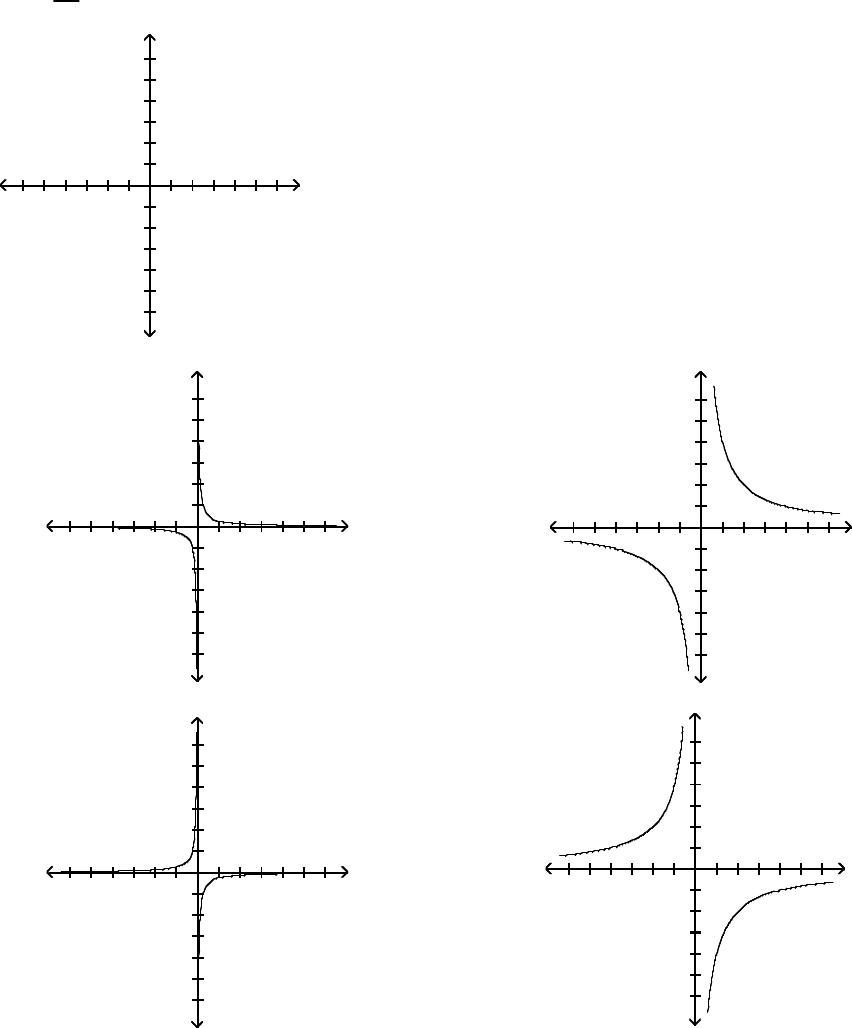
14) f(x) = 1
4x
x
-5 5
y
5
-5
x
-5 5
y
5
-5
A)
x
-5 5
y
5
-5
x
-5 5
y
5
-5
B)
x
-5 5
y
5
-5
x
-5 5
y
5
-5
C)
x
-5 5
y
5
-5
x
-5 5
y
5
-5
D)
x
-5 5
y
5
-5
x
-5 5
y
5
-5
Page 97
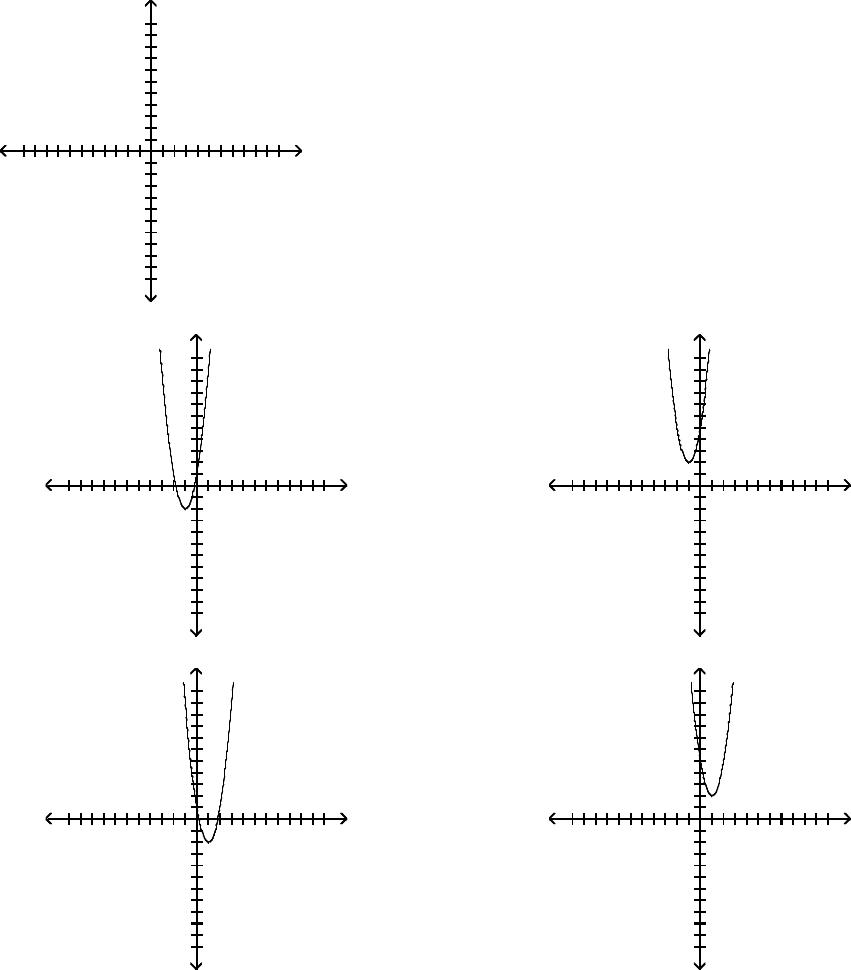
15) f(x) = 3(x + 1)2 – 2
x
-10 -5 5 10
y
10
5
-5
-10
x
-10 -5 5 10
y
10
5
-5
-10
A)
x
-10 -5 5 10
y
10
5
-5
-10
x
-10 -5 5 10
y
10
5
-5
-10
B)
x
-10 -5 5 10
y
10
5
-5
-10
x
-10 -5 5 10
y
10
5
-5
-10
C)
x
-10 -5 5 10
y
10
5
-5
-10
x
-10 -5 5 10
y
10
5
-5
-10
D)
x
-10 -5 5 10
y
10
5
-5
-10
x
-10 -5 5 10
y
10
5
-5
-10
Page 98
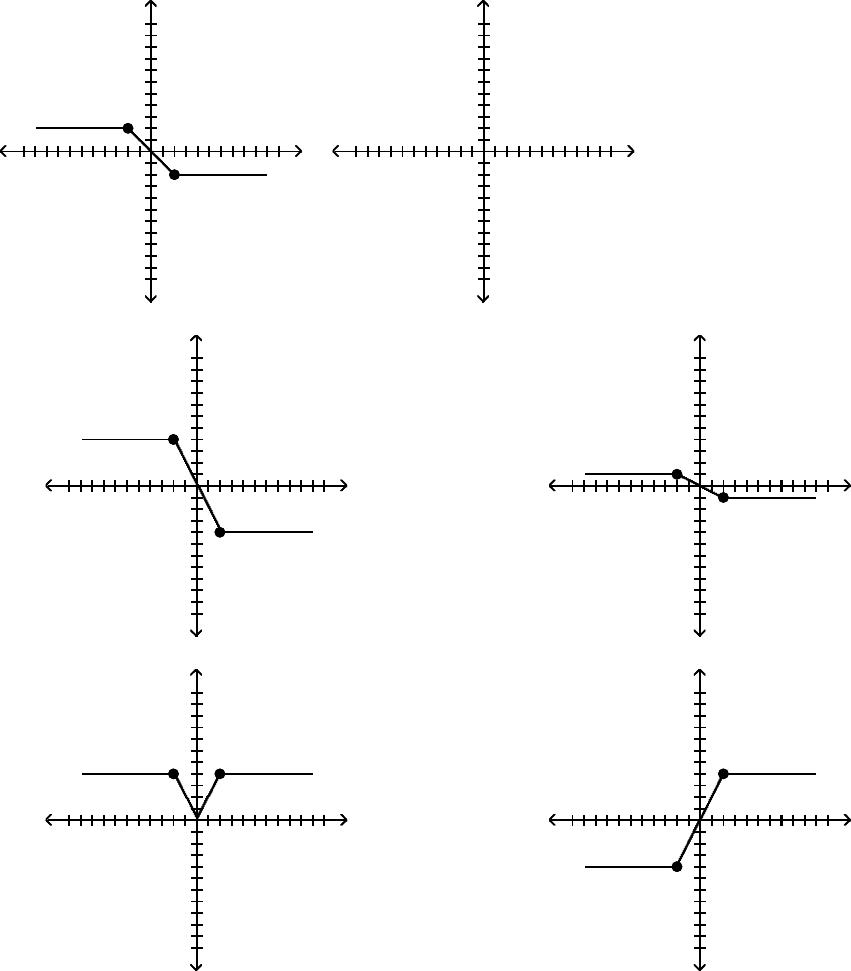
Use the accompanying graph of y = f(x) to sketch the graph of the indicated equation.
16) y = 2f(x)
x
-10 10
y
10
-10
(-2, 2)
(2, –2)
(-2, 2)
(2, –2)
y = f(x)
x
-10 10
y
10
-10
(-2, 2)
(2, –2)
(-2, 2)
(2, –2)
y = f(x)
x
-10 10
y
10
-10
x
-10 10
y
10
-10
A)
x
-10 10
y
10
-10
(-2, 4)
(2, –4)
(-2, 4)
(2, –4)
x
-10 10
y
10
-10
(-2, 4)
(2, –4)
(-2, 4)
(2, –4)
B)
x
-10 10
y
10
-10
(-2, 1)
(2, –1)
x
-10 10
y
10
-10
(-2, 1)
(2, –1)
C)
x
-10 10
y
10
-10
(-2, 4) (2, 4)
x
-10 10
y
10
-10
(-2, 4) (2, 4)
D)
x
-10 10
y
10
-10
(-2, –4)
(2, 4)
x
-10 10
y
10
-10
(-2, –4)
(2, 4)
Page 99
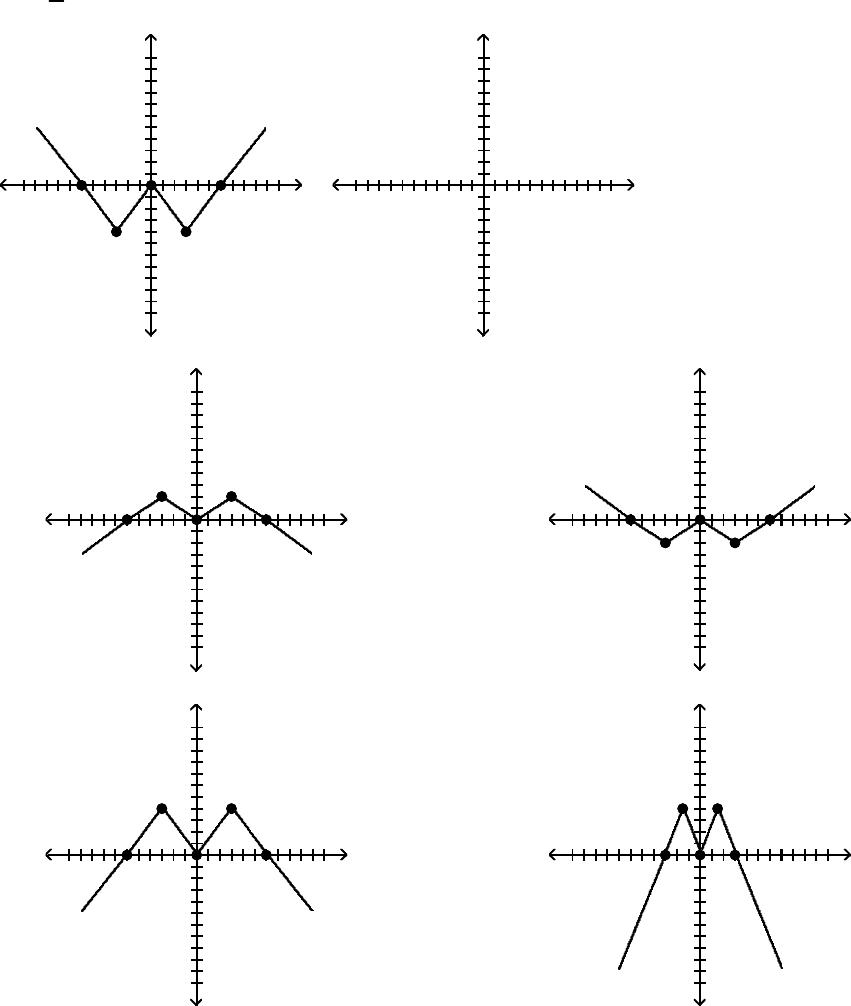
17) y = – 1
2f(x)
x
-10 10
y
10
-10
(0, 0)
(3, –4)
(-6, 0)
(-3, –4)
(6, 0)
(3, –4)
y = f(x)
x
-10 10
y
10
-10
(0, 0)
(3, –4)
(-6, 0)
(-3, –4)
(6, 0)
(3, –4)
y = f(x)
x
-10 10
y
10
-10
x
-10 10
y
10
-10
A)
x
-10 10
y
10
-10
(0, 0)(–6, 0)
(-3, 2)
(6, 0)
(3, 2)
x
-10 10
y
10
-10
(0, 0)(–6, 0)
(-3, 2)
(6, 0)
(3, 2)
B)
x
-10 10
y
10
-10
(0, 0)
(-6, 0)
(-3, –2)
(6, 0)
(3, –2)
x
-10 10
y
10
-10
(0, 0)
(-6, 0)
(-3, –2)
(6, 0)
(3, –2)
C)
x
-10 10
y
10
-10
(0, 0)
(-6, 0)
(-3, 4)
(6, 0)
(3, 4)
x
-10 10
y
10
-10
(0, 0)
(-6, 0)
(-3, 4)
(6, 0)
(3, 4)
D)
x
-10 10
y
10
-10
(0, 0)
(1.5, 4)
(-3, 0)
(-1.5, 4)
(3, 0)
x
-10 10
y
10
-10
(0, 0)
(1.5, 4)
(-3, 0)
(-1.5, 4)
(3, 0)
Page 100
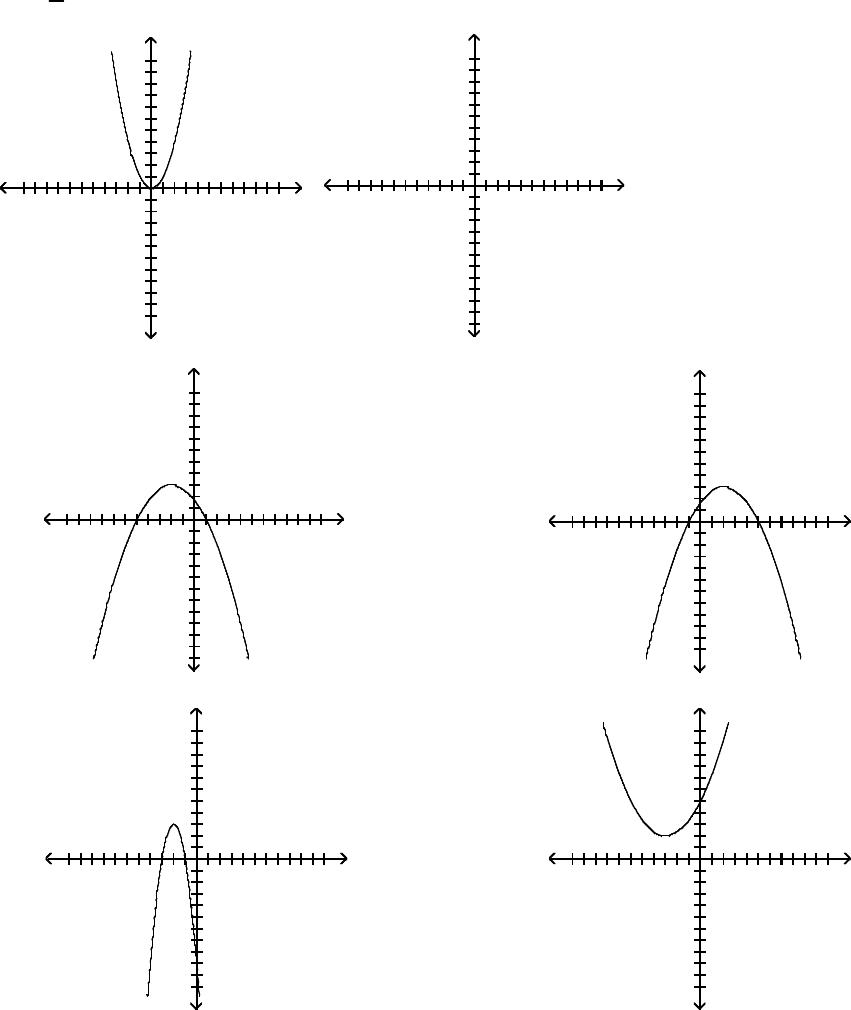
18) y = – 1
3f(x + 2) + 3
x
-10 -5 5 10
y
10
5
-5
-10
y = f(x)
x
-10 -5 5 10
y
10
5
-5
-10
y = f(x)
x
-10 -5 5 10
y
10
5
-5
-10
x
-10 -5 5 10
y
10
5
-5
-10
A)
x
-10 -5 5 10
y
10
5
-5
-10
x
-10 -5 5 10
y
10
5
-5
-10
B)
x
-10 -5 5 10
y
10
5
-5
-10
x
-10 -5 5 10
y
10
5
-5
-10
C)
x
-10 -5 5 10
y
10
5
-5
-10
x
-10 -5 5 10
y
10
5
-5
-10
D)
x
-10 -5 5 10
y
10
5
-5
-10
x
-10 -5 5 10
y
10
5
-5
-10
Page 101
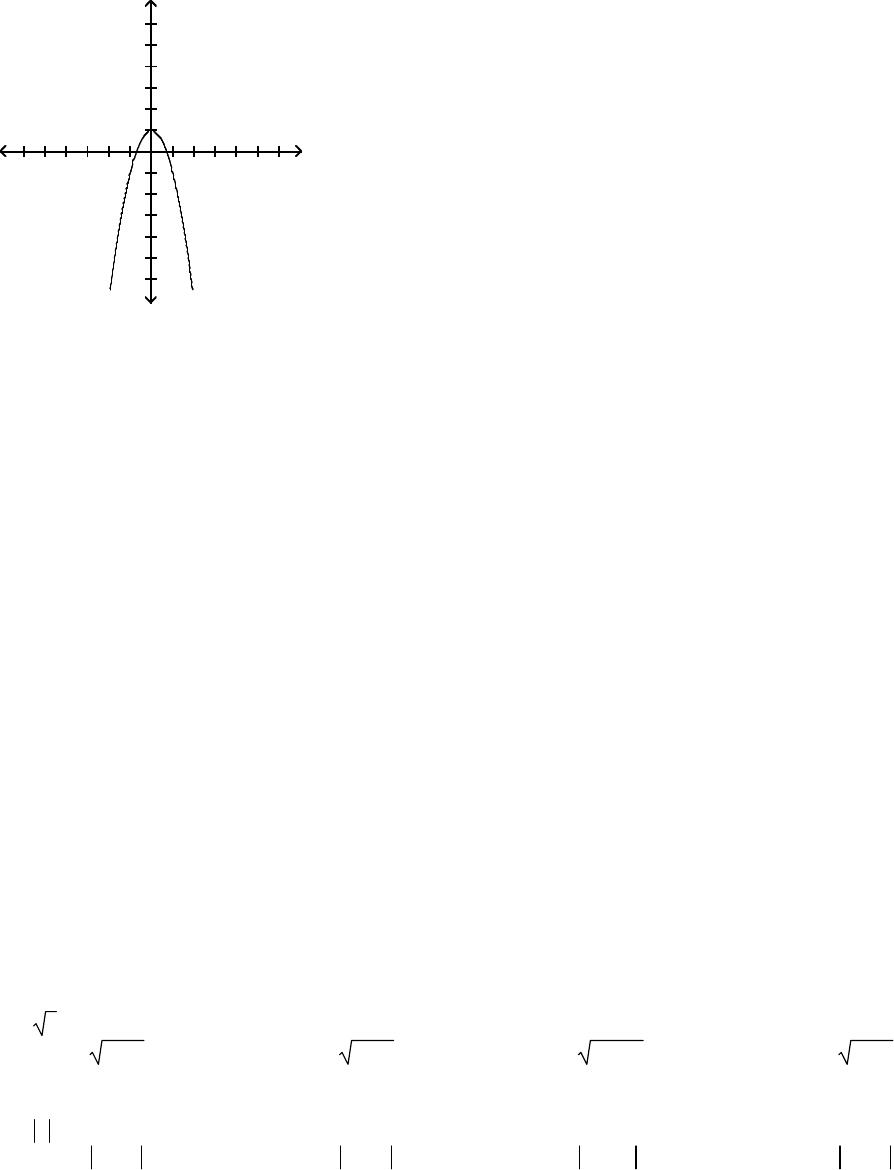
3 Graph Functions Using Reflections about the x–Axis or y–Axis
MULTIPLE CHOICE. Choose the one alternative that best completes the statement or answers the question.
Match the correct function to the graph.
1)
x
-6 -4 -2 2 4 6
y
6
4
2
-2
-4
-6
x
-6 -4 -2 2 4 6
y
6
4
2
-2
-4
-6
A) y = –2x2 + 1B)y = –2x2C) y = –2x2 – 1D)y = 1 – x2
Suppose the point (2, 4) is on the graph of y =f(x). Find a point on the graph of the given function.
2) The reflection of the graph of y = f(x) across the x–axis
A) (2, –4) B) (–2, –4) C) (2, 4) D) (–2, 4)
3) The reflection of the graph of y = f(x) across the y–axis
A) (–2, 4) B) (2, 4) C) (–2, –4) D) (2, –4)
Solve the problem.
4) Suppose that the x–intercepts of the graph of y =f(x) are 9 and 5. What are the x–intercepts o
f
y = f(–x)?
A) –9 and –5 B) 9 and 5 C) 9 and –5D)
–9 and 5
5) Suppose that the function y = f(x) is decreasing on the interval (6
,
3). What can be said about the graph of
y = –f(x)?
A) increasing on (6
,
3) B) decreasing on (6
,
3)
C) increasing on (–6
,
–3) D) decreasing on (–6
,
–3)
Find the function.
6) Find the function that is finally graphed after the following transformations are applied to the graph of
y = |x|. The graph is shifted right 3 units, stretched by a factor of 3, shifted vertically down 2 units, and
finally reflected across the x–axis.
A) y = –(3|x – 3| – 2) B) y = –3|x –3| –2
C) y = –(3|x + 3| – 2) D) y =3|–x –3| –2
7) Find the function that is finally graphed after the following transformations are applied to the graph of
y = x
. The graph is shifted down 3 units, reflected about the x–axis, and finally shifted left 2 units.
A) y = –x + 2 – 3B)y = –x + 2 + 3C)y =-
x – 2 – 3D)y = –x – 2 + 3
8) Find the function that is finally graphed after the following transformations are applied to the graph of
y = x. The graph is shifted down 6 units, reflected about the x–axis, and finally shifted left 3 units.
A) y = –
,
x + 3 – 6B)y = –
,
x+3+6C)y
=-
x–3–6D)y
= –
,
x–3+6
Page 102
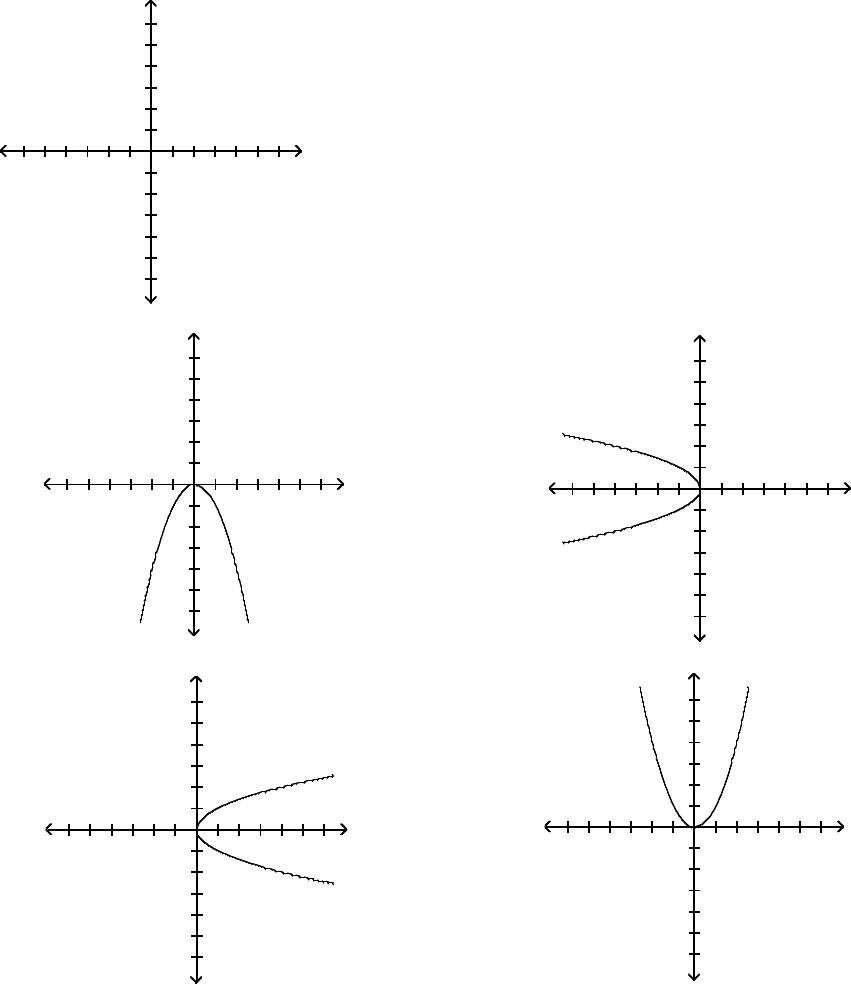
Graph the function by starting with the graph of the basic function and then using the techniques of shifting,
compressing, stretching, and/or reflecting.
9) f(x) = –x2
x
-5 5
y
5
-5
x
-5 5
y
5
-5
A)
x
-5 5
y
5
-5
x
-5 5
y
5
-5
B)
x
-5 5
y
5
-5
x
-5 5
y
5
-5
C)
x
-5 5
y
5
-5
x
-5 5
y
5
-5
D)
x
-5 5
y
5
-5
x
-5 5
y
5
-5
Page 103
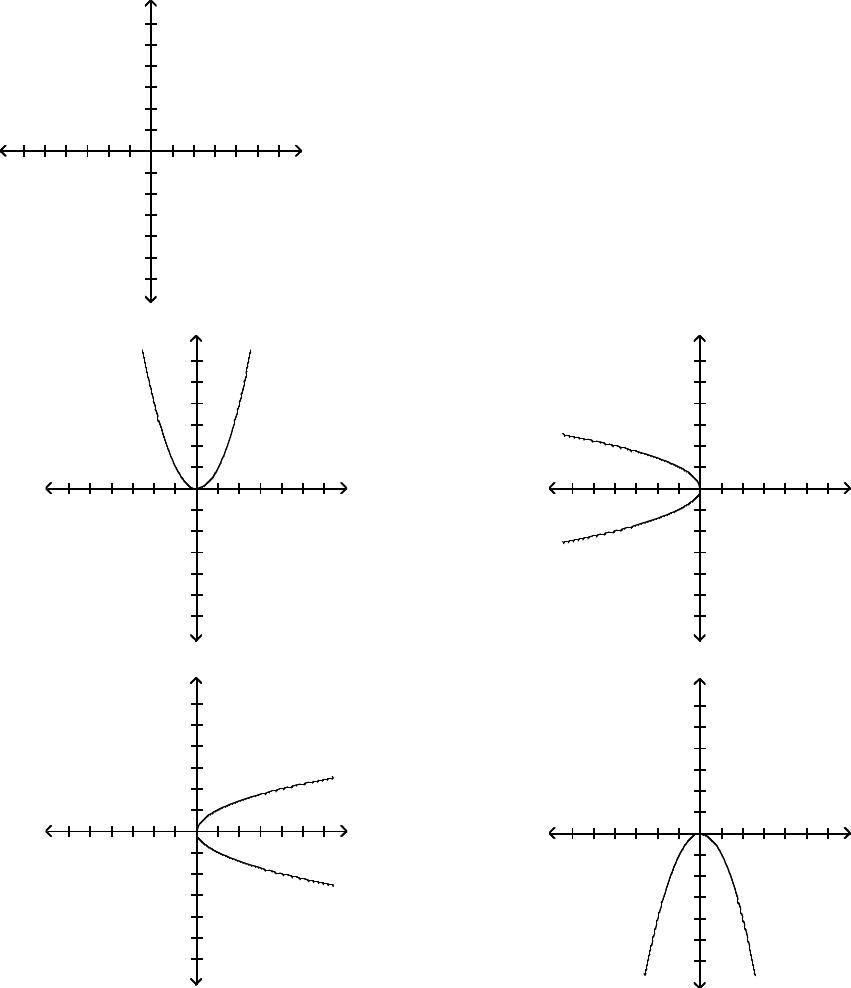
10) f(x) = (–x)2
x
-5 5
y
5
-5
x
-5 5
y
5
-5
A)
x
-5 5
y
5
-5
x
-5 5
y
5
-5
B)
x
-5 5
y
5
-5
x
-5 5
y
5
-5
C)
x
-5 5
y
5
-5
x
-5 5
y
5
-5
D)
x
-5 5
y
5
-5
x
-5 5
y
5
-5
Page 104
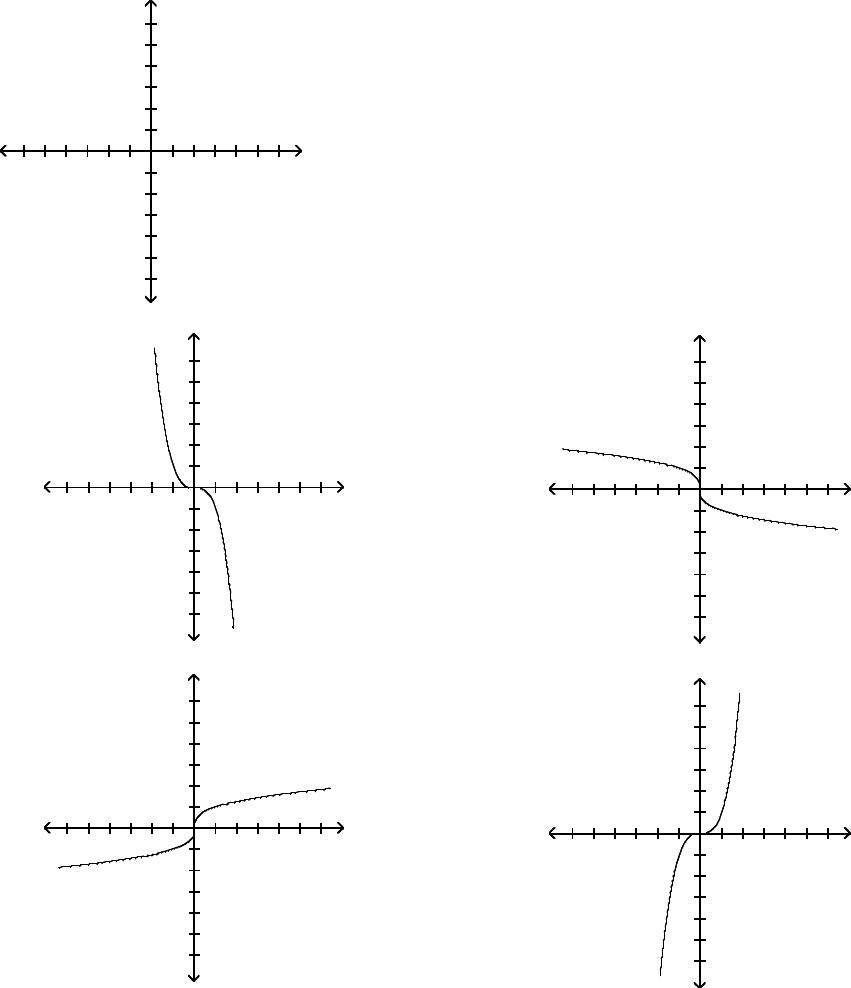
11) f(x) = –x3
x
-5 5
y
5
-5
x
-5 5
y
5
-5
A)
x
-5 5
y
5
-5
x
-5 5
y
5
-5
B)
x
-5 5
y
5
-5
x
-5 5
y
5
-5
C)
x
-5 5
y
5
-5
x
-5 5
y
5
-5
D)
x
-5 5
y
5
-5
x
-5 5
y
5
-5
Page 105
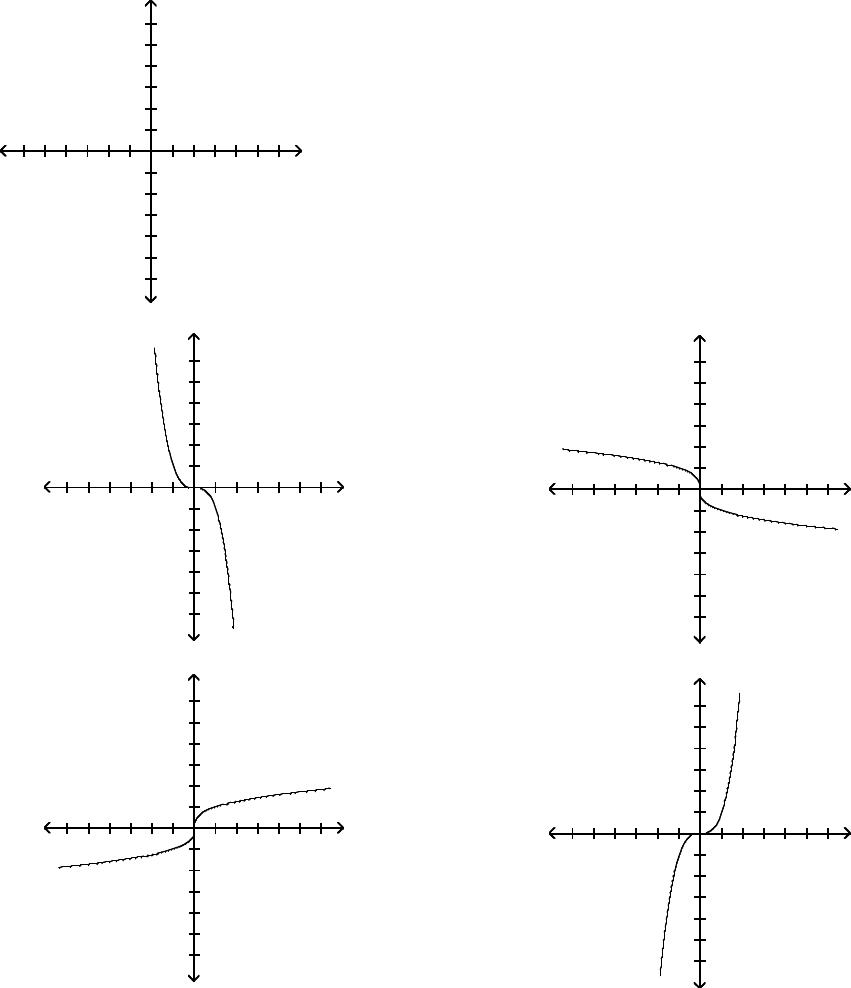
12) f(x) = (–x)3
x
-5 5
y
5
-5
x
-5 5
y
5
-5
A)
x
-5 5
y
5
-5
x
-5 5
y
5
-5
B)
x
-5 5
y
5
-5
x
-5 5
y
5
-5
C)
x
-5 5
y
5
-5
x
-5 5
y
5
-5
D)
x
-5 5
y
5
-5
x
-5 5
y
5
-5
Page 106
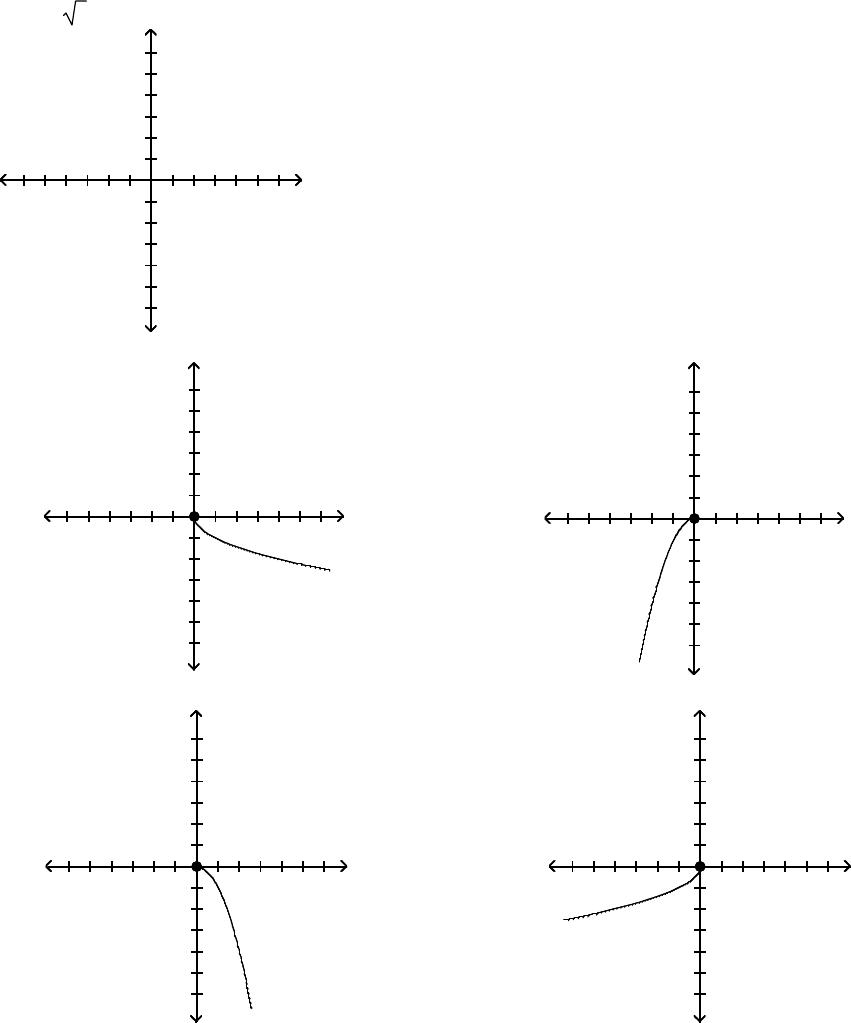
13) f(x) = –x
x
-5 5
y
5
-5
x
-5 5
y
5
-5
A)
x
-5 5
y
5
-5
x
-5 5
y
5
-5
B)
x
-5 5
y
5
-5
x
-5 5
y
5
-5
C)
x
-5 5
y
5
-5
x
-5 5
y
5
-5
D)
x
-5 5
y
5
-5
x
-5 5
y
5
-5
Page 107
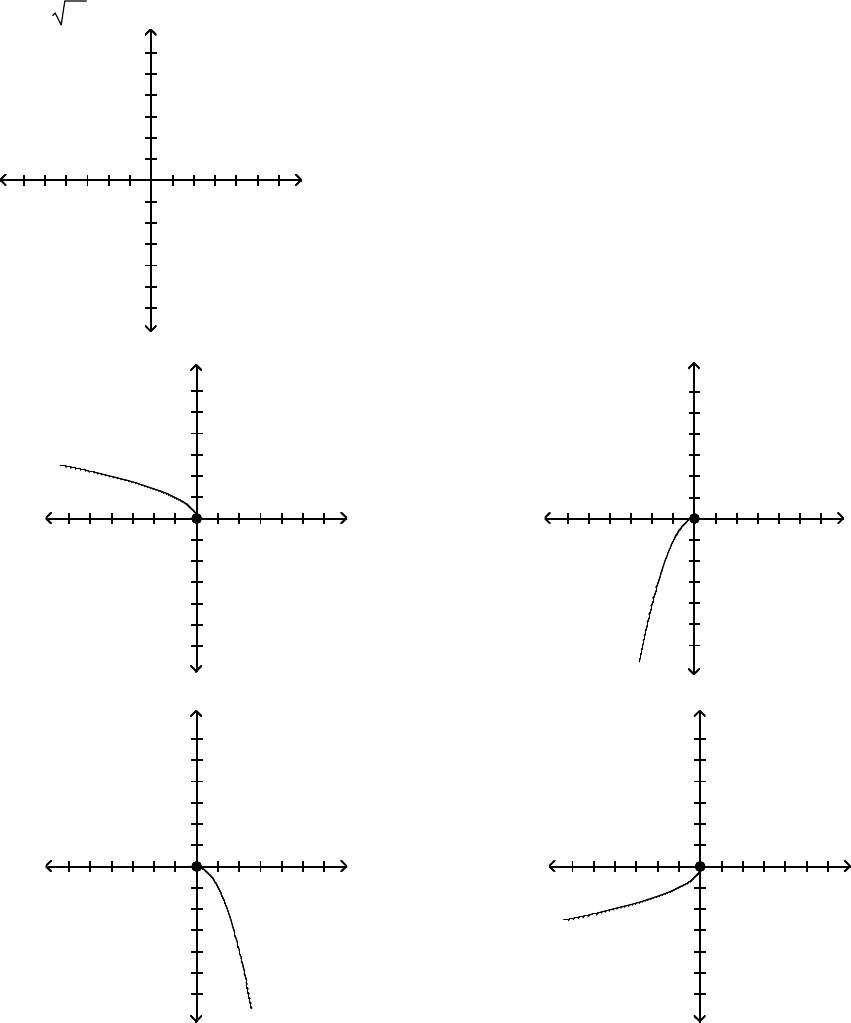
14) f(x) = –x
x
-5 5
y
5
-5
x
-5 5
y
5
-5
A)
x
-5 5
y
5
-5
x
-5 5
y
5
-5
B)
x
-5 5
y
5
-5
x
-5 5
y
5
-5
C)
x
-5 5
y
5
-5
x
-5 5
y
5
-5
D)
x
-5 5
y
5
-5
x
-5 5
y
5
-5
Page 108
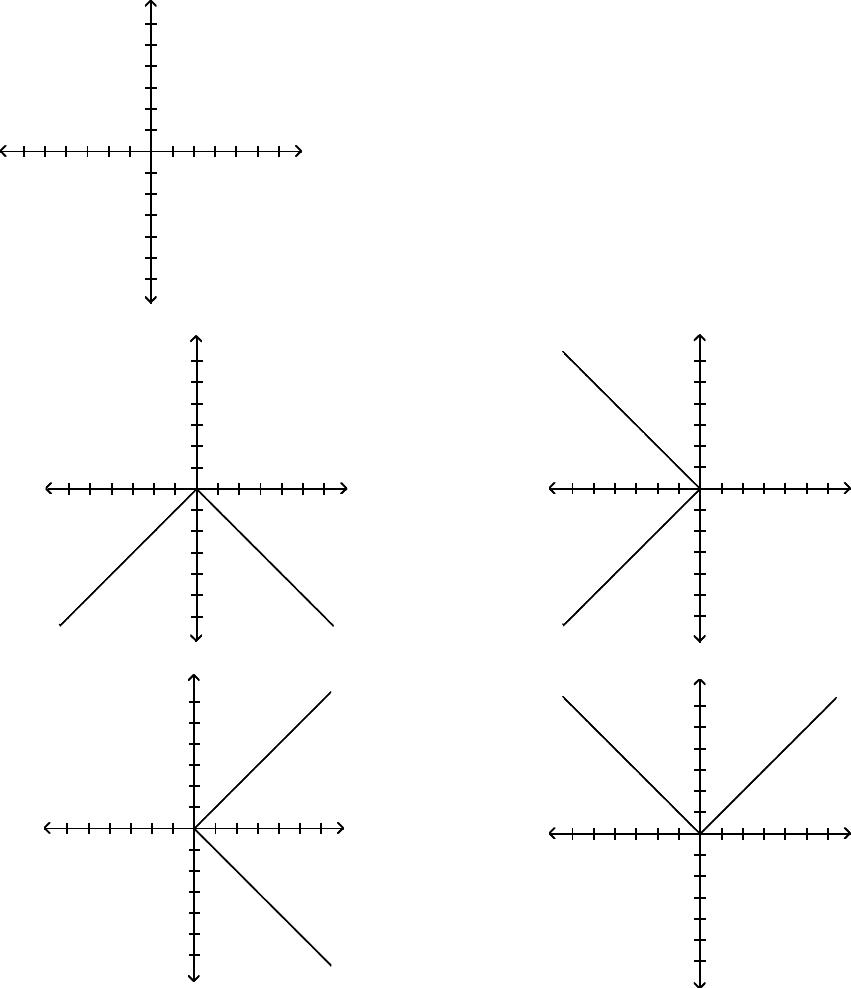
15) f(x) = –|x|
x
-5 5
y
5
-5
x
-5 5
y
5
-5
A)
x
-5 5
y
5
-5
x
-5 5
y
5
-5
B)
x
-5 5
y
5
-5
x
-5 5
y
5
-5
C)
x
-5 5
y
5
-5
x
-5 5
y
5
-5
D)
x
-5 5
y
5
-5
x
-5 5
y
5
-5
Page 109
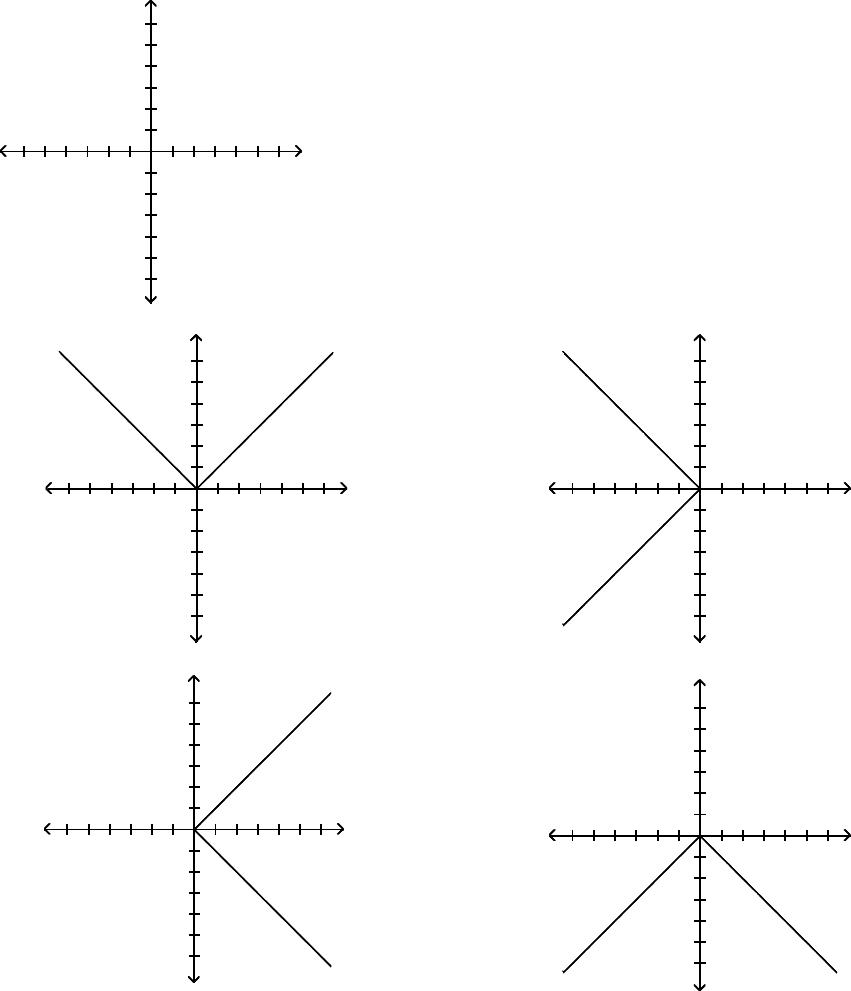
16) f(x) = |–x|
x
-5 5
y
5
-5
x
-5 5
y
5
-5
A)
x
-5 5
y
5
-5
x
-5 5
y
5
-5
B)
x
-5 5
y
5
-5
x
-5 5
y
5
-5
C)
x
-5 5
y
5
-5
x
-5 5
y
5
-5
D)
x
-5 5
y
5
-5
x
-5 5
y
5
-5
Page 110
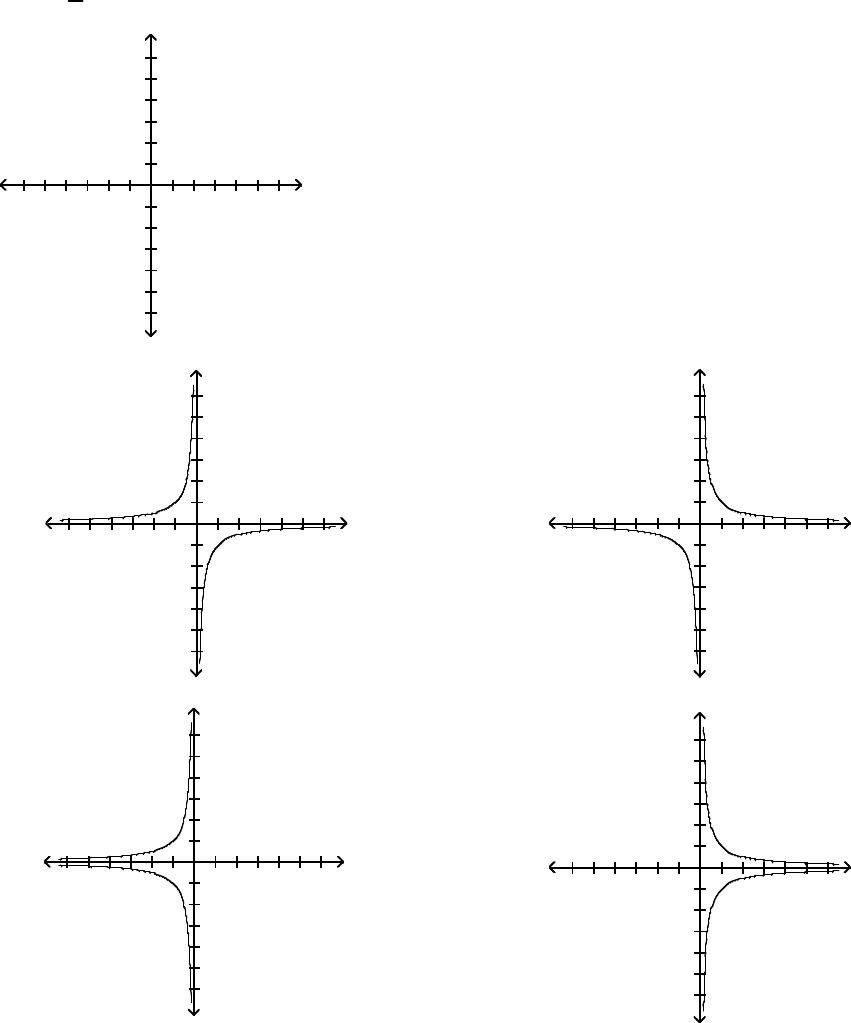
17) f(x) = – 1
x
x
-5 5
y
5
-5
x
-5 5
y
5
-5
A)
x
-5 5
y
5
-5
x
-5 5
y
5
-5
B)
x
-5 5
y
5
-5
x
-5 5
y
5
-5
C)
x
-5 5
y
5
-5
x
-5 5
y
5
-5
D)
x
-5 5
y
5
-5
x
-5 5
y
5
-5
Page 111
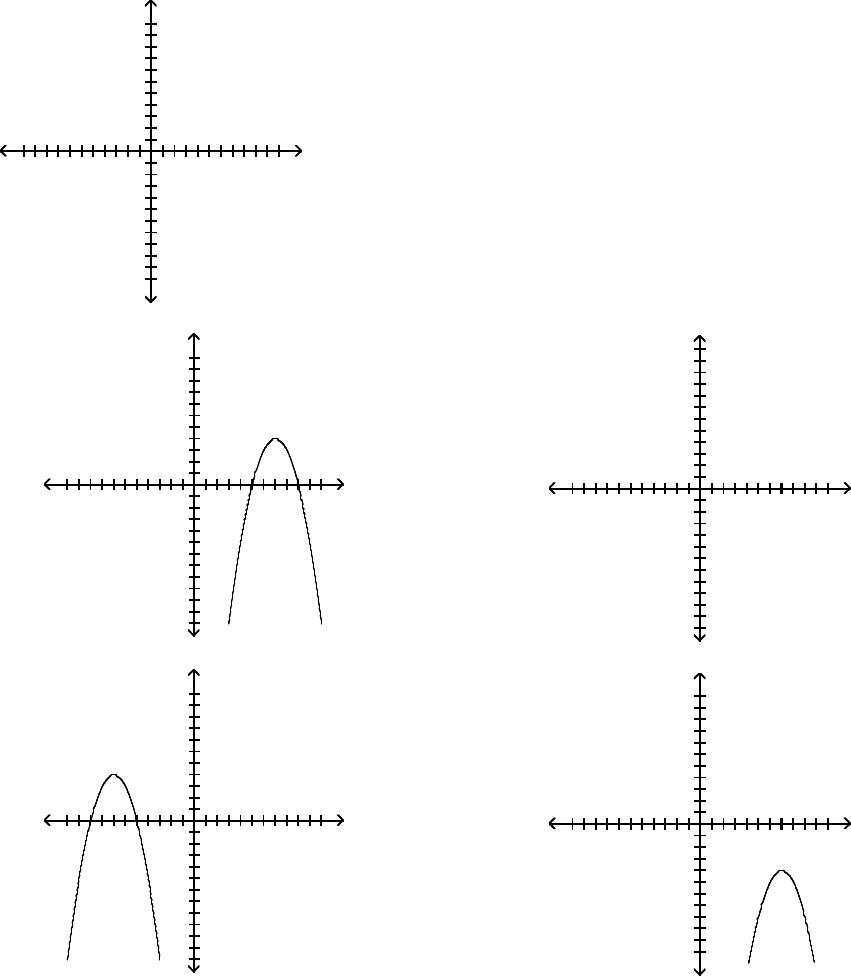
18) f(x) = –(x – 7)2 + 4
x
-10 -5 5 10
y
10
5
-5
-10
x
-10 -5 5 10
y
10
5
-5
-10
A)
x
-10 -5 5 10
y
10
5
-5
-10
x
-10 -5 5 10
y
10
5
-5
-10
B)
x
-10 -5 5 10
y
10
5
-5
-10
x
-10 -5 5 10
y
10
5
-5
-10
C)
x
-10 -5 5 10
y
10
5
-5
-10
x
-10 -5 5 10
y
10
5
-5
-10
D)
x
-10 -5 5 10
y
10
5
-5
-10
x
-10 -5 5 10
y
10
5
-5
-10
Page 112
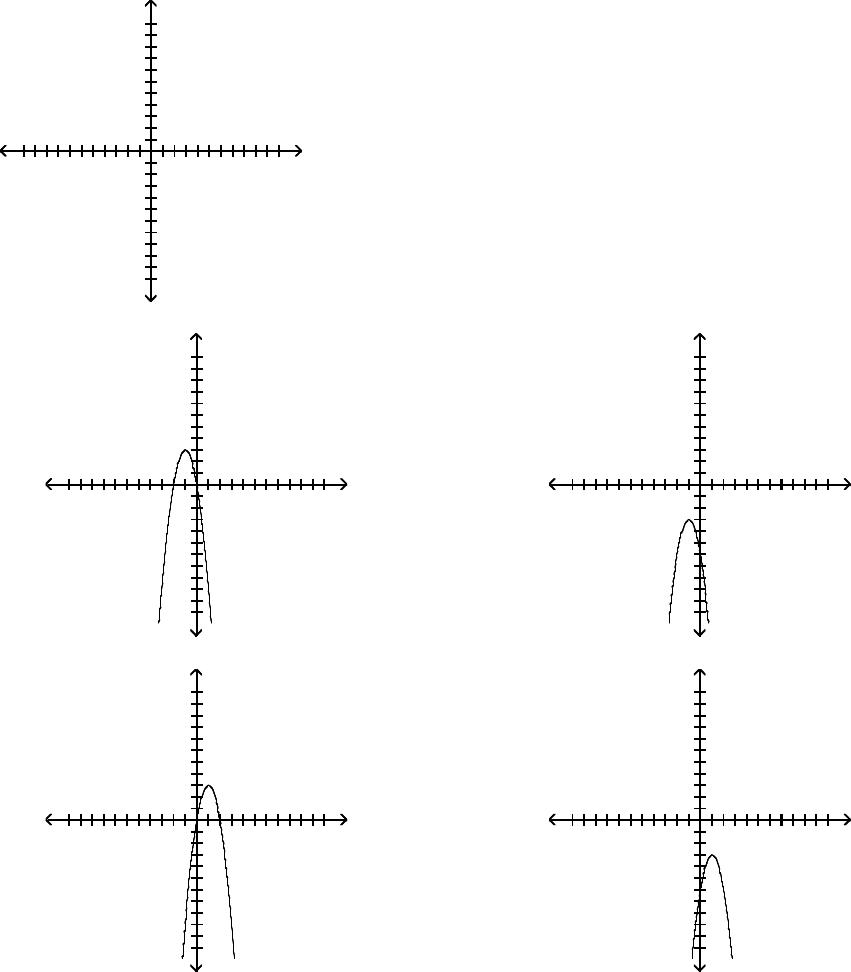
19) f(x) = –3(x + 1)2 + 3
x
-10 -5 5 10
y
10
5
-5
-10
x
-10 -5 5 10
y
10
5
-5
-10
A)
x
-10 -5 5 10
y
10
5
-5
-10
x
-10 -5 5 10
y
10
5
-5
-10
B)
x
-10 -5 5 10
y
10
5
-5
-10
x
-10 -5 5 10
y
10
5
-5
-10
C)
x
-10 -5 5 10
y
10
5
-5
-10
x
-10 -5 5 10
y
10
5
-5
-10
D)
x
-10 -5 5 10
y
10
5
-5
-10
x
-10 -5 5 10
y
10
5
-5
-10
3.6 Mathematical Models: Building Functions
1 Build and Analyze Functions
MULTIPLE CHOICE. Choose the one alternative that best completes the statement or answers the question.
Solve the problem.
1) Elissa wants to set up a rectangular dog run in her backyard. She has 22 feet of fencing to work with and
wants to use it all. If the dog run is to be x feet long, express the area of the dog run as a function of x.
A) A(x) = 11x – x2B) A(x) = 12x – x2C) A(x) = 13x2 – x D) A(x) = 10x – x2
Page 113
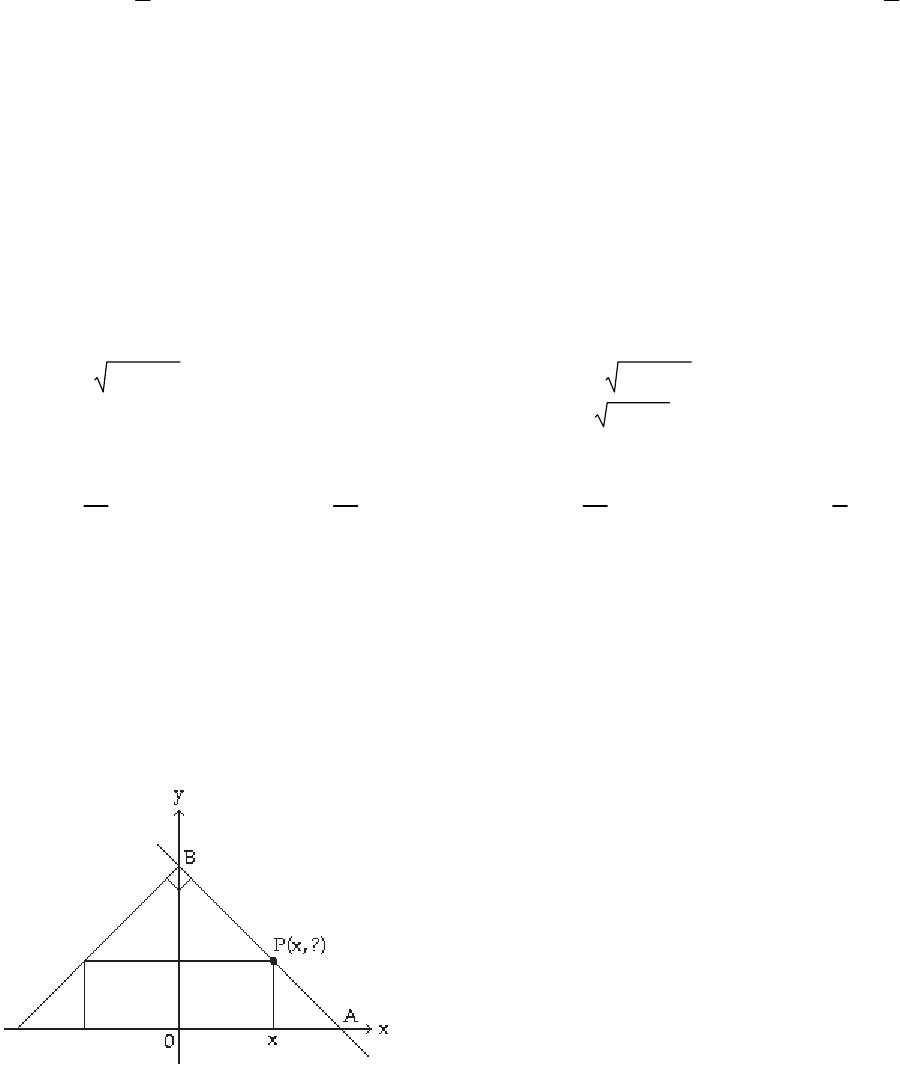
2) Bob wants to fence in a rectangular garden in his yard. He has 68 feet of fencing to work with and wants to
use it all. If the garden is to be x feet wide, express the area of the garden as a function of x.
A) A(x) = 34x – x2B) A(x) = 35x – x2C) A(x) = 36x2 – x D) A(x) = 33x – x2
3) Sue wants to put a rectangular garden on her property using 74 meters of fencing. There is a river that
runs through her property so she decides to increase the size of the garden by using the river as one side of
the rectangle. (Fencing is then needed only on the other three sides.) Let x represent the length of the side
of the rectangle along the river. Express the garden’s area as a function of x.
A) A(x) = 37x – 1
2x2B) A(x) = 38x – 2x2C) A(x) = 37x2 – x D) A(x) = 36x – 1
4x2
4) A farmer has 800 yards of fencing to enclose a rectangular garden. Express the area A of the rectangle as a
function of the width x of the rectangle. What is the domain of A?
A) A(x) = –x2 + 400x; {x|0 < x < 400} B) A(x) = –x2 + 800x; {x|0 < x < 800}
C) A(x) = x2 + 400x; {x|0 < x < 400} D) A(x) = –x2 + 400x; {x|0 < x < 800}
5) A rectangular sign is being designed so that the length of its base, in feet, is 16 feet less than 4 times the
height, h. Express the area of the sign as a function of h.
A) A(h) = –16h + 4h2B) A(h) = 16h – 2h2C) A(h) = –16h2 + 2h D) A(h) = –16h + h2
6) A rectangle that is x feet wide is inscribed in a circle of radius 14 feet. Express the area of the rectangle as a
function of x.
A) A(x) = x 784 – x2B) A(x) = x2392 – x2
C) A(x) = x(784 –x2) D) A(x) = x 588 – x
7) A wire of length 9x is bent into the shape of a square. Express the area A of the square as a function of x.
A) A(x) = 81
16x2B) A(x) = 1
16x2C) A(x) = 81
8x2D) A(x) = 9
4x2
SHORT ANSWER. Write the word or phrase that best completes each statement or answers the question.
8) A right triangle has one vertex on the graph of y = x2 at (x, y), another at the origin, and the third on the
(positive) y–axis at (0, y). Express the area A of the triangle as a function of x.
MULTIPLE CHOICE. Choose the one alternative that best completes the statement or answers the question.
9) The figure shown here shows a rectangle inscribed in an isosceles right triangle whose hypotenuse is 4
units long. Express the area A of the rectangle in terms of x.
–22
A) A(x) = 2x(2 – x) B) A(x) =x(2 –x) C) A(x) =2x(x –2) D) A(x) = 2x2
Page 114
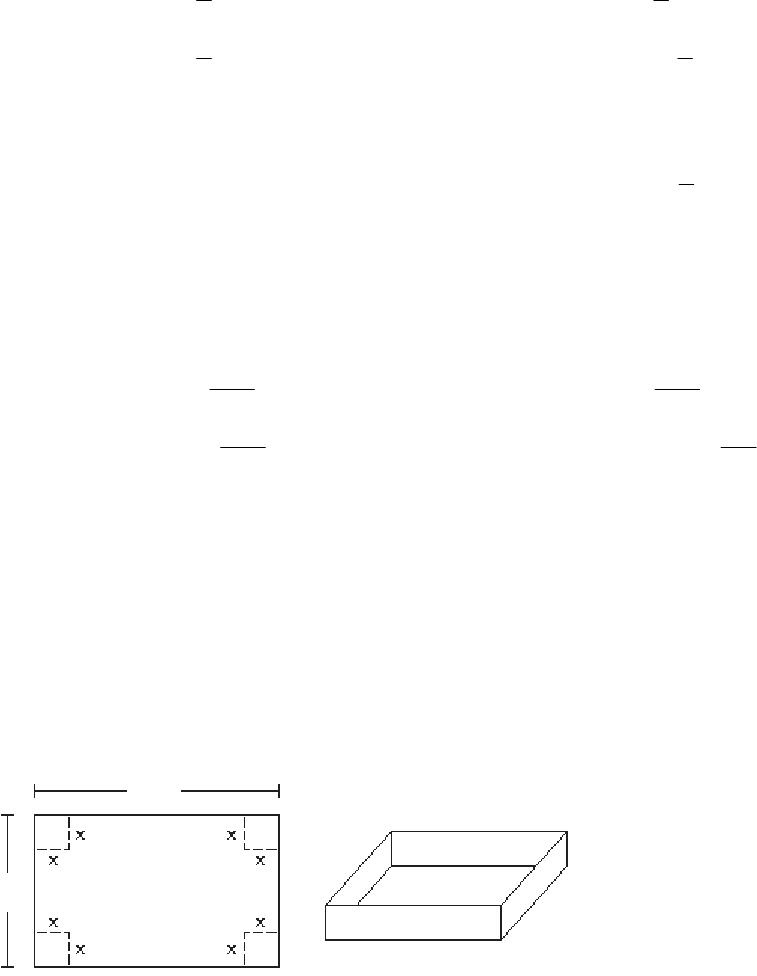
SHORT ANSWER. Write the word or phrase that best completes each statement or answers the question.
10) A wire 20 feet long is to be cut into two pieces. One piece will be shaped as a square and the other piece
will be shaped as an equilateral triangle. Express the total area A enclosed by the pieces of wire as a
function of the length x of a side of the equilateral triangle. What is the domain of A?
MULTIPLE CHOICE. Choose the one alternative that best completes the statement or answers the question.
11) A farmer’s silo is the shape of a cylinder with a hemisphere as the roof. If the height of the silo is 112 feet
and the radius of the hemisphere is r feet, express the volume of the silo as a function of r.
A) V(r) = π(112 – r)r2 + 2
3 πr3B) V(r) = 112πr2 + 8
3 πr3
C) V(r) = π(112 – r)r3 + 4
3 πr2D) V(r) = π(112 – r) + 4
3 πr2
SHORT ANSWER. Write the word or phrase that best completes each statement or answers the question.
12) The volume V of a square–based pyramid with base sides s and height h is V = 1
3s2h. If the height is half
of the length of a base side, express the volume V as a function of s.
MULTIPLE CHOICE. Choose the one alternative that best completes the statement or answers the question.
13) A farmer’s silo is the shape of a cylinder with a hemisphere as the roof. If the radius of the hemisphere is
10 feet and the height of the silo is h feet, express the volume of the silo as a function of h.
A) V(h) = 100 π(h – 10) + 2000
3 πB) V(h) = 100 πh + 4000
3 πh2
C) V(h) = 100 π(h2 – 10) + 5000
3 πD) V(h) = 4100 π(h – 10) + 500
7 π
14) From a 46–inch by 46–inch piece of metal, squares are cut out of the four corners so that the sides can then
be folded up to make a box. Let x represent the length of the sides of the squares, in inches, that are cut
out. Express the volume of the box as a function of x.
A) V(x) = 4x3 – 184x2 + 2116x B) V(x) = 2x3 – 138x2
C) V(x) = 4x3 – 184x2D) V(x) = 2x3 – 138x2 + 46x
15) A box with an open top is to be constructed from a rectangular piece of cardboard with dimensions 14
inches by 21 inches by cutting out equal squares of side x at each corner and then folding up the sides as in
the figure. Express the volume V of the box as a function of x.
21
14
A) V(x) = x(14 – 2x)(21 – 2x) B) V(x) =(14 –2x)(21 – 2x)
C) V(x) = x(14 – x)(21 – x) D) V(x) =(14 –x)(21 – x)
Page 115
16) A rectangular box with volume 488 cubic feet is built with a square base and top. The cost is $1.50 per
square foot for the top and the bottom and $2.00 per square foot for the sides. Let x represent the length of
a side of the base. Express the cost the box as a function of x.
A) C(x) = 3x2 + 3904
xB) C(x) = 3x2 + 1952
xC) C(x) = 2x2 + 3904
xD) C(x) = 4x + 3904
x2
17) The price p and the quantity x sold of a certain product obey the demand equation:
p = – 1
5x + 200, {x|0 ≤ x ≤ 500}
What is the revenue to the nearest dollar when 400 units are sold?
A) $48,000 B) $112,000 C) $10,000 D) $130,000
18) Let P = (x, y) be a point on the graph of y = x
. Express the distance d from P to the point (1, 0) as a
function of x.
A) d(x) = x2 – x + 1 B) d(x) = x
2 + 2x + 2
C) d(x) = x2 + 2x + 2 D) d(x) = x
2 – x + 1
SHORT ANSWER. Write the word or phrase that best completes each statement or answers the question.
19) The price p and x, the quantity of a certain product sold, obey the demand equation
p = – 1
10x + 100, {x|0 ≤ x ≤ 1000}
a) Express the revenue R as a function of x.
b) What is the revenue if 450 units are sold?
c) Graph the revenue function using a graphing utility.
d) What quantity x maximizes revenue? What is the maximum revenue?
e) What price should the company charge to maximize revenue?
20) Two boats leave a dock at the same time. One boat is headed directly east at a constant speed of 35 knots
(nautical miles per hour), and the other is headed directly south at a constant speed of 22 knots. Express
the distance d between the boats as a function of the time t.
MULTIPLE CHOICE. Choose the one alternative that best completes the statement or answers the question.
21) A rocket is shot straight up in the air from the ground at a rate of 77 feet per second. The rocket is tracked
by a range finder that is 487 feet from the launch pad. Let d represent the distance from the rocket to the
range finder and t represent the time, in seconds, since “blastoff”. Express d as a function of t.
A) d(t) = 4872 + (77t)2B) d(t) = 4872 + (77t)2
C) d(t) = 772 + (487t)2D) d(t) = 487 + 77t2
Page 116
Ch. 3 Functions and Their Graphs
Answer Key
3.1 Functions
1 Determine Whether a Relation Represents a Function
2 Find the Value of a Function
3 Find the Difference Quotient of a Function
Page 117
4 Find the Domain of a Function Defined by an Equation
5 Form the Sum, Difference, Product, and Quotient of Two Functions
3.2 The Graph of a Function
1 Identify the Graph of a Function
2 Obtain Information from or about the Graph of a Function
Page 118
3.3 Properties of Functions
1 Determine Even and Odd Functions from a Graph
2 Identify Even and Odd Functions from the Equation
Page 119
3 Use a Graph to Determine Where a Function is Increasing, Decreasing, or Constant
4 Use a Graph to Locate Local Maxima and Local Minima
5 Use a Graph to Locate the Absolute Maximum and the Absolute Minimum
6 Use Graphing Utility to Approximate Local Maxima/Minima & Determine Where Func is Increasing/Decreasing
7 Find the Average Rate of Change of a Function
3.4 Library of Functions; Piecewise–defined Functions
1 Graph the Functions Listed in the Library of Functions
2 Graph Piecewise–defined Functions
Page 121
3.5 Graphing Techniques: Transformations
1 Graph Functions Using Vertical and Horizontal Shifts
Page 122
2 Graph Functions Using Compressions and Stretches
3 Graph Functions Using Reflections about the x–Axis or y–Axis
3.6 Mathematical Models: Building Functions
1 Build and Analyze Functions
Page 123
Page 124