
Ch. 2 Graphs
2.1 Intercepts; Symmetry; Graphing Key Equations
1 Find Intercepts from an Equation
MULTIPLE CHOICE. Choose the one alternative that best completes the statement or answers the question.
List the intercepts for the graph of the equation.
1) y = x + 6
A) (–6
,
0), (0, 6) B) (6
,
0), (0, –6) C) (–6
,
0), (0, –6) D) (6
,
0), (0, 6)
2) y = 3x
A) (0, 0) B) (0, 3) C) (3
,
0) D) (3
,
3)
3) y2 = x + 81
A) (0, –9), (–81
,
0), (0, 9) B) (–9
,
0), (0, –81), (9
,
0)
C) (0, –9), (81
,
0), (0, 9) D) (9
,
0), (0, 81)
,
(0, –81)
4) y = 5x
A) (0, 0) B) (1, 0) C) (0, 1) D) (1, 1)
5) x2 + y – 1 = 0
A) (–1
,
0), (0, 1), (1
,
0) B) (–1
,
0), (0, –1), (1
,
0)
C) (0, –1), (1
,
0), (0, 1) D) (1
,
0), (0, 1)
,
(0, –1)
6) 4x2 + 9y2 = 36
A) (–3
,
0), (0, –2), (0, 2), (3
,
0) B) (–2
,
0), (–3
,
0), (3
,
0), (2
,
0)
C) (–9
,
0), (0, –4), (0, 4), (9
,
0) D) (–4
,
0), (–9
,
0), (9
,
0), (4
,
0)
7) 4x2 + y2 = 4
A) (–1, 0), (0, –2), (0, 2), (1, 0) B) (–1, 0), (0, –4), (0, 4), (1, 0)
C) (–2
,
0), (0, –1), (0, 1), (2
,
0) D) (–4
,
0), (0, –1), (0, 1), (4
,
0)
8) y = x3 – 27
A) (0, –27), (3
,
0) B) (–27
,
0), (0, 3) C) (0, –3), (0, 3) D) (0, –3), (–3
,
0)
9) y = x4 – 16
A) (0, –16), (–2
,
0), (2
,
0) B) (0, –16)
C) (0, 16), (–2
,
0), (2
,
0) D) (0, 16)
10) y = x2 + 8x + 12
A) (–2
,
0), (–6
,
0), (0, 12) B) (2
,
0), (6
,
0), (0, 12)
C) (0, –2), (0, –6), (12
,
0) D) (0, 2), (0, 6), (12
,
0)
11) y = x2 + 16
A) (0, 16) B) (0, 16), (–4
,
0), (4
,
0)
C) (16
,
0), (0, –4), (0, 4) D) (16
,
0)
Page 1

12) y = 5x
x2 + 25
A) (0, 0) B) (–5
,
0), (0, 0), (5
,
0)
C) (–25
,
0), (0, 0), (25
,
0) D) (0, –5), (0, 0), (0, 5)
13) y = x2 – 49
7x4
A) (–7
,
0), (7
,
0) B) (0, 0)
C) (–49
,
0), (0, 0), (49
,
0) D) (0, –7), (0, 7)
Page 2
2 Test an Equation for Symmetry
MULTIPLE CHOICE. Choose the one alternative that best completes the statement or answers the question.
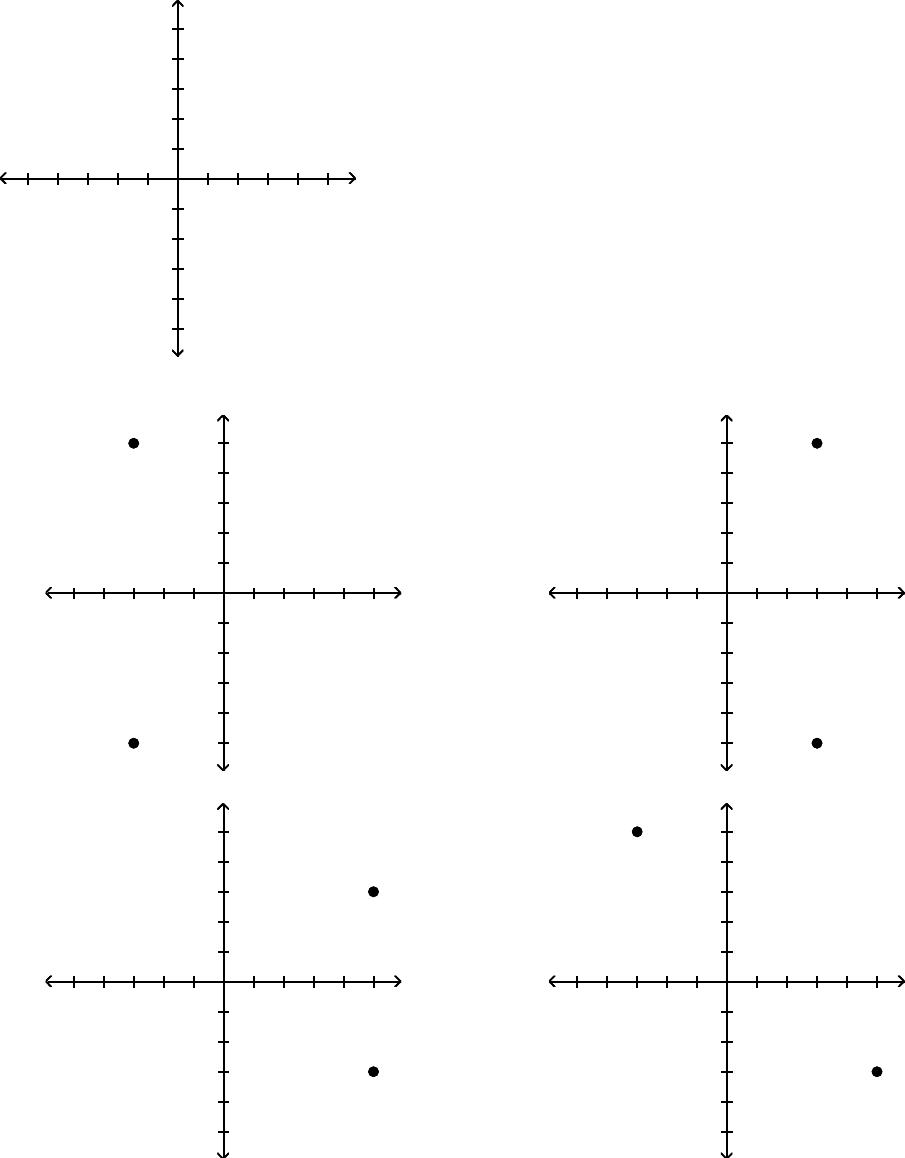
Plot the point A. Plot the point B that has the given symmetry with point A.
1) A = (–3
,
5); B is symmetric to A with respect to the x–axis
x
-5 -4 -3 -2 -1 1 2 3 4 5
y
5
4
3
2
1
-1
-2
-3
-4
-5
x
-5 -4 -3 -2 -1 1 2 3 4 5
y
5
4
3
2
1
-1
-2
-3
-4
-5
A)
x
–5–4–3–2–1 12345
y
5
4
3
2
1
-1
-2
-3
-4
-5
A
B
x
–5–4–3–2–1 12345
y
5
4
3
2
1
-1
-2
-3
-4
-5
A
B
B)
x
–5–4–3–2–1 12345
y
5
4
3
2
1
-1
-2
-3
-4
-5
A
B
x
–5–4–3–2–1 12345
y
5
4
3
2
1
-1
-2
-3
-4
-5
A
B
C)
x
–5–4–3–2–1 12345
y
5
4
3
2
1
-1
-2
-3
-4
-5
A
B
x
–5–4–3–2–1 12345
y
5
4
3
2
1
-1
-2
-3
-4
-5
A
B
D)
x
–5–4–3–2–1 12345
y
5
4
3
2
1
-1
-2
-3
-4
-5
A
B
x
–5–4–3–2–1 12345
y
5
4
3
2
1
-1
-2
-3
-4
-5
A
B
Page 3
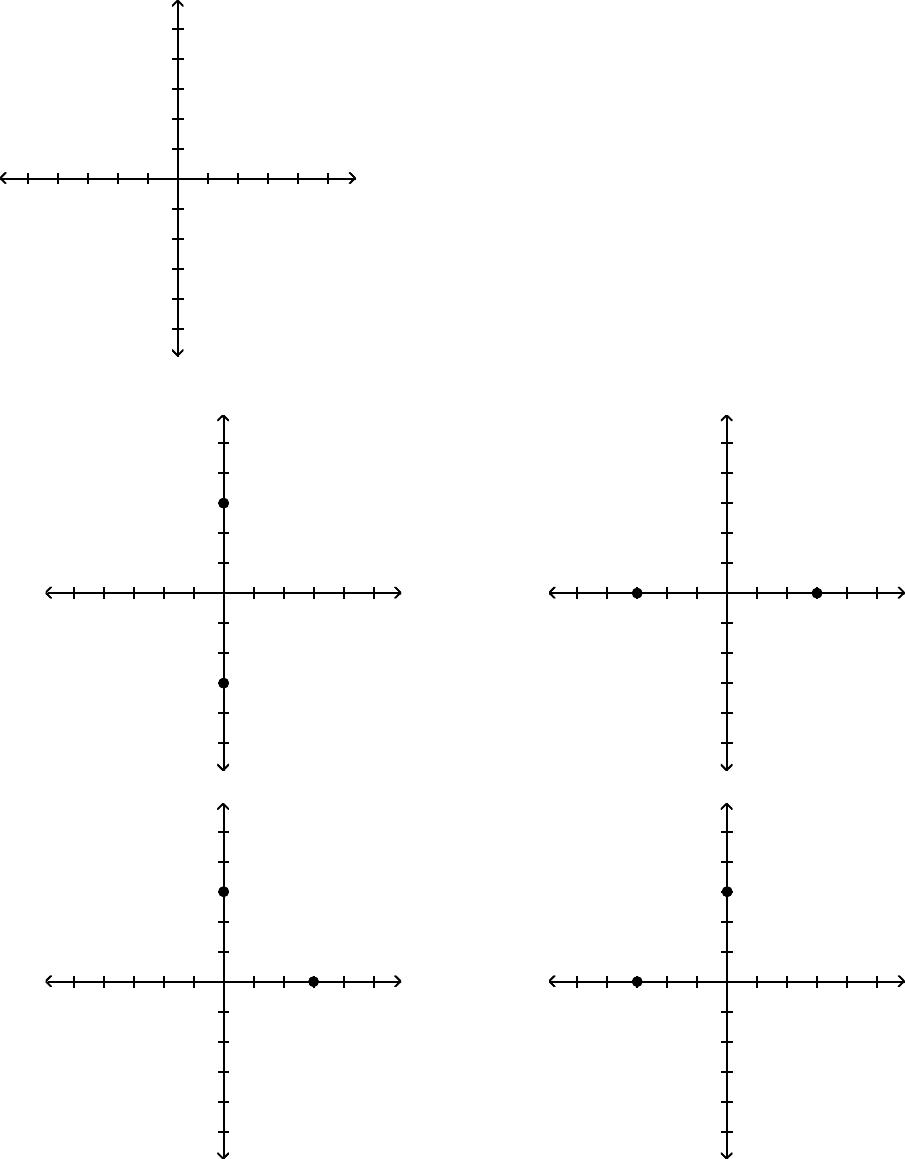
2) A = (0, 3); B is symmetric to A with respect to the origin
x
-5 -4 -3 -2 -1 1 2 3 4 5
y
5
4
3
2
1
-1
-2
-3
-4
-5
x
-5 -4 -3 -2 -1 1 2 3 4 5
y
5
4
3
2
1
-1
-2
-3
-4
-5
A)
x
–5–4–3–2–1 12345
y
5
4
3
2
1
-1
-2
-3
-4
-5
A
B
x
–5–4–3–2–1 12345
y
5
4
3
2
1
-1
-2
-3
-4
-5
A
B
B)
x
–5–4–3–2–1 12345
y
5
4
3
2
1
-1
-2
-3
-4
-5
AB
x
–5–4–3–2–1 12345
y
5
4
3
2
1
-1
-2
-3
-4
-5
AB
C)
x
–5–4–3–2–1 12345
y
5
4
3
2
1
-1
-2
-3
-4
-5
A
B
x
–5–4–3–2–1 12345
y
5
4
3
2
1
-1
-2
-3
-4
-5
A
B
D)
x
–5–4–3–2–1 12345
y
5
4
3
2
1
-1
-2
-3
-4
-5
A
B
x
–5–4–3–2–1 12345
y
5
4
3
2
1
-1
-2
-3
-4
-5
A
B
Page 4
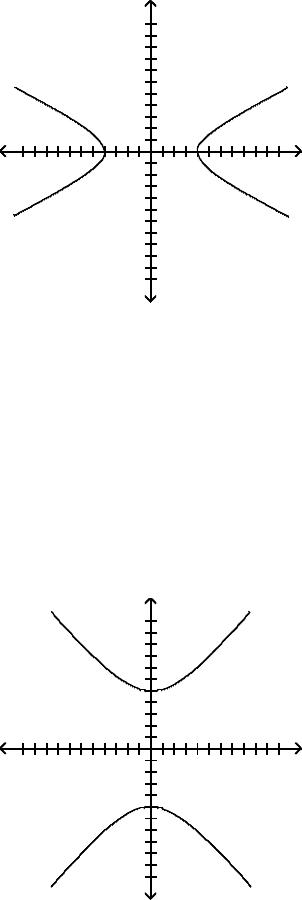
List the intercepts of the graph.Tell whether the graph is symmetric with respect to the x–axis, y–axis, origin, or
none of these.
3)
x
-10 -5 5 10
y
10
5
-5
-10
x
-10 -5 5 10
y
10
5
-5
-10
A) intercepts: (–4
,
0) and (4
,
0)
symmetric with respect to x–axis, y–axis, and origin
B) intercepts: (–4
,
0) and (4
,
0)
symmetric with respect to origin
C) intercepts: (0, –4) and (0, 4)
symmetric with respect to x–axis, y–axis, and origin
D) intercepts: (0, –4) and (0, 4)
symmetric with respect to y–axis
4)
x
-10 -5 5 10
y
10
5
-5
-10
x
-10 -5 5 10
y
10
5
-5
-10
A) intercepts: (0, 5) and (0, –5)
symmetric with respect to x–axis, y–axis, and origin
B) intercepts: (0, 5) and (0, –5)
symmetric with respect to origin
C) intercepts: (5
,
0) and (–5
,
0)
symmetric with respect to x–axis, y–axis, and origin
D) intercepts: (5
,
0) and (–5
,
0
symmetric with respect to y–axis
Page 5
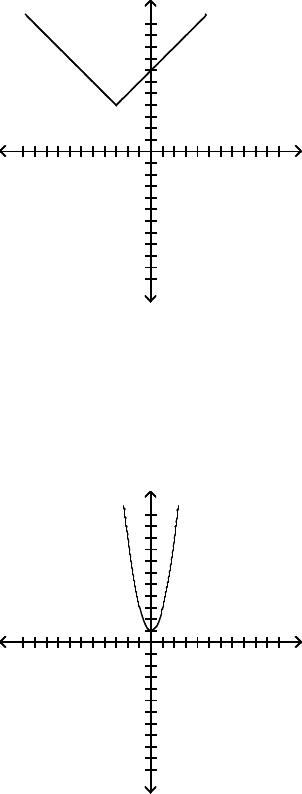
5)
x
-10 -5 5 10
y
10
5
-5
-10
x
-10 -5 5 10
y
10
5
-5
-10
A) intercept: (0, 7)
no symmetry
B) intercept: (7
,
0)
no symmetry
C) intercept: (0, 7)
symmetric with respect to x–axis
D) intercept: (7
,
0)
symmetric with respect to y–axis
6)
x
-10 -5 5 10
y
10
5
-5
-10
x
-10 -5 5 10
y
10
5
-5
-10
A) intercept: (0, 1)
symmetric with respect to y–axis
B) intercept: (0, 1)
symmetric with respect to origin
C) intercept: (1
,
0)
symmetric with respect to y–axis
D) intercept: (1
,
0)
symmetric with respect to x–axis
Page 6
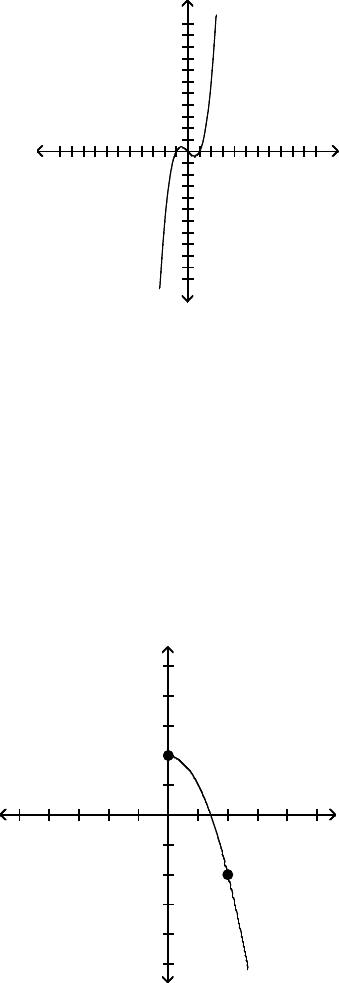
7)
x
-10 -5 5 10
y
10
5
-5
-10
x
-10 -5 5 10
y
10
5
-5
-10
A) intercepts: (–1
,
0), (0, 0), (1
,
0)
symmetric with respect to origin
B) intercepts: (–1
,
0), (0, 0), (1
,
0)
symmetric with respect to x–axis
C) intercepts: (–1
,
0), (0, 0), (1
,
0)
symmetric with respect to y–axis
D) intercepts: (–1
,
0), (0, 0), (1
,
0)
symmetric with respect to x–axis, y–axis, and origin
Draw a complete graph so that it has the given type of symmetry.
8) Symmetric with respect to the y–axis
x
-5 -4 -3 -2 -1 1 2 3 4 5
y
5
4
3
2
1
-1
-2
-3
-4
-5
(0, 2)
(2, –2)
x
-5 -4 -3 -2 -1 1 2 3 4 5
y
5
4
3
2
1
-1
-2
-3
-4
-5
(0, 2)
(2, –2)
Page 7
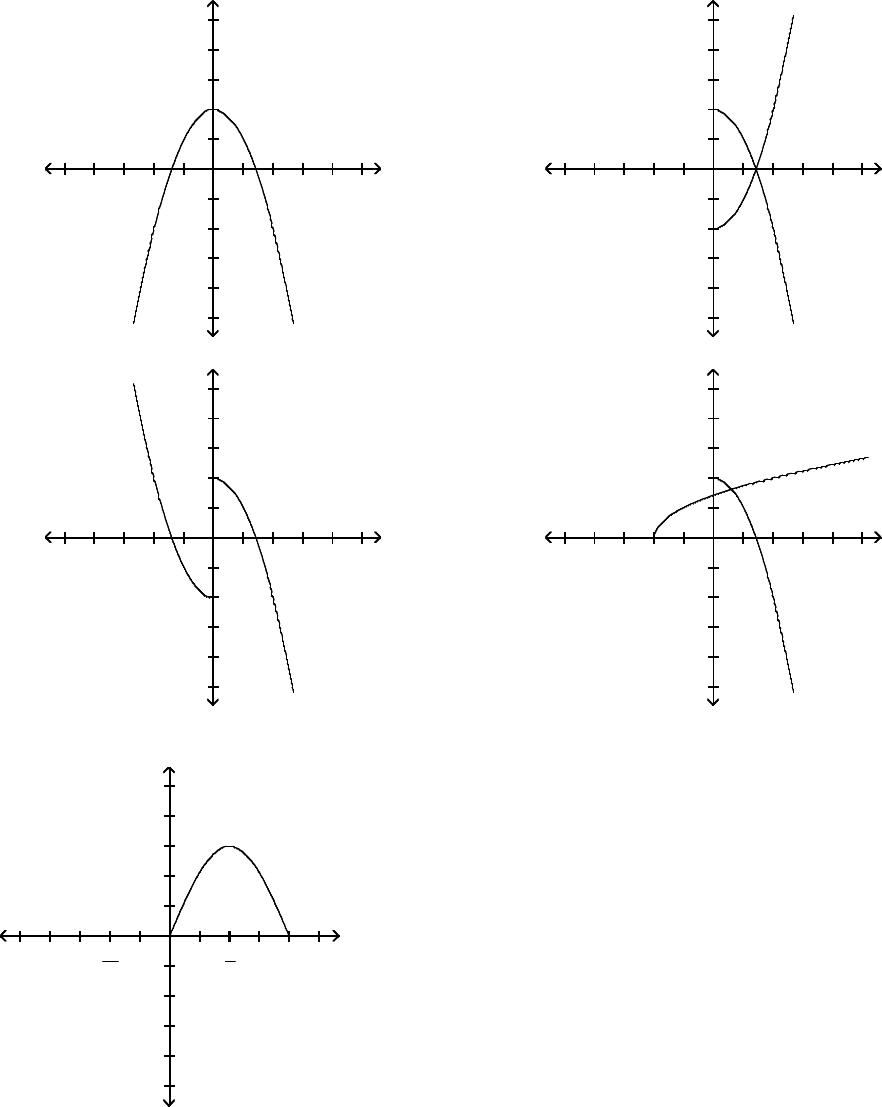
A)
x
-5 -4 -3 -2 -1 1 2 3 4 5
y
5
4
3
2
1
-1
-2
-3
-4
-5
x
-5 -4 -3 -2 -1 1 2 3 4 5
y
5
4
3
2
1
-1
-2
-3
-4
-5
B)
x
-5 -4 -3 -2 -1 1 2 3 4 5
y
5
4
3
2
1
-1
-2
-3
-4
-5
x
-5 -4 -3 -2 -1 1 2 3 4 5
y
5
4
3
2
1
-1
-2
-3
-4
-5
C)
x
-5 -4 -3 -2 -1 1 2 3 4 5
y
5
4
3
2
1
-1
-2
-3
-4
-5
x
-5 -4 -3 -2 -1 1 2 3 4 5
y
5
4
3
2
1
-1
-2
-3
-4
-5
D)
x
-5 -4 -3 -2 -1 1 2 3 4 5
y
5
4
3
2
1
-1
-2
-3
-4
-5
x
-5 -4 -3 -2 -1 1 2 3 4 5
y
5
4
3
2
1
-1
-2
-3
-4
-5
9) origin
x
––
2
2
y
5
4
3
2
1
-1
-2
-3
-4
-5
x
––
2
2
y
5
4
3
2
1
-1
-2
-3
-4
-5
Page 8
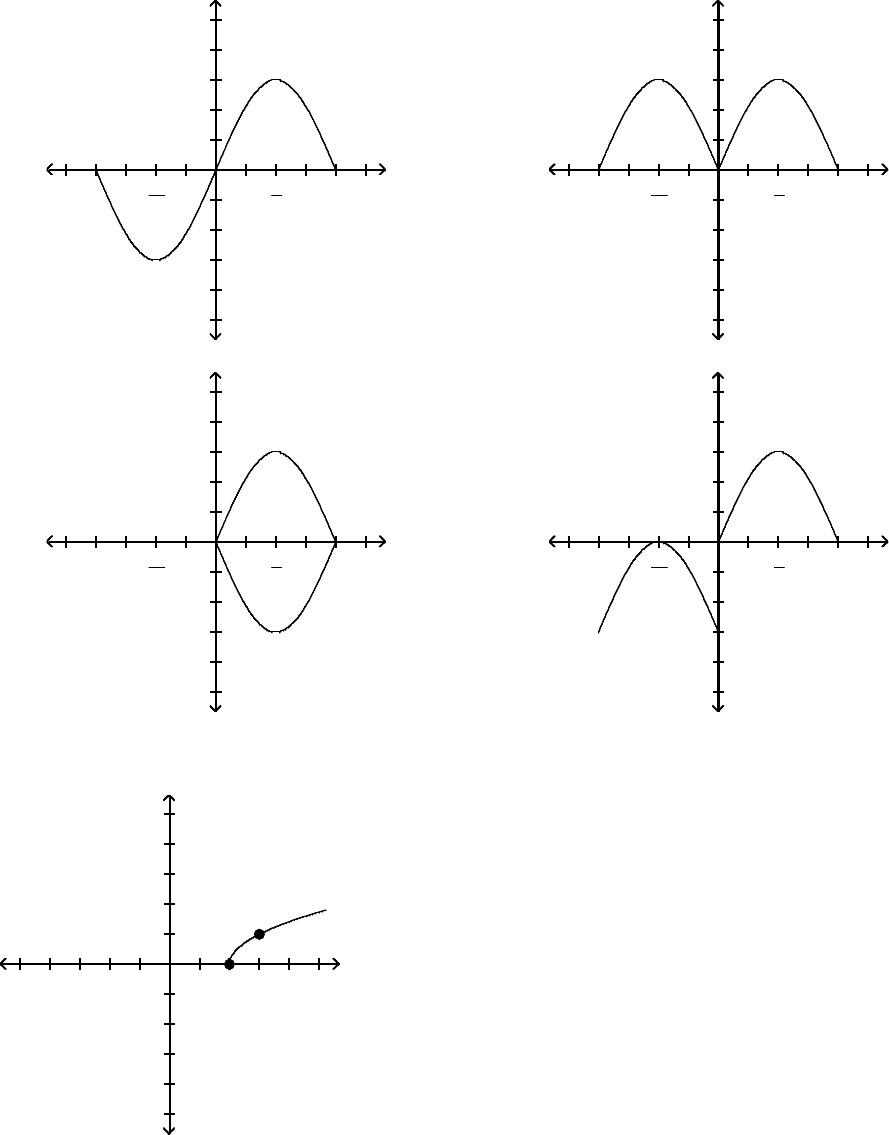
A)
x
––
2
2
y
5
4
3
2
1
-1
-2
-3
-4
-5
x
––
2
2
y
5
4
3
2
1
-1
-2
-3
-4
-5
B)
x
––
2
2
y
5
4
3
2
1
-1
-2
-3
-4
-5
x
––
2
2
y
5
4
3
2
1
-1
-2
-3
-4
-5
C)
x
––
2
2
y
5
4
3
2
1
-1
-2
-3
-4
-5
x
––
2
2
y
5
4
3
2
1
-1
-2
-3
-4
-5
D)
x
––
2
2
y
5
4
3
2
1
-1
-2
-3
-4
-5
x
––
2
2
y
5
4
3
2
1
-1
-2
-3
-4
-5
10) Symmetric with respect to the x–axis
x
–5–4–3–2–1 12345
y
5
4
3
2
1
-1
-2
-3
-4
-5
(2, 0)
(3, 1)
x
–5–4–3–2–1 12345
y
5
4
3
2
1
-1
-2
-3
-4
-5
(2, 0)
(3, 1)
Page 9
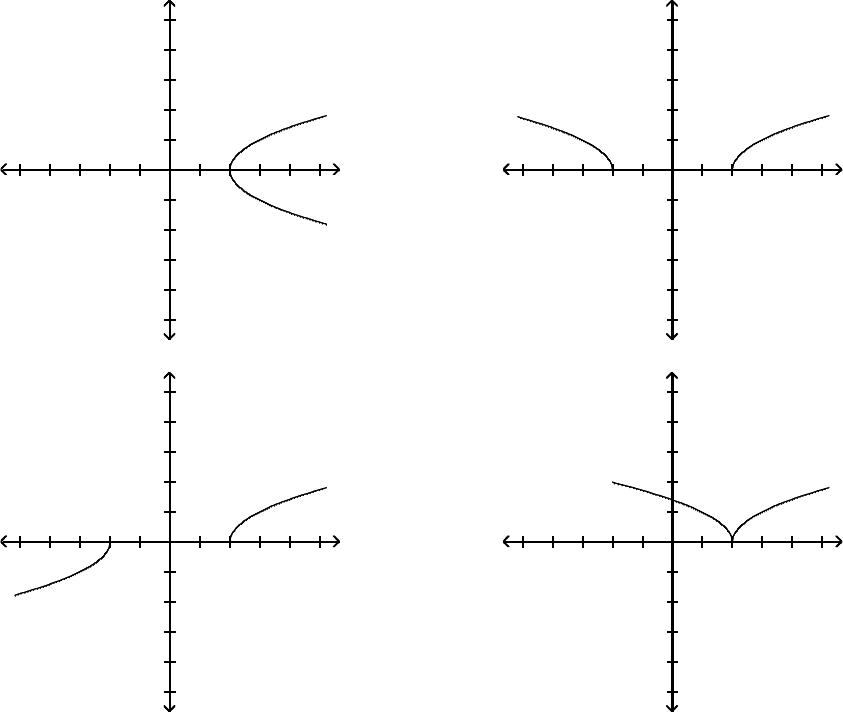
A)
x
-5 -4 -3 -2 -1 1 2 3 4 5
y
5
4
3
2
1
-1
-2
-3
-4
-5
x
-5 -4 -3 -2 -1 1 2 3 4 5
y
5
4
3
2
1
-1
-2
-3
-4
-5
B)
x
-5 -4 -3 -2 -1 1 2 3 4 5
y
5
4
3
2
1
-1
-2
-3
-4
-5
x
-5 -4 -3 -2 -1 1 2 3 4 5
y
5
4
3
2
1
-1
-2
-3
-4
-5
C)
x
-5 -4 -3 -2 -1 1 2 3 4 5
y
5
4
3
2
1
-1
-2
-3
-4
-5
x
-5 -4 -3 -2 -1 1 2 3 4 5
y
5
4
3
2
1
-1
-2
-3
-4
-5
D)
x
-5 -4 -3 -2 -1 1 2 3 4 5
y
5
4
3
2
1
-1
-2
-3
-4
-5
x
-5 -4 -3 -2 -1 1 2 3 4 5
y
5
4
3
2
1
-1
-2
-3
-4
-5
List the intercepts and type(s) of symmetry, if any.
11) y2 = x
+ 4
A) intercepts: (–4
,
0), (0, 2), (0, –2)
symmetric with respect to x–axis
B) intercepts: (4
,
0), (0, 2), (0, –2)
symmetric with respect to x–axis
C) intercepts: (0, –4), (2
,
0), (–2
,
0)
symmetric with respect to y–axis
D) intercepts: (0, 4), (2
,
0), (–2
,
0)
symmetric with respect to y–axis
12) 9x2 + 4y2 = 36
A) intercepts: (2
,
0), (–2
,
0), (0, 3), (0, –3)
symmetric with respect to x–axis, y–axis, and origin
B) intercepts: (3
,
0), (–3
,
0), (0, 2), (0, –2)
symmetric with respect to x–axis and y–axis
C) intercepts: (2
,
0), (–2
,
0), (0, 3), (0, –3)
symmetric with respect to x–axis and y–axis
D) intercepts: (3
,
0), (–3
,
0), (0, 2), (0, –2)
symmetric with respect to the origin
Page 10

13) y = –x3
x2 – 4
A) intercept: (0, 0)
symmetric with respect to origin
B) intercepts: (2
,
0), (–2
,
0), (0, 0)
symmetric with respect to origin
C) intercept: (0, 0)
symmetric with respect to x–axis
D) intercept: (0, 0)
symmetric with respect to y–axis
Determine whether the graph of the equation is symmetric with respect to the x–axis, the y–axis, and/or the origin.
14) y = x + 5
A) x–axis
B) y–axis
C) origin
D) x–axis, y–axis, origin
E) none
15) y = –2x
A) origin
B) x–axis
C) y–axis
D) x–axis, y–axis, origin
E) none
16) x2 + y – 1 = 0
A) y–axis
B) x–axis
C) origin
D) x–axis, y–axis, origin
E) none
17) y2 – x – 64 = 0
A) x–axis
B) y–axis
C) origin
D) x–axis, y–axis, origin
E) none
18) 4x2 + 16y2 = 64
A) origin
B) x–axis
C) y–axis
D) x–axis, y–axis, origin
E) none
19) 16x2 + y2 = 16
A) origin
B) x–axis
C) y–axis
D) x–axis, y–axis, origin
E) none
Page 11

20) y = x2 + 11x + 30
A) x–axis
B) y–axis
C) origin
D) x–axis, y–axis, origin
E) none
21) y = 7x
x2 + 49
A) origin
B) x–axis
C) y–axis
D) x–axis, y–axis, origin
E) none
22) y = x2 – 81
9x4
A) y–axis
B) x–axis
C) origin
D) x–axis, y–axis, origin
E) none
23) y = 5x2 + 2
A) y–axis
B) x–axis
C) origin
D) x–axis, y–axis, origin
E) none
24) y = (x – 4)(x + 9)
A) x–axis
B) y–axis
C) origin
D) x–axis, y–axis, origin
E) none
25) y = –7x3 + 2x
A) origin
B) x–axis
C) y–axis
D) x–axis, y–axis, origin
E) none
26) y = –9x4 + 8x + 7
A) origin
B) x–axis
C) y–axis
D) x–axis, y–axis, origin
E) none
Page 12
Solve the problem.
27) If a graph is symmetric with respect to the y–axis and it contains the point (5, –6), which of the following
points is also on the graph?
A) (–5, 6) B) (–5, –6) C) (5, –6) D) (–6, 5)
28) If a graph is symmetric with respect to the origin and it contains the point (–4, 7), which of the following
points is also on the graph?
A) (4, –7) B) (–4, –7) C) (4, 7) D) (7, –4)
3 Know How to Graph Key Equations
MULTIPLE CHOICE. Choose the one alternative that best completes the statement or answers the question.
Graph the equation by plotting points.
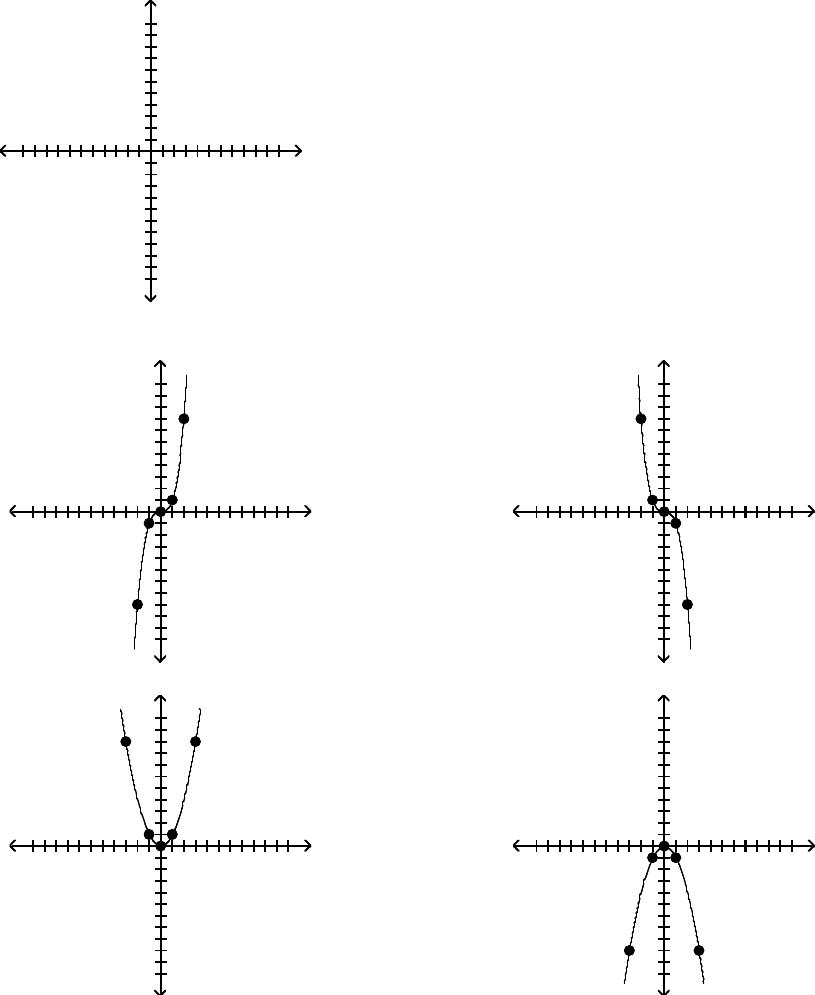
1) y = x3
x
-10 -5 5 10
y
10
5
-5
-10
x
-10 -5 5 10
y
10
5
-5
-10
A)
x
-10 -5 5 10
y
10
5
-5
-10
x
-10 -5 5 10
y
10
5
-5
-10
B)
x
-10 -5 5 10
y
10
5
-5
-10
x
-10 -5 5 10
y
10
5
-5
-10
C)
x
-10 -5 5 10
y
10
5
-5
-10
x
-10 -5 5 10
y
10
5
-5
-10
D)
x
-10 -5 5 10
y
10
5
-5
-10
x
-10 -5 5 10
y
10
5
-5
-10
Page 13
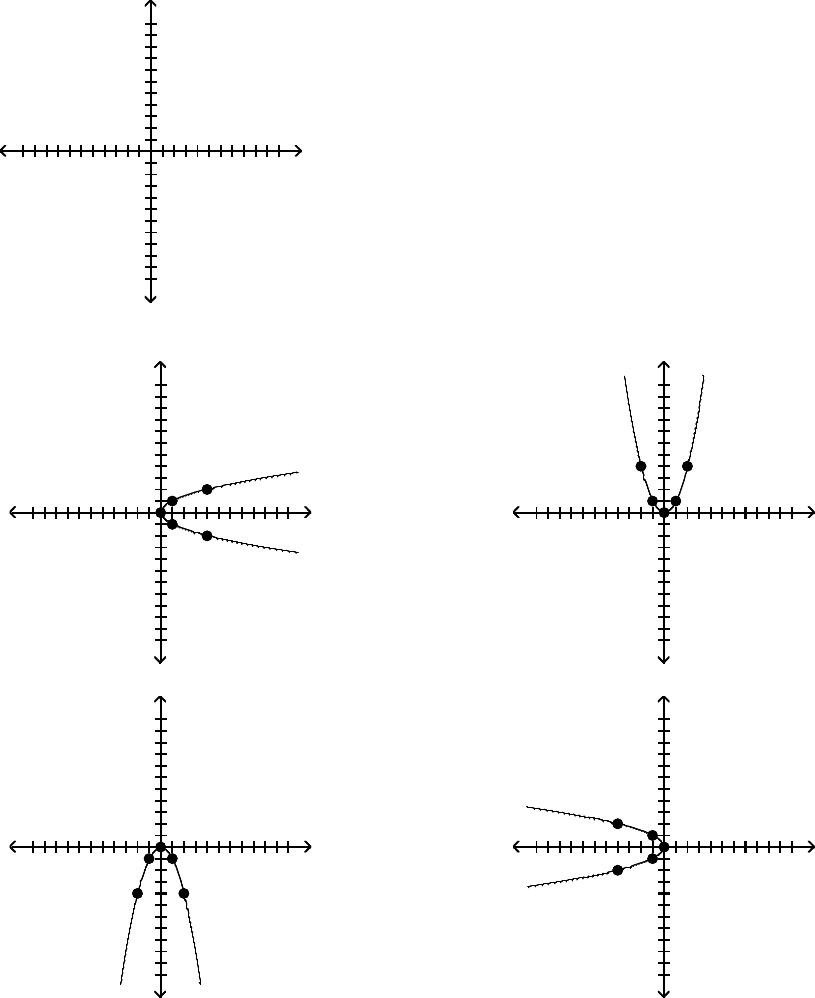
2) x = y2
x
-10 -5 5 10
y
10
5
-5
-10
x
-10 -5 5 10
y
10
5
-5
-10
A)
x
-10 -5 5 10
y
10
5
-5
-10
x
-10 -5 5 10
y
10
5
-5
-10
B)
x
-10 -5 5 10
y
10
5
-5
-10
x
-10 -5 5 10
y
10
5
-5
-10
C)
x
-10 -5 5 10
y
10
5
-5
-10
x
-10 -5 5 10
y
10
5
-5
-10
D)
x
-10 -5 5 10
y
10
5
-5
-10
x
-10 -5 5 10
y
10
5
-5
-10
Page 14
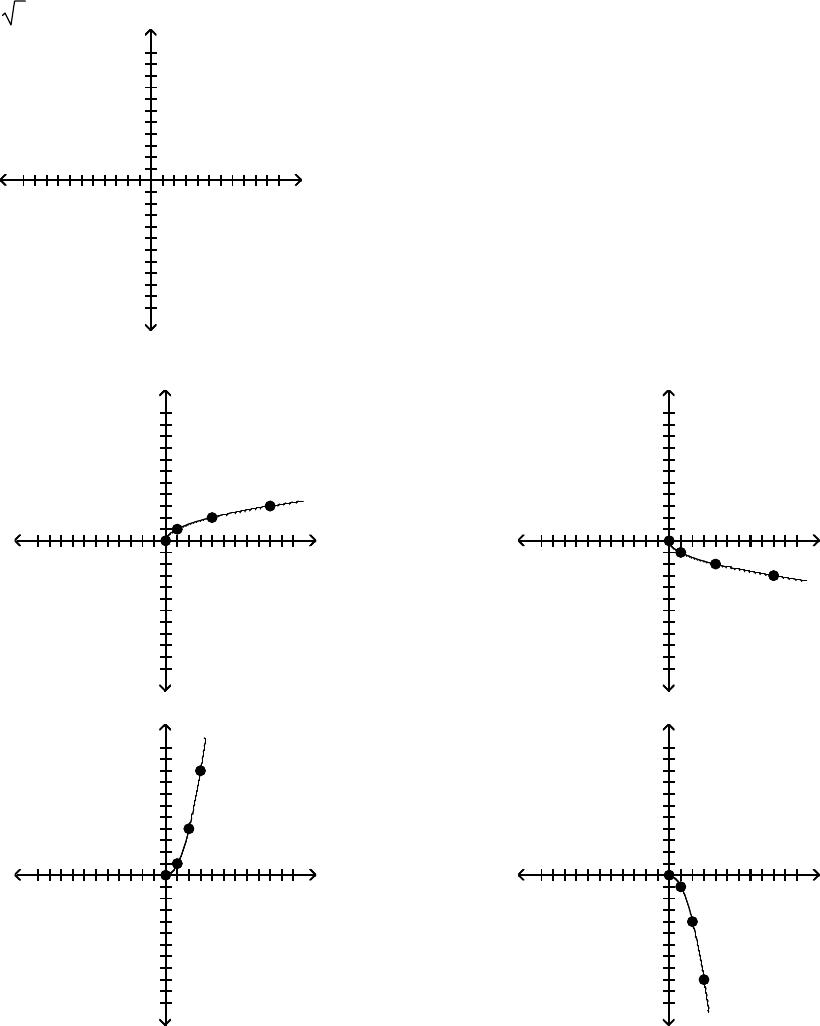
3) y = x
x
-10 -5 5 10
y
10
5
-5
-10
x
-10 -5 5 10
y
10
5
-5
-10
A)
x
-10 -5 5 10
y
10
5
-5
-10
x
-10 -5 5 10
y
10
5
-5
-10
B)
x
-10 -5 5 10
y
10
5
-5
-10
x
-10 -5 5 10
y
10
5
-5
-10
C)
x
-10 -5 5 10
y
10
5
-5
-10
x
-10 -5 5 10
y
10
5
-5
-10
D)
x
-10 -5 5 10
y
10
5
-5
-10
x
-10 -5 5 10
y
10
5
-5
-10
Page 15
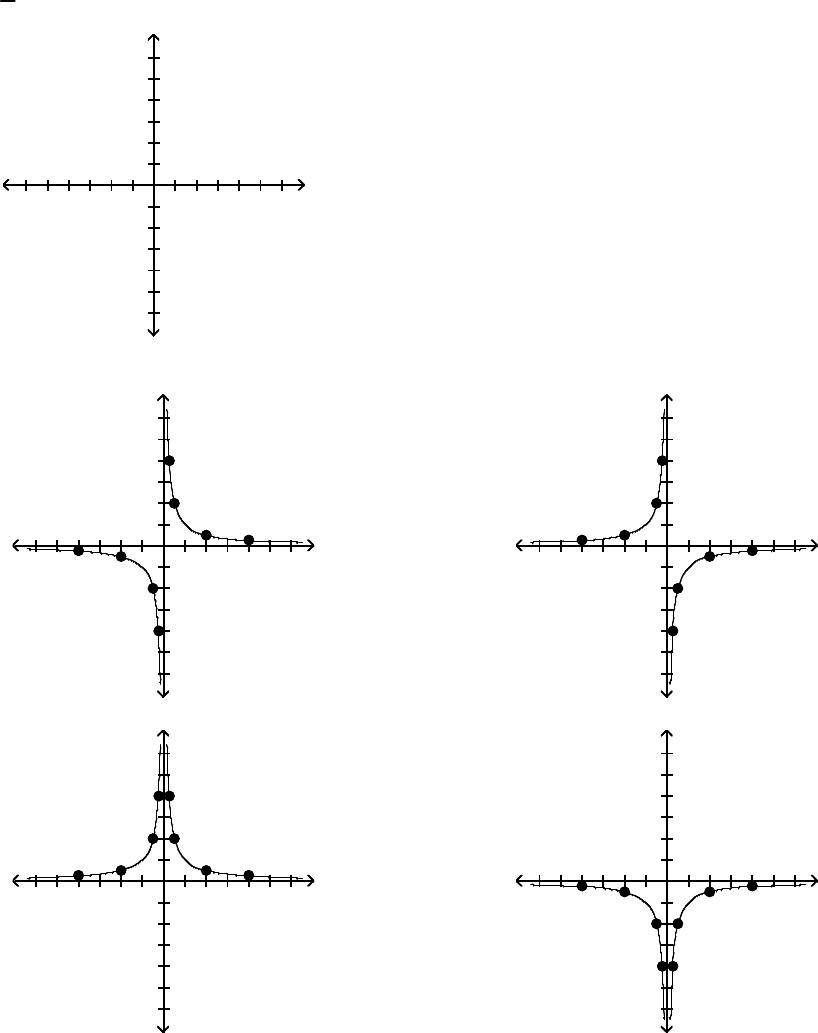
4) y = 1
x
x
-5 5
y
5
-5
x
-5 5
y
5
-5
A)
x
-5 5
y
5
-5
x
-5 5
y
5
-5
B)
x
-5 5
y
5
-5
x
-5 5
y
5
-5
C)
x
-5 5
y
5
-5
x
-5 5
y
5
-5
D)
x
-5 5
y
5
-5
x
-5 5
y
5
-5
Page 16
2.2 Lines
1 Calculate and Interpret the Slope of a Line
MULTIPLE CHOICE. Choose the one alternative that best completes the statement or answers the question.
Find the slope of the line through the points and interpret the slope.
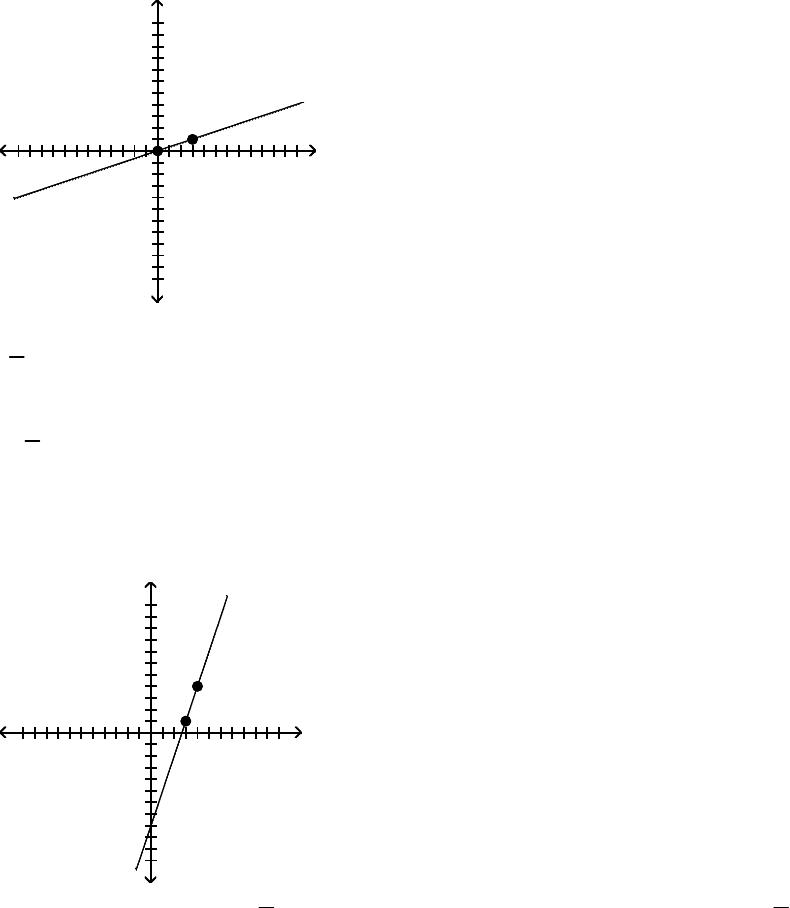
1)
x
-10 -5 5 10
y
10
5
-5
-10
(3, 1)
(0, 0)
x
-10 -5 5 10
y
10
5
-5
-10
(3, 1)
(0, 0)
A) 1
3; for every 3–unit increase in x, y will increase by 1 unit
B) 3; for every 1–unit increase in x, y will increase by 3 units
C) – 1
3; for every 3–unit increase in x, y will decrease by 1 unit
D) –3; for every 1–unit increase in x, y will decrease by 3 units
Find the slope of the line.
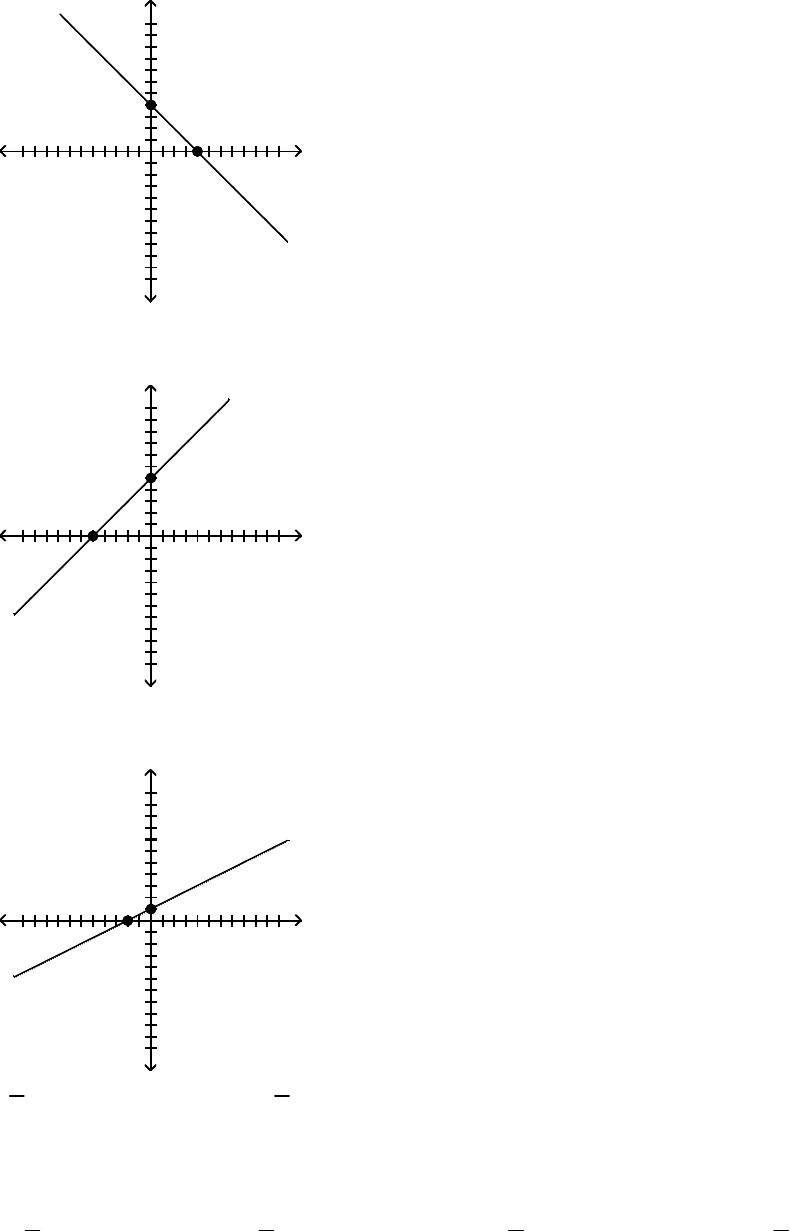
2)
x
-10 -5 5 10
y
10
5
-5
-10
x
-10 -5 5 10
y
10
5
-5
-10
A) 3 B) 1
3C) –3D)
– 1
3
Page 17
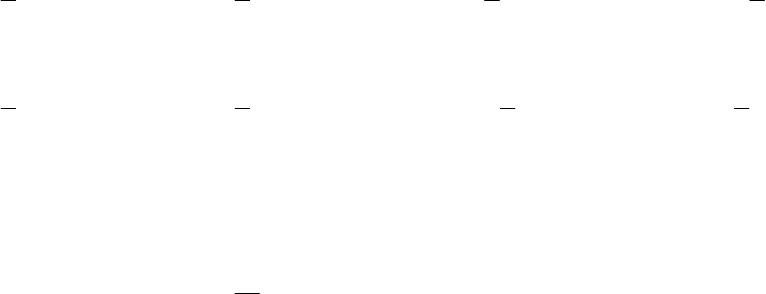
3)
x
-10 -5 5 10
y
10
5
-5
-10
x
-10 -5 5 10
y
10
5
-5
-10
A) –1 B) 1 C) 4 D) –4
4)
x
-10 -5 5 10
y
10
5
-5
-10
x
-10 -5 5 10
y
10
5
-5
-10
A) 1 B) –1C)
–5D)5
5)
x
-10 -5 5 10
y
10
5
-5
-10
x
-10 -5 5 10
y
10
5
-5
-10
A) 1
2B) – 1
2C) 2 D) –2
Find the slope of the line containing the two points.
6) (1
,
–2); (–7
,
7)
A) – 9
8B) 9
8C) 8
9D) – 8
9
Page 18
7) (9
,
0); (0, 4)
A) – 4
9B) 4
9C) 9
4D) – 9
4
8) (–2
,
–5); (5
,
–8)
A) – 3
7B) 3
7C) – 7
3D) 7
3
9) (–2
,
–1); (–2
,
–2)
A) –1 B) 1 C) 0 D) undefined
10) (9
,
–7); (–2
,
–7)
A) 0 B) 1
11 C) –11 D) undefined
Page 19
2 Graph Lines Given a Point and the Slope
MULTIPLE CHOICE. Choose the one alternative that best completes the statement or answers the question.
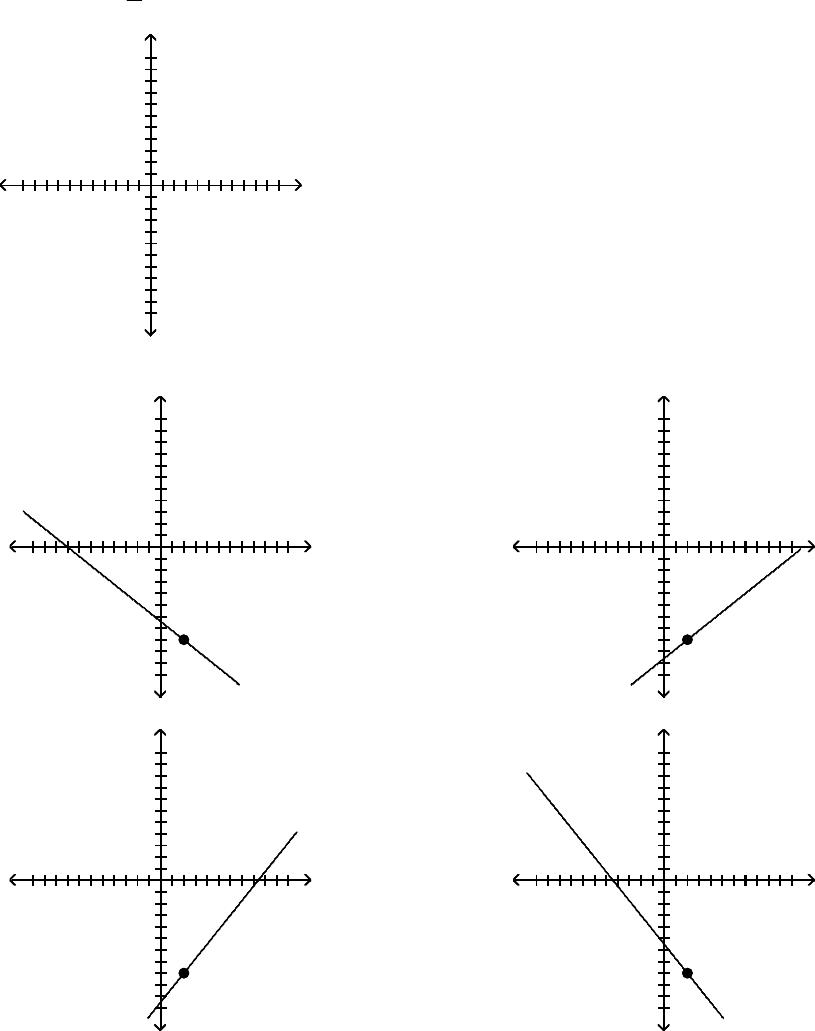
Graph the line containing the point P and having slope m.
1) P = (2, –8); m = – 4
5
x
-10 -5 5 10
y
10
5
-5
-10
x
-10 -5 5 10
y
10
5
-5
-10
A)
x
-10 -5 5 10
y
10
5
-5
-10
x
-10 -5 5 10
y
10
5
-5
-10
B)
x
-10 -5 5 10
y
10
5
-5
-10
x
-10 -5 5 10
y
10
5
-5
-10
C)
x
-10 -5 5 10
y
10
5
-5
-10
x
-10 -5 5 10
y
10
5
-5
-10
D)
x
-10 -5 5 10
y
10
5
-5
-10
x
-10 -5 5 10
y
10
5
-5
-10
Page 20
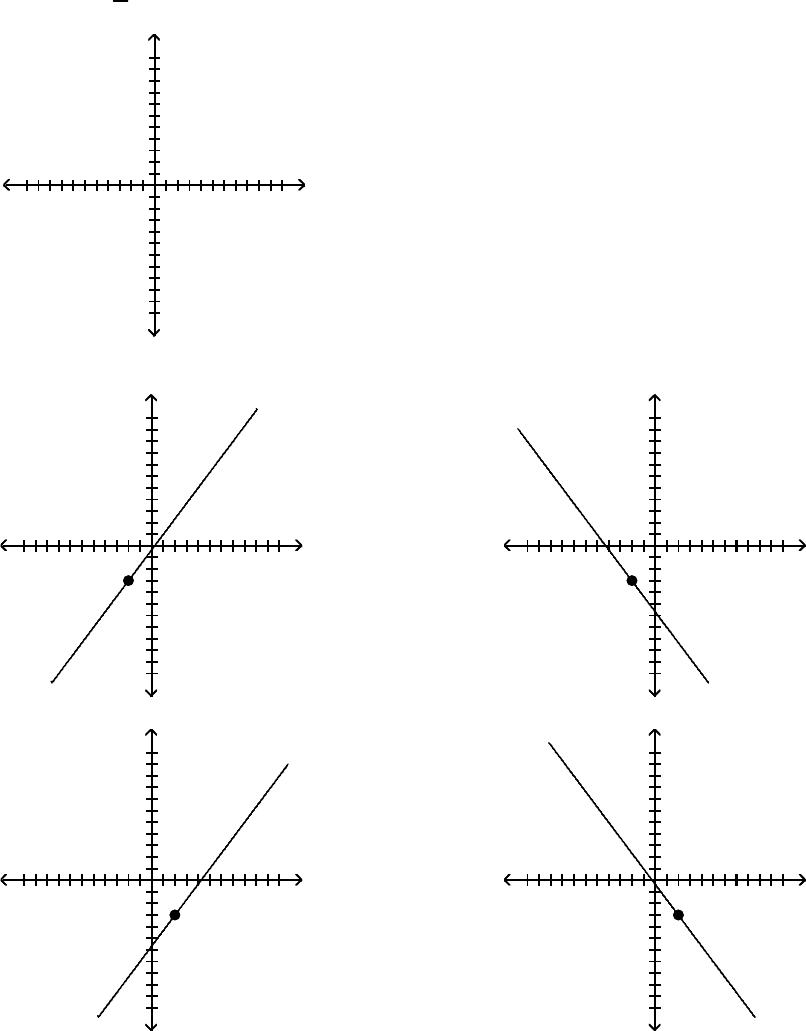
2) P = (–2, –3); m = 4
3
x
-10 -5 5 10
y
10
5
-5
-10
x
-10 -5 5 10
y
10
5
-5
-10
A)
x
-10 -5 5 10
y
10
5
-5
-10
x
-10 -5 5 10
y
10
5
-5
-10
B)
x
-10 -5 5 10
y
10
5
-5
-10
x
-10 -5 5 10
y
10
5
-5
-10
C)
x
-10 -5 5 10
y
10
5
-5
-10
x
-10 -5 5 10
y
10
5
-5
-10
D)
x
-10 -5 5 10
y
10
5
-5
-10
x
-10 -5 5 10
y
10
5
-5
-10
Page 21
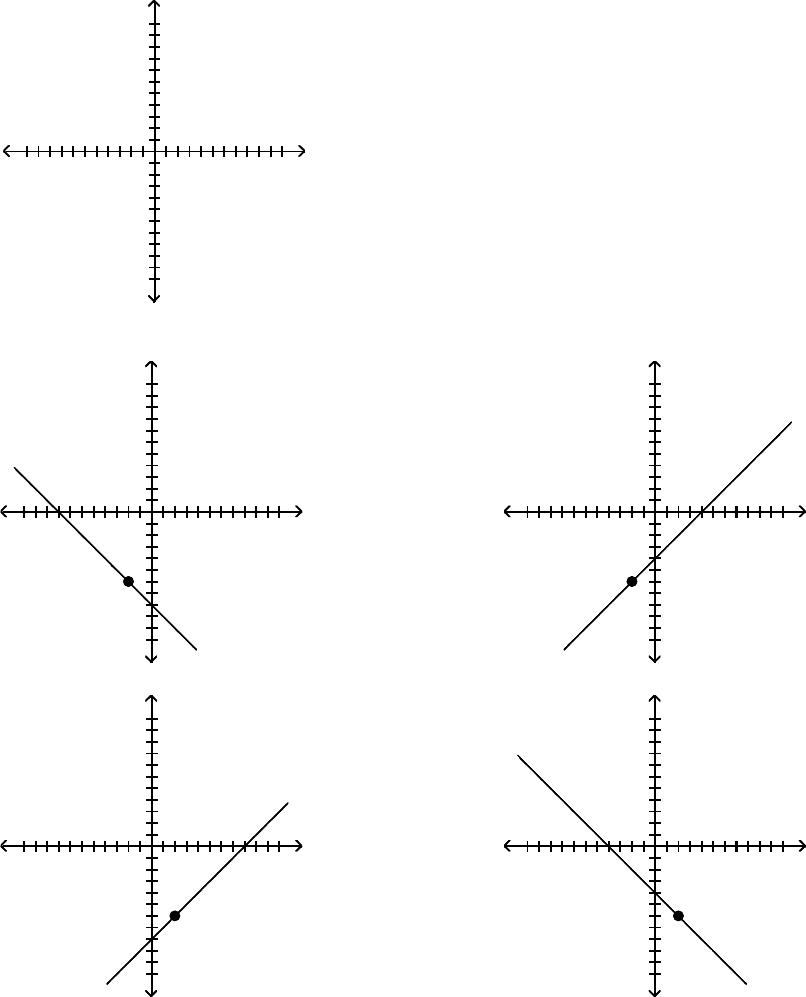
3) P = (–2
,
–6); m = –1
x
-10 -5 5 10
y
10
5
-5
-10
x
-10 -5 5 10
y
10
5
-5
-10
A)
x
-10 -5 5 10
y
10
5
-5
-10
x
-10 -5 5 10
y
10
5
-5
-10
B)
x
-10 -5 5 10
y
10
5
-5
-10
x
-10 -5 5 10
y
10
5
-5
-10
C)
x
-10 -5 5 10
y
10
5
-5
-10
x
-10 -5 5 10
y
10
5
-5
-10
D)
x
-10 -5 5 10
y
10
5
-5
-10
x
-10 -5 5 10
y
10
5
-5
-10
Page 22
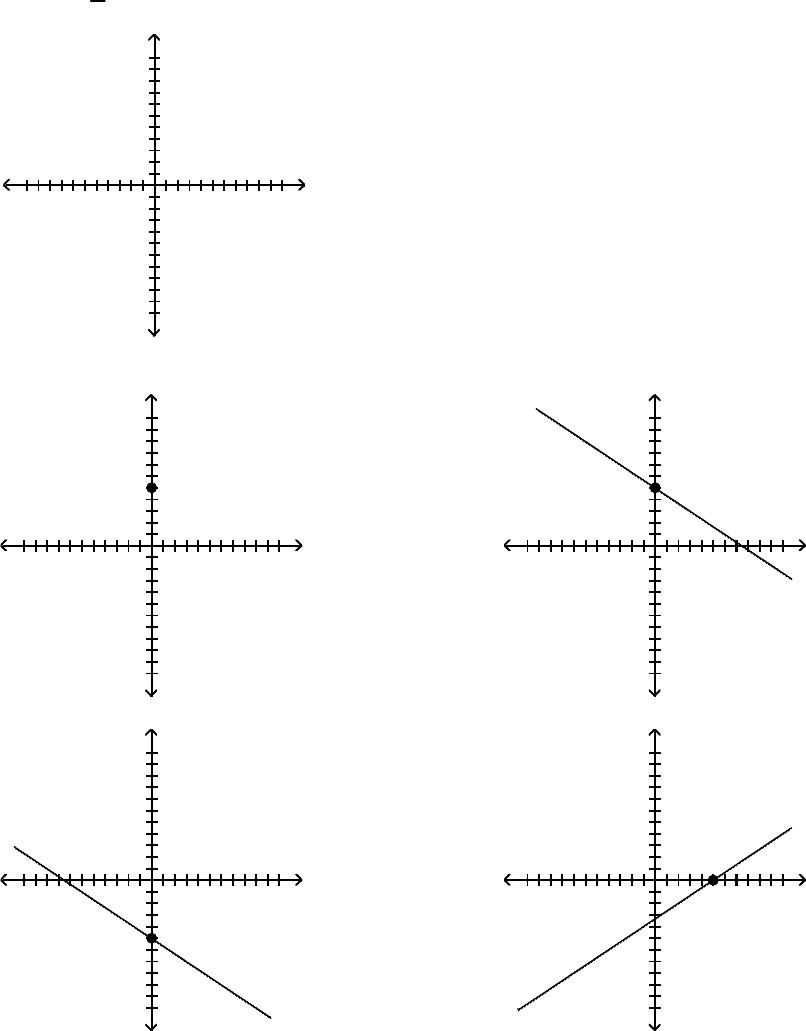
4) P = (0, 5); m = 2
3
x
-10 -5 5 10
y
10
5
-5
-10
x
-10 -5 5 10
y
10
5
-5
-10
A)
x
-10 -5 5 10
y
10
5
-5
-10
x
-10 -5 5 10
y
10
5
-5
-10
B)
x
-10 -5 5 10
y
10
5
-5
-10
x
-10 -5 5 10
y
10
5
-5
-10
C)
x
-10 -5 5 10
y
10
5
-5
-10
x
-10 -5 5 10
y
10
5
-5
-10
D)
x
-10 -5 5 10
y
10
5
-5
-10
x
-10 -5 5 10
y
10
5
-5
-10
Page 23
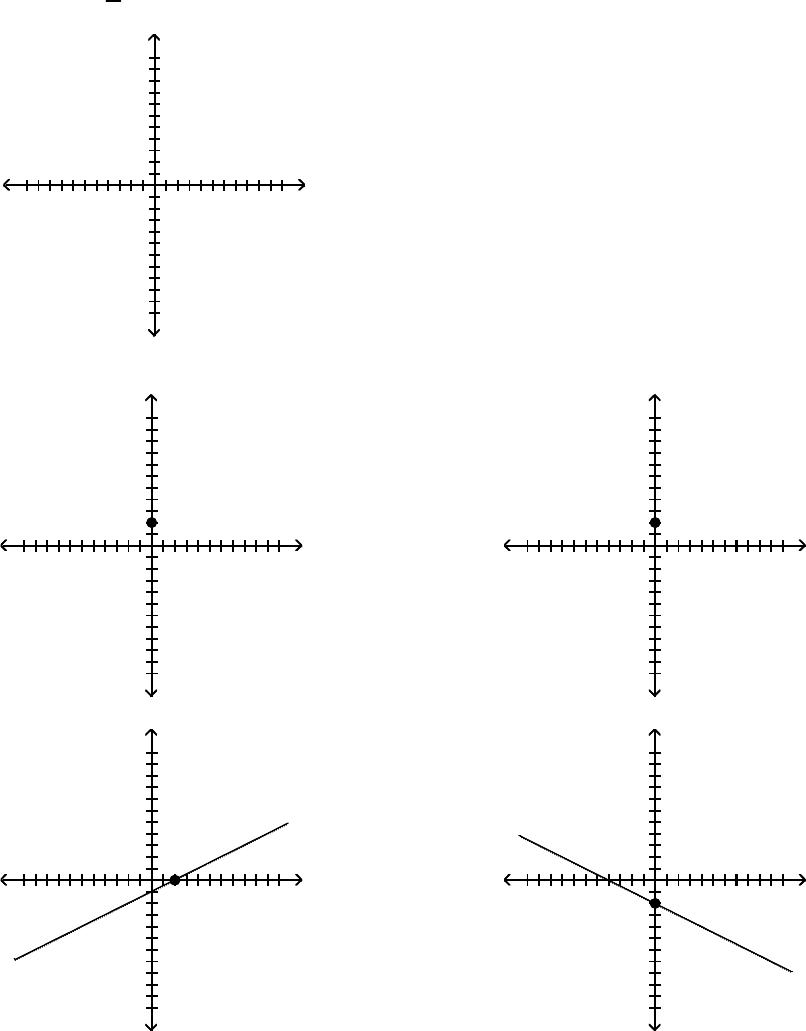
5) P = (0, 2); m = – 1
2
x
-10 -5 5 10
y
10
5
-5
-10
x
-10 -5 5 10
y
10
5
-5
-10
A)
x
-10 -5 5 10
y
10
5
-5
-10
x
-10 -5 5 10
y
10
5
-5
-10
B)
x
-10 -5 5 10
y
10
5
-5
-10
x
-10 -5 5 10
y
10
5
-5
-10
C)
x
-10 -5 5 10
y
10
5
-5
-10
x
-10 -5 5 10
y
10
5
-5
-10
D)
x
-10 -5 5 10
y
10
5
-5
-10
x
-10 -5 5 10
y
10
5
-5
-10
Page 24
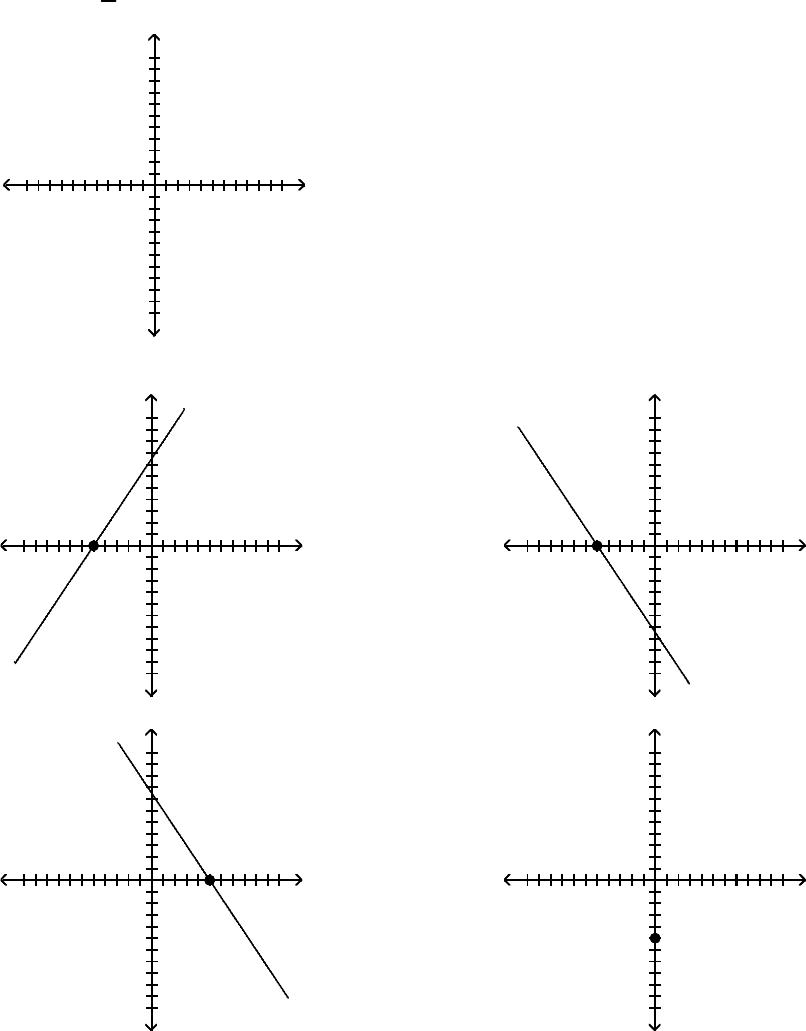
6) P = (–5, 0); m = 3
2
x
-10 -5 5 10
y
10
5
-5
-10
x
-10 -5 5 10
y
10
5
-5
-10
A)
x
-10 -5 5 10
y
10
5
-5
-10
x
-10 -5 5 10
y
10
5
-5
-10
B)
x
-10 -5 5 10
y
10
5
-5
-10
x
-10 -5 5 10
y
10
5
-5
-10
C)
x
-10 -5 5 10
y
10
5
-5
-10
x
-10 -5 5 10
y
10
5
-5
-10
D)
x
-10 -5 5 10
y
10
5
-5
-10
x
-10 -5 5 10
y
10
5
-5
-10
Page 25
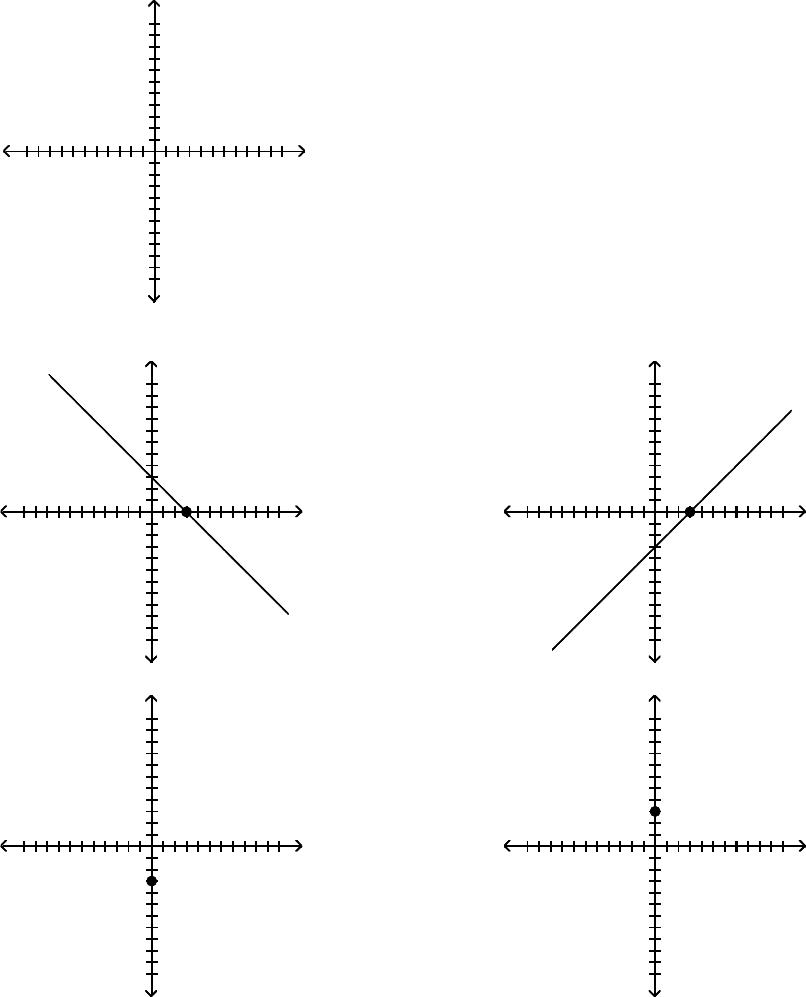
7) P = (3
,
0); m = – 1
x
-10 -5 5 10
y
10
5
-5
-10
x
-10 -5 5 10
y
10
5
-5
-10
A)
x
-10 -5 5 10
y
10
5
-5
-10
x
-10 -5 5 10
y
10
5
-5
-10
B)
x
-10 -5 5 10
y
10
5
-5
-10
x
-10 -5 5 10
y
10
5
-5
-10
C)
x
-10 -5 5 10
y
10
5
-5
-10
x
-10 -5 5 10
y
10
5
-5
-10
D)
x
-10 -5 5 10
y
10
5
-5
-10
x
-10 -5 5 10
y
10
5
-5
-10
Page 26
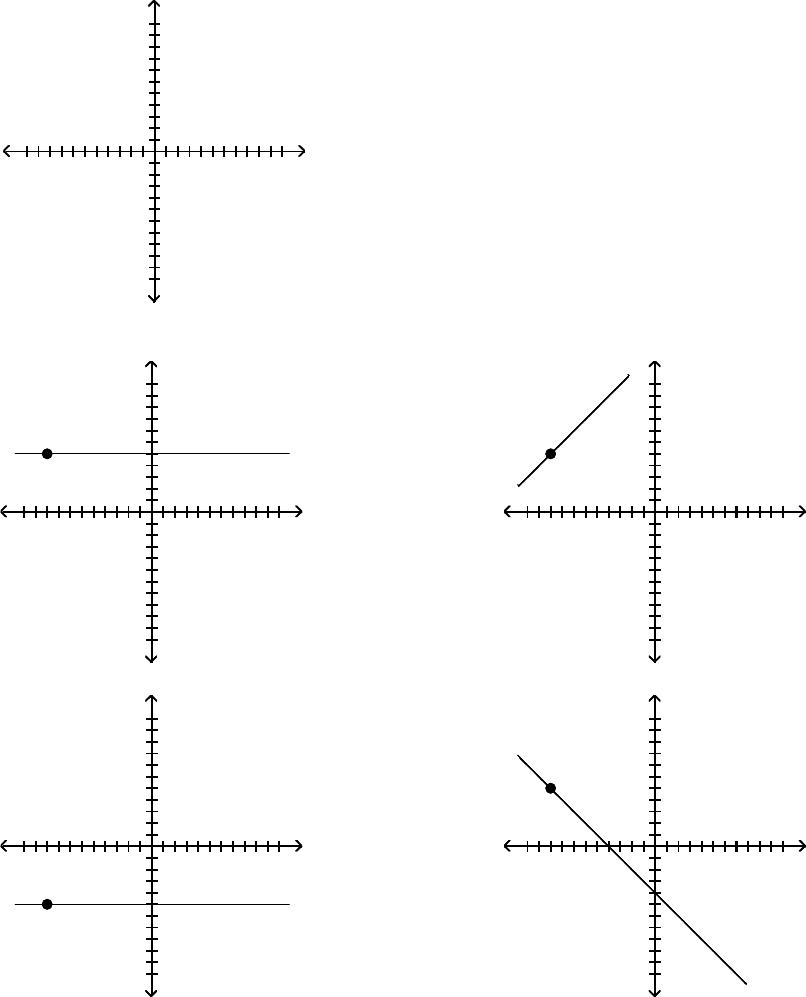
8) P = (–9
,
5); m = 0
x
-10 -5 5 10
y
10
5
-5
-10
x
-10 -5 5 10
y
10
5
-5
-10
A)
x
-10 -5 5 10
y
10
5
-5
-10
x
-10 -5 5 10
y
10
5
-5
-10
B)
x
-10 -5 5 10
y
10
5
-5
-10
x
-10 -5 5 10
y
10
5
-5
-10
C)
x
-10 -5 5 10
y
10
5
-5
-10
x
-10 -5 5 10
y
10
5
-5
-10
D)
x
-10 -5 5 10
y
10
5
-5
-10
x
-10 -5 5 10
y
10
5
-5
-10
Page 27
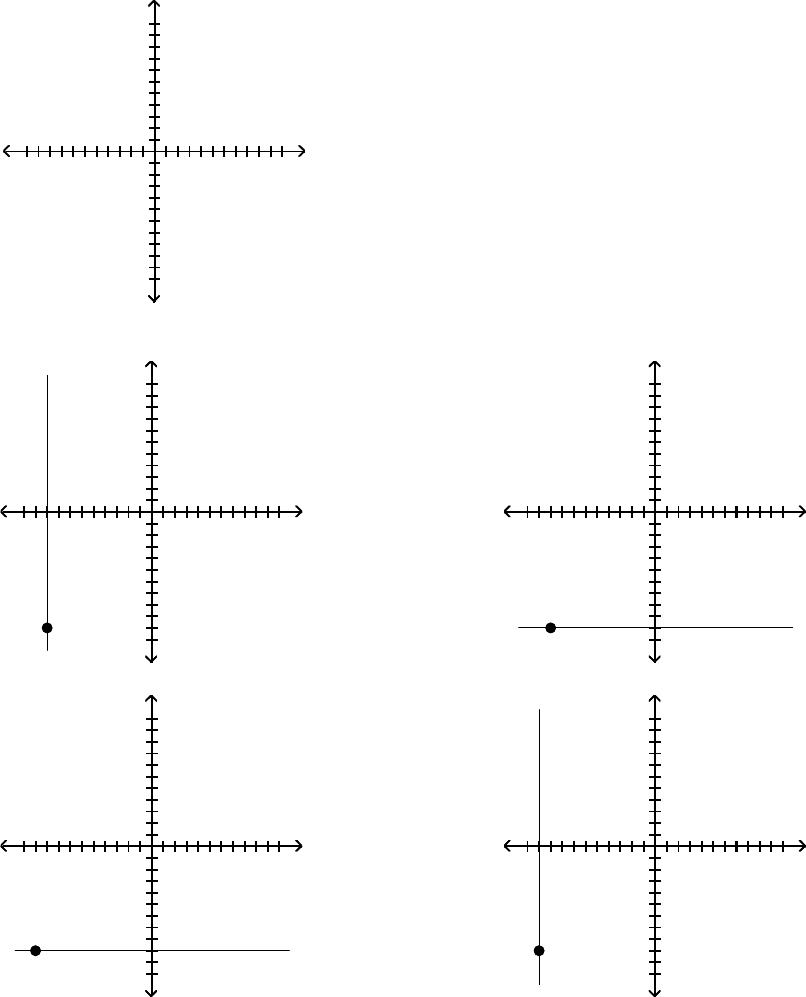
9) P = (–9
,
–10); slope undefined
x
-10 -5 5 10
y
10
5
-5
-10
x
-10 -5 5 10
y
10
5
-5
-10
A)
x
-10 -5 5 10
y
10
5
-5
-10
x
-10 -5 5 10
y
10
5
-5
-10
B)
x
-10 -5 5 10
y
10
5
-5
-10
x
-10 -5 5 10
y
10
5
-5
-10
C)
x
-10 -5 5 10
y
10
5
-5
-10
x
-10 -5 5 10
y
10
5
-5
-10
D)
x
-10 -5 5 10
y
10
5
-5
-10
x
-10 -5 5 10
y
10
5
-5
-10
3 Find the Equation of a Vertical Line
MULTIPLE CHOICE. Choose the one alternative that best completes the statement or answers the question.
Find an equation for the line with the given properties.
1) Slope undefined; containing the point (10
,
–8)
A) x = 10 B) y = 10 C) x = –8D)y
= –8
2) Vertical line; containing the point (3
,
–9)
A) x = 3B)y = 3C)x = –9D)y
= –9
Page 28
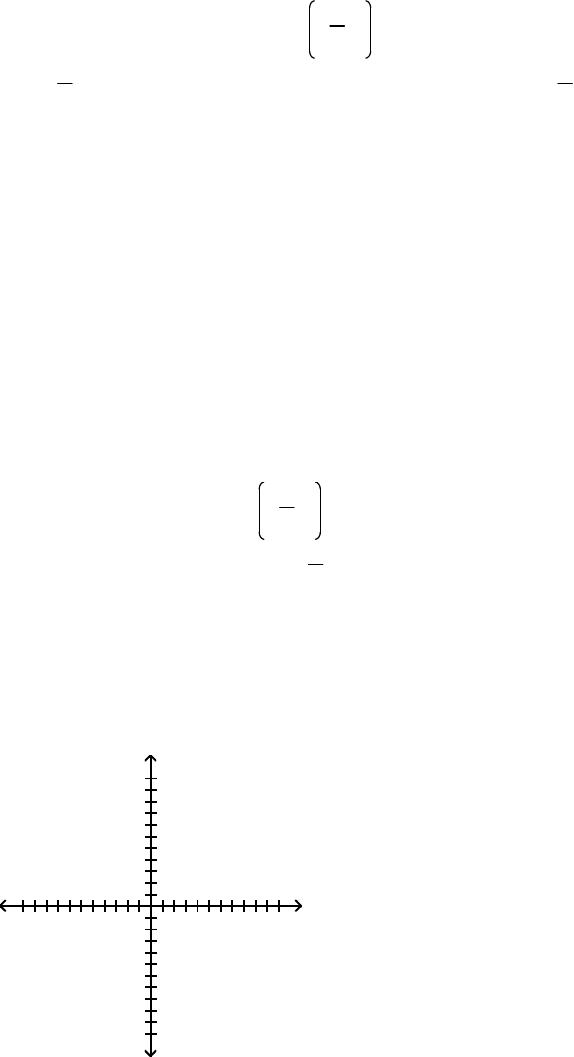
3) Slope undefined; containing the point – 1
3, 8
A) x = – 1
3B) y = 8C)y = – 1
3D) x =8
4) Vertical line; containing the point (–5.0
,
–6.4)
A) x = –5.0 B) x = –6.4 C) x =0D)x
=11.4
4 Use the Point–Slope Form of a Line; Identify Horizontal Lines
MULTIPLE CHOICE. Choose the one alternative that best completes the statement or answers the question.
Find the slope–intercept form of the equation of the line with the given properties.
1) Horizontal; containing the point (1
,
3)
A) y = 3B)y = 1C)x =3D)x
=1
2) Slope = 0; containing the point (–6
,
5)
A) y = 5B)y = –6C)x
=5D)x
= –6
3) Horizontal; containing the point – 6
7, 2
A) y = 2B)y = – 6
7C) y =0D)y
= –2
4) Horizontal; containing the point (6.9
,
3.8)
A) y = 3.8 B) y = 6.9 C) y =10.7 D) y =0
Find the slope of the line and sketch its graph.
5) y + 3 = 0
x
-10 -5 5 10
y
10
5
-5
-10
x
-10 -5 5 10
y
10
5
-5
-10
Page 29
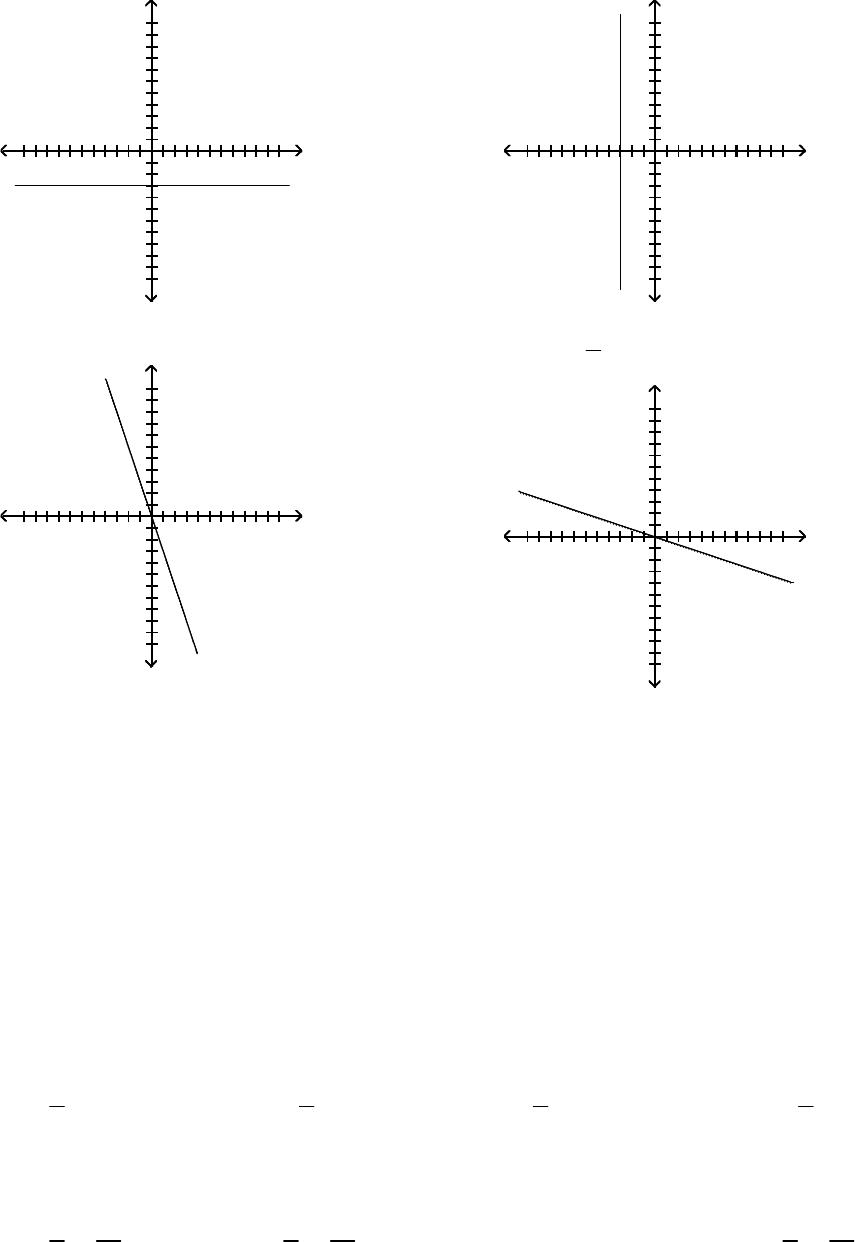
A) slope = 0
x
-10 -5 5 10
y
10
5
-5
-10
x
-10 -5 5 10
y
10
5
-5
-10
B) slope is undefined
x
-10 -5 5 10
y
10
5
-5
-10
x
-10 -5 5 10
y
10
5
-5
-10
C) slope = –3
x
-10 -5 5 10
y
10
5
-5
-10
x
-10 -5 5 10
y
10
5
-5
-10
D) slope = – 1
3
x
-10 -5 5 10
y
10
5
-5
-10
x
-10 -5 5 10
y
10
5
-5
-10
5 Write the Equation of a Line in Slope–Intercept Form
MULTIPLE CHOICE. Choose the one alternative that best completes the statement or answers the question.
Find the slope–intercept form of the equation of the line with the given properties.
1) Slope = 4; containing the point (–2
,
–4)
A) y = 4x + 4B)y = 4x –4C)y
= –4x –4D)y
= –4x +4
2) Slope = 0; containing the point (–3
,
–10)
A) y = –10 B) y = –3C)x
= –10 D) x = –3
3) Slope = 6; y–intercept = 9
A) y = 6x + 9B)y = 6x –9C)y
=9x –6D)y
=9x +6
4) x–intercept = 7; y–intercept = 3
A) y = – 3
7x + 3B)y = – 3
7x + 7C)y = 3
7x + 3D)y = – 7
3x + 7
Write the equation in slope–intercept form.
5) 8x + 5y = 17
A) y = – 8
5x + 17
5B) y = 8
5x + 17
5C) y = 8x – 17 D) y = 8
5x – 17
5
Page 30

6) 4x + 7y = 3
A) y = 4
7x + 3
7B) y = 4x +12 C) y = 12
7x + 3
7D) y = 7
4x – 3
4
7) 7x – 4y = 3
A) y = 7
4x – 3
4B) y = 7
4x + 3
4C) y = 4
7x + 3
7D) y =7x –3
8) x = 9y + 5
A) y = 1
9x – 5
9B) y = 9x –5C)y
= 1
9x – 5D)y = x – 5
9
Find the slope and y–intercept of the line.
9) y = 1
6x + 9
A) slope = 1
6; y–intercept = 9 B) slope = 9; y–intercept = 1
6
C) slope = 6; y–intercept = – 9 D) slope = – 1
6; y–intercept = – 9
10) x + y = –2
A) slope = –1; y–intercept = –2 B) slope =1; y–intercept = –2
C) slope = 0; y–intercept = –2 D) slope = –1; y–intercept = 2
11) 12x + y = 6
A) slope = –12; y–intercept = 6 B) slope = – 1
12; y–intercept = 1
2
C) slope = 12; y–intercept = 6 D) slope = 2; y–intercept = 1
6
12) –3x + 5y = 1
A) slope = 3
5; y–intercept = 1
5B) slope =3; y–intercept = 9
C) slope = 9
5; y–intercept = 1
5D) slope = 5
3; y–intercept = – 1
3
13) 20x + 7y = 9
A) slope = – 20
7; y–intercept = 9
7B) slope = 20
7; y–intercept = 9
7
C) slope = 20; y–intercept = 9 D) slope = 20
7; y–intercept = – 9
7
14) 4x – 9y = 7
A) slope = 4
9; y–intercept = – 7
9B) slope = 4
9; y–intercept = 7
9
C) slope = 9
4; y–intercept = 7
4D) slope =4; y–intercept = 7
Page 31
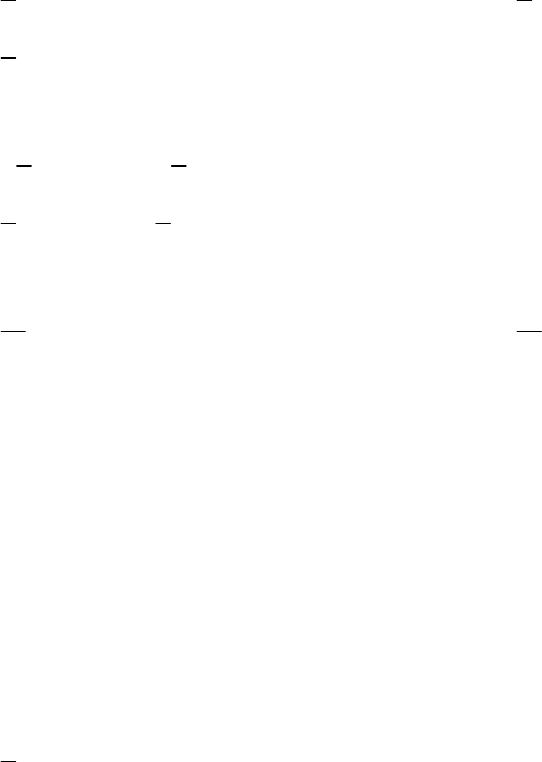
15) 8x – 9y = 72
A) slope = 8
9; y–intercept = –8 B) slope = – 8
9; y–intercept = 8
C) slope = 9
8; y–intercept = 9 D) slope =8; y–intercept = 72
16) x + 6y = 1
A) slope = – 1
6; y–intercept = 1
6B) slope =1; y–intercept = 1
C) slope = 1
6; y–intercept = 1
6D) slope = –6; y–intercept = 6
17) –x + 12y = 72
A) slope = 1
12; y–intercept = 6 B) slope = – 1
12; y–intercept = 6
C) slope = –1; y–intercept = 72 D) slope =12; y–intercept = –72
18) y = –2
A) slope = 0; y–intercept = –2 B) slope = –2; y–intercept = 0
C) slope = 1; y–intercept = –2 D) slope =0; no y–intercep
t
19) x = –1
A) slope undefined; no y–intercep
t
B) slope =0; y–intercept = –1
C) slope = –1; y–intercept = 0 D) slope undefined; y–intercept = –1
20) y = 3x
A) slope = 3; y–intercept = 0 B) slope = –3; y–intercept = 0
C) slope = 1
3; y–intercept = 0 D) slope =0; y–intercept = 3
Solve.
21) A truck rental company rents a moving truck one day by charging $35 plus $0.09 per mile. Write a linear
equation that relates the cost C, in dollars, of renting the truck to the number x of miles driven. What is the
cost of renting the truck if the truck is driven 170 miles?
A) C = 0.09x + 35; $50.30 B) C =35x +0.09; $5950.09
C) C = 0.09x + 35; $36.53 D) C =0.09x –35; $19.70
22) Each week a soft drink machine sells x cans of soda for $0.75/soda. The cost to the owner of the soda
machine for each soda is $0.10. The weekly fixed cost for maintaining the soda machine is $25/week. Write
an equation that relates the weekly profit, P, in dollars to the number of cans sold each week. Then use the
equation to find the weekly profit when 92 cans of soda are sold in a week.
A) P = 0.65x – 25; $34.80 B) P =0.65x +25; $84.80
C) P = 0.75x – 25; $44.00 D) P =0.75x +25; $94.00
Page 32
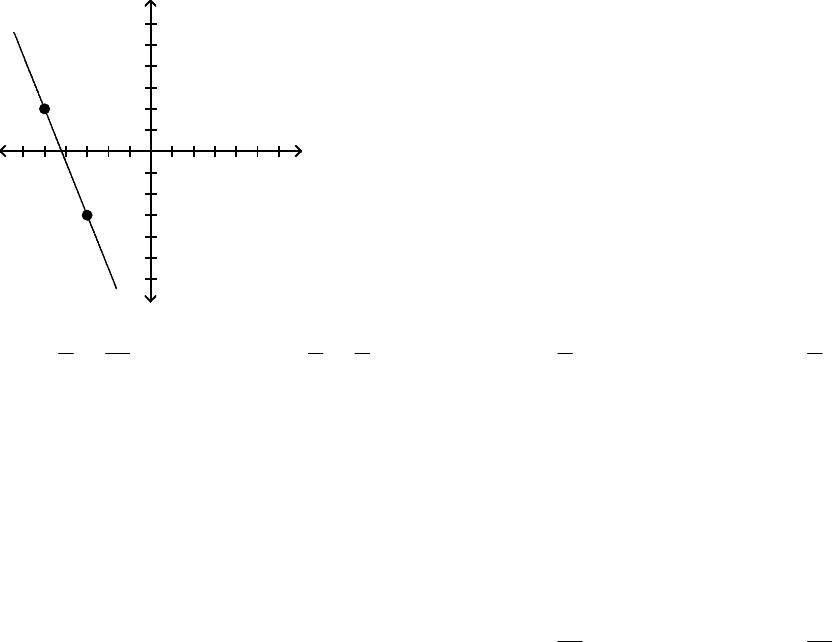
23) Each day the commuter train transports x passengers to or from the city at $1.75/passenger. The daily fixed
cost for running the train is $1200. Write an equation that relates the daily profit, P, in dollars to the
number of passengers each day. Then use the equation to find the daily profit when the train has 920
passengers in a day.
A) P = 1.75x – 1200; $410 B) P =1200 –1.75x; $410
C) P = 1.75x + 1200; $2810 D) P =1.75x; $1610
24) Each month a beauty salon gives x manicures for $12.00/manicure. The cost to the owner of the beauty
salon for each manicure is $7.35. The monthly fixed cost to maintain a manicure station is $120.00. Write an
equation that relates the monthly profit, in dollars, to the number of manicures given each month. Then
use the equation to find the monthly profit when 200 manicures are given in a month.
A) P = 4.65x – 120; $810 B) P =12x –120; $2280
C) P = 7.35x – 120; $1350 D) P =4.65x; $930
25) Each month a gas station sells x gallons of gas at $1.92/gallon. The cost to the owner of the gas station for
each gallon of gas is $1.32. The monthly fixed cost for running the gas station is $37,000. Write an equation
that relates the monthly profit, in dollars, to the number of gallons of gasoline sold. Then use the equation
to find the monthly profit when 75,000 gallons of gas are sold in a month.
A) P = 0.60x – 37,000; $8000 B) P =1.32x –37,000; $62,000
C) P = 1.92x – 37,000; $107,000 D) P =0.60x +37,000; $82,000
6 Find the Equation of a Line Given Two Points
MULTIPLE CHOICE. Choose the one alternative that best completes the statement or answers the question.
Find the equation of the line in slope–intercept form.
1)
x
-6 -4 -2 2 4 6
y
6
4
2
-2
-4
-6
x
-6 -4 -2 2 4 6
y
6
4
2
-2
-4
-6
A) y = – 5
2x – 21
2B) y = – 2
5x – 3
7C) y = – 5
2x – 6D)y = – 5
2x + 6
Find an equation for the line, in the indicated form, with the given properties.
2) Containing the points (2
,
7) and (3
,
4); slope–intercept form
A) y = – 3x + 13 B) y = mx +13 C) y –7= – 3(x –2) D) y =3x +13
3) Containing the points (8
,
–2) and (–5
,
7); general form
A) 9x + 13y = 46 B) –9x +13y =46 C) –10x +12y = –34 D) 10x –12y = –34
4) Containing the points (3
,
0) and (0, –10); general form
A) 10x – 3y = 30 B) 10x +3y =30 C) y = – 10
3x – 10 D) y = – 10
3x + 3
Page 33
5) Containing the points (–8
,
–3) and (–6
,
0); general form
A) 3x – 2y = –18 B) –3x –2y = –18 C) 5x +6y = –30 D) –5x –6y = –30
6) Containing the points (4
,
2) and (0
,
9); general form
A) 7x + 4y = 36 B) –7x +4y =36 C) –2x +9y = –81 D) 2x –9y = –81
7) Containing the points (–6
,
0) and (–8
,
–3); general form
A) –3x + 2y = 18 B) 3x +2y =18 C) 6x +5y = –33 D) –6x –5y = –33
8) Containing the points (–9
,
2) and (6
,
–2); general form
A) –4x – 15y = 6B)4x –15y =6 C) 11x –8y =50 D) –11x +8y =50
Solve.
9) The relationship between Celsius (°C) and Fahrenheit (°F) degrees of measuring temperature is linear.
Find an equation relating °C and °F if 10°C corresponds to 50°F and 30°C corresponds to 86°F. Use the
equation to find the Celsius measure of 39° F.
A) C = 5
9F – 160
9; 35
9 °C B) C = 5
9F + 160
9; 355
9 °C
C) C = 9
5F – 80; – 49
5 °C D) C = 5
9F – 10; 35
3 °C
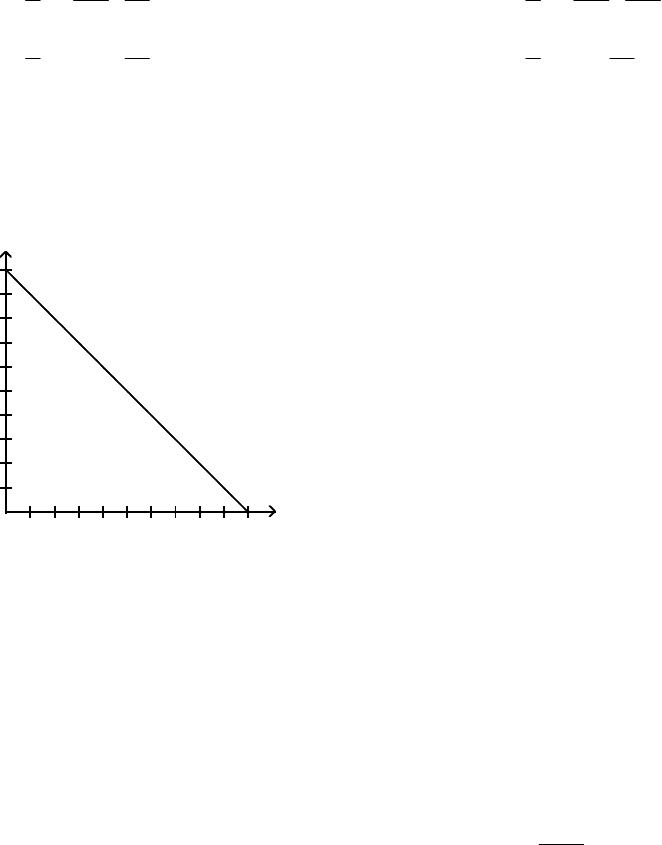
10) A school has just purchased new computer equipment for $25,000.00. The graph shows the depreciation of
the equipment over 5 years. The point (0, 25,000) represents the purchase price and the point (5, 0)
represents when the equipment will be replaced. Write a linear equation in slope–intercept form that
relates the value of the equipment, y, to years after purchase x . Use the equation to predict the value of the
equipment after 1 years.
x
2.5 5
y
25000
22500
20000
17500
15000
12500
10000
7500
5000
2500
x
2.5 5
y
25000
22500
20000
17500
15000
12500
10000
7500
5000
2500
A) y = – 5000x + 25,000;
value after 1 years is $20,000.00;
B) y =25,000x +5;
value after 1 years is $20,000.00
C) y = 5000x – 25,000;
value after 1 years is $20,000.00
D) y = – 25,000x +25,000;
value after 1 years is $0.00
11) The average value of a certain type of automobile was $14,220 in 1992 and depreciated to $6660 in 1995.
Let y be the average value of the automobile in the year x, where x = 0 represents 1992. Write a linear
equation that relates the average value of the automobile, y, to the year x.
A) y = –2520x + 14,220 B) y = –2520x +6660
C) y = –2520x – 900 D) y = – 1
2520x – 6660
Page 34

12) An investment is worth $3551 in 1991. By 1996 it has grown to $6146. Let y be the value of the investment
in the year x, where x = 0 represents 1991. Write a linear equation that relates the value of the investment,
y, to the year x.
A) y = 519x + 3551 B) y = 1
519 x + 3551 C) y = –519x +8741 D) y = –519x +3551
13) A faucet is used to add water to a large bottle that already contained some water. After it has been filling
for 5 seconds, the gauge on the bottle indicates that it contains 15 ounces of water. After it has been filling
for 12 seconds, the gauge indicates the bottle contains 29 ounces of water. Let y be the amount of water in
the bottle x seconds after the faucet was turned on. Write a linear equation that relates the amount of
water in the bottle,y, to the time x.
A) y = 2x + 5B)y = 1
2x + 25
2C) y = –2x +25 D) y =2x +17
14) When making a telephone call using a calling card, a call lasting 6 minutes cost $2.90. A call lasting 16
minutes cost $6.90. Let y be the cost of making a call lasting x minutes using a calling card. Write a linear
equation that relates the cost of a making a call, y, to the time x.
A) y = 0.4x + 0.5 B) y = 5
2x – 121
10 C) y = –0.4x +5.3 D) y =0.4x –9.1
15) A vendor has learned that, by pricing pretzels at $1.00
,
sales will reach 122 pretzels per day. Raising the
price to $1.75 will cause the sales to fall to 92 pretzels per day. Let y be the number of pretzels the vendor
sells at x dollars each. Write a linear equation that relates the number of pretzels sold per day, y, to the
price x.
A) y = –40x + 162 B) y = – 1
40x + 4879
40 C) y =40x +82 D) y = –40x –162
16) A vendor has learned that, by pricing caramel apples at $1.75
,
sales will reach 68 caramel apples per day.
Raising the price to $2.75 will cause the sales to fall to 24 caramel apples per day. Let y be the number of
caramel apples the vendor sells at x dollars each. Write a linear equation that relates the number of
caramel apples sold per day to the price x.
A) y = –44x + 145 B) y = – 1
44x + 11961
176 C) y =44x –9D)y
= –44x –145
7 Graph Lines Written in General Form Using Intercepts
MULTIPLE CHOICE. Choose the one alternative that best completes the statement or answers the question.
Find the general form of the equation for the line with the given properties.
1) Slope = 3
4; y–intercept = 5
2
A) 3x – 4y = –10 B) 3x +4y = –10 C) y = 3
4x + 5
2D) y = 3
4x – 5
2
2) Slope = – 2
9; containing the point (5, 4)
A) 2x + 9y = 46 B) 2x –9y =46 C) 2x +9y = –46 D) 9x +2y = –46
3) Slope = – 6
7; containing the point (0, 5)
A) 6x + 7y = 35 B) 6x –7y =35 C) 6x +7y = –35 D) 7x +6y = –35
Page 35
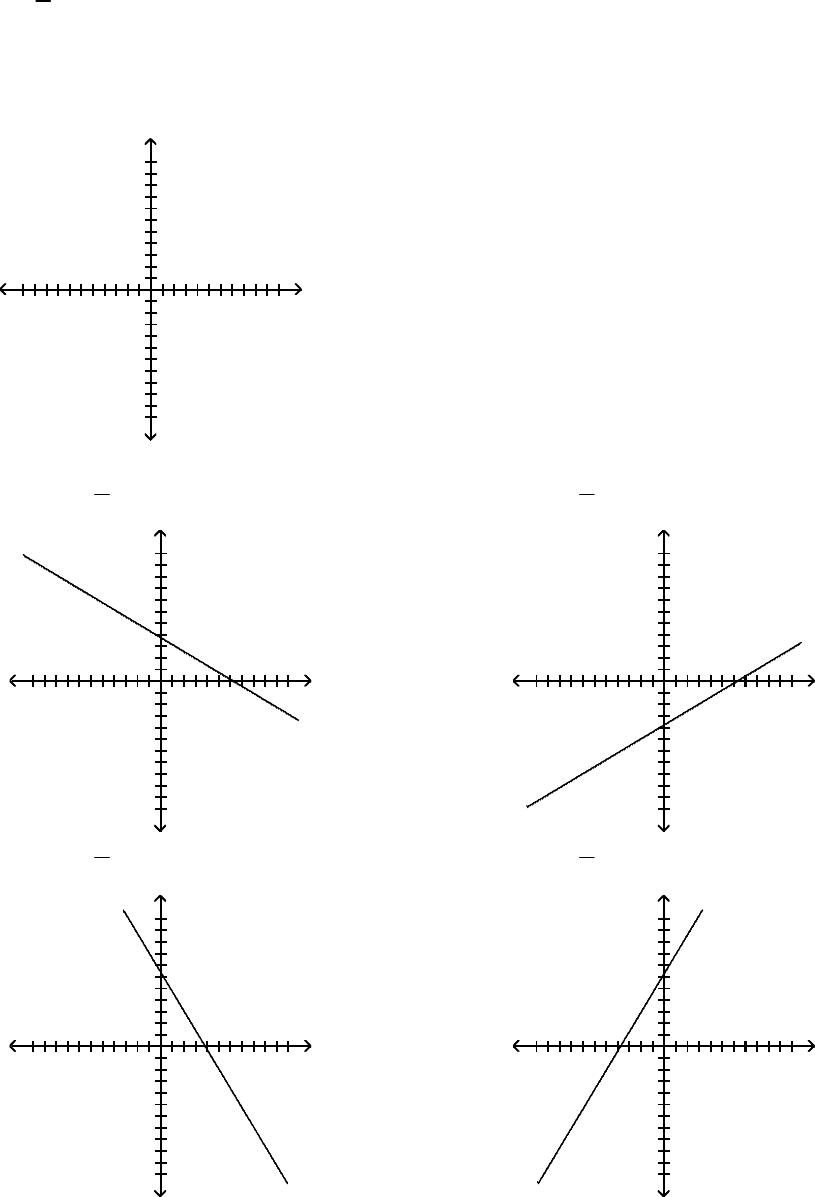
4) Slope = 2
3; containing (0, 4)
A) –2x + 3y = 12 B) –2x –3y =12 C) –2x +3y = –12 D) 3x –2y = –12
Find the slope of the line and sketch its graph.
5) 3x + 5y = 19
x
-10 -5 5 10
y
10
5
-5
-10
x
-10 -5 5 10
y
10
5
-5
-10
A) slope = – 3
5
x
-10 -5 5 10
y
10
5
-5
-10
x
-10 -5 5 10
y
10
5
-5
-10
B) slope = 3
5
x
-10 -5 5 10
y
10
5
-5
-10
x
-10 -5 5 10
y
10
5
-5
-10
C) slope = – 5
3
x
-10 -5 5 10
y
10
5
-5
-10
x
-10 -5 5 10
y
10
5
-5
-10
D) slope = 5
3
x
-10 -5 5 10
y
10
5
-5
-10
x
-10 -5 5 10
y
10
5
-5
-10
Page 36
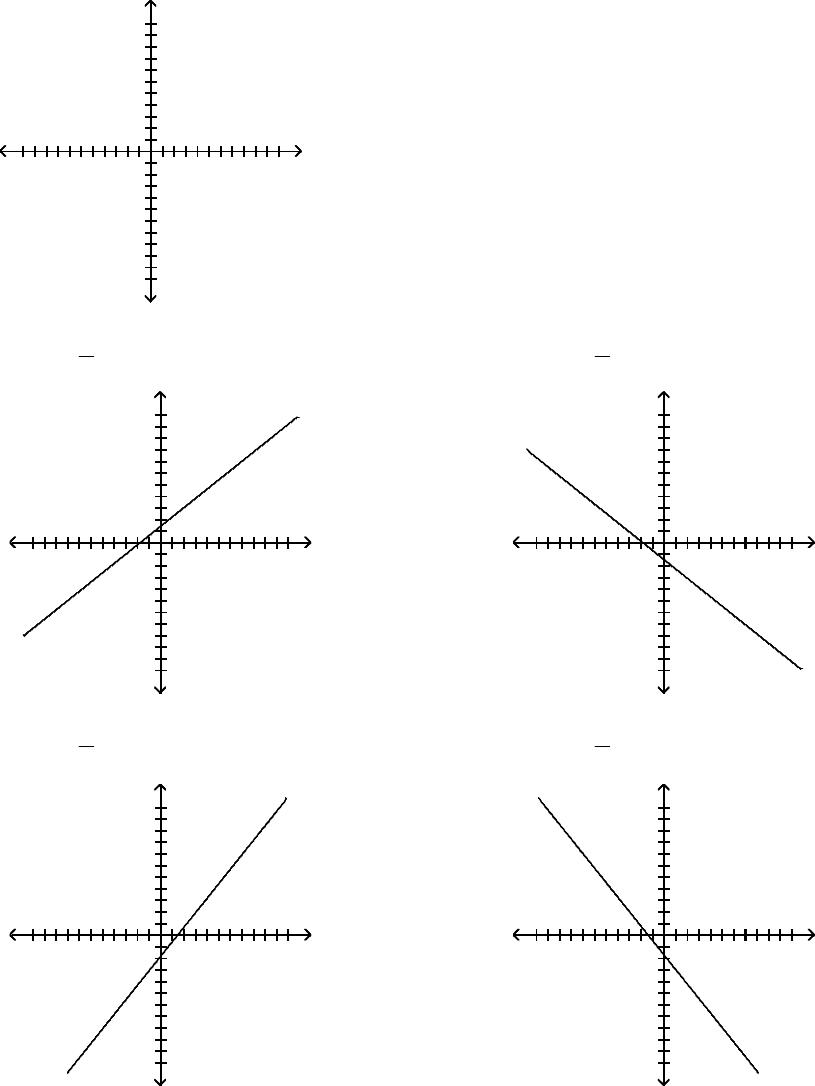
6) 4x – 5y = –7
x
-10 -5 5 10
y
10
5
-5
-10
x
-10 -5 5 10
y
10
5
-5
-10
A) slope = 4
5
x
-10 -5 5 10
y
10
5
-5
-10
x
-10 -5 5 10
y
10
5
-5
-10
B) slope = – 4
5
x
-10 -5 5 10
y
10
5
-5
-10
x
-10 -5 5 10
y
10
5
-5
-10
C) slope = 5
4
x
-10 -5 5 10
y
10
5
-5
-10
x
-10 -5 5 10
y
10
5
-5
-10
D) slope = – 5
4
x
-10 -5 5 10
y
10
5
-5
-10
x
-10 -5 5 10
y
10
5
-5
-10
Page 37
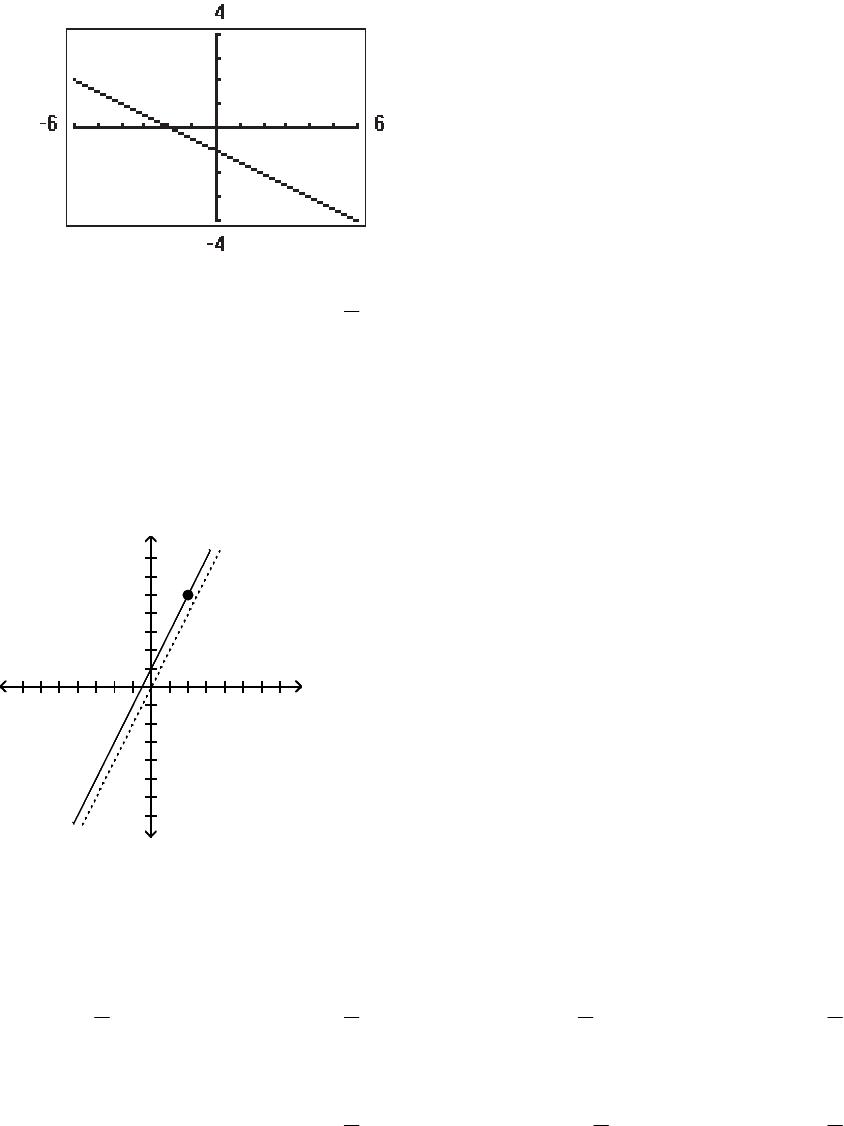
Solve the problem.
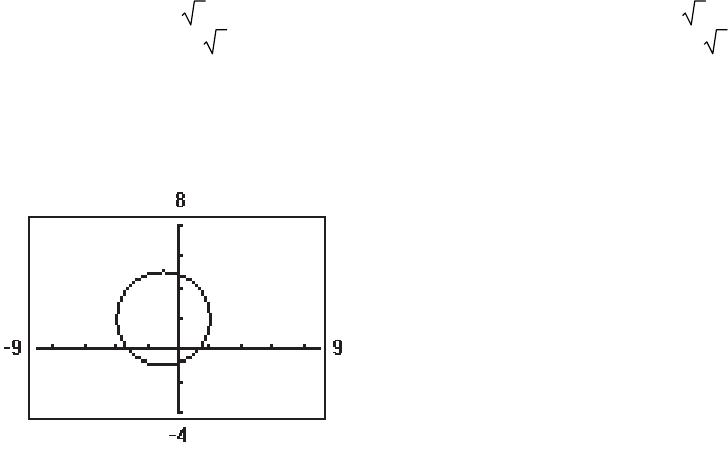
7) Find an equation in general form for the line graphed on a graphing utility.
A) x + 2y = –2B)y
= – 1
2x – 1 C) 2x +y = –1D)y
= –2x –1
8 Find Equations of Parallel Lines
MULTIPLE CHOICE. Choose the one alternative that best completes the statement or answers the question.
Find an equation for the line with the given properties.
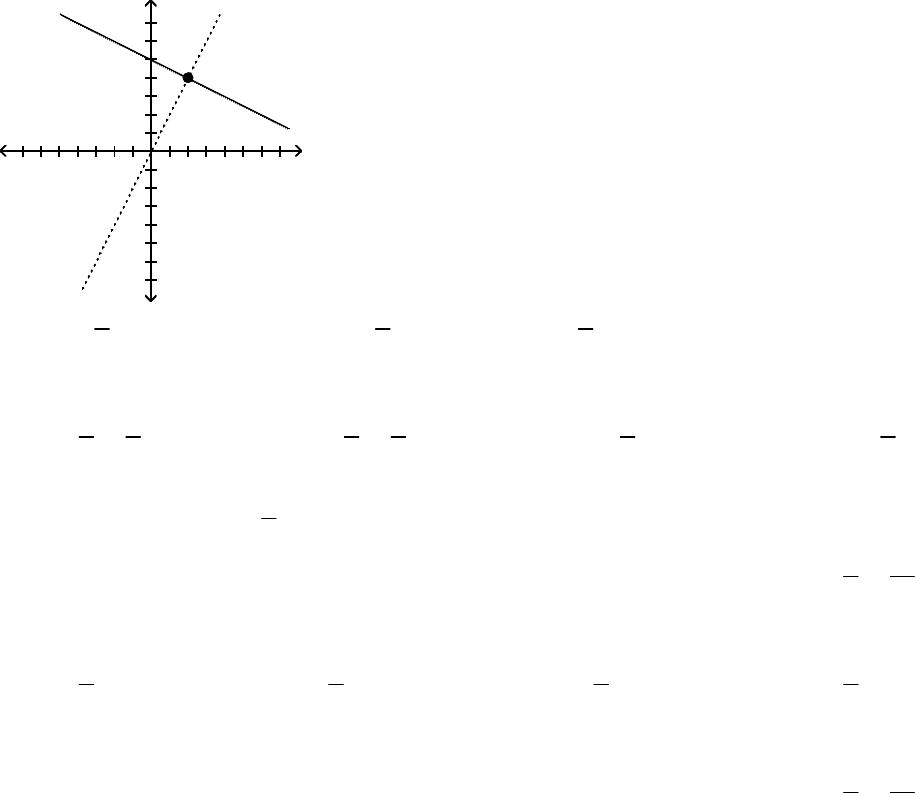
1) The solid line L contains the point (2
,
5) and is parallel to the dotted line whose equation is y =2x. Give the
equation for the line L in slope–intercept form.
x
-5 5
y
5
-5
x
-5 5
y
5
-5
A) y = 2x + 1B)y = 2x +3C)y
–5=2(x –2) D) y =2x +b
2) Parallel to the line y = 2x; containing the point (6
,
6)
A) y = 2x – 6B)y = 2x +6C)y
–6=2x –6D)y
=2x
3) Parallel to the line x + 2y = 4; containing the point (0, 0)
A) y = – 1
2xB)y
= – 1
2x + 4C)y = 3
2D) y = 1
2x
4) Parallel to the line 4x –y = 4; containing the point (0, 0)
A) y = 4x B) y = – 1
4x + 4C)y = – 1
4xD)y
= 1
4x
5) Parallel to the line y = –6; containing the point (8
,
1)
A) y = 1B)y = –1C)y
= –6D)y
=8
6) Parallel to the line x = –4; containing the point (7
,
9)
A) x = 7B)x = 9C)y = –4D)y
=9
Page 38
7) Parallel to the line 7x +9y = 13; containing the point (7
,
2)
A) 7x + 9y = 67 B) 7x –9y =67 C) 9x +7y =2D)7x
+9y =13
8) Parallel to the line 5x +4y = –3; x–intercept = –2
A) 5x + 4y = –10 B) 5x +4y = –8C)4x
–5y = –8D)4x
–5y =10
9 Find Equations of Perpendicular Lines
MULTIPLE CHOICE. Choose the one alternative that best completes the statement or answers the question.
Find an equation for the line with the given properties.
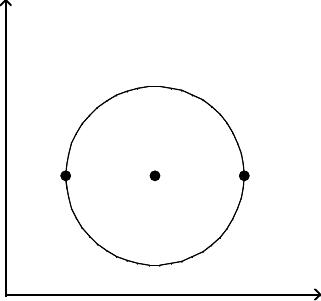
1) The solid line L contains the point (2
,
4) and is perpendicular to the dotted line whose equation is y =2x.
Give the equation of line L in slope–intercept form.
x
-5 5
y
5
-5
x
-5 5
y
5
-5
A) y = – 1
2x + 5B)y – 4 = – 1
2(x – 2) C) y = 1
2x + 5D)y –4=2(x –2)
2) Perpendicular to the line y = –3x + 2; containing the point (–4
,
–1)
A) y = 1
3x + 1
3B) y = – 1
3x + 1
3C) y = 3x + 1
3D) y = –3x + 1
3
3) Perpendicular to the line y = 1
9x + 3; containing the point (4, –4)
A) y = – 9x + 32 B) y = 9x –32 C) y = – 9x –32 D) y = – 1
9x – 32
9
4) Perpendicular to the line –3x – y = 6; containing the point (0, –2)
A) y = 1
3x – 2B)y = 1
3x + 6C)y = – 5
3D) y = – 1
3x – 2
5) Perpendicular to the line x – 6y = 2; containing the point (5
,
4)
A) y = – 6x + 34 B) y = 6x –34 C) y = – 6x –34 D) y = – 1
6x – 17
3
6) Perpendicular to the line y = 2; containing the point (1
,
5)
A) x = 1B)x = 5C)y =1D)y
=5
7) Perpendicular to the line x = –3; containing the point (4
,
1)
A) y = 1B)x = 1C)y =4D)x
=4
8) Perpendicular to the line 6x – 7y = 64; containing the point (6
,
4)
A) 7x + 6y = 66 B) 7x –6y =66 C) 6x +7=6D)6x
+7y =64
Page 39
9) Perpendicular to the line –7x – 8y = 9; containing the point (–7
,
6)
A) –8x + 7y = 98 B) –8x –7y =98 C) –7x +8y =98 D) –8x –7y =9
10) Perpendicular to the line –2x – 5y = 5; y–intercept = –5
A) –5x + 2y = –10 B) –2x –5y =25 C) –5x +2y =25 D) –2x –5y =10
Decide whether the pair of lines is parallel, perpendicular, or neither.
11) 3x – 6y = –19
18x + 9y = 20
A) parallel B) perpendicular C) neither
12) 3x – 8y = –4
32x + 12y = 7
A) parallel B) perpendicular C) neither
13) 9x + 3y = 12
15x + 5y = 23
A) parallel B) perpendicular C) neither
2.3 Circles
1 Write the Standard Form of the Equation of a Circle
MULTIPLE CHOICE. Choose the one alternative that best completes the statement or answers the question.
Write the standard form of the equation of the circle.
1)
x
y
(2, 4) (8, 4)
x
y
(2, 4) (8, 4)
A) (x – 5)2 + (y – 4)2 = 9 B) (x – 5)2 + (y – 4)2 = 3
C) (x + 5)2 + (y + 4)2 = 9 D) (x + 5)2 + (y + 4)2 = 3
Page 40
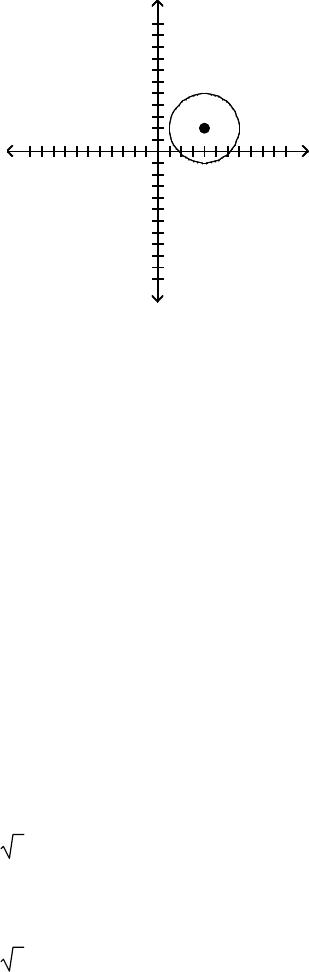
2)
x
-10 -5 5 10
y
10
5
-5
-10
x
-10 -5 5 10
y
10
5
-5
-10
A) (x – 4)2 + (y – 2)2 = 9 B) (x + 4)2 + (y + 2)2 = 9
C) (x – 2)2 + (y – 4)2 = 9 D) (x + 2)2 + (y + 4)2 = 9
Write the standard form of the equation of the circle with radius r and center (h, k).
3) r = 2; (h, k) = (0, 0)
A) x2 + y2 = 4B)x
2 + y2 = 2
C) (x – 2)2 + (y – 2)2 = 4 D) (x – 2)2 + (y – 2)2 = 2
4) r = 6; (h, k) = (–7
,
6)
A) (x + 7)2 + (y – 6)2 = 36 B) (x – 7)2 + (y + 6)2 = 36
C) (x + 7)2 + (y – 6)2 = 6 D) (x – 7)2 + (y + 6)2 = 6
5) r = 5; (h, k) = (–4
,
0)
A) (x + 4)2 + y2 = 25 B) (x – 4)2 + y2 = 25 C) x2 + (y + 4)2 = 5D)x
2 + (y – 4)2 = 5
6) r = 5; (h, k) = (0, –1)
A) x2 + (y + 1)2 = 25 B) x2 + (y – 1)2 = 5 C) (x + 1)2 + y2 = 25 D) (x – 1)2 + y2 = 25
7) r = 6; (h, k) = (4, –6)
A) (x – 4)2 + (y + 6)2 = 6 B) (x + 4)2 + (y – 6)2 = 6
C) (x + 6)2 + (y – 4)2 = 36 D) (x – 6)2 + (y + 4)2 = 36
8) r = 6
; (h, k) = (0, –10)
A) x2 + (y + 10)2 = 6B)x
2 + (y – 10)2 = 6 C) (x + 10)2 + y2 = 36 D) (x – 10)2 + y2 = 36
Solve the problem.
9) Find the equation of a circle in standard form where C(6, –2) and D(–4, 4) are endpoints of a diameter.
A) (x – 1)2 + (y – 1)2 = 34 B) (x + 1)2 + (y + 1)2 = 34
C) (x – 1)2 + (y – 1)2 = 136 D) (x + 1)2 + (y + 1)2 = 136
10) Find the equation of a circle in standard form with center at the point (–3, 2) and tangent to the line y =4.
A) (x + 3)2 + (y – 2)2 = 4 B) (x + 3)2 + (y – 2)2 = 16
C) (x – 3)2 + (y + 2)2 = 4 D) (x – 3)2 + (y + 2)2 = 16
Page 41
11) Find the equation of a circle in standard form that is tangent to the line x = –3 at (–3, 5) and also tangent to
the line x = 9.
A) (x – 3)2 + (y – 5)2 = 36 B) (x + 3)2 + (y – 5)2 = 36
C) (x – 3)2 + (y + 5)2 = 36 D) (x + 3)2 + (y + 5)2 = 36
Find the center (h, k) and radius r of the circle with the given equation.
12) x2 + y2 = 9
A) (h, k) = (0, 0); r = 3 B) (h, k) =(0, 0); r = 9
C) (h, k) = (3
,
3); r = 3 D) (h, k) =(3
,
3); r = 9
13) (x + 3)2 + (y – 2)2 = 25
A) (h, k) = (–3
,
2); r = 5 B) (h, k) =(–3
,
2); r = 25
C) (h, k) = (2
,
–3); r = 5 D) (h, k) =(2
,
–3); r = 25
14) (x + 7)2 + y2 = 81
A) (h, k) = (–7
,
0); r = 9 B) (h, k) =(0, –7); r = 9
C) (h, k) = (0, –7); r = 81 D) (h, k) =(–7
,
0); r = 81
15) x2 + (y – 4)2 = 25
A) (h, k) = (0, 4); r = 5 B) (h, k) =(4
,
0); r = 5
C) (h, k) = (4
,
0); r = 25 D) (h, k) =(0, 4); r = 25
16) 3(x – 4)2 + 3(y – 3)2 = 36
A) (h, k) = (4, 3); r = 23 B) (h, k) = (4, 3); r = 63
C) (h, k) = (–4, –3); r = 23 D) (h, k) = (–4, –3); r = 63
Solve the problem.
17) Find the standard form of the equation of the circle. Assume that the center has integer coordinates and
the radius is an integer.
A) (x + 1)2 + (y – 2)2 = 9 B) (x – 1)2 + (y + 2)2 = 9
C) x2 + y2 + 2x – 4y – 4 = 0D)x
2 + y2 – 2x + 4y – 4 = 0
Page 42
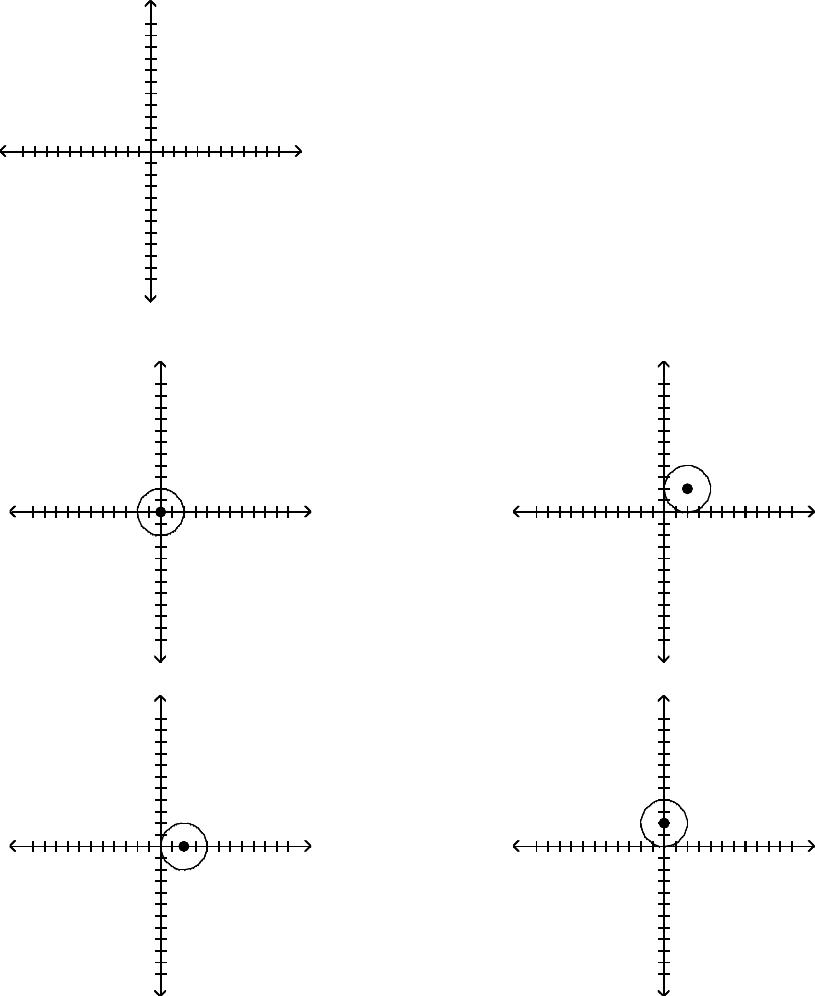
2 Graph a Circle
MULTIPLE CHOICE. Choose the one alternative that best completes the statement or answers the question.
Graph the circle with radius r and center (h, k).
1) r = 2; (h, k) = (0, 0)
x
-10 -5 5 10
y
10
5
-5
-10
x
-10 -5 5 10
y
10
5
-5
-10
A)
x
-10 -5 5 10
y
10
5
-5
-10
x
-10 -5 5 10
y
10
5
-5
-10
B)
x
-10 -5 5 10
y
10
5
-5
-10
x
-10 -5 5 10
y
10
5
-5
-10
C)
x
-10 -5 5 10
y
10
5
-5
-10
x
-10 -5 5 10
y
10
5
-5
-10
D)
x
-10 -5 5 10
y
10
5
-5
-10
x
-10 -5 5 10
y
10
5
-5
-10
Page 43
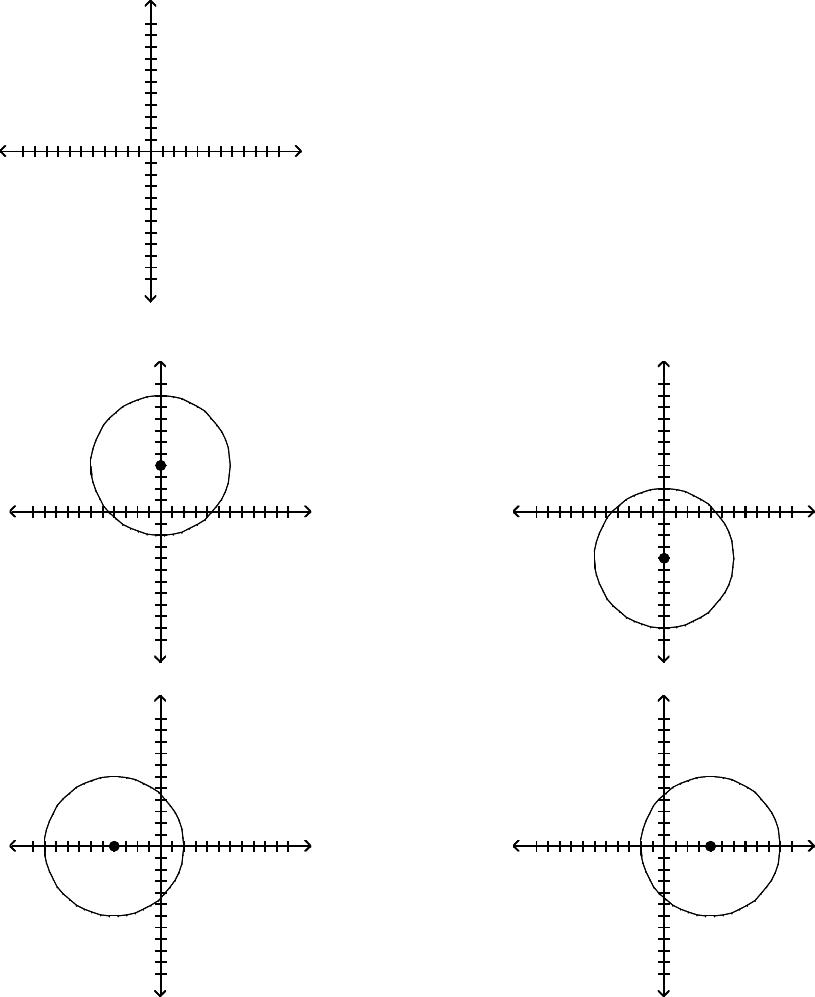
2) r = 6; (h, k) = (0, 4)
x
-10 -5 5 10
y
10
5
-5
-10
x
-10 -5 5 10
y
10
5
-5
-10
A)
x
-10 -5 5 10
y
10
5
-5
-10
x
-10 -5 5 10
y
10
5
-5
-10
B)
x
-10 -5 5 10
y
10
5
-5
-10
x
-10 -5 5 10
y
10
5
-5
-10
C)
x
-10 -5 5 10
y
10
5
-5
-10
x
-10 -5 5 10
y
10
5
-5
-10
D)
x
-10 -5 5 10
y
10
5
-5
-10
x
-10 -5 5 10
y
10
5
-5
-10
Page 44
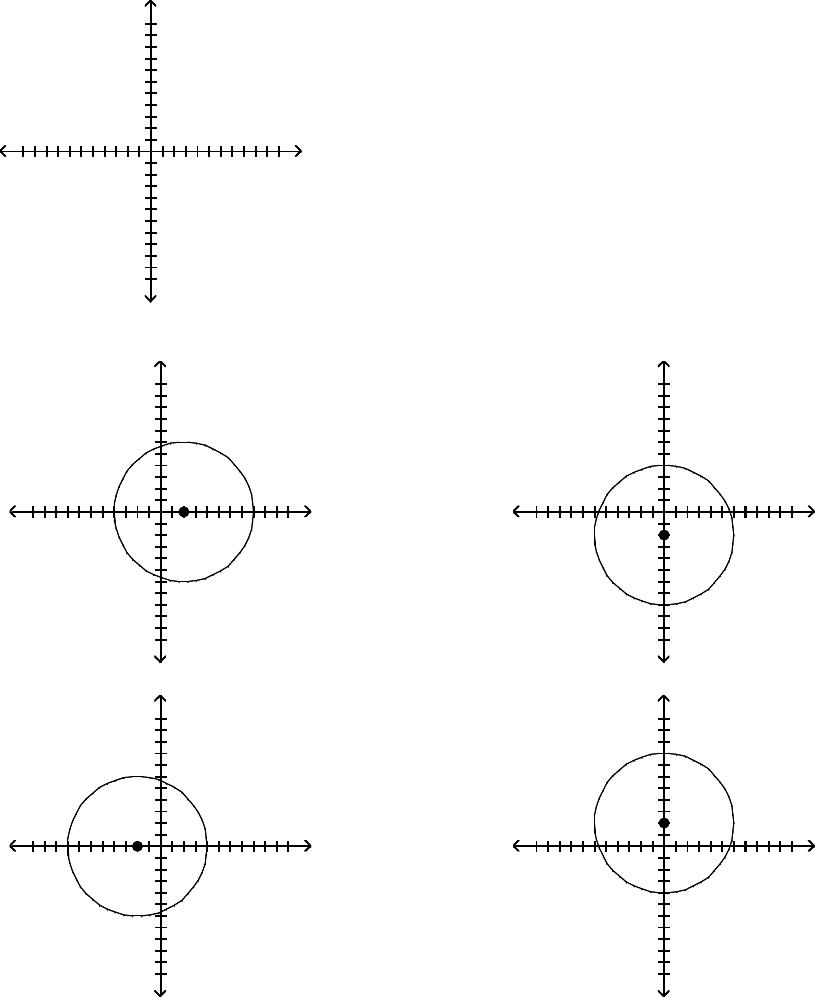
3) r = 6; (h, k) = (2
,
0)
x
-10 -5 5 10
y
10
5
-5
-10
x
-10 -5 5 10
y
10
5
-5
-10
A)
x
-10 -5 5 10
y
10
5
-5
-10
x
-10 -5 5 10
y
10
5
-5
-10
B)
x
-10 -5 5 10
y
10
5
-5
-10
x
-10 -5 5 10
y
10
5
-5
-10
C)
x
-10 -5 5 10
y
10
5
-5
-10
x
-10 -5 5 10
y
10
5
-5
-10
D)
x
-10 -5 5 10
y
10
5
-5
-10
x
-10 -5 5 10
y
10
5
-5
-10
Page 45
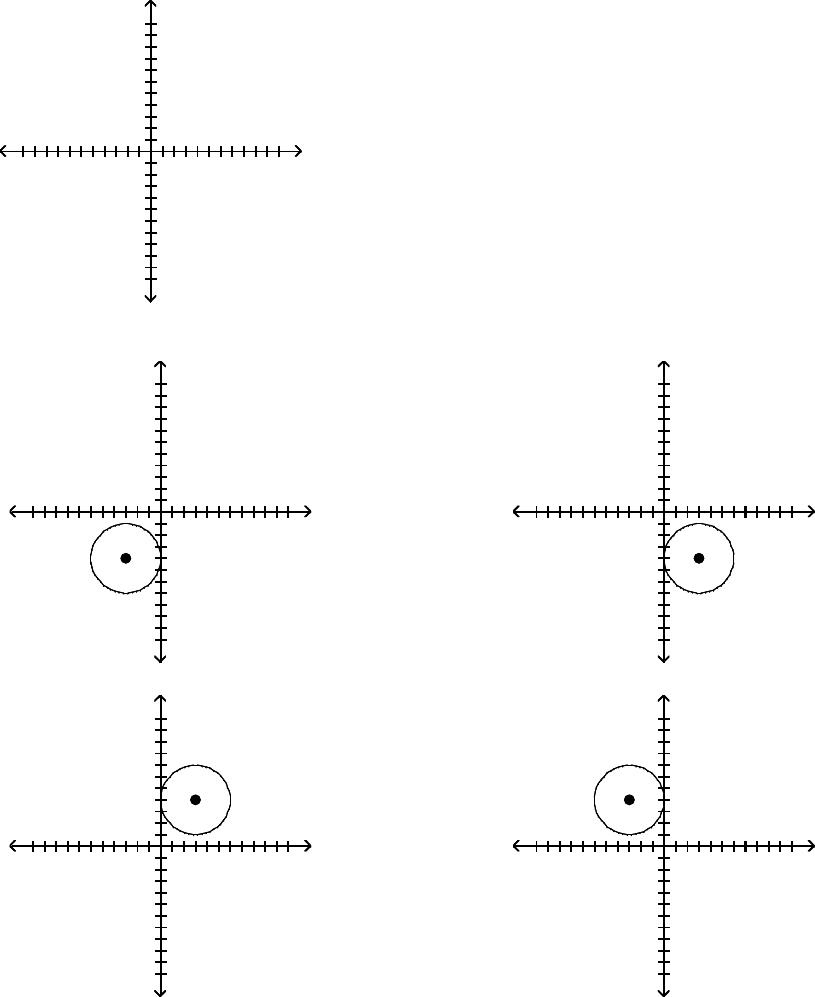
4) r = 3; (h, k) = (–3
,
–4)
x
-10 -5 5 10
y
10
5
-5
-10
x
-10 -5 5 10
y
10
5
-5
-10
A)
x
-10 -5 5 10
y
10
5
-5
-10
x
-10 -5 5 10
y
10
5
-5
-10
B)
x
-10 -5 5 10
y
10
5
-5
-10
x
-10 -5 5 10
y
10
5
-5
-10
C)
x
-10 -5 5 10
y
10
5
-5
-10
x
-10 -5 5 10
y
10
5
-5
-10
D)
x
-10 -5 5 10
y
10
5
-5
-10
x
-10 -5 5 10
y
10
5
-5
-10
Page 46
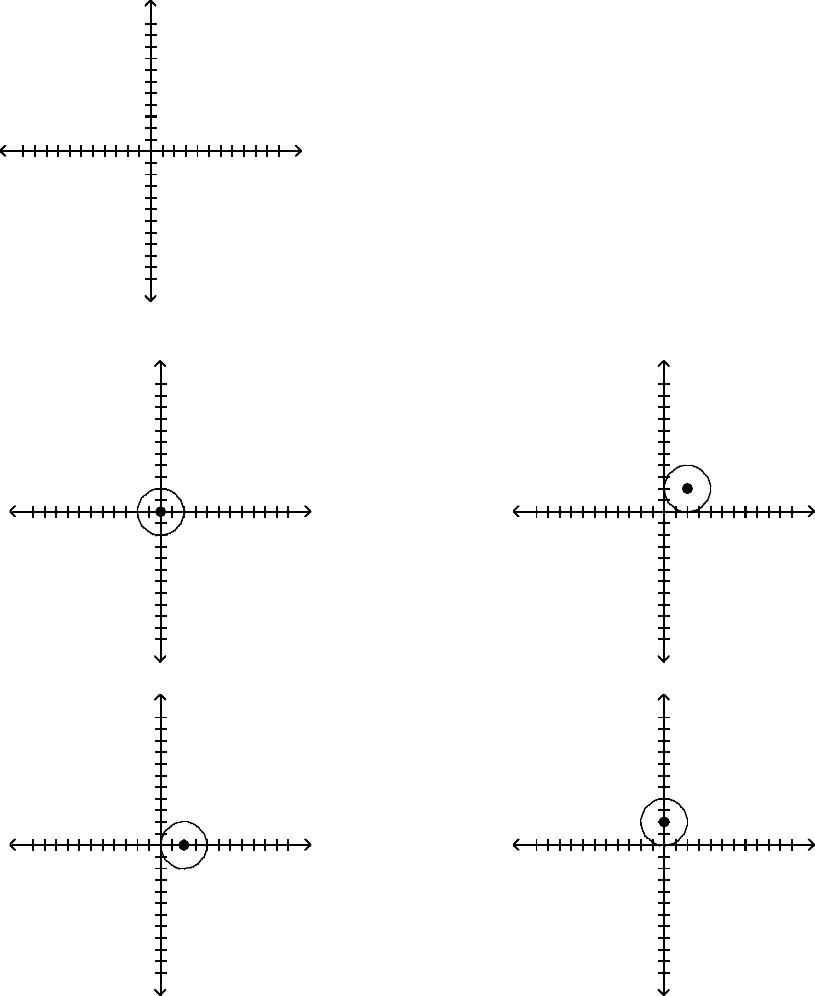
Graph the equation.
5) x2 + y2 = 4
x
-10 -5 5 10
y
10
5
-5
-10
x
-10 -5 5 10
y
10
5
-5
-10
A)
x
-10 -5 5 10
y
10
5
-5
-10
x
-10 -5 5 10
y
10
5
-5
-10
B)
x
-10 -5 5 10
y
10
5
-5
-10
x
-10 -5 5 10
y
10
5
-5
-10
C)
x
-10 -5 5 10
y
10
5
-5
-10
x
-10 -5 5 10
y
10
5
-5
-10
D)
x
-10 -5 5 10
y
10
5
-5
-10
x
-10 -5 5 10
y
10
5
-5
-10
Page 47
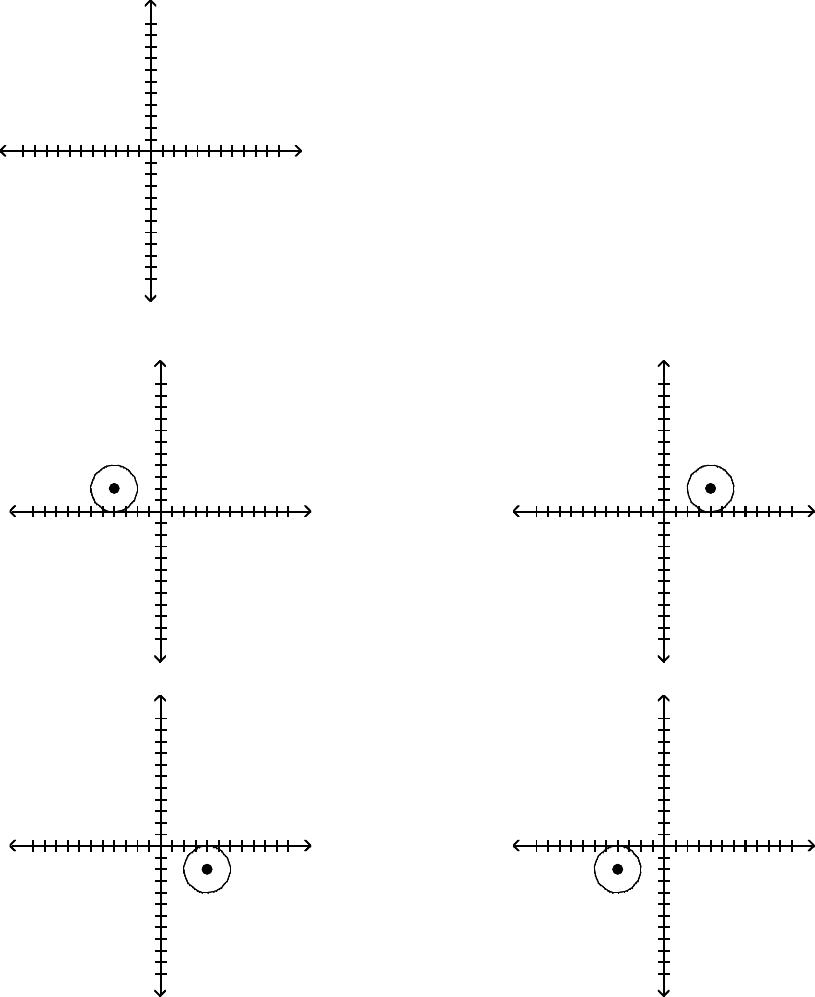
6) (x + 4)2 + (y – 2)2 = 4
x
-10 -5 5 10
y
10
5
-5
-10
x
-10 -5 5 10
y
10
5
-5
-10
A)
x
-10 -5 5 10
y
10
5
-5
-10
x
-10 -5 5 10
y
10
5
-5
-10
B)
x
-10 -5 5 10
y
10
5
-5
-10
x
-10 -5 5 10
y
10
5
-5
-10
C)
x
-10 -5 5 10
y
10
5
-5
-10
x
-10 -5 5 10
y
10
5
-5
-10
D)
x
-10 -5 5 10
y
10
5
-5
-10
x
-10 -5 5 10
y
10
5
-5
-10
Page 48
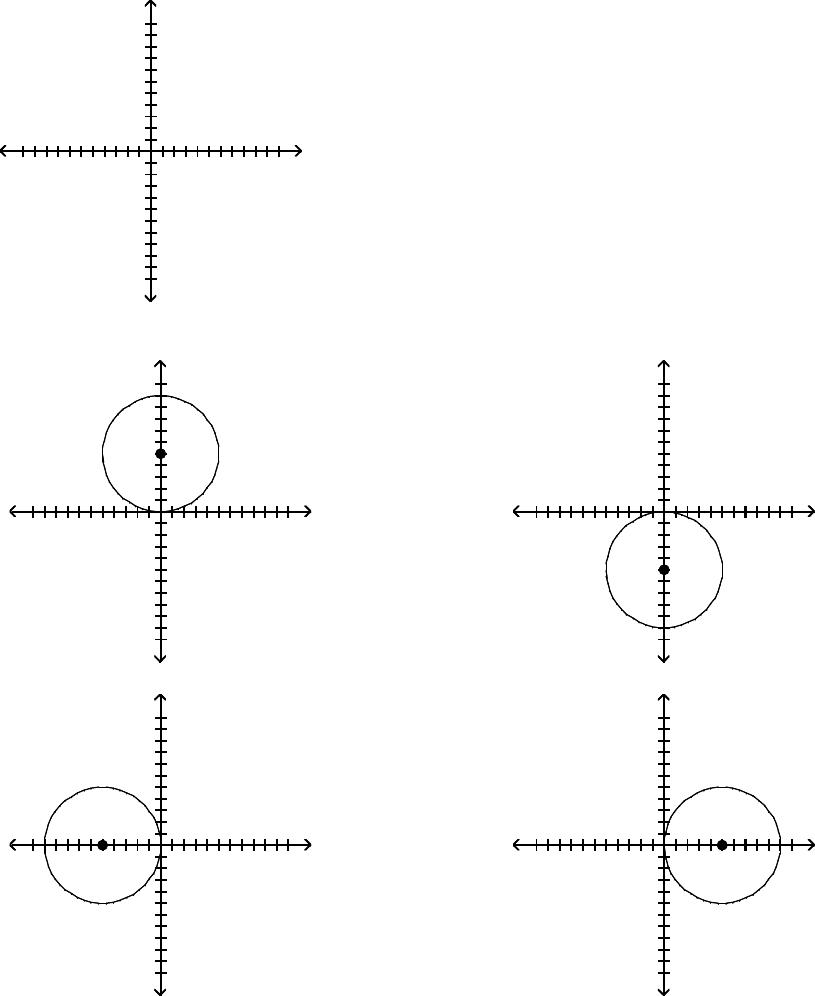
7) x2 + (y – 5)2 = 25
x
-10 -5 5 10
y
10
5
-5
-10
x
-10 -5 5 10
y
10
5
-5
-10
A)
x
-10 -5 5 10
y
10
5
-5
-10
x
-10 -5 5 10
y
10
5
-5
-10
B)
x
-10 -5 5 10
y
10
5
-5
-10
x
-10 -5 5 10
y
10
5
-5
-10
C)
x
-10 -5 5 10
y
10
5
-5
-10
x
-10 -5 5 10
y
10
5
-5
-10
D)
x
-10 -5 5 10
y
10
5
-5
-10
x
-10 -5 5 10
y
10
5
-5
-10
Page 49
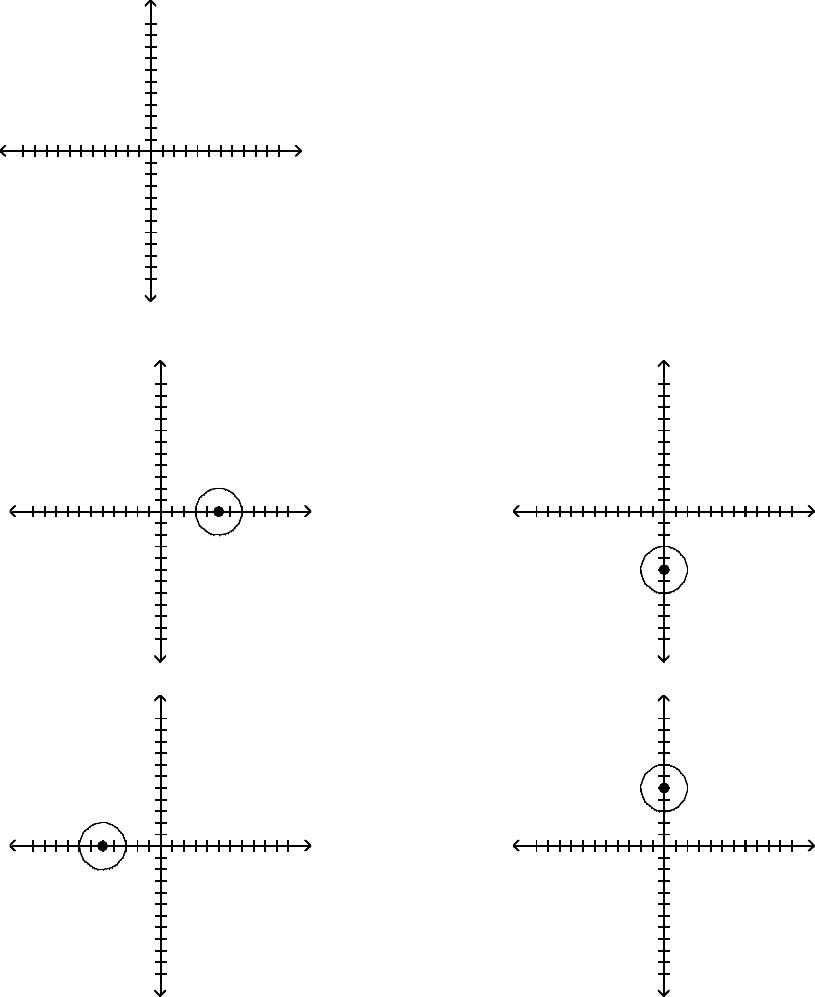
8) (x – 5)2 + y2 = 4
x
-10 -5 5 10
y
10
5
-5
-10
x
-10 -5 5 10
y
10
5
-5
-10
A)
x
-10 -5 5 10
y
10
5
-5
-10
x
-10 -5 5 10
y
10
5
-5
-10
B)
x
-10 -5 5 10
y
10
5
-5
-10
x
-10 -5 5 10
y
10
5
-5
-10
C)
x
-10 -5 5 10
y
10
5
-5
-10
x
-10 -5 5 10
y
10
5
-5
-10
D)
x
-10 -5 5 10
y
10
5
-5
-10
x
-10 -5 5 10
y
10
5
-5
-10
Page 50
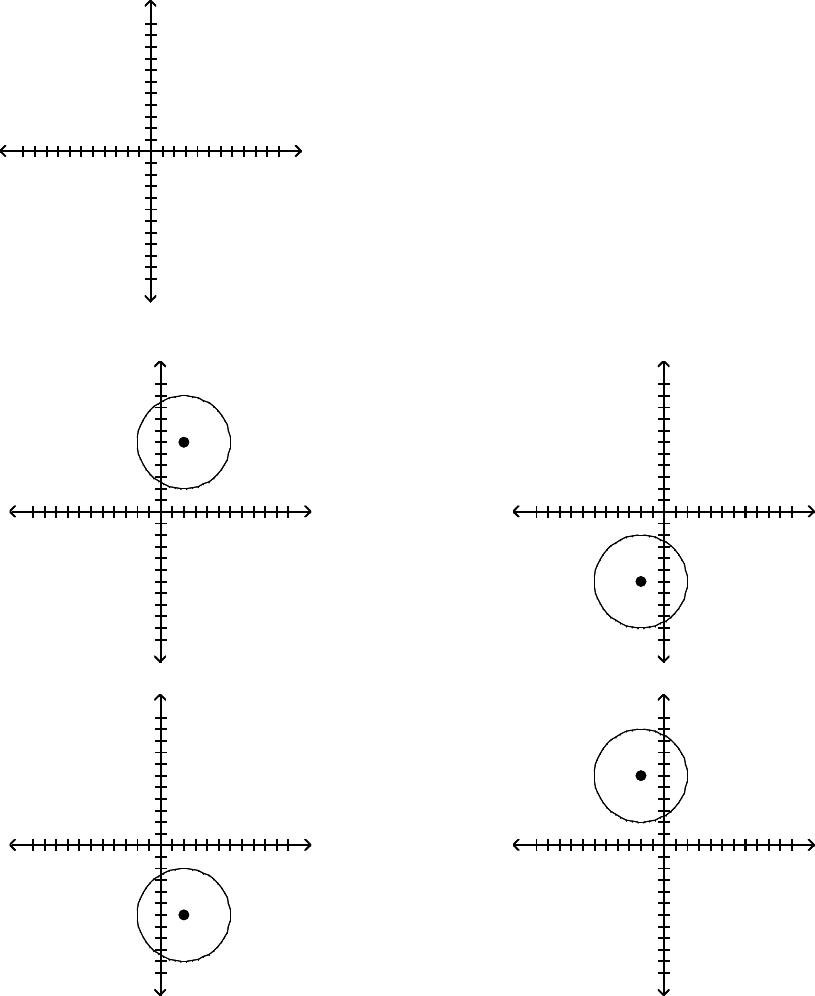
3 Work with the General Form of the Equation of a Circle
MULTIPLE CHOICE. Choose the one alternative that best completes the statement or answers the question.
Find the center (h, k) and radius r of the circle. Graph the circle.
1) x2 + y2 – 4x – 12y + 24 = 0
x
-10 -5 5 10
y
10
5
-5
-10
x
-10 -5 5 10
y
10
5
-5
-10
A) (h, k) = (2
,
6); r = 4
x
-10 -5 5 10
y
10
5
-5
-10
x
-10 -5 5 10
y
10
5
-5
-10
B) (h, k) =(–2
,
–6); r = 4
x
-10 -5 5 10
y
10
5
-5
-10
x
-10 -5 5 10
y
10
5
-5
-10
C) (h, k) = (2
,
–6); r = 4
x
-10 -5 5 10
y
10
5
-5
-10
x
-10 -5 5 10
y
10
5
-5
-10
D) (h, k) =(–2
,
6); r = 4
x
-10 -5 5 10
y
10
5
-5
-10
x
-10 -5 5 10
y
10
5
-5
-10
Page 51
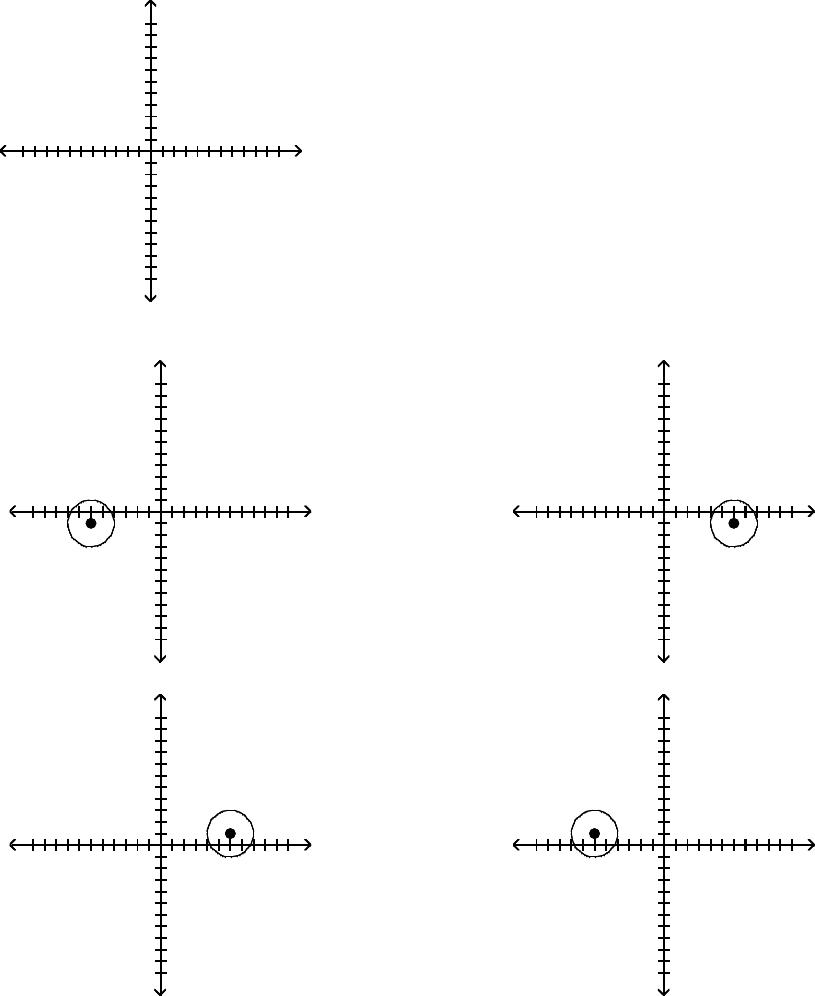
2) x2 + y2 + 12x + 2y + 33 = 0
x
-10 -5 5 10
y
10
5
-5
-10
x
-10 -5 5 10
y
10
5
-5
-10
A) (h, k) = (–6
,
–1); r = 2
x
-10 -5 5 10
y
10
5
-5
-10
x
-10 -5 5 10
y
10
5
-5
-10
B) (h, k) =(6
,
–1); r = 2
x
-10 -5 5 10
y
10
5
-5
-10
x
-10 -5 5 10
y
10
5
-5
-10
C) (h, k) = (6
,
1); r = 2
x
-10 -5 5 10
y
10
5
-5
-10
x
-10 -5 5 10
y
10
5
-5
-10
D) (h, k) =(–6
,
1); r = 2
x
-10 -5 5 10
y
10
5
-5
-10
x
-10 -5 5 10
y
10
5
-5
-10
Find the center (h, k) and radius r of the circle with the given equation.
3) x2 + 14x + 49 + (y – 9)2 = 64
A) (h, k) = (–7
,
9); r = 8 B) (h, k) =(9
,
–7); r = 8
C) (h, k) = (7
,
–9); r = 64 D) (h, k) =(–9
,
7); r = 64
4) x2 + 2x + 1 + y2 – 16y + 64 = 64
A) (h, k) = (–1
,
8); r = 8 B) (h, k) =(8
,
–1); r = 8
C) (h, k) = (1
,
–8); r = 64 D) (h, k) =(–8
,
1); r = 64
5) x2 + y2 + 2x – 12y + 37 = 36
A) (h, k) = (–1
,
6); r = 6 B) (h, k) =(6
,
–1); r = 6
C) (h, k) = (1
,
–6); r = 36 D) (h, k) =(–6
,
1); r = 36
Page 52

6) x2 + y2 – 16x – 10y = –25
A) (h, k) = (8
,
5); r = 8 B) (h, k) =(5
,
8); r = 8
C) (h, k) = (–8
,
–5); r = 64 D) (h, k) =(–5
,
–8); r = 64
7) 4x2 + 4y2 – 12x + 16y – 5 = 0
A) (h, k) = (3
2, –2); r = 30
2B) (h, k) = (– 3
2, 2); r = 30
2
C) (h, k) = (3
2, –2); r = 35
2D) (h, k) = (– 3
2, 2); r= 35
2
Find the general form of the equation of the the circle.
8) Center at the point (–4, –3); containing the point (–3, 3)
A) x2 + y2 + 8x + 6y – 12 = 0B)x
2 + y2 + 6x + 8y – 17 = 0
C) x2 + y2 – 6x + 6y – 12 = 0D)x
2 + y2 + 6x – 6y – 17 = 0
9) Center at the point (2, –3); containing the point (5, –3)
A) x2 + y2 – 4x + 6y + 4 = 0B)x
2 + y2 + 4x – 6y + 4 = 0
C) x2 + y2 – 4x + 6y + 22 = 0D)x
2 + y2 + 4x – 6y + 22 = 0
10) Center at the point (5
,
7); tangent to y–axis
A) x2 + y2 – 10x – 14y + 49 = 0B)x
2 + y2 – 10x – 14y + 25 = 0
C) x2 + y2 + 10x + 14y + 49 = 0D)x
2 + y2 – 10x – 14y + 99 = 0
Solve the problem.
11) If a circle of radius 3 is made to roll along the x–axis, what is the equation for the path of the center of the
circle?
A) y = 3B)y = 0C)y =6D)x
=3
12) Earth is represented on a map of the solar system so that its surface is a circle with the equatio
n
x2 + y2 + 4x + 6y – 3587 = 0. A weather satellite circles 0.6 units above the Earth with the center of its
circular orbit at the center of the Earth. Find the general form of the equation for the orbit of the satellite on
this map.
A) x2 + y2 + 4x + 6y – 3659.36 = 0B)x
2 + y2 + 4x + 6y – 46.64 = 0
C) x2 + y2 – 4x – 6y – 3659.36 = 0D)x
2 + y2 + 4x + 6y + 12.64 = 0
13) Find an equation of the line containing the centers of the two circles
x2 + y2 – 8x + 8y + 31 = 0 and
x2 + y2 + 2x + 2y – 2 = 0
A) –3x – 5y – 8 = 0B)
–5x –3y –8=0C)
–3x +5y –8=0D)3x
–5y –8=0
14) A wildlife researcher is monitoring a black bear that has a radio telemetry collar with a transmitting range
of 16 miles. The researcher is in a research station with her receiver and tracking the bear’s movements. If
we put the origin of a coordinate system at the research station, what is the equation of all possible
locations of the bear where the transmitter would be at its maximum range?
A) x2 + y2 = 256 B) x2 + y2 = 32 C) x2 + y2 = 16 D) x2 – y2 = 16
Page 53
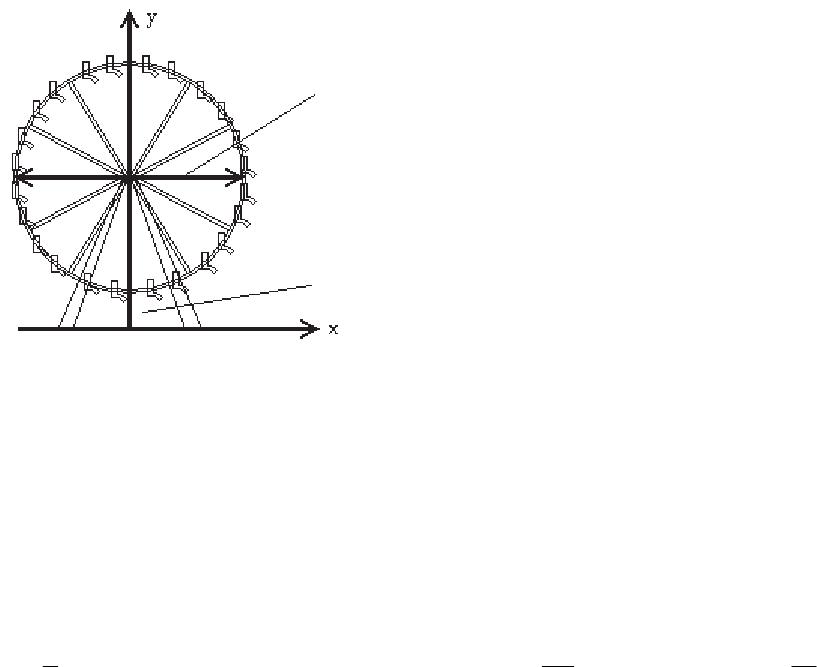
15) If a satellite is placed in a circular orbit of 300 kilometers above the Earth, what is the equation of the path
of the satellite if the origin is placed at the center of the Earth (the diameter of the Earth is approximately
12,740 kilometers)?
A) x2 + y2 = 44,488,900 B) x2 + y2 = 90,000
C) x2 + y2 = 40,576,900 D) x2 + y2 = 170,041,600
16) A power outage affected all homes and businesses within a 12 mi radius of the power station. If the power
station is located 11 mi north of the center of town, find an equation of the circle consisting of the furthest
points from the station affected by the power outage.
A) x2 + (y – 11)2 = 144 B) x2 + (y + 11)2 = 144
C) x2 + (y – 11)2 = 12 D) x2 + y2 = 144
17) A power outage affected all homes and businesses within a 4 mi radius of the power station. If the power
station is located 2 mi west and 5 mi north of the center of town, find an equation of the circle consisting of
the furthest points from the station affected by the power outage.
A) (x + 2)2 + (y – 5)2 = 16 B) (x – 2)2 + (y – 5)2 = 16
C) (x + 2)2 + (y + 5)2 = 16 D) (x – 2)2 + (y + 5)2 = 16
18) A Ferris wheel has a diameter of 300 feet and the bottom of the Ferris wheel is 11 feet above the ground.
Find the equation of the wheel if the origin is placed on the ground directly below the center of the wheel,
as illustrated.
300 ft.
11 ft.
A) x2 + (y – 161)2 = 22,500 B) x2 + (y – 150)2 = 22,500
C) x2 + (y – 150)2 = 90,000 D) x2 + y2 = 22,500
2.4 Variation
1 Construct a Model Using Direct Variation
MULTIPLE CHOICE. Choose the one alternative that best completes the statement or answers the question.
Write a general formula to describe the variation.
1) v varies directly with t; v = 2 when t =14
A) v = 1
7tB)v
= 7t C) v = 2
14t D) v = 14
2t
Page 54
2) A varies directly with t2; A = 12 when t = 2
A) A = 3t2B) A = 6t2C) A = 3
t2D) A = 6
t2
3) z varies directly with the sum of the squares of x and y; z =15 when x =9 and y = 12
A) z = 1
15(x2 + y2)B)z
2 = x2 + y2C) z = 1
225 (x2 + y2)D)z
= 1
30(x2 + y2)
If y varies directly as x, write a general formula to describe the variation.
4) y = 7 when x = 35
A) y = 1
5xB)y
= 5x C) y =x +28 D) y = 1
7x
5) y = 6 when x = 16
A) y = 3
8xB)y
= 8
3xC)y
=x –10 D) y =2x
6) y = 2 when x = 1
4
A) y = 8x B) y = 1
8xC)y
= x + 7
4D) y = 1
2x
7) y = 4 when x = 0.8
A) y = 5x B) y = 0.8x C) y =x +3.2 D) y =0.2x
8) y = 0.5 when x = 2
A) y = 0.25x B) y = 0.5x C) y =x –1.5 D) y =4x
Write a general formula to describe the variation.
9) The volume V of a right circular cone varies directly with the square of its base radius r and its height h.
The constant of proportionality is 1
3
π.
A) V = 1
3
πr2hB)V
= 1
3
πrh C) V = 1
3r2hD)V
= 1
3
πr2h2
10) The surface area S of a right circular cone varies directly as the radius r times the square root of the sum of
the squares of the base radius r and the height h. The constant of proportionality is π.
A) S = πrr
2 + h2B) S = πrr
2h2C) S = πr2 + h2D) S = πrr
2h
Solve the problem.
11) In simplified form, the period of vibration P for a pendulum varies directly as the square root of its length
L. If P is 2.25 sec. when L is 81 in., what is the period when the length is 121 in.?
A) 2.75 sec B) 30.25 sec C) 44 sec D) 484 sec
12) The amount of water used to take a shower is directly proportional to the amount of time that the shower
is in use. A shower lasting 23 minutes requires 11.5 gallons of water. Find the amount of water used in a
shower lasting 4 minutes.
A) 2 gal B) 66.125 gal C) 8 gal D) 2.875 gal
Page 55
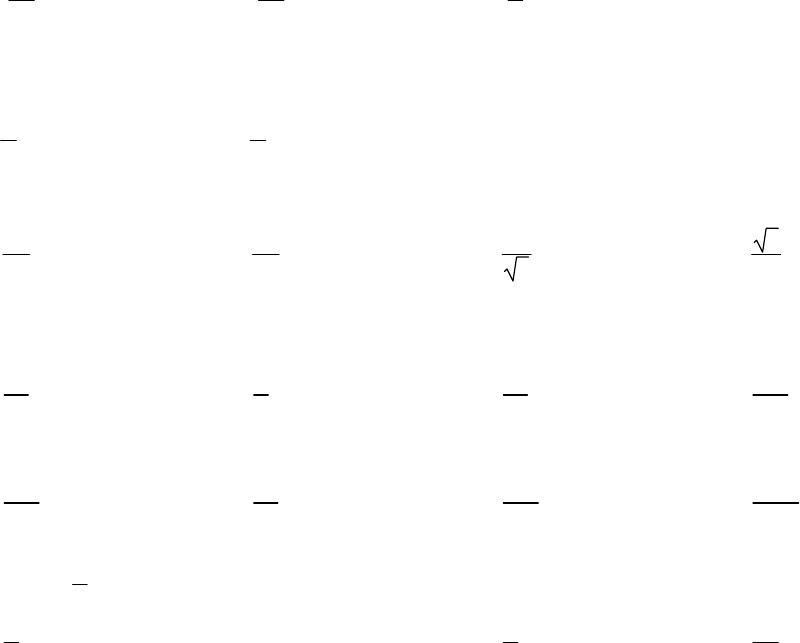
13) If the resistance in an electrical circuit is held constant, the amount of current flowing through the circuit i
s
directly proportional to the amount of voltage applied to the circuit. When 2 volts are applied to a circuit,
40 milliamperes (mA) of current flow through the circuit. Find the new current if the voltage is increased
to 4 volts.
A) 80 mA B) 8 mA C) 76 mA D) 100 mA
14) The amount of gas that a helicopter uses is directly proportional to the number of hours spent flying. The
helicopter flies for 3 hours and uses 18 gallons of fuel. Find the number of gallons of fuel that the
helicopter uses to fly for 4 hours.
A) 24 gal B) 12 gal C) 28 gal D) 30 gal
15) The distance that an object falls when it is dropped is directly proportional to the square of the amount o
f
time since it was dropped. An object falls 288 feet in 3 seconds. Find the distance the object falls in 5
seconds.
A) 800 ft B) 160 ft C) 480 ft D) 15 ft
2 Construct a Model Using Inverse Variation
MULTIPLE CHOICE. Choose the one alternative that best completes the statement or answers the question.
Write a general formula to describe the variation.
1) A varies inversely with x2; A = 3 when x = 3
A) A = 27
x2B) A = 9
x2C) A = 1
3x2D) A = 9x2
Write an equation that expresses the relationship. Use k as the constant of variation.
2) r varies inversely as t.
A) r = k
tB) r = t
kC) r =kt D) kr =t
3) a varies inversely as the square of y.
A) a = k
y2B) a = y2
kC) a = k
yD) a = y
k
If y varies inversely as x, write a general formula to describe the variation.
4) y = 6 when x = 9
A) y = 54
xB) y = 2
3xC)y
= x
54 D) y = 1
54x
5) y = 100 when x = 8
A) y = 800
xB) y = 25
2xC)y
= x
800 D) y = 1
800x
6) y = 18 when x = 1
3
A) y = 6
xB) y = 54x C) y = x
6D) y = 1
6x
Page 56
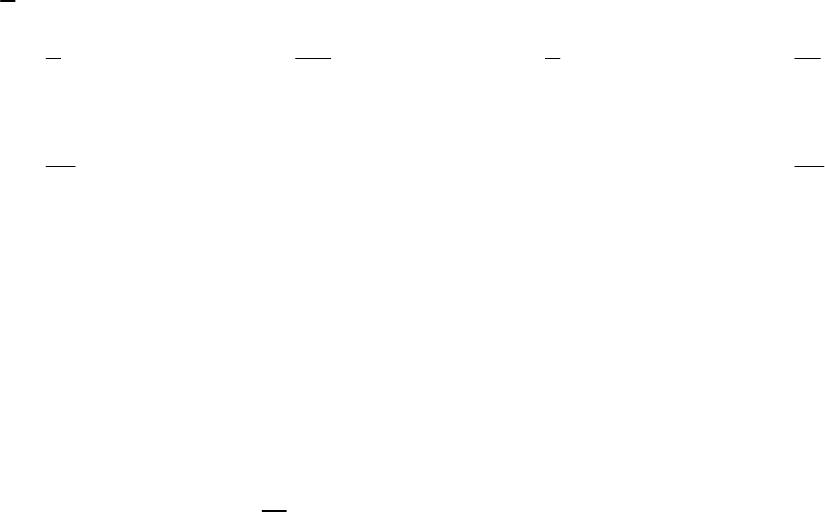
7) y = 1
7 when x = 56
A) y = 8
xB) y = 1
392 xC)y
= x
8D) y = 1
8x
8) y = 0.5 when x = 0.8
A) y = 0.4
xB) y = 0.625x C) y =2.5x D) y = 2.5
x
Solve the problem.
9) x varies inversely as v, and x = 48 when v =4. Find x when v =32.
A) x = 6B)x = 16 C) x =24 D) x =8
10) x varies inversely as y2, and x = 4 when y = 12. Find x when y = 2.
A) x = 144 B) x = 96 C) x =16 D) x =6
11) When the temperature stays the same, the volume of a gas is inversely proportional to the pressure of the
gas. If a balloon is filled with 180 cubic inches of a gas at a pressure of 14 pounds per square inch, find the
new pressure of the gas if the volume is decreased to 45 cubic inches.
A) 56 psi B) 45
14 psi C) 42 psi D) 52 psi
12) The amount of time it takes a swimmer to swim a race is inversely proportional to the average speed of the
swimmer. A swimmer finishes a race in 100 seconds with an average speed of 3 feet per second. Find the
average speed of the swimmer if it takes 60 seconds to finish the race.
A) 5 ft/sec B) 6 ft/sec C) 7 ft/sec D) 4 ft/sec
13) If the force acting on an object stays the same, then the acceleration of the object is inversely proportional
to its mass. If an object with a mass of 8 kilograms accelerates at a rate of 10 meters per second per second
(m/sec2) by a force, find the rate of acceleration of an object with a mass of 4 kilograms that is pulled by
the same force.
A) 20 m/sec2B) 5 m/sec2C) 10 m/sec2D) 18 m/sec2
14) If the voltage, V, in an electric circuit is held constant, the current, I, is inversely proportional to the
resistance, R. If the current is 150 milliamperes (mA) when the resistance is 5 ohms, find the current when
the resistance is 15 ohms.
A) 50 mA B) 450 mA C) 447 mA D) 250 mA
15) While traveling at a constant speed in a car, the centrifugal acceleration passengers feel while the car i
s
turning is inversely proportional to the radius of the turn. If the passengers feel an acceleration of 15 feet
per second per second (ft/sec2) when the radius of the turn is 60 feet, find the acceleration the passengers
feel when the radius of the turn is 180 feet.
A) 5 ft/sec2B) 6 ft/sec2C) 7 ft/sec2D) 8 ft/sec2
Page 57
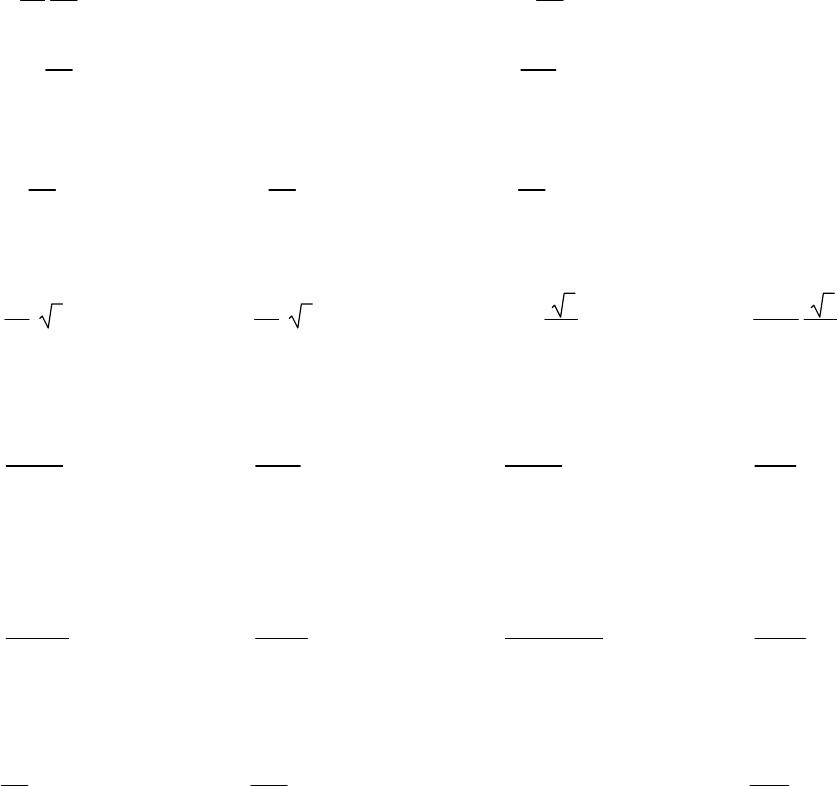
3 Construct a Model Using Joint Variation or Combined Variation
MULTIPLE CHOICE. Choose the one alternative that best completes the statement or answers the question.
Write a general formula to describe the variation.
1) The square of G varies directly with the cube of x and inversely with the square of y; G = 4 when x =3 and
y = 6
A) G2 = 64
3 x3
y2B) G2 = 8 x3
y2
C) G2 = 12 y3
x2D) G2 = 4
243 (x3 + y2)
2) R varies directly with g and inversely with the square of h; R =3 when g =3 and h = 5.
A) R = 25 g
h2B) R = 5 g
h2C) R = 5 h2
gD) R = 25gh2
3) z varies jointly as the cube root of x and the cube of y; z =40 when x =8 and y = 5.
A) z = 4
25 3xy3B) z = 25
4 3xy3C) z = 2500
3x
y3D) z = 1
2500
3x
y3
4) The centrifugal force F of an object speeding around a circular course varies directly as the product of the
object’s mass m and the square of it’s velocity v and inversely as the radius of the turn r.
A) F = kmv2
rB) F = kmv
rC) F = km2v
rD) F = kmr
v2
5) The safety load λ of a beam with a rectangular cross section that is supported at each end varies directly as
the product of the width W and the square of the depth D and inversely as the length L of the beam
between the supports.
A) λ = kWD2
LB) λ = kWD
LC) λ = k(W + D2)
LD) λ = kL
WD2
6) The illumination I produced on a surface by a source of light varies directly as the candlepower c of the
source and inversely as the square of the distance d between the source and the surface.
A) I = kc
d2B) I = kc2
d2C) I = kcd2D) I = kd2
c
Solve the problem.
7) The volume V of a given mass of gas varies directly as the temperature T and inversely as the pressure P.
A measuring device is calibrated to give V = 299 in3 when T = 460° and P = 20 lb/in2. What is the volume
on this device when the temperature is 470° and the pressure is 25 lb/in2?
A) V = 244.4 in3B) V = 18.8 in3C) V = 264.4 in3D) V = 224.4 in3
8) The time in hours it takes a satellite to complete an orbit around the earth varies directly as the radius o
f
the orbit (from the center of the earth) and inversely as the orbital velocity. If a satellite completes an orbit
650 miles above the earth in 11 hours at a velocity of 28,000 mph, how long would it take a satellite to
complete an orbit if it is at 1800 miles above the earth at a velocity of 27,000 mph? (Use 3960 miles as the
radius of the earth.)
A) 14.25 hr B) 31.59 hr C) 4.45 hr D) 142.53 hr
Page 58
9) The pressure of a gas varies jointly as the amount of the gas (measured in moles) and the temperature and
inversely as the volume of the gas. If the pressure is 1008 kiloPascals (kPa) when the number of moles is 8,
the temperature is 280° Kelvin, and the volume is 640 cc, find the pressure when the number of moles is 7,
the temperature is 340° K, and the volume is 840 cc.
A) 816 kPa B) 864 kPa C) 1632 kPa D) 1536 kPa
10) Body–mass index, or BMI, takes both weight and height into account when assessing whether an
individual is underweight or overweight. BMI varies directly as one’s weight, in pounds, and inversely as
the square of one’s height, in inches. In adults, normal values for the BMI are between 20 and 25. A person
who weighs 160 pounds and is 71 inches tall has a BMI of 22.31. What is the BMI, to the nearest tenth, for a
person who weighs 136 pounds and who is 63 inches tall?
A) 24.1 B) 24.5 C) 23.6 D) 23.3
11) The amount of paint needed to cover the walls of a room varies jointly as the perimeter of the room and
the height of the wall. If a room with a perimeter of 60 feet and 8–foot walls requires 4.8 quarts of paint,
find the amount of paint needed to cover the walls of a room with a perimeter of 50 feet and 10–foot walls.
A) 5 qt B) 500 qt C) 50 qt D) 10 qt
12) The power that a resistor must dissipate is jointly proportional to the square of the current flowing
through the resistor and the resistance of the resistor. If a resistor needs to dissipate 144 watts of power
when 6 amperes of current is flowing through the resistor whose resistance is 4 ohms, find the power that
a resistor needs to dissipate when 3 amperes of current are flowing through a resistor whose resistance is
4 ohms.
A) 36 watts B) 12 watts C) 48 watts D) 72 watts
13) While traveling in a car, the centrifugal force a passenger experiences as the car drives in a circle varie
s
jointly as the mass of the passenger and the square of the speed of the car. If a passenger experiences a
force of 129.6 newtons (N) when the car is moving at a speed of 60 kilometers per hour and the passenger
has a mass of 40 kilograms, find the force a passenger experiences when the car is moving at 50 kilometers
per hour and the passenger has a mass of 80 kilograms.
A) 180 N B) 200 N C) 160 N D) 225 N
14) The amount of simple interest earned on an investment over a fixed amount of time is jointly proportional
to the principle invested and the interest rate. A principle investment of $2600.00 with an interest rate of
6% earned $312.00 in simple interest. Find the amount of simple interest earned if the principle is $3700.00
and the interest rate is 7%.
A) $518.00 B) $51,800.00 C) $444.00 D) $364.00
15) The voltage across a resistor is jointly proportional to the resistance of the resistor and the current flowin
g
through the resistor. If the voltage across a resistor is 18 volts (V) for a resistor whose resistance is 2 ohms
and when the current flowing through the resistor is 9 amperes, find the voltage across a resistor whose
resistance is 4 ohms and when the current flowing through the resistor is 7 amperes.
A) 28 V B) 14 V C) 63 V D) 36 V
Page 59
Ch. 2 Graphs
Answer Key
2.1 Intercepts; Symmetry; Graphing Key Equations
1 Find Intercepts from an Equation
2 Test an Equation for Symmetry
3 Know How to Graph Key Equations
Page 60
2.2 Lines
1 Calculate and Interpret the Slope of a Line
2 Graph Lines Given a Point and the Slope
4 Use the Point–Slope Form of a Line; Identify Horizontal Lines
Page 61
6 Find the Equation of a Line Given Two Points
7 Graph Lines Written in General Form Using Intercepts
8 Find Equations of Parallel Lines
9 Find Equations of Perpendicular Lines
Page 62
Page 64