50)
The ripple voltage from a power supply ________.
50)
A)
is very high
B)
is zero
C)
varies with load
D)
is about 1 V
51)
If you measure 0.7 V across a diode, the diode is probably made of ________ and is ________
biased.
51)
A)
silicon, reverse
B)
germanium, forward
C)
silicon, forward
D)
germanium, reverse
52)
The formula for line regulation is:
52)
A)
VIN
VOUT
×
100%.
B)
VFL
VNL
× 100%.
C)
VOUT
VIN
×
100%.
D)
VNL
VFL
× 100%.
53)
If you measure 17 V across a diode, it is probably ________.
53)
A)
in heavy conduction
B)
reverse biased
C)
forward biased
D)
shorted
54)
To operate as a voltage regulator, a zener diode requires a:
54)
A)
transformer.
B)
series resistor.
C)
series capacitor.
D)
silicon diode.
55)
Current through a diode is blocked by ________.
55)
A)
thermally produced electron–hole pairs
B)
forward voltage across the diode
C)
reverse voltage across the diode
D)
depletion layer breakdown
56)
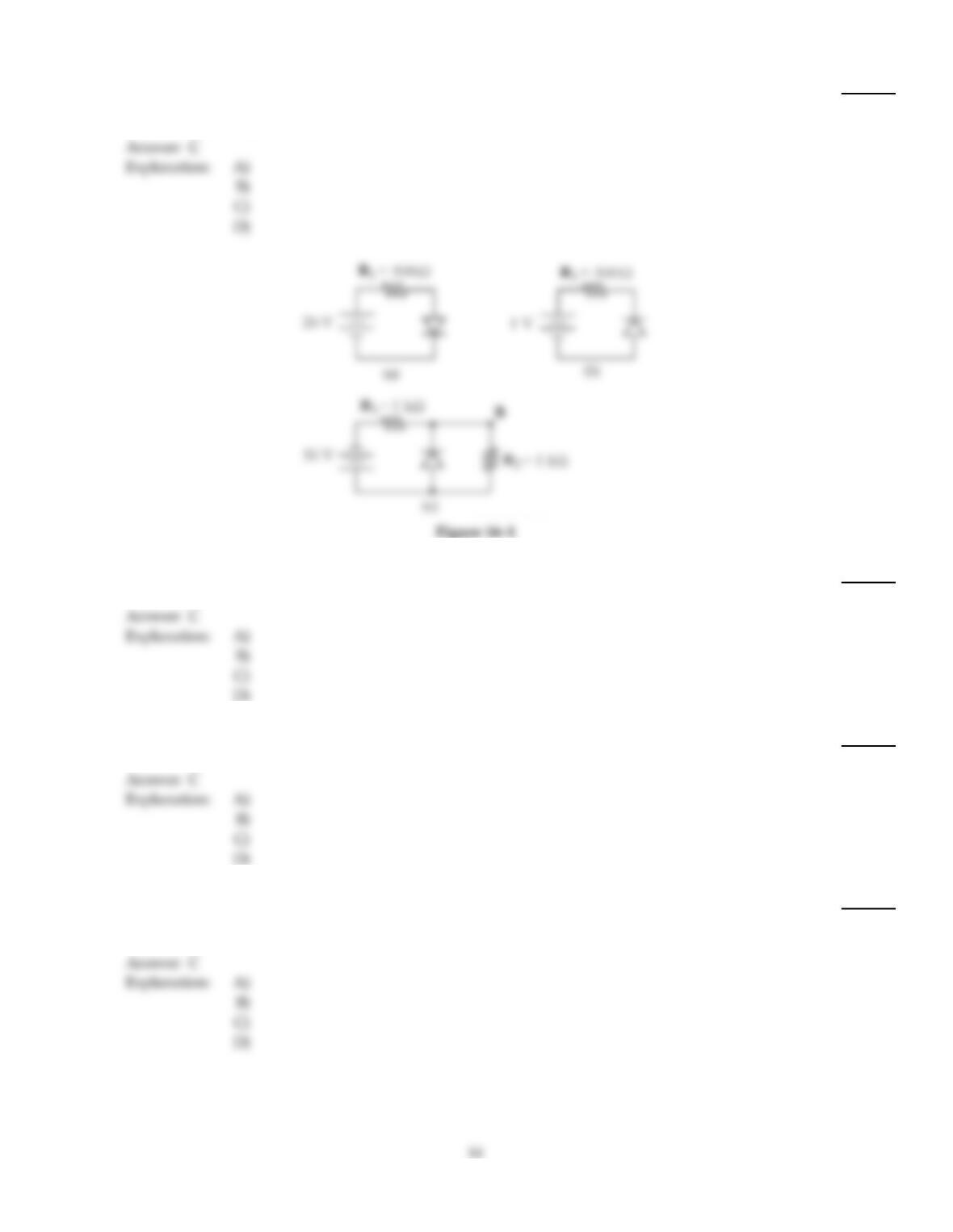
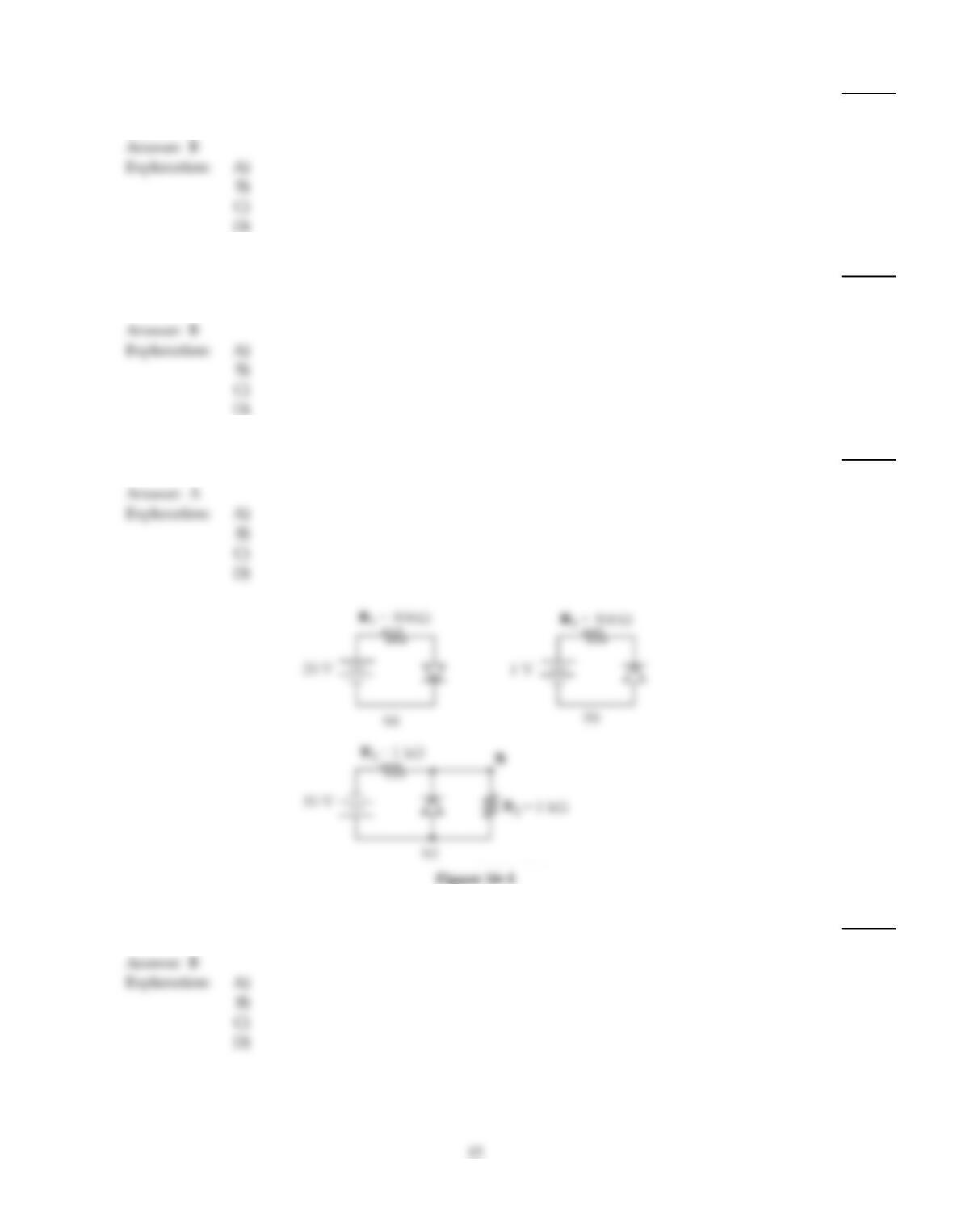
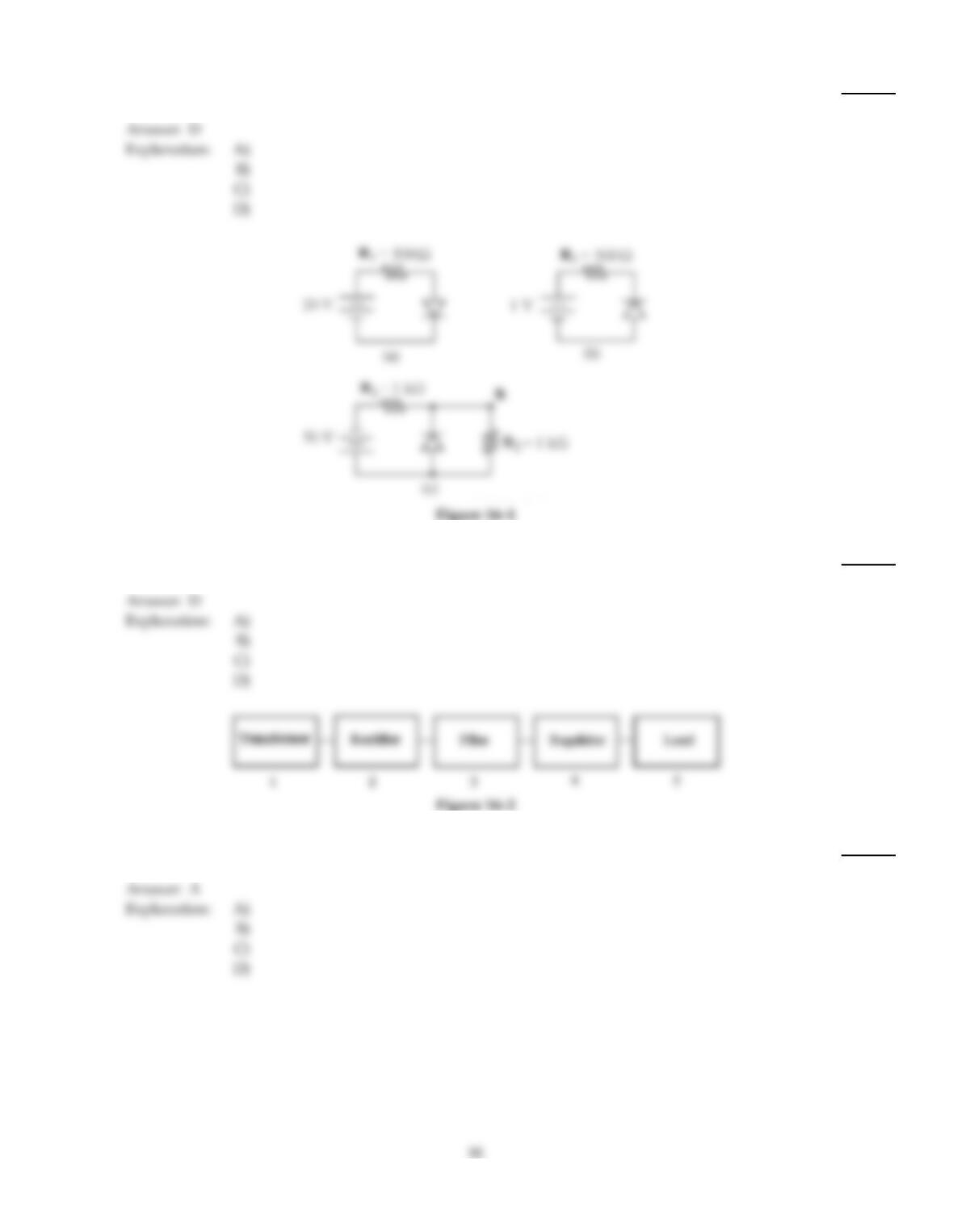
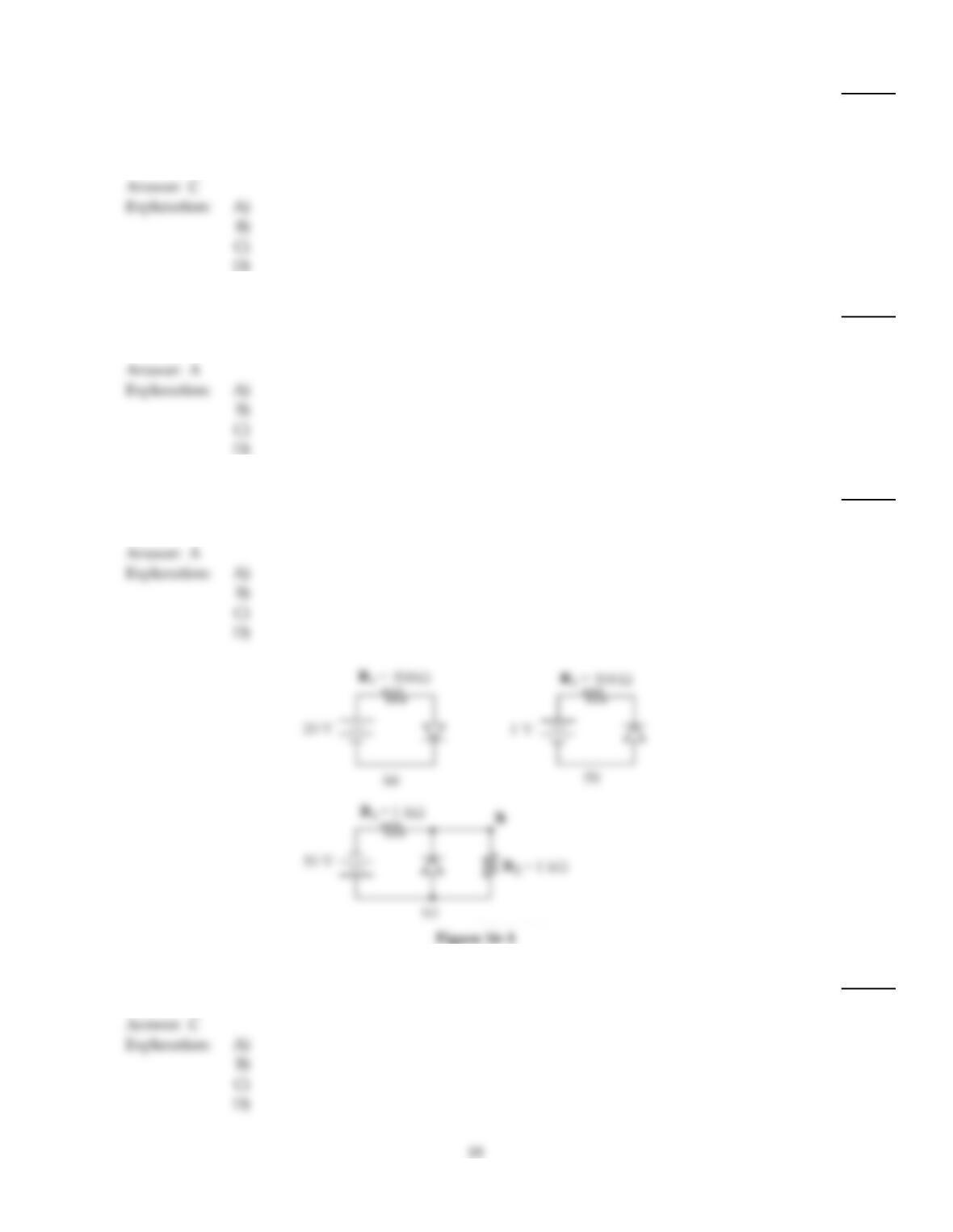
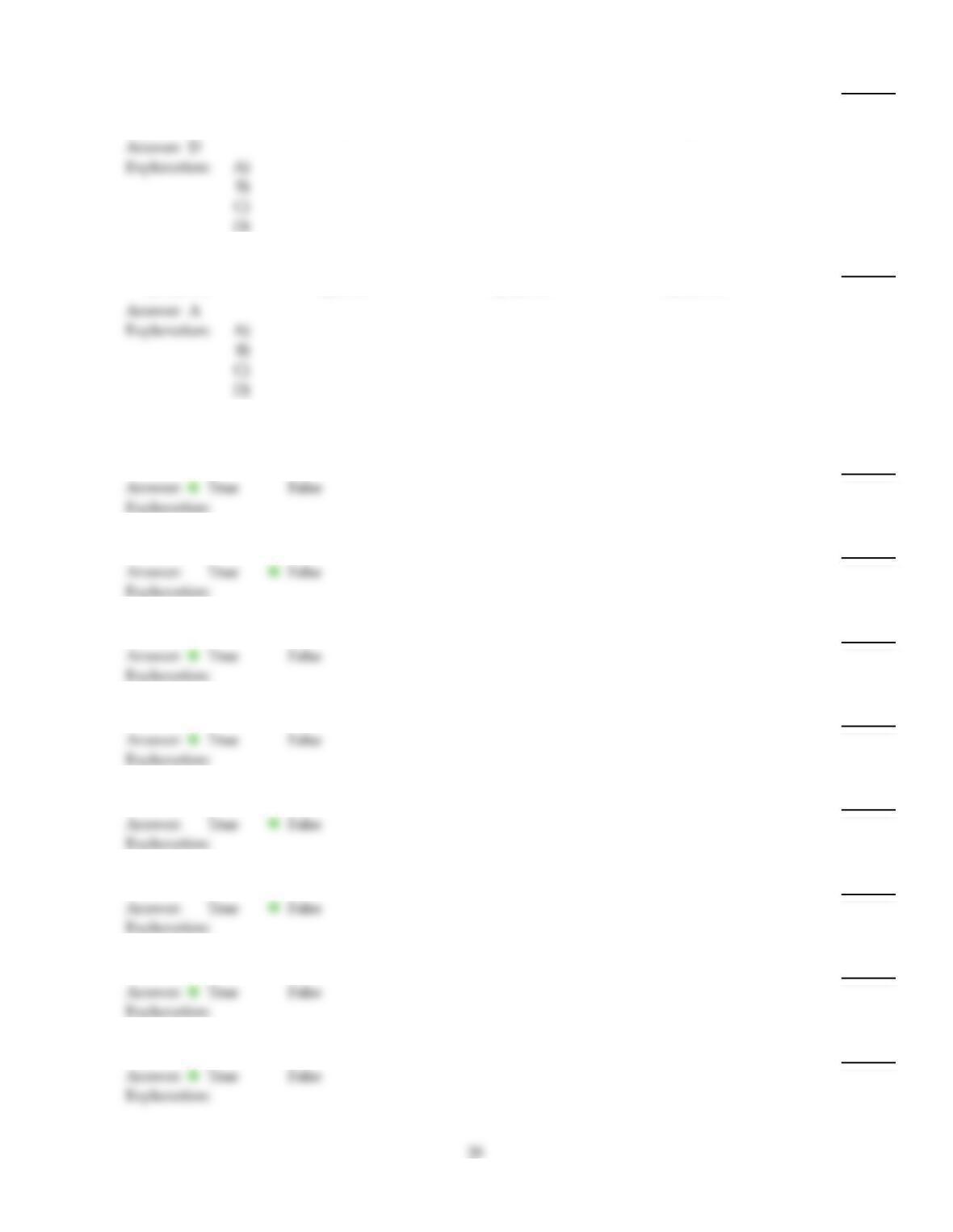
What is the voltage across the resistor in Figure 16–1(a) if the diode is germanium?
56)
A)
20 V
B)
0 V
C)
19.7 V
D)
0.7 V
57)
If the diode opens in Figure 16–1(b), the voltage across the diode is ________.
57)
A)
0 V
B)
4.3 V
C)
1 V
D)
0.7 V
58)
If the cathode voltage of a forward–biased silicon diode equals 6.5 V, the anode voltage equals
________.
58)
A)
–0.7 V
B)
–7.2 V
C)
7.2 V
D)
0.7 V
59)
A forward biased silicon diode is in series with a 12 k resistor. The source voltage is 5 V. The
voltage across the diode is ________ and the voltage across the resistor is ________.
59)
A)
4.3 V, 0.7 V
B)
0.7 V, 4.3 V
C)
4.7 V, 0.3 V
D)
0.3 V, 4.7 V
60)
Reverse breakdown current is carried by:
60)
A)
pentavalent impurity atoms.
B)
minority carriers.
C)
majority carrier.
D)
trivalent impurity atoms.
61)
If a 60 Hz sine wave is input to a half–wave rectifier, its output frequency is ________.
61)
A)
60 Hz
B)
30 Hz
C)
120 Hz
D)
0 Hz
62)
What is the voltage across the silicon diode in Figure 16–1(b)?
62)
A)
–0.7 V
B)
1.0 V
C)
0.3 V
D)
0.7 V
63)
If a full–wave rectifier outputs 36 VP, the average output is ________.
63)
A)
76 V
B)
19 V
C)
38 V
D)
22.9 V
64)
What is the current through R1 in Figure 16–1(c) if the diode is silicon?
64)
A)
0 A
B)
25 mA
C)
49.7 mA
D)
49.3 mA
65)
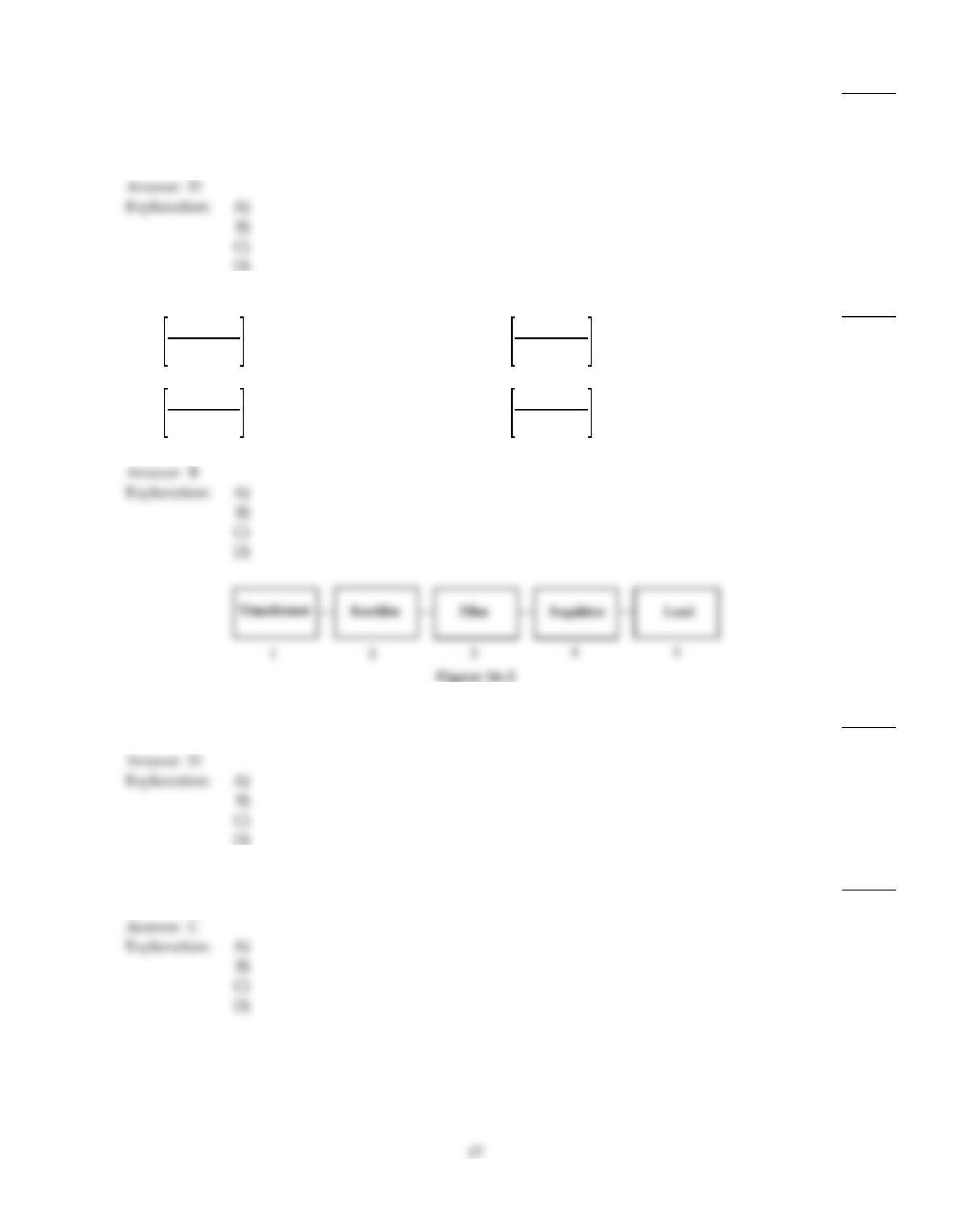
Which block in Figure 16–2 will change the amplitude of the ac voltage?
65)
A)
1
B)
2
C)
3
D)
4
66)
If the load current increases in a simple zener regulator, the ________.
66)
A)
total current increases
B)
voltage across the series resistor decreases
C)
current through the series resistor increases
D)
zener current decreases
67)
The formula for load regulation is:
67)
A)
VFL–VNL
VNL
× 100%
B)
VNL–VFL
VFL
× 100%.
C)
VNL–VFL
VNL
× 100%
D)
VFL–VNL
VFL
× 100%
68)
Which block in Figure 16–2 will keep the output voltage nearly constant under varying load?
68)
A)
1
B)
2
C)
3
D)
4
69)
If a half–wave rectifier outputs 58 VP, the diode’s PIV should be more than ________.
69)
A)
116 V
B)
15 V
C)
58 V
D)
29 V
70)
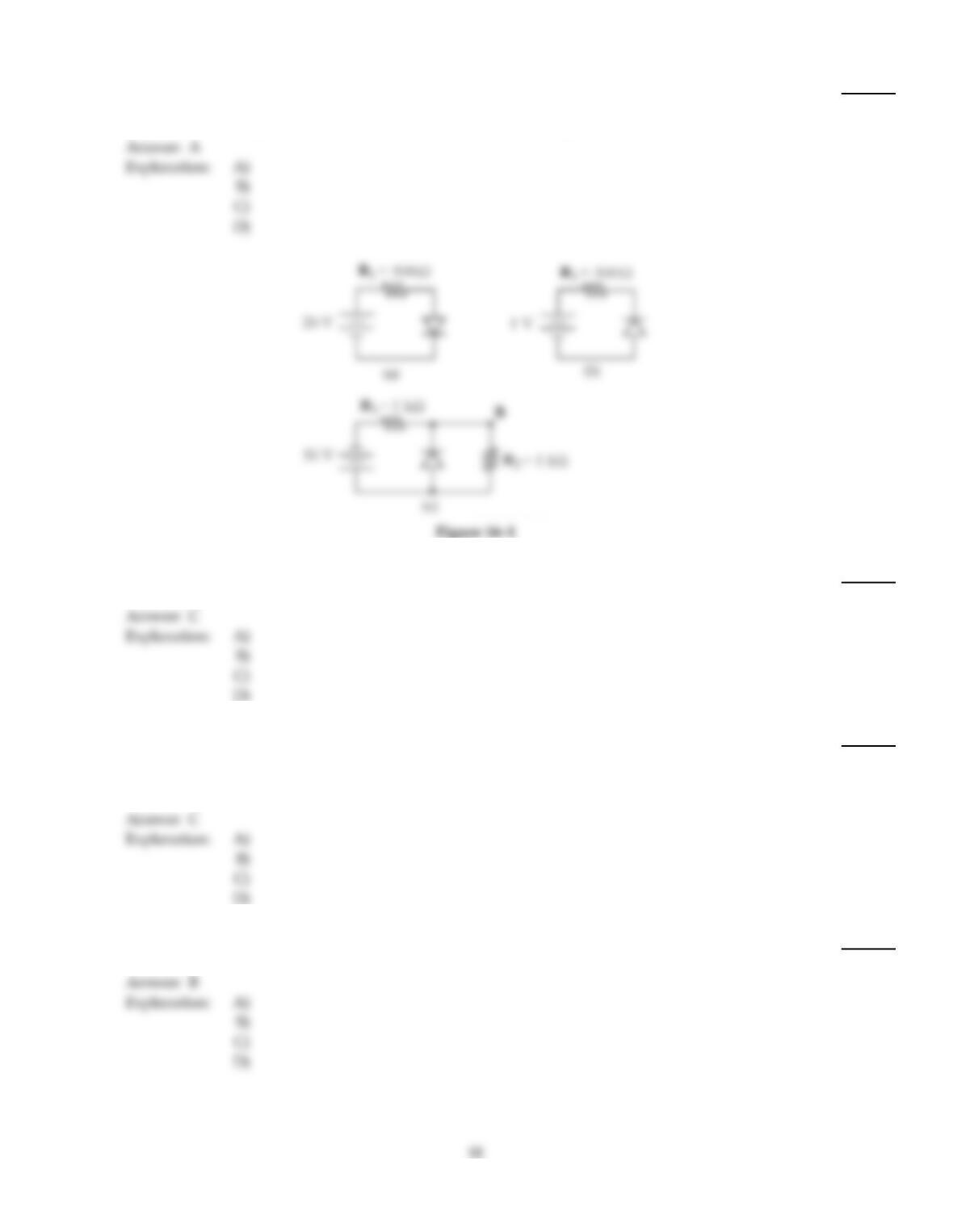
A full–wave rectifier uses ________ diodes and a transformer with a ________.
70)
A)
two, center tap
B)
one, single secondary
C)
four, center tap
D)
two, single secondary
71)
If the diode is made of silicon in Figure 16–1(b), what is the current?
71)
A)
8.6 mA
B)
10 mA
C)
0 A
D)
9.4 mA
72)
If you measure the voltage across a diode and it measures 0.3 V, the diode is probably made of
________ and is ________ biased.
72)
A)
silicon, forward
B)
germanium, reverse
C)
germanium, forward
D)
silicon, reverse
73)
If the cathode voltage of a forward biased silicon diode is 4.5 V, what is the anode voltage?
73)
A)
–5.2 V
B)
5.2 V
C)
0.7 V
D)
–0.7 V
74)
A full–wave rectifier requires ________.
74)
A)
four diodes and a center–tapped transformer
B)
a high voltage to operate it
C)
two diodes and a center–tapped transformer
D)
two diodes and a transformer with a single secondary
75)
In a P–N diode, the region near the P–N junction is called:
75)
A)
the depletion region.
B)
the neutral region.
C)
the diffusion region.
D)
the recombination region.
A
76)
The ripple voltage from a power supply is ________.
76)
A)
dependent upon the load
B)
about 1 V
C)
zero
D)
very high
A
77)
What is the current through R1 in Figure 16–1(c) if the diode is germanium?
77)
A)
0 A
B)
25 mA
C)
49.7 mA
D)
49.3 mA
C
C
78)
If an ohmmeter check of a diode indicates a high resistance in one direction and low resistance in
the other, the diode is probably ________.
78)
A)
shorted
B)
open
C)
bad
D)
good
79)
If a 60 Hz sine wave is input to a full–wave rectifier, its output frequency is ________.
79)
A)
120 Hz
B)
0 Hz
C)
60 Hz
D)
30 Hz
A
TRUE/FALSE. Write ‘T’ if the statement is true and ‘F’ if the statement is false.
80)
Varactor diodes are used as voltage–variable capacitors.
80)
81)
LEDs will emit light if a reverse voltage is applied to them.
81)
82)
A forward–biased germanium diode normally drops about 0.3 V.
82)
83)
The movement of free electrons is called electron current.
83)
84)
Zener diodes can conduct very large currents.
84)
85)
Most diodes are made from a semiconductor material called germanium.
85)
86)
A forward–biased silicon diode normally drops about 0.7 V.
86)
87)
Adding impurities to semiconductor materials is called doping.
87)
D
88)
A zener diode is used as a constant voltage regulator.
88)
89)
Ripple voltage is caused by the charging and discharging of the diodes.
89)
90)
A half–wave rectifier uses four diodes as rectifiers.
90)
91)
Diode clampers cut off voltage above or below specified levels.
91)
92)
Most diodes are made from a semiconductor material called silicon.
92)
93)
The ripple frequency of a half–wave rectifier equals the supply frequency.
93)
94)
A common name for a PN junction is the transistor.
94)
95)
To rectify is to convert dc to pulsating ac.
95)
96)
Reverse breakdown usually occurs when a diode is forward biased by about 0.7 V.
96)
97)
A forward–biased silicon diode normally drops about 16 V.
97)
98)
Photodiodes will conduct more as the light intensity upon them increases.
98)
Answer Key
Testname: C16
Answer Key
Testname: C16
23