Chapter 09 – Pure Competition in the Long Run
1. All of the following are long-run changes, except:
2. If the entry or exit of firms does not affect the resource prices in an industry, we refer to it
as a:
Chapter 09 – Pure Competition in the Long Run
3. Which of the following is not an assumption that we make in analyzing pure competition in
the long run?
4. All of the following statements apply to a purely competitive market in the long run,
except:
Chapter 09 – Pure Competition in the Long Run
5. If a purely competitive firm is currently facing a situation where the price of its product is
lower than the average variable cost, but it believes that the market demand for its product
will increase soon, then:
6. If a purely competitive firm is facing a situation where the price of its product is lower than
the total cost, then all of the following applies, except:
Chapter 09 – Pure Competition in the Long Run
7. Assume that the market for soybeans is purely competitive. Currently, firms growing
soybeans are experiencing economic profits. In the long run, we can expect:
8. The representative firm in a purely competitive industry:
Chapter 09 – Pure Competition in the Long Run
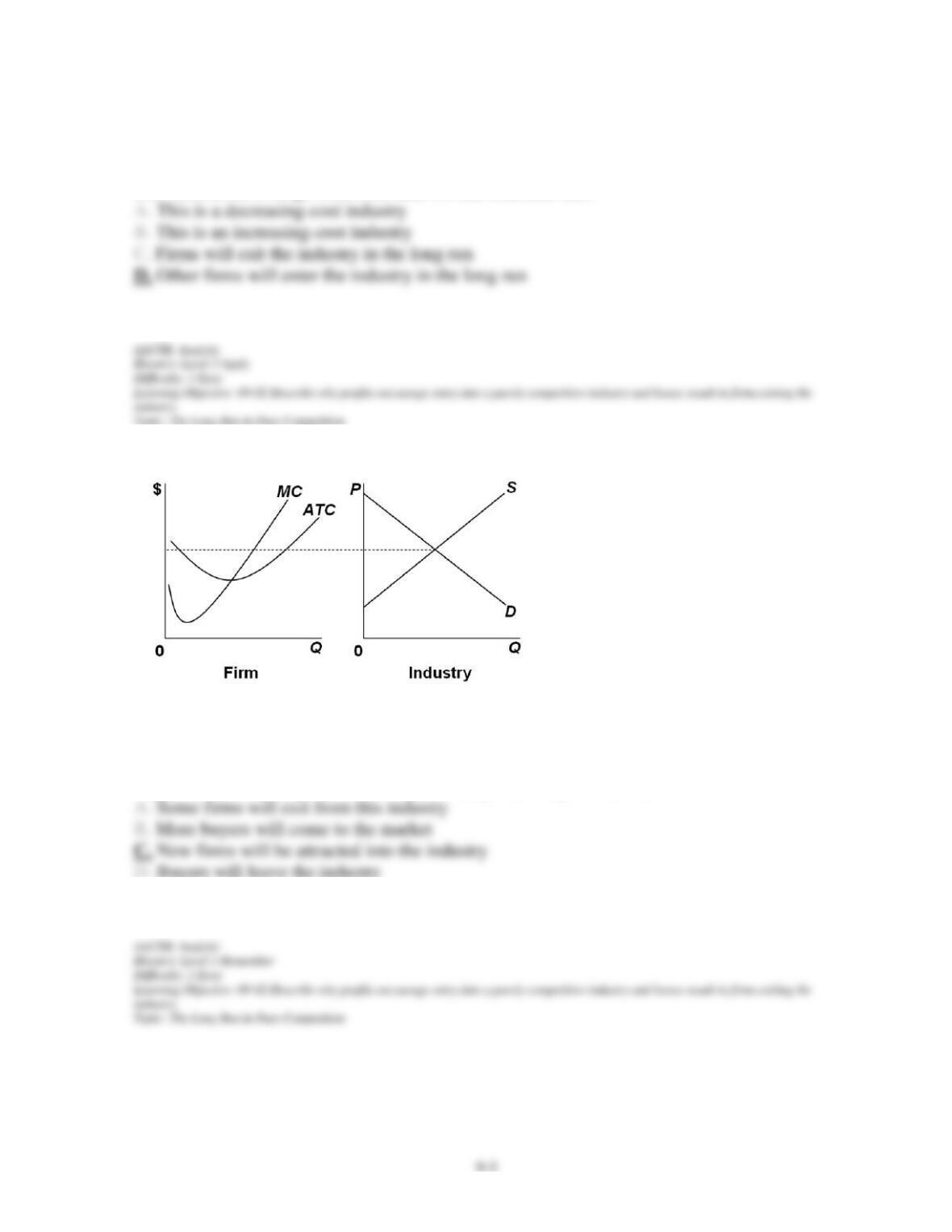
10. If the representative purely competitive firm is in short-run equilibrium and its marginal
cost exceeds its average total cost, then we can conclude that:
11. Refer to the graphs above for a purely competitive market in the short run. The graphs
suggest that in the long run, assuming no changes in the given information:
Chapter 09 – Pure Competition in the Long Run
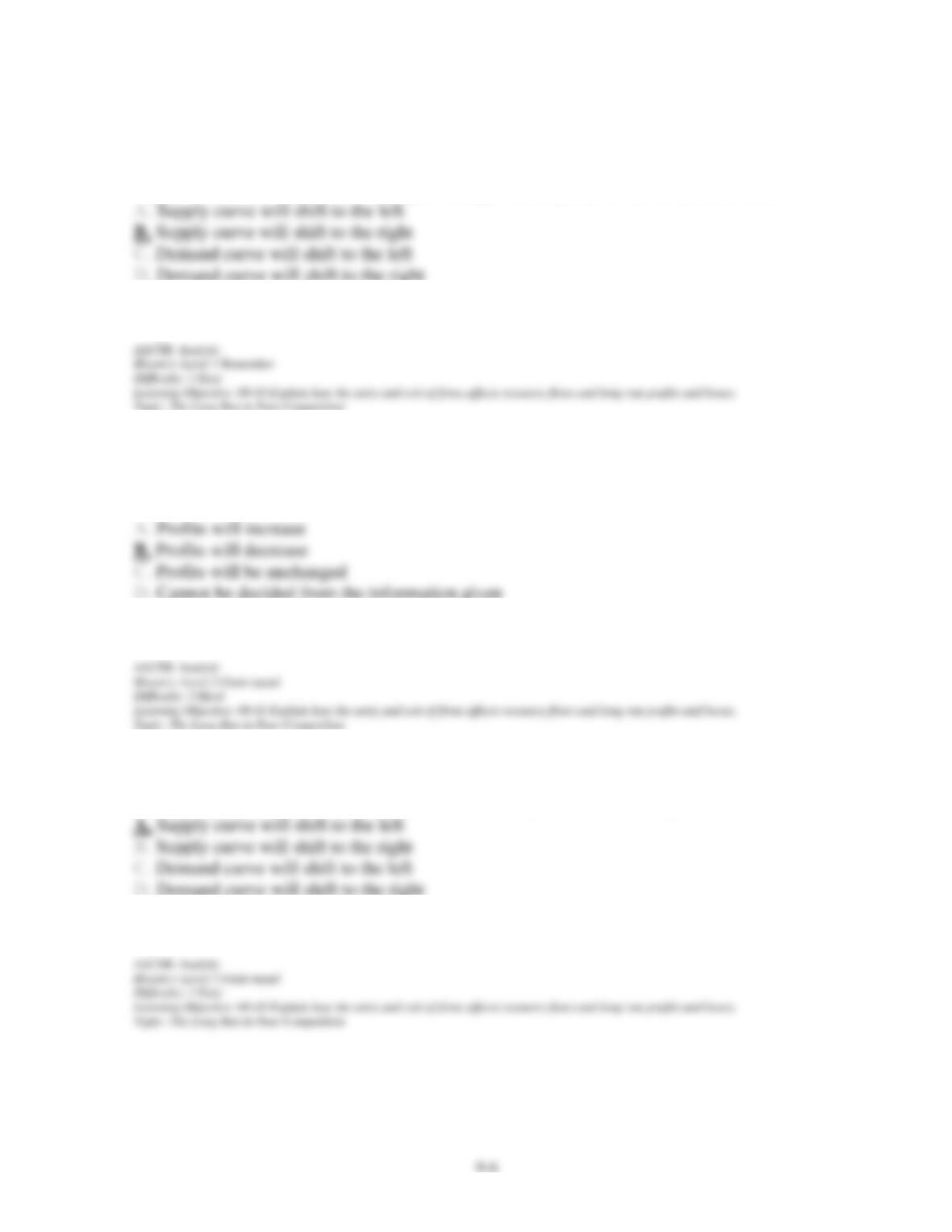
12. Refer to the graphs above for a purely competitive market in the short run. The graphs
suggest that in the long run, assuming no changes in the given information, the market:
13. Refer to the graphs above for a purely competitive market in the short run. The graphs
suggest that in the long run, assuming no changes in the given information, the firms in the
industry will find that:
14. Suppose that the corn market is purely competitive. If the corn farmers are currently
earning negative economic profits, then we would expect that in the long run the market’s:
Chapter 09 – Pure Competition in the Long Run
15. If firms enter a purely competitive industry, then in the long run this change will shift the
industry:
16. If firms are losing money in a purely competitive industry, then the long run adjustments
in this situation will shift the industry:
17. Assume the market for ball bearings is purely competitive. Currently, each of the firms in
this market is making a positive level of economic profits. In the long run, we can expect the
market:
Chapter 09 – Pure Competition in the Long Run
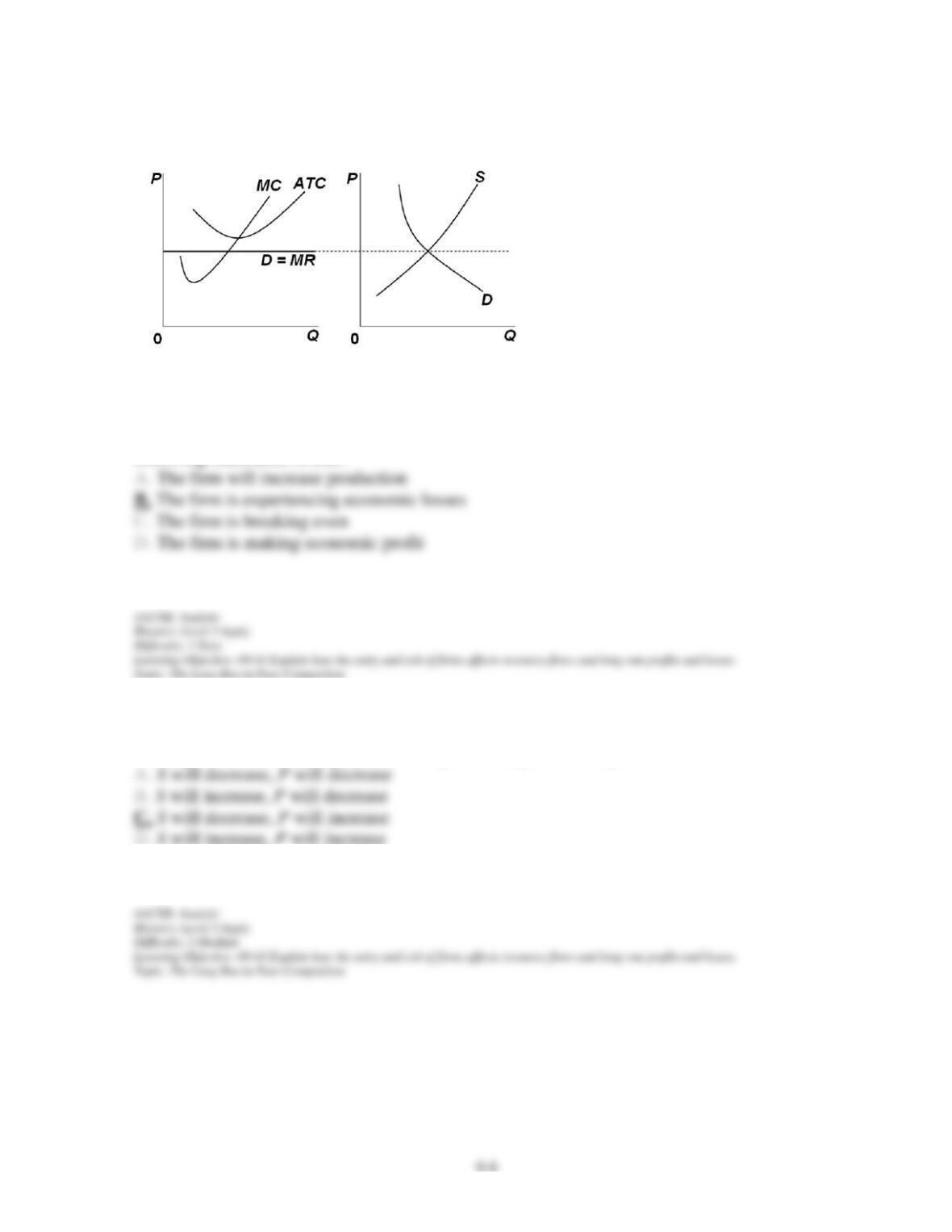
18. Refer to the above graphs for a competitive market in the short run. Which of the
19. Refer to the above graphs for a competitive market in the short run. What will happen in
the long run to industry supply and the equilibrium price of the product?
Chapter 09 – Pure Competition in the Long Run
20. Refer to the above graphs for a competitive market in the short run. What will happen to
the firm’s economic profits as long-run market adjustments occur?
21. The long-run supply curve under pure competition will be:
22. The long-run supply curve would be perfectly elastic in:
Chapter 09 – Pure Competition in the Long Run
23. The long-run supply curve would be upward-sloping if:
24. The long-run supply curve would be downward-sloping if the firms’:
Chapter 09 – Pure Competition in the Long Run
26. If there is a decrease in demand for a product in a purely competitive industry, it results in
an industry:
27. An industry where an increase in the number of firms does not affect the prices of the
resources used will have a long run supply curve that is:
28. If the long-run supply curve is upward-sloping, it indicates that resource prices rise when:
Chapter 09 – Pure Competition in the Long Run
29. A long-run supply curve that is downward-sloping indicates that the firms’ ATC curves:
30. What happens in a decreasing-cost industry when some firms leave and the industry’s
output contracts?
31. Assume a purely competitive increasing-cost industry is initially in long-run equilibrium
and that an increase in consumer demand occurs. After all economic adjustments have been
completed, product price will be:
Chapter 09 – Pure Competition in the Long Run
32. Assume a purely competitive decreasing-cost industry is initially in long-run equilibrium
but then there is a decrease in consumer demand. After all economic adjustments to this new
situation have taken place, product price will be:
33. Assume a purely competitive constant-cost industry is initially at long-run equilibrium.
Now suppose that a decrease in consumer demand occurs. After all the long-run adjustments
have been completed, the new equilibrium price:
34. Which statement is correct? The long-run supply curve for a purely competitive:
Chapter 09 – Pure Competition in the Long Run
37. An industry that has increasing returns to scale and fixed factor prices will have a long-run
supply curve that is:
Chapter 09 – Pure Competition in the Long Run
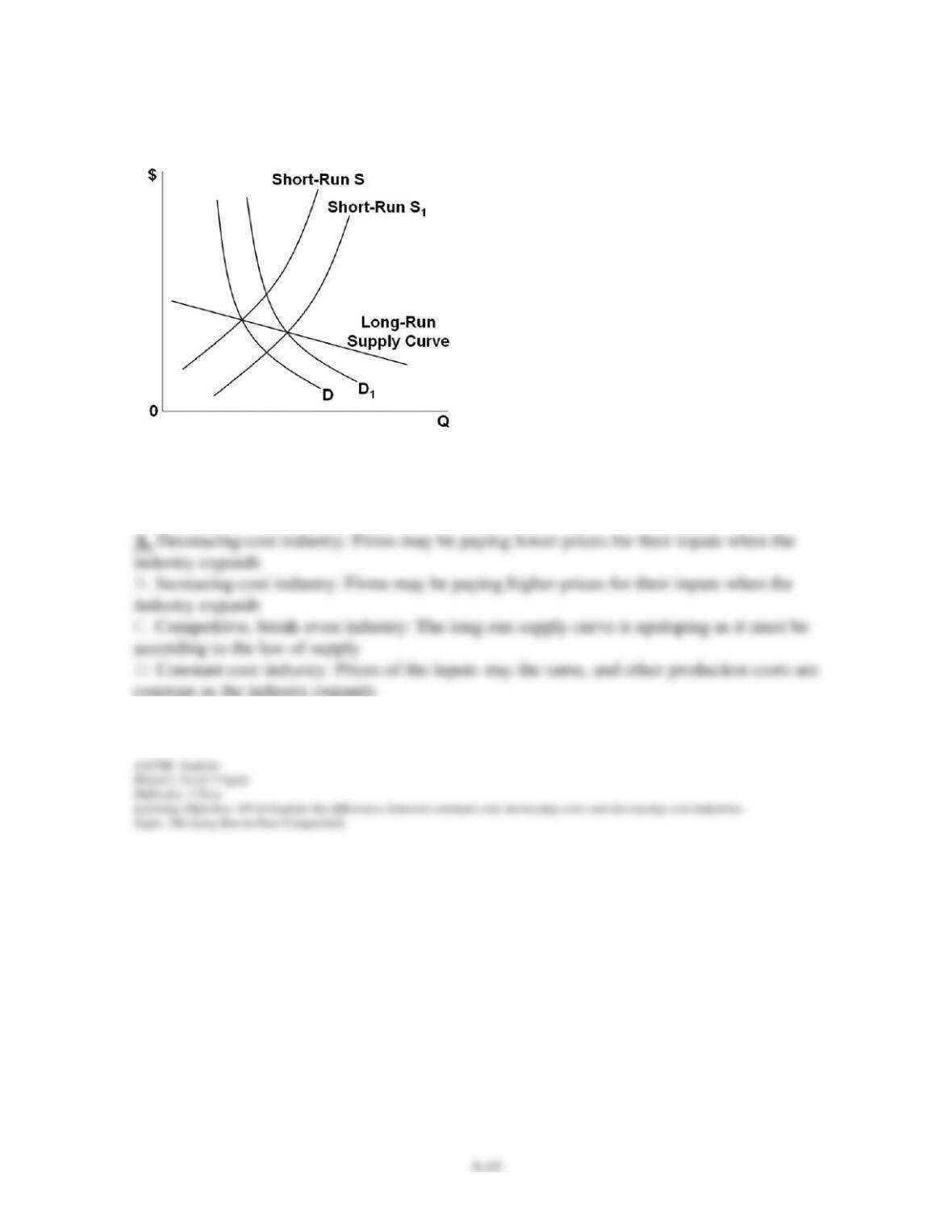
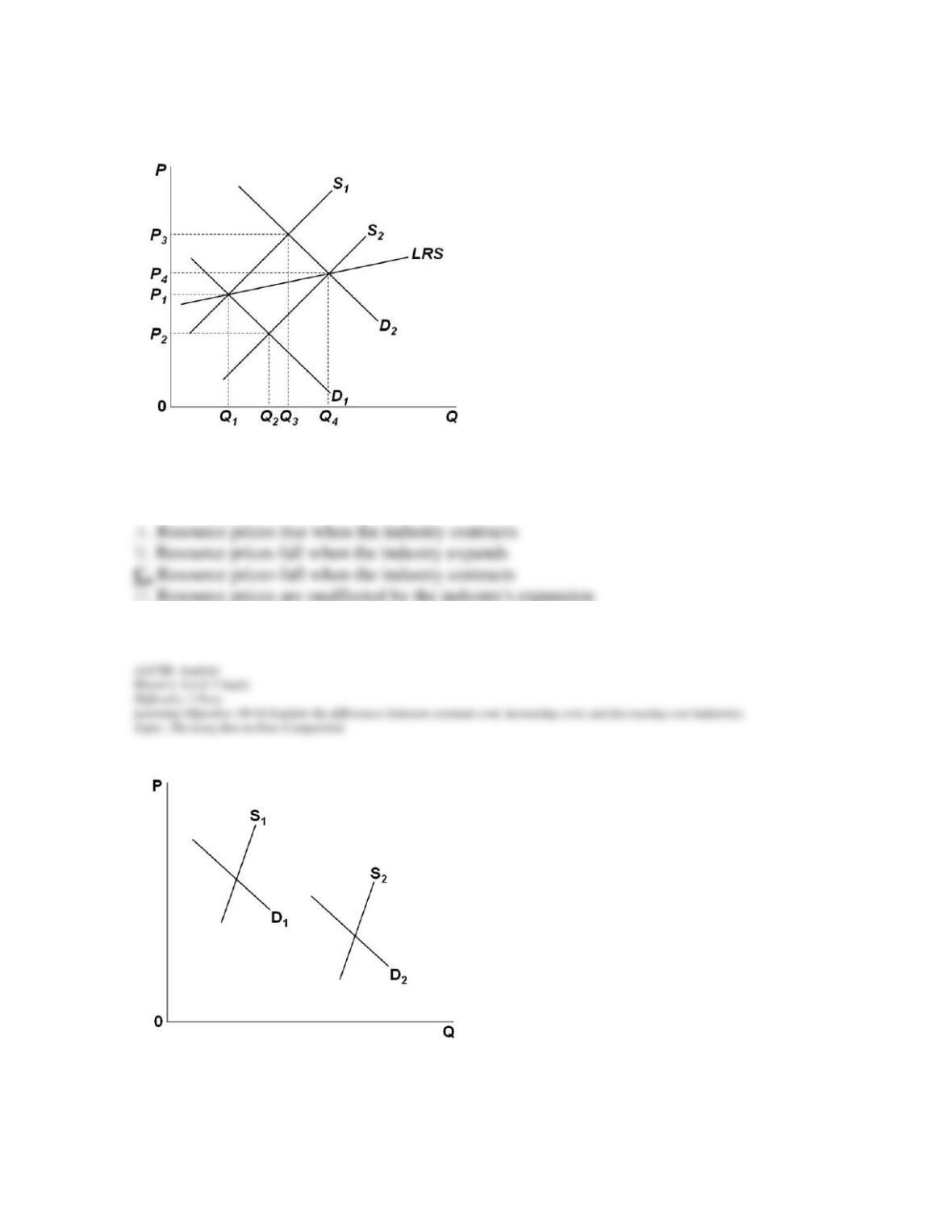
38. The graph above represents a(n):
Chapter 09 – Pure Competition in the Long Run
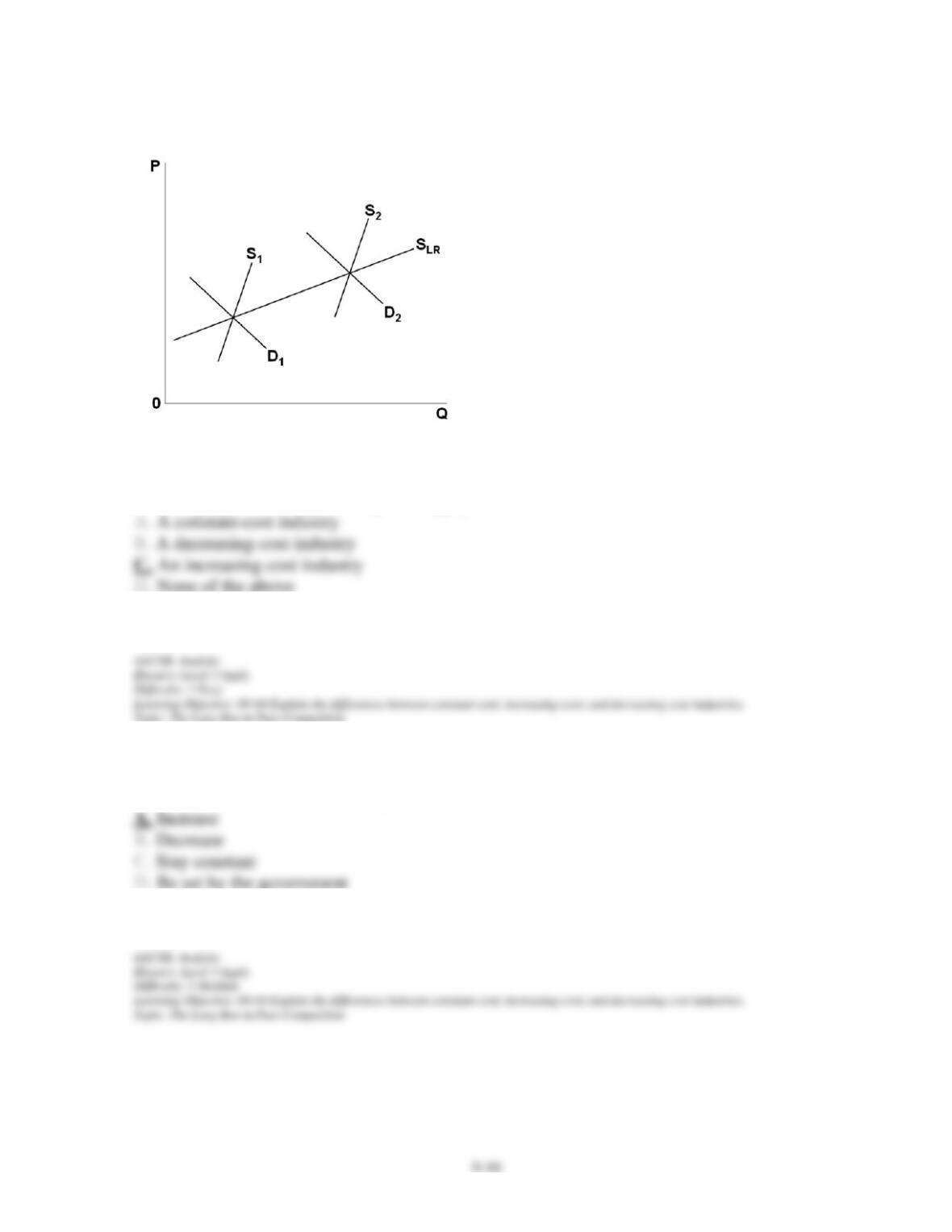
39. The graph above depicts long-run supply for:
40. The graph above depicts a situation where, if the market demand for the product increases,
the prices of the resources used by the firms in the industry would:
Chapter 09 – Pure Competition in the Long Run
9-17
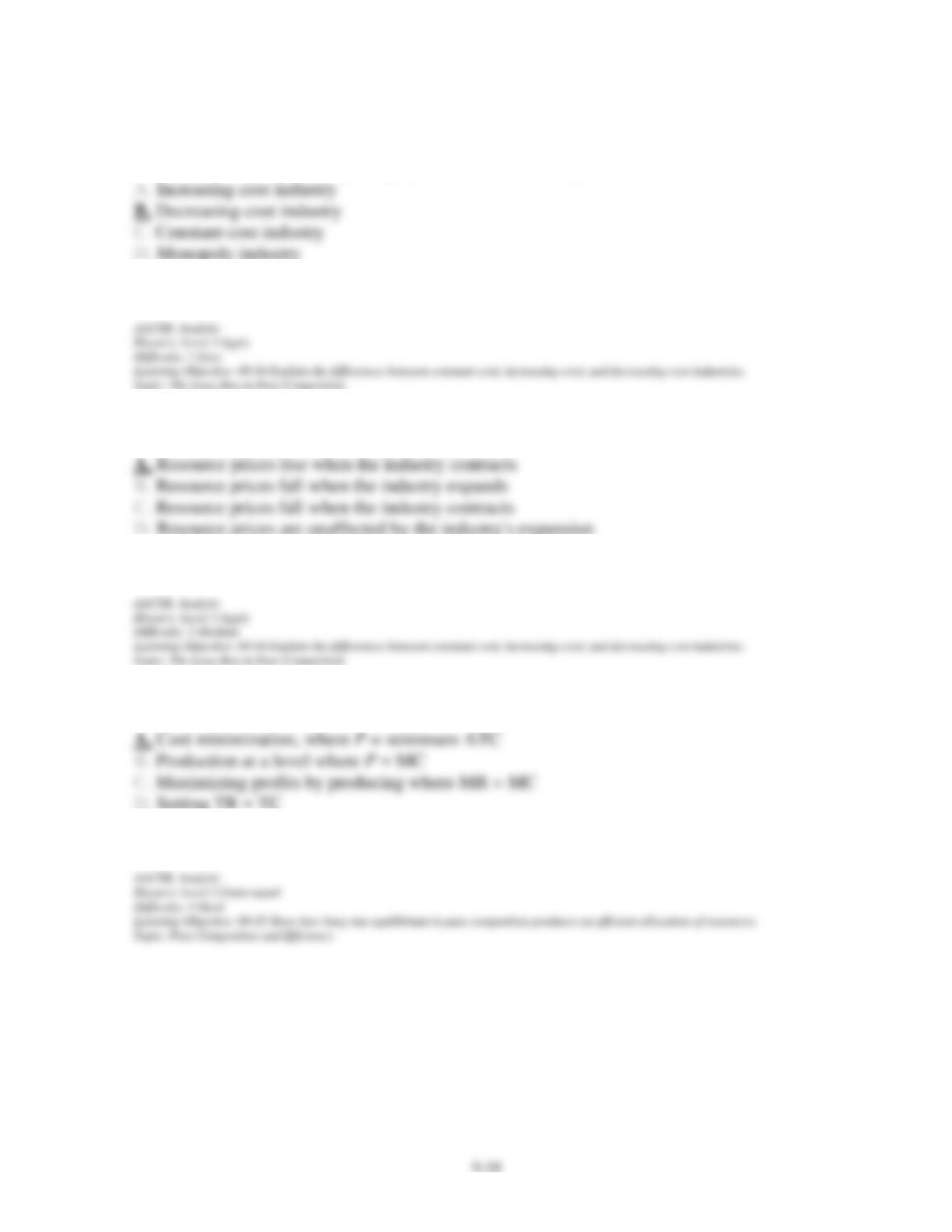
41. The industry represented by the graph above must be one where:
Chapter 09 – Pure Competition in the Long Run
42. The industry indicated by the graph above would be a(n):
43. The industry represented by the graph above must be one where:
44. Productive efficiency refers to:
Chapter 09 – Pure Competition in the Long Run
45. An industry is producing at the least-cost rate of production when:
46. Allocative efficiency occurs when the:
Chapter 09 – Pure Competition in the Long Run
48. Which would indicate that a firm is operating under conditions of pure competition and is
being productively efficient?
49. Which statement is correct?
50. In long-run equilibrium under conditions of pure competition and productive efficiency,
all firms produce at minimum: