7. Graph a perfectly competitive profit-maximizing firm making short-run profits. Be sure to include
the marginal revenue curve, the marginal cost curve, the average total cost curve, and the average
variable cost curve.
8. Graph a perfectly competitive profit-maximizing firm that is incurring a short-run loss but
continues to produce. Be sure to include the marginal revenue curve, the marginal cost curve, the
average total cost curve, and the average variable cost curve.
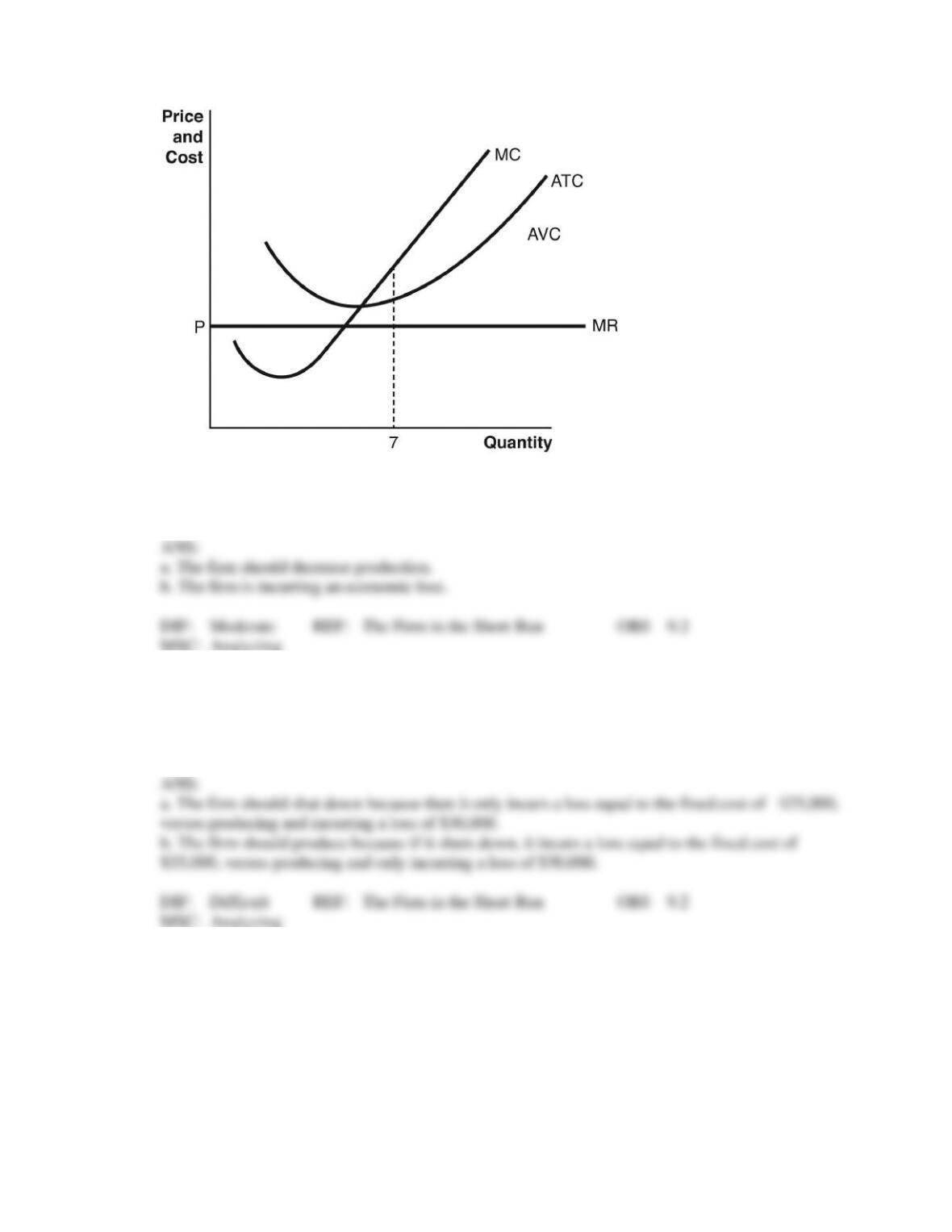
9. Refer to the accompanying graph.
a. If the firm is currently producing seven units, should the firm increase or decrease production?
b. Is this firm making positive economic profits or incurring an economic loss?
10. a. A profit-maximizing firm incurs an economic loss of $30,000 per year. Its fixed cost is $25,000
a year. Should the firm produce or shut down in the short run?
b. Suppose instead that the firm has a fixed cost of $35,000 per year. Should the firm produce or
shut down in the short run?
11. We are given the following cost equations for a typical, perfectly competitive firm with no fixed
costs:
ATC = q2 − 48 q + 25
MC = 2 q
a. If the market price is $100, determine the profit-maximizing quantity produced by this firm, its
average total cost (ATC), and its profits.
b. If there are 50 identical firms in the market, what would the market output be?
c. What would you expect to happen to the short-run market supply curve in this market?
Explain.
12. Draw two graphs that include a profit-maximizing firm’s marginal revenue curve, marginal cost
curve, average total cost curve, and average variable cost curve. On one graph, label the short-run
supply curve; on the other, label the long-run supply curve.
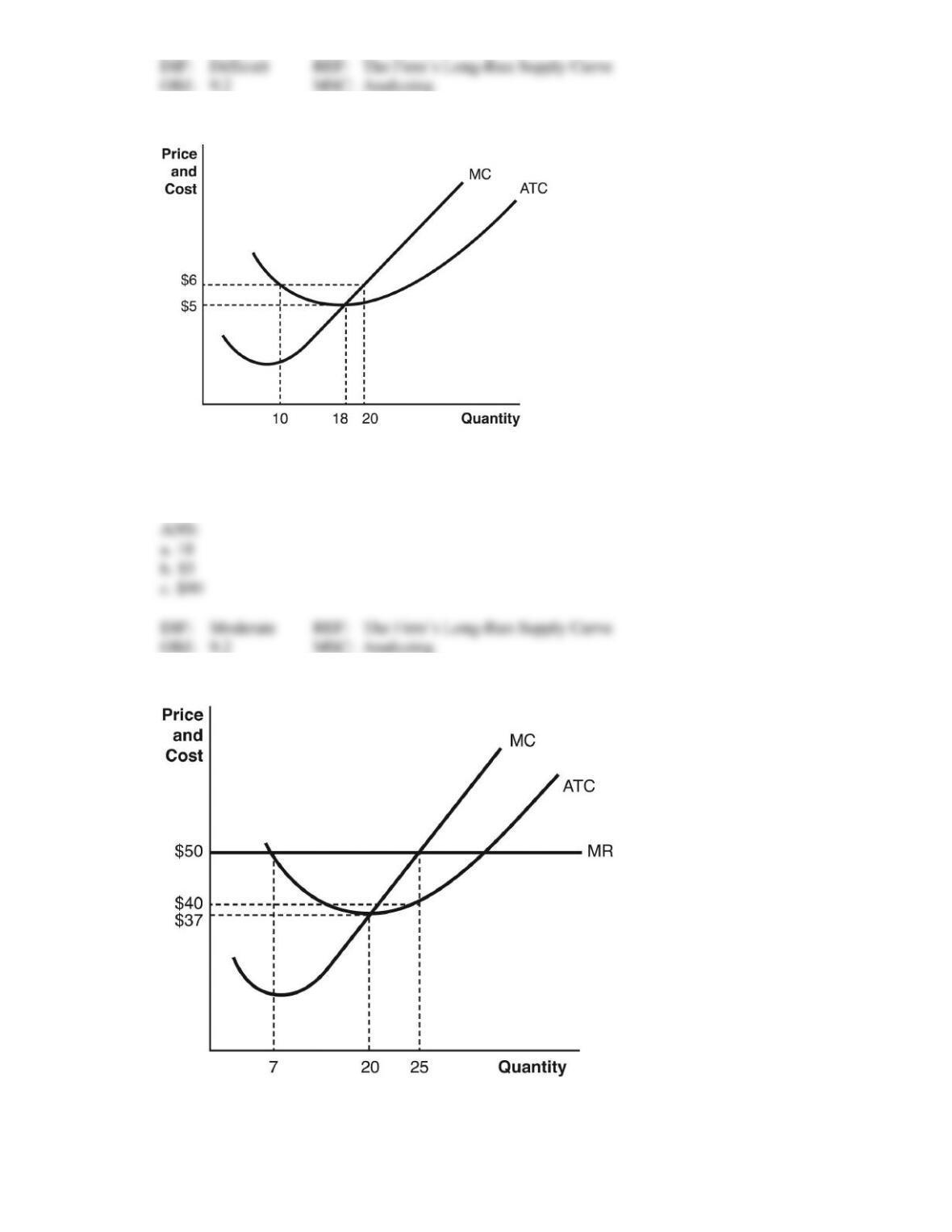
13. Refer to the accompanying graph.
a. What is the profit-maximizing quantity, assuming this market is in long-run equilibrium?
b. What is the price in this market, assuming it is in long-run equilibrium?
c. What is the total revenue if this firm is in long-run equilibrium?
14. Refer to the accompanying graph.
a. What is the total revenue?
b. What is the total cost?
c. What are profits?
15. Draw a perfectly competitive, profit-maximizing firm in long-run equilibrium. Be sure to include
the marginal revenue curve, the marginal cost curve, the average total cost curve, and the average
variable cost curve.
16. Draw a perfectly competitive, profit-maximizing firm that is incurring a short-run loss and will
shut down. Be sure to include the marginal revenue curve, the marginal cost curve, the average
total cost curve, and the average variable cost curve.
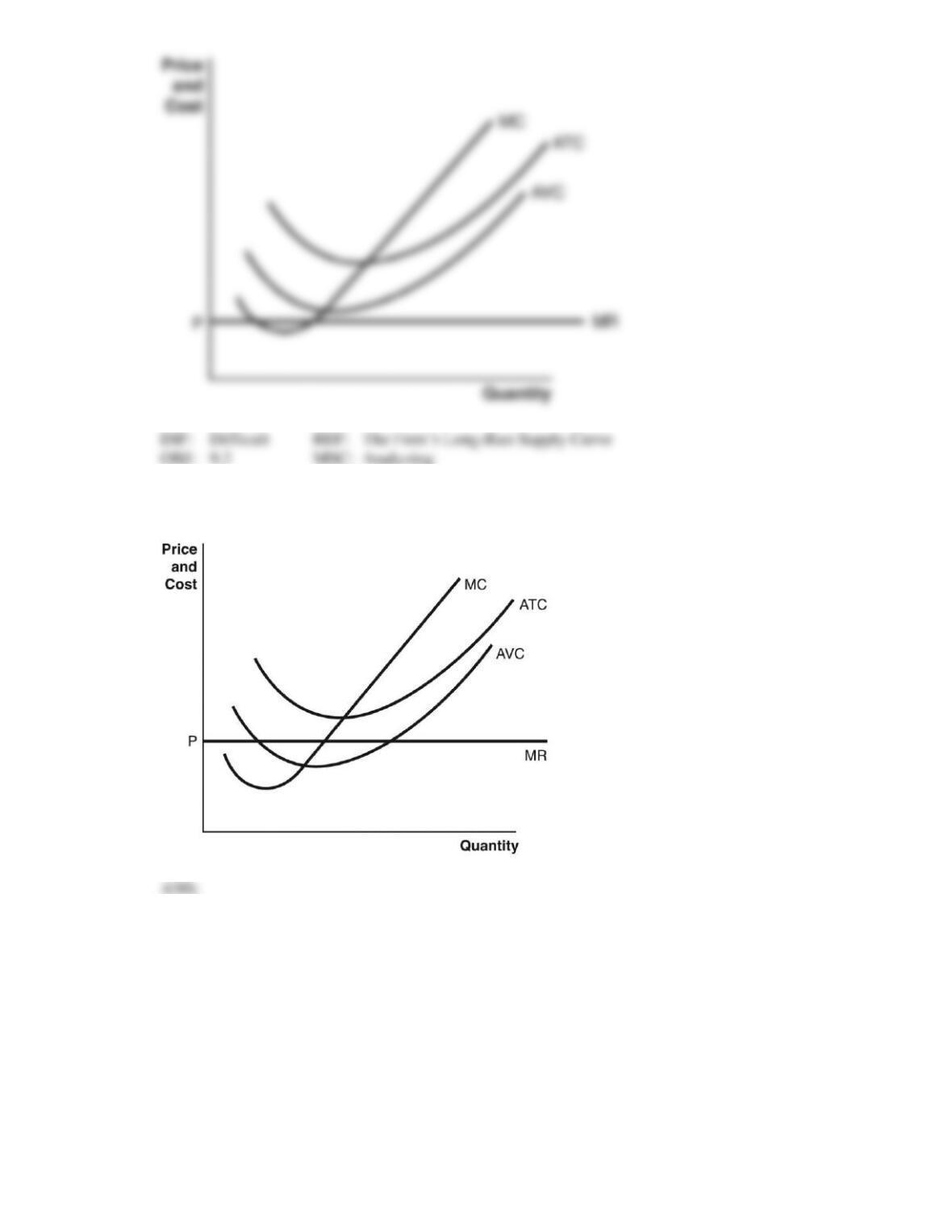
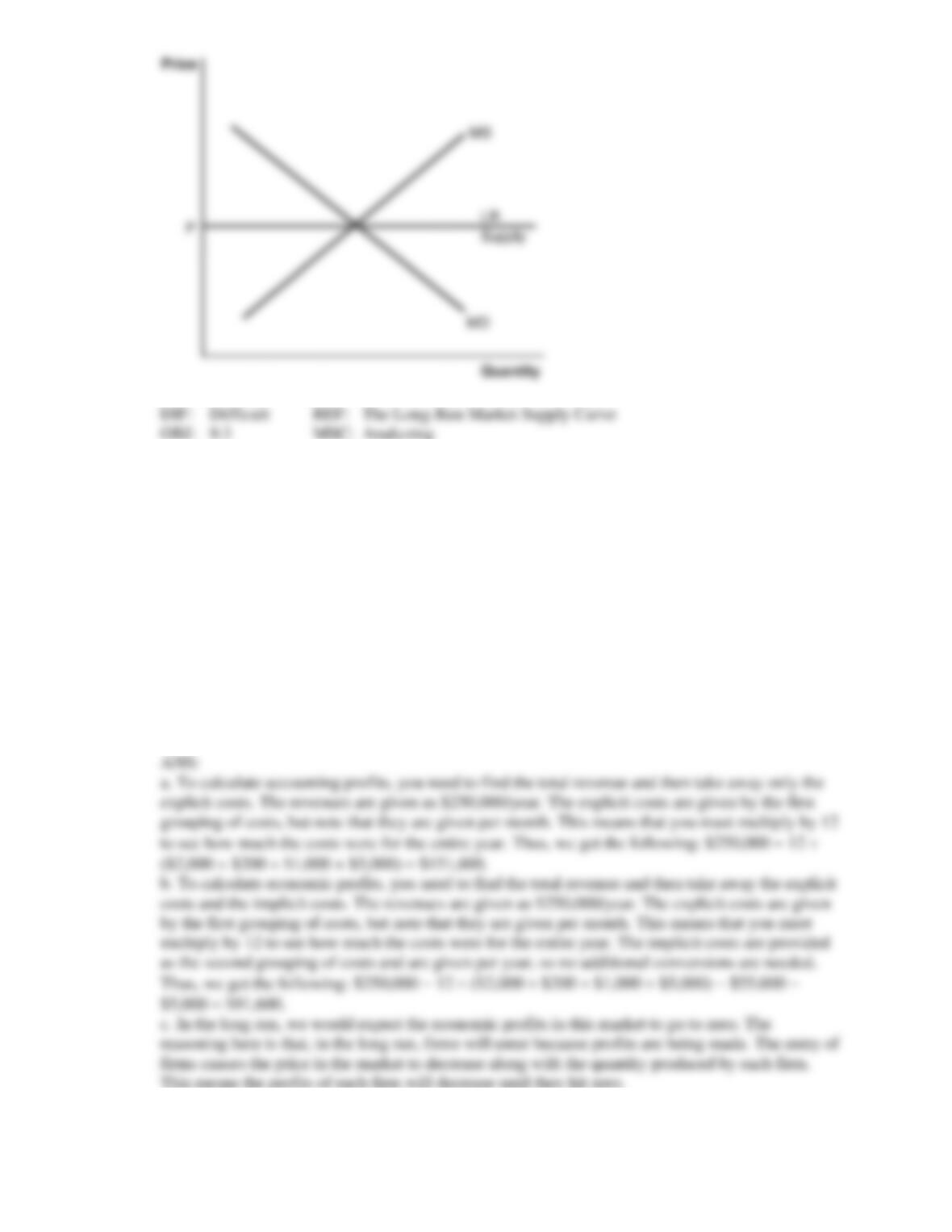
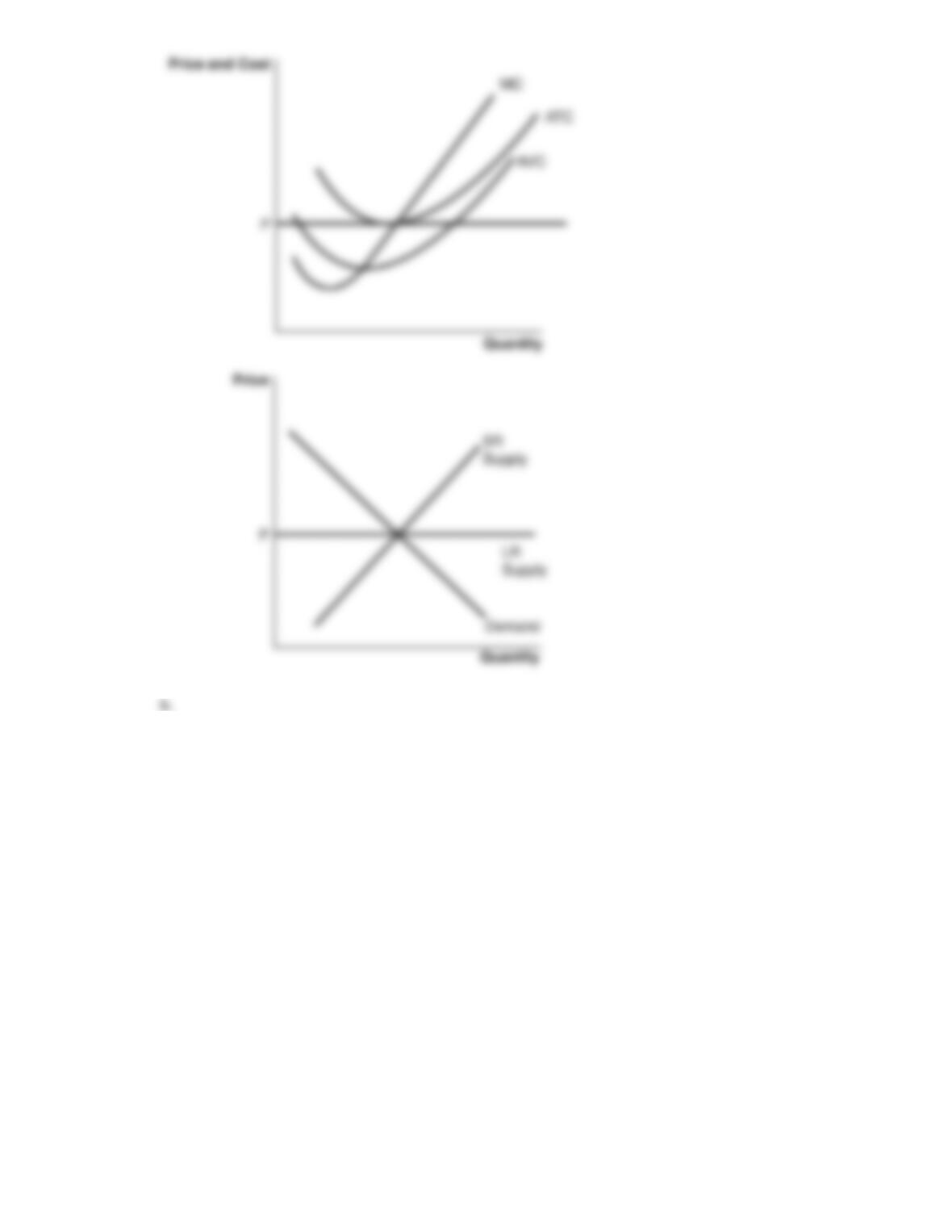
17. Draw the market demand (MD), market supply (MS), and long-run (LR) market supply curves
associated with the firm in the accompanying graph.
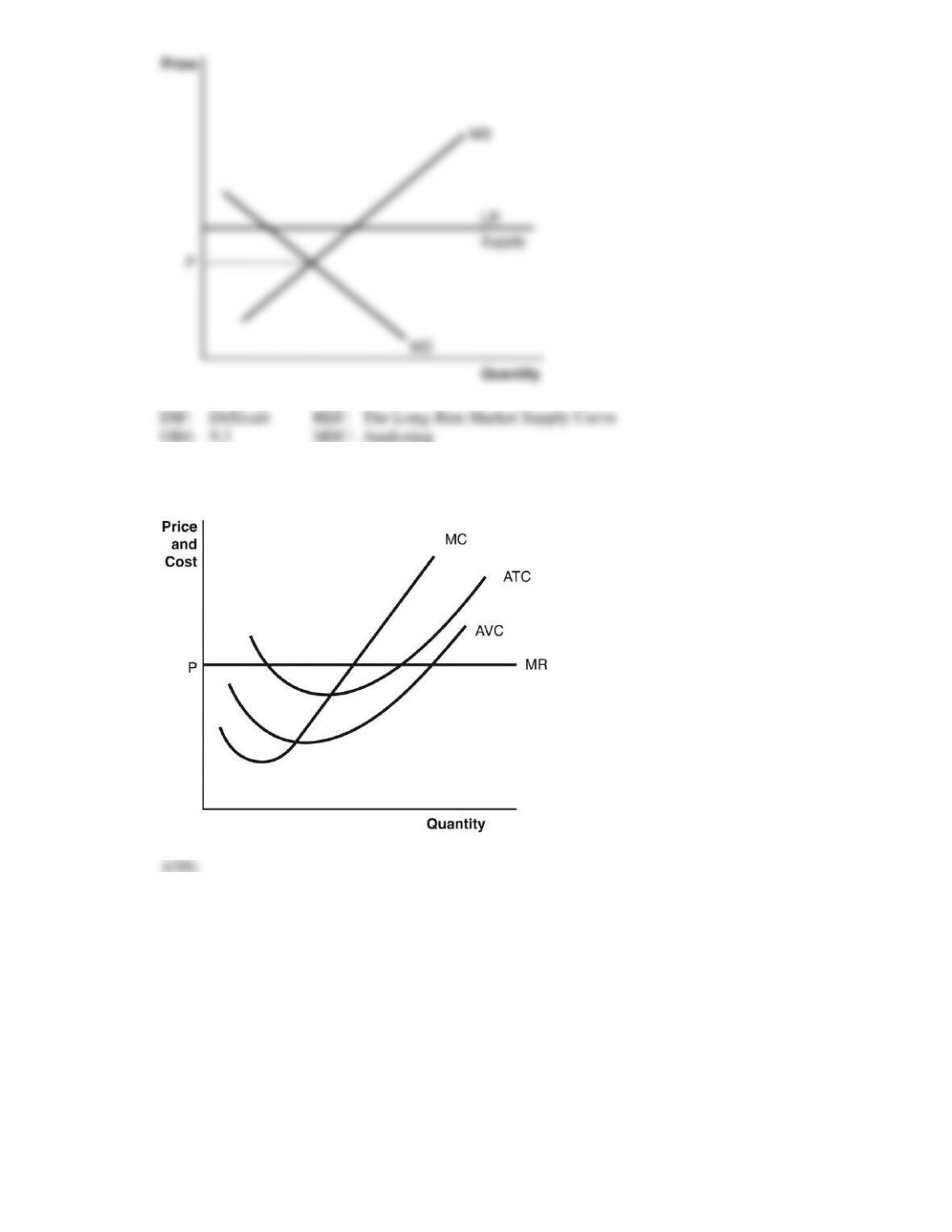
18. Draw the market demand (MD), market supply (MS), and long-run (LR) market supply curves
associated with the firm in the accompanying graph.
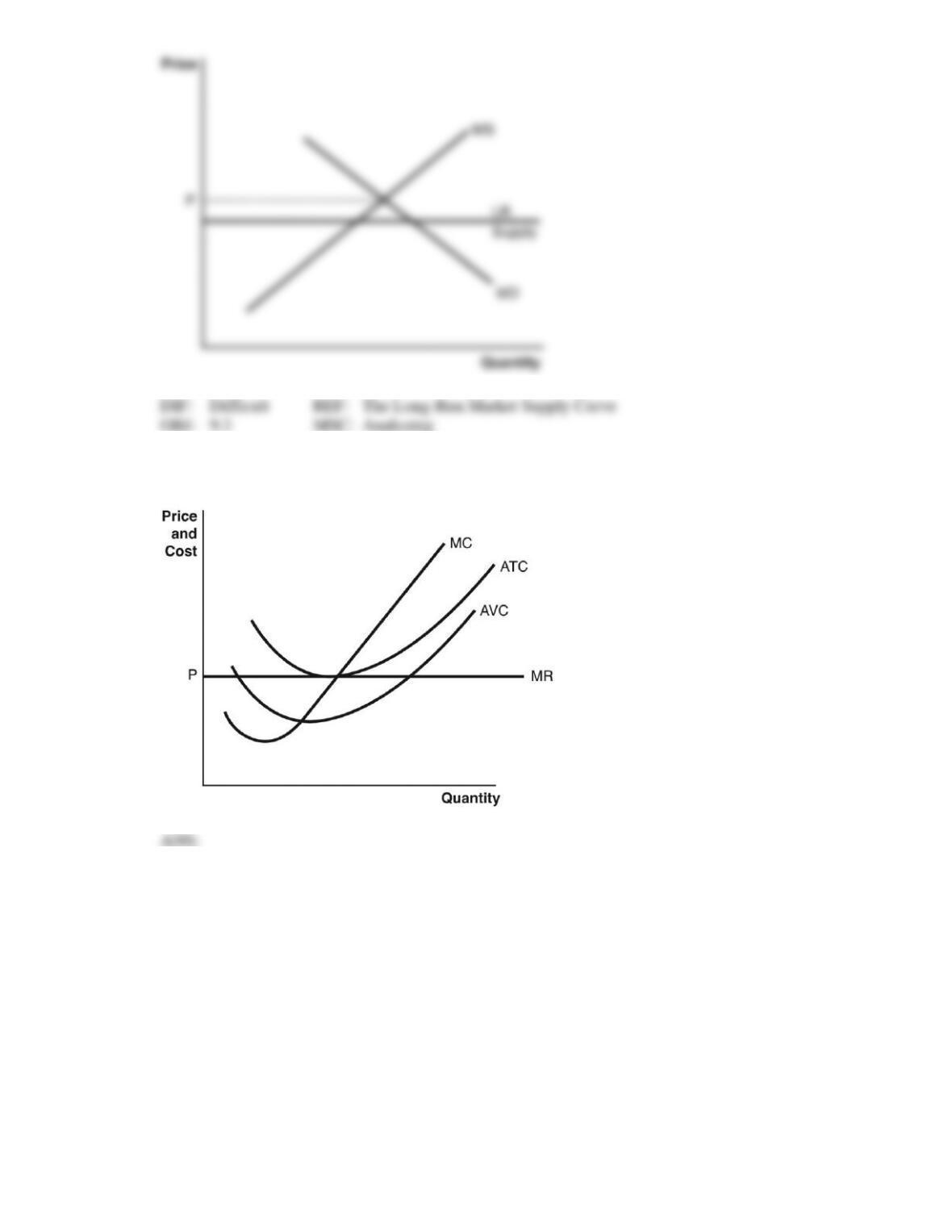
19. Draw the market demand (MD), market supply (MS), and long-run (LR) market supply curve
associated with the firm in the accompanying graph.
20. The accompanying table outlines the explicit and implicit costs incurred by a small graphic design
company in France that takes in annual revenues equal to $250,000.
Explicit Costs
Office Rent $2,000/month
Utilities $200/month
Computers $1,000/month
Labor $5,000/month
Implicit Costs
Forgone Wages $55,000/year
Forgone Interest on Initial Investment $5,000/year
a. What would this company’s accounting profits equal for a year?
b. What would this company’s economic profits equal for a year?
c. What would we expect to happen in the long run for this market? Why?
21. Firms in a competitive market make zero economic profits in the long run. Why would firms
choose to remain in the market if they make zero economic profits?
22. An NFL team is considering building a new stadium and hires you as a consultant. The board of
governors is hesitant about building the new stadium because the current one is still in usable
condition. You tell the board members that they should not support keeping the current stadium.
Explain your rationale.
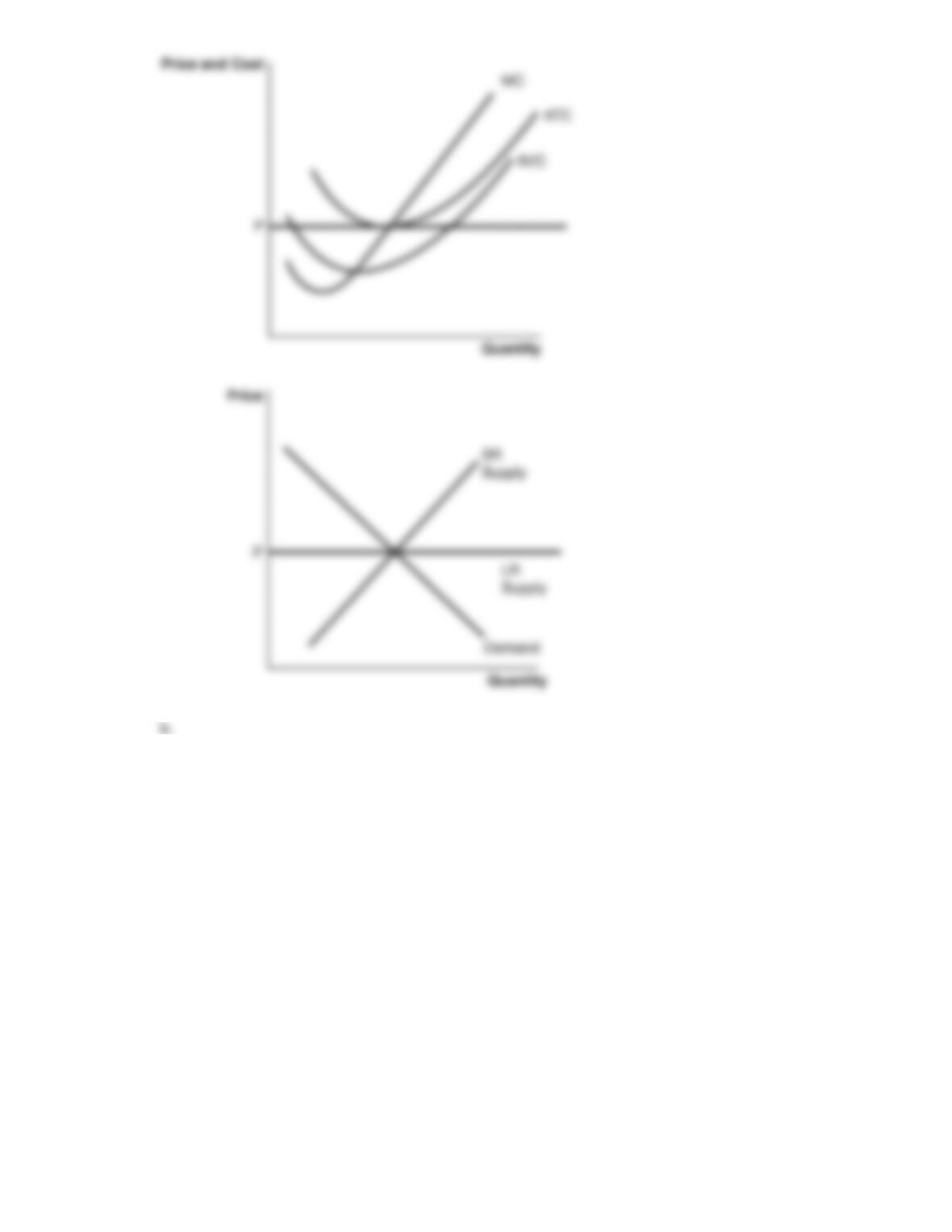
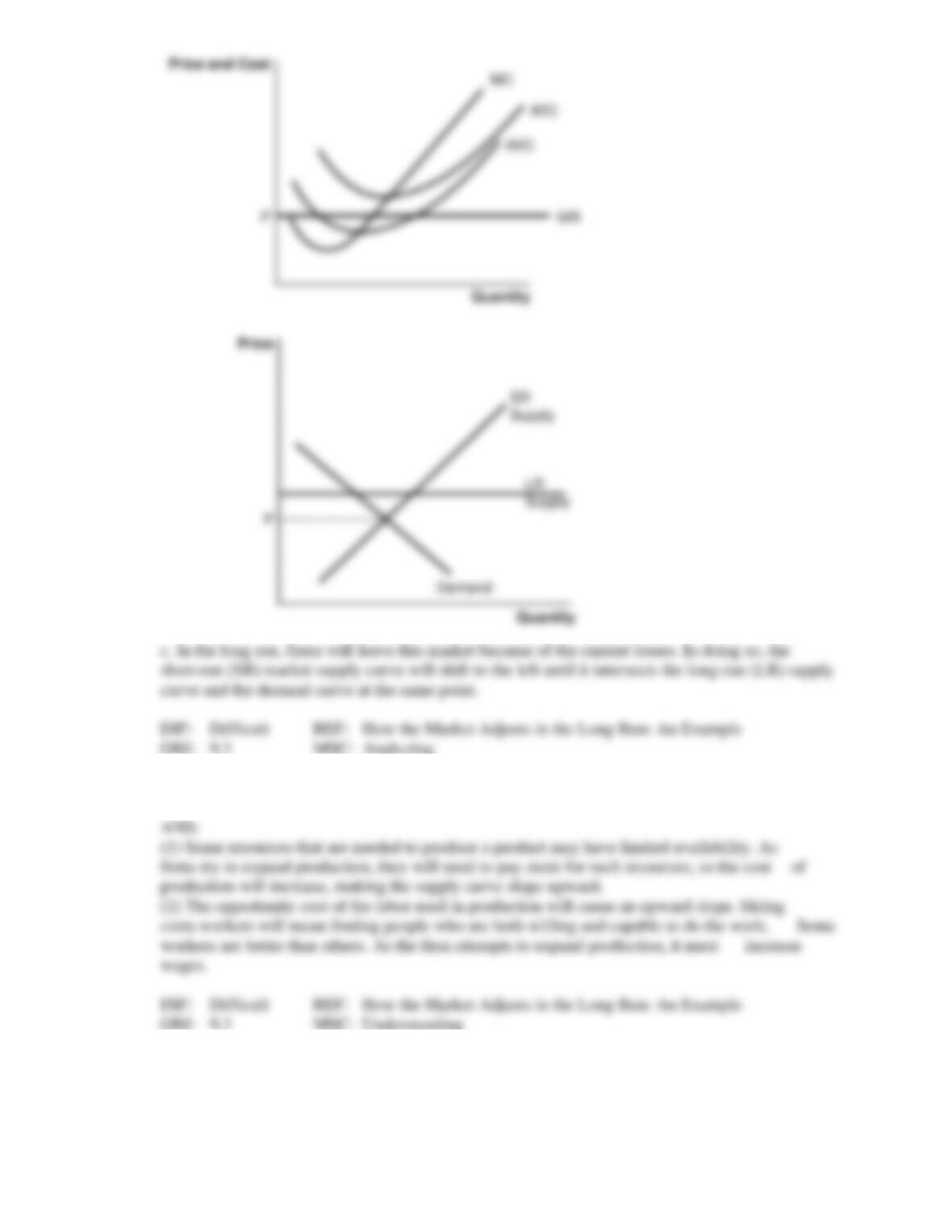
23. Asa’s Online Poker Room is a profit-maximizing firm in a competitive market.
a. Draw a graph of Asa’s firm next to a graph for the market, assuming the market is in long-run
equilibrium.
b. Now assume the demand for online poker increases. Redraw a graph of Asa’s firm next to a
graph for the market.
c. What do you expect to happen in the long run?
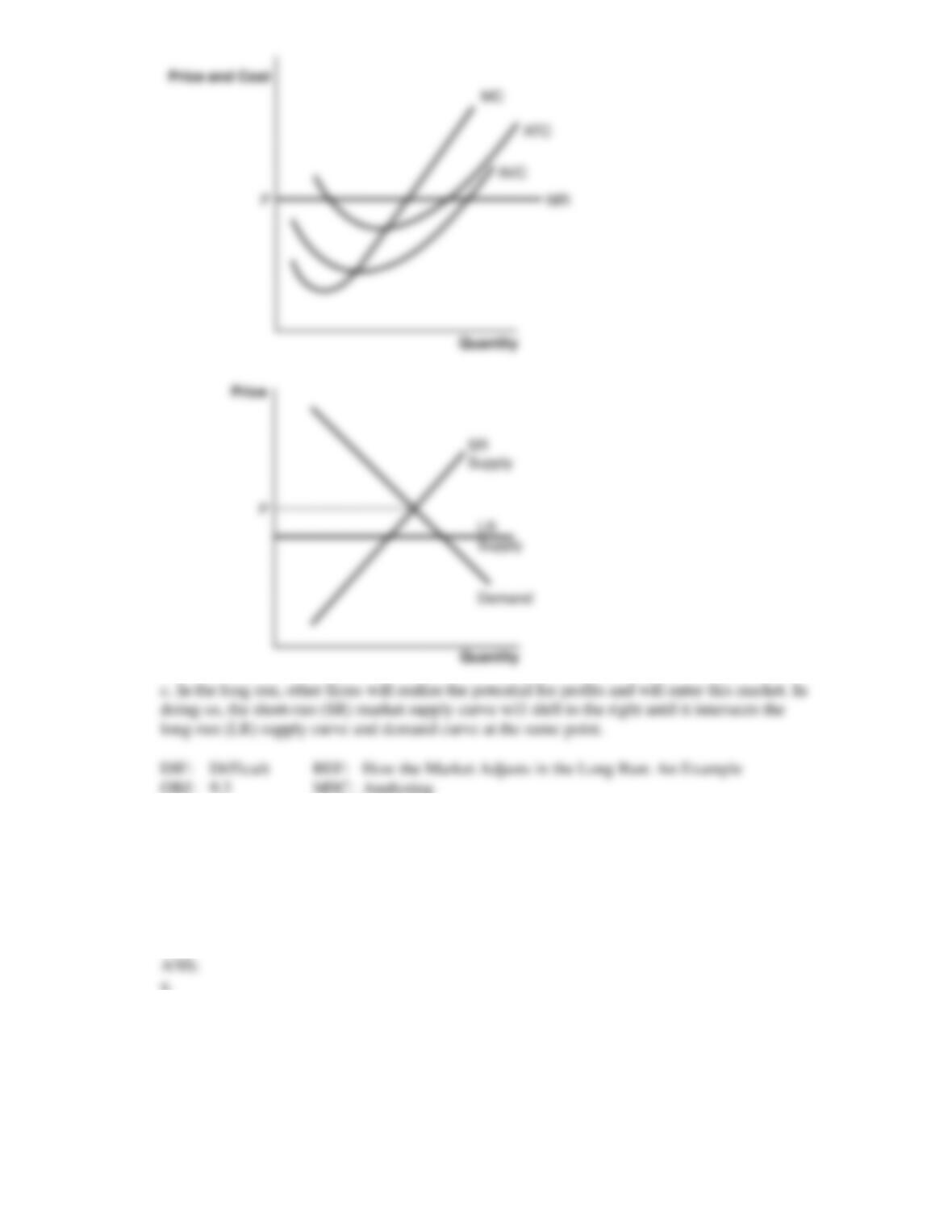
24. Kathryn’s Kites is a profit-maximizing firm in a competitive market.
a. Draw a graph of Kathryn’s firm next to a graph for the market, assuming the market is in
long-run equilibrium.
b. Now assume the demand for kites decreases. Redraw a graph of Kathryn’s firm next to a graph
for the market.
c. What do you expect to happen in the long run?
25. Give two reasons why the long-run market supply curve may slope upward.