41. Jessica owns a company that makes pre-packaged sandwiches for convenience stores.
The market price for a sandwich is $5 and Jessica is a price-taker. Her daily cost for making
sandwiches is
C
(
Q
) = 2.5
Q
+ (
Q
2/40) and her marginal cost is
MC
= 2.5 + (
Q
/20). How many
sandwiches should Jessica produce each day?
A. 20
42. Jessica owns a company that makes pre-packaged sandwiches for convenience stores.
The market price for a sandwich is $5 and Jessica is a price-taker. Her daily variable cost for
making sandwiches is
C
(
Q
) = 2.5
Q
+ (
Q
2/40) and her marginal cost is
MC
= 2.5 + (
Q
/20). She is
currently producing sandwiches according to the quantity rule. What should Jessica do if she has
an avoidable fixed cost of $50 a day?
D. She should shut down production because the fixed cost can be avoided if she does.
43. Jessica owns a company that makes pre-packaged sandwiches for convenience stores.
The market price for a sandwich is $5 and Jessica is a price-taker. Her daily variable cost for
making sandwiches is
C
(
Q
) = 2.5
Q
+ (
Q
2/40) and her marginal cost is
MC
= 2.5 + (
Q
/20). What is
the average cost of a sandwich at the quantity of sandwiches Jessica should be selling each day?
A. $1.25
44. At any price equal to ______ a firm can maximize profit either by producing the best
positive sales quantity or by shutting down.
A. the maximum of
AC
45. The Law of Supply ______ holds for price-taking firms.
D. never
46. The Law of Supply states that when the market price ______, the profit-maximizing sales
quantity for a price taking-firm never ______.
D. decreases; stays the same
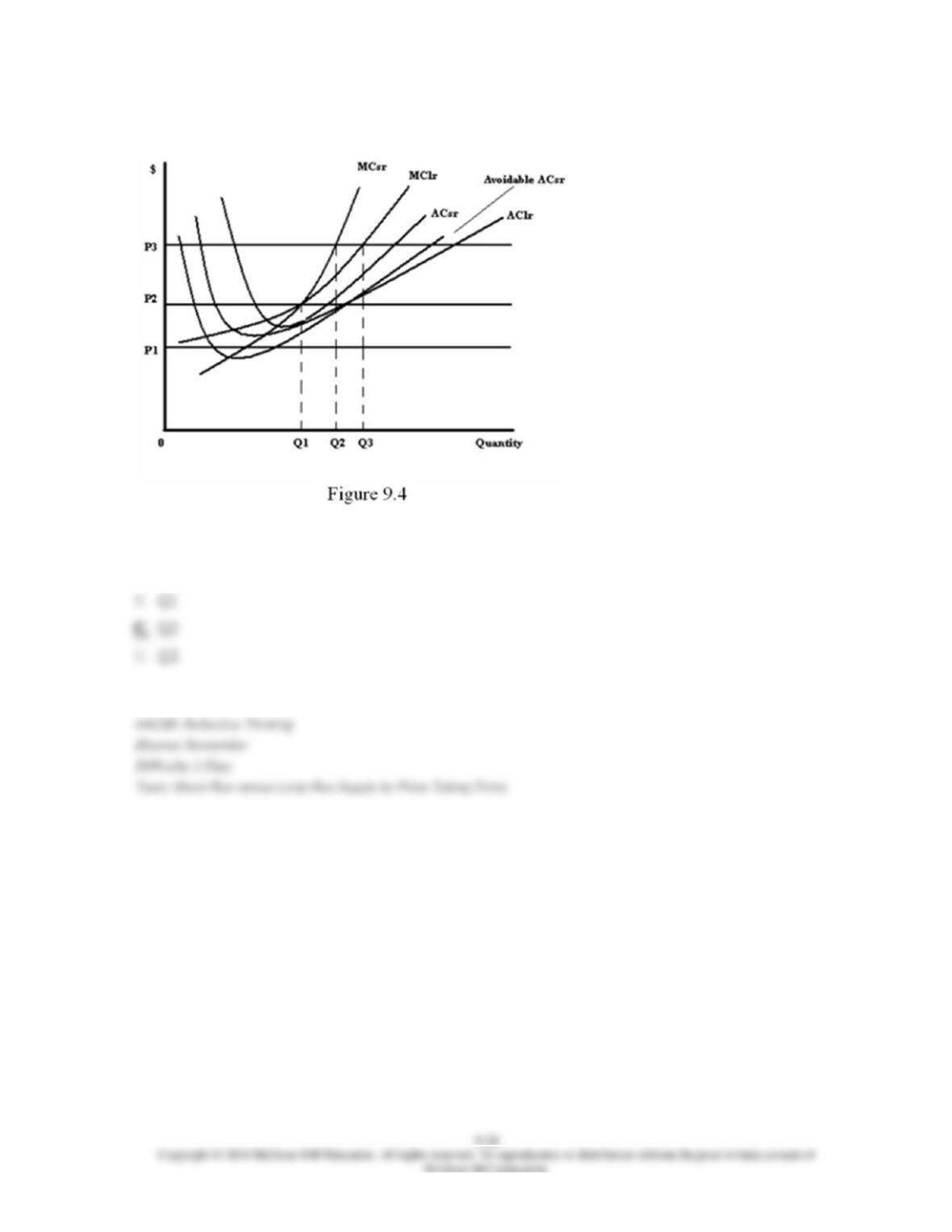
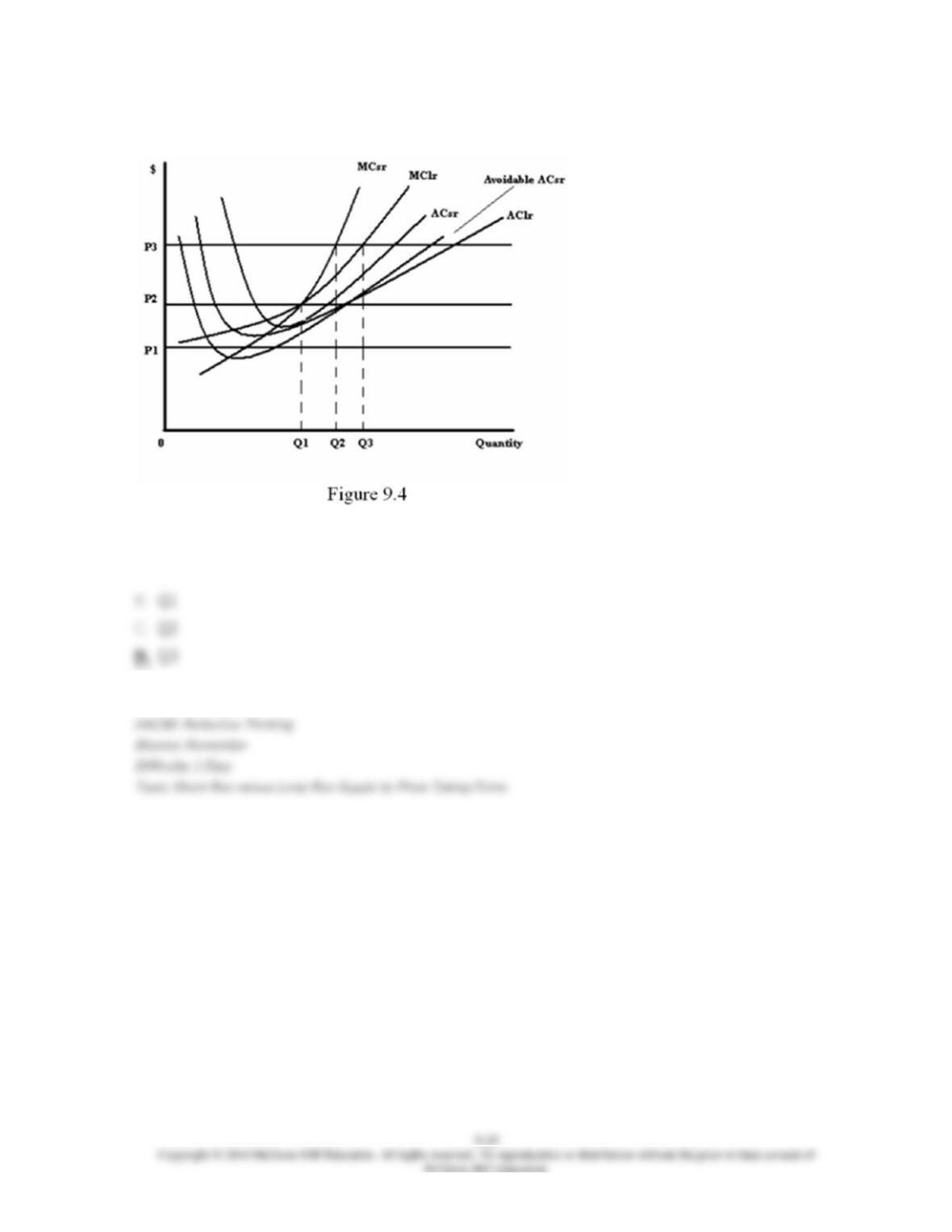
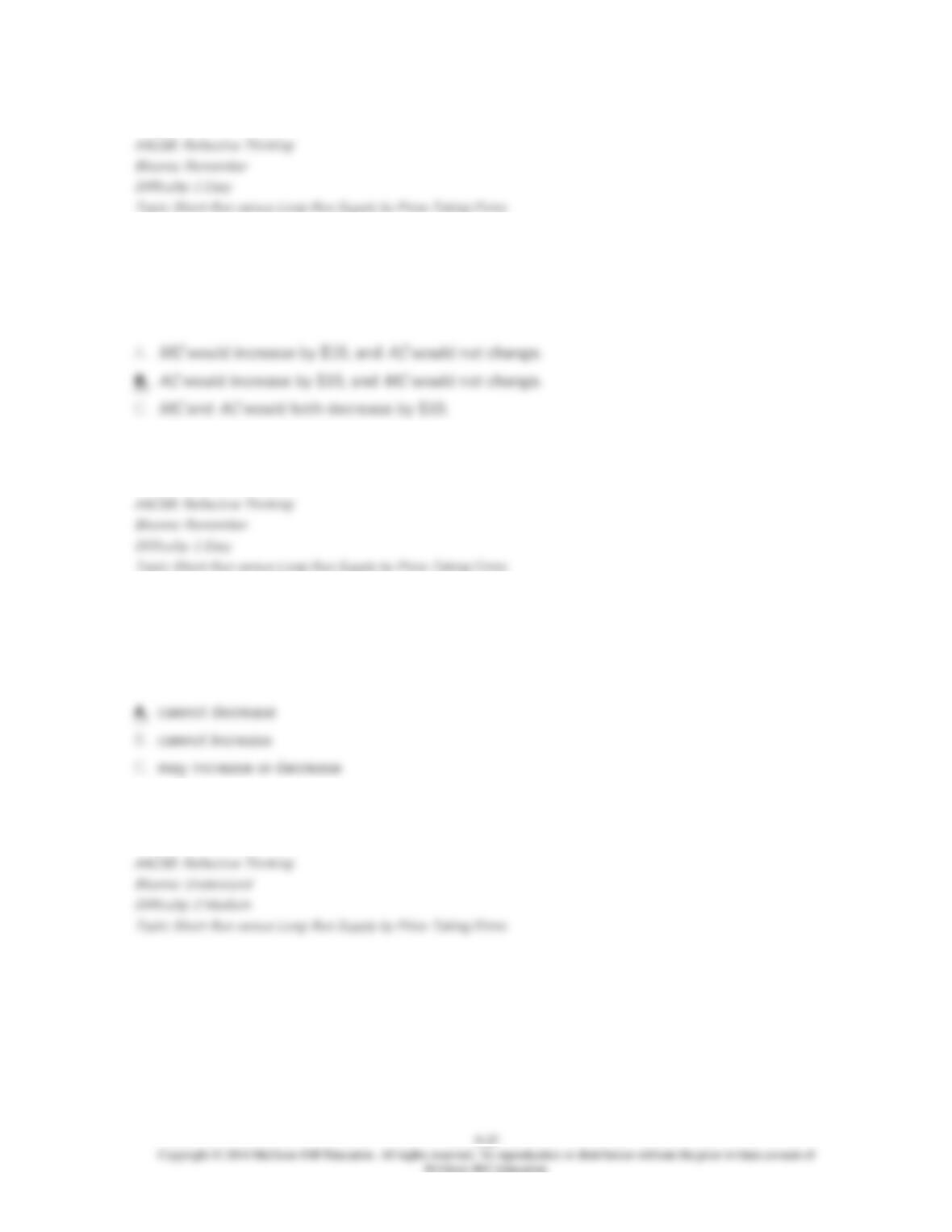
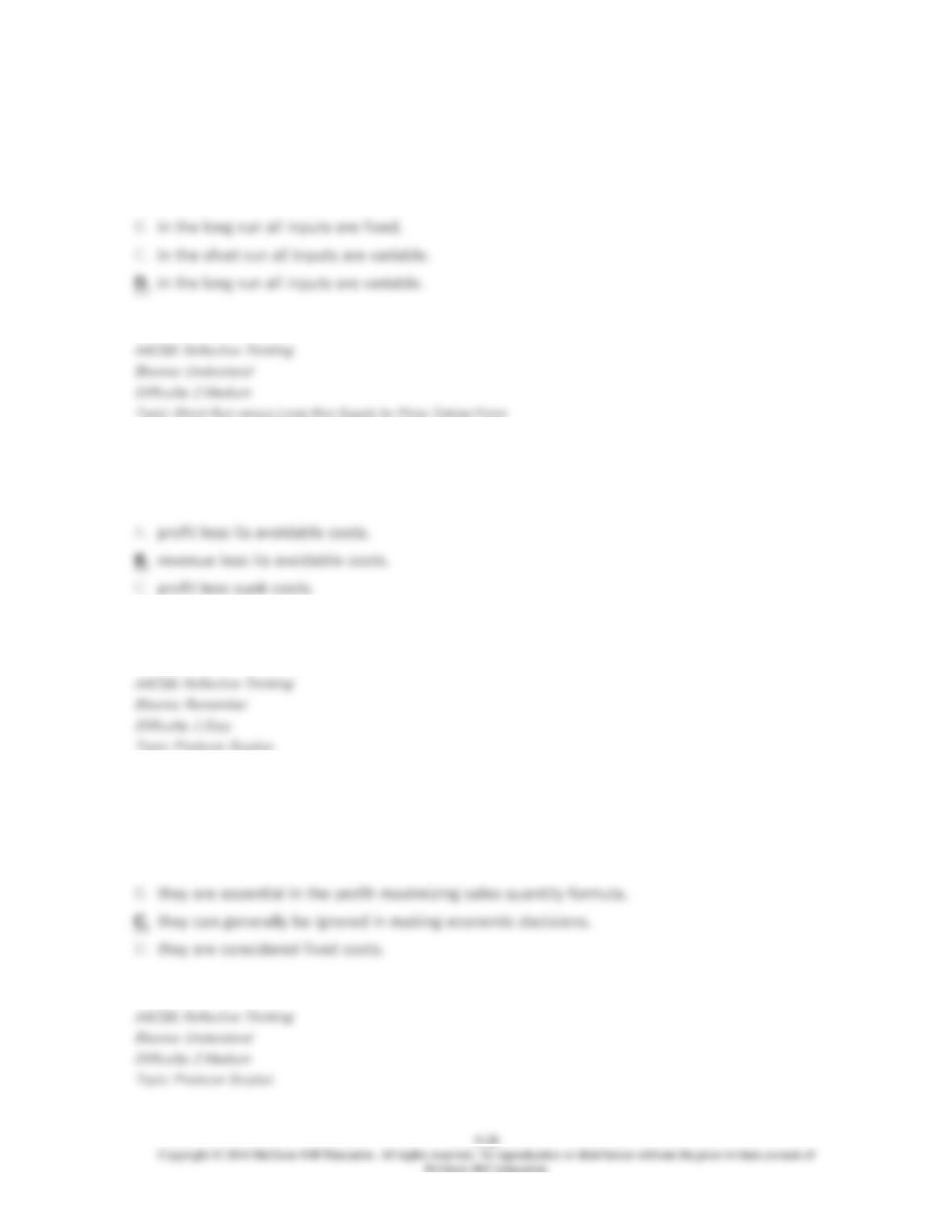
47. Refer to Figure 9.4. In the short run, how much should the firm produce at the price P3?
A. 0
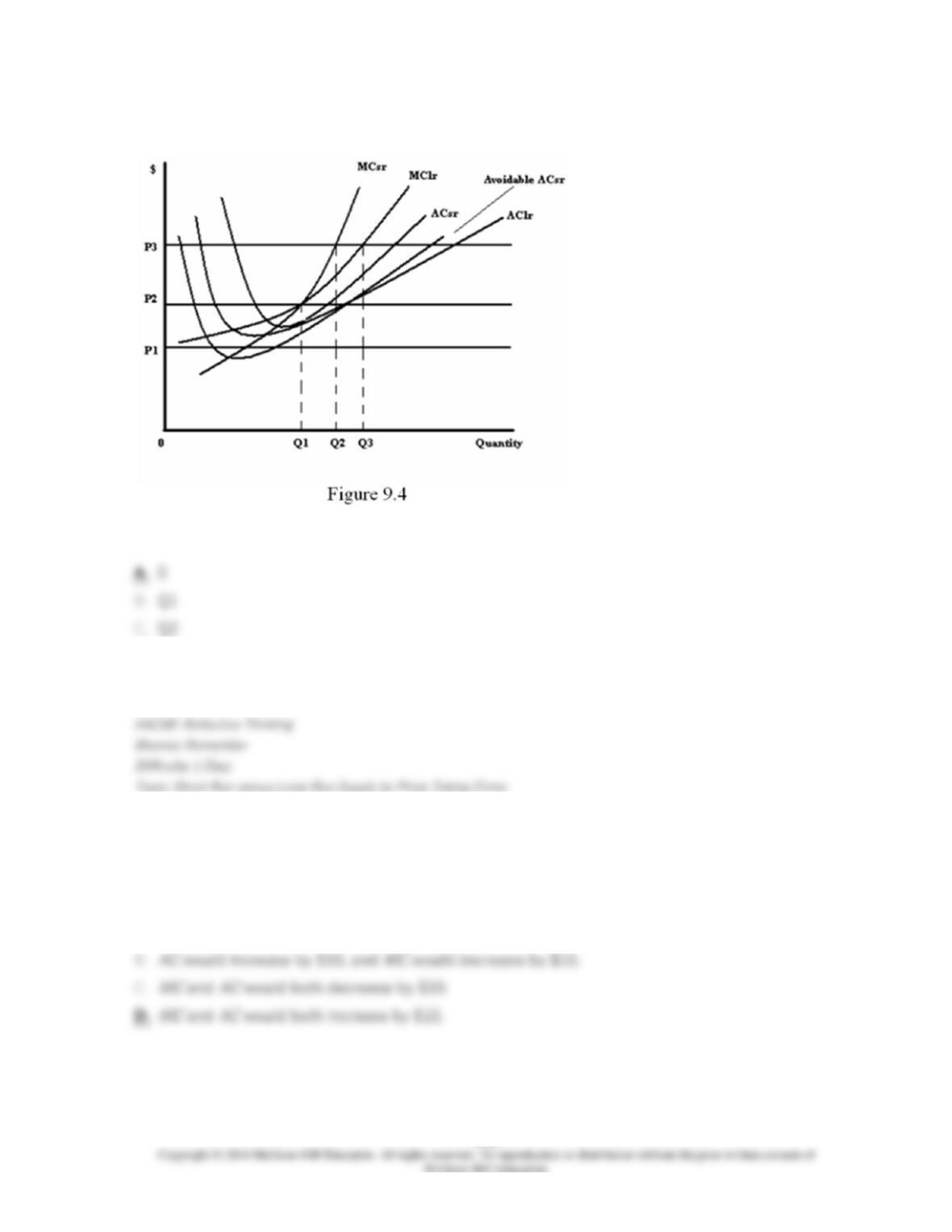
48. Refer to Figure 9.4. In the long run, how much should the firm produce at the price P3?
A. 0
49. Refer to Figure 9.4. In the short run, how much should the firm produce at the price P1?
D. Q3
50. How would a $10 increase in per-unit input costs affect a price-taking firm’s supply
curve?
A.
MC
would increase by $10, and
AC
would decrease by $10.
51. How would a $10 increase in an avoidable per-unit fixed cost effect a price-taking firm’s
supply curve?
D.
MC
and
AC
would both increase by $10.
52. A competitive firm’s profit-maximizing sales quantity ______ when the market price
increases.
D. will always decrease
53. A firm’s marginal and average costs may differ in the long and short run because:
A. in the short run all inputs are fixed.
54. A firm’s producer surplus equals its:
D. revenue less sunk costs.
55. Since sunk costs are incurred no matter what:
A. they are relevant in deciding how much to produce.
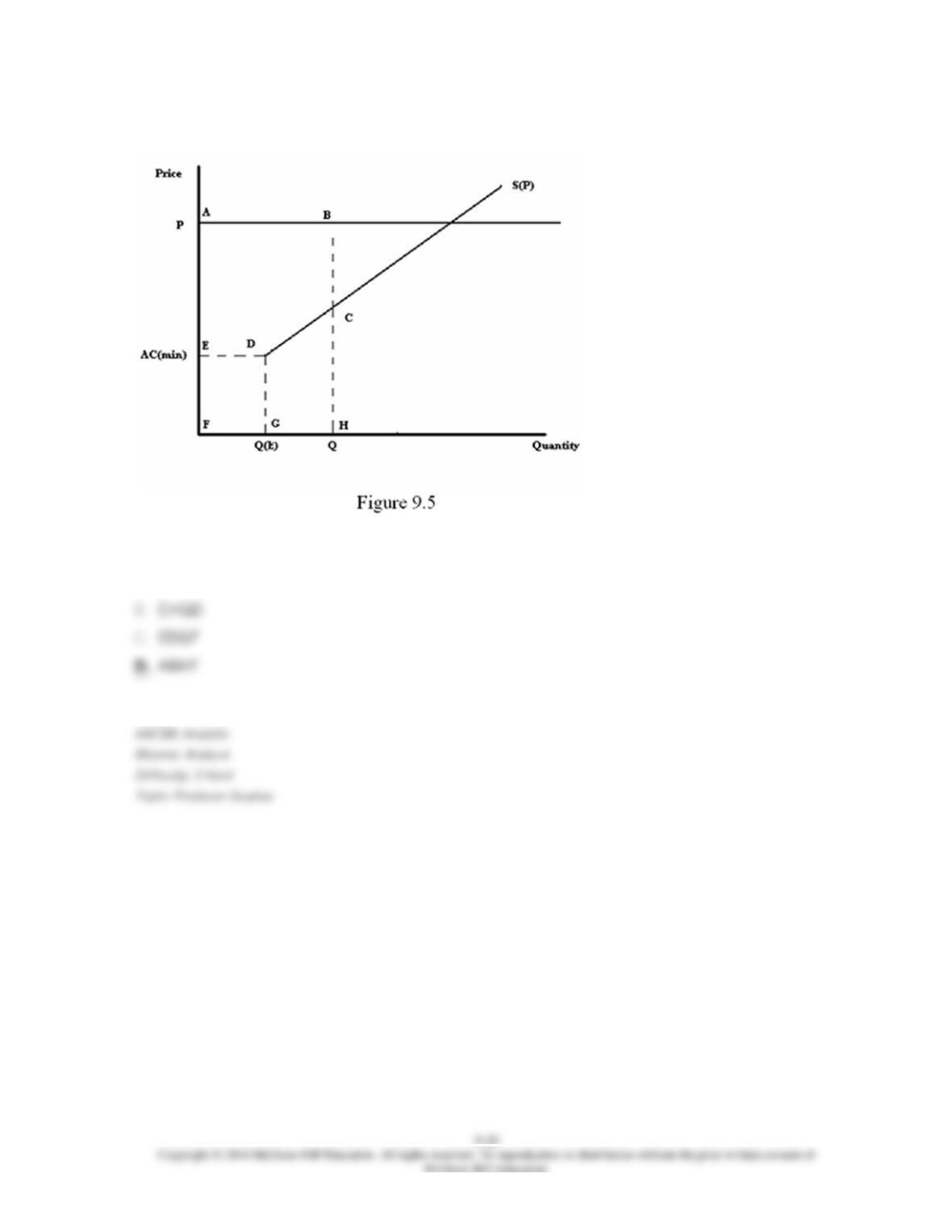
56. Refer to Figure 9.5. The firm is producing Q units. Which area represents revenue?
A. ABCDE
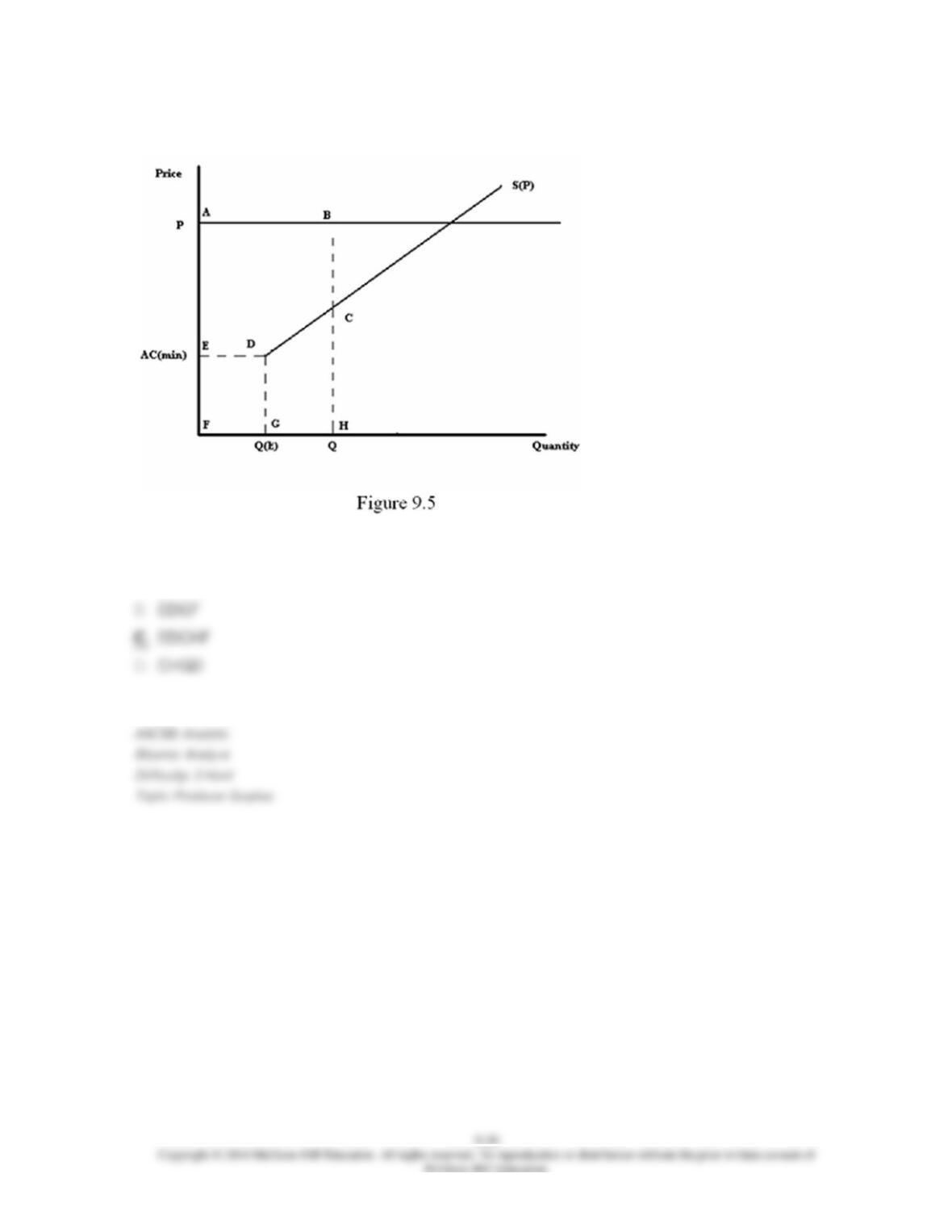
57. Refer to Figure 9.5. The firm is producing Q units. Which area represents avoidable cost?
A. ABCDE
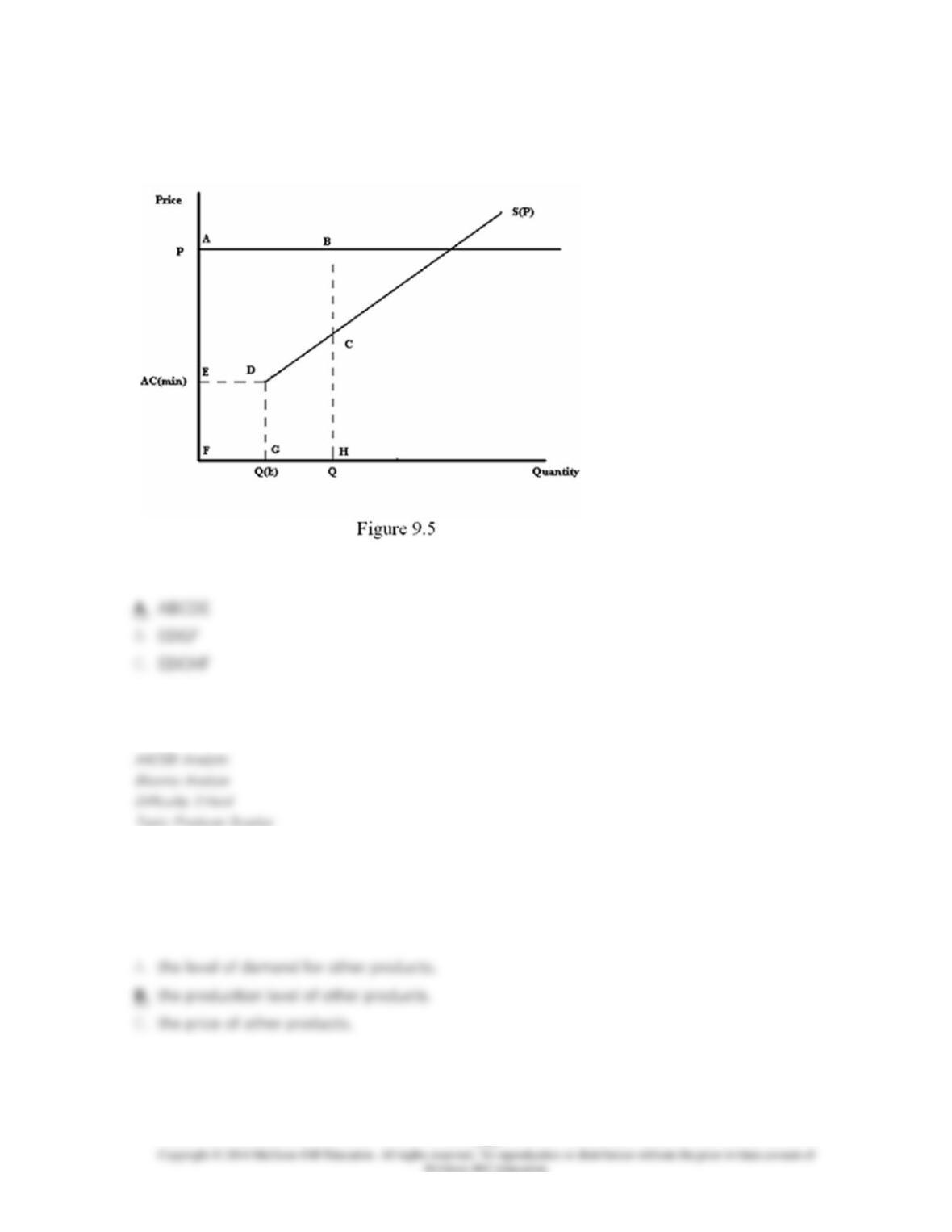
58. Refer to Figure 9.5. The firm is producing Q units. Which area represents producer
surplus?
D. ABHF
59. For a firm that produces several products, the marginal cost of producing one product
often depends on:
D. the quality of other products.