Chapter 08 – Pure Competition in the Short Run
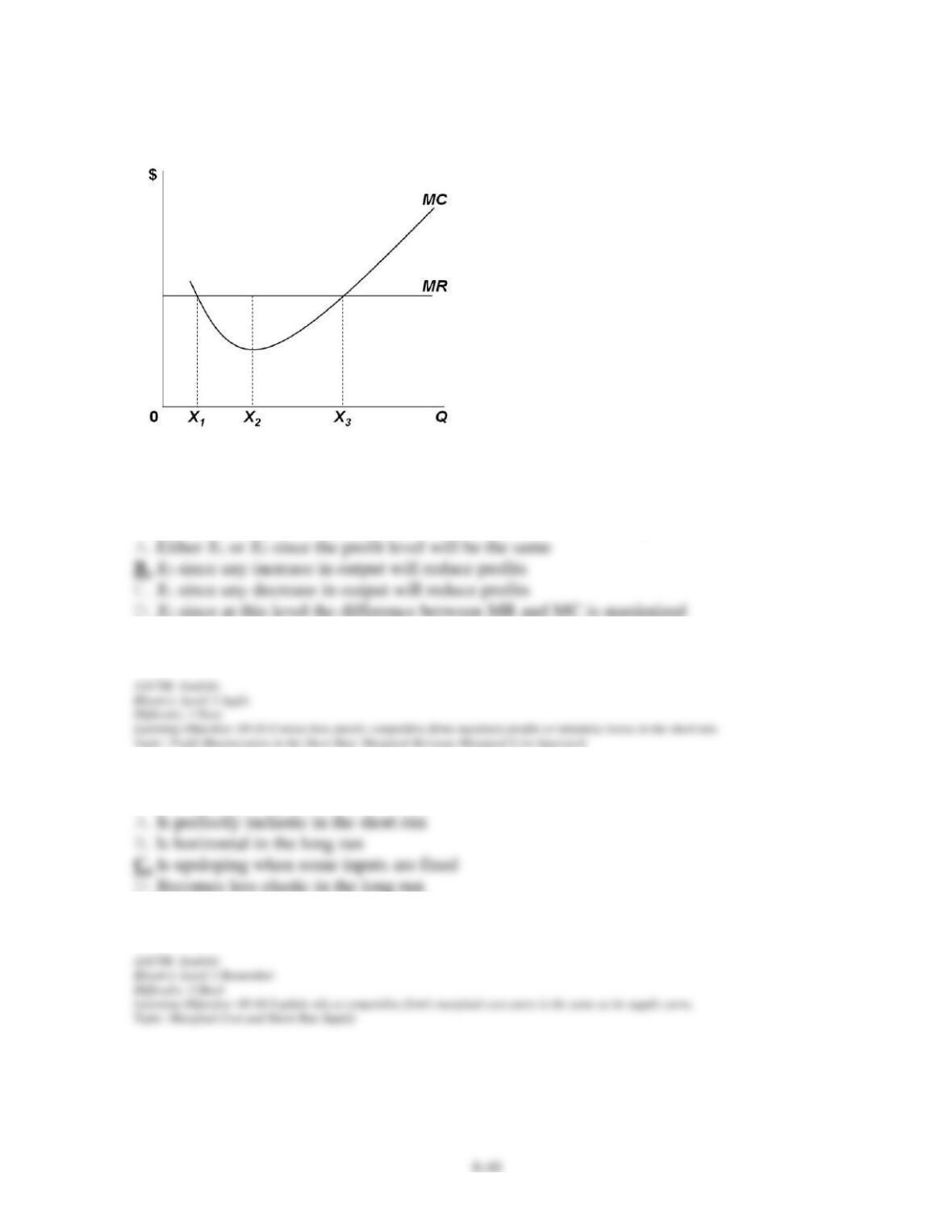
95. Given the diagram above, which level of output should the entrepreneur choose?
96. The purely competitive firm’s supply curve:
Chapter 08 – Pure Competition in the Short Run
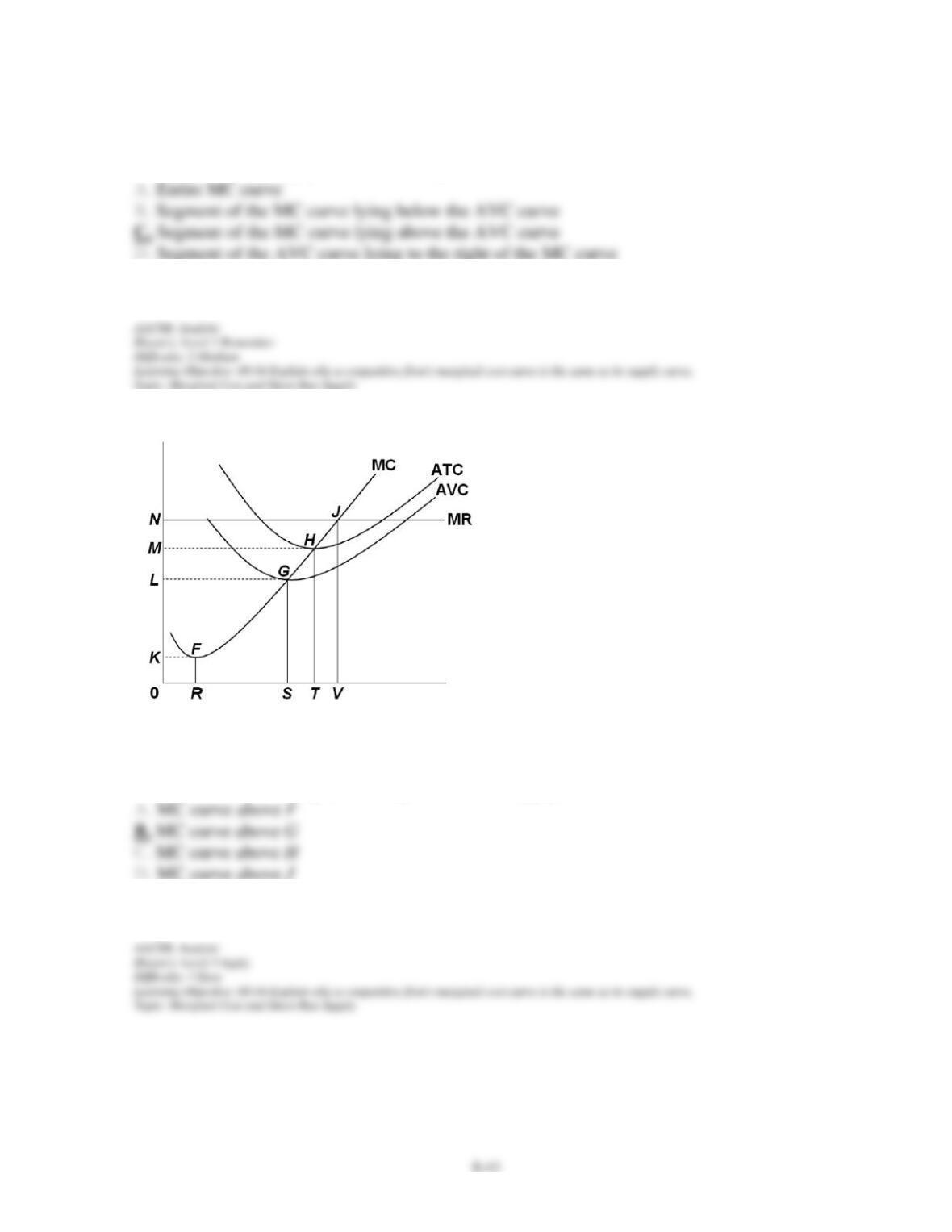
97. The short-run supply curve for a competitive firm is the:
98. Given the above graph, the competitive firm’s supply curve is the:
Chapter 08 – Pure Competition in the Short Run
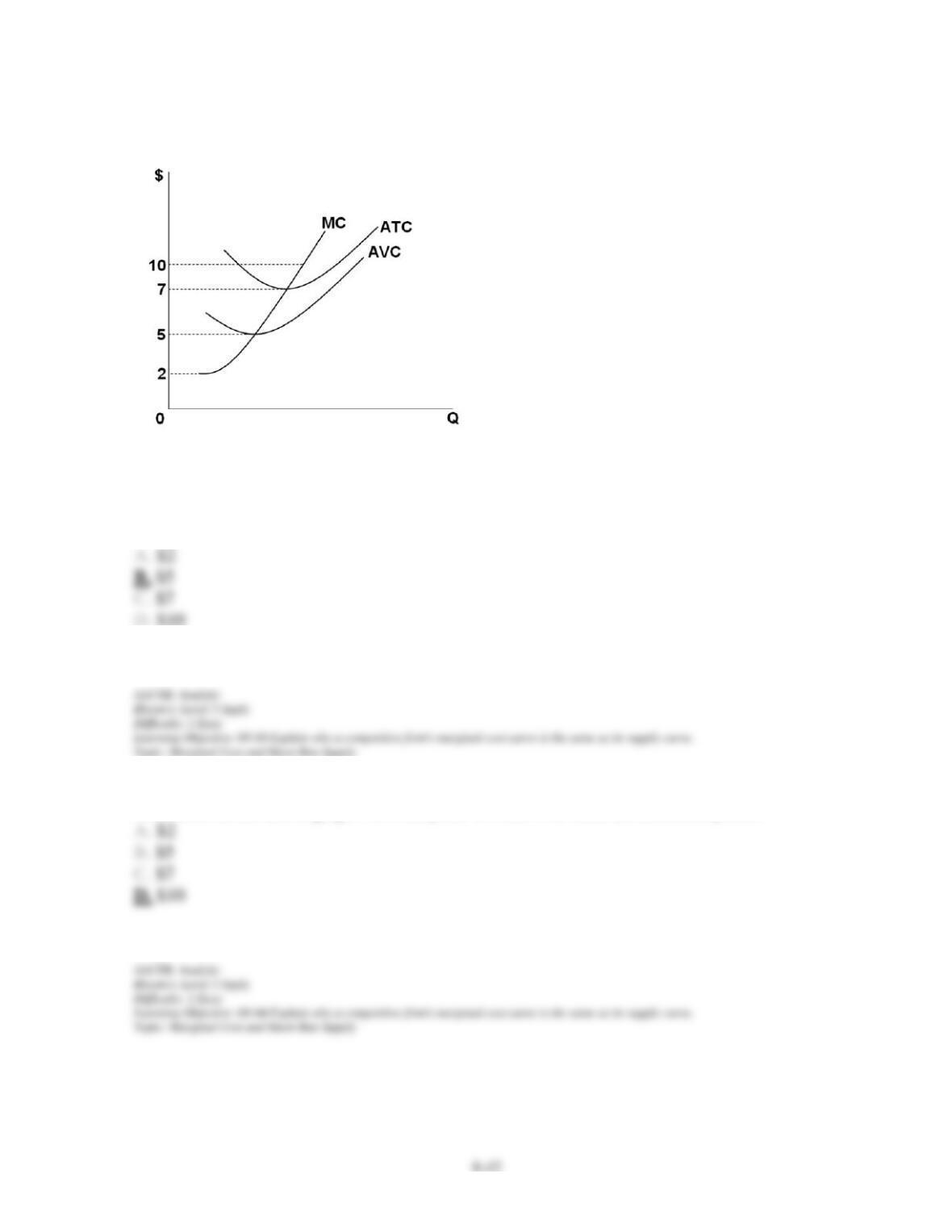
99. Refer to the above graph. This pure competitive firm will not produce unless price equals
at least:
100. Refer to the above graph. At what price will the firm make an economic profit?
Chapter 08 – Pure Competition in the Short Run
101. Refer to the above graph. At what price will the firm make just a normal profit?
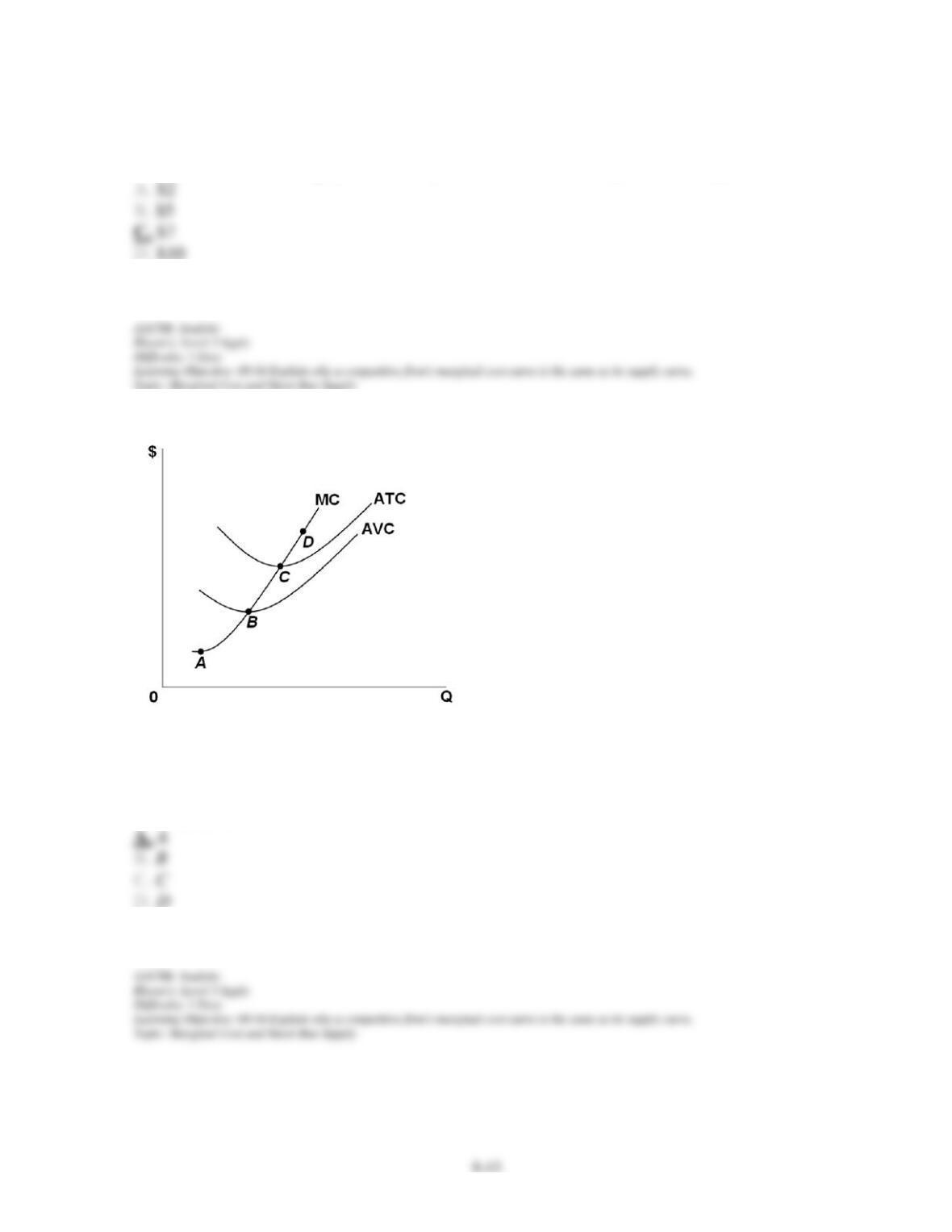
102. Refer to the above graph. Which point is definitely not on the competitive firm’s short-
run supply curve?
Chapter 08 – Pure Competition in the Short Run
8-44
103. Refer to the above graph. Which point is the break-even point for the firm?
104. Refer to the above graph. Which point is the shutdown point for the firm?
Chapter 08 – Pure Competition in the Short Run
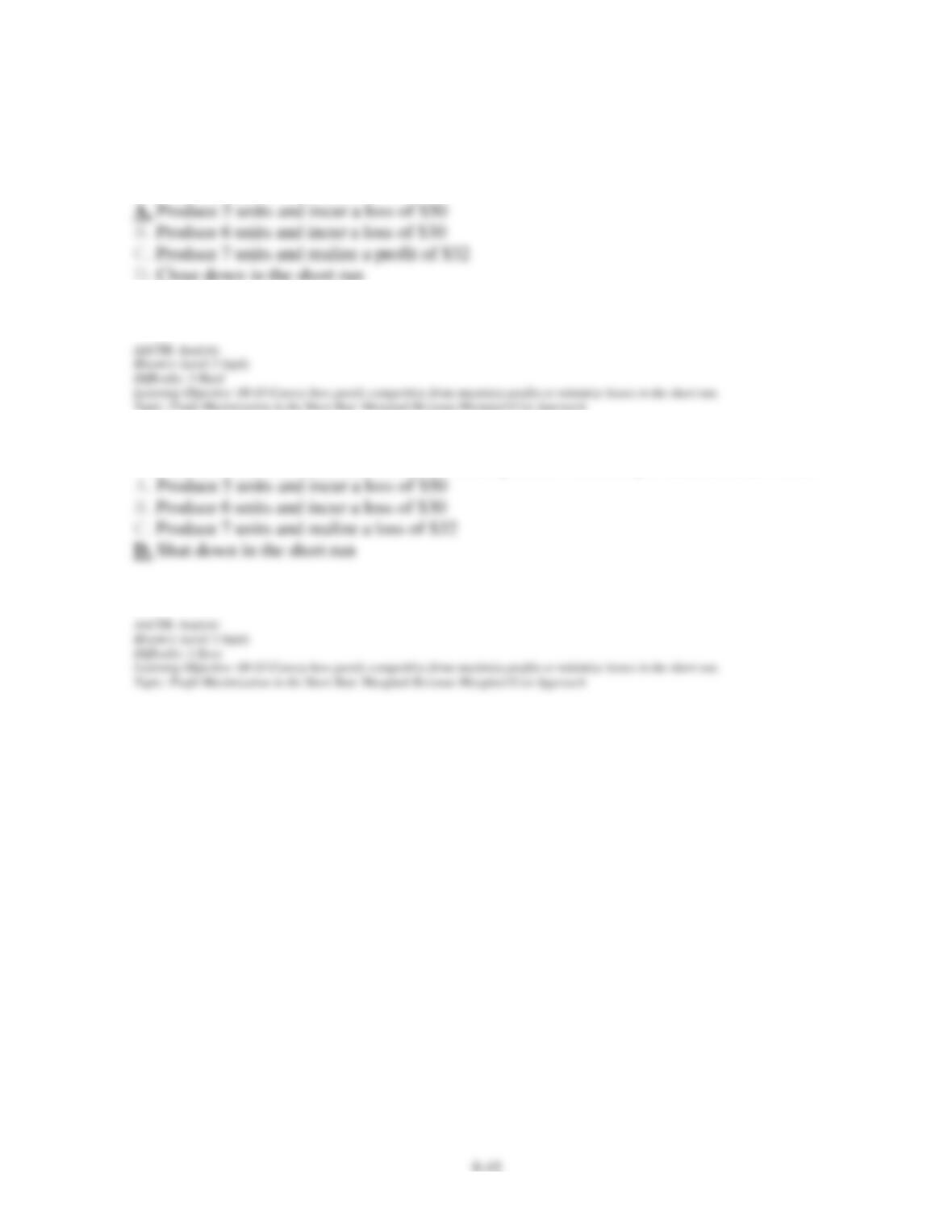
105. Refer to the cost table above. If a competitive firm faced with these costs finds that it can
sell its product at $60 per unit, it will:
106. Refer to the cost table above. If price of the product were $30 per unit, the firm would:
Chapter 08 – Pure Competition in the Short Run
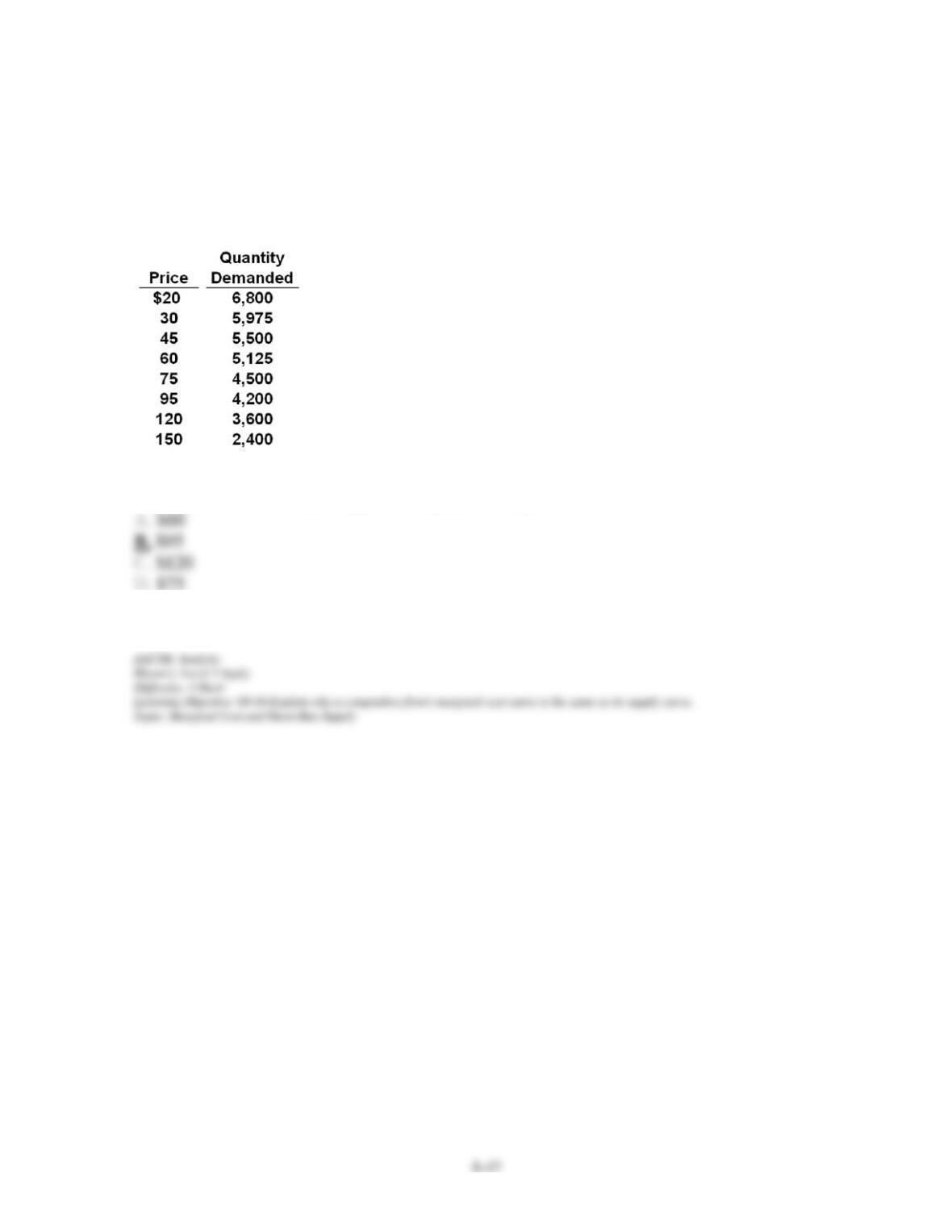
107. Refer to the cost table above. Based on the cost data given, which of the following price-
quantity tables correctly represents the firm’s short-run supply schedule?
Chapter 08 – Pure Competition in the Short Run
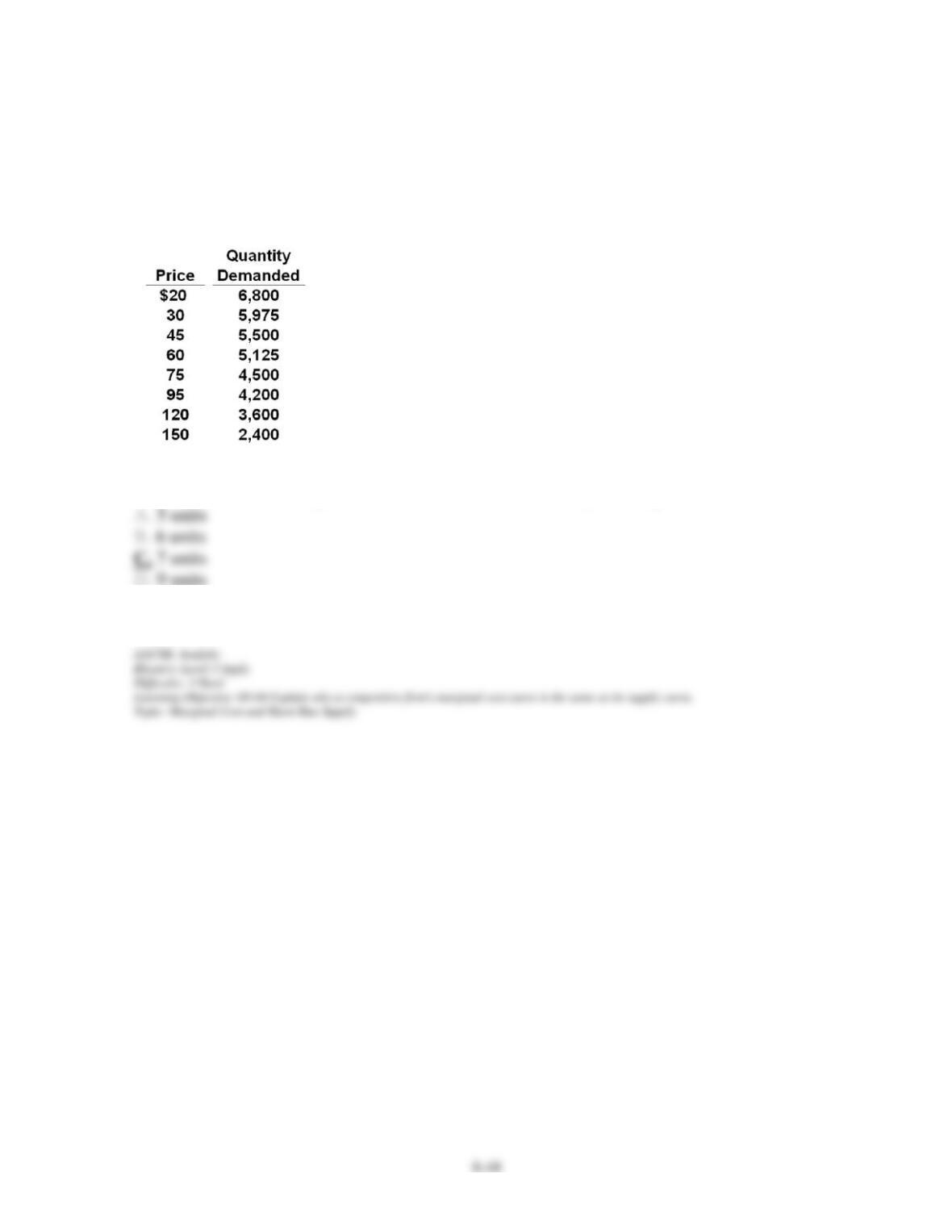
108. Refer to the cost table above. Now suppose that there are 600 identical firms in this
industry, each with the same cost data as the single firm discussed above. Suppose, too, that
the demand curve for this industry is as follows:
Based on all these data, the equilibrium price of the product in the market will be:
Chapter 08 – Pure Competition in the Short Run
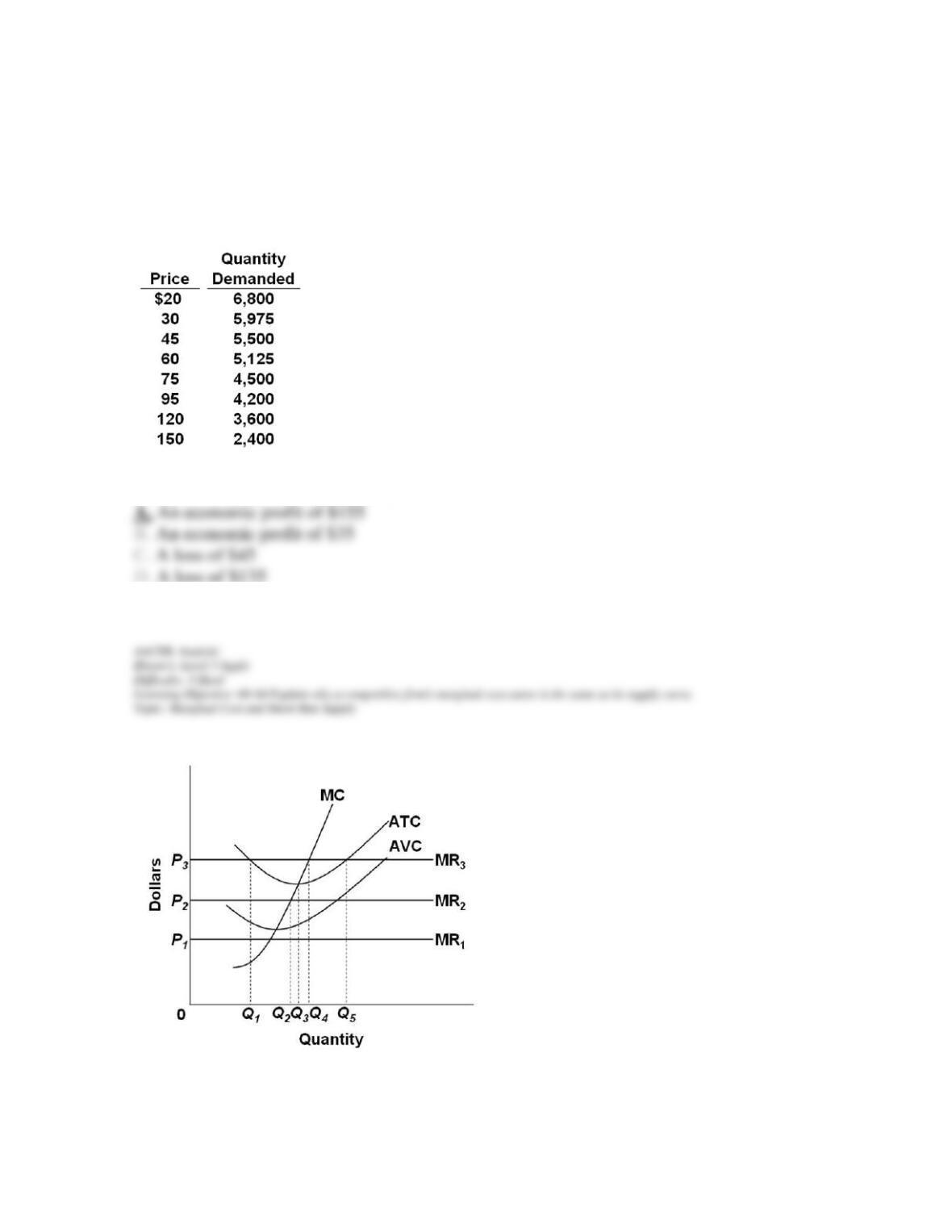
109. Refer to the cost table above. Now suppose that there are 600 identical firms in this
industry, each with the same cost data as the single firm discussed above. Suppose, too, that
the demand curve for this industry is as follows:
When the market is in equilibrium, each of the firms will be producing:
Chapter 08 – Pure Competition in the Short Run
8-49
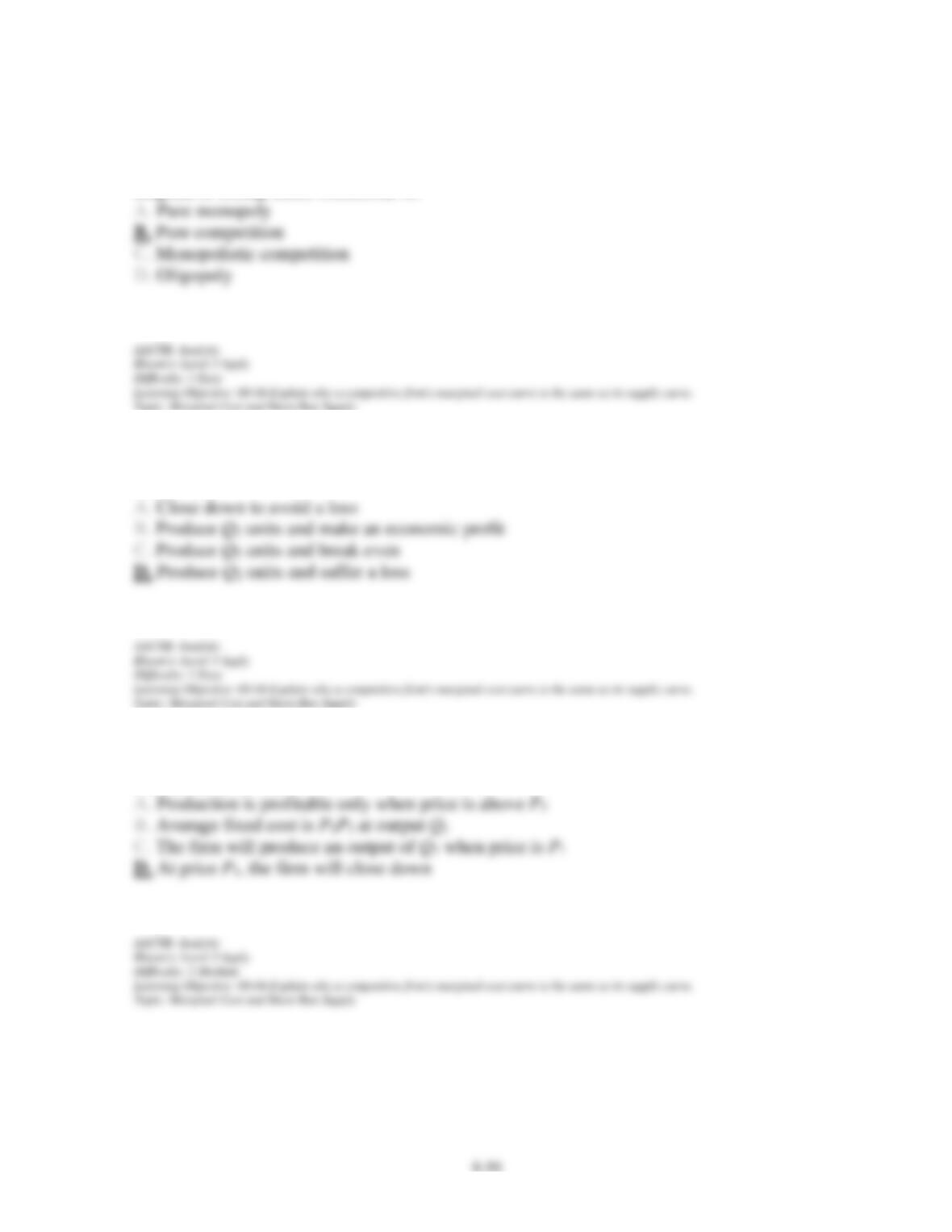
110. Refer to the cost table above. Now suppose that there are 600 identical firms in this
industry, each with the same cost data as the single firm discussed above. Suppose, too, that
the demand curve for this industry is as follows:
At equilibrium, each firm will realize:
Chapter 08 – Pure Competition in the Short Run
111. Refer to the above diagram. All data are for the short run. The firm represented in this
112. Refer to the above diagram. All data are for the short run. If the product price is P2, the
firm will:
113. Refer to the above diagram. All data are for the short run. Which of the following
statements is correct?
Chapter 08 – Pure Competition in the Short Run
8-51
114. In the short run, fixed costs for a profitable firm are:
115. If a purely competitive firm is producing at an output where marginal revenue exceeds
marginal cost, the firm will increase its profit by:
Chapter 08 – Pure Competition in the Short Run
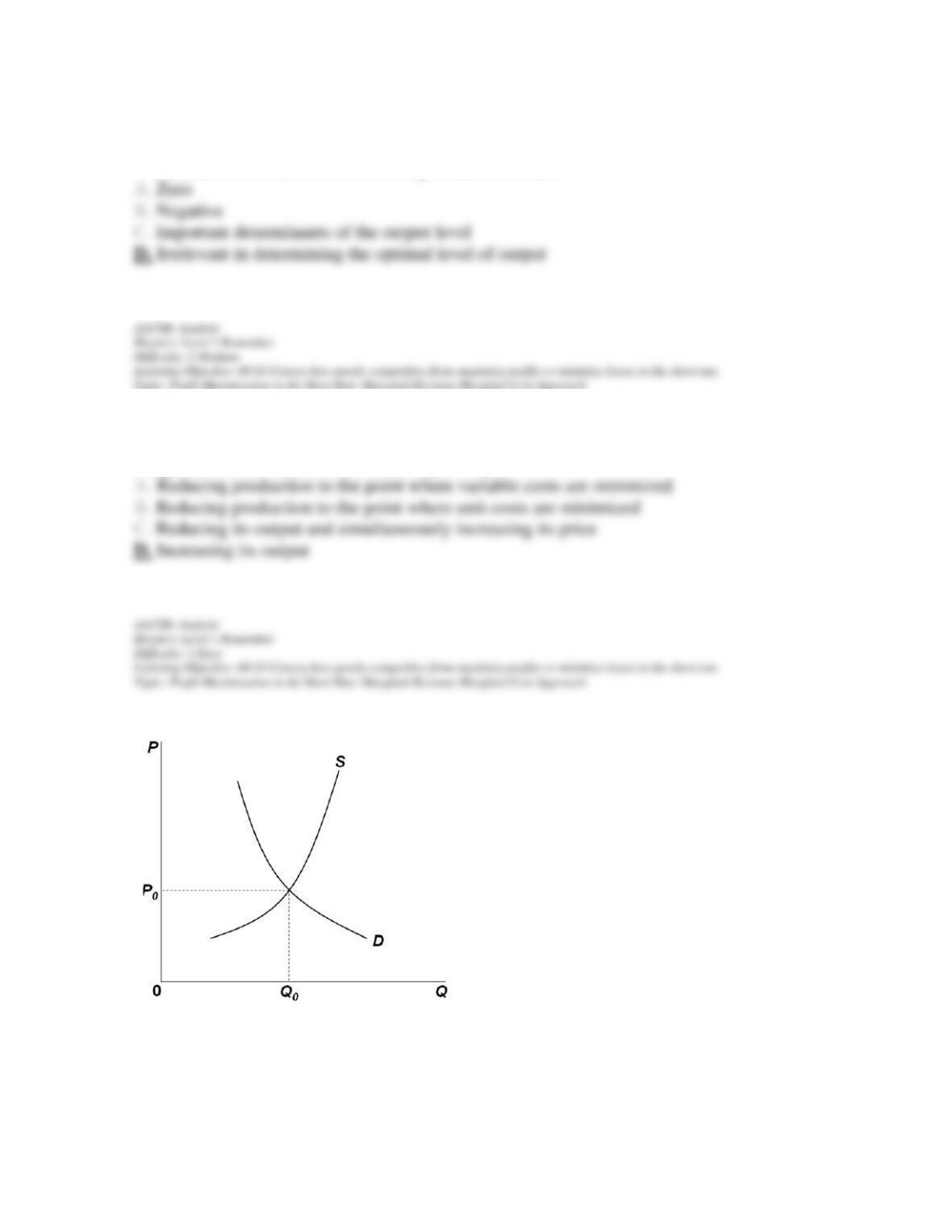
116. If the supply and demand curves above represent the market supply and demand for a
purely competitive industry, then the demand curve of a firm in the industry faces:
117. In pure competition, price is determined where the industry:
118. If the market demand for the product increases, in the short run a purely competitive
firm:
Chapter 08 – Pure Competition in the Short Run
119. The wage rate increases in a purely competitive industry. This change will result in a(n):
120. Technological advance improves productivity in a purely competitive industry. This
change will result in a shift:
Chapter 08 – Pure Competition in the Short Run
121. The resource cost falls in a purely competitive industry. This change will result in a(n):
122. The average wage of workers increases in a purely competitive industry. This change
will result in a(n):
Chapter 08 – Pure Competition in the Short Run
123. If there are many firms in an industry, then it must be a purely competitive market.
124. Competitive firms are price takers largely because of intensive advertising by their
competitors.
125. For a purely competitive firm, the demand curve facing it is the same as its marginal
revenue curve.
126. In pure competition, the industry demand curve is infinitely price elastic.
Chapter 08 – Pure Competition in the Short Run
127. The break-even point means that the firm is realizing economic profits.
128. If a purely competitive firm is producing a level of output greater than its profit–
maximizing output, then its profits must be negative.
129. If a purely competitive firm is producing a level of output where the marginal revenue is
less than the marginal cost, then its profits must be negative.
130. In the short run, a competitive firm will not produce unless price is at least equal to
average total costs.
Chapter 08 – Pure Competition in the Short Run
131. In the short run, fixed costs are irrelevant in determining a firm’s optimal level of output.
132. In short-run equilibrium, a competitive firm cannot earn economic profits.
133. If MR > MC for a competitive firm, it should reduce its level of output in order to make
MR equal to MC.