Chapter 08 – Pure Competition in the Short Run
55. Refer to the above data. If the firm’s minimum average variable cost is $10, the firm’s
profit-maximizing level of output would be:
56. Refer to the above data. At the profit-maximizing output the firm’s total revenue is:
57. Refer to the above data. Assuming total fixed costs equal to zero, the firm’s:
Chapter 08 – Pure Competition in the Short Run
58. In the short run a purely competitive firm will always make an economic profit if:
59. Suppose that at 500 units of output marginal revenue is equal to marginal cost. The firm is
selling its output at $5 per unit and average total cost at 500 units of output is $6. On the basis
of this information we:
60. If a firm is confronted with economic losses in the short run, it will decide whether or not
to produce by comparing:
Chapter 08 – Pure Competition in the Short Run
8-23
61. A firm finds that at its MR = MC output, its TC = $1,000, TVC = $800, TFC = $200, and
total revenue is $900. This firm should:
62. The lowest point on a purely competitive firm’s short-run supply curve corresponds to:
Chapter 08 – Pure Competition in the Short Run
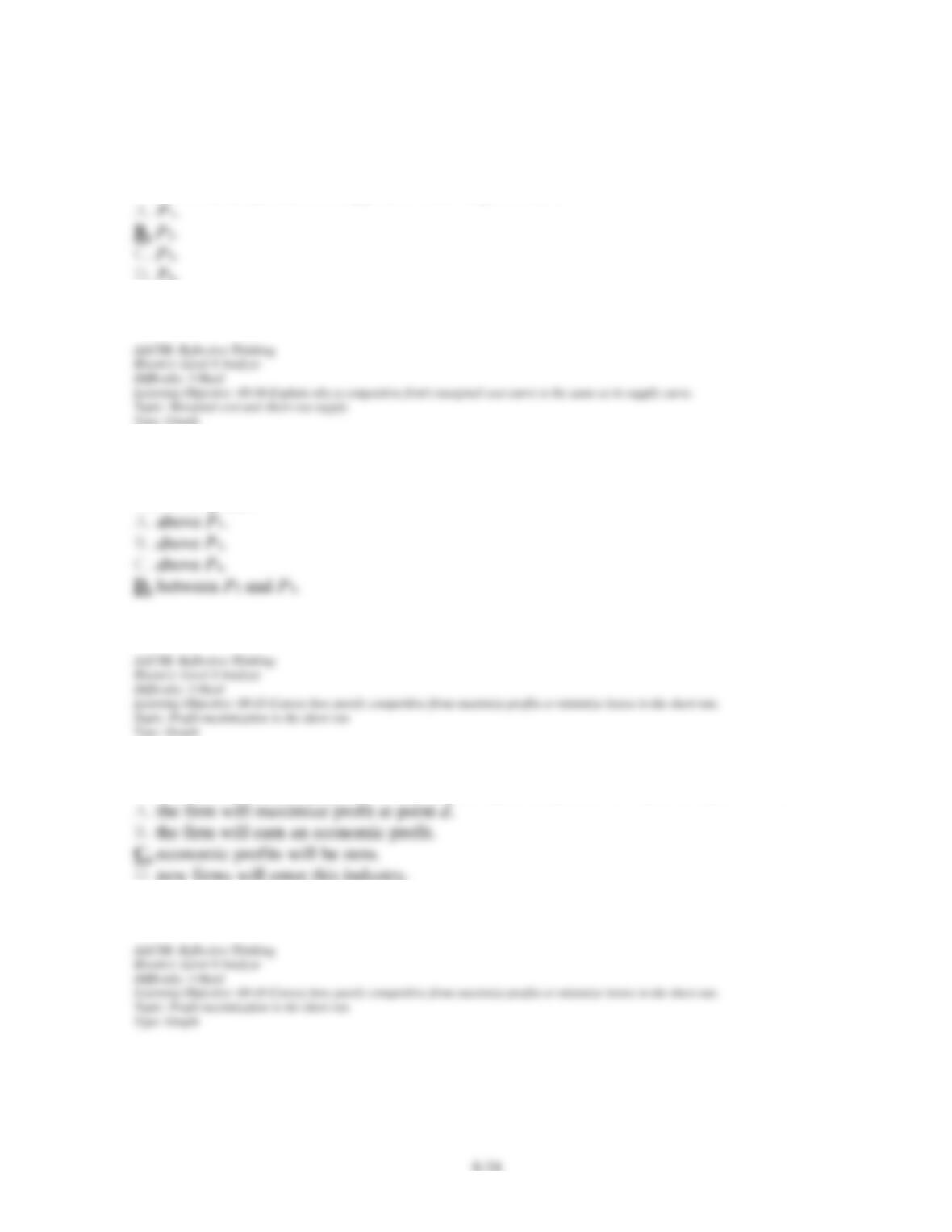
63. Refer to the above diagram for a purely competitive producer. The lowest price at which
the firm should produce (as opposed to shutting down) is:
64. Refer to the above diagram for a purely competitive producer. The firm will produce at a
loss at all prices:
65. Refer to the above diagram for a purely competitive producer. If product price is P3:
Chapter 08 – Pure Competition in the Short Run
66. Refer to the above diagram for a purely competitive producer. The firm’s short-run supply
curve is:
67. The short-run supply curve of a purely competitive producer is based primarily on its:
68. On a per unit basis economic profit can be determined as the difference between:
Chapter 08 – Pure Competition in the Short Run
69. In the short run a purely competitive seller will shut down if:
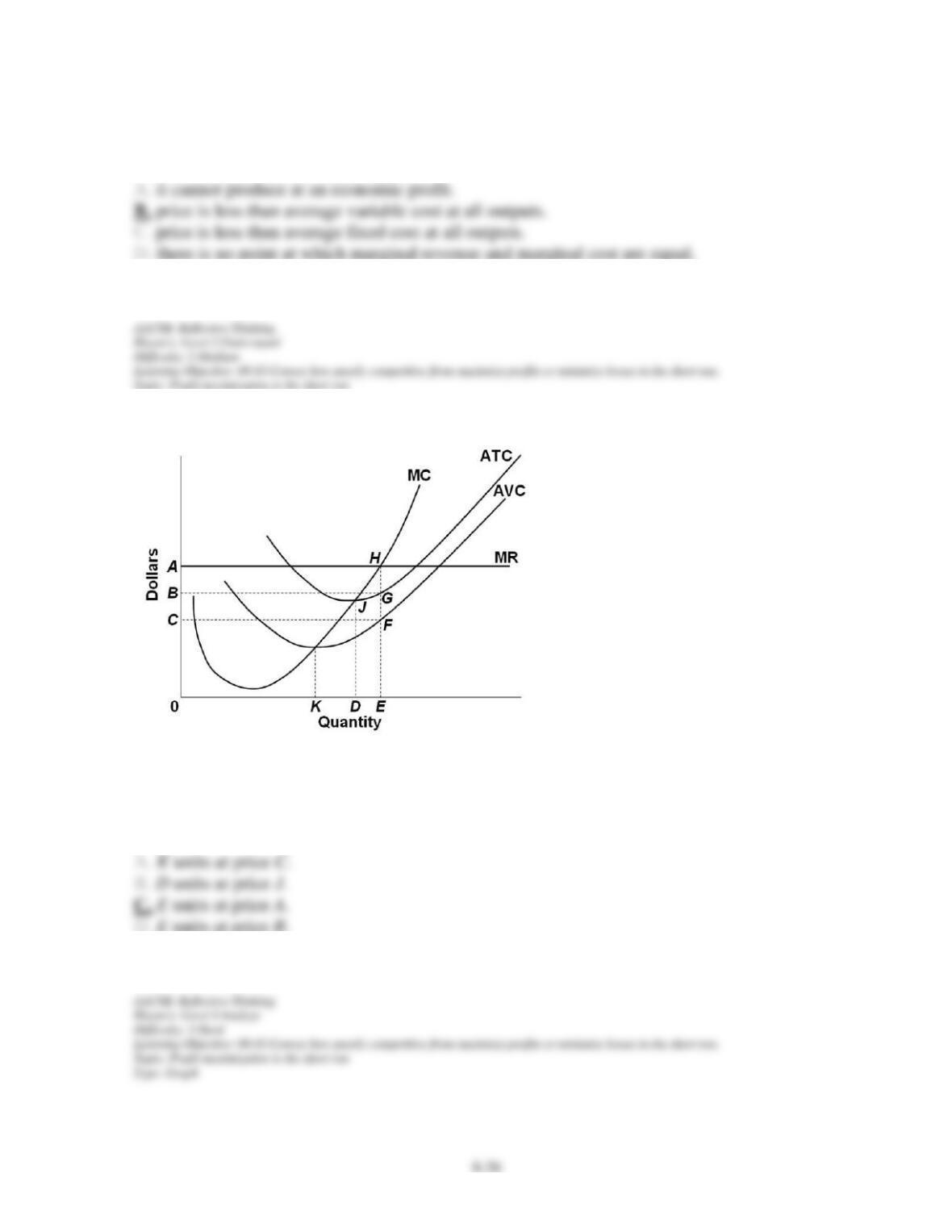
70. Refer to the above diagram. To maximize profit or minimize losses this firm will
produce:
Chapter 08 – Pure Competition in the Short Run
71. Refer to the above diagram. At the profit-maximizing output, total revenue will be:
73. Refer to the above diagram. At the profit-maximizing output, total variable cost is equal
to:
Chapter 08 – Pure Competition in the Short Run
74. Refer to the above diagram. At the profit-maximizing output, the firm will realize:
75. If a purely competitive firm is producing at some level less than the profit-maximizing
output, then:
Chapter 08 – Pure Competition in the Short Run
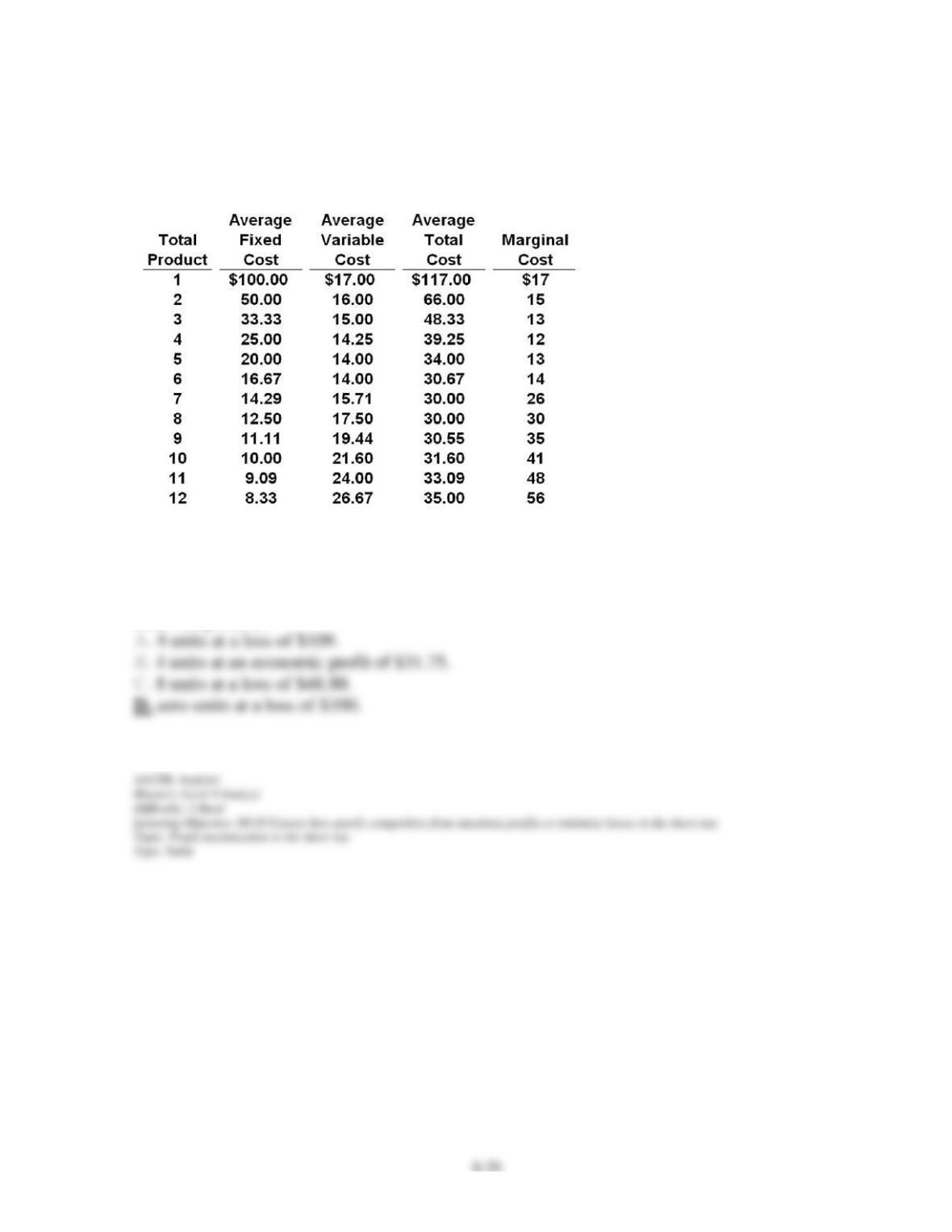
Answer the question on the basis of the following cost data for a firm that is selling in a
purely competitive market:
76. Refer to the above data. If the market price for the firm’s product is $12, the competitive
firm will produce:
Chapter 08 – Pure Competition in the Short Run
77. Refer to the above data. If the market price for the firm’s product is $32, the competitive
firm will produce:
78. Refer to the above data. If the market price for the firm’s product is $28, the competitive
firm will:
Chapter 08 – Pure Competition in the Short Run
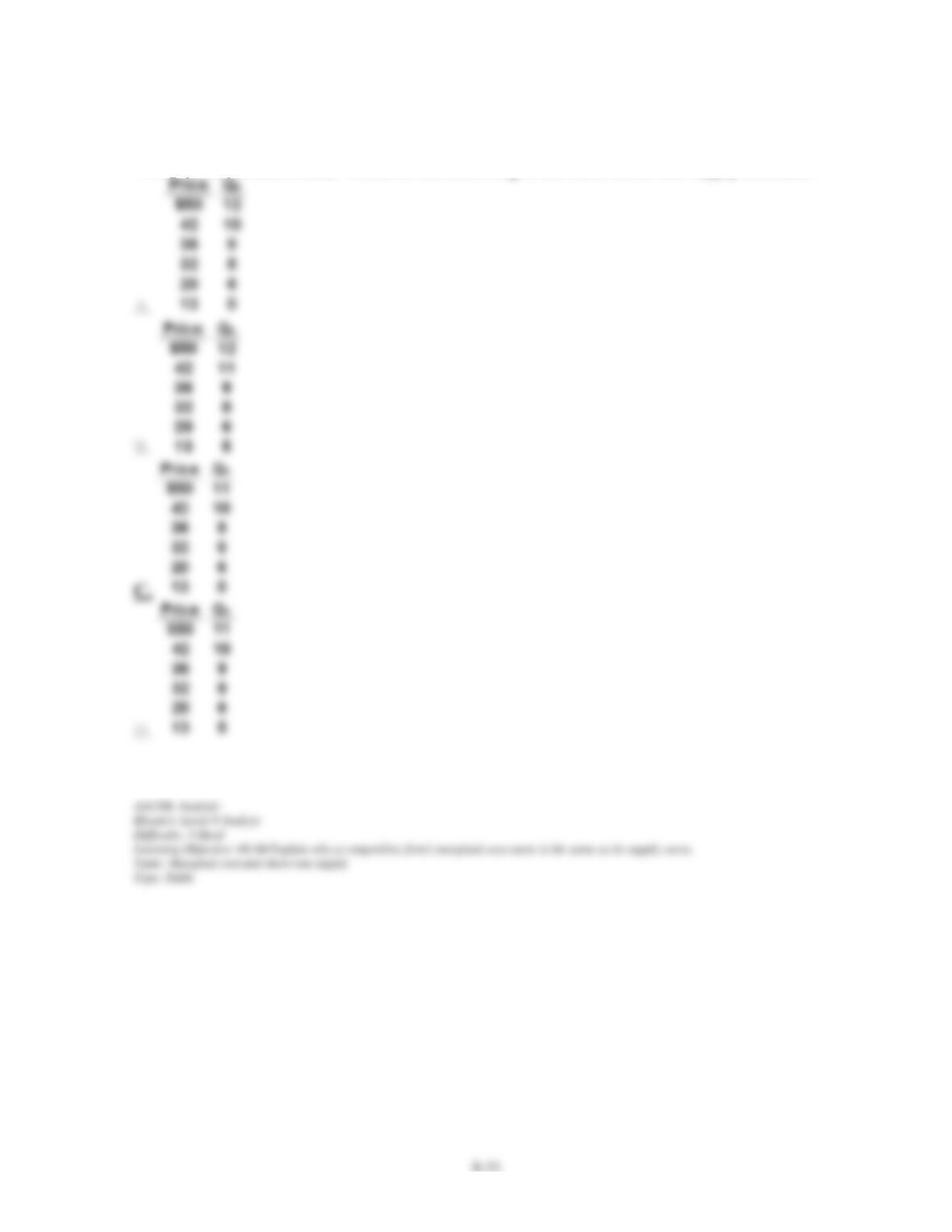
79. Refer to the above data. Which of the following is the firm’s short-run supply schedule?
Chapter 08 – Pure Competition in the Short Run
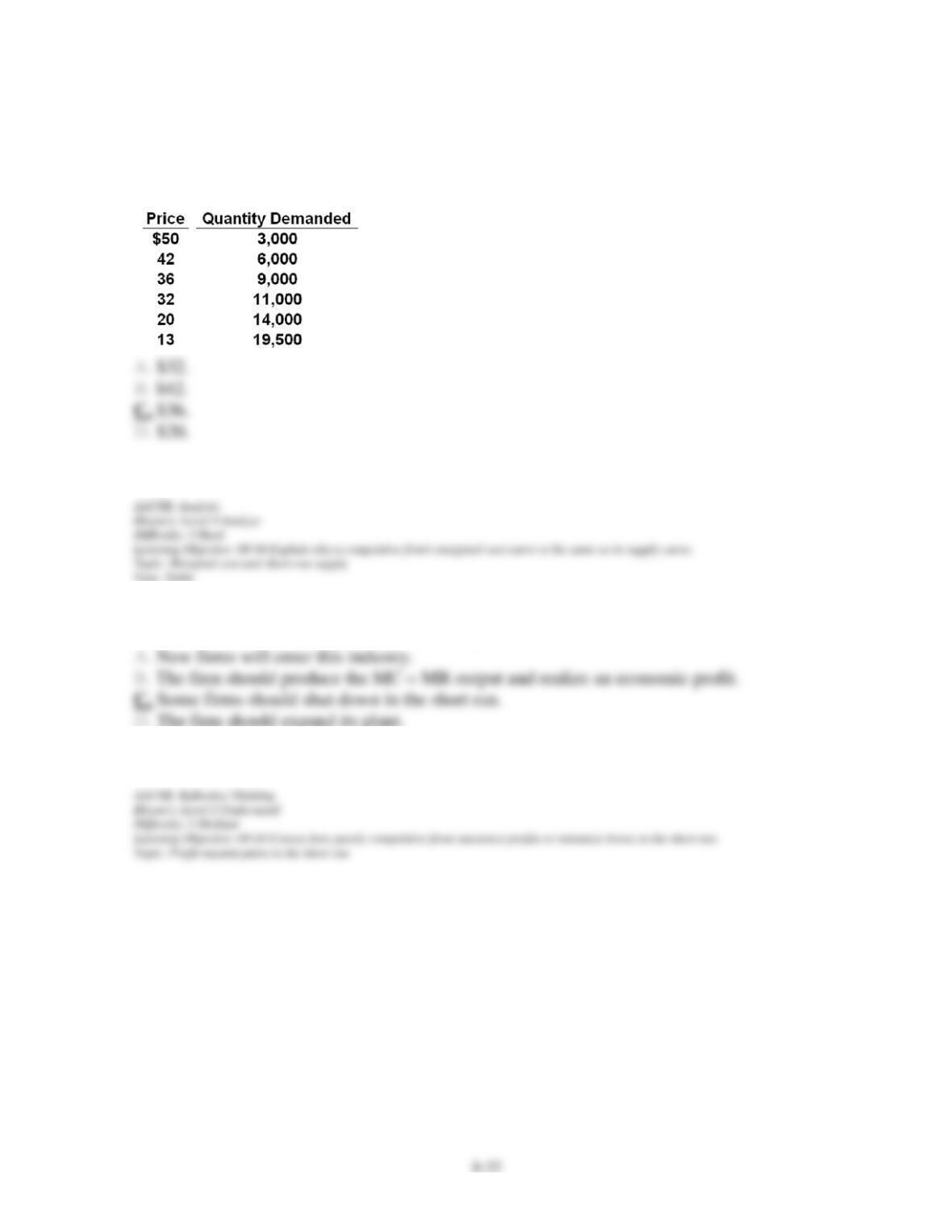
80. Refer to the above data. If there were 1,000 identical firms in this industry and total or
market demand is as shown below, equilibrium price will be:
81. If at the MC = MR output, AVC exceeds price:
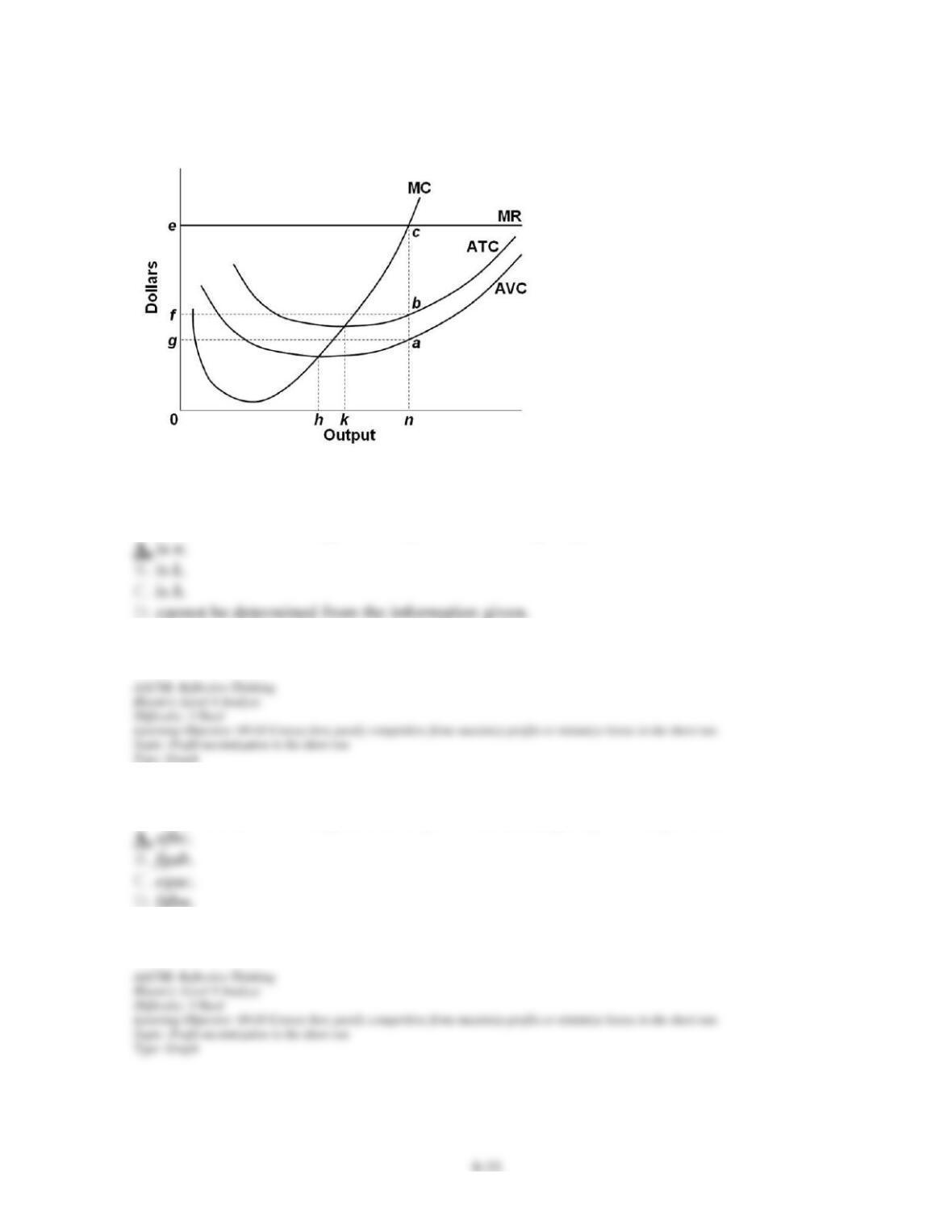
Chapter 08 – Pure Competition in the Short Run
82. Refer to the above diagram. The profit-maximizing output:
83. Refer to the above diagram. At the profit-maximizing output, total profit is:
Chapter 08 – Pure Competition in the Short Run
84. Refer to the above diagram. The short-run supply curve for this firm is the:
85. Refer to the above diagram. This firm is selling its product in a(n):
86. In the short run, a purely competitive seller will shut down if product price:
Chapter 08 – Pure Competition in the Short Run
87. The short-run supply curve for a purely competitive industry can be found by:
88. DASH Airlines is considering the addition of a flight from Red Cloud to David City. The
total cost of the flight would be $1,100, of which $800 are fixed costs already incurred.
Expected revenues from the flight are $600. DASH should:
Chapter 08 – Pure Competition in the Short Run
89. In contrast to American firms, Japanese firms frequently make lifetime employment
commitments to their workers and agree not to lay them off when product demand is weak.
Other things being equal, we would expect Japanese firms to:
90. Assume for a competitive firm that MC = AVC at $12, MC = ATC at $20, and MC = MR
at $16. This firm will:
91. The principle that a firm should produce up to the point where the marginal revenue from
the sale of an extra unit of output is equal to the marginal cost of producing it is known as
the:
Chapter 08 – Pure Competition in the Short Run
8-37
92. If a purely competitive firm is producing at the P = MC output and realizing an economic
profit, at that output:
93. If a profit-seeking competitive firm is producing its profit-maximizing output and its total
fixed costs fall by 25 percent, the firm should:
Chapter 08 – Pure Competition in the Short Run
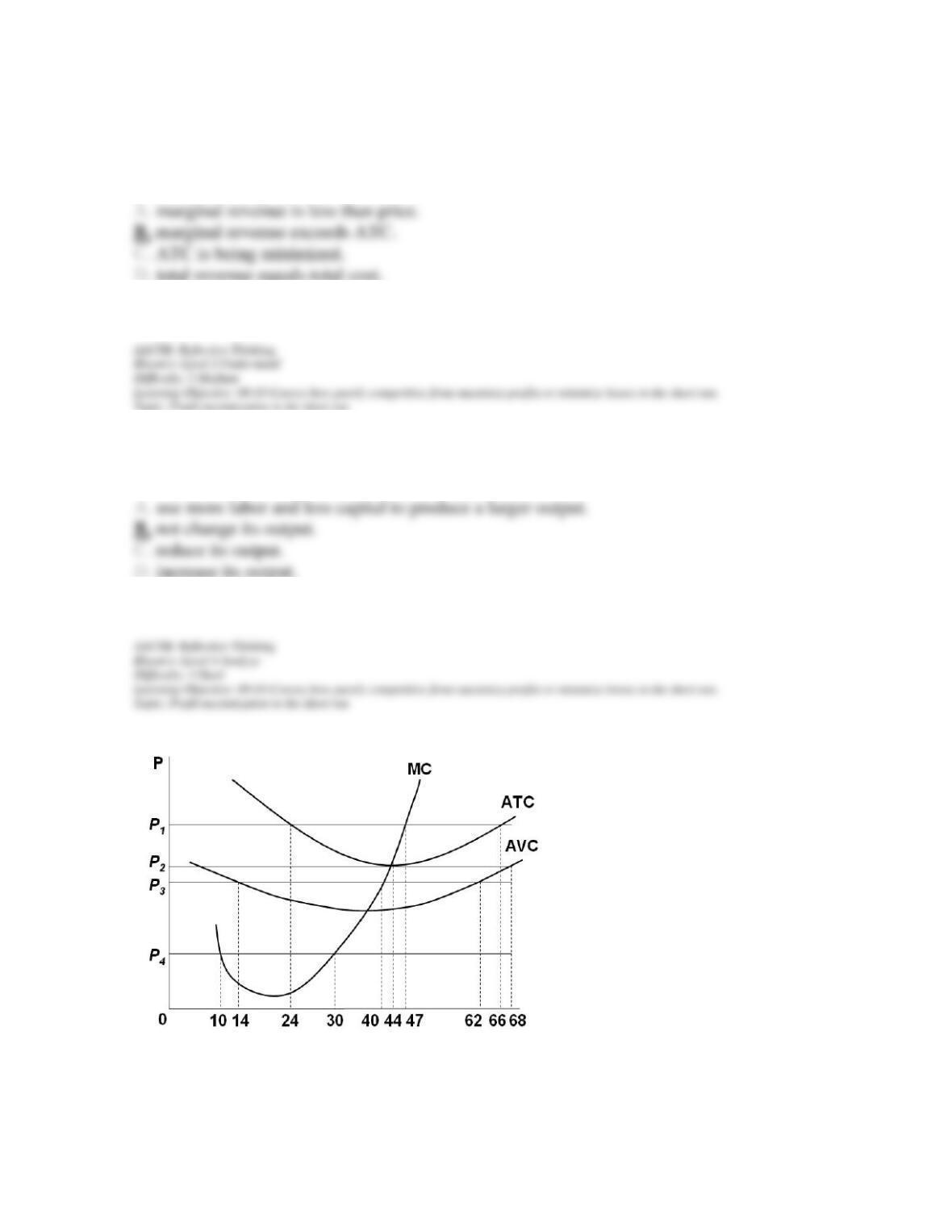
94. Refer to the above diagram. At P2, this firm will:
95. Refer to the above diagram. At P1, this firm will produce:
96. Refer to the above diagram. At P4, this firm will:
Chapter 08 – Pure Competition in the Short Run
97. Refer to the above diagram. At P3, this firm will:
98. The Ajax Manufacturing Company is selling in a purely competitive market. Its output is
100 units which sell at $4 each. At this level of output total cost is $600, total fixed cost is
$100, and marginal cost is $4. The firm should:
99. If a purely competitive firm is maximizing economic profit: