Chapter 08 – Pure Competition in the Short Run
52. Farmer Jones is producing wheat, and must accept the market price of $6.00 per bushel.
At this time, her average total costs and her marginal costs both equal $8.00 per bushel. Her
average variable costs are $5 per bushel. In choosing her optimal output, farmer Jones
should:
53. Which is true for a purely competitive firm in short-run equilibrium?
54. Which is necessarily true for a purely competitive firm in short-run equilibrium?
Chapter 08 – Pure Competition in the Short Run
55. A purely competitive firm’s output is currently such that its marginal cost is $4 and
marginal revenue is $5. Assuming profit maximization, the firm should:
56. A firm sells a product in a purely competitive market. The marginal cost of the product at
the current output of 1,000 units is $2.50. The minimum possible average variable cost is
$2.00. The market price of the product is $2.50. To maximize profit or minimize losses, the
firm should:
57. A firm sells a product in a purely competitive market. The marginal cost of the product at
the current output of 800 units is $3.50. The minimum possible average variable cost is $3.00.
The market price of the product is $4.00. To maximize profit or minimize losses, the firm
should:
Chapter 08 – Pure Competition in the Short Run
58. A firm sells a product in a purely competitive market. The marginal cost of the product at
the current output of 500 units is $1.50. The minimum possible average variable cost is $1.00.
The market price of the product is $1.25. To maximize profit or minimize losses, the firm
should:
59. A firm sells a product in a purely competitive market. The marginal cost of the product at
the current output of 200 units is $4.00. The minimum possible average variable cost is $3.50.
The market price of the product is $3.00. To maximize profit or minimize losses, the firm
60. A firm sells a product in a purely competitive market. The marginal cost of the product at
the current output is $5.00 and the market price is $5.00. What should the firm do?
Chapter 08 – Pure Competition in the Short Run
61. A firm sells a product in a purely competitive market. The marginal cost of the product at
the current output is $3.00 and the market price is $2.50. What should the firm do?
62. A firm sells a product in a purely competitive market. The marginal cost of the product at
the current output is $4.00 and the market price is $4.50. What should the firm do?
63. T-Shirt Enterprises is selling in a purely competitive market. It is producing 3000 units,
selling them for $2.00 each. At this level of output, the average total cost is 2.50 and the
average variable cost is $2.20. Based on these data, the firm should:
Chapter 08 – Pure Competition in the Short Run
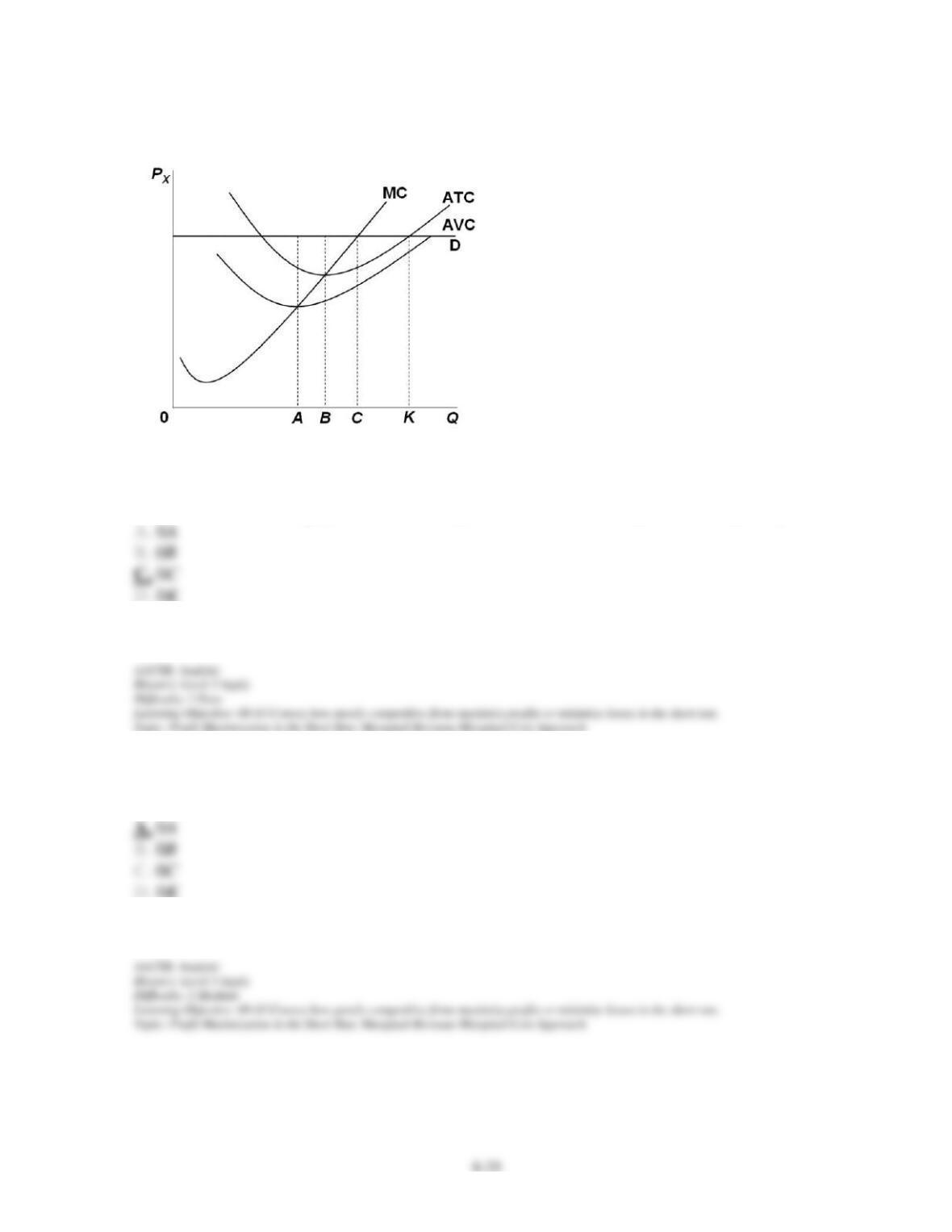
64. Refer to the above graph. To maximize profits, the firm should produce the quantity:
65. Refer to the above graph. The firm should shut down if the quantity of output that it could
sell falls below:
Chapter 08 – Pure Competition in the Short Run
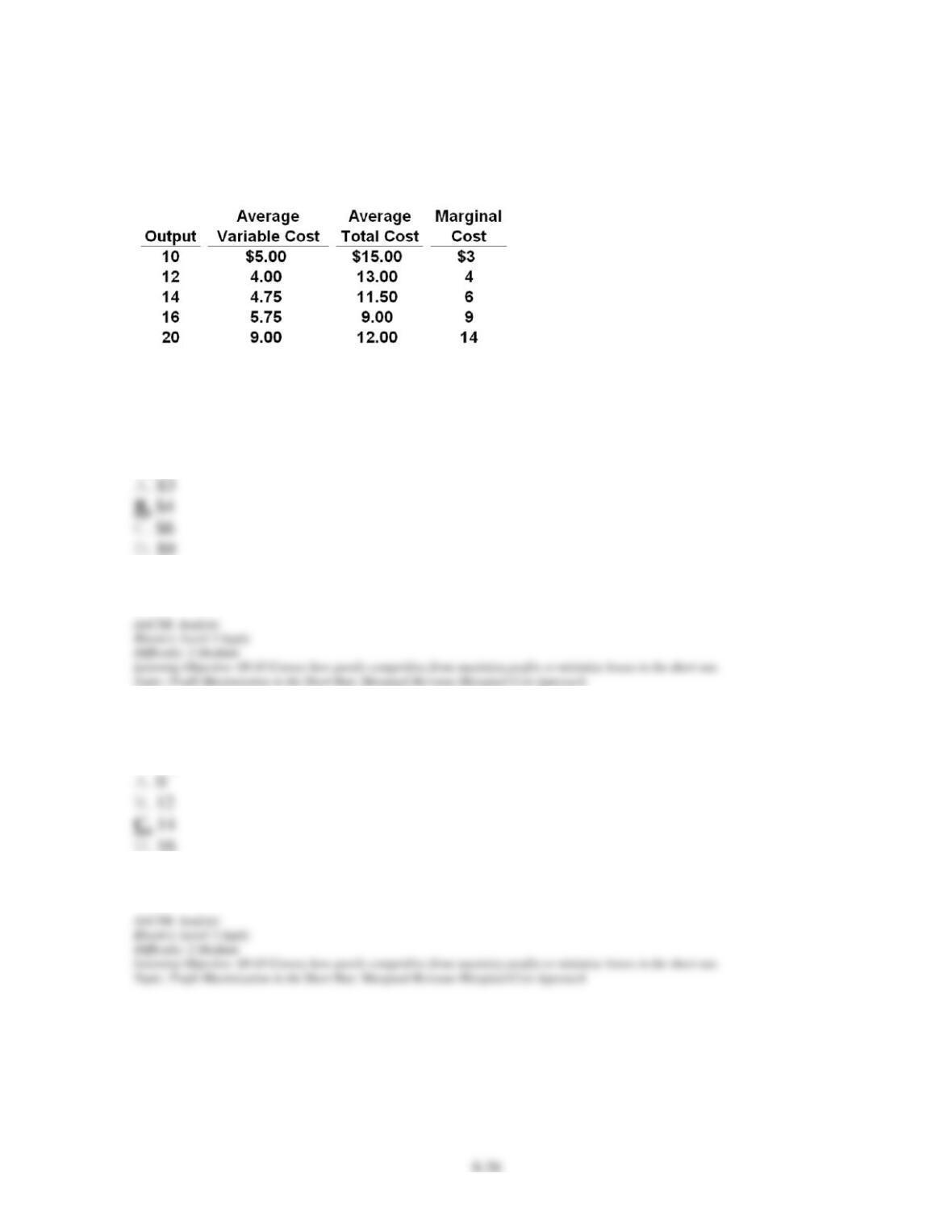
The table shows cost data for a firm that is selling in a purely competitive market.
66. Refer to the above cost table. The firm will produce its output only if the price is at least
equal to what minimum level?
67. Refer to the above cost table. If the price of the product is $6, what output level will the
firm produce?
Chapter 08 – Pure Competition in the Short Run
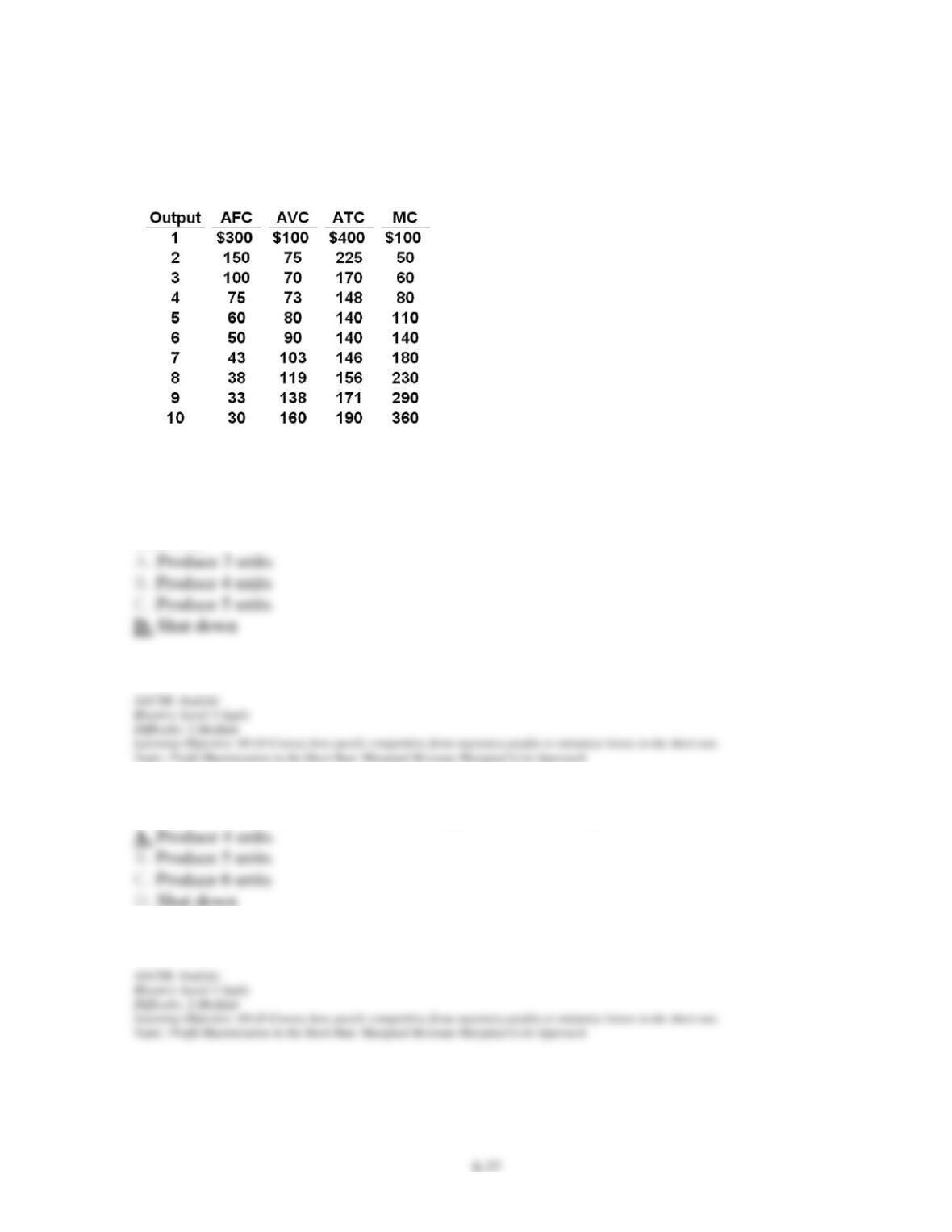
It shows cost data for a firm that is selling in a purely competitive market.
68. Refer to the above table. If the market price for the firm’s product is $60, the competitive
firm will:
69. Refer to the above table. If the market price for the firm’s product is $80, the firm will:
Chapter 08 – Pure Competition in the Short Run
70. Refer to the above table. If the market price for the firm’s product is $180, the competitive
firm will produce:
71. Refer to the above table. If the product price is $290, the per-unit economic profit at the
profit-maximizing output is:
Chapter 08 – Pure Competition in the Short Run
8-29
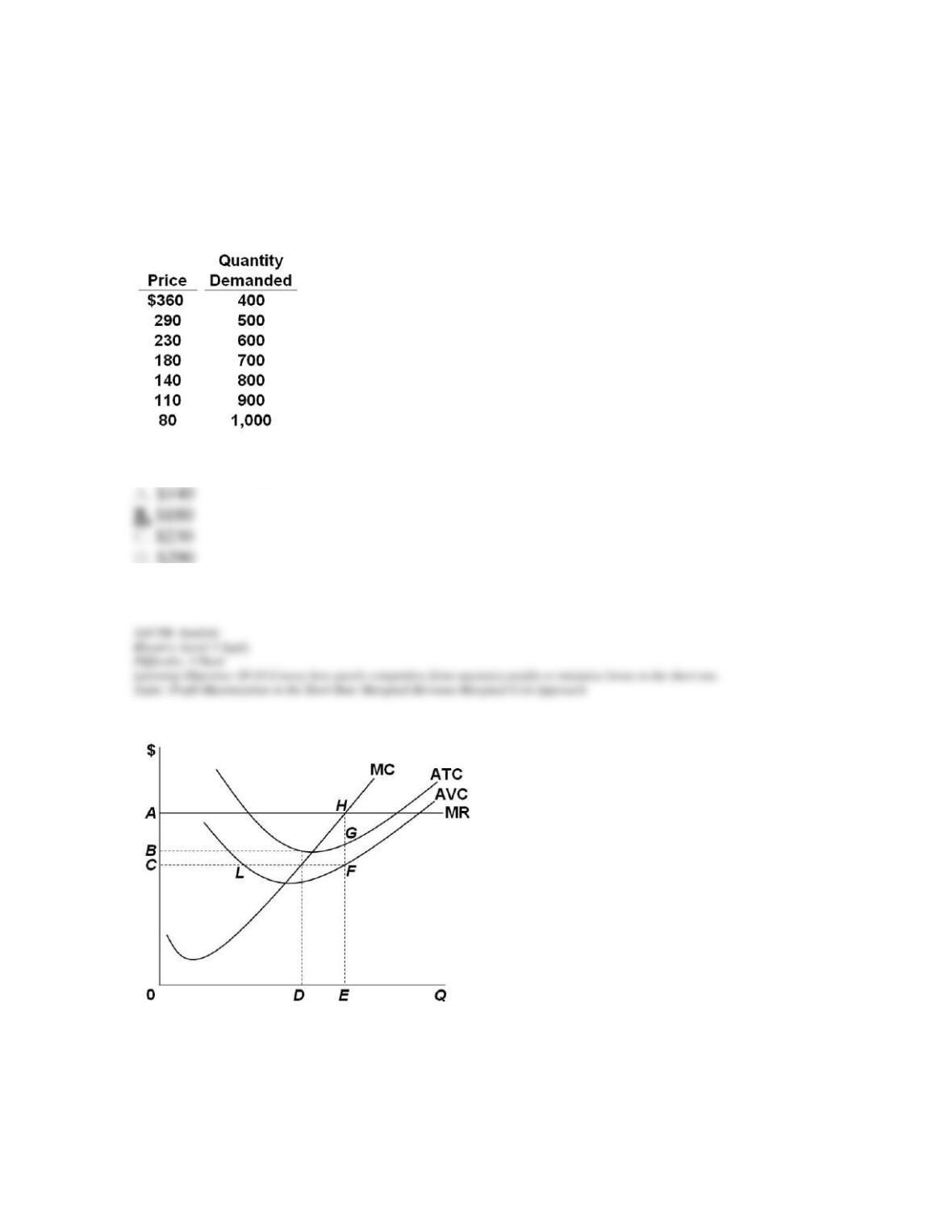
72. Refer to the above table. Now assume there are 100 identical firms in this industry, each
of which has the same cost data as the single firm described above. Suppose too that the
demand curve for this industry is as shown below:
The equilibrium price will be:
Chapter 08 – Pure Competition in the Short Run
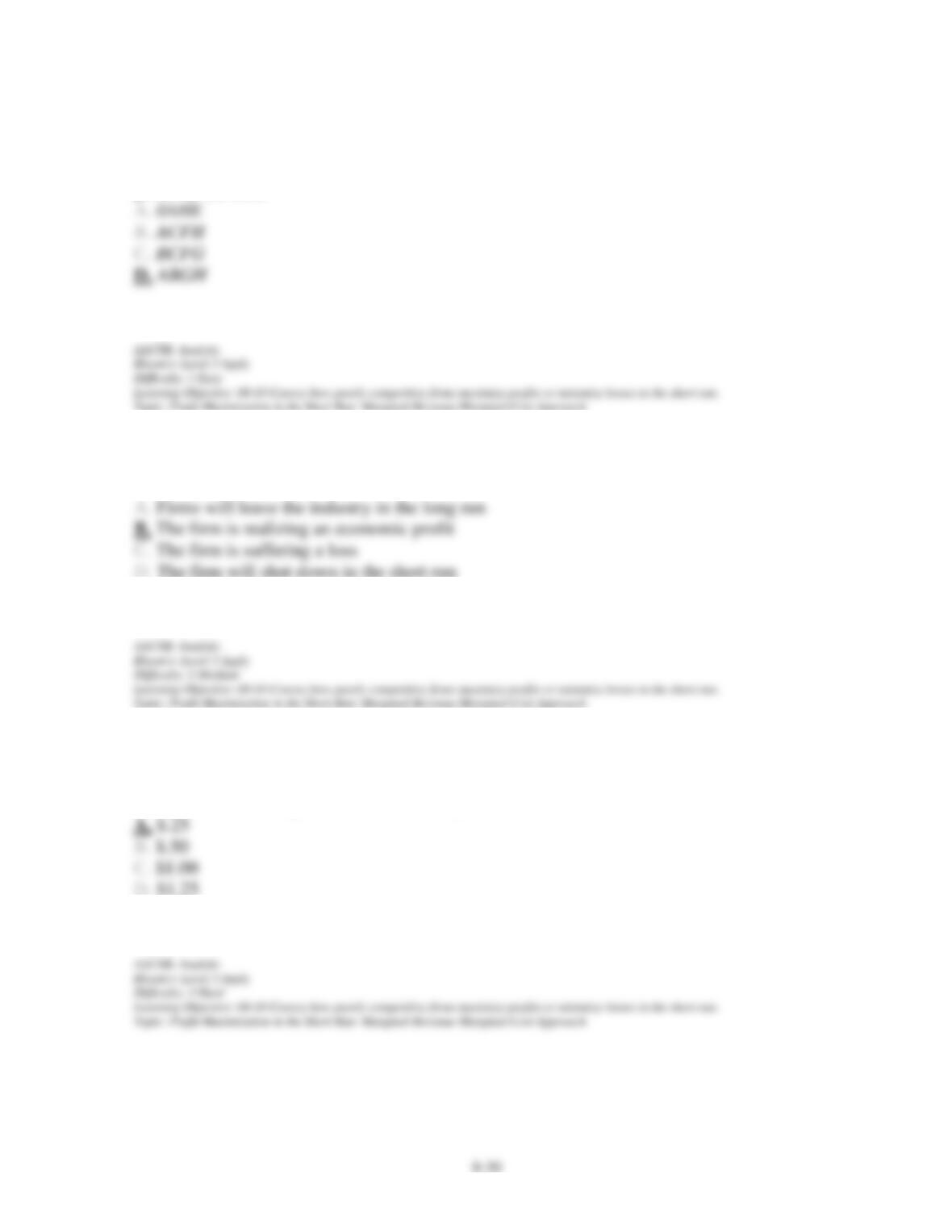
73. Refer to the above graph. At the profit-maximizing level of output, the firm earns profits
given by the area:
74. A purely competitive firm is in short-run equilibrium and its MC exceeds its ATC. It can
be concluded that:
75. The Campus Crustacean Company receives $2 per box for its crawfish and is selling 1,600
boxes to maximize its profits. What is the profit per box of crawfish at this equilibrium level
of output if the average variable cost is $1 per box and fixed costs are $1,200?
Chapter 08 – Pure Competition in the Short Run
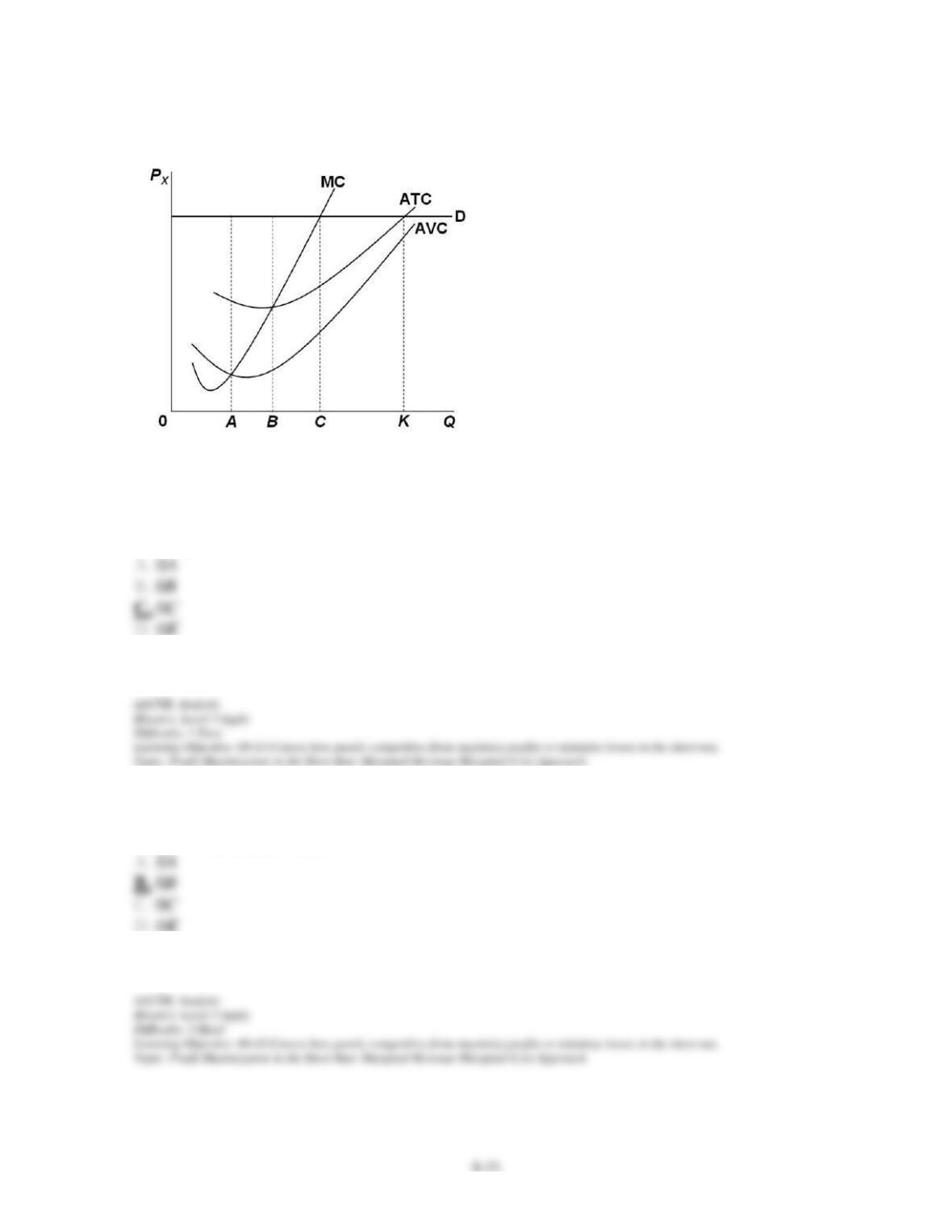
76. Refer to the above graph. The firm will earn maximum total profits if it produces and sells
quantity:
77. Refer to the above graph. At what level of output will the firm earn a maximum unit-profit
margin (or profit per unit)?
Chapter 08 – Pure Competition in the Short Run
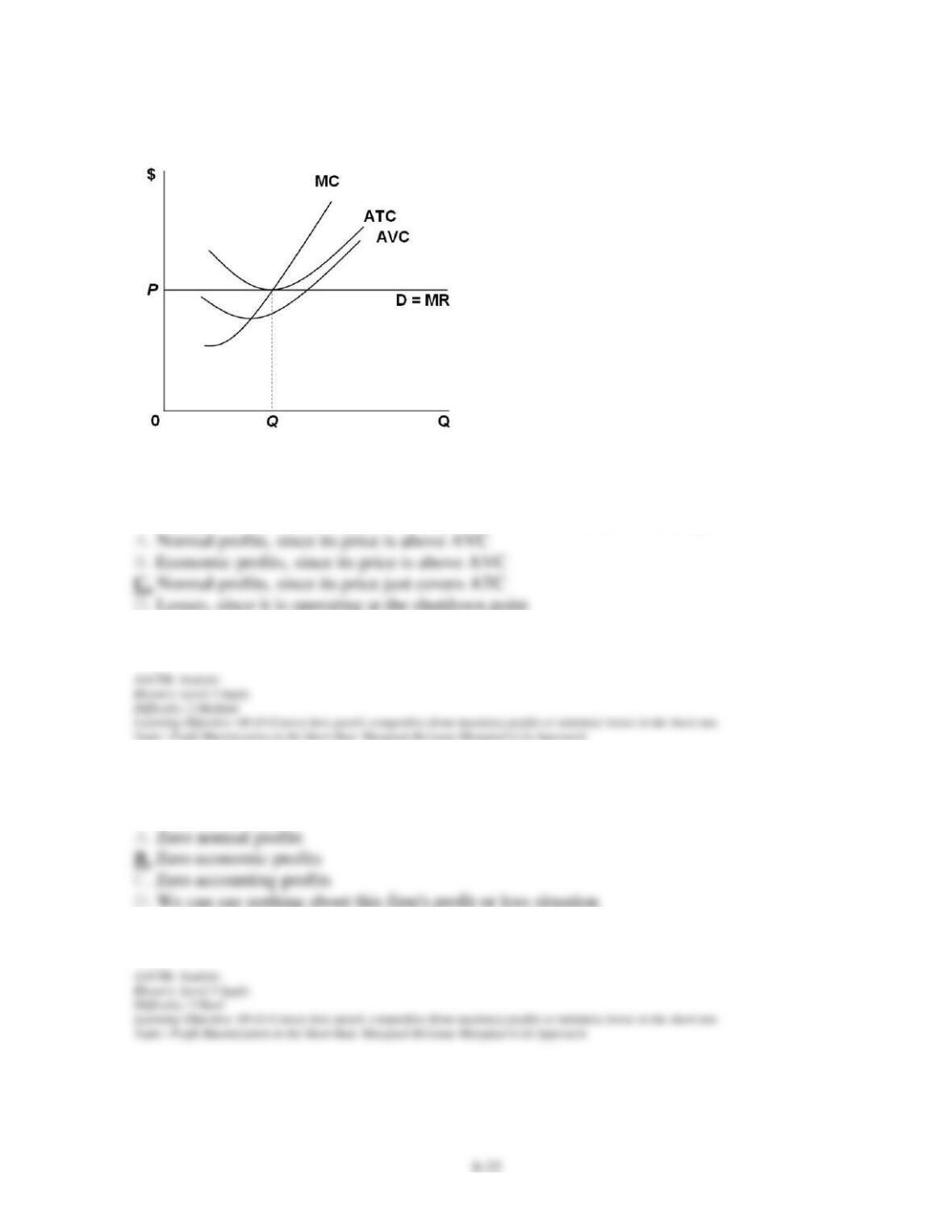
78. Consider the purely competitive firm pictured above. The firm is earning:
79. Consider the purely competitive firm pictured above. At its short-run equilibrium point,
the firm is earning:
Chapter 08 – Pure Competition in the Short Run
80. A purely competitive firm is producing at the point where its marginal cost equals the
price of its product. If the firm increases its output, then total revenue will:
81. A firm should increase the quantity of output as long as its:
82. A firm should always continue to operate at a loss in the short run if:
Chapter 08 – Pure Competition in the Short Run
8-34
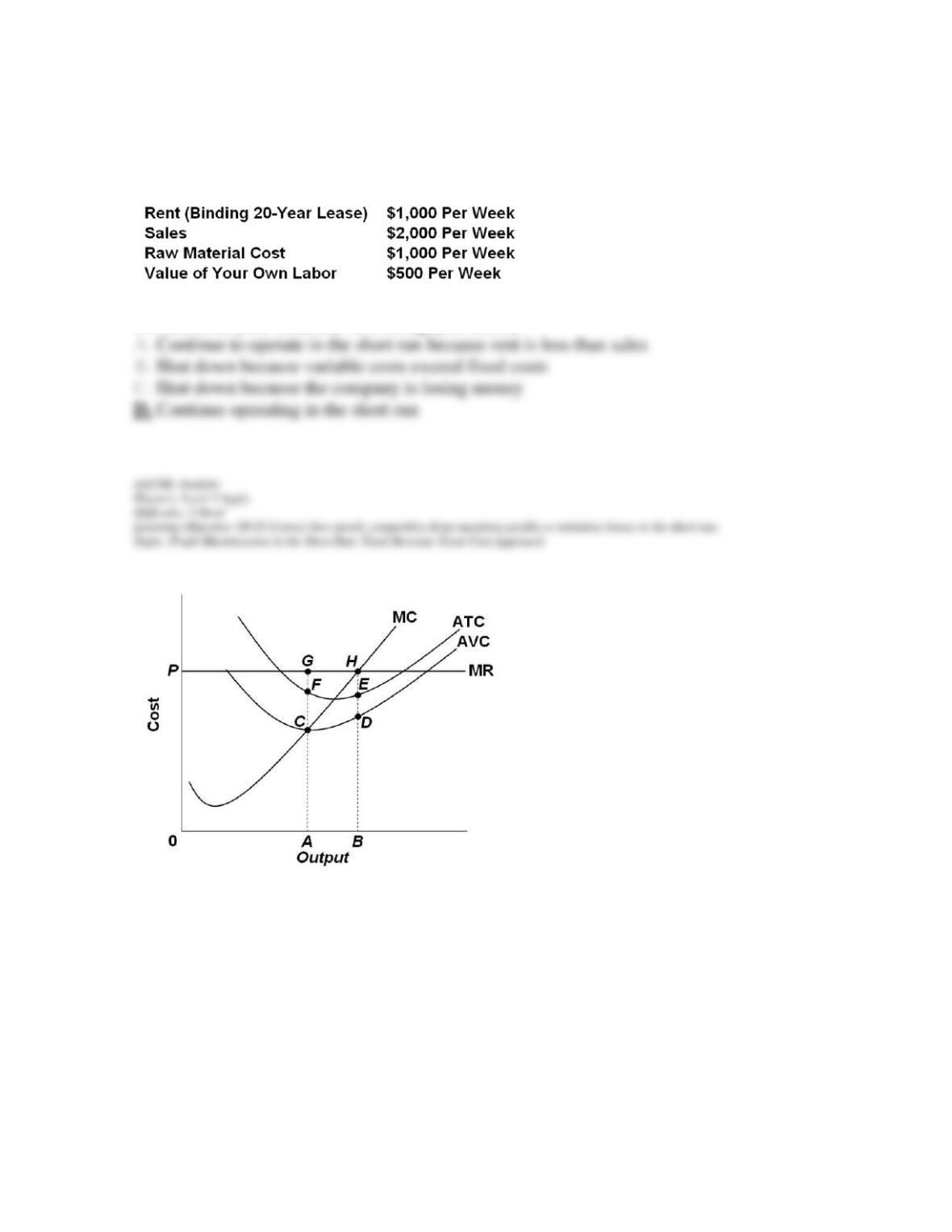
83. As president and owner of the Sour Grapes Lemonade Company, you know that you face:
To maximize your financial well-being, you should:
Chapter 08 – Pure Competition in the Short Run
8-35
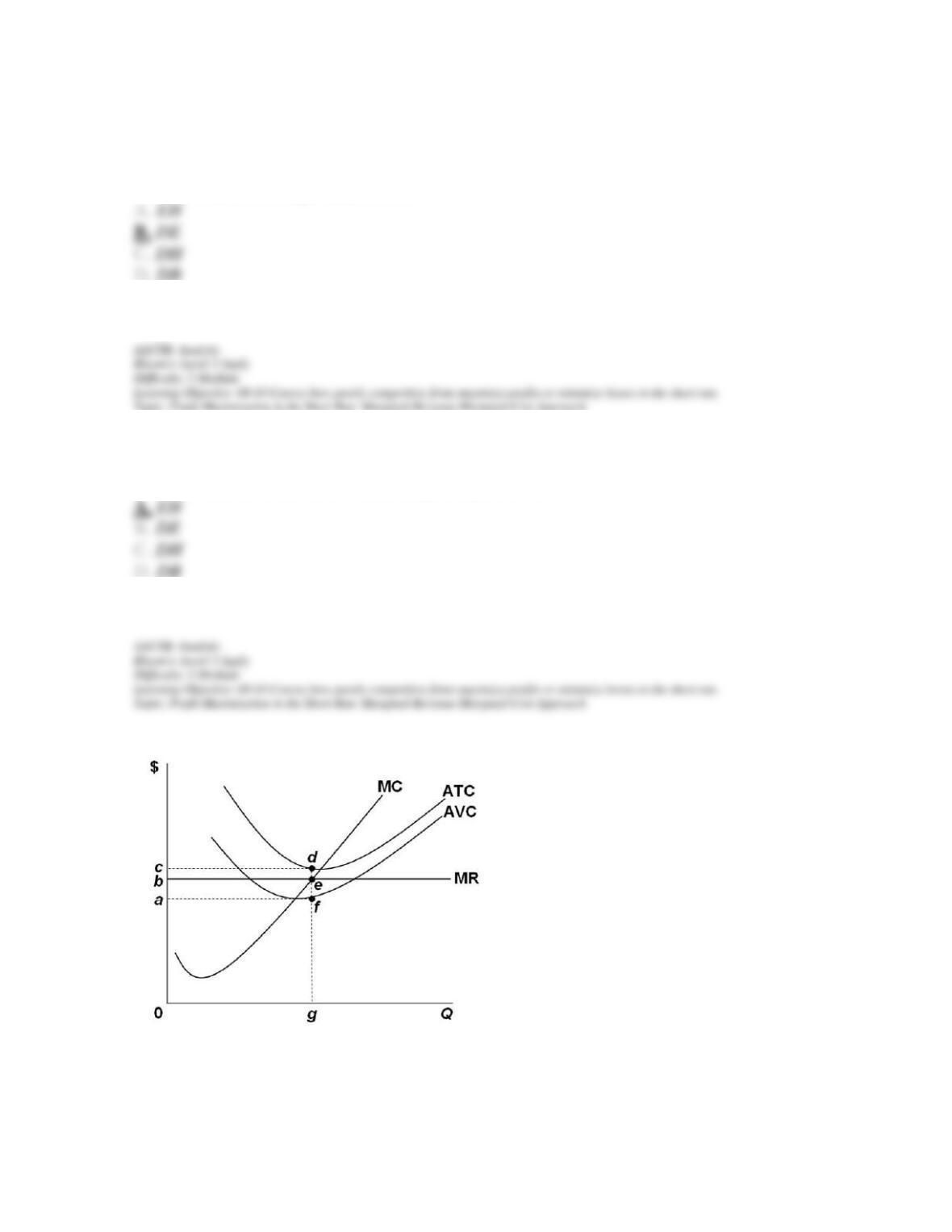
84. Refer to the above graph for a purely competitive firm. When the firm is in equilibrium in
the short run, its average fixed cost is:
85. Refer to the above graph for a purely competitive firm. When the firm is in equilibrium in
the short run, the amount of economic profit per unit is:
Chapter 08 – Pure Competition in the Short Run
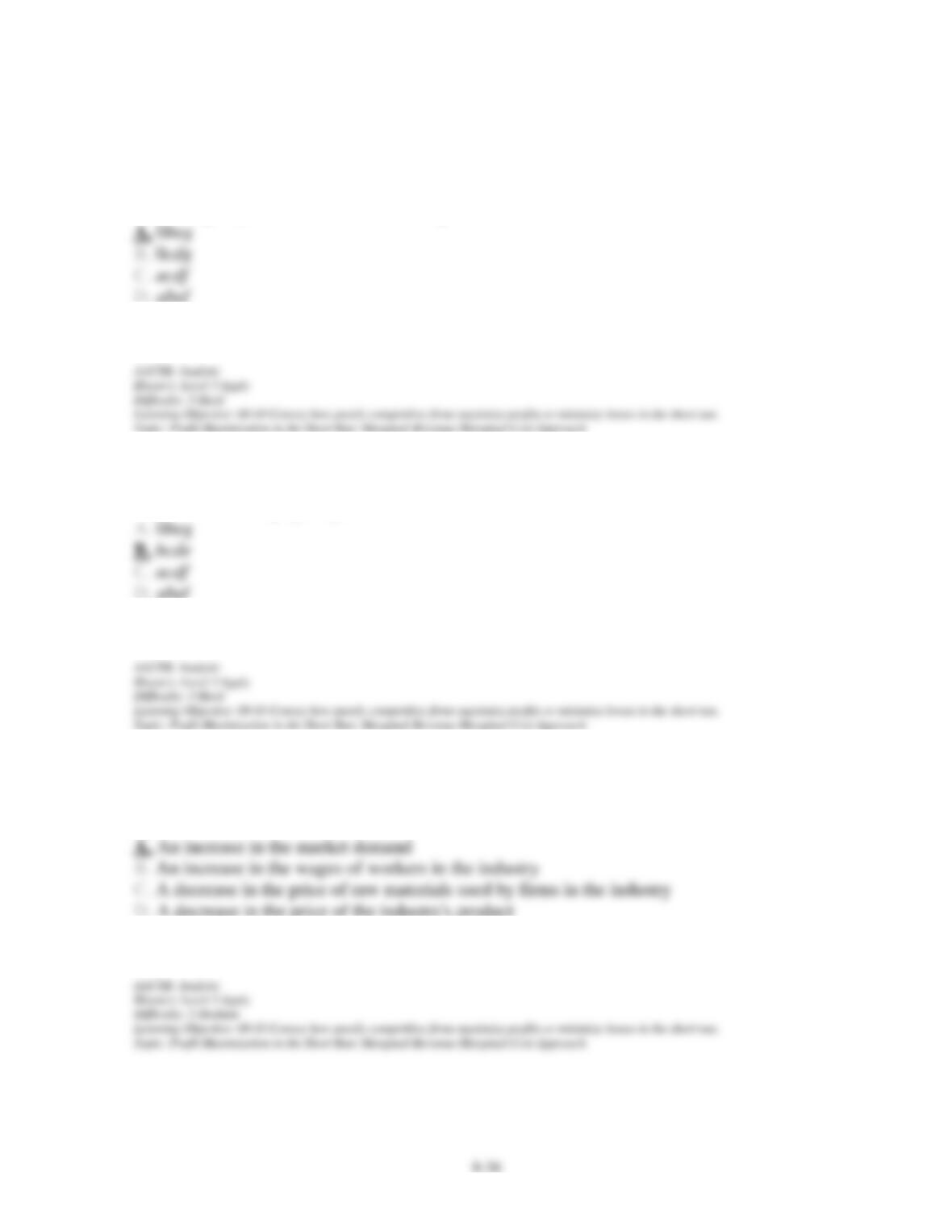
86. Refer to the above graph for a purely competitive firm operating at a loss in the short run.
Which area in the graph represents the portion of total costs that the firm can recoup by
continuing to produce rather than shutting down?
87. Refer to the above graph for a purely competitive firm operating at a loss in the short run.
Which area in the graph represents the amount of economic loss for the firm?
88. Refer to the above graph for a purely competitive firm operating at a loss in the short run.
Which of the following changes in its market would allow the firm to earn positive profits
again?
Chapter 08 – Pure Competition in the Short Run
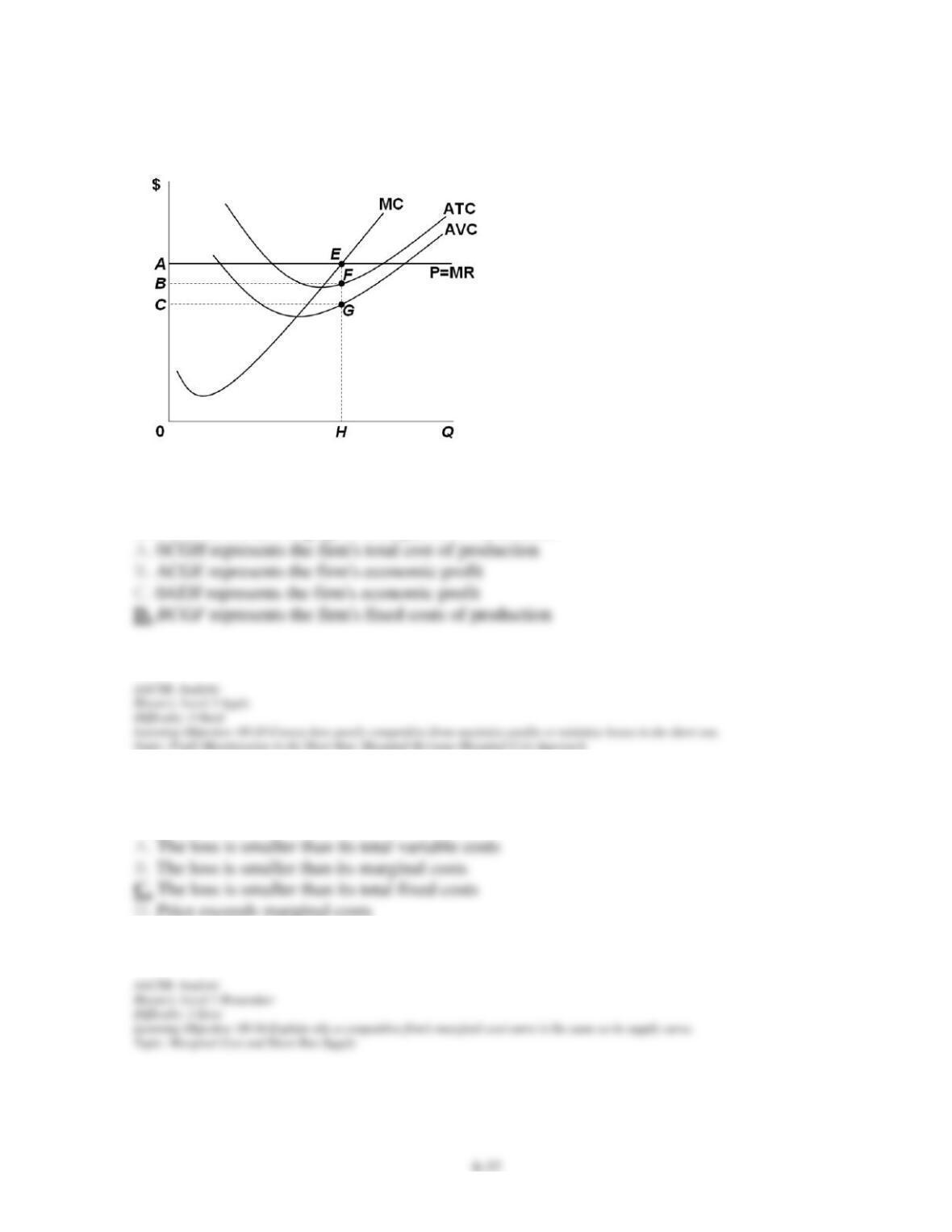
89. Refer to the above graph. At output level H, the area:
90. A purely competitive firm will be willing to produce even at a loss in the short run, as
long as:
Chapter 08 – Pure Competition in the Short Run
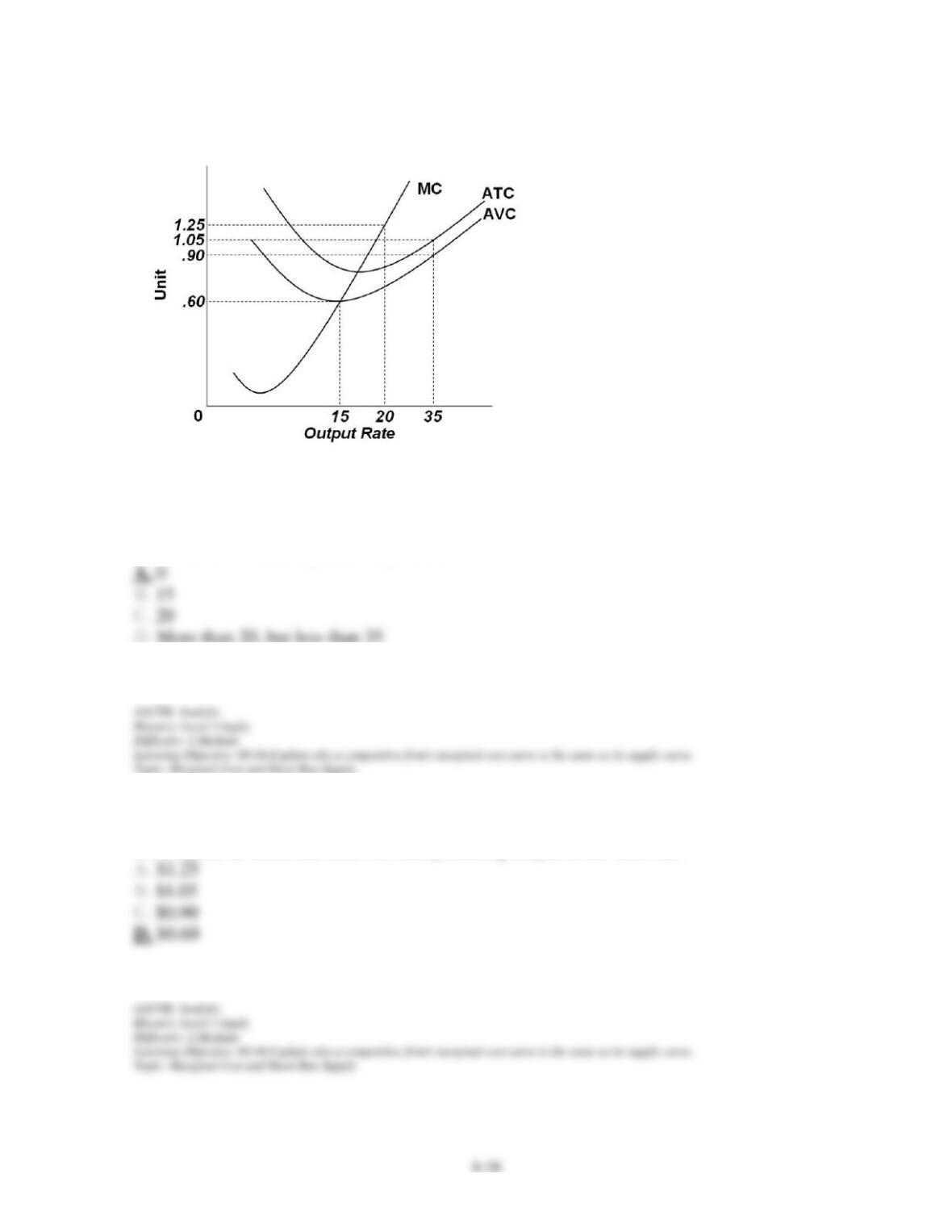
91. Refer to the above graph. It shows the cost curves for a competitive firm. If the market
price falls to $.55, the optimal output rate is:
92. Refer to the above graph. It shows the cost curves for a competitive firm. What is the
lowest price at which the firm will start producing output in the short run?
Chapter 08 – Pure Competition in the Short Run
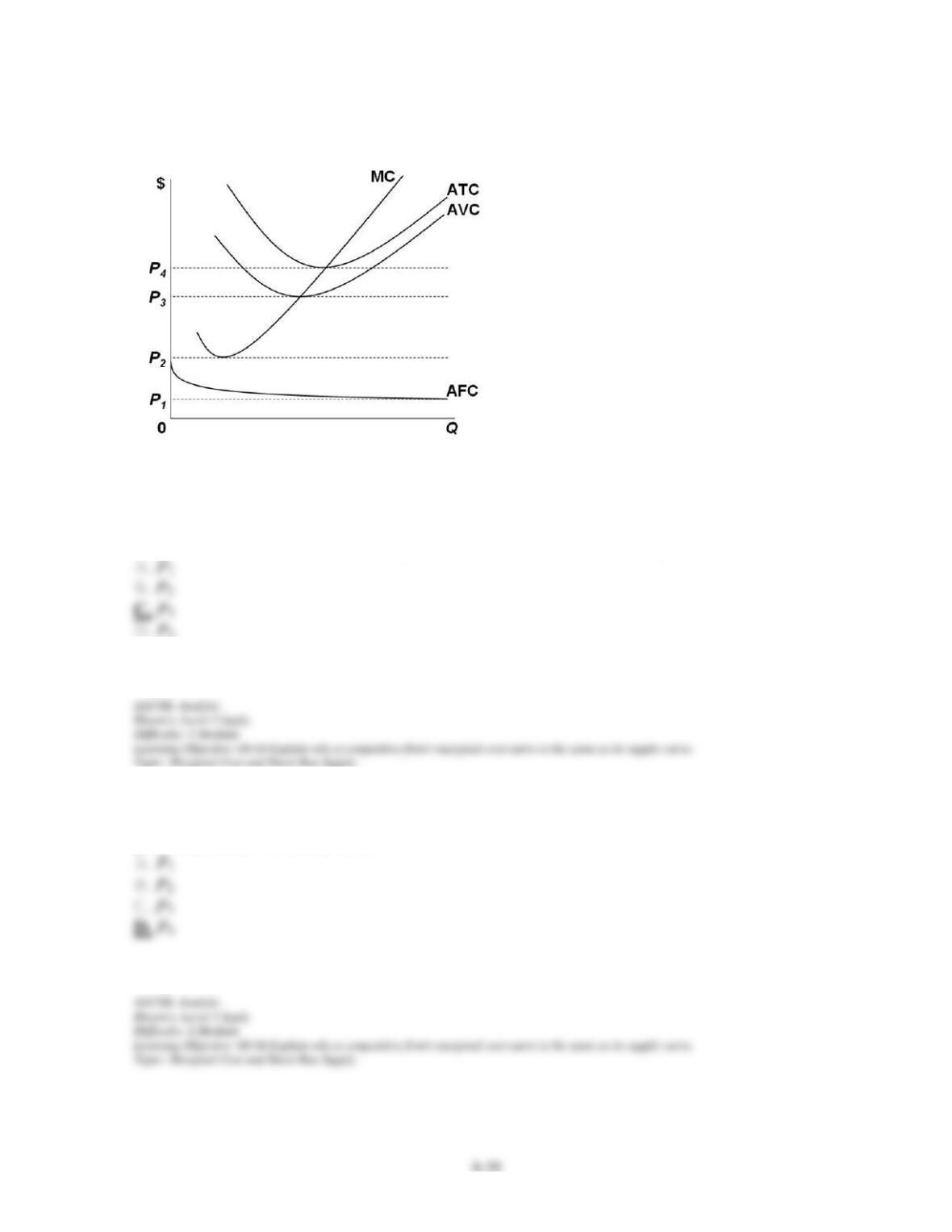
93. Refer to the above graph. It shows short-run cost curves for a competitive firm. At what
price would the firm face the same profit or loss whether it chooses to produce or not?
94. Refer to the above graph. It shows short-run cost curves for a competitive firm. At what
price would the firm break even?