Saving, Investment, and the Financial System 6479
122. For an imaginary economy, when the real interest rate is 7 percent, the quantity of loanable funds
demanded is $500 and the quantity of loanable funds supplied is $500. Currently, the nominal
interest rate is 9 percent and the inflation rate is 4 percent. Currently,
a. the market for loanable funds is in equilibrium.
b. the quantity of loanable funds supplied exceeds the quantity of loanable funds demanded, and
as a result the real interest rate will rise.
c. the quantity of loanable funds supplied exceeds the quantity of loanable funds demanded, and
as a result the real interest rate will fall.
d. the quantity of loanable funds demanded exceeds the quantity of loanable funds supplied, and
as a result the real interest rate will rise.
123. For an imaginary economy, when the real interest rate is 5 percent, the quantity of loanable
funds demanded is $1,000 and the quantity of loanable funds supplied is $1,000. Currently, the
nominal interest rate is 9 percent and the inflation rate is 2 percent. Currently,
a. the market for loanable funds is in equilibrium.
b. the quantity of loanable funds supplied exceeds the quantity of loanable funds demanded, and
as a result the real interest rate will rise.
c. the quantity of loanable funds supplied exceeds the quantity of loanable funds demanded, and
as a result the real interest rate will fall.
d. the quantity of loanable funds demanded exceeds the quantity of loanable funds supplied, and
as a result the real interest rate will rise.
6480 Saving, Investment, and the Financial System
124. For an imaginary economy, when the real interest rate is 5 percent, the quantity of loanable
funds demanded is $100,000 and the quantity of loanable funds supplied is $100,000. Currently,
the nominal interest rate is 6 percent and the inflation rate is 2 percent. Currently,
a. the market for loanable funds is in equilibrium.
b. the quantity of loanable funds supplied exceeds the quantity of loanable funds demanded, and
as a result the real interest rate will rise.
c. the quantity of loanable funds supplied exceeds the quantity of loanable funds demanded, and
as a result the real interest rate will fall.
d. the quantity of loanable funds demanded exceeds the quantity of loanable funds supplied, and
as a result the real interest rate will rise.
125. When the government goes from running a balanced budget to running a budget surplus,
a. national saving decreases, the interest rate rises, and the economy’s long–run growth rate is
likely to decrease.
b. national saving increases, the interest rate falls, and the economy’s long-run growth rate is
likely to decrease.
c. national saving decreases, the interest rate rises, and the economy’s long–run growth rate is
likely to increase.
d. national saving increases, the interest rate falls, and the economy’s long-run growth rate is
likely to increase.
Saving, Investment, and the Financial System 6481
126. Which of the following policy changes would lead to a decrease in the real interest rate and an
increase in investment and saving?
a. a larger investment tax credit
b. an expansion of eligibility for Individual Retirement Accounts
c. an increase in income-tax rates, with no change in the government budget deficit or surplus
d. an increase in government purchases, with no change in taxes
127. As real interest rates fall, firms desire to
a. buy more new equipment and buildings. This response helps explain why the supply of
loanable funds is upward sloping.
b. buy more new equipment and buildings. This response helps explain why the demand for
loanable funds is downward sloping.
c. buy less new equipment and buildings. This response helps explain why the supply of loanable
funds is upward sloping.
d. buy less new equipment and buildings. This response helps explain why the demand for
loanable funds is downward sloping.
6482 Saving, Investment, and the Financial System
128. The slope of the supply of loanable funds is based on the logic that an increase in interest rates
a. makes saving more attractive.
b. makes saving less attractive.
c. makes investment more attractive.
d. makes investment less attractive.
129. If the quantity of loanable funds demanded exceeds the quantity of loanable funds supplied,
a. there is a surplus so interest rates will rise.
b. there is a surplus so interest rates will fall.
c. there is a shortage so interest rates will rise.
d. there is a shortage so interest rates will fall.
Saving, Investment, and the Financial System 6483
130. Which of the following could explain a decrease in the interest rate and an increase in the
equilibrium quantity of investment?
a. the supply of loanable funds shifted right.
b. the supply of loanable funds shifted left.
c. the demand for loanable funds shifted right.
d. the demand for loanable funds shifted left.
131. In which case would people desire to borrow the most?
a. the nominal interest rate is 8% and the inflation rate is 7%
b. the nominal interest rate is 7% and the inflation rate is 5%
c. the nominal interest rate is 6% and the inflation rate is 3%
d. the nominal interest rate is 5% and the inflation rate is 1%
6484 Saving, Investment, and the Financial System
132. Suppose in some country that the first $5,000 of interest income is exempt from income tax. If
the government then removed this exemption
a. the interest rate and investment would rise.
b. the interest rate would rise and investment would fall.
c. the interest rate would fall and investment would rise.
d. the interest rate and investment would fall.
133. If Congress instituted an investment tax credit
a. it would make buying bonds more desirable, so the demand for loanable funds would shift.
b. it would make buying capital goods more desirable, so the demand for loanable funds would
shift.
c. it would make buying bonds more desirable, so the supply of loanable funds would shift.
d. it would make buying capital goods more desirable, so the supply of loanable funds would
shift.
Saving, Investment, and the Financial System 6485
134. Other things the same, an increase in taxes with no change in government purchases makes
national saving
a. rise. The supply of loanable funds shifts right.
b. rise. The demand for loanable funds shifts right.
c. fall. The supply of loanable funds shifts left.
d. fall. The demand for loanable funds shifts left.
135. Other things the same, an increase in the budget deficit
a. shifts the demand for loanable funds right, so the interest rate rises.
b. shifts the demand for loanable funds left, so the interest rate falls.
c. shifts the supply of loanable funds right, so the interest rate falls.
d. shifts the supply of loanable funds left, so the interest rate rises.
6486 Saving, Investment, and the Financial System
136. A government reduces its budget deficit, but at the same time people become concerned that the
outlook for future government expenditures and revenues increase the chance it will default.
Which of the following is correct?
a. The reduced budget deficit will raise interest rates in general. The increased risk of default
will raise interest rates on government bonds.
b. The reduced budget deficit will raise interest rates in general. The increased risk of default
will reduce interest rates on government bonds.
c. The reduced budget deficit will reduce interest rates in general. The increased risk of default
will raise interest rates on government bonds.
d. The reduced budget deficit will reduce interest rates in general. The increased risk of default
will reduce interest rates on government bonds.
137. The U.S. government increases its budget deficit, but at the same time Congress eliminates an
investment tax credit. Which of the following is correct?
a. The interest rate will increase; investment may increase or decrease.
b. The interest rate will decrease; investment may increase or decrease.
c. The interest rate may increase or decrease; investment will decrease.
d. The interest rate may increase or decrease; investment will increase.
Saving, Investment, and the Financial System 6487
138. We interpret the meaning of “loanable funds” as the
a. flow of resources available from private saving.
b. flow of resources available to fund private investment.
c. resources borrowed by private investors and by government.
d. resources lent by private investors and by government.
139. In 2009 and 2010, the federal government’s budget deficit was about
a. 5 percent of GDP, and this was the highest debt–GDP ratio in U.S history.
b. 10 percent of GDP, and this was the highest debt-GDP ratio in U.S history.
c. 5 percent of GDP, and this was the highest debt-GDP ratio since World War II.
d. 10 percent of GDP, and this was the highest debt-GDP ratio since World War II.
6488 Saving, Investment, and the Financial System
140. If the nominal interest rate is 2.5 percent and the inflation rate is 2 percent, what is the real
interest rate?
a. .5 percent
b. 1.25 percent
c. 4.5 percent
d. None of the above is correct.
141. Kroger’s grocery chain wants to finance the purchase of a new warehouse. It decides to sell
bonds.
a. Kroger’s plans to use equity financing and its action is part of the demand for loanable funds.
b. Kroger’s plans to use equity financing and its action is part of the supply of loanable funds.
c. Kroger’s plans to use debt financing and its action is part of the demand for loanable funds.
d. Kroger’s plans to use debt financing and its action is part of the supply of loanable funds.
Saving, Investment, and the Financial System 6489
142. If the demand for loanable funds shifts to the right, then initially there is a
a. surplus so the interest rate will fall.
b. surplus so the interest rate will rise.
c. shortage so the interest rate will fall.
d. shortage so the interest rate will rise.
143. If the supply of and demand for loanable funds both shift left, which of the following necessarily
happens?
a. the equilibrium interest rate falls
b. the equilibrium interest rate rises
c. the equilibrium quantity of loanable funds rises
d. the equilibrium quantity of loanable funds falls
6490 Saving, Investment, and the Financial System
144. If there is a shortage in the market for loanable funds, what happens to desired saving and
desired investment as the interest rate moves to its equilibrium value?
a. desired saving and desired investment both fall
b. desired saving and desired investment both rise
c. desired saving falls and desired investment rises
d. desired saving rises and desired investment falls
145. Other things the same, the effects of an increase in transfer payments on the government’s
budget deficit will lead to
a. greater investment.
b. a higher interest rate.
c. higher public saving.
d. All of the above are correct.
Saving, Investment, and the Financial System 6491
146. Other things the same, if the government decreases transfer payments, then
a. both the interest rate and the equilibrium quantity of loanable funds fall.
b. both the interest rate and the equilibrium quantity of loanable funds rise.
c. the interest rate rises and the equilibrium quantity of loanable funds falls.
d. the interest rate falls and the equilibrium quantity of loanable funds rises.
147. Suppose a country has a larger increase in debt in 2014 than it had in 2013. Then other things the
same,
a. the supply of loanable funds shifts rightward and the interest rate falls.
b. the supply of loanable funds shifts leftward and the interest rate rises.
c. the demand for loanable funds shifts leftward and the interest rate falls.
d. the demand for loanable funds shifts rightward and the interest rate rises.
6492 Saving, Investment, and the Financial System
148. Which of the following would shift the demand for loanable funds to the right?
a. income tax increases
b. government expenditures increase
c. the interest rate falls
d. Congress and the president pass an investment tax credit
149. An increase in the quantity of loanable funds traded means that
a. firms are borrowing less and investment decreases.
b. firms are borrowing less and investment increases.
c. firms are borrowing more and investment increases.
d. firms are borrowing more and investment decreases.
Saving, Investment, and the Financial System 6493
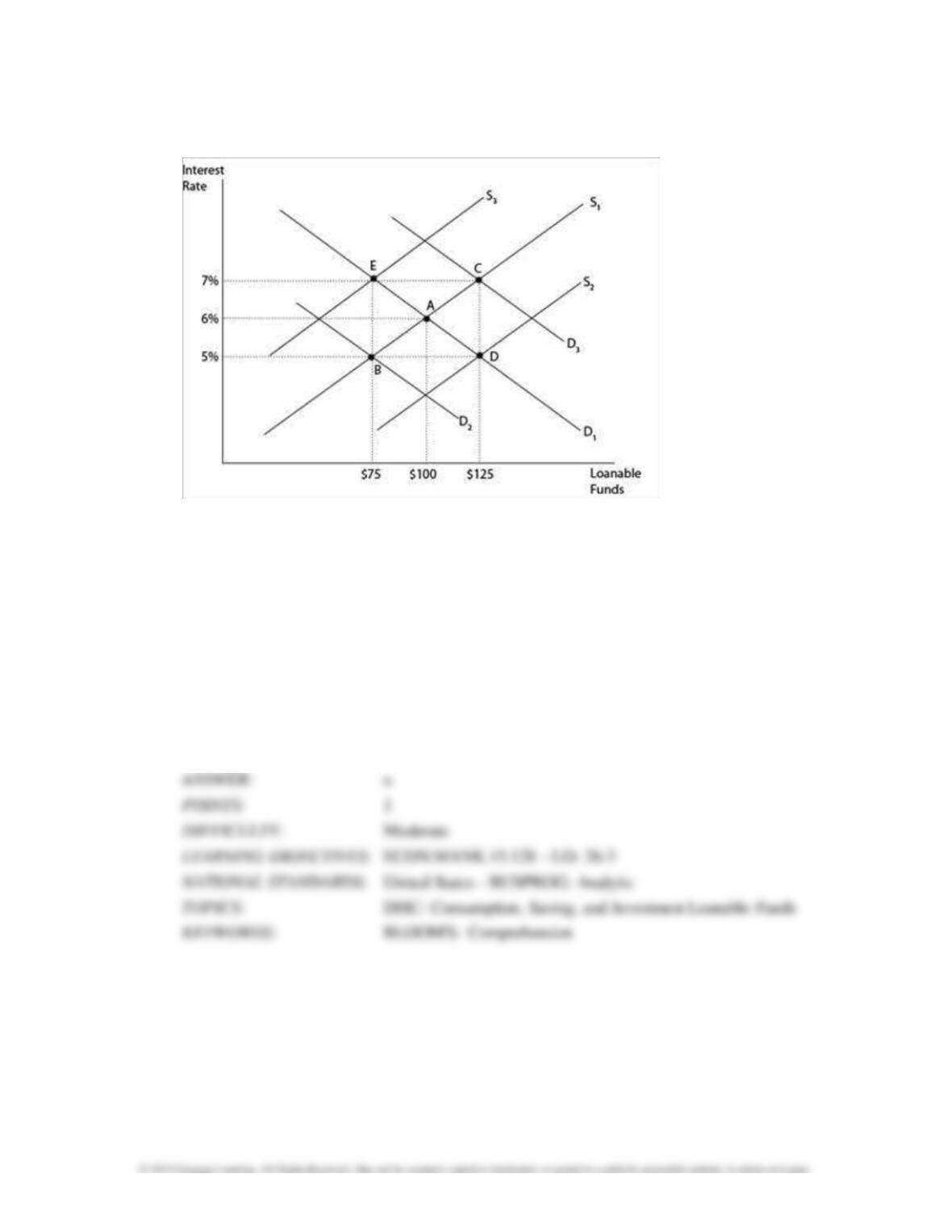
Figure 26-5. Figure 26-5 shows the loanable funds market for a closed economy.
150. Refer to Figure 26-5. Starting at point A, the enactment of an investment tax credit would
likely cause
a. the quantity of loanable funds traded to increase to $125 and the interest rate to rise to 7%
(point C).
b. the quantity of loanable funds traded to decrease to $75 and the interest rate to fall to 5%
(point B).
c. the quantity of loanable funds traded to decrease to $75 and the interest rate to rise to 7%
(point E).
d. the quantity of loanable funds traded to increase to $125 and the interest rate to fall to 5%
(point D).
6494 Saving, Investment, and the Financial System
151. Refer to Figure 26-5. Starting at point A, a change in tax laws that encouraged households to
save more would likely cause
a. the quantity of loanable funds traded to increase to $125 and the interest rate fall to 5% (point
D).
b. the quantity of loanable funds traded to increase to $125 and the interest rate to rise to 7%
(point C).
c. the quantity of loanable funds traded to decrease to $75 and the interest rate to fall to 5%
(point B).
d. the quantity of loanable funds traded to decrease to $75 and the interest rate to rise to 7%
(point E).
152. Refer to Figure 26-5. Starting at point A, a reduction in government spending would cause
a. the quantity of loanable funds traded to increase to $125 and the interest rate to rise to 7%
(point C).
b. the quantity of loanable funds traded to decrease to $75 and the interest rate to fall to 5%
(point B).
c. the quantity of loanable funds traded to increase to $125 and the interest rate to fall to 5%
(point D).
d. the quantity of loanable funds traded to decrease to $75 and the interest rate to rise to 7%
(point E).
Saving, Investment, and the Financial System 6495
153. A decrease in government spending and the enactment of an investment tax credit would
definitely cause
a. the quantity of loanable funds traded to increase.
b. the interest rate to increase.
c. the quantity of loanable funds traded to decrease.
d. the interest rate to decrease.
154. Late in the 2000–2009 decade, real estate prices in the U.S. fell by a greater percentage than
they had fallen since the
a. 1890s.
b. 1930s.
c. 1950s.
d. 1970s.
6496 Saving, Investment, and the Financial System
155. The first element of a financial crisis is
a. inflation.
b. a decline in confidence in financial institutions.
c. a relaxation of rules and regulations that pertain to the financial system.
d. a large decline in some asset prices.
156. The final element of a financial crisis is
a. an economic downturn.
b. a decline in confidence in financial institutions.
c. declining prices of real estate or other assets.
d. a vicious circle.
Saving, Investment, and the Financial System 6497
157. The first three elements of a financial crisis are correctly represented as taking place in the
following order:
a. large decline in some asset prices → insolvencies at financial institutions → decline in
confidence in financial institutions
b. insolvencies at financial institutions → decline in confidence in financial institutions → large
decline in some asset prices
c. insolvencies at financial institutions → economic downturn → credit crunch
d. insolvencies at financial institutions → credit crunch → economic downturn
158. At some point during the financial crisis of 2008–2009, people with uninsured deposits at financial
institutions withdrew money from their accounts at those institutions. This phenomenon
characterized which element of the financial crisis?
a. the decline in confidence in financial institutions
b. the credit crunch
c. the economic downturn
d. the decline in asset prices
6498 Saving, Investment, and the Financial System
True/False and Short Answer
1. The financial system coordinates investment and saving, which are important determinants of long-
run real GDP.
a. True
b. False
2. When economists refer to investment, they mean the purchasing of stocks and bonds and other
types of saving.
a. True
b. False
3. Banks and mutual funds are examples of financial markets.
a. True
b. False