B) Box 2
C) Box 3
D) Box 4
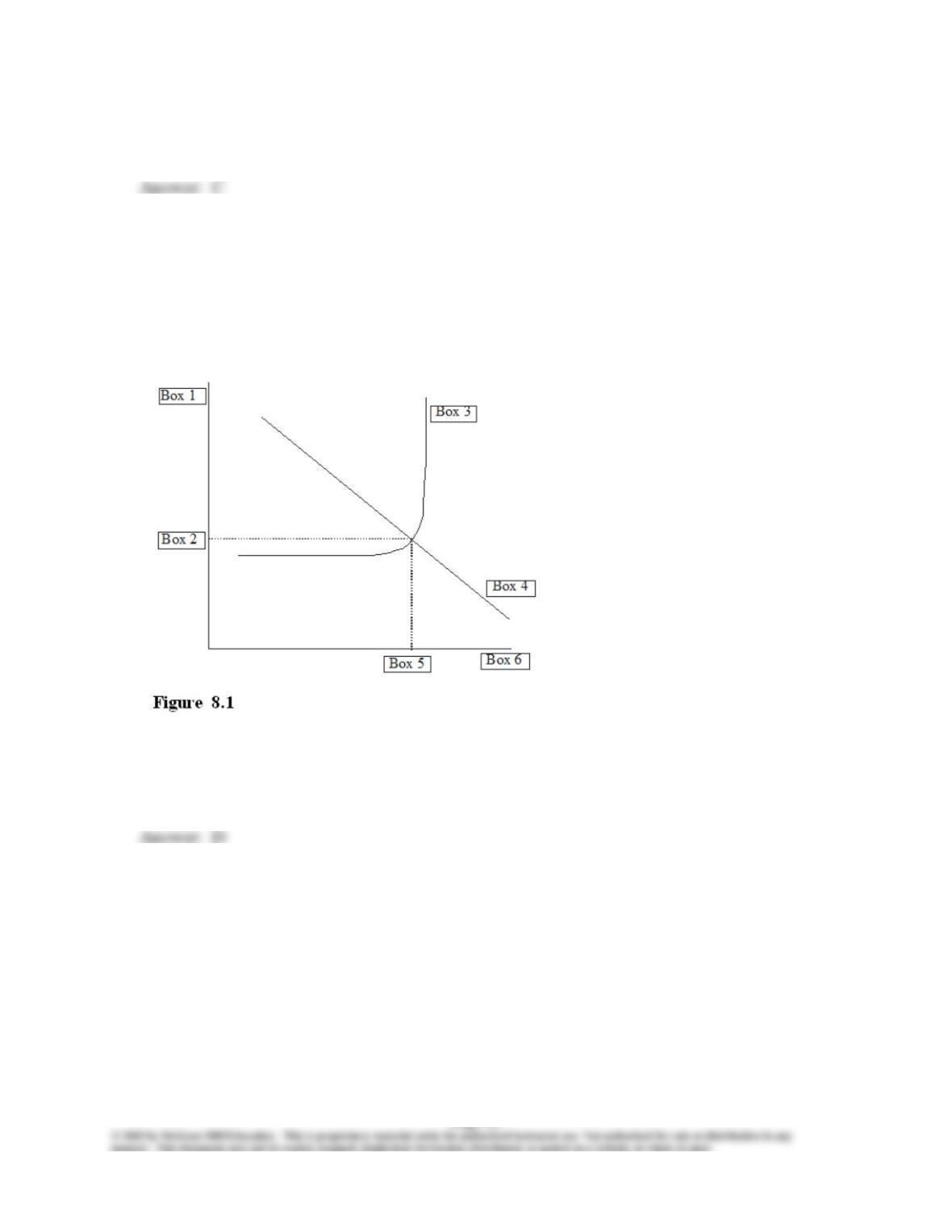
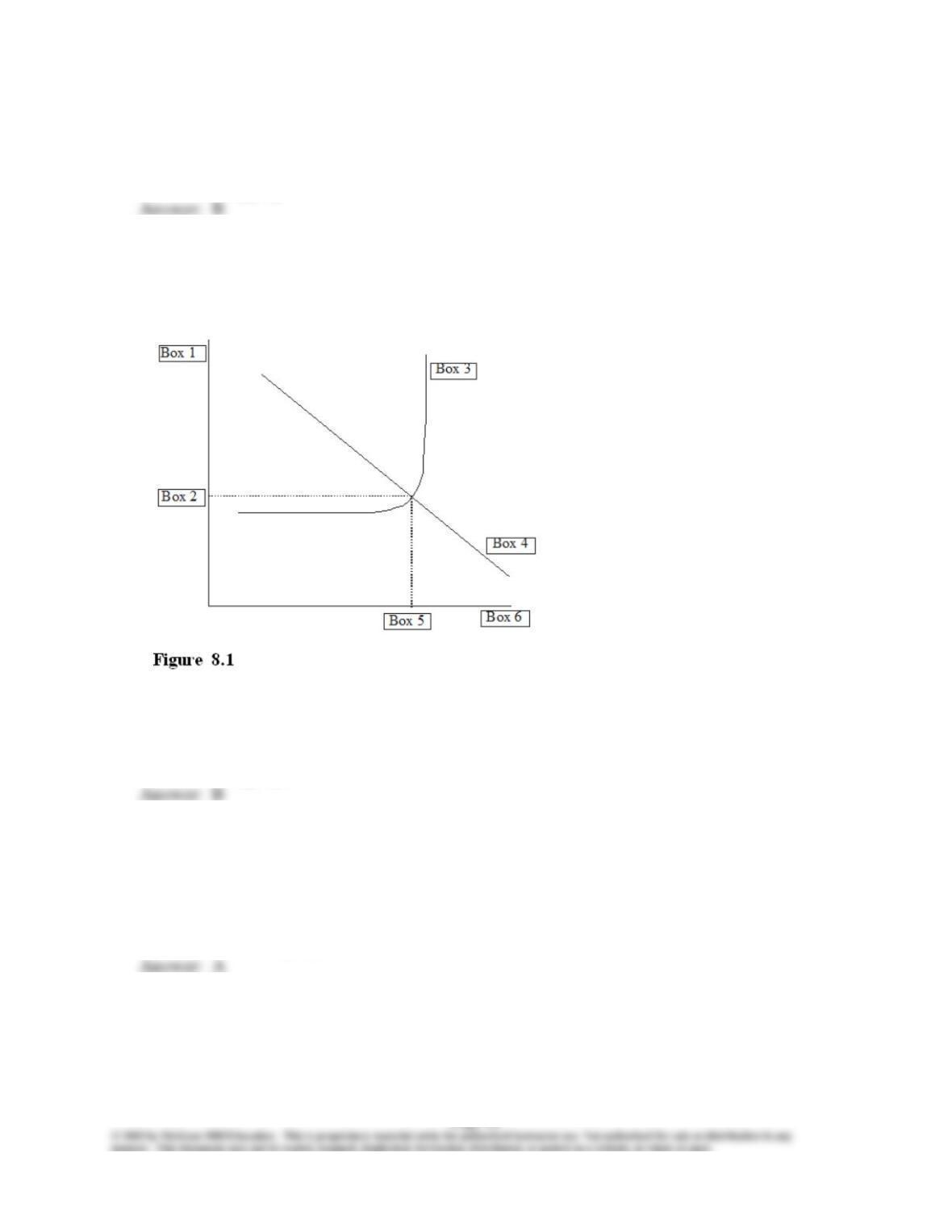
58. Referring to the Aggregate Demand – Aggregate Supply diagram in Figure 8.1, which box
should be filled with the label AD for the aggregate demand curve?
A) Box 1
B) Box 2
C) Box 3
D) Box 4
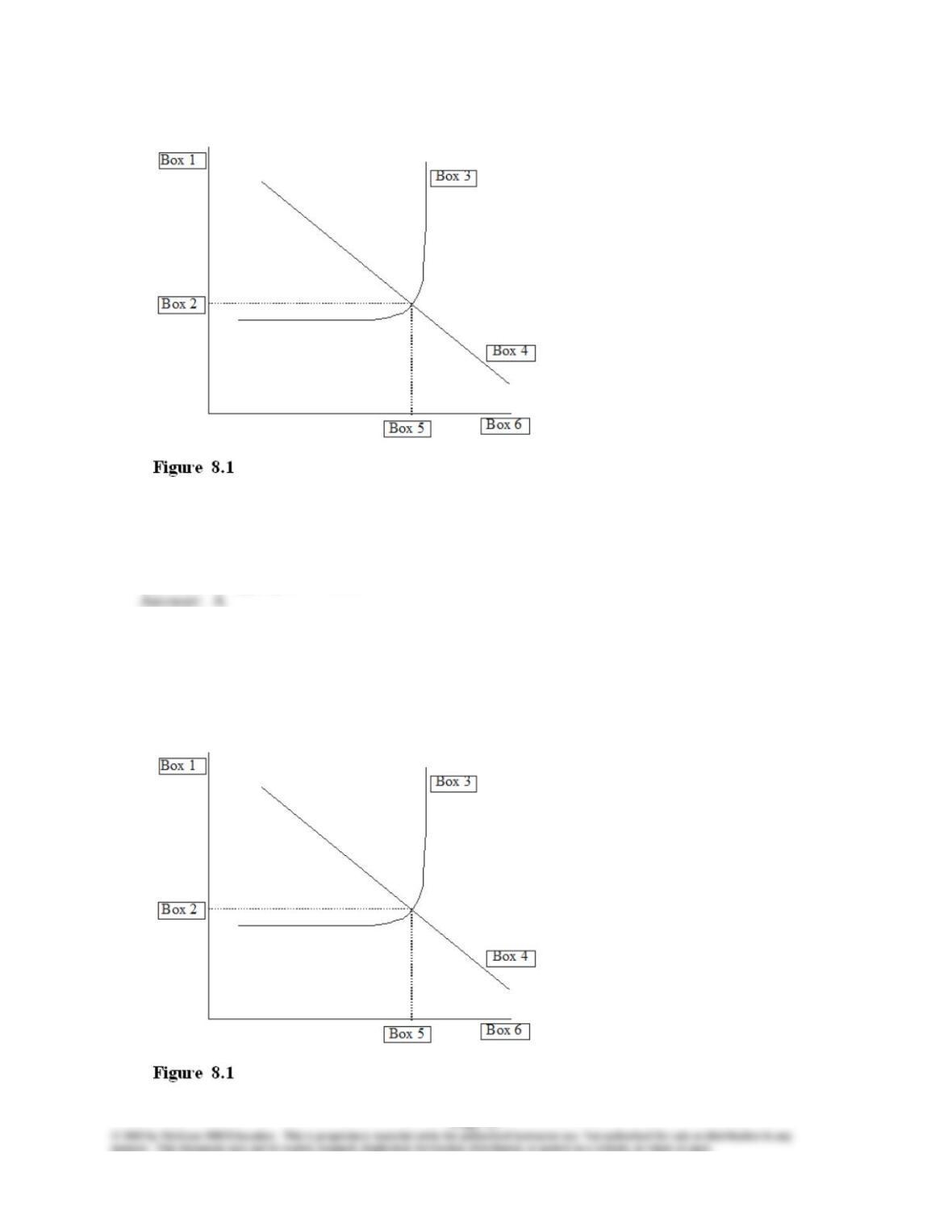
59. In the Aggregate Demand – Aggregate Supply diagram in Figure 8.1, Box 1 should be filled
with
A) PI for Price Index.
B) RGDP for Real Gross Domestic Product.
C) AS for Aggregate Supply.
D) AD for Aggregate Demand.
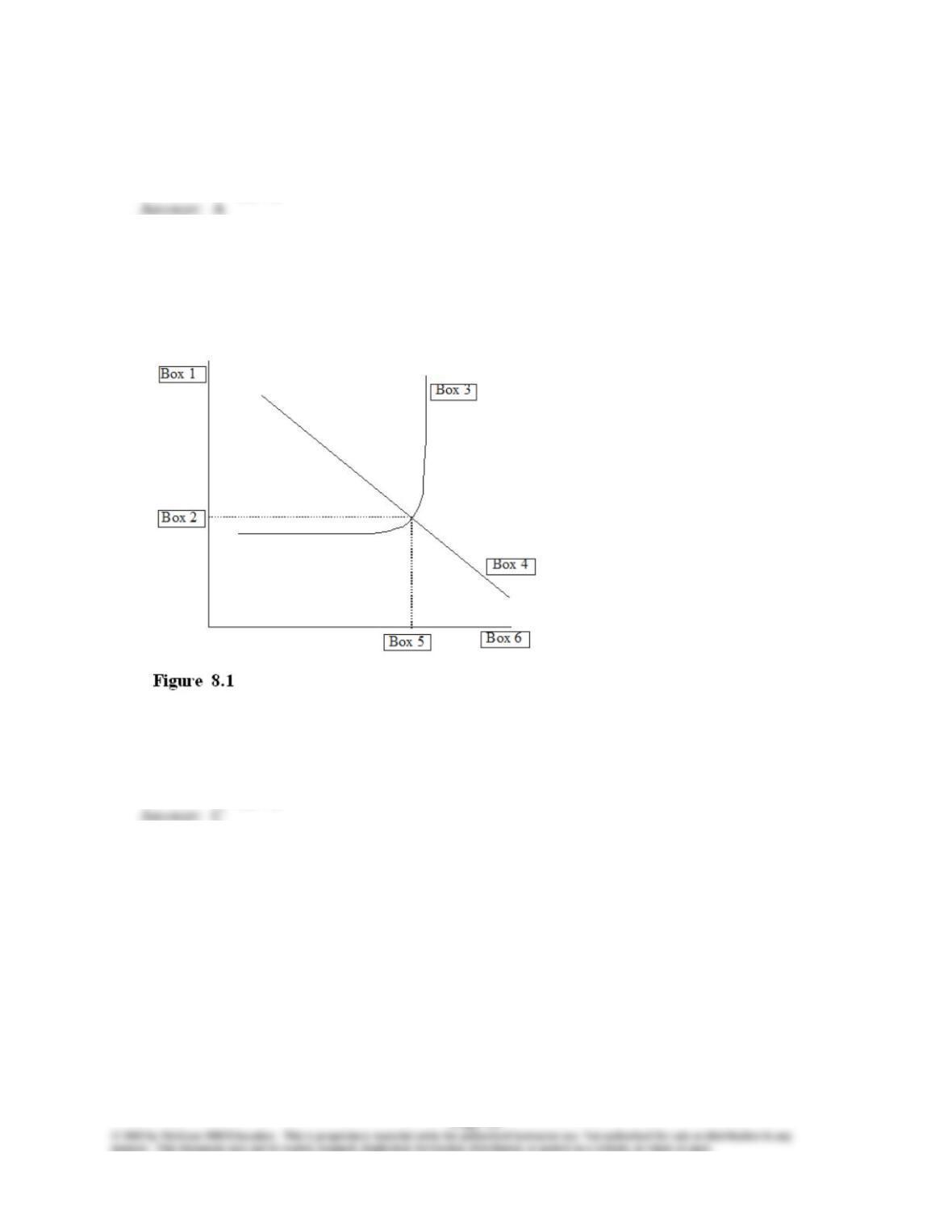
60. In the Aggregate Demand – Aggregate Supply diagram in Figure 8.1, Box 2 should be filled
with
A) PI* for macroeconomic equilibrium Price Index.
B) RGDP* for macroeconomic equilibrium Real Gross Domestic Product.
C) AS for Aggregate Supply.
D) AD for Aggregate Demand.
61. In the Aggregate Demand – Aggregate Supply diagram in Figure 8.1, Box 3 should be filled
with
A) PI for Price Index.
B) RGDP for Real Gross Domestic Product.
C) AS for Aggregate Supply.
D) AD for Aggregate Demand.
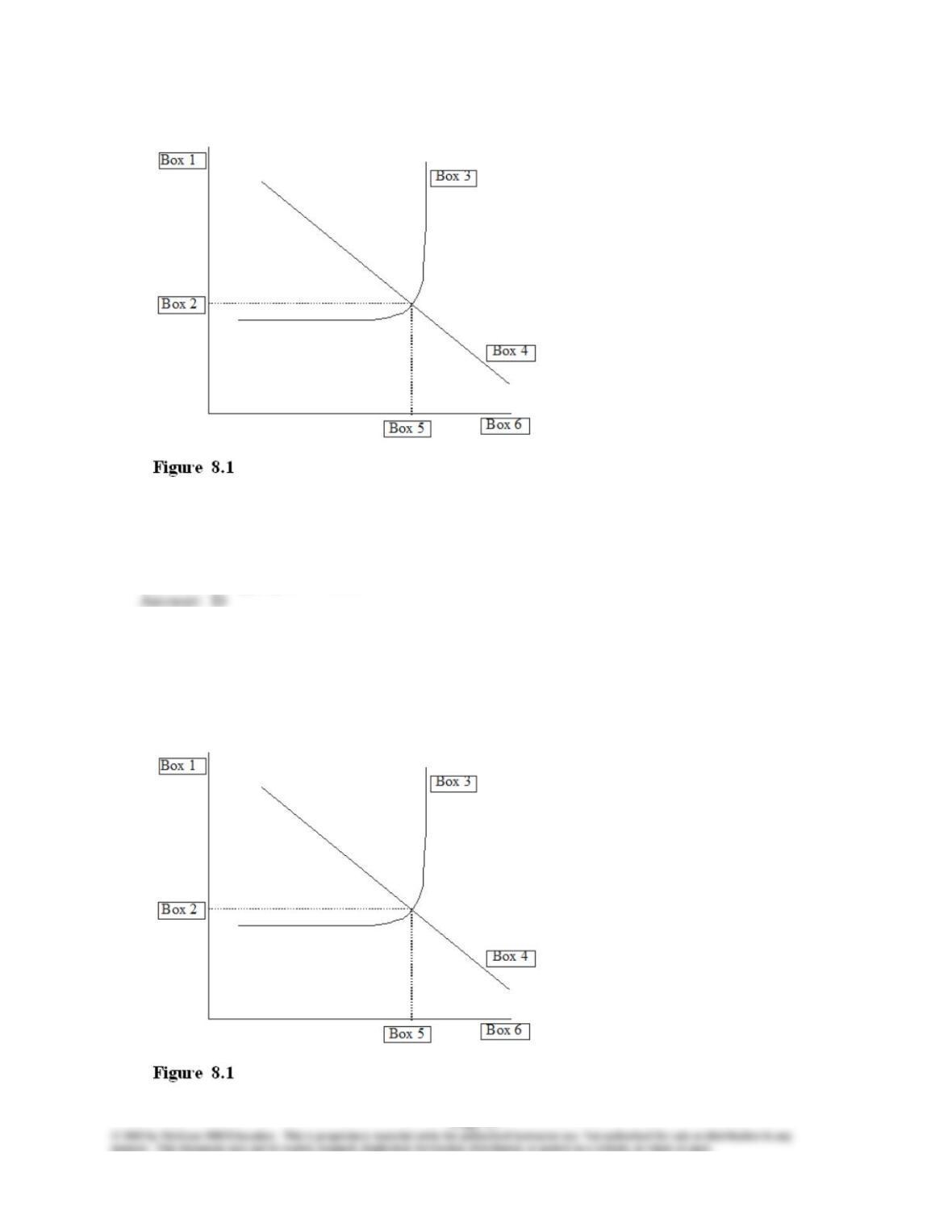
62. In the Aggregate Demand – Aggregate Supply diagram in Figure 8.1, Box 4 should be filled
with
A) PI for Price Index.
B) RGDP for Real Gross Domestic Product.
C) AS for Aggregate Supply.
D) AD for Aggregate Demand.
63. In the Aggregate Demand – Aggregate Supply diagram in Figure 8.1, Box 5 should be filled
with
A) PI* for macroeconomic equilibrium Price Index.
B) RGDP* for macroeconomic equilibrium Real Gross Domestic Product.
C) AS for Aggregate Supply.
D) AD for Aggregate Demand.
64. In the Aggregate Demand – Aggregate Supply diagram in Figure 8.1, Box 6 should be filled
with
A) PI for Price Index.
B) RGDP for Real Gross Domestic Product.
C) AS for Aggregate Supply.
D) AD for Aggregate Demand.
65. Which of the following will increase macroeconomic equilibrium prices
A) an increase in government spending.
B) an increase in productivity.
C) an increase in taxes.
D) a decrease in input prices.
66. Which of the following will increase macroeconomic equilibrium prices
A) a decrease in government spending.
B) an increase in productivity.
C) a decrease in taxes.
D) a decrease in input prices.
67. Which of the following will increase macroeconomic equilibrium prices
A) a decrease in government spending.
B) a decrease in productivity.
C) an increase in taxes.
D) a decrease in input prices.
68. Which of the following will increase macroeconomic equilibrium prices
A) a decrease in government spending.
B) an increase in productivity.
C) an increase in taxes.
D) an increase in input prices.
69. Which of the following will increase macroeconomic equilibrium real gross domestic
product?
A) an increase in government spending.
B) a decrease in productivity.
C) an increase in taxes.
D) an increase in input prices.
70. Which of the following will increase macroeconomic equilibrium real gross domestic
product?
A) a decrease in government spending.
B) a decrease in productivity.
C) a decrease in taxes.
D) an increase in input prices.
71. Which of the following will increase macroeconomic equilibrium real gross domestic
product?
A) a decrease in government spending.
B) an increase in productivity.
C) an increase in taxes.
D) an increase in input prices.
72. Which of the following will increase macroeconomic equilibrium real gross domestic
product?
A) a decrease in government spending.
B) a decrease in productivity.
C) an increase in taxes.
D) a decrease in input prices.
73. Under the George W. Bush Administration, federal income taxes were cut twice and boosted
defense spending substantially. Taken together these actions are likely to have
A) increased aggregate demand.
B) increased aggregate supply.
C) decreased aggregate demand.
D) decreased aggregate supply.
74. If, in response to a weak employment picture, a law was passed to increase the number of
lanes on all interstate highways by at least one lane this would likely
A) increase aggregate demand.
B) increase aggregate supply.
C) decrease aggregate demand.
D) decrease aggregate supply.
75. If Iraq were to become a stable oil producing friend of the U.S., this would likely
A) increase aggregate demand.
B) increase aggregate supply.
C) decrease aggregate demand.
D) decrease aggregate supply.
76. If there was a significant find of natural gas in a readily accessible location in the U.S. this
would likely
A) increase aggregate demand.
B) increase aggregate supply.
C) decrease aggregate demand.
D) decrease aggregate supply.
77. Suppose the U.S. was to experience a series of terrorists attacks aimed at keeping consumers
away from large shopping areas. Suppose further that the primary effect is for consumer
confidence to decrease, this would likely
A) increase aggregate demand.
B) increase aggregate supply.
C) decrease aggregate demand.
D) decrease aggregate supply.
78. Suppose the U.S. was to experience a series of terrorists’ attacks aimed at the electricity grid.
This would likely
A) increase aggregate demand.
B) increase aggregate supply.
C) decrease aggregate demand.
D) decrease aggregate supply.
79. Suppose as a reaction to terrorist attacks the U.S. government were to create a new branch of
the military employing 1,000,000 new service men and women to monitor malls, large
sporting events, and infrastructure (bridges, dams, refineries, etc.) Hiring and paying these
people would likely
A) increase aggregate demand.
B) increase aggregate supply.
C) decrease aggregate demand.
D) decrease aggregate supply.
80. In reaction to the terrorist attacks of September 11, 2001 the Federal Reserve moved to lower
interest rates. This was intended to
A) increase aggregate demand.
B) increase aggregate supply.
C) decrease aggregate demand.
D) decrease aggregate supply.
81. In reaction to the recession of 2001, a tax cut was passed in which tax rebate checks were
sent to millions of American families. This was intended to
A) increase aggregate demand.
B) increase aggregate supply.
C) decrease aggregate demand.
D) decrease aggregate supply.
82. Suppose the Federal Reserve wanted to fight inflation by increasing interest rates. Doing so
would
A) increase aggregate demand.
B) increase aggregate supply.
C) decrease aggregate demand.
D) decrease aggregate supply.
83. Congress and the President have control of the tax system and government spending. As a
result their policies will directly impact
A) aggregate supply.
B) residual demand.
C) aggregate demand.
D) the demand for loanable dollars.
84. The Federal Reserve has indirect control over short term interest rates and as a result their
ability to control economic activity is through
A) aggregate supply.
B) residual demand.
C) aggregate demand.
D) the exchange rate.
85. An economist worrying about the economic impact of environmental regulations would
model that impact with
A) a decrease in aggregate supply.
B) a decrease in aggregate demand.
C) an increase in aggregate supply.
D) an increase in aggregate demand.
86. Elimination of government regulations undertaken explicitly to influence the aggregate
supply curve would be an example of
A) Keynesian economics.
B) classical economics.
C) demand-side economics.
D) supply-side economics.
87. Reduction of marginal tax rates undertaken explicitly to increase incentives of innovate, take
risks, and work hard would be an example of
A) supply-side economics.
B) incentives-based deprecation.
C) Keynesian economics.
D) Progressivism.
88. Policy initiatives typically associated with “supply–side economics” would include
A) increased spending for national defense.
B) increases in the minimum wage.
C) investment tax credits.
D) reduced minimum reserve requirements.
89. Early in 2008, as the worldwide recession intensified in Europe, it seemed possible that the
U.S. might be able to avoid the recession because
A) U.S. interest rates remained the highest in the world.
B) the U.S. dollar was very weak relative to the euro.
C) U.S. exports were falling at a rapid pace.
D) the U.S. federal government balanced its budget.
90. After the financial crisis of fall 2008, the perceived safety of investments held in the U.S.
caused
A) U.S. interest rates to remain the highest in the world.
B) U.S. exports to equal U.S. imports.
C) the U.S. dollar to weaken relative to the euro.
D) the U.S. dollar to strengthen relative to the euro.
91. A strengthening of the U.S. dollar relative to the euro can cause problems for
A) American exporters.
B) American importers.
C) European manufacturers.
D) American banks.
92. Attempts in 2008 to jump-start the economy on the demand side included a large
A) increase in short-term interest rates.
B) increase in income tax rates.
C) cut in the size of tax rebate checks.
D) cut in short-term interest rates.
93. A major point of difference between President Obama and Senator McCain in the 2008
campaign was
A) the wisdom of stabilizing the U.S. banking system.
B) the desirability of increasing the federal minimum wage.
C) the temporary Bush tax cuts of 2003.
D) all of the options are correct.
94. Policies focused on putting people to work by having them construct parks would be
considered
A) demand side policies.
B) supply side policies.
C) monetary policies.
D) demand side and supply side policies.
95. Policies focused on lowering interest rates to allow people to buy homes would be considered
A) demand side policies.
B) supply side policies.
C) fiscal policies.
D) demand side and supply side policies.
96. Policies focused on giving people more money in their unemployment checks would be
considered
A) demand side policies.
B) supply side policies.
C) monetary policies.
D) demand side and supply side policies.
97. Policies focused on putting people to work by reducing the costs to their employers would be
considered
A) demand side policies.
B) supply side policies.
C) monetary policies.
D) demand side and supply side policies.
98. Policies focused on putting people to work by reducing the regulatory requirements
associated with hiring them would be considered
A) demand side policies.
B) supply side policies.
C) monetary policies.
D) demand side and supply side policies.
99. When trying to move the economy out of recession, the Democratic Party is more likely than
the Republican Party to focus on
A) demand side policies.
B) supply side policies.
C) regulatory policies.
D) demand side and supply side policies.
100. When trying to move the economy out of recession, the Republican Party is more likely than
the Democratic Party to focus on
A) demand side policies.
B) supply side policies.
C) monetary policies.
D) demand side and supply side policies.