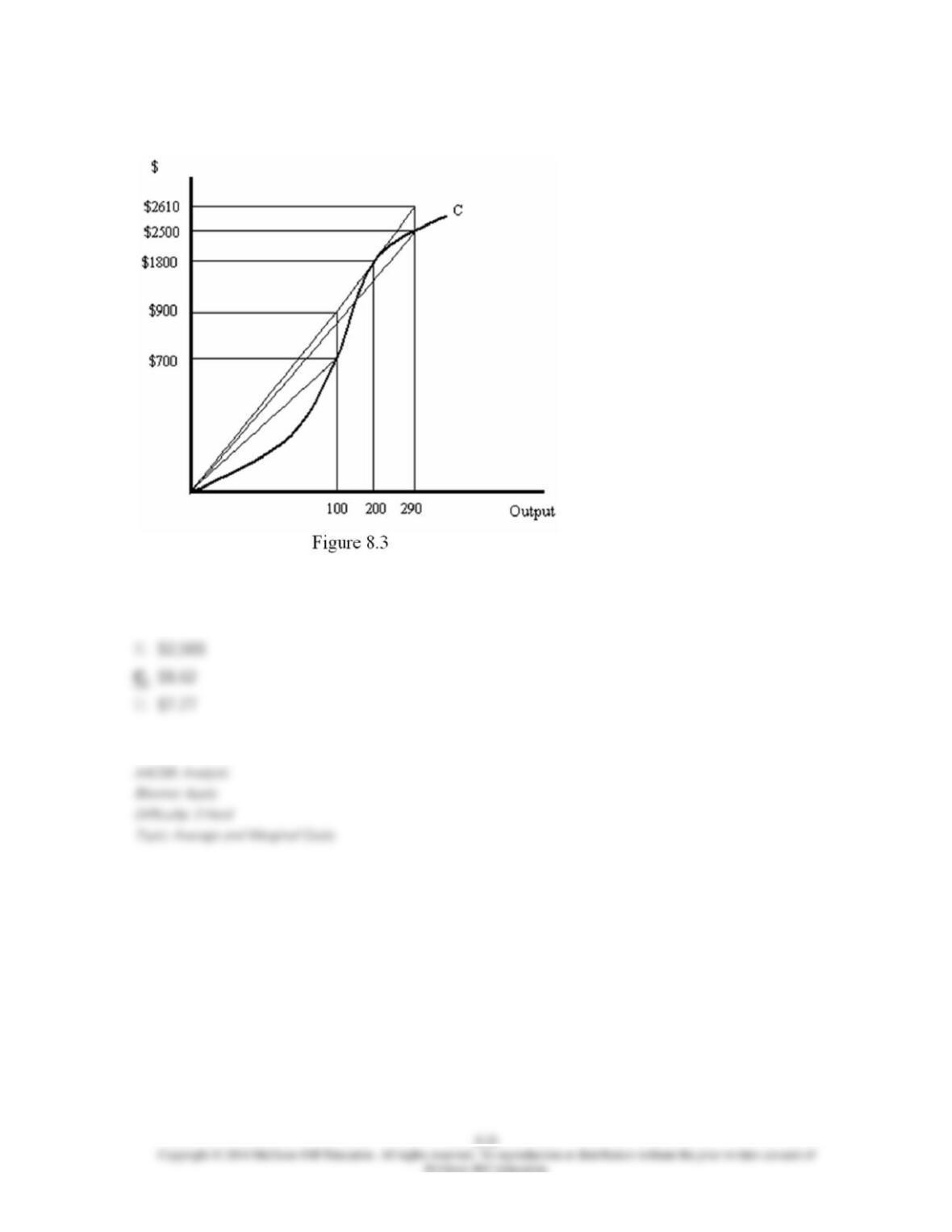
38. Refer to Figure 8.3. What is the average cost of producing 290 units of output?
A. $9
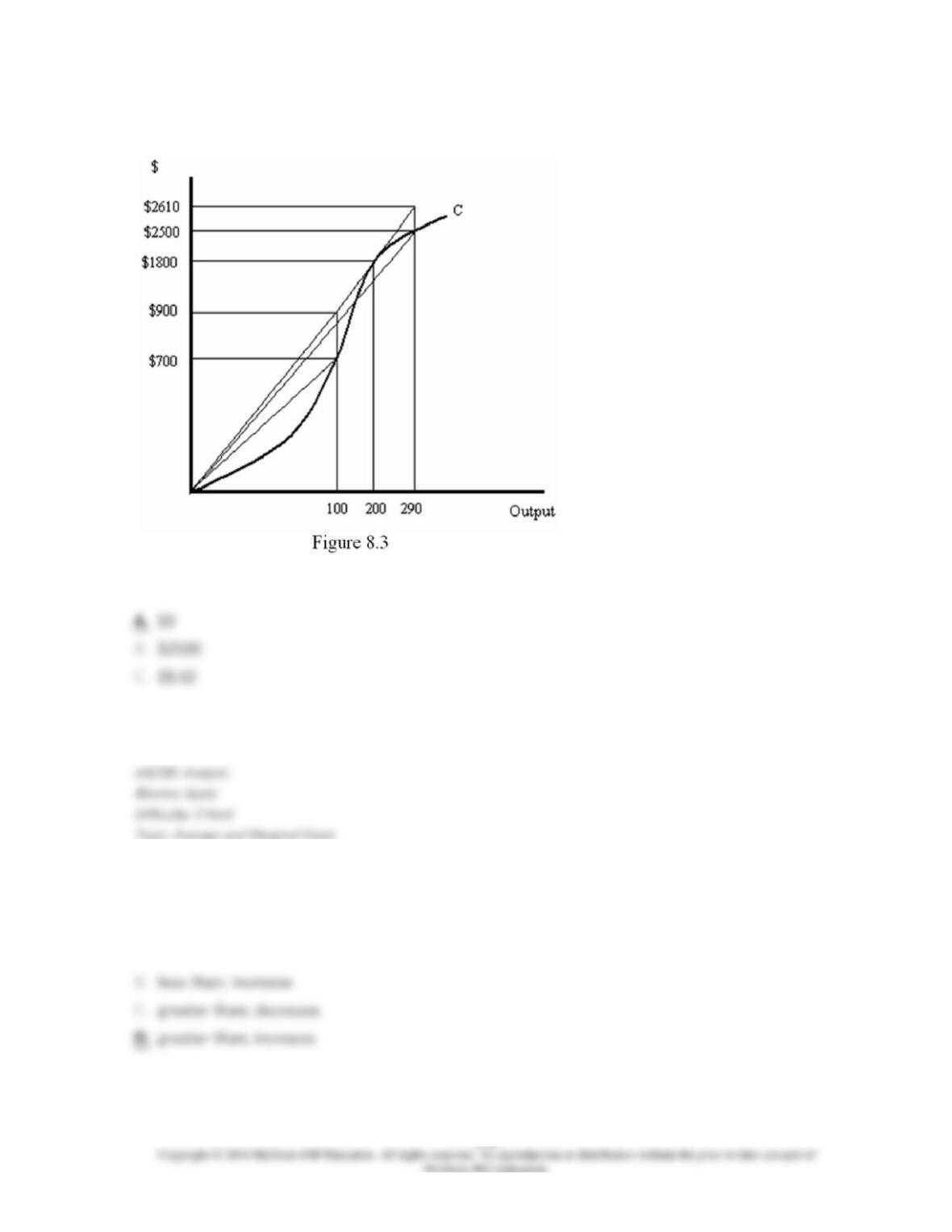
39. Refer to Figure 8.3. What is marginal cost when output is 200 units?
D. $7.77
40. If marginal cost is ______ average cost, then average cost will _____.
A. equal to; decrease
41. The marginal cost curve:
A. intersects the average cost curve from above at the efficient scale of production.
42. A firm’s ______ cost is equal to the sum of the ______ costs of the individual units it
produces.
A. total; average
43. Suppose a firm has a weekly cost function of
C
(
Q
) = 8
Q
+ (
Q
2/100) and a marginal cost
function of
MC
= 8 + (
Q
/50). What is the efficient scale of production, and what is the minimum
average cost?
D.
Q
e
= 8; AC = $64.64
44. Suppose a firm has a weekly cost function of
C
(
Q
) = 8
Q
+ (
Q
2/100) and a marginal cost
function of
MC
= 8 + (
Q
/50). Suppose the firm also has an avoidable fixed cost of $225. What is
the efficient scale of production, and what is the minimum average cost?
D.
Q
e
= 22,500; AC = $9.25
45. If labor is measured along the horizontal axis and capital is measured along the vertical
axis, an increase in the wage rate will cause the isocost line to:
D. rotate counterclockwise, causing the firm to use less capital and more labor.
46. When the price of an input _____, a firm’s least-cost production method never uses ______
of that input and usually employs _____.
A. increases; less; the same amount
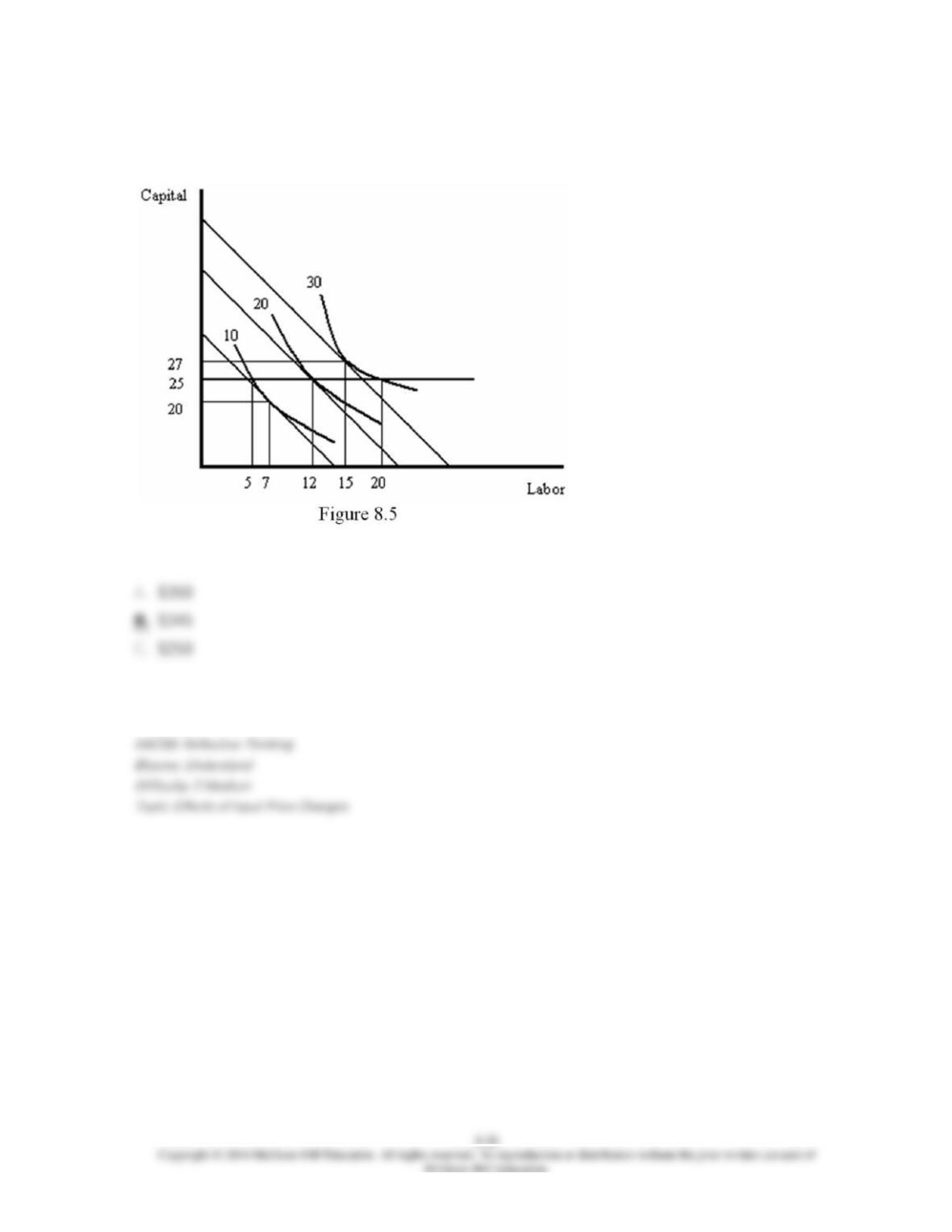
47. Refer to Figure 8.5. If the wage rate is $5 and the rental rate of capital is $10, what is the
lowest cost of producing 30 units of output?
D. $300
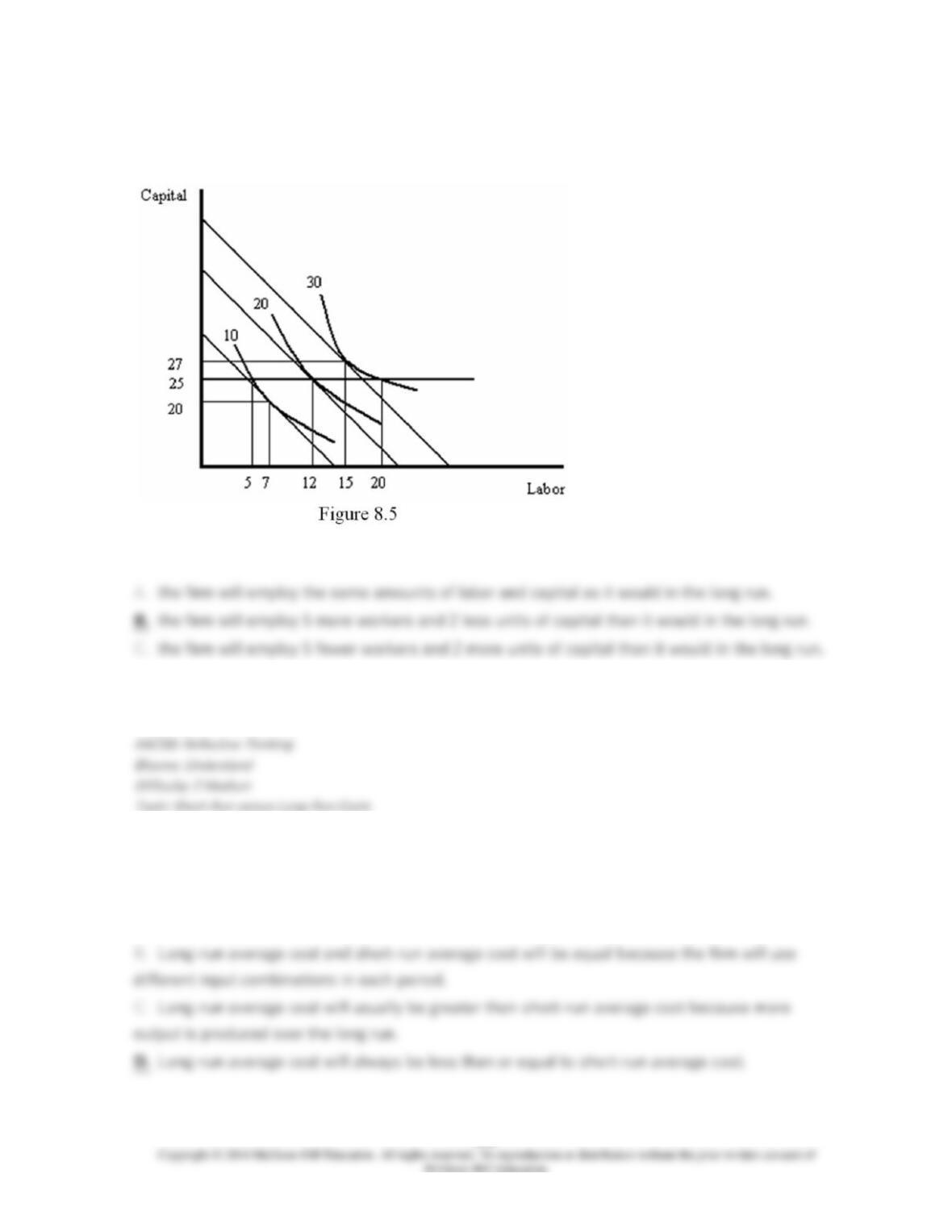
48. Refer to Figure 8.5. Suppose the firm increases output from 20 to 30 units. In the short
run:
D. the firm will produce the output at a lower cost than it can in the long run.
49. Which of the following statements is true for a given level of output?
A. Long-run average cost will always be greater than or equal to short-run average cost.
50. The long-run average cost curve is the ______ of all of the firm’s _____.
A. lower envelope; isocost lines
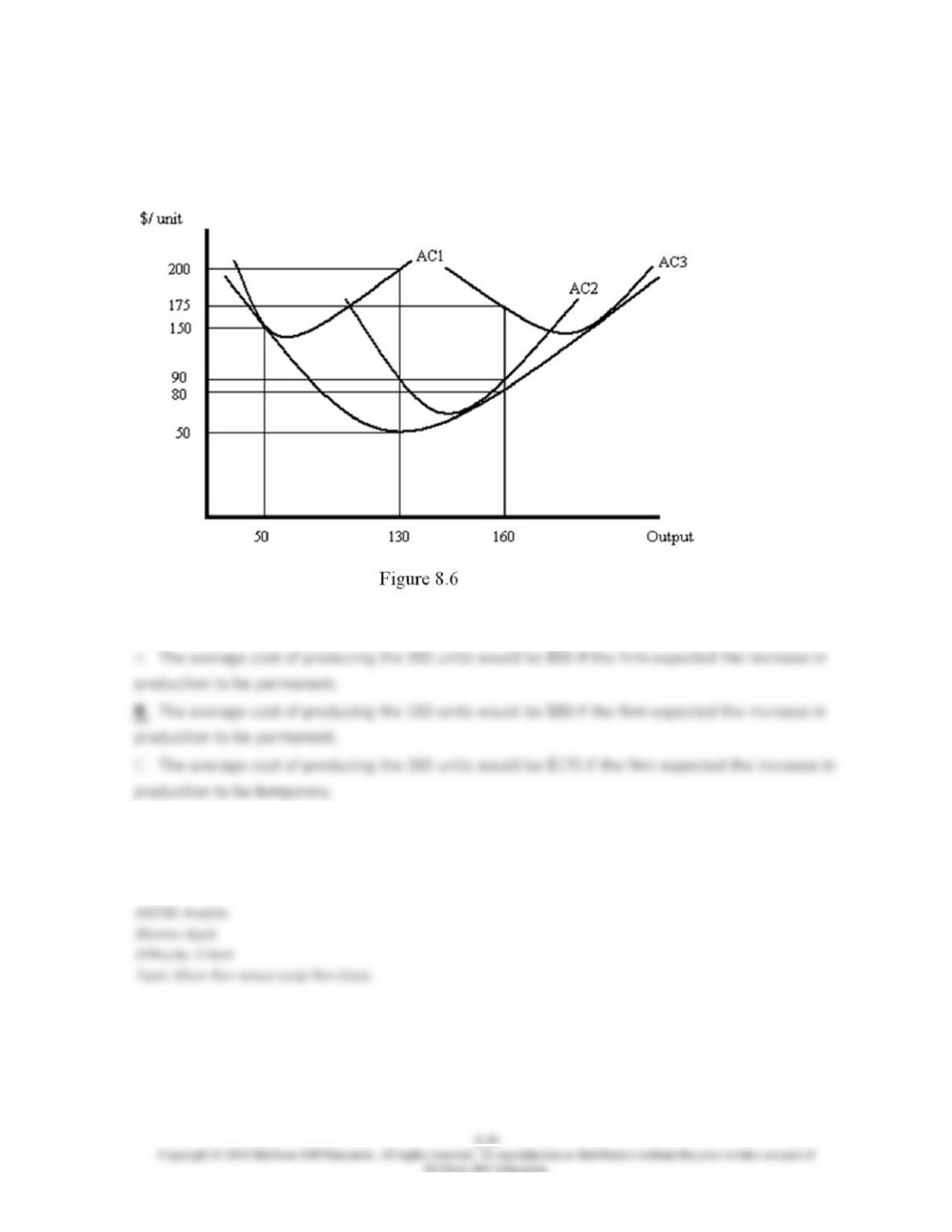
51. Refer to Figure 8.6, which shows just three of a firm’s various possible short-run average
cost curves. Suppose the firm increases its output from 130 units to 160 units. Which of the
following statements is true?
D. The average cost of producing the 160 units would be $80 if the firm expected the increase in
production to be temporary.
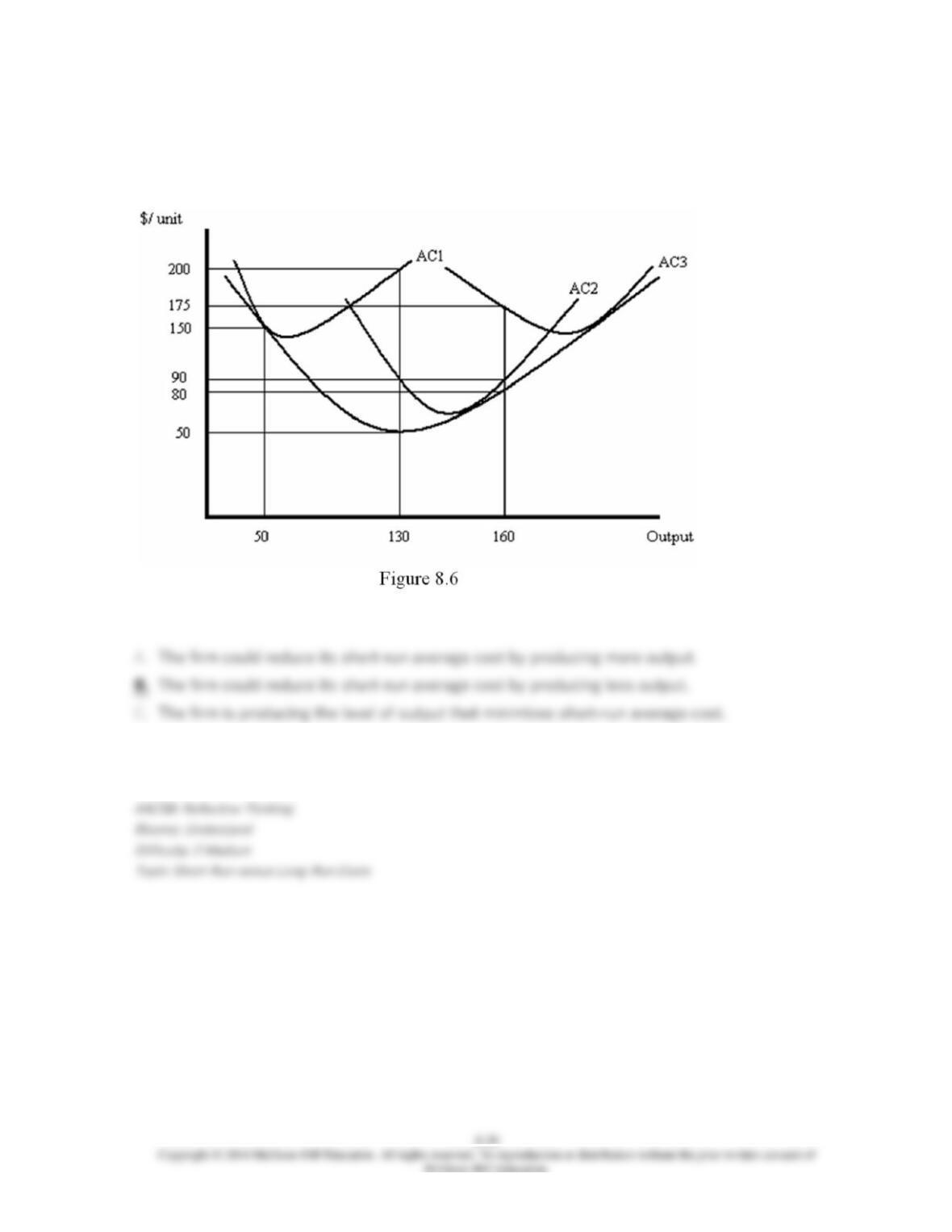
52. Refer to Figure 8.6, which shows just three of a firm’s various possible short-run average
cost curves. Suppose the firm is currently producing 160 units at an average cost of $90 per unit.
Which of the following statements is true?
D. The firm is producing its output at the lowest possible long-run average cost.
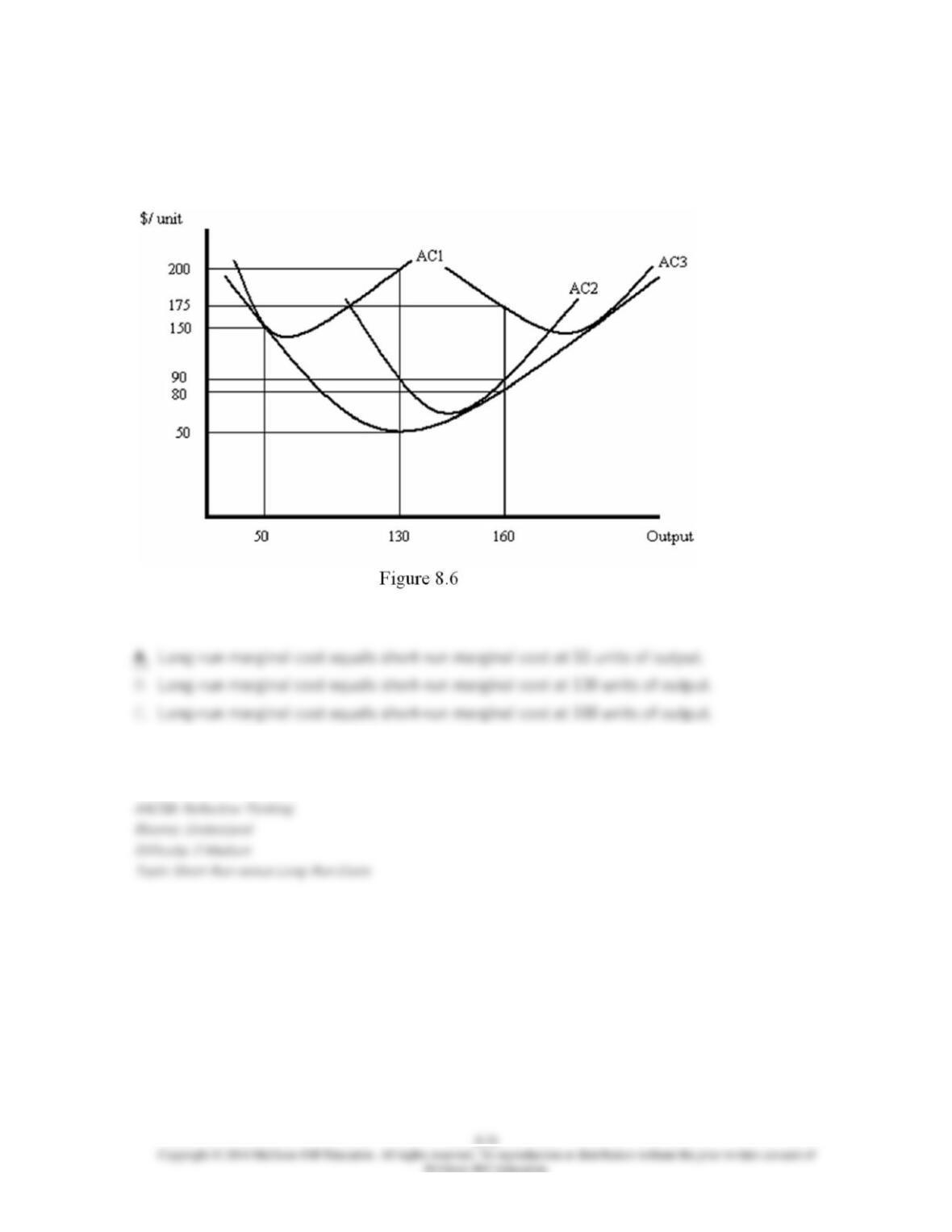
53. Refer to Figure 8.6, which shows a firm’s short-run average cost curves for three different
levels of capital. Which of the following statements about short-run and long-run marginal cost is
true?
D. Long-run marginal cost and short-run marginal cost are never equal.
54. Which of the following statements is true?
A. Competitive firms will respond less to changes in output prices over the long run than they will
over the short run because short-run marginal cost is lower than long-run marginal cost.
55. Suppose a firm has a production function given by
Q
= 2(2
L
)0.5
K
0.5. If the rental rate of
capital is $100 per unit, the wage rate is $1,400 per week and the firm initially has 25 units of
capital, what is the firm’s short-run cost function?
D.
C
(
L
) = 0.25 + 1,400
L