
Chapter 8
Aggregate Demand and Aggregate Supply
Multiple Choice
1. The interest rate effect, the real balance effect and the foreign purchases effect suggests that
the aggregate demand curve is
A) downward sloping.
B) horizontal.
C) vertical.
D) shaped as a backward L.
2. The Keynesian, Classical and Intermediate ranges apply to the
A) shape of the individual market supply curve.
B) the slope of the individual market demand curve.
C) the shape of the aggregate supply curve.
D) the slope of the aggregate demand curve.
3. The aggregate supply-aggregate demand diagram models
A) the behavior of individual consumers.
B) the behavior of individual firms.
C) the economy as a whole.
D) the interaction of producers and consumers for a particular good or service.
4. The aggregate supply-aggregate demand diagram relates various levels of
A) production of two different goods.
B) all prices as measured by the CPI and production as measured by real GDP.
C) imports and exports of goods against exchange rates.
D) the price and quantity of a particular good.
5. The rationale for interest rates determining AD is with lower interest rates
A) firms will borrow more to invest.
B) consumers will borrow less to buy durables.
C) consumers will borrow more to buy durables.
D) firms will borrow more to invest and consumers will borrow more to buy durables.

6. The rationale for exchange rates determining AD is with
A) stronger dollar exports will fall AD will rise
B) stronger dollar imports will fall AD will rise.
C) weaker dollar exports will fall AD will rise.
D) weaker dollar imports will fall AD will rise.
7. The aggregate demand curve is downward sloping because of the
A) foreign purchases effect.
B) interest rate effect.
C) real balance effect.
D) all of the options are correct.
8. Which of the following is not a reason for the aggregate demand curve to be downward
sloping?
A) Foreign purchases effect
B) Interest rate effect
C) Real balance effect
D) Diminishing marginal utility
9. When domestic prices rise
A) people buy fewer imported goods.
B) people buy more imported goods.
C) exports rise.
D) interest sensitive consumption rises.
10. When domestic prices rise
A) people buy fewer imported goods.
B) exports fall.
C) exports rise.
D) interest sensitive consumption rises.

11. When domestic prices rise
A) people buy fewer imported goods.
B) exports fall.
C) exports rise.
D) business investment rises because interest rates fall.
12. When domestic prices rise
A) the buying power of cash assets falls.
B) interest sensitive consumption rises.
C) exports rise.
D) business investment rises because interest rates fall.
13. When domestic prices rise
A) the buying power of cash assets rises.
B) interest sensitive consumption falls because interest rates rise.
C) exports rise.
D) business investment rises because interest rates fall.
14. When domestic prices rise
A) the buying power of cash assets rise.
B) interest sensitive consumption rises.
C) exports rise.
D) business investment falls because interest rates rise.
15. Any event that creates a “crisis in confidence” is likely to lead to
A) higher aggregate prices.
B) lower aggregate prices.
C) higher aggregate output.
D) inflation.
16. An increase in taxes will cause
A) AD to increase (move to the right).
B) AD to decrease (move to the left).
C) AS to increase (move to down and to the right).
D) AS to decrease (move to up and to the left).

17. A decrease in taxes will cause
A) AD to increase (move to the right).
B) AD to decrease (move to the left).
C) AS to increase (move to down and to the right).
D) AS to decrease (move to up and to the left).
18. An increase in government spending will cause
A) AD to increase (move to the right).
B) AD to decrease (move to the left).
C) AS to increase (move to down and to the right).
D) AS to decrease (move to up and to the left).
19. A decrease in government spending will cause
A) AD to increase (move to the right).
B) AD to decrease (move to the left).
C) AS to increase (move to down and to the right).
D) AS to decrease (move to up and to the left).
20. An increase in interest rates will cause
A) AD to increase (move to the right).
B) AD to decrease (move to the left).
C) AS to increase (move to down and to the right).
D) AS to decrease (move to up and to the left).
21. A decrease in interest rates will cause
A) AD to increase (move to the right).
B) AD to decrease (move to the left).
C) AS to increase (move to down and to the right).
D) AS to decrease (move to up and to the left).
22. An increase in confidence will cause
A) AD to increase (move to the right).
B) AD to decrease (move to the left).
C) AS to increase (move to down and to the right).
D) AS to decrease (move to up and to the left).

23. A decrease in confidence will cause
A) AD to increase (move to the right).
B) AD to decrease (move to the left).
C) AS to increase (move to down and to the right).
D) AS to decrease (move to up and to the left).
24. An increase in input prices will cause
A) AD to increase (move to the right).
B) AD to decrease (move to the left).
C) AS to increase (move to down and to the right).
D) AS to decrease (move to up and to the left).
25. A decrease in input prices will cause
A) AD to increase (move to the right).
B) AD to decrease (move to the left).
C) AS to increase (move to down and to the right).
D) AS to decrease (move to up and to the left).
26. An increase in productivity will cause
A) AD to increase (move to the right).
B) AD to decrease (move to the left).
C) AS to increase (move to down and to the right).
D) AS to decrease (move to up and to the left).
27. A decrease in productivity will cause
A) AD to increase (move to the right).
B) AD to decrease (move to the left).
C) AS to increase (move to down and to the right).
D) AS to decrease (move to up and to the left).

28. An increase in regulation will cause
A) AD to increase (move to the right).
B) AD to decrease (move to the left).
C) AS to increase (move to down and to the right).
D) AS to decrease (move to up and to the left).
29. A decrease in regulation will cause
A) AD to increase (move to the right).
B) AD to decrease (move to the left).
C) AS to increase (move to down and to the right).
D) AS to decrease (move to up and to the left).
30. An increase in taxes will immediately shift
A) aggregate demand to the right.
B) aggregate demand to the left.
C) aggregate supply to the right.
D) aggregate supply to the left.
31. An increase in government spending will immediately shift
A) aggregate demand to the right.
B) aggregate demand to the left.
C) aggregate supply to the right.
D) aggregate supply to the left.
32. An increase in interest rates will immediately shift
A) aggregate demand to the right.
B) aggregate demand to the left.
C) aggregate supply to the right.
D) aggregate supply to the left.
33. An increase in confidence will immediately shift
A) aggregate demand to the right.
B) aggregate demand to the left.
C) aggregate supply to the right.
D) aggregate supply to the left.

34. A strengthening of the dollar will immediately shift
A) aggregate demand to the right.
B) aggregate demand to the left.
C) aggregate supply to the right.
D) aggregate supply to the left.
35. An decrease in taxes will immediately shift
A) aggregate demand to the right.
B) aggregate demand to the left.
C) aggregate supply to the right.
D) aggregate supply to the left.
36. An decrease in government spending will immediately shift
A) aggregate demand to the right.
B) aggregate demand to the left.
C) aggregate supply to the right.
D) aggregate supply to the left.
37. An decrease in interest rates will immediately shift
A) aggregate demand to the right.
B) aggregate demand to the left.
C) aggregate supply to the right.
D) aggregate supply to the left.
38. An decrease in confidence will immediately shift
A) aggregate demand to the right.
B) aggregate demand to the left.
C) aggregate supply to the right.
D) aggregate supply to the left.
39. A weakening of the dollar will immediately shift
A) aggregate demand to the right.
B) aggregate demand to the left.
C) aggregate supply to the right.
D) aggregate supply to the left.

40. An increase in input prices will
A) aggregate demand to the right.
B) aggregate demand to the left.
C) aggregate supply to the right.
D) aggregate supply to the left.
41. An increase in worker productivity will
A) increase aggregate supply.
B) increase aggregate demand.
C) decrease aggregate supply.
D) decrease aggregate demand.
42. An increase in productivity will shift
A) aggregate demand to the right.
B) aggregate demand to the left.
C) aggregate supply to the right.
D) aggregate supply to the left.
43. An increase in government regulation will shift
A) aggregate demand to the right.
B) aggregate demand to the left.
C) aggregate supply to the right.
D) aggregate supply to the left.
44. An decrease in input prices will shift
A) aggregate demand to the right.
B) aggregate demand to the left.
C) aggregate supply to the right.
D) aggregate supply to the left.
45. An decrease in productivity will shift
A) aggregate demand to the right.
B) aggregate demand to the left.
C) aggregate supply to the right.
D) aggregate supply to the left.

46. An decrease in government regulation will shift
A) aggregate demand to the right.
B) aggregate demand to the left.
C) aggregate supply to the right.
D) aggregate supply to the left.
47. Use the Aggregate Supply- Aggregate Demand model to determine which of the following
will lead to higher prices
A) a tax increase.
B) an increase in interest rates.
C) a fall in world oil prices.
D) an increase in government spending.
48. Use the Aggregate Supply – Aggregate Demand model to determine which of the following
will lead to higher aggregate output
A) a tax increase.
B) a cut in interest rates.
C) a spike in world oil prices.
D) a cut in government spending.
49. The notion of the “interest rate effect” was one of the basic reasons behind the downward
sloping nature of the
A) supply curve.
B) present value curve.
C) aggregate demand curve.
D) aggregate supply curve.
50. The notion of the “classical range” was one of the basic parts of the
A) supply curve.
B) present value curve.
C) aggregate demand curve.
D) aggregate supply curve.
51. Disagreements about the shape of the aggregate supply curve focus on the degree of
_________ in the economy.
A) unemployment
B) inflation
C) fraud
D) confidence
52. The use of a backward-L shaped aggregate supply curve allows us to ________ in a way that
other shapes would not.
A) consider various levels of prices
B) consider different macroeconomic points of view
C) deal with shifting curves
D) create an equilibrium
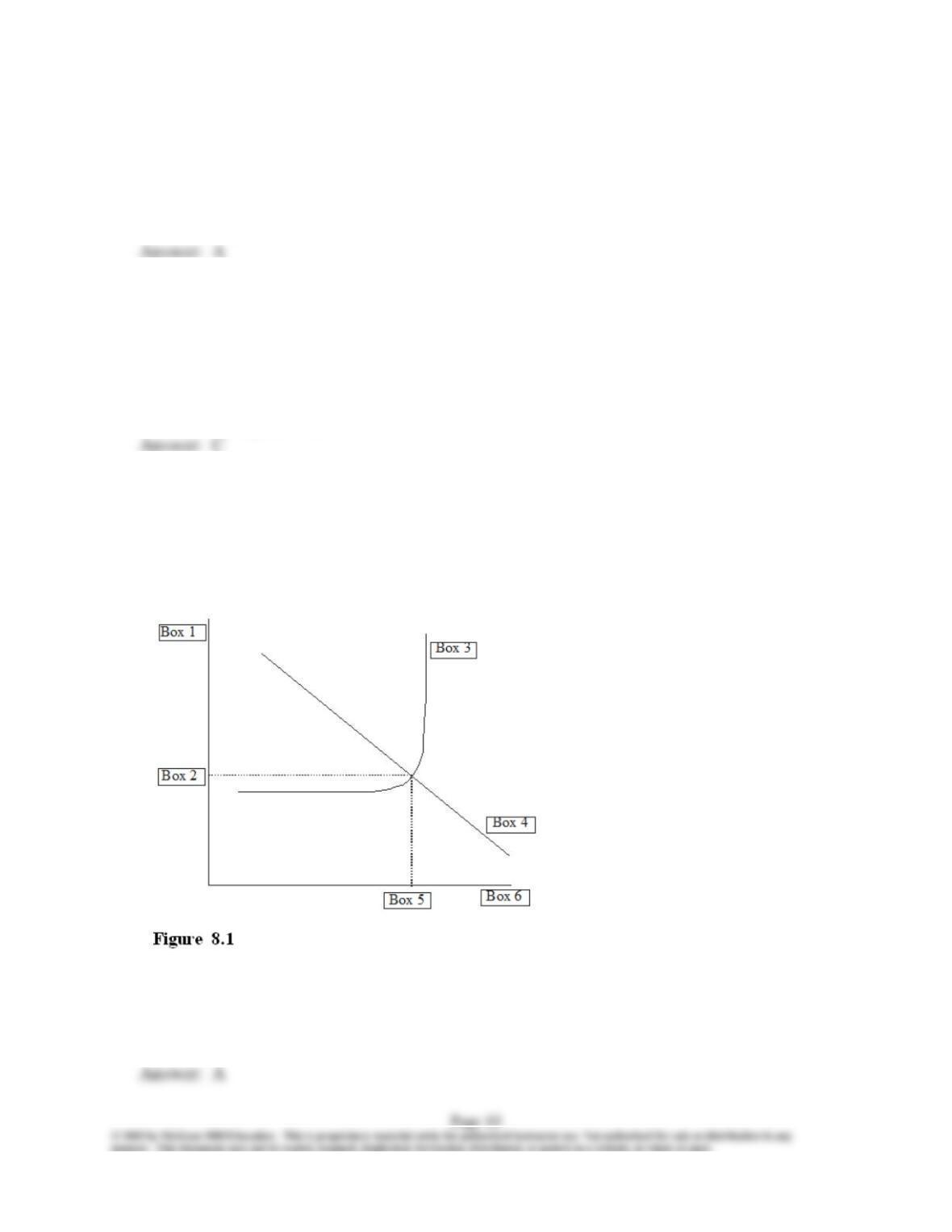
53. Referring to the Aggregate Demand – Aggregate Supply diagram in Figure 8.1, which box
should be filled with the label PI for “price index?”
A) Box 1
B) Box 4
C) Box 5
D) Box 6
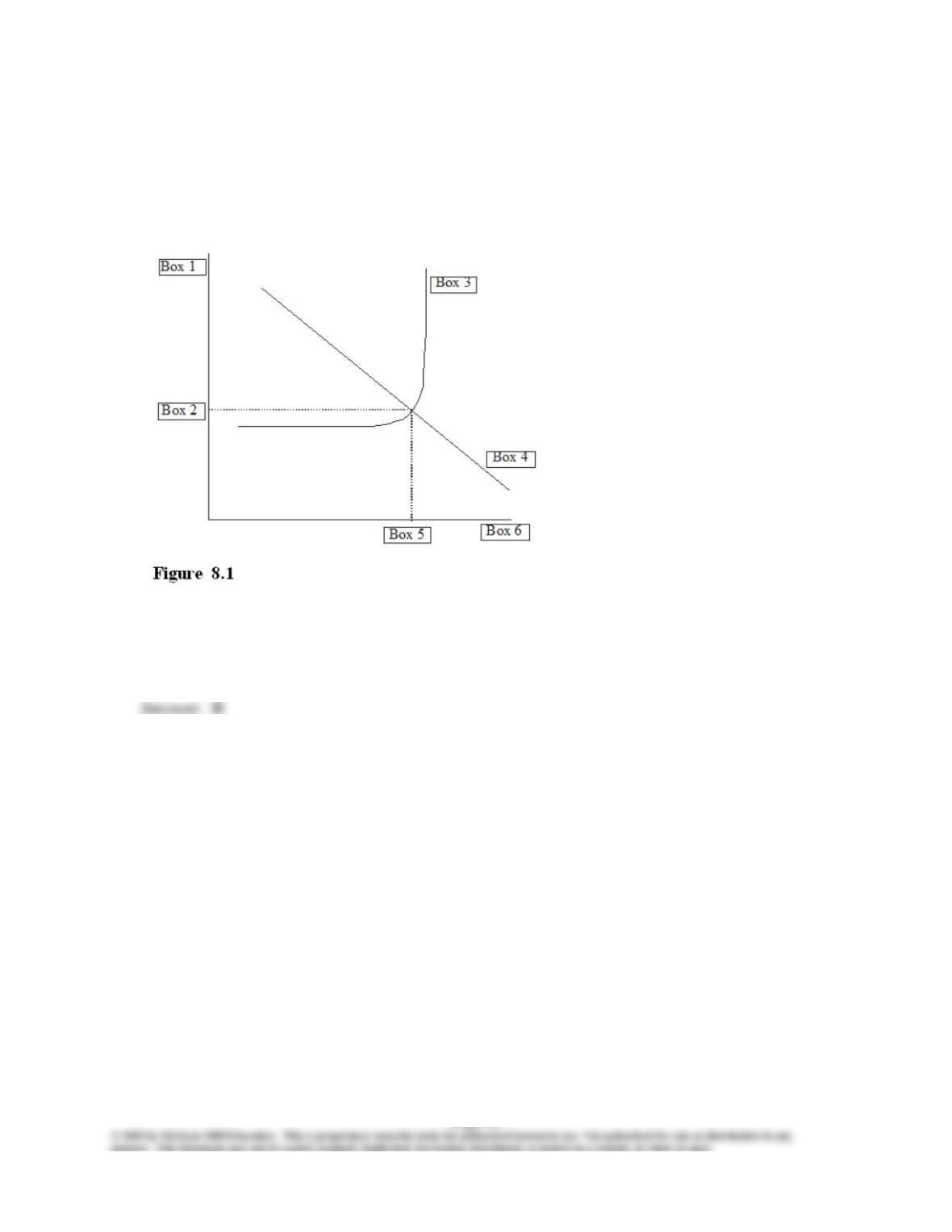
54. Referring to the Aggregate Demand – Aggregate Supply diagram in Figure 8.1, which box
should be filled with the label PI* for the macroeconomic equilibrium level of the price
index?
A) Box 1
B) Box 2
C) Box 5
D) Box 6
55. Referring to the Aggregate Demand – Aggregate Supply diagram in Figure 8.1, which box
should be filled with the label RGDP for the Real Gross Domestic Product?
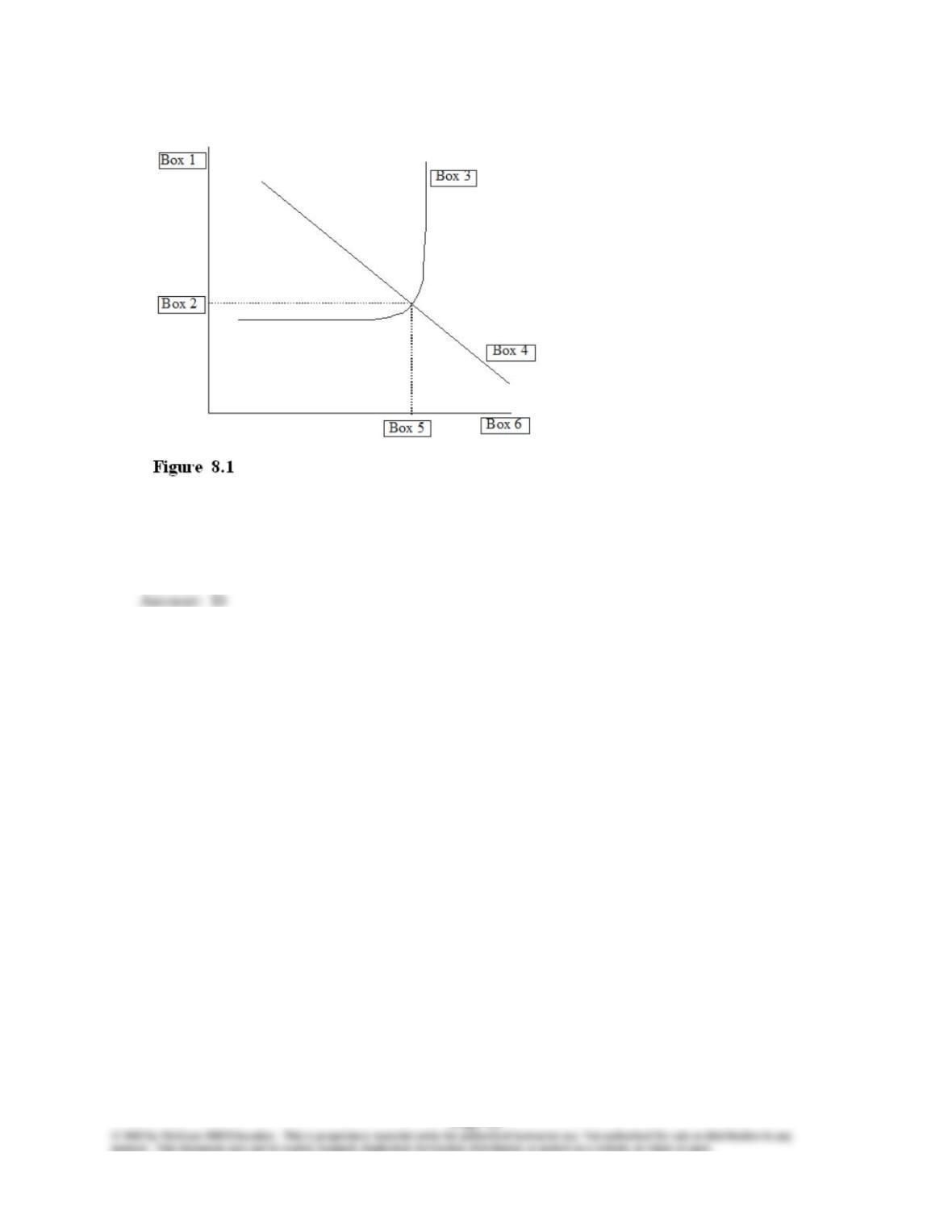
A) Box 1
B) Box 2
C) Box 3
D) Box 6
56. Referring to the Aggregate Demand – Aggregate Supply diagram in Figure 8.1, which box
should be filled with the label RGDP* for the macroeconomic equilibrium level of Real
Gross Domestic Product?
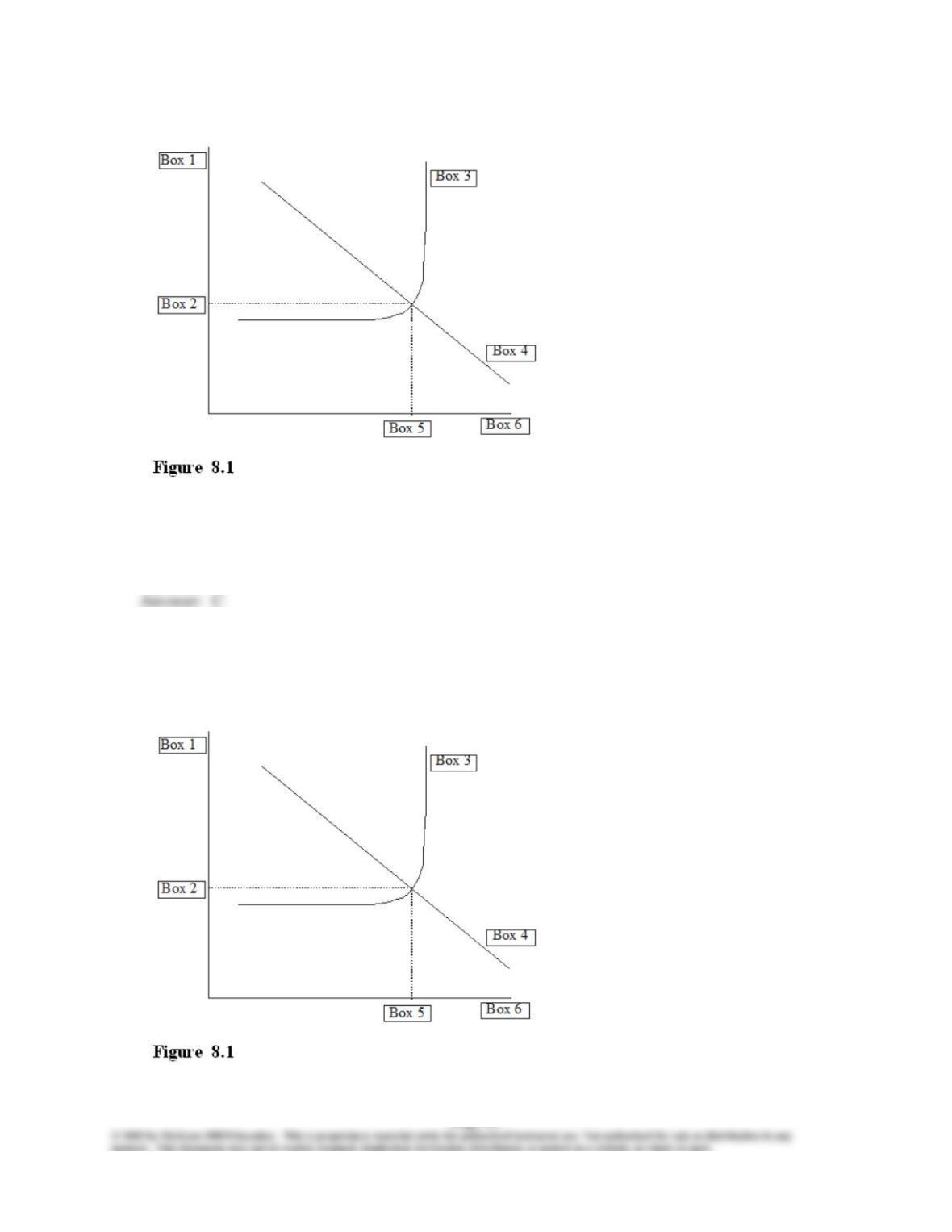
A) Box 1
B) Box 2
C) Box 5
D) Box 6
57. Referring to the Aggregate Demand – Aggregate Supply diagram in Figure 8.1, which box
should be filled with the label AS for the aggregate supply curve?
A) Box 1