Chapter 07 – Businesses and the Costs of Production
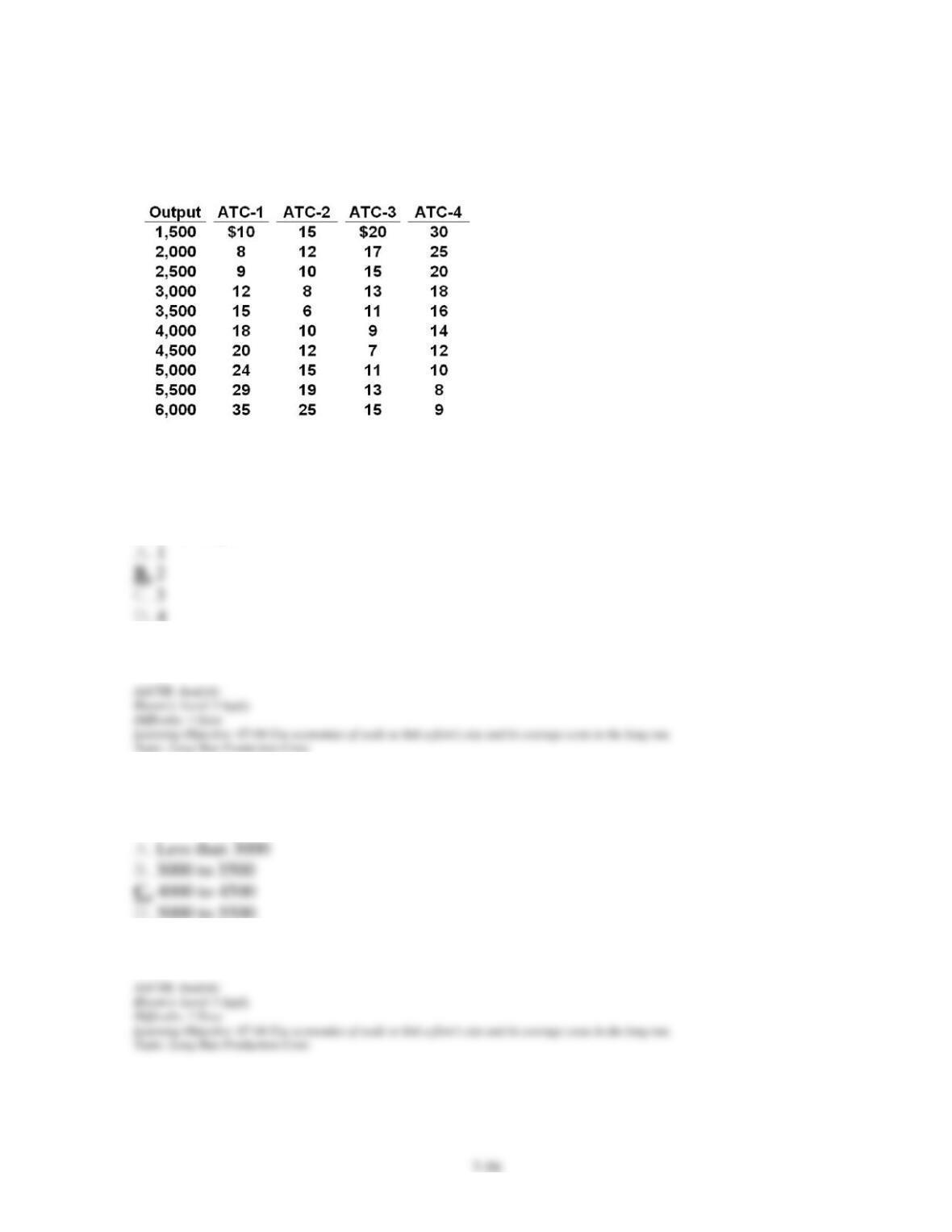
Plant sizes get larger as you move from ATC-1 to ATC-4.
142. Refer to the above table. Which plant size would produce at least cost for the 3000-4000
level of output?
143. Refer to the above table. In the long run the firm should use plant size ATC-3 for what
level of output?
Chapter 07 – Businesses and the Costs of Production
144. Refer to the above table. Over what range of output are economies of scale experienced
by this firm?
145. Refer to the above table. The firm experiences minimum efficient scale at what output
level?
146. A given level of consumer demand will support a larger number of producers in an
industry if:
Chapter 07 – Businesses and the Costs of Production
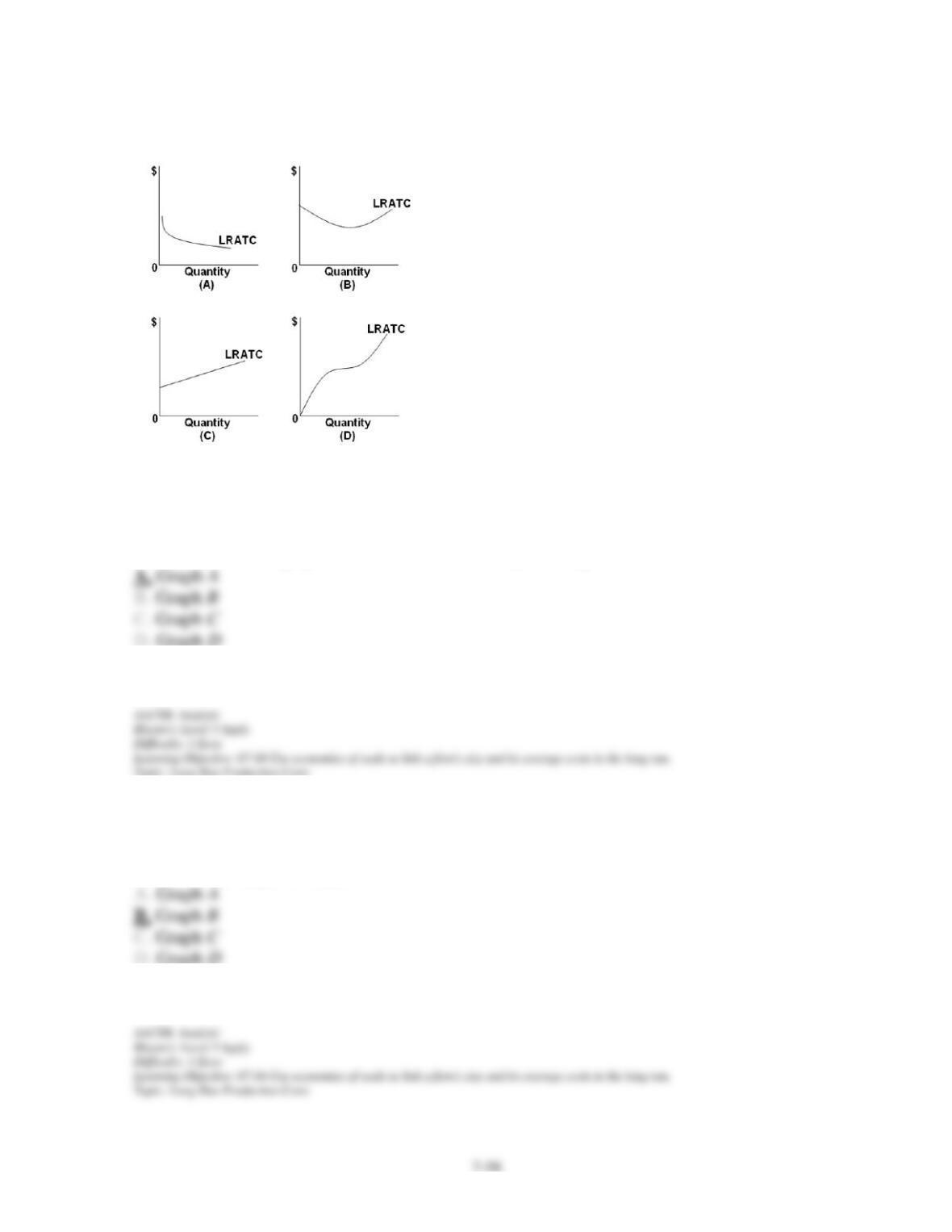
147. Refer to the above graphs. They show the long-run average total cost (LRATC) for a
product. For which graph would a firm NOT be experiencing diseconomies of scale?
148. Refer to the above graphs. They show the long-run average total cost (LRATC) for a
product. For which graph would a firm experience first economies and then diseconomies of
scale over its range of output?
Chapter 07 – Businesses and the Costs of Production
149. Refer to the above graphs. They show the long-run average total cost (LRATC) for a
product. Which graph would most probably be applicable to a natural monopoly?
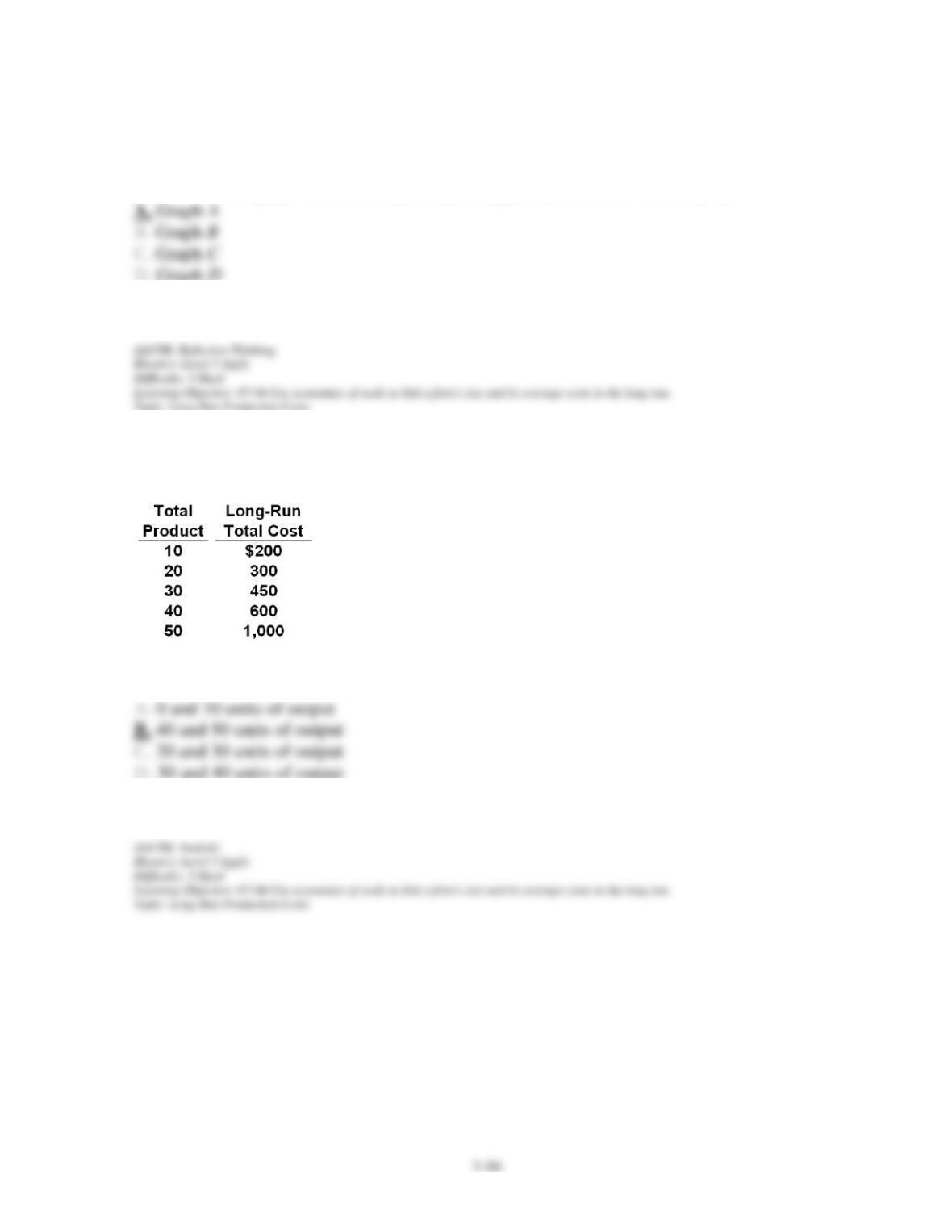
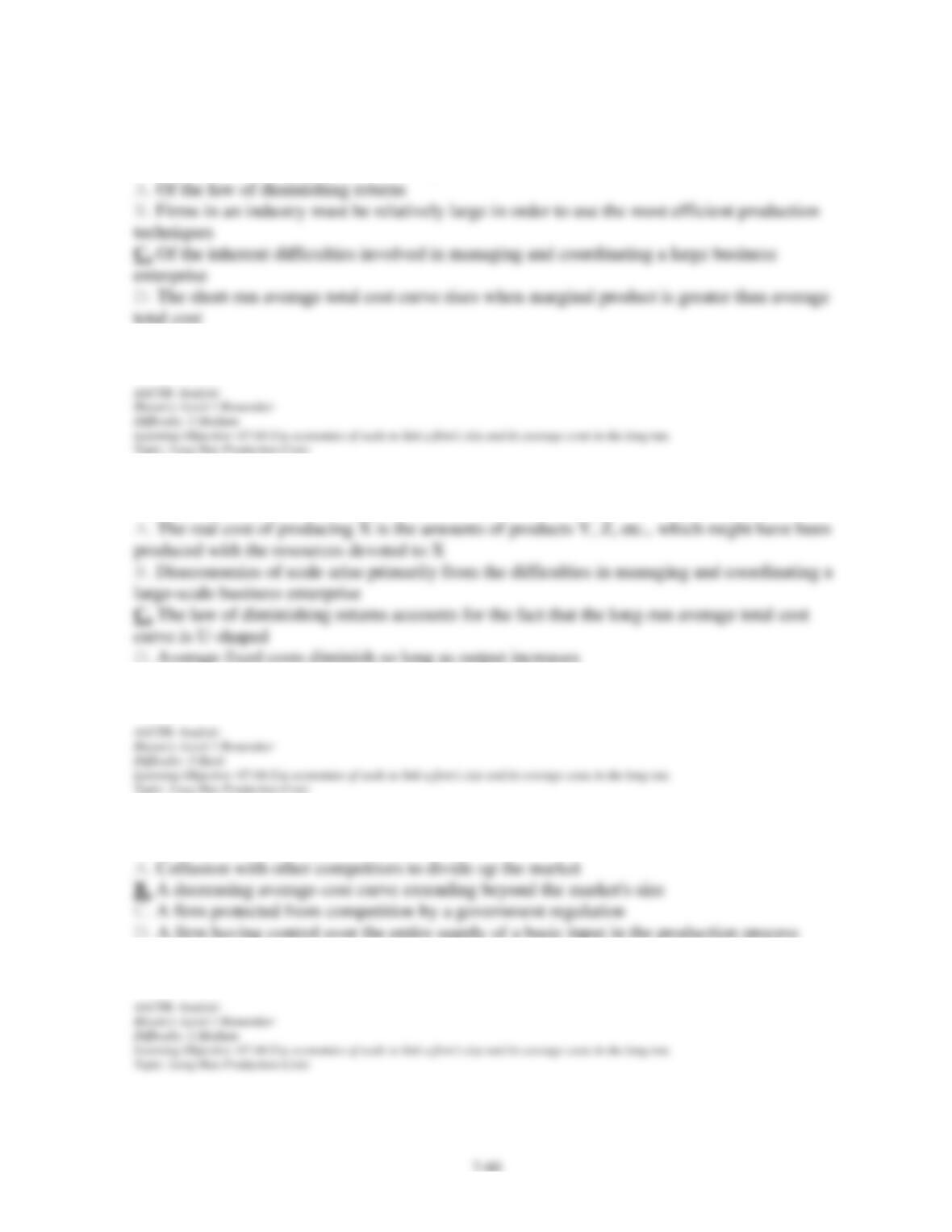
150. The following schedule gives the cost data for a firm:
Diseconomies of scale start between:
Chapter 07 – Businesses and the Costs of Production
151. Diseconomies of scale occur mainly because:
152. Which statement is not correct?
153. A natural monopoly is characterized by:
Chapter 07 – Businesses and the Costs of Production
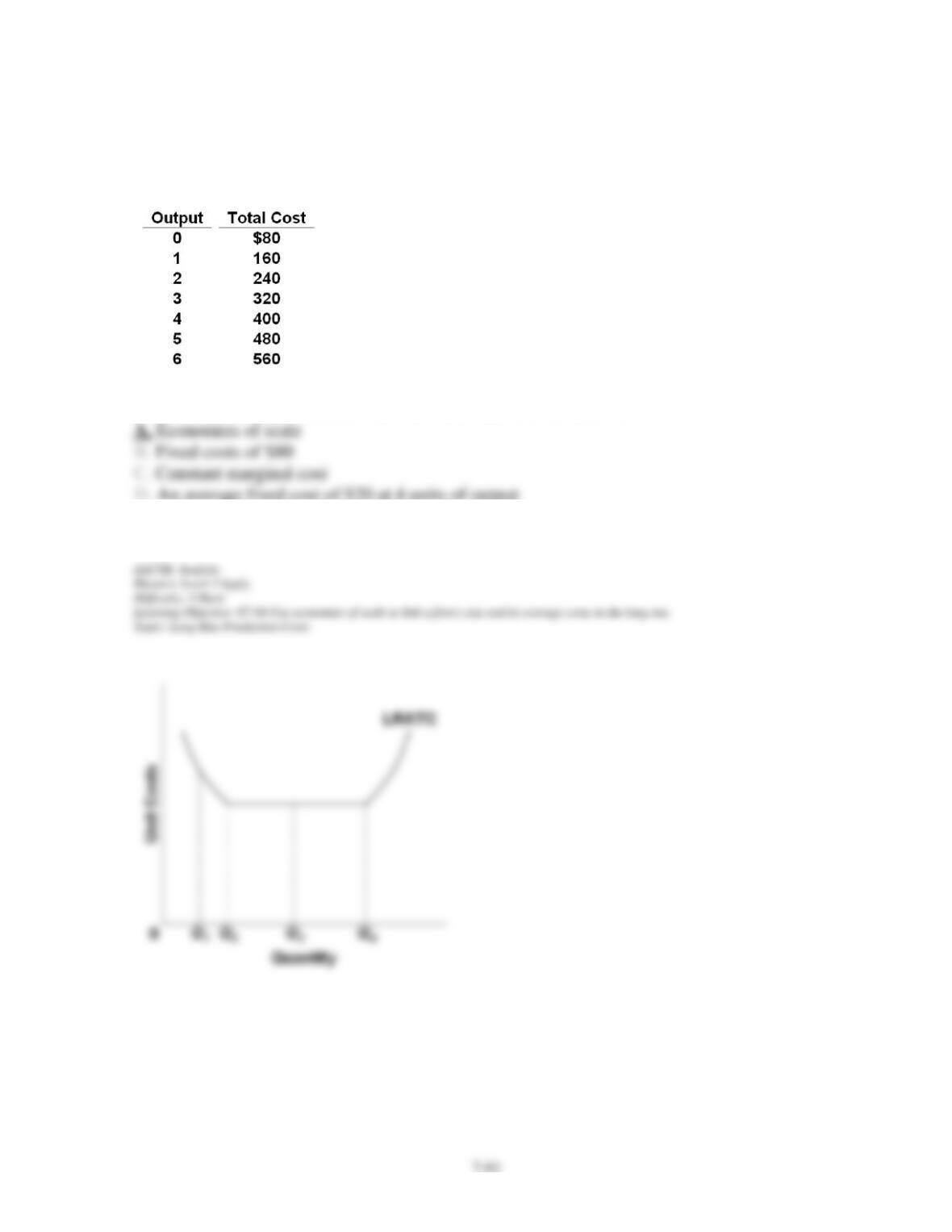
154. The following table shows the short-run total cost data for a firm.
All of the following statements are correct, except that the firm has:
Chapter 07 – Businesses and the Costs of Production
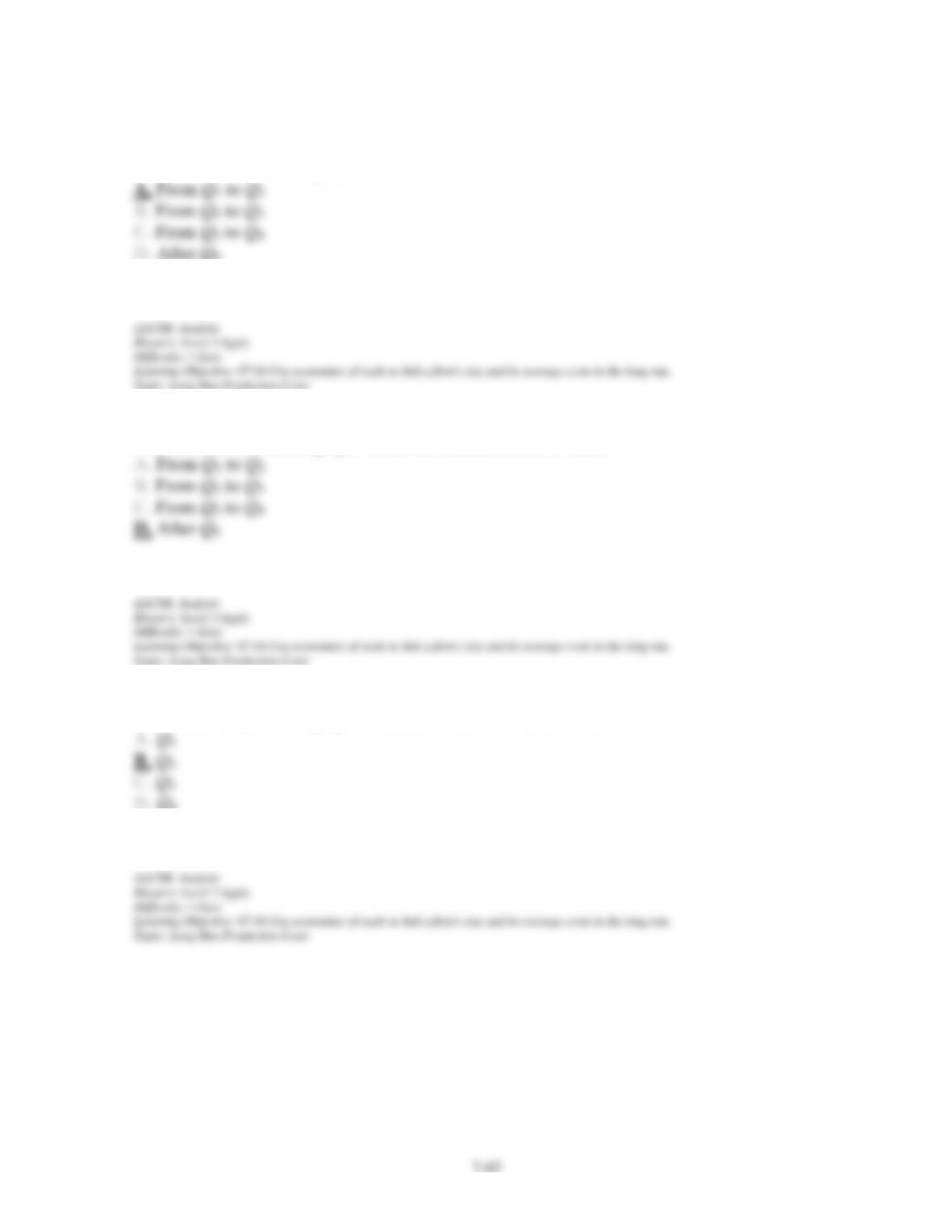
155. Refer to the above graph. There are economies of scale:
156. Refer to the above graph. There are diseconomies of scale:
157. Refer to the above graphs. Minimum efficient scale occurs at:
Chapter 07 – Businesses and the Costs of Production
158. If the minimum efficient scale (MES) in an industry is 20 percent of the total
consumption of a product, how many MES plants could be supported profitably in that
industry?
159. If there are ten plants producing the total domestic consumption of the product and each
plant is operating at minimum efficient scale, then each plant accounts for what percentage of
domestic consumption?
160. The law of diminishing returns implies:
Chapter 07 – Businesses and the Costs of Production
161. Chris is preparing for a comprehensive course exam by reading a textbook with chapters
of equal length and difficulty. The number of chapters she can comprehend and master when
studying is: (1) hour one: 1.5 chapters; (2) hour two: 2.0 chapters; (3) hour three: 1.5 chapters;
(4) hour four: 1 chapter; (5) hour five: 0 chapters. Diminishing marginal returns to studying
sets in for Chris after hour:
162. The phrase “don’t cry over spilt milk” could be rephrased in economic terms by saying:
163. Many people have turned to the Internet to get the news. This has caused the circulation
numbers of newspapers to fall drastically, which in turn caused their:
Chapter 07 – Businesses and the Costs of Production
164. A fast-food company spends millions of dollars to develop and promote a new
hamburger on their menu only to find that consumers won’t buy it because they don’t like the
taste. From an economic perspective, the company should:
165. When the price of gasoline increases significantly, the delivery companies like UPS,
FedEx, and the USPS all find:
Chapter 07 – Businesses and the Costs of Production
166. Normal profit is an implicit cost.
167. Economic profits are usually larger than accounting profits.
168. If a firm produces zero output in the short run, then its profits will also be zero.
169. In the long run, a firm can increase its output quantity, but it will be limited by the size of
its existing production plant.
Chapter 07 – Businesses and the Costs of Production
170. When diminishing marginal returns starts occurring, the addition of successive units of a
variable resource to a fixed resource will cause the firm’s production to diminish.
171. The law of diminishing marginal returns is another name for the law of diminishing
marginal utility.
172. Over the range of positive, but diminishing, marginal returns for an input, the total
product curve increases at a decreasing rate.
173. If the average product of labor equals 4 at all levels of output, the marginal product of
labor is also equal to 4 at all levels of output.
Chapter 07 – Businesses and the Costs of Production
174. When the total product is at its maximum level, the marginal product is zero.
175. When total product is increasing at a decreasing rate, marginal product is positive, but
falling.
176. The short-run marginal-cost curve is upward-sloping because of the law of diminishing
marginal returns.
177. Marginal product is highest where marginal cost is lowest.
Chapter 07 – Businesses and the Costs of Production
178. When a firm increases its output, its average fixed costs will stay constant.
179. When average costs are increasing, marginal costs are greater than average costs.
180. If a firm increases all its inputs by 10 percent and its output increases by 15 percent, the
firm is experiencing diseconomies of scale.
181. A major factor explaining economies of scale is increased specialization of labor.
Chapter 07 – Businesses and the Costs of Production
182. The fundamental reason that newspapers have such high prices is the high production
costs from diseconomies of scale.
183. Diseconomies of scale are caused by the law of diminishing marginal returns.
184. If a firm doubles its resource inputs and as a result output triples, then the long-run
average cost curve must be upward-sloping.
185. If the minimum efficient scale in an industry is smaller than the size of the market of that
industry, then we would have a natural-monopoly situation.