Chapter 07 – Businesses and the Costs of Production
53. Refer to the above table. Diminishing marginal returns set in with the addition of the:
54. Refer to the above table. When the firm hires four units of labor, the average product of
labor is:
55. Refer to the above table. With which unit of labor is the marginal product equal to the
average product?
Chapter 07 – Businesses and the Costs of Production
56. Refer to the above table. With diminishing marginal returns, if the firm hires seven units
of labor, which of the following numbers would most probably be the total product?
57. Variable costs are:
58. Fixed costs are those costs which are:
Chapter 07 – Businesses and the Costs of Production
7-23
59. Which is the best example of a fixed cost of production to a firm?
60. Fixed costs of production in the short run:
Chapter 07 – Businesses and the Costs of Production
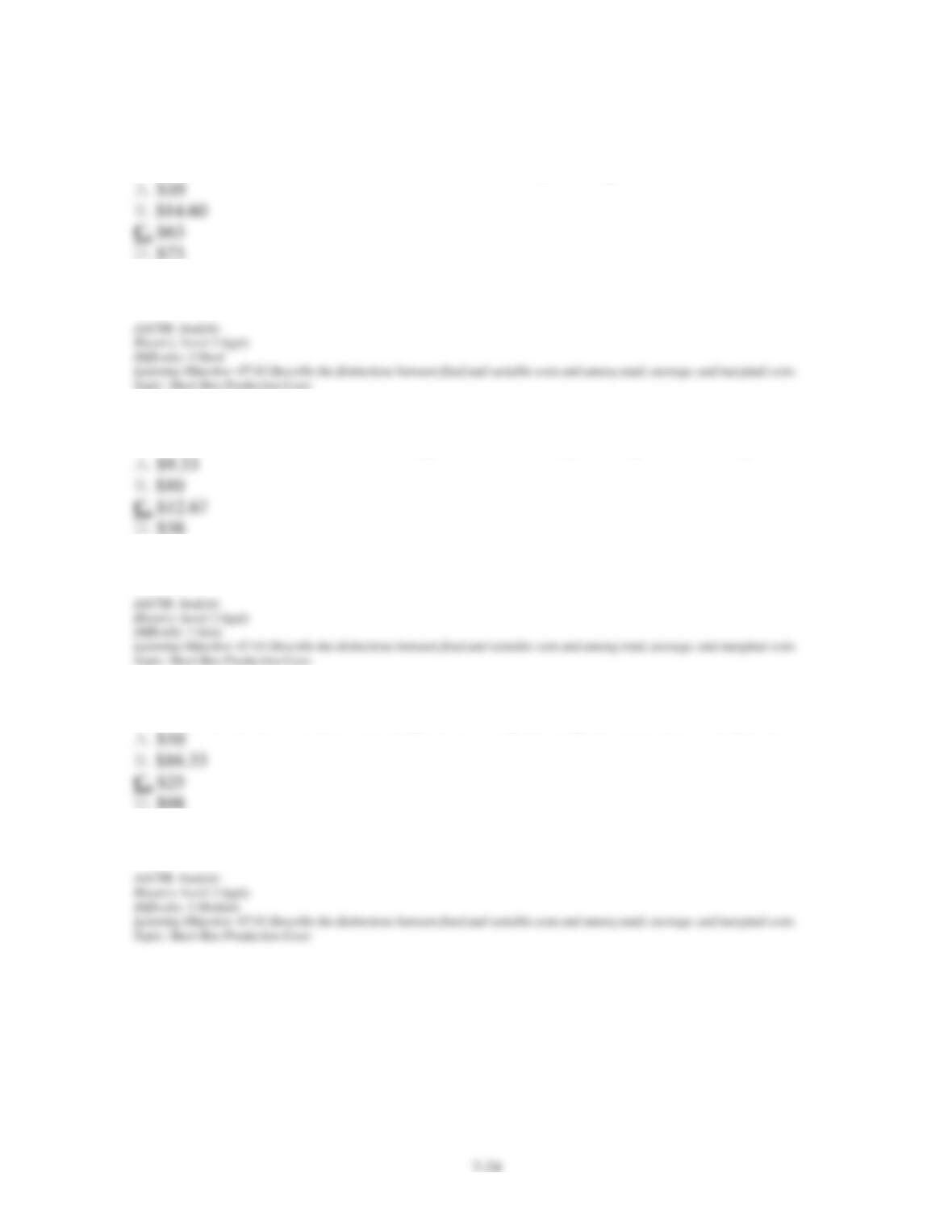
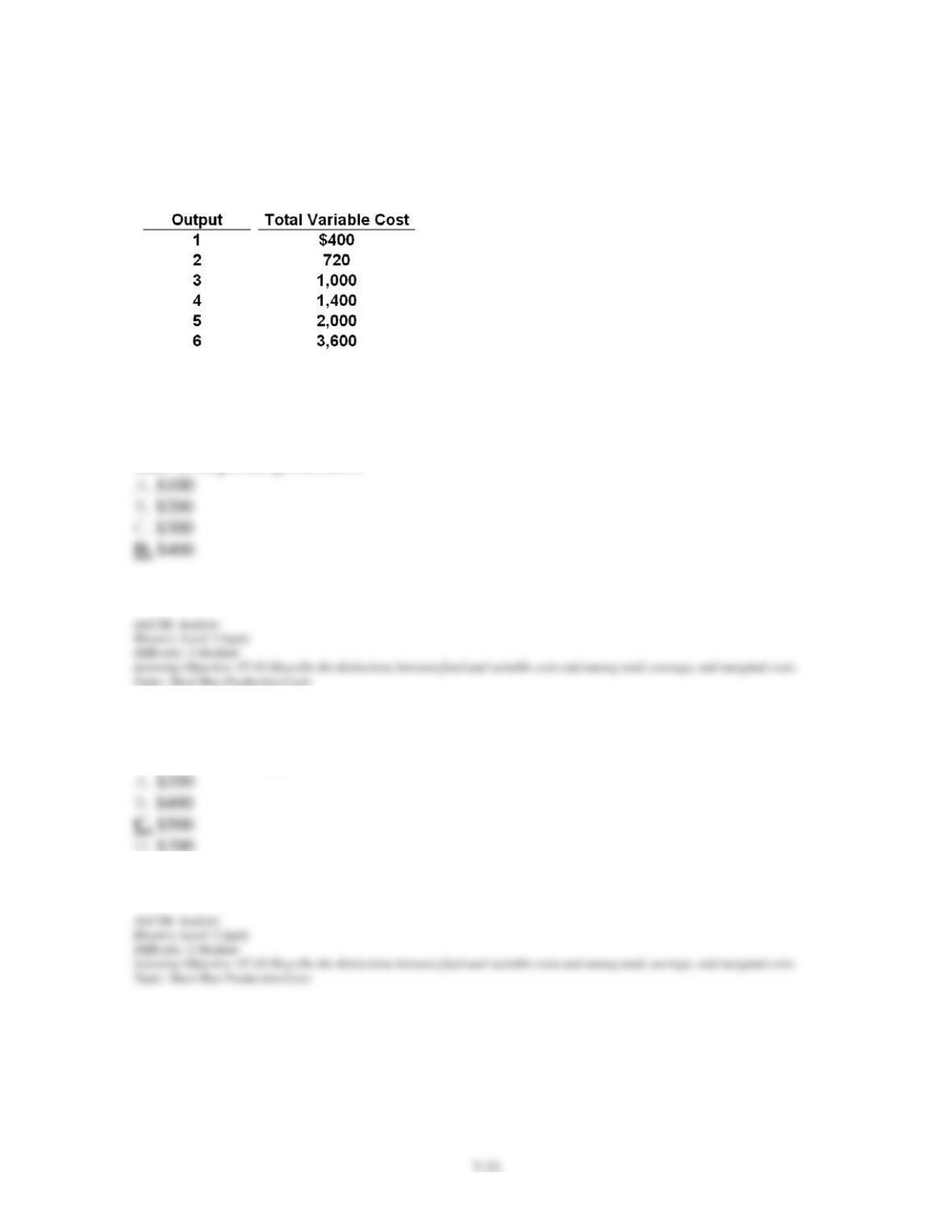
61. Refer to the above table. The total variable cost of producing 5 units is:
62. Refer to the above table. The average variable cost of producing 3 units of output is:
63. Refer to the above table. The marginal cost of producing the sixth unit of output is:
Chapter 07 – Businesses and the Costs of Production
64. Refer to the above table. The average variable cost of producing 1 unit of output is:
65. If you know that total fixed cost is $200, total variable cost is $600, and total product is 4
units, then average total cost must be:
66. If you know that when a firm produces 10 units of output, total costs are $1,030 and
average fixed costs are $10, then total variable costs are:
Chapter 07 – Businesses and the Costs of Production
67. If you know that with 8 units of output, average fixed cost is $12.50 and average variable
cost is $81.25, then total cost at this output level is:
68. If average variable cost is $74 and total fixed cost is $100 at 5 units of output, then
average total cost at this output level is:
69. With fixed costs of $400, a firm has average total costs of $3 and average variable costs of
$2.50. Its output quantity must be:
Chapter 07 – Businesses and the Costs of Production
7-27
70. At an output of 1,000 units per year, a firm’s variable costs are $5,000 and its average
fixed costs are $3. Its total costs per year are:
71. At an output level of 50 units per day a firm has average total costs of $60 and average
variable costs of $35. Its total fixed costs are:
Chapter 07 – Businesses and the Costs of Production
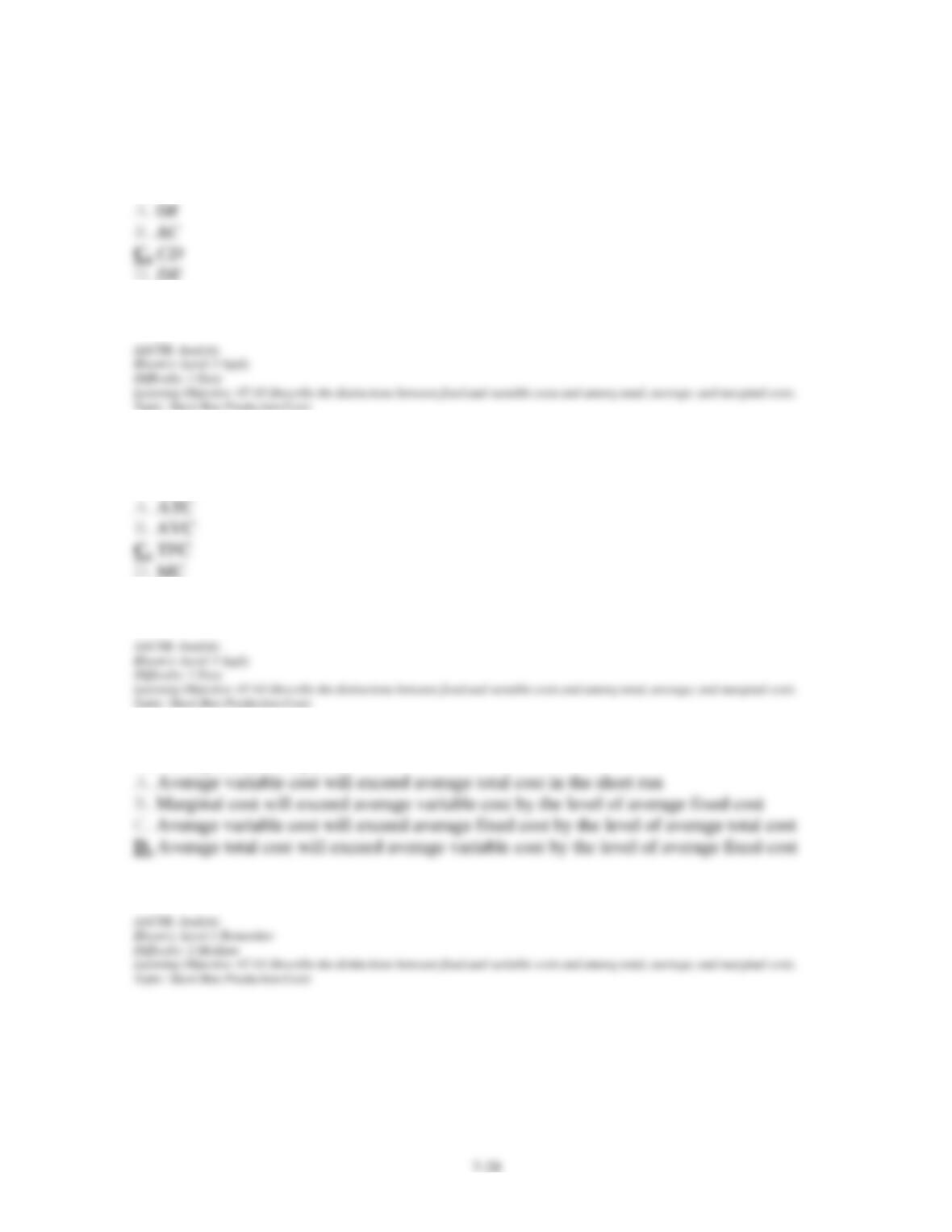
72. Refer to the above graph of cost curves. Total fixed cost at output level Q2 is measured
by:
73. Refer to the above graph of cost curves. The vertical distance between TC and TVC is
equal to:
74. At any level of output:
Chapter 07 – Businesses and the Costs of Production
75. Marginal cost can be defined as the:
76. The reason the marginal cost curve eventually increases as output increases for the typical
firm is because of:
77. When marginal cost is increasing:
Chapter 07 – Businesses and the Costs of Production
78. As output increases, average fixed costs:
79. The law of diminishing returns explains why:
80. The range over which average variable cost is increasing is the same as the range over
which:
Chapter 07 – Businesses and the Costs of Production
The fixed cost of the firm is $500. The firm’s total variable cost is indicated in the table.
81. Refer to the above table and information. The average variable cost of the firm when 5
82. Refer to the above table and information. The average total cost of the firm when 3 units
of output are being produced is:
Chapter 07 – Businesses and the Costs of Production
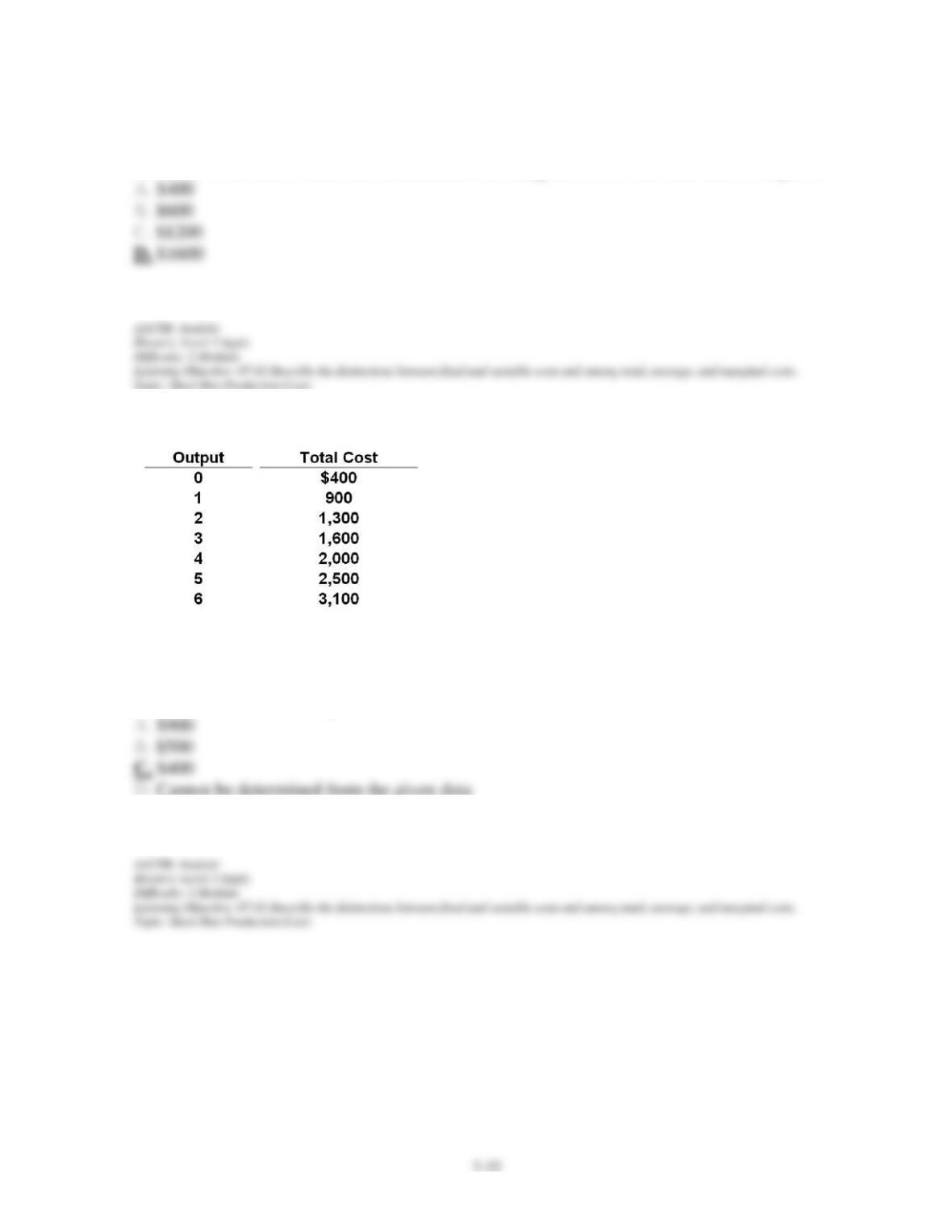
83. Refer to the above table and information. The marginal cost of the sixth unit of output is:
84. Refer to the cost data given above. How much is the firm’s total fixed costs?
Chapter 07 – Businesses and the Costs of Production
85. Refer to the cost table above. Diminishing marginal returns begins to set in with the
production of which unit of output?
86. If the short-run average variable cost of production for a firm is decreasing, then it follows
that:
87. Assume a firm is operating at minimum average total cost in the short run. If there is a
decrease in output it follows that:
Chapter 07 – Businesses and the Costs of Production
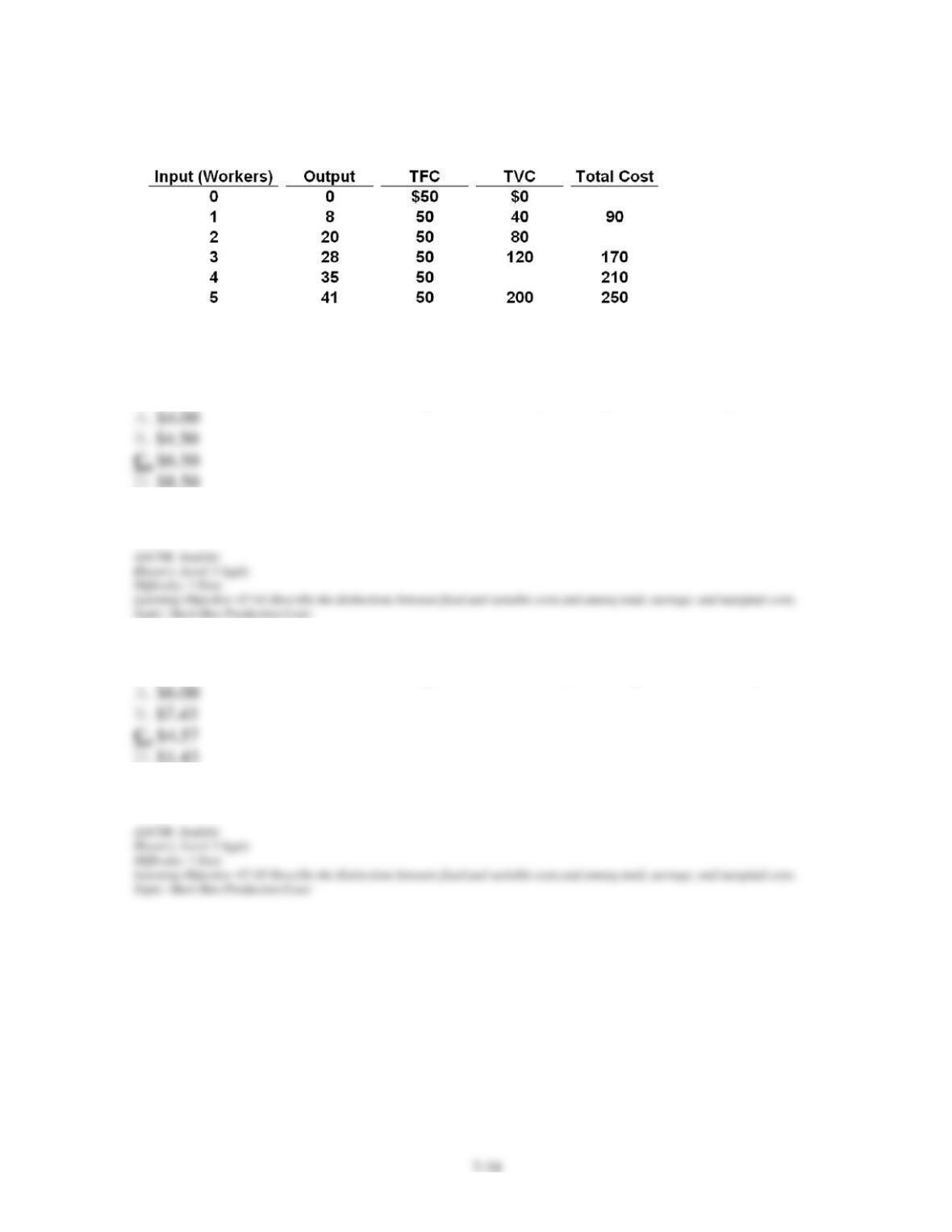
88. Refer to the above table. The average total cost of producing 20 units of output is:
89. Refer to the above table. The average variable cost of producing 35 units of output is:
Chapter 07 – Businesses and the Costs of Production
90. Refer to the above table. When output increases from 28 to 35 units, the marginal cost of
the product is:
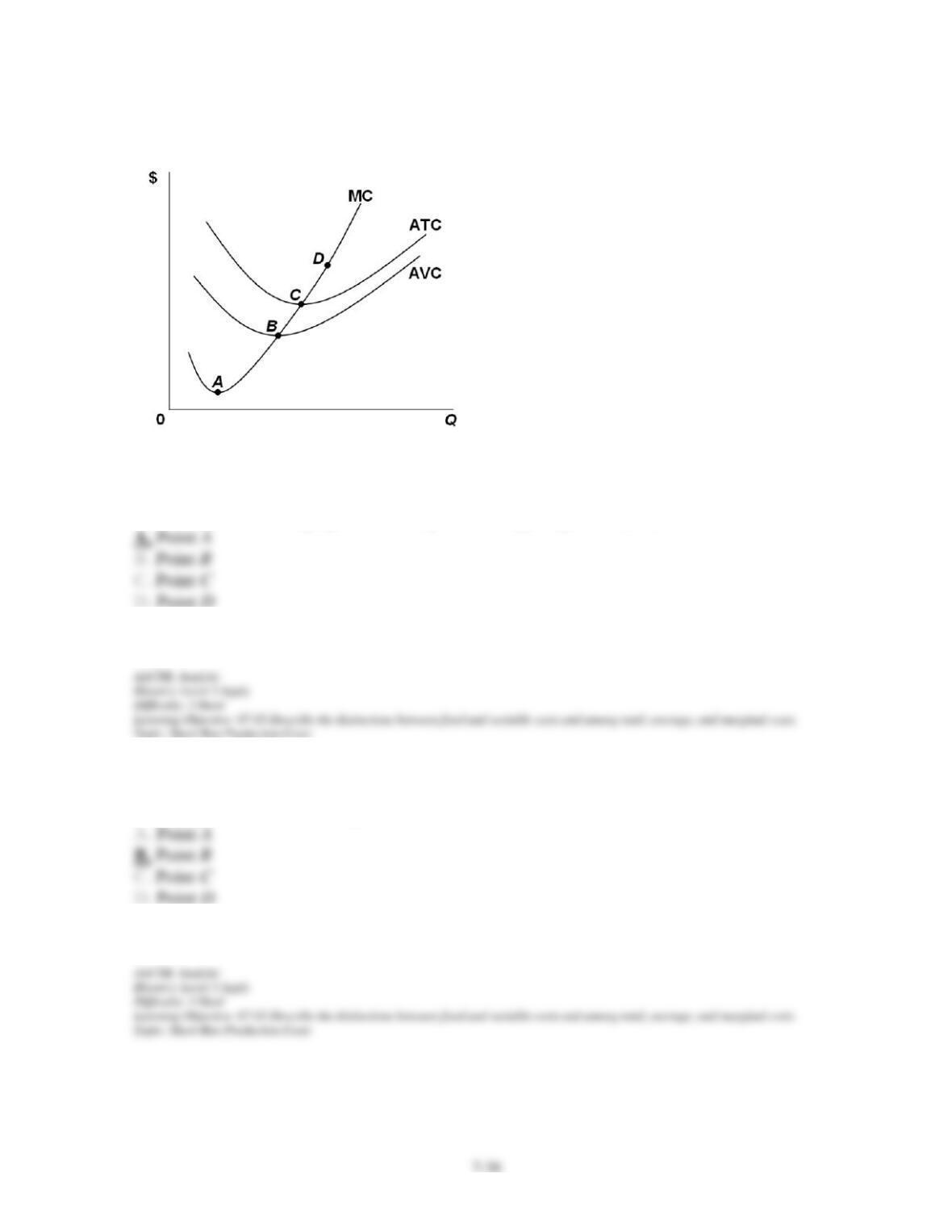
91. The following table shows the relationship between output and costs for two firms in the
short run.
Which of the following is correct?
Chapter 07 – Businesses and the Costs of Production
92. Refer to the above graph. At which point is marginal product (MP) at its maximum?
93. Refer to the above graph. At which point does marginal product (MP) equal average
product (AP) at a level of output?
Chapter 07 – Businesses and the Costs of Production
94. Refer to the above graph. At which point is average product (AP) at its maximum?
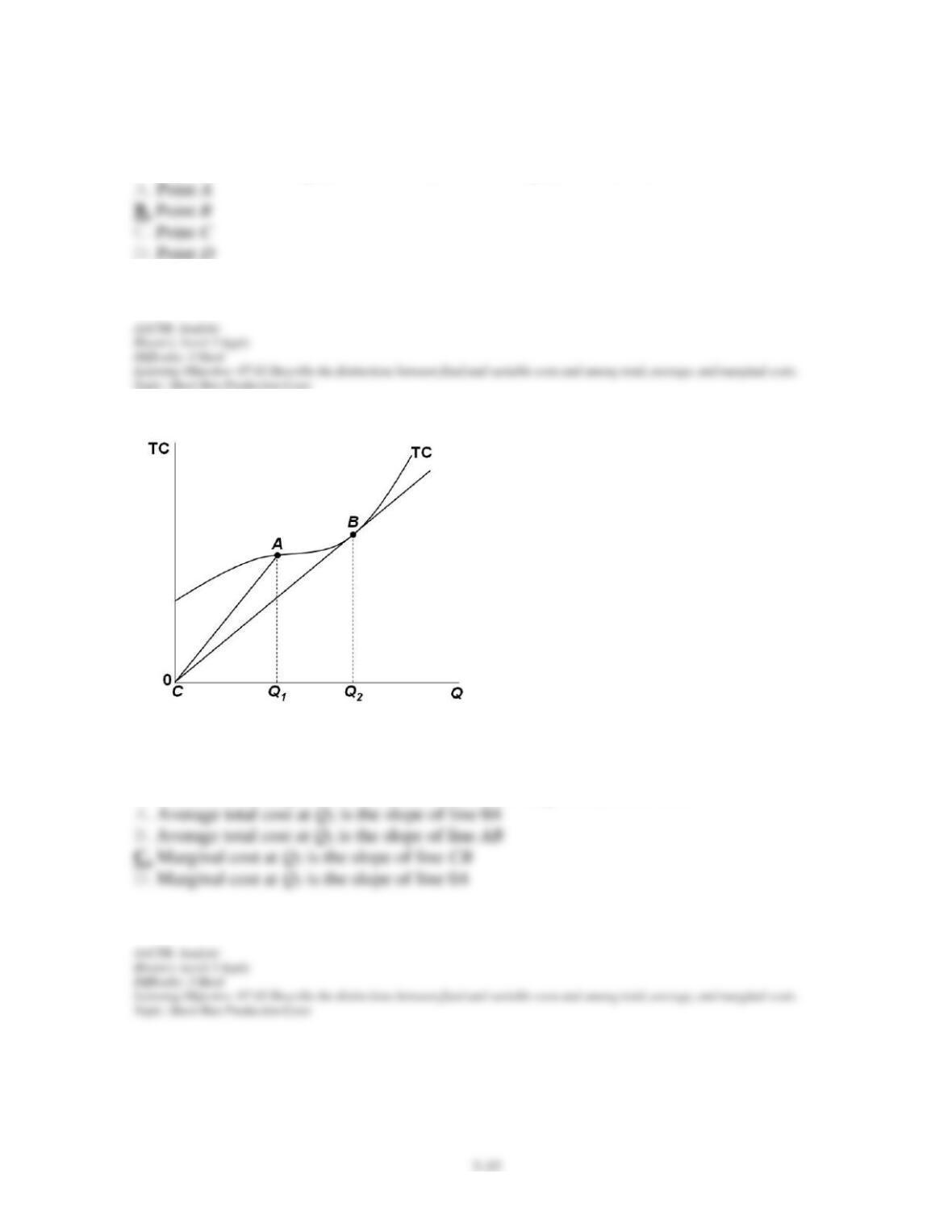
95. Based on the diagram above, which of the following statements is true?
Chapter 07 – Businesses and the Costs of Production
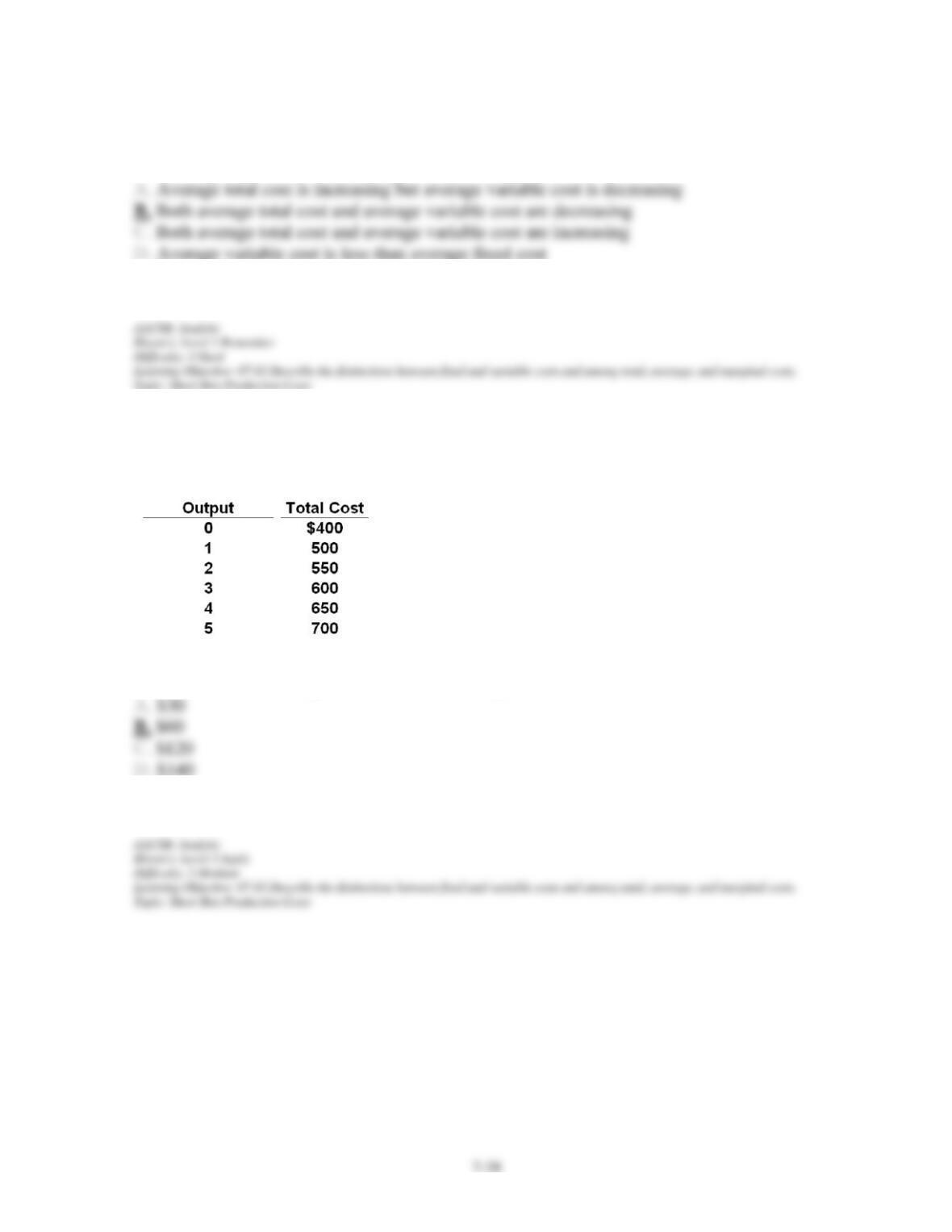
96. If marginal cost is below average variable cost:
97. The following cost data are for a firm in the short run:
What is the firm’s average variable cost at an output of 5 units?
Chapter 07 – Businesses and the Costs of Production
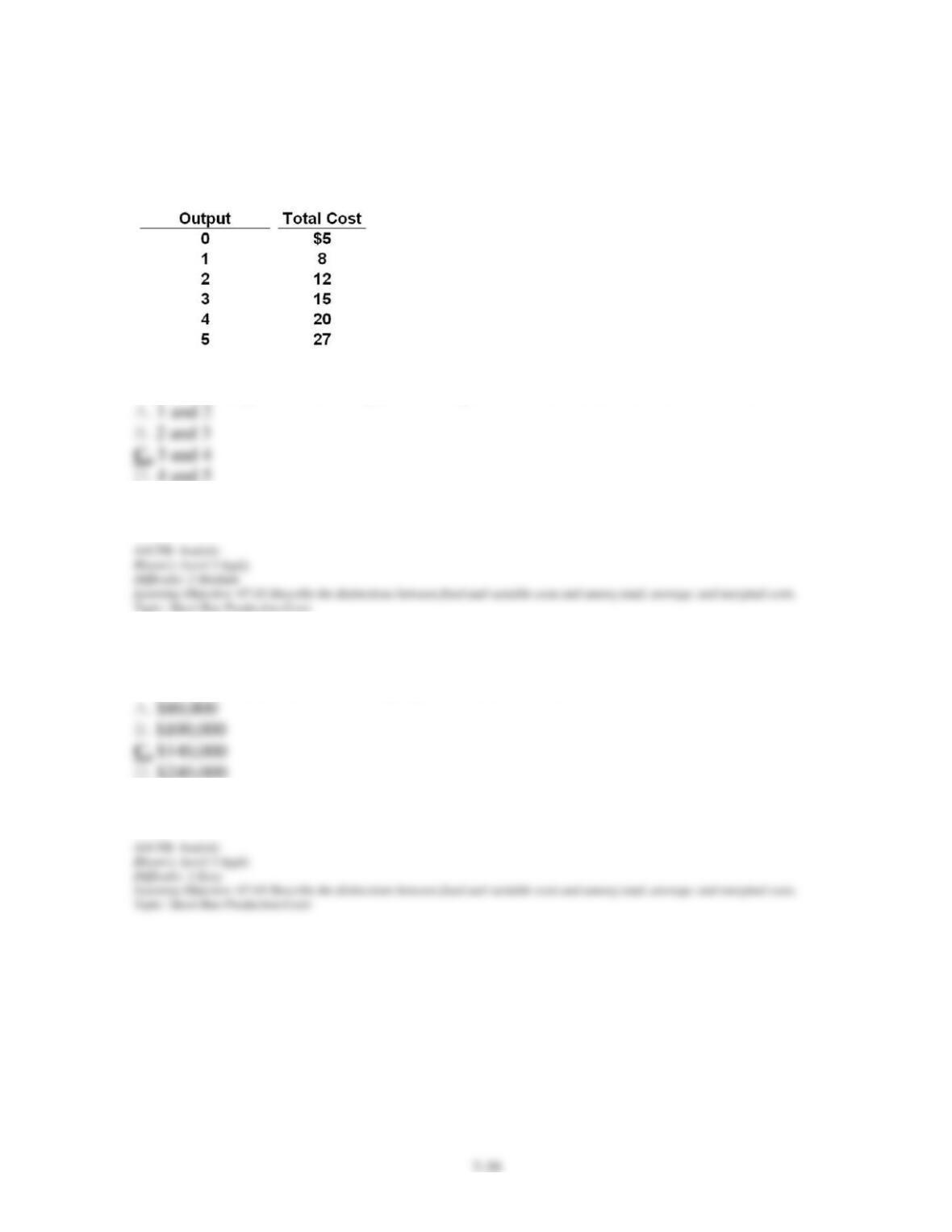
98. The following data show the relationship between total costs and output in the short run.
The firm’s marginal costs are equal to average total cost somewhere between units:
99. At an output of 20,000 units per year, a firm’s variable costs are $80,000 and its average
fixed costs are $3. The total costs per year for the firm are:
Chapter 07 – Businesses and the Costs of Production
100. If the short-run average variable costs of production for a firm are rising, then this
indicates that:
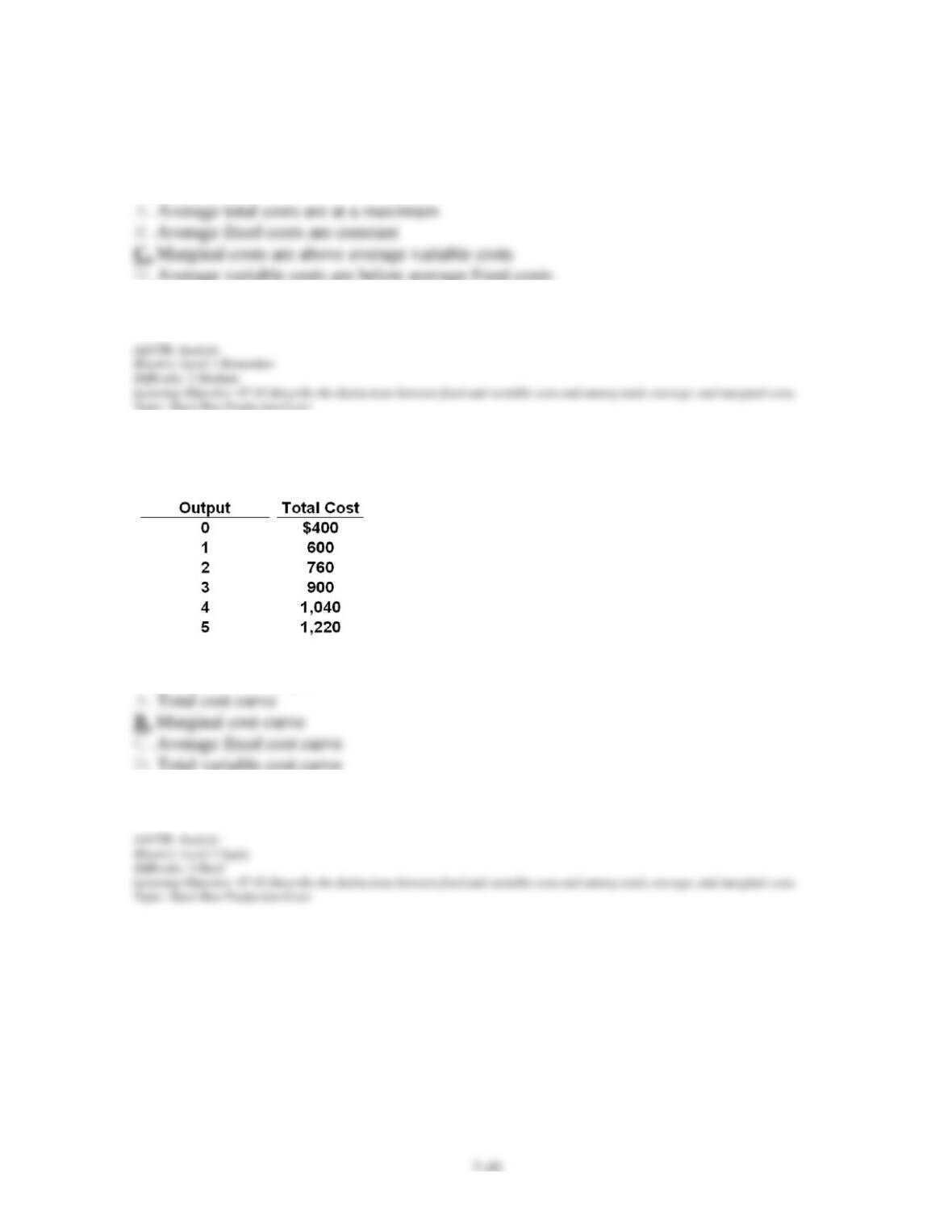
101. The table shows the relationship between total cost and output for a firm.
The firm has a U-shaped: