Chapter 07 – Businesses and the Costs of Production
54. Refer to the above data. The average product (AP) when two units of labor are hired is:
55. Refer to the above data. Diminishing returns begin to occur with the hiring of the
_________ unit of labor.
56. Refer to the above data. Marginal product becomes negative with the hiring of the
__________ unit of labor.
Chapter 07 – Businesses and the Costs of Production
57. When total product is increasing at an increasing rate, marginal product is:
58. When total product is increasing at a decreasing rate, marginal product is:
59. Fixed cost is:
Chapter 07 – Businesses and the Costs of Production
60. Which of the following is most likely to be a fixed cost?
61. If you owned a small farm, which of the following would most likely be a fixed cost?
62. Which of the following is most likely to be a variable cost?
Chapter 07 – Businesses and the Costs of Production
63. If you operated a small bakery, which of the following would be a variable cost in the
64. Marginal cost is the:
65. For most producing firms:
Chapter 07 – Businesses and the Costs of Production
7-25
66. Average fixed cost:
67. Which of the following is correct as it relates to cost curves?
Chapter 07 – Businesses and the Costs of Production
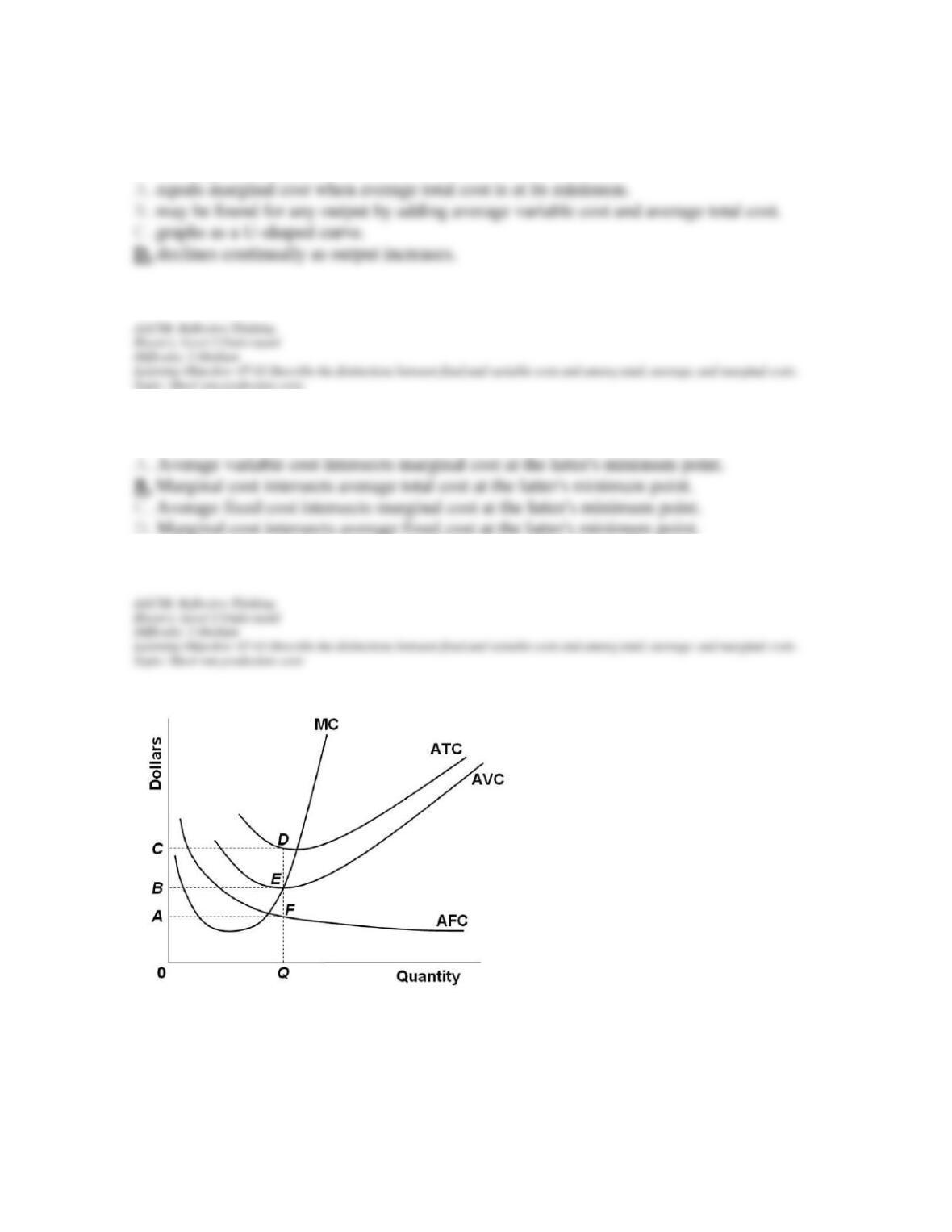
68. Refer to the above diagram. At output level Q total variable cost is:
69. Refer to the above diagram. At output level Q total fixed cost is:
70. Refer to the above diagram. At output level Q total cost is:
Chapter 07 – Businesses and the Costs of Production
71. Refer to the above diagram. At output level Q average fixed cost:
72. Refer to the above diagram. At output level Q:
73. Refer to the above diagram. The vertical distance between ATC and AVC reflects:
Chapter 07 – Businesses and the Costs of Production
74. Marginal cost:
75. Which of the following statements is correct?
76. Assume that in the short run a firm is producing 100 units of output, has average total
costs of $200, and average variable costs of $150. The firm’s total fixed costs are:
Chapter 07 – Businesses and the Costs of Production
77. Other things equal, if the prices of a firm’s variable inputs were to fall:
78. Other things equal, if the fixed costs of a firm were to increase by $100,000 per year,
which of the following would happen?
79. If a firm decides to produce no output in the short run, its costs will be:
Chapter 07 – Businesses and the Costs of Production
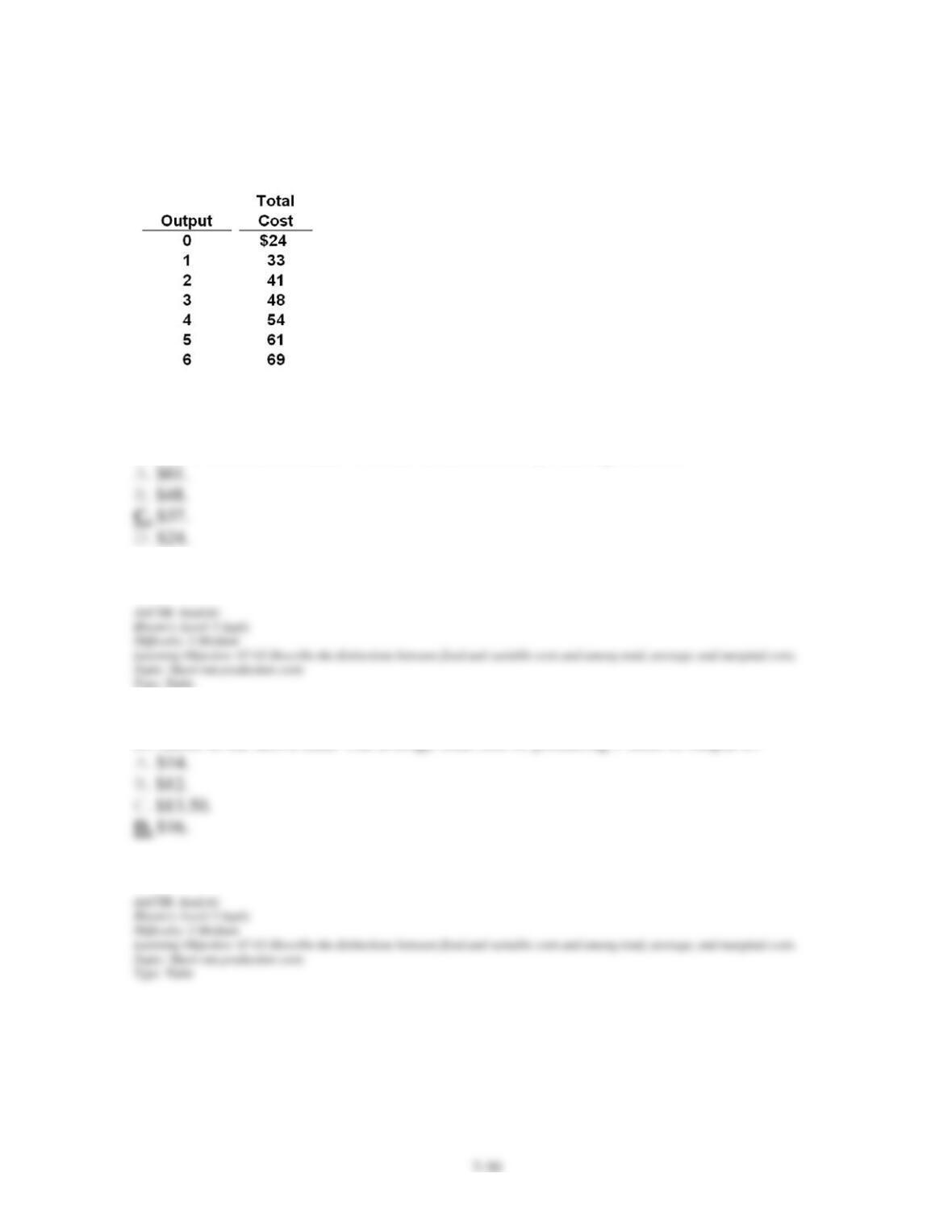
Answer the question on the basis of the following cost data:
80. Refer to the above data. The total variable cost of producing 5 units is:
Chapter 07 – Businesses and the Costs of Production
82. Refer to the above data. The average fixed cost of producing 3 units of output is:
83. Refer to the above data. The marginal cost of producing the sixth unit of output is:
84. Refer to the above data. The profit-maximizing output for this firm:
Chapter 07 – Businesses and the Costs of Production
85. In comparing the changes in TVC and TC associated with an additional unit of output, we
find that:
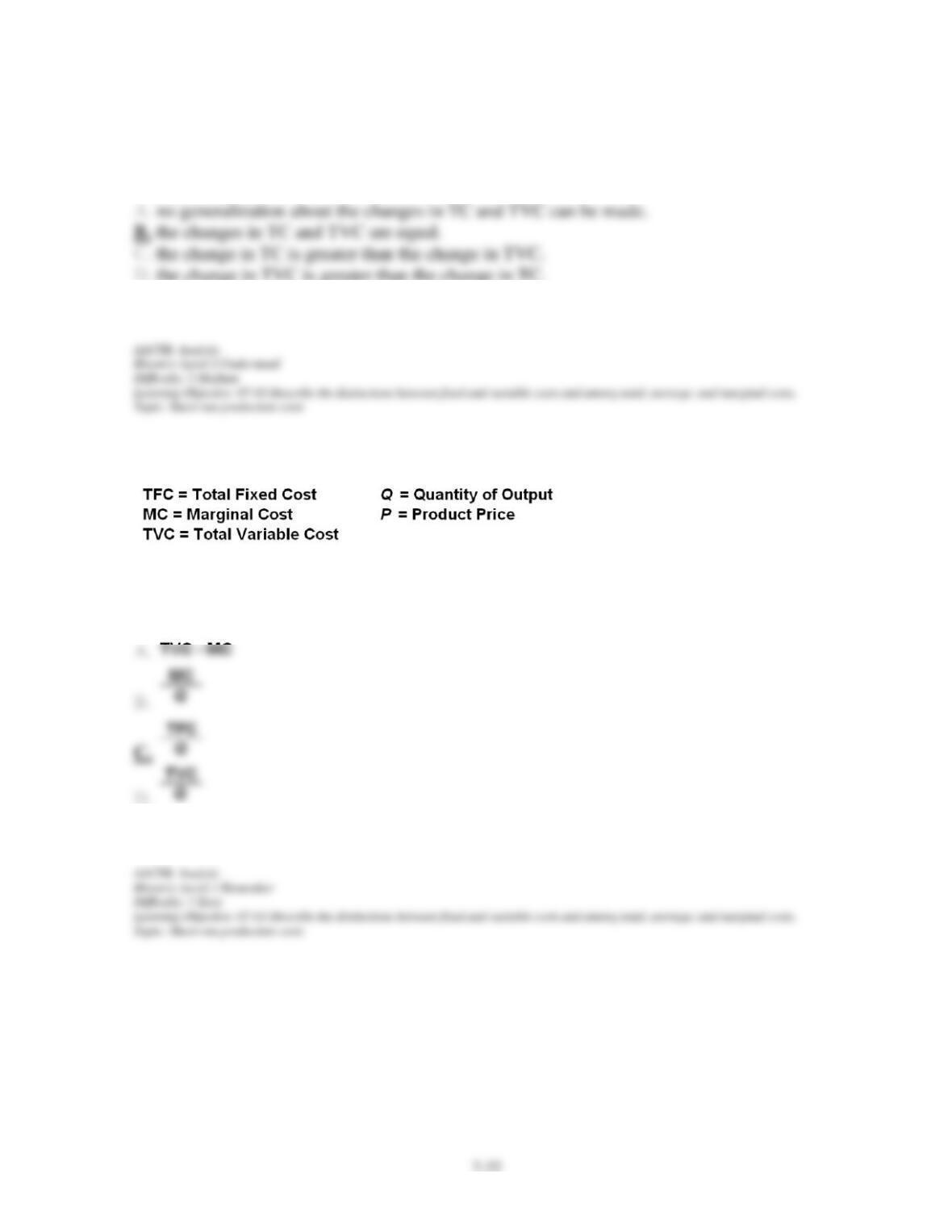
Answer the question on the basis of the following information:
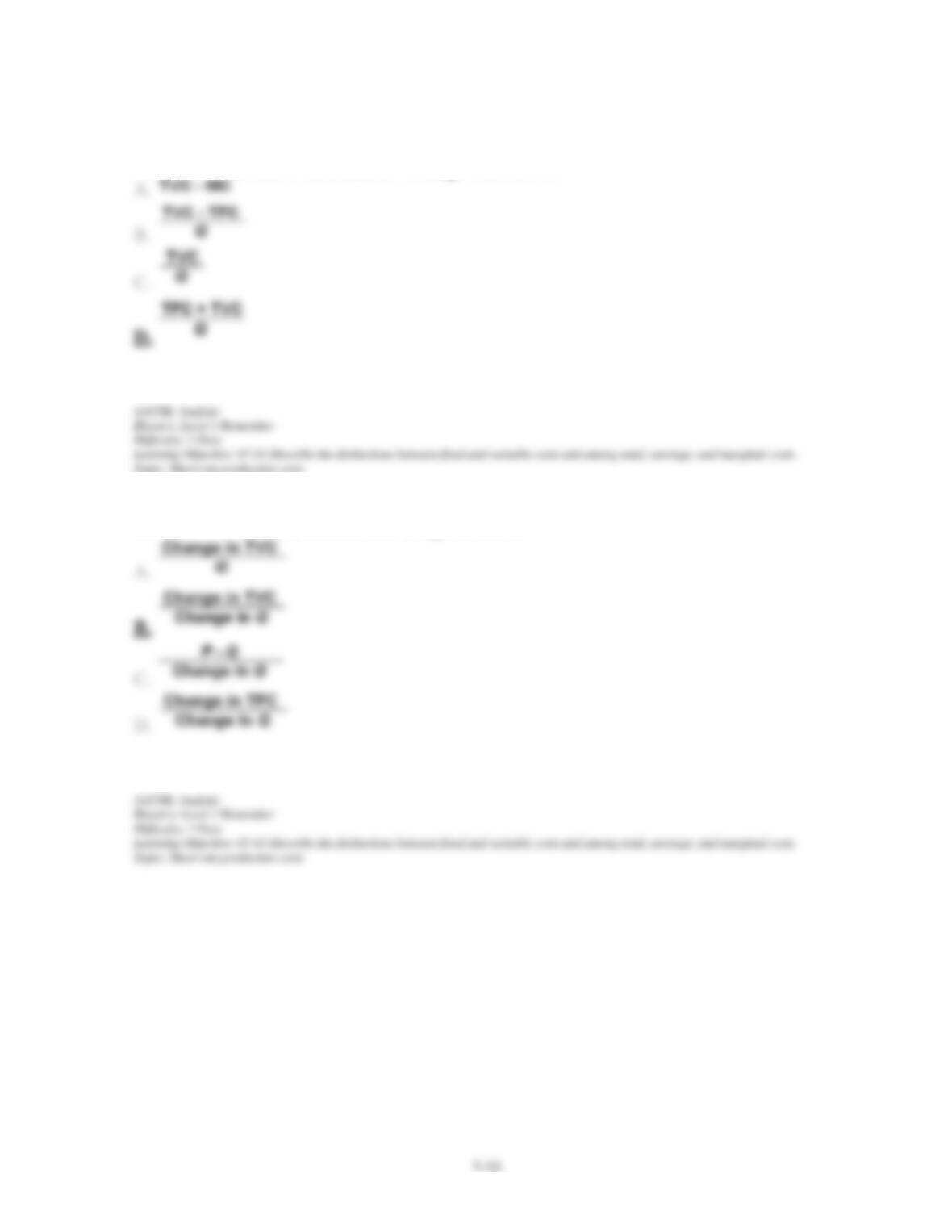
86. Refer to the above information. Average fixed cost is:
Chapter 07 – Businesses and the Costs of Production
87. Refer to the above information. Average total cost is:
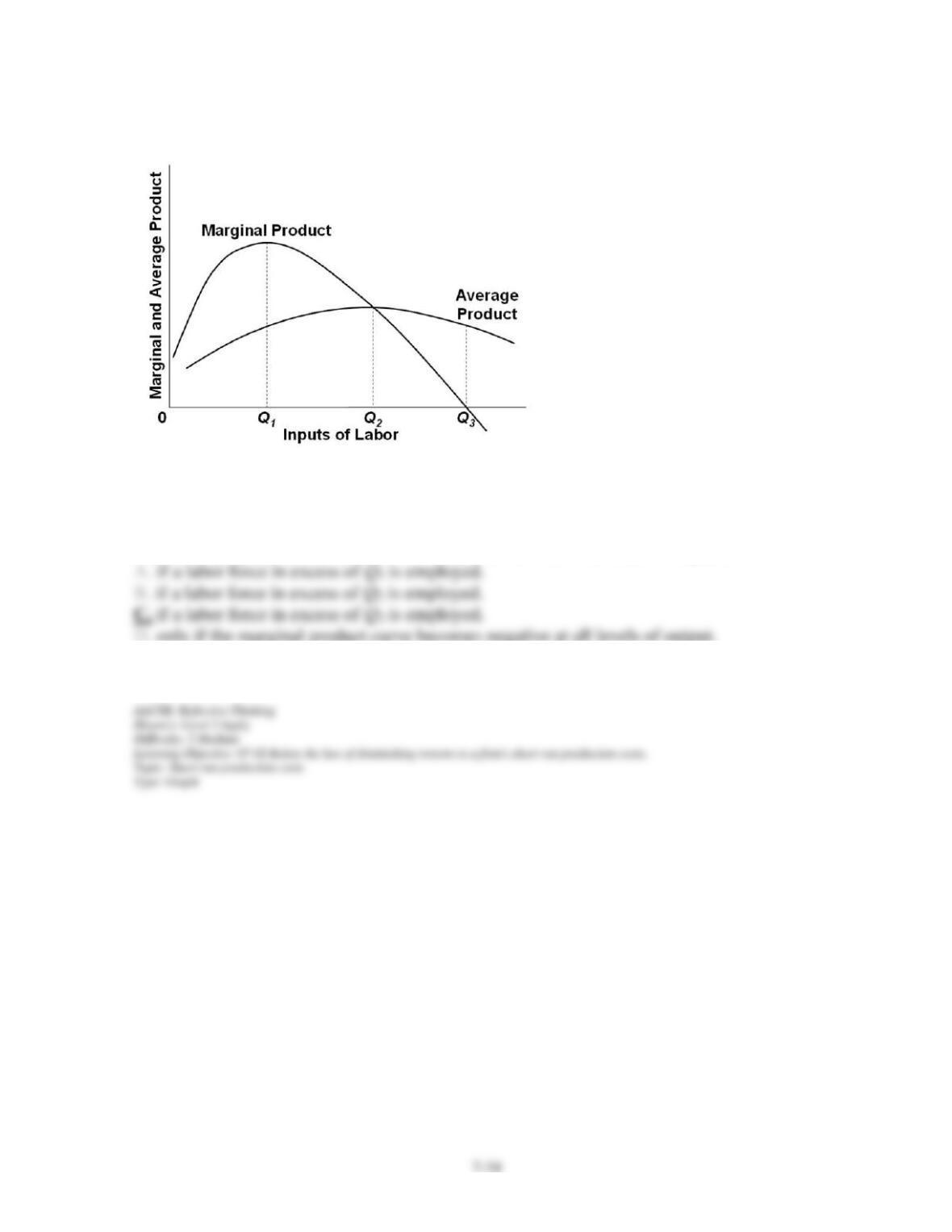
88. Refer to the above information. Marginal cost is:
Chapter 07 – Businesses and the Costs of Production
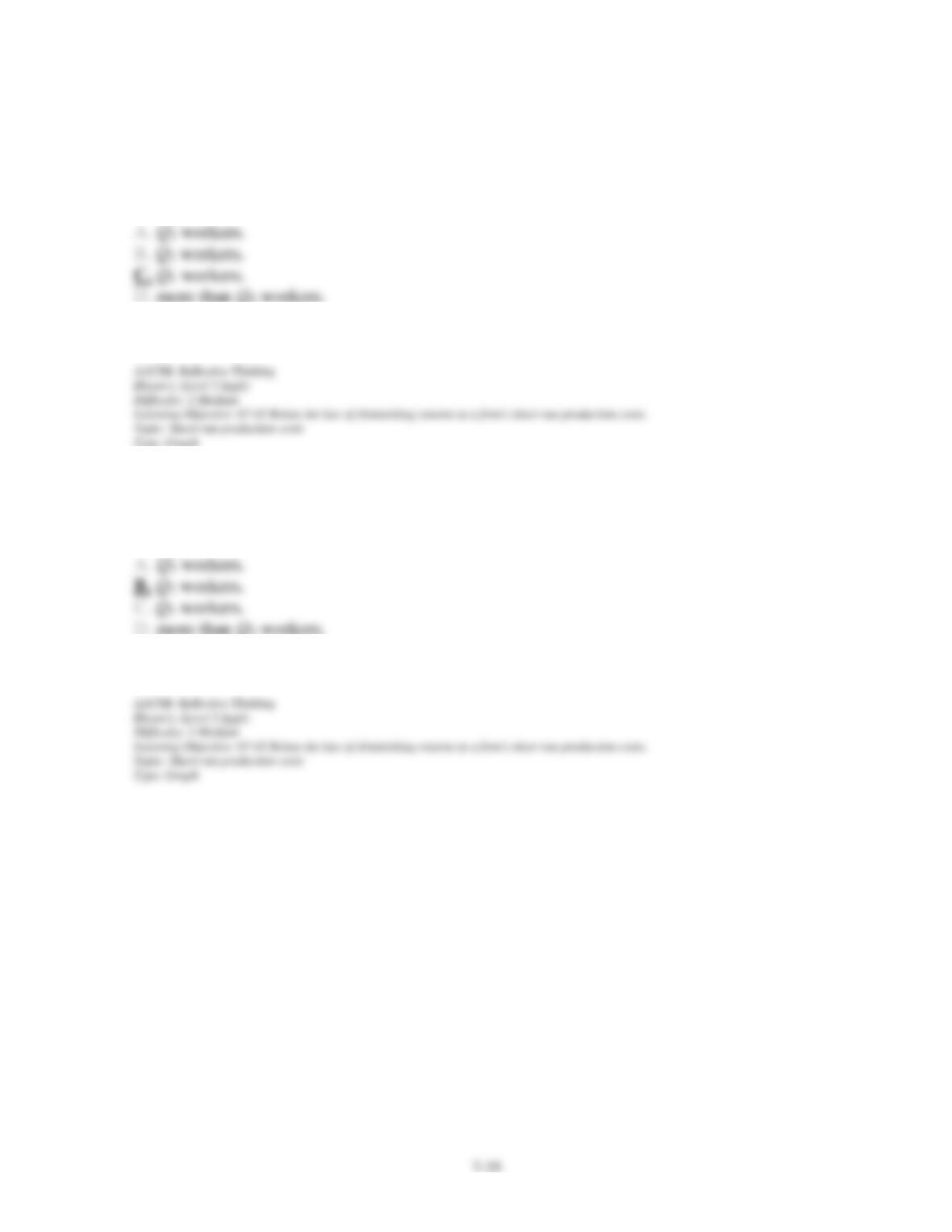
89. Refer to the above diagram, where variable inputs of labor are being added to a constant
amount of property resources. The total output of this firm will cease to expand:
Chapter 07 – Businesses and the Costs of Production
90. Refer to the above diagram, where variable inputs of labor are being added to a constant
amount of property resources. Marginal cost will be at a minimum for this firm when it is
hiring:
91. Refer to the above diagram, where variable inputs of labor are being added to a constant
amount of property resources. Average variable cost will be at a minimum when the firm is
hiring:
Chapter 07 – Businesses and the Costs of Production
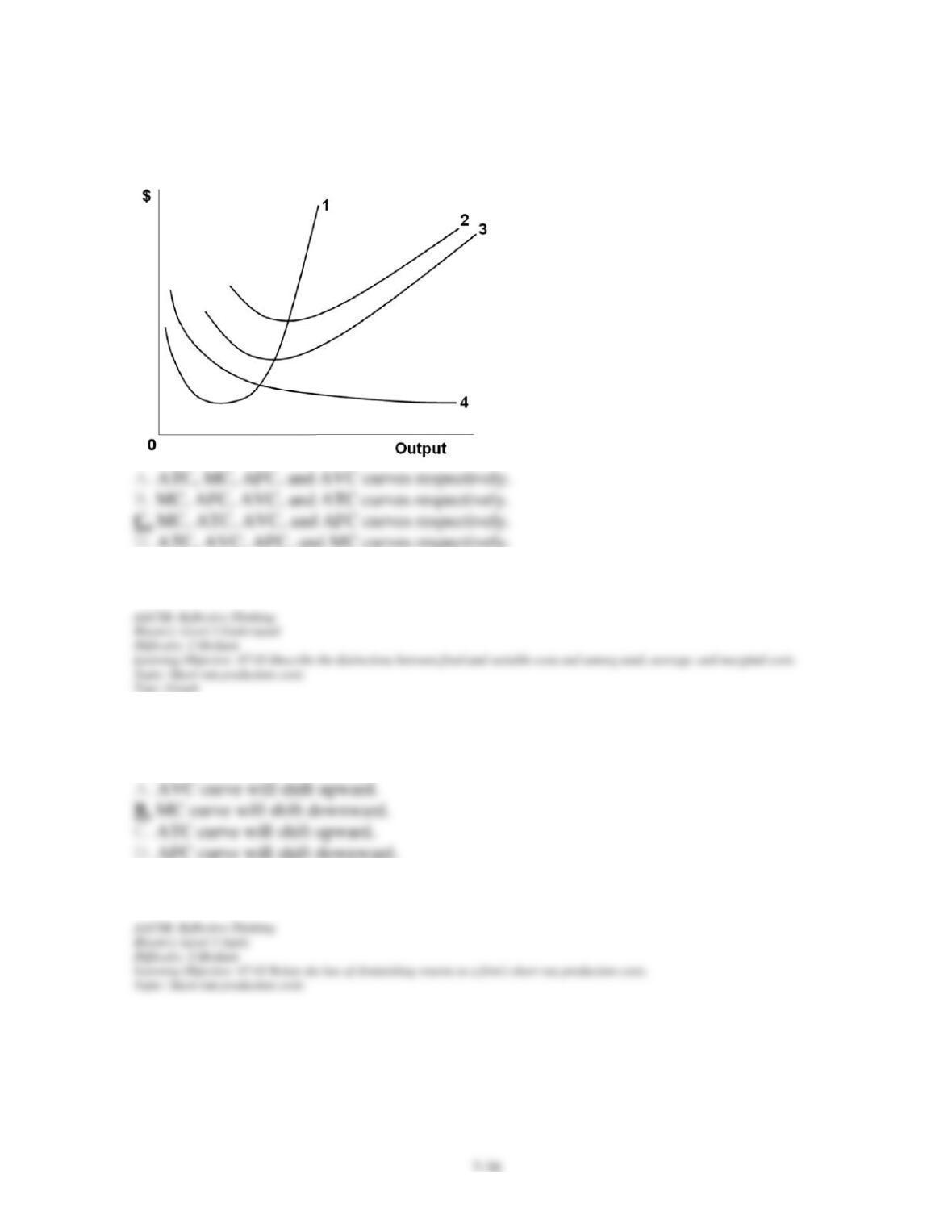
92. In the above figure, curves 1, 2, 3, and 4 represent the:
93. If a technological advance reduces the amount of variable resources needed to produce
any level of output, then the:
Chapter 07 – Businesses and the Costs of Production
94. In the short run, which of the following statements is correct?
95. Total fixed cost (TFC):
96. Fixed costs are associated with:
Chapter 07 – Businesses and the Costs of Production
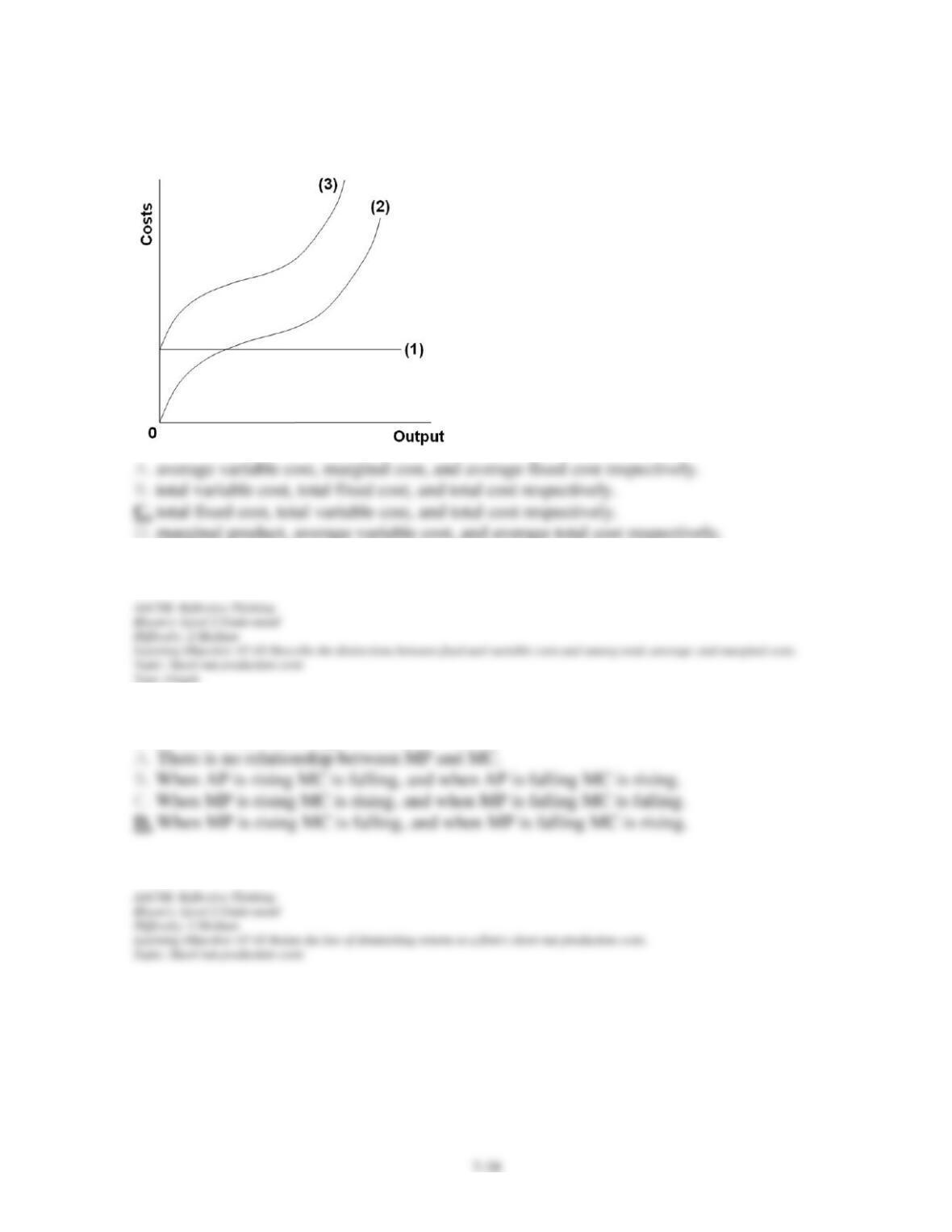
97. In the above diagram curves 1, 2, and 3 represent:
98. Which of the following is correct?
Chapter 07 – Businesses and the Costs of Production
99. If a firm wanted to know how much it would save by producing one less unit of output, it
would look to:
100. Which of the following holds true?
101. In the short run it is impossible for an expansion of output to increase:
Chapter 07 – Businesses and the Costs of Production
102. Average fixed costs can be determined graphically by:
103. The vertical distance between the total cost and the total variable cost curves differs by
an amount which:
104. The vertical distance between a firm’s ATC and AVC curves represents: