Chapter 7: Common Stock: Characteristics, Valuation, and Issuance
70.
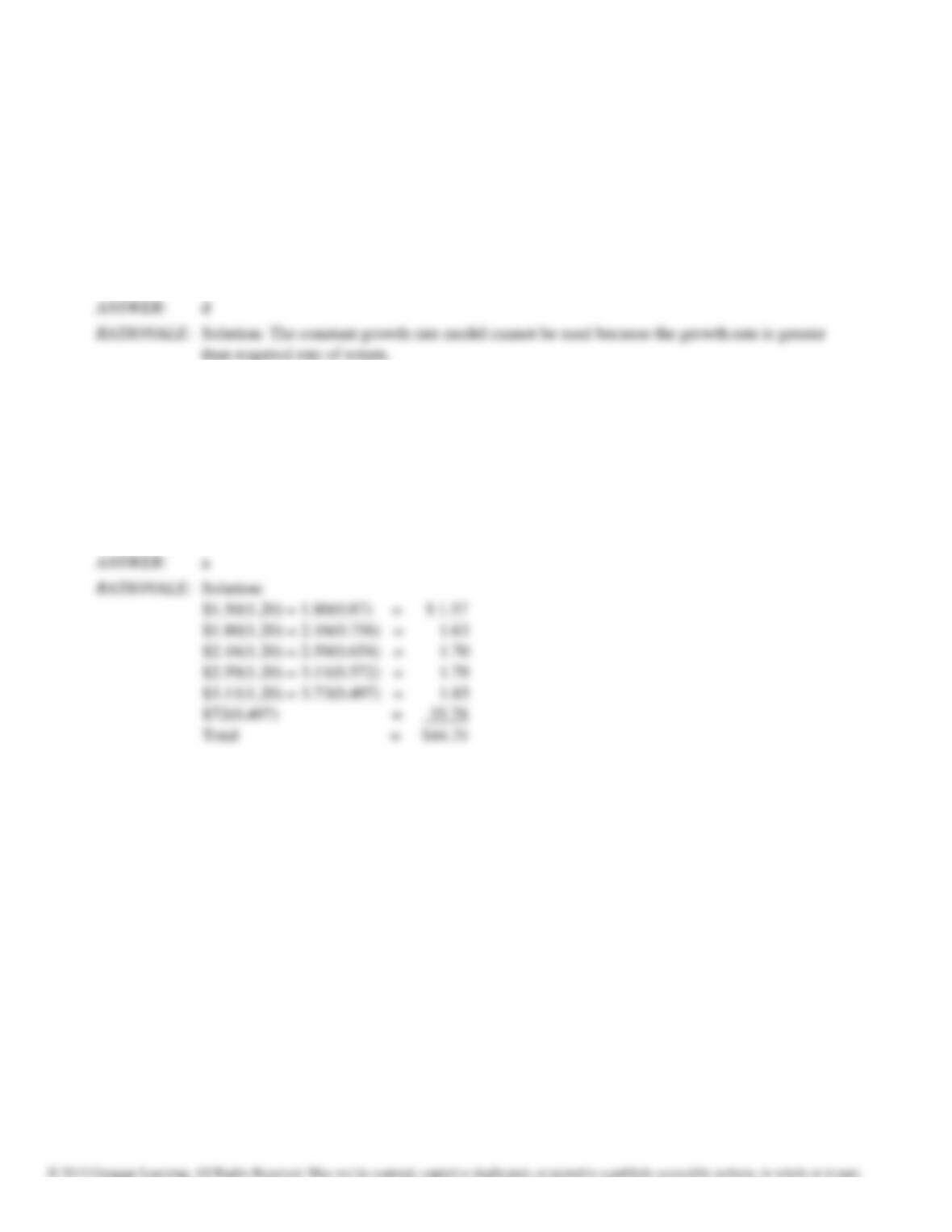
What is the current value of a share of Augat common stock if its current dividend is $1.50 and dividends are
expected to grow at the annual compound growth rate of 20 percent into the foreseeable future? Assume the
investor has a required rate of return of 15 percent, and expects to sell the security in 5 years.
a. $56.87
b. $30.00
c. $25.00
d. The constant growth rate model cannot be used because the growth rate is greater than the required rate of
return.
71.
What is the current value of a share of Chyrox if its current dividend is $1.50 and dividends are expected to
grow at an annual rate of 20 percent for the next 5 years? Assume the investor has a required rate of return of
15 percent and expects to sell the security in 5 years for $72.
a. $44.31
b. $35.78
c. $39.63
d. $72.00
Chapter 7: Common Stock: Characteristics, Valuation, and Issuance
72.
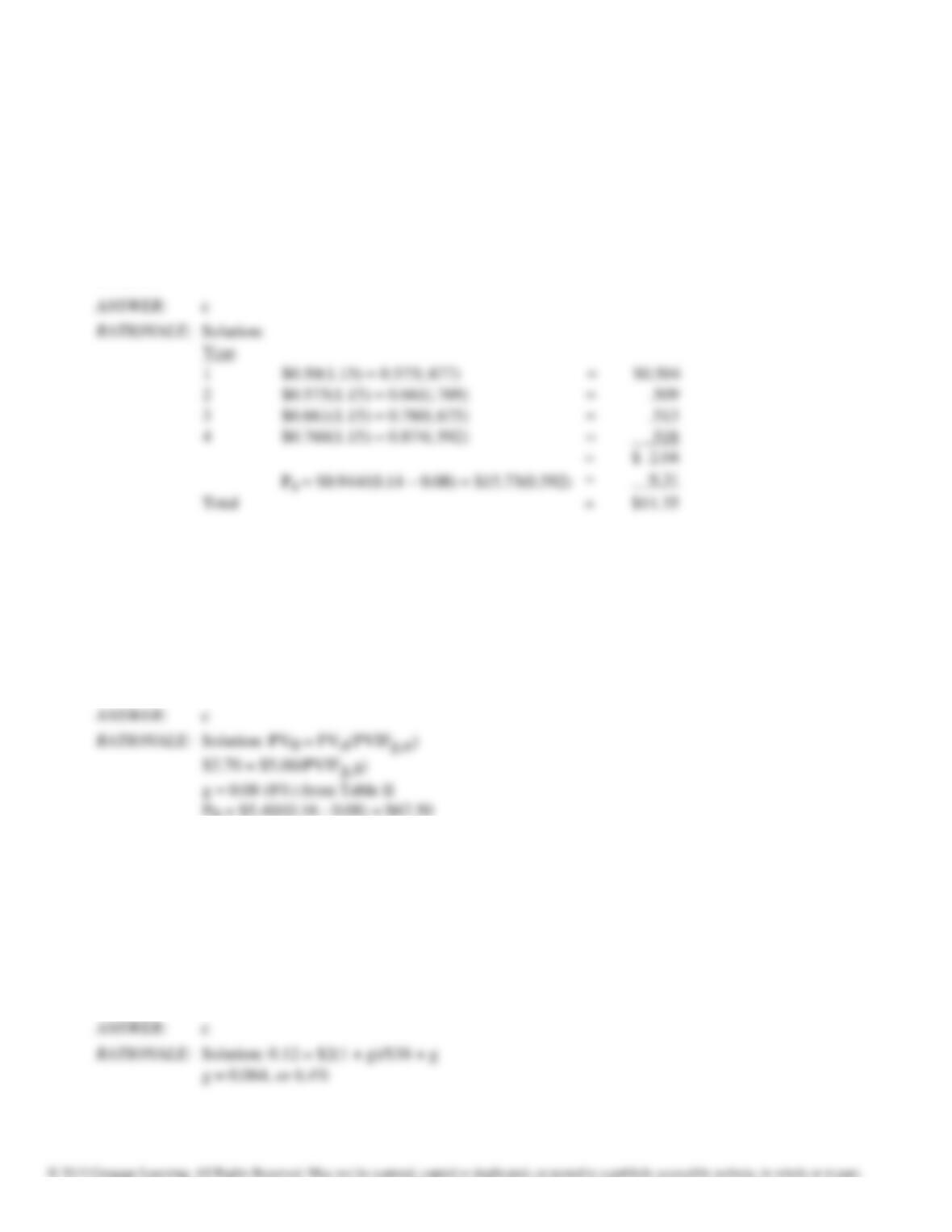
The earnings and dividends of Nebula Computer Co. are expected to grow at an annual rate of 15 percent over
the next 4 years and then slow to a constant growth rate of 8 percent per year. Nebula currently pays a
dividend of $0.50 per share. What is the value of Nebula stock to an investor who requires a 14 percent rate of
return?
a. $9.31
b. $15.73
c. $11.35
d. $2.04
73.
During the past 8 years, UTX Company common stock dividends have grown from $2.70 to $5.00 per share
(currently). Determine the value of UTX common stock to an investor who requires a 16% rate of return,
assuming that dividends continue growing for the foreseeable future at the same rate as over the past 8 years.
a. $62.50
b. $31.25
c. $67.50
d. $46.96
74.
Lawton Company common stock currently sells for $38 and pays (year 0) a dividend of $2. Determine the
implied growth rate for Lawton assuming that an investor’s required rate of return is 12% and that the stock
can be evaluated using a constant growth valuation model.
a. 6.74%
b. 17.26%
c. 6.40%
d. 3.80%
Chapter 7: Common Stock: Characteristics, Valuation, and Issuance
75.
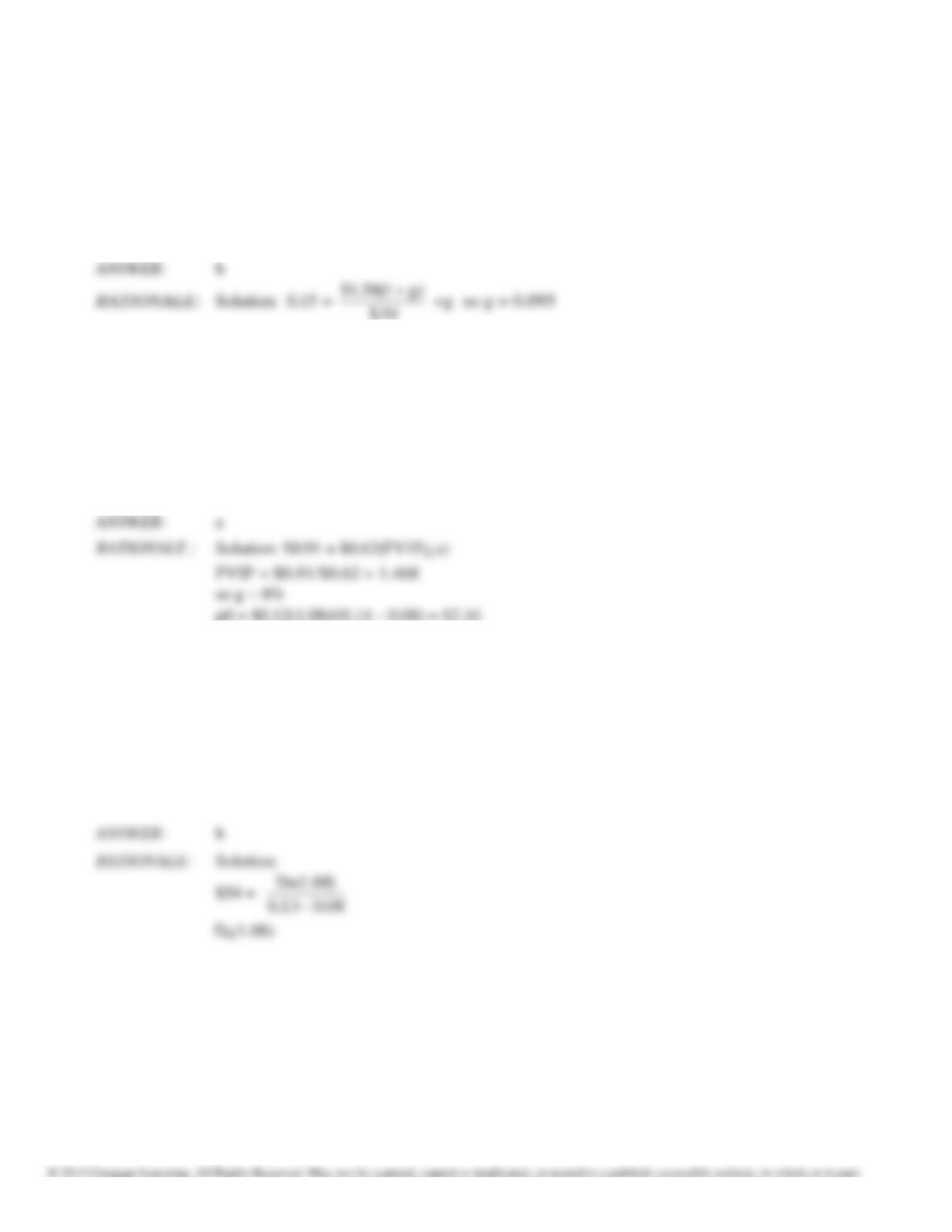
Helix common stock currently sells for $30 and its current dividend is $1.50. If the required rate of return on
Helix stock is 15%, what is the implied growth rate of its earnings and dividends?
a. 13.5%
b. 9.5%
c. 10.0%
d. 30.0%
76.
Over the past 5 years, Dippity Doo-Dah Party Dips’ common stock earnings per share have grown from $0.62
to $0.91. If an investor in Dippity’s stock is assumed to have a required rate of return of 14%, what is the
current value of Dippity if its current dividend is 0.12? Assume EPS will continue to grow at a constant rate.
a. $2.16
b. $1.62
c. $4.94
d. $2.00
77.
High Brow Cow Farms, producers of the finest dairy products, has common stock that sells for $54.
Dividends are expected to continue to grow at a rate of 8% annually. If investors in High Brow require a 13%
rate of return, what is the current dividend?
a. $2.70
b. $2.50
c. $4.00
d. $3.25
Chapter 7: Common Stock: Characteristics, Valuation, and Issuance
78. Keeping Pace Enterprises, makers of track and field equipment, has common stock that sells for $29, and its
dividends are expected to grow at a rate of 9 percent annually. If investors in Pace require a return of 14%,
what is the expected dividend next year?
a. $1.33
b. $2.40
c. $1.45
d. $1.60
79. The common stock of Kute & Kuddly Kids Clothes, Inc. currently sells for $88.50 and its current (D0)
dividend is $1.10. Determine the implied growth rate for Kute assuming that an investor’s required rate of
return is 14% and that earnings and dividends are expected to grow at a constant rate.
a. 13.9%
b. 12.3%
c. 13.8%
d. 12.6%
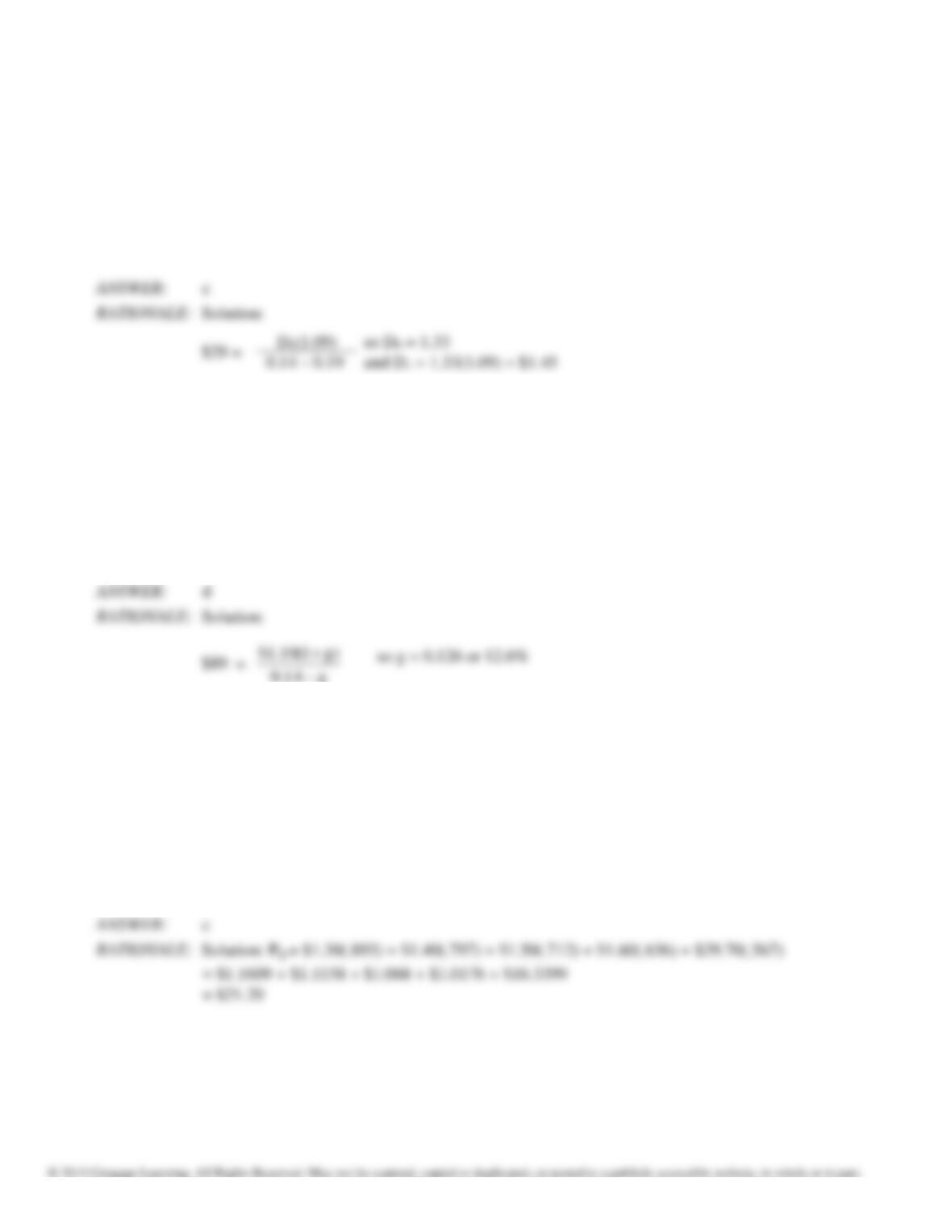
80. Helluva stock currently pays a dividend of $1.20 per share. Dividends are expected to increase at the rate of
$0.10 per share for the next eight years. Determine the current value of Helluva common stock to an investor
who expects to be able to sell the stock for $28 after 5 years. Assume that the investor requires a 12 percent
rate of return on the security.
a. $66
b. $28
c. $21.20
d. $15.88
Chapter 7: Common Stock: Characteristics, Valuation, and Issuance
81. Over the past 10 years the dividends of Allegro have grown from $0.45 to $1.82 per share. Determine the
value of Allegro’s common stock to an investor who requires a 20% rate of return, assuming that dividends
continue growing at the same rate as they grew over the past 10 years.
a. $36.40
b. $41.86
c. $43.68
d. $20.93
82. Zimmer’s common stock sells for $37 and its dividend is expected to grow at a rate of 8 percent annually.
What is the expected dividend (D1) given that an investor requires a return of 16 percent?
a. $2.74
b. $3.20
c. $5.92
d. $2.96
83. The earnings of Foggy Futures Weather Forecasting Company are expected to grow at an annual rate of 14%
over the next 5 years and then slow to a constant rate of 10% per year. Foggy currently pays a dividend of
$0.36 per share. What is the value of Foggy’s stock to an investor who requires a 16% rate of return?
a. $7.97
b. $7.76
c. $14.42
d. $11.11
Chapter 7: Common Stock: Characteristics, Valuation, and Issuance
84. During the past 10 years, Saturn’s common stock dividends have grown from $0.24 to $0.62. If the past
growth of dividends is expected to continue at the same rate in the future, what is the current value of Saturn’s
common stock to an investor who requires an 18% rate of return?
a. $7.75
b. $3.79
c. $8.53
d. $10.42
85. HiGlo’s common stock sells for $23.50 and its earnings are expected to grow at a rate of 12% annually. What
is the current dividend (D0) for an investor who requires a 15% return?
a. $0.71
b. $0.63
c. $0.34
d. $0.31
86. During the past 7 years, Burger Flippin’ Corp.’s earnings have grown from $0.75 to $1.95 per share. If the
past growth rates are expected to continue into the future, what is the current value of Flippin’s common stock
to an investor who requires a 16% rate of return?
a. $97.50
b. $13.93
c. $111.15
d. $48.50
Chapter 7: Common Stock: Characteristics, Valuation, and Issuance
87. Quantum, Inc. has 5.4 million shares outstanding and the firm’s charter provides for cumulative voting. The
company has a twelve-member board of directors, all of whom are up for reelection. What is the minimum
number of shares needed to ensure the election of one director?
a. 450,001
b. 415,386
c. 431,251
d. 425,421
88. AVTX has 6.8 million shares outstanding and the firm’s chatter provides for cumulative voting. The company
has a seven member-board of directors, all of whom are up for reelection. What is the minimum number of
shares needed to ensure the election of two directors?
a. 850,001
b. 5,950,001
c. 3,400,001
d. 1,700,001
Chapter 7: Common Stock: Characteristics, Valuation, and Issuance
89. What is the estimated price of Once in a Blue Moon stock that has the following dividends? The return on
similar investments is I8%. (Round the growth rate to the nearest whole percent)
YEAR
DIVIDENDS
2014
$2.50
2013
$2.48
2012
$2.36
2011
$2.32
a. $17
b. $13
c. $22
d. $50
90. Listed below are some of the responsibilities of investment bankers. Which of the following is NOT one of
them?
a. They can purchase securities
b. They market securities
c. They directly influence the objectives and direction of the company.
d. They arrange private loans and leases
91. The zero growth method is used to value
a. common stock
b. required rate of return
c. bonds
d. preferred stock

Chapter 7: Common Stock: Characteristics, Valuation, and Issuance
92. All of the following are ways that securities are offered to the public in a public offering EXCEPT:
a. Securities are sold through competitive bidding
b. Securities are sold through negotiated underwriting to a purchasing syndicate
c. Securities are sold through excess-market pricing
d. Securities are sold on a best efforts basis
93. In a liquidation of a firm due to bankruptcy, which of the following usually gets paid last?
a.
bondholders
b.
preferred stockholders
c.
common stockholders
d.
employees wages
94. The returns from most common stocks are
a.
positively correlated with each other
b.
negatively correlated with each other
c.
uncorrelated with each other
d.
correlated to future forecasted earnings
Chapter 7: Common Stock: Characteristics, Valuation, and Issuance
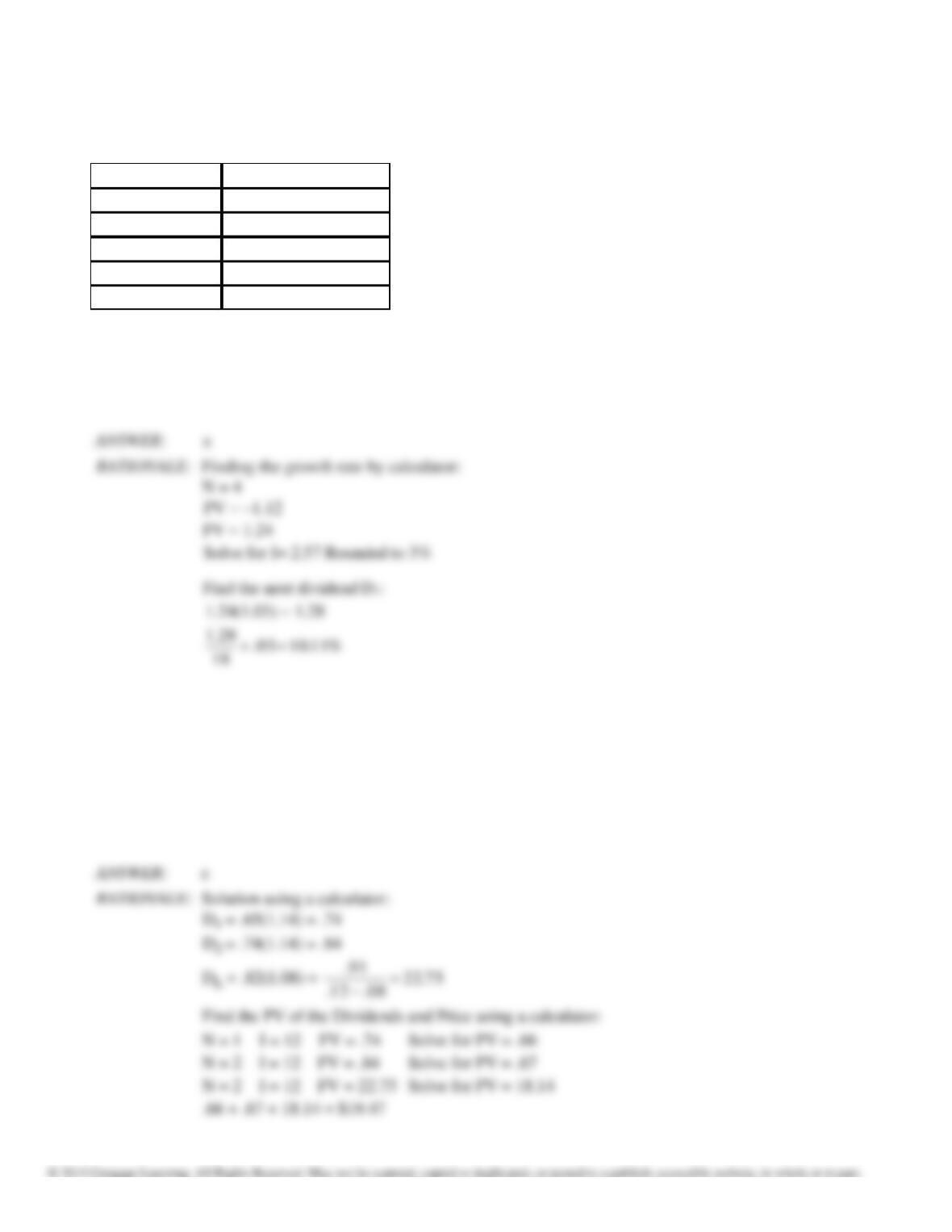
95. By-Your-Leave Travel Agency has reported the dividends listed below. What return could be expected? The
price of the stock is $18. (Round the growth rate to the nearest whole percent)
Years
Dividends
2010
$1.12
2011
$1.15
2012
$1.18
2013
$1.21
2014
$1.24
a.
10.11%
b.
12.02%
c.
8.15%
d.
9.74%
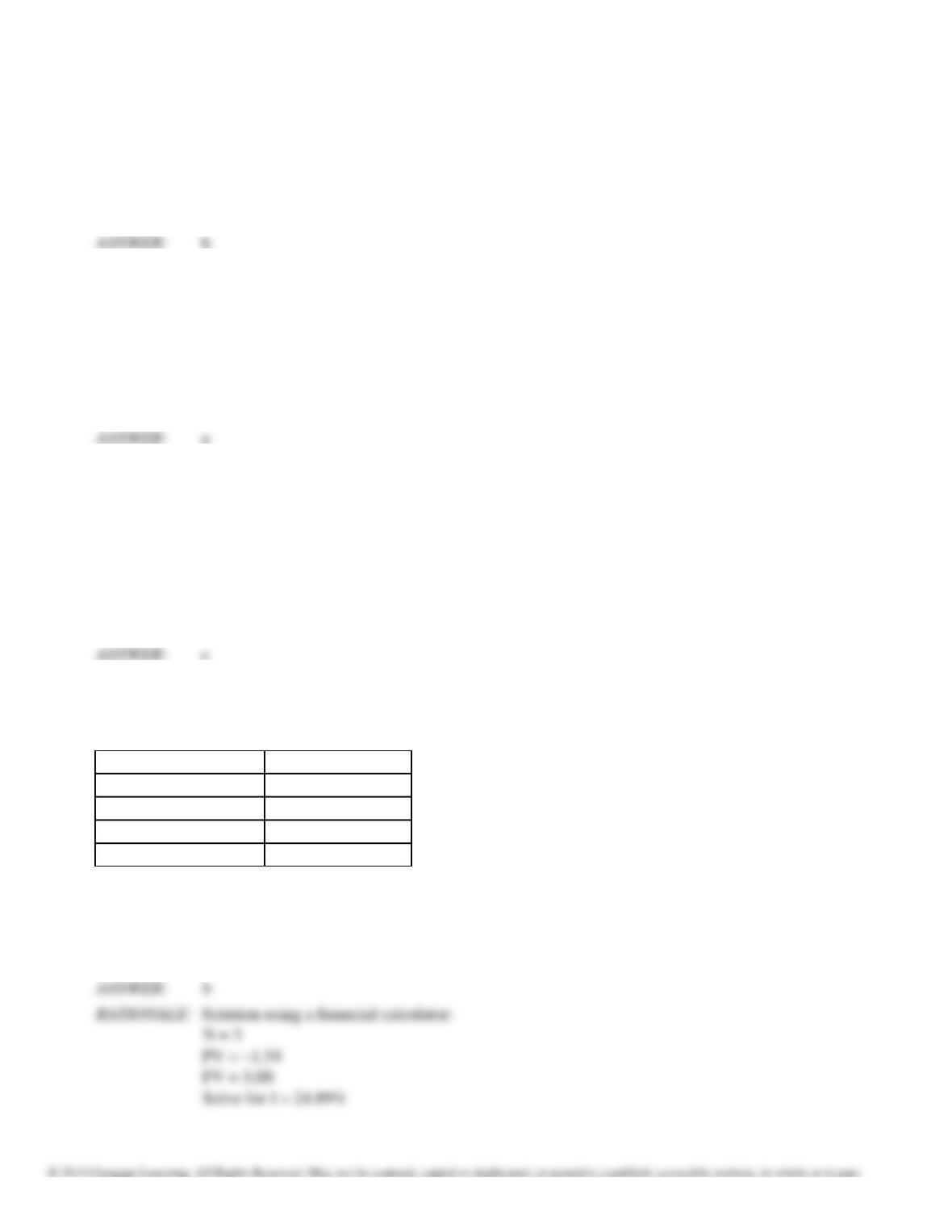
96. Chill Pill Pharmaceuticals is expecting a growth rate of 14% for the next two years due to its new drug.
Thereafter it should level to an 8% growth rate. The last dividend paid was $.65 per share. What price should
the stock sell for if investors require 12% return.
a.
$18.14
b.
$22.75
c.
$19.47
d.
$20.16
Chapter 7: Common Stock: Characteristics, Valuation, and Issuance
97. Common stockholders’ claim on assets is considered after which of the following:
a. Board of Directors’ pay
b. Preferred Stockholders
c. Both a and b
d. Neither a nor b
98. If Crafty Creatures Cage Maker stock sells for $18 per share and the firm nets $12 per share, the difference
is called the:
a. Underwriting Spread
b. Profit
c. SEC charge
d. Refund
99. An option for selling securities reserved for larger firms (MVE > $150,000,000) whereby the firm files a
master registration statement and then can small increments of the stock over the next two years by filing a
short form statement is called:
a. SEC Registration
b. Red Herring
c. Shelf Registration
d. Commission Registration
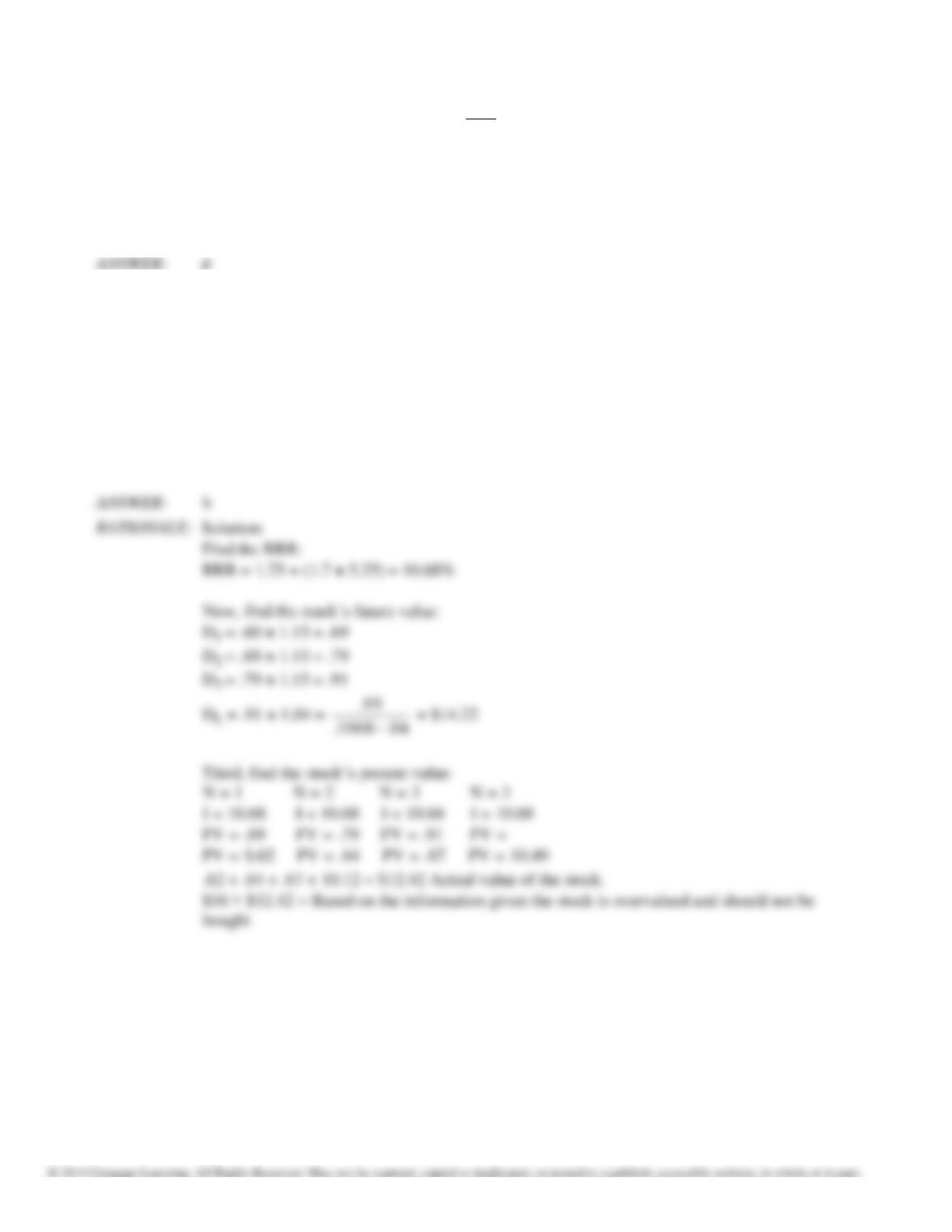
100. King of the Roost Chicken Farms has issued the following dividends. What would be the growth rate in
dividends (rounded)?
YEARS
DIVIDENDS
2014
$3.00
2013
$2.50
2012
$1.75
2011
$1.54
a. 15%
b. 25%
c. 12%
d. 21%
Chapter 7: Common Stock: Characteristics, Valuation, and Issuance
101. In valuing a company that sells products and services, is the most important factor in the valuation of
closely held firms.
a. management effectiveness
b. profit
c. cash on hand
d. earnings capacity
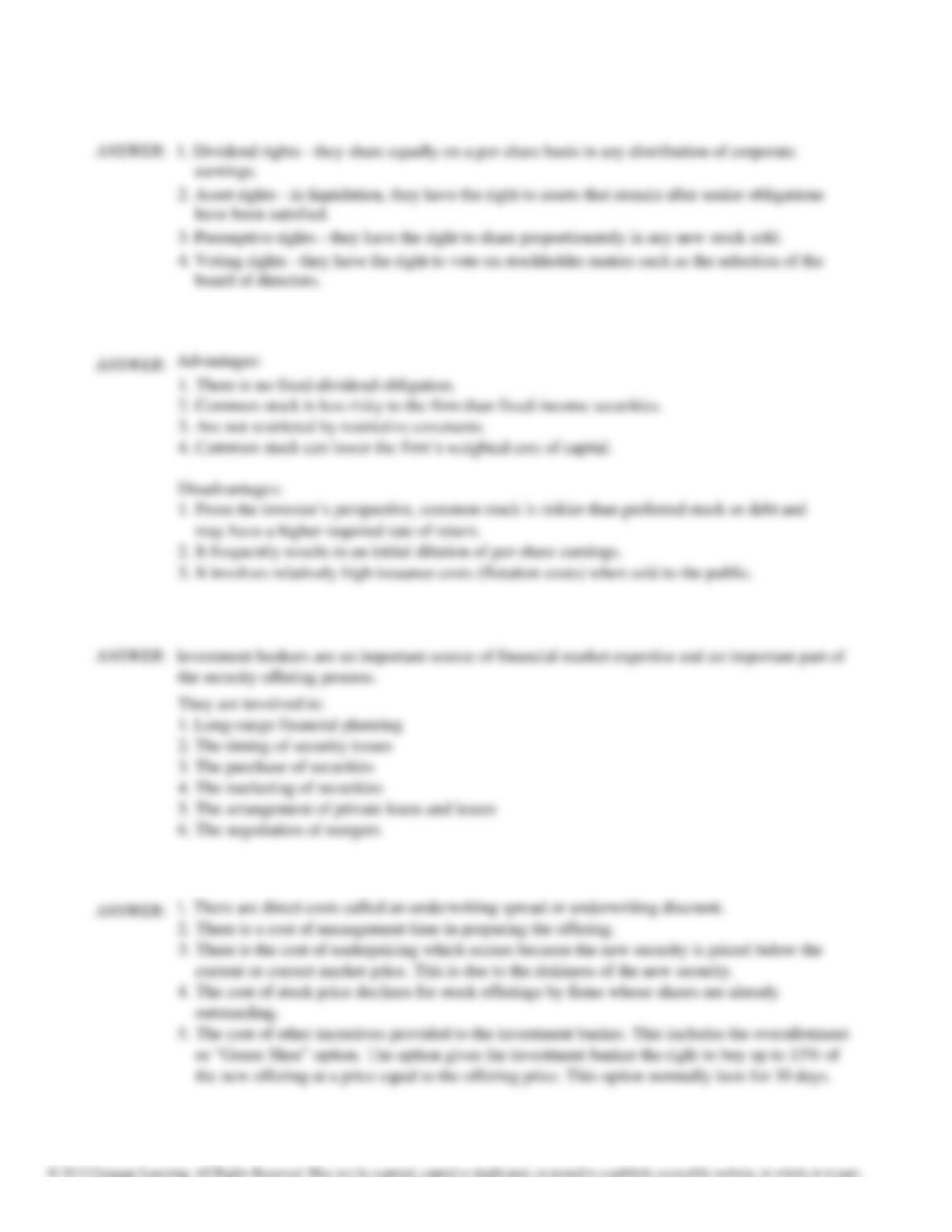
102. Haulin’ It Towing Company is selling a stock for $16. The stock just paid a dividend of $.60 and this
dividend is expected to grow by 15% per year for three years. After that it will grow at a constant rate of 4%.
The stock’s beta is 1.7, the risk-free rate of interest is 1.75% and the market risk premium is 5.25%. Should
you buy the stock? (Round to dollars and cents or two decimal points)
a. No, the stock is not a good value since it is only worth about $8.
b. No, the stock is not a good value since it is only worth about $12.
c. Yes, the stock is a good value since it should sell for about $25.
d. Yes, the stock is a good value since it should sell for about $18.
Chapter 7: Common Stock: Characteristics, Valuation, and Issuance
103. List the various rights of common stockholders.
104. What are the advantages and disadvantages of common stock financing?
105. List the responsibilities of investment bankers.
106. What are some of the costs associated with new security offerings?
Chapter 7: Common Stock: Characteristics, Valuation, and Issuance
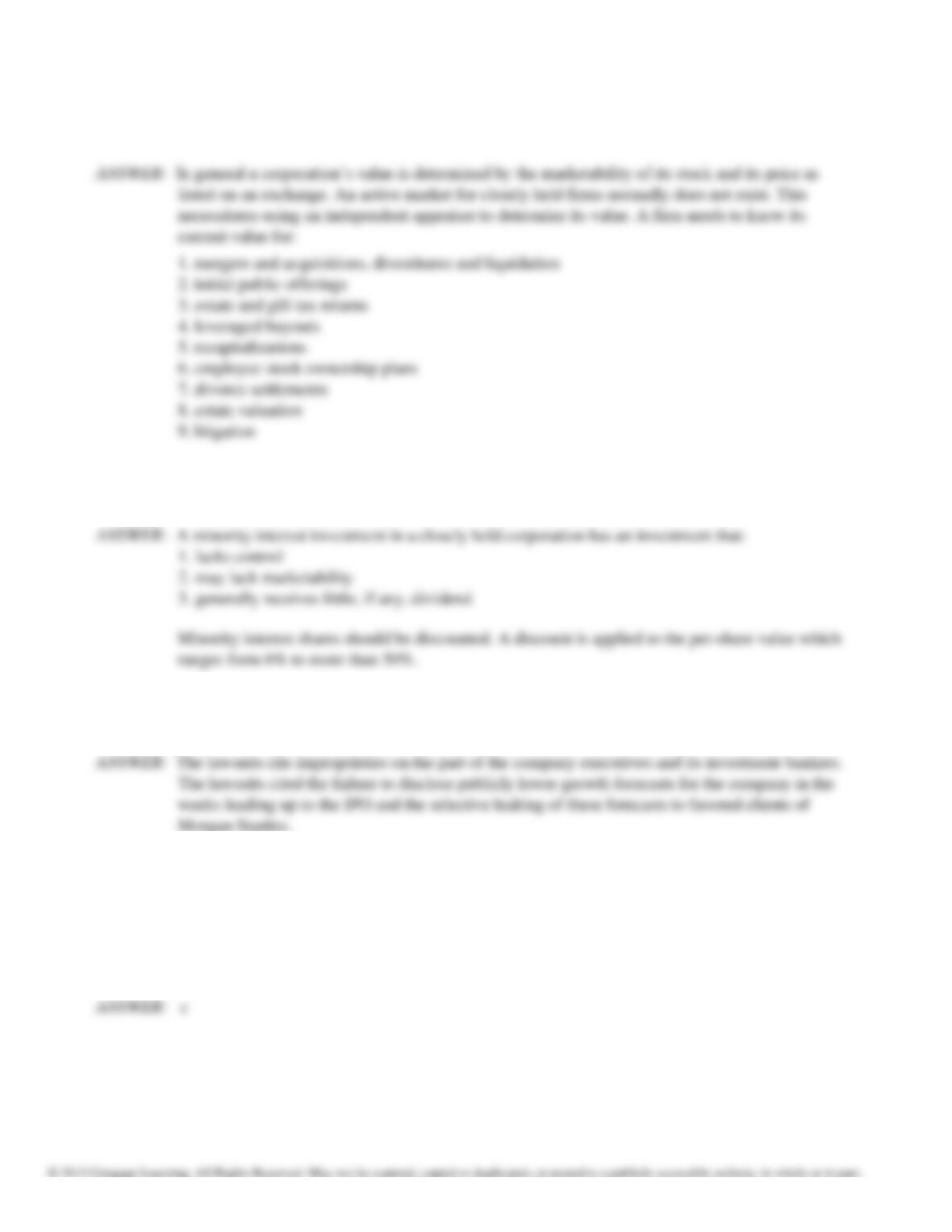
107. Why do closely held firms need to have an outside appraiser to determine their value? What are the reasons
for valuation?
108. What are the disadvantages of owning minority interest in a closely held corporation and how can this be
overcome?
109. When Facebook launched its IPO, the sale of the stock did not go as planned. In fact, class action lawsuits
have been filed. What is the accusation against Facebook?
110. All of the following statements about common stock are correct EXCEPT:
a. common stock is a variable income security.
b. common stock prices fluctuate more than bonds.
c. common stock is callable.
d. common stockholders have preemptive rights

Chapter 7: Common Stock: Characteristics, Valuation, and Issuance
111. Of the following common stock rights, which allows common stockholders to buy more shares of common
stock in order to retain their pro-rata share of ownership in the company?
a. asset rights
b. preemptive rights
c. dividend rights
d. voting rights
112. Stock splits are:
a. a sign that the company is in need of more financial capital
b. a sign that the company’s stock price is too low.
c. a sign that the company wants to get its stock price to a more desirable trading level.
d. a sign that the company cannot pay its stock dividend.
113. If a company offers more than one class of stock, corporate governance experts feel that:
a. that this is more democratic since some shares are more expensive than others.
b. that this is preferable in order to provide a special class of nonvoting stock to executives.
c. super-voting power allows for the election of directors that benefit a specific class of stock.
d. decisions made by the dual class system is more advantageous for the average investor.
114. Which of the following statements about common stock voting is/are correct?
I. Majority voting typically prohibits a group of stockholders with a minority viewpoint from having any
representation on the board.
II. Cumulative voting allows each share of stock to represent as many votes as there are directors to be
elected.
a. Only statement I is correct
b. Only statement II is correct
c. Both statement I and statement II are correct
d. Neither statement I nor statement II is correct.
115. All of the following are reasons that companies hold treasury stock EXCEPT:
a. to comply with SEC regulations that a certain amount of company shares must be kept by the company.
b. disposition of excess cash
c. financial restructuring
d. future corporate needs