Chapter 06 – Consumer Behavior (+ Appendix)
108. A leftward shift of a consumer’s budget line to a position parallel with the original one
could indicate that the:
109. Suppose a consumer has an income of $16, the price of A is $2, and the price of B is $1.
Which of the following combinations is on the consumer’s budget line?
110. If a consumer has an income of $200, the price of X is $5, and the price of Y is $10, the
maximum quantity of X the consumer is able to purchase is:
Chapter 06 – Consumer Behavior (+ Appendix)
111. A consumer has an income of $200, and the price of X is $5 while the price of Y is $10.
If the consumer buys 8 units of X, then the maximum quantity of Y that she could also buy
is:
112. The income of a consumer is $40, the price of A is $8, and the price of B is $4. If the
quantity of A is measured vertically, then the slope of the budget line is:
Chapter 06 – Consumer Behavior (+ Appendix)
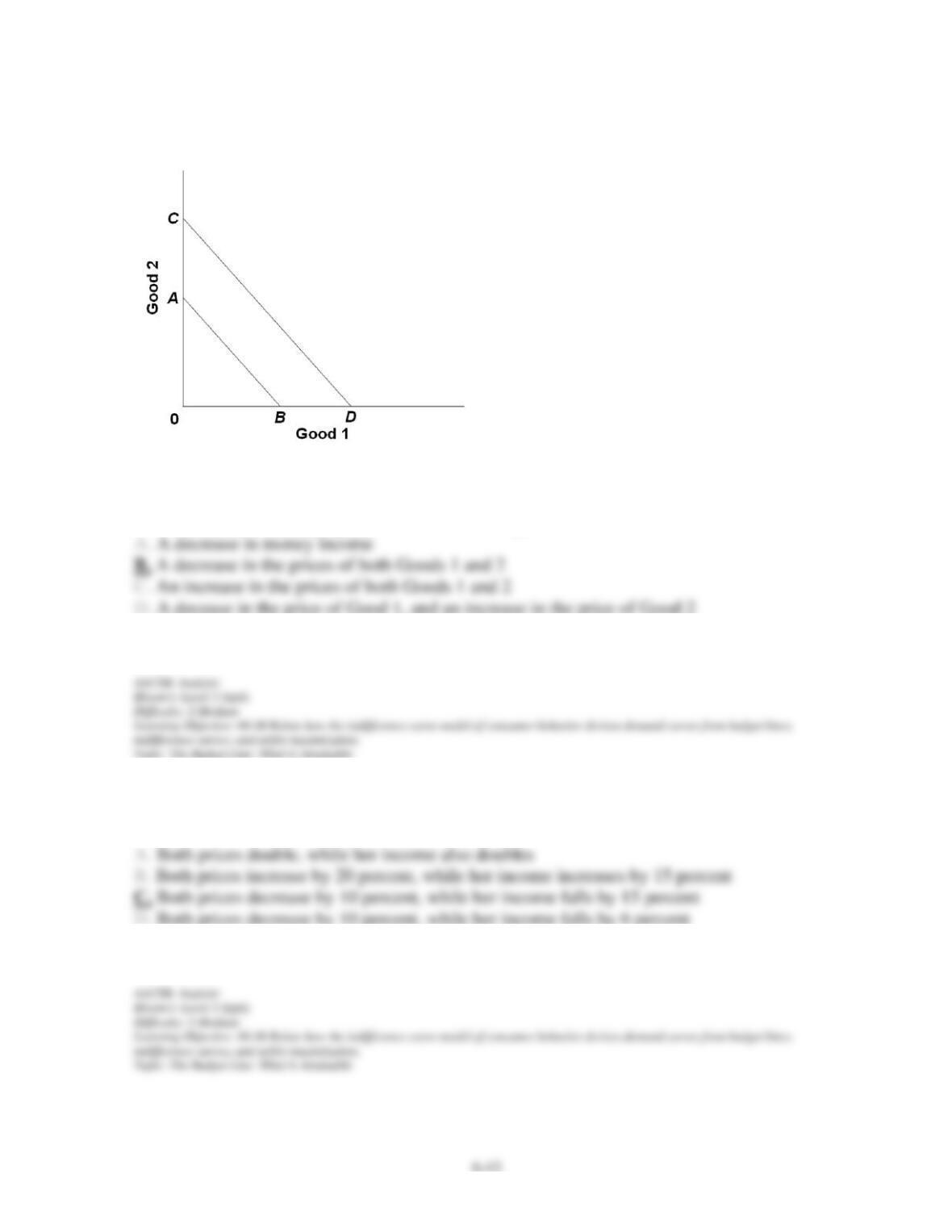
113. Refer to the above graph. The shift of the budget line from AB to CD is consistent with:
114. Refer to the diagram above. Cheri’s budget line shifts inward from CD to AB. Which
statement below is consistent with this shift?
Chapter 06 – Consumer Behavior (+ Appendix)
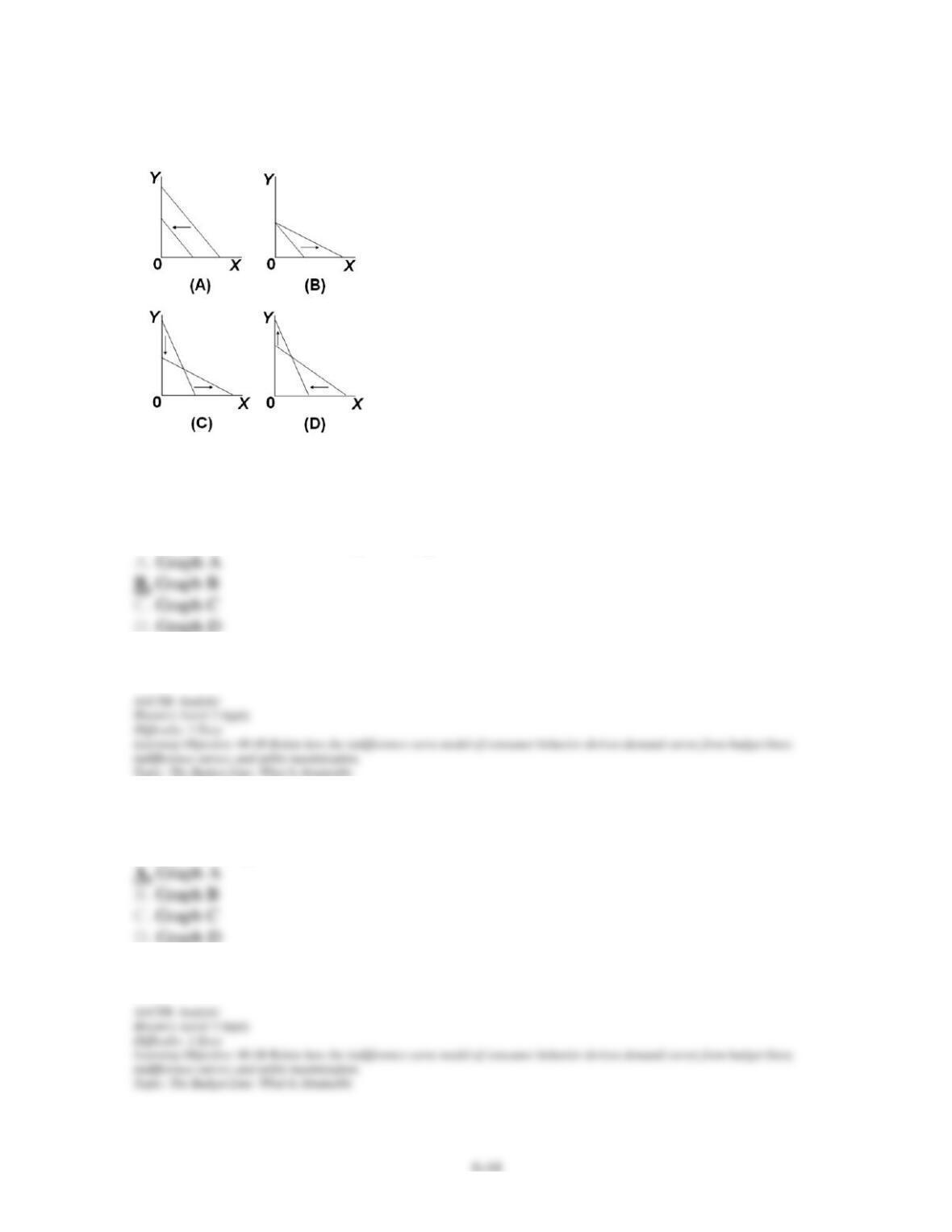
115. Refer to the above graphs. Which graph shows a change in the price of X, but no changes
in the price of Y and in the buyer’s budget?
116. Refer to the above graphs. Which graph shows a change in the buyer’s income, but no
changes in the prices of X and Y?
Chapter 06 – Consumer Behavior (+ Appendix)
6-45
117. Refer to the above graphs. Which graph shows an increase in the prices of X and Y, but
no change in the buyer’s budget?
118. Refer to the above graphs. Which graph shows an increase in the price of X and a
decrease in the price of Y?
Chapter 06 – Consumer Behavior (+ Appendix)
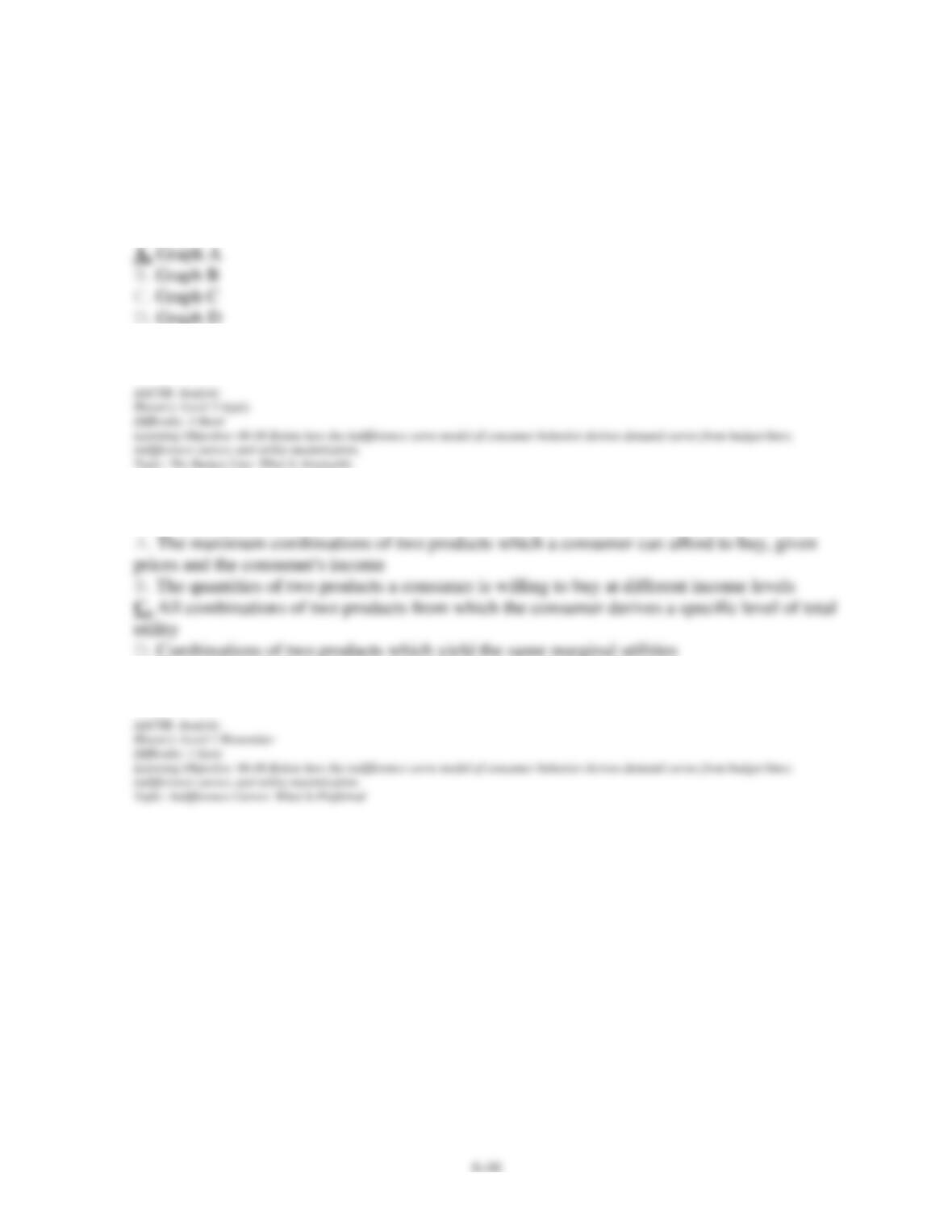
119. Refer to the above graphs. Pizza and beer are the only two goods Jon consumes. The
price of beer is $2.00 per pitcher and pizza is $1.25 per slice. If Jon has only $10 to spend for
the evening, which graph represents the set of possible combinations of beer and pizza that he
can buy?
120. An indifference curve shows:
Chapter 06 – Consumer Behavior (+ Appendix)
6-47
121. If two combinations of goods X and Y give a consumer equal satisfaction, then these two
combinations must both be on the same:
122. The marginal rate of substitution of beef for chicken is the:
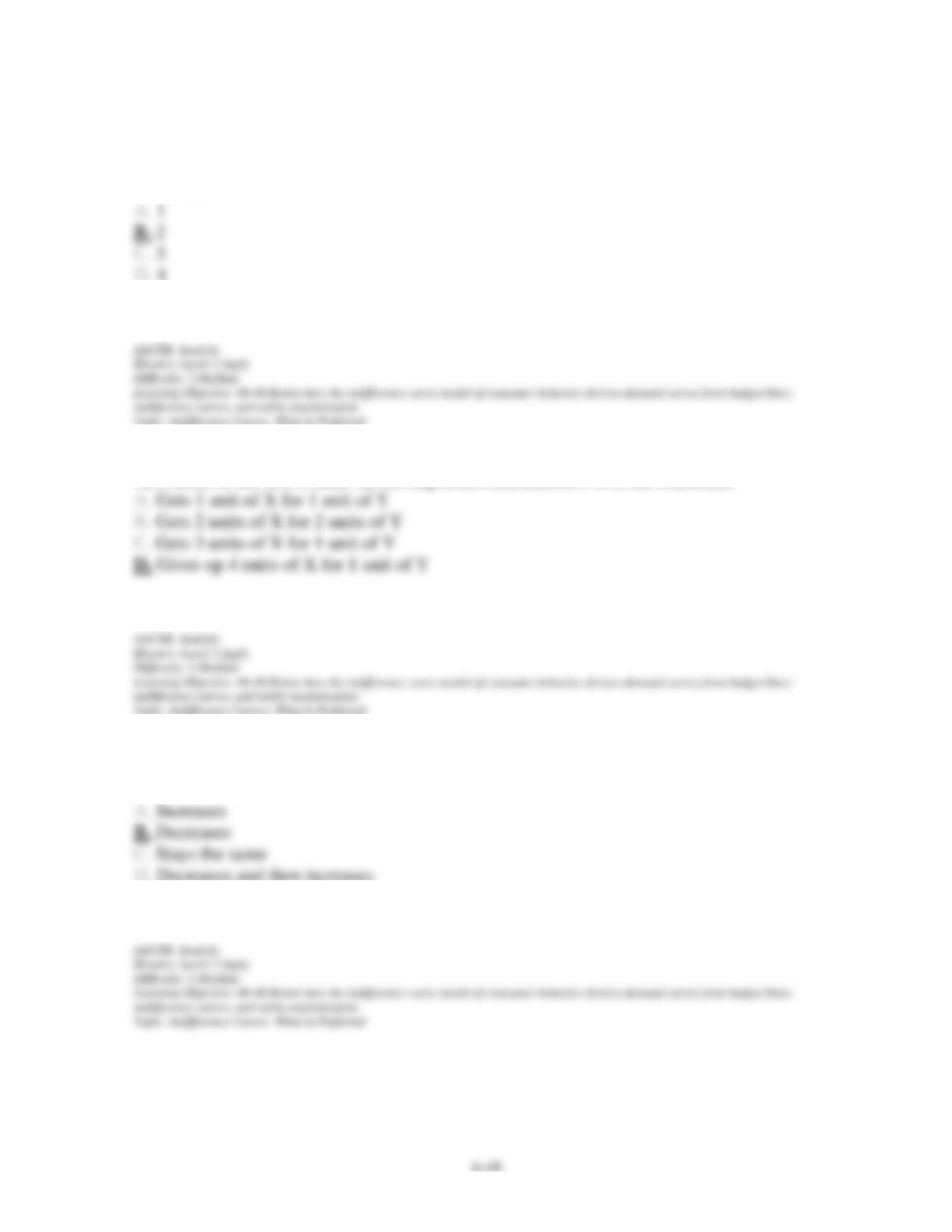
The table shows an indifference schedule for several combinations of X and Y.
Chapter 06 – Consumer Behavior (+ Appendix)
123. Refer to the above table. How much of X is the consumer willing to give up to obtain the
fourth unit of Y?
125. Refer to the above table. In moving from combination a to e, the marginal rate of
substitution of X for Y:
Chapter 06 – Consumer Behavior (+ Appendix)
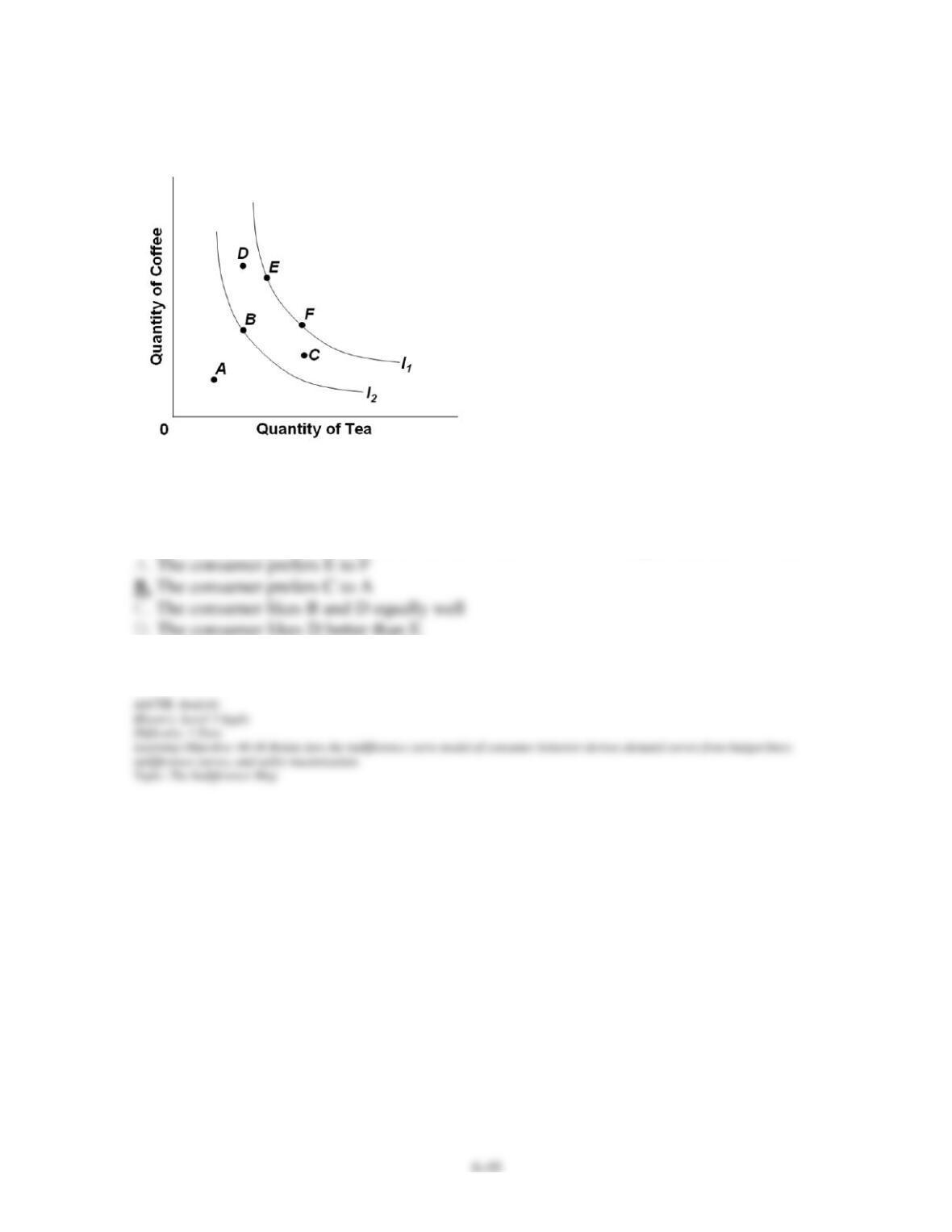
126. The graph above shows part of a consumer’s indifference map for units of coffee and tea,
where I1 and I2 represent indifference curves. Which of the following statements is correct?
Chapter 06 – Consumer Behavior (+ Appendix)
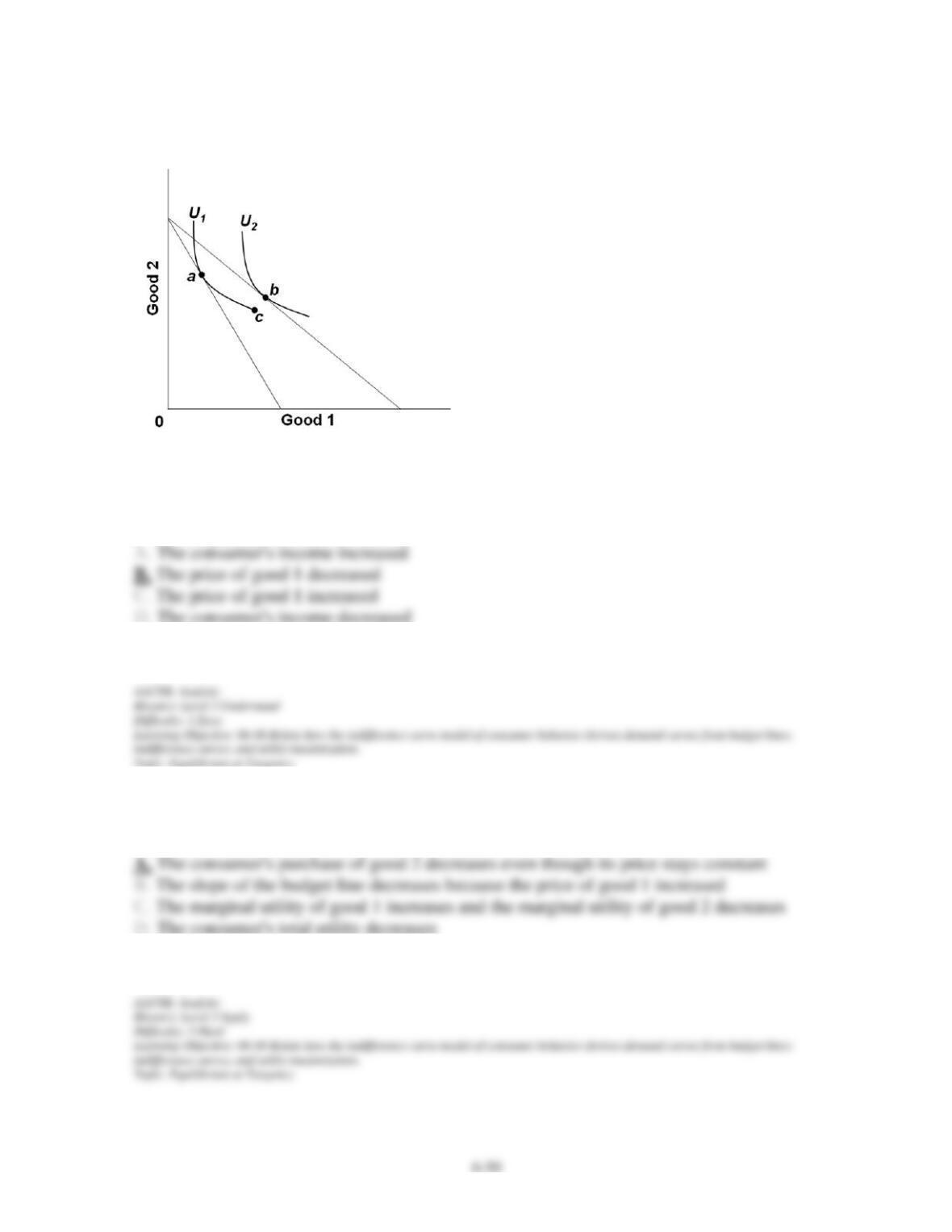
127. Refer to the graph above. What could cause the consumer equilibrium point to shift from
point a to point b?
128. Refer to the graph above. As the consumer equilibrium point to shifts from point a to
point b:
Chapter 06 – Consumer Behavior (+ Appendix)
129. To derive the demand curve of a product in indifference curve analysis, the:
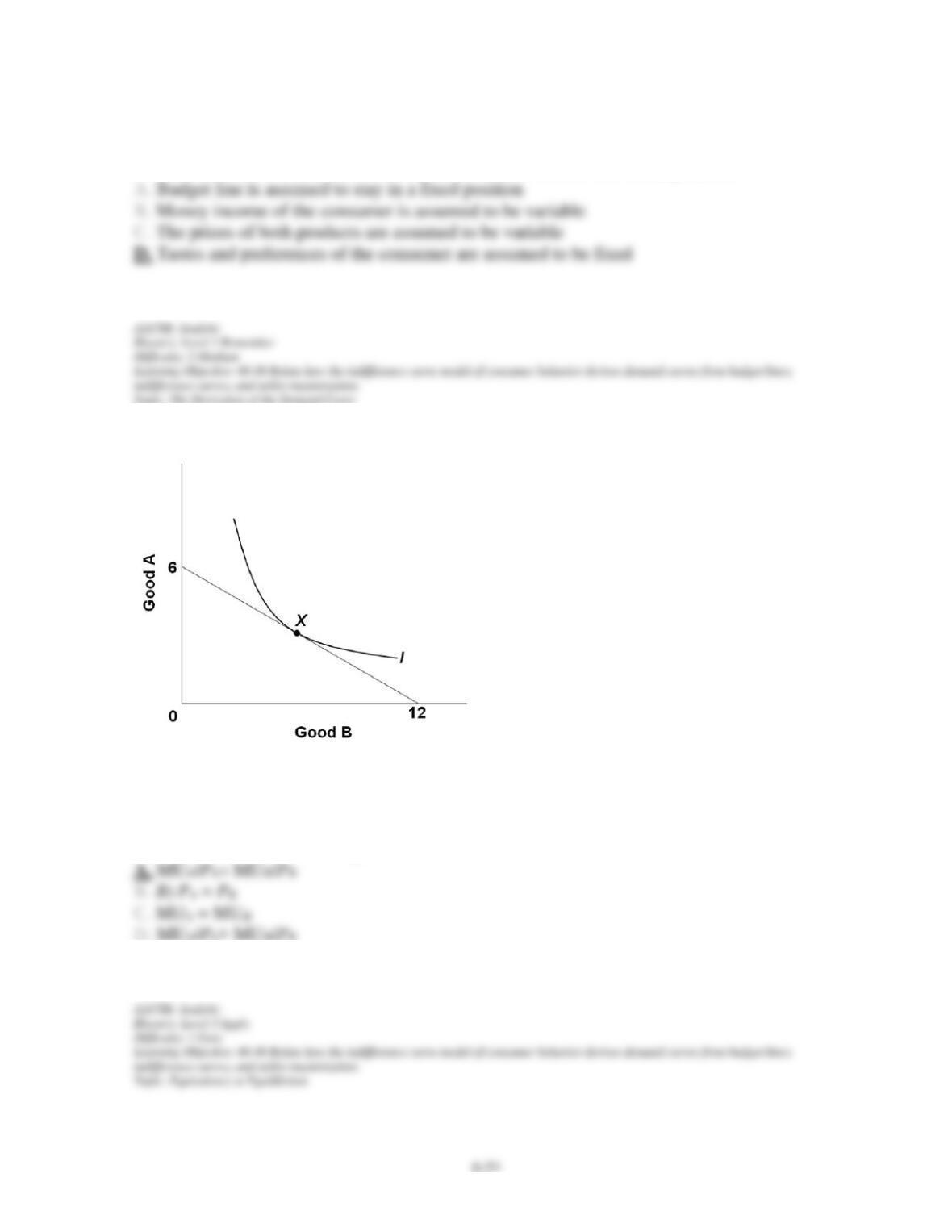
130. At point X on the graph above, which depicts a consumer’s indifference curve for goods
A and B and the relevant budget constraint line, we know that:
Chapter 06 – Consumer Behavior (+ Appendix)
131. A consumer allocates all income between two products, A and B. If, on an indifference
map, the equilibrium position shifts onto a higher indifference curve, then:
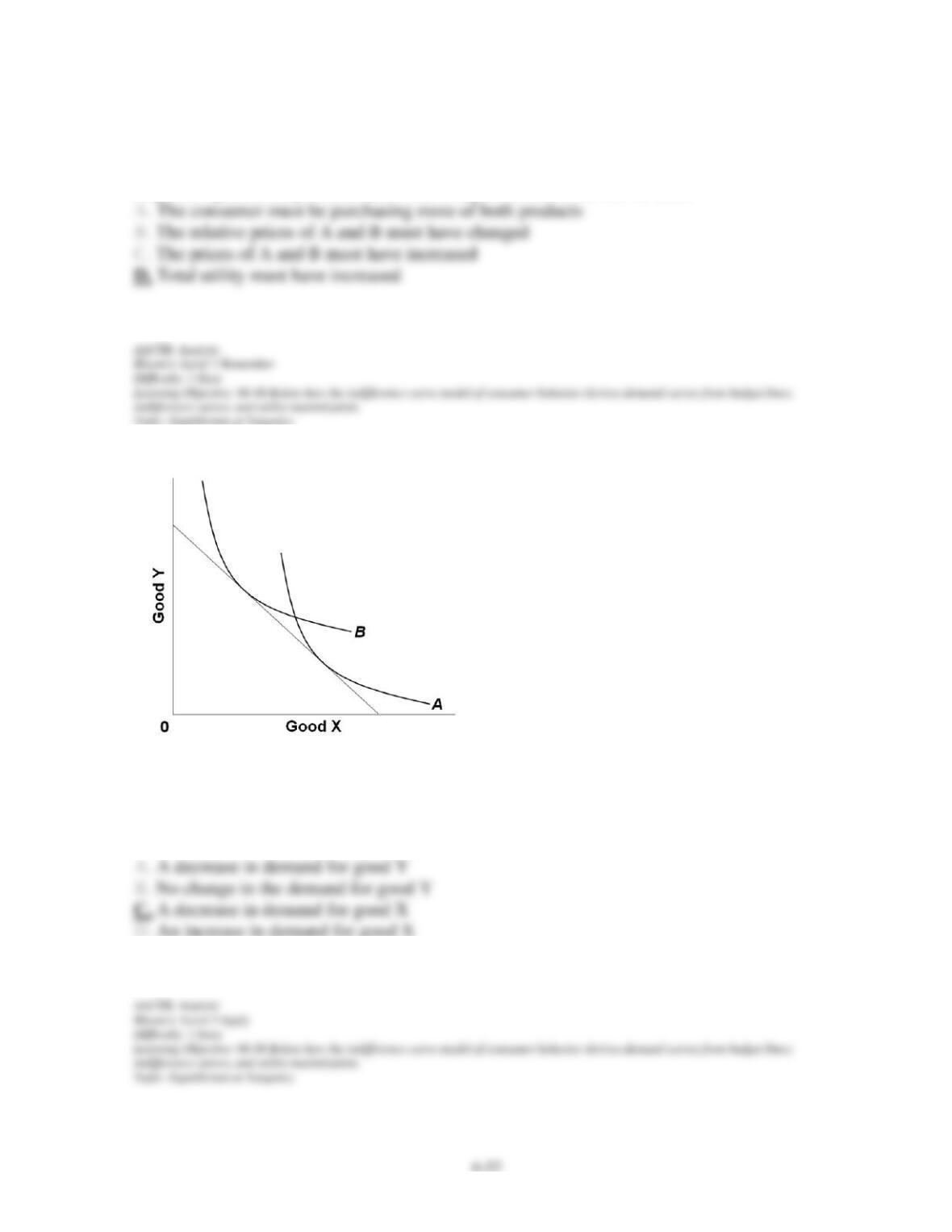
132. In the graph above, the change in the individual’s preferences indicated by a shift from
indifference curve A to indifference curve B will result in:
Chapter 06 – Consumer Behavior (+ Appendix)
6-53
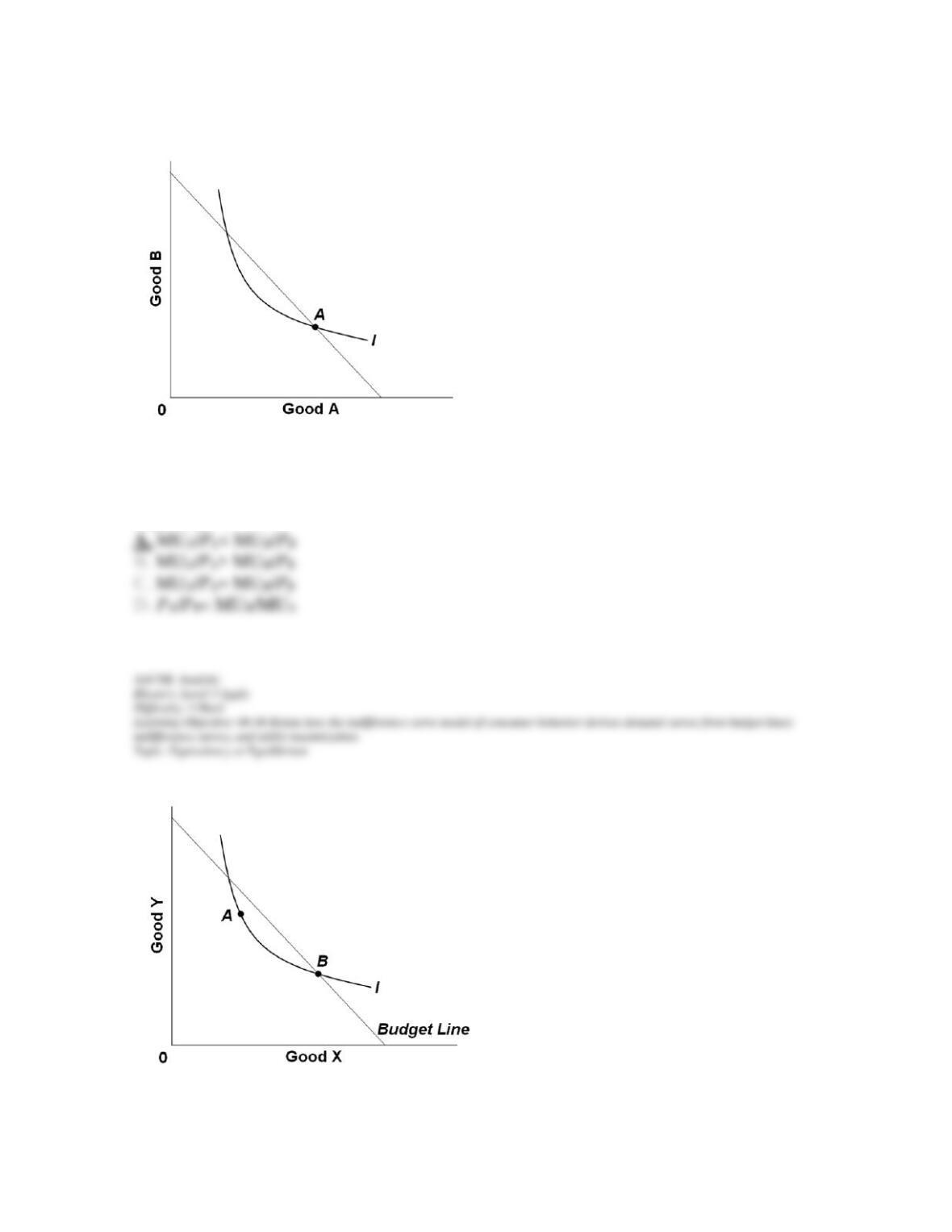
133. Given the indifference curve and budget line above, which of the following must be true
at point A?
Chapter 06 – Consumer Behavior (+ Appendix)
6-54
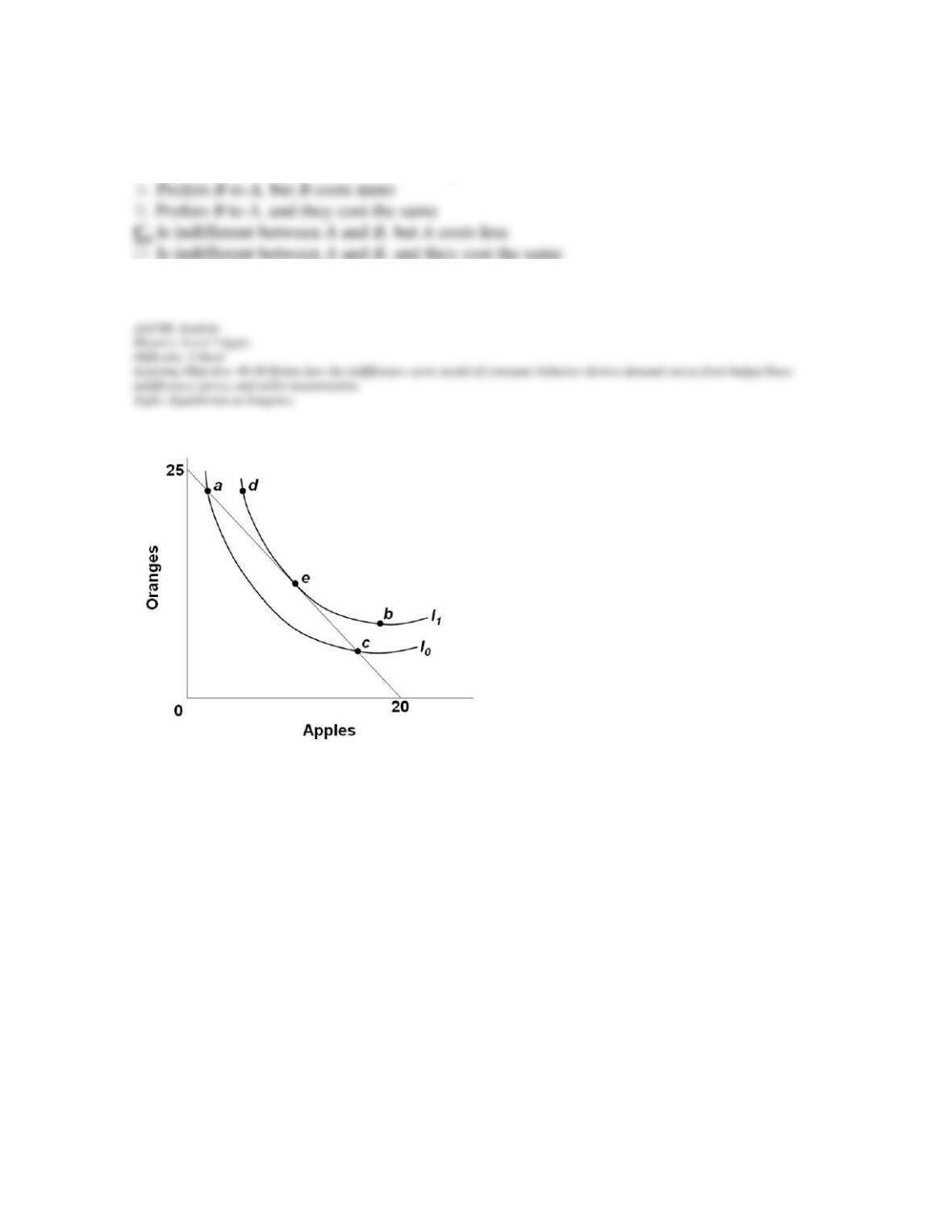
134. Given the indifference curve and budget line above, this individual: