28) When a tax is imposed on sellers of a good, the resulting rise in the equilibrium price is
usually less than the amount of the tax itself. Why doesn’t the equilibrium price rise by the full
amount of the tax?
29) The Social Security tax is a tax that Congress imposes equally on both employers and
employees. Does this mean that the burden of this tax is shared equally between firms and
workers? Explain.
30) Suppose that the government wants the burden of the cigarette tax to fall equally on buyers
and sellers and declares that a $1.00 tax be imposed on each. Is the burden of the tax shared
equally? Why or why not?
31) Explain the relationship between the incidence of a tax and elasticity.
32) Can the incidence of a sales tax ever be so that buyers pay all of the tax or so that sellers pay
all of the tax?
33) Suppose the demand for saline solution is perfectly inelastic for contact lens wearers. If the
government imposes a tax on saline solution, what occurs? Be sure to tell what happens to the
price paid by the buyers and discuss the incidence of the tax.
34) Which would be a better source of tax revenue for the government, a good with elastic or a
good with an inelastic demand? Explain your reasoning.
35) Suppose the price elasticity of demand for Mexican food is 1.23 and the price elasticity of
supply is 0.47. If the government imposes a tax on Mexican food, do buyers or sellers pay most
of the tax? Why?
36) A student wrote: “A subsidy raises marginal social benefit above marginal social cost and
eliminates the deadweight loss from underproduction.” If you were the instructor, how would
you correct this statement?
37) “Farm subsidies in the European Union spill over to the rest of the world.” Explain this
assertion.
38) How does a production quota influence farm prices and output?
39) A student wrote: “A production quota is inefficient because it results in overproduction. At
the quota quantity, marginal social cost is equal to the market price and marginal social benefit is
less than the market price, so marginal social cost exceeds marginal social benefit.” If you were
the instructor, how would you correct this statement?
40) When the government passes a law making a particular good illegal, does it matter for the
black market price and quantity if the penalties for breaking the law are imposed on the buyers or
on the sellers?
41) In 1920 a constitutional amendment was passed that outlawed the production, sale, purchase,
and consumption of alcoholic beverages. “Prohibition” encouraged bootlegging and black
markets for whiskey, wine, and beer. The amendment was eventually repealed in 1933. In 1920,
what alternative economic policy was available to the government as a means of reducing
alcohol consumption nationwide?
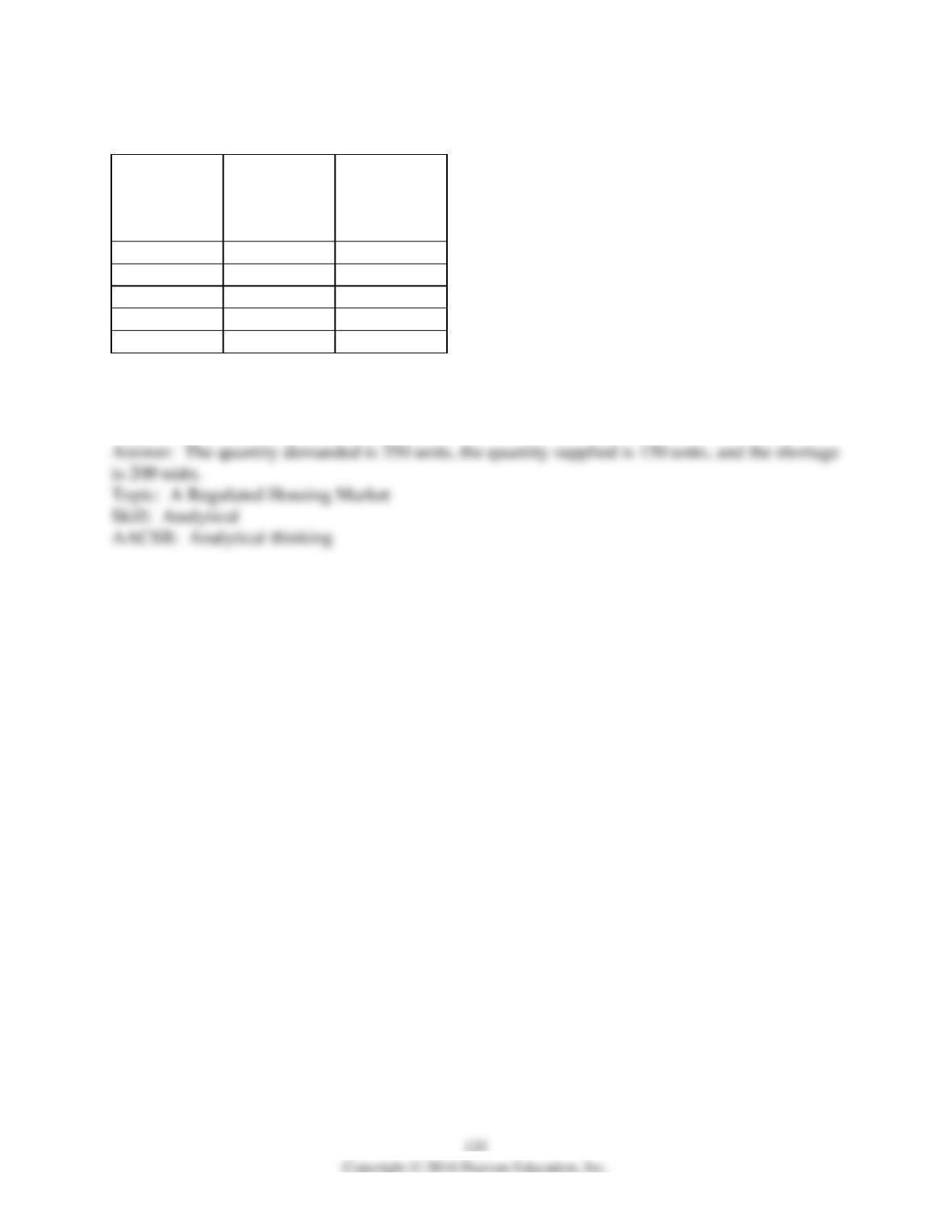
8 Numeric and Graphing Questions
Rent
(dollars per
month)
Quantity
demanded
(housing
units)
Quantity
supplied
(housing
units)
1,000
150
350
800
200
300
600
250
250
400
300
200
200
350
150
1) The table above gives the demand and supply schedules for the housing market in a small
town. If a rent ceiling of $200 a month is imposed, what is the quantity demanded, the quantity
supplied, and the shortage of housing?
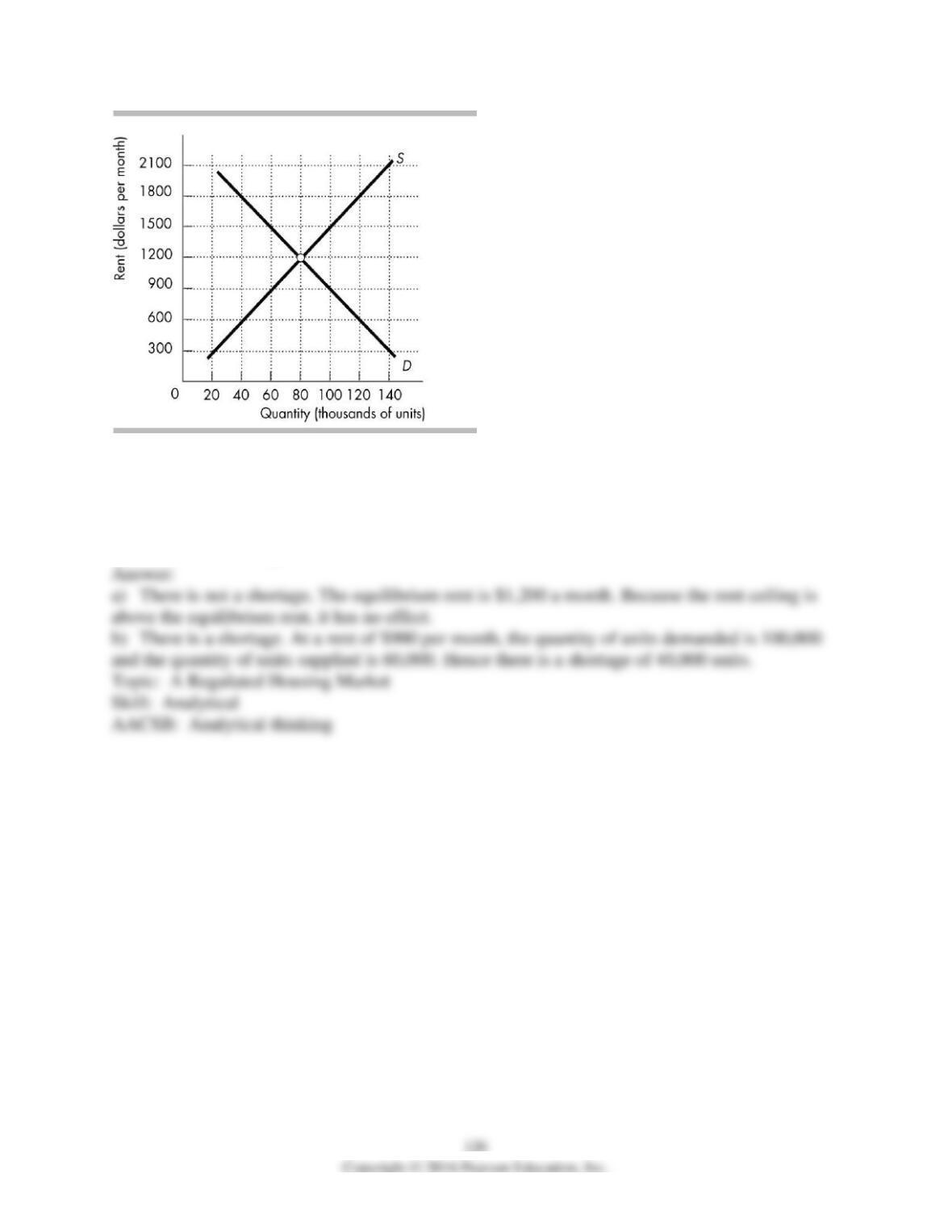
2) The figure above illustrates the current market for apartments in Washington, D.C.
a) If the local government imposes a price ceiling of $1,500 per month, is there a shortage? If
so, how much, if not, why not?
b) If the local government imposes a price ceiling of $900 per month, is there a shortage? If so,
how much, if not, why not?
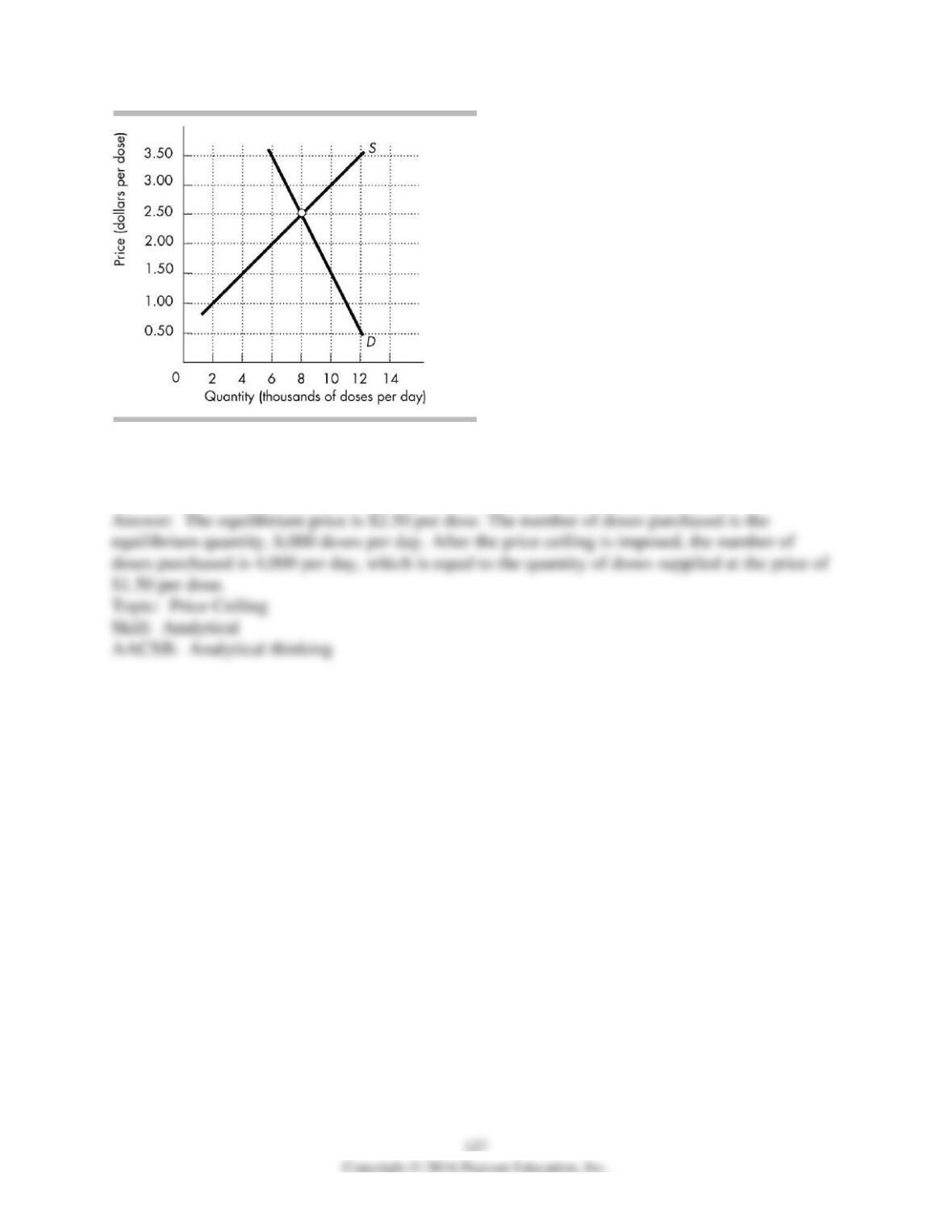
3) The above figure shows the market for a prescription drug. What is the equilibrium price of
the drug? How many doses are purchased? Suppose the government imposes a price ceiling of
$1.50 a dose. How many doses are purchased after the price ceiling is imposed?
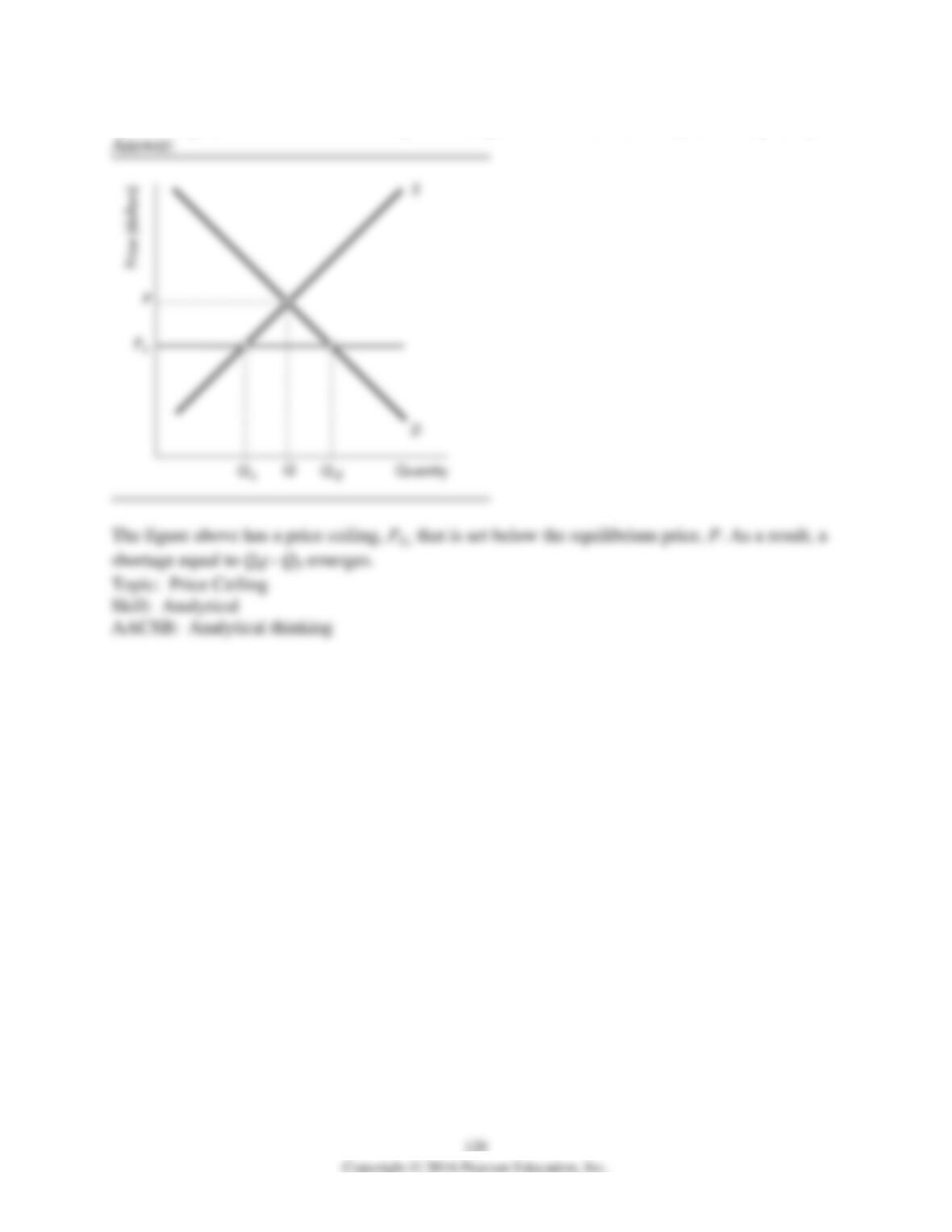
4) In a diagram, illustrate the case of a price ceiling that affects the market’s price and quantity.
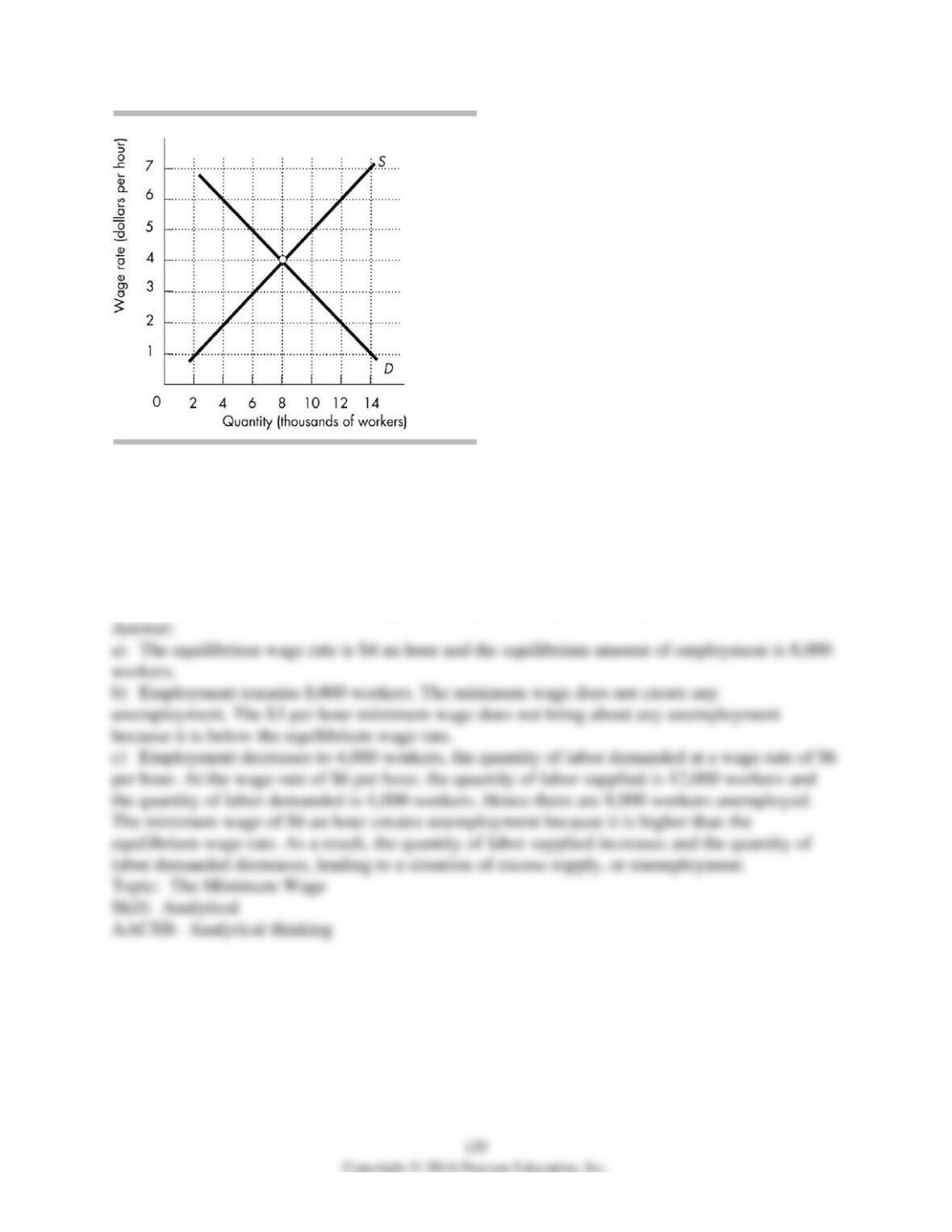
5) The figure above illustrates the current market for workers in Lima, Peru.
a) Without any government intervention, what is the equilibrium wage rate and amount of
employment?
b) If the city government imposes a minimum wage of $3 an hour, what is the amount of
employment? Does the minimum wage create any unemployment? Why or why not?
c) If the city government imposes a minimum wage of $6 an hour, what is the amount of
employment? Does the minimum wage create any unemployment? Why or why not?
Price
(dollars per
scooter)
Quantity
demanded
(scooters per
week)
Quantity
supplied
(scooters per
week)
70
120
60
80
110
80
90
100
100
100
90
120
110
80
140
6) The table above gives the supply and demand schedules for scooters. Because of increased
injuries sustained by children riding scooters, Citizens Against Scooter Accidents successfully
lobbies the government to impose a price floor of $80.00 on scooters.
a) What is the quantity demanded and supplied after the price floor has been imposed?
b) Is there any shortage or surplus at this price floor? If so, how much?
c) If the price floor is raised to $110.00, what is the quantity demanded and supplied?
d) At a price floor of $110.00, is there any shortage or surplus? If so, how much?
7) In a supply and demand diagram, illustrate a price floor that affects the market’s price and
quantity and a price floor that has no effect on the price and quantity.
Price
(dollars per
CD)
Quantity
demanded
(millions of CDs
per month)
Quantity supplied
(millions of CDs
per month)
20
4
25
18
8
22
16
12
19
14
16
16
12
20
13
10
24
10
8
28
7
6
32
4
8) The table above gives the demand and supply schedules for CDs.
a) According to the table, what is the equilibrium price?
b) Suppose the government imposes a price floor of $16 for a CD. What is the result?
c) Suppose the government imposes a price ceiling of $8 for a CD. What is the result?
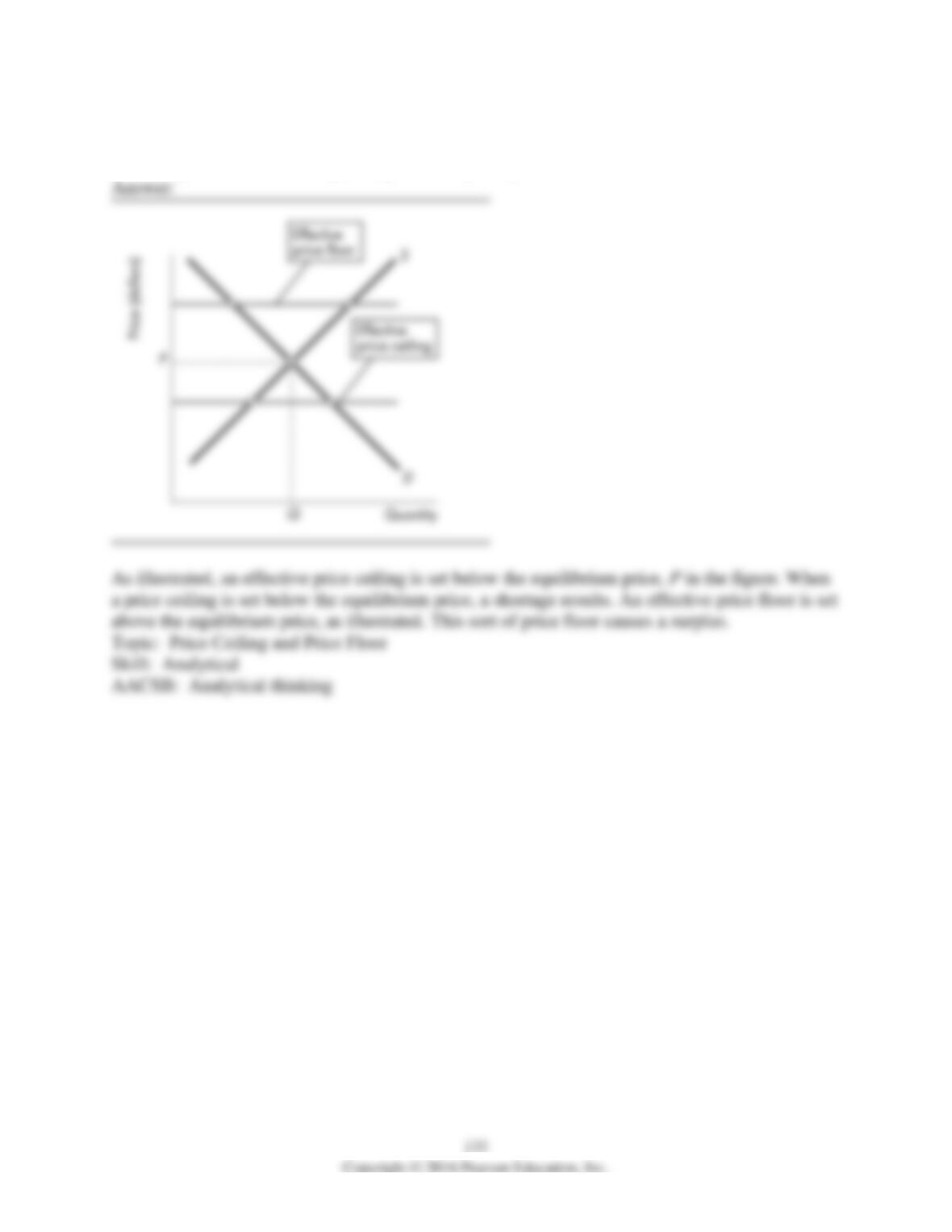
9) In a supply and demand diagram, illustrate an effective price ceiling, that is, a price ceiling
that changes the price and quantity. In the same diagram, also illustrate an effective price floor,
that is, a price floor that changes the price and quantity.
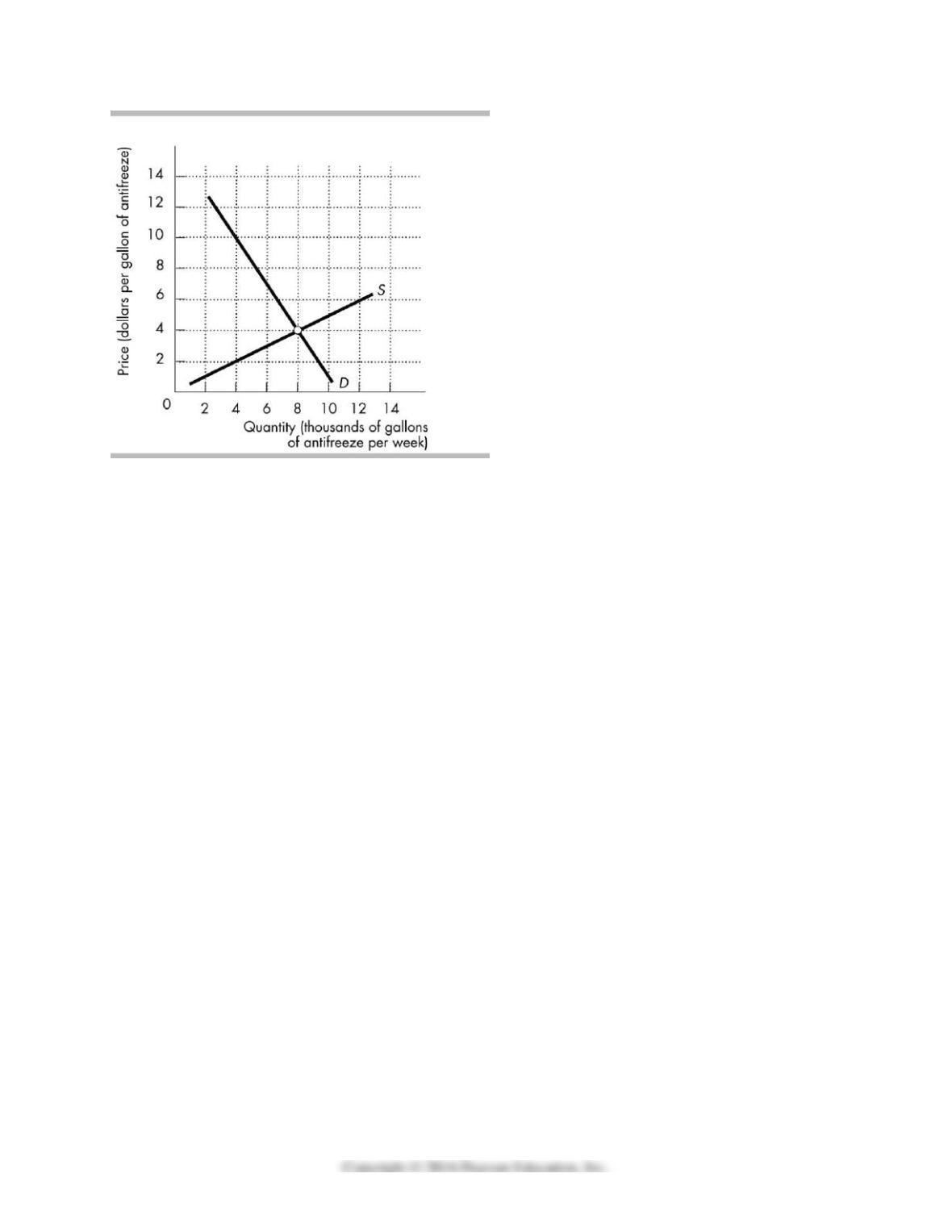
134
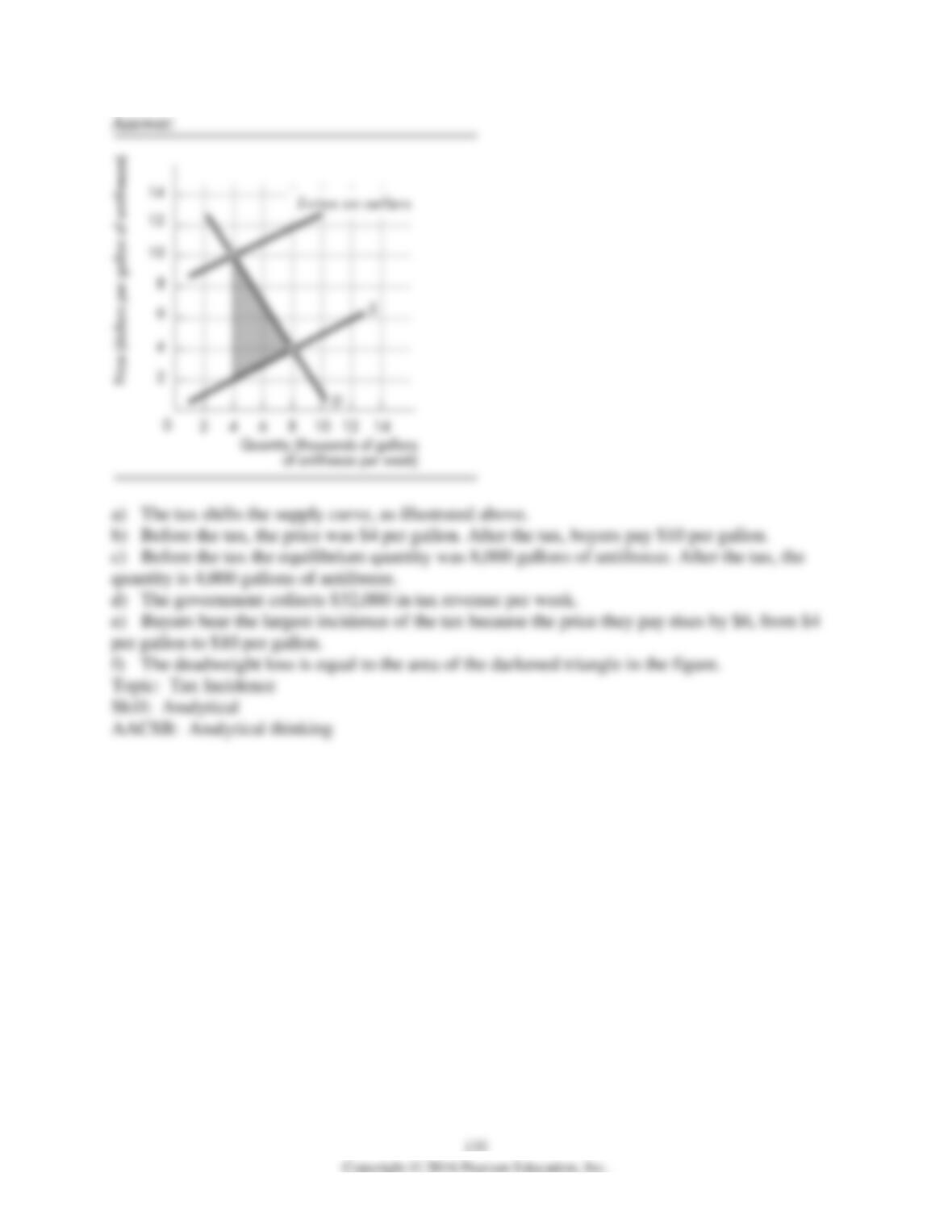
10) The figure above illustrates the market for antifreeze. Suppose the government decides to
implement an $8 sales tax on the sellers for every gallon of antifreeze sold.
a) In the figure, illustrate the effect the tax has on the market for antifreeze.
b) What is the equilibrium price of a gallon of antifreeze before the tax? What is the price paid
by buyers after the tax?
c) What is the equilibrium quantity of antifreeze before the tax? What is the equilibrium
quantity after the tax?
d) What is the revenue collected by the government from this tax?
e) Do buyers or sellers bear the largest incidence of the tax?
f) Illustrate the deadweight loss created by the tax.
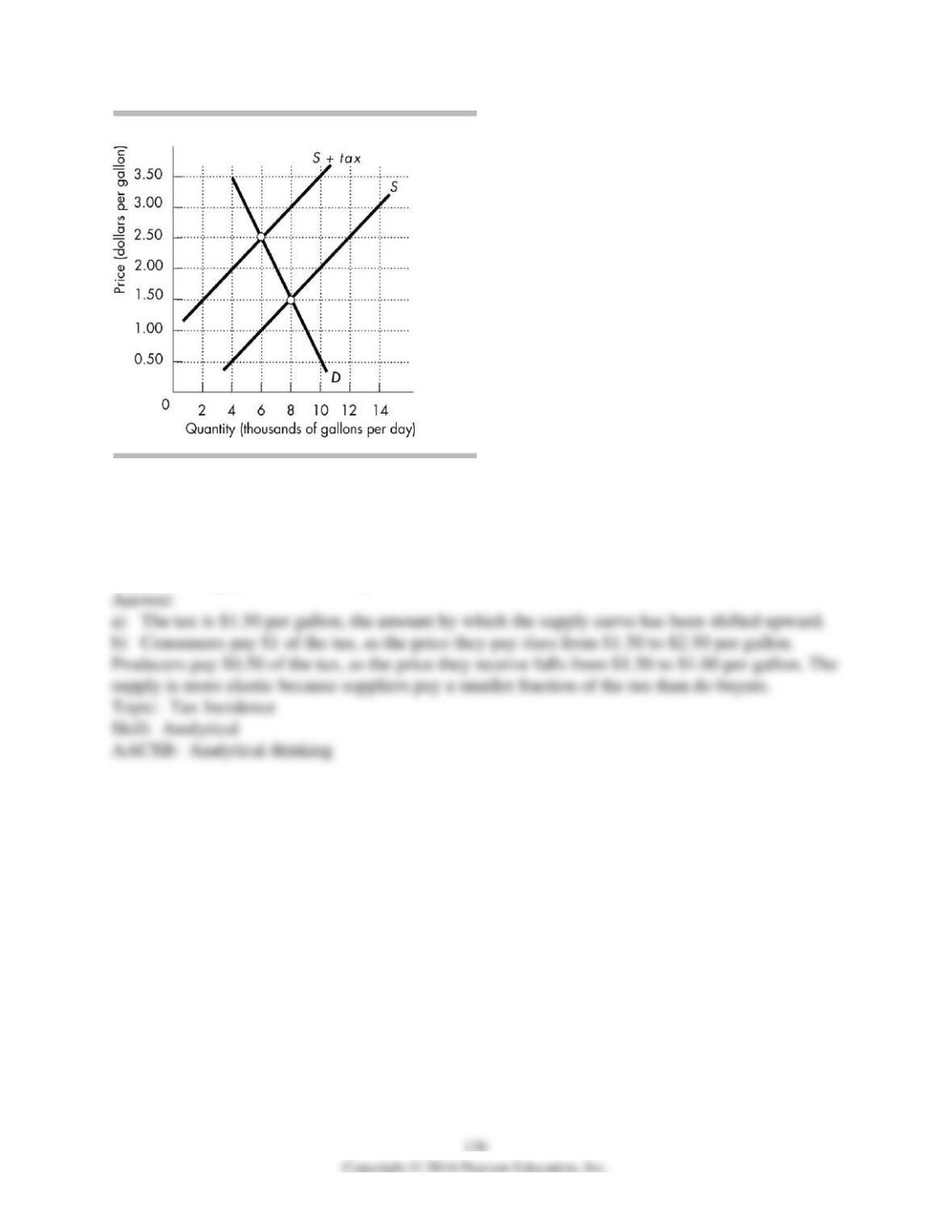
11) The figure above shows the market for gasoline. The government has imposed a tax on
gasoline.
a) What is the amount of the tax per gallon of gasoline?
b) How much of the tax is paid by consumers? How much is paid by producers? Which is more
elastic, the supply or demand for gasoline?