1. Which of the following does NOT describe a compensating variation?
D. The least someone is willing to receive to experience something harmful
2. The amount of compensation associated with the income effect of a price change is
called:
D. a subsidy.
3. Consumer surplus is:
A. the amount of purchasing power a consumer receives when the price of a good falls.
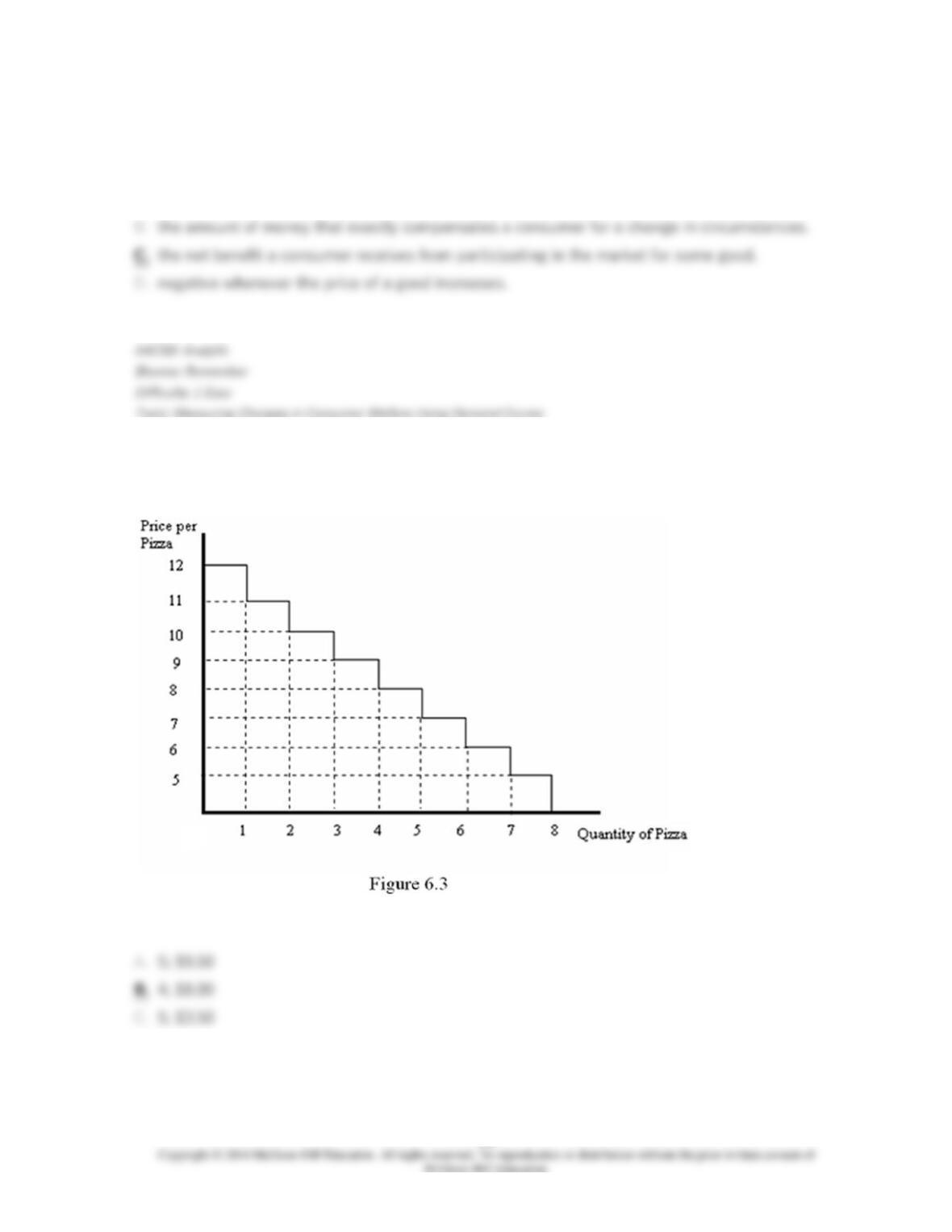
4. Refer to Figure 6.3. Suppose the price of pizza is $8.50. Then the consumer will purchase
_____ pizzas and the net benefit is ______.
D. 4; $9.50
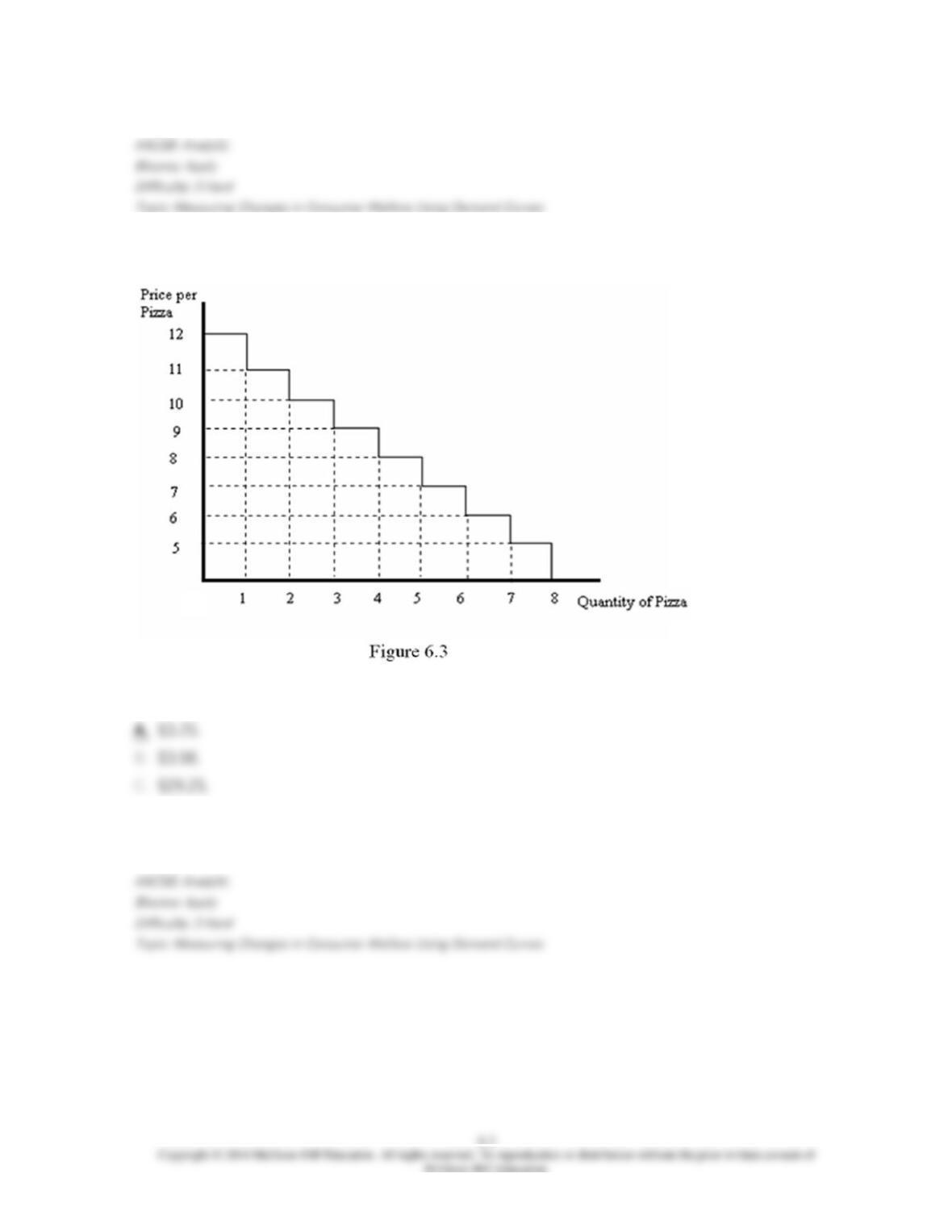
5. Refer to Figure 6.3. Suppose the price of pizza is $9.75. Then consumer surplus is:
D. $33.00.
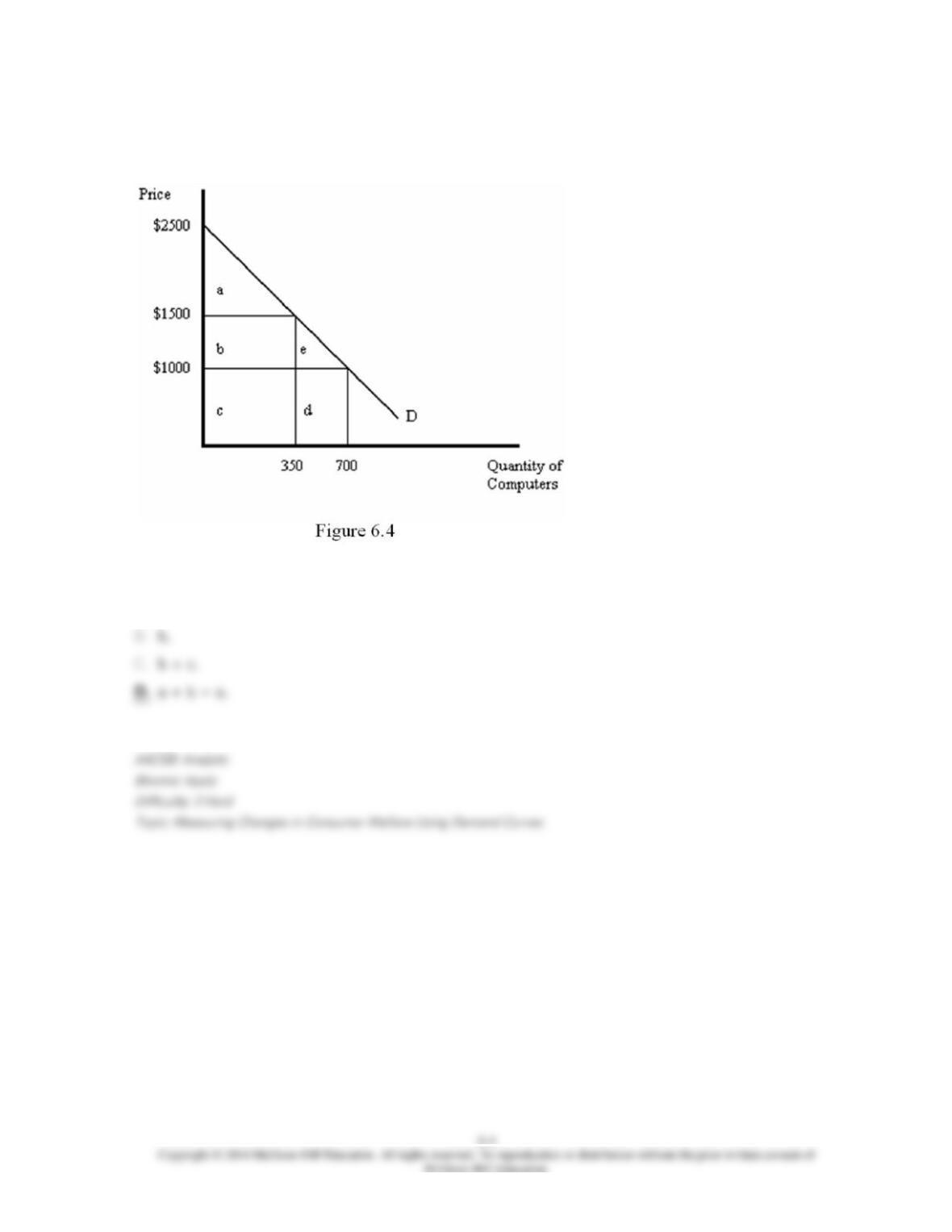
6. Refer to Figure 6.4. If the price of computers is $1,000, then consumer surplus is given by
the area represented by:
A. c + d.
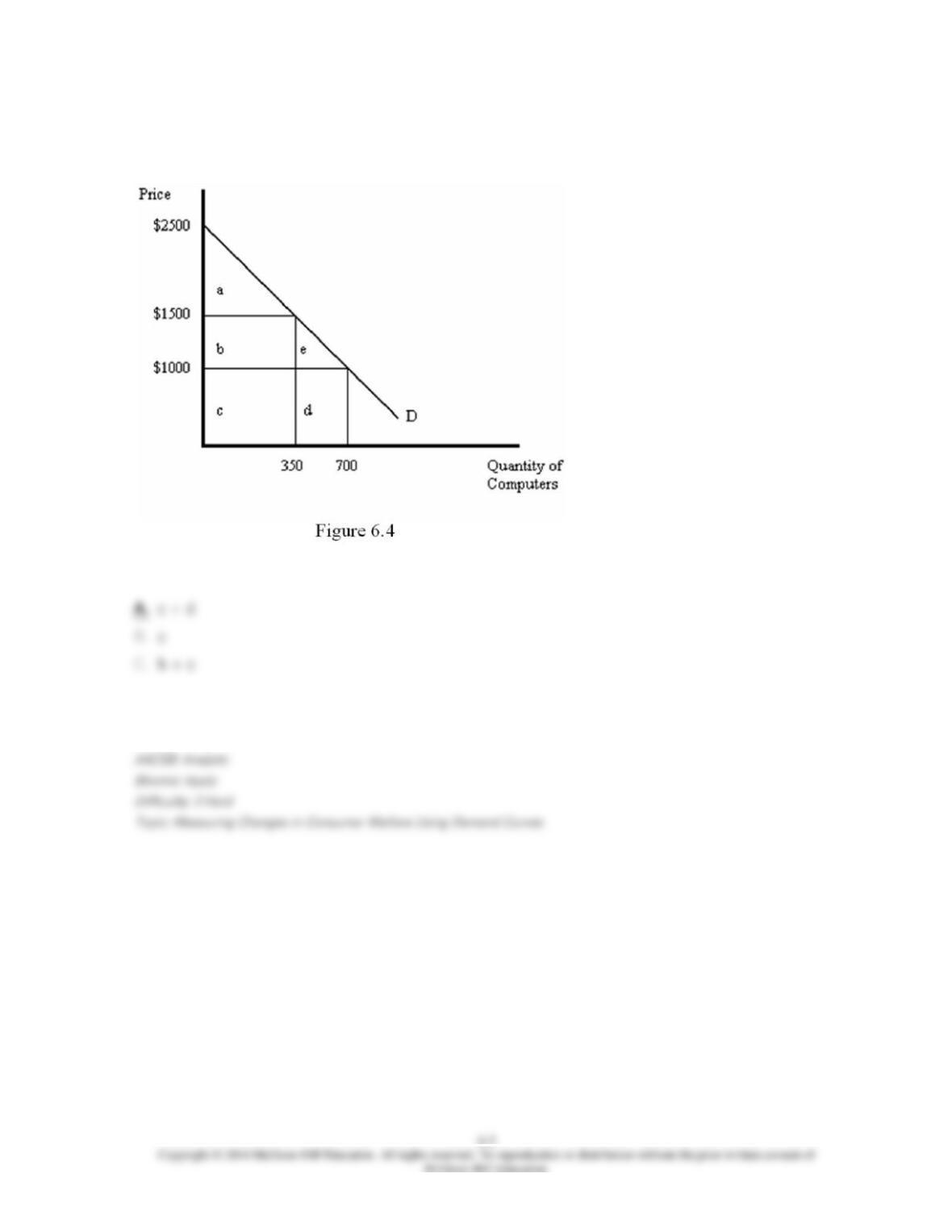
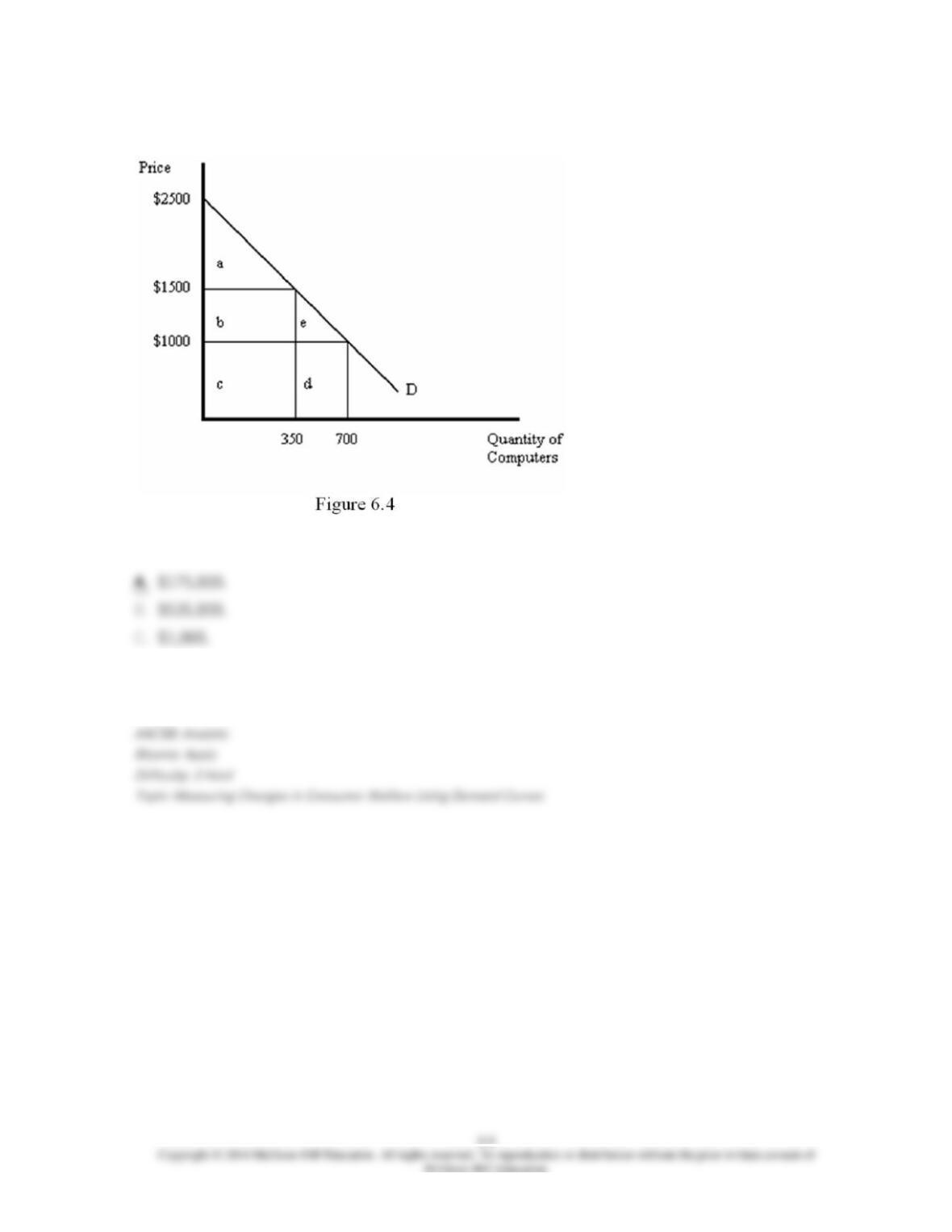
7. Refer to Figure 6.4. If the price of computers is $1,000, then expenditures on computers is
represented by the area:
D. a + b + c
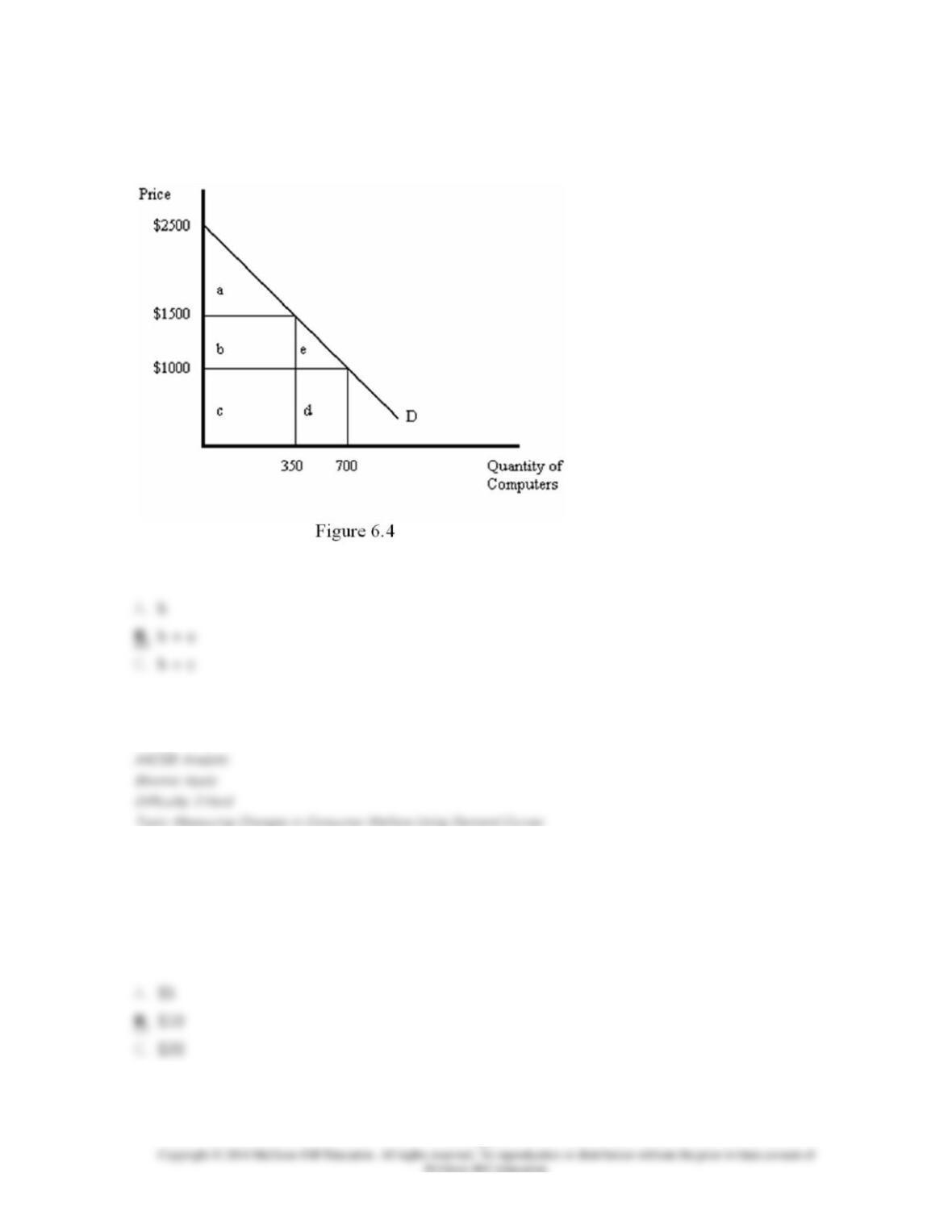
8. Refer to Figure 6.4. If the price of computers is $1,500, then consumer surplus is equal to:
D. $262,500.
9. Refer to Figure 6.4. What area represents the decrease in consumer surplus when the
price of computers increases from $1,000 to $1,500?
D. a + b
10. Suppose Eddie’s demand curve for text messages is
T
= 150 – 500
Pt
, where
T
stands for
the number of text messages and
Pt
represents the price of text messages. What is Eddie’s
consumer surplus if
Pt
= $0.10 per message?
D. $50
11. Suppose Eddie’s demand curve for text messages is
T
= 150 – 500
Pt
, where
T
stands for
the number of text messages and
Pt
represents the price of text messages. What is Eddie’s
consumer surplus if
Pt
= $0.20 per message?
A. $0.50
12. Suppose Eddie’s demand curve for text messages is
T
= 150 – 500
Pt
, where
T
stands for
the number of text messages and
Pt
represents the price of text messages. What is Eddie’s
consumer surplus if
Pt
= $0.05 per message?
A. $5.00
13. When the price of a good decreases:
D. the good becomes more expensive relative to other goods and the consumer’s purchasing
power decreases.
14. Which of the following does NOT occur when the price of a good increases?
D. The consumer is effectively poorer than before the increase in price.
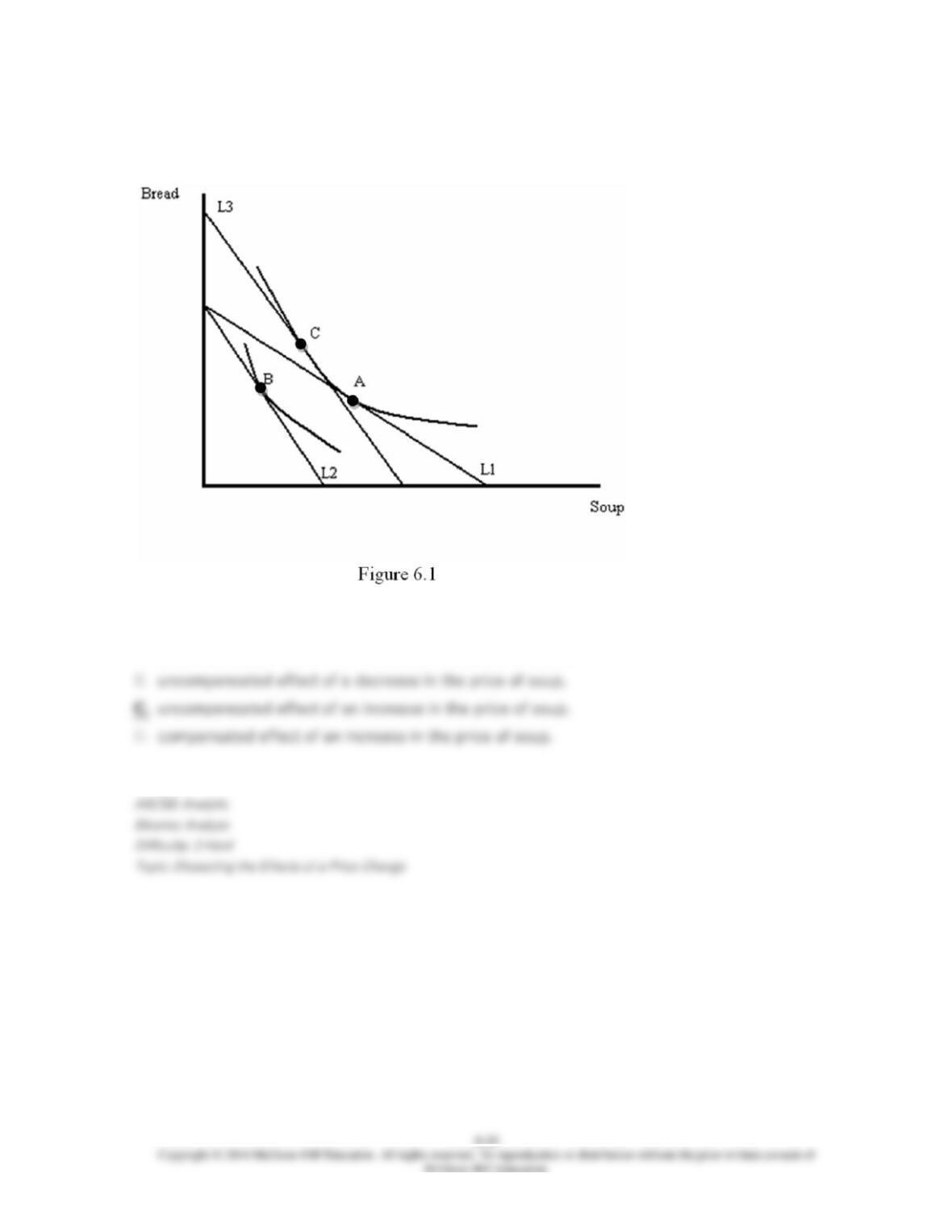
15. Refer to Figure 6.1. Assume that L1 represents the budget line before a price change.
Point B represents the:
A. uncompensated effect of an increase in the price of bread.
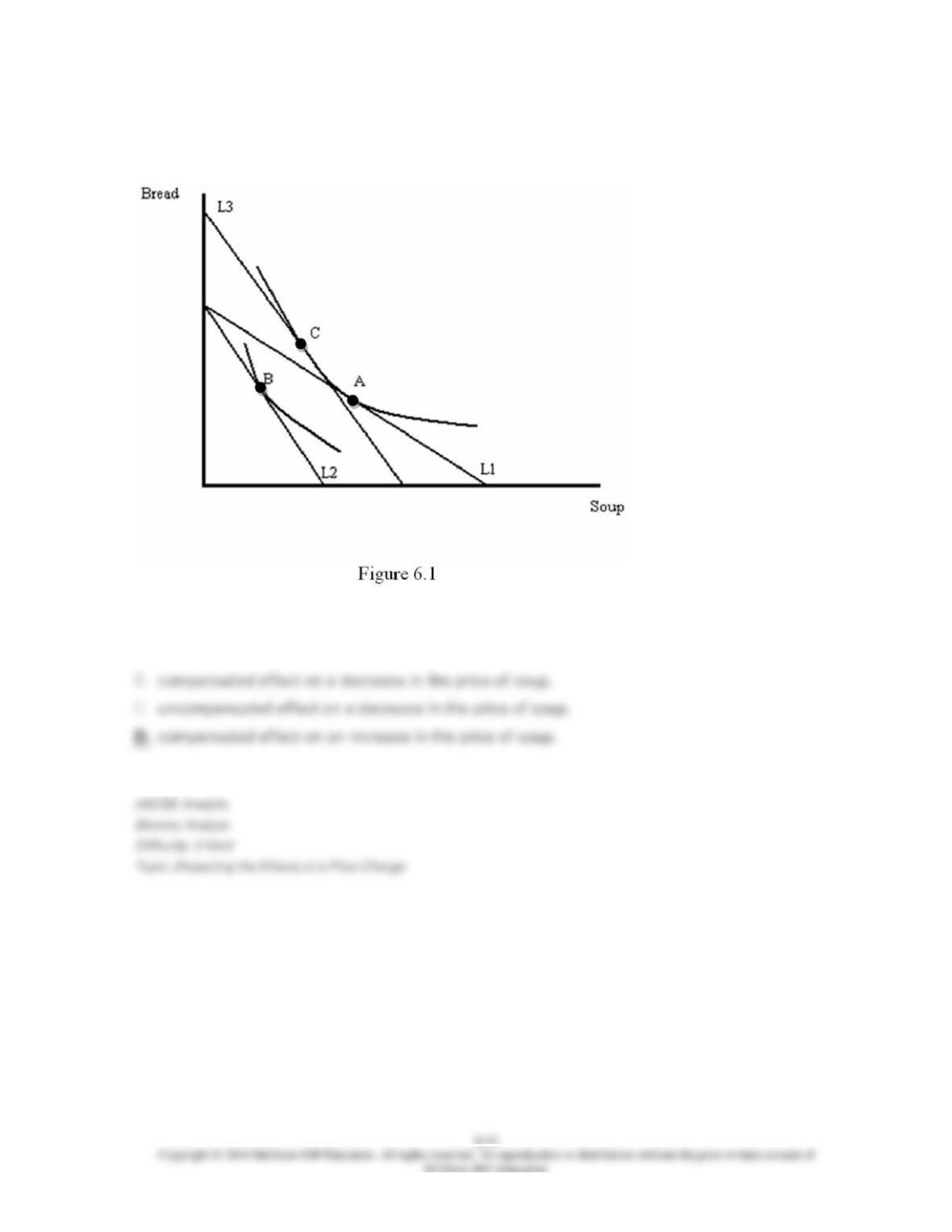
16. Refer to Figure 6.1. Assume that L1 represents the budget line before a price change.
Point C represents the:
A. uncompensated effect on an increase in the price of soup.
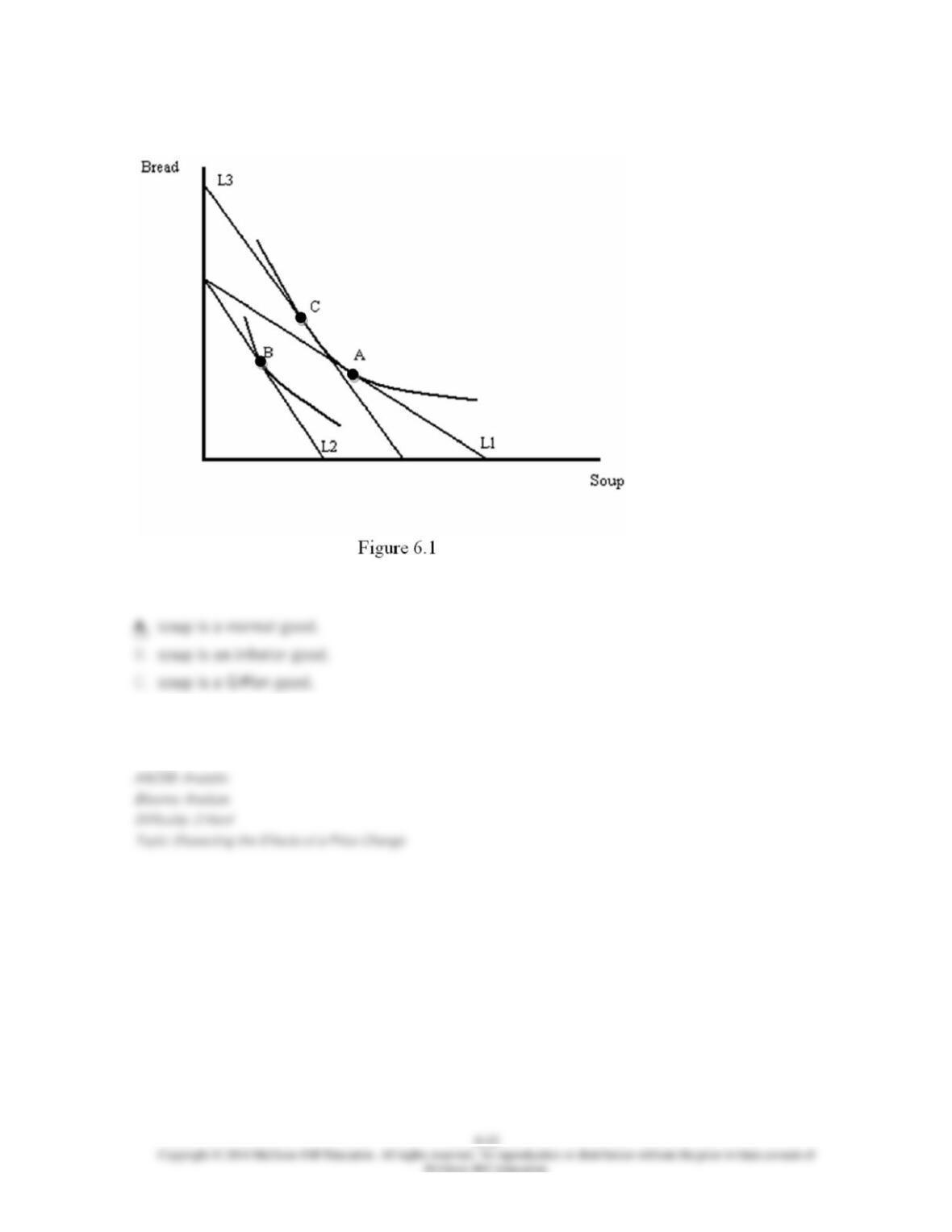
17. According to Figure 6.1:
D. bread is an inferior good.
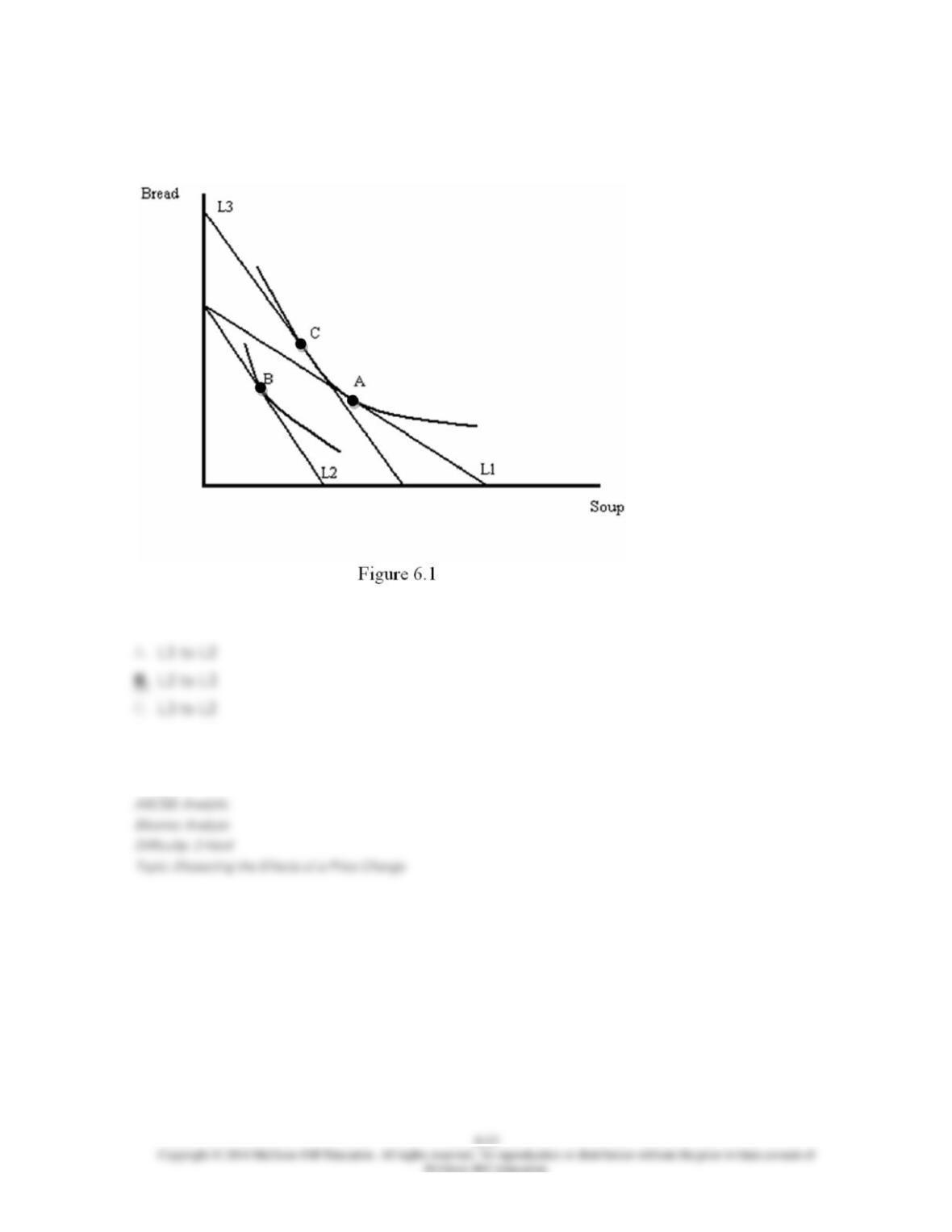
18. Refer to Figure 6.1. Assume that L1 represents the budget line before a price change.
Which change in budget lines represents compensation?
D. L1 to L3
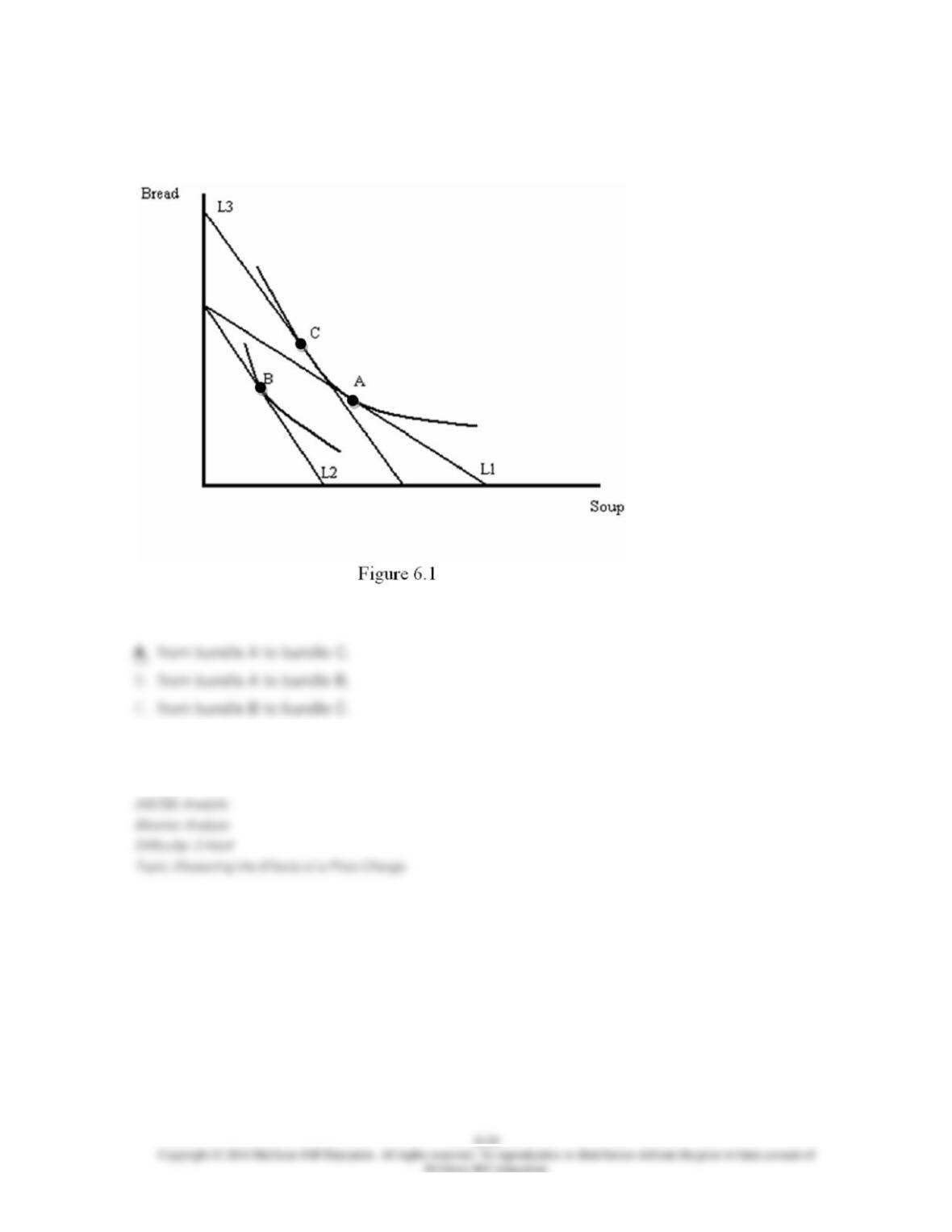
19. Refer to Figure 6.1. Assume that L1 represents the budget line before a price change. The
substitution effect is shown by the movement:
D. from bundle C to bundle B.
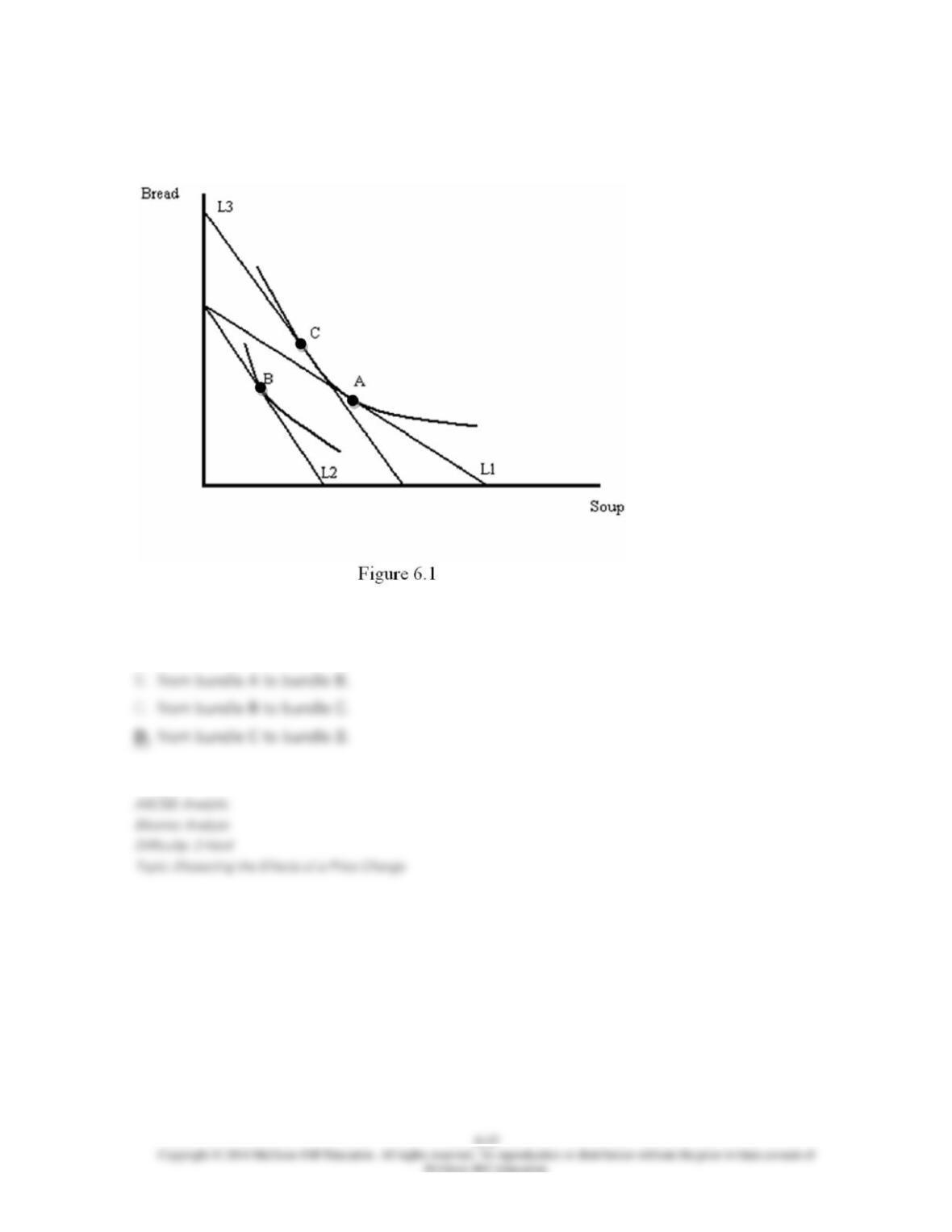
20. Refer to Figure 6.1. Assume that L1 represents the budget line before a price change. The
income effect is shown by the movement:
A. from bundle A to bundle C.
21. A change in price that is accompanied by a change in income sufficient to leave a
consumer’s well-being unchanged is called:
D. the income effect.
22. What effect does a compensated price change have on a consumer’s well-being?
A. The consumer’s well-being increases.
23. Which of the following is correct?
D. The effect of a compensated price change equals the substitution effect of the price change
plus the income effect of the price change.
24. The effect of a compensated price change is known as:
A. the price effect of a price change.
25. Which of the following statements about the income effect of a price change is NOT true?
A. It affects consumption by removing compensation.
26. Which of the following statements is true?
A. The effect of a compensated price change = the substitution effect of the price change + the
income effect of the price change.
27. A compensated increase in the price of a good:
A. causes the consumer to buy more of the good if the income effect is larger than the
substitution effect.
28. If a good is _______, the income effect is negative for a price increase and positive for a
price decrease.
A. inferior
29. For what type of good do the substitution and income effects work in opposite directions?
A. Normal goods
30. If a good is normal, then the income effect is _____ for a price increase and _____ for a
price decrease.
A. positive; negative
31. What must occur for a good to violate the Law of Demand?
A. The good must be normal and the income effect must be larger than the substitution effect.