Macroeconomics, 12e (Parkin)
Chapter 5 Monitoring Jobs and Inflation
1 Employment and Unemployment
1) The working-age population is defined as the number of
A) people over the age of 16 who are not in jail, hospital, or other institution.
B) people who have a job.
C) people working full-time jobs who are over the age of 16.
D) people looking for work.
2) The working-age population can be divided into two groups
A) people in the labor force and people looking for work.
B) people in the labor force and people with a job.
C) people looking for work and those in the armed forces.
D) people in the labor force and people who are not in the labor force.
3) The total number of people aged 16 years and over who are not institutionalized ________.
A) equals the number of employed plus unemployed
B) is the working-age population
C) does not include students
D) is the labor force
4) Which of the following statements is INCORRECT?
A) The labor force is equal to the number of people employed plus the number of people
unemployed.
B) The working age population includes everyone over the age of 16.
C) The unemployment rate is the number of persons who are unemployed divided by the labor
force then times 100.
D) The labor-force participation rate is the labor force divided by the working-age population
then times 100.
5) Which of the following is NOT included in the working-age population?
A) discouraged workers
B) people waiting to be called back to a job after being laid off
C) retirees under the age of 55
D) people in prison
6) All people in the working-age population can be divided into
A) labor force participants.
B) employed, unemployed, or not in the labor force.
C) either over-employed or under-employed.
D) potential employees.
7) Suppose the working age population in Tiny Town is 100 people. If 25 of these people are
NOT in the labor force, the ________ equals ________.
A) unemployment rate; 25/100 × 100
B) unemployment rate; 25/75 × 100
C) labor force; 75
D) labor force; 25/100 × 100
8) The labor force is the sum of the
A) working-age population and the number of unemployed people.
B) number of employed people and the working-age population.
C) number of employed people and the number of unemployed people.
D) total population and the number of unemployed people.
9) The labor force is defined as
A) people with full time jobs.
B) workers with jobs and unemployed workers.
C) all people capable of work.
D) All of the above answers are correct.
10) The ________ equals the number of ________.
A) labor force; persons over 16 years old
B) labor force; unemployed and employed persons
C) working age population; employed persons
D) unemployment rate; people unemployed
11) The labor force is defined as people
A) who have a job or are looking for a job.
B) in the working-age population who have a job.
C) in the working-age population who have a full time job.
D) who are 16 years of age or older.
12) Which population category equals the sum of employed and unemployed people?
A) working-age population
B) labor force
C) young and institutionalized
D) not in the labor force
13) The ________ is the total number of people aged 16 years and older (and not in jail, hospital
or institutional care) while the ________ is the number of people employed and the unemployed.
A) labor force; working-age population
B) labor force participation rate; labor force
C) working-age population; labor force
D) working-age population; labor force participation rate
14) The labor force is defined as the number of
A) people 16 and over.
B) unemployed people.
C) people with jobs, both part-time and full-time.
D) people who are employed and unemployed.
15) The labor force is defined as the
A) number of people over 16 years of age.
B) number of people who are working.
C) sum of employed and unemployed people.
D) number of people in blue-collar jobs.
16) The labor force is defined as the
A) number of employed people plus the number of unemployed people.
B) number of people who are working.
C) number of people who are working in labor-type jobs.
D) number of union members who are working.
17) The labor force includes
A) only the number of people employed.
B) discouraged workers.
C) only the number of people unemployed.
D) both employed and unemployed workers.
18) The labor force is defined as the number of people who
A) are employed plus the number of people who are unemployed.
B) are available and looking for work but are unable to find employment.
C) would like to have a job but have stopped seeking work.
D) would like to have a full-time job but are working part-time.
19) Full-time students and prisoners are ________.
A) not in the labor force
B) in the labor force
C) counted as discouraged workers
D) counted as unemployed
20) Which of the following is NOT considered to be in the labor force?
A) a student who works part-time
B) a person who is not working but who has tried to find a job in the past week
C) a person who is waiting to start a new job in the next 30 days
D) a person who is not working and who has not tried to find a job
21) In an economy, 42 million people are in the labor force, 38 million are employed, and 47
million are of working age. How many people are not in the labor force?
A) 19 percent
B) 9 million
C) 5 million
D) 4 million
22) If the number of people unemployed is 100, the number of people employed is 1000, and the
working-age population is 1400, then the labor force is
A) 1000.
B) 1100.
C) 1400.
D) 1500.
23) The official U-3 unemployment rate
A) includes persons without a job who have made efforts in the last week to find a job.
B) includes persons without a job, whether they are actively searching for work or not.
C) counts discouraged workers as unemployed.
D) counts people with part-time jobs who want full-time jobs as unemployed.
24) The official U-3 unemployment rate includes the total number of people who
A) have jobs or are currently looking for jobs.
B) are available and looking for work but unable to find employment.
C) would like to have a job but have stopped seeking work.
D) would like to have a full-time job but are working part-time.
25) Which of the following people would be counted as is employed in the Current Population
Survey?
A) Rich, who is working 20 hours a week but wants a full-time job
B) Misty, who just quit her job to return full-time to school
C) April, who just graduated from college and is looking for work
D) Jason, who was laid off from work less than 6 months ago but who has stopped looking for
work
26) Which of the following best fits the definition of unemployed?
A) retired and not working
B) working less than a full work week
C) not working but looking for a job
D) not working and not looking for work
27) Using the definition of unemployment, which of the following individuals would be
unemployed?
A) A full-time student quits school, enters the labor market for the first time, and searches for
employment.
B) Because of the increased level of automobile imports, an employee of General Motors is laid
off but expects to be called back to work soon.
C) Because of a reduction in the military budget, your next door neighbor loses her job in a plant
where nuclear warheads are made and must look for a new job.
D) All of these individuals are unemployed.
28) Which of the following people would be considered unemployed by the Bureau of Labor
Statistics?
I. Mrs. X retires from her job at the age of 55 and does not look for another job.
II. Mr. Y was laid off from his job as a welder, but expects to be rehired in 8 months.
A) I only
B) II only
C) both I and II
D) neither I nor II
29) Using the official measure of unemployment, which of the following people is considered
unemployed?
A) a part-time worker who wishes to work full time
B) a person who gave up looking for jobs because he or she was discouraged about his or her job
prospects
C) a person who has been searching for work, but turns down a job paying a lower wage rate
than desired
D) a person who is working but expects to be laid off at the end of the month
30) Using the official measure of unemployment, which of the following would NOT be counted
as unemployed?
A) a person who is not working but who has tried to find a job in the past week
B) a person who is waiting to be called back to a job after having been laid off
C) a person who performs traditional housework and does not work outside the home for pay
D) a person who is waiting to start a new job in the next 30 days
31) The unemployment rate is the ________ who are unemployed.
A) number of people in the labor force
B) percentage of people in the labor force
C) percentage of people in the country
D) percentage of the working-age population
32) The unemployment rate is calculated as
A) [(labor force) ÷ (population)] × 100.
B) [(unemployment) ÷ (population)] × 100.
C) [(unemployment) ÷ (labor force)] × 100.
D) [(labor force) ÷ (unemployment)] × 100.
33) The unemployment rate equals
A) (number of people employed/working age population) × 100.
B) (number of people unemployed/labor force) × 100.
C) (labor force/working age population) × 100.
D) (number of people employed/number of people age 16 and over) × 100.
34) The unemployment rate equals the number of
A) unemployed workers multiplied by 100.
B) unemployed workers divided by the population then multiplied by 100.
C) unemployed workers divided by the number of employed workers then multiplied by 100.
D) unemployed workers divided by the labor force then multiplied by 100.
35) The unemployment rate equals
A) (the number of unemployed workers)/(the number of employed + unemployed workers) ×
100.
B) (the number of unemployed workers)/(the civilian population) × 100.
C) (the number of unemployed workers)/(the U.S. population older than 16 years of age) × 100.
D) (the number of unemployed + employed workers)/(U.S. population older than 16 years of
age) × 100.
36) The unemployment rate equals
A) the total number of people without jobs in a given period.
B) the percentage of the population not currently employed.
C) the rate of change in unemployment figures from one period to another.
D) the percentage of the labor force currently unemployed.
37) The unemployment rate is found by dividing the number of unemployed people by the
A) number of working individuals, and multiplying by 100.
B) number of the working-age population, and multiplying by 100.
C) sum of working individuals plus unemployed workers, and multiplying by 100.
D) number in the labor force, and dividing by 100.
38) The ________ is calculated as the number of people ________ divided by the labor force
multiplied by 100.
A) unemployment rate; unemployed
B) employment-to-population ratio; unemployed
C) employment rate; employed
D) employment-to-population ratio; in the working age population
39) The unemployment rate is defined as the
A) number of people not working.
B) percentage of the population not working.
C) percentage of the labor force not working.
D) percentage of the working-age population not working.
40) The unemployment rate is measured as
A) the number of people that want to work but cannot find jobs out of the entire population.
B) the percentage of people in the labor force who are unemployed.
C) an indicator to determine long-term economic growth.
D) an indicator for potential inflation.
41) To calculate the unemployment rate, which of the following are necessary pieces of
information?
I. the number of unemployed persons
II. the population
III. the number of people in the labor force
IV. the working age population
A) I, II III and IV
B) I and II
C) I and III
D) I and IV
42) The unemployment rate measures the percentage of
A) people who want full-time jobs, but can’t find them.
B) the working-age population who can’t find a job.
C) people in the labor force who can’t find a job.
D) the working age population that can’t find a full-time job.
43) Which labor market statistic tends rise during recessions and fall during expansions?
A) the unemployment rate
B) the labor-force participation rate
C) the employment-to-population ratio
D) aggregate hours
44) Suppose the population of Tiny Town is 100 people and the working age population is 70. If
10 of these people are unemployed, the unemployment rate in Tiny Town is
A) 10 percent.
B) 10/70 × 100.
C) 10/80 × 100.
D) There is not enough information provided to calculate the unemployment rate.
45) The population of Tiny Town is 100 people and the labor force is made up of 75 people. If 5
of these people are unemployed, the unemployment rate is
A) 5/100 × 100.
B) 5/80 × 100.
C) 5/75 × 100.
D) There is not enough information provided to calculate the unemployment rate.
46) Based on the following data for the country of Tiny Town, the unemployment rate equals
Population = 100
Labor force = 80
Number of employed persons = 70
Number of discouraged workers = 5
A) 10/100 × 100.
B) 10/80 × 100.
C) 15/80 × 100.
D) 5/70 × 100.
47) In an economy, 23 million people are employed and 2 million are unemployed, but 5 million
part-time workers would prefer full-time work. What is the unemployment rate?
A) 23.2 percent
B) 6.7 percent
C) 8 percent
D) 25 percent
48) Suppose that the total labor force is 100 individuals with 10 unemployed. The unemployment
rate is ________. Now assume that 10 people drop out of the labor force and that 10 remain
unemployed. The new unemployment rate is ________.
A) 9 percent; 10 percent
B) 10 percent; 9 percent
C) 10 percent; 11 percent
D) 11 percent; 10 percent
49) Which of the following decreases the official U-3 unemployment rate?
A) Workers leave the labor force.
B) More women enter the labor force and seek jobs.
C) Young people graduate from college and start to look for their first full-time job.
D) None of the above because they all increase or do not change the unemployment rate.
50) During a recession, people drop out of the labor force because they are unable to find a job.
All else the same, this
A) increases the official U-3 unemployment rate.
B) decreases the official U-3 unemployment rate.
C) does not change the official U-3 unemployment rate.
D) increases the official U-3 unemployment rate and the labor force participation rate.
51) In September 2014, the official U-3 unemployment rate dropped from 6.1 percent to 5.9
percent. This change could have been caused by
A) unemployed workers giving up looking for a job.
B) part-time workers getting a full-time job.
C) full-time workers becoming part-time workers.
D) workers who had previously given up looking for a job starting to look again.
52) In the United States in 1996, the population was 265.5 million and the working age
population was 200.6 million. There were 133.9 million people in the labor force and 126.7 of
them were employed. The unemployment rate equaled ________.
A) 7.2 percent
B) 5.4 percent
C) 3.6 percent
D) 33 percent
53) Suppose there are 100 million in the labor force, and 6 million unemployed people. During
the next month, 200,000 people lose their jobs and 300,000 find jobs. The new total of employed
persons is ________ and the new unemployment rate is ________.
A) 100.1 million; 5.8 percent
B) 100 million; 6.1 percent
C) 94.1 million; 5.9 percent
D) 93.9 million; 6.1 percent
54) Suppose the working-age population is 220 million, the labor force is 150 million, and the
unemployment rate is 10 percent. The number of unemployed people is
A) 15 million.
B) 22 million.
C) 37 million.
D) 7 million.
55) Suppose initially that the working-age population is 220 million, the labor force is 150
million, and the official U-3 unemployment rate is 10 percent. 5 million new jobs are created and
filled by 5 million people who had previously been discouraged workers. What is the new U-3
unemployment rate?
A) 6.25 percent
B) 6.7 percent
C) 9.7 percent
D) 8.7 percent
56) Between September 2013 and September 2014 the number of discouraged workers decreased
from 852,000 to 698,000. Assuming the change resulted from discouraged workers starting to
make specific efforts to find a job again, this change creates
A) an increase to the U-3 unemployment rate.
B) a decrease to the U-3 unemployment rate.
C) no change to the U-3 unemployment rate.
D) a decrease in the labor force participation rate.
57) Between September 2013 and September 2014 the number of economic part-time workers
decreased from 7.9 million to 7.1 million. Assuming the change resulted from economic part-
time workers transitioning to full-time jobs, this change created
A) no change to the U-3 unemployment rate.
B) a decrease to the U-3 unemployment rate.
C) an increase to the U-3 unemployment rate.
D) an increase in the employment-to-population ratio.
58) If the number of people unemployed is 100, the number of people employed is 1000, and the
working-age population is 1400, then the unemployment rate is
A) 6.6 percent.
B) 10 percent.
C) 9.1 percent.
D) 7.1 percent.
59) Suppose the population is 220 million people, the labor force is 150 million people, the
number of people employed is 130 million and the working-age population is 175 million
people. What is the unemployment rate?
A) 9.0 percent
B) 13.3 percent
C) 11.4 percent
D) 15.4 percent
60) Suppose there are currently 100 people unemployed, 1500 people employed, 1600 people in
the labor force, and 2000 people in the working age population. The unemployment rate equals
100 times
A) 100/1500.
B) 100/1600.
C) 100/2000.
D) 1500/2000.
61) If the population is 300 million, with 70 million under the age of 16 and institutionalized,
another 70 million not in the labor force, 10 million unemployed and 150 million employed, the
unemployment rate is
A) 23.3 percent.
B) 6.7 percent.
C) 6.25 percent.
D) 26.7 percent.
62) Suppose the current unemployment rate is 5 percent, the labor force is 400 million people,
the labor force participation rate is 80 percent and the working-age population is 500 million
people. What number of people are unemployed?
A) 100 million people
B) 25 million people
C) 20 million people
D) 5 million people
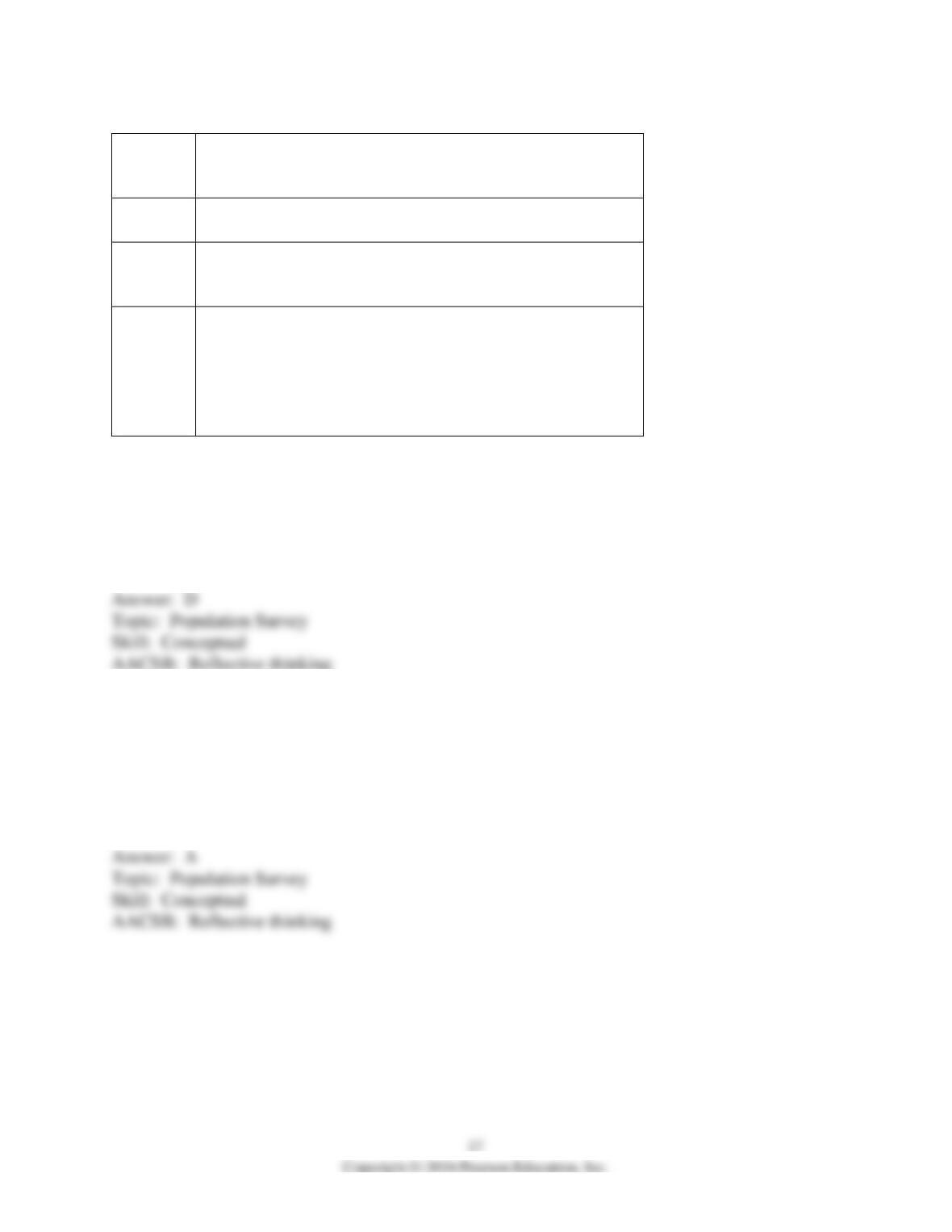
Person A
Now that the kids are in school for a full day, this person is
looking for work and has interviewed for three jobs during
the past two weeks.
Person B
This person has been laid off from a job but expects to be
called back as soon as the economy improves.
Person C
This person has just graduated from college and will start a
new job in three weeks. In the meantime this person will
tour the great American beaches.
Person D
This person was laid off last year when new equipment was
installed at the plant, reducing the number of workers
needed. Shortly after being laid off, this person looked for a
new job, was unable to find one and then stopped looking,
even though this person still wants a job and is available
for work.
63) The above table shows answers given by people interviewed in a government survey of
households. Which individuals are considered to be a part of the labor force?
A) C and D
B) B, C, and D
C) A, C, and D
D) A, B, and C
64) The above table shows answers given by people interviewed in a government survey of
households. Which individuals are considered unemployed using the official U-3 unemployment
rate?
A) A, B, and C
B) B, C, and D
C) A, C, and D
D) C and D
65) The above table shows answers given by people interviewed in a government survey of
households. Which individual or individuals are considered marginally attached?
A) A
B) B, C, and D
C) A and D
D) D
Total
population
(millions)
Currently
employed
(millions)
Not working
and looking
for work
(millions)
Want to work but
no longer looking
for work
(millions)
80
40
2
4
66) In the table above, the size of the labor force is
A) 80 million.
B) 46 million.
C) 42 million.
D) 40 million.
67) In the table above, the number of people officially unemployed is ________.
A) 40 million
B) 6 million
C) 4 million
D) 2 million
68) In the table above, the official U-3 unemployment rate is
A) 50 percent.
B) 15 percent.
C) 10 percent.
D) 5 percent.
69) In the table above, the number of marginally attached workers is ________.
A) 40 million
B) 6 million
C) 2 million
D) 4 million
70) The employment-to-population ratio equals
A) (labor force)/(working-age population) × 100.
B) (number of people employed)/(labor force) × 100.
C) (number of people with full-time jobs)/(labor force) × 100.
D) (number of people employed)/(working-age population) × 100.
71) The employment-to-population ratio is defined as
A) total employment divided by labor hours then multiplied by 100.
B) the labor force divided by the working-age population then multiplied by 100.
C) total employment divided by the labor force then multiplied by 100.
D) total employment divided by the working-age population then multiplied by 100.
72) The employment-to-population ratio is equal to the number of
A) unemployed people divided by the total population then multiplied by 100.
B) employed people divided by the working-age population then multiplied by 100.
C) employed people divided by the total population then multiplied by 100.
D) unemployed people divided by the working age population then multiplied by 100.
73) The percentage of people employed aged 16 years and older divided by the working-age
population is known as the
A) employment rate.
B) employment-to-population ratio.
C) labor force participation rate.
D) working-age population ratio.
74) The percentage of the people of working age who have jobs is called the ________.
A) labor force
B) inverse of the unemployment rate
C) employment-to-population ratio
D) employment-to-working-age-population ratio
75) From September 2013 to September 2014, the employment-to-population ratio increased
from 58.6 percent to 59.0 percent. This change could have been the result of
A) a decrease in the working-age population.
B) unemployed workers becoming part-time workers.
C) unemployed workers becoming discouraged workers.
D) discouraged workers starting to look for jobs again.
76) In an economy, 43 million people are employed, 3 million are unemployed, and 4 million are
not in the labor force. What is the employment-to-population ratio?
A) 86 percent
B) 92 percent
C) 93 percent
D) 6.5 percent