Barro
Chapter 5
TRUE/FALSE
1. In the Solow growth model, the growth rate of capital per worker is positively related to the optimum
capital per worker.
2. In the Solow growth model the growth rate of capital per worker is positively related to the initial level
of capital per worker.
3. The Solow growth model with technological progress has continuous output per worker growth in the
steady state.
4. Ideas are rival goods.
5. Governments grant patents and copyrights to encourage firms to engage in research and development.
6. Conditional convergence is the tendency of economies to coverge when they are similar.
7. In the Solow growth model, the growth rate of output per worker is positively related to the initial
level of capital per worker.
8. In the Solow growth model, the growth rate of output per worker is positively related to the optimal
level of output per worker.
9. The Solow growth model with exogenous technological growth implies that the steady-state growth
rate of real GDP per worker is lower than the rate of technological progress.
10. In the Romer endogenous growth model, the rate of technological progress depends on private returns
to R&D investment.

MULTIPLE CHOICE
1. Conditional convergence is the tendency of economies to converge:
a.
all the time.
c.
only when economic conditions are good..
b.
when they are similar.
d.
only when currencies are stable.
2. Absolute convergence is the tendency of economies to converge:
a.
all the time.
c.
only when economic conditions are good.
b.
when they are similar.
d.
only when currencies are stable.
3. In the Solow growth model transition, the growth rate of capital per worker is negatively related to:
a.
the initial capital stock per worker, k(0).
c.
the optimum output per worker, k*
b.
k/k.
d.
all of the above.
4. In the Solow growth model transition, the growth rate of capital per worker is positively related to:
a.
the initial capital stock per worker, k(0).
c.
the optimum output per worker, k*
b.
k/k.
d.
all of the above.
5. In the Solow growth model transition, the growth rate of output per worker is negatively related to:
a.
the initial capital stock per worker, k(0).
c.
the optimum output per worker, y*
b.
y/y.
d.
all of the above.
6. In the Solow growth model transition, the growth rate of output per worker is positively related to:
a.
the initial capital stock per worker, k(0).
c.
the optimum output per worker, y*
b.
y/y.
d.
all of the above.
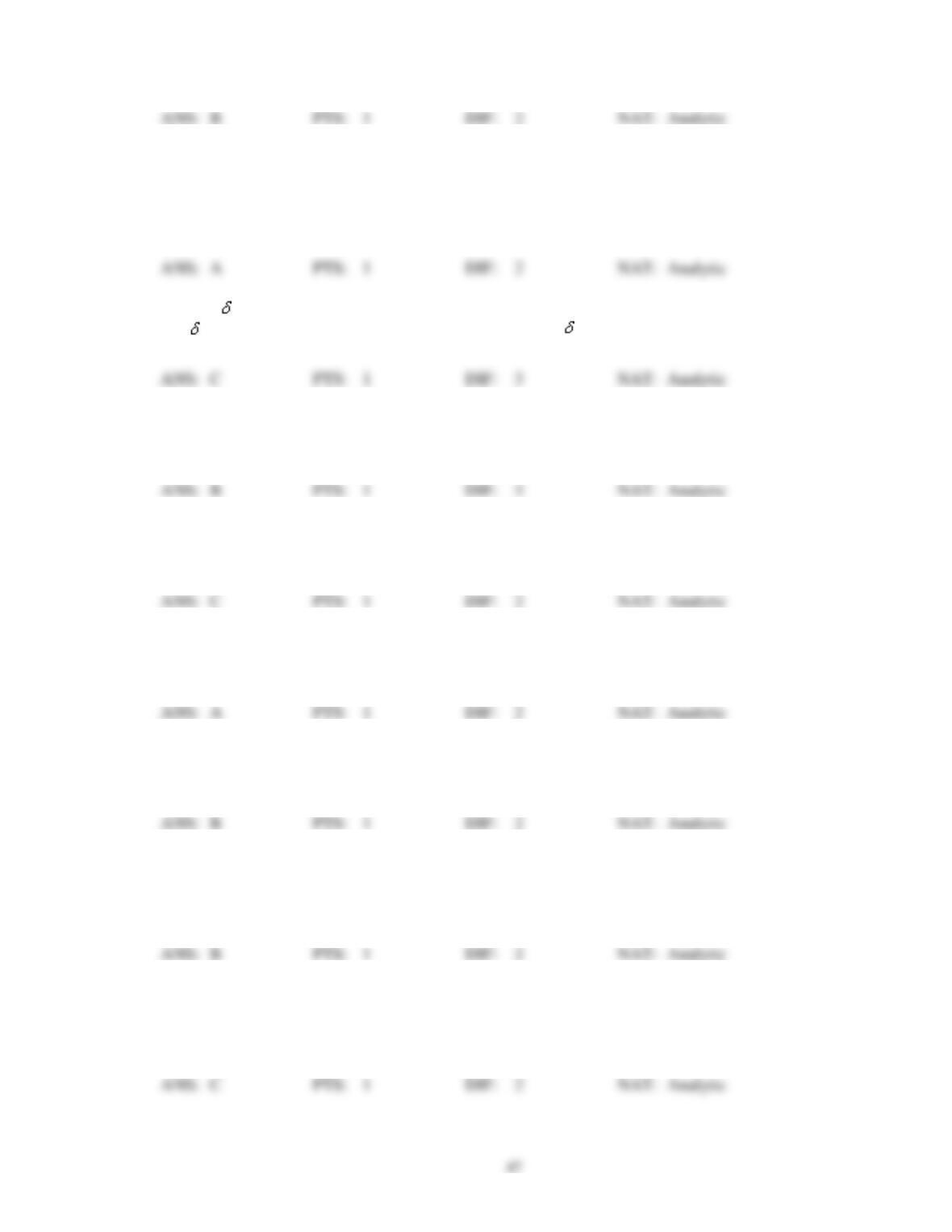
7. The key equation for conditional convergence for capital per worker is:
a.
c.
b.
Y = A•F(K,L)
d.
8. The key equation for conditional convergence for output per worker is:
a.
c.
b.
Y = A•F(K,L)
d.
9. In the key equation for convergence , y(0) is:
a.
the initial level of output.
c.
the optimum level of output.
b.
the initial level of output per worker.
d.
the optimum level of output per worker.

46
10. In the key equation for convergence , y* is:
a.
the initial level of output.
c.
the optimum level of output.
b.
the initial level of output per worker.
d.
the optimum level of output per worker.
11. In the key equation for convergence , k* is:
a.
the initial level of capital.
c.
the optimum level of capital.
b.
the initial level of capital per worker.
d.
the optimum level of capital per worker.
12. In the key equation for convergence , k(0) is:
a.
the initial level of capital.
c.
the optimum level of capital.
b.
the initial level of capital per worker.
d.
the optimum level of capital per worker.
13. Convergence can be seen in the data of all countries together if one holds constant:
a.
the saving rate.
c.
the degree the rule of law is maintained.
b.
the fertility rate.
d.
all of the above.
14. Convergence can be seen in the data of all countries together if one holds constant:
a.
the degree that democracy is maintained.
c.
the average rate of inflation.
b.
changes in the terms of trade.
d.
all of the above.
15. Convergence can be seen in the data of all countries together if one holds constant:
a.
the size of government.
c.
investment in education and health.
b.
the extent of international openness.
d.
all of the above.
16. In the Solow growth model, the long run rate of growth of output per worker is:
a.
zero
c.
cyclical.
b.
negative.
d.
positive.
17. A growth model with continuing output per worker growth in the long run is:
a.
the production function.
c.
the Solow growth model.
b.
the Ak model of constant average product
of capital.
d.
all of the above.
18. If sA > s + n in the model with constant average product of capital, the long run growth rate is:
a.
constant.
c.
negative.
b.
positive
d.
cyclical.
19. A problem with the constant average product of capital growth model is that:
a.
output per worker grows in the long run.
c.
the Y/K ratio grows.
b.
there is no convergence.
d.
all of the above.
20. A problem with the constant average product of capital growth model is that:
a.
a common view among economist is that
the average product of capital eventually
starts to fall as capital rises.
c.
the Y/K ratio grows.
b.
output per worker grows in the long run.
d.
all of the above.
21. If sA > s + n in the model with constant average product of capita, the long run growth rate is:
a.
c.
sA – (s +N)
b.
Ak
d.
none of the above.
22. In the Solow growth model with technological progress,
a.
k* is constant.
c.
k* is cyclical.
b.
k* is growing
d.
k* is declining.
23. In the Solow growth model with technological progress in the steady state:
a.
capital per worker is constant.
c.
capital per worker is increasing.
b.
capital per worker is cyclical.
d.
capital per worker is declining.
24. In the Solow growth model with technological progress in the optimal amount of capital per worker is
a.
growing.
c.
cyclical.
b.
shrinking.
d.
fluctuating.
25. In endogenous growth models, technological progress comes from:
a.
outside the system.
c.
increases in the capital stock.
b.
research and development.
d.
all of the above.
26. An example of a rival capital good is:
a.
infrastructure like roads.
c.
an idea like a new chemical formula for a
drug.
b.
a machine like a printing press.
d.
all of the above.
27. An example of a non-rival good is:
a.
a output like a pizza.
c.
an idea like a new chemical formula for a
drug.
b.
a machine like a printing press.
d.
all of the above.
48
28. An example of a non-rival good is:
a.
mathematical formulas in calculus.
c.
an idea like a new chemical formula for a
drug.
b.
codes for computer software.
d.
all of the above.
29. An example of a rival capital good is:
a.
an employee like an R&D engineer.
c.
a structure like a factory.
b.
a machine like a printing press.
d.
all of the above.
30. An example of a non-rival good is:
a.
an output like a shirt.
c.
a structure like a factory.
b.
code for computer software.
d.
all of the above.
31. An example of non-rival good is:
a.
mathematical formulas in calculus.
c.
an output like a dress.
b.
a machine like a laser printer.
d.
all of the above.
32. To encourage firms to engage in research and development (R&D), governments grant temporary
monopolies in the production of the goods that result from R&D called:
a.
patents.
c.
anti-trust exemptions.
b.
land grants.
d.
all of the above.
33. To encourage firms to engage in research and development (R&D), governments grant temporary
monopolies in the production of the word or symbol based goods like books and computer code that
result from R&D called:
a.
cartels.
c.
anti-trust exemptions.
b.
copyrights.
d.
all of the above.
34. The private return from research and development might be less than the social return because:
a.
others than just the inventor can use
inventions that come out of research and
development.
c.
it is funded by the government.
b.
it is encouraged by patents and copyrights.
d.
all of the above.
35. The rewards to private R&D depend on:
a.
the costs of R&D.
c.
the security of intellectual property rights.
b.
the rewards from the results of R&D.
d.
all of the above.
36. The rewards to private R&D are negatively related to:
a.
the costs of R&D.
c.
the security of intellectual property rights.
49
b.
the rewards from the results of R&D.
d.
all of the above.
37. The rewards to private R&D are positively related to:
a.
the costs of R&D.
c.
the security of intellectual property rights.
b.
growth rate of capital per worker.
d.
all of the above.
38. If intellectual property rights become better secured, then:
a.
the costs of R&D are greater.
c.
the private returns to R&D are greater.
b.
the costs of R&D are smaller.
d.
the private returns to R&D are smaller.
39. The ability to control the inventions from R&D spending is known as
a.
greed.
c.
intellectual property rights.
b.
a rival good.
d.
all of the above.
40. A business may not seek a patent on an idea or invention because:
a.
patents are not valuable.
c.
ideas and inventions are non-rival.
b.
approval is costly.
d.
all of the above.
41. Diffusion of technology means:
a.
how many industries a technology can be
used in.
c.
how expensive a technology is.
b.
describes the imitation and adaptation of
technology from country to country.
d.
how many scientist had to work on a
technology.
42. Steady state growth is when:
a.
when the average product of capital, y/k,
is unchanging as k increases at a constant
rate.
c.
when the rate growth of output per worker
is constant at zero.
b.
when the rate of growth of capital per
worker is constant at zero.
d.
all of the above.
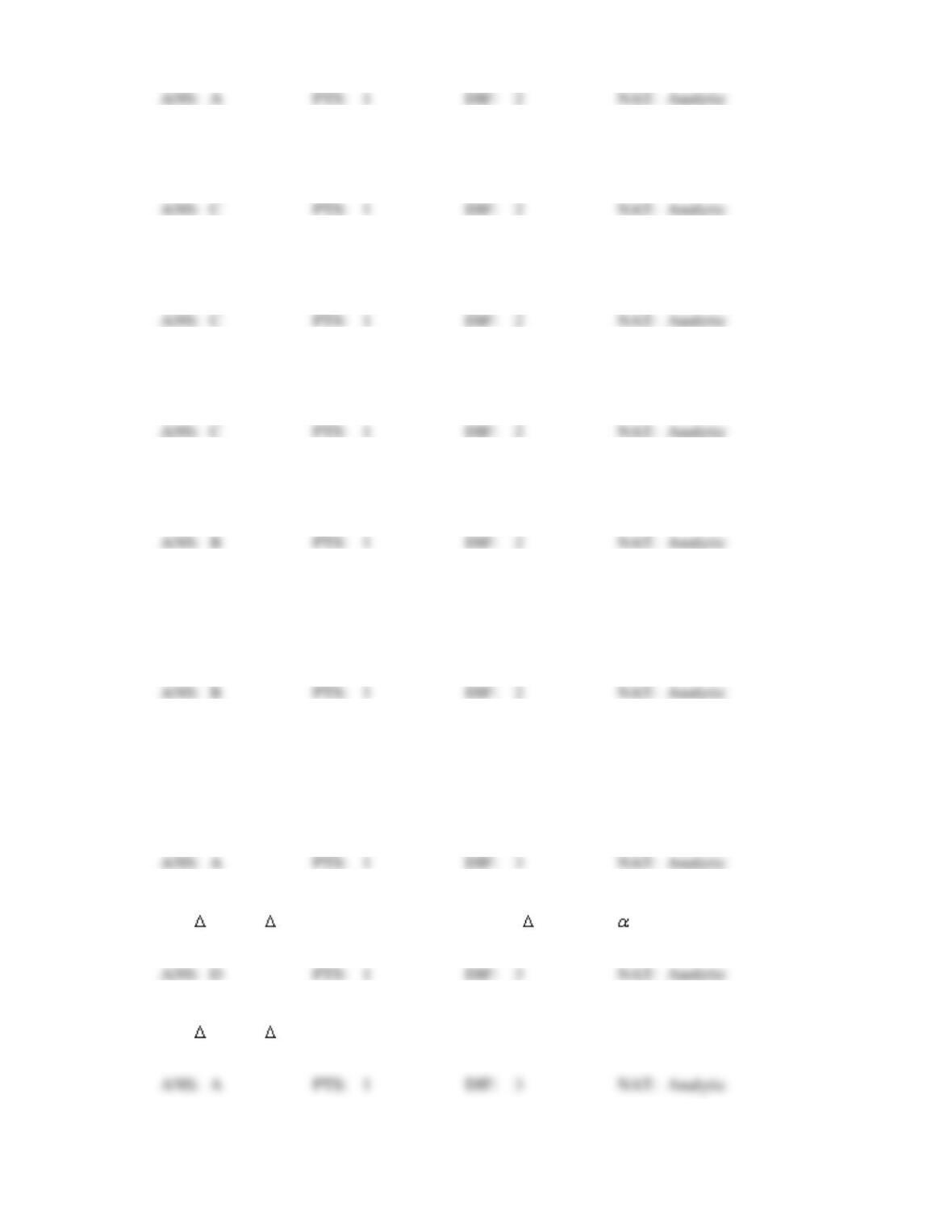
43. With steady state growth:
a.
( y/y)* = ( k/k)*
c.
( y/y)*= g/(1- )
b.
y/k is constant.
d.
all of the above.
44. With steady state growth:
a.
( y/y)* = ( k/k)*.
c.
y* = 0.
b.
k* = 0.
d.
all of the above.

50
45. With steady state growth:
a.
there is absolute convergence.
c.
k* growth fluctuates.
b.
y/k is constant.
d.
all of the above.
46. With steady state growth:
a.
k* growth fluctuates.
c.
( y/y)*= g/(1- )
b.
there is absloute convergence.
d.
all of the above.
47. With steady state growth:
a.
the optimal output per worker and capital
per worker grow at the same rate.
c.
the average product of capital is constant.
b.
the steady state growth rate of real GDP
per worker is greater than the rate of
technological progress.
d.
all of the above.
48. With steady state growth:
a.
the optimal output per worker and capital
per worker grow at the same rate.
c.
the average product of capital falls.
b.
the steady state growth rate of real GDP
per worker is equal to the rate of
technological progress.
d.
all of the above.
49. With steady state growth:
a.
the optimal output per worker grows faster
than optimal capital per worker.
c.
the average product of capital is constant.
b.
the steady state growth rate of real GDP
per worker is less than the rate of
technological progress.
d.
all of the above.
50. With steady state growth:
a.
the optimal output per worker grows faster
than the optimal capital per worker.
c.
the average product of capital is falling.
b.
the steady state growth rate of real GDP
per worker is greater than the rate of
technological progress.
d.
all of the above.
51. A government which promotes free trade across borders will
a.
increase efficiency, which increases
productivity and the steady-state real GDP
per worker.
c.
increase poverty, which decreases
productivity and the steady-state real GDP
per worker.
b.
decrease efficiency, which decreases
productivity and the steady-state real GDP
per worker.
d.
decrease saving, which decreases the
steady-state real GDP per worker.

51
52. A country which has a poorly-performing judicial system will experience
a.
an increase in efficiency, which increases
productivity and the steady-state real GDP
per worker.
c.
an increase in saving, which increases the
steady-state real GDP per worker.
b.
a decrease in efficiency, which decreases
productivity and the steady-state real GDP
per worker.
d.
a decrease in saving, which decreases the
steady-state real GDP per worker.
53. The evidence on conditional convergence
a.
indicates that conditional convergence
holds for a broad group of countries.
c.
indicates that absolute convergence is
more likely than conditional convergence.
b.
fails to show any notable signs of
conditional convergence.
d.
fails to hold constant variables such as
saving rates and fertility rates, so is
inconclusive.
54. Recent research on the determinants of economic growth suggest which of the following variables
helps to explain growth?
a.
the extent of official corruption
c.
the degree of international openness
b.
the scope of education and health
programs.
d.
all of the above.
55. The high growth rates of real GDP per person in South Korea and Taiwan from the 1960s to 2000
reflect
a.
high steady-state values for capital per
worker.
c.
high initial values for capital per worker.
b.
low steady-state values for population
growth.
d.
high initial values for output per worker.
56. Absolute convergence suggests that growth rates of real GDP per person in sub-Saharan Africa from
1960 to 2000 would be
a.
high.
c.
low.
b.
moderate.
d.
negative.
57. Conditional convergence suggests that growth rates of real GDP per person in sub-Saharan Africa
from 1960 to 2000 would be
a.
high.
c.
low.
b.
moderate.
d.
negative.
58. The fact that growth rates of GDP per worker in many African countries were the lowest in the world
from 1960 to 2000 can be explained by
a.
absolute convergence.
c.
partial convergence.
b.
conditional convergence.
d.
steady-state convergence.
52
59. The fact that growth rates of GDP per worker in many African countries were the lowest in the world
from 1960 to 2000 can be explained by
a.
low initial values of capital per worker.
c.
low steady-state values of capital per
worker.
b.
low initial values of GDP per worker.
d.
high initial values of saving.
60. The fact that growth rates of GDP per worker in many African countries were the lowest in the world
from 1960 to 2000 can be partly explained by
a.
low initial values of capital per worker.
c.
low rates of population growth.
b.
low initial values of GDP per worker.
d.
weak education and health programs.
61. The fact that growth rates of GDP per worker in many East Asian countries were high from 1960 to
2000 can be partly explained by
a.
high initial values of capital per worker.
c.
relatively little openness to international
trade.
b.
high initial values of GDP per worker.
d.
satisfactory programs in education and
health.
62. In the Solow growth model with exogenous technological progress, if the share of capital income is
1/2 and technology improves at a rate of 1 percent per year, then the steady-state growth rate of real
GDP per person equals
a.
2 percent per year.
c.
0.5 percent per year.
b.
1 percent per year.
d.
zero percent per year.
63. In the Solow growth model with exogenous technological progress, if the share of capital income is
1/3 and technology improves at a rate of 2 percent per year, then the steady-state growth rate of real
GDP per person equals
a.
zero percent per year.
c.
2 percent per year.
b.
1 percent per year.
d.
3 percent per year.
64. In the Solow growth model with exogenous technological progress, absolute convergence
a.
continues to exist, but conditional
convergence does not.
c.
and conditional convergence continue to
exist.
b.
does not exist, but conditional
convergence continues to exist.
d.
and conditional convergence no longer
exist.
65. The Romer model of endogenous growth suggests that countries that spend more on R&D tend to have
a.
lower rates of applications for patents and
copyrights.
c.
higher growth rates of GDP per person.
b.
lower growth rates of of capital per
person.
d.
lower growth rates of GDP per person.
SHORT ANSWER
1. What is conditional convergence?
2. What variables must be held constant to find convergence in the data on all countries.
3. What is the key equation for conditional convergence and what are the direction of influences?
4. What are the steady-state growth results of a constant average product of capital model of growth and
what are the problems of such a model?
5. What happens when exogenous technological change is modeled in the Solow growth model?