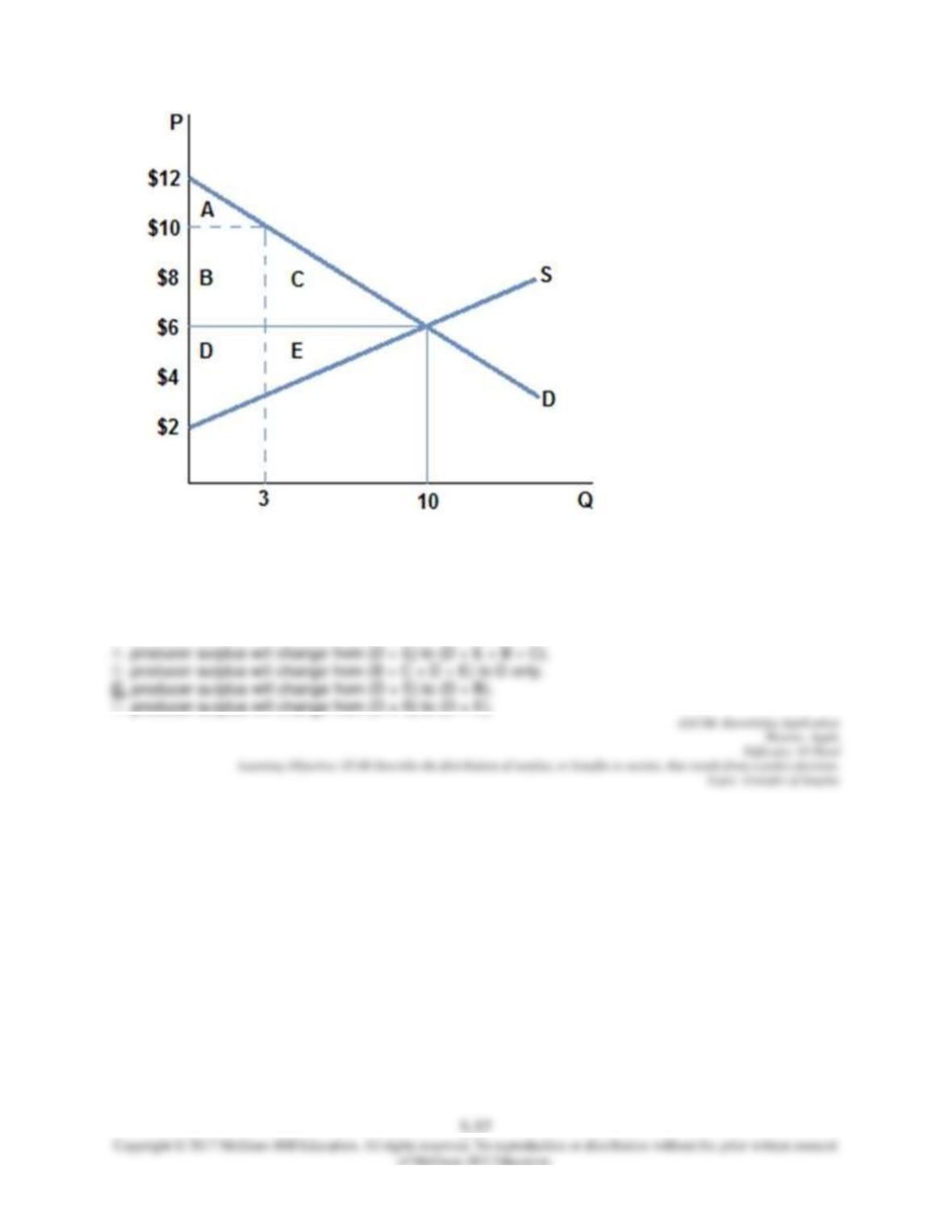
107.
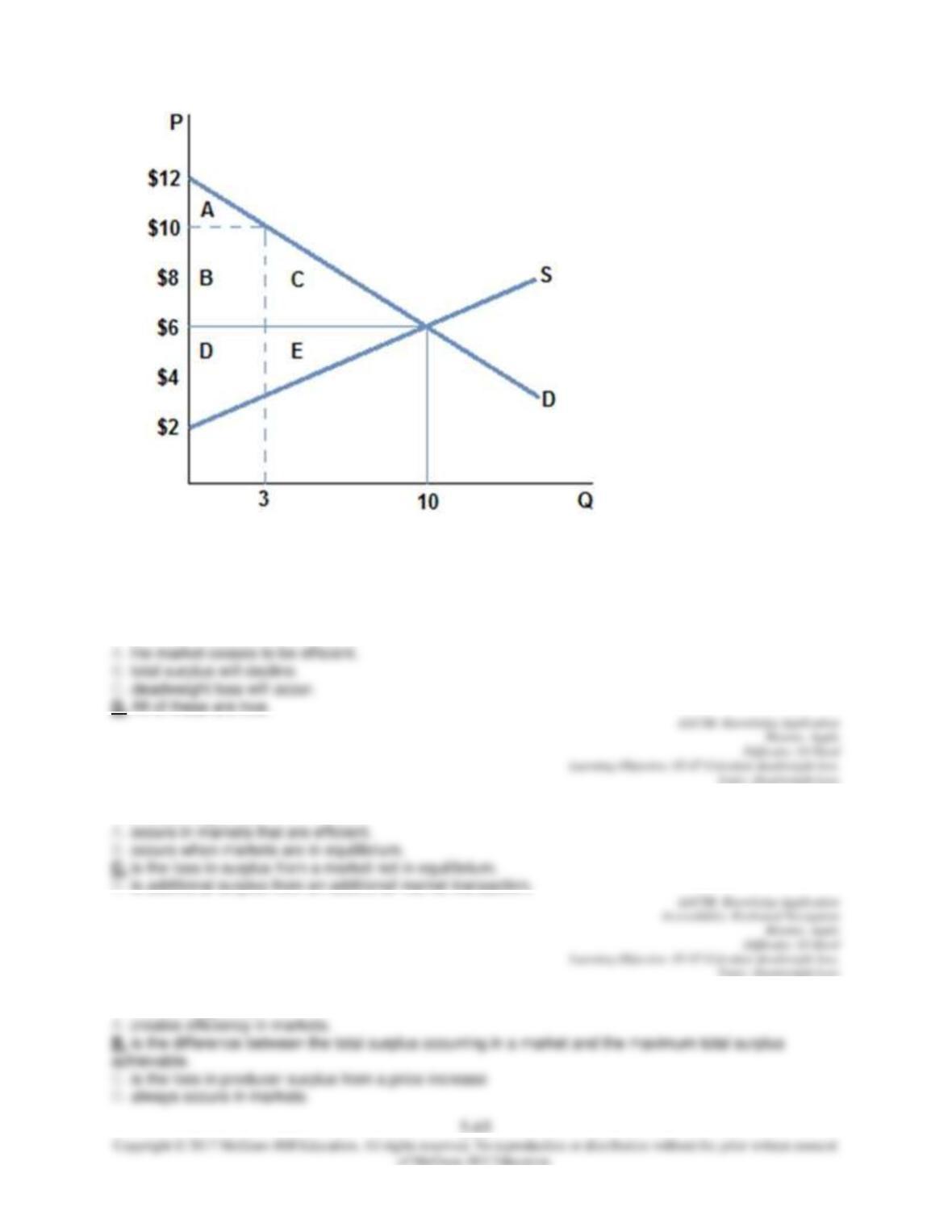
According to the graph shown, if the market goes from equilibrium to having its price set at $10 then:
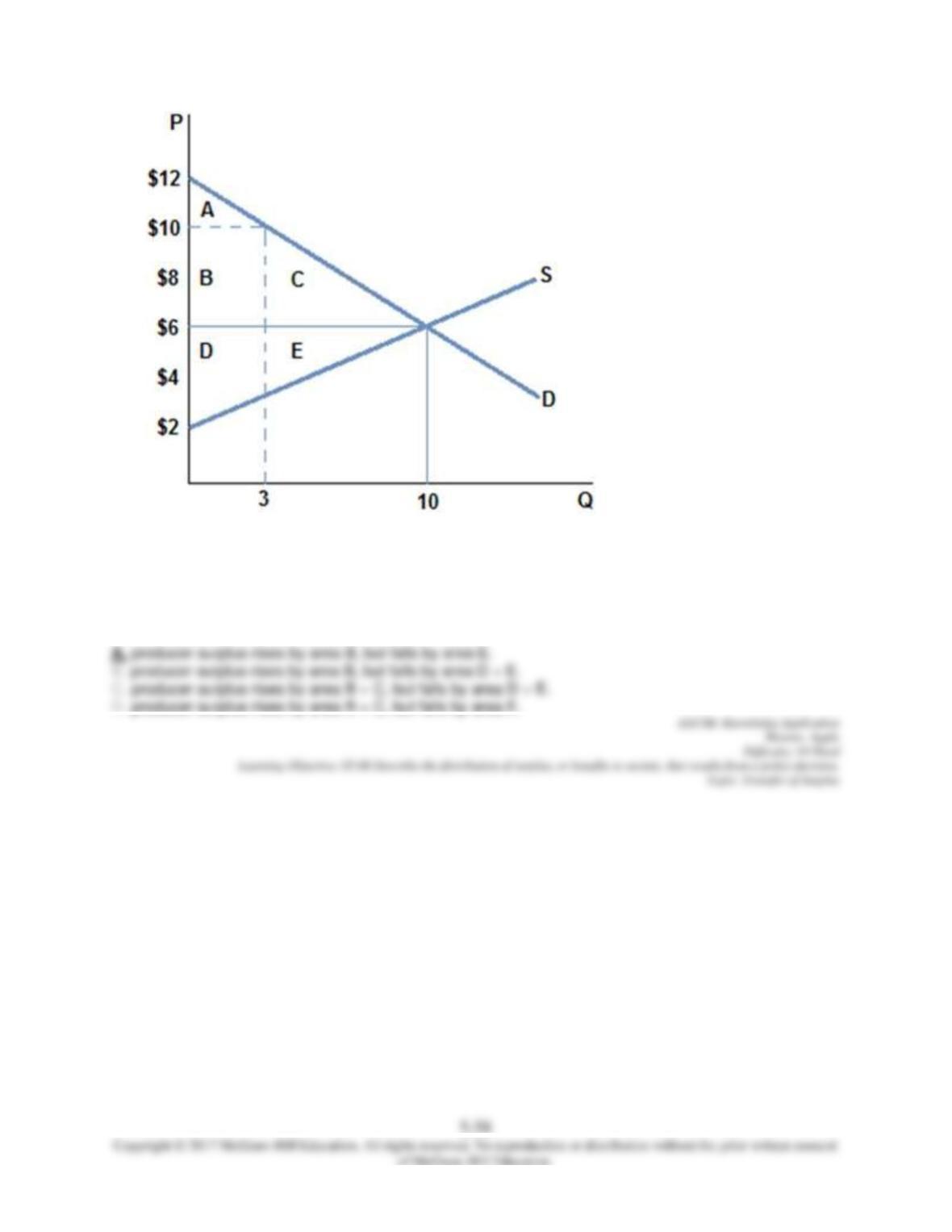
108.
According to the graph shown, if the market goes from equilibrium to having its price set at $10 then:
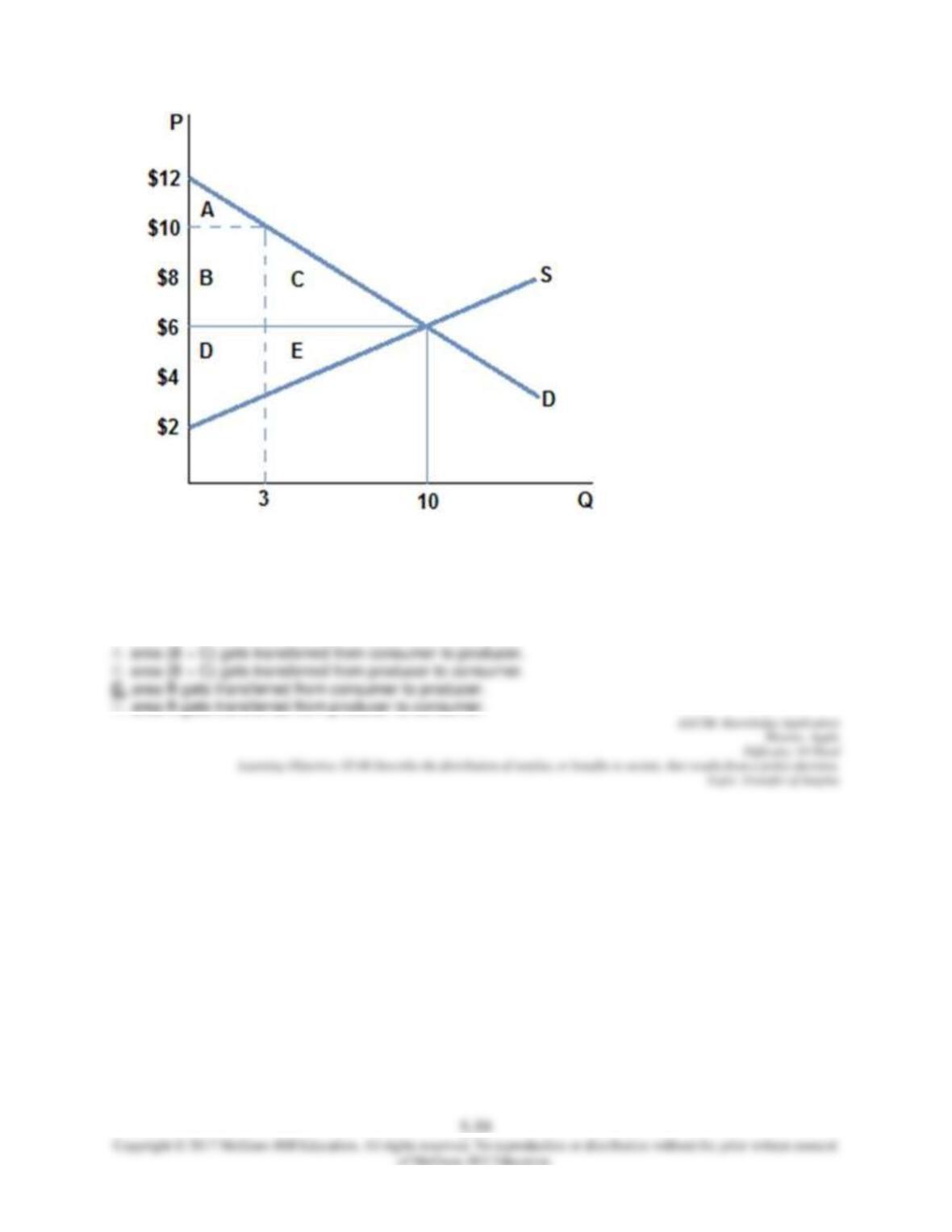
109.
According to the graph shown, if the market goes from equilibrium to having its price set at $10 then:
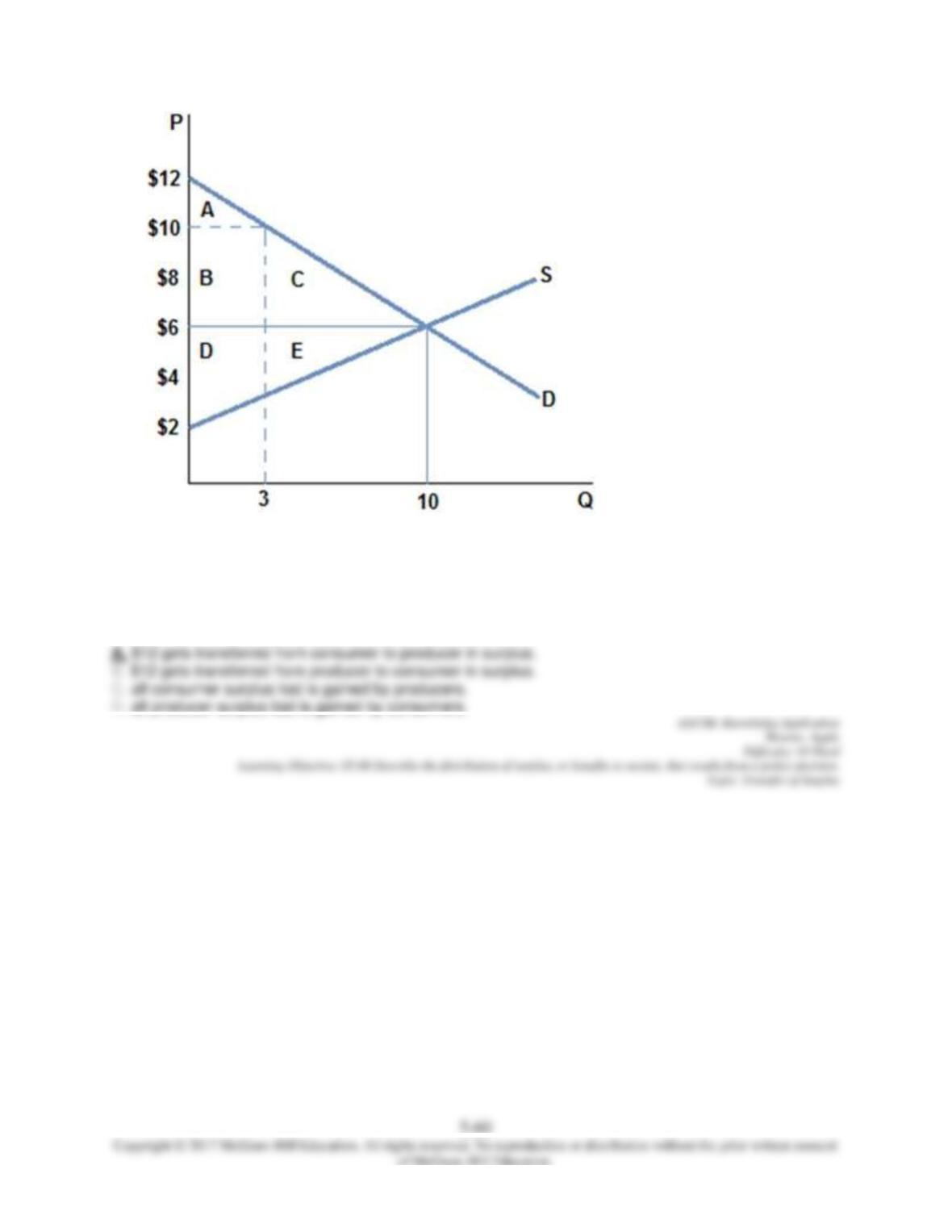
110.
According to the graph shown, if the market goes from equilibrium to having its price set at $10 then:
111.
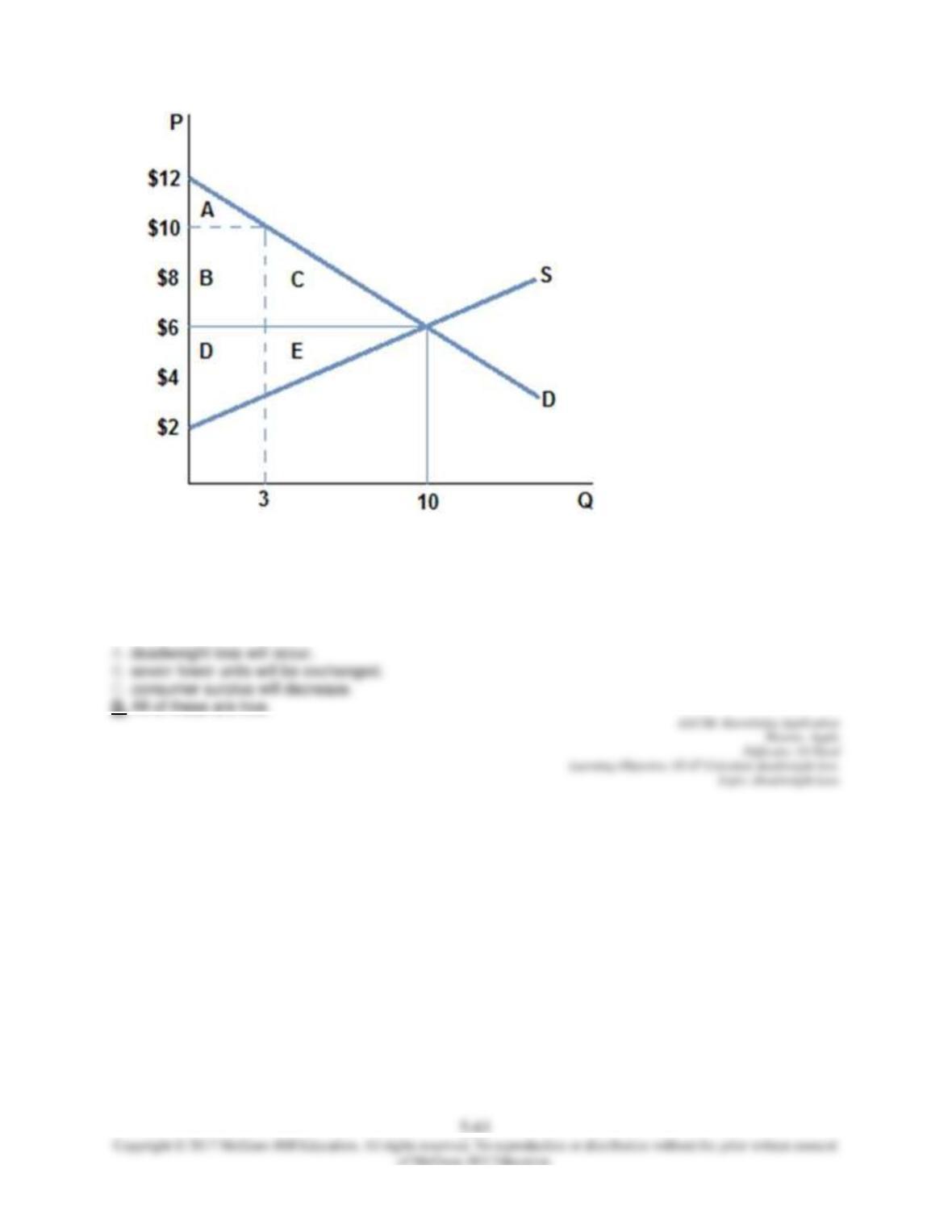
According to the graph shown, if the market goes from equilibrium to having its price set at $10:
112.
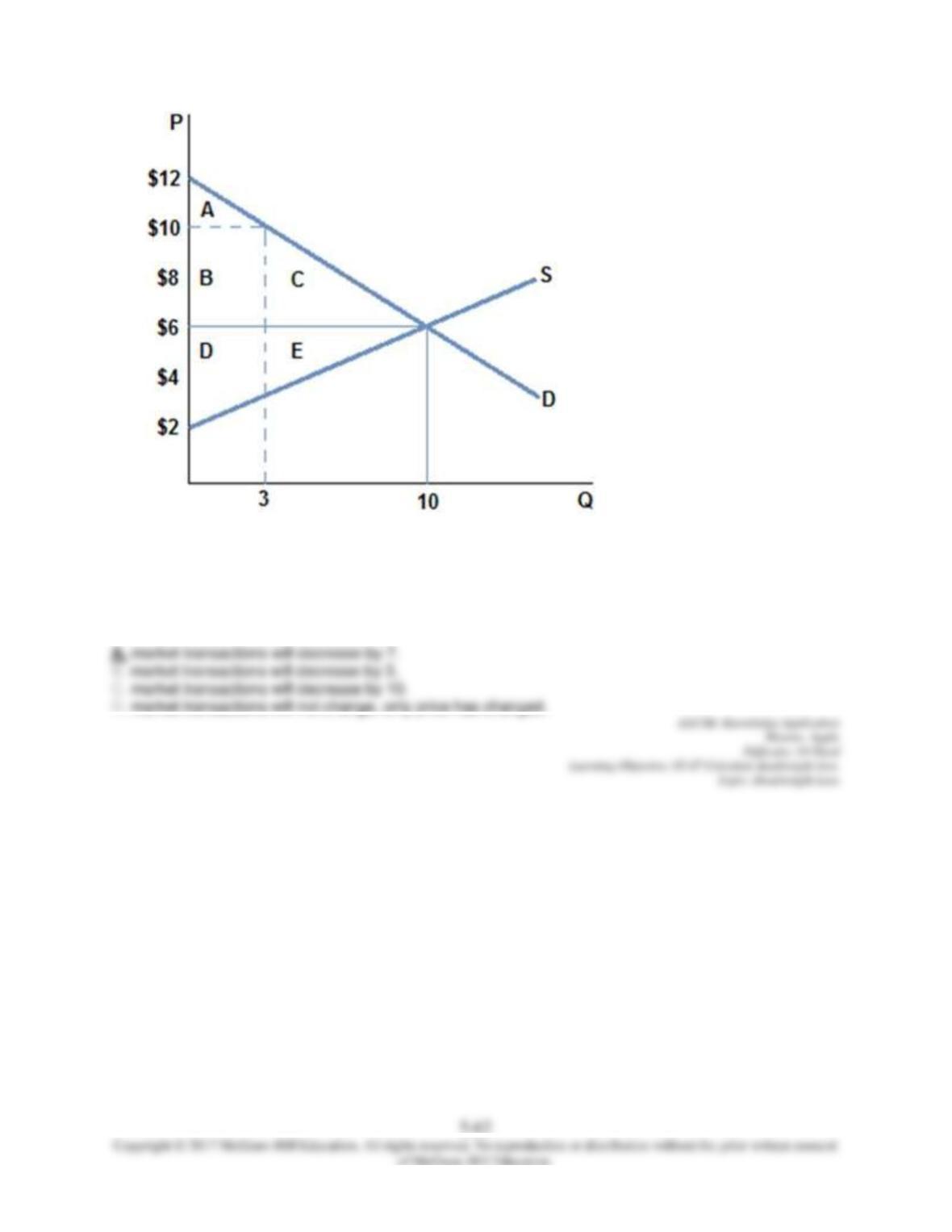
According to the graph shown, if the market goes from equilibrium to having its price set at $10:
113.
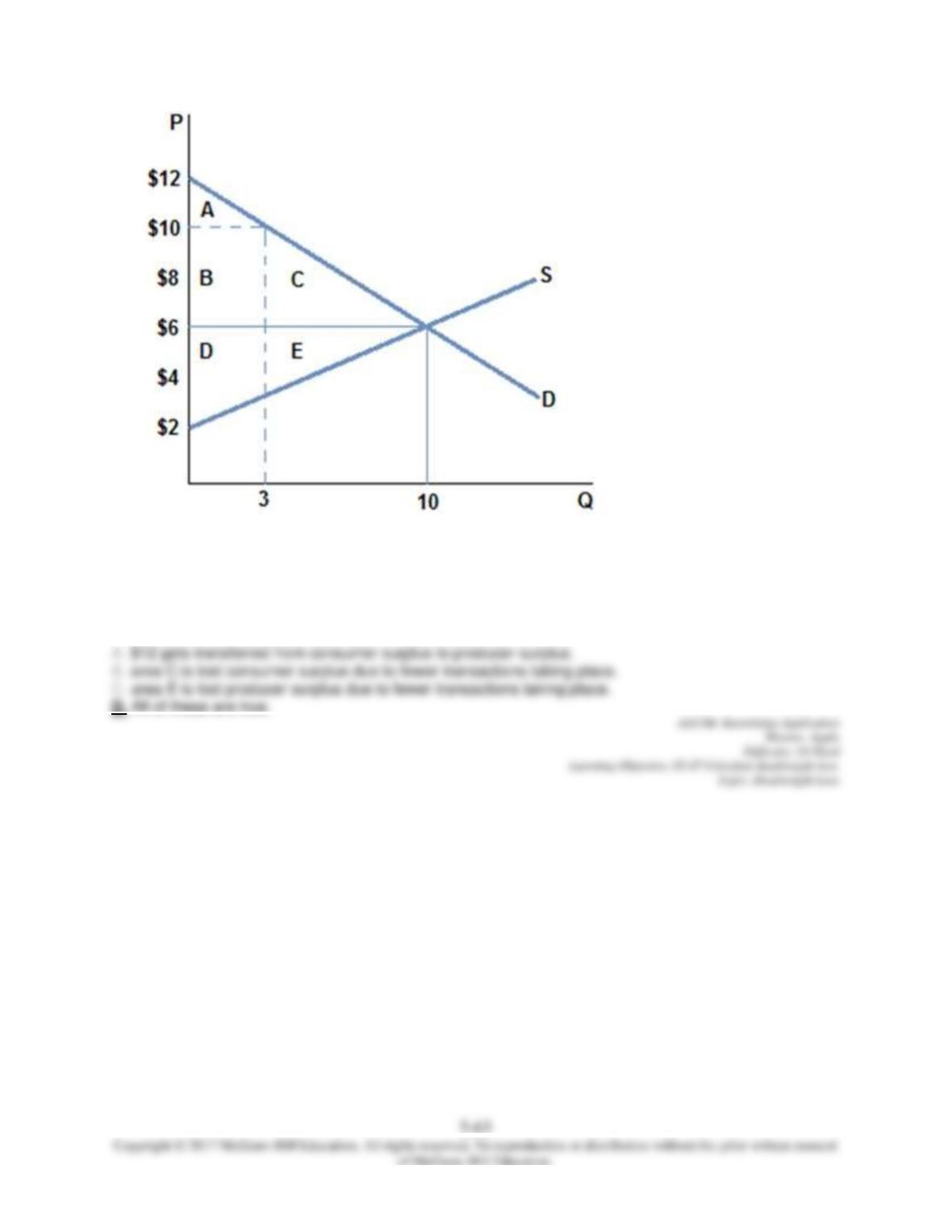
According to the graph shown, if the market goes from equilibrium to having its price set at $10 then:
114.
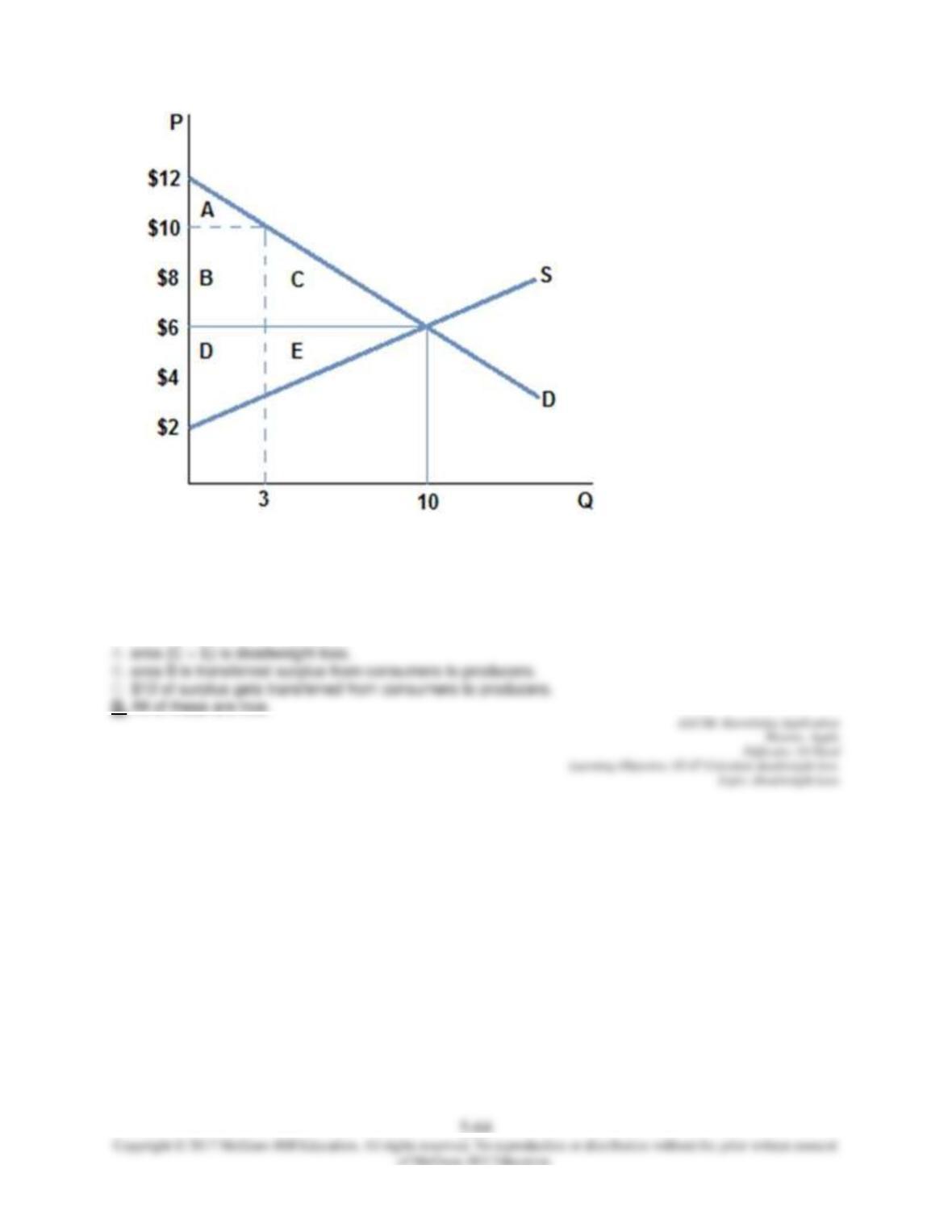
According to the graph shown, if the market goes from equilibrium to having its price set at $10 then:
115.
According to the graph shown, if the market goes from equilibrium to having its price set at $10 then:
116. Deadweight loss:
117. Deadweight loss:
118. Deadweight loss:
120. We say a market is “missing” when:
121. Markets can be missing:
122. Markets can be missing:
123. Markets can be missing if:
124. Total surplus can be increased if:
125. Well-being can be increased by:
126. Creating a market that was previously “missing”:
127. The creation of markets that were previously “missing”:
5-68
128. The market to buy and sell organs:
129. An example of a “missing” market would be:
130. The market to buy and sell organs:
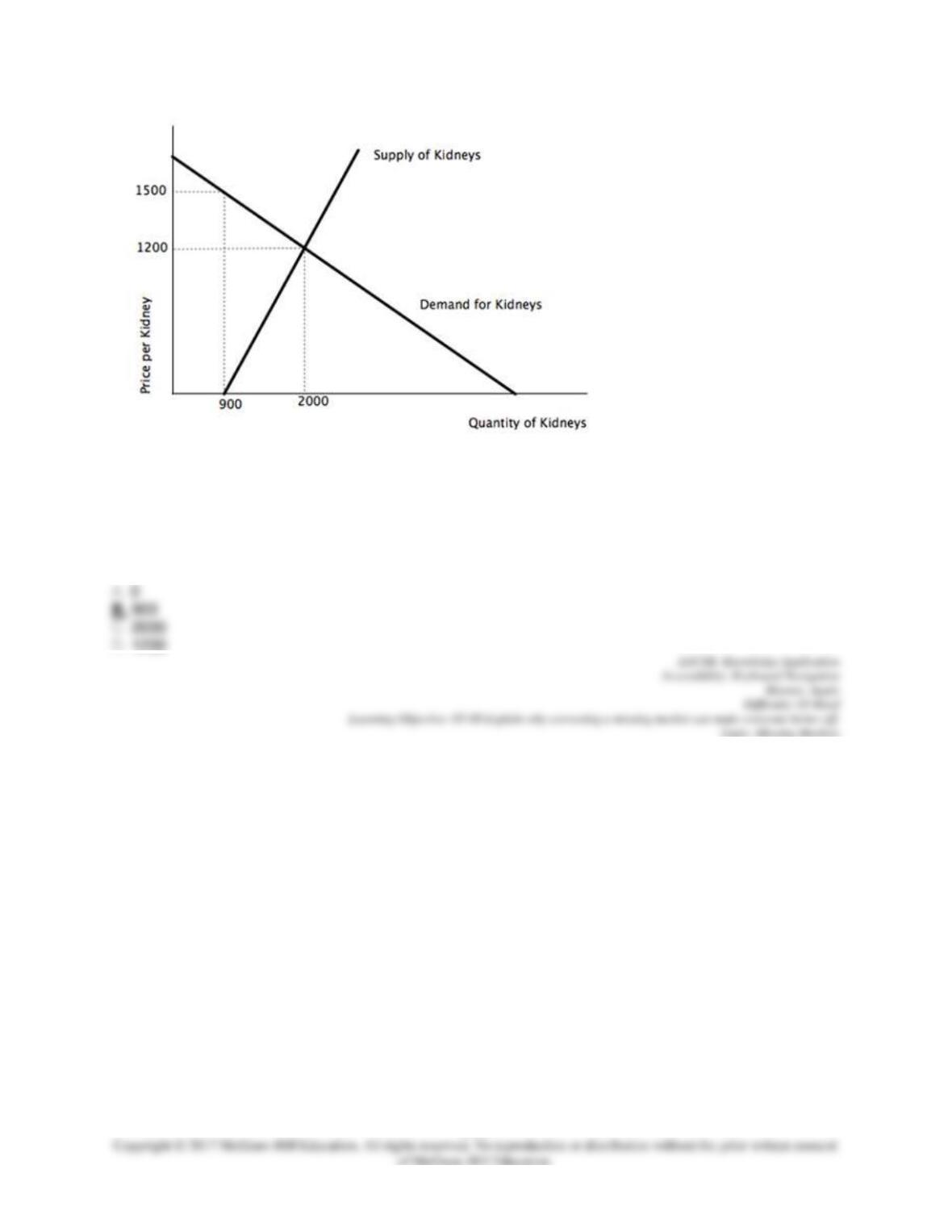
131. Consider the hypothetical supply and demand of Kidneys.
5-69
Suppose Kidneys cannot be sold, only donated (price is zero). How many kidneys are donated in this
hypothetical situation?
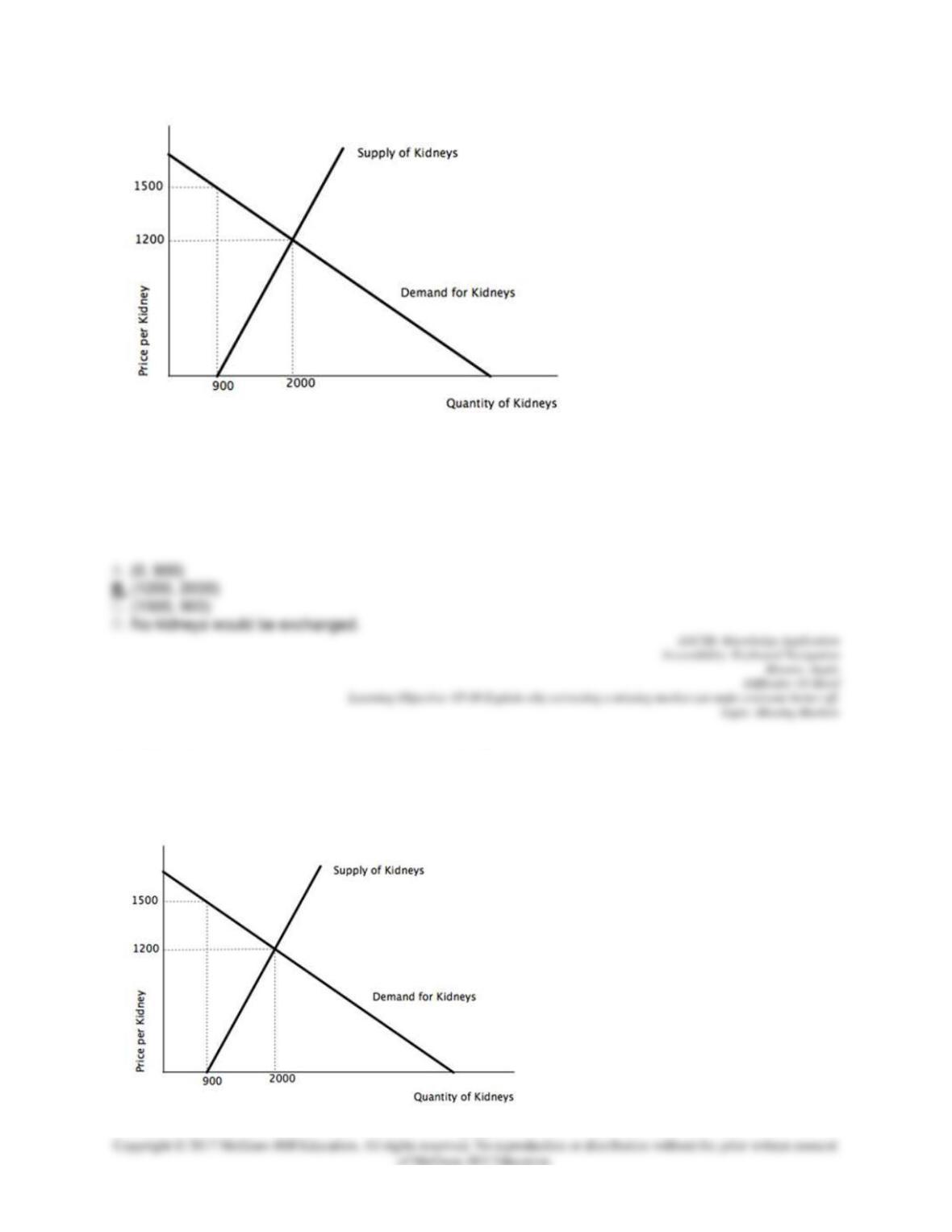
132. Consider the hypothetical supply and demand of Kidneys.
5-70
If the government allows the buying and selling of kidneys, what will be the resulting price and quantity of
kidneys?
133. Consider the hypothetical supply and demand of Kidneys.
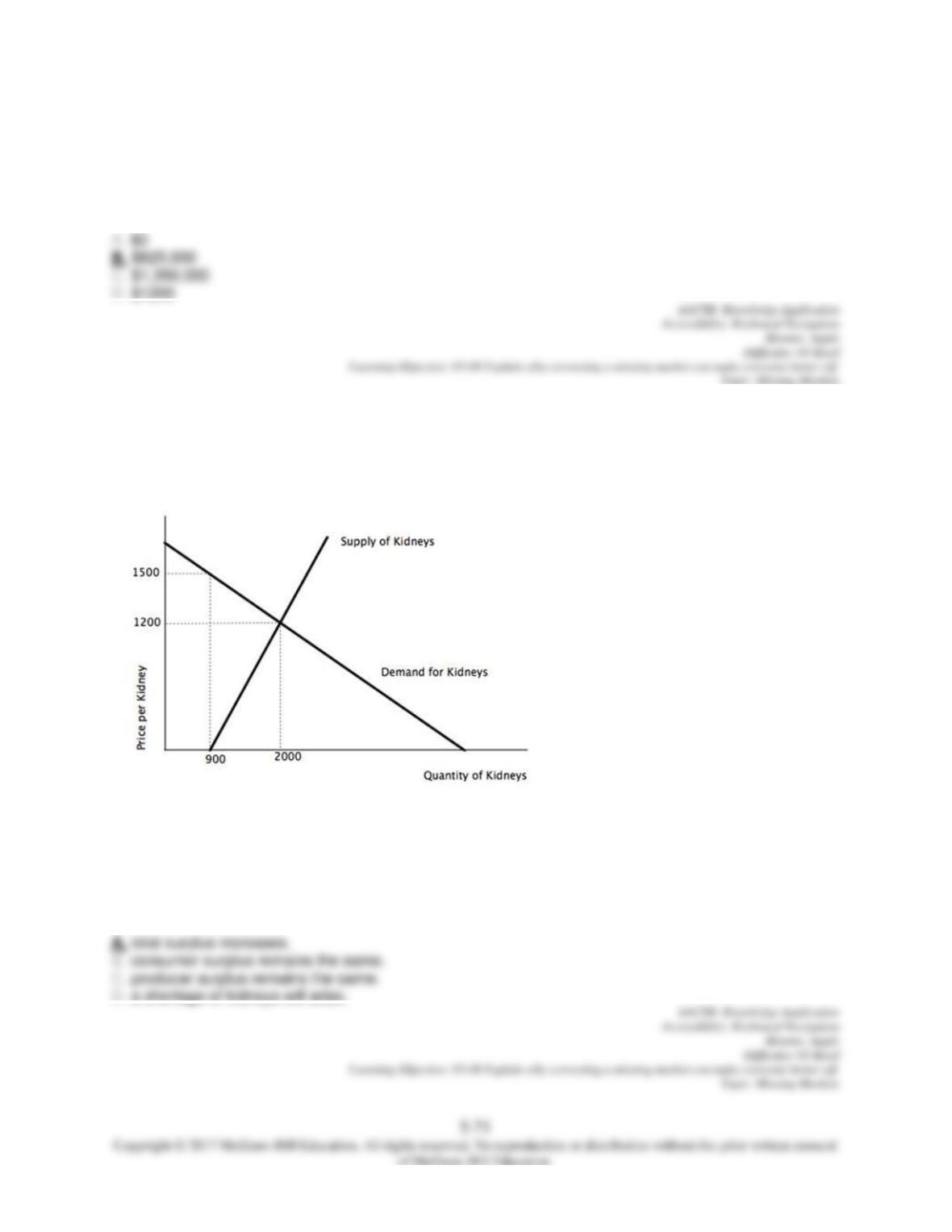
Initially, Kidney exchanges are regulated to donations only. This means kidneys can only be exchanged
at a price of zero. What is the deadweight loss from this restriction?
134. Consider the hypothetical supply and demand of Kidneys.
Initially, kidneys are exchanged by donations only (price=0). If the government decides to legalize kidney
sales and the market reaches equilibrium, then:

5-72
Chapter 05 Test Bank Summary
Category
# of Questio
ns
AACSB: Knowledge Application
104
AACSB: Reflective Thinking
30
Accessibility: Keyboard Navigation
87
Blooms: Apply
106
Blooms: Remember
8
Blooms: Understand
20
Difficulty: 01 Easy
9
Difficulty: 02 Medium
21
Difficulty: 03 Hard
104
Learning Objective: 05-
01 Use willingness to pay and willingness to sell to determine supply and demand at a
given price.
22
Learning Objective: 05-02 Calculate consumer surplus based on a graph or table.
17
Learning Objective: 05-03 Calculate producer surplus based on a graph or table.
25
Learning Objective: 05-04 Calculate total surplus based on a graph or table.
23
Learning Objective: 05-
05 Define efficiency in terms of surplus; and identify efficient and inefficient situation
s.
8
Learning Objective: 05-
06 Describe the distribution of surplus, or benefits to society, that results from a polic
y decision.
15
Learning Objective: 05-07 Calculate deadweight loss.
9
Learning Objective: 05-
08 Explain why correcting a missing market can make everyone better off.
15
Topic: Consumer Surplus
16
Topic: Deadweight Loss
9
Topic: Efficiency
8
Topic: Missing Markets
15
Topic: Producer Surplus
26
Topic: Surplus
22
Topic: Total Surplus
23
Topic: Transfer of Surplus
15