5-1
Chapter 05 Test Bank KEY
1. In economics, the concept of surplus:
2. The concept of surplus can:
3. The maximum price that a buyer would be willing to pay for a good or service is also called:
4. A consumer’s willingness to pay:
5. Which of the following prices could represent Sally’s willingness to pay for a pair of shoes if she bought
them for $45?
6. If Billy’s reservation price on a snowboard is $250, how many snowboards would he buy if the market
price of snowboards is $500?
7. If Claire’s reservation price on a sweater is $37, which of the following prices would she have to
observe in the market in order to buy a sweater?
8. Which of the following prices could represent Eli’s willingness to pay for a baseball glove if he observed
9. A seller’s willingness to sell:
10. A buyer always wants to:
11. Willingness to pay represents:
12. The willingness to pay of buyers’ in a market:
13. At prices above a consumer’s reservation price:
14. At prices below a consumer’s willingness to pay:
15. Each seller’s opportunity costs are:
16. If Thelma’s willingness to sell her homemade fudge is $4, then at which of the following prices would
Thelma sell her fudge?
17. If Sam’s opportunity cost of a sweater is $37, which of the following prices would he have to observe
in the market in order to sell a sweater?
18. Surplus refers to:
19. Surplus refers to:
20. When someone’s willingness to pay is the same as the actual price paid for an item:
21. When Bob’s willingness to pay for a cup of coffee is $1, and the price of a cup of coffee is $1:
22. Surplus is:
23. A market has four individuals, each considering buying a grill for his backyard. Assume that grills
come in only one size and model. Abe considers himself a grill-master, and finds a grill a necessity, so he
is willing to pay $400 for a grill. Butch is a meat-lover, honing his grilling skills, and is willing to pay $350
for a grill. Collin just met the girl of his dreams, and she loves a good grilled steak, so in his effort to
impress her he is willing to pay $320 for a grill. Daniel loves grilled shrimp and thinks it might be cheaper
in the long run if he buys a grill instead of eating out every time he wants grilled shrimp, so he is willing to
pay $200 for a grill.
If the market price of grills is $300, given the scenario described, the total consumer surplus would be:
5-6
24. A market has four individuals, each considering buying a grill for his backyard. Assume that grills
come in only one size and model. Abe considers himself a grill-master, and finds a grill a necessity, so he
is willing to pay $400 for a grill. Butch is a meat-lover, honing his grilling skills, and is willing to pay $350
for a grill. Collin just met the girl of his dreams, and she loves a good grilled steak, so in his effort to
impress her he is willing to pay $320 for a grill. Daniel loves grilled shrimp and thinks it might be cheaper
in the long run if he buys a grill instead of eating out every time he wants grilled shrimp, so he is willing to
pay $200 for a grill.
Given the scenario described, if the market price of grills is $300, who participates in the market?
25. A market has four individuals, each considering buying a grill for his backyard. Assume that grills
come in only one size and model. Abe considers himself a grill-master, and finds a grill a necessity, so he
is willing to pay $400 for a grill. Butch is a meat-lover, honing his grilling skills, and is willing to pay $350
for a grill. Collin just met the girl of his dreams, and she loves a good grilled steak, so in his effort to
impress her he is willing to pay $320 for a grill. Daniel loves grilled shrimp and thinks it might be cheaper
in the long run if he buys a grill instead of eating out every time he wants grilled shrimp, so he is willing to
pay $200 for a grill.
If the market price of grills is $320, given the scenario described, Abe’s consumer surplus would be:
26. A market has four individuals, each considering buying a grill for his backyard. Assume that grills
come in only one size and model. Abe considers himself a grill-master, and finds a grill a necessity, so he
is willing to pay $400 for a grill. Butch is a meat-lover, honing his grilling skills, and is willing to pay $350
for a grill. Collin just met the girl of his dreams, and she loves a good grilled steak, so in his effort to
impress her he is willing to pay $320 for a grill. Daniel loves grilled shrimp and thinks it might be cheaper
5-7
in the long run if he buys a grill instead of eating out every time he wants grilled shrimp, so he is willing to
pay $200 for a grill.
If the market price of grills increases from $300 to $325, given the scenario described:
27. A market has four individuals, each considering buying a grill for his backyard. Assume that grills
come in only one size and model. Abe considers himself a grill-master, and finds a grill a necessity, so he
is willing to pay $400 for a grill. Butch is a meat-lover, honing his grilling skills, and is willing to pay $350
for a grill. Collin just met the girl of his dreams, and she loves a good grilled steak, so in his effort to
impress her he is willing to pay $320 for a grill. Daniel loves grilled shrimp and thinks it might be cheaper
in the long run if he buys a grill instead of eating out every time he wants grilled shrimp, so he is willing to
pay $200 for a grill.
If the market price of grills is $350, given the scenario described, total consumer surplus would be:
28. A market has four individuals, each considering buying a grill for his backyard. Assume that grills
come in only one size and model. Abe considers himself a grill-master, and finds a grill a necessity, so he
is willing to pay $400 for a grill. Butch is a meat-lover, honing his grilling skills, and is willing to pay $350
for a grill. Collin just met the girl of his dreams, and she loves a good grilled steak, so in his effort to
impress her he is willing to pay $320 for a grill. Daniel loves grilled shrimp and thinks it might be cheaper
in the long run if he buys a grill instead of eating out every time he wants grilled shrimp, so he is willing to
pay $200 for a grill.
If the market price of grills increases from $310 to $350, given the scenario described:
29. A market has four individuals, each considering buying a grill for his backyard. Assume that grills
come in only one size and model. Abe considers himself a grill-master, and finds a grill a necessity, so he
is willing to pay $400 for a grill. Butch is a meat-lover, honing his grilling skills, and is willing to pay $350
for a grill. Collin just met the girl of his dreams, and she loves a good grilled steak, so in his effort to
impress her he is willing to pay $320 for a grill. Daniel loves grilled shrimp and thinks it might be cheaper
in the long run if he buys a grill instead of eating out every time he wants grilled shrimp, so he is willing to
pay $200 for a grill.
If the market price of grills falls from $375 to $330, given the scenario described, which of the following
can be said?
30. A market has four individuals, each considering buying a grill for his backyard. Assume that grills
come in only one size and model. Abe considers himself a grill-master, and finds a grill a necessity, so he
is willing to pay $400 for a grill. Butch is a meat-lover, honing his grilling skills, and is willing to pay $350
for a grill. Collin just met the girl of his dreams, and she loves a good grilled steak, so in his effort to
impress her he is willing to pay $320 for a grill. Daniel loves grilled shrimp and thinks it might be cheaper
in the long run if he buys a grill instead of eating out every time he wants grilled shrimp, so he is willing to
pay $200 for a grill.
Given the scenario described, if the market price of grills falls from $395 to $340, then we can say:
5-9
31. Assume there are three hardware stores, each willing to sell one standard model hammer in a given
time period. House Depot can offer this hammer for a minimum of $7. Lace Hardware can offer the
hammer for a minimum of $10. Bob’s Hardware store can offer the hammer at a minimum price of $13.
Given the scenario described, if the market price of hammers was $13, then total producer surplus would
be:
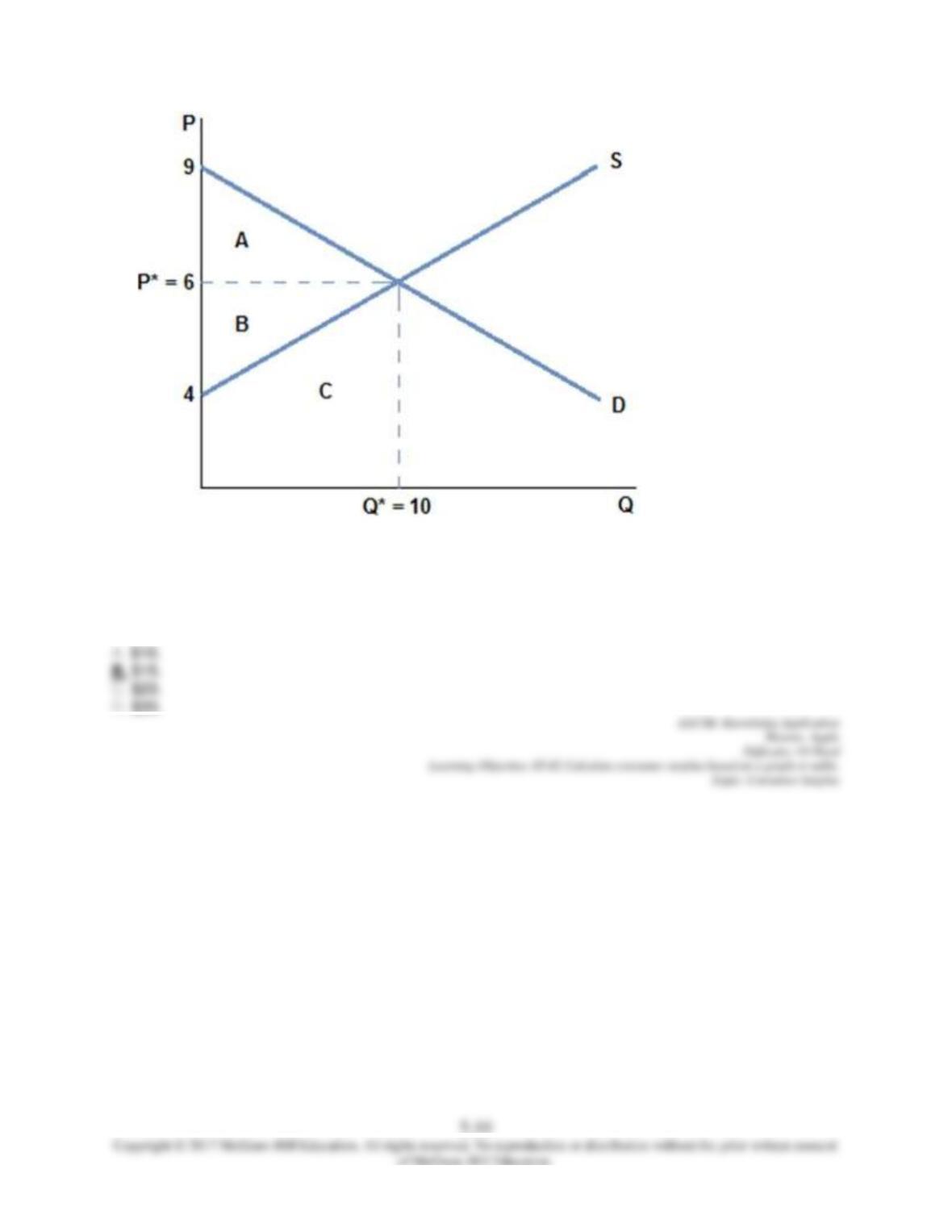
32.
According to the graph shown, consumer surplus is:
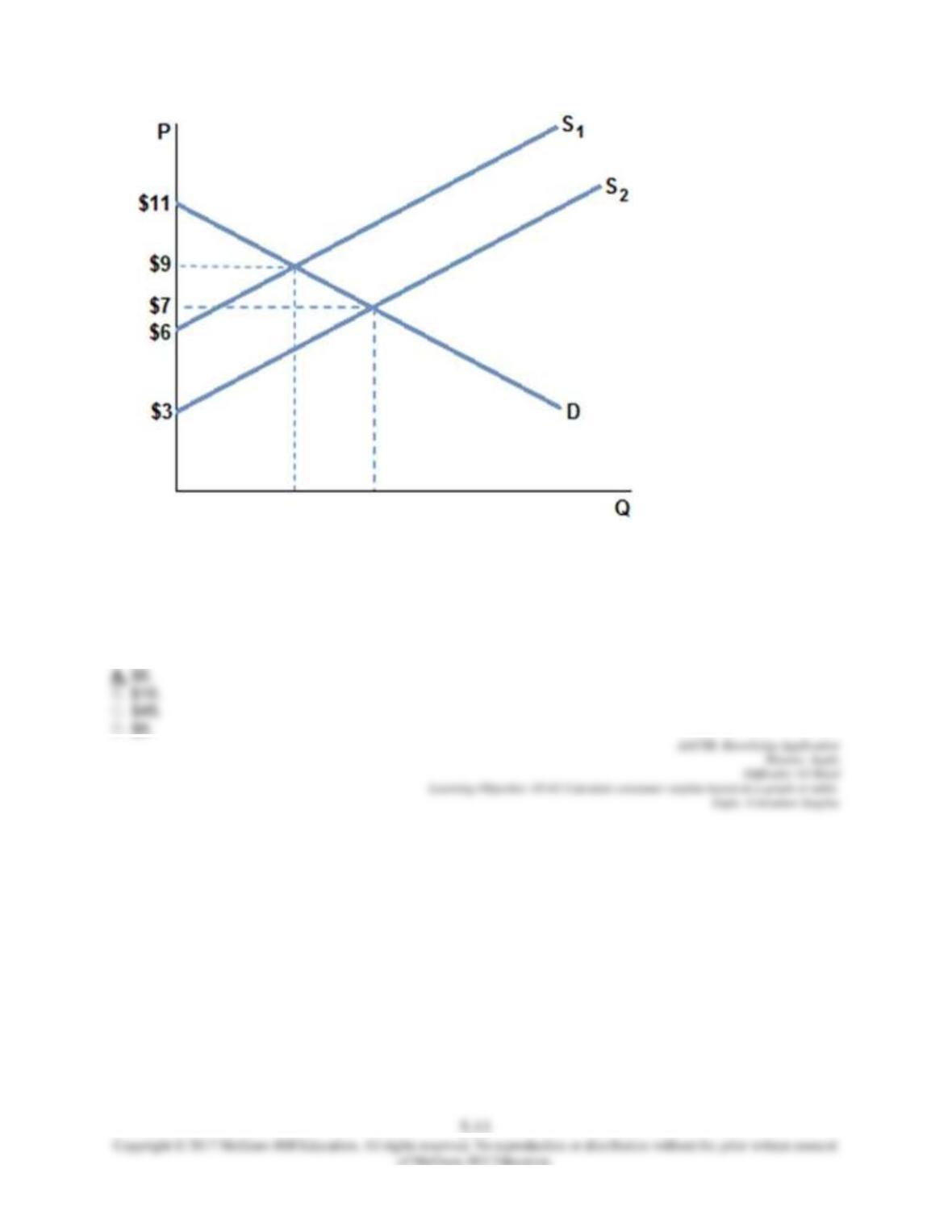
33.
Assume the market in the graph shown with demand D and supply S1 is in equilibrium at a quantity of 5
units. Consumer surplus is:
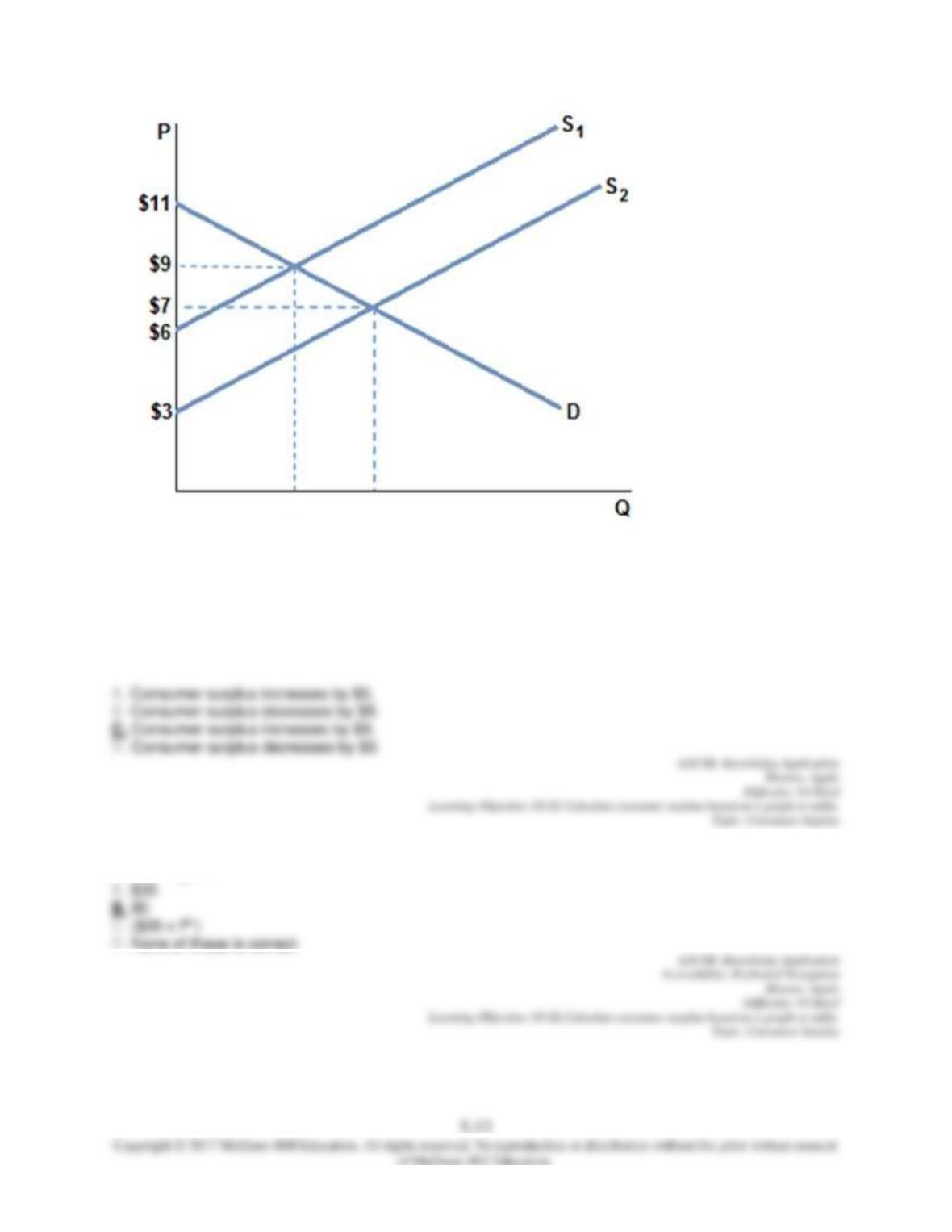
34.
Assume the market is in equilibrium in the graph shown at demand D and supply S1 (and a quantity of 5).
If the supply curve shifts to S2, and a new equilibrium is reached (at a quantity of 7), which of the
following is true?
35. What consumer surplus is received by someone whose willingness to pay is $35 below the market
price of a good?
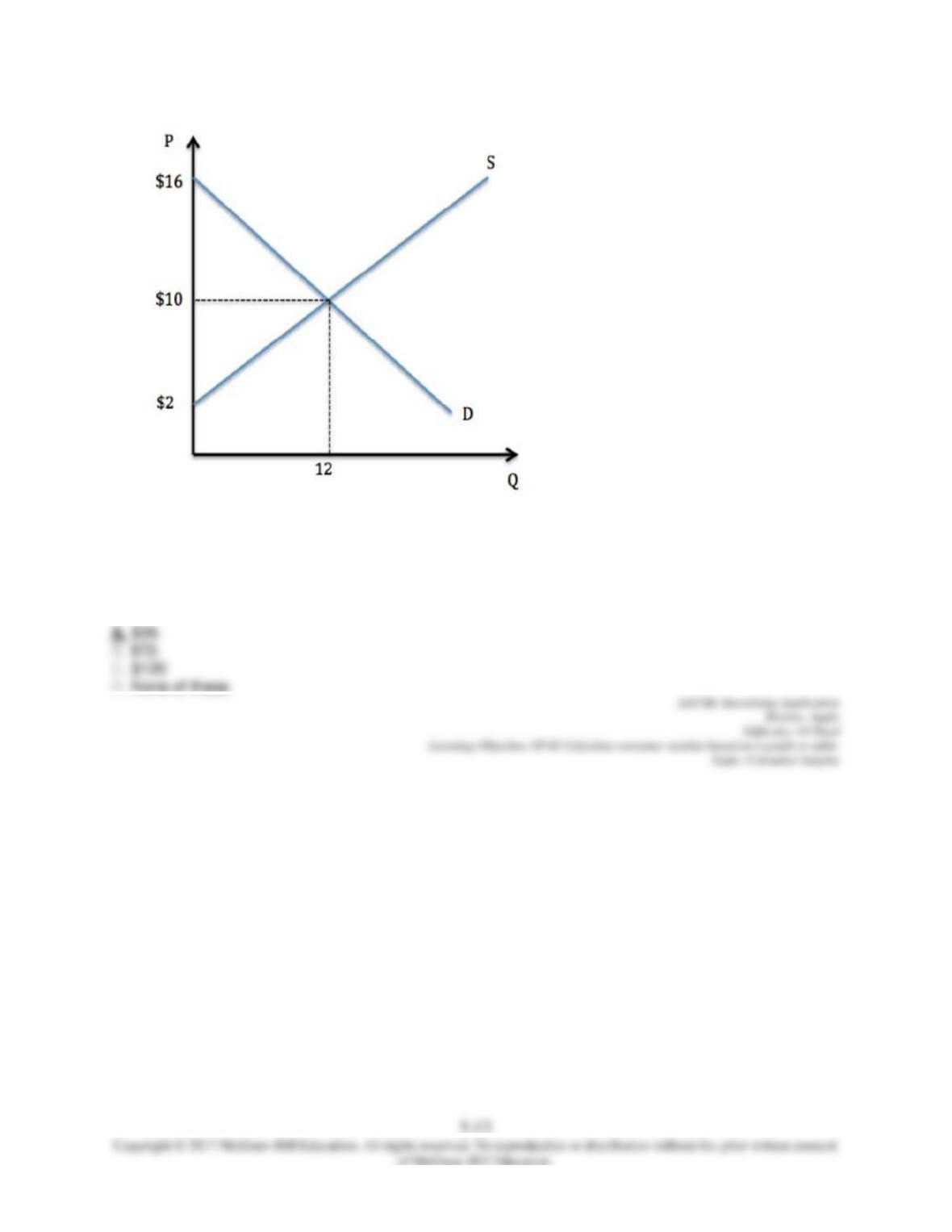
36.
According to the graph shown, consumer surplus is:
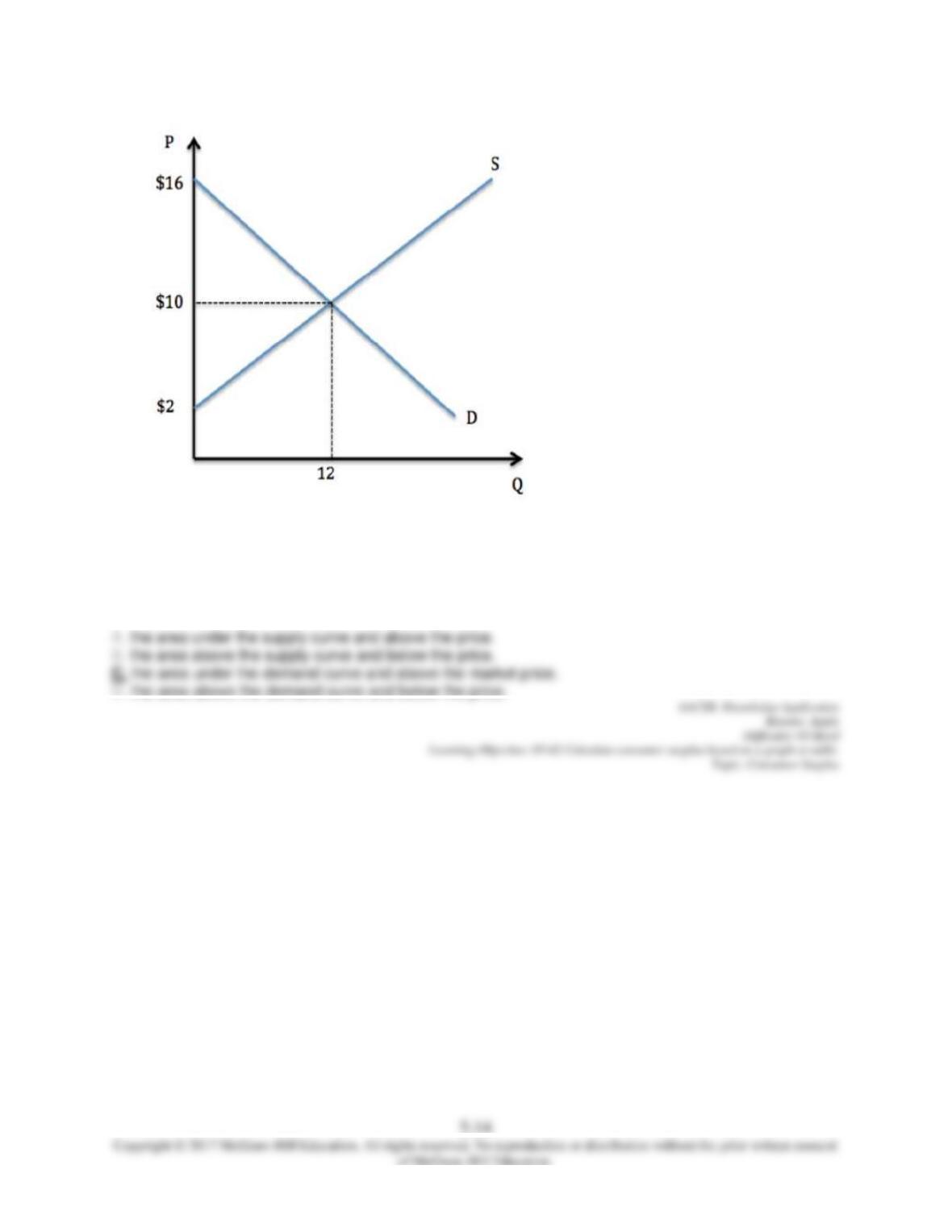
37.
According to the graph shown, consumer surplus is:
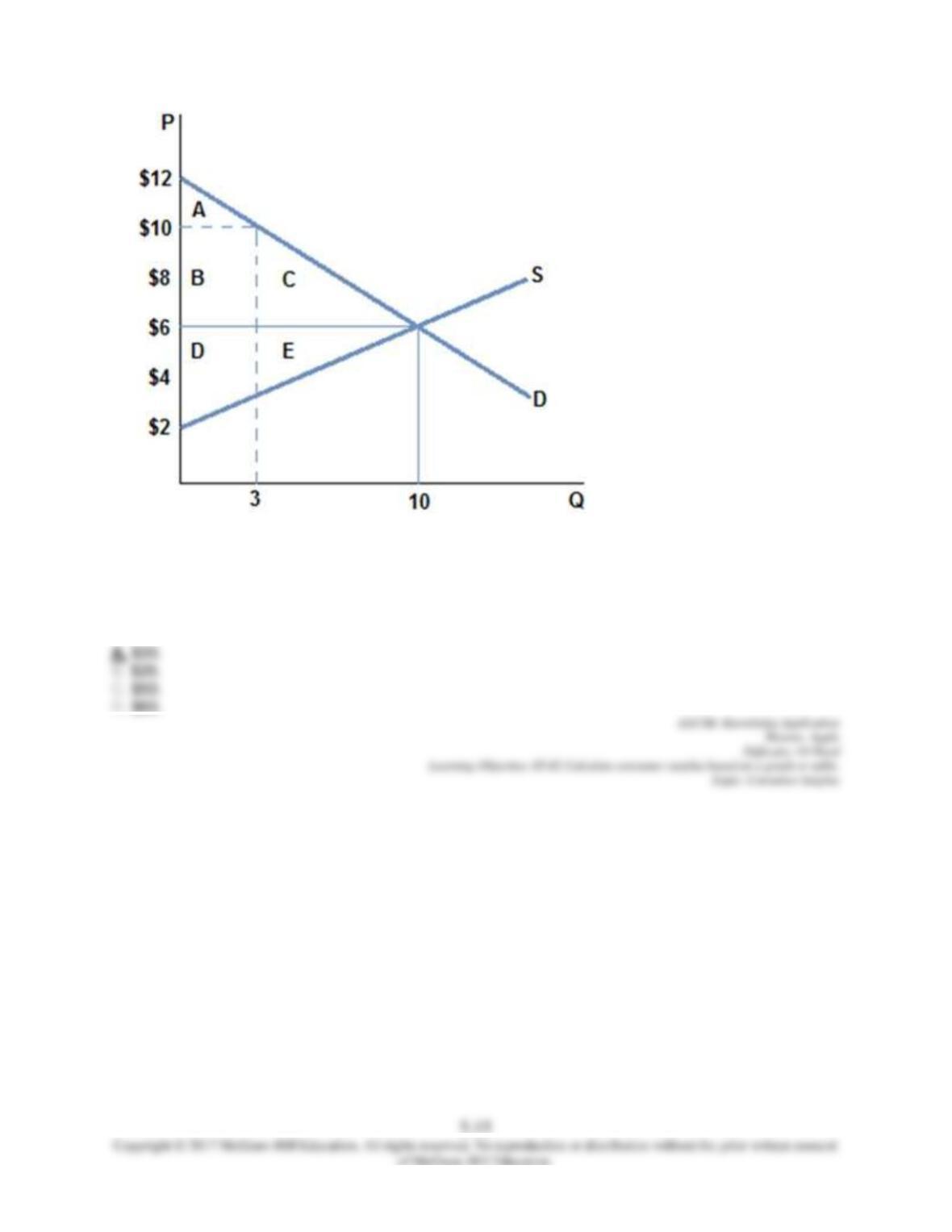
38.
According to the graph shown, if the market is in equilibrium, consumer surplus is:
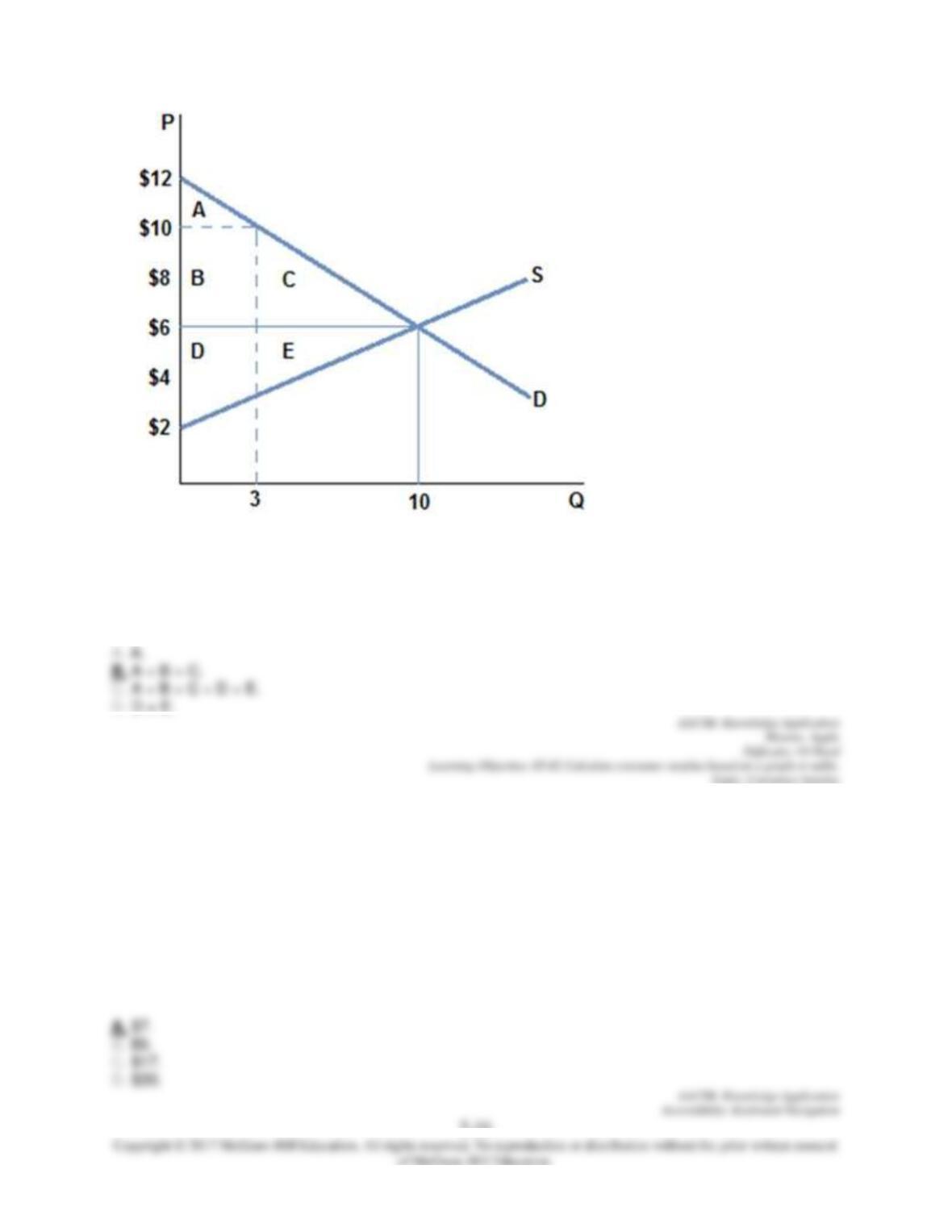
5-16
39.
According to the graph shown, if the market is in equilibrium, consumer surplus is area:
40. Assume there are three hardware stores, each willing to sell one standard model hammer in a given
time period. House Depot can offer their hammer for a minimum of $7. Lace Hardware can offer the
hammer for a minimum of $10. Bob’s Hardware store can offer the hammer at a minimum price of $13.
Given the scenario described, if the market price of hammers was $12, then total producer surplus would
be:
41. Assume there are three hardware stores, each willing to sell one standard model hammer in a given
time period. House Depot can offer their hammer for a minimum of $7. Lace Hardware can offer the
hammer for a minimum of $10. Bob’s Hardware store can offer the hammer at a minimum price of $13.
Given the scenario described, if the market price of hammers was $10, then:
42. Assume there are three hardware stores, each willing to sell one standard model hammer in a given
time period. House Depot can offer their hammer for a minimum of $7. Lace Hardware can offer the
hammer for a minimum of $10. Bob’s Hardware store can offer the hammer at a minimum price of $13.
Given the scenario described, if the market price of hammers increased from $7 to $11:
43. Assume there are three hardware stores, each willing to sell one standard model hammer in a given
5-18
44. Assume there are three hardware stores, each willing to sell one standard model hammer in a given
time period. House Depot can offer their hammer for a minimum of $7. Lace Hardware can offer the
hammer for a minimum of $10. Bob’s Hardware store can offer the hammer at a minimum price of $13.
Given the scenario described, if the market price of hammers decreased from $17 to $12:
45. Assume there are three hardware stores, each willing to sell one standard model hammer in a given
time period. House Depot can offer their hammer for a minimum of $7. Lace Hardware can offer the
hammer for a minimum of $10. Bob’s Hardware store can offer the hammer at a minimum price of $13.
Given the scenario described, if the market price of hammers decreased from $13 to $11:
5-19
46. Assume there are three hardware stores, each willing to sell one standard model hammer in a given
time period. House Depot can offer their hammer for a minimum of $7. Lace Hardware can offer the
hammer for a minimum of $10. Bob’s Hardware store can offer the hammer at a minimum price of $13.
Given the scenario described, if the market price of hammers decreased from $15 to $11:
47. Assume there are three hardware stores, each willing to sell one standard model hammer in a given
time period. House Depot can offer their hammer for a minimum of $7. Lace Hardware can offer the
hammer for a minimum of $10. Bob’s Hardware store can offer the hammer at a minimum price of $13.
Given the scenario described, if the market price of hammers decreased from $15 to $10:
48. Assume there are three hardware stores, each willing to sell one standard model hammer in a given
time period. House Depot can offer their hammer for a minimum of $7. Lace Hardware can offer the
hammer for a minimum of $10. Bob’s Hardware store can offer the hammer at a minimum price of $13.
Given the scenario described, if the market price of hammers increased from $6 to $7:
5-20
49. Assume there are three hardware stores, each willing to sell one standard model hammer in a given
time period. House Depot can offer their hammer for a minimum of $7. Lace Hardware can offer the
hammer for a minimum of $10. Bob’s Hardware store can offer the hammer at a minimum price of $13.
Given the scenario described, if the market price of hammers increased from $6 to $8:
50. Assume there are three hardware stores, each willing to sell one standard model hammer in a given
time period. House Depot can offer their hammer for a minimum of $7. Lace Hardware can offer the
hammer for a minimum of $10. Bob’s Hardware store can offer the hammer at a minimum price of $13.
Given the scenario described, if the market price of hammers increased from $8 to $11:
51. Assume there are three hardware stores, each willing to sell one standard model hammer in a given
time period. House Depot can offer their hammer for a minimum of $7. Lace Hardware can offer the
hammer for a minimum of $10. Bob’s Hardware store can offer the hammer at a minimum price of $13.
Given the scenario described, if the market price of hammers increased from $8 to $11: