Government purchases of goods and
services
$240
Depreciation
240
Gross private domestic investment
400
Personal income taxes
140
Net taxes
120
Net exports of goods and services
80
Personal consumption expenditures
640
Net interest
100
78) From the data in the above table, GDP equals
A) $1,120.
B) $1,280.
C) $1,290.
D) $1,360.
79) The approach to GDP that sums compensation of employees, rental income, corporate
profits, net interest, proprietors’ income, depreciation, and indirect taxes and subtracts subsidies
is the
A) opportunity cost approach.
B) expenditure approach.
C) added cost approach.
D) income approach.
80) The income approach to measuring GDP sums together
A) compensation of employees, rental income, corporate profits, net interest, proprietors’
income, subsidies paid by the government, indirect taxes paid, and depreciation.
B) compensation of employees, rental income, corporate profits, net interest, proprietors’ income,
indirect taxes paid, and depreciation and subtracts subsidies paid by the government.
C) the sales of each firm in the economy.
D) the costs of each firm in the economy and then subtracts indirect business taxes and
depreciation.
81) Proprietors’ income is a component of which approach to measuring GDP?
A) incomes approach
B) expenditure approach
C) cost approach
D) output approach
82) The income approach to measuring GDP
A) determines the cost of production, then adjusts it to equal the market value of production.
B) sums all incomes earned in the United States and makes no other adjustments because other
adjustments are not necessary.
C) measures the cost of producing GDP rather than the market value.
D) sums the value at each stage of production plus the value of depreciation.
83) The five categories of income used in the income approach to the measurement of GDP are
A) consumption, saving, rental income, corporate profits, and investment.
B) employee compensation, net interest, rental income, corporate profits, and proprietor’s
income.
C) employee compensation, consumption, rental income, corporate profits, and proprietor’s
income.
D) employee compensation, saving, rental income, corporate profits, and investment.
84) Which of the following expressions equals GDP?
A) compensation of employees + consumption + depreciation + net investment
B) compensation of employees + net interest + rental income + depreciation + corporate profits +
proprietors’ income + indirect taxes – subsidies
C) compensation of employees + net exports + depreciation + corporate profits
D) compensation of employees + gross investment + rental income + depreciation + corporate
profits + indirect taxes – subsidies
85) Which of the following is a component of the incomes approach to GDP?
A) consumption expenditure
B) wages and salaries
C) investment
D) government expenditure on goods and services
86) The income approach measures GDP by adding together compensation of employees,
proprietors’ income, ________.
A) net investment, saving, and farmers’ income
B) net interest, rental income, and corporate profits
C) net investment, rental income, and corporate profits
D) net saving, investment income, and profits
87) Which of the following items is NOT a component of the income approach to measuring
U.S. GDP?
A) interest earned on savings deposits
B) profits made by businesses
C) income earned by businesses that export goods
D) investment
88) Which of the following is NOT a part of the income approach to determining GDP?
A) rental income
B) gross private domestic investment
C) net interest
D) indirect business taxes
44
89) Which of the following is NOT one of the components for computing GDP based upon the
income approach?
A) investment
B) corporate profits
C) compensation of employees
D) net interest
90) Which of the following is NOT included in the income approach to measuring GDP?
A) net interest
B) net exports
C) corporate profits
D) compensation of employees
91) In the country of Darrowby, net domestic income at factor cost is $2.0 million. Gross
domestic product is $3.0 million, and depreciation is $0.5 million. Indirect taxes less subsidies
________.
A) are $1 million
B) are $0.5 million
C) cannot be calculated
Item
Billions of
dollars
Compensation of employees
80
Net interest and rental
income
30
Corporate profits
10
Proprietor’s income
20
92) Use the information in the table above plus the fact that indirect taxes less subsidies are $10
billion and depreciation is $30 billion to calculate the value of GDP.
A) $180 billion
B) $150 billion
C) $140 billion
D) $130 billion
93) The largest component of national income is
A) compensation of employees.
B) rental income.
C) corporate profits.
D) proprietors’ income.
94) Looking at the components of the income approach we see that
A) compensation of employees is the largest category.
B) consumption is the largest category.
C) profits are the largest category.
D) rental income is the largest category.
95) Compensation paid to employees represented ________ of GDP for the United States in
2014.
A) about 5 percent
B) approximately 15 percent
C) 35 percent
D) more than 50 percent
96) Which of the following is included in “compensation of employees” part of the income
approach to measuring GDP?
I. Wages and salaries.
II. Pension fund contributions.
III. Social Security contributions.
A) I only
B) I and II
C) I and III
D) I, II and III
97) When calculating the compensation of employees part of GDP
A) Social Security contributions must be included.
B) fringe benefits are not included.
C) taxes withheld on earnings are not included.
D) the value of vacation time must be included.
98) In the national income accounts, net interest is the total interest payments received by
households on loans made by them minus
A) interest received from households’ ownership of government bonds.
B) interest payments made by households on their own borrowing.
C) interest payments made by households to foreign lenders.
D) taxes paid by households on their interest income.
99) Rental income includes
A) the payment for the use of land.
B) the payment for the use of all rented inputs.
C) no income from rental housing because most houses are occupied by their owners.
D) Both answers A and B are correct.
100) Which of the following is included in the category of corporate profits when measuring
GDP?
I. Profits paid as dividends.
II. Undistributed profits.
III. Income received by owners and operators of businesses.
A) I only
B) I and II
C) I and III
D) I, II and III
101) An indirect tax is a tax paid by consumers
A) to a state or local government.
B) when they purchase goods and services.
C) on unearned income (as opposed to wages and salaries).
D) that is a percentage of the value of their real property.
102) An indirect tax is exemplified by
A) an income tax.
B) a sales tax.
C) a subsidy.
D) None of the above answers is correct.
103) Which of the following best represents an indirect tax?
A) federal income tax
B) state income tax
C) local property tax
D) sales taxes paid on goods and services
104) The presence of ________ creates a difference in the value between the market price and
the factor cost of a product.
A) indirect taxes and consumption
B) subsidies and direct taxes
C) corporate profits and subsidies
D) indirect taxes and subsidies
105) The sum of compensation to employees, rental income, corporate profits, net interest, and
proprietors’ income is
A) gross domestic product.
B) gross domestic income.
C) net domestic income at factor cost.
D) net domestic product.
106) Two reasons why valuing goods at their market prices is different than valuing them at their
factor costs include
A) depreciation and investment.
B) exports and imports.
C) personal taxes and corporate taxes.
D) indirect taxes and subsidies.
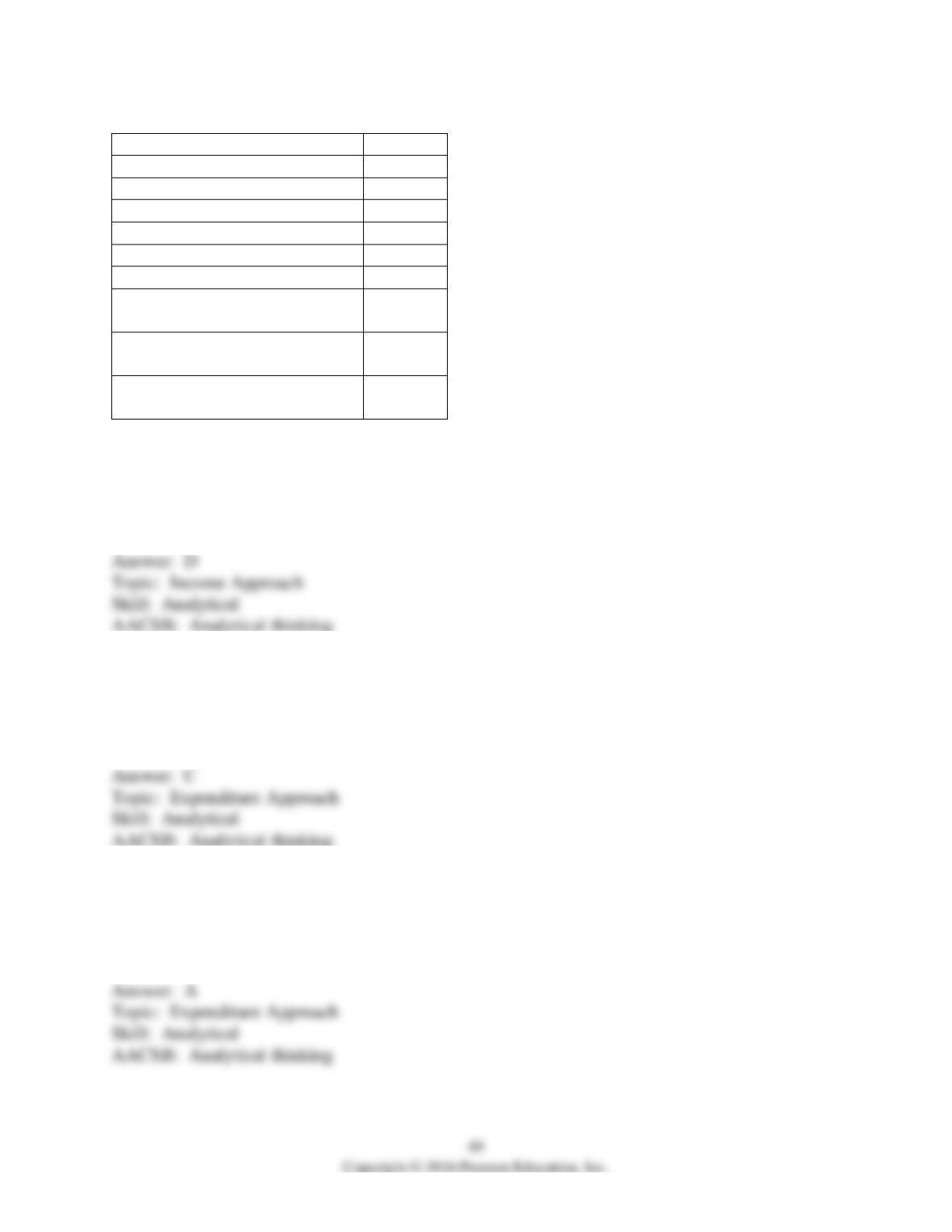
Corporate profits
$200
Net interest
150
Indirect taxes less subsidies
230
Depreciation
250
Compensation of employees
1,350
Proprietor’s income
150
Rental income
70
Personal consumption
expenditures
1,400
Government expenditure on
goods and services
500
Net exports of goods and
services
40
107) Using the data in the table above, gross domestic product equals
A) $1,920.
B) $1,940.
C) $2,150.
D) $2,400.
108) Using the data in the above table, gross private domestic investment equals
A) $250.
B) $260.
C) $460.
D) some amount that cannot be determined without more information.
109) Using the data in the above table, net private domestic investment equals
A) $210.
B) $260.
C) $510.
D) some amount that cannot be determined without more information.
50
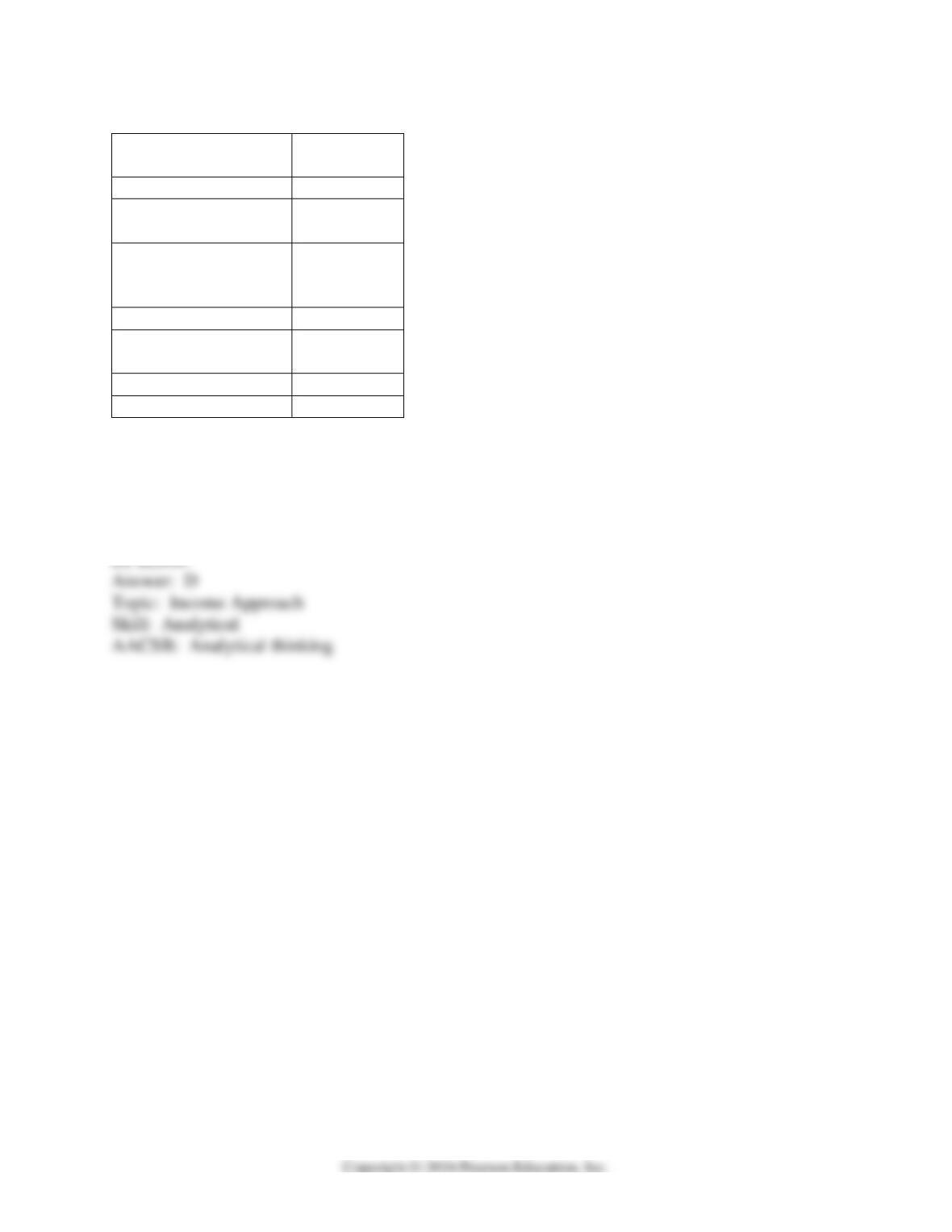
Item
Billions of
dollars
Personal income
1,200
Net domestic income at
factor cost
2,100
Government
expenditure on goods
and services
400
Depreciation
200
Gross private domestic
investment
100
Indirect taxes
600
Subsidies
100
110) The above table shows some national income accounting data for a nation. In this nation,
gross domestic product is equal to ________ billion.
A) $2,000
B) $2,300
C) $2,500
51
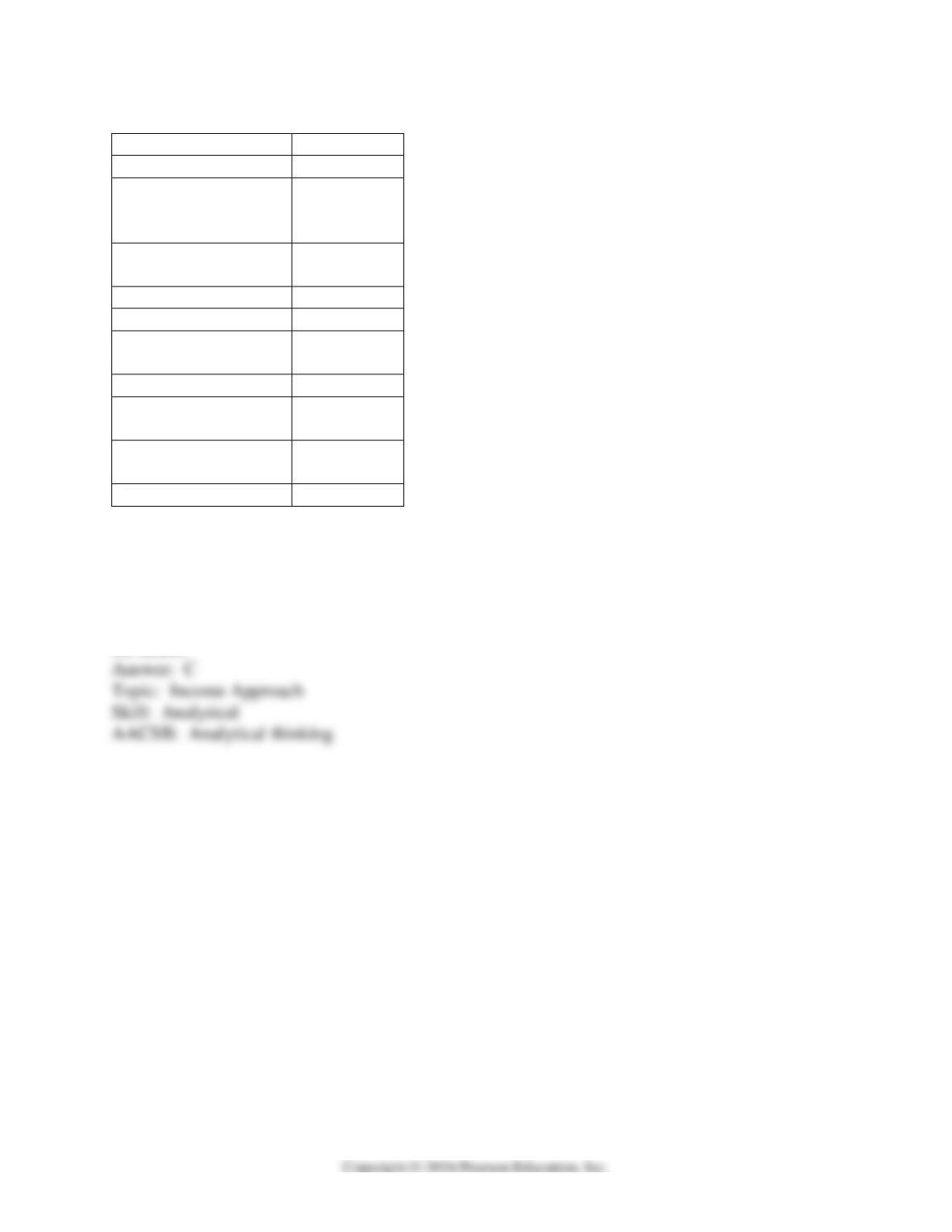
Item
Dollars
Net interest
239
Government
expenditure on goods
and services
136
Compensation of
employees
1,735
Rental income
37
Proprietors’ income
128
Indirect taxes minus
subsidies
259
Corporate profits
194
Exports of goods and
services
249
Imports of goods and
services
289
Depreciation
333
111) Using the data in the above table, gross domestic product as calculated by the income
approach equals ________.
A) $2,333
B) $2,592
C) $2,925
D) $2,205
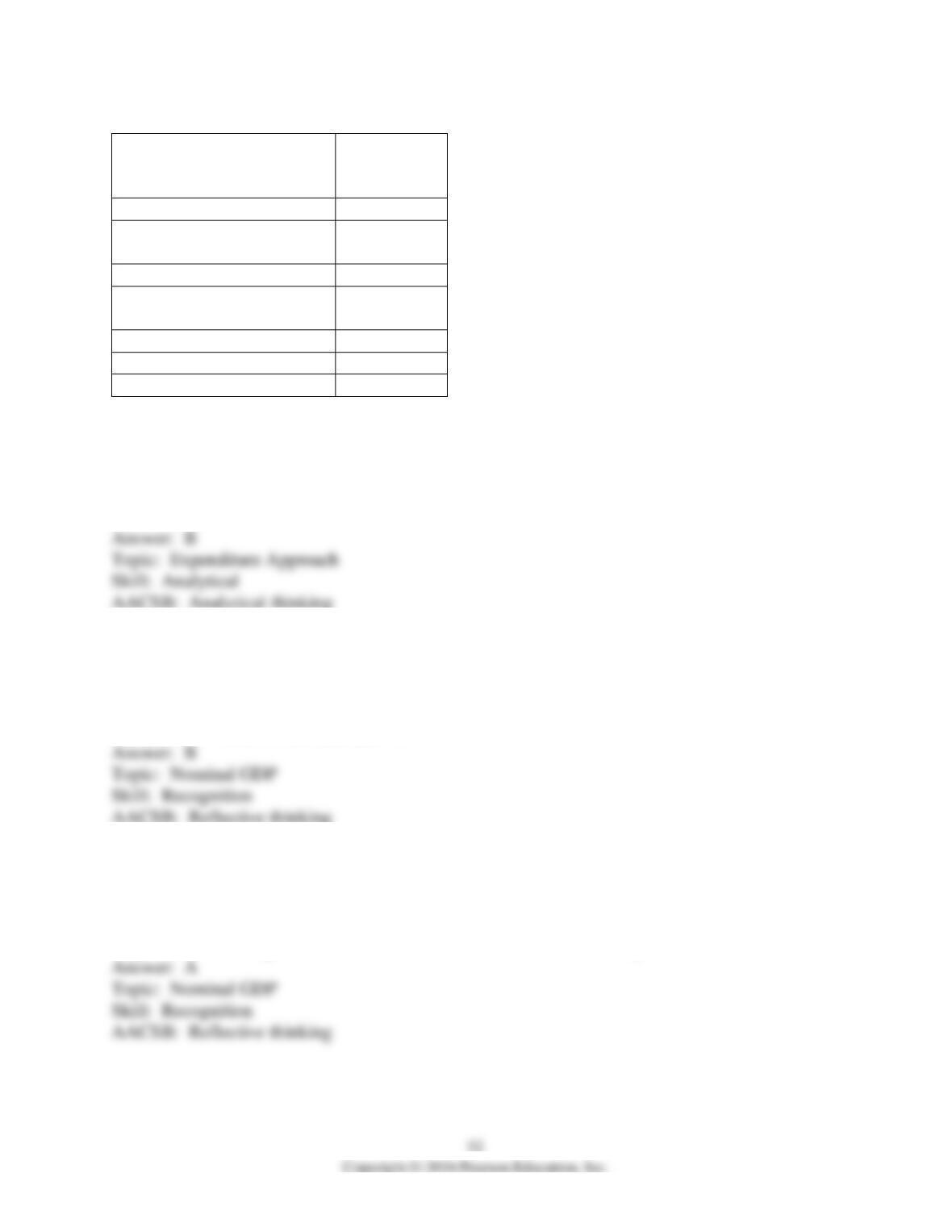
Component
Amount
(billions of
dollars)
Gross investment
1300
Personal consumption
expenditure
1475
Depreciation
25
Government expenditure on
goods and services
1315
U.S. imports
260
U.S. exports
249
Compensation of employees
65
112) The above table gives data for a hypothetical nation. Gross domestic product is
A) $4,049 billion.
B) $4,079 billion.
C) $4,054 billion.
D) $4,339 billion.
113) Nominal GDP is
A) real GDP adjusted for price changes.
B) GDP valued at prices of that year.
C) GDP valued at constant prices.
D) real GDP valued at base year prices.
114) Nominal GDP is the value of final goods and services
A) at the prices of that year.
B) at the prices of the immediately previous year.
C) at the prices of a base year.
D) produced in foreign countries but consumed in the domestic country.
115) Normally in the United States the relationship between nominal and real GDP for a given
year is
A) real GDP is greater than nominal GDP because of price increases.
B) nominal GDP is greater than real GDP because of price increases.
C) nominal GDP equals real GDP.
D) nominal GDP is greater than real GDP because of price decreases.
116) Of the following, which is CORRECT?
A) Nominal GDP does not change when the production of goods and services increases.
B) Nominal GDP is not affected by changes in prices of goods and services.
C) Nominal GDP increases when the prices of goods and services increase.
D) Real GDP changes only when the prices of goods and services really change.
117) According to the BEA, in the second quarter of 2012 nominal GDP rose by 3.3 percent and
real GDP rose by 1.7 percent. The difference between the change in nominal GDP and the
change in real GDP could be explained by
A) an increase in prices of final goods and services produced.
B) a decrease in prices of final goods and services produced.
C) an increase in quantity of final goods and services produced.
D) a decrease in quantity of final goods and services produced.
118) Real GDP is
A) an increase in the average level of prices.
B) the value of total production when the unemployment rate is 6 percent.
C) the value of total production of all the nation’s farms, factories, shops and offices measured in
the prices of a single year.
D) the value of total production of all the nation’s farms, factories, shops and offices measured at
the prices of the year it was produced.
119) Real GDP measures the
A) total profits earned by all businesses valued using prices from a single year.
B) changes in the prices of output measured in dollars.
C) general upward drift in prices.
D) value of total production linked to prices of a single year.
120) ________ gross domestic product is the value of ________ linked back to the prices of a
single year.
A) Real; total production
B) Real; production possibilities
C) Productivity; the consumer price index
D) Nominal; total production
121) Real Gross Domestic Product is
A) the amount of people unemployed divided by the total labor force.
B) the productivity of labor.
C) the most that can be produced when the economy’s resources are fully employed.
D) the value of total production linked back to the prices of a single year.
122) Which of the following is TRUE regarding real GDP?
I. Real GDP is the value of the total production of the country’s farms, factories, shops, and
offices.
II. Real GDP rises whenever inflation occurs.
III. Real GDP does not measure all that is produced.
A) I and II
B) I and III
C) II and III
D) I, II and III
123) According to the BEA, in the second quarter of 2011 nominal GDP was $15 trillion and in
the second quarter of 2012 nominal GDP was $15.6 trillion. Based solely on this information,
from the second quarter of 2011 to the second quarter of 2012
A) real GDP may have increased, decreased, or stayed the same.
B) real GDP definitely increased.
C) real GDP definitely decreased.
D) prices definitely increased.
124) In years with inflation, nominal GDP increases ________ real GDP.
A) faster than
B) slower than
C) at the same rate as
D) sometimes faster, sometimes slower, and sometimes at the same rate as
125) Suppose an economy has some inflation. Then, after a base year, the value of real GDP will
A) be less than nominal GDP.
B) not be different from nominal GDP.
C) be greater than nominal GDP.
D) will be approximately half the value of nominal GDP.
126) Gross private domestic investment is a component of which approach to measuring GDP?
A) incomes approach
B) expenditure approach
C) linking approach
D) output approach
127) Which of the following is NOT a component of the incomes approach to GDP?
A) net exports
B) wages and salaries
C) corporate profits
3 The Uses and Limitations of Real GDP
1) The maximum amount of production that can be produced while avoiding shortages of labor,
capital, land, and entrepreneurship that would bring rising inflation is called
A) real GDP.
B) nominal GDP.
C) actual GDP.
D) potential GDP.
2) Potential GDP is
A) another name for real GDP.
B) always different from real GDP.
C) the level of GDP not adjusted for price changes.
D) the maximum amount of GDP that can be produced while avoiding shortages of labor,
capital, land, and entrepreneurship that would bring rising inflation.
3) Potential GDP is
A) the maximum GDP that an economy actually achieves throughout its entire history.
B) the level of GDP achieved during periods when 100 percent of the labor force is employed.
C) a goal that can never be achieved by the economy.
D) the maximum amount of GDP that can be produced while avoiding shortages of labor,
capital, land, and entrepreneurship that would bring rising inflation.
4) Potential GDP is the
A) the maximum amount of production that can be produced while avoiding shortages of labor,
capital, land, and entrepreneurship that would bring rising inflation.
B) current value of production in the economy.
C) value of production when the economy is in a recession.
D) value of production when the economy is at a peak.
5) Potential GDP
A) measures the actual production from year to year.
B) measures the maximum amount of production that can be produced while avoiding shortages
of labor, capital, land, and entrepreneurship that would bring rising inflation.
C) is cyclical.
D) Both answers A and C are correct.
6) In any year, real GDP
A) must always be less than potential GDP.
B) might be greater or less than potential GDP.
C) will always be greater than potential GDP because of the tendency of nations to incur
inflation.
D) always equals potential GDP.
7) The relationship between real GDP and potential GDP is that
A) real GDP always equals potential GDP.
B) real GDP never equals potential GDP.
C) real GDP fluctuates about potential GDP.
D) real GDP is always below potential GDP.
8) In any year, real GDP
A) must always be less than potential GDP.
B) might be greater or less than potential GDP.
C) will be greater than potential GDP if the inflation rate is positive.
D) always equals potential GDP.
9) ________ refers to a period when the ________ decreases.
A) Recession; growth rate of nominal GDP
B) Recession; growth rate of output per person
C) Productivity growth slowdown; growth rate of real GDP
D) Productivity growth slowdown; growth rate of output per person
10) The series of ups and downs the economy tends to move in is called
A) the business cycle.
B) a recession.
C) a depression.
D) economic growth.
11) The business cycle refers to
A) fluctuations in the level of real GDP around potential GDP.
B) changes in the level of nominal GDP.
C) changes in the level of the stock market.
D) changes in the level of employment.
12) A business cycle is
A) the pattern of short-run upward and downward movements in total output.
B) the increase in consumer spending that accompanies an increase in disposable income.
C) the cyclical change in the nation’s balance of trade.
D) the cyclical movement in the interest rates.
13) The business cycle is the
A) regular growth rate of the real GDP.
B) regular fluctuations of real GDP below potential GDP.
C) irregular fluctuations of prices around real GDP.
D) irregular fluctuations of real GDP around potential GDP.
14) Business cycles are
A) irregular, with some having two recessions and no expansion.
B) predictable, with a recession following a trough.
C) unpredictable, but always have two phases and two turning points.
D) unpredictable, and don’t always have two phases and two turning points.
15) Business cycles
A) are more volatile during a Republican administration.
B) are unpredictable due to political upheavals and global markets.
C) follow a pattern of trough, expansion, peak and recession.
D) are all identical in duration over the last century.
16) Which of the following statements is TRUE?
A) Real GDP fluctuates around potential GDP.
B) Potential GDP fluctuates around real GDP.
C) Potential GDP is the same as real GDP.
D) When all of the economy’s resources are fully employed, the value of production is called real
GDP.
17) Real GDP
A) fluctuates from year to year but is always below potential GDP.
B) fluctuates around potential GDP.
C) grows at a constant 3 to 4 percent per year.
D) can be called potential GDP when it is adjusted for price changes.
18) The term “business cycle” most closely refers to the
A) fluctuating profits of firms.
B) fiscal year.
C) accounting period used by firms.
D) alternating periods of expansions and recessions.
19) Which of the following is not a phase or turning point of the business cycle?
A) recession
B) expansion
C) shutdown
D) trough