A) $0.
B) $110.
C) $115.
D) $125.
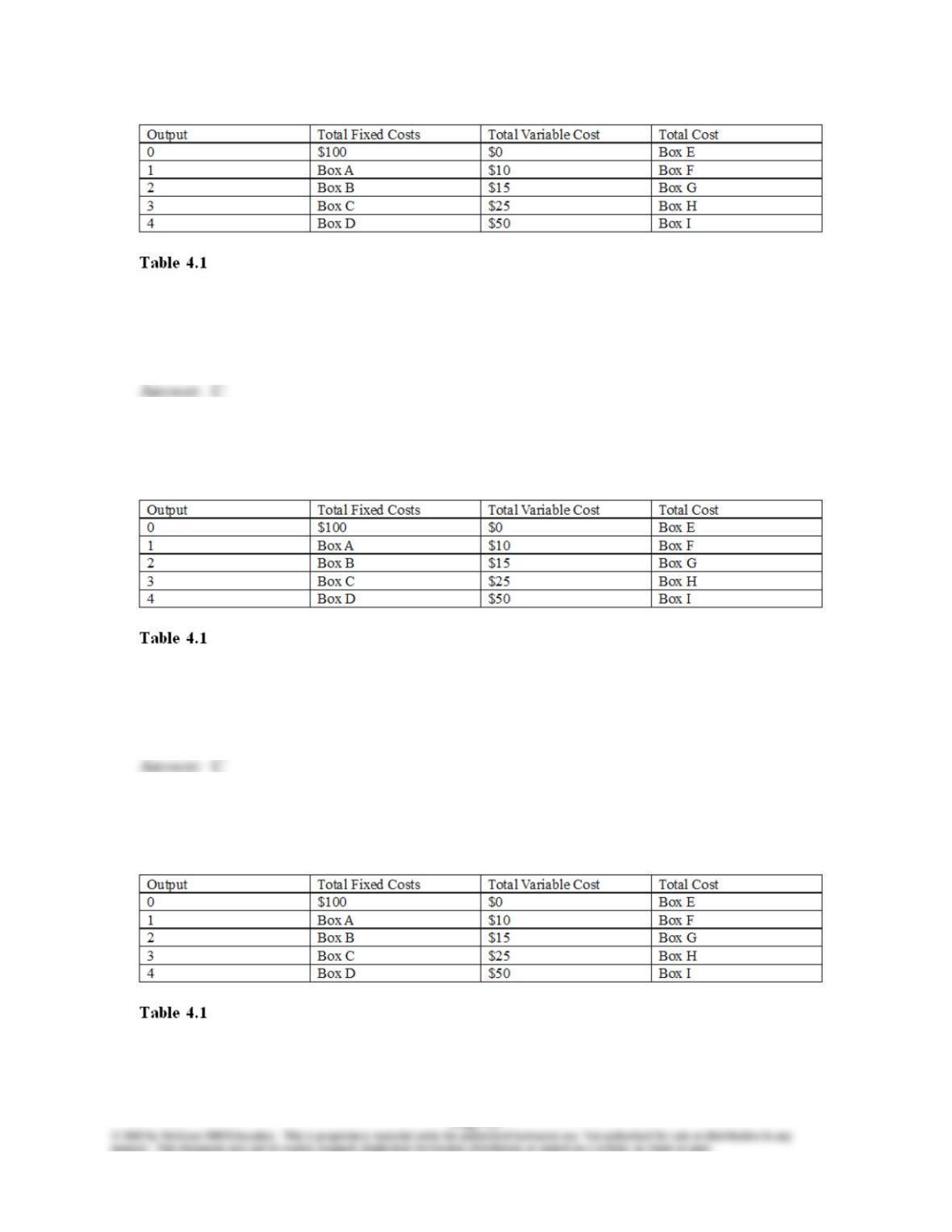
73) Refer to Table 4.1, Box H should be filled with
A) $0.
B) $110.
C) $125.
D) $150.
74) Refer to Table 4.1, Box I should be filled with
A) $0.
B) $115.
C) $150.
D) $200.
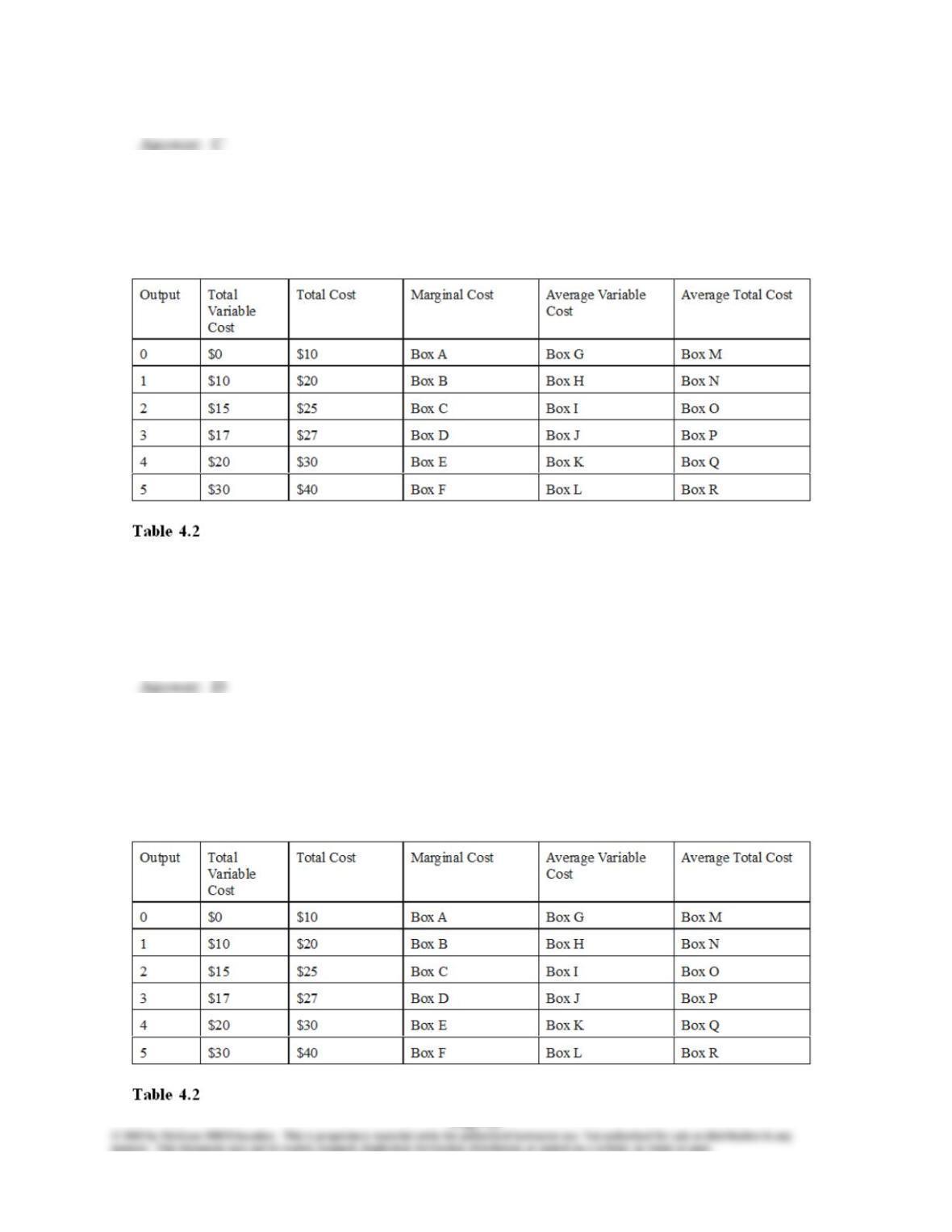
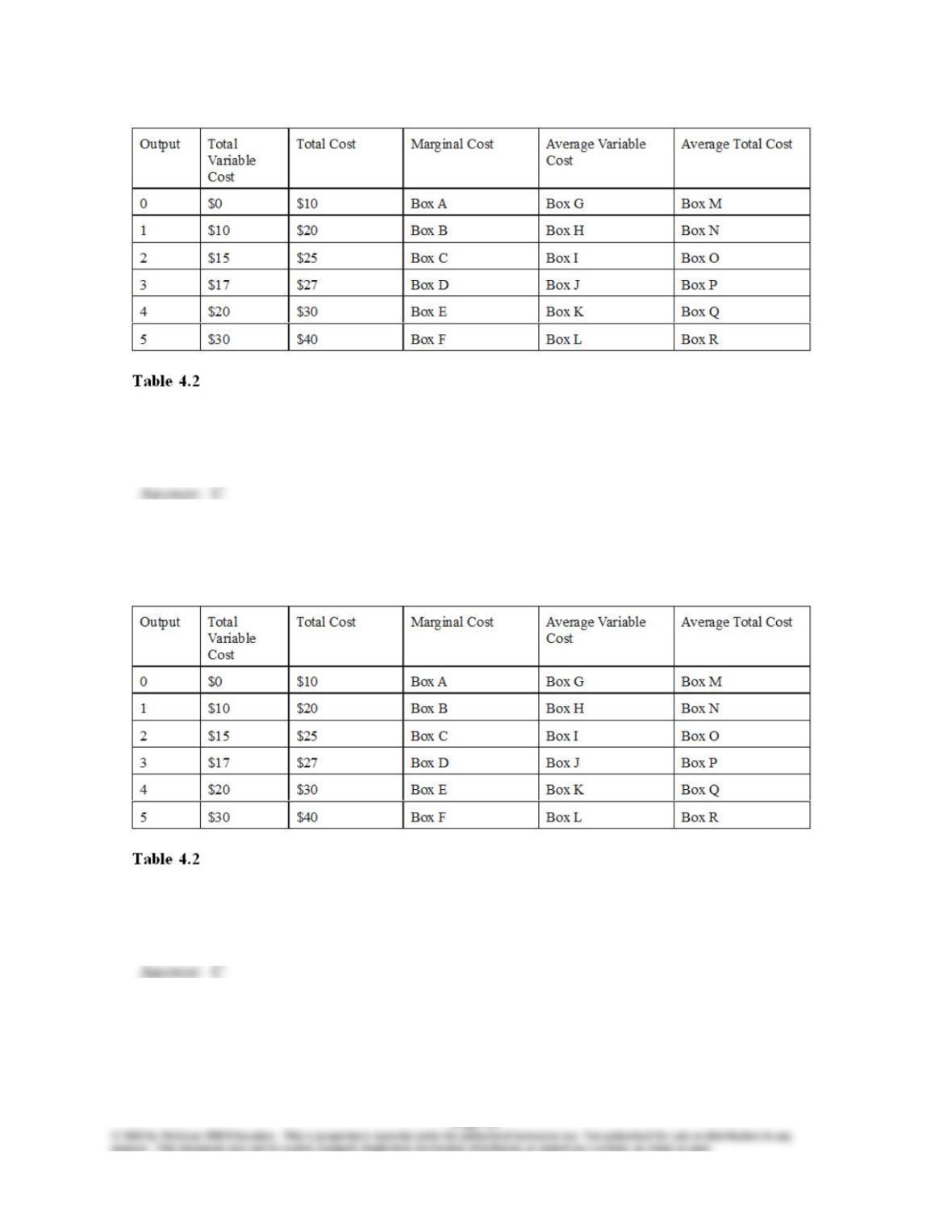
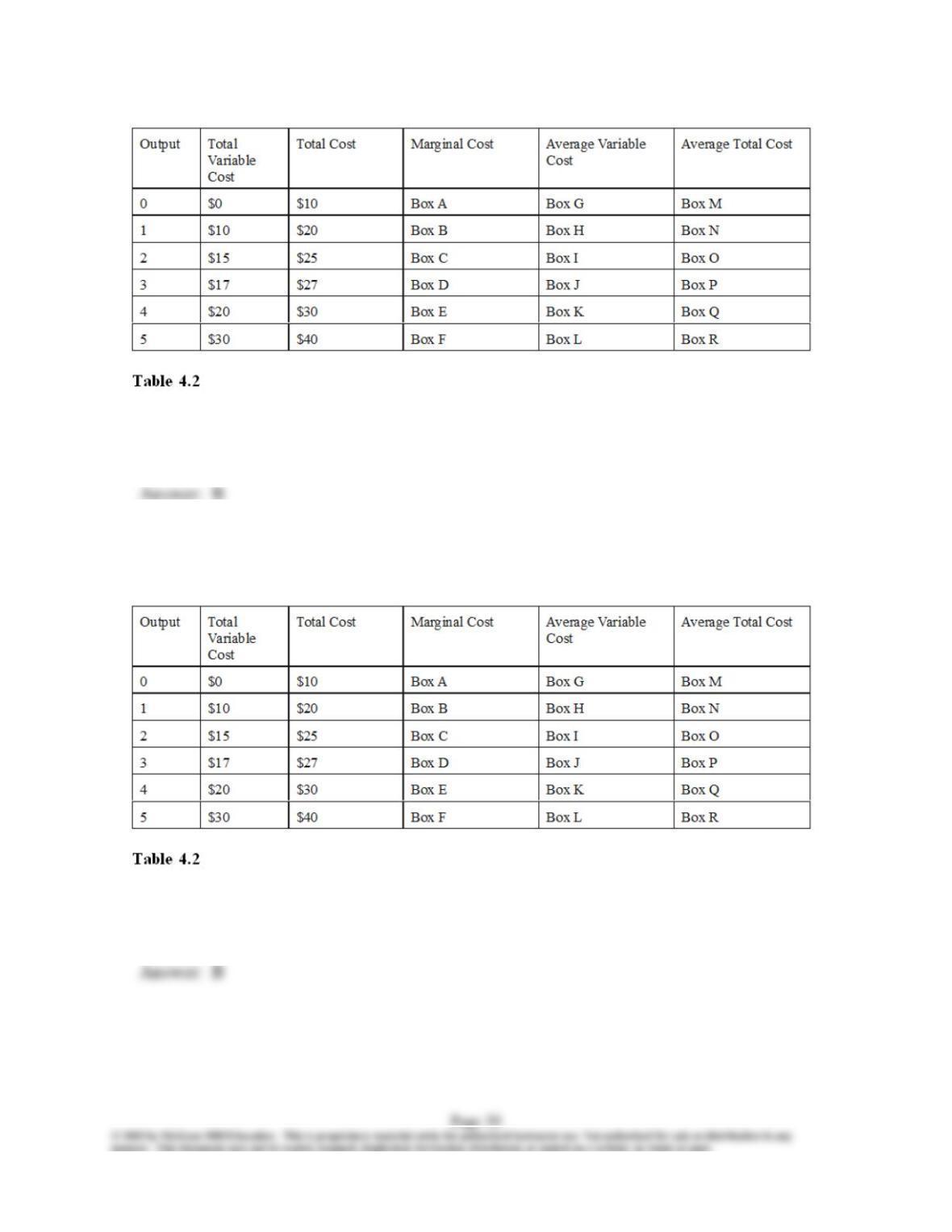
75) Refer to Table 4.2, Box A should be filled with
A) $0.
B) $10.
C) $20.
D) nothing.
76) Refer to Table 4.2, Box B should be filled with
A) $0.
B) $10.
C) $20.
D) $30.
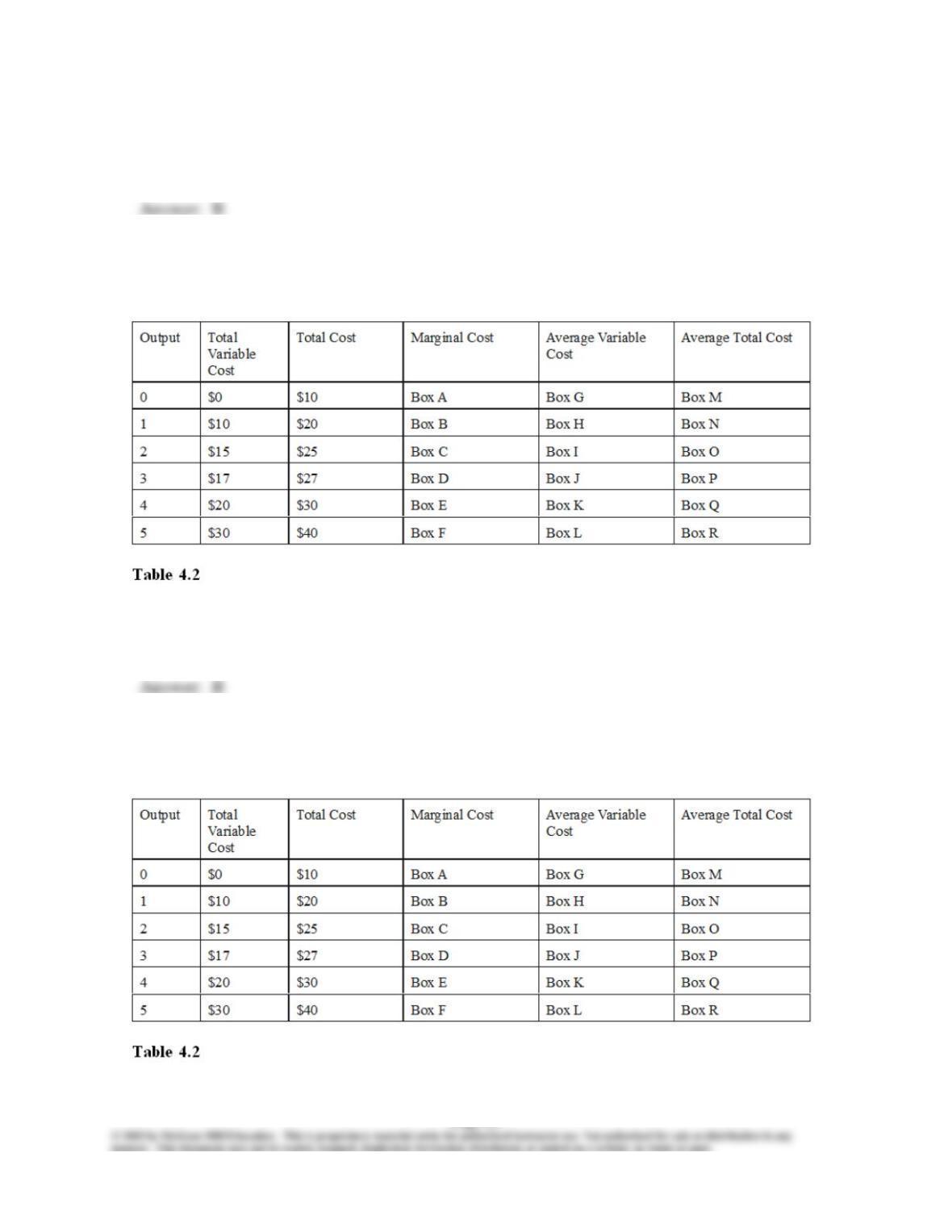
77) Refer to Table 4.2, Box C should be filled with
A) $0.
B) $5
C) $1
D) $2
78) Refer to Table 4.2, Box D should be filled with
A) $0
B) $2.
C) $17.
D) $27.
79) Refer to Table 4.2, Box E should be filled with
A) $0.
B) $3.
C) $20.
D) $30.
80) Refer to Table 4.2, Box F should be filled with
A) $0.
B) $10.
C) $30.
D) $40.
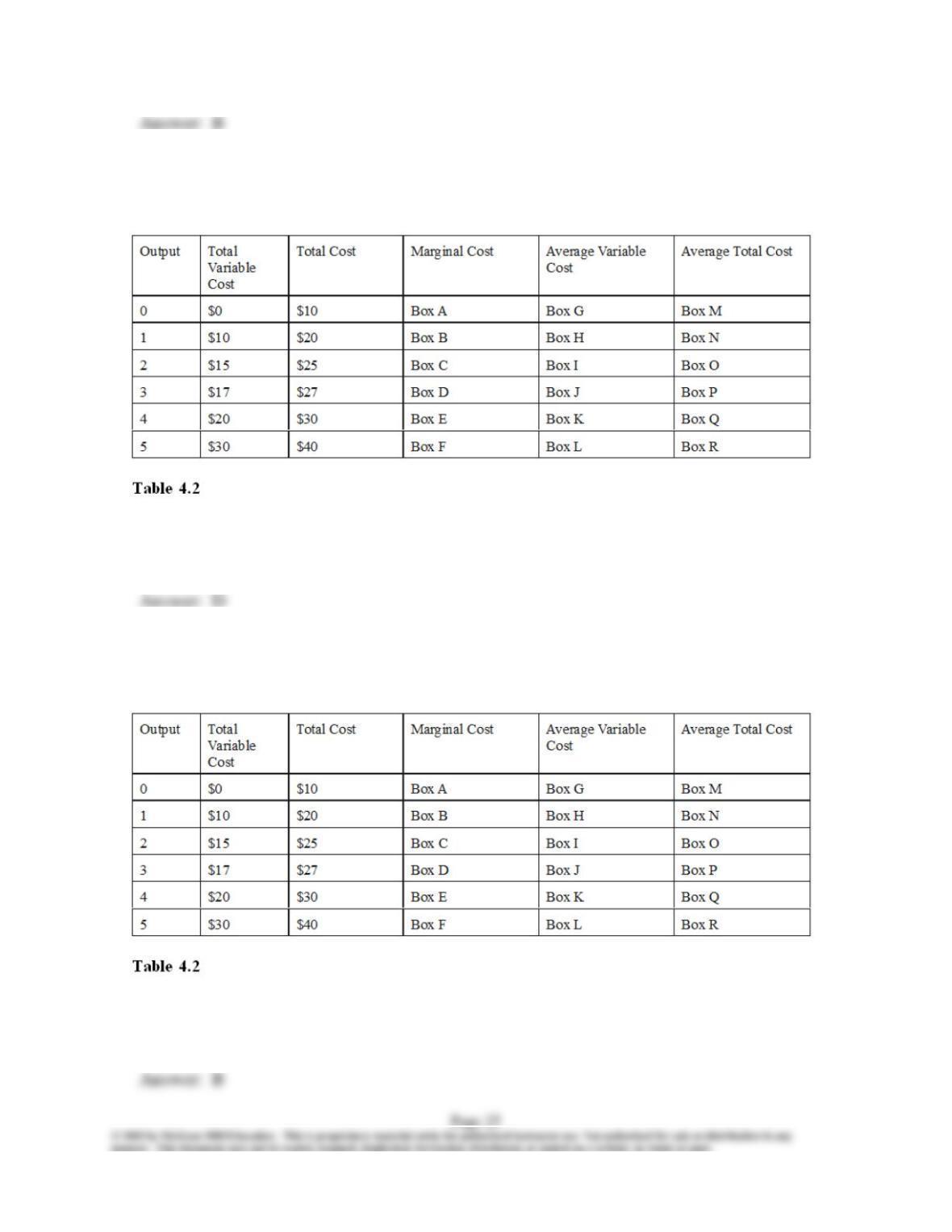
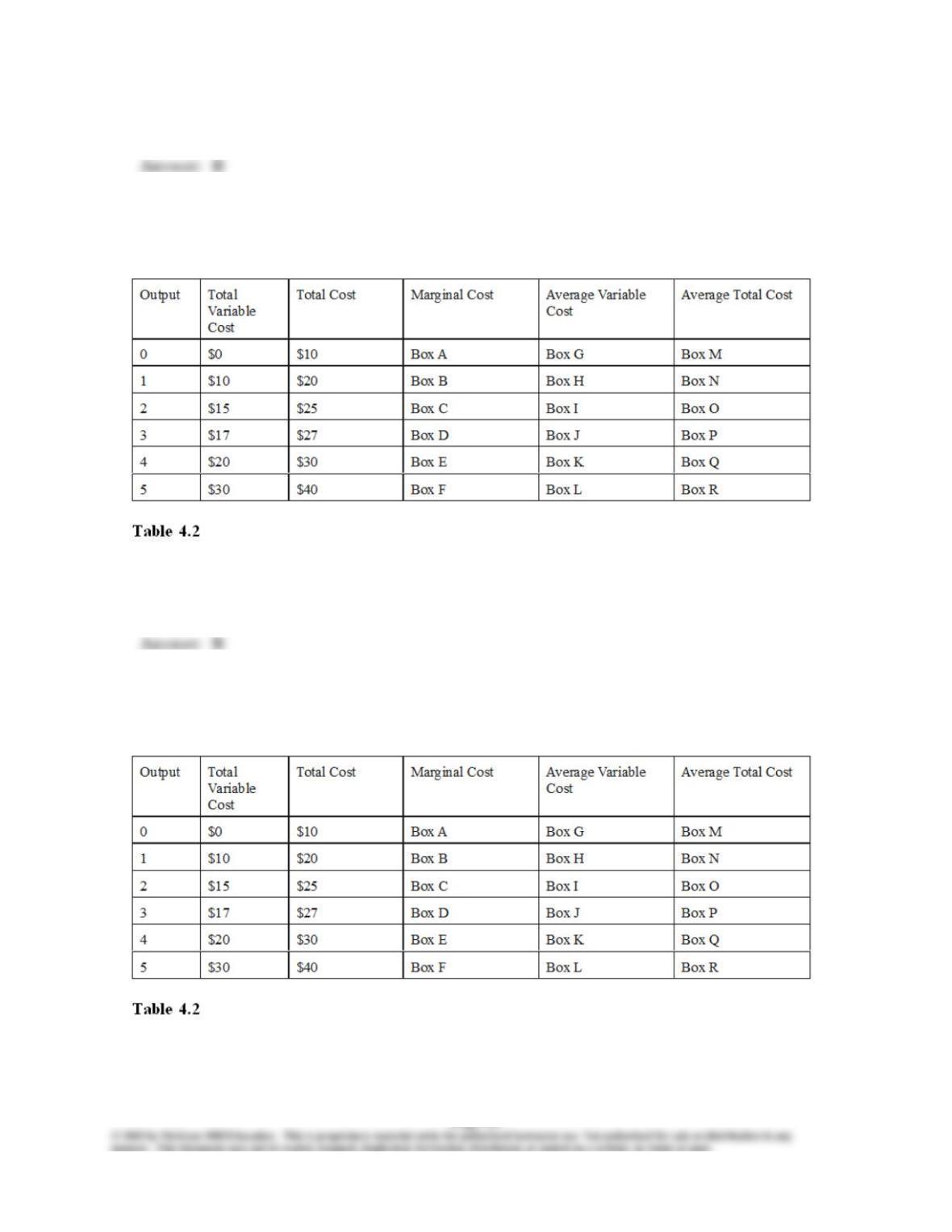
81) Refer to Table 4.2, Box G should be filled with
A) $0.
B) $10.
C) $20.
D) undefined.
82) Refer to Table 4.2, Box H should be filled with
A) $0.
B) $10.
C) $20.
D) $30.
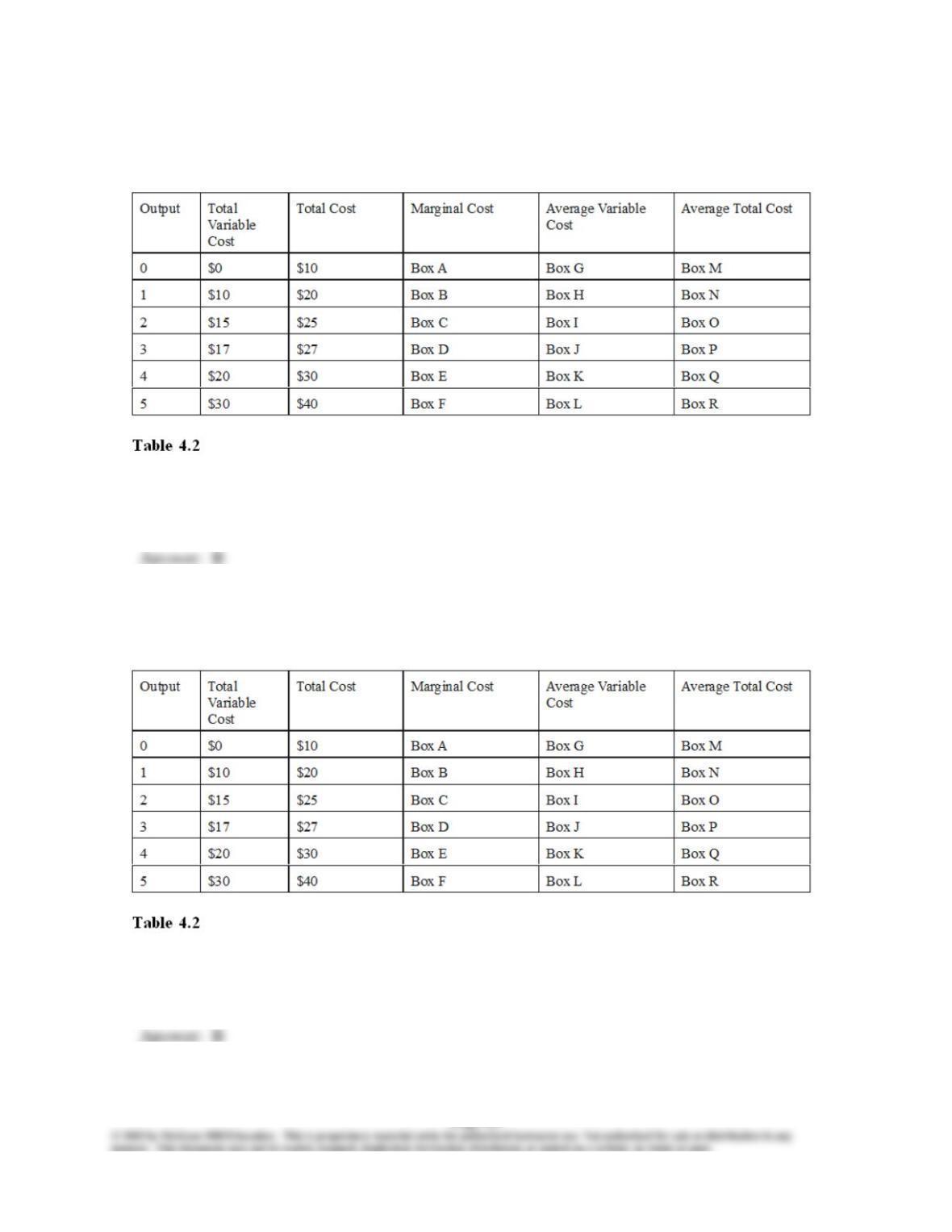
83) Refer to Table 4.2, Box I should be filled with
A) $0.
B) $7.50.
C) $12.50.
D) $2
84) Refer to Table 4.2, Box J should be filled with
A) $0.
B) $5.67.
C) $9.00.
D) $17.
85) Refer to Table 4.2, Box K should be filled with
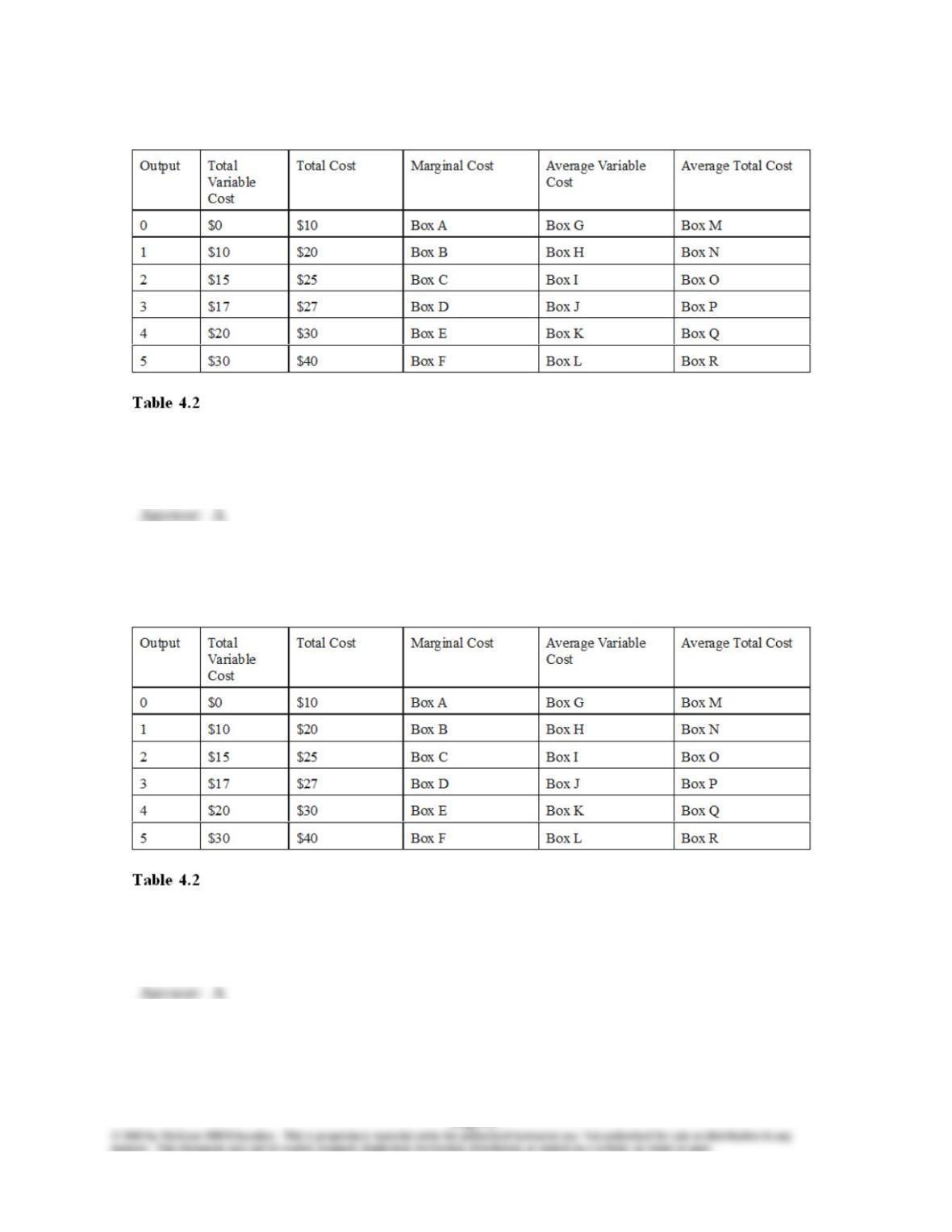
A) $5.00.
B) $7.50.
C) $12.50.
D) $2
86) Refer to Table 4.2, Box L should be filled with
A) $6.00.
B) $8.00.
C) $12.50.
D) $30.
87) Refer to Table 4.2, Box M should be filled with
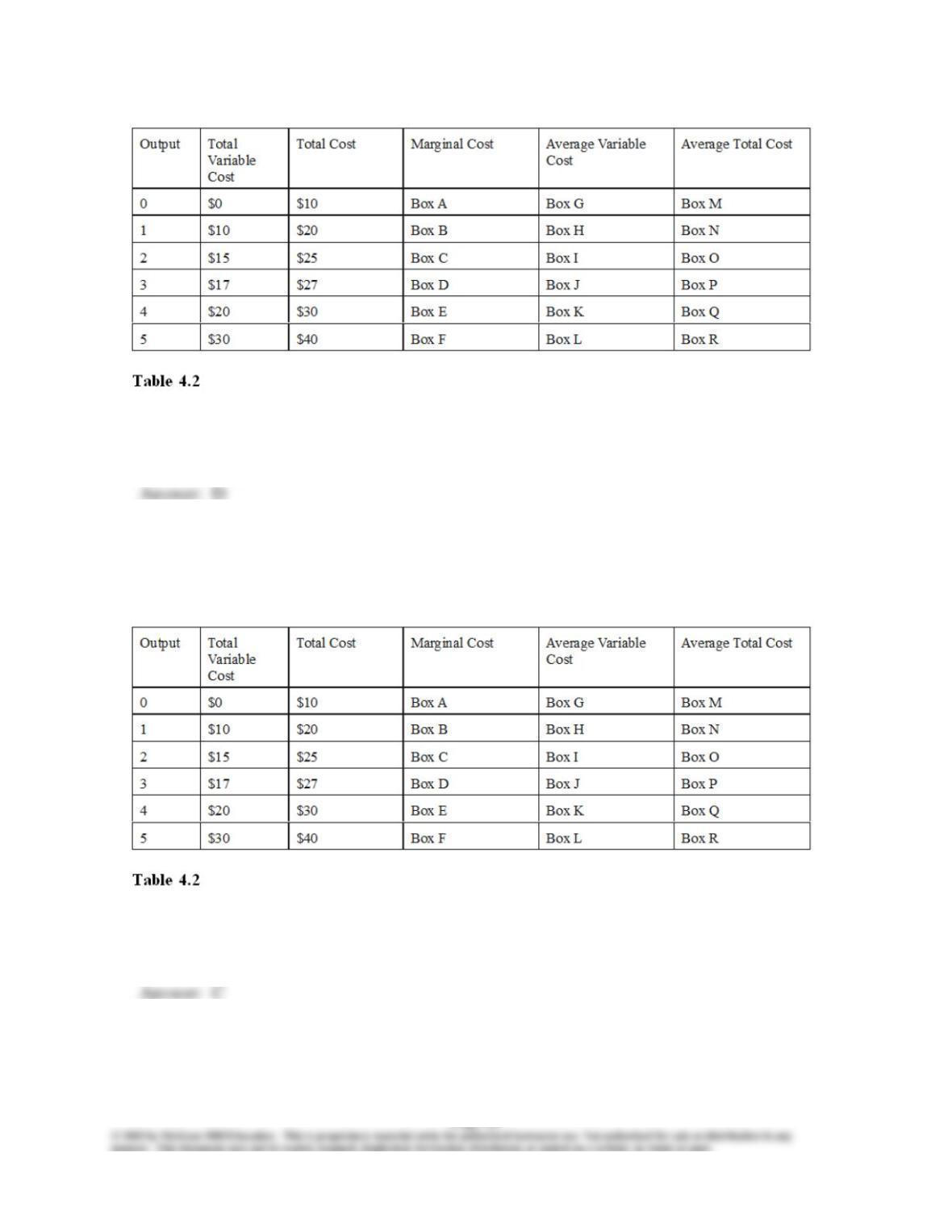
A) $0.
B) $10.
C) $20.
D) undefined.
88) Refer to Table 4.2, Box N should be filled with
A) $0.
B) $10.
C) $20.
D) $30.
89) Refer to Table 4.2, Box O should be filled with
A) $0.
B) $7.50.
C) $12.50.
D) $2
90) Refer to Table 4.2, Box P should be filled with
A) $0.
B) $67.
C) $9.00.
D) $17.
91) Refer to Table 4.2, Box Q should be filled with
A) $00.
B) $7.50.
C) $12.50.
D) $2
92) Refer to Table 4.2, Box R should be filled with
A) $6.00.
B) $8.00.
C) $12.50.
D) $30.
93) The shape of the firm’s marginal revenue curve depends ultimately on whether the firm is
A) a monopolist or a perfect competitor.
B) a revenue maximizer or a profit maximizer.
C) a market share maximizer or a sales maximizer.
D) owned by a man or a woman.
94) The shape of the firm’s marginal revenue curve depends on
A) how high its costs are.
B) how high production is.
C) how many competitors it has.
D) whether the firm is a profit maximizer.
95) Whether marginal revenue is constant or decreasing depends on
A) whether the firm is benefiting from the division of labor.
B) whether the firm is dealing with diminishing returns.
C) how much the firm sells.
D) whether the firm faces competition.
96) The assumption we usually make about all firms is that they wish to
A) maximize market share.
B) minimize costs.
C) maximize sales.
D) maximize profits.
97) If the market price for a good produced by a price taking firm is $5, the firm’s total revenue
is
A) a flat line at P=$5.
B) parabolic.
C) downward sloping.
D) an upward sloping line beginning at the origin and having a slope of 5.
98) If the market price for a good produced by a price taking firm is $6, the firm’s total revenue
is
A) a flat line at P=$6.