
Chapter 32 – Ticket Brokers and Ticket Scalping
Chapter 32 Ticket Brokers and Ticket Scalping
Multiple Choice
1. The substantive economic difference between ticket scalping and ticket brokering is that
A) scalping is more efficient.
B) brokering is more efficient.
C) scalping is immoral and brokering is not.
D) there is no substantive economic difference.
2. The only real difference between what a scalper does and what a broker does is that
A) what a broker does is legal in places where what a scalper does is not.
B) what a scalper does is legal in places where what a broker does is not.
C) scalping is only selling tickets whereas brokering involves both buying and selling.
D) brokering is only selling tickets whereas scalping involves both buying and selling.
3. Economists see a useful service being performed by ticket scalpers, in that they
A) lower the price to all consumers.
B) raise the price so promoters get more money.
C) adjust a price that a promoter has set too low.
D) adjust a price that a promoter has set too high.
4. Although it is illegal in some locations to re-sell a $100 ticket to an event for $200, it is
seldom illegal
A) for a charity to raffle a $100 ticket in order to raise much more than $200 in donations.
B) for a business to offer a $100 ticket to favored clients and generate orders worth much
more than $200.
C) for a travel agent to offer a $100 ticket with a $100 hotel room as a “package” for more
than $200.
D) all of the options are correct.
5. The better economic model for ticket sales by the promoter is
A) perfect competition.
B) oligopoly.
C) monopsony.
D) monopoly.

Chapter 32 – Ticket Brokers and Ticket Scalping
6. The marginal cost curve used to model promoter sold tickets to an event is
A) u-shaped.
B) check-shaped.
C) L-shaped.
D) backward L- shaped.
7. At capacity, the marginal cost of providing another ticket is
A) the same as it was before capacity was reached.
B) just a bit higher than it was before capacity was reached.
C) very much higher than it was before capacity was reached.
D) less than it was before capacity was reached.
8. A flat marginal cost curve prior to capacity being reached suggests that the marginal cost of
providing entrance to the 100th person is
A) the same as that of the 1000th person.
B) less than that of the 1000th person.
C) greater than that of the 1000th person.
D) unrelated to the marginal cost of the 1000th person.
9. The profit maximizing promoter will
A) sell a number of tickets equal to the capacity of the facility regardless of the price.
B) sell less than the capacity of the facility regardless of price.
C) sell more than capacity regardless of price.
D) sell that number of tickets where the marginal cost equals the marginal revenue.
10. Fans who purchase their tickets from ticket scalpers are likely to
A) be much less wealthy than typical fans.
B) have many other uses of their time that they consider to be close substitutes for the event.
C) have had much less time to plan their attendance than typical fans.
D) all of the options are correct.
Chapter 32 – Ticket Brokers and Ticket Scalping
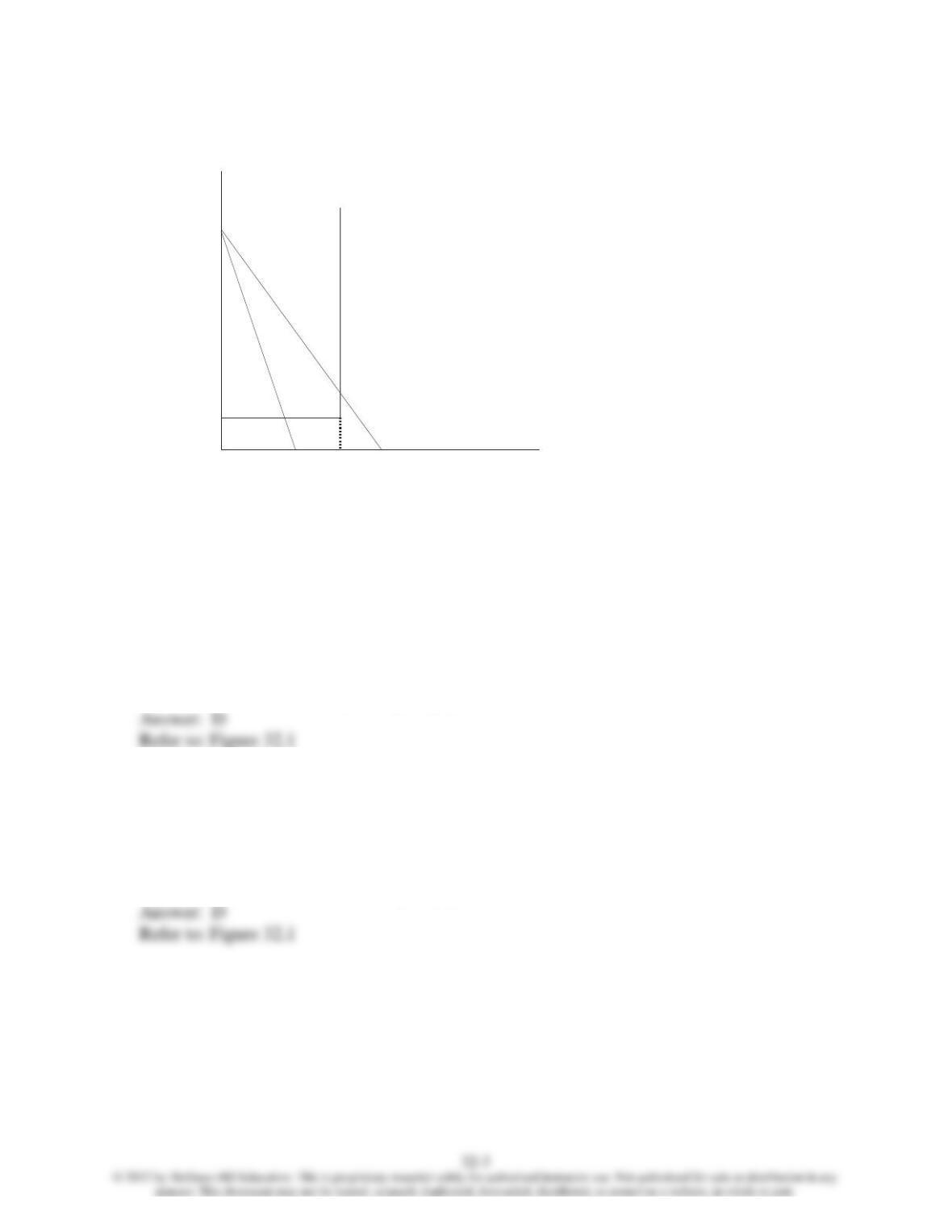
Use Figure 32.1 to answer questions 11-12:
P
Q
D
MR
MC
Capacity
Figure 32.1
11. Referring to Figure 32.1, the price that this promoter will choose will
A) sell out the facility.
B) be where the demand curve crosses the marginal cost curve.
C) be less than the marginal revenue.
D) will be such that there are many empty seats.
12. Referring to Figure 32.1, the number of tickets that this promoter will choose to sell will
A) sell out the facility.
B) be where the demand curve crosses the marginal cost curve.
C) be more than capacity.
D) will be such that there are many empty seats..
Chapter 32 – Ticket Brokers and Ticket Scalping
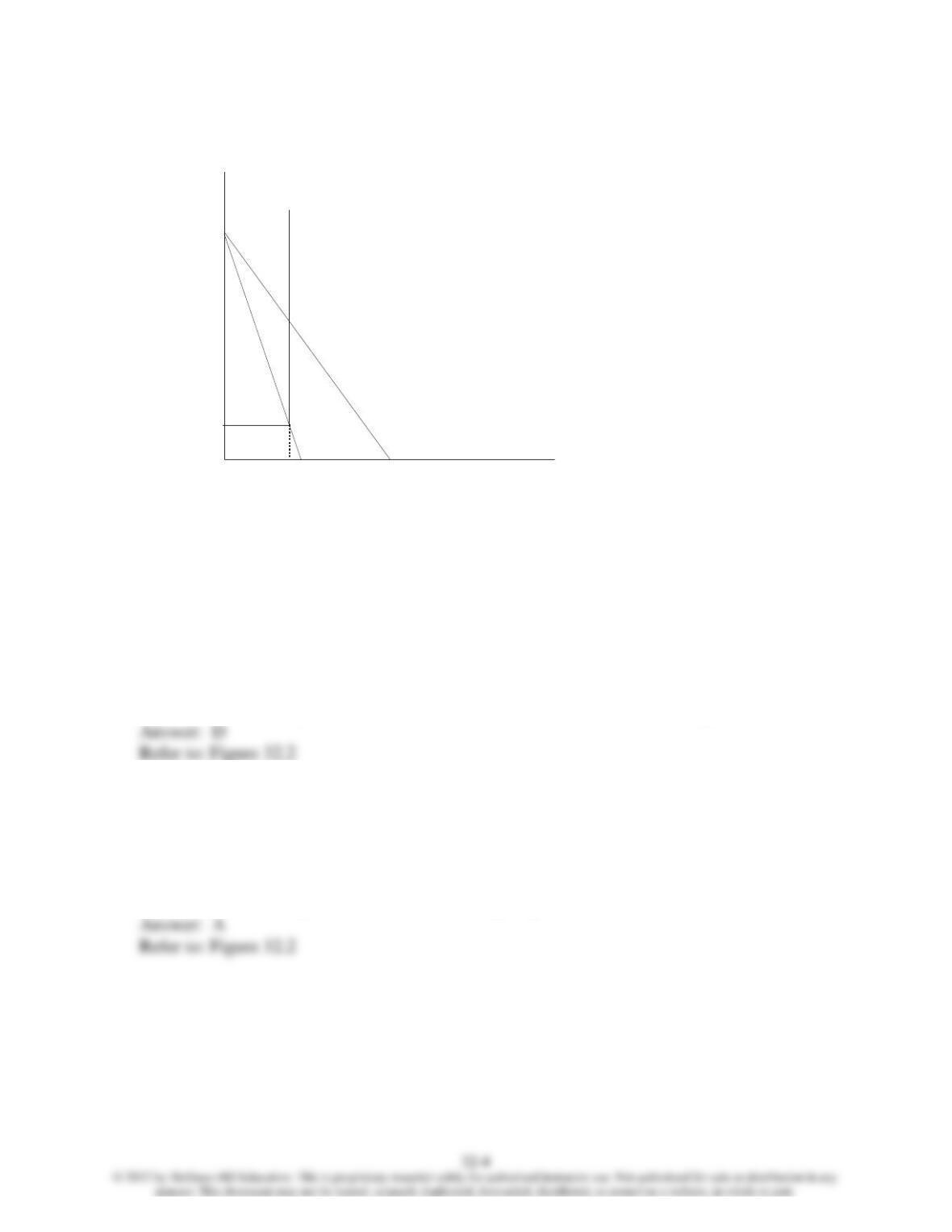
Use Figure 32.2 to answer questions 13-14:
P
Q
D
MR
MC
Capacity
Figure 32.2
13. Referring to Figure 32.2, the price that this promoter will choose will
A) sell out the facility.
B) be where the demand curve crosses the marginal cost curve.
C) will be such that there are many empty seats.
D) sell out the facility and will be where the demand curve crosses the marginal cost curve.
14. Referring to Figure 32.2, the number of tickets that this promoter will choose to sell will
A) sell out the facility.
B) be more than capacity.
C) will be such that there are many empty seats.
D) sell out the facility and will be more than capacity.
Chapter 32 – Ticket Brokers and Ticket Scalping
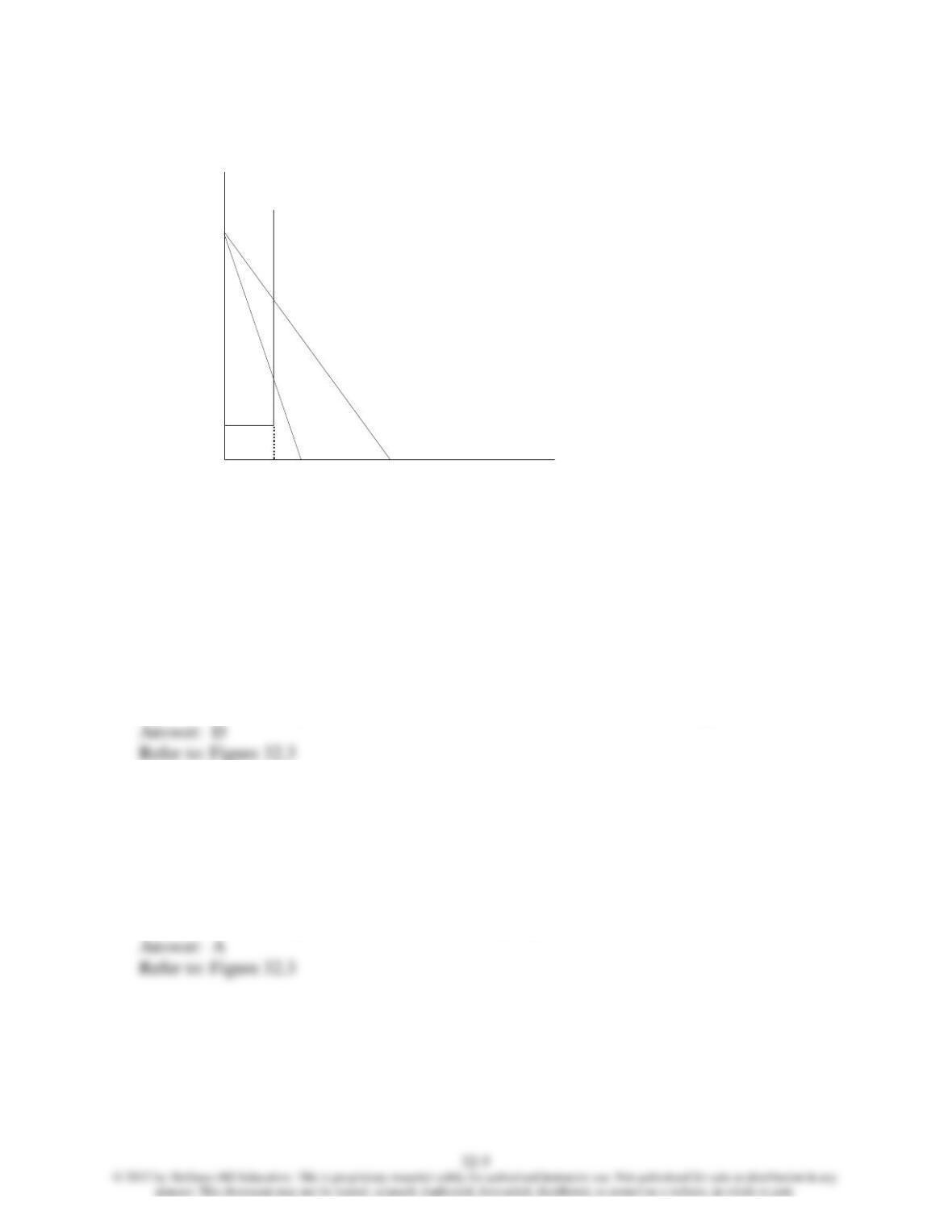
Use Figure 32.3 to answer questions 15-16:
P
Q
D
MR
MC
Capacity
Figure 32.3
15. Referring to Figure 32.3, the price that this promoter will choose will
A) sell out the facility.
B) be where the demand curve crosses the marginal cost curve.
C) will be such that there are many empty seats.
D) sell out the facility and will be where the demand curve crosses the marginal cost curve.
16. Referring to Figure 32.3, the number of tickets that this promoter will choose to sell will
A) sell out the facility
B) be more than capacity
C) will be such that there are many empty seats
D) sell out the facility and will be more than capacity.
Chapter 32 – Ticket Brokers and Ticket Scalping
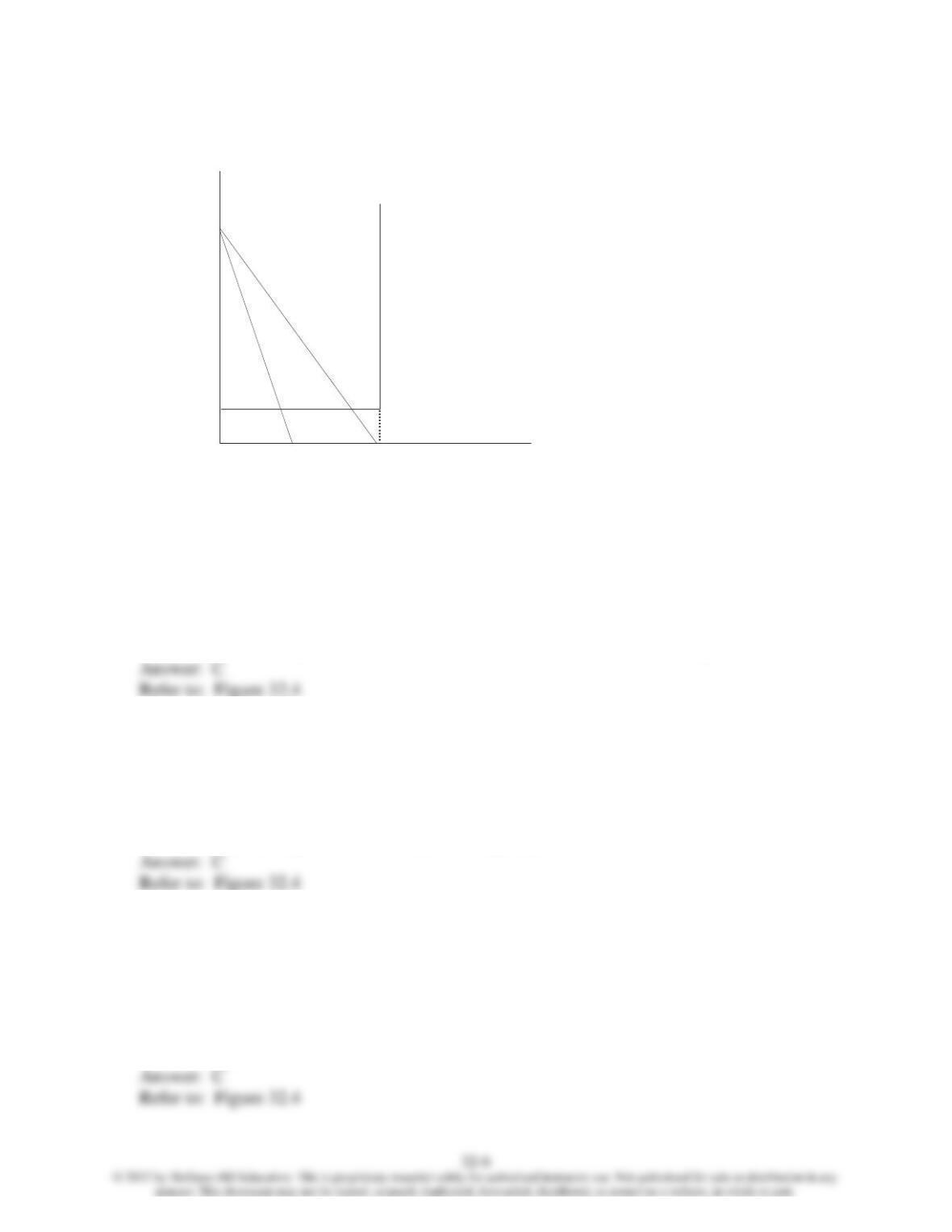
Use Figure 32.4 to answer questions 17-18:
P
Q
D
MR
MC
Capacity
Figure 32.4
17. Referring to Figure 32.4, the price that this promoter will choose will
A) sell out the facility.
B) be where the demand curve crosses the marginal cost curve.
C) will be such that there are many empty seats.
D) sell out the facility and will be where the demand curve crosses the marginal cost curve.
18. Referring to Figure 32.4, the number of tickets that this promoter will choose to sell will
A) sell out the facility.
B) be more than capacity.
C) will be such that there are many empty seats.
D) sell out the facility and will be more than capacity.
19. A promoter finds the optimal capacity where capacity is exactly
A) where marginal revenue equals zero.
B) where marginal revenue crosses demand.
C) where marginal revenue cuts through the kink in the marginal cost.
D) where marginal revenue equals zero and where marginal revenue cuts through the kink in
the marginal cost.

Chapter 32 – Ticket Brokers and Ticket Scalping
20. A sellout that is profit maximizing, results from the promoter
A) setting a price that is the lowest price possible that sells out the facility.
B) setting a price that is the highest price possible that sells out the facility .
C) charging too little for the ticket.
D) charging too much for the ticket.
21. A promoter might charge less than the profit maximizing ticket price because
A) like most promoters, she has deeply-felt charitable instincts.
B) the talent that she represents may wish to play to a full arena for their own ego.
C) she knows that the facility has absolutely no alternative use on the day of the event.
D) all of the options are correct.
22. A promoter might charge less than the profit maximizing ticket price because
A) he believes his own “hype” about the demand for the event.
B) he knows that the cost of constructing the facility is a “sunk cost”, and must be ignored.
C) the talent may want to create a reputation for charging fair price so as to get more in the
future.
D) all of the options are correct.
23. A promoter might charge less than the profit maximizing ticket price because
A) ticket profits are not everything, the total profit may be enhanced by on-site memorabilia
sales.
B) the talent that they represent may wish to play to a full arena for their own ego.
C) the talent may want to create a reputation for charging fair price so as to get more fans in
the future.
D) all of the options are correct.
24. The basic reason that your college’s women’s basketball tickets are rarely if ever scalped is
because
A) sellouts are required for scalping to work and these games rarely sell out.
B) brokers/scalpers just have not yet hit your city.
C) no one would ever pay more than the face value for such a ticket.
D) women’s basketball is exempt from the laws of supply and demand.

Chapter 32 – Ticket Brokers and Ticket Scalping
25. If scalping is defined as selling tickets for more than face value, outlawing scalping with
perfect enforcement of the law will cause
A) a shortage.
B) a surplus.
C) sellouts.
D) sellouts not to exist.
26. Once tickets have been sold by the promoter, the model that best explains the role of scalpers
is the
A) monopoly model.
B) supply and demand model.
C) the aggregate supply and aggregate demand model.
D) the monopsony model.
27. Demand for a “once-in-a-lifetime event” is likely to be
A) more elastic than a reoccurring one.
B) exactly as elastic as a reoccurring one.
C) less elastic that a reoccurring one.
D) perfectly elastic, because life is short.
28. The price of Super Bowl tickets sold by scalpers is likely to be
A) less than face value.
B) more than face value.
C) exactly face value.
D) independent of which teams are playing in the Super Bowl.

Chapter 32 – Ticket Brokers and Ticket Scalping
Use Figure 32.5 to answer questions 29-30:
P
Q
Sby scalpers
D
Pmarket
Qmarket
Pface value
A
B
C
Qface value
E
F
G
Figure 32.5
29. In Figure 32.5, the effect of a well-enforced anti-scalping law is to
A) reduce the welfare of consumers and scalpers by GFB.
B) increase the welfare of consumers by ABC.
C) decrease the welfare of scalpers by AFGC.
D) increase the welfare of consumers and decrease the welfare of scalpers.
30. Since the face value of a ticket is set well before the event, any increase in the demand for a
ticket will
A) increase the number of tickets generally available.
B) certainly increase the number of tickets that people will want to sell to scalpers.
C) certainly decrease the number of tickets that people will want to sell to scalpers.
D) increase the scalper’s price of tickets.

Chapter 32 – Ticket Brokers and Ticket Scalping
31. If the long-suffering Pittsburgh Pirates and Kansas City Royals were to meet in the World
Series and their fans, realizing that another trip to the World Series would not some again for
50 years, were willing to pay three times the face-value price for tickets, economists would
suggest that a scalping market would appear and it
A) would make all ticket holders and potential buys worse off.
B) would make all ticket holders and potential buys better off (or at least no worse off).
C) cause the price to fall below the face value.
D) cause the price to fall back to the face value.
32. If the Boston Red Sox were playing the Chicago Cubs in the World Series and fans were
willing to pay three times the face-value price for tickets, economists would suggest that a
scalping market would appear and it
A) would make all ticket holders and potential buys worse off.
B) would make all ticket holders and potential buys better off (or at least no worse off).
C) cause the price to fall below the face value.
D) cause the price to fall back to the face value.
33. If the New Orleans Saints were playing the Arizona Cardinals in the NFC final to determine
who would play in the Super Bowl and their fans were willing to pay three times the face-
value price for tickets, economists would suggest that a scalping market would appear and it
A) would make all ticket holders and potential buys worse off.
B) would make all ticket holders and potential buys better off (or at least no worse off).
C) cause the price to fall below the face value.
D) cause the price to fall back to the face value.
34. Since there are long waiting lists for tickets to events that regularly occur (Duke basketball,
the August NASCAR race in Bristol Tennessee, etc.), a profit maximizing promoter would
A) raise ticket prices.
B) lower ticket prices.
C) eliminate seating.
D) eliminate the event altogether.

Chapter 32 – Ticket Brokers and Ticket Scalping
35. Suppose one of baseball’s most ensuring records -the Dimaggio 56 game hit streak- were on
the line. Tickets to the 57th game might command three times the face-value price for tickets.
Economists would suggest that a scalping market would appear and it
A) would make all ticket holders and potential buys worse off.
B) would make all ticket holders and potential buys better off (or at least no worse off).
C) cause the price to fall below the face value.
D) cause the price to fall back to the face value.
36. Suppose one of baseball’s most ensuring records -the Pete Rose career hit total recond- were
on the line. Tickets to the games leading up to breaking of the record might command three
times the face-value price for tickets. Economists would suggest that a scalping market
would appear and it
A) would make all ticket holders and potential buys worse off.
B) would make all ticket holders and potential buys better off (or at least no worse off).
C) cause the price to fall below the face value.
D) cause the price to fall back to the face value.
37. Suppose one of baseball’s most controversial records –the Bonds’ 72 home run season – were
on the line. Tickets to the games leading up to breaking of the record might command three
times the face-value price for tickets. Economists would suggest that a scalping market
would appear and it
A) would make all ticket holders and potential buys worse off.
B) would make all ticket holders and potential buys better off (or at least no worse off).
C) cause the price to fall below the face value.
D) cause the price to fall back to the face value.
38. Suppose one of baseball’s most controversial records –the Bonds’ career home run record –
were on the line. Tickets to the games leading up to breaking of the record might command
three times the face-value price for tickets. Economists would suggest that a scalping market
would appear and it
A) would make all ticket holders and potential buys worse off.
B) would make all ticket holders and potential buys better off (or at least no worse off).
C) cause the price to fall below the face value.
D) cause the price to fall back to the face value.

Chapter 32 – Ticket Brokers and Ticket Scalping
39. Since there are long waiting lists for tickets to events that regularly occur (Duke basketball,
the August NASCAR race in Bristol Tennessee, etc.), a profit maximizing promoter might
A) increase seating.
B) lower ticket prices.
C) eliminate seating.
D) eliminate the event altogether.
40. When ticket scalping is legal, economists insist that the market so created ensures that
A) the people who are willing to give up the most money will see the event.
B) the people who care the most in their hearts will see the event.
C) the promoter makes the most money possible.
D) the performers make the most money possible.
41. If scalpers were to charge exactly face value for tickets to a sold-out event, there would be
A) more tickets traded in the market for scalped tickets.
B) fewer tickets traded in the market for scalped tickets.
C) no tickets traded in the market for scalped tickets.
D) a scalped ticket available for every seat in the stadium.
42. If scalpers were to charge exactly face value for tickets to a sold-out event, there would be
A) more tickets sold in the market for scalped tickets than buyers there want to buy.
B) exactly as many tickets sold in the market for scalped tickets as buyers there want to buy.
C) fewer tickets sold in the market for scalped tickets than buyers there want to buy.
D) a scalped ticket available for every seat in the stadium.
43. If scalpers were to charge only face value for tickets to a sold-out event, there would be
A) a scalped ticket available for every seat in the stadium.
B) a higher price in the market for scalped tickets than the equilibrium price.
C) a price in the market for scalped tickets equal to the equilibrium price.
D) a lower price in the market for scalped tickets than the equilibrium price.

Chapter 32 – Ticket Brokers and Ticket Scalping
44. A market for scalped tickets exists only because the ticket sales policies of the event
promoter
A) failed to exploit every opportunity for mutually beneficial trade.
B) exploited more opportunities for mutually beneficial trade than actually existed.
C) created illusory opportunities for mutually beneficial trade.
D) were unjust and immoral.
45. Suppose, during the rapid expansion of NASCAR during the 1990s and 2000s, a racetrack
owner kept expanding capacity to keep up with demand. Suppose further that fan interest in
NASCAR diminished during the recession of 2007-2009. It would have been in that owner’s
best interest to
A) reduce ticket prices so that sellouts would resume.
B) spend money to reduce seating.
C) set the ticket price to where MC=MR which may mean that there would not be a sellout.
D) spend as much money on advertising as necessary to ensure a sellout.
46. During the rapid expansion of NASCAR during the 1990s and 2000s, the Bristol Motor kept
expanding capacity to keep up with demand. The August race became the 3rd most attended
sporting event in the world. The recession of 2007-2009 diminished fan interest in that race
such that there were empty seats in 2010 and 2011. It would have been in that owner’s best
interest to
A) reduce ticket prices so that sellouts would resume.
B) spend money to reduce seating.
C) set the ticket price to where MC=MR which may mean that there would not be a sellout.
D) spend as much money on advertising as necessary to ensure a sellout.
47. The Indianapolis Motor Speedway hosts the Indianapolis 500, the Brickyard 400, in addition
to other races. During their respective peaks, both events were sellouts. During the late–
1990s, the Indianapolis 500 experienced a dry period with 100,000 or more empty seats. . It
would have been in that owner’s best interest to
A) reduce ticket prices so that sellouts would resume.
B) spend money to reduce seating.
C) set the ticket price to where MC=MR which may mean that there would not be a sellout.
D) spend as much money on advertising as necessary to ensure a sellout.

Chapter 32 – Ticket Brokers and Ticket Scalping
48. The Indianapolis Motor Speedway hosts the Indianapolis 500, the Brickyard 400, in addition
to other races. During their respective peaks, both events were sellouts. The 2009 through
2011 versions of the Brickyard 400 saw 100,000 or more empty seats. . It would have been
in that owner’s best interest to
A) reduce ticket prices so that sellouts would resume.
B) spend money to reduce seating.
C) set the ticket price to where MC=MR which may mean that there would not be a sellout.
D) spend as much money on advertising as necessary to ensure a sellout.
49. The Fill-in-the-Blank State University women’s basketball team plays its games in the same
facility as the men’s team. The seating capacity is therefore the same for each. A profit
maximizing university would
A) set identical ticket prices for men’s and women’s teams based on what would sell out
every game.
B) set ticket prices based on the quantity where MC=MR so that the profit to each is
maximized.
C) set ticket prices based on the quantity where MC=MR but to average that price for men
and women and charge the same.
D) set ticket prices based on the quantity where MC=MR for the men and give the tickets to
the women’s games away.
50. If you were going to expand a facility by adding 10% more seats, and the costs of providing
ushers and other personnel to deal with the new seats was exactly the same (on a per seat
basis) as the older portion of the facility, the new MC curve would look like the previous one
except that it would
A) no longer be a backward L but would be upward sloping once the old capacity was
reached.
B) just shift to the right.
C) just shift to the left.
D) just shift up.

Chapter 32 – Ticket Brokers and Ticket Scalping
51. If you were going to contract a facility by removing 10% of the older seats, but the costs of
providing ushers and other personnel to deal with the remaining seats was exactly the same
(on a per seat basis) as it had been , the new MC curve would look like the previous one
except that it would
A) mo longer be a backward L but would be upward sloping once the old capacity was
reached.
B) just shift to the right.
C) just shift to the left.
D) just shift up.
52. If you were going to expand a facility by adding 10% more seats, but because of the location
of those seats the costs of providing ushers and other personnel to deal with the new seats
was rising (on a per seat basis) the new MC curve would look like the previous one except
that it would
A) no longer be a backward L but would be upward sloping once the old capacity was
reached.
B) just shift to the right.
C) just shift to the left.
D) just shift up.
53. Race tracks that are road courses (as opposed to ovals) where drivers turn both right and left
have large grandstands near the start/finish line and smaller ones at the various turns and
twists in the course. On a per seat basis, the costs of providing personnel in the grandstand
are less than the costs of providing personnel to the smaller ones. In that case the MC curve
would be
A) upward sloping.
B) a backward L.
C) a forward L.
D) downward sloping.
54. New Texas stadium was built with so that the team could sell “standing room only” tickets.
People who buy these tickets can watch the game on televisions located around the facility or
on catwalks that surround the stadium. Policing those fans (making sure they do not stand in
the way of people who have seats is costly). In that case the MC curve would be
A) upward sloping.
B) a backward L.
C) a forward L.
D) downward sloping.

Chapter 32 – Ticket Brokers and Ticket Scalping
True False
55. Under any definition there is no service that a scalper performs.
A) True
B) False
56. For a promoter to maximize profit, he will have to sell out the venue.
A) True
B) False
57. Suppose, during the rapid expansion of NASCAR during the 1990s and 2000s, a racetrack
owner kept expanding capacity to keep up with demand. Suppose further that fan interest in
NASCAR diminished during the recession of 2007-2009. It would have been in that owner’s
best interest to reduce ticket prices sufficient to maintain a sellout.
A) True
B) False
58. The Indianapolis Motor Speedway hosts the Indianapolis 500, the Brickyard 400, in addition
to other races. During their respective peaks, both events were sellouts. During the late–
1990s, the Indianapolis 500 experienced a dry period with 100,000 or more empty seats. This
is evidence that the ticket prices were too high.
A) True
B) False
59. The Indianapolis Motor Speedway hosts the Indianapolis 500, the Brickyard 400, in addition
to other races. During their respective peaks, both events were sellouts. The 2009 through
2011 versions of the Brickyard 400 saw 100,000 or more empty seats. This is evidence that
the ticket prices were too high.
A) True
B) False