United States – BPROG: Analytic
Aggregate demand and aggregate s – Aggregate demand and aggregate supply
Adjusting to an Inflationary Gap: Inflation
187. Self correcting mechanism reveals that
a.
real wages will increase if there is an increase in price.
b.
nominal wages will fall if there is inflationary gap.
c.
nominal wages will increase if there is recessionary gap.
d.
in the long run economy will be in equilibrium at potential GDP.
DISC: Aggregate demand and aggre – DISC: Aggregate demand and aggregate supply
United States – BPROG: Analytic
Aggregate demand and aggregate s – Aggregate demand and aggregate supply
Adjusting to an Inflationary Gap: Inflation
188. During 2008-2010, the U.S. economy showed signs of a(n)
a.
mild recession.
b.
recessionary gap.
c.
inflationary gap.
d.
deflationary gap.
DISC: Measuring the Economy
United States – BPROG: Analytic
Measuring the Economy
Adjusting to an Inflationary Gap: Inflation
189. Economists believed that the U.S. economy had a (n) ____ in 2006 and 2007.
a.
mild recession
b.
small recessionary gap
c.
small inflationary gap
d.
deflationary gap
DISC: Measuring the Economy
United States – BPROG: Analytic
Measuring the Economy
Adjusting to an Inflationary Gap: Inflation
190. The primary effect of OPEC actions in the period from 1973 to 1980 was to increase
a.
wage rates.
b.
interest rates.
c.
employment and output.
d.
energy prices.
DISC: Aggregate demand and aggre – DISC: Aggregate demand and aggregate supply
United States – BPROG: Analytic
Aggregate demand and aggregate s – Aggregate demand and aggregate supply
Stagflation from a Supply Shock
191. The usual results of an adverse supply shock are
a.
a rise in prices and a fall in output.
b.
a fall in prices and a rise in output.
c.
increased growth and lower inflation.
d.
higher net exports.
DISC: Aggregate demand and aggre – DISC: Aggregate demand and aggregate supply
United States – BPROG: Analytic
Aggregate demand and aggregate s – Aggregate demand and aggregate supply
Stagflation from a Supply Shock
192. The 2002-2008 OPEC price increases caused by conflict in the Middle East caused the aggregate
a.
demand curve to shift outward.
b.
demand curve to shift inward.
c.
supply curve to shift outward.
d.
supply curve to shift inward.
DISC: Aggregate demand and aggre – DISC: Aggregate demand and aggregate supply
United States – BPROG: Analytic
Aggregate demand and aggregate s – Aggregate demand and aggregate supply
Stagflation from a Supply Shock
Figure 10-6
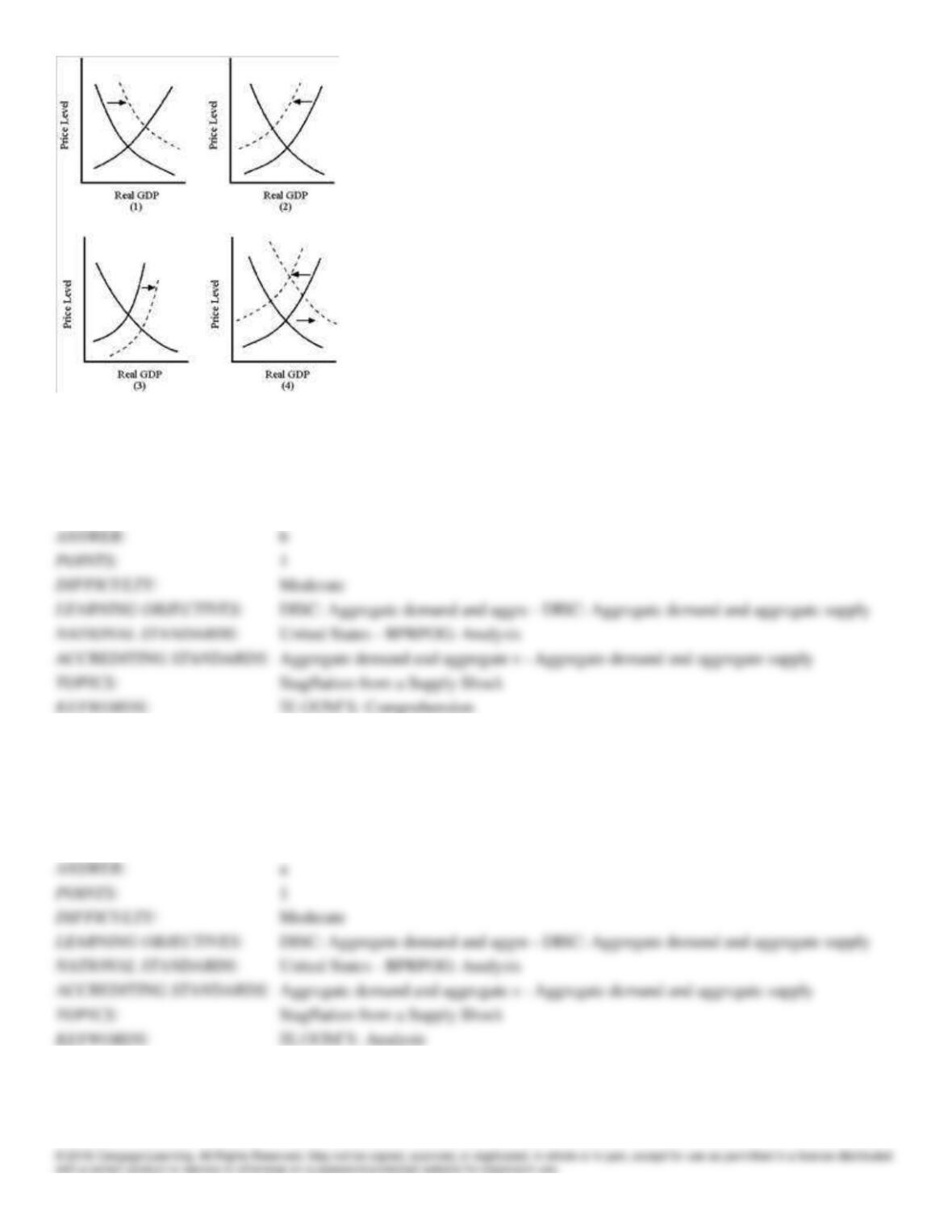
193. In Figure 10–6, which graph best illustrates the effect of the beginning of the Iraq war in 2003?
a.
(1)
b.
(2)
c.
(3)
d.
(4)
Moderate
194. In Figure 10–6, which graph best illustrates an autonomous increase in consumption spending?
a.
(1)
b.
(2)
c.
(3)
d.
(4)
a
Moderate
195. In Figure 10–6, which graph best illustrates an adverse supply shock accompanied by an increase in government
spending?
a.
(1)
b.
(2)
c.
(3)
d.
(4)
Moderate
DISC: Aggregate demand and aggre – DISC: Aggregate demand and aggregate supply
United States – BPRPOG: Analysis
Aggregate demand and aggregate s – Aggregate demand and aggregate supply
Stagflation from a Supply Shock
196. The typical result of an adverse supply shock is
a.
falling output accompanied by accelerating inflation.
b.
falling output accompanied by decelerating inflation.
c.
rising output accompanied by accelerating inflation.
d.
rising output accompanied by decelerating inflation.
a
Moderate
DISC: Aggregate demand and aggre – DISC: Aggregate demand and aggregate supply
United States – BPROG: Analytic
Aggregate demand and aggregate s – Aggregate demand and aggregate supply
Stagflation from a Supply Shock
197. A shift outward of the aggregate supply curve could be caused by
a.
higher import prices.
b.
lower import prices.
c.
energy shortages.
d.
rising wage rates.
Moderate
DISC: Aggregate demand and aggre – DISC: Aggregate demand and aggregate supply
United States – BPROG: Analytic
Aggregate demand and aggregate s – Aggregate demand and aggregate supply
Stagflation from a Supply Shock
198. Which of the following events will lead to an inward shift of the aggregate supply curve?
a.
an increase in the price level
b.
an increase in consumer spending
c.
an increase in labor productivity
d.
an increase in wage rates
DISC: Aggregate demand and aggre – DISC: Aggregate demand and aggregate supply
United States – BPROG: Analytic
Aggregate demand and aggregate s – Aggregate demand and aggregate supply
Stagflation from a Supply Shock
199. How are aggregate supply and stagflation related?
a.
Stagflation usually causes an adverse shift in aggregate supply.
b.
An adverse supply shift usually causes stagflation.
c.
Stagflation only follows inflation, with no relation to aggregate supply.
d.
There is no relationship between the two.
DISC: Aggregate demand and aggre – DISC: Aggregate demand and aggregate supply
United States – BPROG: Analytic
Aggregate demand and aggregate s – Aggregate demand and aggregate supply
Stagflation from a Supply Shock
200. The years 2002 through 2007 can be described as a period of
a.
falling output accompanied by increasing inflation.
b.
falling output accompanied by decreasing inflation.
c.
rising output accompanied by increasing inflation.
d.
rising output accompanied by decreasing inflation.
DISC: Measuring the Economy
United States – BPROG: Analytic
Measuring the Economy
Applying the Model to a Growing Economy
201. The United States economy in the mid-2000s did not experience stagflation because
a.
energy prices declined.
b.
the energy content of GDP declined.
c.
the U.S. economy became more volatile since 1980.
d.
all of the above.
DISC: Aggregate demand and aggre – DISC: Aggregate demand and aggregate supply
United States – BPROG: Analytic
Aggregate demand and aggregate s – Aggregate demand and aggregate supply
Applying the Model to a Growing Economy
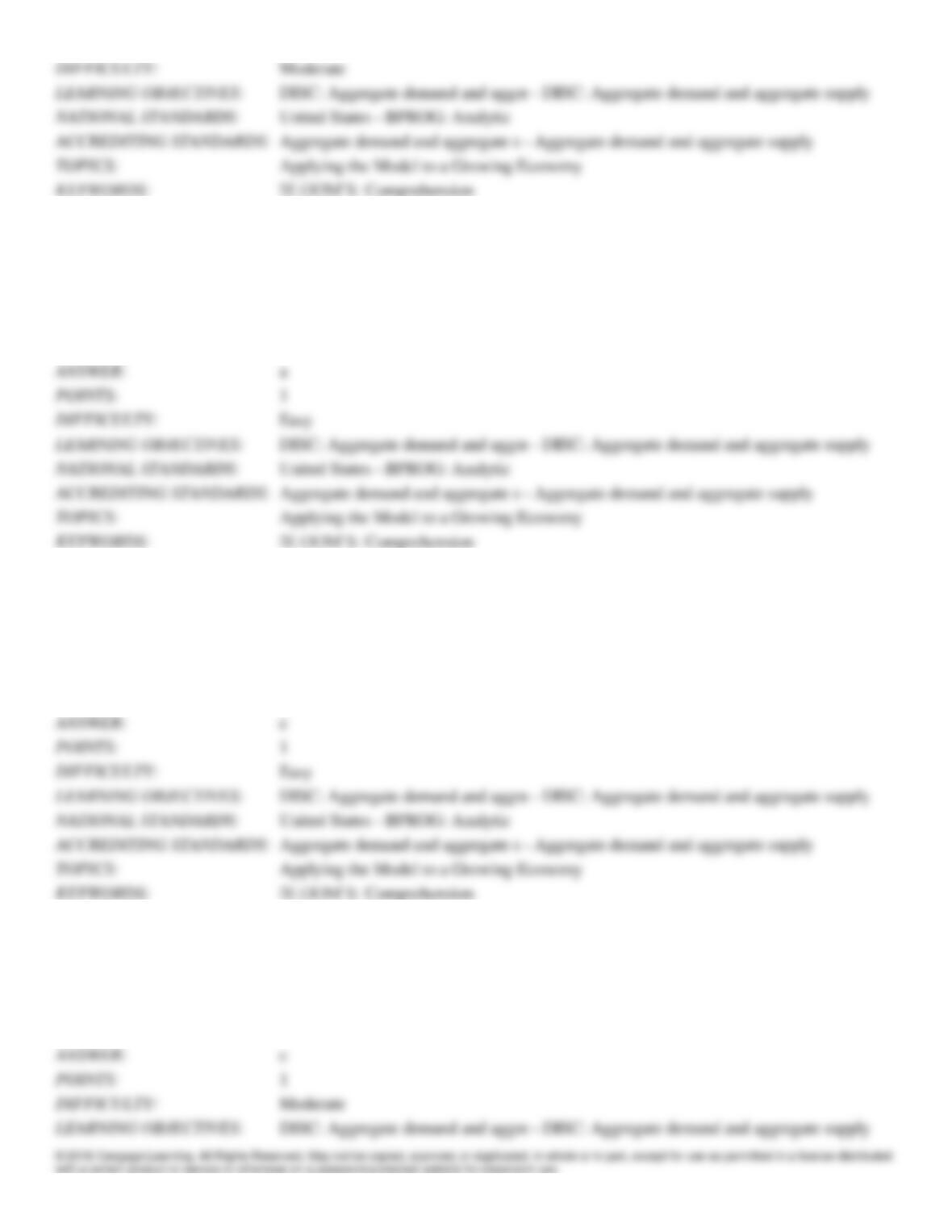
202. Refer to Figure 10–7. Which of the diagrams in Figure 10-7 represents a period of economic growth and inflation?
a.
Panel (A)
b.
Panel (B)
c.
Panel (C)
d.
Panel (D)
DISC: Aggregate demand and aggre – DISC: Aggregate demand and aggregate supply
United States – BPROG: Analytic
Aggregate demand and aggregate s – Aggregate demand and aggregate supply
Applying the Model to a Growing Economy
203. Refer to Figure 10–7. Which of the diagrams in Figure 10-7 represents a decrease in consumer spending combined
with a positive supply shock?
a.
Panels (A) & (B)
b.
Panels (C) & (D)
c.
Panels (A) & (C)
d.
Panels (B) & (D)
DISC: Aggregate demand and aggre – DISC: Aggregate demand and aggregate supply
United States – BPROG: Analytic
Aggregate demand and aggregate s – Aggregate demand and aggregate supply
Applying the Model to a Growing Economy
204. Which of the panels in Figure 10-7 shows an economic recession caused by primarily by a change aggregate
demand?
a.
Panel (A)
b.
Panel (B)
c.
Panel (C)
d.
Panel (D)
DISC: Aggregate demand and aggre – DISC: Aggregate demand and aggregate supply
United States – BPROG: Analytic
Aggregate demand and aggregate s – Aggregate demand and aggregate supply
Applying the Model to a Growing Economy
205. Which of the panels in Figure 10-7 shows an economic expansion caused primarily by a change in aggregate
demand?
a.
Panel (A)
b.
Panel (B)
c.
Panel (C)
d.
Panel (D)
DISC: Aggregate demand and aggre – DISC: Aggregate demand and aggregate supply
United States – BPROG: Analytic
Aggregate demand and aggregate s – Aggregate demand and aggregate supply
Applying the Model to a Growing Economy
206. If an economy is growing, but experiences no inflation, this means
a.
aggregate demand increased, but aggregate supply did not.
b.
aggregate supply decreased, but aggregate demand did not.
c.
aggregate demand and aggregate supply increased by the same amount.
d.
aggregate demand and aggregate supply decreased by the same amount.
DISC: Aggregate demand and aggre – DISC: Aggregate demand and aggregate supply
United States – BPROG: Analytic
Aggregate demand and aggregate s – Aggregate demand and aggregate supply
Applying the Model to a Growing Economy
207. Suppose we observe an economy experience an economic expansion and high inflation. This means the expansion is
attributed to
a.
growth in aggregate demand.
b.
growth in aggregate supply.
c.
a reduction in aggregate demand.
d.
a reduction in aggregate supply.
DISC: Aggregate demand and aggre – DISC: Aggregate demand and aggregate supply
United States – BPROG: Analytic
Aggregate demand and aggregate s – Aggregate demand and aggregate supply
Applying the Model to a Growing Economy
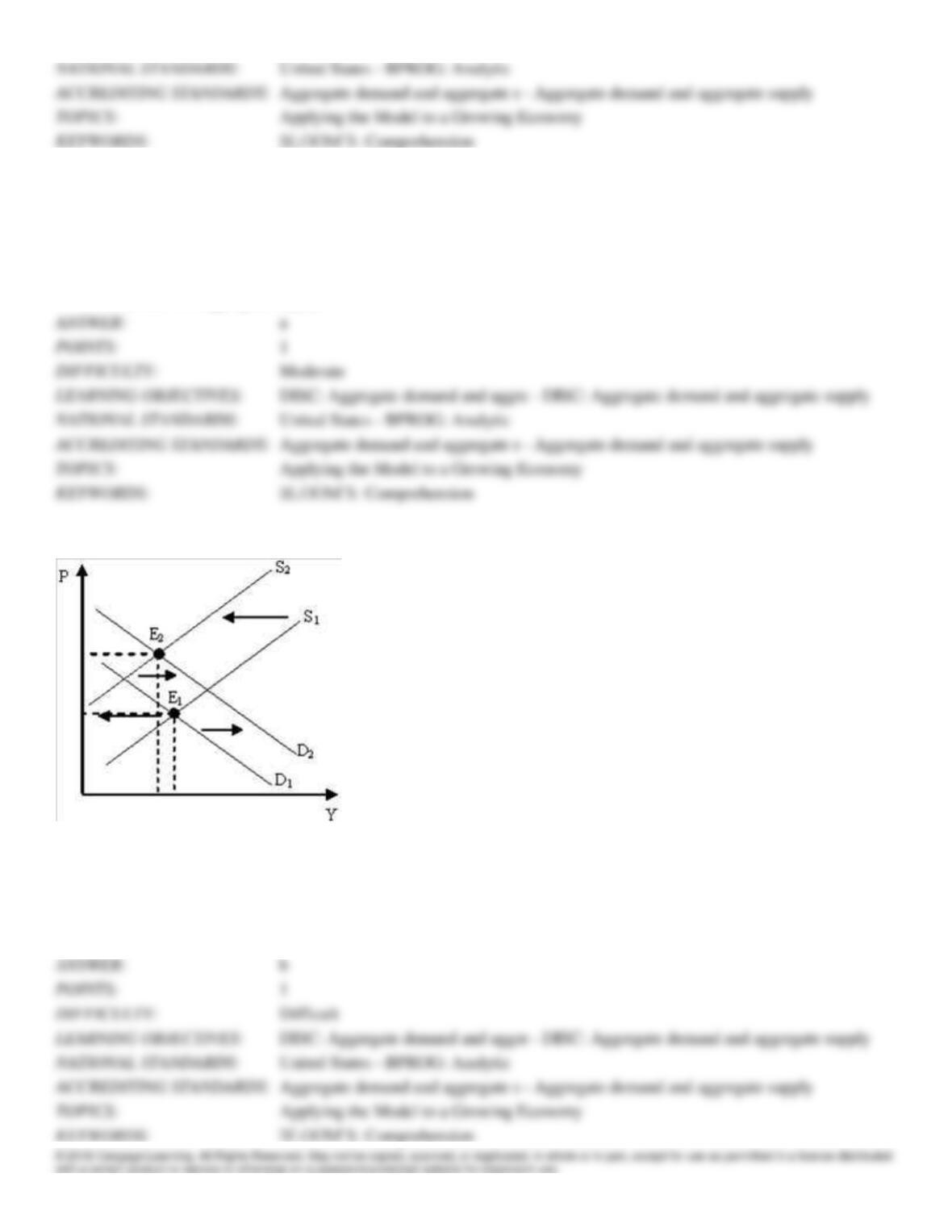
Figure 10-8
208. Figure 10-8 describes which of the following periods in the U.S.?
a.
1930s
b.
1973-1975
c.
late 1990s
d.
2007-2009
DISC: Aggregate demand and aggre – DISC: Aggregate demand and aggregate supply
United States – BPROG: Analytic
Aggregate demand and aggregate s – Aggregate demand and aggregate supply
Applying the Model to a Growing Economy
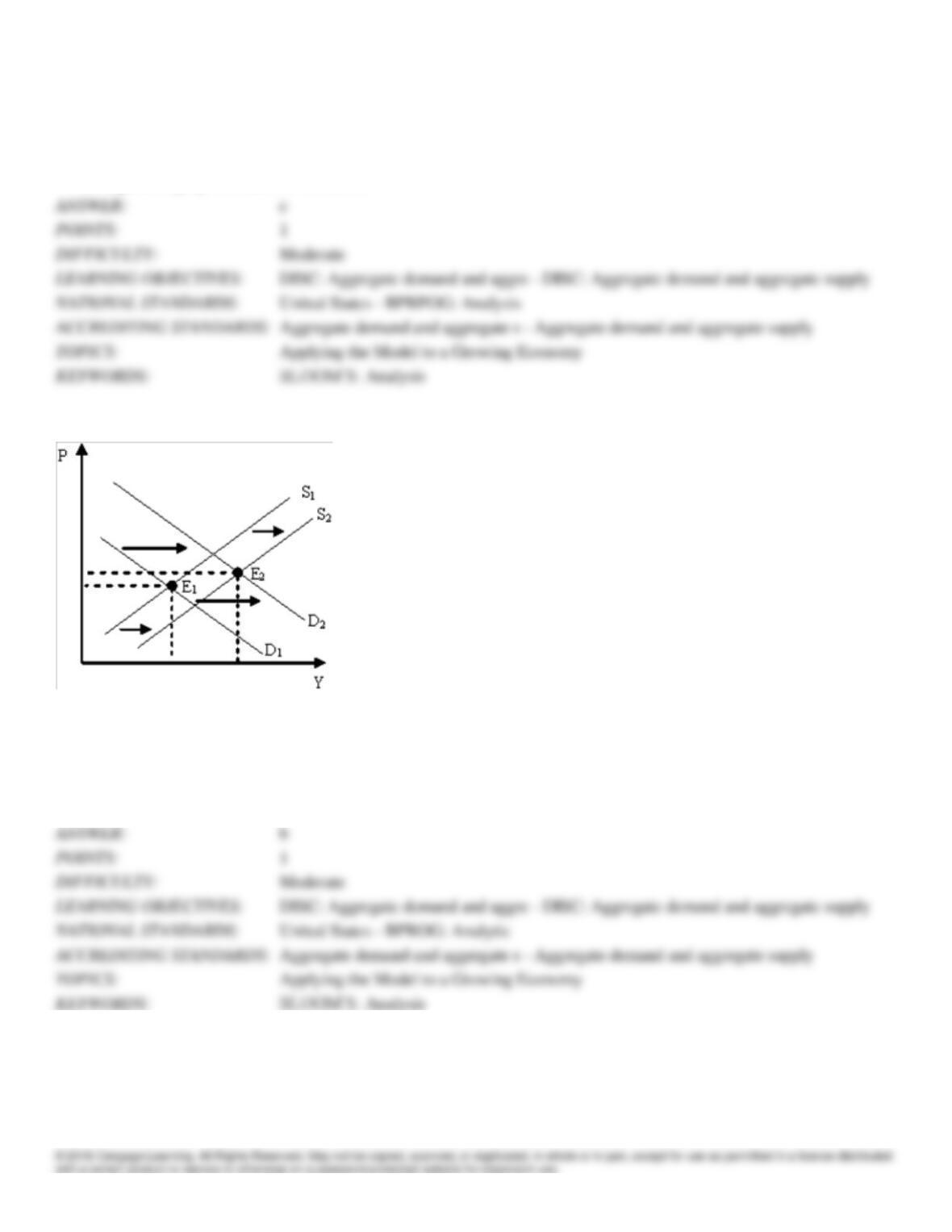
209. Figure 10-8 illustrates a period of
a.
low unemployment and high inflation.
b.
low unemployment and low inflation.
c.
high unemployment and high inflation.
d.
high unemployment and low inflation.
DISC: Aggregate demand and aggre – DISC: Aggregate demand and aggregate supply
United States – BPRPOG: Analysis
Aggregate demand and aggregate s – Aggregate demand and aggregate supply
Applying the Model to a Growing Economy
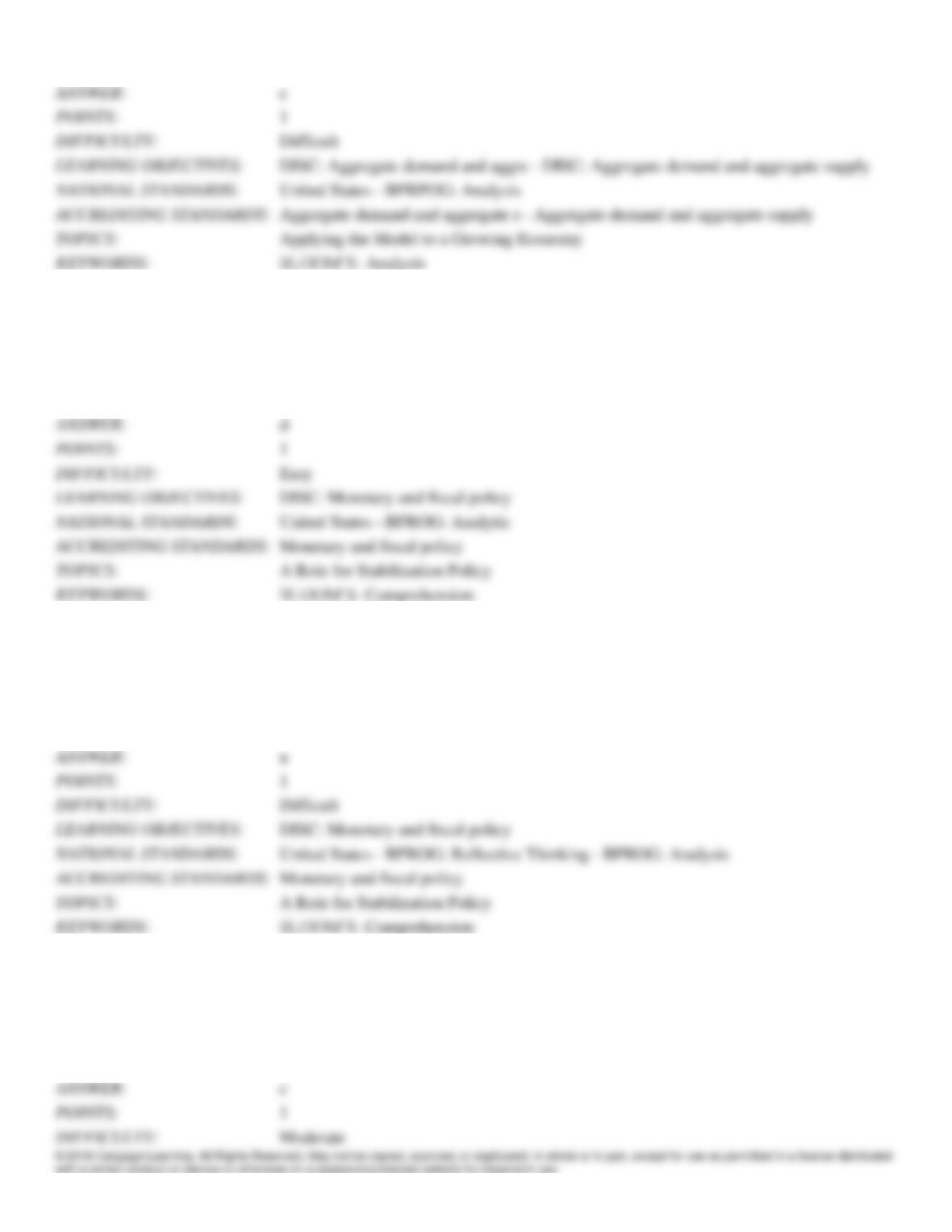
Figure 10-9
210. Figure 10-9 illustrates a period of
a.
economic growth and high inflation.
b.
economic growth and low inflation.
c.
economic recession and high inflation.
d.
economic recession and low inflation.
DISC: Aggregate demand and aggre – DISC: Aggregate demand and aggregate supply
United States – BPROG: Analytic
Aggregate demand and aggregate s – Aggregate demand and aggregate supply
Applying the Model to a Growing Economy
211. Figure 10-9 describes which of the following periods in the U.S.?
a.
1930s
b.
1973-1975
c.
late 1990s
d.
2007-2009
DISC: Aggregate demand and aggre – DISC: Aggregate demand and aggregate supply
United States – BPRPOG: Analysis
Aggregate demand and aggregate s – Aggregate demand and aggregate supply
Applying the Model to a Growing Economy
212. One of the justifications of government stabilization policy is that it may
a.
increase the fluctuations in inflation and employment.
b.
increase the multiplier effect of changes in autonomous spending.
c.
increase the volatility of economic variables.
d.
reduce the severity of inflation and unemployment.
DISC: Monetary and fiscal policy
United States – BPROG: Analytic
Monetary and fiscal policy
A Role for Stabilization Policy
213. The case for government stabilization policy is made more compelling if the
a.
self-correcting mechanism works very slowly.
b.
self-correcting mechanism works too fast.
c.
value of the multiplier is very small.
d.
aggregate supply curve is very flat.
DISC: Monetary and fiscal policy
United States – BPROG: Reflective Thinking – BPROG: Analysis
Monetary and fiscal policy
A Role for Stabilization Policy
214. The fact that severe fluctuations in inflation and unemployment are socially undesirable helps make the case for
a.
a “hands off” policy by the government.
b.
fixed prices and wages.
c.
active government stabilization policy.
d.
restrictions on imports from low wage countries.
DISC: Monetary and fiscal policy
United States – BPROG: Analytic
Monetary and fiscal policy
A Role for Stabilization Policy
215. From the mid-1980s until late 2007, many world economies became less volatile because of:
a.
sound macroeconomic policies
b.
several structural change that made the economies more flexible
c.
good luck
d.
All of the above.
e.
a through c only
DISC: Aggregate demand and aggre – DISC: Aggregate demand and aggregate supply
United States – BPROG: Reflective Thinking – BPROG: Analysis
Aggregate demand and aggregate s – Aggregate demand and aggregate supply
Applying the Model to a Growing Economy
216. As the multiplier process is working on the demand side:
a.
firms will meet the additional demand without raising prices
b.
firms will meet the additional demand only by raising prices
c.
firms will not meet the additional demand
d.
the multiplier process will cease creating demand
DISC: Aggregate demand and aggre – DISC: Aggregate demand and aggregate supply
United States – BPROG: Reflective Thinking – BPROG: Analysis
Aggregate demand and aggregate s – Aggregate demand and aggregate supply
Inflation and the Multiplier
217. Distinguish between a movement along the aggregate supply curve and a shift of the entire aggregate supply curve.
What factors cause each to occur?
218. What causes the aggregate supply curve to have an upward slope in the short run, but a vertical slope in the long run?
219. Using the concepts of aggregate demand and aggregate supply, explain how the economy reaches an equilibrium
level of real GDP and price level.
220. Why is it possible that the economy will not self-correct out of a recessionary gap?
221. What is meant by an economy’s self correcting mechanism? Explain the process through which self correcting
mechanism reduces inflationary gap.
222. When price level is considered, the value of the multiplier will be less than that suggested by the oversimplified
version of multiplier. Why?
223. Why is a period of stagflation part of the normal aftermath of a period of excessive aggregate demand?
224. Discuss some of the arguments that help explain why wages and prices rarely fall in a modern economy.
225. What would be the likely result of a recessionary gap? If this leads to a fall in the nominal wage what impact it would
have on the aggregate supply curve and on recessionary gap?
United States – BPROG: Analytic
Aggregate demand and aggregate s – Aggregate demand and aggregate supply
Adjusting to a Recessionary Gap: Deflation or Unemployment?
226. Describe the main explanations for the downward rigidity of wages in the modern macroeconomy. Evaluate their
probability of being correct and important.
DISC: Aggregate demand and aggre – DISC: Aggregate demand and aggregate supply
United States – BPROG: Reflective Thinking – BPROG: Analysis
Aggregate demand and aggregate s – Aggregate demand and aggregate supply
Adjusting to a Recessionary Gap: Deflation or Unemployment?
227. Using aggregate demand and aggregate supply analysis, explain why increases in oil did not lead to stagflation in
2006-2008 but did lead to stagflation in the 1970s and early 1980s.
DISC: Aggregate demand and aggre – DISC: Aggregate demand and aggregate supply
United States – BPROG: Reflective Thinking – BPROG: Analysis
Aggregate demand and aggregate s – Aggregate demand and aggregate supply
Applying the Model to a Growing Economy
228. Using the aggregate demand/aggregate supply model, explain the difference in the employment prospects of the
graduates of 2007 and 2009.