Chapter 26
So You Want to Be a Lawyer: Economics and the Law
Multiple Choice
1. Land owned by an individual or a group of individuals is an example of the economic
concept of
A) physical capital.
B) human capital.
C) public property.
D) private property.
2. Written and recorded works, ideas, formulas and other creative intangible property
that are owned by an individual or a group of individuals are examples of the
economic concept of
A) physical capital.
B) public property.
C) intellectual property.
D) personal effects.
3. A right granted by government to an inventor to be the exclusive seller of that
invention for a limited period of time is called a
A) patent.
B) copyright.
C) trademark.
D) tangible asset.
4. A right granted by government to a creator of a written or recorded work to be the
exclusive seller of that work for a limited period of time is called a
A) patent.
B) copyright.
C) trademark.
D) tangible asset.
5. A right granted by the government to a business to be the exclusive user of a phrase,
logo, or name of such a business is called a
A) patent.
B) copyright.
C) trademark.
D) tangible asset.
6. A written agreement where each party is bound to provide other parties with goods,
services or financial consideration in exchange for other goods, services or financial
considerations is a
A) patent.
B) copyright.
C) trademark.
D) tangible asset.
7. Private property provides an incentive to
A) neither work nor save.
B) work, but it fails to provide an incentive to save.
C) save, but it fails to provide an incentive to work.
D) both work and save.
8. The incentives to work that result from the existence of private property accrue to
A) only the strong.
B) only the weak.
C) both the weak and the strong.
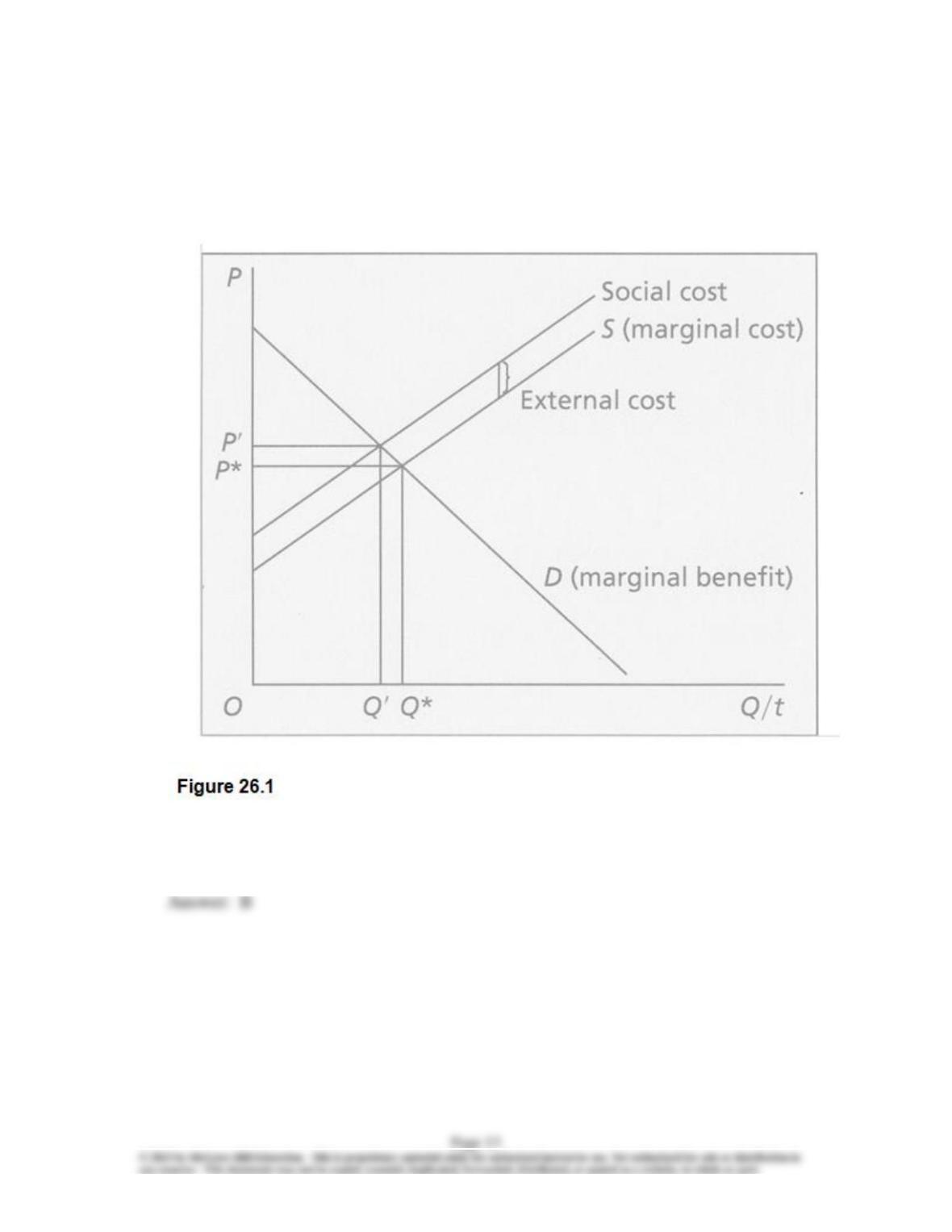
D) neither the weak nor the strong.
9. The protection of private property makes it so that
A) people must consume the proceeds of their hard work immediately.
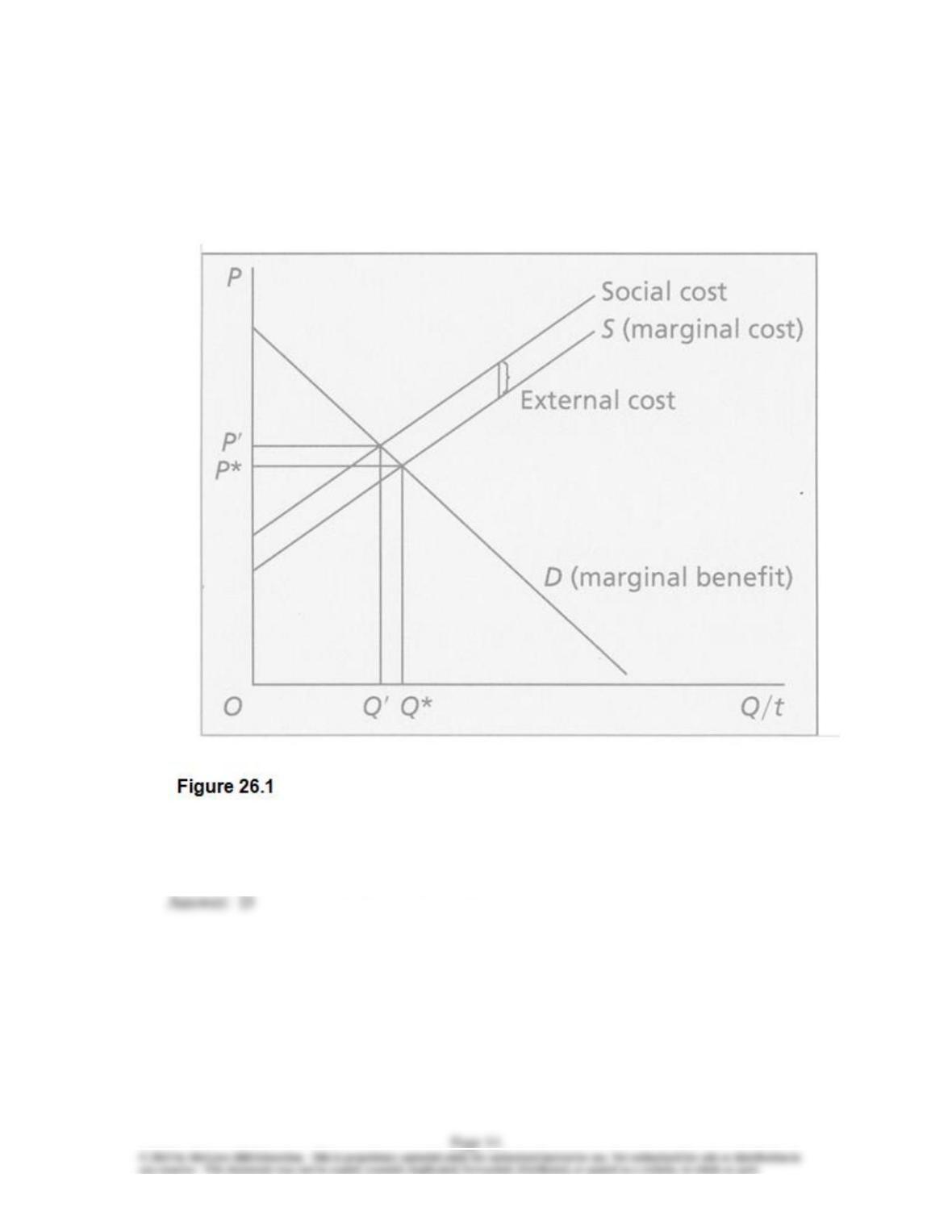
B) people must protect the proceeds of their hard work.
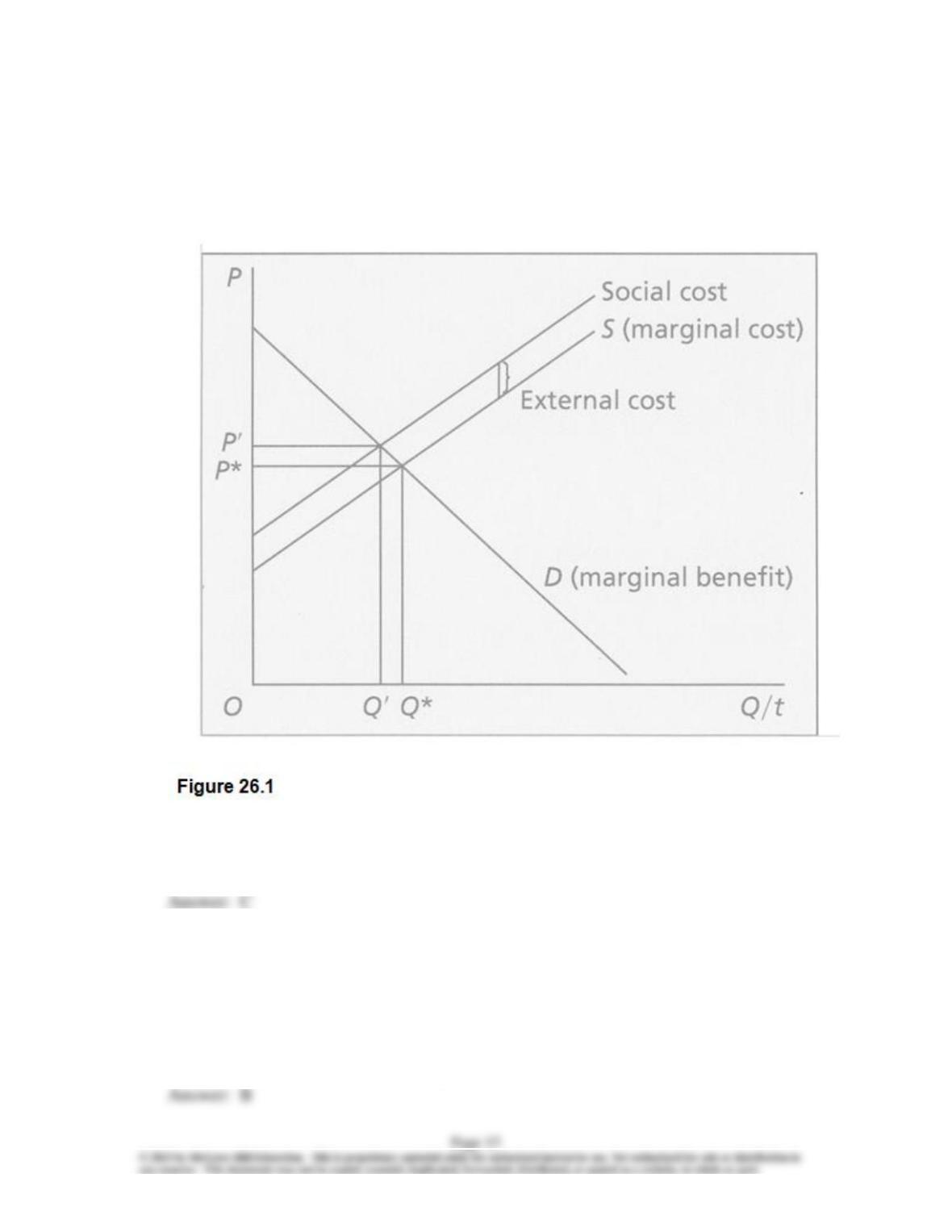
C) people need neither immediately consume nor spend energy protecting the
proceeds from their hard work.
D) people can wait for others to work hard and then try to take it.
10. Saving is motivated by private property rights because
A) people need neither immediately consume nor spend energy protecting the
proceeds from their hard work.
B) people can wait for others to work hard and then try to take it.
C) without those rights, consumers would be compelled to immediately consume
them whether or not they feared their savings would be taken.
D) people must consume the proceeds of their hard work immediately.
11. Which form of property has no physical form?
A) Financial
B) Real
C) Equipment
D) Intellectual
12. Which form of intellectual property protects a song writer?
A) Patent
B) Trademark
C) Copyright
D) Copymark
13. Which form of intellectual property protects a movie maker?
A) Patent
B) Trademark
C) Copyright
D) Copymark
14. Which form of intellectual property protects an author?
A) Patent
B) Trademark
C) Copyright
D) Copymark
15. Which form of intellectual property protects a publisher?
A) Patent
B) Trademark
C) Copyright
D) Copymark
16. Which form of intellectual property protects an inventor?
A) Patent
B) Trademark
C) Copyright
D) Copymark
17. Which form of intellectual property protects a drug manufacturer against a rival
stealing its formula?
A) Patent
B) Trademark
C) Copyright
D) Copymark
18. Which form of intellectual property protects a drug manufacturer against a rival
stealing its brand name?
A) Patent
B) Trademark
C) Copyright
D) Copymark
19. Which form of intellectual property protects an auto manufacturer’s new radio that
recognizes your voice and plays your favorite songs?
A) Patent
B) Trademark
C) Copyright
D) Copymark
20. Which form of intellectual property would protect an auto manufacturer that put a
brand name on its new radio (that recognizes your voice and plays your favorite
songs) and specifically wants to protect the brand
A) Patent
B) Trademark
C) Copyright
D) Copymark
21. Contracts are typically necessary when the agreed upon exchange occurs
A) at a different time.
B) in a different place.
C) in a different country.
D) simultaneously.
22. If Bob promises to pay Susan $10 per hour for work Susan does and she is paid
weekly
A) a contract is necessary.
B) no contract is necessary.
C) a copyright is necessary.
D) a trademark is necessary.
23. If Bob promises to pay Susan $10,000 once Bob receives the royalties from a book if
Susan will edit it for him
A) a contract is necessary.
B) no contract is necessary.
C) a copyright is necessary.
D) a trademark is necessary.
24. If Bob (the publisher) promises to give Susan (the author) 15% of the proceeds of the
sale of a work of Susan’s
A) a contract is necessary.
B) no contract is necessary.
C) a copyright is necessary.
D) a trademark is necessary.
25. Effective contracts between buyers and sellers promote efficiency by making
A) sellers better off at the expense of buyers.
B) buyers better off at the expense of sellers.
C) lawyers better off at the expense of buyers and sellers.
D) both buyers and sellers better off.
26. An essential economic role of government, even in the absence of “market failure”, is
A) enforcement of contracts between buyers and sellers.
B) provision of free public education.
C) operation of the postal service.
D) ownership of key modes of public transportation.
27. Enforcement of private property rights is ordinarily entrusted to the
A) military.
B) government.
C) individual property owners.
D) social conscience of buyers and sellers.
28. Enforcement of laws protecting rights to physical property and personal safety is
ordinarily entrusted to the
A) individual property owners involved.
B) social conscience of buyers and sellers.
C) police and criminal justice system.
D) civil court system.
29. Enforcement of laws protecting rights to intellectual property and performance of
contractual obligations is ordinarily entrusted to the
A) individual property owners involved.
B) social conscience of buyers and sellers.
C) police and criminal justice system.
D) civil court system.
30. A country without a stable and effective government capable of protecting private
property rights and enforcing private contracts will typically
A) fail to develop a healthy economy.
B) fail to avoid persistent government budget deficits.
C) develop a liberal, multi-party parliamentary democracy.
D) fail to prevent excessive foreign direct investment.
31. A patent that confers the monopoly right to produce an essential prescription drug
tends to increase the incentive the develop new and better prescription drugs while
A) imposing no cost upon society as a whole.
B) lowering the cost of prescription drugs to the public.
C) eliminating the monopolist’s costs of defending its rights to the patent.
D) creating a “deadweight loss” of monopoly-induced inefficiency.
32. The legal state that allows debtors to be protected from the actions of creditors is
A) insolvency.
B) indigence.
C) incompetence.
D) bankruptcy.
33. If someone steals your car, you take the claim to the
A) police.
B) criminal courts.
C) civil courts.
D) FBI.
34. Economists generally believe that bankruptcy laws are
A) counterproductive to a well ordered society.
B) necessary to motivate hard work, but can be abused.
C) unnecessary, but not counterproductive.
D) necessary, and difficult to abuse.
35. The debtor obligated to debt repayments larger than his greatest possible earnings
A) has little incentive to work in order to repay the debt.
B) could be imprisoned under current U.S. bankruptcy law.
C) will have to work overtime or a second job to repay the debt.
D) will repay the debt in order to avoid being called a ‘deadbeat’.
36. The potential harm one person might do to another person through accidental,
negligent or purposeful injury is
A) always reflected in equilibrium prices in perfectly competitive markets.
B) always neglected in equilibrium prices in perfectly competitive markets.
C) easily incorporated into private contracts between willing buyers and sellers.
D) always central to the concept of ‘civil liability’.
37. Individuals behaving responsibly who happen to harm others when involved in a true
accident are protected in most U.S. states by
A) the possibility early parole.
B) free public provision of a competent defense attorney.
C) limitation on their civil liability.
D) unlimited civil liability.
38. Individuals who do harm to others while behaving irresponsibly or negligently would,
in most U.S. states, encounter
A) total elimination of all civil liability.
B) free public provision of a competent defense attorney.
C) limitation on their civil liability.
D) unlimited civil liability.
39. Economic losses that might be recovered through legal action can include
A) only current monetary losses.
B) only current non-monetary losses.
C) both current monetary and current non-monetary losses.
D) both current and future monetary and non-monetary losses.
40. A person who would work for 25 more years earning $100,000 per year and discounts
the future at an interest rate of 5% per year has an annually-compounded discounted
expected present value of current and future earnings equal to
A) $0.5 million.
B) $0.9 million.
C) $1.1 million.
D) $1.4 million.
41. A person who would work for 35 more years earning $62,000 per year and discounts
the future at an interest rate of 6.5% per year has an annually-compounded discounted
expected present value of current and future earnings equal to
A) $433,252.
B) $596,728.
C) $848,591.
D) $998,256.
42. A person who would work for 15 more years earning $35,000 per year and discounts
the future at an interest rate of 5.5% per year has an annually-compounded discounted
expected present vale of current and future earnings equal to
A) $201,723.
B) $351,315.
C) $622,881.
D) $856,225.
43. Estimation of the present value of lost current and future income must consider
A) the expected length of working life.
B) any possible future raises.
C) any risk of unemployment.
D) all of the options are correct.
44. Consider two workers who are identical in every respect (including wages) except
that one works in an industry whose workers are subject to a higher risk of long and
frequent spells of uncompensated unemployment. Compared to the worker facing the
lower risk of unemployment, the discounted expected present value of current and
future earnings of the worker facing the higher risk of unemployment would be
A) higher.
B) equal.
C) lower.
D) unfair.
45. A solid and defensible jury award that punishes negligent behavior can be good for
the economy primarily because it
A) takes from the rich and gives to the poor.
B) compensates the injured party for all damages.
C) reassures the public that the legal system is ‘fair’.
D) discourages imprudent or reckless behavior.
46. A jury award that wildly overstates non-monetary losses can harm the economy
primarily because it
A) takes from the rich and gives to the poor.
B) still fails to adequately compensate the injured party for all damages.
C) enriches greedy plaintiff‘s lawyers.
D) causes overly-cautious buyers and sellers to avoid mutually beneficial
transactions.
47. A lawyer who agrees to take as compensation a percentage of any judgment or
settlement is
A) a contingency attorney.
B) violating the legal profession’s code of ethics.
C) typically only employed as a defense attorney.
D) all of the options are correct.
48. A lawsuit that joins together the similar concerns of many injured parties is
A) a violation of the legal profession’s code of ethics.
B) a violation of the laws of most U.S. states.
C) a class action lawsuit.
D) unlikely to adequately compensate the plaintiff’s attorneys when successful.
49. Politically, contingency attorneys in the U.S. overwhelmingly favor
A) Democrats.
B) Republicans.
C) Libertarians.
D) Independents.
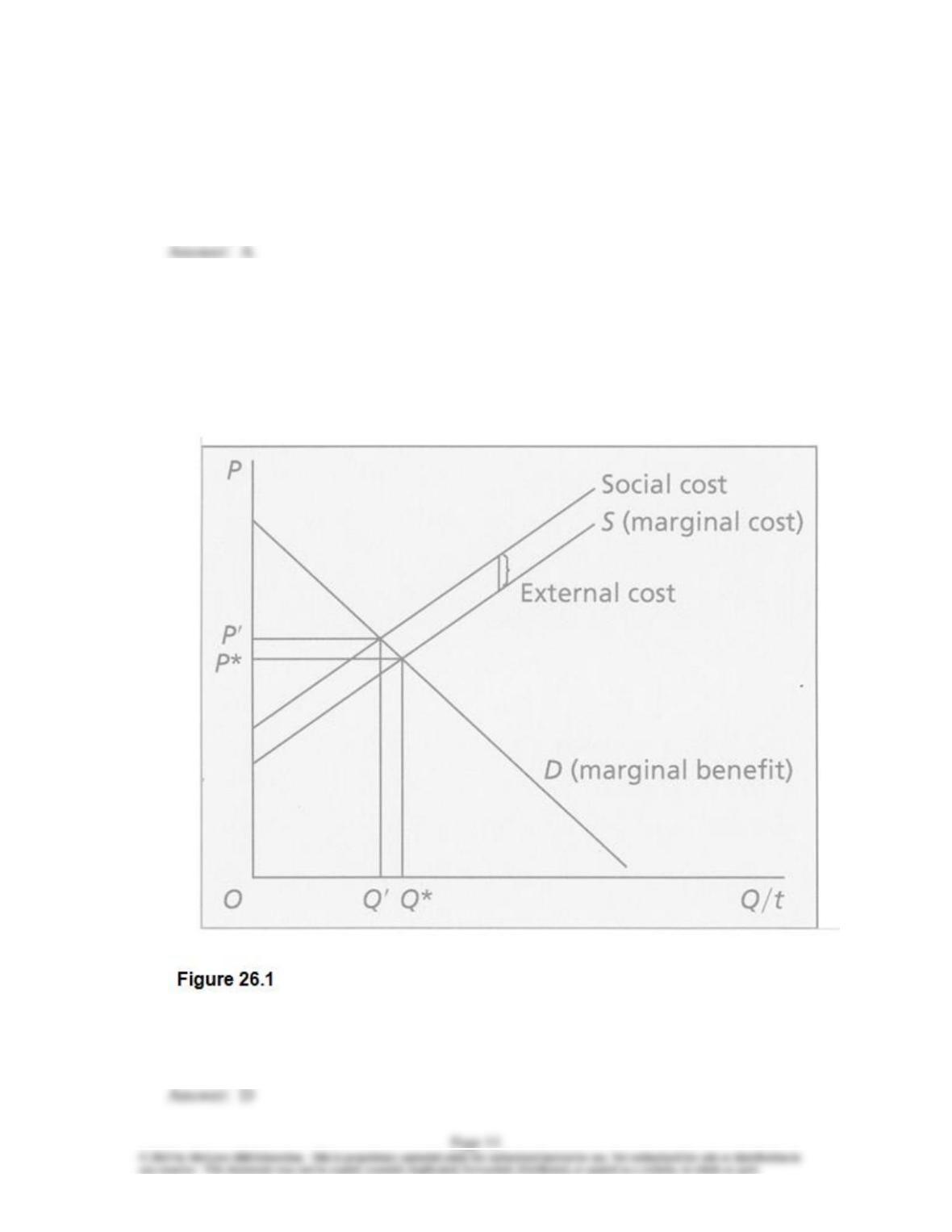
50. The expected damage to innocent third parties per unit of the good produced is shown
as the “external cost” in Figure 26.1. An unregulated competitive market for the
product produces a quantity of Q* units, which sell for a price of P* per unit. The
competitive industry would produce the socially optimal quantity of this product if
the expected per unit cost to producers of this product due to just and reasonable
lawsuits were
A) zero.
B) greater than zero but less than the external cost.
C) greater than the external cost.
D) equal to the external cost.
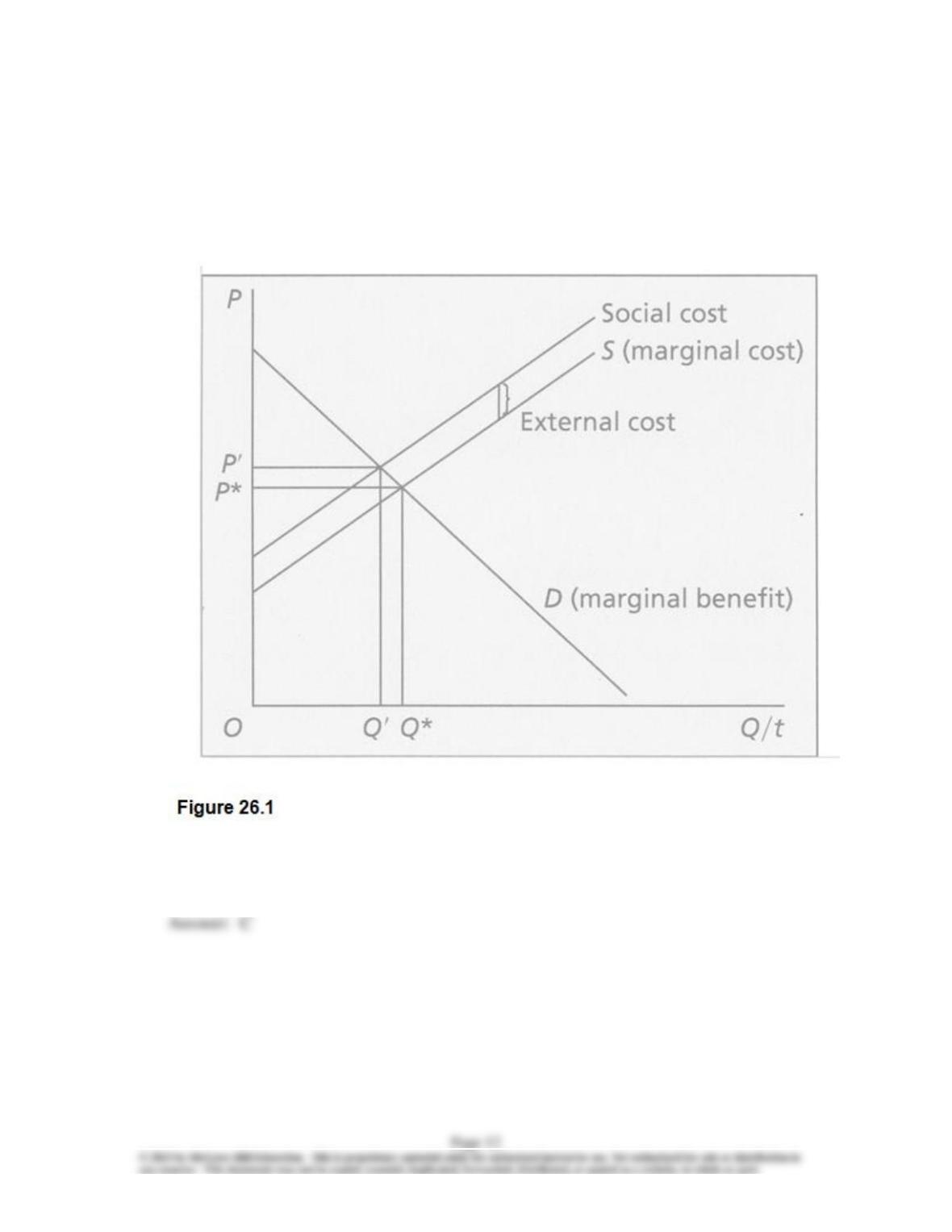
51. The expected damage to innocent third parties per unit of the good produced is shown
as the “external cost” in Figure 26.1. An unregulated competitive market for the
product produces a quantity of Q* units, which sell for a price of P* per unit. If the
competitive industry were producing the socially optimal quantity of this product, the
market price of the product per unit would be
A) zero.
B) P*.
C) P’.
D) P’–P*.
52. The expected damage to innocent third parties per unit of the good produced is shown
as the “external cost” in Figure 26.1. An unregulated competitive market for the
product produces a quantity of Q* units, which sell for a price of P* per unit. If the
competitive market price reflected the full social cost per unit of producing and
consuming this product (ie., both private and external costs), the quantity produced by
this competitive industry would be
A) Q* units.
B) Q’ units.
C) Q’-Q* units.
D) zero units.
53. The expected damage to innocent third parties per unit of the good produced is shown
as the “external cost” in Figure 26.1. An unregulated competitive market for the
product produces a quantity of Q* units, which sell for a price of P* per unit. If the
expected cost to producers of this product due to unreasonable jury awards in
frivolous lawsuits were greater than the external cost per unit produced, the quantity
of the good produced by this competitive industry would be
A) greater Q* units.
B) greater than the socially optimal quantity but less than Q* units.
C) equal to the socially optimal quantity.
D) less than the socially optimal quantity.
54. The expected damage to innocent third parties per unit of the good produced is shown
as the “external cost” in Figure 26.1. An unregulated competitive market for the
product produces a quantity of Q* units, which sell for a price of P* per unit. The
amount producers of this product could reasonably afford to spend per unit produced
in order to successfully insulate themselves from possible just and reasonable jury
awards in lawsuits is
A) zero.
B) greater than zero but less than the external cost.
C) equal to the external cost.
D) greater than the external cost.
55. Jury verdicts that award wildly inflated compensation to victims for “pain and
suffering” in medical malpractice cases serve indirectly to
A) encourage high quality medical care at the lowest possible cost.
B) increase the cost of medical care in the U.S.
C) reward physicians for treating indigent patients.
D) provide incentives for efficient operation of Medicare and Medicaid.
56. Distribution of HIV/AIDS drugs without charge to victims of the disease in Africa
A) must be done because it is the only ethical course of action.
B) cannot be done because it would unconscionably inflate drug company profits.
C) conflicts with the incentives of drug companies to bring such drugs to market.
D) could only be undertaken by faith-based organizations which can operate with no
cost.
57. The civil court system often relies upon
A) police enforcement of criminal statutes.
B) a sentence of jail time as punishment.
C) attorneys who volunteer to defend the indigent accused of crimes.
D) a judge and jury to resolve financial disputes among injured parties.
58. The value of a human life
A) is frequently determined by juries of ordinary citizens in order to reach a verdict.
B) cannot be determined because human life is priceless.
C) cannot be determined because human life is sacred.
D) can only be determined by a high-ranking government official in Washington.
59. A trademark is a temporary, exclusive ownership right legally granted to
A) the creator of a written or recorded work.
B) a business for use of a phrase, logo or name.
C) the inventor of an new product or technique.
D) criminals who develop an easily recognizable modus operandi.