Chapter 22 – Immigration
1. Economic immigrants:
2. About ________ of recent annual population growth in the United States is the result of
immigration.
Chapter 22 – Immigration
3. About ________ of recent annual labor force growth in the United States is the result of
immigration.
4. In 2009, the greatest number of legal immigrants arriving in the United States came from:
5. The U.S. Census Bureau estimates that from 2000 to 2009, the net inflow of unauthorized
immigrants was about:
Chapter 22 – Immigration
6. The H1-B provision of immigration law:
7. Approximately how many people became permanent legal residents of the United States in
2009?
8. According to the Office of Immigration Statistics, approximately what percentage of legal
immigrants in 2009 were parents, children, siblings, or other qualified relatives of legal
permanent U.S. residents?

Chapter 22 – Immigration
9. According to the Office of Immigration Statistics, approximately what percentage of legal
immigrants to the United States in 2009 were refugees?
10. According to U.S. Census Bureau data, approximately how many illegal immigrants are
estimated to be living continuously in the United States?
11. Which of the following countries has the largest number of immigrants, as a percentage of
the labor force (as of 2006)?
Chapter 22 – Immigration
12. Human capital refers to:
13. The primary motivation for economic immigration is:
14. Which of the following cases best illustrates economic immigration?
Chapter 22 – Immigration
15. Which of the following is least likely to be considered economic immigration?
16. Kara is considering migrating to another country. Which of the following represents a cost
she will face if she decides to move?
17. Juan wants to migrate from Mexico to the United States, but knows he cannot do so
legally at this time. If he decides to attempt to enter the U.S. illegally, which of the following
costs will he most likely not face?
Chapter 22 – Immigration
18. A person will be more likely to migrate the:
19. Which of the following individuals is most likely to migrate to Switzerland, assuming that
all face equally good prospects of securing a good job after arrival?
20. “Beaten paths” from one country to another:
Chapter 22 – Immigration
21. Which of the following statements is true about migration behavior?
22. Immigrants tend to choose countries closer to their country of origin because:
Chapter 22 – Immigration
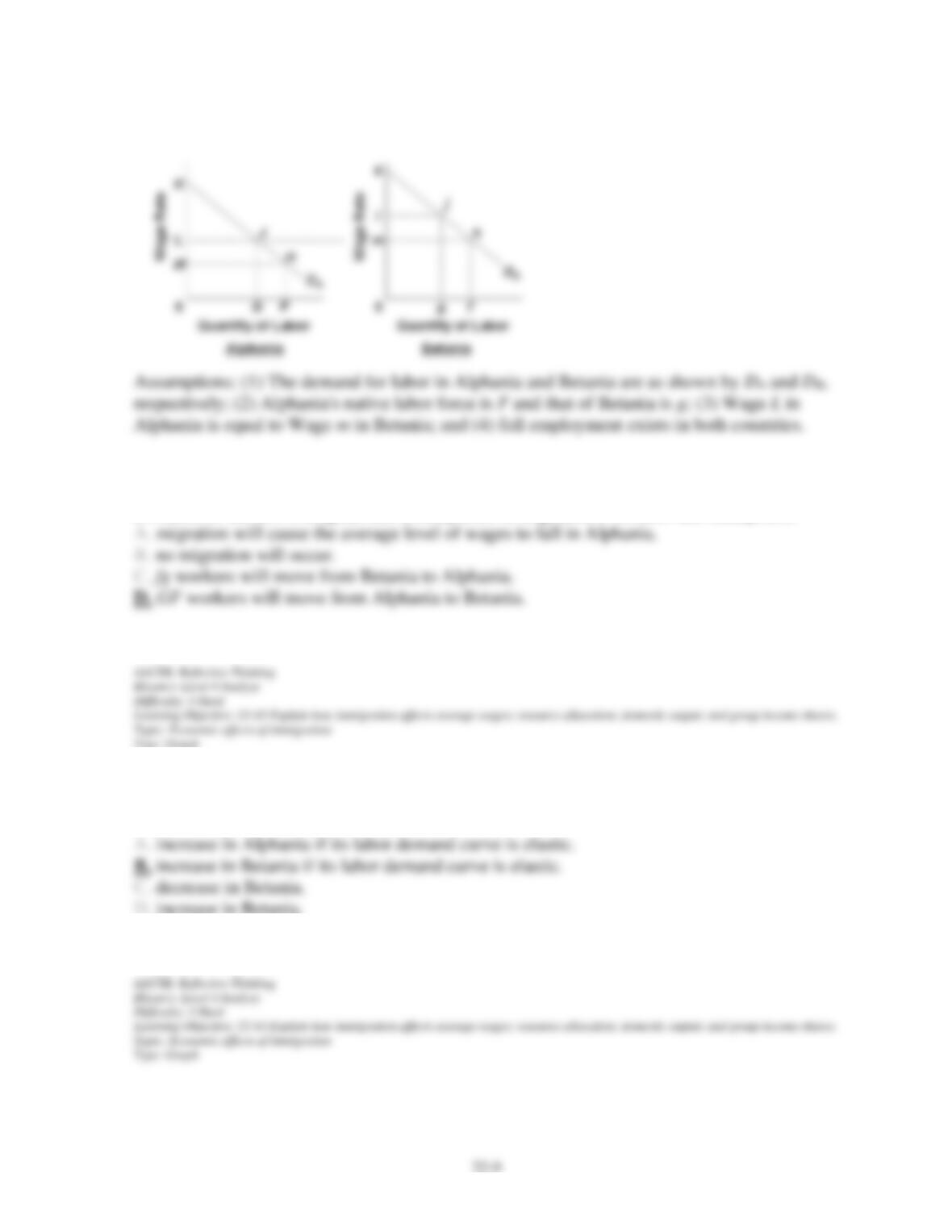
24. Refer to the above diagram and assumptions. If migration is costless and unimpeded:
25. Refer to the above diagram and assumptions. If migration is costless and unimpeded, the
absolute wage bill will necessarily:
Chapter 22 – Immigration
26. Refer to the above diagram and assumptions. If migration is costless and unimpeded,
business income will:
27. Refer to the above diagram and assumptions. If migration is costless and unimpeded, the
average level of wages will:
28. Refer to the above diagram and assumptions. After migration has ceased:
Chapter 22 – Immigration
22–11
29. Refer to the above diagram and assumptions. We would expect a flow of remittances from
migrants to:
30. Refer to the above diagram and assumptions. If unemployment, rather than full
employment, had initially existed in Alphania:
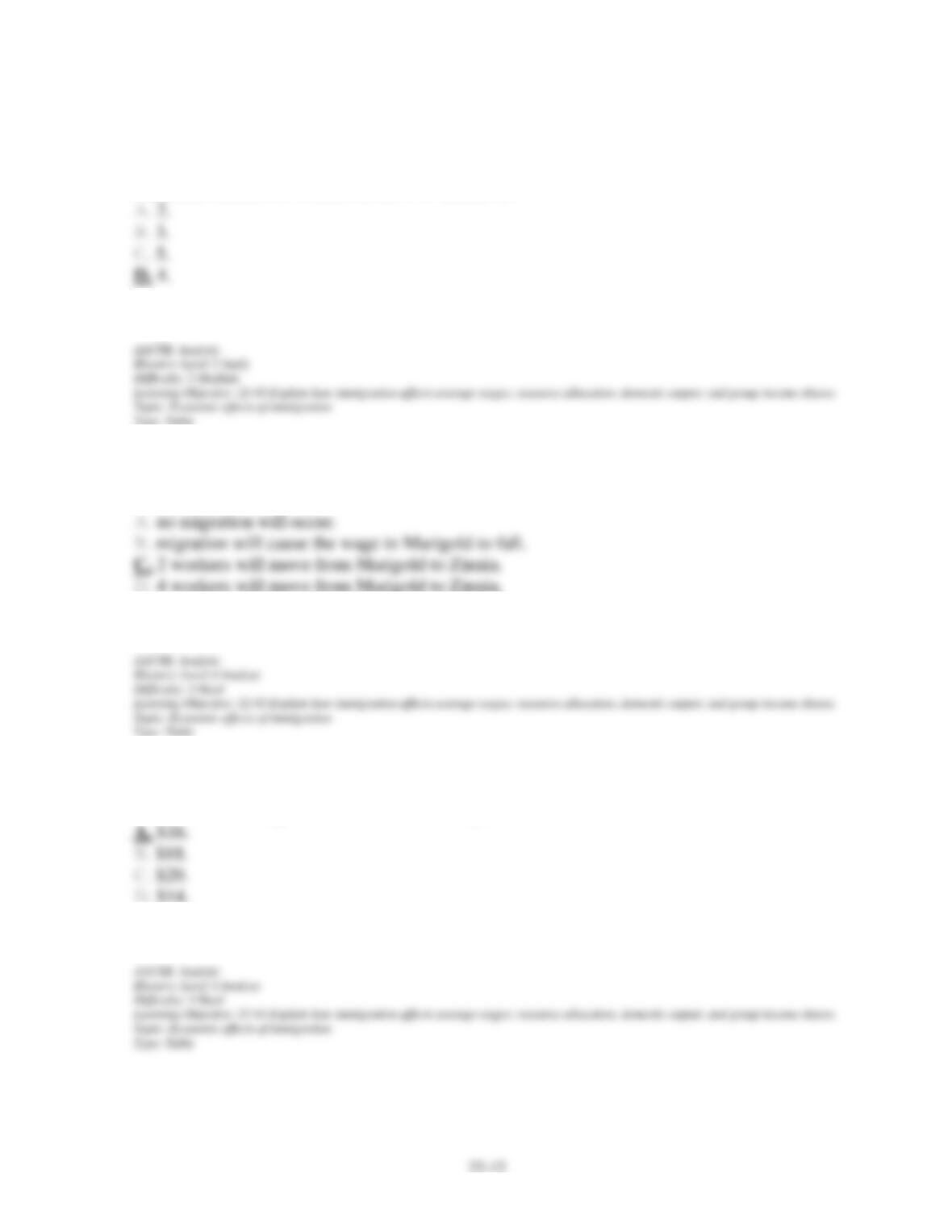
Symbols: Q = number of workers demanded; W = wage rate; and VTP = value of the
cumulative total product (output) of the particular number of workers.
Assumptions: (1) The current wage in Zinnia is $20 and the current wage in Marigold is $12;
(2) full employment exists in both countries.
Chapter 22 – Immigration
31. Refer to the above data, symbols, and assumptions. At the current wage rate, the
combined number of workers in the two nations is:
32. Refer to the above data, symbols, and assumptions. If migration is costless and
unimpeded:
33. Refer to the above data, symbols, and assumptions. If migration is costless and
unimpeded, the wage in both countries will equalize at:
Chapter 22 – Immigration
34. Refer to the above data, symbols, and assumptions. If migration is costless and
unimpeded, the combined value of total product in the two countries will:
35. Refer to the above data, symbols, and assumptions. Migration of workers will:
36. Other things equal, the voluntary relocation of employable migrants from low-paying
nations to high-paying nations will:
Chapter 22 – Immigration
37. The voluntary relocation of employable migrants from low-paying nations to high-paying
nations reduces:
38. If the elasticity of demand for labor in the United States is unitary, immigration into the
United States can be expected to:
39. Voluntary migration of skilled craftworkers from low-paying to high-paying nations is
most likely to be opposed by:
Chapter 22 – Immigration
40. “Remittances” occur when:
41. Which of the following will most likely cause backflows?
42. Under what circumstances will immigration be most likely to equalize wage rates across
countries?
Chapter 22 – Immigration
43. Efficiency gains from migration:
44. Worker migration will cause wage rates to equalize across two countries if all of the
following conditions are met except:
45. Inflows of immigrant workers tend to reduce the wages of domestic-born workers. Under
which of the following circumstances is this least likely to occur?
Chapter 22 – Immigration
46. Which of the following statements is most accurate about the effects of migration?
47. Because there are costs to migration:
48. Which of the following pairs of nations received the most remittances from their
emigrants in 2009?
Chapter 22 – Immigration
49. Most remittances flow toward:
50. Remittances and backflows of experienced workers:
51. Unimpeded immigration between two nations tends to:
Chapter 22 – Immigration
52. Assuming migration is unimpeded and costless, which of the following statements is most
accurate about the effect of immigration on wages in both the origin and destination nations?
53. Other things equal, immigration has what effects on the destination nation?

Chapter 22 – Immigration
54. Suppose that Gamma is an advanced industrial country and Omega is a developing nation.
Omega will gain the most from having some of its people emigrate to Gamma if:
55. Between 1996 and 2006, cash welfare payments to immigrants:
56. Scholarly estimates of the effects of immigration on the average American wage range
from: