22) Refer to the above table. At an output of 5 units, average total costs are
A) $18.
B) $19.
C) $37.
D) $185.
23) Refer to the above table. When output rises from 2 units to 3 units, marginal costs are
A) $7.
B) $10.
C) $22.
D) $41.
24) Refer to the above table. When output rises from 3 units to 4 units, marginal costs are
A) $16.
B) $10.
C) $22.
D) $31.
25) Refer to the above table. When output rises from 4 units to 5 units, marginal costs are
A) $19.
B) $10.
C) $22.
D) $31.
26) Refer to the above table. When output rises from 2 units to 5 units, marginal costs are
A) $26.50.
B) $31.
C) $21.
D) $63.
27) Refer to the above table. What is AVC at an output of 2 units?
A) $7
B) $16
C) $45
D) $61
28) Refer to the above table. What is MC when output rises from 0 unit to 1 unit?
A) $0
B) $25
C) $90
D) $115
29) Refer to the above table. MC is the lowest
A) between 0 and 1 units of output.
B) between 1 and 2 units of output.
C) between 3 and 4 units of output.
D) at 0 units of output.
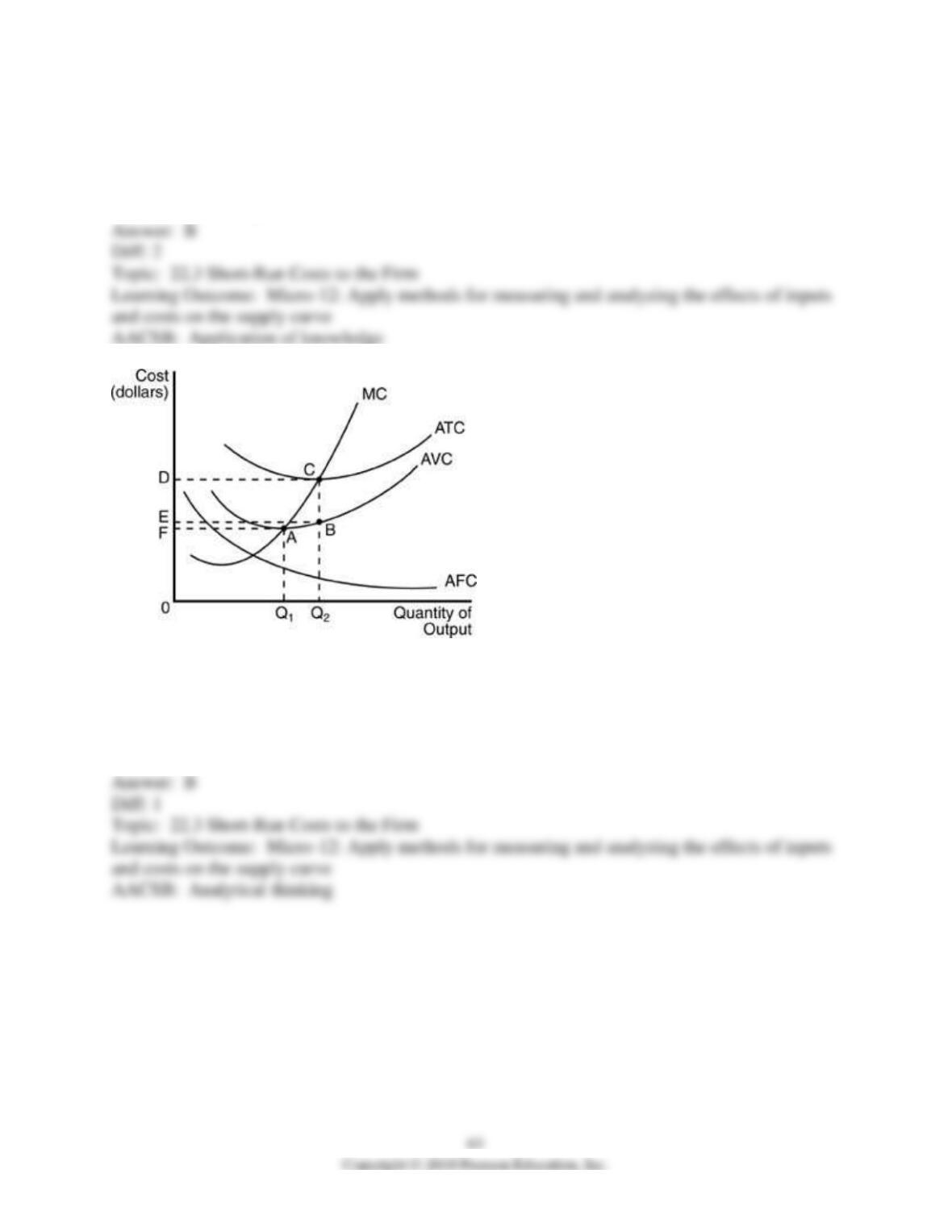
30) In the above figure, if this firm produces output level Q2, it has average variable costs of
A) OF.
B) OE.
C) OC.
D) OD.
31) In the above figure, if this firm produces output level Q2, it has average total costs of
A) OF.
B) OE.
C) OC.
D) OD.
32) In the above figure, at an output level of Q1, total variable cost is
A) OF times Q1.
B) OD times Q2.
C) OF.
D) OF minus DF.
33) Which of the following statements is correct?
A) TC = TFC + TVC
B) TC = average product + marginal product
C) TC = TFC – TVC
D) TC = average physical product – marginal physical product
34) Costs that do NOT vary with output are
A) total costs.
B) variable costs.
C) fixed costs.
D) marginal costs.
35) Fixed costs are
A) costs that never change.
B) costs that a firm incurs even when output is zero.
C) not actually costs since they do not affect the decisions of a firm.
D) costs that increase at a constant rate when output increases.
36) Fixed costs include all but
A) a normal rate of return on investment.
B) temporary labor.
C) property tax on the existing buildings.
D) machines that have been producing output.
37) The total cost of the firm
A) includes explicit costs but excludes implicit costs.
B) includes implicit costs but excludes explicit costs.
C) includes implicit and explicit costs.
D) includes implicit and explicit costs but excludes a normal rate of return on investment.
38) Average variable costs equal
A) total variable costs divided by marginal costs.
B) total variable costs divided by output.
C) the change in marginal costs from producing another unit of output.
D) output divided by the change in total costs.
39) Average total cost equals
A) TC/Q.
B) TVC/Q.
C) TFC/Q.
D) change in total cost/change in output.
40) Average variable cost equals
A) TC/Q.
B) TVC/Q.
C) TFC/Q.
D) change in total cost/change in output.
41) Marginal cost equals
A) TC/Q.
B) TVC/Q.
C) TFC/Q.
D) change in total cost/change in output.
42) Marginal cost is equal to
A) change in total cost divided by change in output.
B) change in total variable cost divided by change in output.
C) total variable cost divided by quantity of output.
D) Both A and B are correct.
43) The change in total variable cost which accompanies one extra unit of output is
A) the average total cost.
B) the average variable cost.
C) the average fixed cost.
D) marginal cost.
44) The change in total costs due to a one-unit change in the production rate is
A) total fixed cost.
B) total variable cost.
C) marginal cost.
D) average total cost.
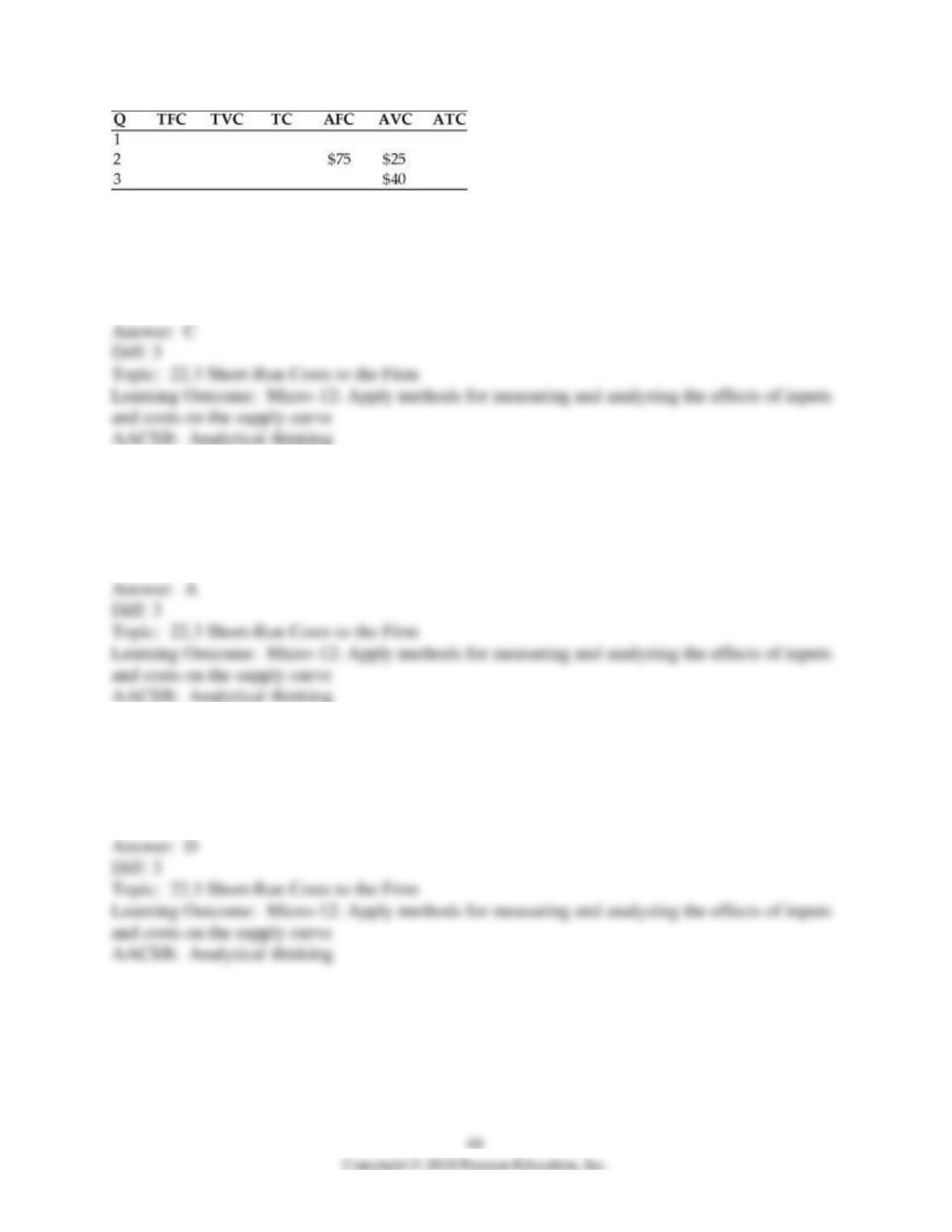
45) Refer to the above table. What are total fixed costs at an output of 2 units?
A) $50
B) $100
C) $150
D) $200
46) Refer to the above table. What are total variable costs at an output of 2 units?
A) $50
B) $100
C) $150
D) $200
47) Refer to the above table. What are total costs at an output of 2 units?
A) $50
B) $100
C) $150
D) $200
48) Refer to the above table. What are total fixed costs at an output of 3 units?
A) $90
B) $120
C) $150
D) $270
49) Refer to the above table. What are total variable costs at an output of 3 units?
A) $90
B) $120
C) $150
D) $270
50) Refer to the above table. What are total costs at an output of 3 units?
A) $90
B) $120
C) $150
D) $270
51) If total costs are $50,000 when 1000 units are produced, and total costs are $50,100 when
1001 units are produced, we can conclude that
A) average variable costs are $100.
B) average total costs are $100.
C) average fixed costs are $100.
D) marginal costs are $100.
52) If average variable costs are increasing while average total costs are decreasing, then
A) marginal cost must lie between average variable and average total costs.
B) marginal cost must equal average variable cost.
C) marginal cost must equal average total cost.
D) fixed costs must be zero.
53) In a graph showing the short-run cost curves, the one curve which declines continuously as
we expand output is called
A) the average fixed cost curve.
B) the average variable cost curve.
C) the average total cost curve.
D) the marginal cost curve.
54) In a map showing short-run cost functions, one curve begins at the origin and rises as output
expands. It is called the
A) the marginal cost curve.
B) the total fixed cost curve.
C) the total cost curve.
D) the total variable cost curve.
55) If, in the short run, the level of output is zero, which of the following statement is TRUE?
A) Total variable cost is zero but total cost equals total fixed cost, and both of the latter exceed
zero.
B) Total cost and total fixed cost graphs will begin at the origin.
C) Total fixed cost will also be zero at first but will rise once output rises.
D) none of the above
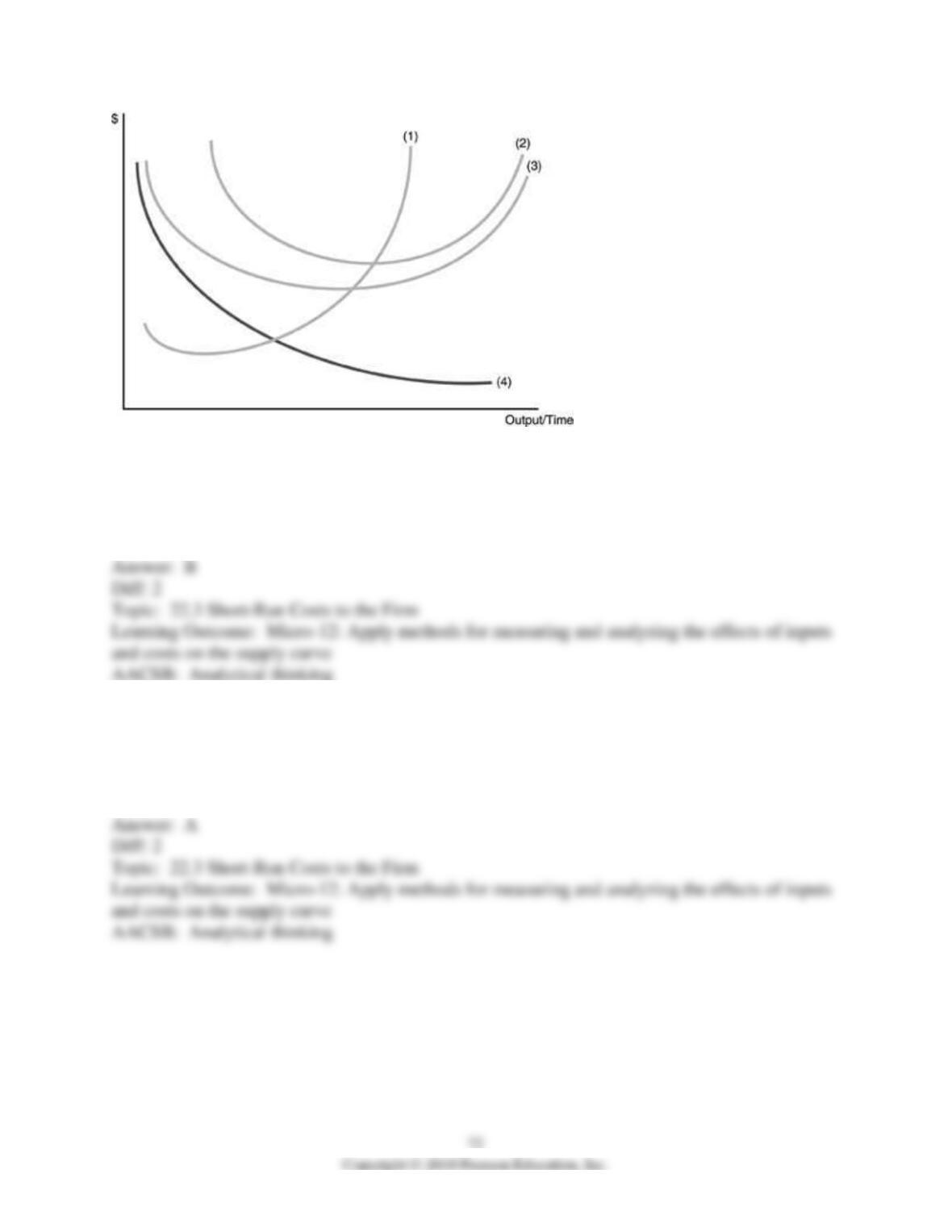
56) Refer to the above figure. Average total costs are represented by curve
A) 1.
B) 2.
C) 3.
D) 4.
57) Refer to the above figure. Marginal costs are represented by curve
A) 1.
B) 2.
C) 3.
D) 4.
58) Refer to the above figure. Average variable costs are represented by curve
A) 1.
B) 2.
C) 3.
D) 4.
59) Refer to the above figure. Curve (4) is the
A) total fixed cost curve.
B) marginal product curve.
C) average fixed cost curve.
D) average variable cost curve.
60) Suppose there are fixed costs and marginal costs that are constant. Then we know that
A) average total costs are also constant.
B) average variable costs decrease continuously as output increases, and lie above the marginal
cost curve.
C) average total costs decrease continuously as output increases, and lie above the average
variable cost curve, which also is decreasing continuously.
D) average total costs decrease continuously as output increases, and lie above the average
variable cost curve, which is constant.
61) The marginal cost curve intersects
A) the average fixed cost curve at its minimum.
B) the average total cost curve at its maximum.
C) the minimum of the average fixed cost, average variable cost and the average total cost
curves.
D) the minimum of the average variable cost and average total cost curves.
62) Which of the following would be an example of a fixed cost to a firm?
A) rent for the building it occupies
B) wages for the laborers
C) the cost of raw materials
D) electricity and other fuel costs
63) Which equation is used by a manager when considering total cost?
A) total costs (TC) = consumption (C) + investment (I) + government (G)
B) total costs (TC) = average fixed costs (AFC) + number of workers
C) total costs (TC) = average total costs (ATC)
D) total costs (TC) = total fixed costs (TFC) + total variable costs (TVC)
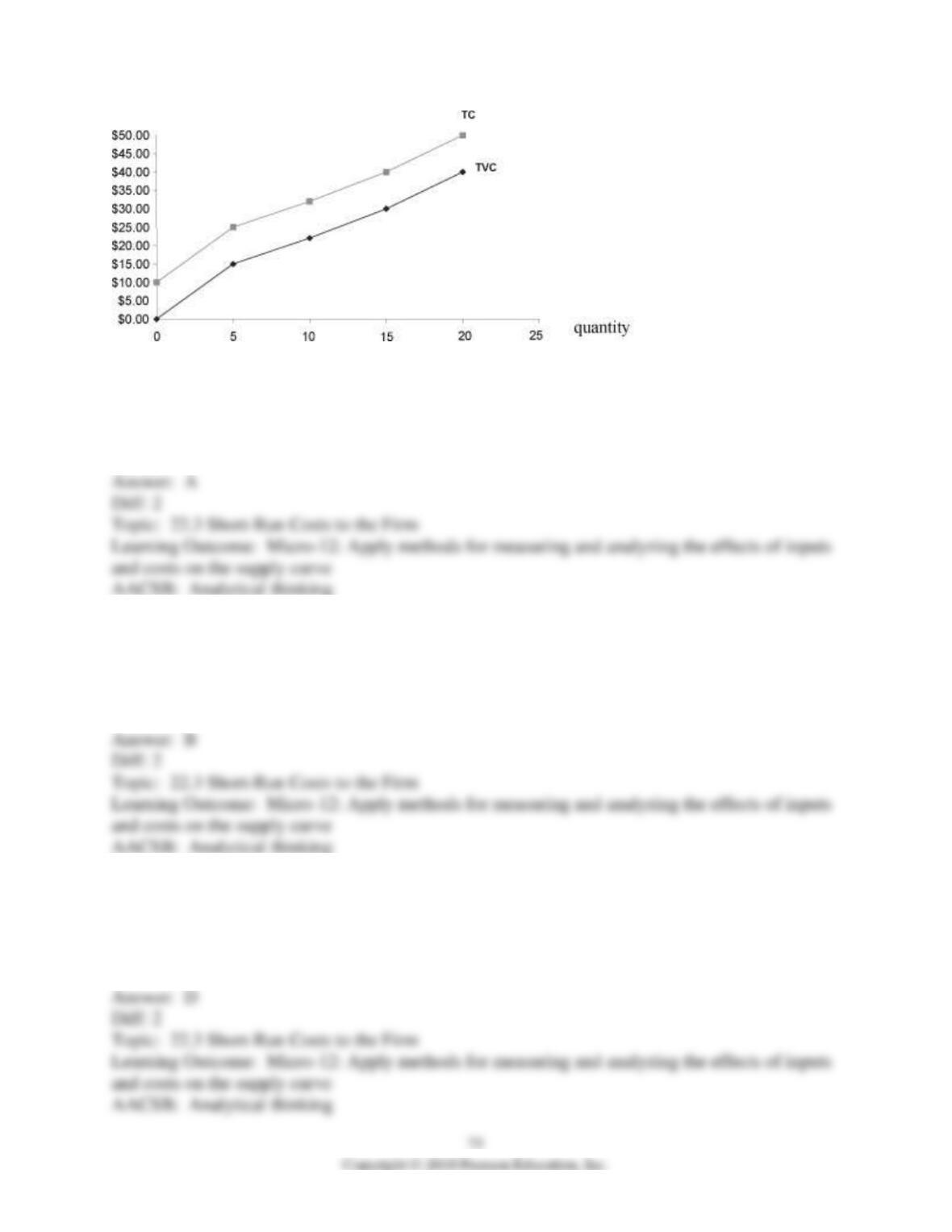
64) Use the above figure. The TFC at output level 10 is
A) $10.
B) $3.
C) $2.
D) $1.
65) Use the above figure. The AFC at output level 20 is
A) $10.00.
B) $0.50.
C) $3.00.
D) $1.00.
66) Use the above figure. The ATC at output 10 is
A) $30.00.
B) $2.67.
C) $2.00.
D) $3.00.
67) Use the above figure. The AVC at output 10 is
A) $20.00.
B) $1.00.
C) $2.00.
D) $3.00.
68) Use the above figure. The ATC at output 5 is
A) $25.00.
B) $2.00.
C) $3.00.
D) $5.00.
69) Use the above figure. The AVC at output 5 is
A) $35.00.
B) $2.00.
C) $3.00.
D) $5.00.
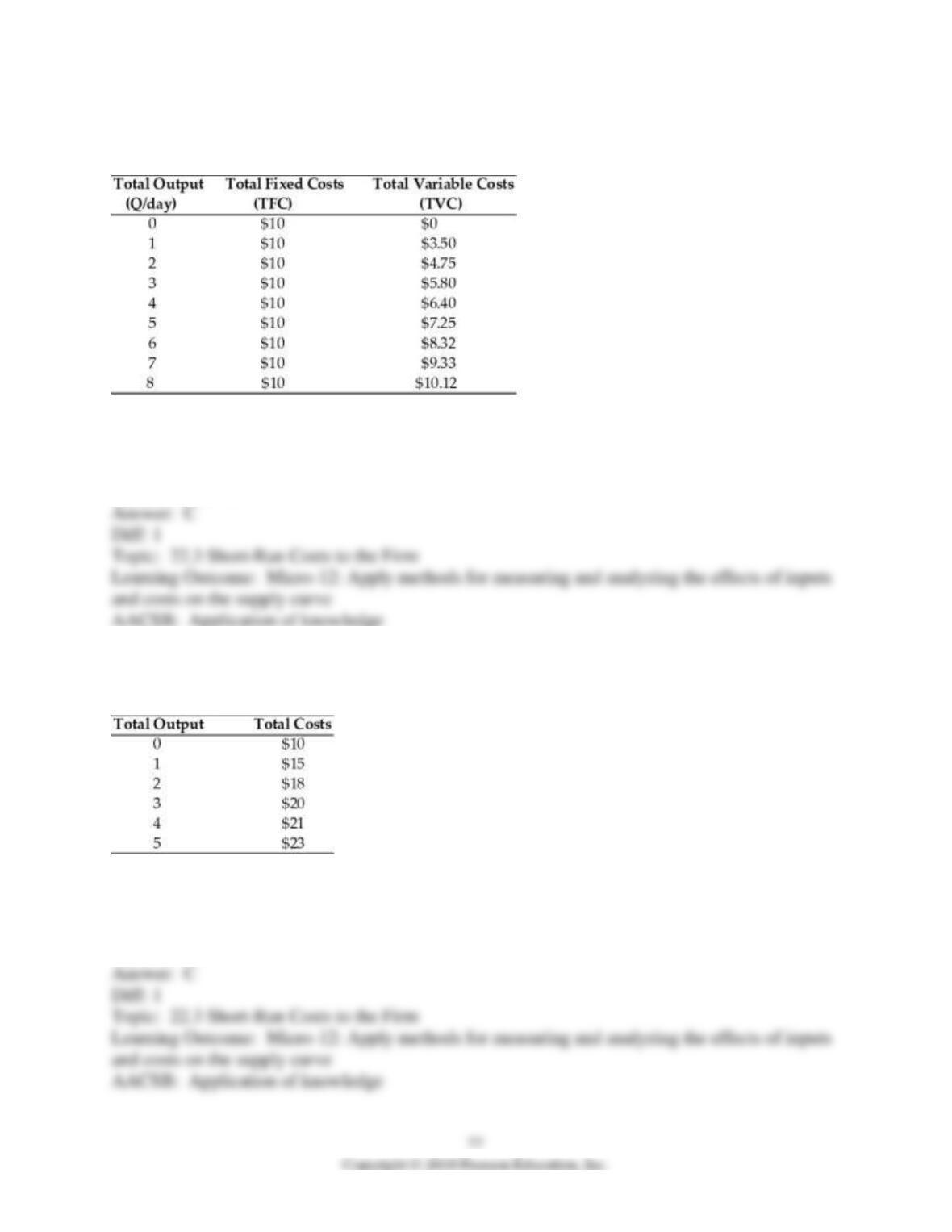
70) Notice the costs of production for a firm in the table below. What are the total costs for
outputs of 7 units and 8 units respectively?
A) $20.12; $19.33
B) $17.25; $18.32
C) $19.33; $20.12
D) $9.33; $10.12
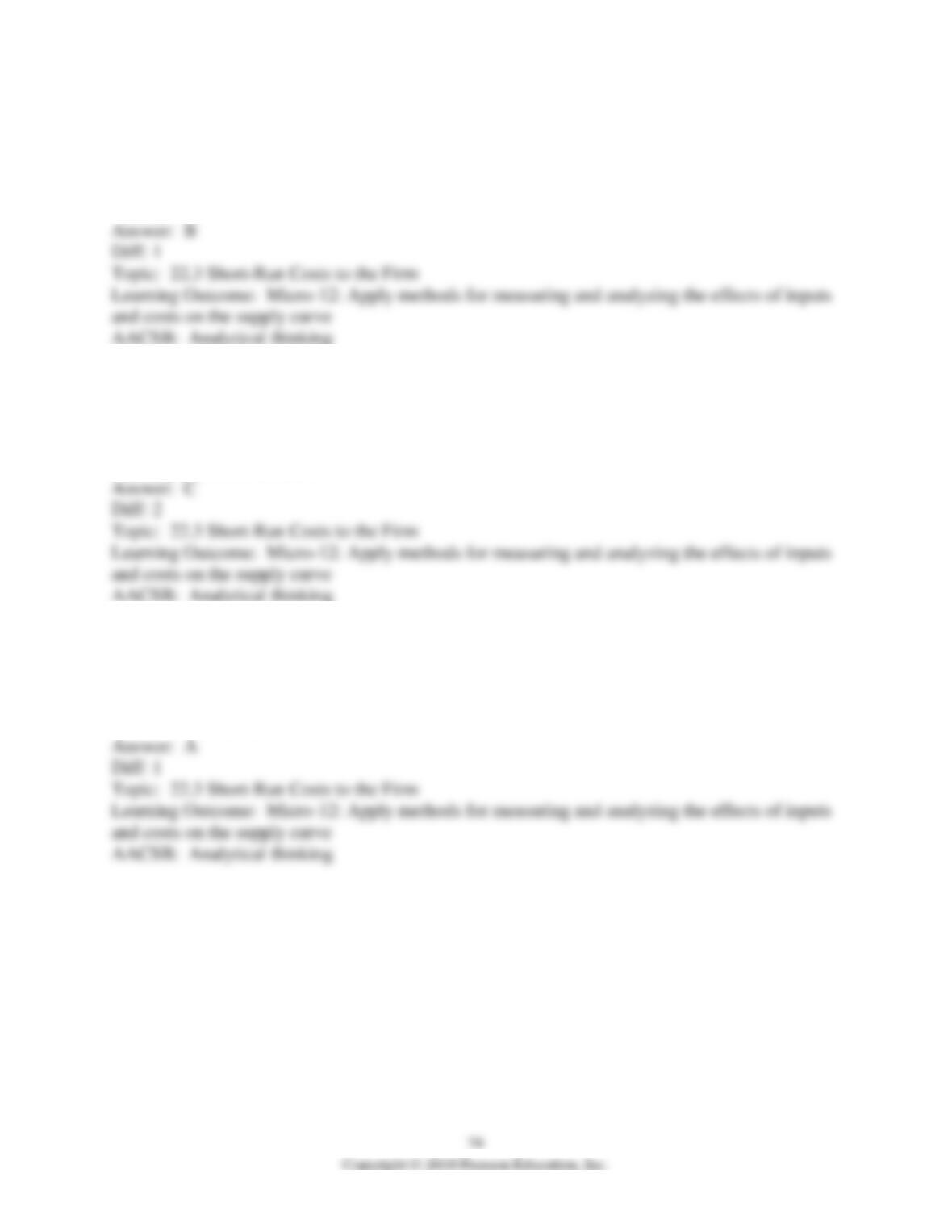
71) Notice the costs as given in the table below. What is the marginal cost when total cost is
$23?
A) $5
B) $3
C) $2
D) $1
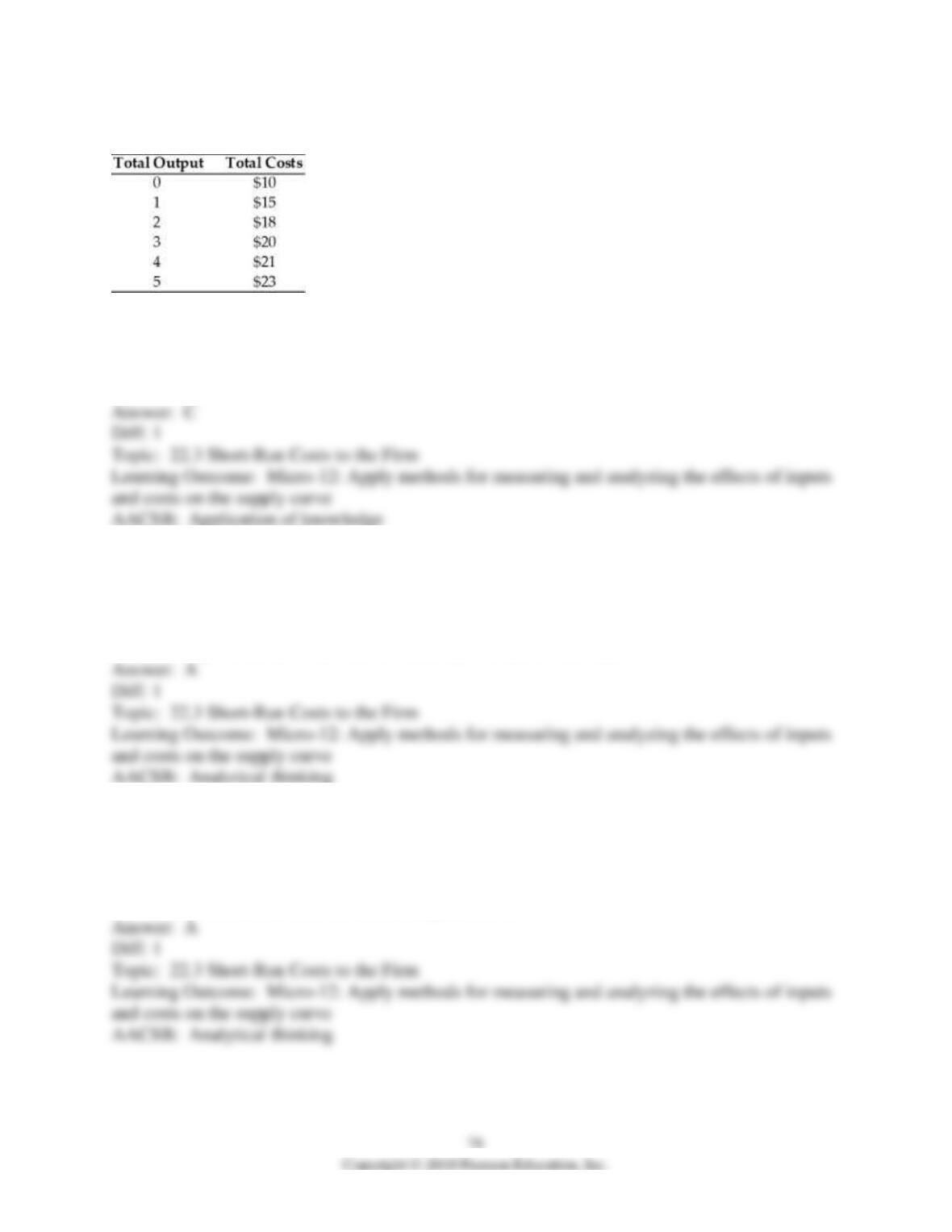
72) Notice the costs as given in the table below. What is the total fixed cost in the table below?
A) $5
B) $0
C) $10
D) $9
73) Marginal costs are defined as
A) the change in total costs due to a one-unit change in production.
B) costs that are viewed as marginal; of little or small importance.
C) costs that represent a change, but one that cannot be measured correctly.
D) the change in the decisions that are made by households and firms.
74) In the short run, total costs equal
A) the sum of total fixed costs and total variable costs.
B) the sum of total fixed costs and total explicit costs.
C) the sum of total variable costs and total implicit costs.
D) the sum of total fixed costs and total implicit costs.
75) Summing all of the costs that do NOT change as output varies yields
A) variable costs.
B) fixed costs.
C) implicit costs.
D) explicit costs.
76) As long as output increases
A) average total costs decrease.
B) average variable costs decrease.
C) average fixed costs decrease.
D) marginal costs decrease.
77) Which of the following is correct?
A) AFC = TC/Q – TVC/Q
B) AVC = TVC – AFC
C) TC = AVC∗Q
D) MC = TC – TVC
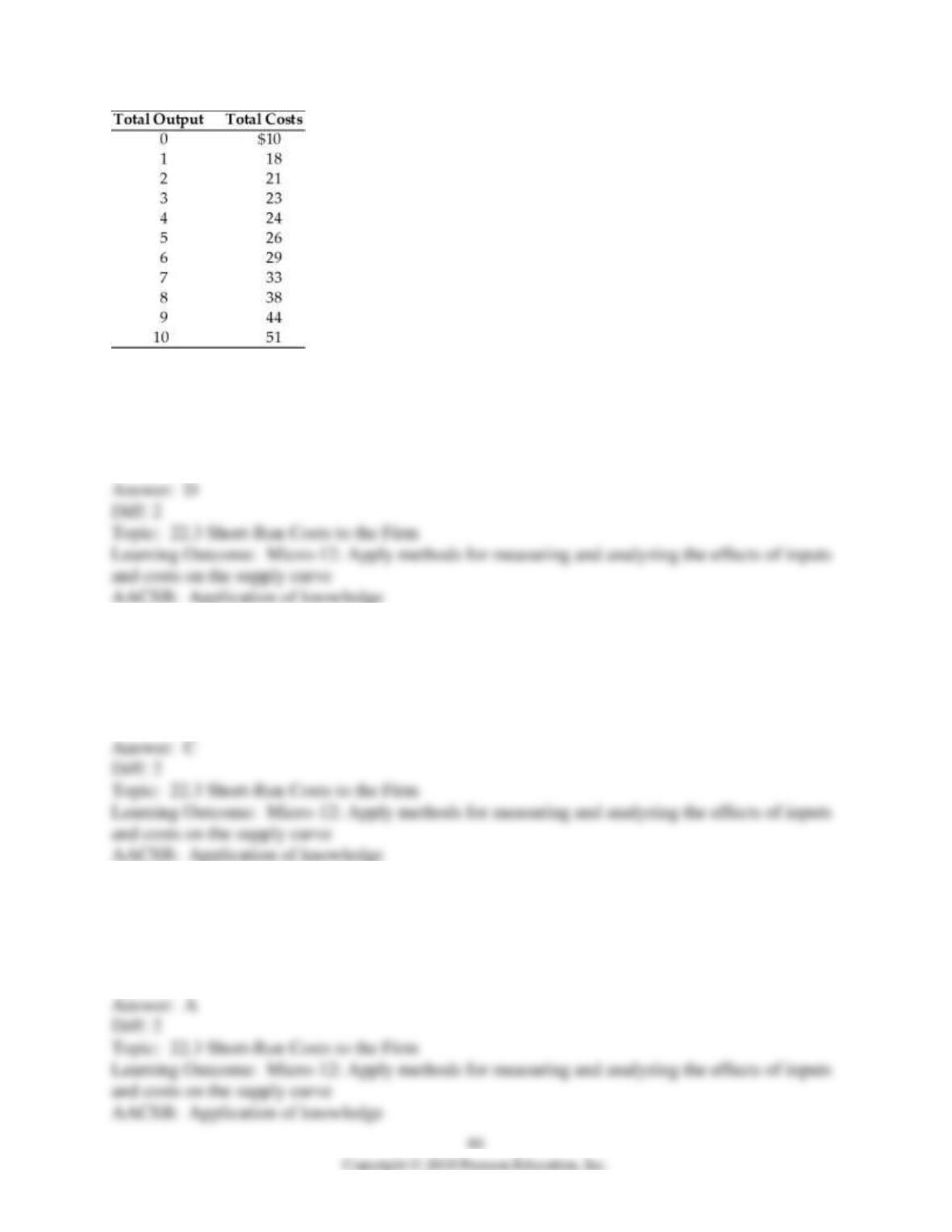
78) Using the above table, we see that when output is 4 units, average total cost equals
A) $24.00.
B) $14.00.
C) $3.50.
D) $6.00.
79) Using the above table, we see that when output is 4 units, average variable cost equals
A) $24.00.
B) $14.00.
C) $3.50.
D) $6.00.
80) In the above table, total fixed costs are
A) $10.00.
B) $5.00.
C) $8.00.
D) $18.00.