Chapter 22 – Immigration
22-1
CHAPTER 22
Immigration
A. Short-Answer, Essays, and Problems
1. What is the difference between legal and illegal immigration?
2. What are the two types of legal immigration in the United States?
3. Describe the number of legal and unauthorized immigrants that have entered the United States annually
since the year 2000. What has been the effect of this immigration on population and labor force growth in
the United States?
4. How do most immigrants gain their legal status? What are the major categories of legal admission into the
United States?
5. What is the approach that the U.S. Census Bureau uses to estimate the number of illegal immigrants living
in the United States? How many illegal immigrants were estimated to reside in the United States in 2007?
6. Define economic immigrants.
7. State three major reasons why people immigrate to the United States.
8. The decision to legally or illegally emigrate from a foreign country to the United States is mainly driven by
the potential earning opportunities available in the U.S. economy. Why do earning opportunities play a
major role in the decision to migrate?
9. “Immigration can be viewed as an investment decision.” Explain.
10. How can the migration distance affect the cost–benefit evaluation of moving to another nation?
11. What is meant by “beaten path?” How does it influence immigration decisions?
12. How does the age of prospective migrants affect the cost–benefit evaluation of moving to another nation?
13. Identify at least two factors, other than distance and the age of prospective migrants, that may affect the
cost and benefit calculations of emigrants to the United States.
14. The sizeable and continuous flow of immigrants into the United States seems to indicate that there is a
positive return to moving. Many economic immigrants, however, never achieve pay-parity with similarly
educated native-born workers while others eventually outdo domestic-born workers in salary wage
advancement. Explain.
15. What are some of the reasons for the major backflows that occur in most international migration patterns?
16. (Consider This) Why is recent immigration a vital contributor to the American economy?
17. What are the effects of migration on the real wages and output of a low-wage nation and a high-wage
nation? What are the simplifications used to analyze these effects?
18. “Migration to the United States will occur as long as wages are higher in the United States than in the other
country.” Evaluate.
19. Why would a low-wage nation oppose emigration?
Chapter 22 – Immigration
22-2
20. Why would a high-wage nation oppose immigration?
21. Define remittances.
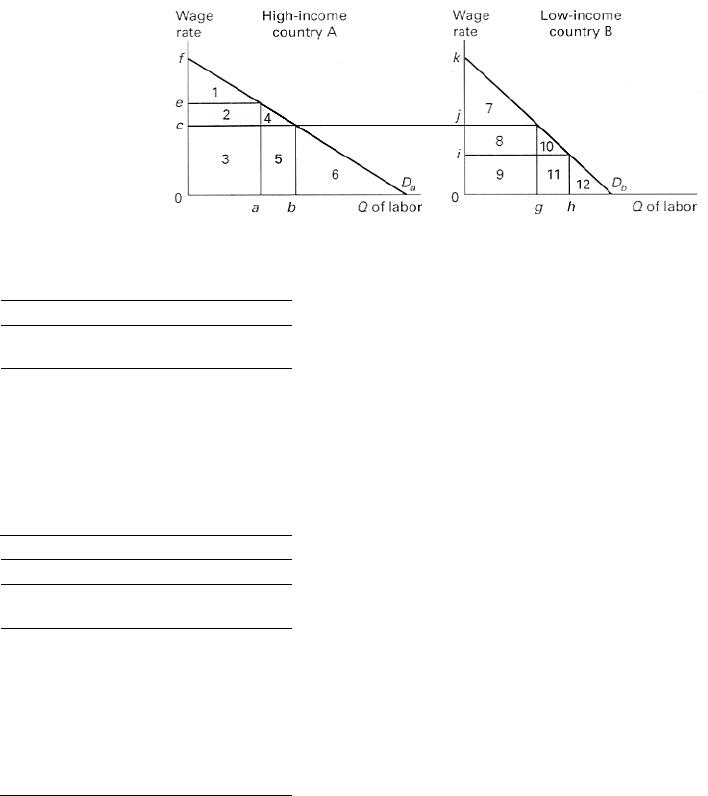
22. The next four questions refer to the graph below. (Assume that the premigration labor force in country A is
a and that it is h in country B.) Explain your answers with reference to areas in the graph (1, 2, etc.) or to
letters (a, b, c, etc.).
(a) What will happen to wage rates in country A and country B because of the migration of labor from
country B to country A?
(b) What will happen to domestic output in country A and country B after immigration?
(c) What will happen to world output given the experience in these two nations?
(d) What will happen to income shares for workers and business in each country?
23. In the tables below are the demands for labor and the levels of domestic output that can be produced at each
level of employment in two countries.
Country X
Real wage
rate
Quantity of labor
demanded
Real
output
$12
140
$1680
11
160
1780
10
180
1880
9
200
1980
8
220
2080
7
240
2180
6
260
2280
Country Y
Real wage
rate
Quantity of labor
demanded
Real
output
$12
20
$ 240
11
40
480
10
60
540
9
80
880
8
100
1000
7
120
1100
6
140
1180
(a) What would the wage rates be if employment was 200 in country X and 140 in country Y?
(b) What would total wages paid and business incomes be in each country given employment conditions in
(a)?
(c) If 20 workers migrate from country Y to country X, what will happen to wage rates, output, business
incomes, and total wages?
24. “The benefits of unimpeded immigration exceed the costs.” Do you agree?
Chapter 22 – Immigration
22-3
25. Explain the effects of the migration of labor from a poorer nation to a richer nation. Give your answer in
terms of the effects on wage rate, domestic output, and business incomes in the two nations.
26. What are some complications and modifications of the simple model of immigration and its conclusions
about wage rates, domestic output, and business incomes in a poorer nation and a richer nation?
27. Provide three reasons why Mexico generally opposes stronger border enforcement by the United States.
28. Explain the reasoning behind why employment could increase for domestic-born workers if immigrant
workers become complementary resources rather than substitute resources.
29. How could legal immigration increase a nation’s stock of capital and what effects would such an increase
have on productivity, production costs and product prices?
30. What is the meaning of negative self-selection as it relates to unemployment in low-income nations and
immigration?
31. What effects do immigrants have on tax revenues and government spending in the United States?
32. Summarize the main research conclusions found by prominent economists on the economic effects of
immigration.
33. Describe the two extreme views on illegal immigration and their employment effects. Why are these two
views misleading?
34. “Compensating wage differentials will attract U.S. workers even to otherwise undesirable work.” Explain.
35. What may be the complementary relationship, in terms of employment, between illegal fruit pickers and
domestic-born truck drivers?
36. Why would illegal immigration have an effect on the prices of goods and services produced by illegal
workers? Who benefits from these lower product and service prices?
37. Illegal immigration has been shown to have an overall negative fiscal impact on local and state
governments. Describe the fiscal benefits and cost of illegal immigration for local and state governments.
38. Identify at least two non-economic reasons used by critics to support their concerns about illegal
immigration.
39. What economic framework can inform the debate on immigration?
40. (Last Word) How have immigration laws been reformed over the past 40 years to deal with the large
numbers of illegal immigrants residing in the United States?
Chapter 22 – Immigration
B. Answers to Short-Answer, Essays, and Problems
1. What is the difference between legal and illegal immigration?
2. What are the two types of legal immigration in the United States?
3. Describe the number of legal and unauthorized immigrants that have entered the United States annually
since the year 2000. What has been the effect of this immigration on population and labor force growth in
the United States?
4. How do most immigrants gain their legal status? What are the major categories of legal admission into the
United States?
5. What is the approach that the U.S. Census Bureau uses to estimate the number of illegal immigrants living
in the United States? How many illegal immigrants were estimated to reside in the United States in 2009?
6. Define economic immigrants.
7. State three major reasons why people immigrate to the United States.
Chapter 22 – Immigration
8. The decision to legally or illegally emigrate from a foreign country to the United States is mainly driven by
the potential earning opportunities available in the U.S. economy. Why do earning opportunities play a
major role in the decision to migrate?
9. “Immigration can be viewed as an investment decision.” Explain.
10. How can the migration distance affect the cost–benefit evaluation of moving to another nation?
11. What is meant by “beaten path?” How does it influence immigration decisions?
12. How does the age of prospective migrants affect the cost–benefit evaluation of moving to another nation?
13. Identify at least two factors, other than distance and the age of prospective migrants, that may affect the
cost and benefit calculations of emigrants to the United States.
Chapter 22 – Immigration
14. The sizeable and continuous flow of immigrants into the United States seems to indicate that there is a
positive return to moving. Many economic immigrants, however, never achieve pay-parity with similarly
educated native-born workers while others eventually outdo domestic-born workers in salary wage
advancement. Explain.
15. What are some of the reasons for the major backflows that occur in most international migration patterns?
16. (Consider This) Why is recent immigration a vital contributor to the American economy?
17. What are the effects of migration on the real wages and output of a low-wage nation and a high-wage
nation? What are the simplifications used to analyze these effects?
18. “Migration to the United States will occur as long as wages are higher in the United States than in the other
country.” Evaluate.
Chapter 22 – Immigration
22-7
19. Why would a low-wage nation oppose emigration?
20. Why would a high-wage nation oppose immigration?
21. Define remittances.
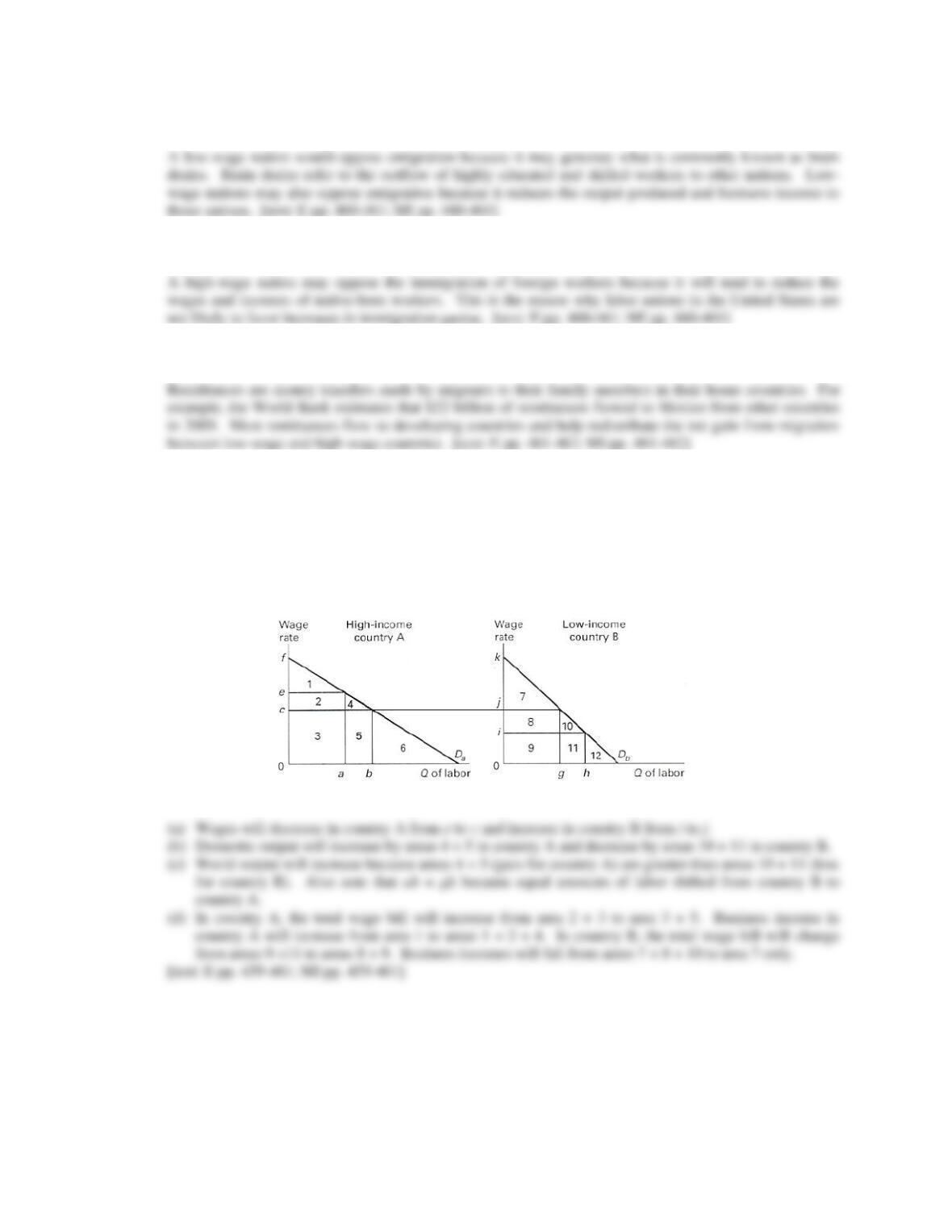
22. The next four questions refer to the graph below. (Assume that the premigration labor force in country A is
a and that it is h in country B.) Explain your answers with reference to areas in the graph (1, 2, etc.) or to
letters (a, b, c, etc.).
(a) What will happen to wage rates in country A and country B because of the migration of labor from
country B to country A?
(b) What will happen to domestic output in country A and country B after immigration?
(c) What will happen to world output given the experience in these two nations?
(d) What will happen to income shares for workers and business in each country?

Chapter 22 – Immigration
23. In the tables below are the demands for labor and the levels of domestic output that can be produced at each
level of employment in two countries.
Country X
Real wage
rate
Quantity of labor
demanded
Real
output
$12
140
$1680
11
160
1780
10
180
1880
9
200
1980
8
220
2080
7
240
2180
6
260
2280
Country Y
Real wage
rate
Quantity of labor
demanded
Real
output
$12
20
$ 240
11
40
480
10
60
540
9
80
880
8
100
1000
7
120
1100
6
140
1180
(a) What would the wage rates be if employment was 200 in country X and 140 in country Y?
(b) What would total wages paid and business incomes be in each country given employment conditions in
(a)?
(c) If 20 workers migrate from country Y to country X, what will happen to wage rates, output, business
incomes, and total wages?
24. “The benefits of unimpeded immigration exceed the costs.” Do you agree?
Chapter 22 – Immigration
25. Explain the effects of the migration of labor from a poorer nation to a richer nation. Give your answer in
terms of the effects on wage rate, domestic output, and business incomes in the two nations.
26. What are some complications and modifications of the simple model of immigration and its conclusions
about wage rates, domestic output, and business incomes in a poorer nation and a richer nation?
27. Provide three reasons why Mexico generally opposes stronger border enforcement by the United States.
28. Explain the reasoning behind why employment could increase for domestic-born workers if immigrant
workers become complementary resources rather than substitute resources.
29. How could legal immigration increase a nation’s stock of capital and what effects would such an increase
have on productivity, production costs and product prices?
Chapter 22 – Immigration
22–10
30. What is the meaning of negative self-selection as it relates to unemployment in low-income nations and
immigration?
31. What effects do immigrants have on tax revenues and government spending in the United States?
32. Summarize the main research conclusions found by prominent economists on the economic effects of
immigration.
33. Describe the two extreme views on illegal immigration and their employment effects. Why are these two
views misleading?
34. “Compensating wage differentials will attract U.S. workers even to otherwise undesirable work.” Explain.
Chapter 22 – Immigration
35. What may be the complementary relationship, in terms of employment, between illegal fruit pickers and
domestic-born truck drivers?
36. Why would illegal immigration have an effect on the prices of goods and services produced by illegal
workers? Who benefits from these lower product and service prices?
37. Illegal immigration has been shown to have an overall negative fiscal impact on local and state
governments. Describe the fiscal benefits and cost of illegal immigration for local and state governments.
38. Identify at least two non-economic reasons used by critics to support their concerns about illegal
immigration.
39. What economic framework can inform the debate on immigration?
40. (Last Word) How have immigration laws been reformed over the past 40 years to deal with the large
numbers of illegal immigrants residing in the United States?

Chapter 22 – Immigration
22–12