Chapter 21
The Line Between Legal and Illegal Goods
Multiple Choice
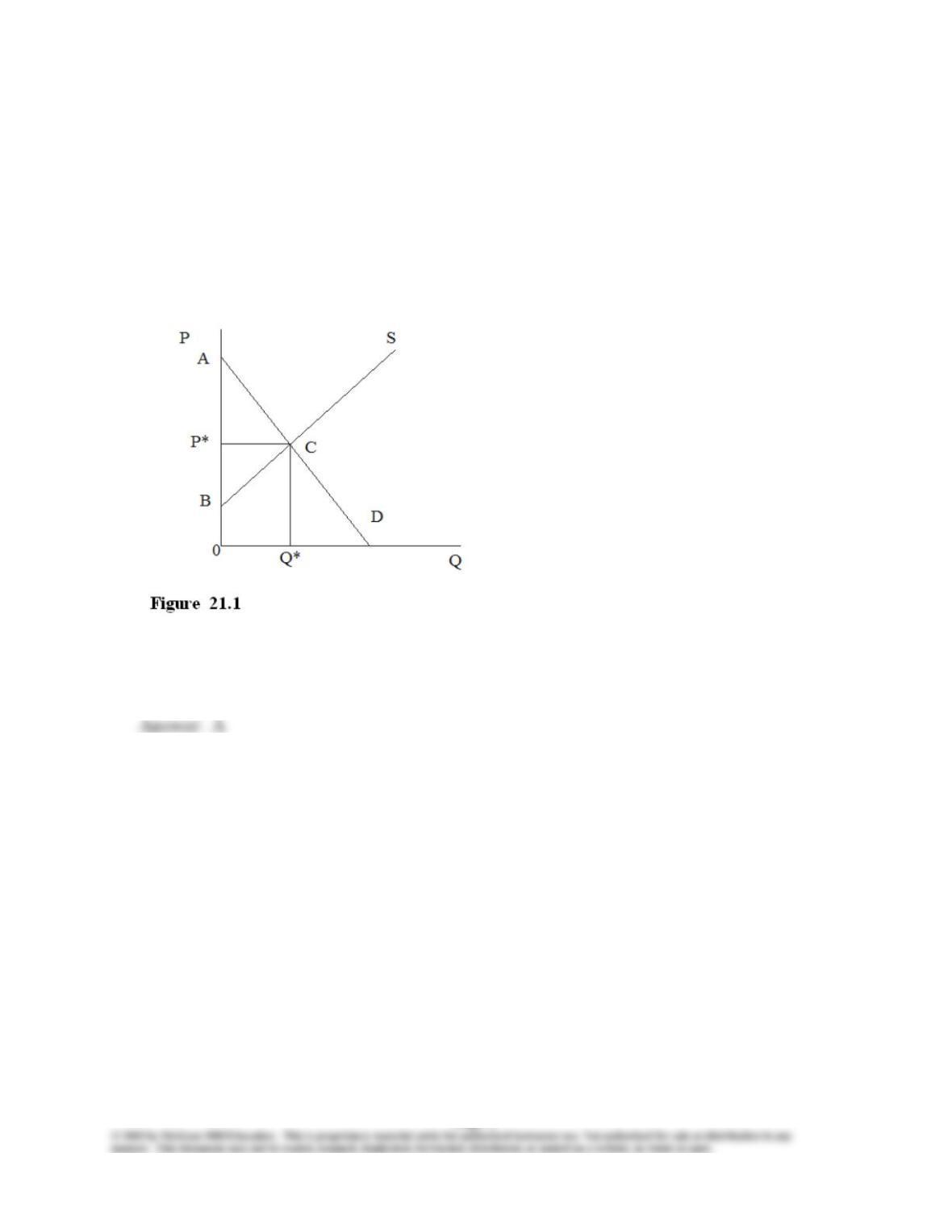
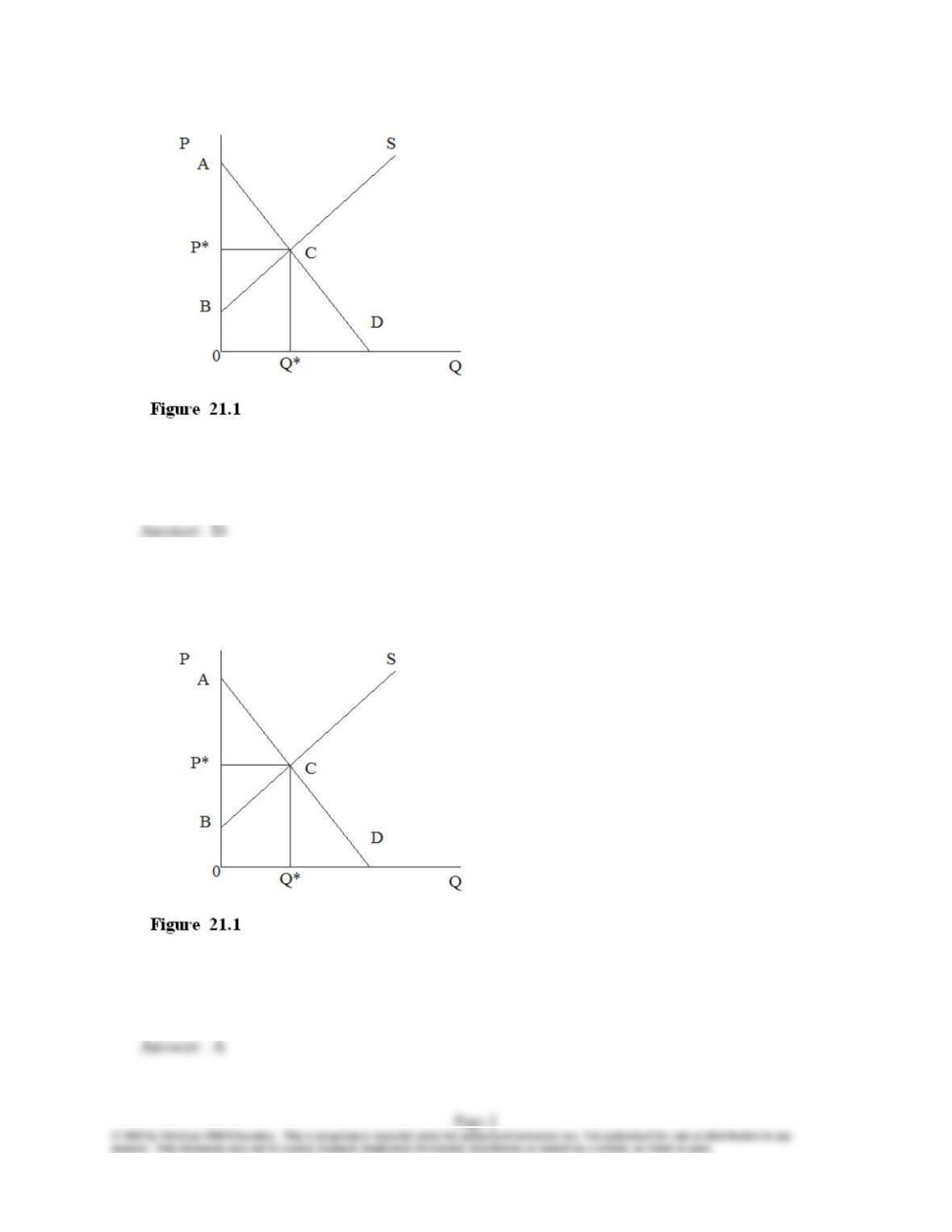
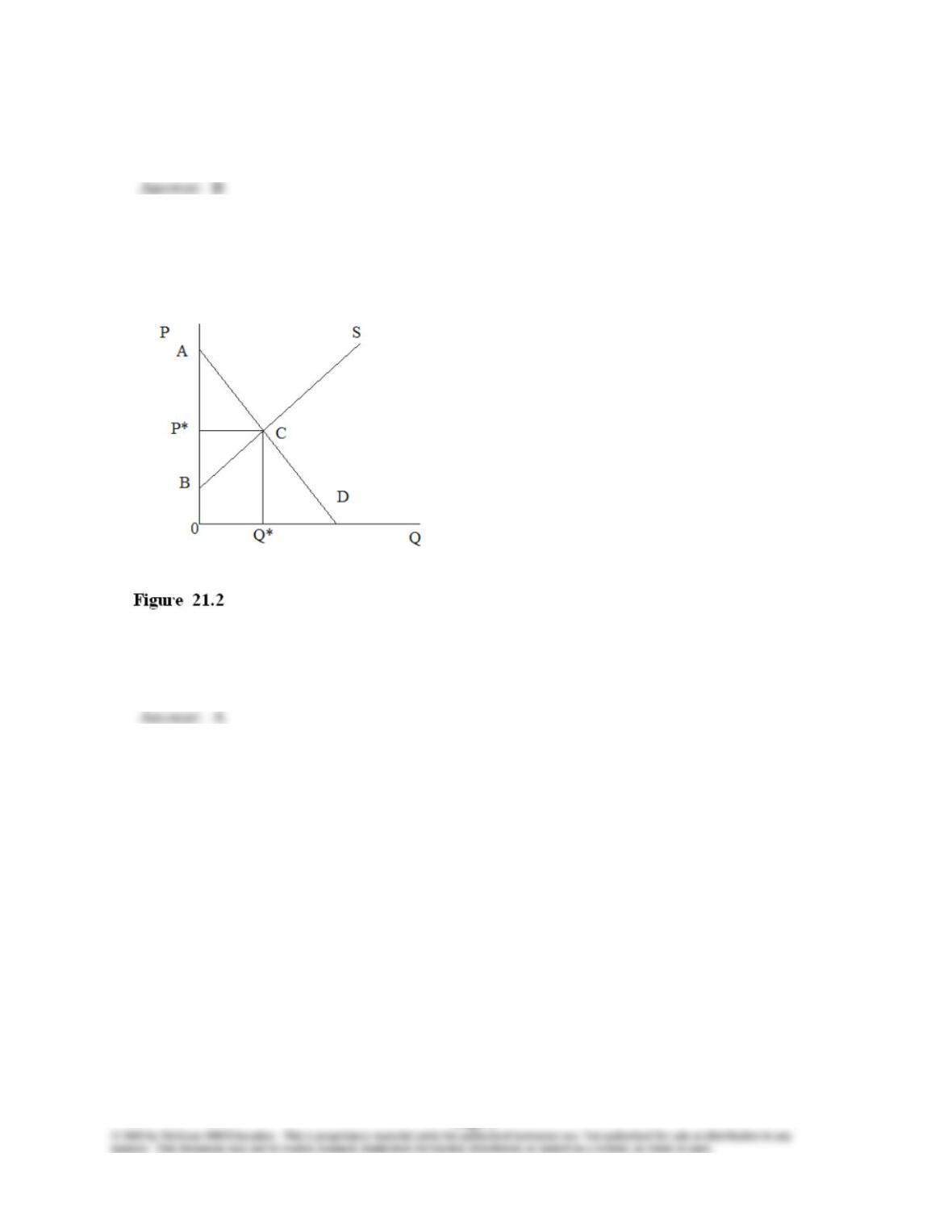
1. In Figure 21.1, which area represents total value to the drug addict?
A) 0ACQ*
B) BP*C
C) 0BCQ*
D) 0P*CQ*
2. In Figure 21.1, which area represents total expenditure by the drug addict?
A) ABC
B) BP*C
C) 0ACQ*
D) 0P*CQ*
3. In Figure 21.1, which area represents consumer surplus to the drug addict?
A) AP*C
B) 0ACQ*
C) 0BCQ*
D) 0P*CQ*
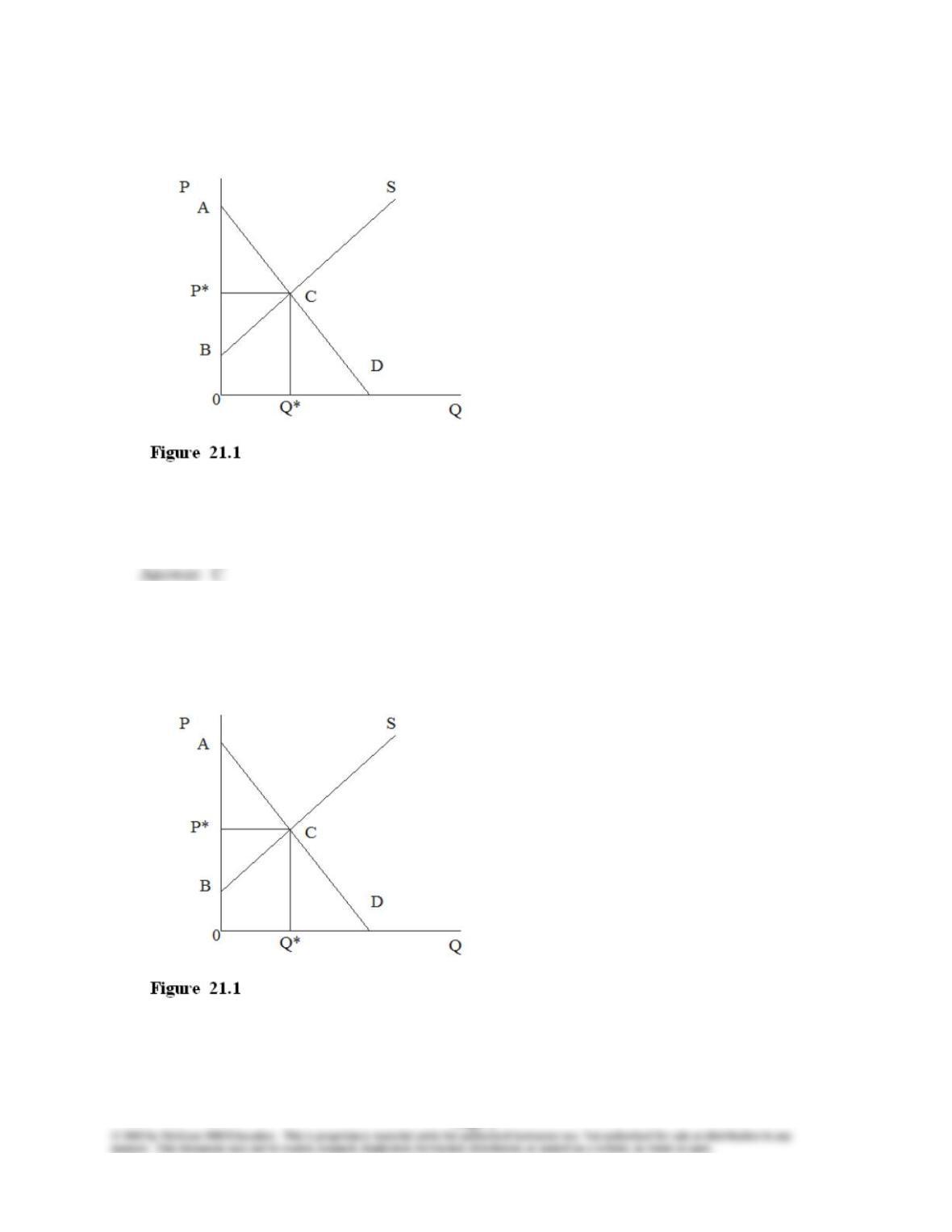
4. In Figure 21.1, which area represents total variable cost to the drug dealer?
A) OACQ*
B) BP*C
C) 0BCQ*
D) 0P*CQ*
5. In Figure 21.1, which area represents total revenue to the drug dealer?
A) AP*C
B) BP*C
C) 0BCQ*
D) 0P*CQ*
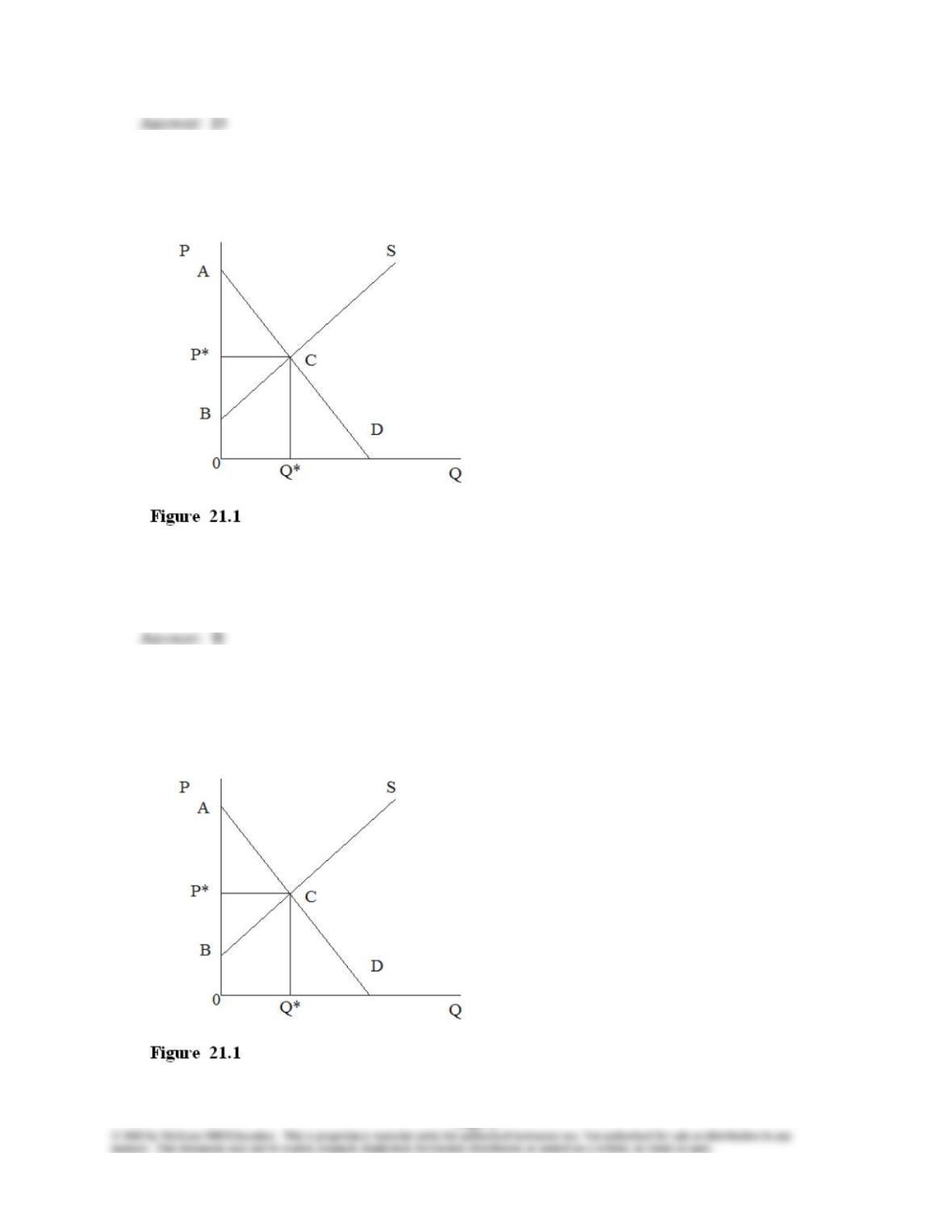
6. In Figure 21.1, which area represents producer surplus to the drug dealer?
A) AP*C
B) BP*C
C) 0BCQ*
D) 0P*CQ*
7. In Figure 21.1 and ignoring any possible externalities, the net benefit to society of this
market is
A) 0ACQ*
B) ABC
C) BP*C
D) 0P*CQ*
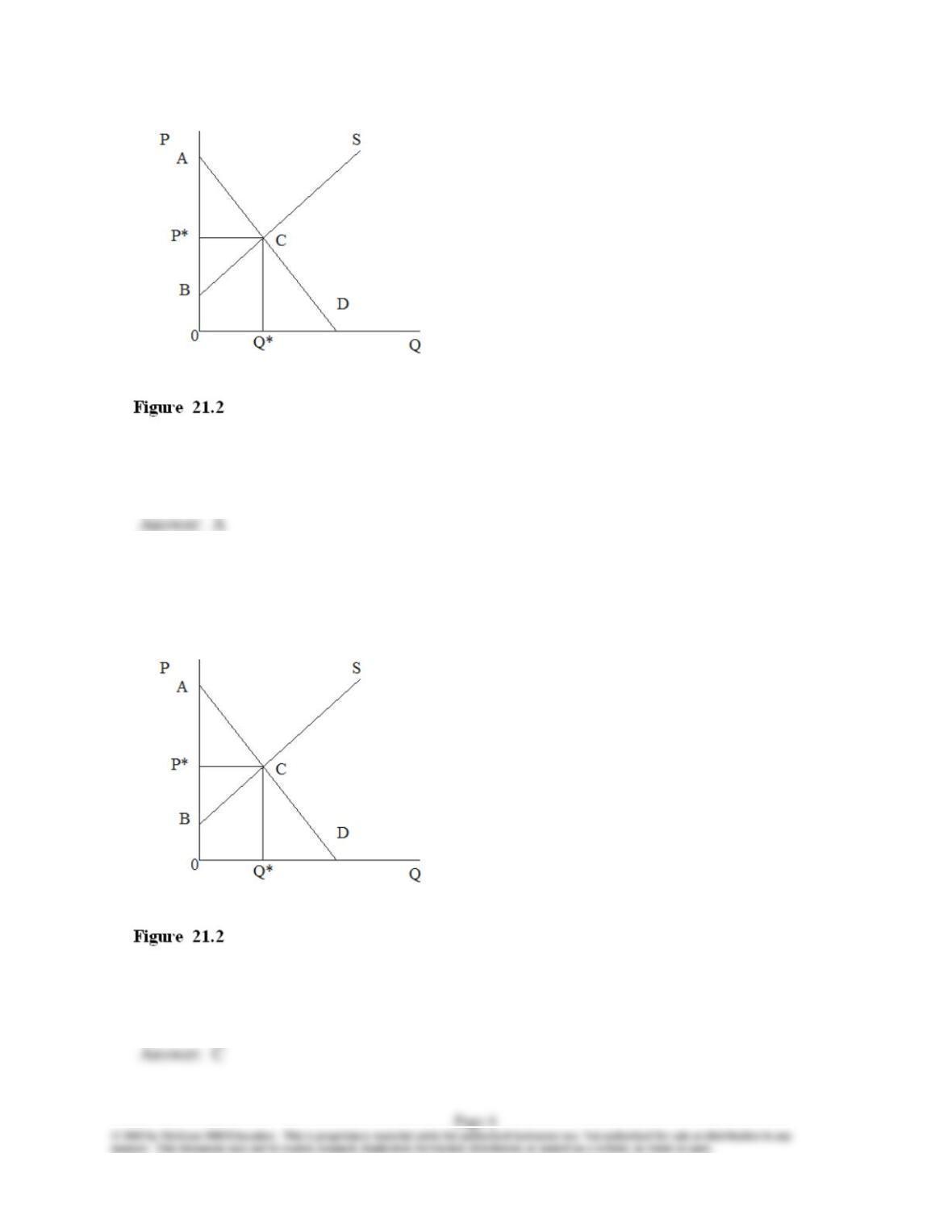
8. In Figure 21.2, which area represents total value to the smoker?
A) 0ACQ*
B) BP*C
C) 0BCQ*
D) 0P*CQ*
9. In Figure 21.2, which area represents consumer surplus to the smoker?
A) AP*C
B) 0ACQ*
C) 0BCQ*
D) 0P*CQ*
10. In Figure 21.2, which area represents total variable cost to the tobacco company?
A) OACQ*
B) BP*C
C) 0BCQ*
D) 0P*CQ*
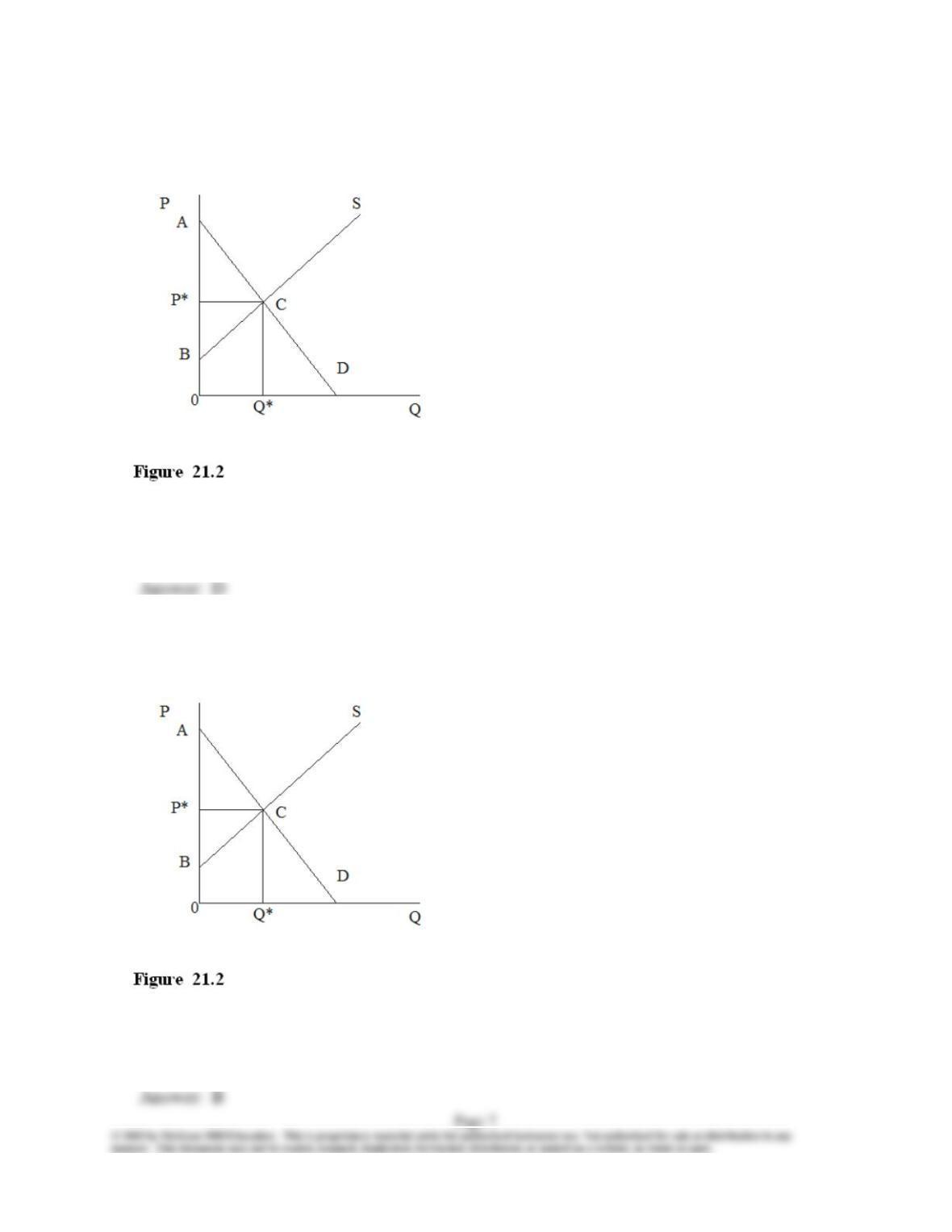
11. In Figure 21.2, which area represents total revenue to the tobacco company?
A) AP*C
B) BP*C
C) 0BCQ*
D) 0P*CQ*
12. In Figure 21.2, which area represents producer surplus to the tobacco company?
A) AP*C
B) BP*C
C) 0BCQ*
D) 0P*CQ*
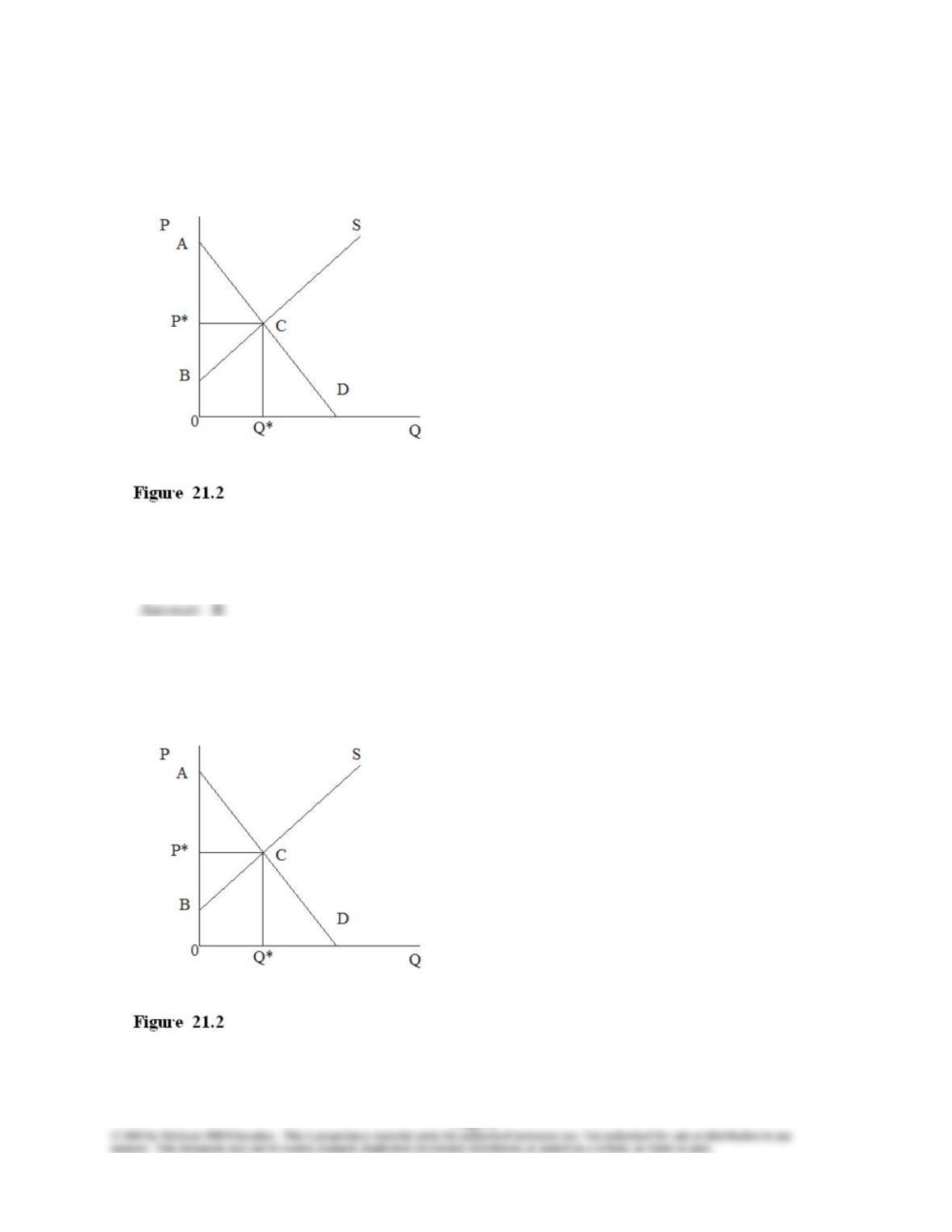
13. In Figure 21.2 and ignoring any possible externalities, the net benefit to society of this
market is
A) 0ACQ*
B) ABC
C) BP*C
D) 0P*CQ*
14. In Figure 21.2 and ignoring any possible externalities, the net benefit to society of this
market is
A) 0BCQ*
B) ABC
C) BP*C
D) 0P*CQ*
15. Which of the following reasons for making drug sales illegal do economists generally
endorse?
A) The harm they do to people who knowingly take them.
B) The harm they do to innocent victims.
C) The risks associated with selling them.
D) The harm they do to people who knowingly take them and the risks associated with
selling them.
16. Which of the following reasons for making drug sales illegal do economists generally
endorse?
A) The harm they do to people who knowingly take them.
B) The harm they do to innocent victims.
C) That addictive drugs do not allow for people to learn from the mistake of taking them.
D) The harm that addictive drugs do to innocent victims and that they do no allow for people
to learn from the mistake of taking them.
17. Which of the following reasons for making drugs sales illegal do economists generally see as
potentially legitimate, but beyond their area of expertise?
A) Drugs are immoral and allowing them to be sold is immoral.
B) The harm they do to innocent victims.
C) That addictive drugs do not allow for people to learn from the mistake of taking them.
D) The harm that addictive drugs do to innocent victims and that they do no allow for people
to learn from the mistake of taking them.
18. Externalities are effects of a transaction on
A) the buyers and sellers.
B) the sellers but not the buyers.
C) the buyers but not the sellers.
D) someone other than the buyer or seller.
19. Externalities are effects of a transaction that __________ people who are not part of that
transaction.
A) only help
B) only hurt
C) either help or hurt
D) leave unaffected
20. An example of an externality associated with prostitution is
A) the increased likelihood that the prostitute will contract a disease.
B) the increased likelihood that a client will contract a disease.
C) the increased likelihood that a client’s partner will contract a disease.
D) the costs of protection for clients of the prostitute.
21. An example of an externality associated with drugs is a drug
A) dealer killing his customer for lack of payment.
B) dealer killing his supplier for lack of delivery.
C) user ruining the drug user’s life.
D) user ruining a spouse’s life.
22. External costs are modeled by creating a new social cost curve that is
A) lower than the original supply curve.
B) higher than the original supply curve.
C) lower than the original demand curve.
D) higher than the original demand curve.
23. After accounting for externalities with a social cost curve, the new equilibrium would be
such that equilibrium price is
A) lower than before and equilibrium quantity is higher than before.
B) higher than before and equilibrium quantity is higher than before.
C) lower than before and equilibrium quantity is lower than before.
D) higher than before and equilibrium quantity is lower than before.
24. An example of an external cost of tobacco is
A) cigarette burns on the furniture of smokers.
B) matches.
C) increase life insurance premiums of smokers.
D) unnecessary deaths induced by second-hand smoke.
25. An example of an external cost of tobacco is
A) lung cancer to smokers.
B) increased SIDS deaths to the children of smokers.
C) increase life insurance premiums of smokers.
D) accidental fires in the homes of smokers.
26. The cost to taxpayers of smoking include
A) the increased cost of Medicaid patients who smoke.
B) the cigarette taxes that are collected.
C) decreased Social Security benefits to those who die prematurely from a smoking related
illness.
D) decreased long-term care costs for those who die prematurely from a smoking related
illness.
27. The external costs associated with tobacco are estimated to be approximately
A) $1 a pack.
B) $5 a pack.
C) nonexistent.
D) 10 cents a pack.
28. An example of an external cost of alcohol is
A) traffic fatalities attributable to drunk driving.
B) the cost to alcoholics of going to rehabilitation clinics.
C) the cost of producing whiskey.
D) the cost to bars of hiring janitors to clean up after their customers.
29. An example of an external cost of alcohol is the
A) emotional costs to the families of alcoholics.
B) cost to alcoholics of going to rehabilitation clinics.
C) cost of producing whiskey.
D) cost to bars of hiring janitors to clean up after their customers.
30. An alternative to prohibiting sale of a tobacco is imposing a tax equal to its marginal
A) external cost.
B) private cost.
C) social cost.
D) private benefit.
31. A tax on cigarettes will have the effect of properly dealing with the externality unless the tax
A) is lower than the marginal external costs.
B) is so high that it generates a black market.
C) causes people to use smoke less.
D) is lower then the marginal external costs or it is so high that it generates a black market.
32. A tax on alcohol will
A) raise the equilibrium price and lower the equilibrium quantity.
B) lower the equilibrium price and lower the equilibrium quantity.
C) raise the equilibrium price and raise the equilibrium quantity.
D) lower the equilibrium price and raise the equilibrium quantity.
33. A tax on beer will
A) raise the equilibrium price and lower the equilibrium quantity.
B) lower the equilibrium price and lower the equilibrium quantity.
C) raise the equilibrium price and raise the equilibrium quantity.
D) lower the equilibrium price and raise the equilibrium quantity.
34. The “acceptable deaths” notion suggests that it is better to have the benefits of a good to the
buyer and seller with a specified number of deaths
A) than to prohibit the good’s production and use entirely.
B) than to let the good be produced outside the US.
C) but only if the deaths are of less desirable people.
D) in no circumstance.
35. The 1998 tobacco settlement requires that tobacco companies pay ___ to the states in the
settlement over a period of twenty years.
A) $2.5 million
B) $250 million
C) $2.5 billion
D) $250 billion
36. The reason cigarette taxes raise a lot of money and don’t reduce adult smoking much is
because demand for cigarettes by adults is
A) highly elastic.
B) very inelastic.
C) unit elastic.
D) upward sloping.
37. The reason cigarette taxes would impact kids more than adults is that adult demand is _____
elastic than demand by kids.
A) more
B) less
C) as
D) neither more or less
38. The elasticity of demand for cigarettes by adults is such that an increase in cigarette taxes to
one dollar would
A) have absolutely no effect of adult smoking.
B) actually increase adult smoking.
C) cut adult smoking by around 10%.
D) cut adult smoking by half.
39. The elasticity of demand for cigarettes by children is such that an increase in cigarette taxes
to one dollar would
A) have absolutely no effect of childhood smoking.
B) actually increase adult smoking.
C) cut adult smoking by around 10%.
D) cut adult smoking by 25%.
40. If demand for drugs is inelastic, then changes in the supply curve through interdiction efforts
will dramatically
A) lower equilibrium quantity.
B) lower equilibrium price.
C) raise equilibrium price.
D) raise equilibrium quantity.
41. If demand for drugs is inelastic, then changes in the supply curve through interdiction efforts
will only slightly
A) lower equilibrium quantity.
B) lower equilibrium price.
C) raise equilibrium price.
D) raise equilibrium quantity.
42. Prohibiting the legal sale of a good because of the good’s external costs
A) will always lead to fewer negative consequences of the good’s sale and use.
B) will never lead to fewer negative consequences of the good’s sale and use.
C) could lead to more negative consequences of the good’s sale and use because of criminal
activity.
D) is never the answer to a good with negative externalities.
43. For a previously illegal good, decriminalization will cause
A) supply to increase.
B) supply to become less elastic.
C) demand to become less elastic.
D) price to fall, unambiguously.
44. For a previously illegal good, decriminalization will cause
A) supply to increase.
B) supply to become less elastic.
C) demand to become less elastic.
D) price to rise, unambiguously.
45. For a previously illegal good, decriminalization will cause
A) demand to increase.
B) demand to become less elastic.
C) supply to become less elastic.
D) price to fall, unambiguously.
46. For a previously illegal good, decriminalization will cause
A) demand to increase.
B) demand to become less elastic.
C) supply to become less elastic.
D) price to rise, unambiguously.
47. When a good is illegal, the supply curve is likely to be inelastic because
A) extra costs associated with avoiding capture.
B) the difficulty of expanding operations as price rises because of the increased likelihood of
capture.
C) the ease with which sellers can expand operations into new territory when price rises.
D) the ease of finding new buyers without getting caught.
48. The reason that the impact on prices of decriminalization is ambiguous is that
decriminalization causes a price
A) increasing supply curve movement and a price decreasing demand curve movement.
B) decreasing supply curve movement and a price decreasing demand curve movement.
C) increasing supply curve movement and a price increasing demand curve movement.
D) decreasing supply curve movement and a price increasing demand curve movement.
49. For a previously legal good, criminalization will cause
A) supply to increase.
B) supply to become more elastic.
C) demand to become less elastic.
D) price to fall, unambiguously.
50. For a previously legal good, criminalization will cause
A) supply to increase.
B) supply to become more elastic.
C) demand to become less elastic.
D) price to rise, unambiguously.
51. For a previously legal good, criminalization will cause
A) demand to increase.
B) demand to become more elastic.
C) supply to become less elastic.
D) price to fall, unambiguously.
52. For a previously legal good, criminalization will cause
A) demand to increase.
B) demand to become less elastic.
C) supply to become more elastic.
D) price to rise, unambiguously.
53. When a good is illegal, the demand curve is likely to be inelastic because
A) extra costs associated with avoiding capture.
B) the difficulty the buyer faces in getting their dealer to sell them more.
C) the fact that when a good is illegal, addicts make up a greater percentage of users.
D) price dramatically impacts usage.
54. The impact of criminalization upon price is ambiguous because
A) reduces supply and reduces demand.
B) increases supply and reduces demand.
C) reduces supply and increases demand.
D) increases supply and increases demand.
55. A drug addict will likely have a demand for drugs that is very
A) elastic.
B) inelastic.
C) flat.
D) upward sloping.
56. The fraction of the American population that smokes is
A) 5%
B) 16%
C) 21%
D) 43%
57. An externality associated with advertising of products legal only for a specified age group is
that it
A) might be deemed boring by members of that specified age group.
B) increases the time members of that specified age group spend watching TV and reading
magazines.
C) might appeal to persons outside of that specified age group.
D) all of the options are correct.
58. The fraction of incarcerations or detentions associated with drug-use is approximately
A) 10%.
B) 27%.
C) 36%.
D) 63%.
59. The fraction of fatal traffic accidents involving at least one person with blood alcohol level
above the legal limit is approximately
A) 5%.
B) 10%.
C) 25%.
D) 42%.
60. One of the external costs associated with illegal methamphetamine production is the
A) Increased difficulty of purchasing some over-the-counter cold medications.
B) Substitution of somewhat less effective ingredients in some over-the-counter cold
medications.
C) Increased difficulty illegal methamphetamine producers face in obtaining their
ingredients.
D) Increased difficulty of purchasing some over-the-counter cold medications as well as a
substitution of somewhat less effective ingredients in some over-the-counter cold
medications.
61. The fraction of all adults under the age of 35 who have violated the law when it comes to
their consumption of an illegal good or service is
A) one tenth.
B) one fifth.
C) one half.
D) two thirds.
62. Among the very real problems of tobacco, alcohol and illegal goods and services are
A) added tax receipts.
B) external costs.
C) external benefits.
D) salutary effects upon spouses and children.
63. The fraction of prostitutes who were victims of childhood incest is estimated to be
A) 20 percent.
B) 40 percent.
C) 55 percent.
D) 80 percent.
64. The federal taxes on tobacco annually raise approximately
A) $1 billion.
B) $7 billion.
C) $9 billion.
D) $12 billion.
65. The federal taxes on alcohol annually raise approximately
A) $1.8 billion.
B) $7.5 billion.
C) $9.5 billion.
D) $13.2 billion.
66. Prohibition as a strategy for controlling externalities might actually
A) create new problems, such as turf wars among gangs or increased incarceration.
B) solve age-old problems, such as the susceptibility of humans to addictive behavior.
C) eliminate the need for elaborate enforcement efforts and detention facilities.
D) all of the options are correct.
67. Suppose the United States chose to legalize the production and use of marijuana and after
doing so found that the price rose. This would
A) indicate that the demand-side effect was greater than the supply-side effect.
B) be shockingly counter-intuitive because there would be no supply-and-demand model
that could explain it.
C) indicate that the demand-side effect was smaller than the supply-side effect.
D) suggest that the supply curve is vertical.
68. Suppose the United States chose to legalize the production and use of marijuana and after
doing so found that the price fell. This would
A) indicate that the demand-side effect was greater than the supply-side effect.
B) be shockingly counter-intuitive because there would be no supply-and-demand model
that could explain it.
C) indicate that the demand-side effect was smaller than the supply-side effect.
D) suggest that the supply curve is vertical.
69. Suppose the United States chose to legalize the production and use of marijuana but also
decided to put a tax on the good. After doing so, suppose that the price that consumers paid
fell and the amount that growers got to keep also fell. This would
A) indicate that the demand-side effect was greater than the supply-side effect.
B) be shockingly counter-intuitive because there would be no supply-and-demand model
that could explain it.
C) indicate that the demand-side effect was smaller than the supply-side effect.
D) suggest that the supply curve is vertical.
70. Suppose the United States chose to legalize the production and use of marijuana but also
decided to put a tax on the good (with the tax paid by producers). After doing so, suppose
that the price that consumers paid rose and the amount that growers got to keep fell. This
would
A) indicate that the demand-side effect was greater than the supply-side effect.
B) be shockingly counter-intuitive because there would be no supply-and-demand model
that could explain it.
C) indicate that the demand-side effect was smaller than the net supply-side effect.
D) suggest that the supply curve is vertical.