Chapter 21 – Health Care
21-1
CHAPTER 21
Health Care
A. Short-Answer, Essays, and Problems
1. Describe the health care industry.
2. What are the two major problems facing the health care system?
3. Describe the major spending categories and percentage for health care spending.
4. What is the difference between a deductible and a copayment as it applies to medical insurance?
5. Identity the major sources of funding for health care and the relative percentages.
6. What are the two major parts of the Medicare program?
7. What is Medicaid?
8. Describe rising health care costs in the United States relative to GDP.
9. In what ways does the United States have the best health care system in the world?
10. Comment on the statement: “Americans must be the healthiest people on earth because they spend the
most on health care and have the best health care system.”
11. What are the economic implications of rising health care costs?
12. Evaluate the statement: “Americans should be pleased with the advances in U.S. health care because it
improves the overall standard of living.”
13. What are three effects on labor markets of rising health care costs?
14. How are government budgets affected by rising health care costs?
15. In most industries increased spending is a sign of prosperity. Why is increased spending a cause for alarm
in the health care industry?
16. Describe the extent and characteristics of the part of the population with limited access to health care
coverage.
17. What attributes make the health care market different than the normal product market?
18. Identify the four peculiarities of the health care market.
19. Explain how changes in incomes, population, and lifestyles contribute to increasing health care costs.
20. How do doctors add to rising health care costs?
21. What is the moral hazard problem associated with health care insurance?
22. Explain the effect of Federal tax policy on the cost of health insurance.

Chapter 21 – Health Care
21-2
23. Describe how health care insurance affects the market for health care in a simple supply and demand
model.
24. Below is a table showing a supply and demand schedule for health care. In the left column is the price of
health care. The middle column shows the quantity demanded (Qd) for health care. The right column
shows the quantity supplied (Qs) of health care.
Price
Qd
Qs
$5000
300
700
4000
400
600
3000
500
500
2000
600
400
1000
700
300
(a) Assume that there is no health insurance in this market. What will be the equilibrium price and
quantity in this market?
(b) Now assume that health insurance cuts the price of health care by two–thirds for the consumer. What
will be the new price for consumers and the quantity demanded? What will be the marginal cost and
benefit for society?
(c) Draw supply and demand curves in the graph below based on the data in the table. Make sure to label
the axes and identify prices and quantities.
(1) Show the equilibrium point in a market without health insurance and label it as point x.
(2) Show the price to the consumer and quantity consumed when health insurance covers two-thirds
the cost of health care. At this quantity, indicate the marginal cost to society of this unit and label
it point y. Also, indicate the marginal benefit to society of this unit of health care and label it point
z.
25. Below is a table with data on the supply and demand of health care. Use this information to answer the
following questions.
Price
Qd
Qs
$10,000
400
1200
9,000
500
1100
8,000
600
1000
7,000
700
900
6,000
800
800
5,000
900
700
4,000
1000
600
3,000
1100
500
Chapter 21 – Health Care
21-3
(a) Assume initially there is no health insurance. What would be the equilibrium level and price of health
care?
(b) Suppose the introduction of health insurance decreased medical costs by one half. What would be the
new price and quantity of health care? What would be the marginal cost and marginal benefit at this
output?
(c) Suppose that the government decided to subsidize the cost of medical school. How would this change
the supply and demand situation of the health care market?
(d) Suppose the government subsidy causes the supply of health care to shift by 200 at every price? What
would be the new equilibrium price and quantity in the absence of insurance? What would be the
marginal benefit and marginal cost if insurance coverage of 50% were in place?
(e) Suppose that doctors shift away from a fee-per-visit system and are instead paid set annual salaries.
What effect will this have on the supply and demand situation for the health care market?
(f) Given the supply condition in (d), suppose the shift in policy causes health care demand to shift down
by 200 at every price. What is the new equilibrium price and quantity? What is the marginal benefit
and cost if 50% insurance coverage were in place?
(g) How have the previous policies influenced the impact of the 50% insurance policy?
26. List and briefly explain three supply factors affecting rising health care costs.
27. What is the relative importance of demand and supply factors in explaining rising health care costs?
28. (Consider This) How has the world of modern medicine—advanced technology as well as new and
improved procedures added to the increased cost of medical care?
29. How do copayments and deductibles help contain health care costs?
30. Describe the origins and reasons for the establishment of health savings accounts.
31. What two main types of managed-care organizations (or systems) have been used to control health care
costs?
32. What is the DRG system?
33. Was the Patient Protection and Affordable Care Act of 2010 a cost containment program, a national
insurance program, or some other type of program? Explain.
34. What restrictions does the PPACA place on health insurance companies? How will these restrictions affect
the costs for health insurance companies?
35. What conditions does the PPACA place on employers?
36. What requirement does the PPACA place on individuals?
37. How does the PPACA cover those individuals without health insurance and the poor?
38. What mechanism will be established for the PPACA so that individuals can buy health insurance?
39. Describe three other well-publicized provisions of the PPACA.
40. What taxes will be used to help pay for the PPACA?
41. What are two main economic objections to the PPACA?
42. What is one alternative to the PPACA that has been proposed?
Chapter 21 – Health Care
21-4
43. (Last Word) Explain how Singapore delivers good quality health care with significantly less spending than
the United States.
Chapter 21 – Health Care
21-5
B. Answers to Short-Answer, Essays, and Problems
1. Describe the health care industry.
2. What are the two major problems facing the health care system?
3. Describe the major spending categories and percentage for health care spending.
4. What is the difference between a deductible and a copayment as it applies to medical insurance?
5. Identity the major sources of funding for health care and the relative percentages.
6. What are the two major parts of the Medicare program?
7. What is Medicaid?
8. Describe rising health care costs in the United States relative to GDP.
Chapter 21 – Health Care
9. In what ways does the United States have the best health care system in the world?
10. Comment on the statement: “Americans must be the healthiest people on earth because they spend the
most on health care and have the best health care system.”
11. What are the economic implications of rising health care costs?
12. Evaluate the statement: “Americans should be pleased with the advances in U.S. health care because it
improves the overall standard of living.”
13. What are three effects on labor markets of rising health care costs?
Chapter 21 – Health Care
21-7
14. How are government budgets affected by rising health care costs?
15. In most industries increased spending is a sign of prosperity. Why is increased spending a cause for alarm
in the health care industry?
16. Describe the extent and characteristics of the part of the population with limited access to health care
coverage.
17. What attributes make the health care market different than the normal product market?
18. Identify the four peculiarities of the health care market.
19. Explain how changes in incomes, population, and lifestyles contribute to increasing health care costs.
Chapter 21 – Health Care
21-8
20. How do doctors add to rising health care costs?
21. What is the moral hazard problem associated with health care insurance?
22. Explain the effect of Federal tax policy on the cost of health insurance.
23. Describe how health care insurance affects the market for health care in a simple supply and demand
model.
24. Below is a table showing a supply and demand schedule for health care. In the left column is the price of
health care. The middle column shows the quantity demanded (Qd) for health care. The right column
shows the quantity supplied (Qs) of health care.
Price
Qd
Qs
$5000
300
700
4000
400
600
3000
500
500
2000
600
400
1000
700
300
(a) Assume that there is no health insurance in this market. What will be the equilibrium price and
quantity in this market?
(b) Now assume that health insurance cuts the price of health care by two–thirds for the consumer. What
will be the new price for consumers and the quantity demanded? What will be the marginal cost and
benefit for society?
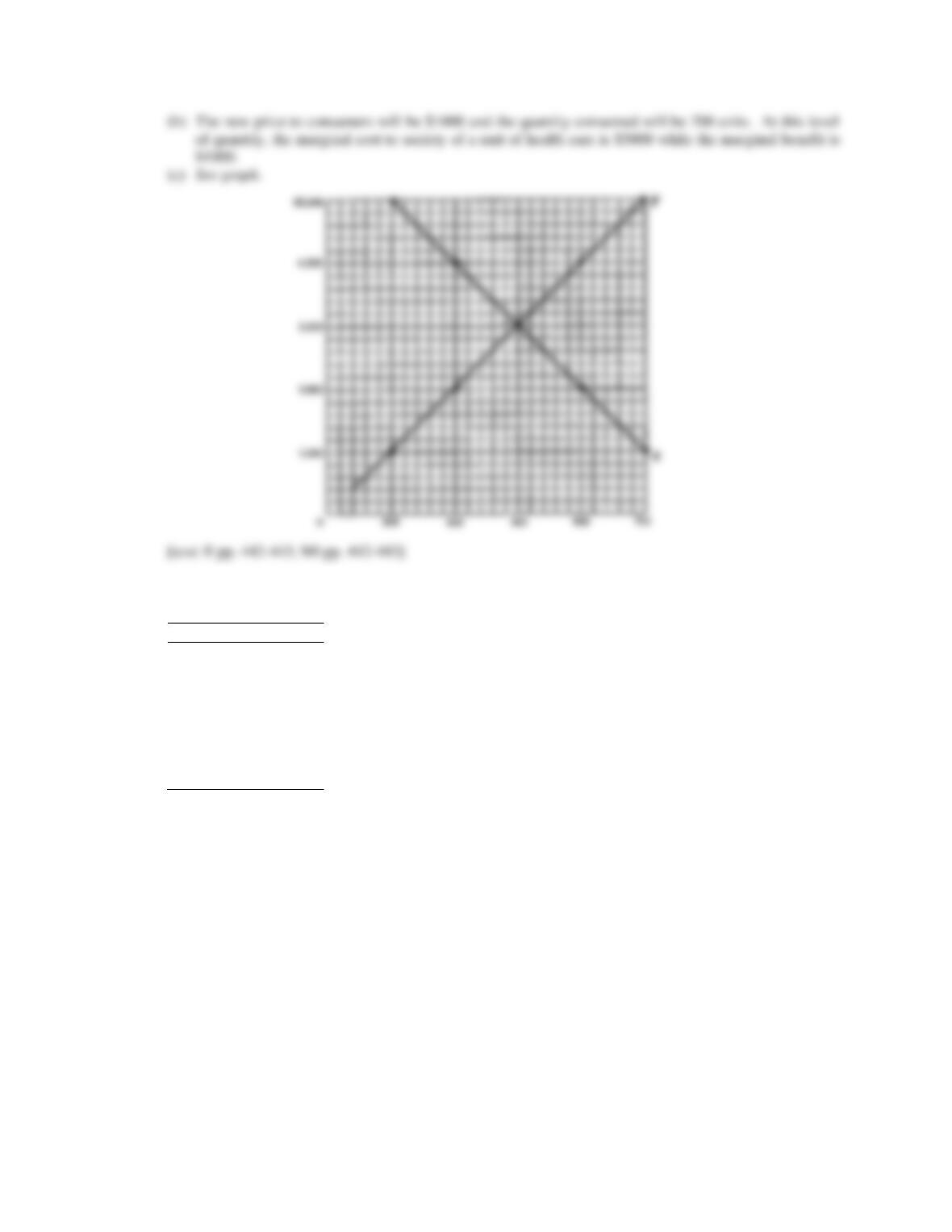
(c) Draw supply and demand curves in the graph below based on the data in the table. Make sure to label
the axes and identify prices and quantities.
(1) Show the equilibrium point in a market without health insurance and label it as point x.
(2) Show the price to the consumer and quantity consumed when health insurance covers two-thirds
the cost of health care. At this quantity, indicate the marginal cost to society of this unit and label
it point y. Also, indicate the marginal benefit to society of this unit of health care and label it point
z.
Chapter 21 – Health Care
21-9
25. Below is a table with data on the supply and demand of health care. Use this information to answer the
following questions.
Price
Qd
Qs
$10,000
400
1200
9,000
500
1100
8,000
600
1000
7,000
700
900
6,000
800
800
5,000
900
700
4,000
1000
600
3,000
1100
500
(a) Assume initially there is no health insurance. What would be the equilibrium level and price of health
care?
(b) Suppose the introduction of health insurance decreased medical costs by one half. What would be the
new price and quantity of health care? What would be the marginal cost and marginal benefit at this
output?
(c) Suppose that the government decided to subsidize the cost of medical school. How would this change
the supply and demand situation of the health care market?
(d) Suppose the government subsidy causes the supply of health care to shift by 200 at every price? What
would be the new equilibrium price and quantity in the absence of insurance? What would be the
marginal benefit and marginal cost if insurance coverage of 50% were in place?
(e) Suppose that doctors shift away from a fee-per-visit system and are instead paid set annual salaries.
What effect will this have on the supply and demand situation for the health care market?
(f) Given the supply condition in (d), suppose the shift in policy causes health care demand to shift down
by 200 at every price. What is the new equilibrium price and quantity? What is the marginal benefit
and cost if 50% insurance coverage were in place?
(g) How have the previous policies influenced the impact of the 50% insurance policy?
Chapter 21 – Health Care
21–10
26. List and briefly explain three supply factors affecting rising health care costs.
27. What is the relative importance of demand and supply factors in explaining rising health care costs?
28. (Consider This) How has the world of modern medicine—advanced technology as well as new and
improved procedures added to the increased cost of medical care?
29. How do copayments and deductibles help contain health care costs?
30. Describe the origins and reasons for the establishment of health savings accounts.
Chapter 21 – Health Care
31. What two main types of managed-care organizations (or systems) have been used to control health care
costs?
32. What is the DRG system?
33. Was the Patient Protection and Affordable Care Act of 2010 a cost containment program, a national
insurance program, or some other type of program? Explain.
34. What restrictions does the PPACA place on health insurance companies? How will these restrictions affect
the costs for health insurance companies?
35. What conditions does the PPACA place on employers?
36. What requirement does the PPACA place on individuals?
37. How does the PPACA cover those individuals without health insurance and the poor?
Chapter 21 – Health Care
38. What mechanism will be established for the PPACA so that individuals can buy health insurance?
39. Describe three other well-publicized provisions of the PPACA.
40. What taxes will be used to help pay for the PPACA?
41. What are two main economic objections to the PPACA?
42. What is one alternative to the PPACA that has been proposed?
43. (Last Word) Explain how Singapore delivers good quality health care with significantly less spending than
the United States.