2-38
100. Suppose that a worker in Country A can make either 25 bananas or 5 tomatoes each year. Country
A has 200 workers. Suppose a worker in Country B can make either 18 bananas or 6 tomatoes each
year. Country B has 400 workers. The opportunity cost of one tomato in Country A is:
101. Suppose that a worker in Country A can make either 25 bananas or 5 tomatoes each year. Country
A has 200 workers. Suppose a worker in Country B can make either 18 bananas or 6 tomatoes each
year. Country B has 400 workers. The opportunity cost of one tomato in Country B is:
102. Suppose that a worker in Country A can make either 25 bananas or 5 tomatoes each year. Country
A has 200 workers. Suppose a worker in Country B can make either 18 bananas or 6 tomatoes each
year. Country B has 400 workers. The opportunity cost of one tomato is:
103. Suppose that a worker in Country A can make either 25 bananas or 5 tomatoes each year. Suppose
that a worker in Country B can make either 18 bananas or 6 tomatoes each year. Country B has an
absolute advantage in:
2-39
104. Tom and Jerry have two tasks to do all day: make dishes and build fences. If Tom spends all day
making dishes, he will have make 16 dishes. If he instead devotes his day to building fences, Tom will
build 4 fences. If Jerry spends his day making dishes, he will make 14 dishes; if he spends the day
building fences, he will build 7 fences. Because Tom has a ____________ opportunity cost for one fence
compared to Jerry, we know Tom has _________________________.
105. Tom and Jerry have two tasks to do all day: make dishes and build fences. If Tom spends all day
making dishes, he will have make 16 dishes. If he instead devotes his day to building fences, Tom will
build 4 fences. If Jerry spends his day making dishes, he will make 14 dishes; if he spends the day
building fences, he will build 7 fences. Jerry has a comparative advantage in:
106. Tom and Jerry have two tasks to do all day: make dishes and build fences. If Tom spends all day
making dishes, he will have make 16 dishes. If he instead devotes his day to building fences, Tom will
build 4 fences. If Jerry spends his day making dishes, he will make 14 dishes; if he spends the day
building fences, he will build 7 fences. After looking at the production possibilities for both Tom and Jerry,
we can surmise that:
107. Tom and Jerry have two tasks to do all day: make dishes and build fences. If Tom spends all day
making dishes, he will have make 16 dishes. If he instead devotes his day to building fences, Tom will
build 4 fences. If Jerry spends his day making dishes, he will make 14 dishes; if he spends the day
building fences, he will build 7 fences. After looking at the production possibilities for both Tom and Jerry,
we can conclude that:
108. We say that a country completely specializes in production when it spends all of its resources
producing:
109. When two countries specialize and trade with one another total production:
110. People would not choose to specialize because:
111. The improvement in outcomes that occurs when specialized producers exchange goods and
services is called:
2-41
Topic: Specialization
112. People will choose to specialize and trade if they can acquire the goods they want:
113. People often choose to specialize and trade because:
114. Two countries will choose to specialize and trade only if:
115. When a country loses its comparative advantage in the production of a good it:
116. If France is capable of producing either cheese or wine or some combination of those two products,
then France should:
2-42
117. If Spain is capable of producing either tapas or soccer balls or some combination of those two
products, then Spain should:
118. Assume that the opportunity cost for Germany to produce a jet is 50 cars. If Germany is producing
on its production Possibility Frontier, some possible combinations of output for Germany could be:
119. Suppose England has a comparative advantage over the United States in producing tea. If this is
true, then:
120. Suppose that a worker in Country A can make either 10 iPods or 5 tablets each year. Country A has
100 workers. Suppose a worker in Country B can make either 2 iPods or 10 tablets each year. Country B
has 200 workers. Country B has the _______________ advantage in the production of tablets, which
means they should specialize in __________________.
121. Suppose that a worker in Country A can make either 10 iPods or 5 tablets each year. Country A has
100 workers. Suppose a worker in Country B can make either 2 iPods or 10 tablets each year. Country B
has 200 workers. Which of the following is true? The opportunity cost of:
A. 1 iPod in Country A is 2 tablets.
122. Tom and Jerry have two tasks to do all day: make dishes and build fences. If Tom spends all day
making dishes, he will have make 16 dishes. If he instead devotes his day to building fences, Tom will
build 4 fences. If Jerry spends his day making dishes, he will make 14 dishes; if he spends the day
building fences, he will build 7 fences. The opportunity cost of one fence is _______ for Tom and
________ for Jerry. Therefore Tom should specialize in ______________.
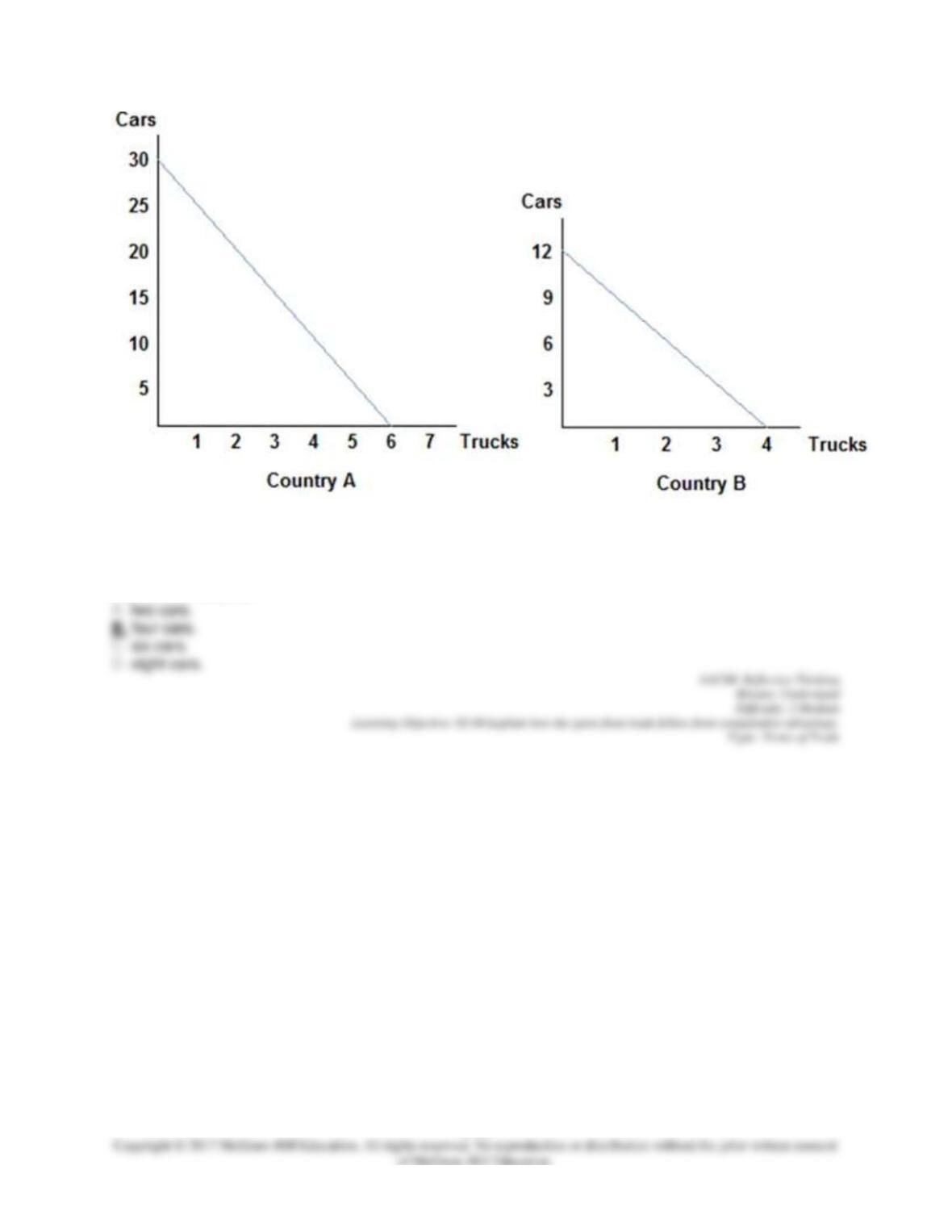
123.
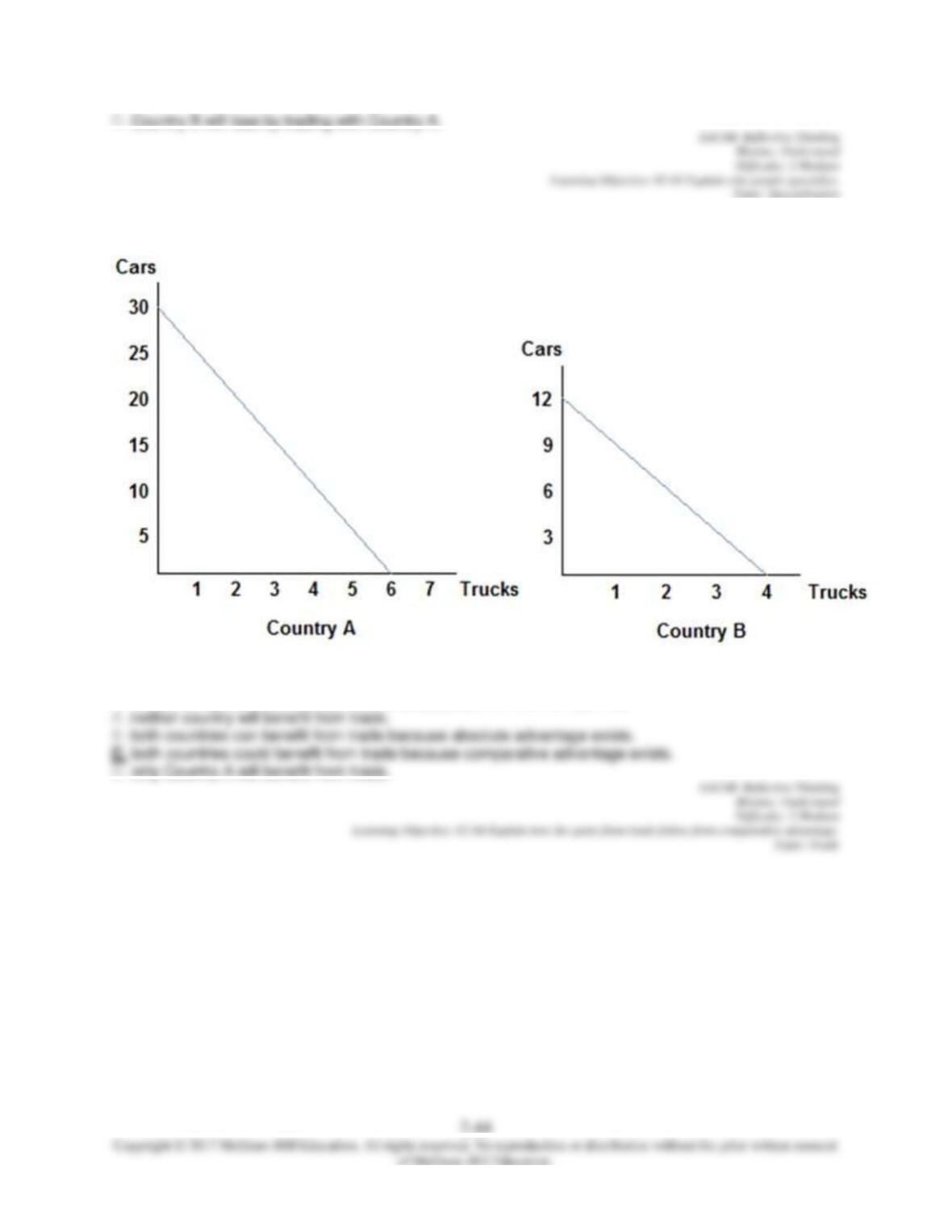
Refer to the figure shown, which represents the production possibilities frontiers for Countries A and B.
After comparing each country’s production possibilities curve, it is clear that:
124.
Refer to the figure shown, which represents the production possibilities frontiers for Countries A and B.
After examining each country’s production possibilities curve, it is clear that:
125.
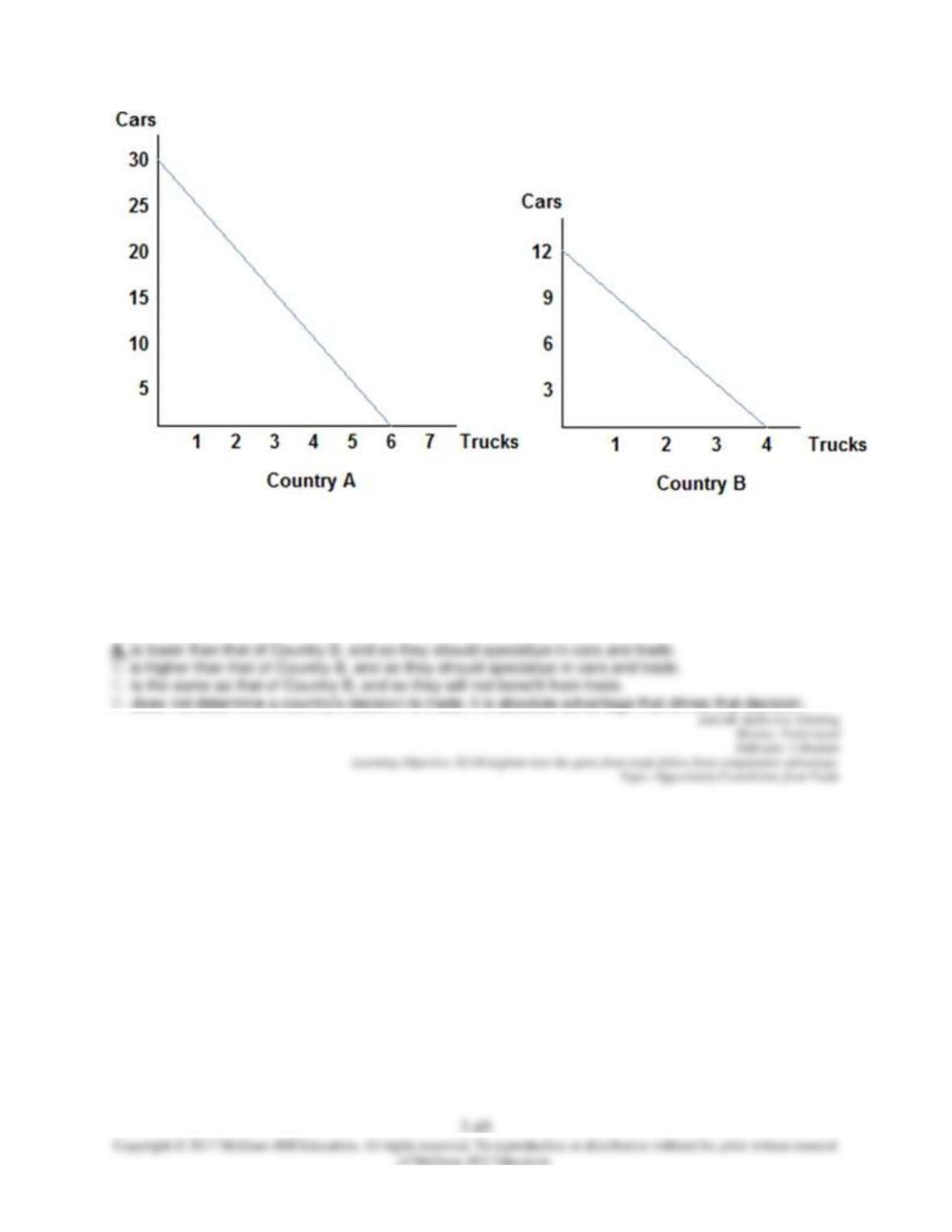
Refer to the figure shown, which represents the production possibilities frontiers for Countries A and B.
After examining the production possibilities of each country, we can surmise that Country A’s opportunity
cost of a car:
2-46
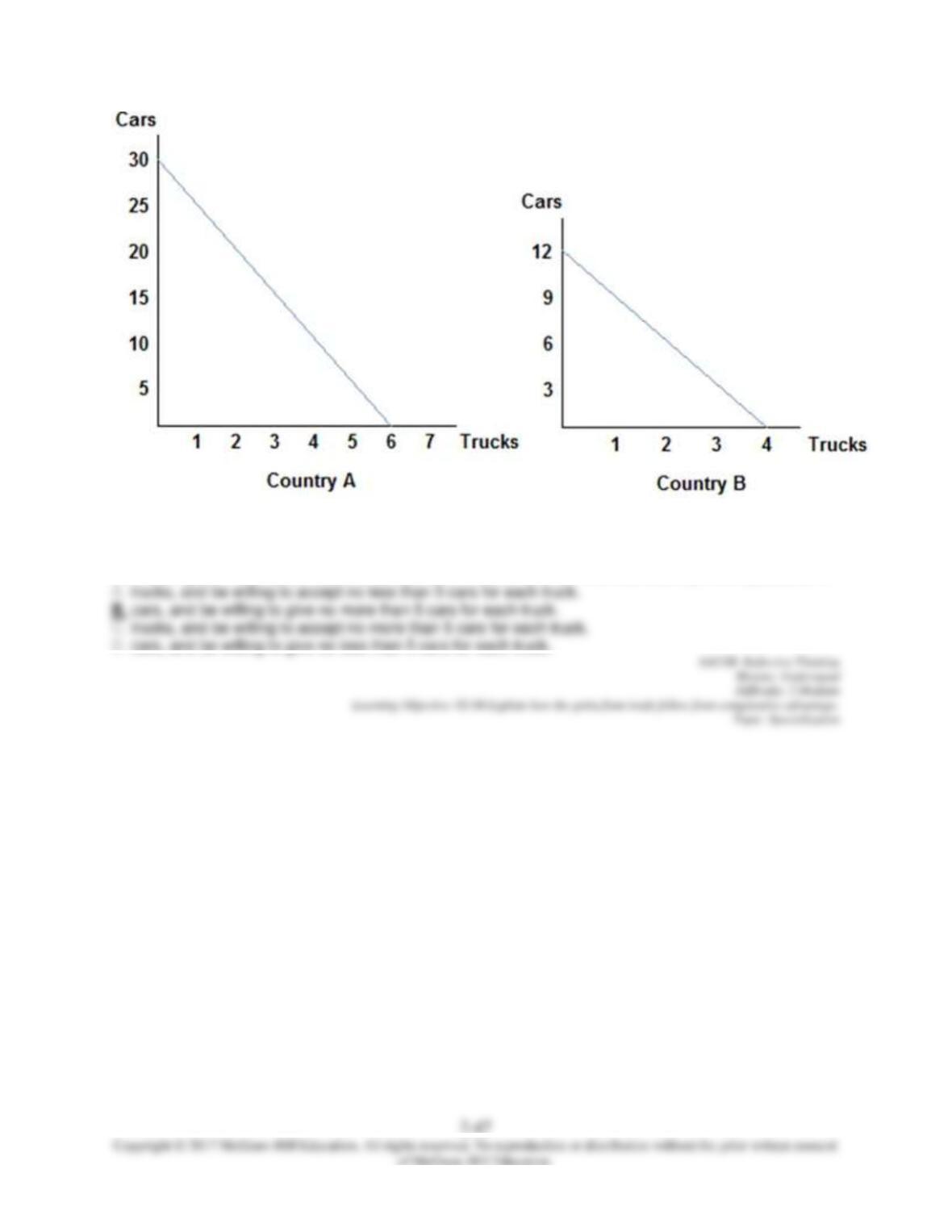
126.
Refer to the figure shown, which represents the production possibilities frontiers for Countries A and B.
Considering both country’s production possibilities frontiers, we know that would both agree to terms of
trade of one truck to:
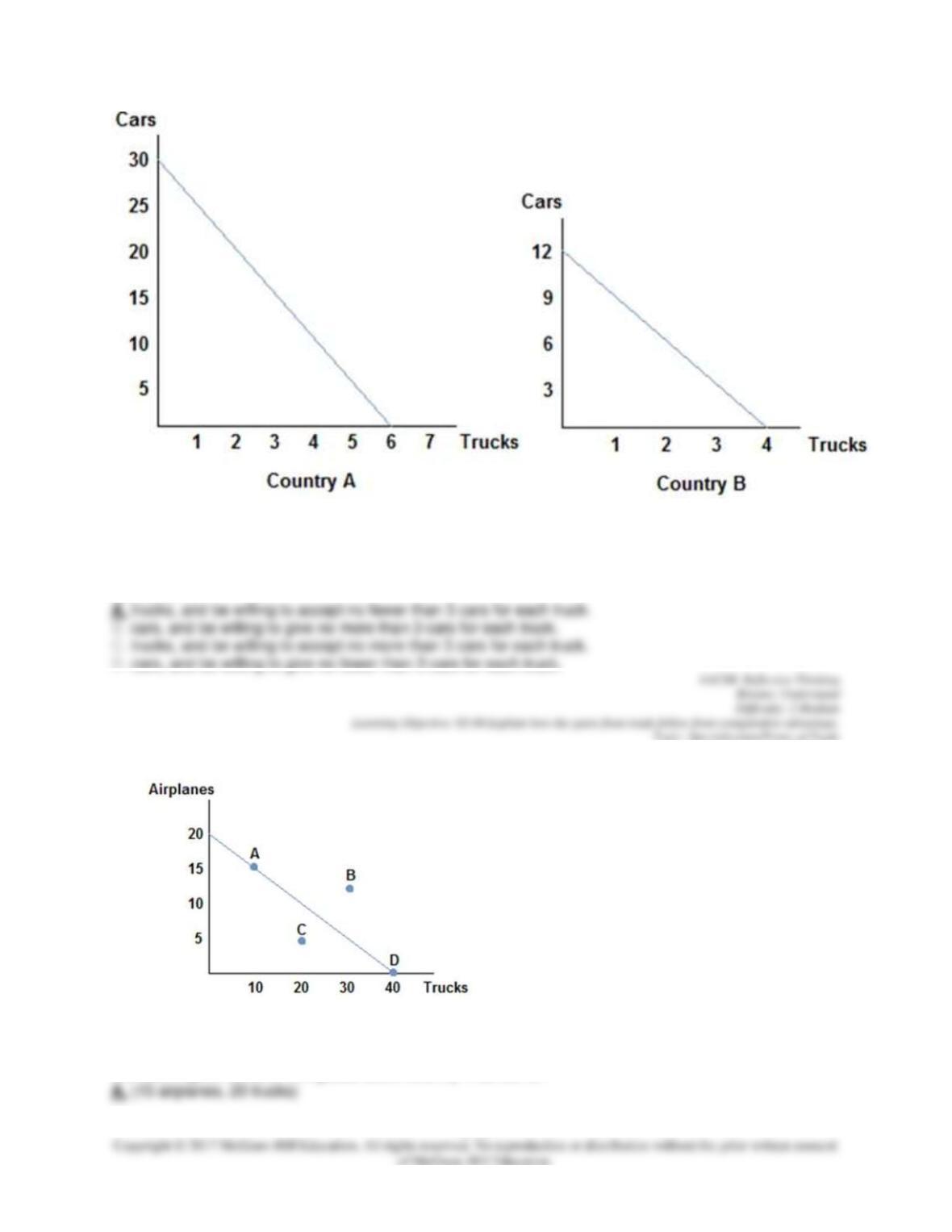
127.
Refer to the figure shown, which represents the production possibilities frontiers for Countries A and B.
Considering both country’s production possibilities frontiers, we can infer that Country A will specialize in:
2-48
128.
Refer to the figure shown, which represents the production possibilities frontiers for Countries A and B.
Considering both country’s production possibilities frontiers, we can conclude that Country B will
specialize in:
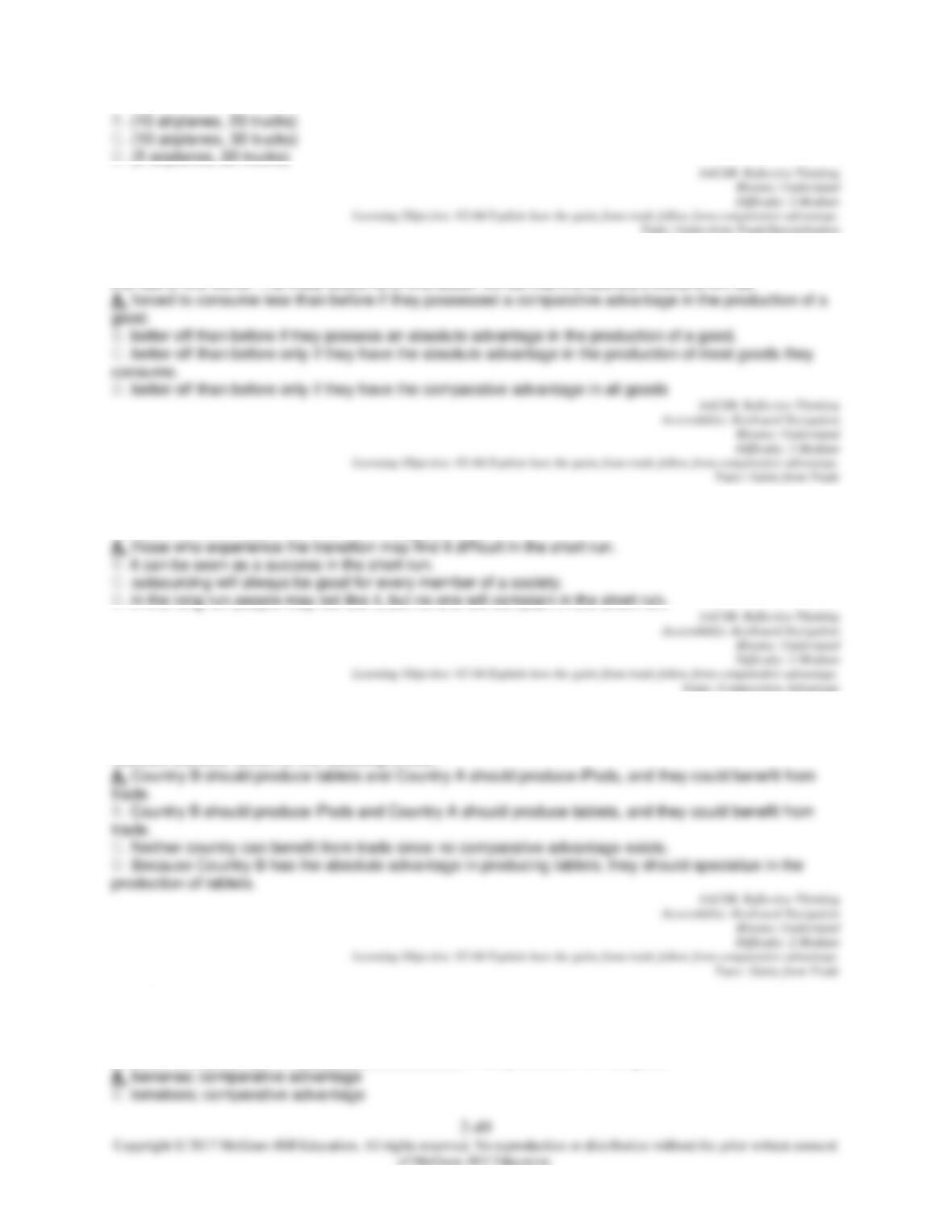
129.
Suppose the figure shown represents the production possibilities frontier for Country A. Country B offers
to trade four trucks for every airplane. Assuming Country A specializes in airplane production, which of
the following combinations of goods could Country A consume?
130. A country’s newest ruler has decided the country will become self-sufficient and ceases trade with
the rest of the world. The likely outcome of this action will be that the country’s citizens will be:
131. Economic theory states that losing comparative advantage in one good means creating a
comparative advantage in another. This suggests that:
132. Suppose that a worker in Country A can make either 10 iPods or 5 tablets each year. Country A has
100 workers. Suppose a worker in Country B can make either 2 iPods or 10 tablets each year. Country B
has 200 workers. Which of the following is true?
133. Suppose that a worker in Country A can make either 25 bananas or 5 tomatoes each year. Country
A has 200 workers. Suppose a worker in Country B can make either 18 bananas or 6 tomatoes each
year. Country B has 400 workers. The workers in Country A should specialize in __________________
because they possess the ___________________ in the production of that good.
134. Suppose that a worker in Country A can make either 25 bananas or 5 tomatoes each year. Country
A has 200 workers. Suppose a worker in Country B can make either 18 bananas or 6 tomatoes each
year. Country B has 400 workers. The workers in Country B will benefit from trade if they:
135. Suppose that a worker in Country A can make either 25 bananas or 5 tomatoes each year. Country
A has 200 workers. Suppose a worker in Country B can make either 18 bananas or 6 tomatoes each
year. Country B has 400 workers. Suppose Country B decides to specialize in tomatoes, and Country A
specializes in bananas. What terms of trade would both countries agree to? One tomato for:
136. Suppose that a worker in Country A can make either 25 bananas or 5 tomatoes each year. Country
A has 200 workers. Suppose a worker in Country B can make either 18 bananas or 6 tomatoes each
year. Country B has 400 workers. Suppose Country A specializes in bananas, and Country B specializes
in tomatoes. The limits to the terms of trade that Country A would find acceptable are Country A will give
no:
137. Suppose that a worker in Country A can make either 25 bananas or 5 tomatoes each year. Country
A has 200 workers. Suppose a worker in Country B can make either 18 bananas or 6 tomatoes each
year. Country B has 400 workers. Suppose Country A specializes in bananas, and Country B specializes
in tomatoes. The limits to the terms of trade that Country B would find acceptable are Country B will
accept no:
138. What determines a country’s limits to acceptable terms of trade?
139. Tom and Jerry have two tasks to do all day: make dishes and build fences. If Tom spends all day
making dishes, he will have make 16 dishes. If he instead devotes his day to building fences, Tom will
build 4 fences. If Jerry spends his day making dishes, he will make 14 dishes; if he spends the day
building fences, he will build 7 fences. Based on their production possibilities frontiers, Tom and Jerry:
140. Tom and Jerry have two tasks to do all day: make dishes and build fences. If Tom spends all day
making dishes, he will have make 16 dishes. If he instead devotes his day to building fences, Tom will
build 4 fences. If Jerry spends his day making dishes, he will make 14 dishes; if he spends the day
building fences, he will build 7 fences. If Jerry decides to specialize in building fences, what are the limits
to his terms of trade?
141. The concepts of comparative advantage, specialization, and trade form a compelling argument in
favor of:
2-52
142. The concepts of comparative advantage, specialization, and trade:
Chapter 02 Test Bank Summary
Category
# of Questi
ons
AACSB: Reflective Thinking
142
Accessibility: Keyboard Navigation
104
Blooms: Remember
45
Blooms: Understand
97
Difficulty: 1 Easy
45
Difficulty: 2 Medium
97
Learning Objective: 02-
01 Construct a production possibilities graph and describe what causes shifts in product
ion possibilities curves.
64
Learning Objective: 02-02 Define absolute and comparative advantage.
43
Learning Objective: 02-03 Explain why people specialize.
18
Learning Objective: 02-
04 Explain how the gains from trade follow from comparative advantage.
17
Topic: Absolute Advantage
13
Topic: Absolute and Comparative Advantage
2
Topic: Benefits of Trade
4
Topic: Comparative Advantage
19
Topic: Efficiency
2
Topic: Gains from Trade
8
Topic: Gains from Trade/Specialization
1
Topic: Invisible Hand
2
Topic: Opportunity Cost/Slope of PPF
1
Topic: Opportunity Costs
17

2-53
Topic: Opportunity Costs and Comparative Advantage
1
Topic: Opportunity Costs/Gains from Trade
1
Topic: PPF
38
Topic: PPF/Opportunity Costs
5
Topic: PPF/Trade-offs
1
Topic: Realistic PPF
1
Topic: Specialization
17
Topic: Specialization/Terms of Trade
1
Topic: Terms of Trade
4
Topic: Trade
1
Topic: Trade-offs
3