2-21
53.
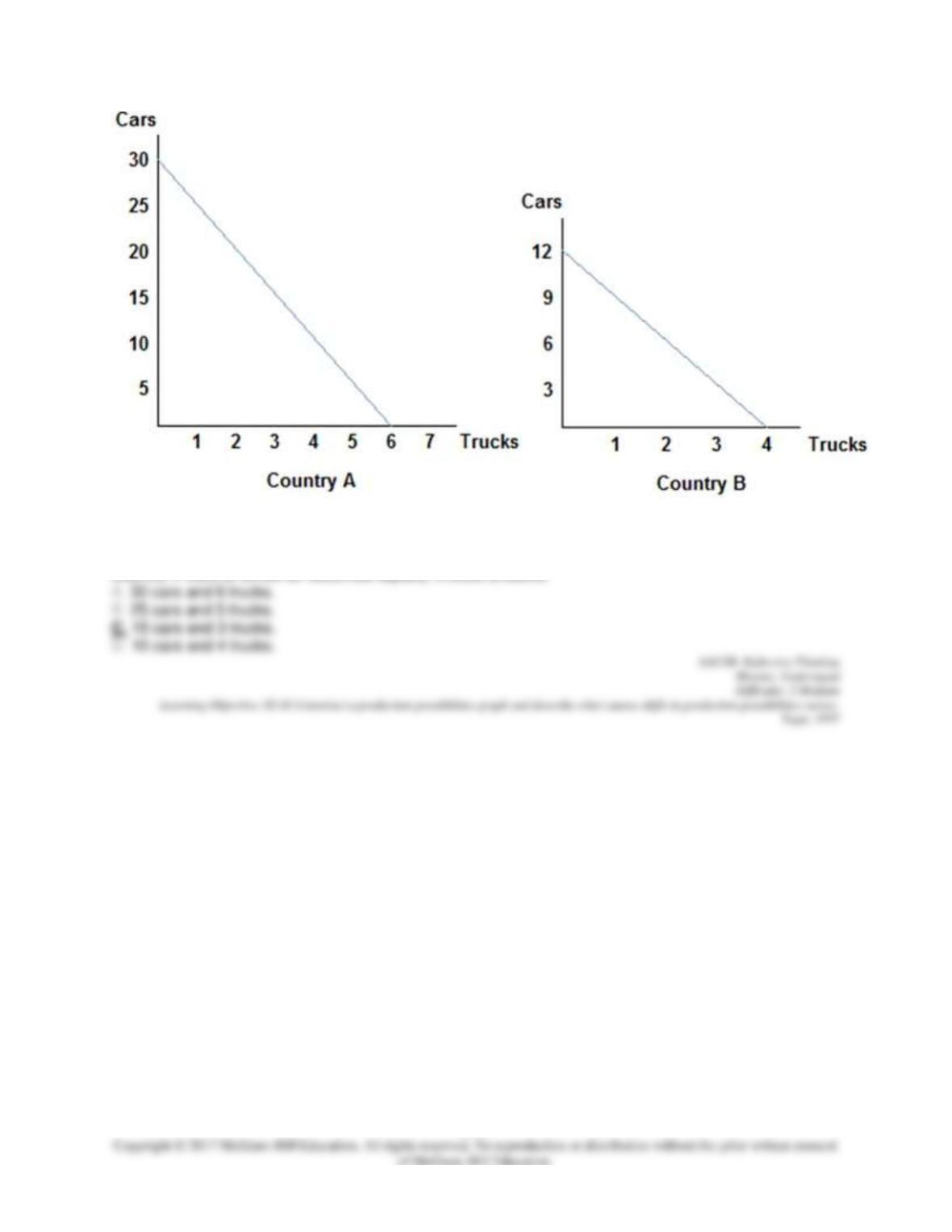
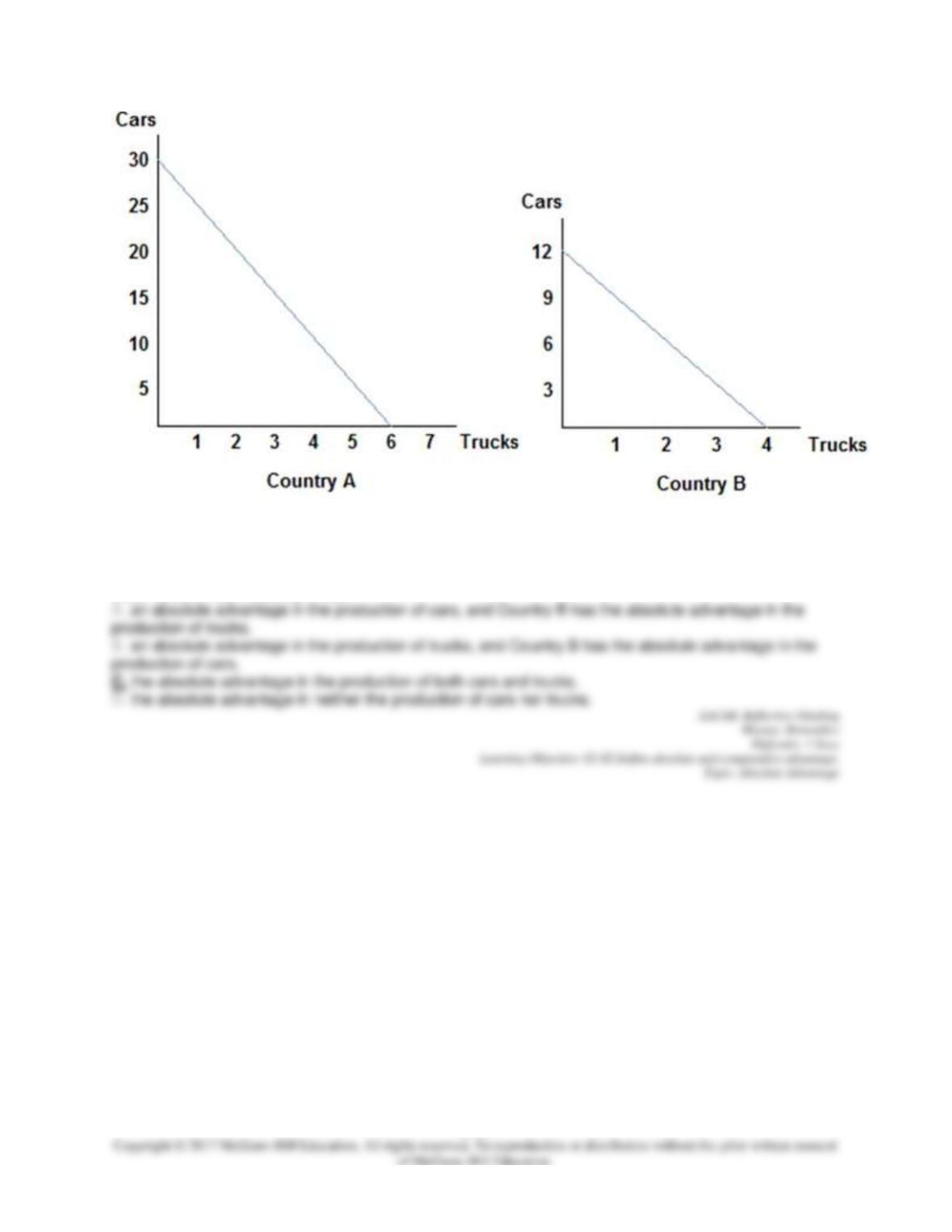
Refer to the figure shown, which represents the production possibilities frontiers for Countries A and B. If
Country A were to divide its resources equally, it could produce:
2-22
54.
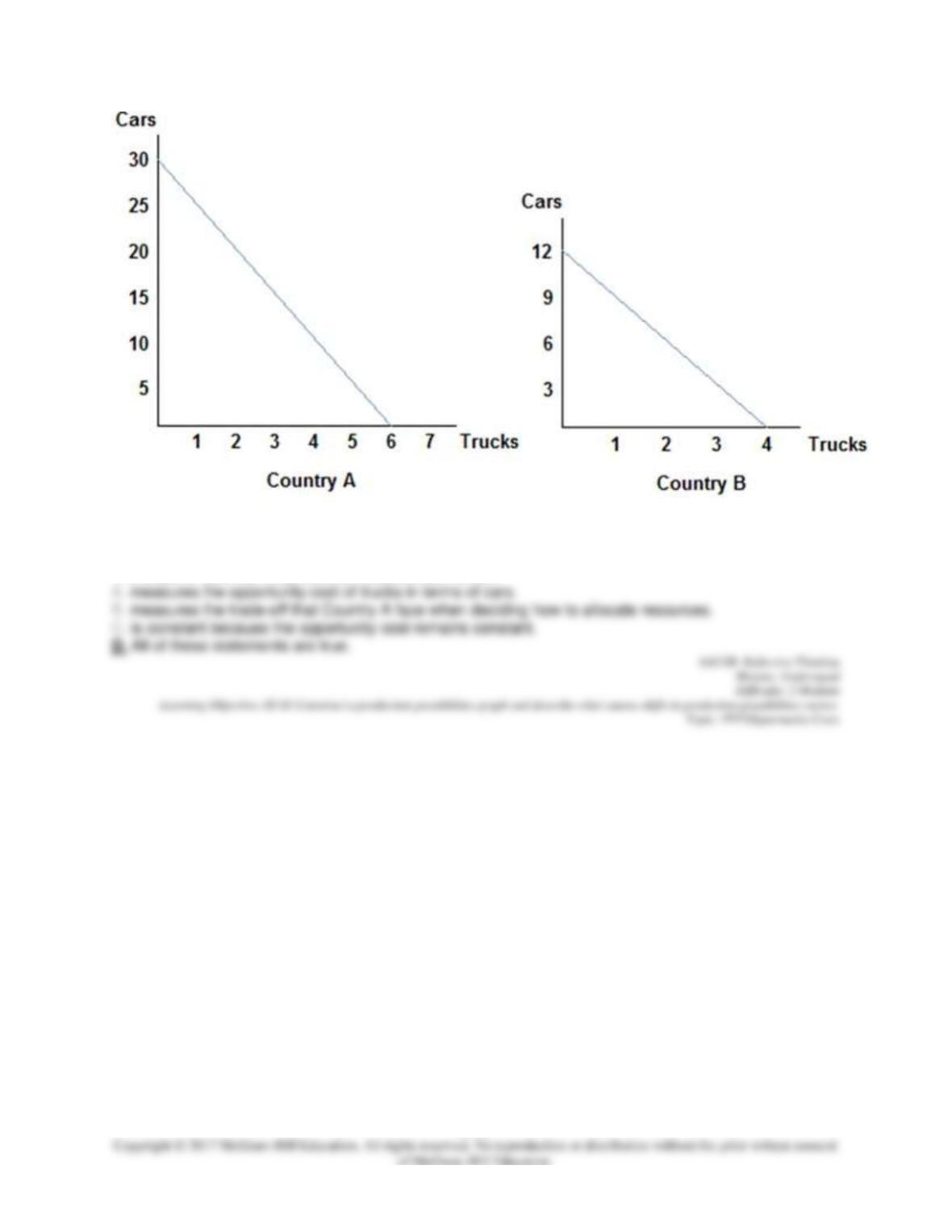
Refer to the figure shown, which represents the production possibilities frontiers for Countries A and B.
The slope of Country A’s production possibilities frontier:
55.
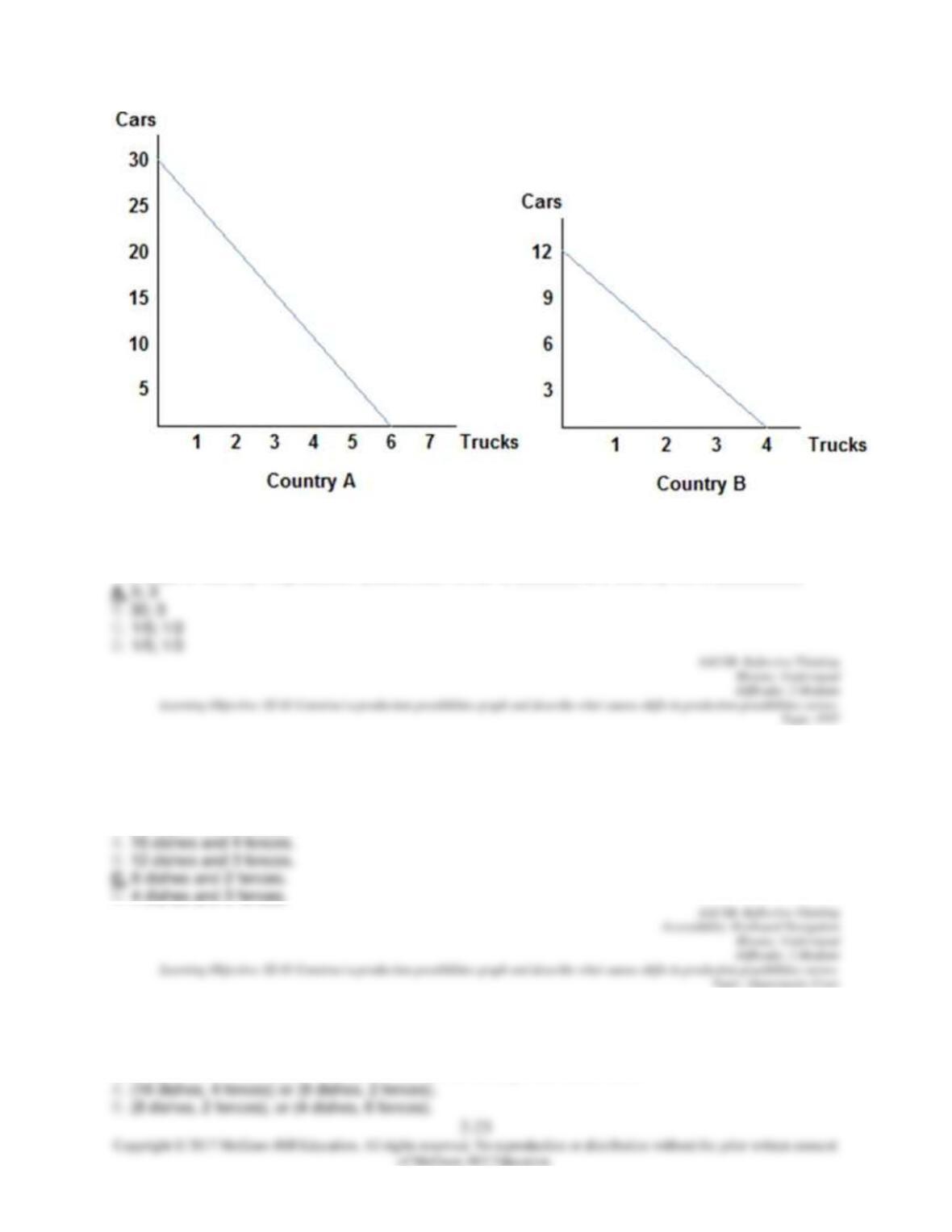
Refer to the figure shown, which represents the production possibilities frontiers for Countries A and B.
The slope of Country A’s production possibilities frontier is _______, and Country B’s is __________.
56. Tom and Jerry have two tasks to do all day: make dishes and build fences. If Tom spends all day
making dishes, he will have make 16 dishes. If he instead devotes his day to building fences, Tom will
build 4 fences. If Jerry spends his day making dishes, he will make 14 dishes; if he spends the day
building fences, he will build 7 fences. If Tom divides his time evenly between activities and acts
efficiently, he will produce:
57. Tom and Jerry have two tasks to do all day: make dishes and build fences. If Tom spends all day
making dishes, he will have make 16 dishes. If he instead devotes his day to building fences, Tom will
build 4 fences. If Jerry spends his day making dishes, he will make 14 dishes; if he spends the day
building fences, he will build 7 fences. At the end of the day, Tom could have:
2-24
58. Tom and Jerry have two tasks to do all day: make dishes and build fences. If Tom spends all day
making dishes, he will have make 16 dishes. If he instead devotes his day to building fences, Tom will
build 4 fences. If Jerry spends his day making dishes, he will make 14 dishes; if he spends the day
building fences, he will build 7 fences. At the end of the day, Jerry could have produced:
59. Tom and Jerry have two tasks to do all day: make dishes and build fences. If Tom spends all day
making dishes, he will have make 16 dishes. If he instead devotes his day to building fences, Tom will
build 4 fences. If Jerry spends his day making dishes, he will make 14 dishes; if he spends the day
building fences, he will build 7 fences. At the end of the day, if Jerry was efficient with his resources, he
could have produced:
60. Tom and Jerry have two tasks to do all day: make dishes and build fences. If Tom spends all day
making dishes, he will have make 16 dishes. If he instead devotes his day to building fences, Tom will
build 4 fences. If Jerry spends his day making dishes, he will make 14 dishes; if he spends the day
building fences, he will build 7 fences. For Tom, the opportunity cost of building a fence is __________
dishes made.
61. Tom and Jerry have two tasks to do all day: make dishes and build fences. If Tom spends all day
making dishes, he will have make 16 dishes. If he instead devotes his day to building fences, Tom will
build 4 fences. If Jerry spends his day making dishes, he will make 14 dishes; if he spends the day
building fences, he will build 7 fences. For Jerry, the opportunity cost of building a fence is ________
dishes made.
2-25
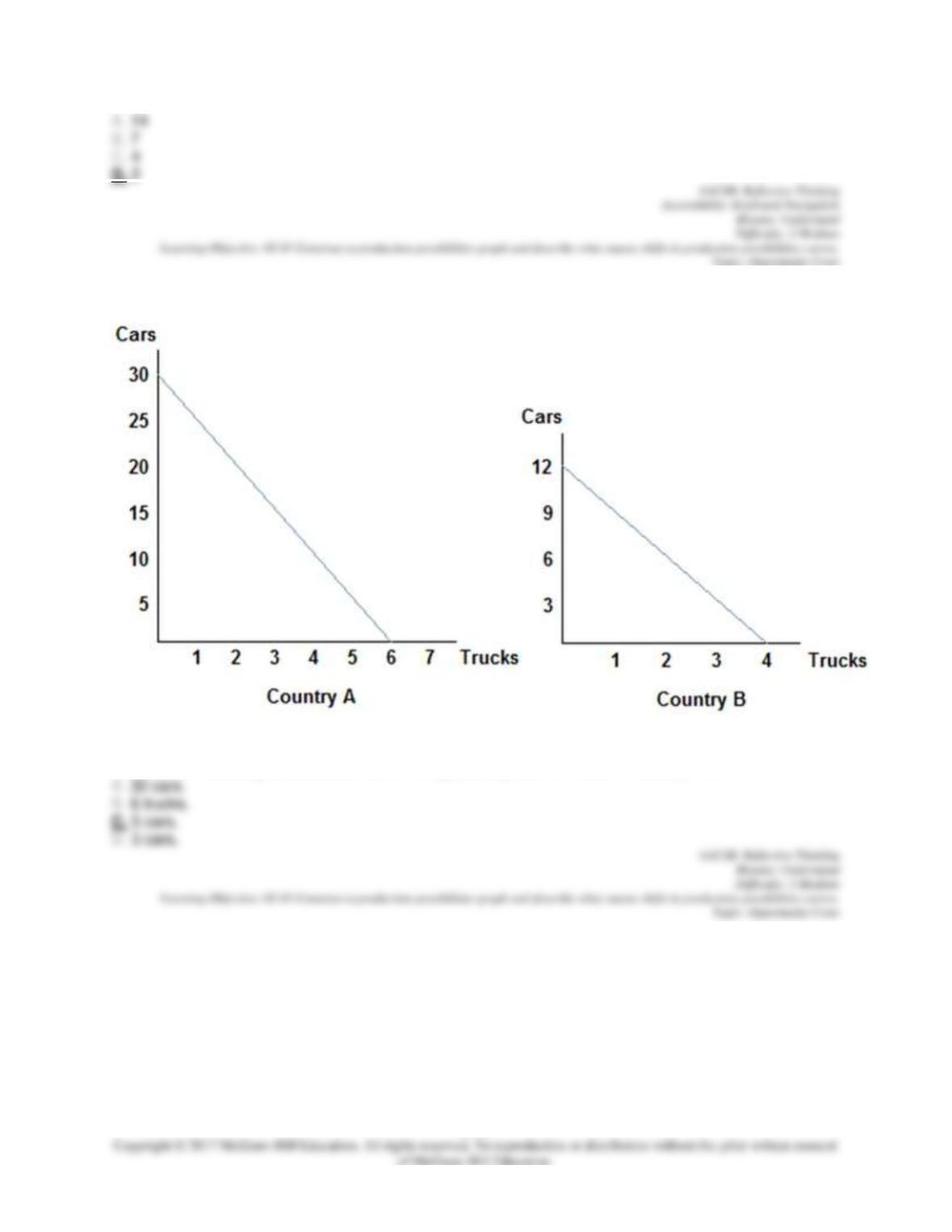
62.
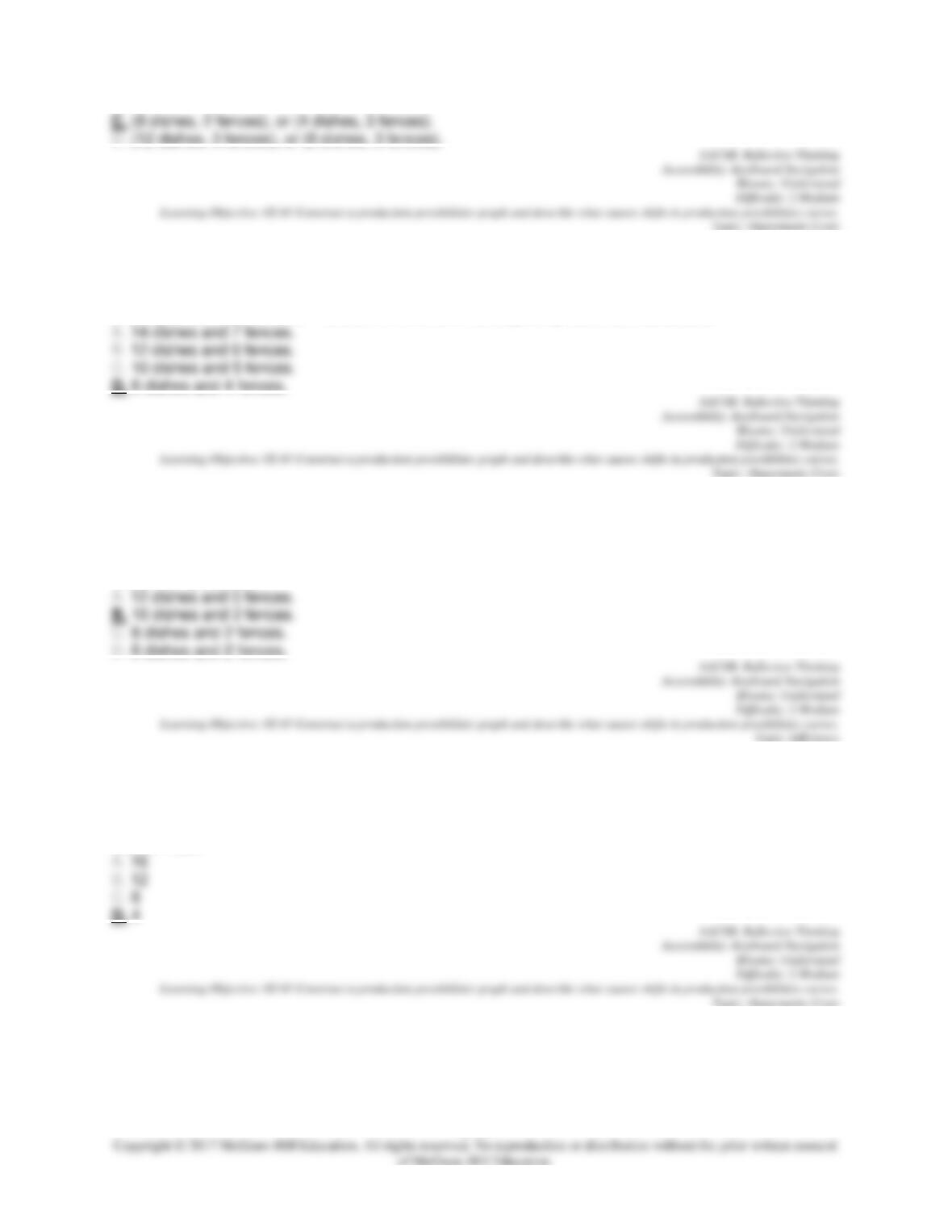
Refer to the figure shown, which represents the production possibilities frontiers for Countries A and B.
Which of the following statements is true? The opportunity cost of a truck in Country A is:
2-26
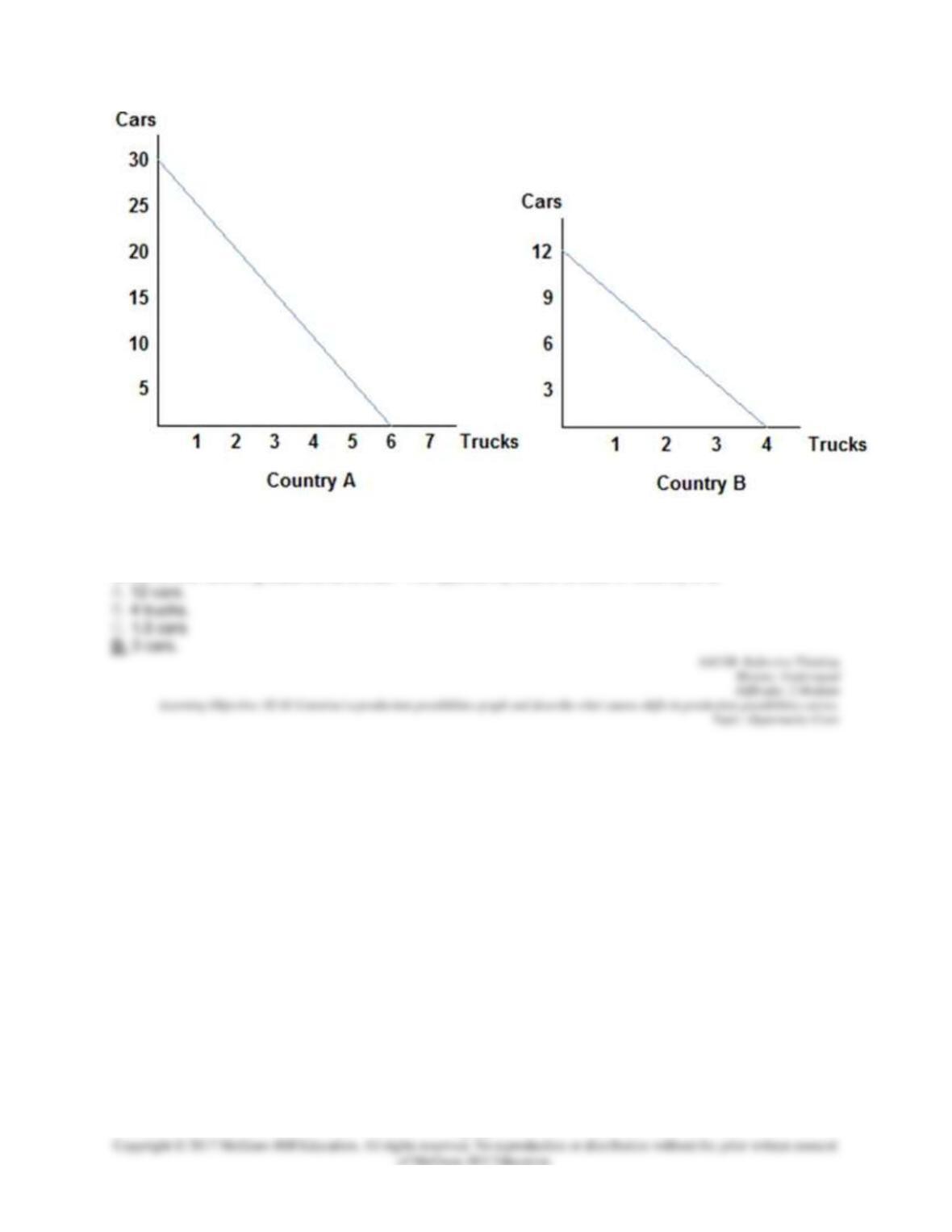
63.
Refer to the figure shown, which represents the production possibilities frontiers for Countries A and B.
Which of the following statements is true? The opportunity cost of a truck in Country B is:
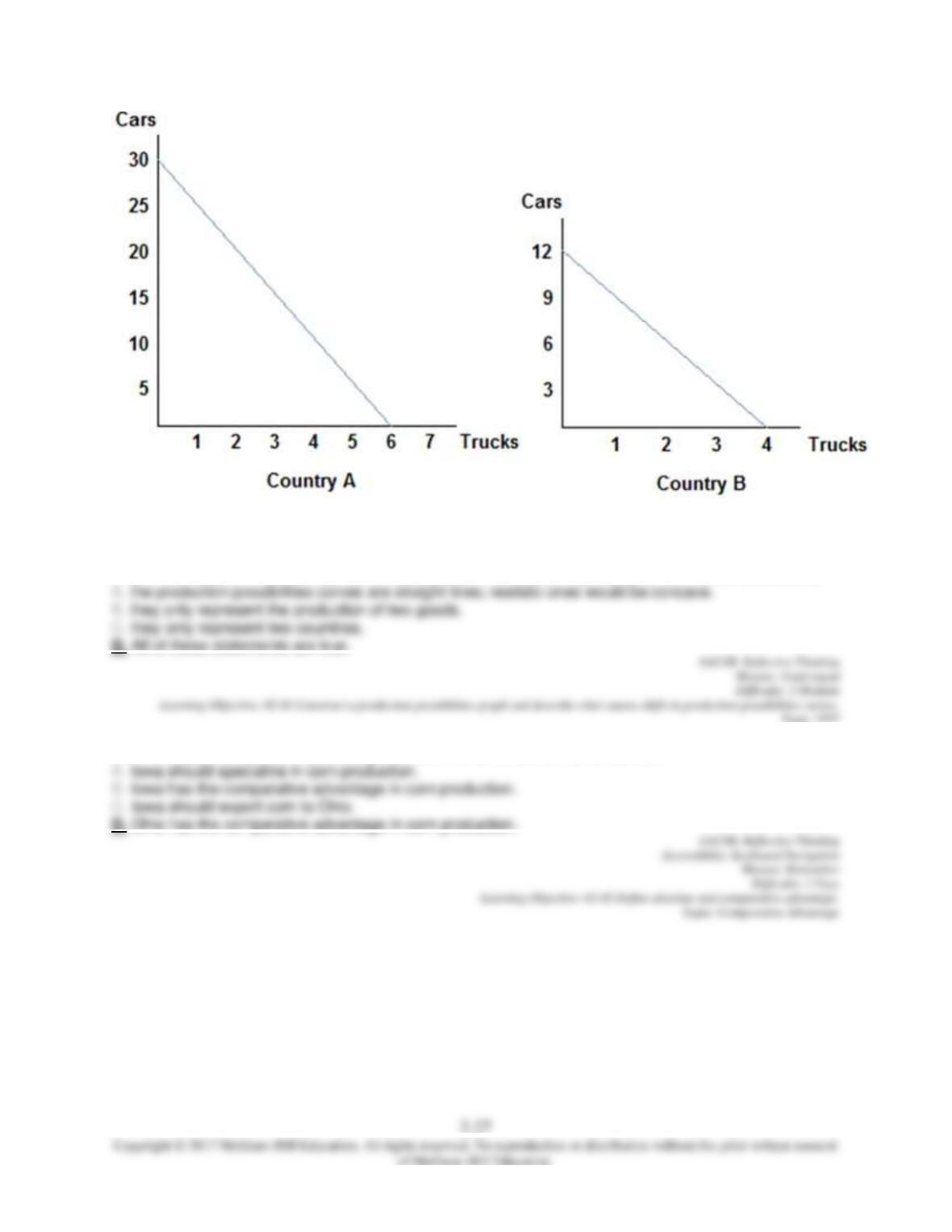
64.
Refer to the figure shown, which represents the production possibilities frontiers for Countries A and B.
One of the reasons why Country A and Country B are not realistic representations of actual countries is:
65. If the opportunity cost of producing corn is lower for Ohio than for Iowa, then:
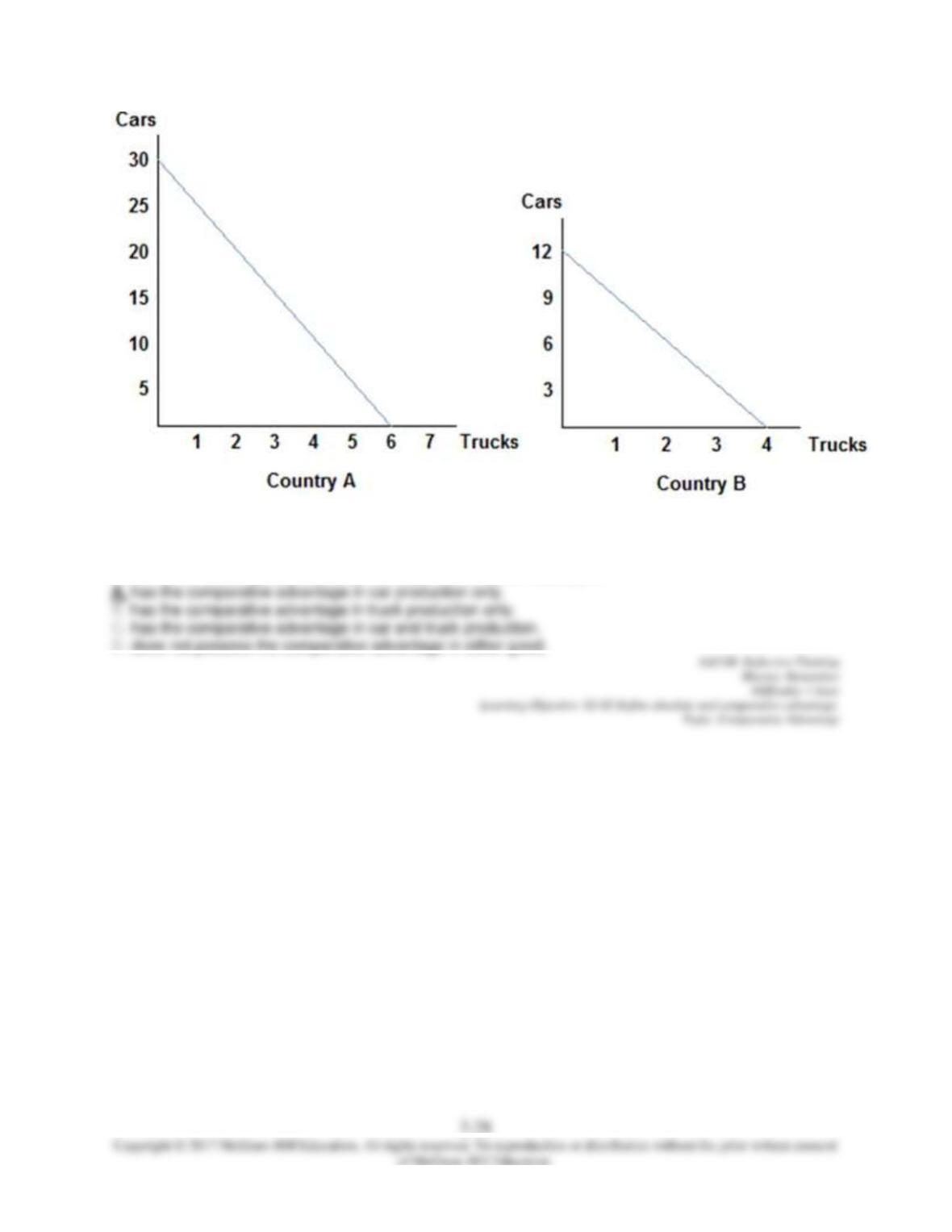
66.
Refer to the figure shown, which represents the production possibilities frontiers for Countries A and B.
Which of the following statements can be said of Country A? Country A:
2-29
67.
Refer to the figure shown, which represents the production possibilities frontiers for Countries A and B.
Assuming both countries have the same amount of resources available to them, which of the following
statements is true? Country A has:
68.
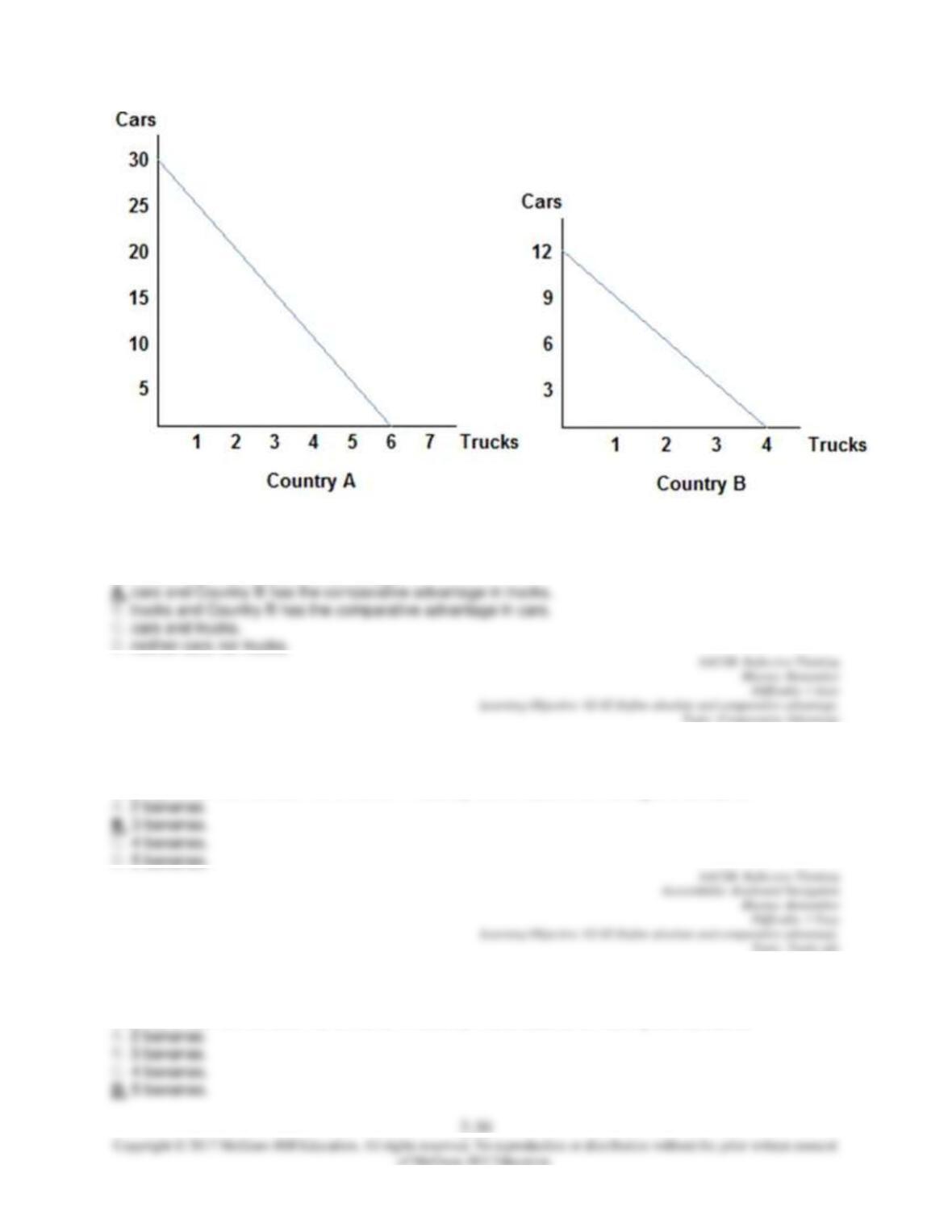
Refer to the figure shown, which represents the production possibilities frontiers for Countries A and B.
Country A has the comparative advantage in:
69. Suppose that a worker in Country A can make either 25 bananas or 5 tomatoes each year. Country A
has 200 workers. Suppose a worker in Country B can make either 18 bananas or 6 tomatoes each year.
Country B has 400 workers. For a worker in Country B, the trade-off to making one tomato is:
70. Suppose that a worker in Country A can make either 25 bananas or 5 tomatoes each year. Country A
has 200 workers. Suppose a worker in Country B can make either 18 bananas or 6 tomatoes each year.
Country B has 400 workers. For a worker in Country A, the trade-off of making one tomato is:
2-31
71. Suppose that a worker in Country A can make either 10 iPods or 5 tablets each year. Country A has
100 workers. Suppose a worker in Country B can make either 2 iPods or 10 tablets each year. Country B
has 200 workers. Country B has the comparative advantage in the production of:
72. Suppose that a worker in Country A can make either 10 iPods or 5 tablets each year. Country A has
100 workers. Suppose a worker in Country B can make either 2 iPods or 10 tablets each year. Country B
has 200 workers. Country A has the absolute advantage in the production of:
73. Suppose that a worker in Country A can make either 10 iPods or 5 tablets each year. Country A has
100 workers. Suppose a worker in Country B can make either 2 iPods or 10 tablets each year. Country B
has 200 workers. Suppose Country B’s population of workers increased to 600. We can say:
74. Suppose that, given the same number of workers, the United States can produce five times as many
computers or 10 times as many airplanes as Mexico. Which of the following statements is true?
2-32
Topic: Absolute Advantage
75. Suppose that, given the same number of workers, the United States can produce two times as many
TVs or 20 times as many potatoes as Chile. Which of the following statements is true?
76. If a country possesses the absolute advantage in the production of one good:
77. Suppose that only two goods are produced in an economy. If a country possesses the comparative
advantage in the production of one good then it:
78. Suppose an American worker can make 20 pairs of shoes or grow 100 apples per day. On the other
hand, a Canadian worker can produce 10 pairs of shoes or grow 20 apples per day. Which of the
following statements is true?
Topic: Absolute Advantage
79. Suppose an American worker can make 20 pairs of shoes or grow 100 apples per day. On the other
hand, a Canadian worker can produce 10 pairs of shoes or grow 20 apples per day. Which of the
following statements is true? The United States has an absolute advantage:
80. Suppose an American worker can make 20 pairs of shoes or grow 100 apples per day. On the other
hand, a Canadian worker can produce 10 pairs of shoes or grow 20 apples per day. Which of the
following statements is true?
81. Suppose an American worker can make 20 pairs of shoes or grow 100 apples per day. On the other
hand, a Canadian worker can produce 10 pairs of shoes or grow 20 apples per day. When trade opens
up, the United States should produce:
82. Suppose an American worker can make 20 pairs of shoes or grow 100 apples per day. On the other
hand, a Canadian worker can produce 10 pairs of shoes or grow 20 apples per day. The opportunity cost
of one pair of shoes for the United States is _______, while the opportunity cost of one pair of shoes for
Canada is _________.
83. Suppose an American worker can make 20 pairs of shoes or grow 100 apples per day. On the other
hand, a Canadian worker can produce 10 pairs of shoes or grow 20 apples per day. The opportunity cost
for the United States is:
84. Suppose an American worker can make 20 pairs of shoes or grow 100 apples per day. On the other
hand, a Canadian worker can produce 10 pairs of shoes or grow 20 apples per day. The opportunity cost
for Canada is:
85. Suppose an American worker can make 20 pairs of shoes or grow 100 apples per day. On the other
hand, a Canadian worker can produce 10 pairs of shoes or grow 20 apples per day. The opportunity cost
of a pair of shoes is __________ for the United States than Canada, so Canada has the
______________ advantage in shoe production.
86. Suppose an American worker can make 20 pairs of shoes or grow 100 apples per day. On the other
hand, a Canadian worker can produce 10 pairs of shoes or grow 20 apples per day. Canada has the
____________ opportunity cost of a pair of shoes than the United States, so: ____________.
2-35
87. Suppose an American worker can make 50 pairs of gloves or grow 300 radishes per day. On the
other hand, a Bangladeshi worker can produce 100 pairs of gloves or grow 200 radishes per day. The
opportunity cost of one pair of gloves is:
88. Suppose an American worker can make 50 pairs of gloves or grow 300 radishes per day. On the
other hand, a Bangladeshi worker can produce 100 pairs of gloves or grow 200 radishes per day. Using
the concept of absolute advantage, which of the following statements is true? The United States:
89. Suppose an American worker can make 50 pairs of gloves or grow 300 radishes per day. On the
other hand, a Bangladeshi worker can produce 100 pairs of gloves or grow 200 radishes per day. Using
the concepts of absolute and comparative advantage, we can say that the United States has the
comparative advantage in:
90. Suppose an American worker can make 50 pairs of gloves or grow 300 radishes per day. On the
other hand, a Bangladeshi worker can produce 100 pairs of gloves or grow 200 radishes per day. Using
the concepts of advantage and trade, we can say that the opportunity cost of one pair of gloves is:
91. Suppose an American worker can make 50 pairs of gloves or grow 300 radishes per day. On the
other hand, a Bangladeshi worker can produce 100 pairs of gloves or grow 200 radishes per day. Which
of the following statements is true? Bangladesh should:
92. Suppose an American worker can make 100 chairs or catch 1,000 fish per day. A Chilean worker, on
the other hand, can produce 40 chairs or catch 400 fish per day. Which of the following statements is
true?
93. Suppose an American worker can make 100 chairs or catch 1000 fish per day. On the other hand, a
Chilean worker can produce 40 chairs or catch 400 fish per day. The United States possesses a(n)
_______________ advantage in chair production, but not a(n) ______________ advantage in fish
production.
94. Suppose an American worker can make 100 chairs or catch 900 fish per day. On the other hand, a
Chilean worker, can make 40 chairs or catch 400 fish per day. The United States has an absolute
advantage in the production of both fish and chairs. This means that the United States:
2-37
95. When a producer has the ability to produce a good or service at a lower opportunity cost than others,
economists say the producer:
96. When a producer has a comparative advantage in producing a good, it means the producer:
97. When a producer has an absolute advantage at producing a good, it means the producer:
98. The United States and Canada trade hockey skates and apple pie. If the United States has an
absolute and a comparative advantage in the production of apple pie, then:
99. Which of the following statements about absolute and comparative advantage is not true? A country
may have: