Chapter 02 Test Bank KEY
1. The invisible hand refers to the coordination that occurs from:
2. The concepts of specialization and gains from trade can be applied to:
3. The concept of the invisible hand was first introduced to economics by:
4. A production possibilities frontier is a line or curve that:
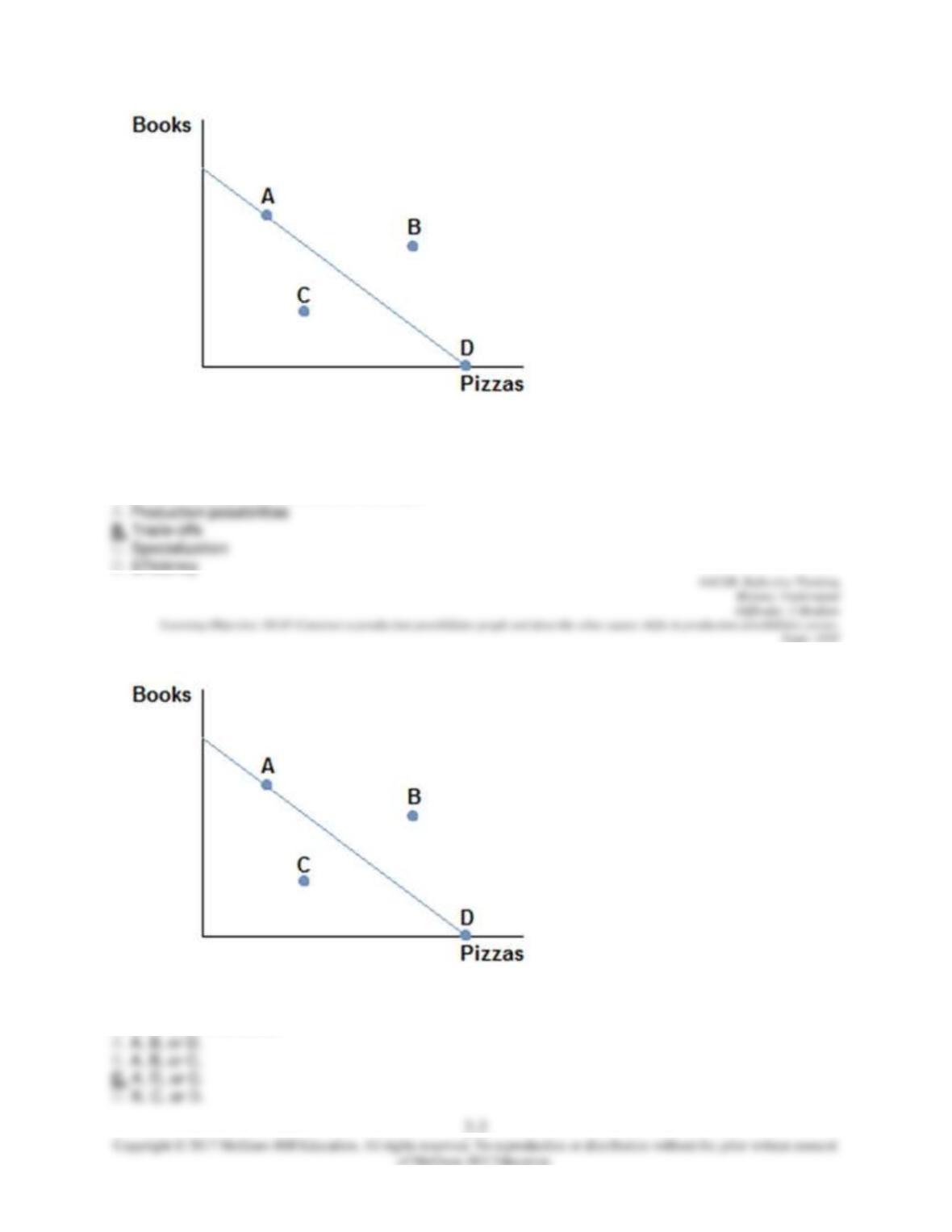
5.
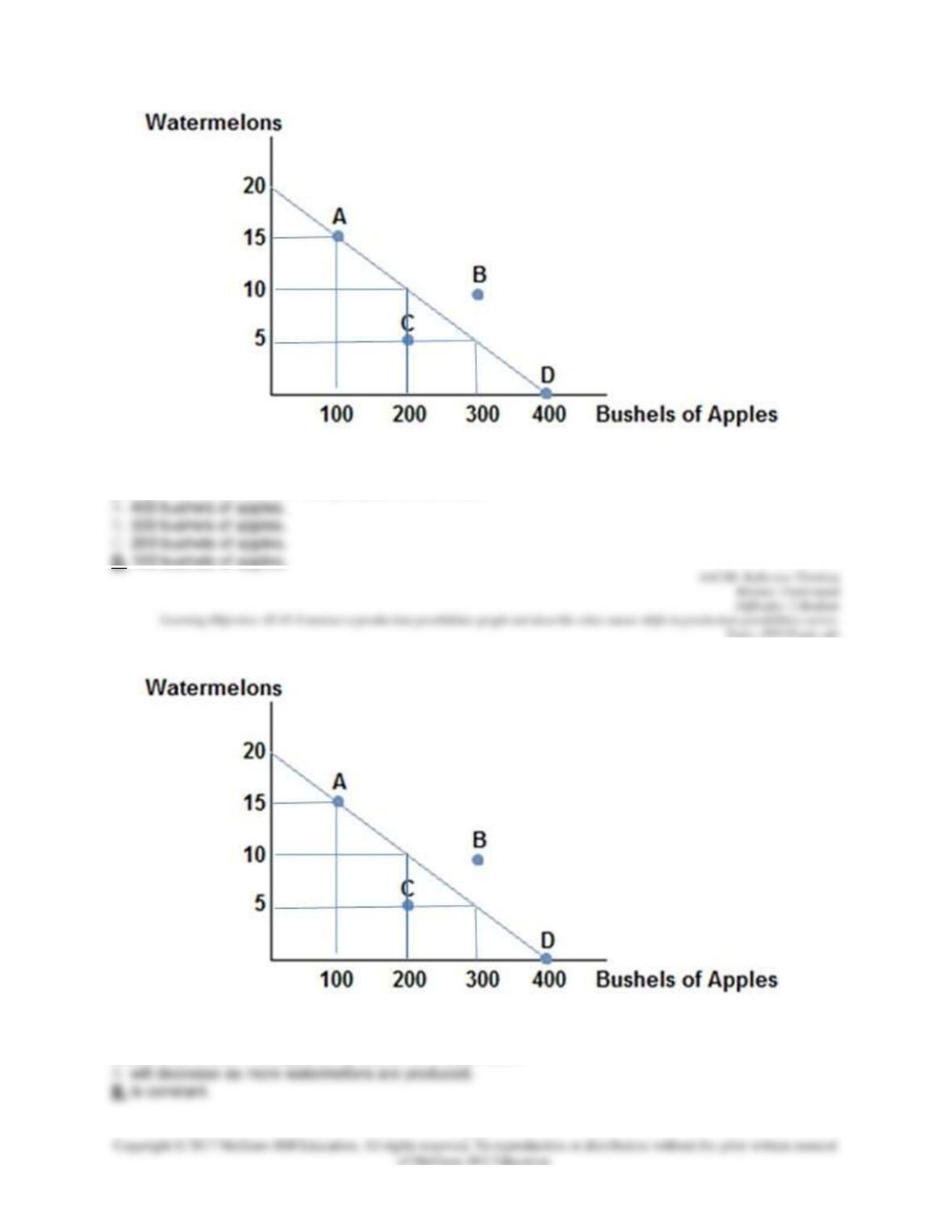
Consider the production possibilities frontier displayed in the figure shown. The fact that the line slopes
downward displays which economic concept?
6.
Consider the production possibilities frontier displayed in the figure shown. A society faced with this curve
could choose to produce:
2-3
7.
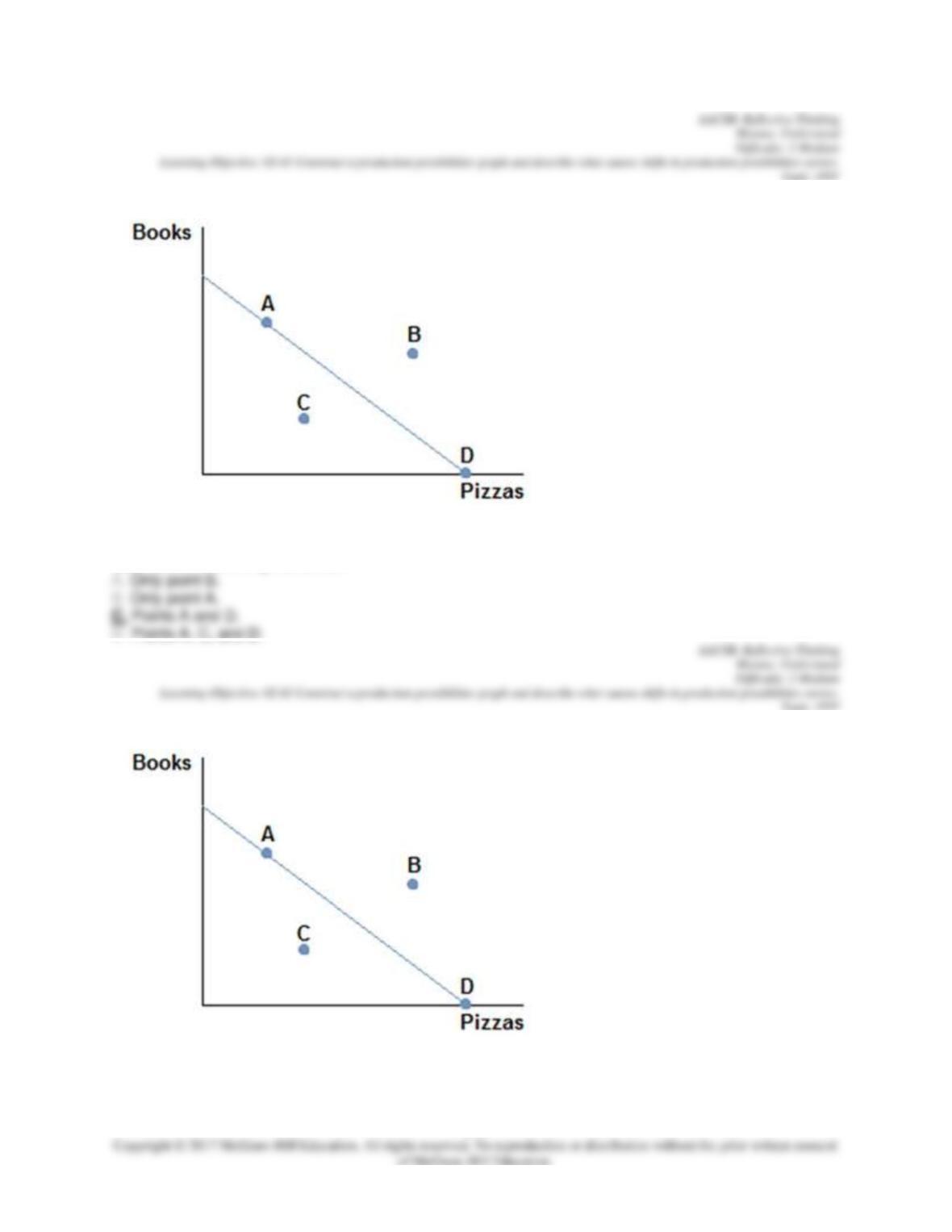
Consider the production possibilities frontier displayed in the figure shown. Which points are efficient and
attainable with existing resources?
8.
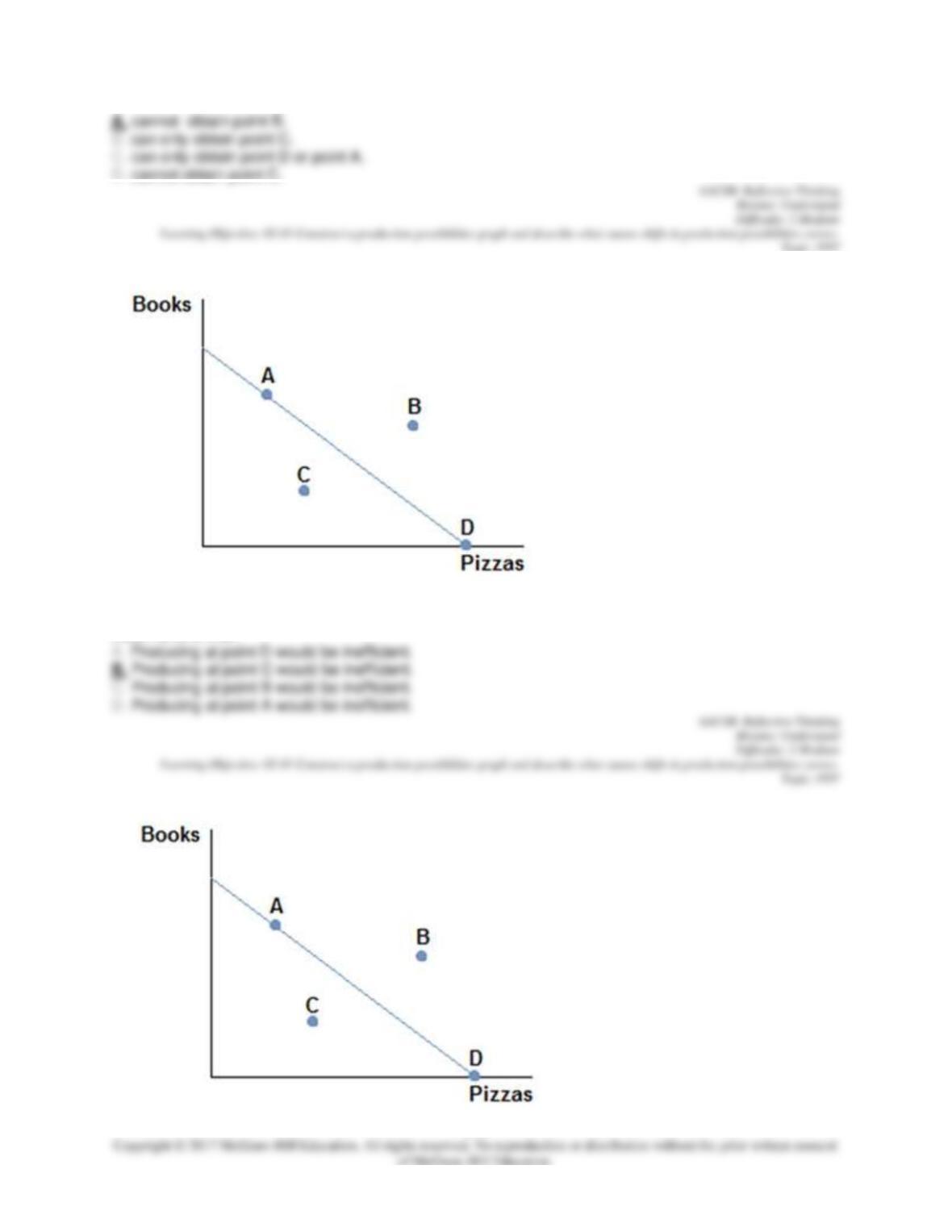
Consider the production possibilities frontier displayed in the figure shown. A society faced with this curve
currently:
2-4
9.
Consider the production possibilities frontier displayed in the figure shown. Which of the following
statements is true?
10.
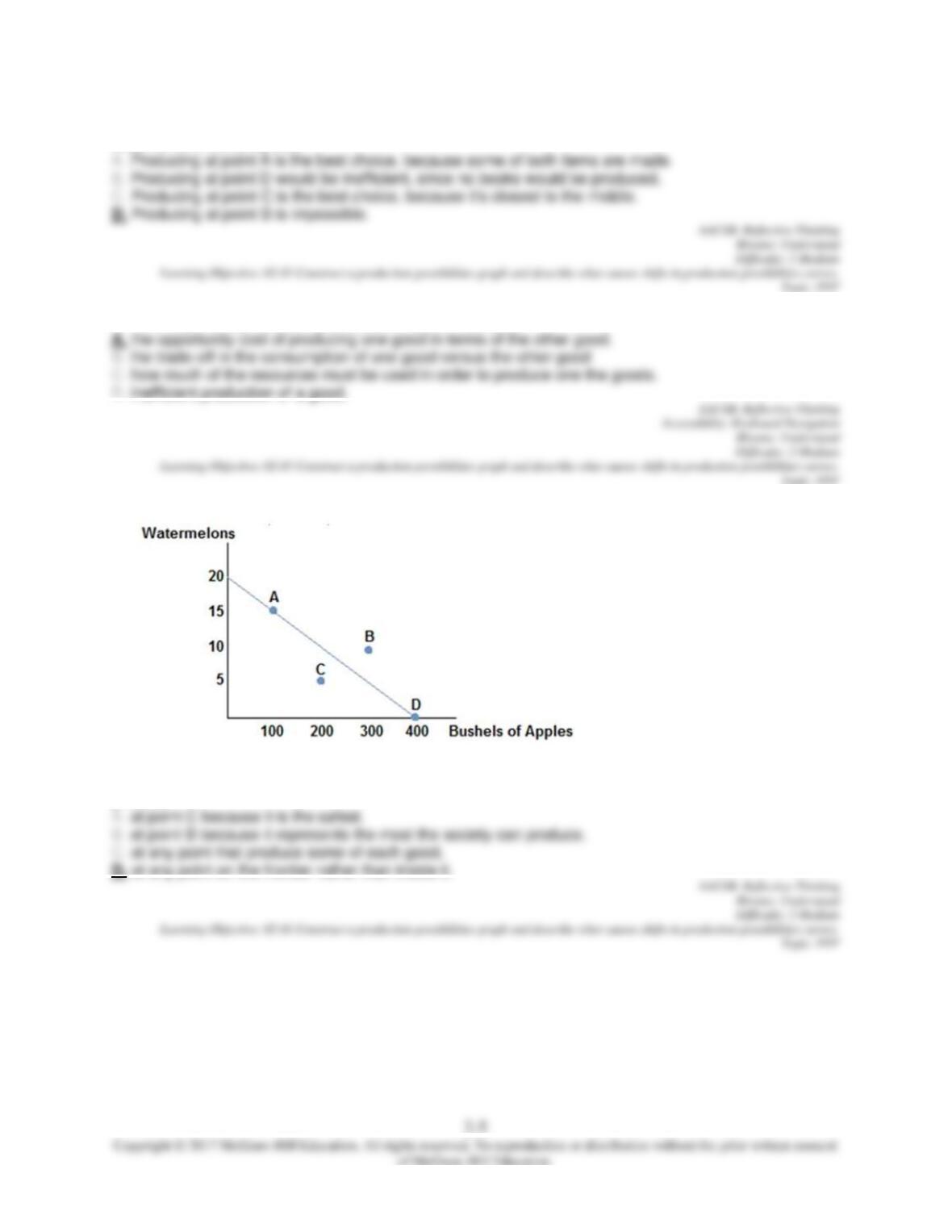
Consider the production possibilities frontier displayed in the figure shown. Which of the following
statements is currently true?
11. The slope of a production possibilities frontier measures:
12.
Consider the production possibilities frontier displayed in the figure shown. A society should choose to
produce:
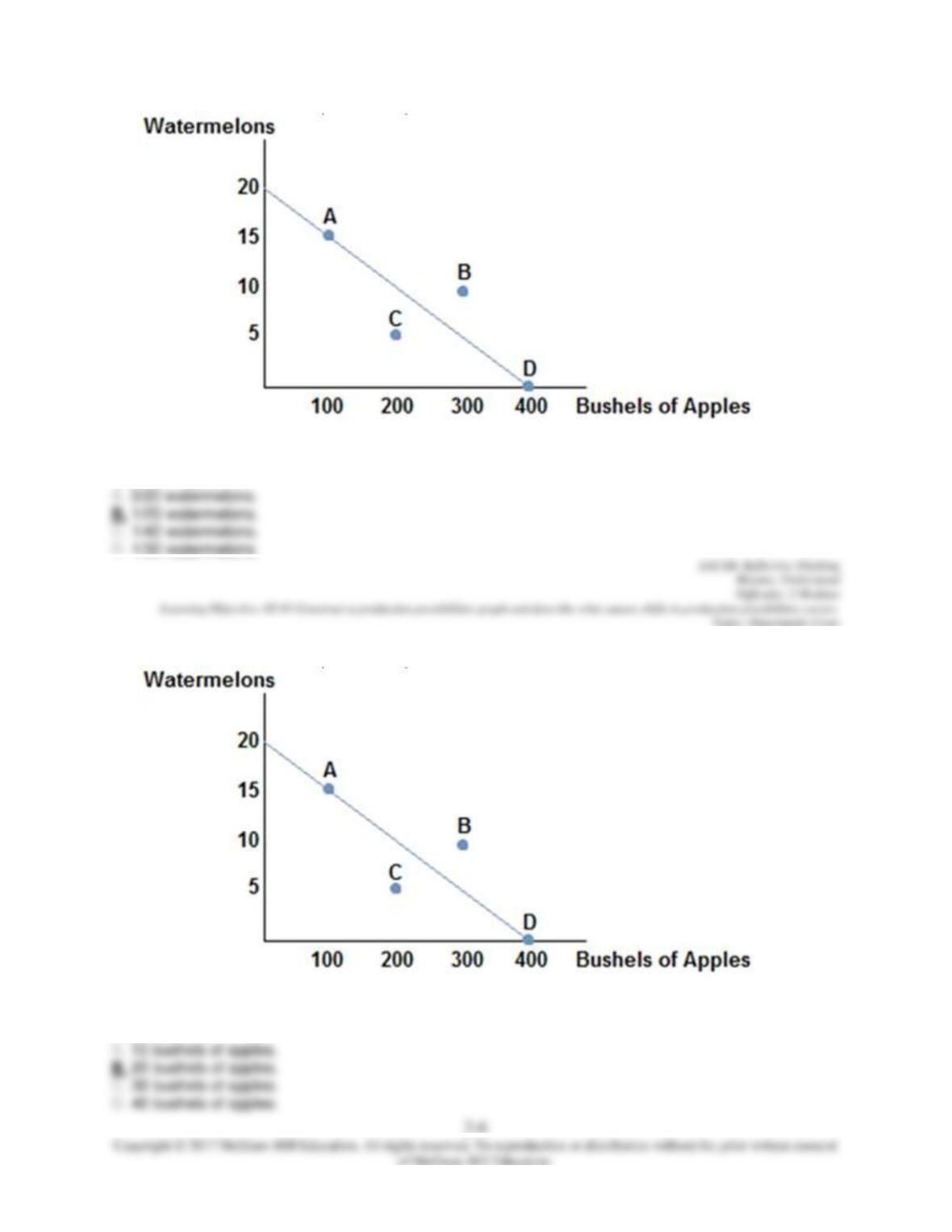
13.
Consider the production possibilities frontier displayed in the figure shown. The opportunity cost of a
bushel of apples is:
14.
Consider the production possibilities frontier displayed in the figure shown. The opportunity cost of one
watermelon is:
2-7
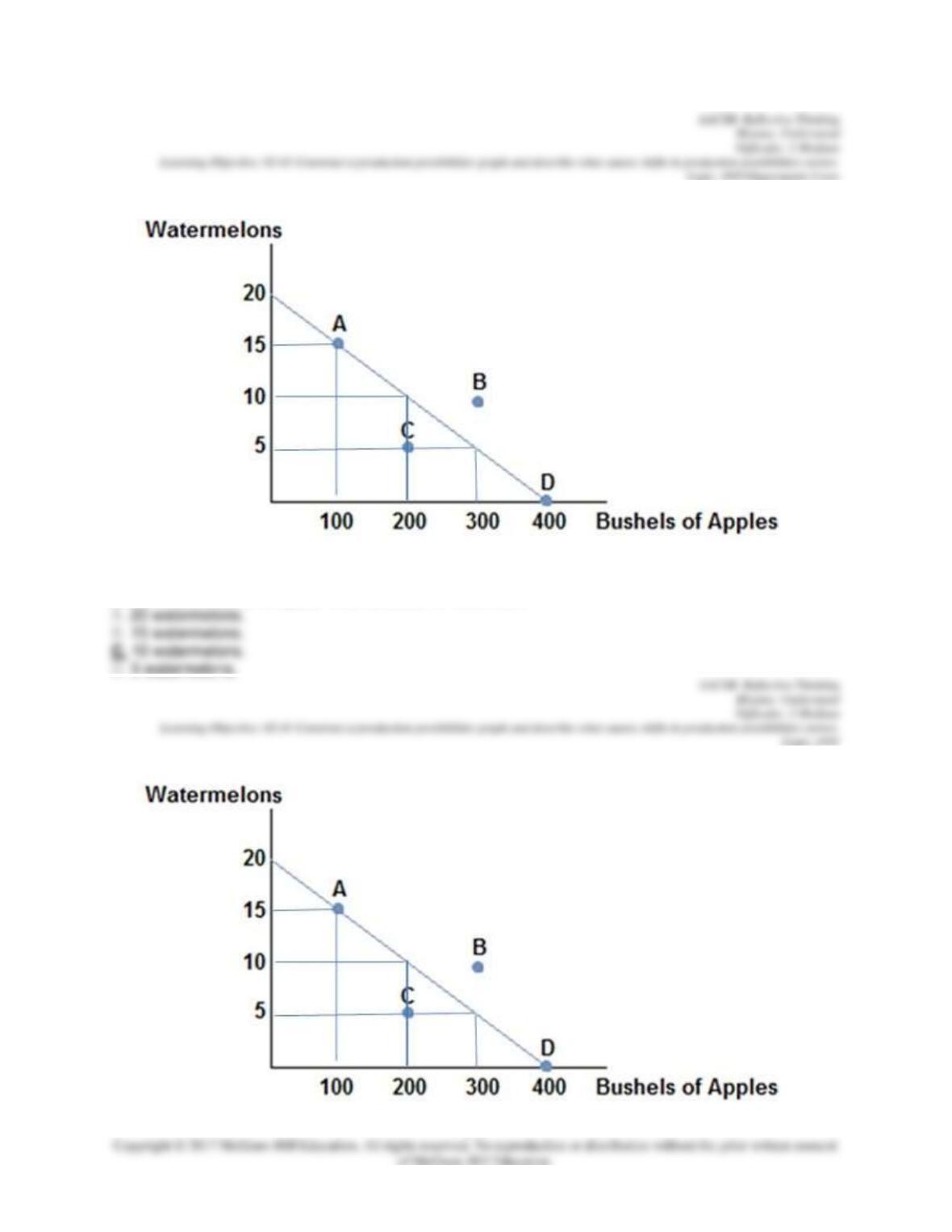
15.
Consider the production possibilities frontier displayed in the figure shown. If this society chooses to
produce 200 bushels of apples it can produce no more than:
16.
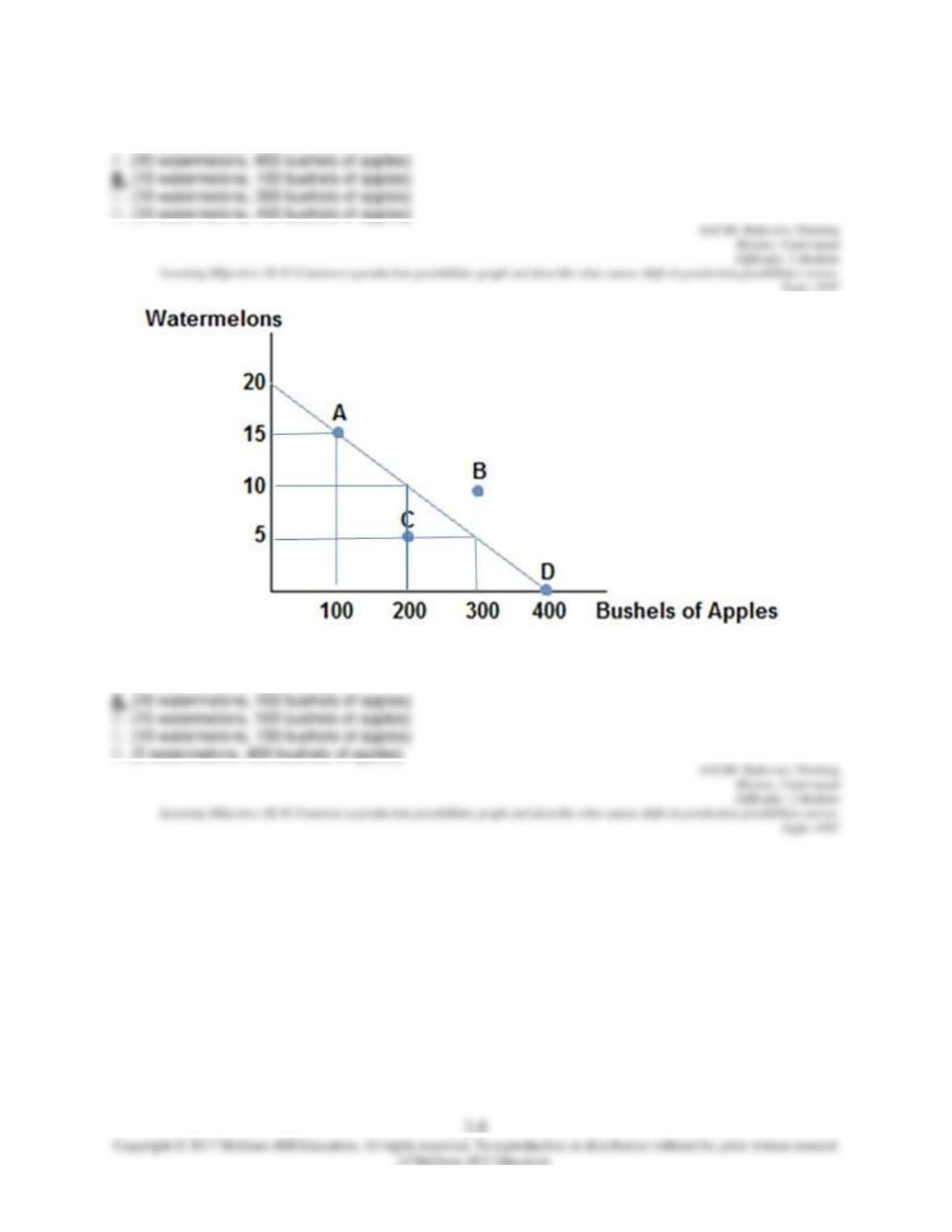
Consider the production possibilities frontier displayed in the figure shown. Which of the following
combinations could be produced?
17.
Consider the production possibilities frontier displayed in the figure shown. Which of the following
combinations could not be produced?
2-9
18.
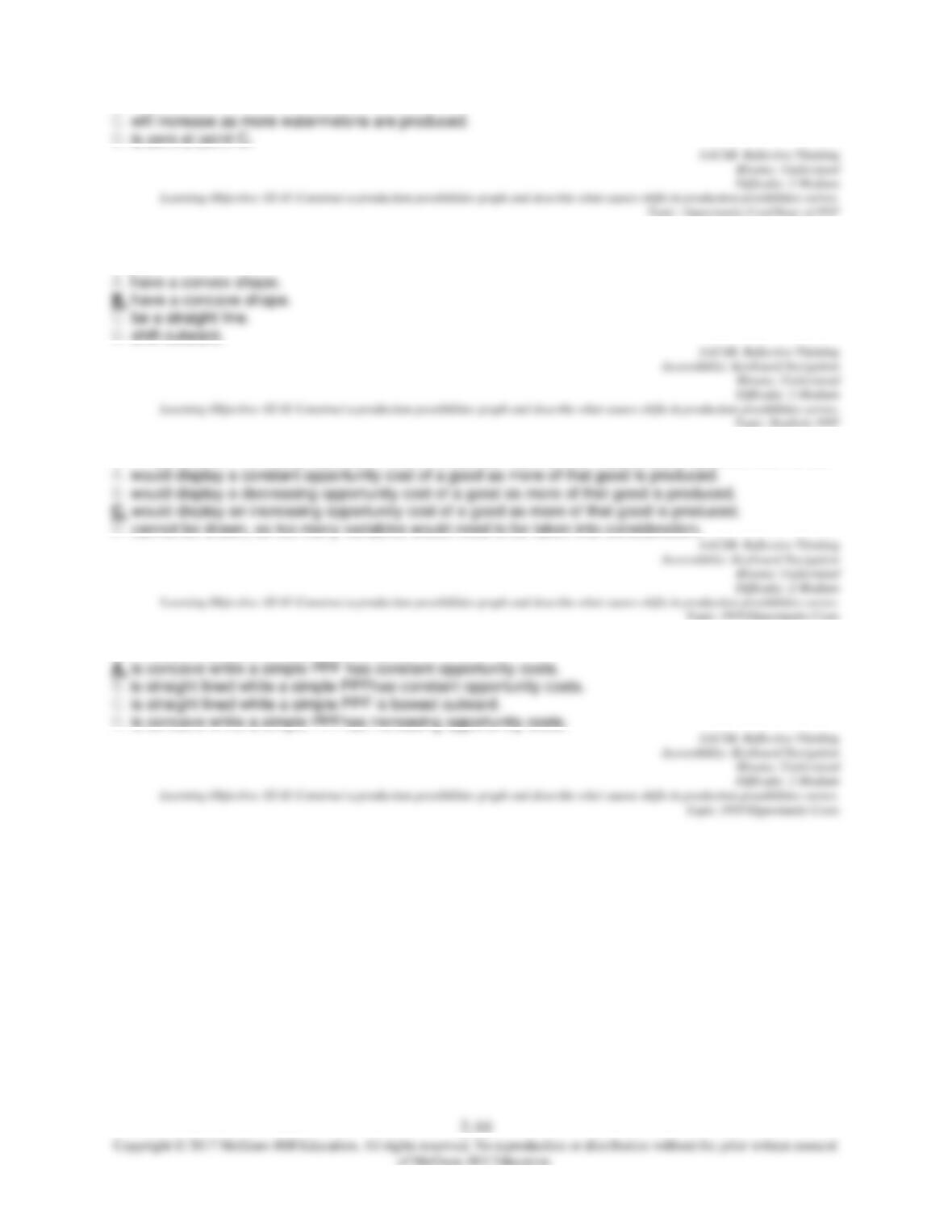
Consider the production possibilities frontier displayed in the figure shown. If this society chooses to
produce 15 watermelons in can produce no more than:
19.
Consider the production possibilities frontier displayed in the figure shown. Which of the following
statements is true? The opportunity cost of one watermelon:
20. If we consider the reality that each worker has different skills, then the production possibilities frontier
would:
21. If we consider the reality that each worker has different skills, then the production possibilities frontier
22. A realistic production possibilities curve:
2-11
23.
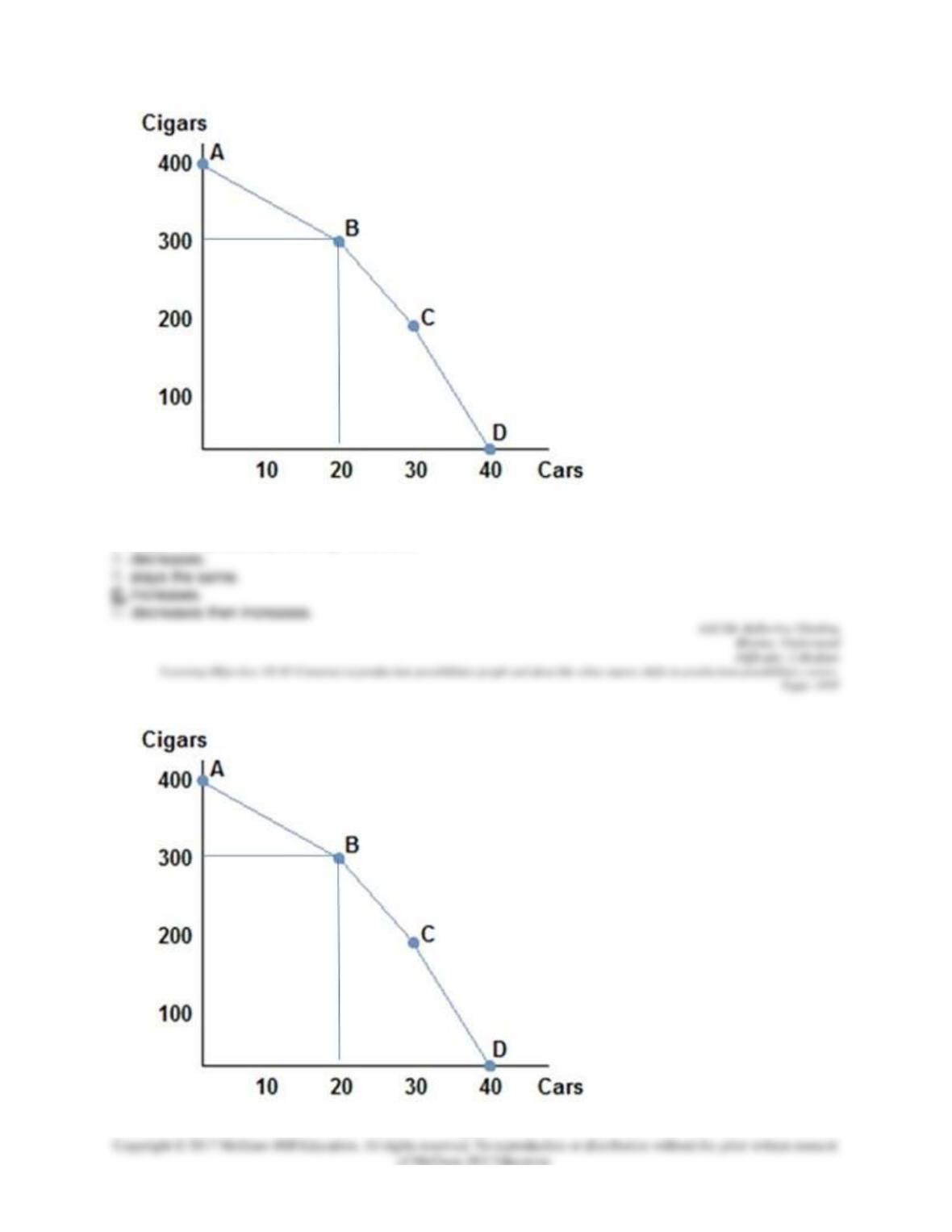
Consider the production possibilities frontier in the figure shown. As more and more cars are produced
the opportunity cost of producing more cars:
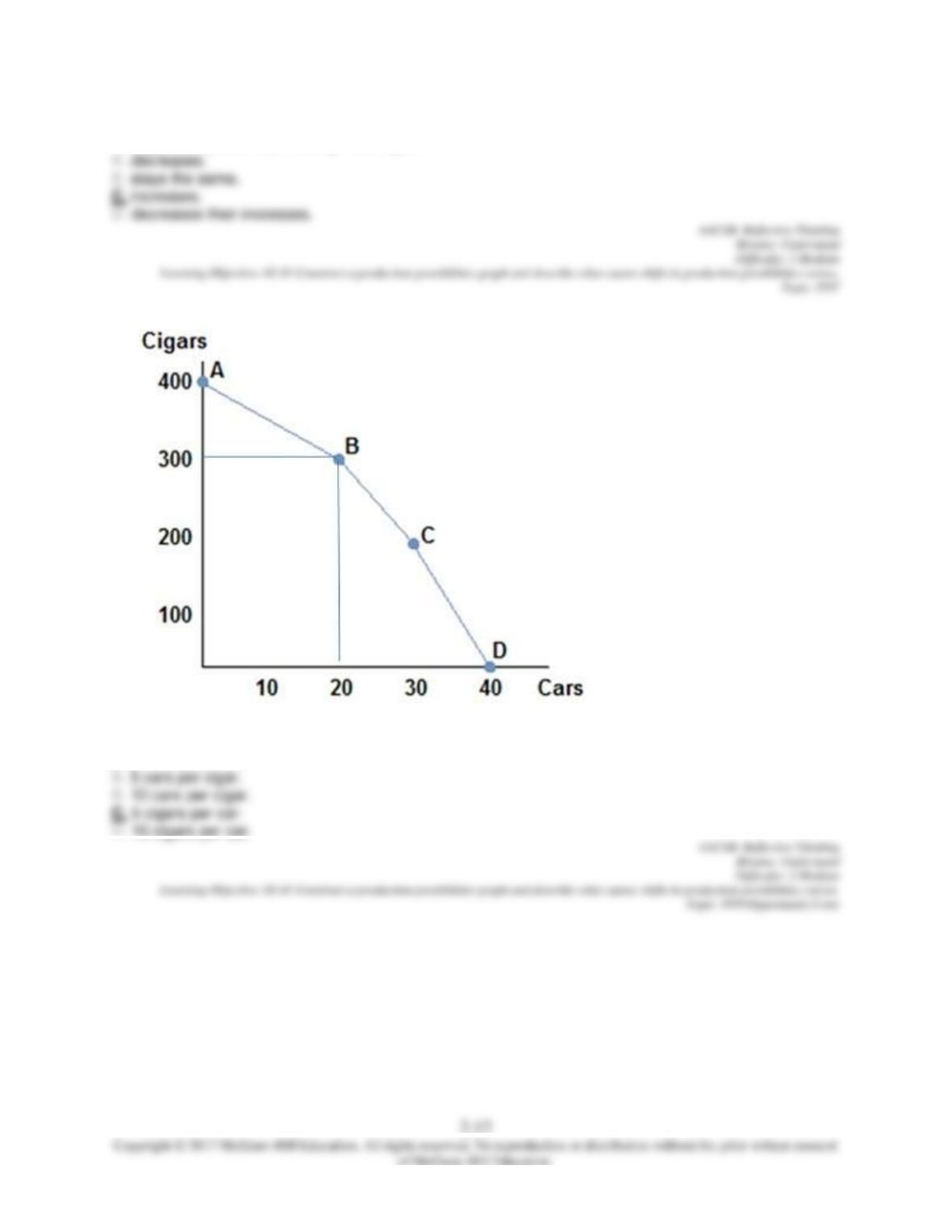
24.
Consider the production possibilities frontier in the figure shown. As more and more cigars are produced
the opportunity cost of producing more cigars:
25.
Consider the production possibilities frontier in the figure shown. The opportunity cost of moving from
point A to point B is:
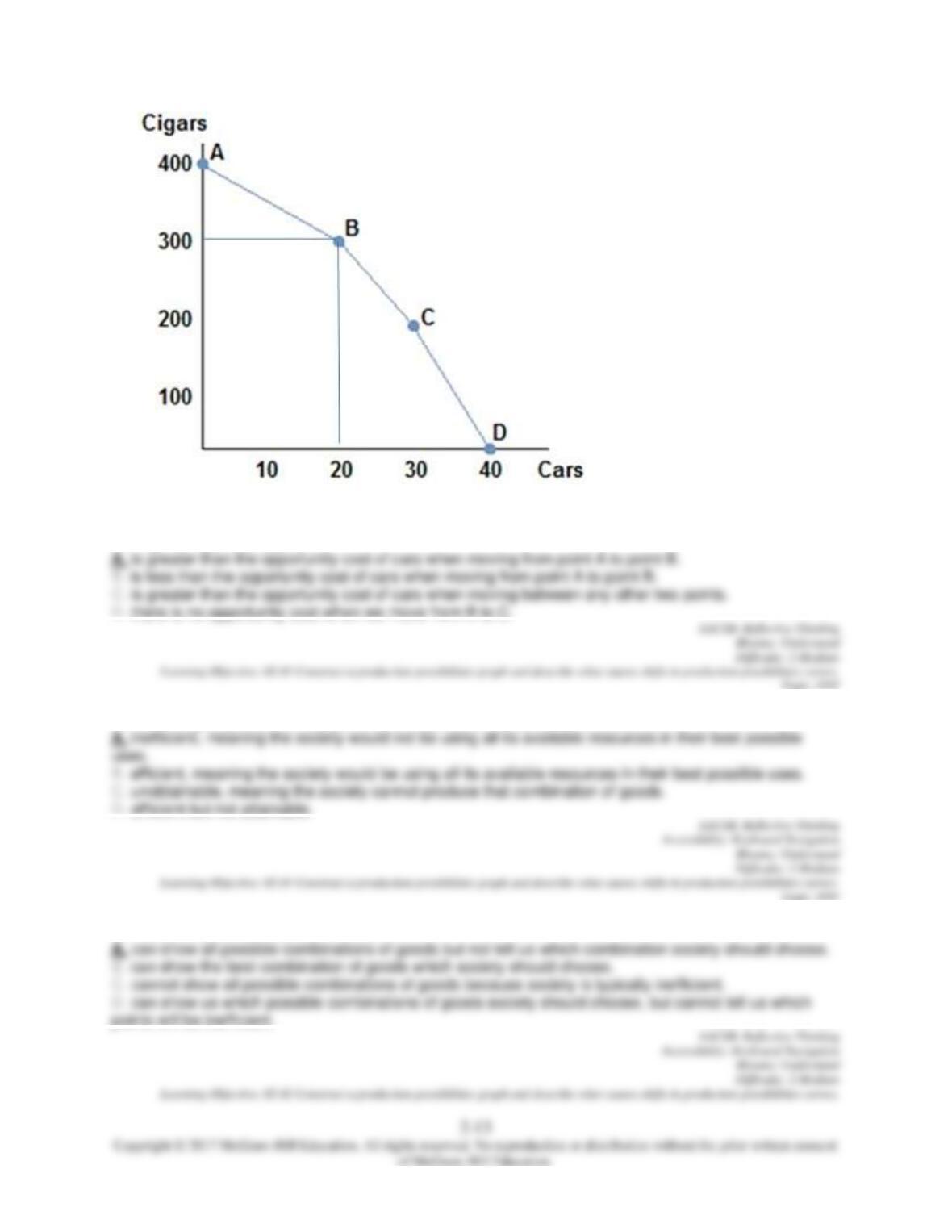
26.
Consider the production possibilities frontier in the figure shown. The opportunity cost of cars when
moving from point B to point C:
27. Choosing to produce at any point within a production possibilities frontier is:
28. The production possibilities frontier:
Topic: PPF
29. If society were to experience an increase in its available resources its production possibilities frontier
would:
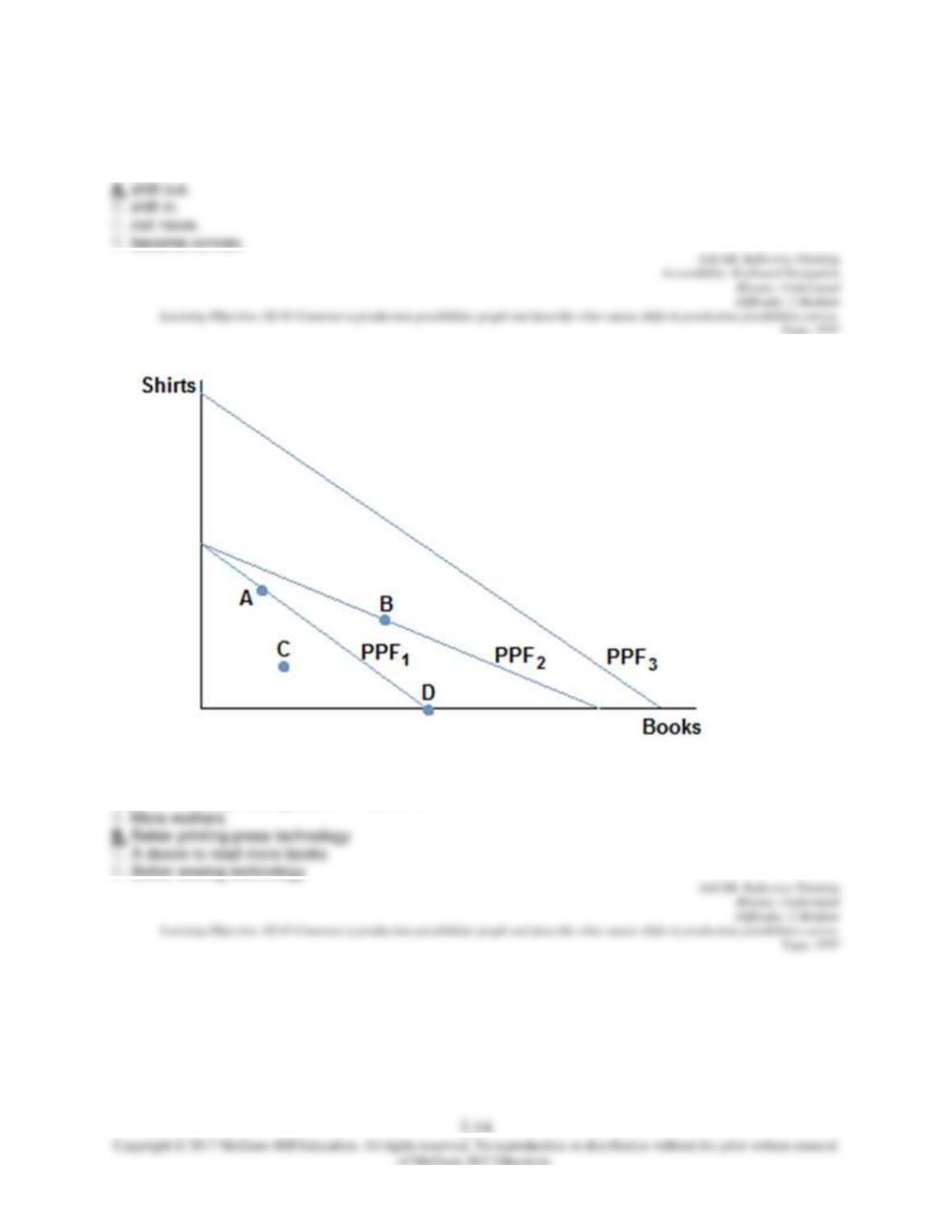
30.
Consider a society facing the production possibilities curves in the figure shown. What is the most likely
cause of a society moving from PPF1 to PPF2?
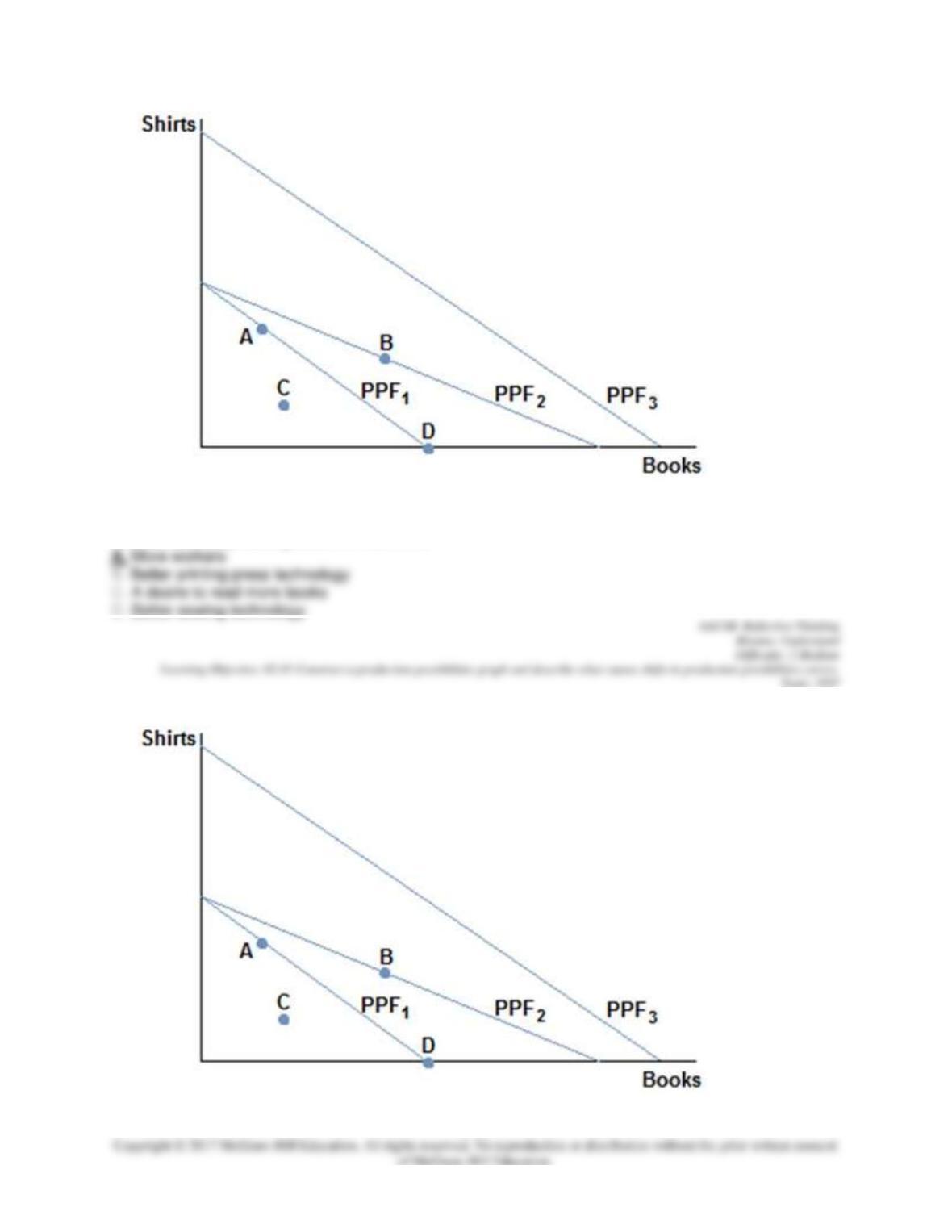
2-15
31.
Consider a society facing the production possibilities curves in the figure shown. What is the most likely
cause of a society moving from PPF1 to PPF3?
32.
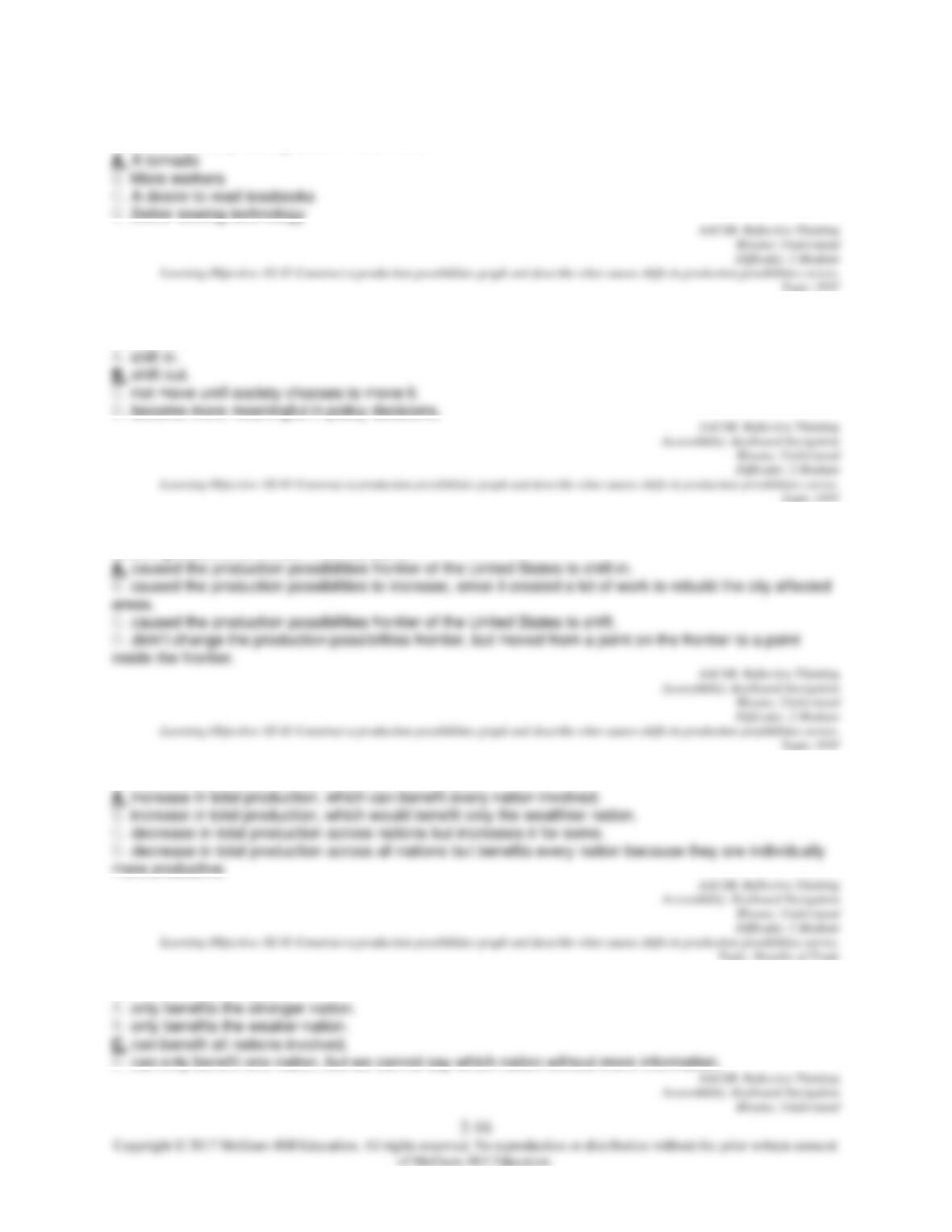
Consider a society facing the production possibilities curves in the figure shown. What is the most likely
cause of a society moving from PPF3 to PPF1?
33. An increase in productivity as a result of a new technology would cause the production possibilities
frontier to:
34. Hurricane Katrina destroyed much of New Orleans and other parts of the South. Which of the
following statements is true? The hurricane:
35. When nations trade the result would most likely be:
36. When nations trade, it:
37. Which of the following statements about trade is true?
38. If a wealthy nation such as the United States trades with a poorer, less developed nation like
Cambodia, then it is likely true that:
39. Suppose that a worker in Country A can make either 10 iPods or 5 tablets each year. Country A has
100 workers. Suppose a worker in Country B can make either 2 iPods or 10 tablets each year. Country B
has 200 workers. A bundle of goods that Country A could potentially make would be:
40. Suppose that a worker in Country A can make either 10 iPods or 5 tablets each year. Country A has
100 workers. Suppose a worker in Country B can make either 2 iPods or 10 tablets each year. Country B
has 200 workers. Suppose Country B’s population of workers increased to 600. Which of the following
statements is now true?
Topic: PPF
41. When a producer is operating efficiently it is producing:
42. When a country is producing goods and services efficiently it:
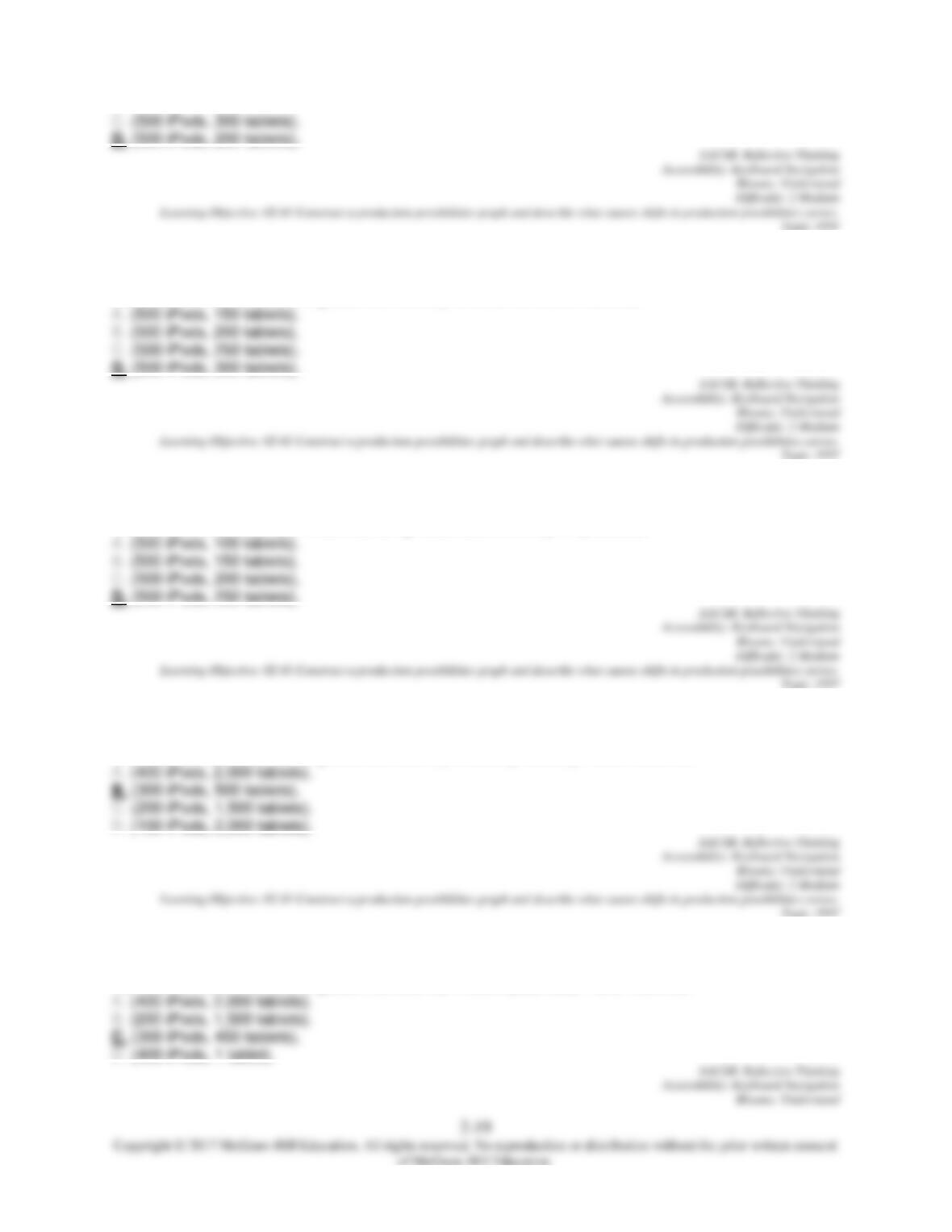
43.
Suppose the figure shown represents the production possibilities frontier for Country A. Which of the
following combinations of goods could Country A consume in the absence of trade?
44. Suppose that a worker in Country A can make either 10 iPods or 5 tablets each year. Country A has
100 workers. Suppose a worker in Country B can make either 2 iPods or 10 tablets each year. Country B
has 200 workers. A bundle of goods that Country A could potentially make would be:
45. Suppose that a worker in Country A can make either 10 iPods or 5 tablets each year. Country A has
100 workers. Suppose a worker in Country B can make either 2 iPods or 10 tablets each year. Country B
has 200 workers. A bundle of goods that Country A could not make would be:
46. Suppose that a worker in Country A can make either 10 iPods or 5 tablets each year. Country A has
100 workers. Suppose a worker in Country B can make either 2 iPods or 10 tablets each year. Country B
has 200 workers. Country A would be using resources efficiently if it produced:
47. Suppose that a worker in Country A can make either 10 iPods or 5 tablets each year. Country A has
100 workers. Suppose a worker in Country B can make either 2 iPods or 10 tablets each year. Country B
has 200 workers. A bundle of goods that Country B could potentially make would be:
48. Suppose that a worker in Country A can make either 10 iPods or 5 tablets each year. Country has
100 workers. Suppose a worker in Country B can make either 2 iPods or 10 tablets each year. Country B
has 200 workers. A bundle of goods that Country B could potentially make would be:
49. Suppose that a worker in Country A can make either 10 iPods or 5 tablets each year. Country A has
100 workers. Suppose a worker in Country B can make either 2 iPods or 10 tablets each year. Country B
has 200 workers. A bundle of goods that Country B could not make would be:
50. Suppose that a worker in Country A can make either 10 iPods or 5 tablets each year. Country A has
100 workers. Suppose a worker in Country B can make either 2 iPods or 10 tablets each year. Country B
has 200 workers. Country B would be using resources efficiently if they were producing:
51. Suppose that a worker in Country A can make either 25 bananas or 5 tomatoes each year. Country A
has 200 workers. Suppose a worker in Country B can make either 18 bananas or 6 tomatoes each year.
Country B has 400 workers. Two possible consumption bundles that Country A could produce are:
52. Suppose that a worker in Country A can make either 25 bananas or 5 tomatoes each year. Country A
has 200 workers. Suppose a worker in Country B can make either 18 bananas or 6 tomatoes each year.
Country B has 400 workers. Two possible consumption bundles that Country B could produce are: