Chapter 19 – Agriculture: Economics and Policy
1. The demand for agricultural products is:
2. The demand for agricultural products:
Chapter 19 – Agriculture: Economics and Policy
3. Which of the following statements best describes the demand for agricultural
commodities?
4. The demand for most agricultural products is:
5. The demand for agricultural products rises less rapidly than income. This means that the
demand for agricultural products is:
Chapter 19 – Agriculture: Economics and Policy
6. In the U.S., “farm products” are generally produced in more ___________ markets, while
“food products” tend to be sold in markets that are more ___________.
7. Farm share of U.S. GDP has:
8. What percentage of their spending do U.S. consumers allocate to food purchases?
Chapter 19 – Agriculture: Economics and Policy
9. Which of the following best describes the short-run problem faced by farms?
10. Since 1950, U.S. farm exports have:
11. Which of the following would, other things equal, reduce the demand for U.S. farm
products?
Chapter 19 – Agriculture: Economics and Policy
12. Which of the following would, other things equal, increase the demand for U.S. farm
products?
Chapter 19 – Agriculture: Economics and Policy
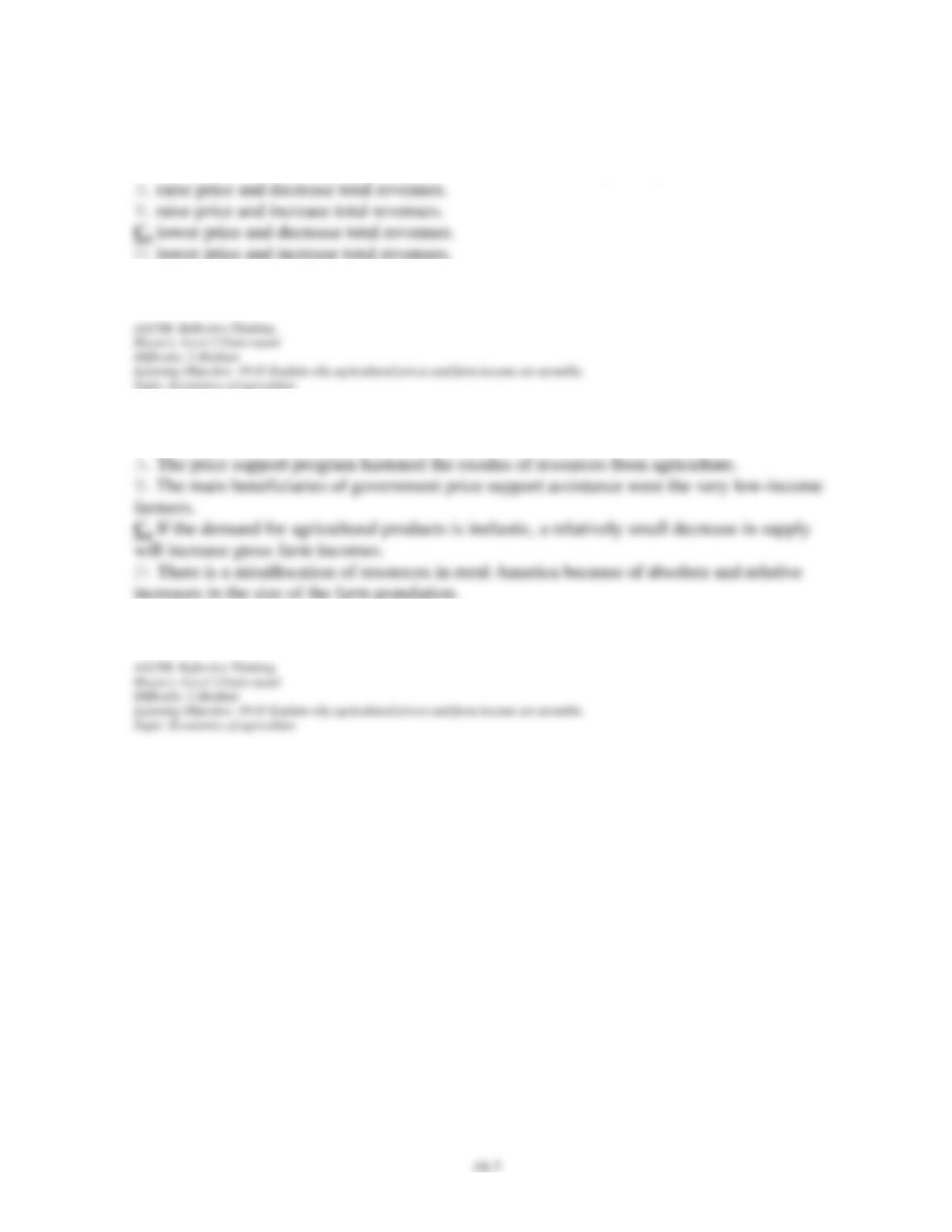
13. Refer to the above diagram. If farmers produce a normal crop of Qn, their gross income:
14. Refer to the above diagram. If farmers produce a bumper crop of Qb, their gross income:
15. Refer to the above diagram. If output changes from a poor crop, Qp, to a bumper crop, Qb:
Chapter 19 – Agriculture: Economics and Policy
16. If the demand for an agricultural product is inelastic, a bumper crop will:
17. Which of the following statements is correct?
Chapter 19 – Agriculture: Economics and Policy
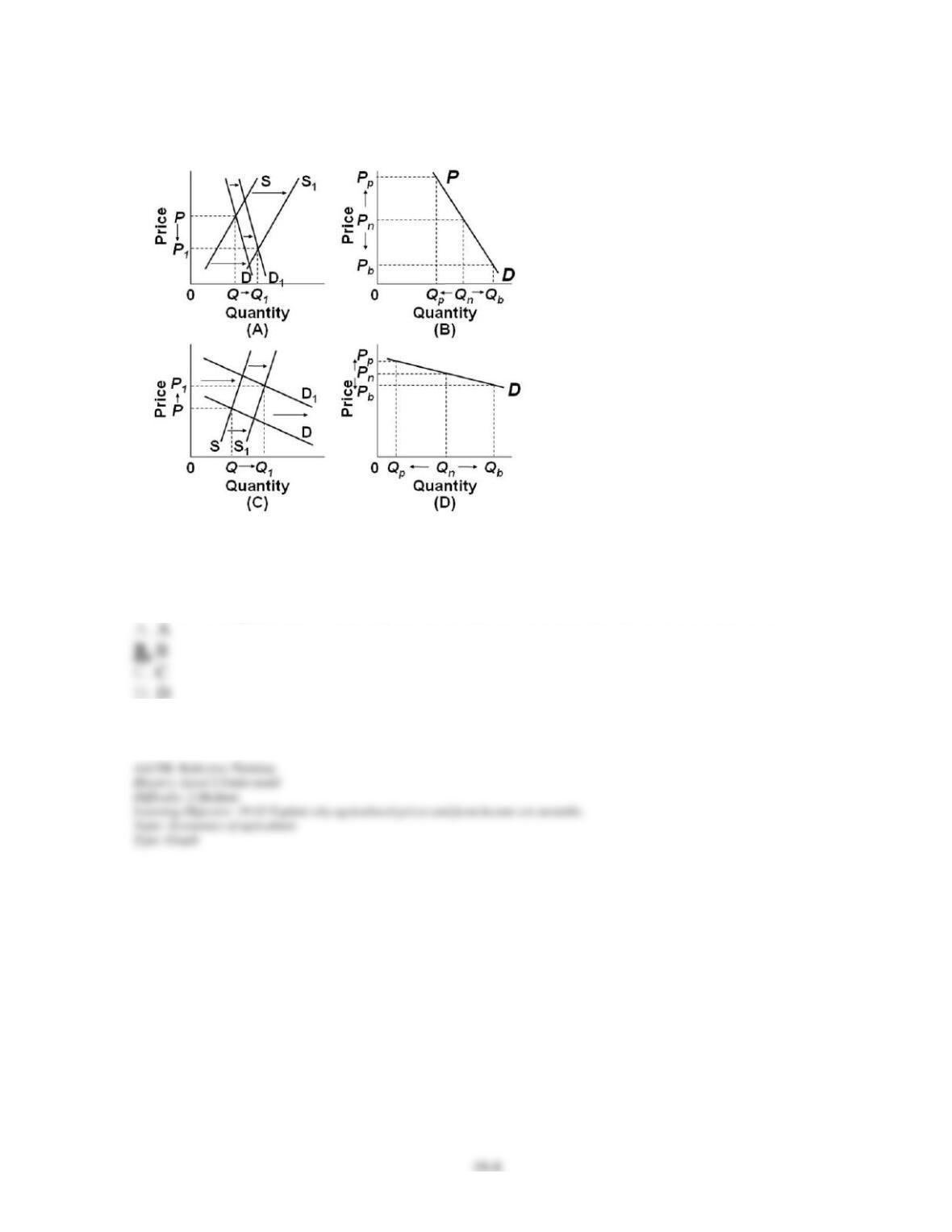
18. Which diagram above best represents the problem faced by farms in the short-run?
Chapter 19 – Agriculture: Economics and Policy
19. Which diagram above best represents the problem faced by farms in the long-run?
20. A bumper crop of farm products causes:
Chapter 19 – Agriculture: Economics and Policy
21. An extraordinarily small crop of farm products due to drought causes:
22. Which of the following best describes the main problem faced by farms in the long run?
Chapter 19 – Agriculture: Economics and Policy
23. Since 1950, farm productivity has:
24. Over time, technological change has:
Chapter 19 – Agriculture: Economics and Policy
25. Which of the following statements about U.S. agriculture is true as it relates to the past
several decades?
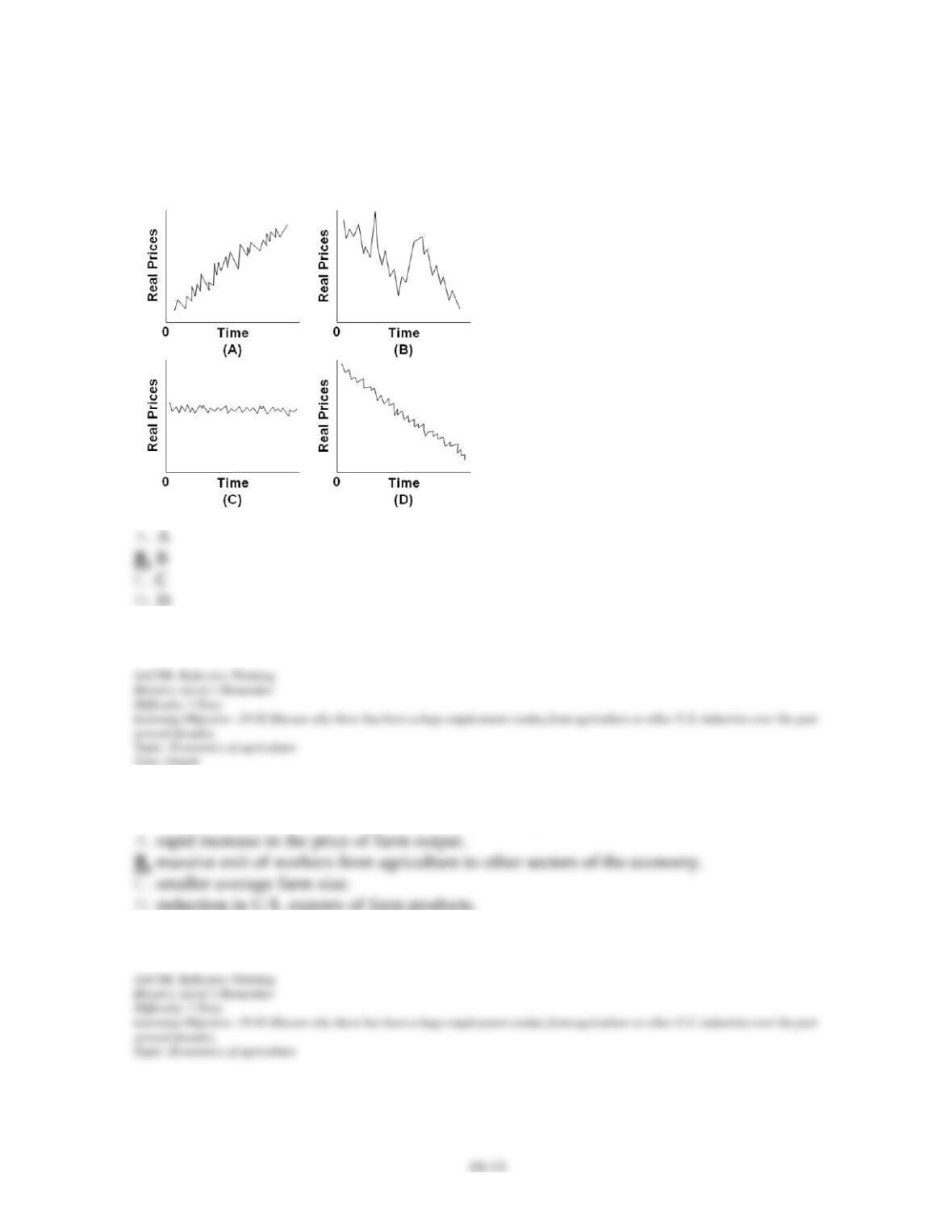
Chapter 19 – Agriculture: Economics and Policy
26. Which of the above diagrams best describes the long-run path of real (inflation-adjusted)
farm prices?
27. One consequence of the long-run problem faced by farms has been a:
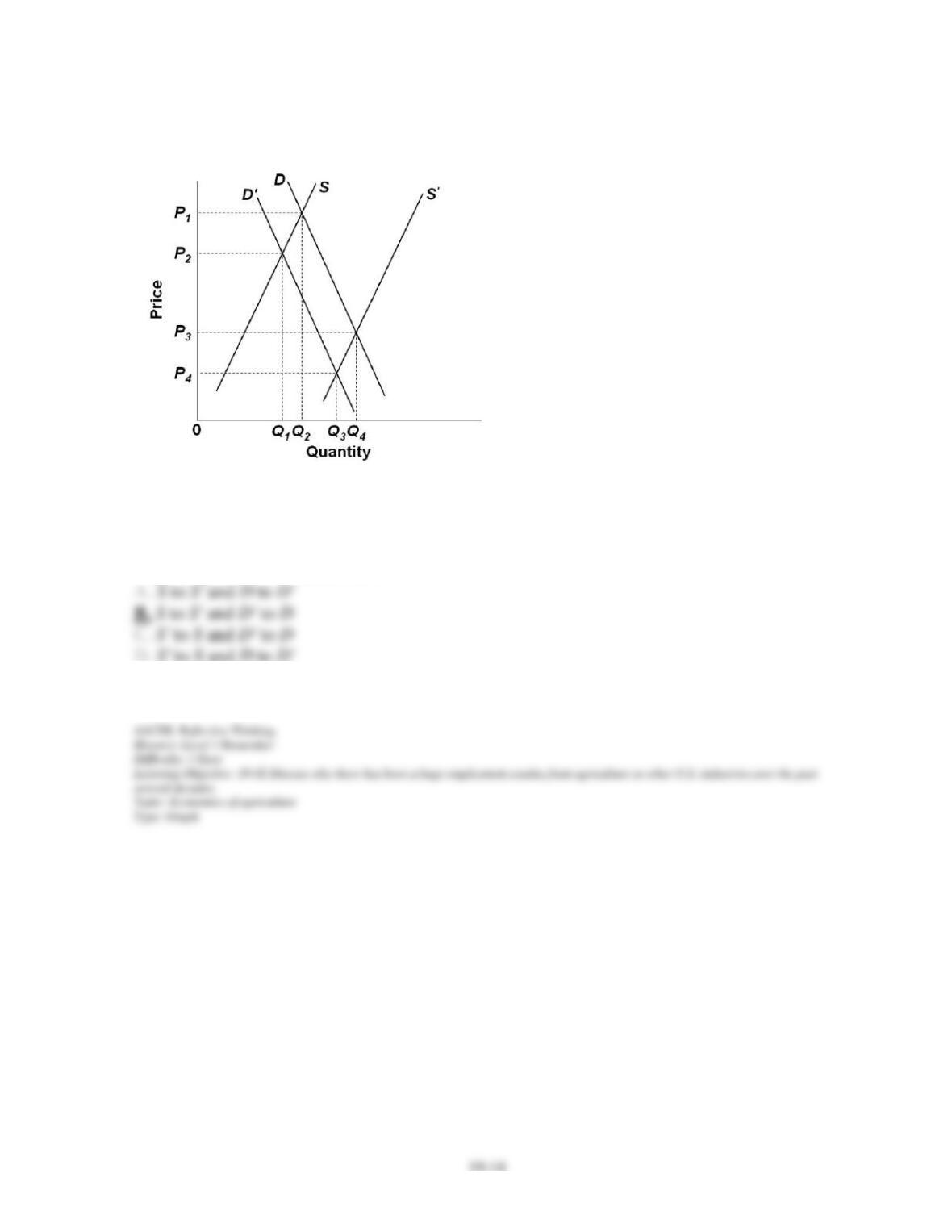
Chapter 19 – Agriculture: Economics and Policy
28. Refer to the above diagram. Which of the following supply and demand shifts portray the
long-run problem that farms face?
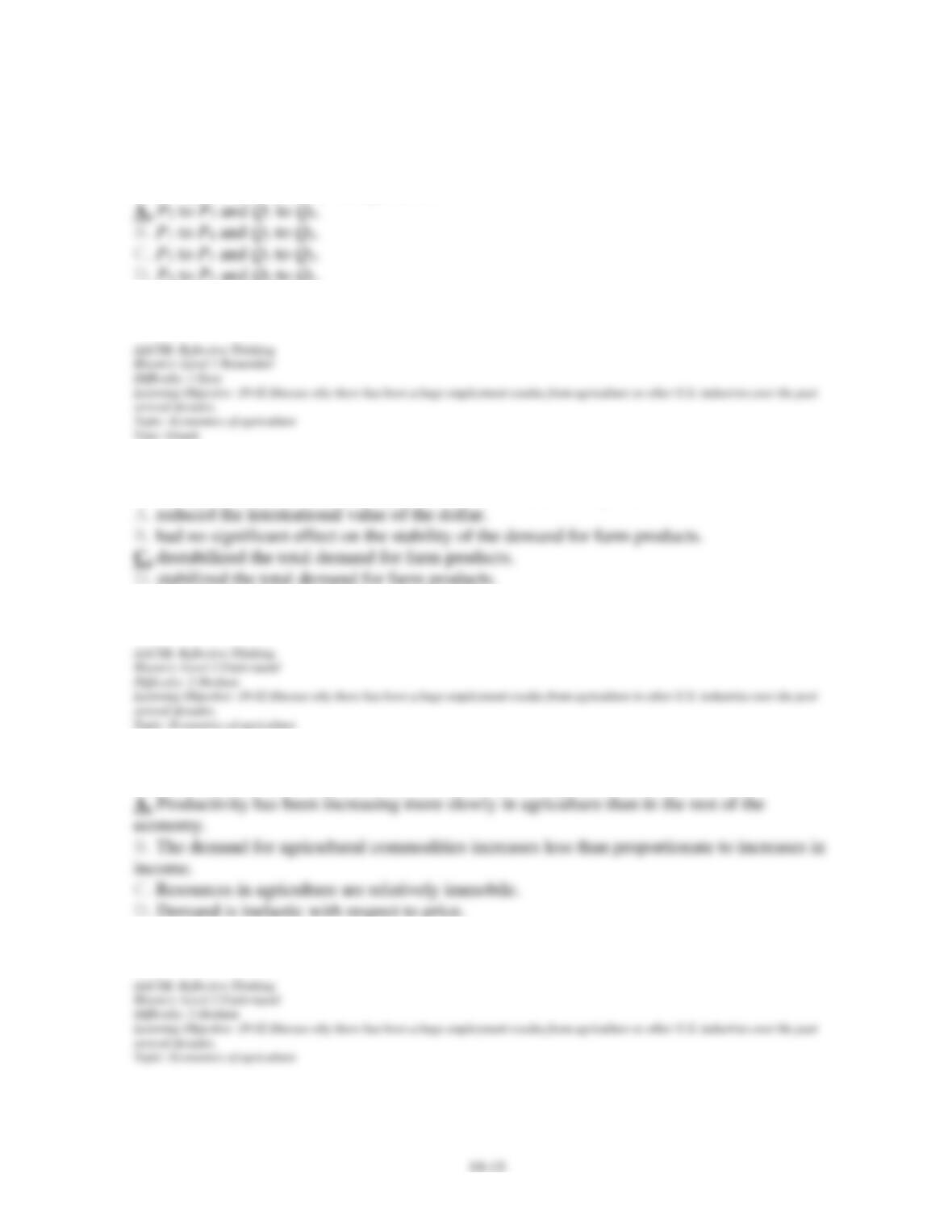
Chapter 19 – Agriculture: Economics and Policy
29. The problem faced by farms in the long run as portrayed in the above diagram would
involve price and quantity changes from:
30. The growing importance of export demand for American agriculture has:
31. Which of the following is not characteristic of U.S. agriculture?
Chapter 19 – Agriculture: Economics and Policy
32. Which of the following is correct?
33. Currently (2008) farm employment is about:
34. Measured in terms of farm employment and the number of farms, agriculture has been:
Chapter 19 – Agriculture: Economics and Policy
35. Over the past several decades, farm employment has:
36. Which of the following countries has the smallest percentage of its labor force employed
in agriculture?
37. Which of the following arguments is not generally made to justify farm subsidies?
Chapter 19 – Agriculture: Economics and Policy
38. Which of the following arguments for farm subsidies is most closely associated with the
parity concept?
39. Historically, many aspects of U.S. farm policies had their origins in the:
Chapter 19 – Agriculture: Economics and Policy
40. Which of the following statements best describes the parity concept?
41. If the prices paid by farmers increase and the prices received by farmers decrease, then the
parity ratio:
42. If in a certain year the indices of prices received and paid by farmers were 115 and 142
respectively, the parity ratio (in percentage terms) would be: