97
Household
percentage
Average income
(dollars)
Lowest 20 percent
10,000
Second 20 percent
26,000
Third 20 percent
38,000
Fourth 20 percent
55,000
Highest 20 percent
140,000
Household
percentage
Percent of
income
Cumulative
percentage of
income
Lowest 20 percent
___
____
Second 20 percent
___
___
Third 20 percent
___
___
Fourth 20 percent
___
___
Highest 20 percent
___
___
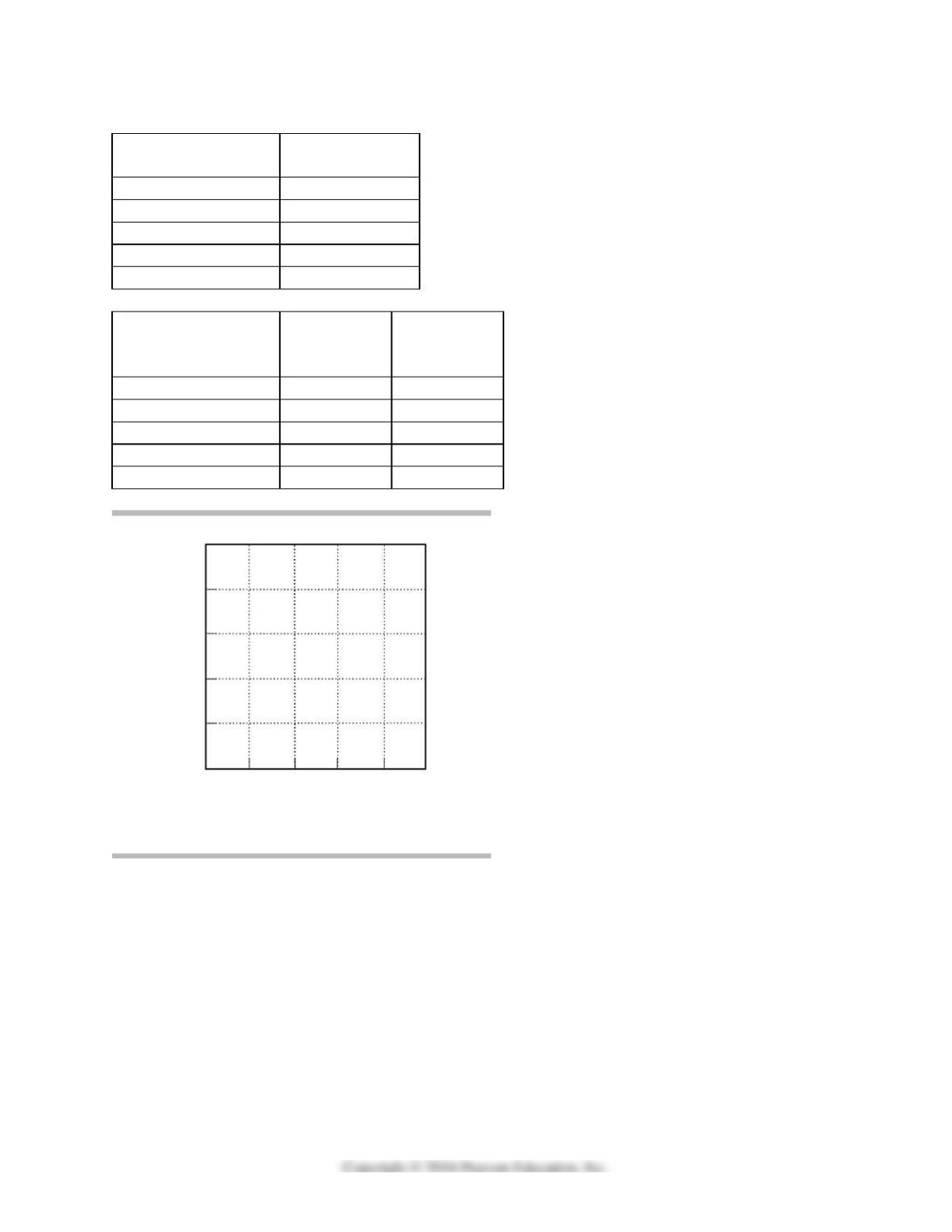
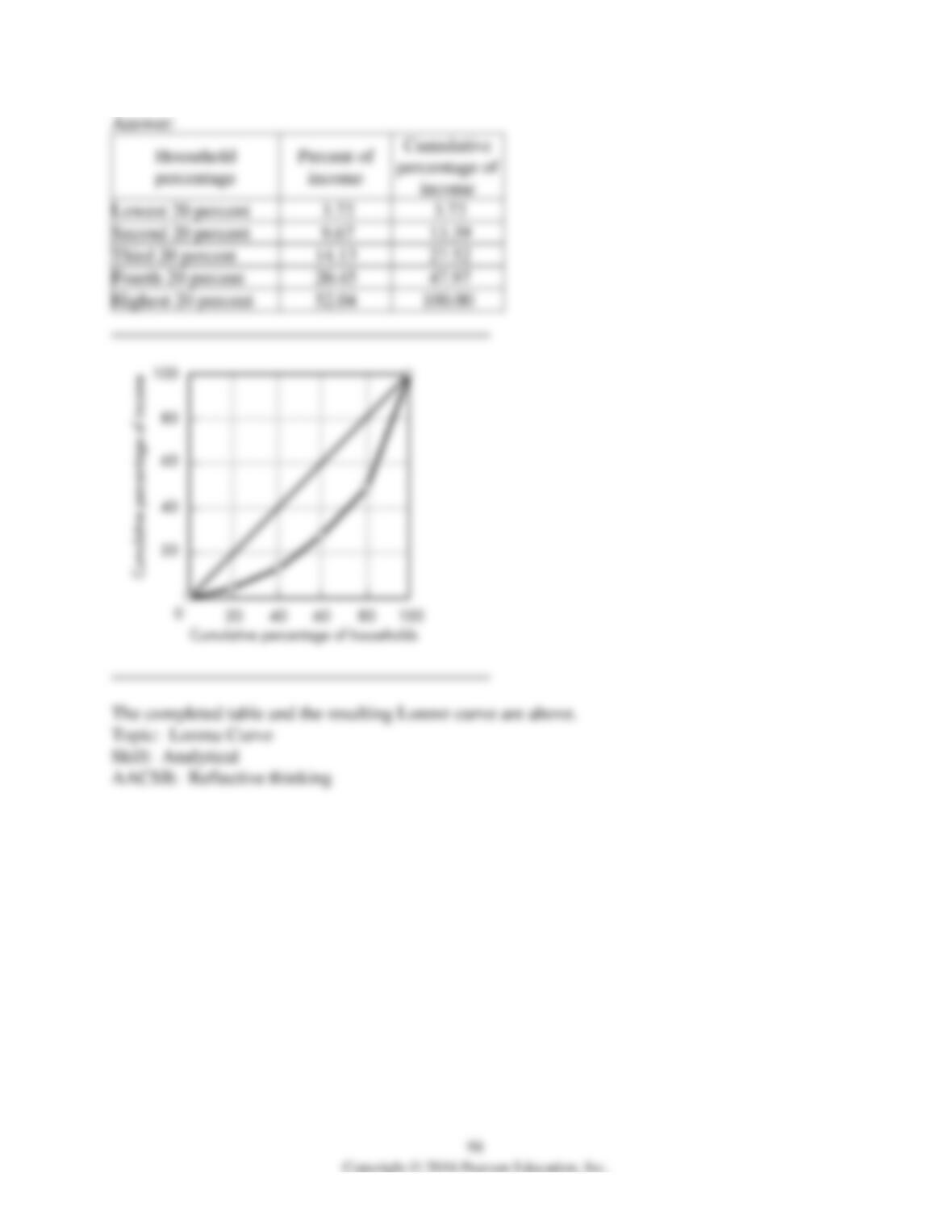
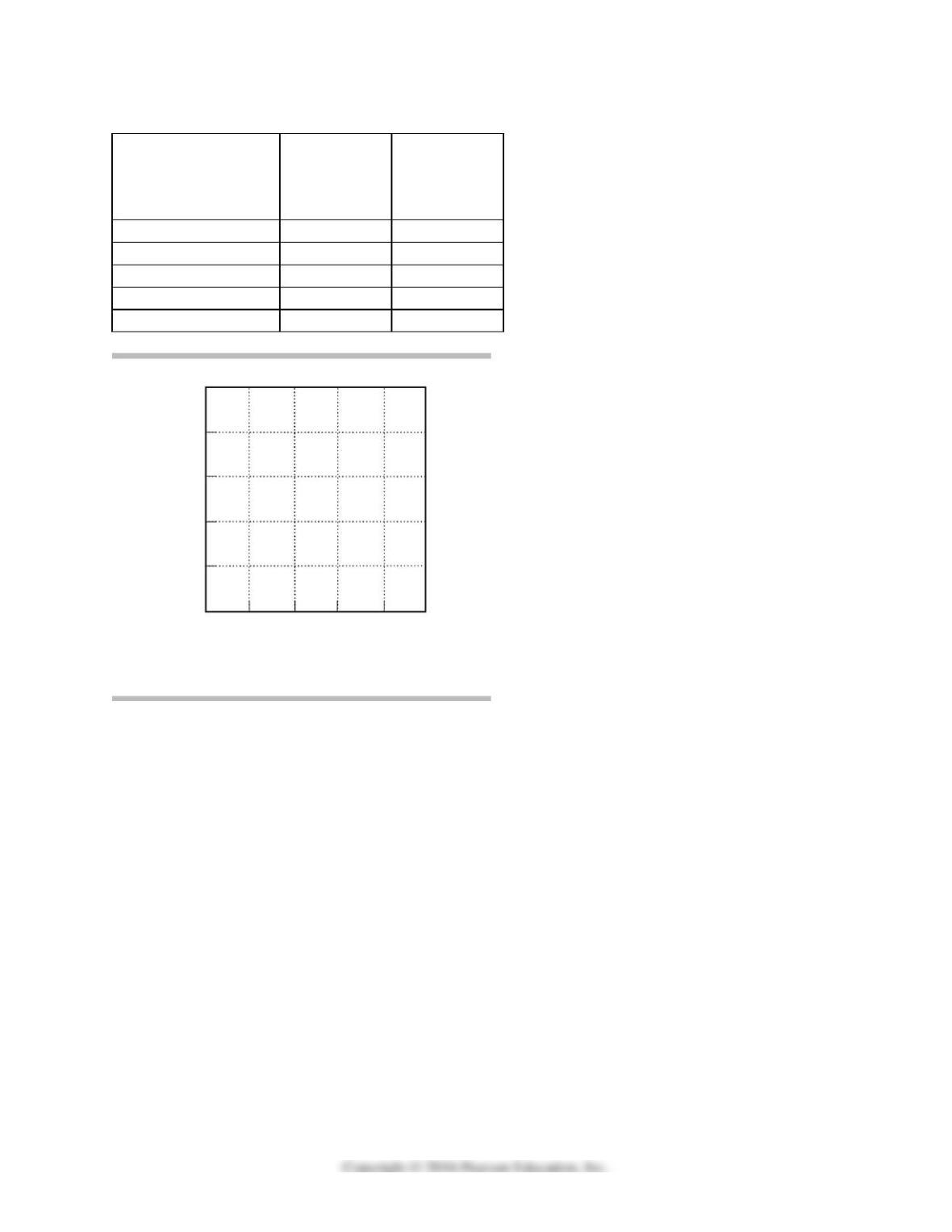
3) The first table above gives the average income received by each 20 percent group of
households. Complete the second table. Label the axes above and then plot the Lorenz curve.
99
Household
percentage
Cumulative
percentage of
income
Country A
Cumulative
percentage of
income
Country B
Lowest 20 percent
10
4
Second 20 percent
25
9
Third 20 percent
45
18
Fourth 20 percent
70
40
Highest 20 percent
100
100
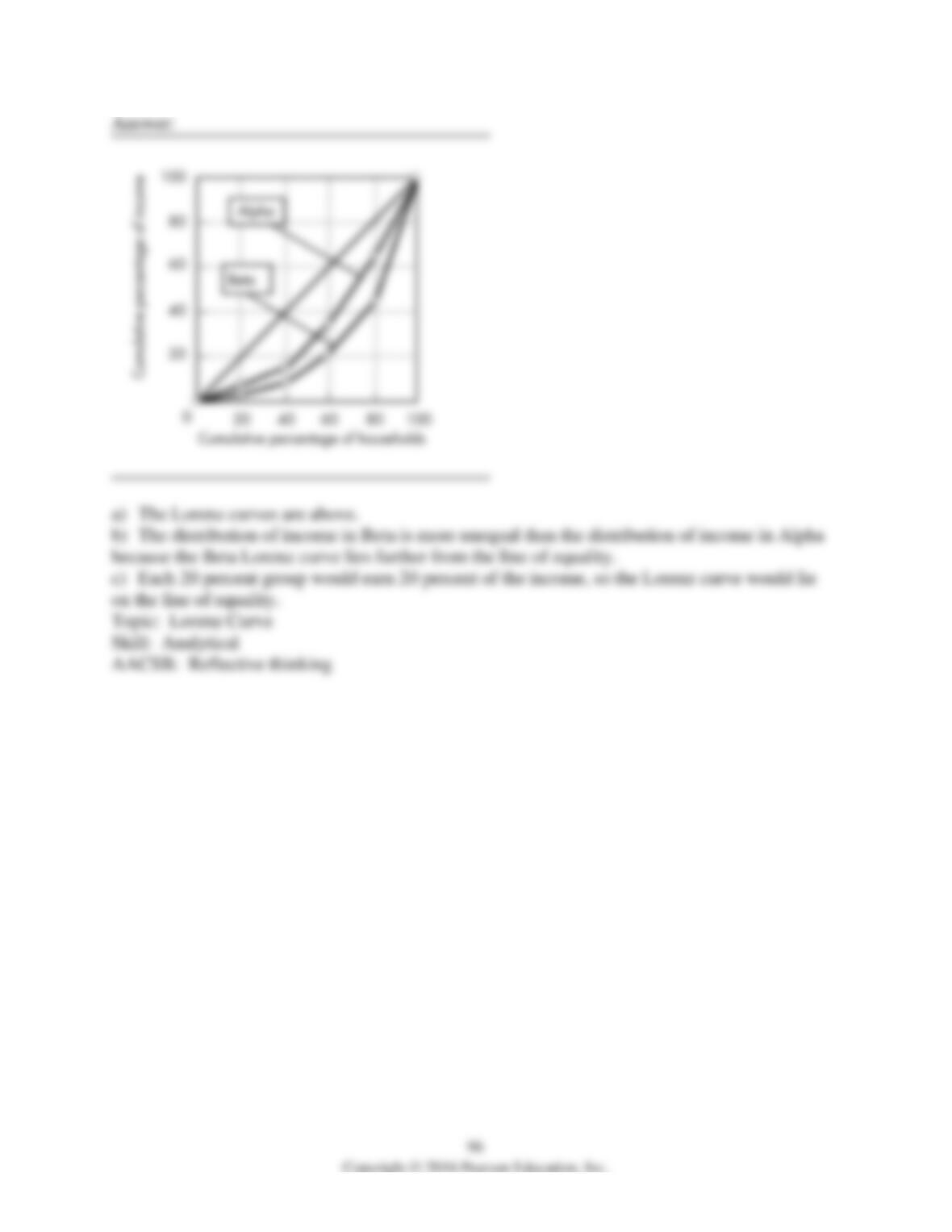
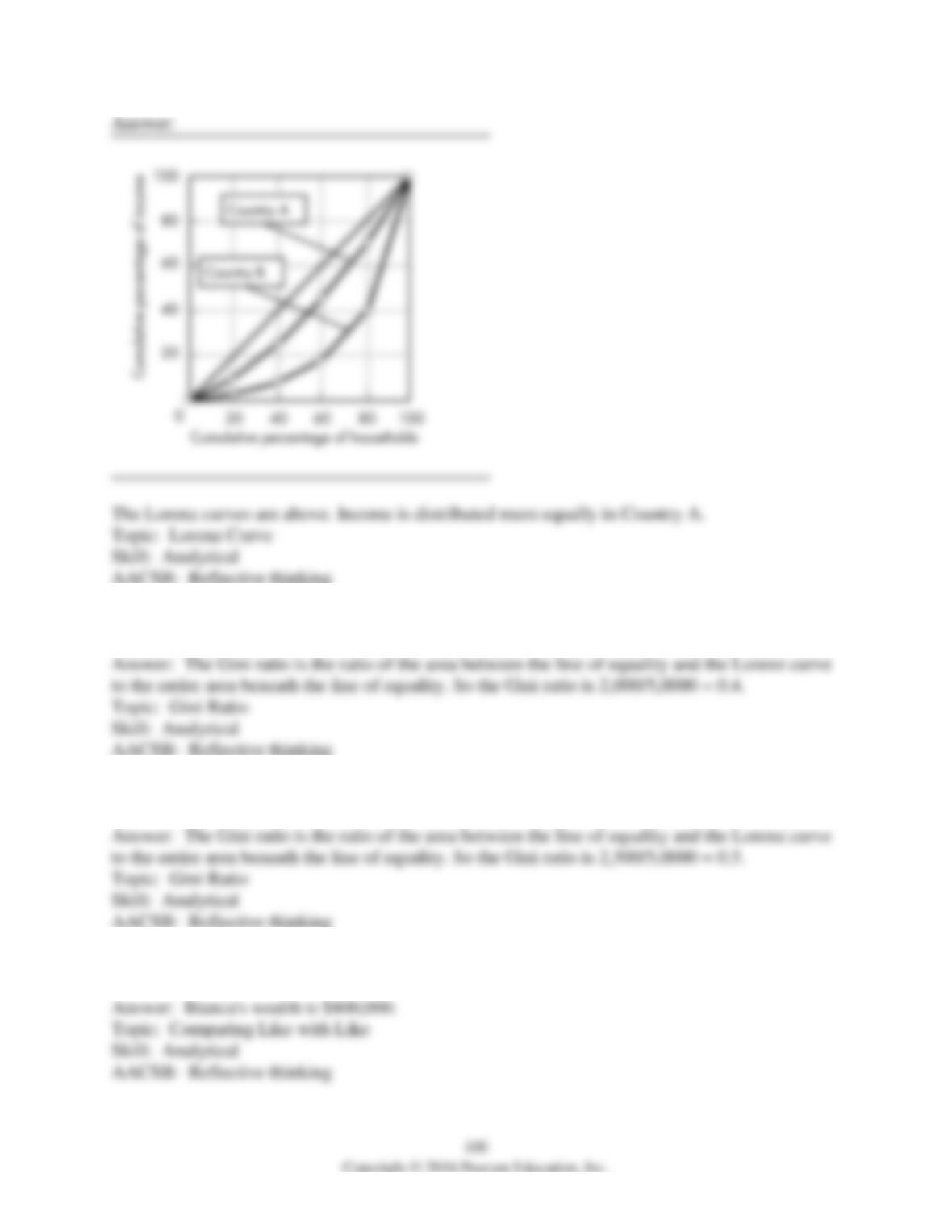
4) The table above gives cumulative percent of income received by each 20 percent group of
households. Label the axes in the figure above and then plot the Lorenz curves. In which nation
is income more equally distributed?
5) On a Lorenz curve graph, the area between the line of equality and the Lorenz curve is 2,000,
and the entire area beneath the line of equality is 5,000. What does the Gini ratio equal?
6) On the Lorenz curve graph, the area between the line of equality and the Lorenz curve is
2,500, and the entire area beneath the line of equality is 5,000. What does the Gini ratio equal?
7) If Bianca earns 5 percent on her wealth and that income amounts to $40,000, what is Bianca’s
wealth?
Sam
(dollars)
Janet
(dollars)
Human capital
100,000
400,000
Nonhuman capital
200,000
10,000
Total
300,000
410,000
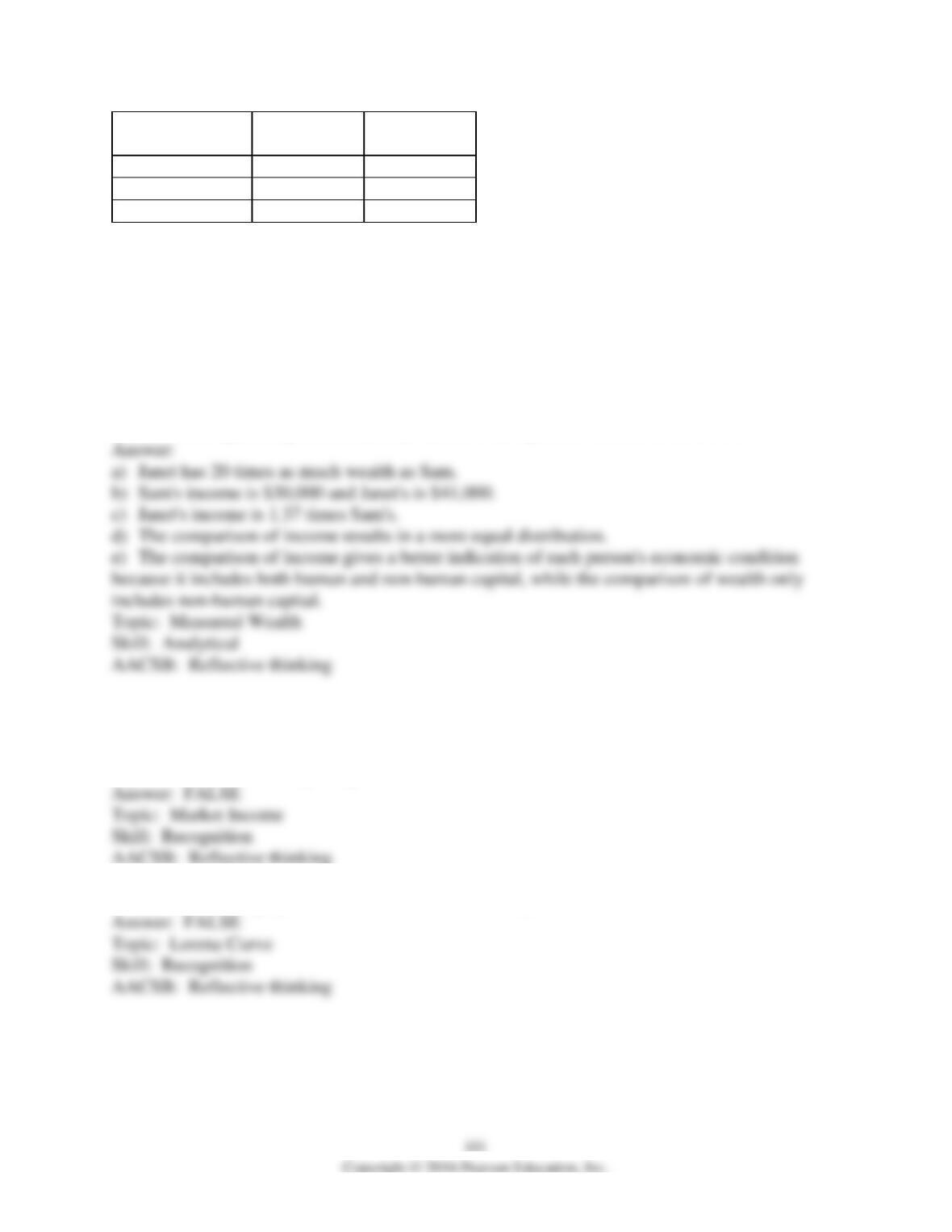
8) The table shows the distribution of human and non-human capital for two people, Sam and
Janet.
a) Looking just at tangible assets (non-human capital), by how many times does Janet’s wealth
exceed Sam’s?
b) Assume that both human and non-human capital earn a 10 percent annual interest rate.
Calculate Sam’s and Janet’s total income.
c) By how many times does Janet’s total income exceed Sam’s?
d) Which comparison results in a more equal distribution?
e) Which comparison gives a better indication of each person’s economic condition?
8 True or False
1) Market income is defined as wages, interest, rent, and profit earned in factor markets plus cash
payments to households by the government.
2) A Lorenz curve graphs the difference between money income and market income.
3) An increase in income equality causes the Lorenz curve to become more bowed away from
the line of equality.
4) In the United States, income is more equally distributed than measured wealth.
5) In the United States, measured wealth is distributed more unequally than income.
6) The actual income distribution might be more equal than current official figures suggest
because current official figures ignore the return on human capital.
7) The income distribution is a more accurate measure of economic inequality than the wealth
distribution because income excludes human capital.
8) The distribution of wealth is skewed because more families are below the average level of
wealth than are above.
9) If income is equally distributed, the Gini ratio is 1.
10) If income is equally distributed, the Gini ratio is zero.
11) If one person has all the income and everyone else has none, the Gini ratio is 1.
12) If one person has all the income and everyone else has none, the Gini ratio is zero.
13) The data show that an individual’s wealth tends to first increase and then to decrease over the
person’s lifetime.
14) The biggest single factor affecting household income is the householder’s age.
15) The demand curve for high-skilled workers lies to the right of the demand curve for low-
skilled workers because of the costs associated with obtaining skills.
16) The demand curve for high-skilled workers lies to the right of the demand curve for low-
skilled workers because of the higher productivity of high-skilled workers.
17) Differences in human capital and discrimination can help explain economic inequality.
18) Wealth inequality persists across generations due, in part, to assortative mating.
19) A progressive tax is a tax that taxes income so that the average tax rate increases with
income.
20) A proportional income tax is a tax that taxes income at a constant rate.
21) A proportional income tax is a tax for which the total amount paid does not increase with
income.
22) “The Big Tradeoff” refers to the effect of redistribution on efficiency.
105
9 Extended Problems
Income (percent of total)
Households
United States
Italy
Lowest 20 percent
3.6
8.7
Second 20 percent
8.9
14.0
Middle 20 percent
14.8
18.1
Next highest 20
percent
23.1
22.9
Highest 20 percent
49.6
36.3
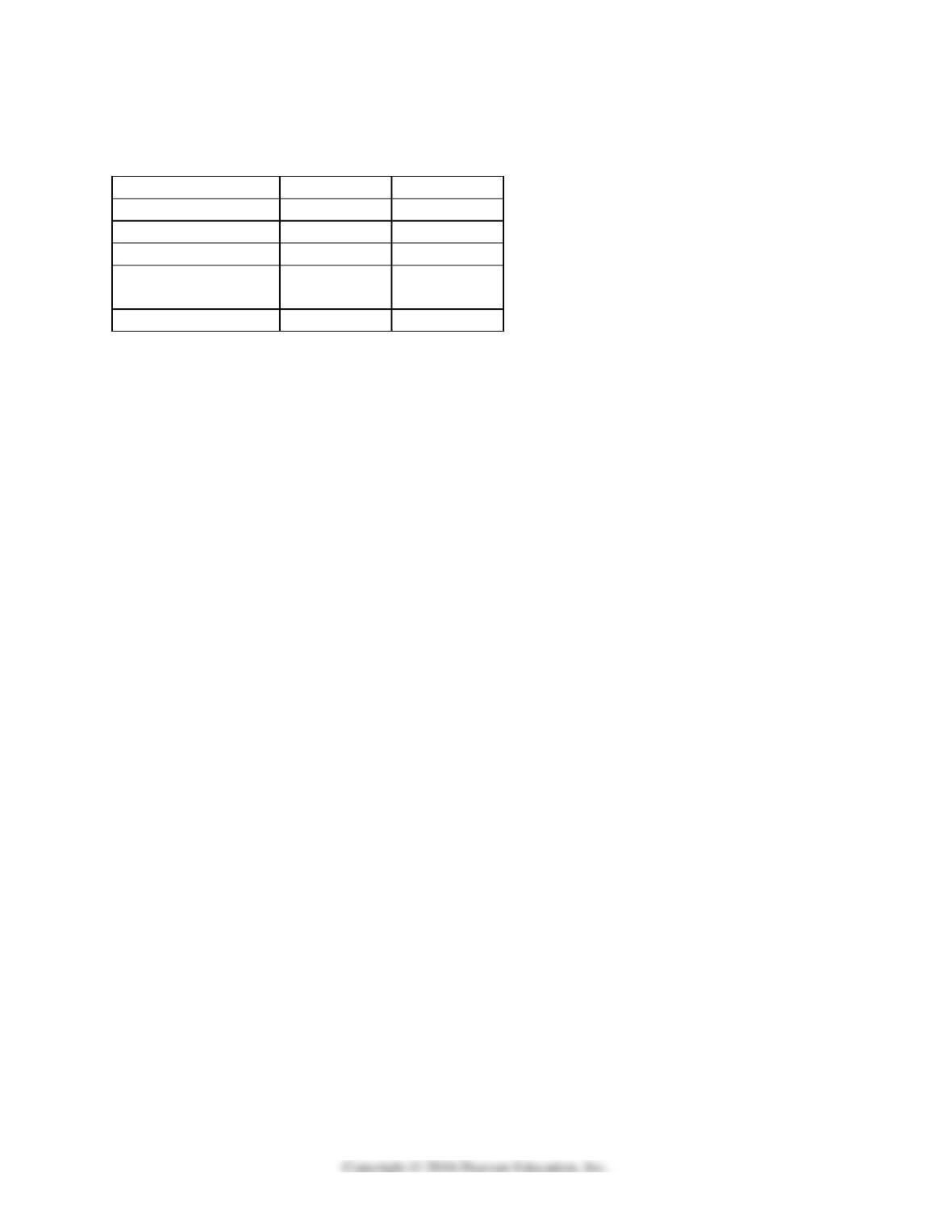
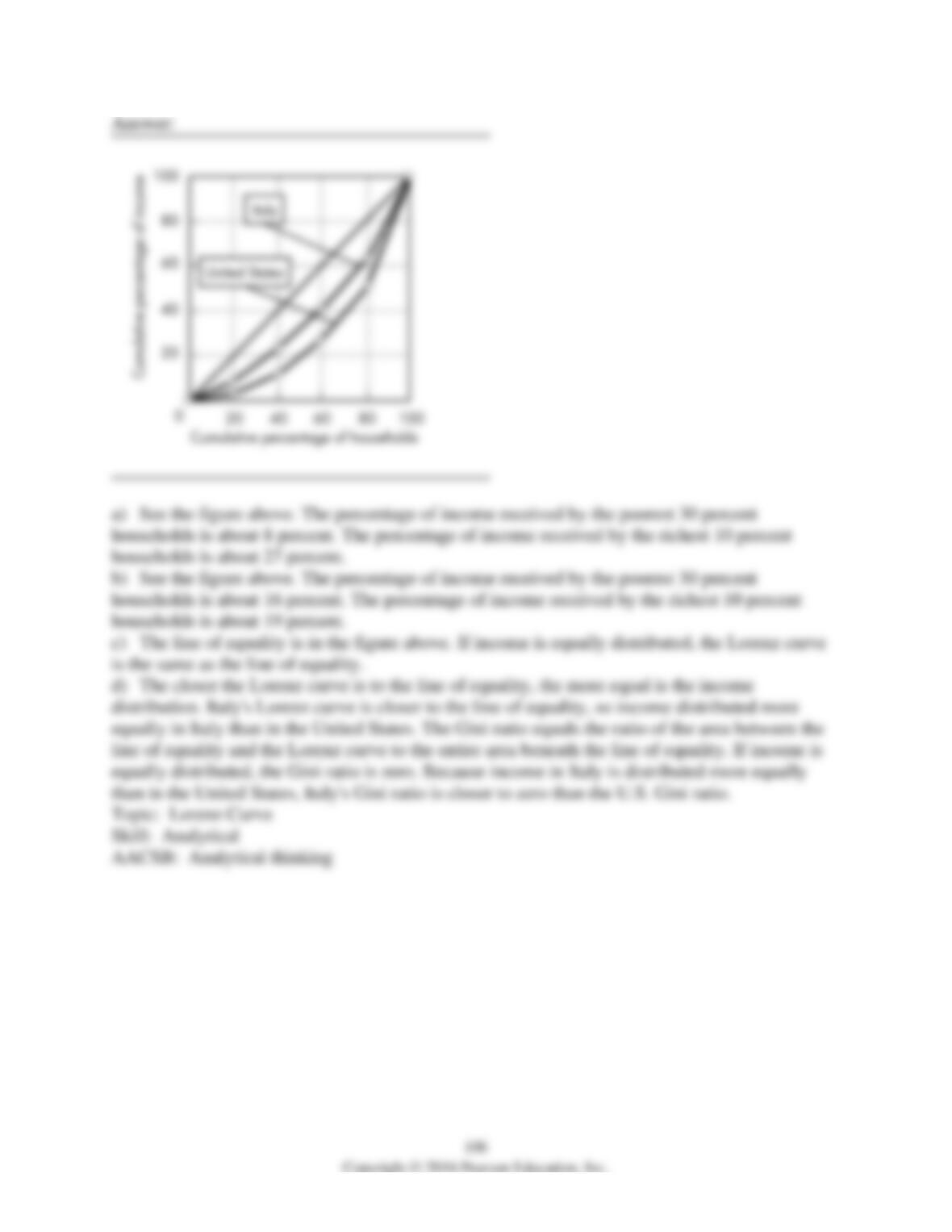
1) The table above shows the income distribution in the United States and Italy in a recent year.
a) Draw a Lorenz curve for the United States. According to your graph, what is the percentage
of income received by the poorest 30 percent of households? The richest 10 percent?
b) On the same graph, draw a Lorenz curve for Italy. According to your graph, what is the
percentage of income received by the poorest 30 percent of households? The richest 10 percent?
c) Draw the line of equality. How is it related to the Lorenz curve?
d) Is income distributed more equally in the United States or in Italy? Which country’s Gini
ratio is closer to zero? Explain your answers.
107
Income (percent of total)
Households
United States
Canada
Lowest 20 percent
3.6
7.4
Second 20 percent
8.9
13.2
Middle 20 percent
14.8
18.1
Next highest 20
percent
23.1
24.9
Highest 20 percent
49.6
36.4
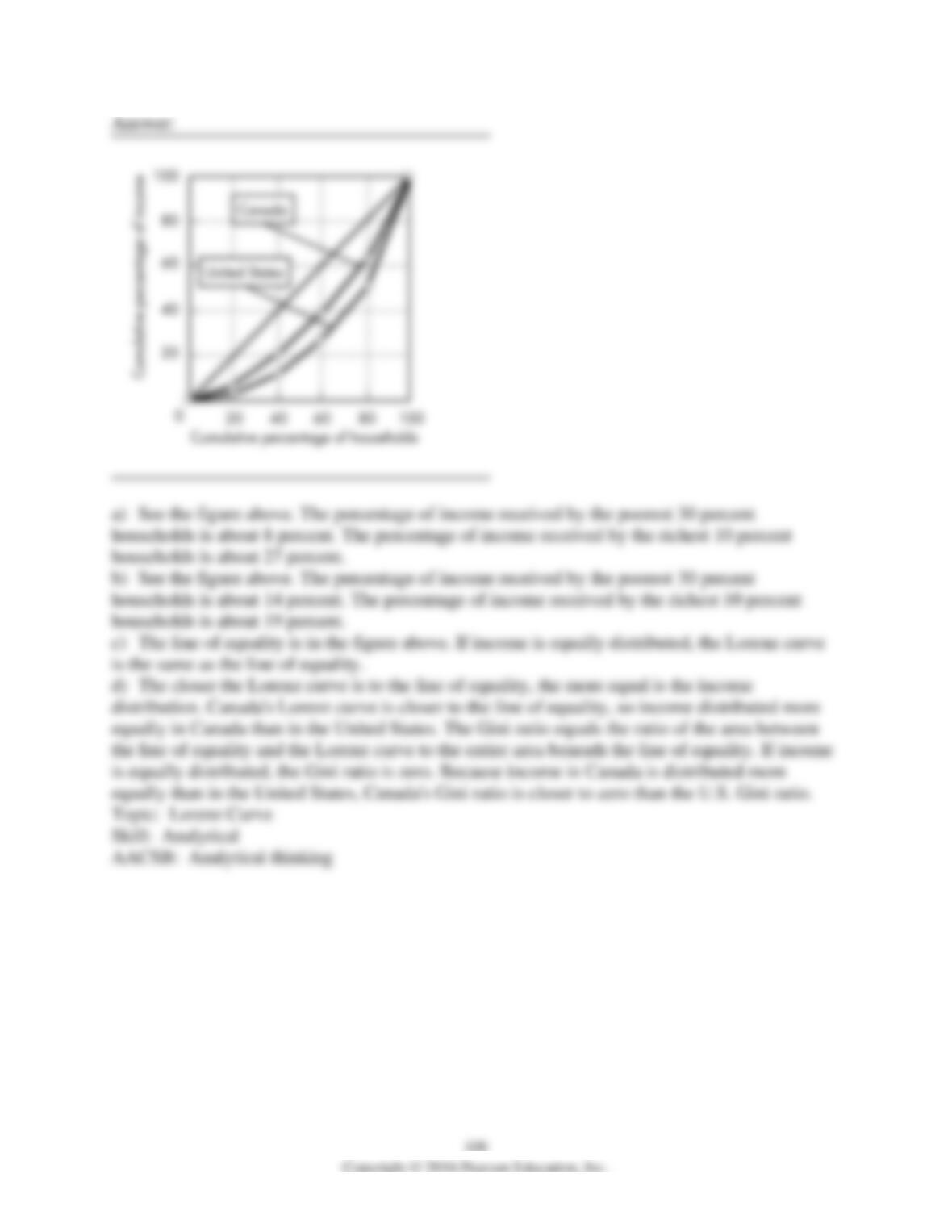
2) The table shows income distributions in the United States and Canada in a recent year.
a) Draw a Lorenz curve for the United States. According to your graph, what is the percentage
of income received by the poorest 30 percent of households? The richest 10 percent?
b) On the same graph, draw a Lorenz curve for Canada. According to your graph, what is the
percentage of income received by the poorest 30 percent of households? The richest 10 percent?
c) Draw the line of equality. How is it related to the Lorenz curve?
d) Is income distributed more equally in the United States or in Canada? Which country’s Gini
ratio is closer to zero? Explain your answers.
109
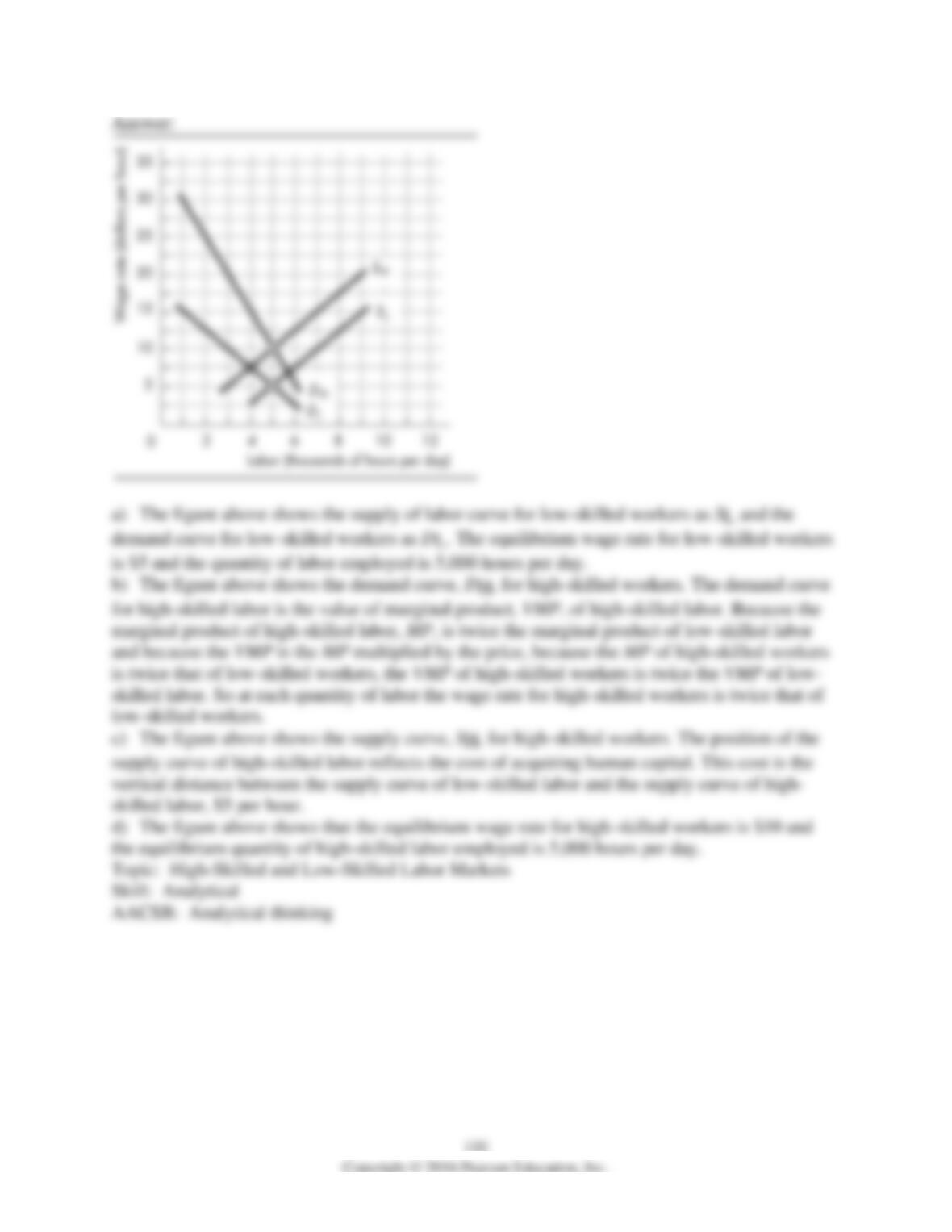
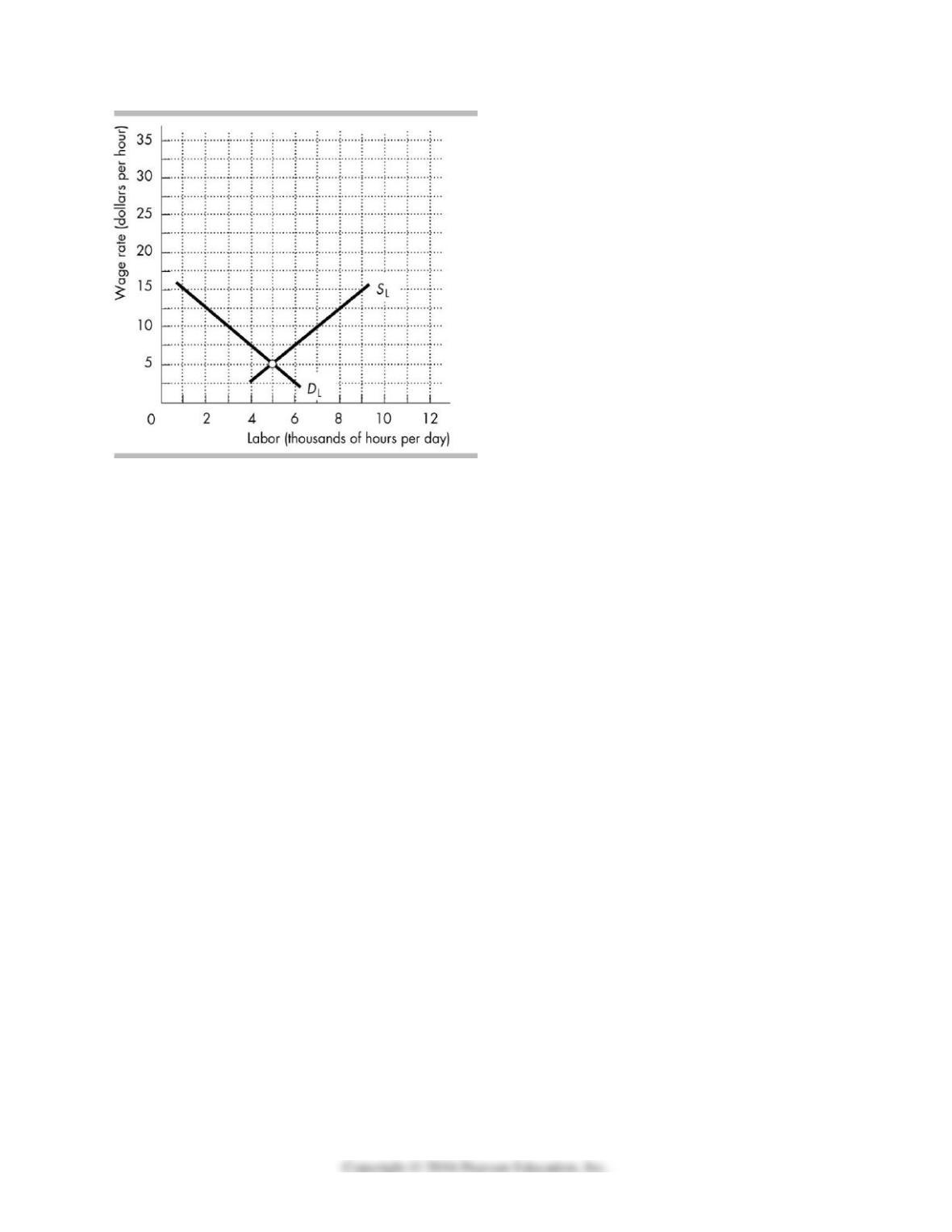
3) The figure above shows the demand for and supply of low-skilled labor. High-skilled workers
have twice the marginal product of low-skilled workers. The cost of acquiring the skill adds $5
an hour to the wage that must be offered to attract high-skilled labor at each employment level.
a) What is the equilibrium wage rate of low-skilled labor and the equilibrium quantity of low-
skilled labor employed?
b) Draw and explain the demand curve for high-skilled labor.
c) Draw and explain the supply curve of high-skilled labor.
d) What is the equilibrium wage rate of high-skilled labor and the equilibrium quantity of high-
skilled labor employed?