
Chapter 17
International Trade: Does It Jeopardize American Jobs?
Multiple Choice
1. In 2009, trade made up ____ percent of the U.S. economy.
A) 1.3
B) 5.0
C) 11.1
D) 22.7
2. In 2009, the U.S. experienced a deficit in its balance of trade with
A) Europe.
B) Africa.
C) OPEC.
D) all of the answers are correct.
3. In 2009, the U.S. experienced a deficit in its balance of trade with
A) China.
B) Mexico.
C) Canada.
D) all of the answers are correct.
4. Which of the following are prominent exports of the U.S.?
A) petroleum
B) financial services
C) clothing
D) all of the answers are correct
5. Which of the following are prominent imports into the U.S.?
A) petroleum
B) electrical machinery and audio and video equipment
C) motor vehicles
D) all of the answers are correct

6. In 2009, the trading partner to whom the U.S. shipped the greatest volume of exports was
A) Mexico.
B) Canada.
C) OPEC.
D) China.
7. In 2009, the trading partner from whom the U.S. received the greatest volume of imports was
A) Mexico.
B) OPEC.
C) Europe.
D) Africa.
8. In 2009, the trading partner with which the U.S. had the largest trade deficit was
A) Africa.
B) Europe.
C) OPEC.
D) China.
9. In 2009, the U.S. trade deficit with the world was approximately
A) $470 million.
B) $634 billion.
C) $4.7 trillion.
D) $13.4 trillion.
10. Between 1995 and 2009 the U.S. trade with China went from a
A) small surplus to a larger surplus.
B) small surplus to a small deficit.
C) small deficit to a small surplus.
D) large deficit to an even larger deficit.
11. The U.S. both imports and exports significant quantities of
A) coffee.
B) industrial equipment.
C) services.
D) industrial equipment and services.

12. The U.S. both imports and exports significant quantities of
A) aerospace products and parts.
B) petroleum and coal products.
C) electrical machinery and audio/video equipment.
D) petroleum and coal products and electrical machinery and audio/video equipment.
13. In 2009, the U.S. imports from the rest of the world were approximately
A) $1.912 billion.
B) $1,912 million.
C) $1.912 trillion.
D) $1,912 trillion.
14. In 2009, the volume of U.S. imports from China were
A) larger than the volume of U.S. imports from Canada and Mexico combined.
B) larger than the volume of U.S. imports from Mexico.
C) larger than the volume of U.S. imports from Europe.
D) none of the options are correct.
15. If a country can, with a single unit of labor, produce more of both clothing and computers
than another country, then the first country has
A) a comparative advantage in both goods.
B) an absolute advantage in both goods.
C) both a comparative and absolute advantage in both goods.
D) an absolute advantage in one good and a comparative advantage in the other.
16. Determining the comparative advantage of a country requires that you look at the economic
notion of
A) opportunity cost.
B) ceteris paribus.
C) accounting and economic profit.
D) external costs.
17. Determining the absolute advantage of a country requires that you look at
A) opportunity cost.
B) the output per worker in each country.
C) accounting and economic profit.
D) external costs.
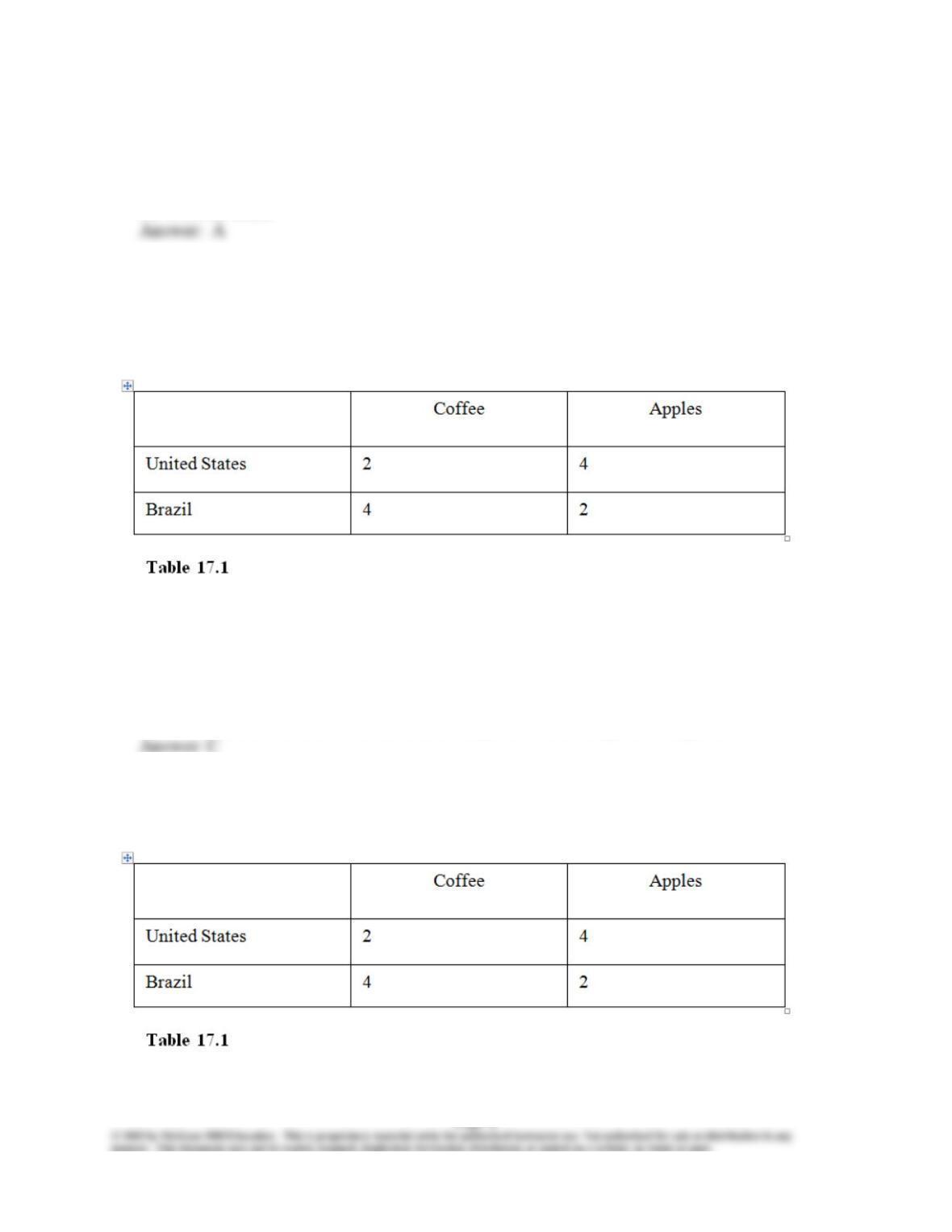
Table 17.1
18. In Table 17.1,
A) the United States has an absolute advantage in both goods but a comparative advantage in
apples only.
B) Brazil has an absolute advantage in both goods but a comparative advantage in coffee
only.
C) the United States has an absolute and comparative advantage in apples while Brazil has
an absolute and comparative advantage in coffee.
D) the United States has an absolute and comparative advantage in both goods.
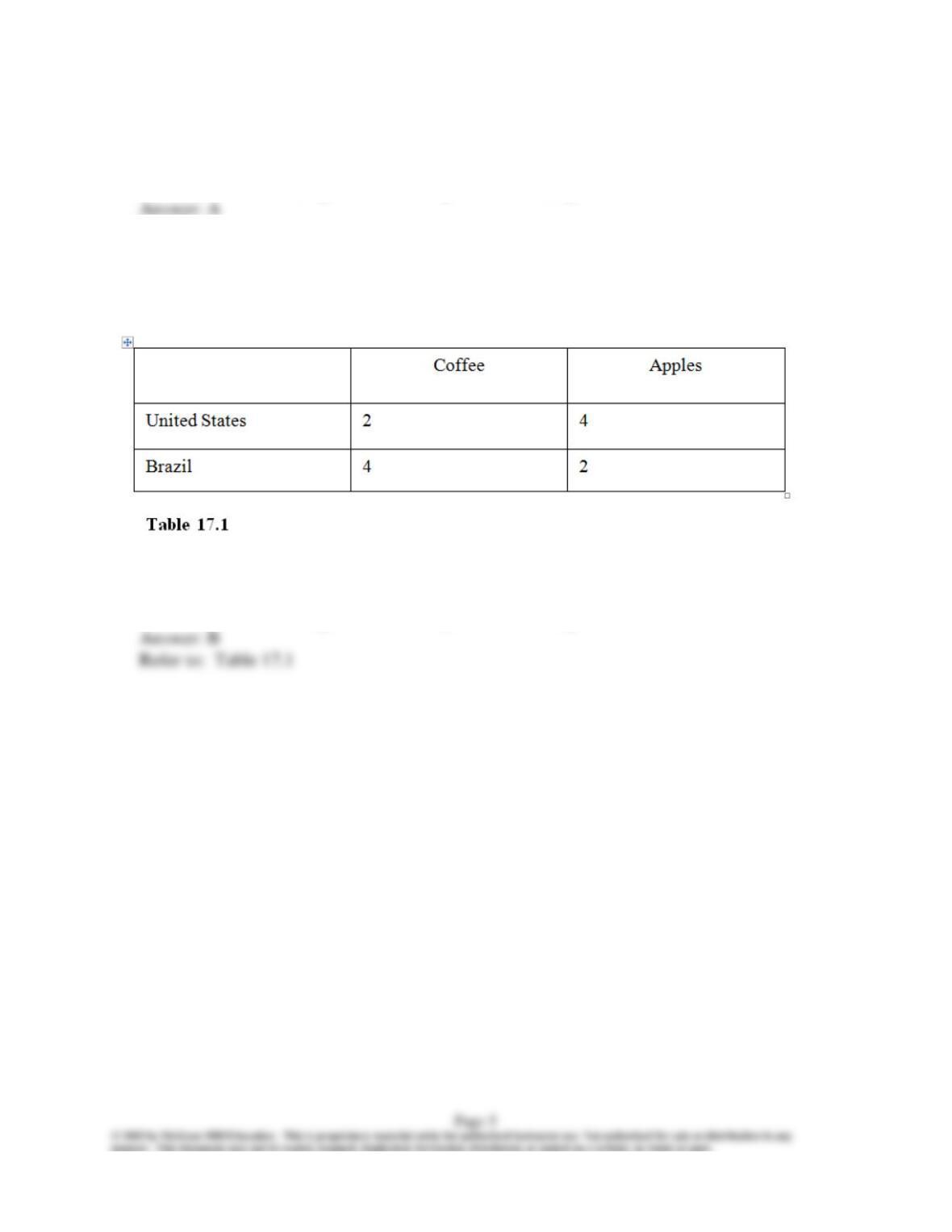
19. In Table 17.1 the United States has
A) An absolute and comparative advantage in apples.
B) An absolute and comparative advantage in coffee.
C) An absolute and comparative advantage in both goods.
D) An absolute advantage but not a comparative advantage in coffee.
20. In Table 17.1 the Brazil has
A) An absolute and comparative advantage in apples.
B) An absolute and comparative advantage in coffee.
C) An absolute and comparative advantage in both goods.
D) An absolute advantage but not a comparative advantage in coffee.
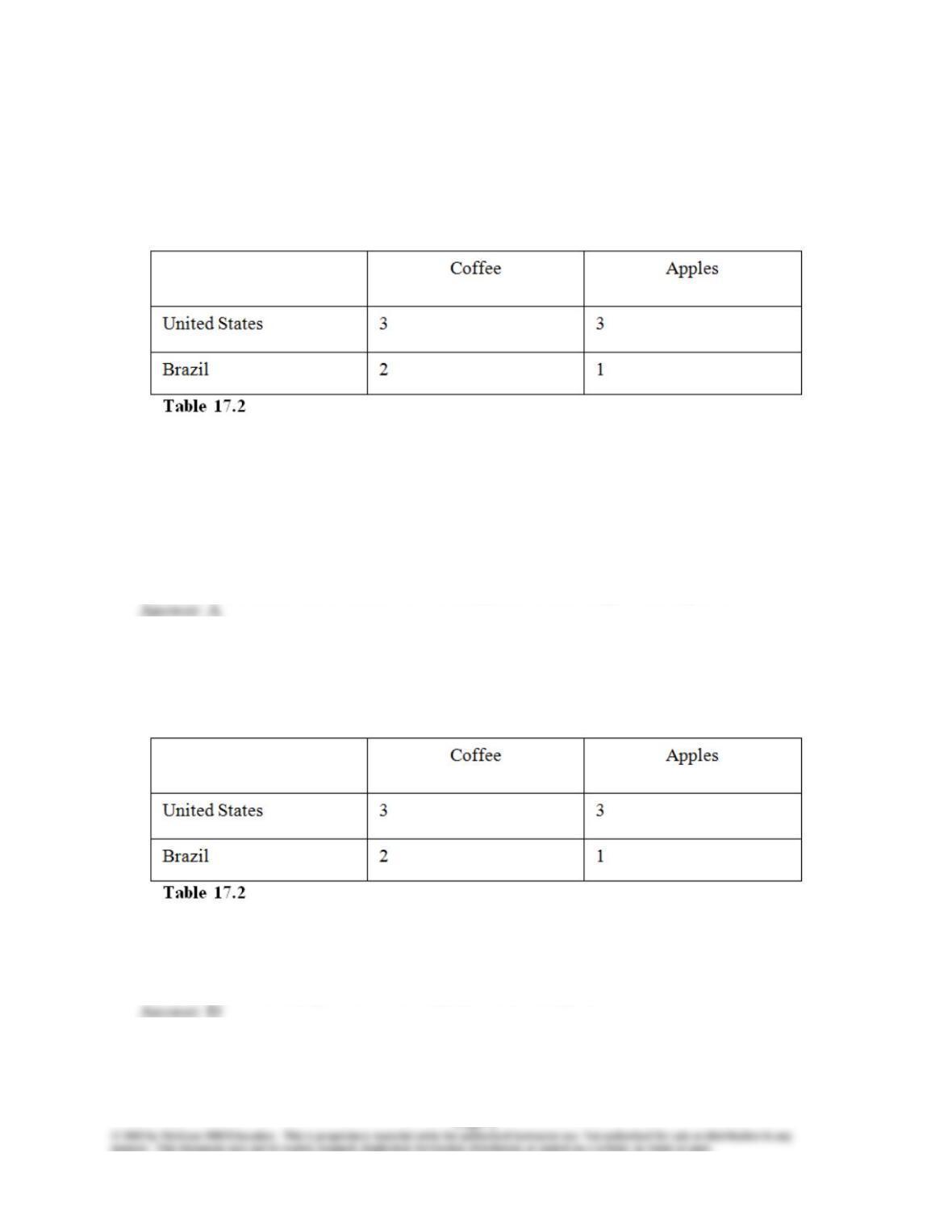
Table 17.2
21. In Table 17.2,
A) the United States has an absolute advantage in both goods but a comparative advantage in
apples only.
B) Brazil has an absolute advantage in both goods but a comparative advantage in coffee
only.
C) the United States has an absolute and comparative advantage in apples while Brazil has
an absolute and comparative advantage in coffee.
D) the United States has an absolute and comparative advantage in both goods.
22. In Table 17.2 the United States has
A) an absolute advantage but not a comparative advantage in apples.
B) an absolute and comparative advantage in coffee.
C) an absolute and comparative advantage in both goods.
D) an absolute advantage but not a comparative advantage in coffee.
23. In Table 17.2 the Brazil has
A) an absolute advantage but not a comparative advantage in apples.
B) an absolute and comparative advantage in coffee.
C) an absolute and comparative advantage in both goods.
D) a comparative advantage in coffee but not an absolute advantage.
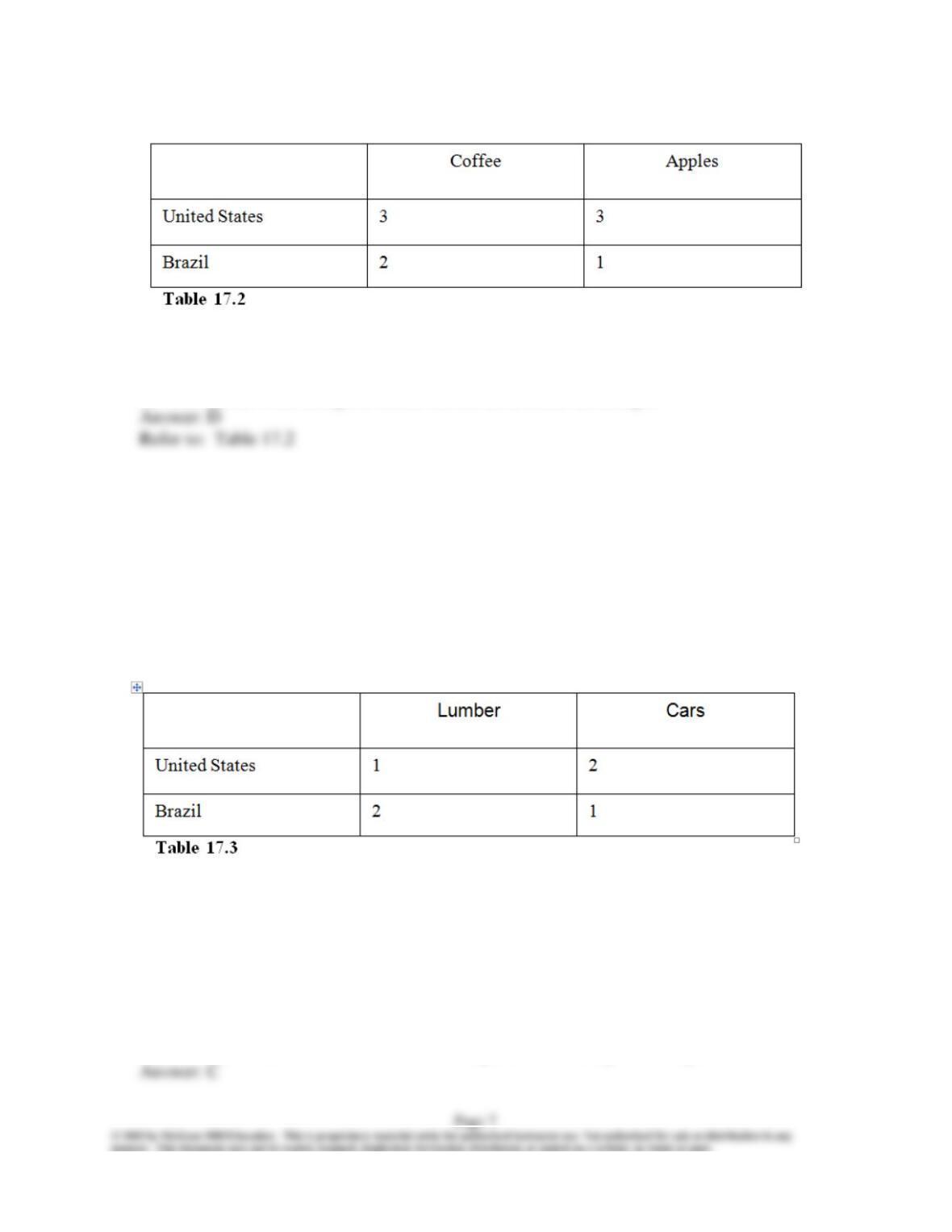
Table 17.3
24. In Table 17.3,
A) the United States has an absolute advantage in both goods but a comparative advantage in
cars only.
B) Brazil has an absolute advantage in both goods but a comparative advantage in lumber
only.
C) the United States has an absolute and comparative advantage in Cars while Brazil has an
absolute and comparative advantage in lumber.
D) the United States has an absolute and comparative advantage in both goods.
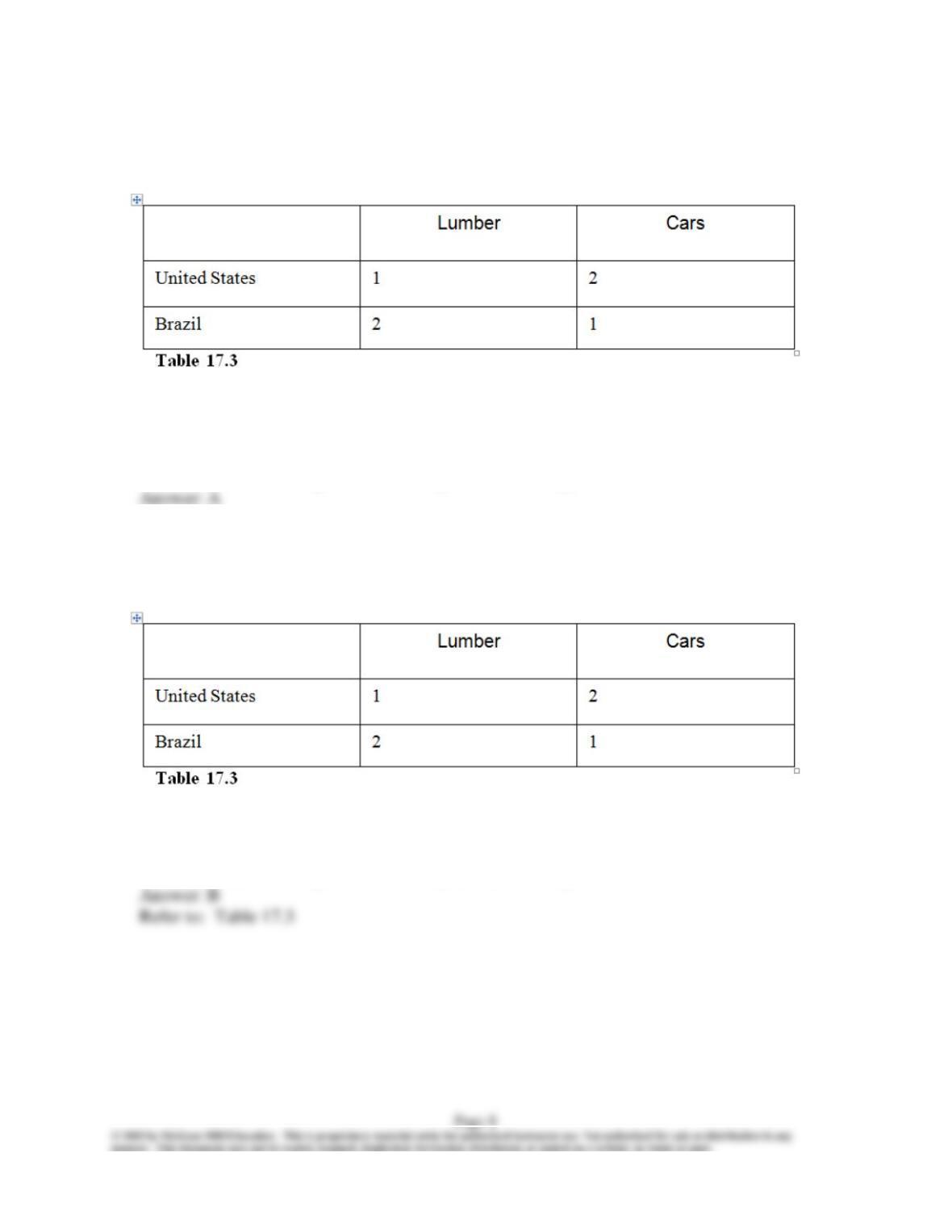
25. In Table 17.3 the United States has
A) an absolute and comparative advantage in cars.
B) an absolute and comparative advantage in lumber.
C) an absolute and comparative advantage in both goods.
D) an absolute advantage but not a comparative advantage in lumber.
26. In Table 17.3 the Brazil has
A) an absolute and comparative advantage in cars.
B) an absolute and comparative advantage in lumber.
C) an absolute and comparative advantage in both goods.
D) an absolute advantage but not a comparative advantage in lumber.
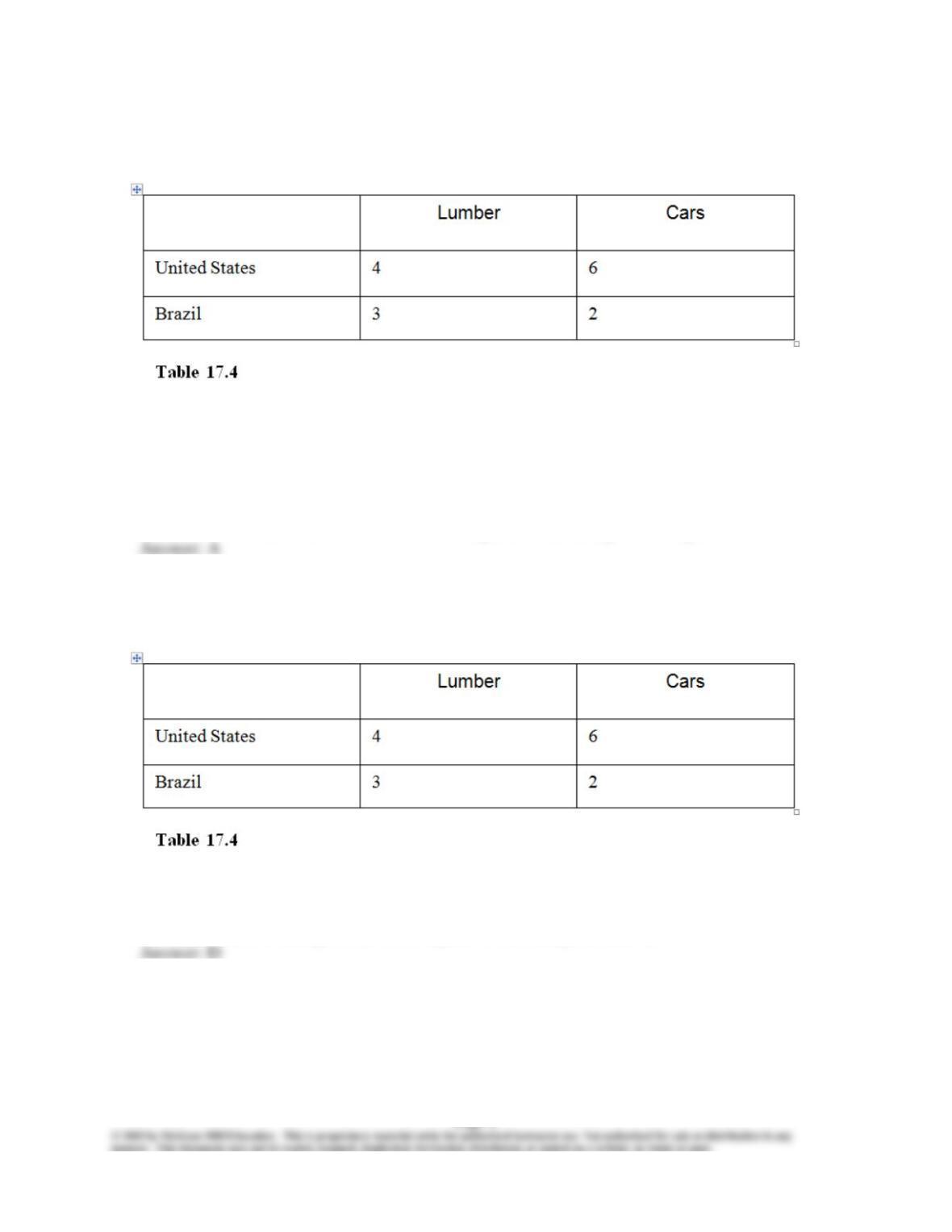
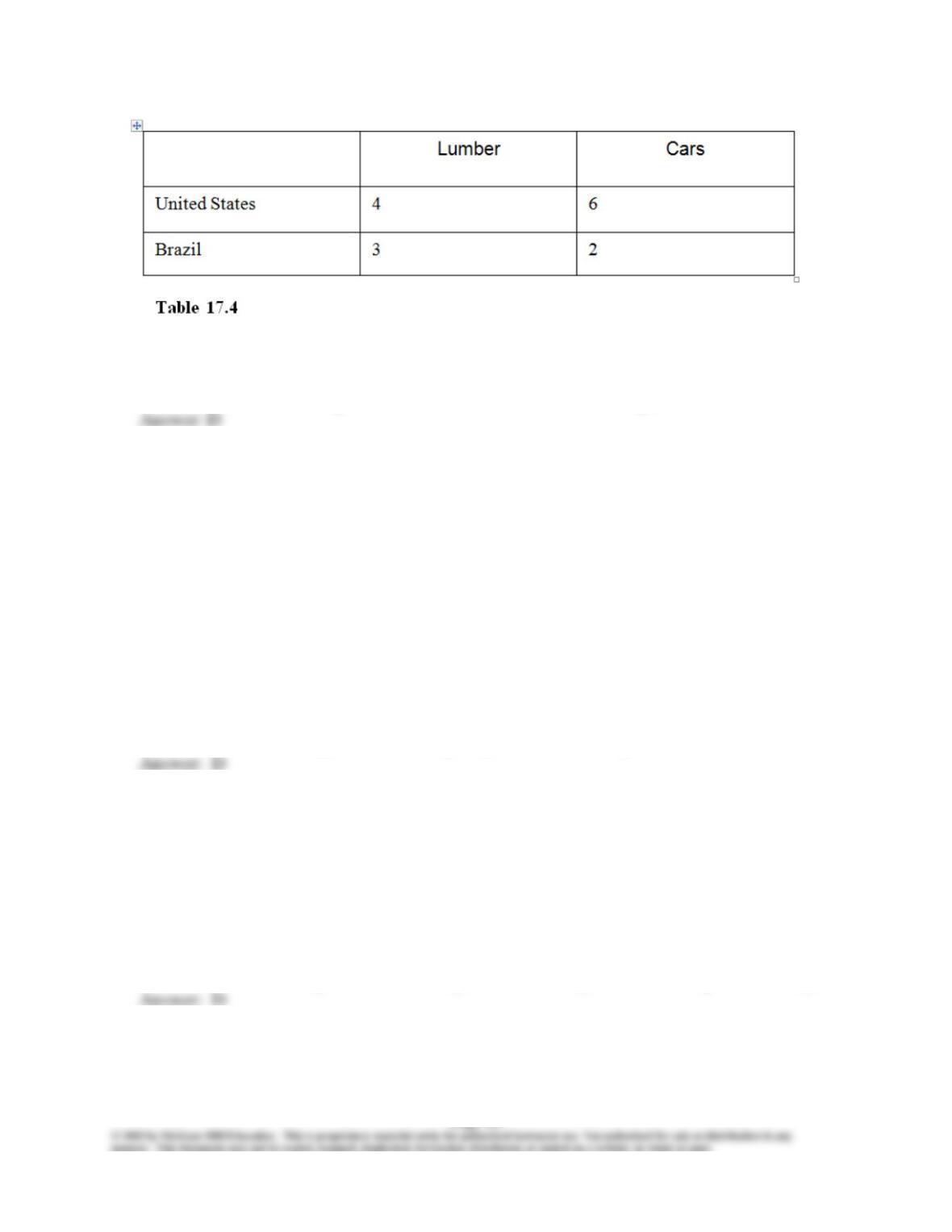
27. In Table 17.4
A) the United States has an absolute advantage in both goods but a comparative advantage in
cars only.
B) Brazil has an absolute advantage in both goods but a comparative advantage in lumber
only.
C) the United States has an absolute and comparative advantage in Cars while Brazil has an
absolute and comparative advantage in lumber.
D) the United States has an absolute and comparative advantage in both goods.
28. In Table 17.4 the United States has
A) an absolute advantage but not a comparative advantage in cars.
B) an absolute and comparative advantage in lumber.
C) an absolute and comparative advantage in both goods.
D) an absolute advantage but not a comparative advantage in lumber.
29. In Table 17.4 the Brazil has
A) an absolute advantage but not a comparative advantage in cars.
B) an absolute and comparative advantage in lumber.
C) an absolute and comparative advantage in both goods.
D) a comparative advantage in lumber but not an absolute advantage.
30. If it takes one country one unit of labor to produce either a computer or a TV but it takes the
other country two units of labor to produce a computer and only one to produce a TV, then
the first country has
A) a comparative advantage in both goods.
B) an absolute advantage in both goods.
C) both a comparative and absolute advantage in both goods.
D) an absolute and comparative advantage in production of computers.
31. If it takes one country one unit of labor to produce either a computer or a TV but it takes the
other country three units of labor to produce a computer and four to produce a TV, then the
first country has
A) a comparative advantage in both goods.
B) an absolute advantage in TVs but a comparative advantage in computers.
C) an absolute advantage in TVs and computers but a comparative advantage in computers
only.
D) an absolute advantage in TVs and computers but a comparative advantage in TVs only.
32. If it takes one country two units of labor to produce a computer and three units of labor to
produce a TV but it takes the other country three units of labor to produce a computer and

four to produce a TV, then the first country has
A) a comparative advantage in both goods.
B) an absolute advantage in TVs but a comparative advantage in computers.
C) an absolute advantage in TVs and computers but a comparative advantage in computers
only.
D) an absolute advantage in TVs and computers but a comparative advantage in TVs only.
33. If it takes one country three units of labor to produce a computer and two units of labor to
produce a TV but it takes the other country four units of labor to produce a computer and five
to produce a TV, then the first country has
A) a comparative advantage in both goods.
B) an absolute advantage in TVs but a comparative advantage in computers.
C) an absolute advantage in TVs and computers but a comparative advantage in computers
only.
D) an absolute advantage in TVs and computers but a comparative advantage in TVs only.
34. If with one unit of labor the U.S. can produce 20 units of computer software and 10 units of
computer hardware and China can produce 4 units of software and 4 units of hardware then
A) the United States has a comparative and absolute advantage in both goods.
B) China has a comparative and absolute advantage in both goods.
C) the United States has an absolute advantage in both goods.
D) the United States has a comparative advantage in both goods.
35. If with one unit of labor the U.S. can produce 20 units of computer software and 10 units of
computer hardware and China can produce 5 units of software and 5 units of hardware then
A) the United States has a comparative and absolute advantage in both goods.
B) China has a comparative and absolute advantage in both goods.
C) China has a comparative advantage in hardware and the U.S. has a comparative
advantage in software.
D) the United States has a comparative advantage in both goods.
36. If with one unit of labor the U.S. can produce 20 units of computer software and 10 units of
computer hardware and China can produce 6 units of software and 6 units of hardware then
trade can make
A) the U.S. better off but not China.
B) China better off but not the U.S.
C) neither better off.