Chapter 17 Test Bank KEY
1. Engaging in international trade has all of the following effects except:
2. For the most part, trade between many countries:
3. Voluntary exchanges generate:
4. Voluntary exchanges between ____________ generates surplus.
5. Absolute advantage is the ability to produce:
6. Comparative advantage is the ability to produce:
7. When a country has the ability to produce more of a good than others with a given amount of
resources, they:
8. When a country has the ability to produce a good or service at a lower opportunity cost than others,
they:
9. If Spain sells soccer balls to the United States, then Spain:
10. If England buys hockey sticks from Canada, then:
11. If Japan has an absolute advantage over the United States in making TVs, then Japan:
12. If Colombia has a comparative advantage over Mexico in the production of coffee, then:
13. The increase in welfare in both countries that results from specialization and trade is called:
14. Gains from trade are the:
15. Both countries can benefit from trade when:
16. When each country specializes in producing the good for which it has a comparative advantage:
17-4
17. When two countries specialize and trade:
18. When trade is possible, each country can produce the goods that it has:
19. Trade requires:
20. The right decision about what to produce and who to trade with happens:
21. Only a firm with ______________ will be able to make their output profitably.
17-5
22. National characteristics that affect the cost of producing goods in a particular country include all of the
following except:
23. An important determinant of comparative advantage is:
24. An important determinant of comparative advantage is:
25. We might predict that Hawaii has a comparative advantage compared to Russia in the production of
pineapples because Hawaii has:
26. A country with a lot of land relative to its population may have a comparative advantage in:
17-6
27. A country is likely to have a comparative advantage in a land-intensive activity if it has a:
28. A country with plenty of capital and little land may have a comparative advantage in:
30. A country is likely to have a comparative advantage in a capital-intensive activity if it has a:
31. As workforces become more educated in countries with comparative advantages in labor-intensive
products, cheap labor becomes:
32. As workforces become more educated in countries with comparative advantage in labor-intensive
products, the comparative advantage for the production of those labor-intensive goods shifts:
33. Over time, technology tends to:
34. Technology or production processes developed in a particular country:
35. A country may gain a temporary comparative advantage if it:
36. Once a new technology spreads and is adopted by many countries:
37. If there are big gains to be had from specialization and trade, countries generally don’t produce one
good because:
38. If there are big gains to be had from specialization and trade, countries generally don’t produce one
good because:
39. When a country gains from trade:
40. International free trade:
41. We call an economy that is self-contained and does not engage in any trade with outsiders a(n):
42. Imports are goods and services that are produced:
43. Exports are goods and services that are produced:
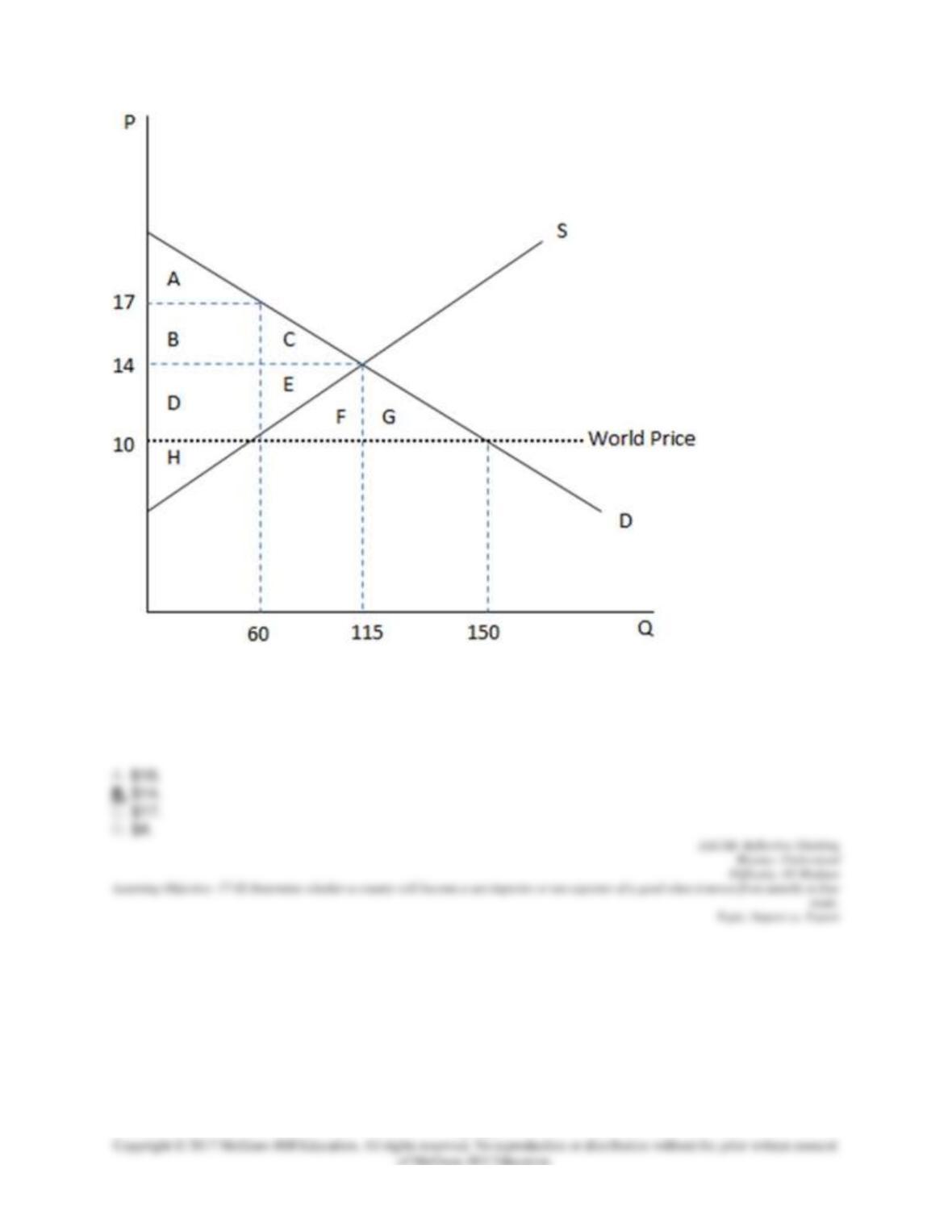
44. This graph demonstrates the domestic demand and supply for a good, as well as the world price for
17–10
According to the graph shown, if this were depicting an autarky, the equilibrium price would be:
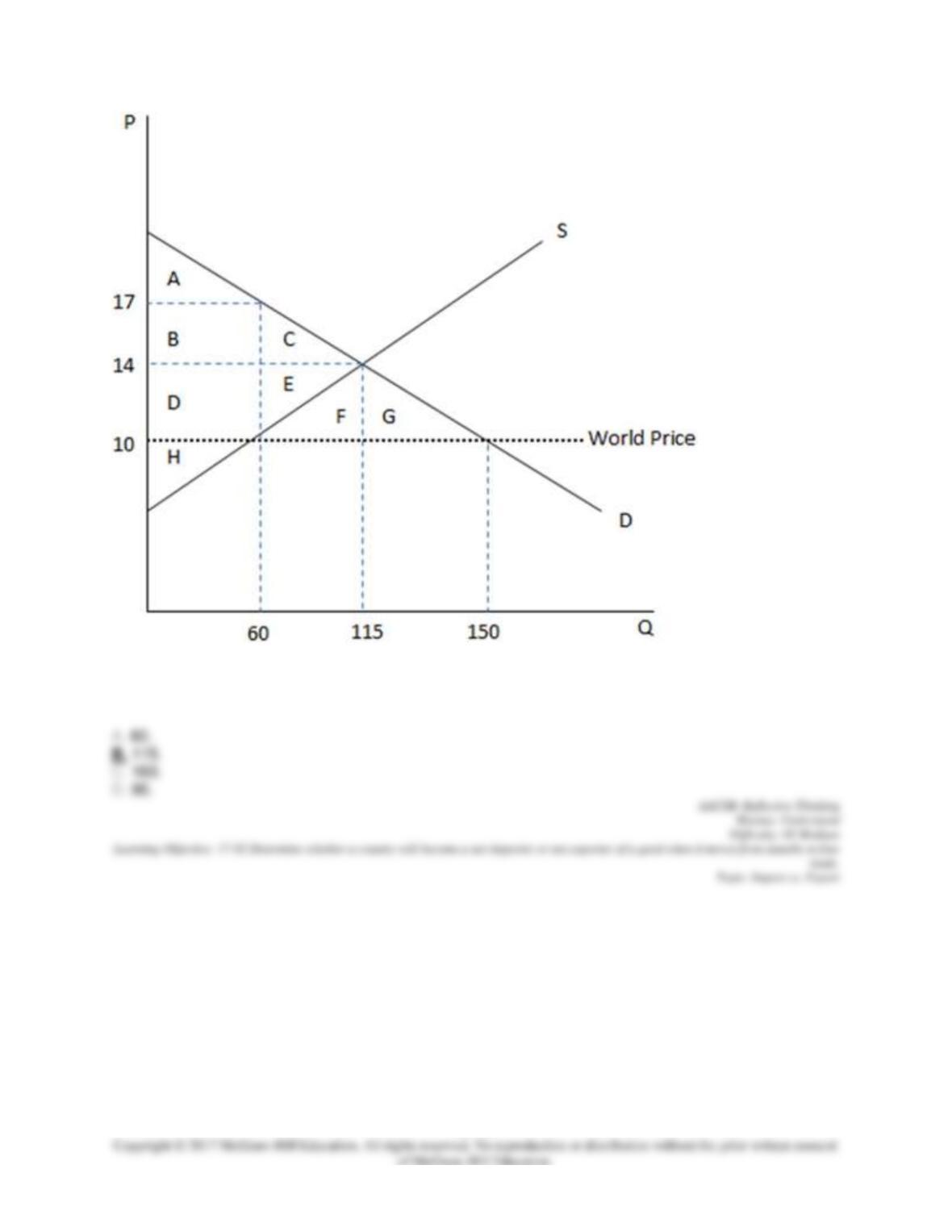
45. This graph demonstrates the domestic demand and supply for a good, as well as the world price for
that good.
17–11
According to the graph shown, if this were depicting an autarky, the amount being sold domestically is:
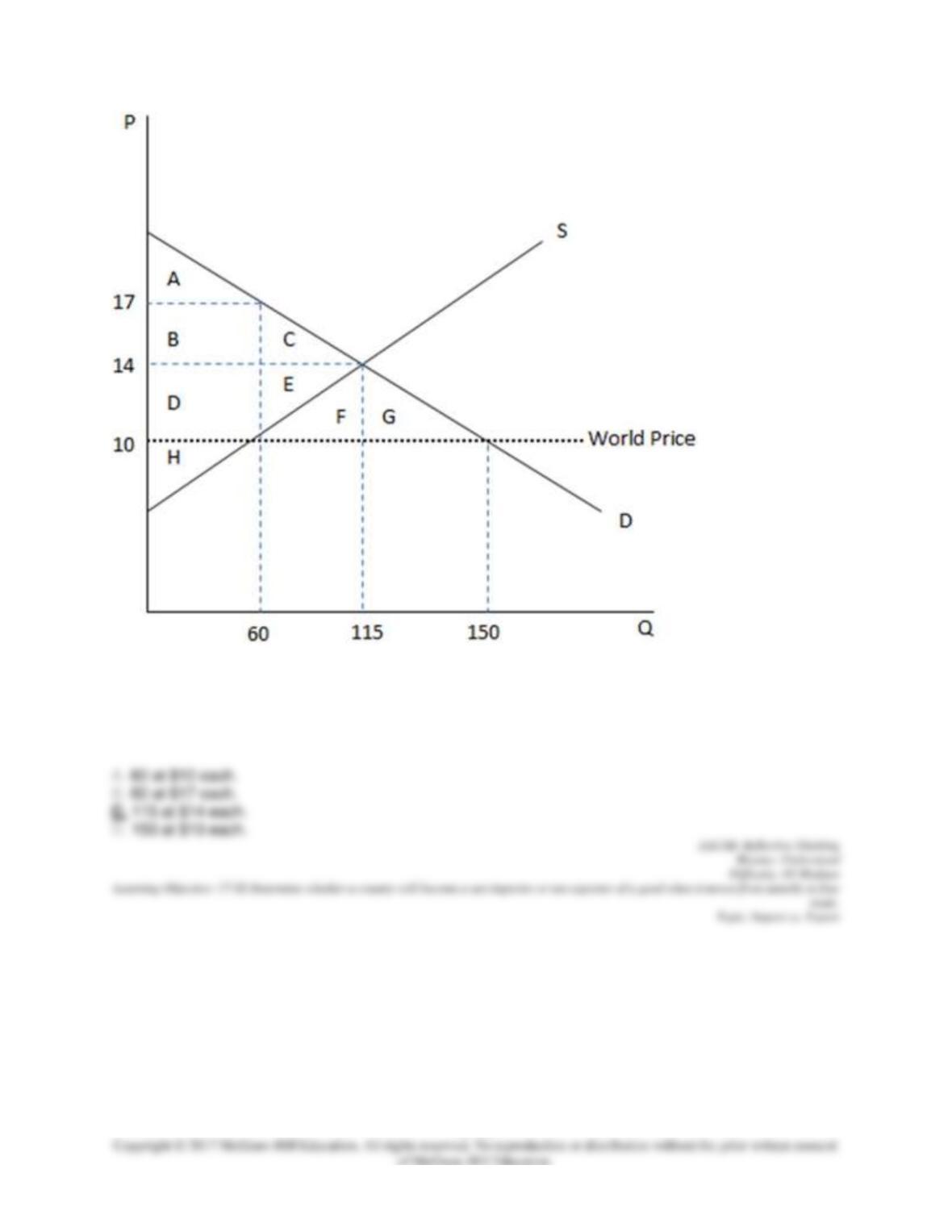
46. This graph demonstrates the domestic demand and supply for a good, as well as the world price for
that good.
17–12
According to the graph shown, if this were depicting an autarky, the amount being bought domestically is:
47. This graph demonstrates the domestic demand and supply for a good, as well as the world price for
that good.
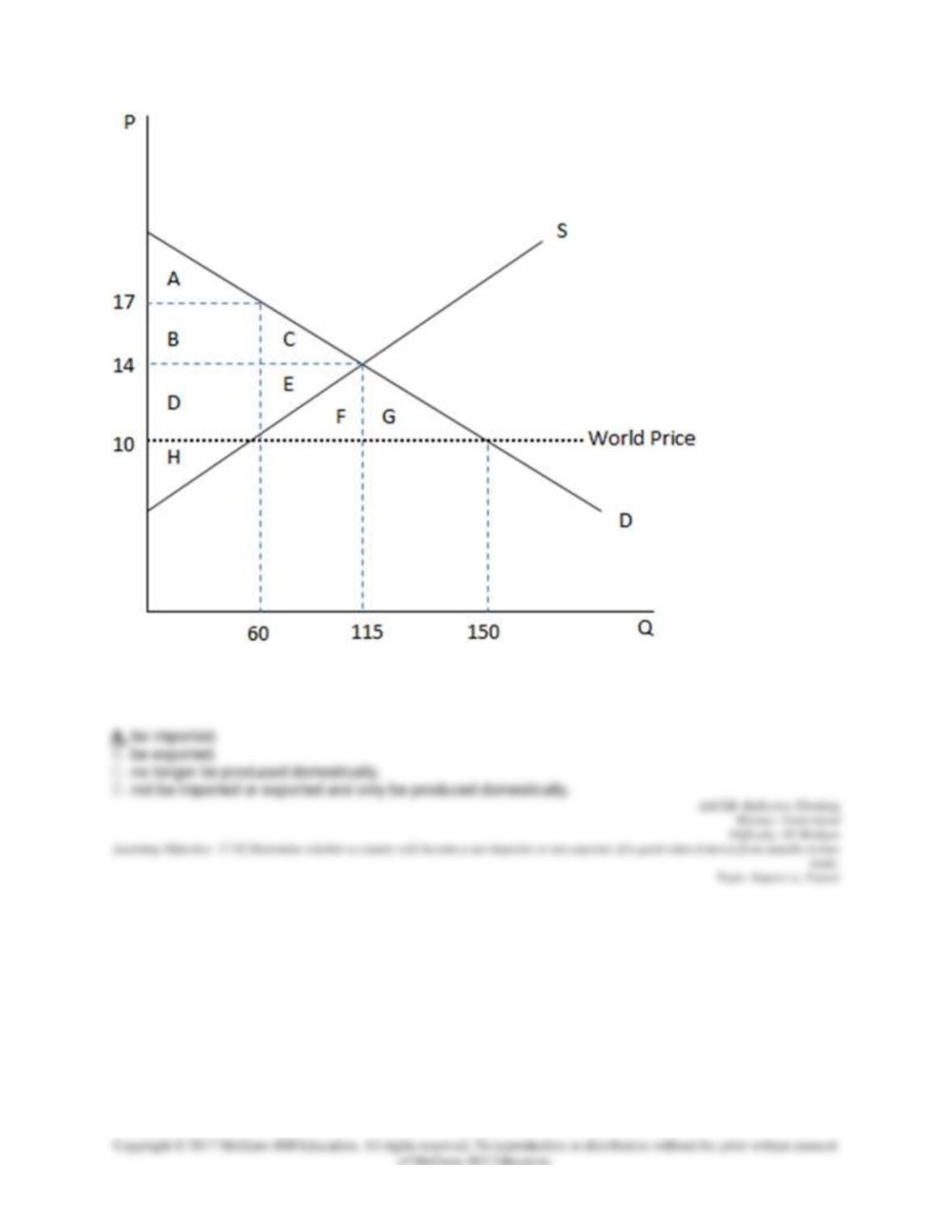
17–13
According to the graph shown, if this economy were to engage in free trade, the good would:
48. This graph demonstrates the domestic demand and supply for a good, as well as the world price for
that good.
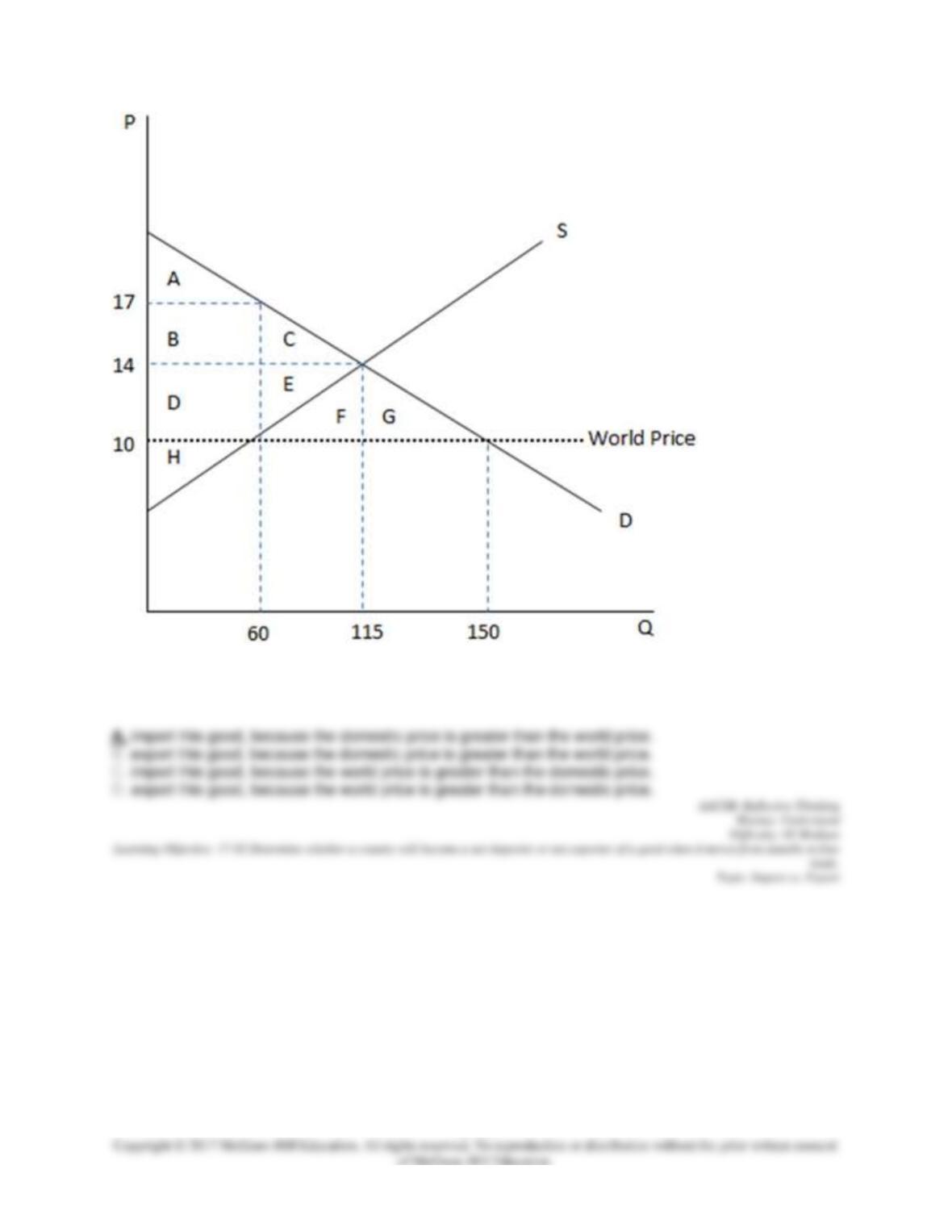
17–14
According the graph shown, if this economy were open to free trade, it would:
49. This graph demonstrates the domestic demand and supply for a good, as well as the world price for
that good.
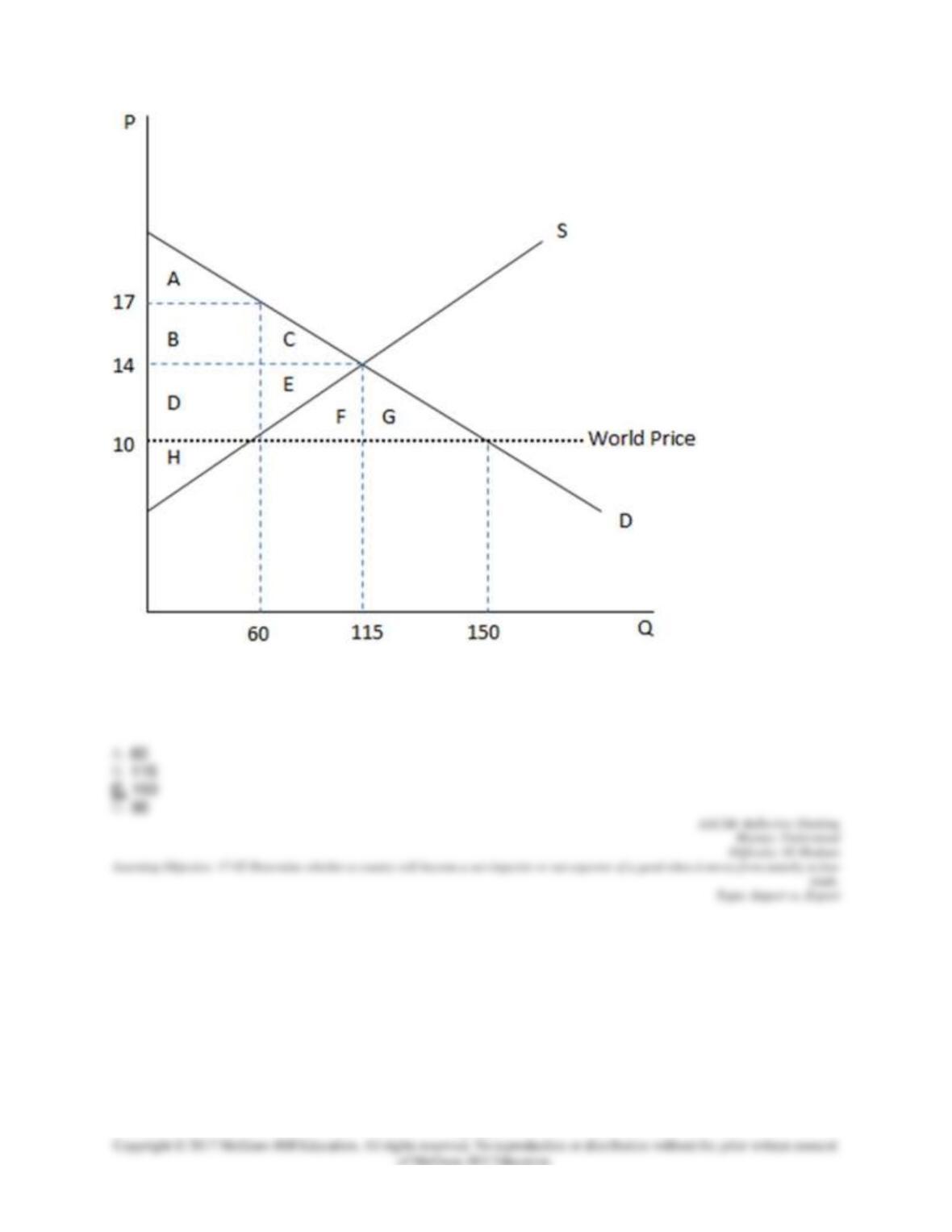
17–15
According to the graph shown, if this economy were open to free trade, domestic consumers would
consume how many units?
50. This graph demonstrates the domestic demand and supply for a good, as well as the world price for
that good.
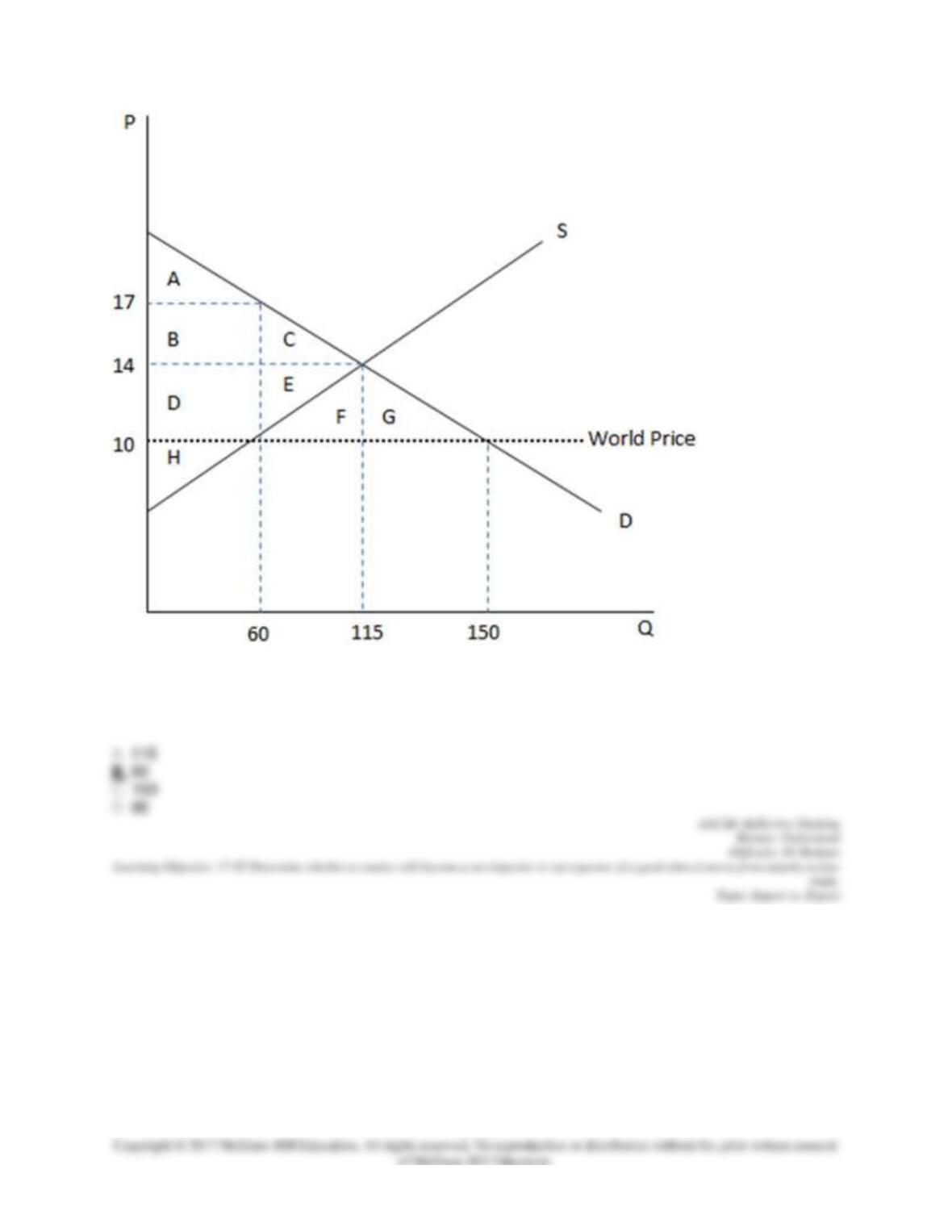
17–16
According to the graph shown, if this economy were open to free trade, domestic producers would
produce how many units?
51. This graph demonstrates the domestic demand and supply for a good, as well as the world price for
that good.
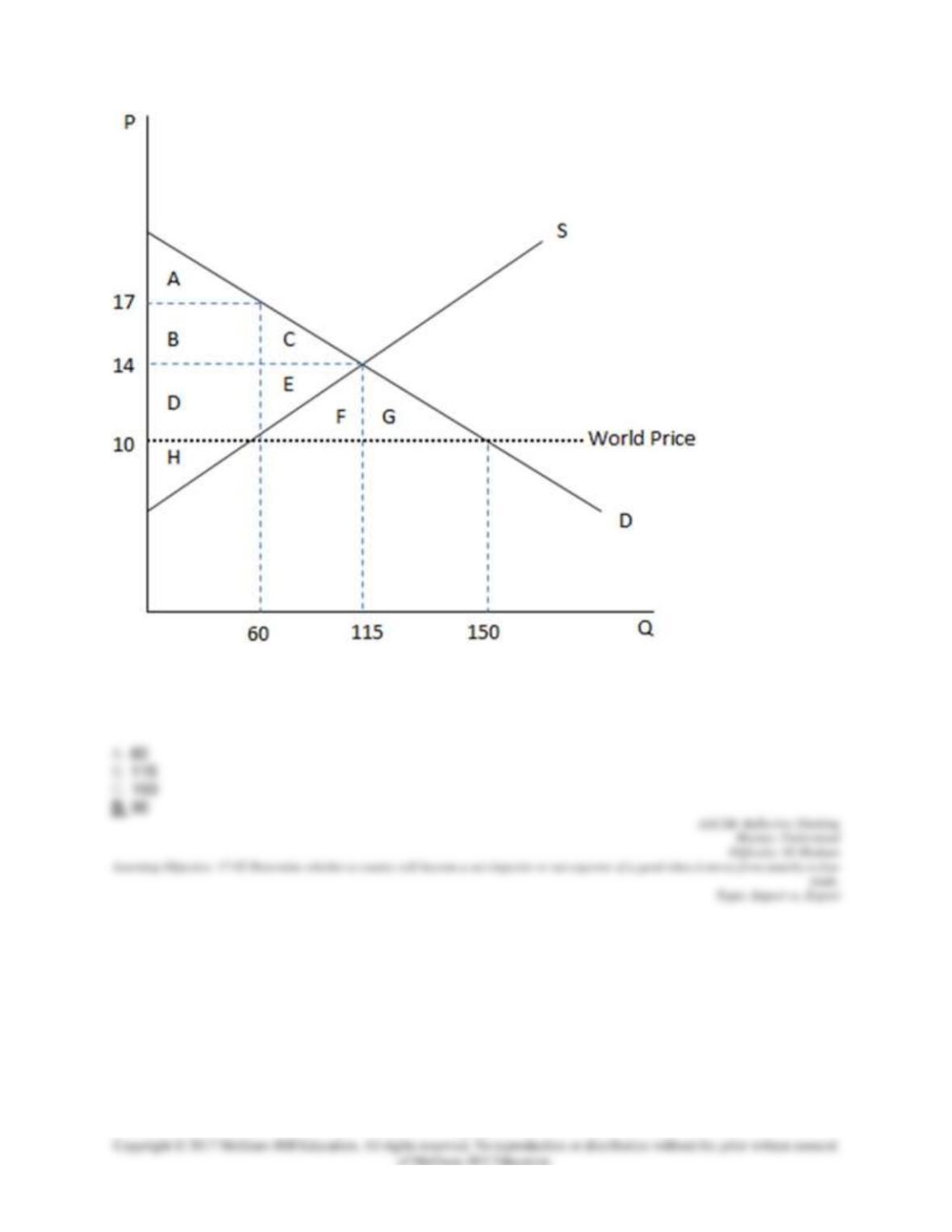
17–17
According to the graph shown, if this economy were open to free trade, domestic producers would
produce how many units?
52. This graph demonstrates the domestic demand and supply for a good, as well as the world price for
that good.
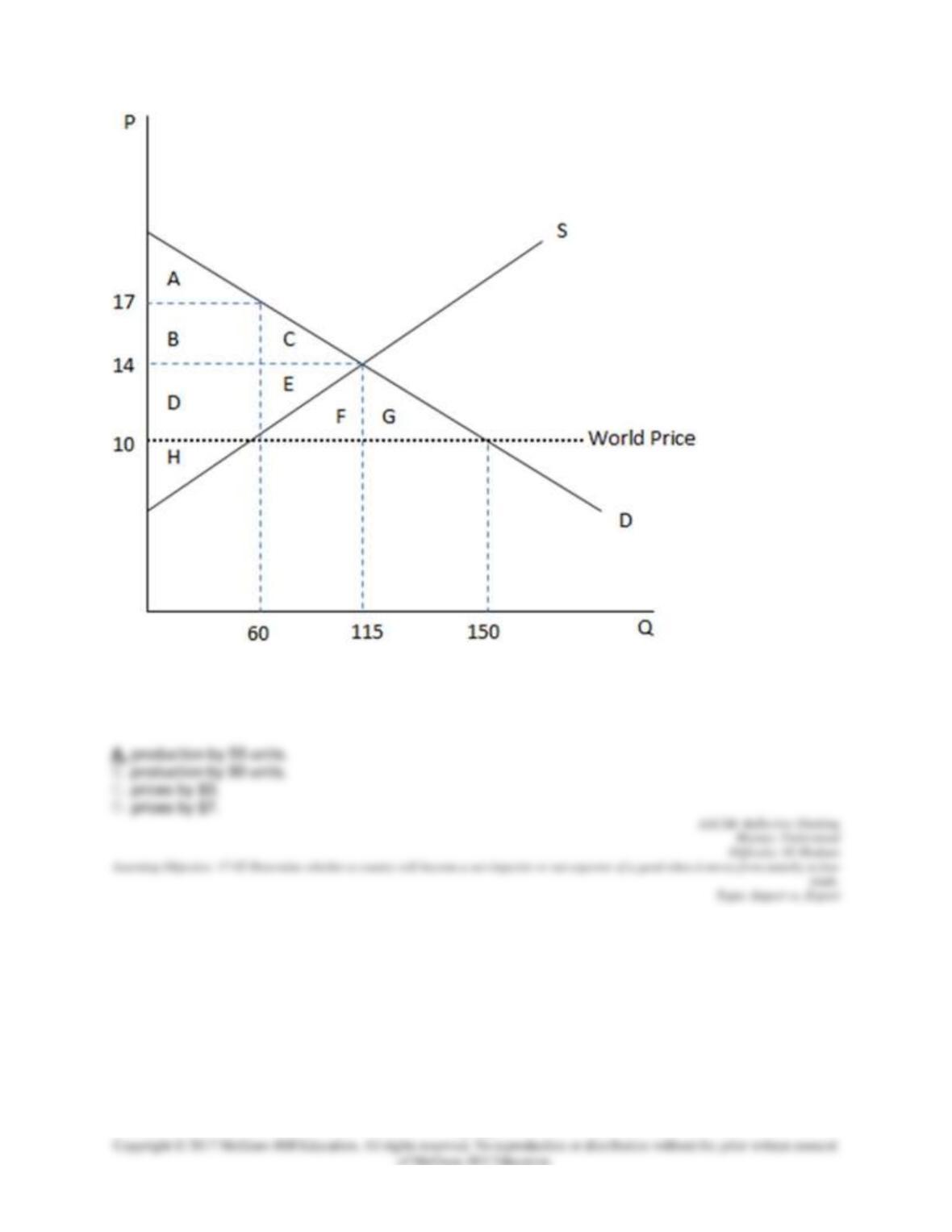
17–18
According to the graph shown, if this economy were to open to trade, domestic producers would have to
cut:
53. This graph demonstrates the domestic demand and supply for a good, as well as the world price for
that good.
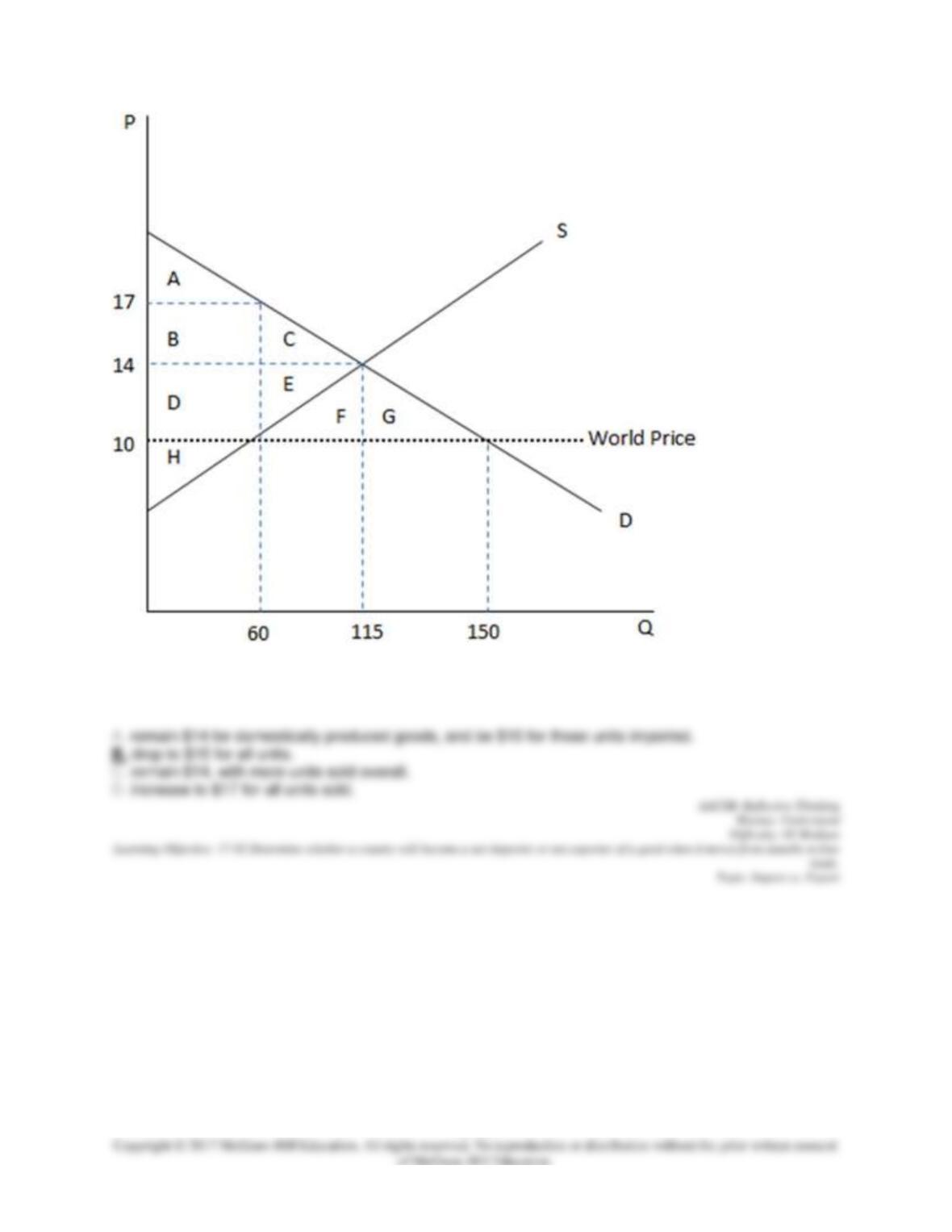
17–19
According to the graph shown, if this economy were to open to trade, domestic prices would:
54. This graph demonstrates the domestic demand and supply for a good, as well as the world price for
that good.
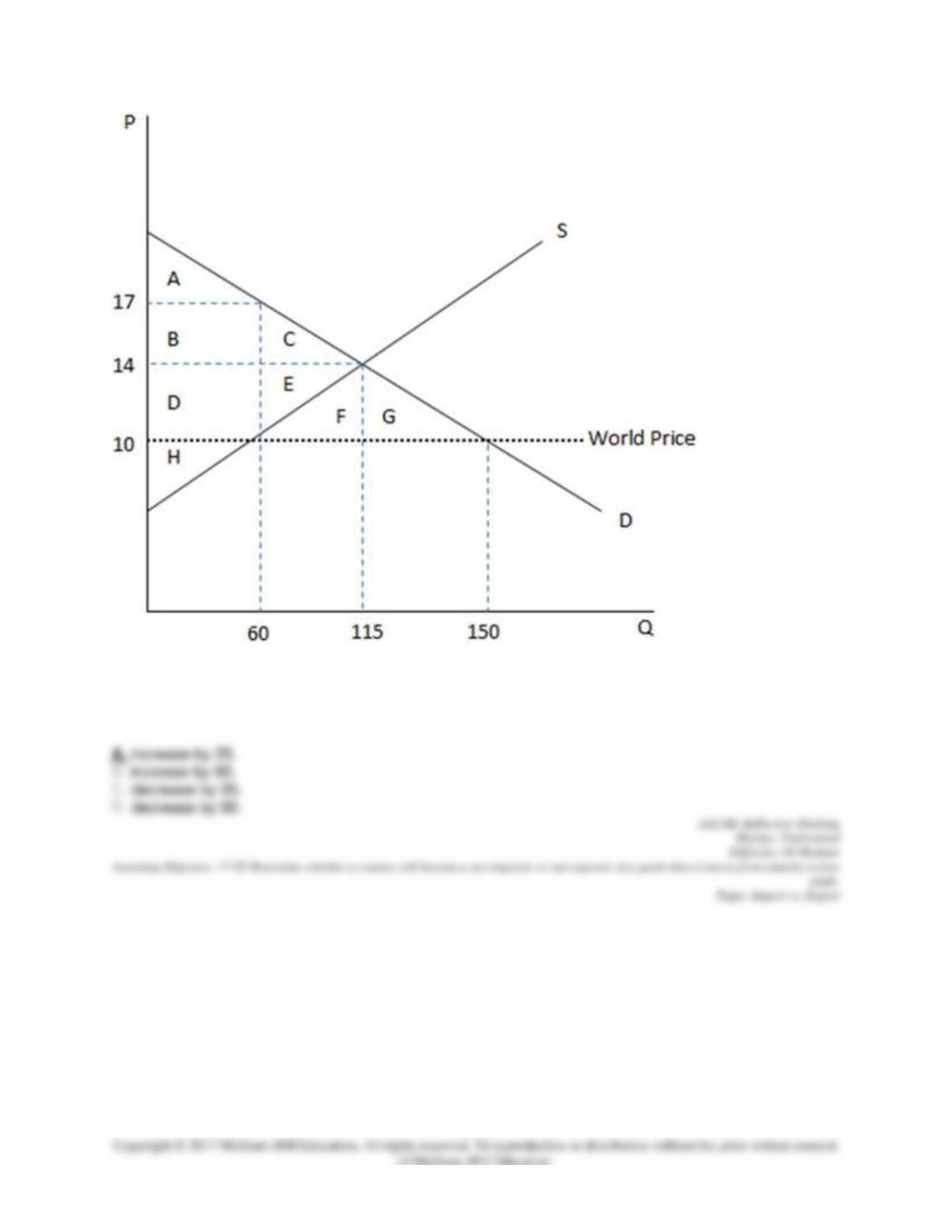
17–20
According to the graph shown, if this economy were to open to trade, the amount consumed domestically
would:
55. This graph demonstrates the domestic demand and supply for a good, as well as the world price for
that good.