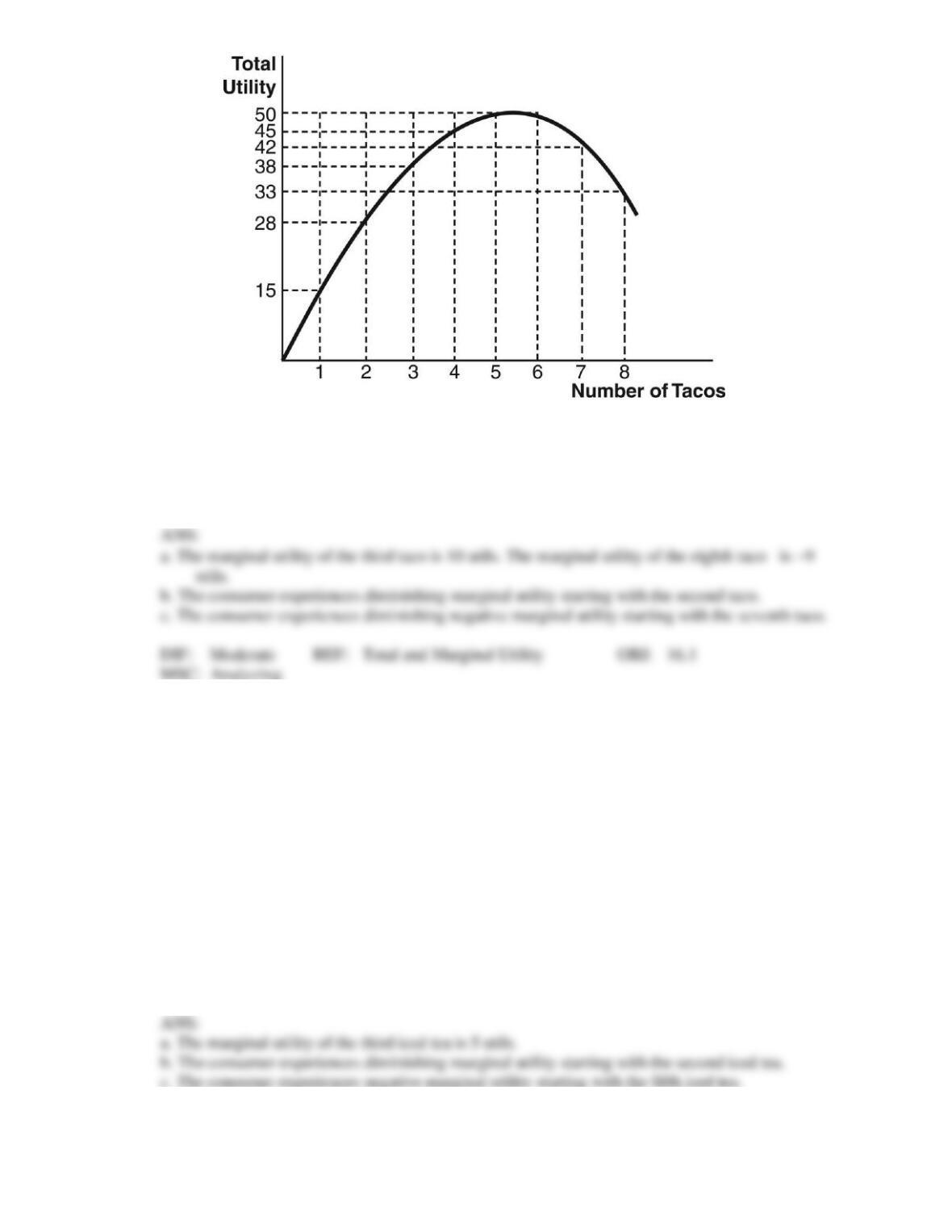
a. What is the marginal utility of the third and eighth tacos?
b. Does this consumer experience diminishing marginal utility? If so, after which taco does he
or she experience it?
c. Does this consumer experience negative marginal utility? If so, after which taco does he or
she experience it?
4. Refer to the following table:
Iced Tea Total Utility (Utils per Iced Tea)
0 0
1 15
2 25
3 30
4 32
5 30
6 27
7 20
8 0
a. What is the marginal utility of the third iced tea?
b. When does this consumer experience diminishing marginal utility?
c. When does this consumer experience negative marginal utility?
5. Refer to the following table:
Days Camping Marginal Utility (Utils per Day Camped)
0 —
1 10
2 5
3 3
4 1
5 0
6 −1
7 −5
8 −10
a. This consumer experiences diminishing marginal utility after how many days of camping?
b. What is the total utility this consumer experiences after three days of camping? After eight
days?
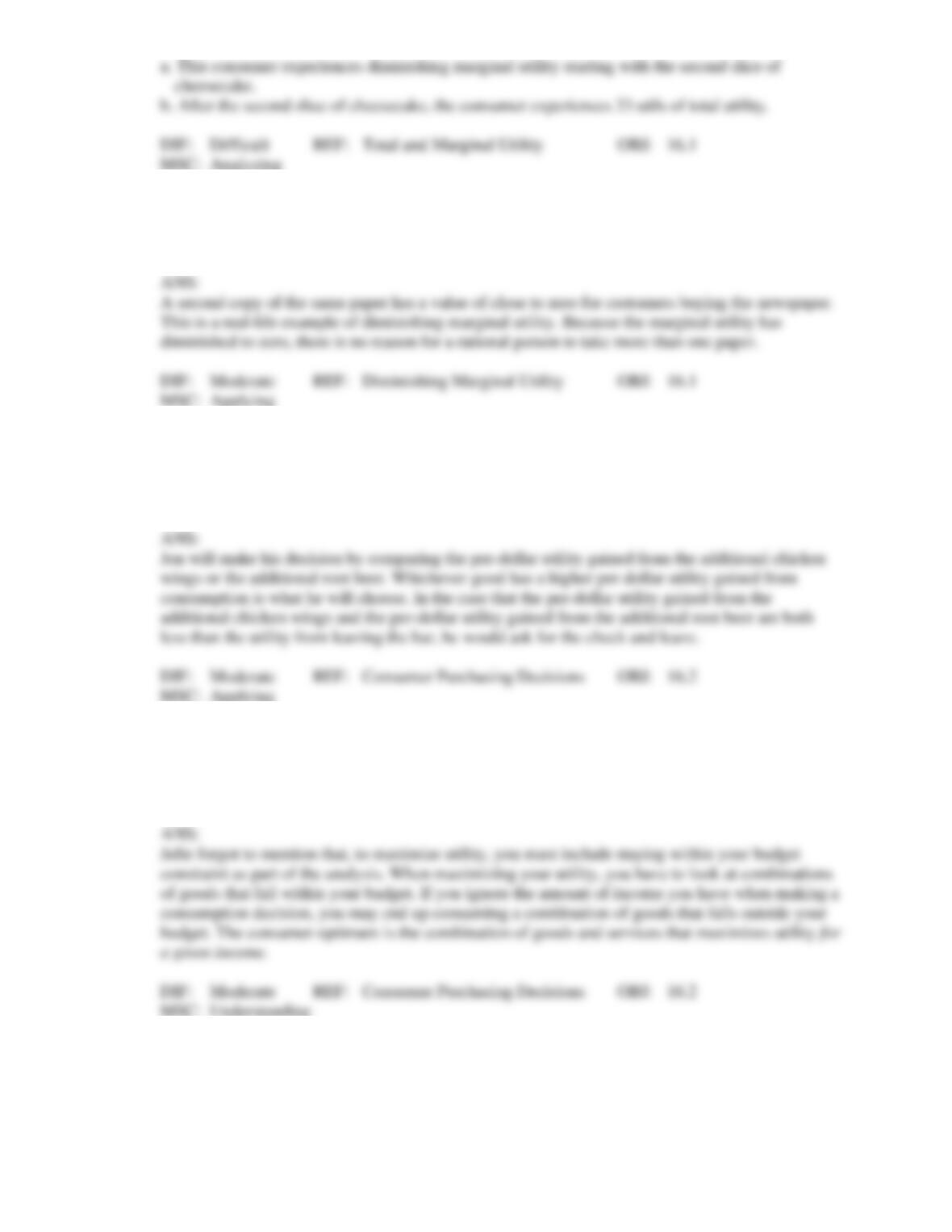
6. Refer to the following figure:
a. This consumer experiences diminishing marginal utility starting with which slice of cheesecake?
b. What is this consumer’s total utility after the second slice of cheesecake?
7. Most newspaper companies allow consumers to purchase copies of the day’s paper by putting
money into a machine and taking out a paper. Why are newspaper companies typically not worried
about consumers putting in 75 cents and taking more than one paper?
8. Jon is at a sports bar watching the Olympics. He has been eating chicken wings and drinking root
beer all night and has only enough money to buy one or the other before the bar closes. The
waitress stops by the table and asks him if he wants anything else. Using utility theory, how will
Jon make his decision?
9. Julie, a student in Dr. Enz’s Introduction to Microeconomics class, asked the question, “Is the way
to maximize utility to set the per-dollar marginal utility of each good equal to each other?” Dr. Enz
responded, “Close. You are missing one key point to maximizing utility.” What did Julie miss
when talking about maximizing utility?
10. Javier enjoys eating cookies and drinking milk, but he experiences diminishing marginal utility
when consuming both of them. The following table represents the marginal utility he gets from the
first 5 units of each item. Cookies cost 50 cents each, whereas glasses of milk cost $1 each.
Cookies Consumed Marginal Utility Glasses of Milk
Marginal Utility
0 — 0 —
1 12 1 18
2 9 2 12
3 6 3 6
4 3 4 0
5 0 5 06
a. If Javier has only $2.00, which combination of milk and cookies maximizes his utility?
b. If Javier’s spending ability increases to $3.50, what combination of milk and cookies maximizes
his utility?
c. If Javier does not have a budget constraint, what combination of milk and cookies maximizes his
utility?
11. Suppose Chuck’s favorite beverage is cold lemonade and it costs $2 per glass, whereas a bottle of
water costs $1. If Chuck receives 30 utils when he drinks water, how many additional utils would
he need to get from drinking lemonade to cause him to spend the extra dollar it costs to buy it?
12. Explain the similarities and differences between maximizing your utility over two goods and
maximizing your utility over more than two goods.
13. Bryce is at the local grocery store, shopping for himself and his girlfriend Renee. This week,
chicken breasts are on sale for 45 percent off the regular price. What two effects does Bryce face
that may cause him to purchase more chicken breasts this week than he did last week?
14. Explain a situation in which the real-income effect is not observed when the price of a good
decreases.
15. Connect the idea of the real-income effect and the substitution effect with the law of demand.
16. Refer to the following figure:
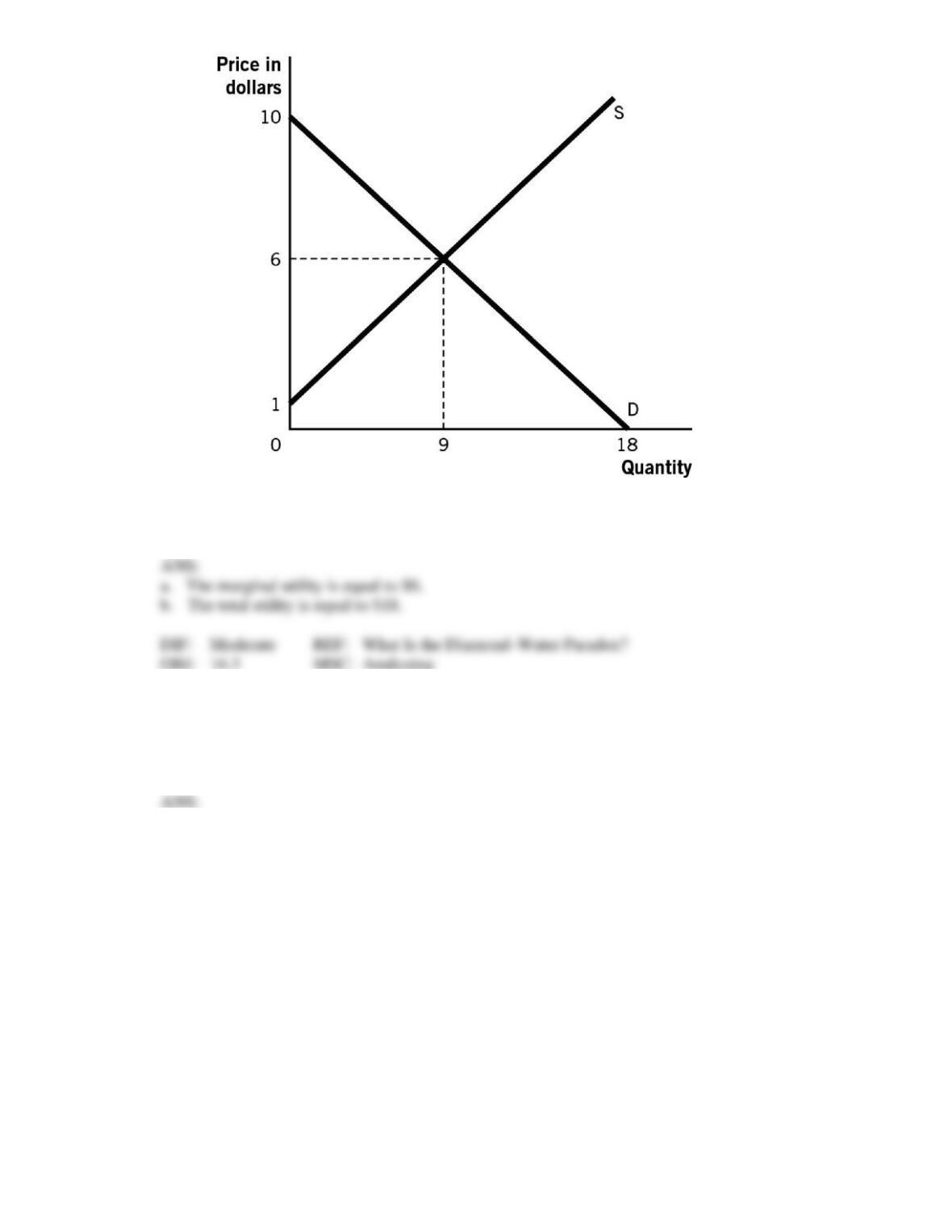
a. What is the marginal utility of the product in dollars?
b. What is the total utility of the product in dollars?
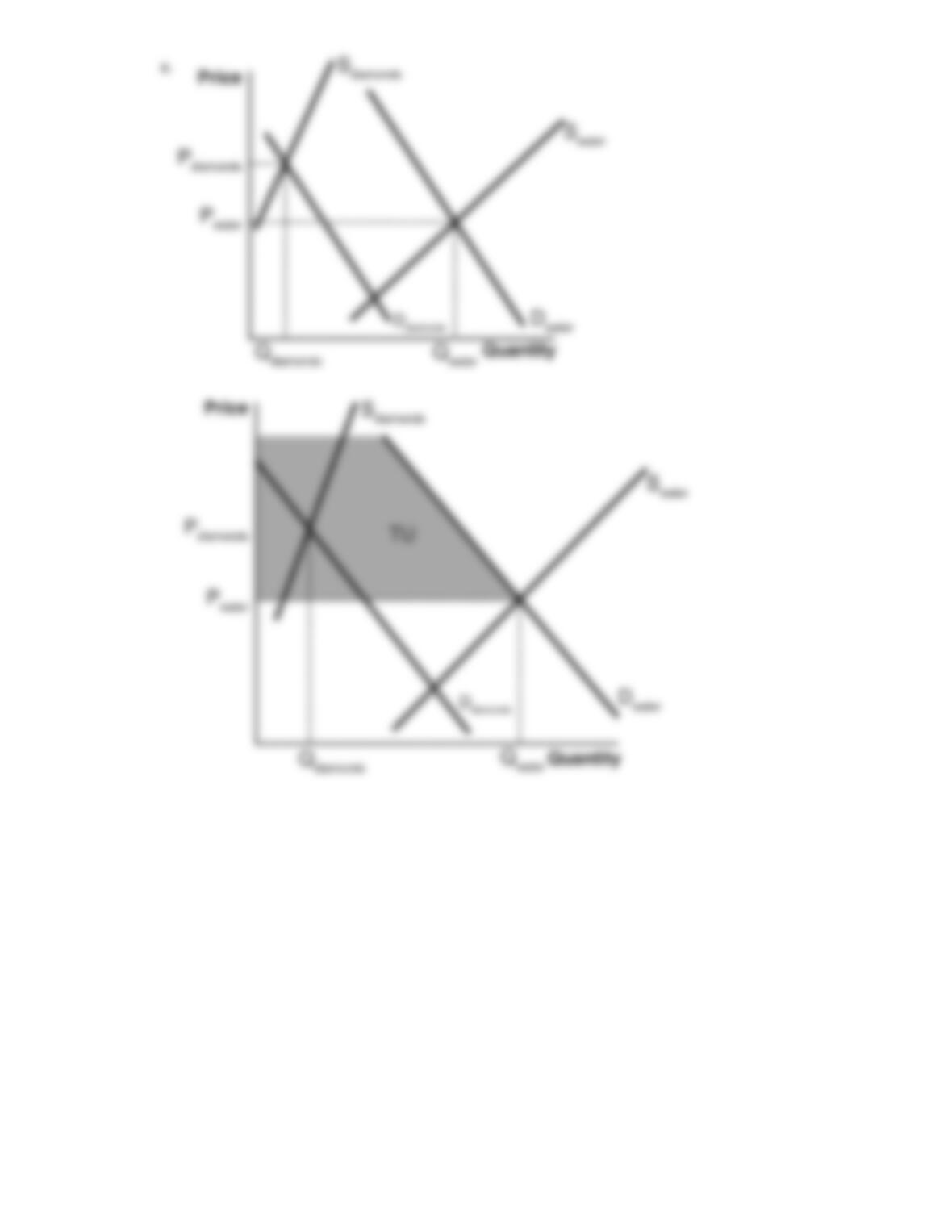
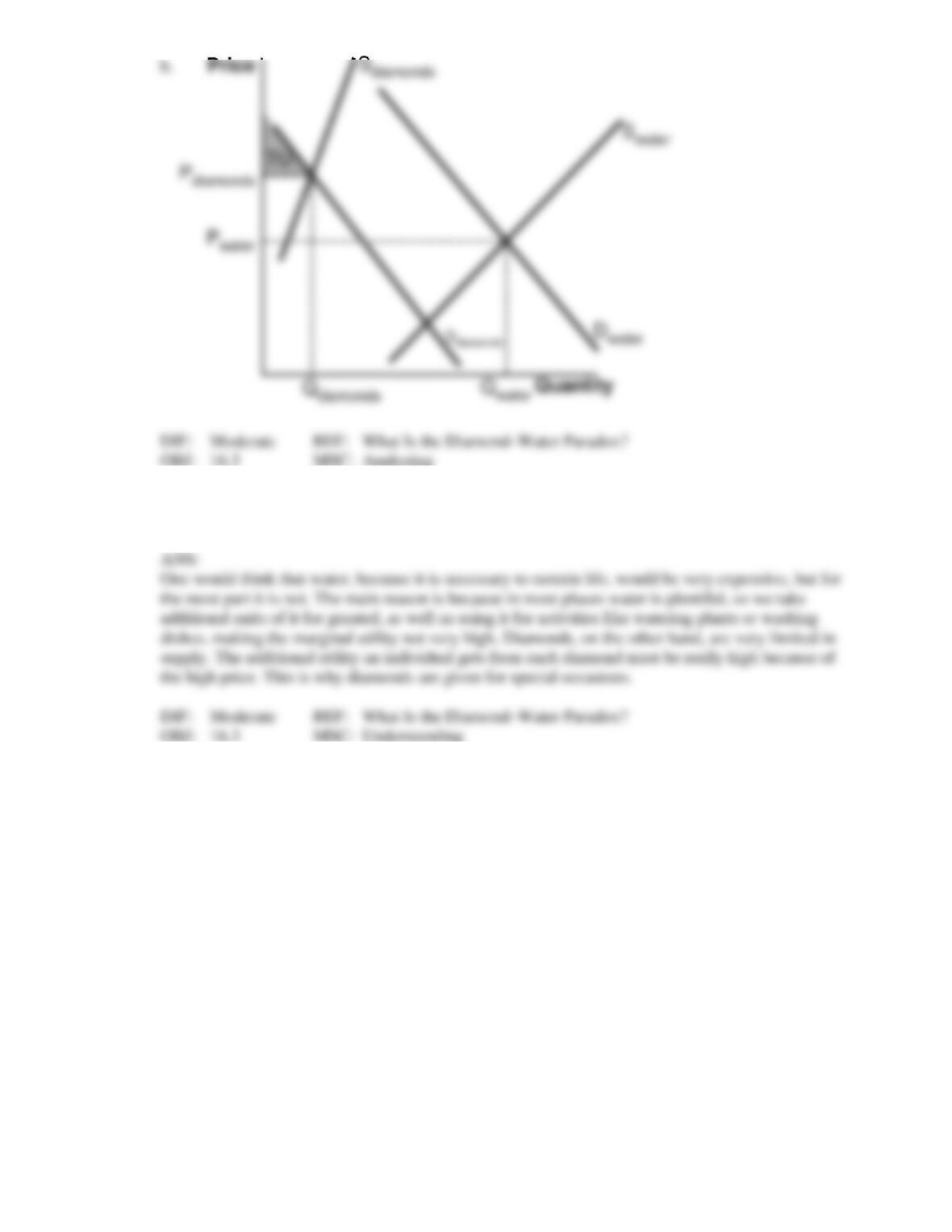
17. On a single graph, draw the supply and demand curves for both water and diamonds. Make sure
the price of diamonds is higher than the price of water.
a. Label the total utility of water.
b. Label the total utility of diamonds.
18. By using consumer choice theory, explain why diamonds, which are not necessary to sustain life,
are expensive, whereas water, which is necessary for life, is not.
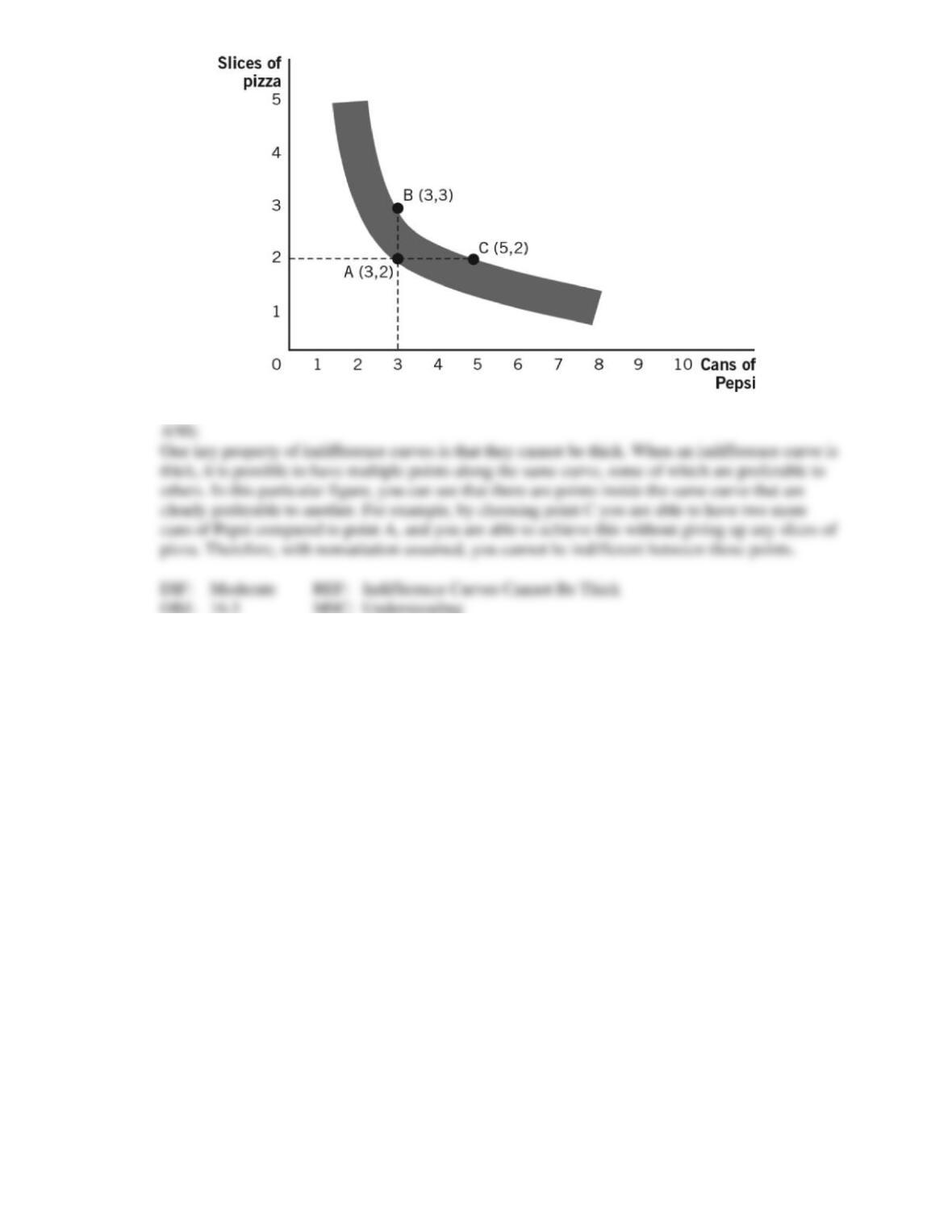
19. Explain why the following indifference curve cannot exist:
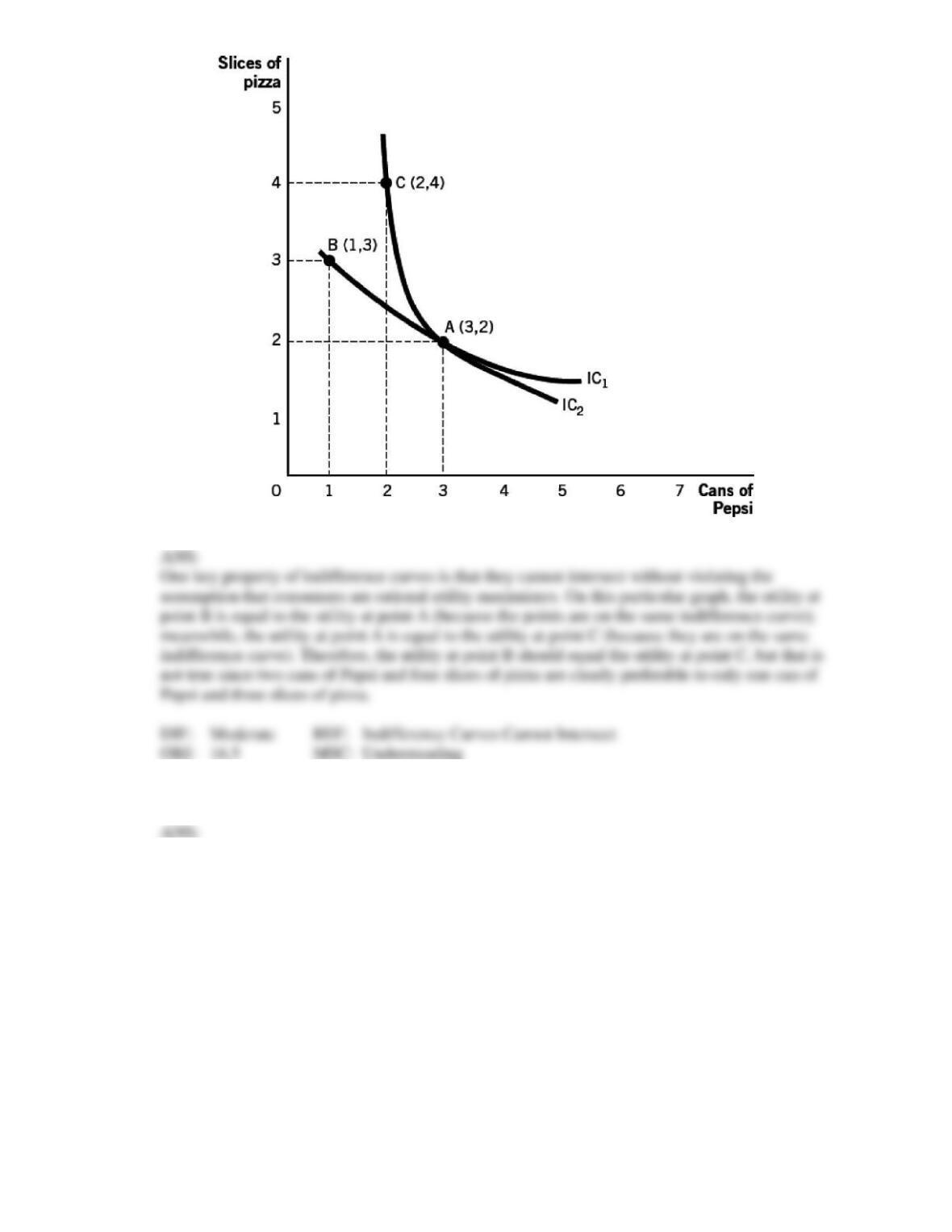
20. Explain why the following indifference curve cannot exist:
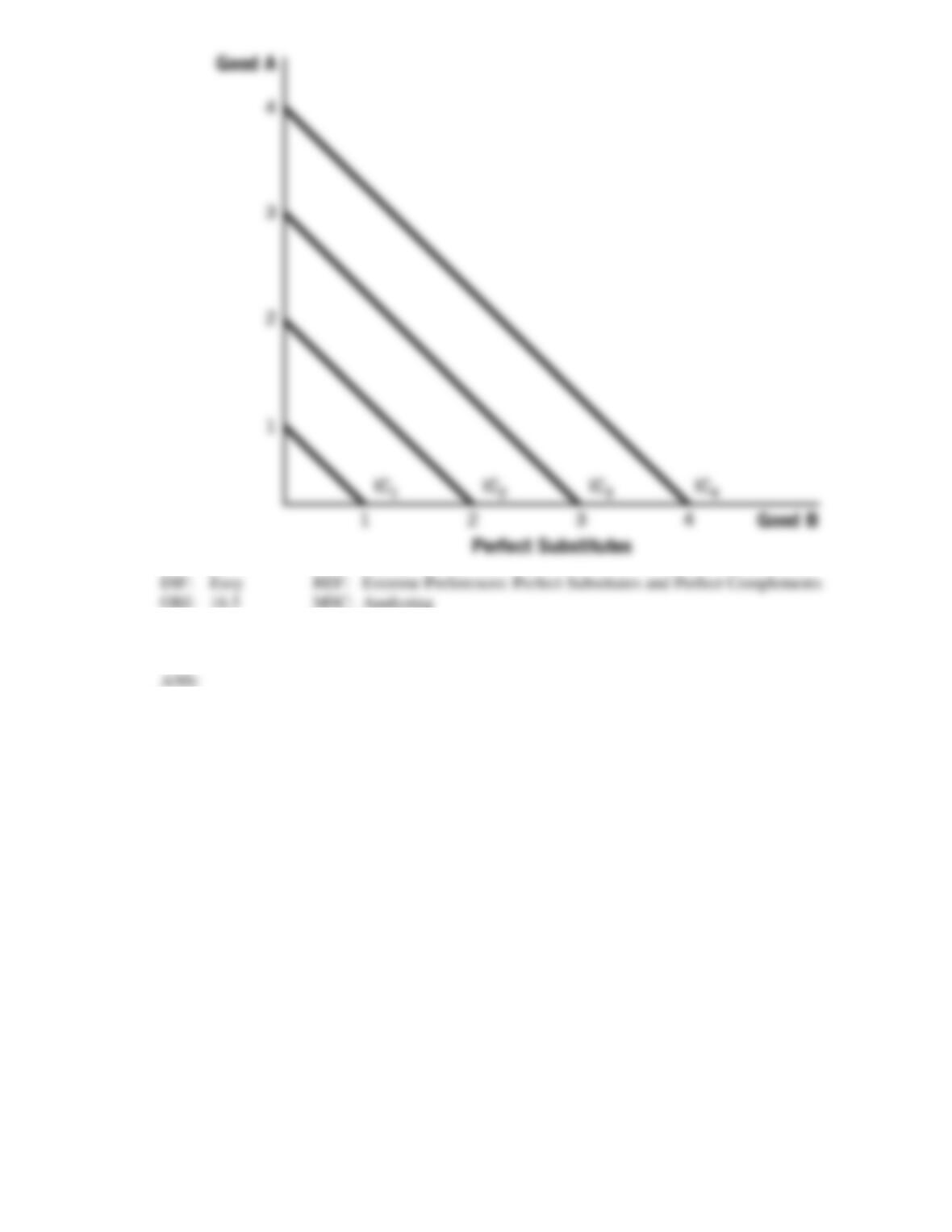
21. Draw the indifference curves for two goods that are perfect substitutes.
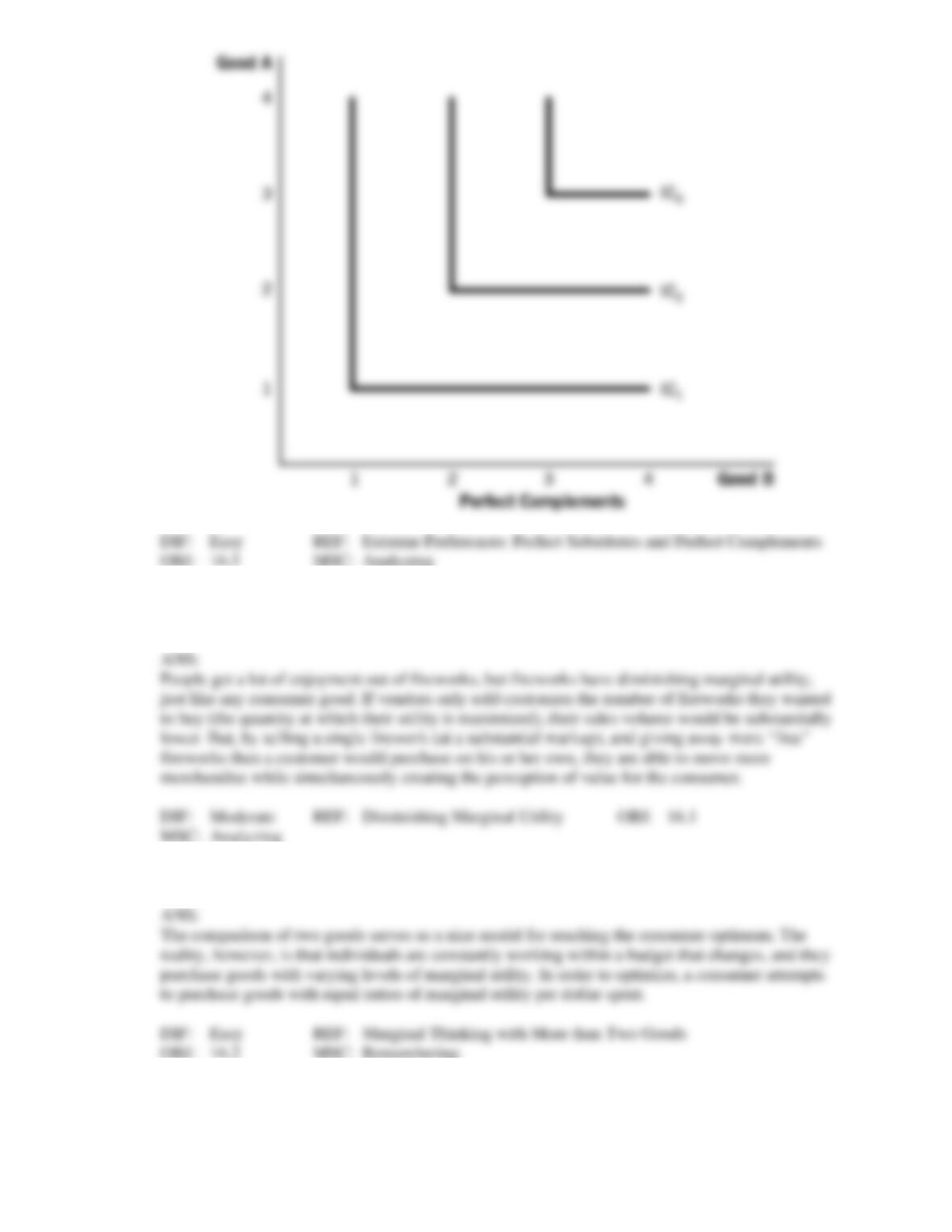
22. Draw the indifference curves for two goods that are perfect complements.
23. Fireworks vendors are well known for the “Buy 1, Get n Free” sales tactic. Based on the concept of
diminishing marginal utility, why is this an effective strategy?
24. Why is it necessary to engage in marginal thinking with more than two goods?
25. Why are indifference curves typically bowed inward?