Chapter 15 Test Bank KEY
1. The two types of market structures that are imperfectly competitive are:
2. Which of the following market structures is considered imperfectly competitive?
3. A market that has no barriers to entry and many small firms selling products that are slightly different
from one another is best described as:
4. It is important for a business owner to understand the market structure in which they operate because:
5. A monopolistically competitive market can also be:
6. When a market consists of many small firms, it:
7. When a market consists of a few large firms and barriers to entry exist, it:
8. The more firms are present in a market, the:
9. The fewer the number of firms present in a market, the:
10. In practice, monopolistically competitive markets are:
11. In practice, oligopolistic markets are:
12. Oligopoly describes a market with:
13. A market that consists of only a few large firms is probably a(n):
14. The goods or services that firms in an oligopoly sell:
15. One of the defining characteristics of an oligopoly is that:
16. One of the defining characteristics of an oligopoly is that:
17. Strategic behavior is key feature in which market structure?
18. Large barriers to entry exist in which of the following market structures?
19. Monopolistic competition describes a market with:
20. A market with many firms that sell goods and services that are close substitutes for one another is
called:
21. ________________ and ______________ are often found together in a market.
22. ___________________ is about the number of firms, and ________________ is about the variety of
products.
23. Oligopoly is about the ____________ and monopolistic competition is about the ______________.
24. Standardized products can appear:
25. Long-run economic profits are possible in which of the following market structures?
26. Offering goods that are similar to competitors’ products but more attractive in some ways is called:
27. Product differentiation refers to:
28. Firms who effectively differentiate their product from their competitors’ products do so by having:
29. In the short run, product differentiation enables firms in monopolistically competitive markets to:
30. In the short run, product differentiation enables firms in monopolistically competitive markets to:
31. In the short run, monopolistically competitive firms behave like ________________, but in the long
run, the profit of a firm is similar to that of ________________.
32. In the long-run, monopolistically competitive firms:
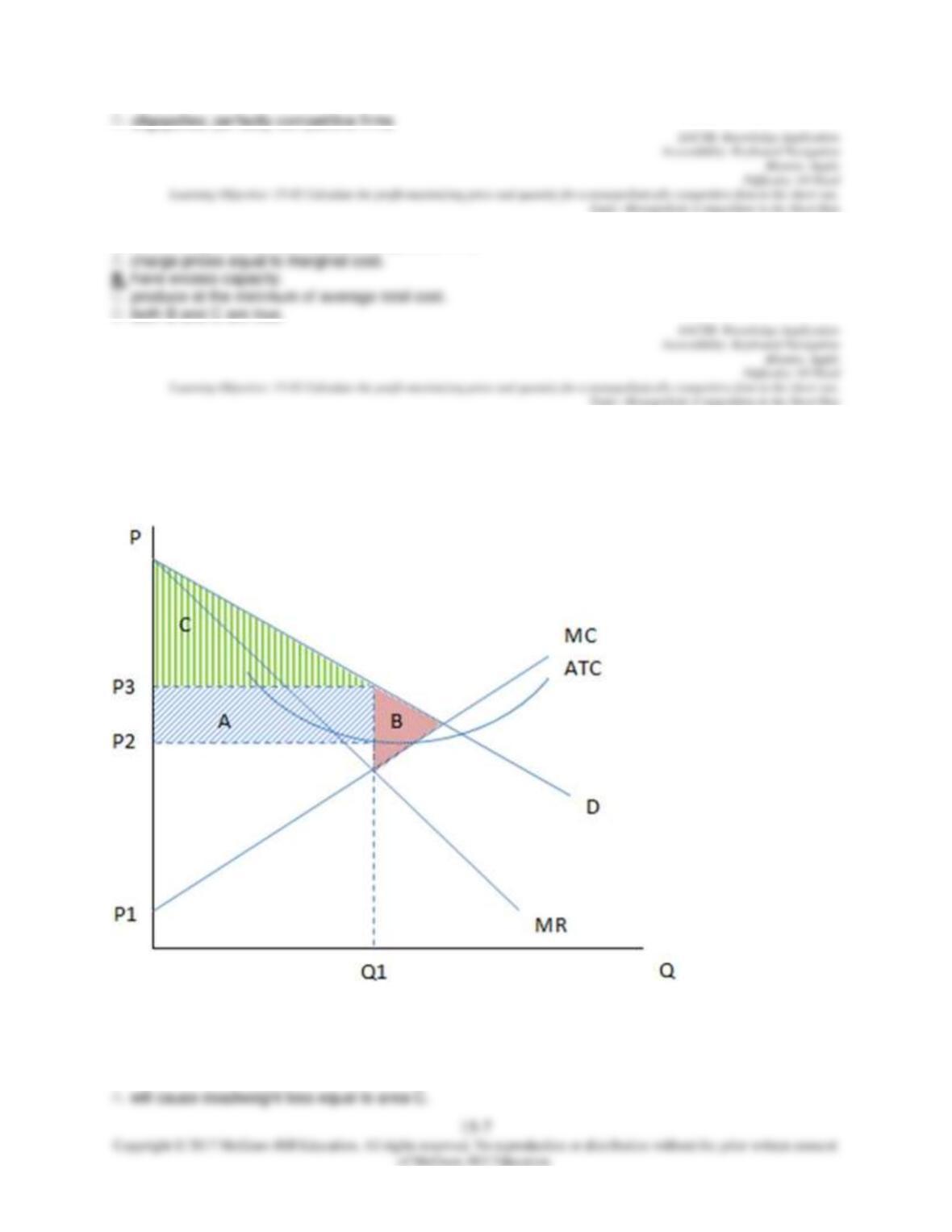
33. These are the cost and revenue curves associated with a monopolistically competitive firm.
According to the graph shown, the monopolistically competitive firm:
15-8
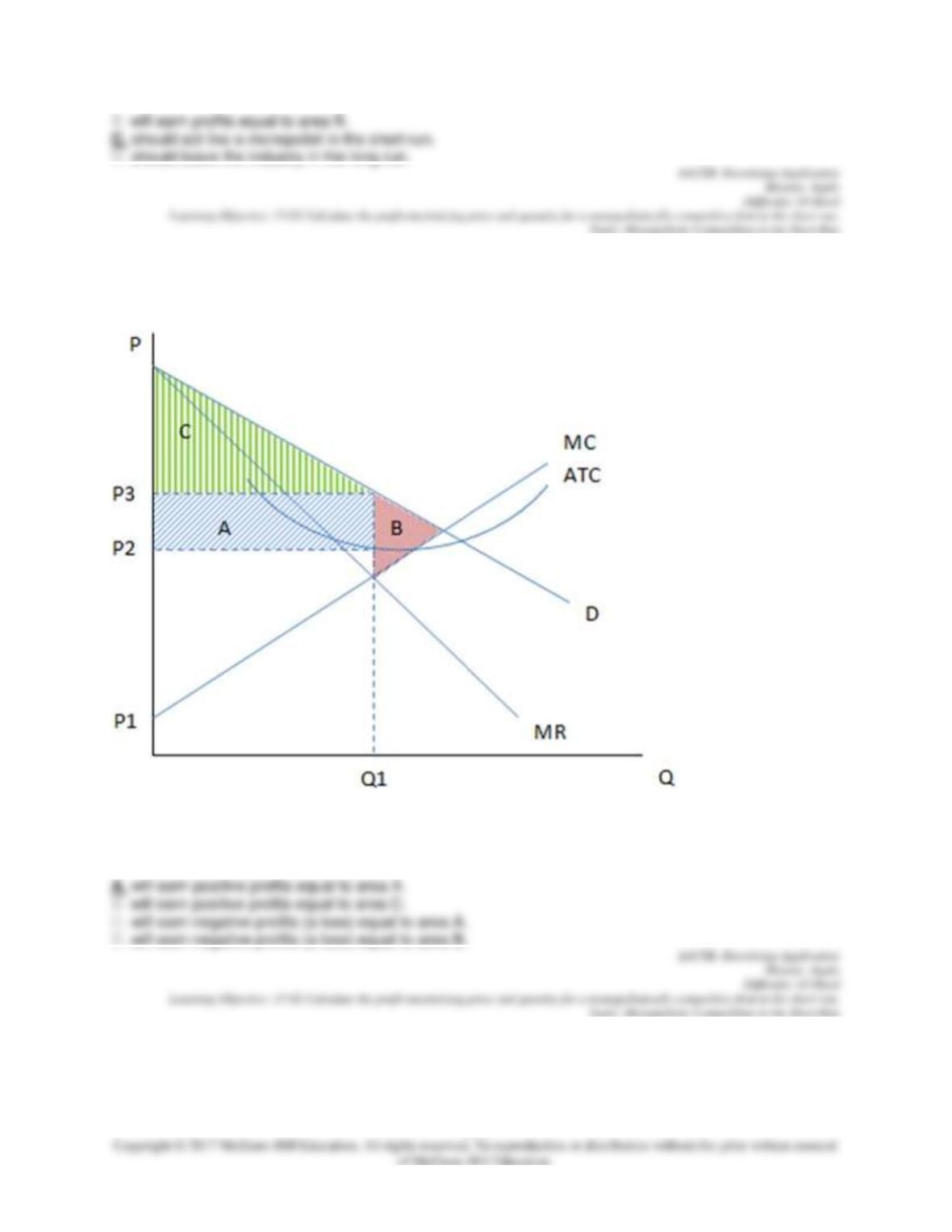
34. These are the cost and revenue curves associated with a monopolistically competitive firm.
According to the graph shown, the monopolistically competitive firm:
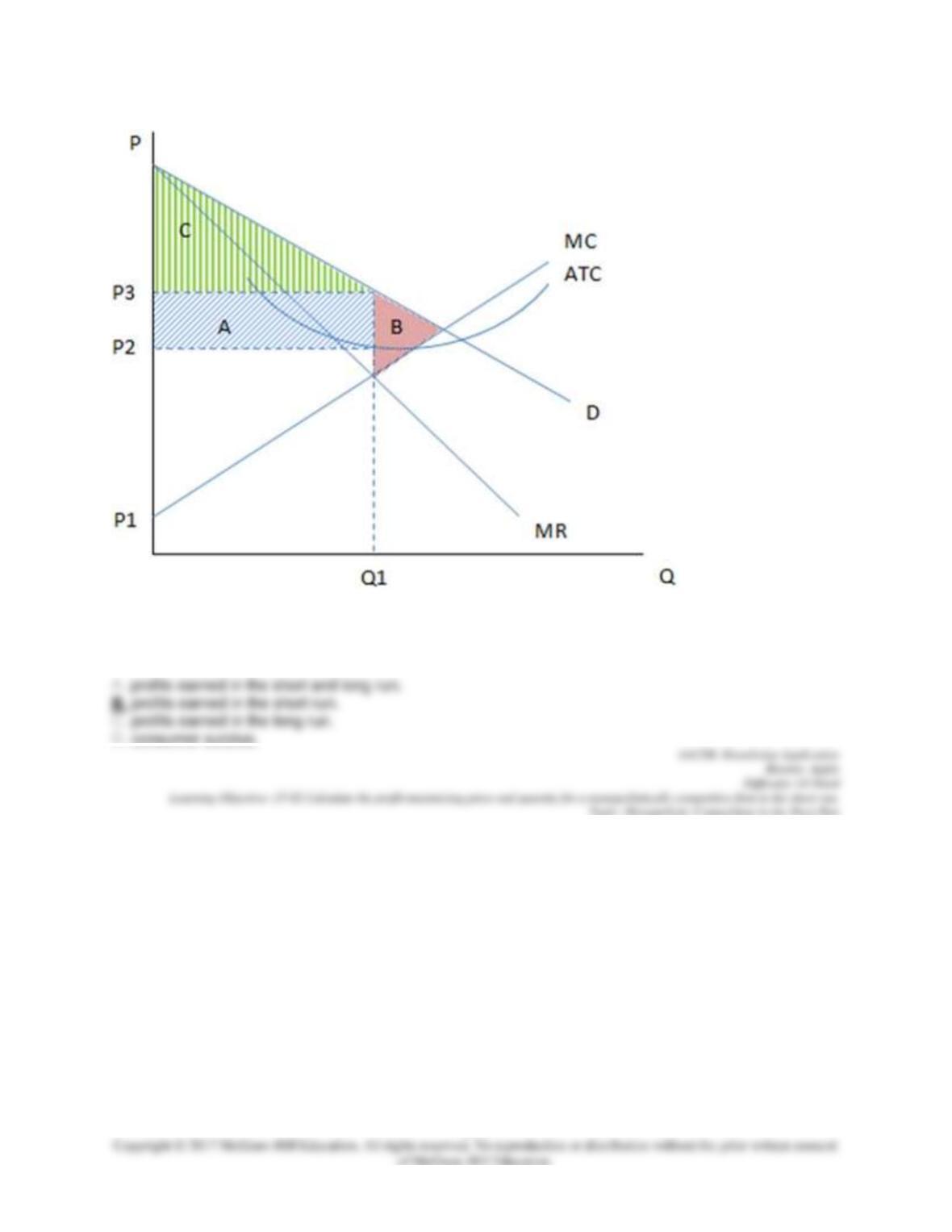
35. These are the cost and revenue curves associated with a monopolistically competitive firm.
15-9
According to the graph shown, area A represents:
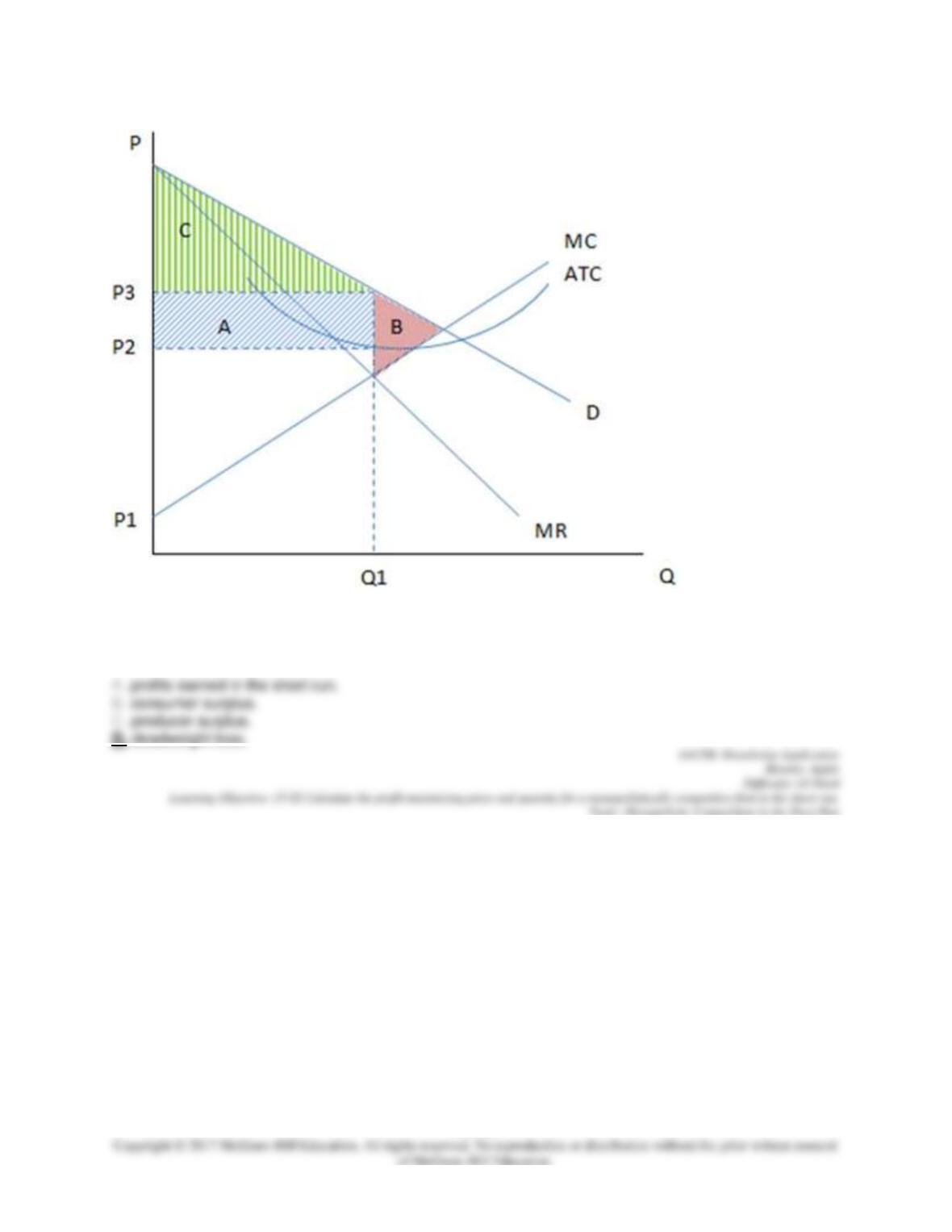
36. These are the cost and revenue curves associated with a monopolistically competitive firm.
15–10
According to the graph shown, area B represents:
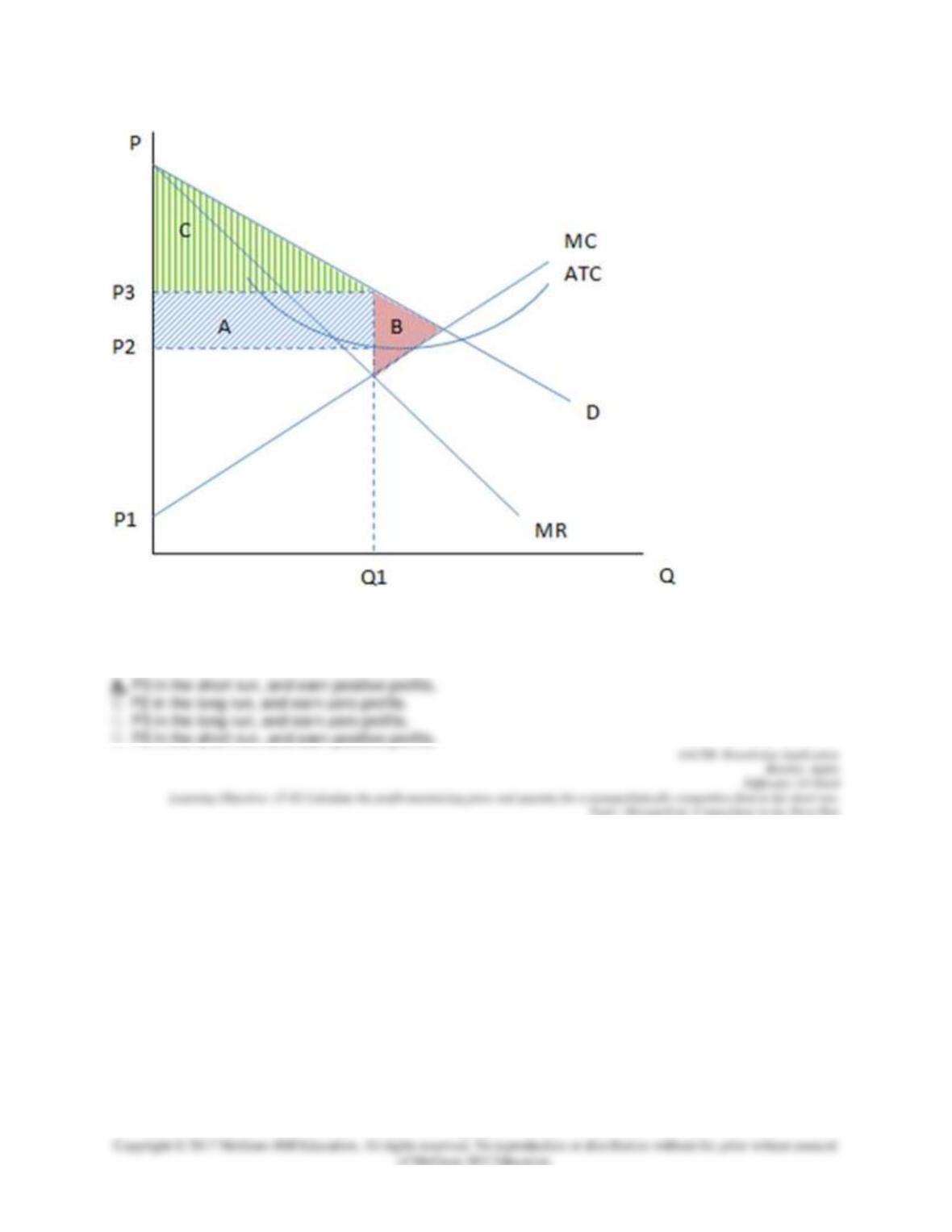
37. These are the cost and revenue curves associated with a monopolistically competitive firm.
15–11
According to the graph shown, the monopolistically competitive firm will charge a price:
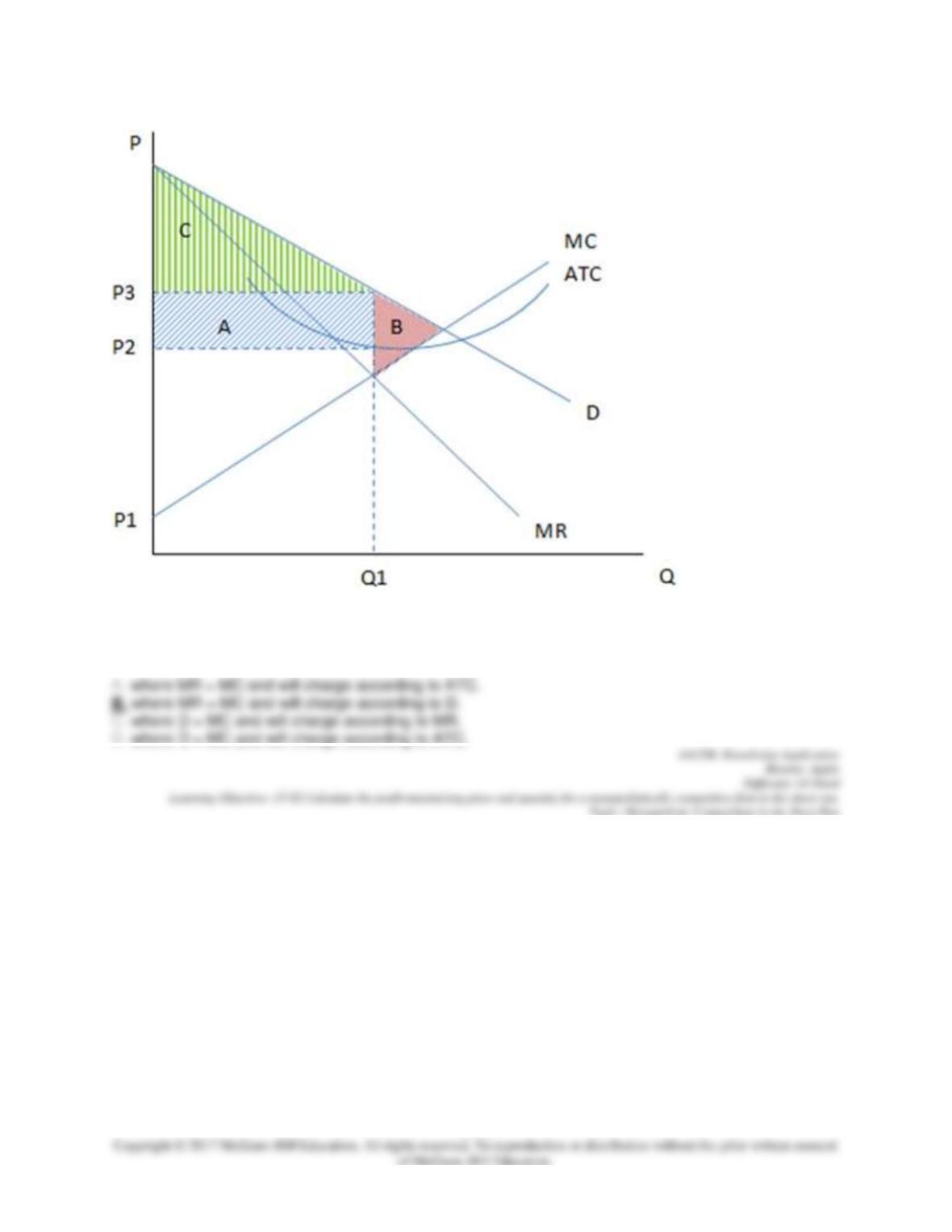
38. These are the cost and revenue curves associated with a monopolistically competitive firm.
15–12
According to the graph shown, the monopolistically competitive firm will produce:
39. These are the cost and revenue curves associated with a monopolistically competitive firm.
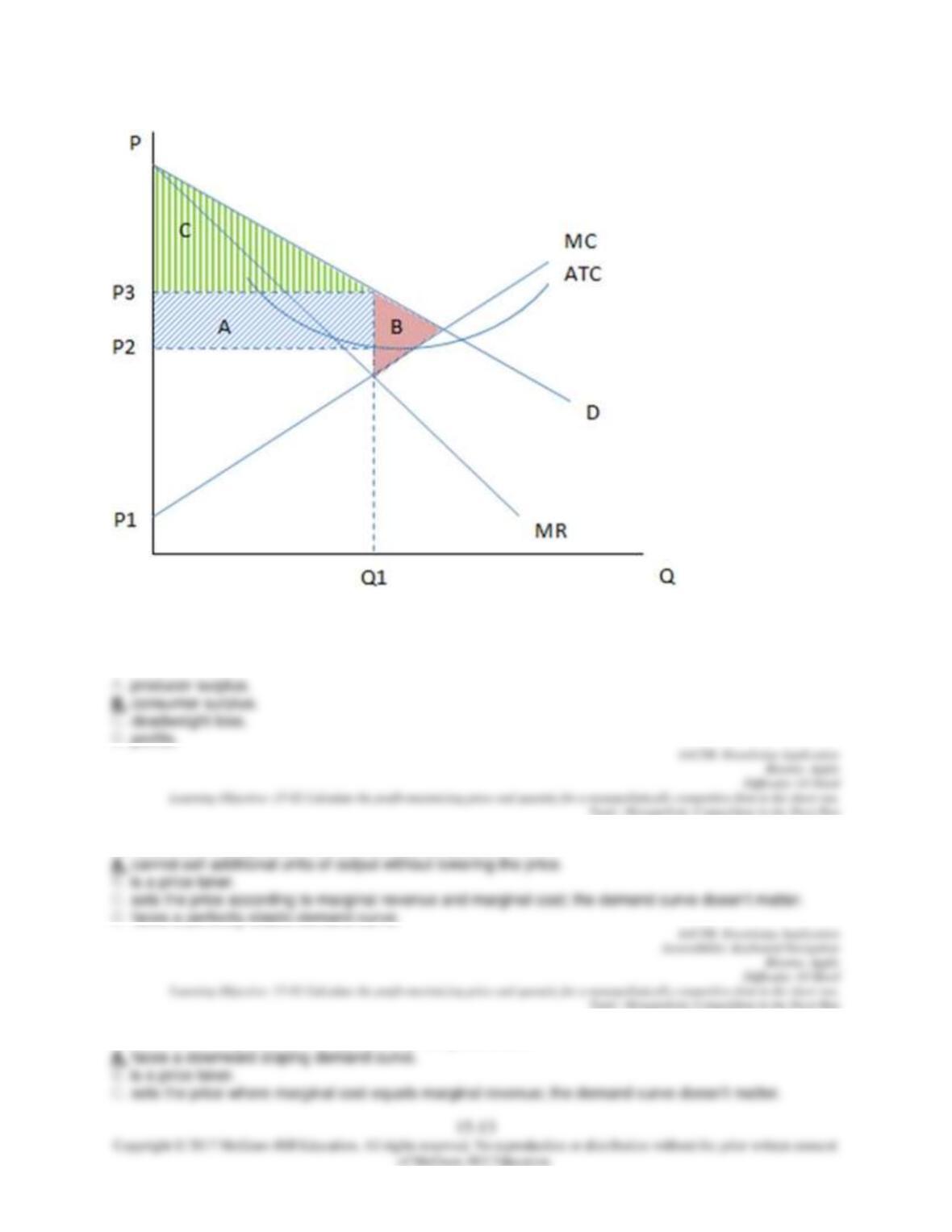
According to the graph shown, area C represents:
40. Just like a monopolist, a monopolistically competitive firm:
41. Like the monopolist, the monopolistically competitive firm:
42. For the monopolistically competitive firm, the steepness of the demand curve depends on:
43. For the monopolistically competitive firm, the demand curve it faces will be steeper the:
44. For the monopolistically competitive firm, the demand curve it faces will be flatter:
45. The demand curve facing the monopolistically competitive firm is:
46. In the short run, monopolistically competitive firms:
47. In the short run, monopolistically competitive firms will maximize profits by:
48. The primary difference between a monopolistically competitive firm and a monopoly is:
49. If a monopolistically competitive firm is earning profits in the short run:
50. Once a monopolistically competitive firm innovates, it is likely that:
51. If a monopolistically competitive firm is earning profits in the short run:
15–16
52. If a monopolistically competitive firm is suffering losses in the short run:
53. Firms have incentive to enter a monopolistically competitive market if:
54. As long as firms currently in a monopolistically competitive market are earning profits:
55. If a firm’s demand curve in a monopolistically competitive market is shifting left:
56. These are the cost and revenue curves associated with a monopolistically competitive firm in the
short run.
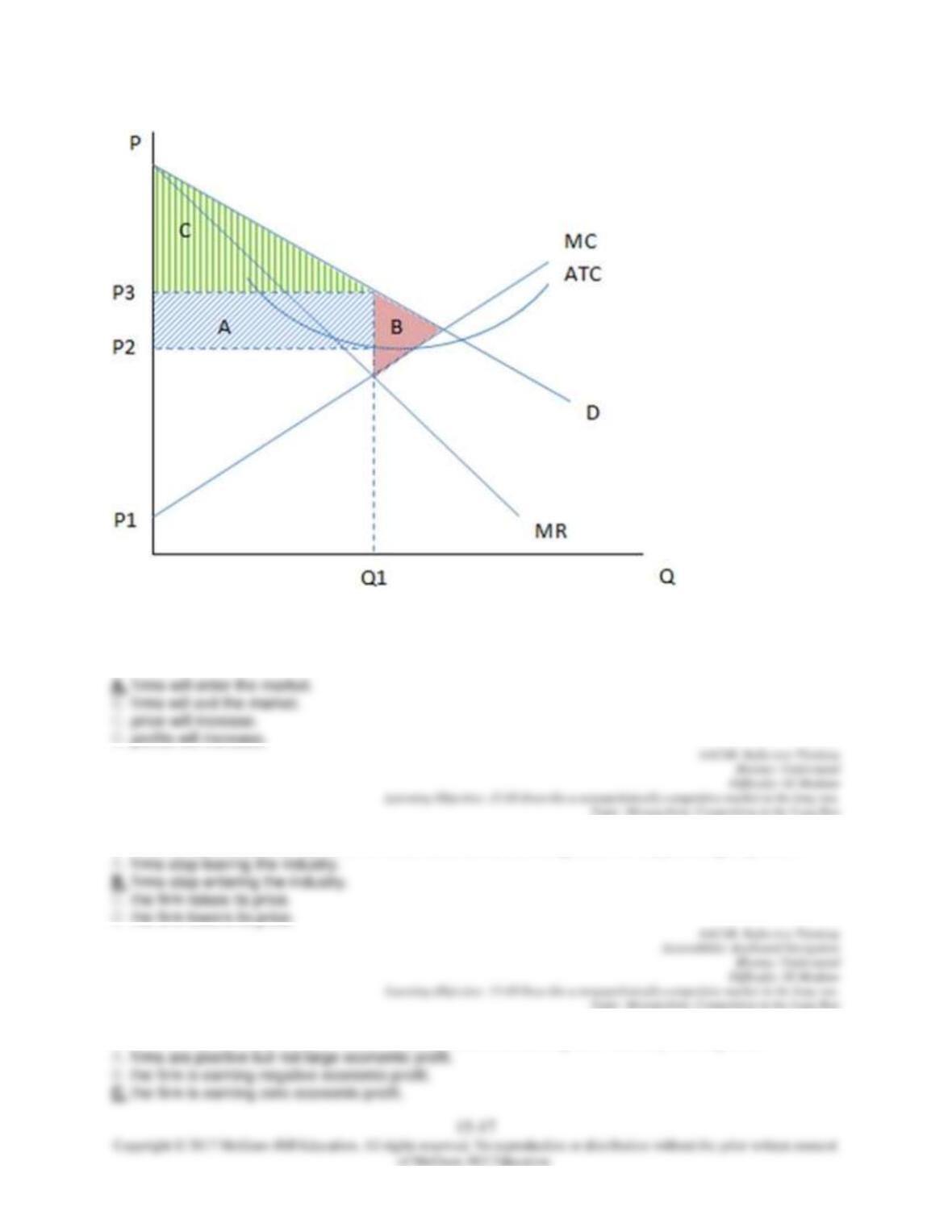
According to the graph shown, in the long run we can expect that
57. If a monopolistically competitive firm’s demand curve is shifting left, it will stop shifting only when:
58. If a monopolistically competitive firm’s demand curve is shifting left, it will stop shifting when:
59. If a monopolistically competitive firm’s demand curve is shifting left, it will stop shifting when:
60. If firms in a monopolistically competitive market are earning negative economic profits, it is likely that:
61. If firms in a monopolistically competitive market are earning negative economic profits, the demand
curve of a single firm will likely:
62. If a firm in a monopolistically competitive market has a demand curve shifting to the right, it could be
that:
63. If a firm in a monopolistically competitive market has a demand curve shifting to the right, it is likely
15–19
64. If a firm in a monopolistically competitive market has a demand curve that is shifting to the right, it will
only stop shifting when:
65. If a firm in a monopolistically competitive market has a demand curve that is shifting to the right, it will
stop shifting when:
66. These are the cost and revenue curves associated with a firm.
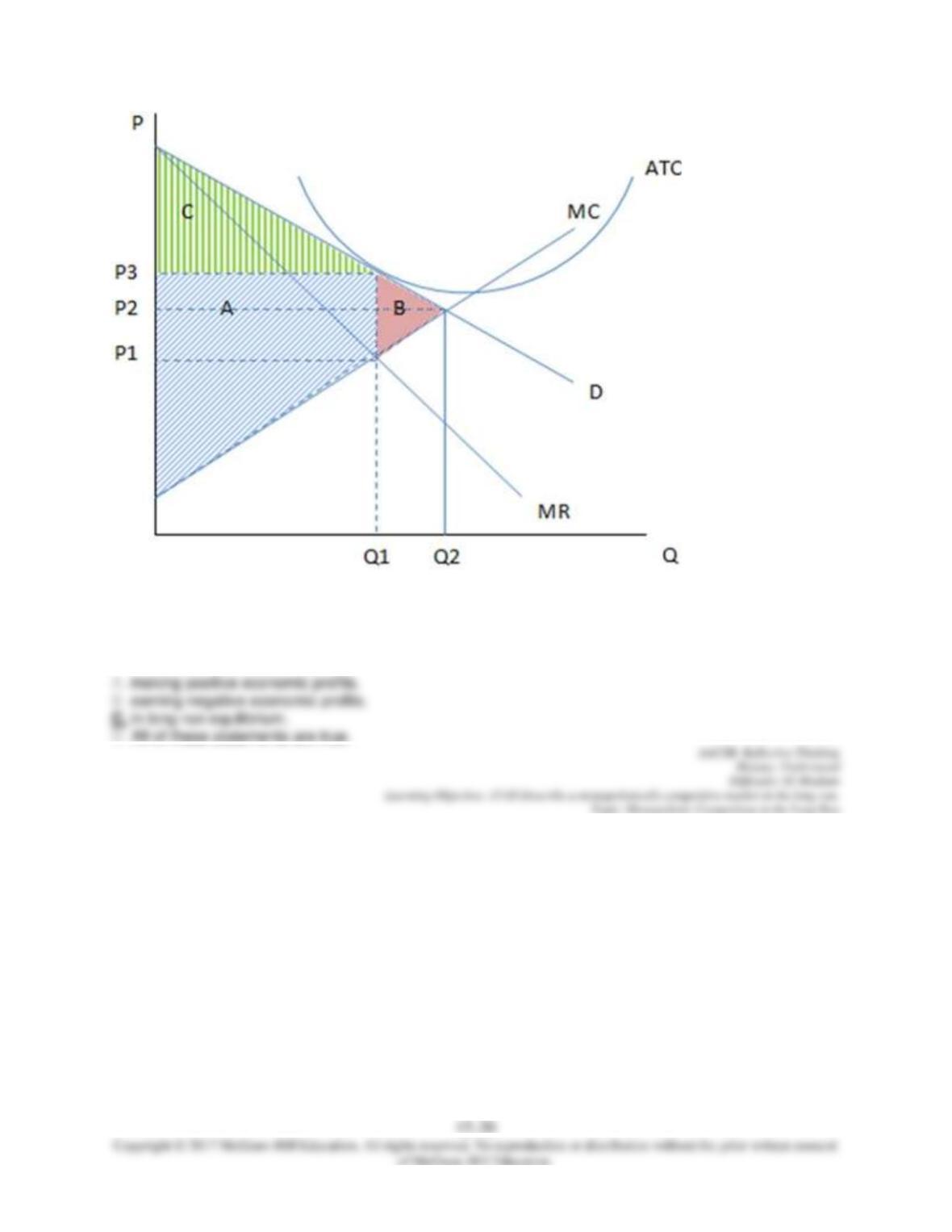
Assuming the firm in the graph shown is producing Q1 and charging P3, it is likely showing the cost and
revenue curves of a monopolistically competitive firm that is:
67. These are the cost and revenue curves associated with a firm.